
Year: 2018

11 Oct 2018

Pro-privacy search engine DuckDuckGo hits 30M daily searches, up 50% in a year

Some nice momentum for privacy-focused search engine DuckDuckGo which has just announced it’s hit 30 million daily searches a year after reaching 20M — a year-on-year increase of 50%.

Hitting the first 10M daily searches took the search engine a full seven years, and then it was another two to get to 20M. So as growth curves go it must have required patience and a little faith in the run up.

A strength of conviction that’s paying off now, though, as usage continues to take off…

Albeit 30M daily searches is still a drop in the ocean vs the at least 3BN+ daily searches that Google handles daily (at least because that metric dates back to 2015).

DDG’s search engine offers a pro-privacy alternative to Google search that does not track and profile users in order to target them with ads.

Instead it displays ads based on the keyword being searched for at the point of each search — dispensing with the need to follow people around the web, harvesting data on everything they do to feed a sophisticated adtech business, as Google does.

DDG says it has been profitable using its non-tracking business model since 2014, also making money from affiliate revenue.

It does not break out active user metrics but earlier this year cited third party estimates which peg its user-base at around 25M.

This year it expanded from its core search product to launch a tracker blocker to address wider privacy concerns consumers have by helping web users keep more of their online activity away from companies trying to spy on them for profit.

It also recently emerged that DDG had quietly picked up $10M in VC funding, which is only its second tranche of external investment.

The company told us this financing would be used to respond to an expanding opportunity for pro-privacy business models, including by tuning its search engine for more local markets and expanding its marketing channels to “have more of a global focus”.

Privacy regulations such as Europe’s General Data Protection Act are likely also helping to put wind in DDG’s sails.

While, in the US, lawmakers are also eyeing drafting federal privacy regulations — which could result in new domestic controls on how companies are able to process people’s information.

Not tracking people in the first place positions DDG’s business to be able to keep on flying regardless of tighter rules incoming.
11 Oct 2018

Walmart is working with Eko to create interactive content

Walmart and Eko announced a partnership this morning to create a joint venture for interactive content called W*E Interactive Ventures.

The best example of the interactivity that Eko enables is probably “That Moment When,” a comedy web series that the startup created last year in partnership with Sony. In a series of short videos, you take on the role of Jill, a young-ish woman struggling to get her life together — the viewer decides what Jill says and also plays mini-games to help her achieve her goals.

According to the announcement, W*E content will include a variety of formats like cookings shows and interactive toy catalogues.

Eko CEO Yoni Bloch said they aren’t announcing any specific shows yet, but they will be “free and distributed everywhere,” and will be united by an aim to make the viewer “be the hero, be a part of the decision-making in the story.” The plan is to start releasing this content sometime next year.

Walmart might not seem like the most obvious partner on something like this, but the company has been expanding into digital media with efforts like Vudu (it just announced a partnership with MGM) and, more recently, Walmart eBooks.

Bloch said the deal also includes a Walmart investment of undisclosed size into Eko. Apparently the joint venture will work primarily as “the funding vehicle” for this new content, with Walmart staying out of the creative decisions.

“Walmart has been an incredible partner, allowing us to have creative control, which we are passing on to the creators,” Bloch said.

Tribeca Productions co-founder Jane Rosenthal will serve as strategic advisor to W&E Interactive Ventures, and Eko Chief Media Officer Nancy Tellem will be on the board.

“Our partnership with Eko will help us accelerate efforts to deepen relationships with customers and connect with new audiences in innovative ways and is one part of an overall entertainment ecosystem we’re building,” said Scott McCall, senior vice president for entertainment, toys and seasonal at Walmart U.S, in the announcement.

11 Oct 2018

Walmart is working with Eko to create interactive content

Walmart and Eko announced a partnership this morning to create a joint venture for interactive content called W*E Interactive Ventures.

The best example of the interactivity that Eko enables is probably “That Moment When,” a comedy web series that the startup created last year in partnership with Sony. In a series of short videos, you take on the role of Jill, a young-ish woman struggling to get her life together — the viewer decides what Jill says and also plays mini-games to help her achieve her goals.

According to the announcement, W*E content will include a variety of formats like cookings shows and interactive toy catalogues.

Eko CEO Yoni Bloch said they aren’t announcing any specific shows yet, but they will be “free and distributed everywhere,” and will be united by an aim to make the viewer “be the hero, be a part of the decision-making in the story.” The plan is to start releasing this content sometime next year.

Walmart might not seem like the most obvious partner on something like this, but the company has been expanding into digital media with efforts like Vudu (it just announced a partnership with MGM) and, more recently, Walmart eBooks.

Bloch said the deal also includes a Walmart investment of undisclosed size into Eko. Apparently the joint venture will work primarily as “the funding vehicle” for this new content, with Walmart staying out of the creative decisions.

“Walmart has been an incredible partner, allowing us to have creative control, which we are passing on to the creators,” Bloch said.

Tribeca Productions co-founder Jane Rosenthal will serve as strategic advisor to W&E Interactive Ventures, and Eko Chief Media Officer Nancy Tellem will be on the board.

“Our partnership with Eko will help us accelerate efforts to deepen relationships with customers and connect with new audiences in innovative ways and is one part of an overall entertainment ecosystem we’re building,” said Scott McCall, senior vice president for entertainment, toys and seasonal at Walmart U.S, in the announcement.

11 Oct 2018

New Relic acquires Belgium’s CoScale to expand its monitoring of Kubernetes containers and microservices

New Relic, a provider of analytics and monitoring around a company’s internal and external facing apps and services to help optimise their performance, is making an acquisition today as it continues to expand a newer area of its business, containers and microservices. The company has announced that it has purchased CoScale, a provider of monitoring for containers and microservices, with a specific focus on Kubernetes.

Terms of the deal — which will include the team and technology — are not being disclosed, as it will not have a material impact on New Relic’s earnings. The larger company is traded on the NYSE (ticker: NEWR) and has been a strong upswing in the last two years, and its current market cap its around $4.6 billion.

Originally founded in Belgium, CoScale had raised $6.4 million and was last valued at $7.9 million, according to PitchBook. Investors included Microsoft (via its ScaleUp accelerator), PMV and the Qbic Fund, two Belgian investors.

We are thrilled to bring CoScale’s knowledge and deeply technical team into the New Relic fold,” noted Ramon Guiu, senior director of product management at New Relic. “The CoScale team members joining New Relic will focus on incorporating CoScale’s capabilities and experience into continuing innovations for the New Relic platform.”

The deal underscores how New Relic has had to shift in the last couple of years: when the company was founded years ago, application monitoring was a relatively easy task, with the web and a specified number of services the limit of what needed attention. But services, apps and functions have become increasingly complex and now tap data stored across a range of locations and devices, and processing everything generates a lot of computing demand.

New Relic first added container and microservices monitoring to its stack in 2016. That’s a somewhat late arrival to the area, New Relic CEO Lew Cirne believes that it’s just at the right time, dovetailing New Relic’s changes with wider shifts in the market.

‘We think those changes have actually been an opportunity for us to further differentiate and further strengthen our thesis that the New Relic  way is really the most logical way to address this,” he told my colleague Ron Miller last month. As Ron wrote, Cirne’s take is that New Relic has always been centered on the code, as opposed to the infrastructure where it’s delivered, and that has helped it make adjustments as the delivery mechanisms have changed.

New Relic already provides monitoring for Kubernetes, Google Kubernetes Engine (GKE), Amazon Elastic Container Service for Kubernetes (EKS), Microsoft Azure Kubernetes Service (AKS), and RedHat Openshift, and the idea is that CoScale will help it ramp up across that range, while also adding Docker and OpenShift to the mix, as well as offering new services down the line to serve the DevOps community.

“The visions of New Relic and CoScale are remarkably well aligned, so our team is excited that we get to join New Relic and continue on our journey of helping companies innovate faster by providing them visibility into the performance of their modern architectures,” said CoScale CEO Stijn Polfliet, in a statement. “[Co-founder] Fred [Ryckbosch] and I feel like this is such an exciting space and time to be in this market, and we’re thrilled to be teaming up with the amazing team at New Relic, the leader in monitoring modern applications and infrastructure.”

11 Oct 2018

New Relic acquires Belgium’s CoScale to expand its monitoring of Kubernetes containers and microservices

New Relic, a provider of analytics and monitoring around a company’s internal and external facing apps and services to help optimise their performance, is making an acquisition today as it continues to expand a newer area of its business, containers and microservices. The company has announced that it has purchased CoScale, a provider of monitoring for containers and microservices, with a specific focus on Kubernetes.

Terms of the deal — which will include the team and technology — are not being disclosed, as it will not have a material impact on New Relic’s earnings. The larger company is traded on the NYSE (ticker: NEWR) and has been a strong upswing in the last two years, and its current market cap its around $4.6 billion.

Originally founded in Belgium, CoScale had raised $6.4 million and was last valued at $7.9 million, according to PitchBook. Investors included Microsoft (via its ScaleUp accelerator), PMV and the Qbic Fund, two Belgian investors.

We are thrilled to bring CoScale’s knowledge and deeply technical team into the New Relic fold,” noted Ramon Guiu, senior director of product management at New Relic. “The CoScale team members joining New Relic will focus on incorporating CoScale’s capabilities and experience into continuing innovations for the New Relic platform.”

The deal underscores how New Relic has had to shift in the last couple of years: when the company was founded years ago, application monitoring was a relatively easy task, with the web and a specified number of services the limit of what needed attention. But services, apps and functions have become increasingly complex and now tap data stored across a range of locations and devices, and processing everything generates a lot of computing demand.

New Relic first added container and microservices monitoring to its stack in 2016. That’s a somewhat late arrival to the area, New Relic CEO Lew Cirne believes that it’s just at the right time, dovetailing New Relic’s changes with wider shifts in the market.

‘We think those changes have actually been an opportunity for us to further differentiate and further strengthen our thesis that the New Relic  way is really the most logical way to address this,” he told my colleague Ron Miller last month. As Ron wrote, Cirne’s take is that New Relic has always been centered on the code, as opposed to the infrastructure where it’s delivered, and that has helped it make adjustments as the delivery mechanisms have changed.

New Relic already provides monitoring for Kubernetes, Google Kubernetes Engine (GKE), Amazon Elastic Container Service for Kubernetes (EKS), Microsoft Azure Kubernetes Service (AKS), and RedHat Openshift, and the idea is that CoScale will help it ramp up across that range, while also adding Docker and OpenShift to the mix, as well as offering new services down the line to serve the DevOps community.

“The visions of New Relic and CoScale are remarkably well aligned, so our team is excited that we get to join New Relic and continue on our journey of helping companies innovate faster by providing them visibility into the performance of their modern architectures,” said CoScale CEO Stijn Polfliet, in a statement. “[Co-founder] Fred [Ryckbosch] and I feel like this is such an exciting space and time to be in this market, and we’re thrilled to be teaming up with the amazing team at New Relic, the leader in monitoring modern applications and infrastructure.”

11 Oct 2018

Apple Music adds Genius lyrics

Back in 2016, Spotify partnered with Genius to bring lyrics and backstory to its pop music playlists. Today, however, the musical reference guide has drawn a bit of a line in the sand, partnering with Spotify’s chief competitor.

Genius announced via blog post today that it’s firmly in the Apple Music camp. The new deal brings the service’s lyrics to “thousands of hit songs” via Apple’s desktop and iOS app. In addition to that deal, Genius will also be using Apple Music as its own preferred music player.

That means when you visit Genius’ site or use its iOS app, Apple’s software will be the default for playing back the song you’re viewing.

“Being able to read lyrics and annotations on Genius while you listen along on Apple Music is a dream Genius experience,” Genius CSO Ben Gross said in a statement tied to the news. “We’re proud to make Apple Music our official music player, and we’re doubly excited to bring Genius lyrics to their amazing platform.”

Siding with a competitor is no doubt a bit of a blow for Spotify, which has been struggling to defend marketshare as Apple Music continues to grow. As Sarah noted recently, lyrics and a lack of voice support have been a growing sore spot for the service of late.

11 Oct 2018

Apple Music adds Genius lyrics

Back in 2016, Spotify partnered with Genius to bring lyrics and backstory to its pop music playlists. Today, however, the musical reference guide has drawn a bit of a line in the sand, partnering with Spotify’s chief competitor.

Genius announced via blog post today that it’s firmly in the Apple Music camp. The new deal brings the service’s lyrics to “thousands of hit songs” via Apple’s desktop and iOS app. In addition to that deal, Genius will also be using Apple Music as its own preferred music player.

That means when you visit Genius’ site or use its iOS app, Apple’s software will be the default for playing back the song you’re viewing.

“Being able to read lyrics and annotations on Genius while you listen along on Apple Music is a dream Genius experience,” Genius CSO Ben Gross said in a statement tied to the news. “We’re proud to make Apple Music our official music player, and we’re doubly excited to bring Genius lyrics to their amazing platform.”

Siding with a competitor is no doubt a bit of a blow for Spotify, which has been struggling to defend marketshare as Apple Music continues to grow. As Sarah noted recently, lyrics and a lack of voice support have been a growing sore spot for the service of late.

11 Oct 2018

BoxLock secures your booty against porch pirates

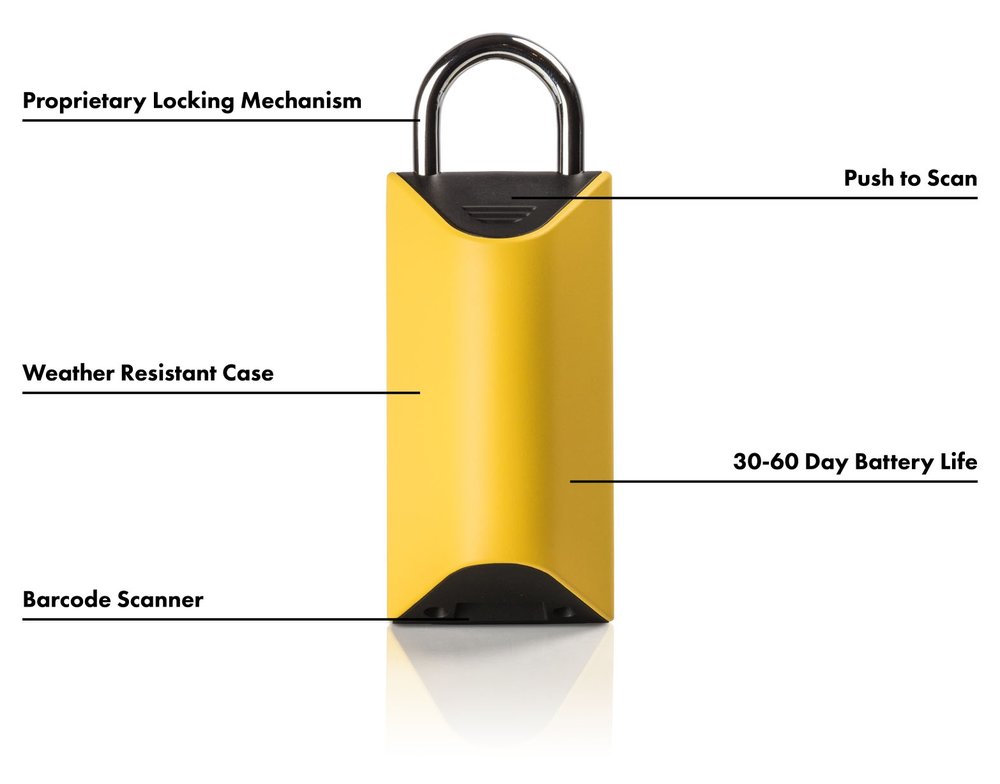
This clever – if expensive – product is called the BoxLock and it is a keyless padlock that lets your package delivery person scan and drop off your packages into a locked box. The system essentially watches for a shipping event and then waits for the right barcode before opening. Once the delivery person scans the package, the lock opens, the delivery person sticks the package in a box or shed (not included) and locks it back up. You then go and grab your package at your leisure.

The lock costs $129.

The company appeared on everyone’s favorite show, Shark Tank, where they demonstrated the system with a fake door and fake UPS dude.

The internal battery lasts 30 days on one charge and it connects to your phone and house via Wi-Fi. While the system does require a box – it’s called BoxLock, after all, not LockBox – it’s a clever solution to those pesky porch pirates who endlessly steal my YorkieLoversBox deliveries.

11 Oct 2018

BoxLock secures your booty against porch pirates

This clever – if expensive – product is called the BoxLock and it is a keyless padlock that lets your package delivery person scan and drop off your packages into a locked box. The system essentially watches for a shipping event and then waits for the right barcode before opening. Once the delivery person scans the package, the lock opens, the delivery person sticks the package in a box or shed (not included) and locks it back up. You then go and grab your package at your leisure.

The lock costs $129.

The company appeared on everyone’s favorite show, Shark Tank, where they demonstrated the system with a fake door and fake UPS dude.

The internal battery lasts 30 days on one charge and it connects to your phone and house via Wi-Fi. While the system does require a box – it’s called BoxLock, after all, not LockBox – it’s a clever solution to those pesky porch pirates who endlessly steal my YorkieLoversBox deliveries.

11 Oct 2018

Pocket’s reading app won’t sound so robotic now

Last year, Mozilla made its first acquisition by snatching up Pocket, the Instapaper competitor that helps you save longer articles for later reading. Today, this popular reading app is getting a major update that gives its app a visual makeover, including a new dark mode, and most importantly, a better way to listen to the content you’ve saved.

Pocket had added a text-to-speech feature several years ago, so you could listen to an audio version of your saved articles, instead of reading them. Instapaper today offers a similar option.

But these text-to-speech engines often sound robotic and mangle words, leading to a poor listening experience. They’ll work in a pinch when you really need to catch up with some reading, and can’t sit down to do it. But they’re definitely not ideal.

Today, Pocket is addressing this problem with the launch of a new listening feature that will allow for a more human-sounding voice. On iOS and Android, the listen feature will be powered by Amazon Polly, Mozilla says.

First introduced at Amazon’s re:Invent developer event in November 2016, Polly uses machine learning technologies to deliver more life-like speech. Polly also understands words in context. For example, it knows that the word “live” would be pronounced differently based on its usage. (E.g. “I live in Seattle” vs. “Live from New York.”) The technology has evolved since to support speech marks, a timbre effect, and dynamic range compression, among other things.

To take advantage of the updated “Listen” feature, users just tap the new icon in the top-left corner of the Pocket mobile app to start playing their articles. It’s like your own personalized podcast, Mozilla notes.

In addition, the app has been given a redesign that gives it a clean, less cluttered look-and-feel, and introduces a new app-wide dark mode and sephia themes, for those who want a different sort of reading experience.

The redesign includes updated typography and fonts, focused on making long reads more comfortable, as well.

“At Mozilla, we love the web. Sometimes we want to surf, and the Firefox team has been working on ways to surf like an absolute champ with features like Firefox Advance,” said Mark Mayo, Chief Product Officer at Firefox, in a statement about the launch. “Sometimes, though, we want to settle down and read or listen to a few great pages. That’s where Pocket shines, and the new Pocket makes it even easier to enjoy the best of the web when you’re on the go in your own focused and uncluttered space,” he said.

The updated version of Pocket is live on the web, iOS and Android, as of today.