Year: 2018

11 Oct 2018

Gogoprint raises $7.7M to expand its online printing business in Asia Pacific

Gogoprint, a startup that is aiming to disrupt the traditional printing industry in Southeast Asia, has pulled in a $7.7 million investment as it prepares to expand its business in Asia Pacific.

We first profiled Gogoprint in 2016 soon after its launch the previous year, and since then the Bangkok-based company has expanded beyond Thailand and into Singapore, Malaysia and Indonesia. Now, the company is looking to go beyond Southeast Asia and enter Australia, New Zealand, South Korea and other markets over the coming 12 months.

Those moves will be funded by this Series A round, which is led by existing Gogoprint backer OPG (Online Printing Group), an investment firm from Kai Hagenbuch who was an early backer of Brazil-based Printi. Printi previously sold a chunk of its business to printing giant VistaPrint through a 2014 investment and it is generally heralded as a startup success within its space.

Gogoprint claims to have worked with 45,000 companies to date. Its core services include printed business cards, flyers, booklets, posters and more, in addition to marketing collateral such as promotional pens, other stationary and flash drives.

Printing isn’t a particularly sexy space from the outside, but Gogoprint is aiming to upend the industry in Southeast Asia using something known as “batching.” That involves bundling a range of customer orders together for each print run to ensure that each sheet that’s sent to the printer is filled to capacity, or near capacity.

That sounds obvious, but traditional printing batches were almost always below capacity because each customer ordered individually with little option for batching. Gogoprint uses the internet to reach a wider number of customers which, using technology to batch jobs, means that it can handle more orders with fewer printer runs. That translates to cost savings for its business and lower prices for its customers. There are also benefits for the printers themselves, as they are guaranteed volume, which is no sure thing in today’s increasingly digital world.

Gogoprint joint managing director David Berghaeuser — who founded the company with fellow co-founder Alexander Suess — told TechCrunch that the company’s main pivot has been away from the idea it needed to own its printing facility in-house.

“When we started, we had this impression that as an online printer eventually we needed to own and operate our own machinery. But over one or two years we had a mindset shift when we realized there’s this option to operate this model as a pure marketplace — we’re definitely a marketplace and do not plan to own any printing machinery,” he explained.

A large part of that is because in Southeast Asia it simply isn’t practical to ship products overseas, both in terms of time and also the cost and hassle of importing. So Gogoprint has local partners in each market that it works with. Rather than “disrupting” the system, Berghaeuser argued that his company is making the process more efficient.
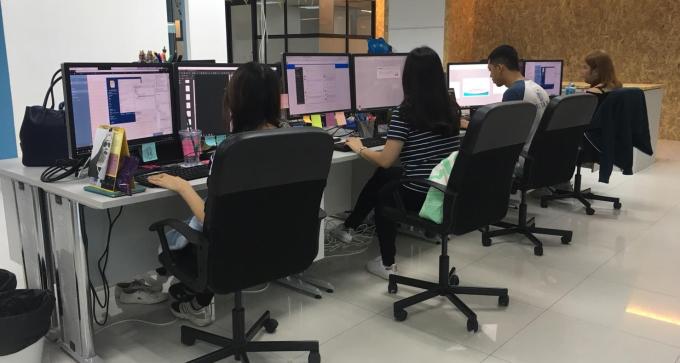
Gogoprint staff at the company’s office in Bangkok, Thailand

Gogoprint currently has around 125 staff, and there are plans to grow that number by an additional 30. In particular, Berghaeuser said the company is building out an internal structure that will enable it to scale — that includes the recent hiring of a CTO.

Berghaeuser explained that the company focuses on larger clients — such as Honda, Lazada and Lion Air — because of their higher average basket size and a higher chance of repeat customers, which he revealed is 60 percent on average. That’s achieved with a few tricks, which includes no design software on the website. Instead, Gogoprint customers upload their completed designs in any format. While he conceded the formats can be a pain, Berghaeuser clarified that the approach minimizes more hobbyist-type business, although he did say that the company is happy to work with customers of all sizes.

Gogoprint claims it grew its customer numbers by 200 percent over the past year but it declined to provide revenue details. Berghaeuser did say the company has a path to profitability that’s helped by “healthy” profit margins of 30-80 percent depending on the product.

Hagenbuch, the early backer of Printi in Brazil, is convinced that Gogoprint is on to a good thing in Asia.

“There are a handful of big-name online printers operating in the region. However, each of them has localized operations as they have been unable to truly expand regionally into Southeast Asia due to operational and market form factors,” he said in a statement

“Gogoprint has found the right formula to win more and more customers by creating true value: providing something that’s better at a cheaper price point, and with enhanced speed to market,” Hagenbuch added.
10 Oct 2018

Self-driving car startup Aurora becomes Pennsylvania’s first “authorized” tester

Aurora, the buzzy self-driving car startup, has become the first company officially authorized by the Pennsylvania Department of Transportation to test its vehicles on public roads.

Aurora has been testing its autonomous vehicles on public streets in Pittsburgh since late 2017. And other companies such as Argo AI also test autonomous vehicles there. So receiving an “authorized tester” designation might seem a bit backwards.

Welcome to the wacky world of autonomous vehicles where the state and local agencies are often playing policy catch up to technological advancements.

Pennsylvania, and specifically Pittsburgh, is already a hotbed of AV testing and research with Carnegie Mellon University, Aurora, Argo AI and Uber ATG all located in the area.

This authorized tester designation is part of an automated vehicle testing guidance developed by a task force and released in July. The guidance is meant to help regulators better monitor and track autonomous vehicle testing in the state.

The key word in there is “guidance.” Pennsylvania law allows testing of highly automated vehicles as long as there’s a licensed driver behind the wheel who can take control if needed.

In other words, going through an application process to become an authorized tester is voluntary. And Aurora was the first to comply.

Aurora explained in a blog post Wednesday that it voluntarily complied with PennDOT’s request “because we believe this will help the communities in and around Pittsburgh to be aware of Aurora, our testing, our commitment to safety, and our vision for a self-driving future.”

Aurora will provide PennDOT information about where it’s testing, the conditions under which it tests, the internal checks and safety measures used, the vetting and training of vehicle operators and details about how its self-driving system works.

Aurora doesn’t hire independent contractors as test drivers. Instead it uses full-time employees who go through a 12-week training program that includes a defensive driving course and coursework on how to operate the self-driving system safely. The test drivers undergo weekly, quarterly, and annual refresher trainings, according to Aurora. The company also requires a two people in test vehicles when driving in autonomous mode.

It’s a small, notable progression in Aurora’s big year of firsts. The company, founded by Sterling Anderson, Drew Bagnell and Chris Urmson, announced partnerships with Volkswagen Group, Hyundai and Chinese electric vehicle startup Byton. It’s made some key hires, including SpaceX’s former head of software engineering, Jinnah Hosein, who is leading a software engineering team. And it has three locations, its headquarters in Palo Alto as well as offices in San Francisco and Pittsburgh.

It’s also noteworthy for the state. The guidance lays the foundation for future legislation or policies that would provide greater oversight on autonomous vehicles testing and even open the door for testing vehicles without a human driver behind the wheel.

10 Oct 2018

Teeth-straightening startup SmileDirectClub is now worth $3.2 billion

SmileDirectClub, the at-home teeth-straightening startup, has just raised $380 million at a $3.2 billion valuation, the company announced today. Investors from Clayton, Dubilier & Rice led the round, which featured participation from Kleiner Perkins and Spark Capital.

This funding comes on top of Align Technology’s $46.7 million investment in SmileDirectClub in 2016, and another $12.8 million investment in 2017 to own a total of 19 percent of the company.

“We are very excited with the outcome of our most recent fundraising round,” SmileDirectClub co-founder Alex Fenkell said in a statement. “Our mission has always been to provide an affordable and convenient option to anyone who wants to transform their smile. We are excited to continue our growth into new spaces and be given the incredible opportunity to reach even more people with our life-changing service,” said Fenkell. “We can’t wait to see what the future holds and are grateful for the support from our new investors.”

SmileDirectClub is a direct-to-consumer teeth-aligner startup that started with the idea of using teledentistry to virtually connect licensed dentists and orthodontists with people who want to straighten their teeth. Since its inception in 2014, SmileDirectClub says it has helped more than 300,000 people straighten and brighten their teeth.

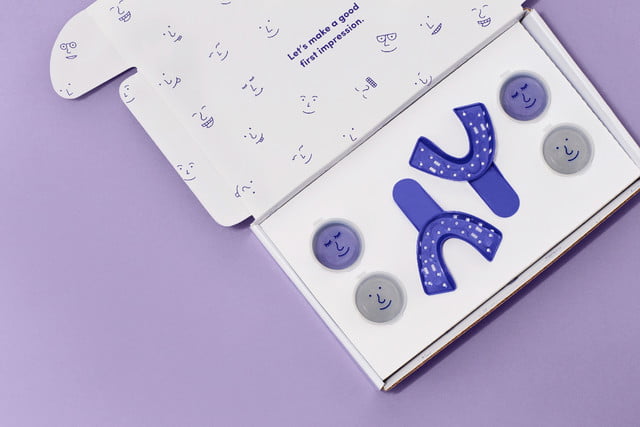
The company ships invisible aligners directly to customers, and licensed dental professionals (either orthodontists or general dentists) remotely monitor the progress of the patient. Before shipping the aligners, patients either take their dental impressions at home and send them to SmileDirectClub or visit one of the company’s “SmileShops” to be scanned in person. SmileDirectClub says it costs 60 percent less than other types of teeth-straightening treatments, with the length of treatments ranging from four to 14 months. The average treatment lasts six months.

Though, members of the American Association of Orthodontists have taken issue with SmileDirectClub, previously asserting that SmileDirectClub violates the law because its methods of allowing people to skip in-person visits and X-rays is “illegal and creates medical risks.” The organization has also filed complaints against SmileDirectClub in 36 states, alleging violations of statutes and regulations governing the practice of dentistry. Those complaints were filed with the regulatory boards that oversee dentistry practices and with the attorneys general of each state.

Back in June, the AAO expressed its disappointment in learning about Macy’s decision to offer SmileDirectClub in some of its locations, saying “orthodontic treatment is not a product. Rather, it is a complex medical process.”

In the statement, the AAO said “it is in the best interest of consumers to have orthodontic treatment conducted under the direct and ongoing, in-person supervision of a licensed orthodontist.”

But SmileDirectClub is not the only startup in this space. Check out the story below to learn more about the competitive market that has popped up around your teeth.

10 Oct 2018

Tech stocks (and the stock market) are tanking thanks to rising interest rates

Tech stocks tanked today amid a broader stock market slide as nervous investors worried that the 10-year bull run in public stocks may be coming to an end.

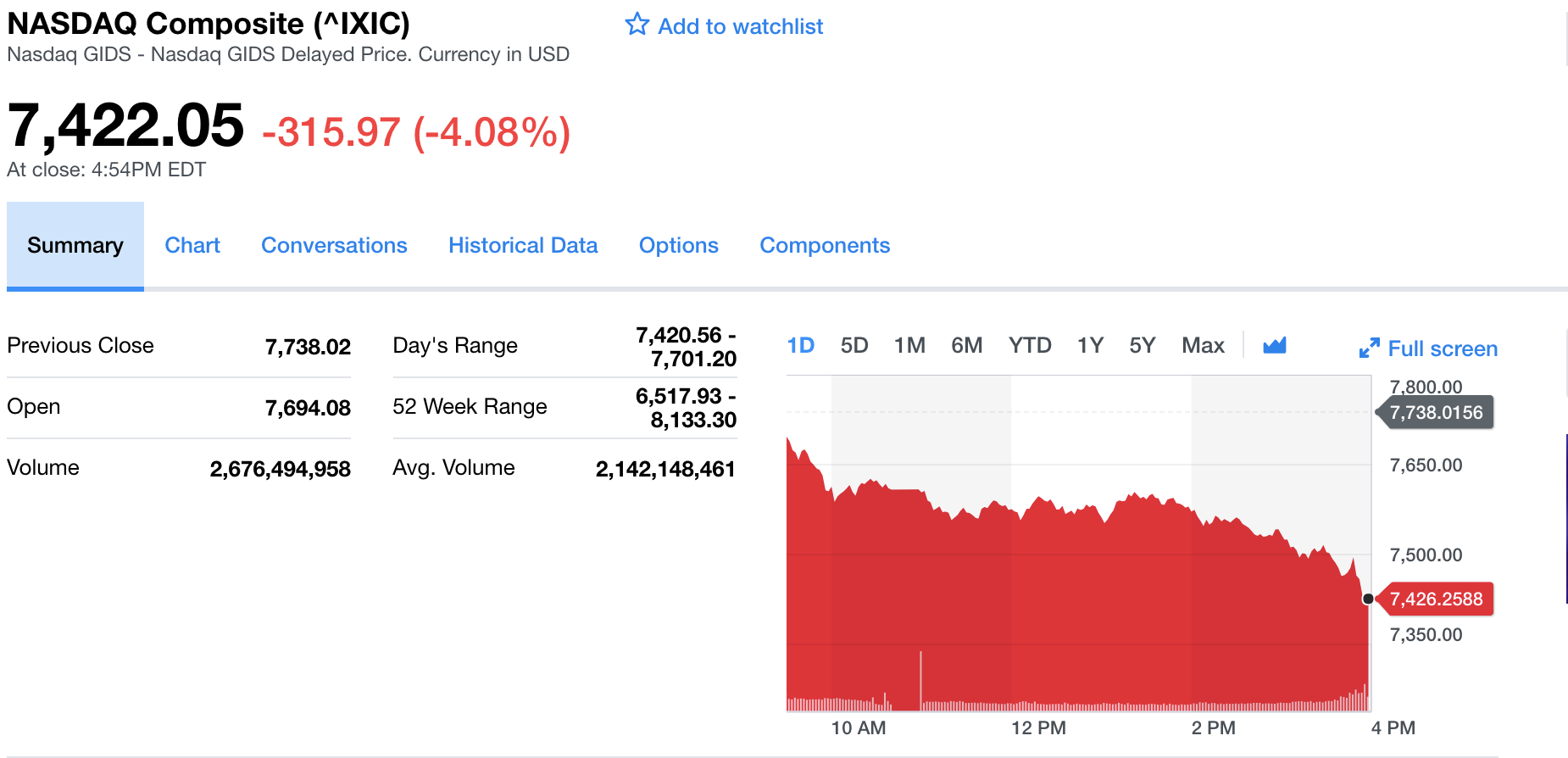
The S&P 500 dropped 3.3 percent while Nasdaq composite index (which is the market where many of the largest U.S. tech companies are traded) lost 4 percent of its value, falling 315.97 points. The net result is that the hand of the market is crushing stocks and high-growth technology companies are bearing the brunt of the beating.

A few points drove the selling, including rising inflation and interest rates as well as a move by the Fed to tighten policy. Further, Wall Street experts noted, as interest rates rise, many big money movers are making big money moves and taking money out of the stock market to invest in more secure bonds with guaranteed rates of return.

Stocks like Amazon (down 6.15 percent) and Tesla (down 2.25 percent) led in the downturn as stocks like Walmart remained relatively unscathed at -1.36 percent.

The NYSE Arms Index reflected the turmoil, rising to 1.19 from .5 today. The Arms Index moves over 1.0 when the market is down.

As our former correspondent and current Crunchbase editor, Alex Wilhelm, noted on Twitter, the big five lost a bunch of money today. And by a bunch we mean $191 billion. That’s not chump change.

10 Oct 2018

Apple reportedly plans to give away its TV content, because that worked well with U2

Apple has answered two questions in one day, or rather a CNBC report citing someone within the company has. Why are the shows it’s planning so allegedly boring? And what does it plan to do to get a foot in the door in an increasingly competitive streaming-media market? They’re going to repeat the success they had with U2’s “Songs of Innocence” and just shunt it right onto everyone’s device.

To be clear, the report suggests that Apple will give its original content away for free to anyone with an iOS or tvOS device (Macs appear to be excluded). Users will find a shiny new app early next year called “TV,” in which will be Apple’s full lineup of PG-rated comedy and drama, free of charge.

Users will have the opportunity to subscribe to “channels,” for instance HBO, through which they can watch shows from those providers. Who will be allowed on this platform? It’s unclear. How will the billing work? Unclear. Will it replace standalone apps for the likes of Netflix? Unclear. How will it differ from iOS to tvOS? Unclear.

The only thing that is clear is that Apple is working from a position of massive leverage as the only company that can or has reason to launch a shared media channel through a billion-dollar giveaway. No doubt there will be other ways they’ll pinch the competition: search and Siri functionality will probably be better for TV; it’ll have integrations with other first-party apps; they’ll default users to using the TV app when they find a show they like — that sort of thing.

Some of you may be wondering: can Apple really just spend a billion dollars on content and then give it away for free? The answer is unequivocally yes. This company is rich beyond imagining and they could do this every year if they wanted to (and in fact they might have to for a bit). Besides, this is a billion dollar investment in a platform it hopes to entrap every other popular media company in.

Here’s the plan: First you get a base level of okay shows on the TV app so it isn’t a wasteland and people can get used to it always being there along with the other two dozen permanent apps. Then you nag some partners and channels into putting their stuff on there because it’s a “more streamlined experience” or something and collect rent when they do.

Once you have critical mass you reveal your second round of content — the good stuff — and a ridiculously cheap price, like $30 per year, or less bundled with iCloud stuff. Apple doesn’t need to make money on this, unlike other companies, so it can charge literally whatever it wants. Too low and people think it’s just a hobby, too high and they won’t pay for it on top of Netflix and HBO. Sweeten the deal with special pricing you wring out of channels because they can’t afford to leave this new walled garden, and say consumers come out ahead.

Meanwhile of course this is only available on Apple hardware, so you lock people into the ecosystem more, and maybe even sell a few Apple TVs.

Ultimately what they’re doing is buying their way into the market with a big up-front payment to shift and lock a non-trivial portion of the existing audience into their own app — a familiar maneuver.

The money, well, they’ve already spent that. And possibly on content of questionable quality. That’s the one big fault in the plan: Apple’s squeamishness may result in a TV app with a bunch of garbage on it, in which case (hopefully) no one will use it at all and the company won’t get the leverage it needs to bully other media companies into joining up.

You may remember how this kind of forced-content play worked out with U2. After they put “Songs of Innocence” on everybody’s computer, the backlash was so strong that Bono personally apologized. Turns out Apple isn’t actually a tastemaker — they just make the phones that tastemakers use.

In that case it may be that their quest to unseat the actual tastemakers of this era — the likes of Netflix and HBO, which rebuilt the TV industry from the ground up — is quixotic and doomed to failure (or at least a period of ignominious limbo).

10 Oct 2018

Magic Leap expands shipments of its AR headset to 48 US states

If you are dying to get your hands on some crazy Magic Leap hardware, you have some much better options as of today.

At the company’s first developer conference, Magic Leap announced that they are opening order of the Magic Leap One Creator’s Edition headset to the 48 contiguous states of the USA. If you’re in Hawaii or Alaska, no dice.

Previously, you had to be in Chicago, LA, Miami, NYC, San Francisco or Seattle in order to get your hands on it. Also, if you had previously ordered the headset in one of those cities, someone would come to you, drop it off and get you set up personally. That service is expanding to 50 cities, but you also don’t need to have someone set it up for you in order to buy one now.

It’s worth reiterating that this thing costs $2,295. The company is doing a financing plan with Affirm so that interested buyers can spread the cost of the device over 24 months as well now.

It’s called a Creator’s Edition but it’s definitely geared towards the developer crowd. There are a few apps available for download in the Magic Leap World Store but this isn’t anywhere near consumer-ready and that’s why they’re getting developers to start building out some cool stuff while they get their ducks in a row and further hone their pitch for a post-iPhone vision of computing.

10 Oct 2018

Origin launches protocol for building cheaper decentralized Ubers & Airbnbs

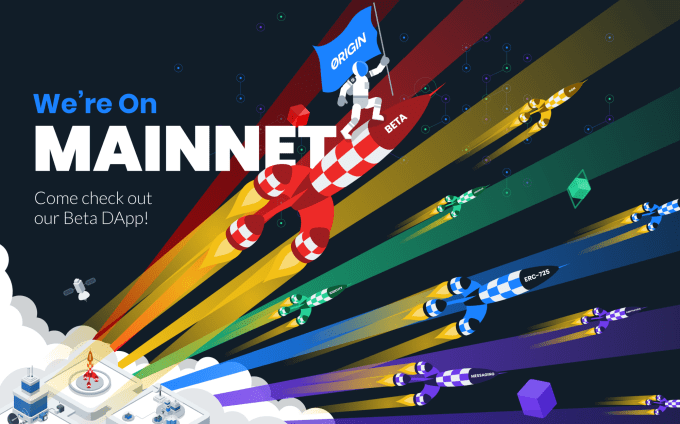
The sharing economy ends up sharing a ton of labor’s earnings with middlemen like Uber and Airbnb . $38 million-funded Origin wants the next great two-sided marketplace to be decentralized on the blockchain so drivers and riders or hosts and guests can connect directly and avoid paying steep fees that can range up to 20 percent or higher. So today Origin launches its decentralized marketplace protocol on the Ethererum mainnet that replaces a central business that connects users and vendors with a smart contract.

“Marketplaces don’t redistribute the profits they make to members. They accrue to founders and venture capitalists” Origin co-founder Matt Lie, who was the third product manager at YouTube. “Building these decentralized marketplaces, we want to make them peer-to-peer, not peer-to-corporate-monopoly-to-peer.” When people transact through Origin, it plans to issue them tokens that will let them participate in the governance of the protocol, and could incentivize them to get on these marketplaces early as well as convince others to use them.

Origin’s in-house marketplace DApp

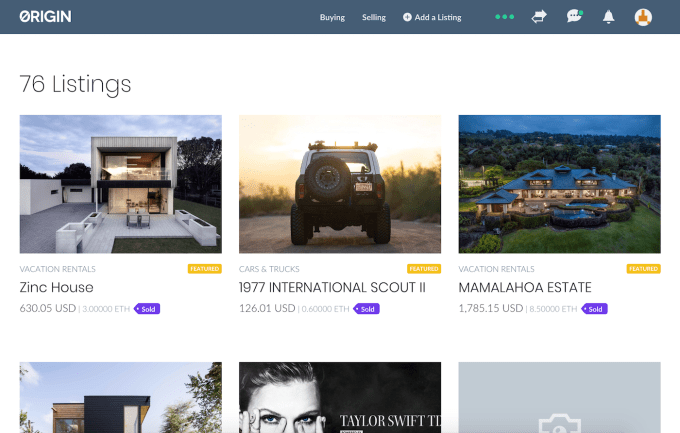
Today’s mainnet beta sees Origin offering its own basic decentralized app that operates like a Craigslist on the blockchain. Users can create profile, connect their ethereum wallet through services like MetaMask, browse product and service listings, message each other to arrange transactions through smart contracts with no extra fees, leave reviews, and appeal disputes to Origin’s in-house arbitrators.

Eventually with the Origin protocol, developers will be able to quickly build their own sub-marketplaces for specific services like dog walking, house cleaning, ride sharing, and more. These developers can opt to charge fees, though Origin hopes the cost-savings from its blockchain platform will let them undercut non-blockchain services. And vendors can offer a commission to any marketplace that gets their listing matched/sold.

It might be years before the necessary infrastructure like login systems and simple wallets make it easy for developers and mainstream users to build and adopt DApps built on Origin. But it has plenty of runway thanks to $3 million in seed token sale funding from Pantera Capital, $6.6 million raised through a Coinlist token sale, plus $26.4 million in traditional venture funding from Pantera Capital, Foundation Capital, Garry Tan, Alexis Ohanian, Gil Penchina, Kamal Ravikant, Steve Jang, and Randall Kaplan.

“Marketplaces are at the core of what makes the internet so valuable and useful and the Origin team has one of the most promising blockchain platforms for the new sharing economy — with currency baked in — this could be really disruptive (and one of the best utilizations of the ethereum blockchain)” says Ohanian, the Reddit and Initialized Capital co-founder.

Liu and co-founder Josh Fraser came up with the idea after trying to imagine the downstream effects of Ethereum. Liu recalls thinking, “What if we could replace dozens of multi-million and multi-billion dollar companies with open source protocols that aren’t owned or controlled by anyone?”

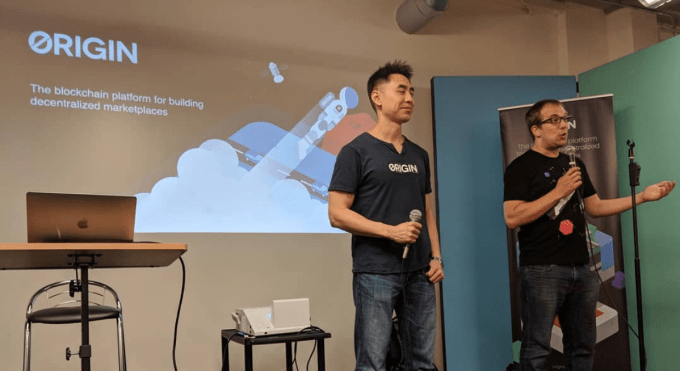
Origin co-founders (from left): Matthew Liu and Josh Fraser

So why would marketplaces want to build on Origin instead of creating their own blockchain or traditional proprietary system? Fraser tells me smart contracts can save money, but that “these individual pieces are incredibly difficult to build” so he sees Origin as “analogous to Stripe — able to abstract away all the friction of building on the blockchain.” 40 marketplaces have already signed letters of intent to build on the protocol.

If Origin reaches critical mass, it could also benefit from the concept of shared network effect. Users only have to sign up once, and can then interact with any marketplace built on Origin. That means new marketplaces the builds on the protocol instantly has a registered user base.

Origin will face some stiff challenges, though. There’ll be a chicken-and-egg problem of getting the first marketplaces signed up before there are users on its self-sovereign identity platform, or geting those users aboard when there’s little for them to do. Liu admits that timing is the startup’s biggest threat. “We believe that decentralized marketplaces are inevitable, but a lot of smart people seem to think we’re too early and that we should be focused on building lower-level infrastructure instead” the co-founder says. For us, we’d rather be too early than too late.”

There’s also the trouble of leaving actors in a capitalist system to treat each other properly without a centralized authority. If an Uber driver treats you terribly, you can complain and get them kicked off the platform. Even with Origin’s review system, abusers of the system may be able to continue operating. It’s easy to imagine its arbitration service becoming completely overwhelmed with disputes. Luckily, Origin has made some strong hires to tackle these challenges, including Yu Pan who it says was a PayPal co-founder, former head of Dropbox’s NYC engineering tream Cuong Du, and Franck Chastagnol who previously led engineering teams at Paypal, YouTube, Google, and Dropbox.

Origin’s success will all come down to usability. Your average Uber driver or Airbnb host is no blockchain expert. They vend through those apps because it’s easy. Those centralized organizations are also highly incentivized to fulfill transactions quickly and smoothly in ways prohibited by eliminating fees. Origin will have to effectively make the blockchain aspects of its service disappear so all users and vendors know is that they’re paying less or earning more.

10 Oct 2018

Sarah Friar, long the CFO of Square, is leaving to join the social network Nextdoor as its CEO

Square’s CFO Sarah Friar is stepping down to become the CEO of Nextdoor, according to the payment company’s CEO, Jack Dorsey.

In a statement issued a bit ago, he says of Friar that she “steered us through an IPO and helped build a growing ecosystem of businesses that will scale into the future.” Friar “leaves us having established a culture of entrepreneurship and discipline across the entire company. She has been an amazing leader, partner, and friend, and we are grateful for all she’s done for Square.”

Nextdoor has since released its own statement about Friar, who will assume the position in December. Quoting the company’s cofounder and outgoing CEO Nirav Tolia, the statement reads: “Sarah is one of the most highly regarded executives in Silicon Valley with an exceptionally rare mix of proven business skills, and authentic heart and soul. . . From the very beginning of our CEO search, she has been the top choice, and the board of directors and I feel exceptionally fortunate and excited for her to lead Nextdoor moving forward.”

The hire looks like a smart move by Nextdoor, the fast-growing social network that centers around neighborhoods and which, three months ago, announced that Tolia planned to step aside as soon as he found the right person to take Nextdoor “to the next level.”

At the time, Tolia had said in an email to employees that the role of CEO needed to evolve as the company evolves. He also said then that he will remain the company’s board chairman.

San Francisco-based Nextdoor has raised $285 million from investors over its eight-plus years, including from Insight Venture Partners, Benchmark, Shasta Ventures, Tiger Global Management and Kleiner Perkins. The company has soared into unicorn terrain, but it also seemingly needs to generate more revenue before it can be taken public. Toward that end, it began offering paid real estate listings roughly one year ago. The company also sells targeted ads.

Friar, often described as Dorsey’s right-hand woman at Square, grew up in Northern Ireland, the daughter of farmers. She was the first in her family to go to university, studying engineering at Oxford.

After graduating, she joined McKinsey as a business analyst in London, then Johannesburg, before moving to California in 1998 to nab an MBA at Stanford. Friar went on to spend a decade with Goldman Sachs in Silicon Valley, leaving the powerhouse bank as a managing director before spending a year with Salesforce as an SVP, then joining Square in 2012.

In addition to her work with Square, Friar sits on the boards of two powerful companies:  Slack and Walmart.

Shares of Square have fallen in after-hours trading on the news.

10 Oct 2018

Microsoft adds 60,000 patents to the Open Invention Network

Microsoft announced today that it’s joined open-source patent group, the Open Invention Network in an effort to help shield Linux and other open-source software from patent-related suits. As part of the deal, the software giant is opening a library of 60,000 patents to OIN members. Access to the massive portfolio is unlimited and royalty free.

It is, as ZDNET notes, a shift away from the aggressively litigious corporation of year’s past. Among other suits, the company had previously gone after a number of different companies in the Android ecosystem. Microsoft acknowledges as much in its announcement, adding that the news should be taken as a sign that its turning over a new leaf.

“We know Microsoft’s decision to join OIN may be viewed as surprising to some,” EVP Erich Andersen writes in a blog post, “it is no secret that there has been friction in the past between Microsoft and the open source community over the issue of patents. For others who have followed our evolution, we hope this announcement will be viewed as the next logical step for a company that is listening to customers and developers and is firmly committed to Linux and other open source programs.”

The news also finds the company looking to blur the lines between Windows and Linus development, encouraging devs to create programs for both operating systems, along with .NET and Java.

Last week, Microsoft followed the lead of companies like Google, Facebook and Amazon by joining anti-patent trolling group, the LOT Network.

10 Oct 2018

Four reasons why you should attend TC Sessions AR/VR 2018

On October 18 — just one week away — some of the most brilliant and innovative minds in reality creation will gather at UCLA’s Royce Hall in Los Angeles to attend TC Sessions AR/VR 2018. Whether you’re an early start-up founder, an investor, a developer or a student, if you’re focused on AR/VR, you don’t want to miss this day-long intensive that goes deep into the current and future state of augmented and virtual realities.

Need a bit more convincing? Here are four reasons why you should buy a ticket and attend TC Sessions AR/VR 2018.

1. Deep-dive discussions

We have an outstanding roster of speakers ready to take the stage and go deep on both the opportunities and the challenges facing the AR/VR industry now and in the future. Here are just some of the people and topics we have on tap.

Niko Bonatsos, managing director at General Catalyst, Jacob Mullins, a partner at Shasta Ventures and Catherine Ulrich, managing director at FirstMark Capital will offer a reality check on the state of AR/VR funding — and discuss where the opportunities lie.

Survios co-founders Nathan Burba and James Illiff will talk VR gaming. The big question is whether VR gaming will continue to be a big opportunity and whether the studio can keep the momentum rolling.

Stephanie Zhan, a partner at Sequoia Capital, discusses how to build an inclusive — if virtual — future. As we spend more time in online virtual worlds, can the game developers who build them address the social issues we encounter?

2. Presentations: The challenging future of AR/VR

From expensive hardware to breaking out beyond gaming, AR/VR technology faces hurdles to widespread adoption. Heavy-hitters at Oculus, Facebook, and Snap (to name a few) weigh in on this important subject. Here’s a taste.

Finding users isn’t the only hurdle when it comes to augmented reality. Creating developer platforms ranks right up there on the AR challenge-o-meter. Eitan Pilipski, a VP at Snap, will talk about leveraging the company’s extensive AR selfie-filter expertise to attract more developers.

Yelena Rachitzky is an executive producer of experiences at Oculus, a company that’s invested hundreds of millions of dollars into VR content. She’ll discuss how the company plans to help Facebook kickstart its VR future. Will Facebook’s customers buy in?

Speaking of Facebook’s future, Ficus Kirkpatrick leads the company’s camera team, and he’ll talk about the company’s entry into AR — by augmenting customers’ smartphone cameras. But where will Facebook’s AR journey lead?

3. Networking

You won’t find a better opportunity to connect with the leaders, innovators, investors and makers within the AR/VR community. Whether you’re looking for collaborators, an investment opportunity, your next job or your next round of funding, you’ll find the people who can make it happen at TC Sessions AR/VR 2018 — all in one day, all in one place.

4. Build community

Community building goes beyond simple networking. It’s like-minded people sharing their ideas, philosophies and dreams. It’s about learning from each other and then returning to the work with renewed inspiration. Come and enrich the community.

TC Sessions AR/VR 2018 takes place on October 18 at UCLA’s Royce Hall in Los Angeles. Tickets cost $149, but you can save 35 percent simply by tweeting your attendance. Go buy a ticket and join your people for one incredible, inspiring day. We can’t wait to see you next week!