Year: 2018

10 Oct 2018

LinkedIn rebuilds its Recruiter platform, launches tracking system and gender filter in diversity push

We’ve been chronicling how LinkedIn, now owned by Microsoft, has built out tools and services it provides on its platform to capitalise on the fact that it now has nearly 600 million registered professional profiles and is a go-to for people looking to network and look for work in the white-collar world (these have included online learning, CRM solutions, business intelligence, and most recently employee engagement). The latest chapter in that story comes from its recruitment business, where the company is today announcing a big overhaul.

The Recruiter platform has been completely rebuilt, and along with that, LinkedIn is launching a new product to help employers manage the sourcing, interviewing and hiring of candidates. LinkedIn is also making a foray into how it can help businesses improve their diversity, by allowing recruiters assess the gender proportions in a pool of candidates.

The moves underscore LinkedIn’s currently strong position under its new(ish) owner Microsoft. LinkedIn’s revenues rose 37 percent in the last quarter (with engagement up 41 percent), bringing in $1.46 billion in revenues, and now it is gearing up to add in more monetization and services for its user base.

“LinkedIn has been reaccelerating our growth and is doing well financially, and Talent Solutions is in line with that, so we feel like this is the right time to be doing more,” John Jersin, LinkedIn’s VP of Talent Solutions, said in an interview. “We’re going beyond what our products have done in the past to now support the entire hiring process, helping jobseekers more.”

At the same time, it’s facing a lot of competition in the recruitment market, not just from the likes of Facebook (which is making talent acquisitions to build more intelligent tools to help in the hiring process, not just compete as a straight listings portal), but also startups like ZipRecruiter that is also bringing a more intelligent spin to make connecting talent with jobs less of a crap shoot.

“We’re not operating under the same rules as before,” Jersin admitted. “Candidates can be found online, and the process is more agile [than it used to be]. So we are evolving our product roadmap to [match] the talent ecosystem.”

Recruiter redux

The key feature of the new Recruiter platform — which will start to get rolled out in the coming months — is simplicity. Over the years, as LinkedIn has built out monetizing features on its service like advertising, the company’s back-end experience for those using the platform to broadcast job opportunities or search for candidates has become increasingly fragmented, with Recruiter (to proactively search for people), Jobs (job listings that you post), and Media (ads that you might take out advertising those jobs) all essentially existing as separate entities.

Now, the three will be merged into a single platform where those three products will sit on the same pool of data to work more efficiently. For example, when a job now gets posted, LinkedIn will use the data about who clicks on the link, and what kinds of searches it comes up in and for whom, to help tailor the search results that a recruiter gets when proactively looking for candidates to fill the role. There is an element of AI and machine learning to how LinkedIn is approaching this: the more data that LinkedIn reads, the better it will get at giving recruiters more relevant information.

It will also mean more monetising potential: if LinkedIn knows that a recruiter is actively looking for job candidates for a role, it will also know that the recruiter has yet to post a job ad for that role. Now, it will be able to suggest one action because of the other.

If you’ve been a user of LinkedIn before (and it seems that many people have at least established profiles on there, even if they are not great at keeping them up to date or using the platform for anything else), you know that it’s sometimes a little uncanny (if not a little creepy) for how it’s able to provide suggestions of people to connect to, even if there doesn’t appear to be many reasons for it to know what it does. I’ve never been a big fan of that — and it can sometimes be very upsetting, such as the time LinkedIn suggested I connect to my deceased mother — but on the other hand, it’s a clear sign of just how much social data science is being built and used under the hood at the company. Today’s Recruiter launch, in fact, is an example of where it could be used for a clear business benefit.

What will be interesting to see is if LinkedIn develops something like an incognito option for people who might want to look at job opportunities but not subsequently get put into buckets to get targeted by ads or recruiters in the future. LinkedIn says that incognito mode currently only applies to masking your identity when looking at profile views.

Talent Hubbub

[gallery ids="1730559,1730560"]

Meanwhile, Talent Hub, pictured above, is the latest effort from LinkedIn to build products that are adjacent to how people are already using its premium features. The Talent Hub is an ATS (applicant tracking system, in HR parlance), that will let recruiters manage candidate leads through the whole interviewing and hiring process. Today, there are a number of products that already do this — such as SmartRecruiters, Zoho Recruit and Jobvite — and LinkedIn is also going to start integrating better with those. But now it’s also going to offer its own service to compete with them, with the idea being that the different people who are involved with the different stages of the process can also communicate better together, too.

Interestingly, while LinkedIn is building more direct recruitment products, it’s also enhancing the kinds of data points that people can use when shaping how they will hire people today and in the future. Today, it’s launching its first effort at trying to tailor this in a way that might change the diversity ratio, specifically around gender.

[gallery ids="1730566,1730563,1730570,1730568"]

A few weeks ago, LinkedIn made its first foray into business intelligence with the launch of a product called Talent Insights, which gives companies the ability to dig into trends in their own hiring, and that of companies against which they compete or compare themselves to.

Today, LinkedIn’s adding a new feature in there that lets those companies now see gender breakdown within businesses. Then, when companies are in the process of hiring, they are now also given another detail: they will now know what the gender breakdown is in a given pool of applicants or potential candidates for a role. LinkedIn also will now provide a way on Recruiter to see how a company’s recruitment ads are performing across gender lines.

For companies that are looking to be more proactive on this front, LinkedIn’s also launching more online education classes related to diversity: on subjects like confronting bias, inclusive leadership and managing diversity.

These are very much baby steps for LinkedIn in the area of diversity and what role it might play in helping companies think about it. Jersin admits that trying to query for attributes that are typically the kind that are associated with diversity can be “tough questions.” Given that LinkedIn doesn’t ask for these kinds of details in people’s profiles, it would be hard if not impossible to actively search for minority candidates, and it could open a can of worms into how such a feature might get used.

(And as a measure of the state of things today, it appears to be much easier to search for someone on LinkedIn who went to MIT and is an engineer than it is to find a African American female who is an engineer.)

My guess is that this is partly why LinkedIn is taking a less direct approach to start with by providing guiding data and other supplementary information, and why the company is tackling gender first before other diversity attributes.

“We need to think about this carefully and how to build into platform for other attributes,” Jersin said. “It’s a complex and challenging area that we are exploring.”

It’s a positive step ahead, though, and helps lay the groundwork for how LinkedIn (and its customers) might approach the issue in the future. The company said that a recent survey it ran to identify hiring trends found that diversity was the top hiring priority today, with 78 percent marking it as “extremely important.”

“That’s become a guiding product principle for us,” Jersin said, describing the company’s approach as “diversity by design.”
10 Oct 2018

Apple needs a feature like Google’s Call Screen

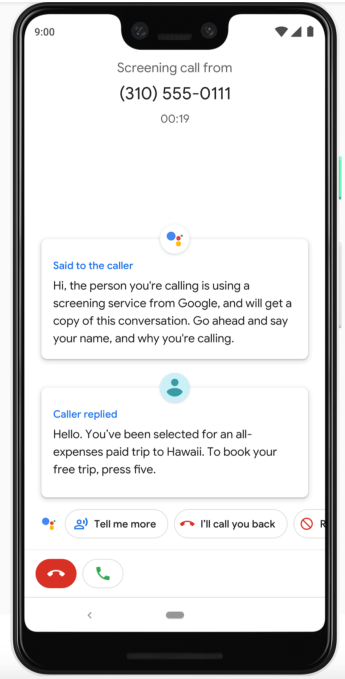
Google just one-upped Apple in a significant way by addressing a problem that’s plaguing U.S. cellphone owners: spam calls. The company’s new Pixel 3 flagship Android smartphone is first to introduce a new call screening feature that leverages the built-in Google Assistant. The screening service transcribes the caller’s request in real-time, allowing you to decide whether or not to pick up, and gives you a way to respond.

Despite the numerous leaks about Google’s new hardware, Call Screen and the launch of Duplex for restaurant reservations were big surprises coming from Google’s hardware event yesterday.

Arguably, they’re even more important developments than fancy new camera features  – even if Group Selfie and Top Shot are cool additions to Google’s new phone.

Apple has nothing like this call screening feature, only third-party call blocking apps – which are also available on Android, of course.

Siri today simply isn’t capable of answering phones on your behalf, politely asking the caller what they want, and transcribing their response instantly. It needs to catch up, and fast.

Half of calls will be spam in 2019

Call Screen, based on Google’s Duplex technology, is a big step for our smart devices. One where we’re not just querying our Assistant for help with various tasks, or to learn the day’s news and weather, but one where the phone’s assistant is helping with real-world problems.

In addition to calling restaurants to inquire about tables, Assistant will now help save us from the increasing barrage of spam calls.

This is a massive problem that every smartphone owner can relate to, and one the larger mobile industry has so far failed to solve.

Nearly half of all cellphone calls next year will be from scammers. And their tactics have gotten much worse in recent months.

They now often trick people by claiming to be the IRS, a bank, government representatives, and more. They pretend you’re in some sort of legal trouble. They say someone has stolen your bank card. They claim you owe taxes. Plus, they often use phone number spoofing tricks to make their calls appear local in order to get recipients to pick up.

The national Do-Not-Call registry hasn’t solved the problem. And despite large FCC fines, the epidemic continues.

A.I. handles the spammers 

In light of an industry solution, Google has turned to A.I.

The system has been designed to sound more natural, stepping in to do the sort of tasks we don’t want to – like calling for bookings, or screening our calls by first asking “who is this, please?” 

With Call Screen, as Google explained yesterday, Pixel device owners will be able to tap a button when a call comes in to send it to the new service. Google Assistant will answer the call for you, saying: “Hi, the person you’re calling is using a screening service from Google, and will get a copy of this conversation. Go ahead and say your name and why you’re calling.

The caller’s response is then transcribed in real-time on your screen.

These transcripts aren’t currently being saved, but Google says they could be stored in your Call History in the future.

To handle the caller, you can tap a variety of buttons to continue or end the conversation. Based on the demo and support documentation, these include things like: “Who is this?,” “I’ll call you back,” “Tell me more,” “I can’t understand,” or “Is it urgent?”

You can also use the Assistant to say things like, “Please remove the number from your contact list. Thanks and goodbye,” the demo showed, after the recipient hit the “Report as spam” button.

While Google’s own Google Voice technology has been able to screen incoming calls, this involved little more than asking for the caller’s name. Call Screen is next-level stuff, to put it mildly.

And it’s all taking place on the device, using A.I. – it doesn’t need to use your Wi-Fi connection or your mobile data, Google says.

As Call Screen is adopted at scale, Google will have effectively built out its own database of scammers. It could then feasibly block spam calls or telemarketers on your behalf as an OS-level feature at some point in the future.

“You’ll never have to talk to another telemarketer,” said Google PM Liza Ma at the event yesterday, followed by cheers and applause – one of the few times the audience even clapped during this otherwise low-key press conference.

Google has the better A.I. Phone

The news of Call Screen, and of Duplex more broadly, is another shot fired across Apple’s bow.

Smartphone hardware is basically good enough, and has been for some time. Apple and Google’s modern smartphones take great photos, too. New developments on the camera front matter more to photography enthusiasts than to the average user. The phones are fine. The cameras are fine. So what else can the phones do?

The next battle for smartphones is going to be about A.I. technology.

Apple is aware that’s the case.

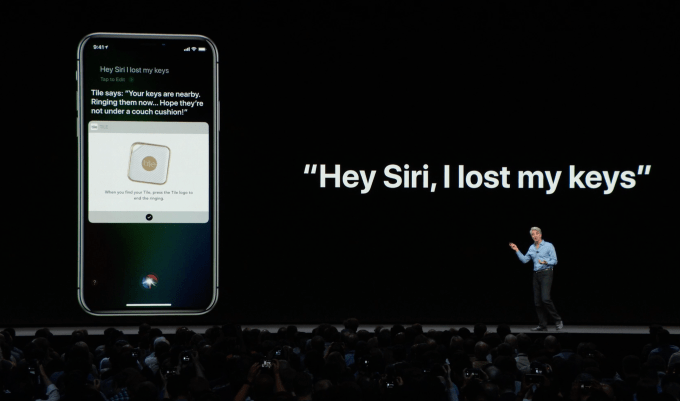
In June, the company introduced what we called its “A.I. phone” – an iPhone infused with Siri smarts to personalize the device and better assist. It allows users to create A.I.-powered workflows to automate tasks, to speak with Siri more naturally with commands they invent, and to allow apps to make suggestions instead sending interruptive notifications.

But much of Siri’s capabilities still involve manual tweaking on users’ parts.

You record custom Siri voice commands to control apps (and then have to remember what your Siri catch phrase is in order to use them). Workflows have to be pinned together in a separate Siri Shortcuts app that’s over the heads of anyone but power users.

These are great features for iPhone owners, to be sure, but they’re not exactly automating A.I. technology in a seamless way. They’re Apple’s first steps towards making A.I. a bigger part of what it means to use an iPhone.

Call Screen, meanwhile, is a use case for A.I. that doesn’t require a ton of user education or manual labor. Even if you didn’t know it existed, pushing a “screen call” button when the phone rings is fairly straightforward stuff.

And it’s not just going to be just a Pixel 3 feature.

Said Google, Pixel 3 owners in the U.S. are just getting it first. It will also roll out to older Pixel devices next month (in English). Presumably, however, it will come to Android itself in time, when these early tests wrap.

After all, if the mobile OS battle is going to be over A.I. going forward, there’s no reason to keep A.I. advancements tied to only Google’s own hardware devices.


10 Oct 2018

The Luna wireless portable iPad display adapter is now available for $80

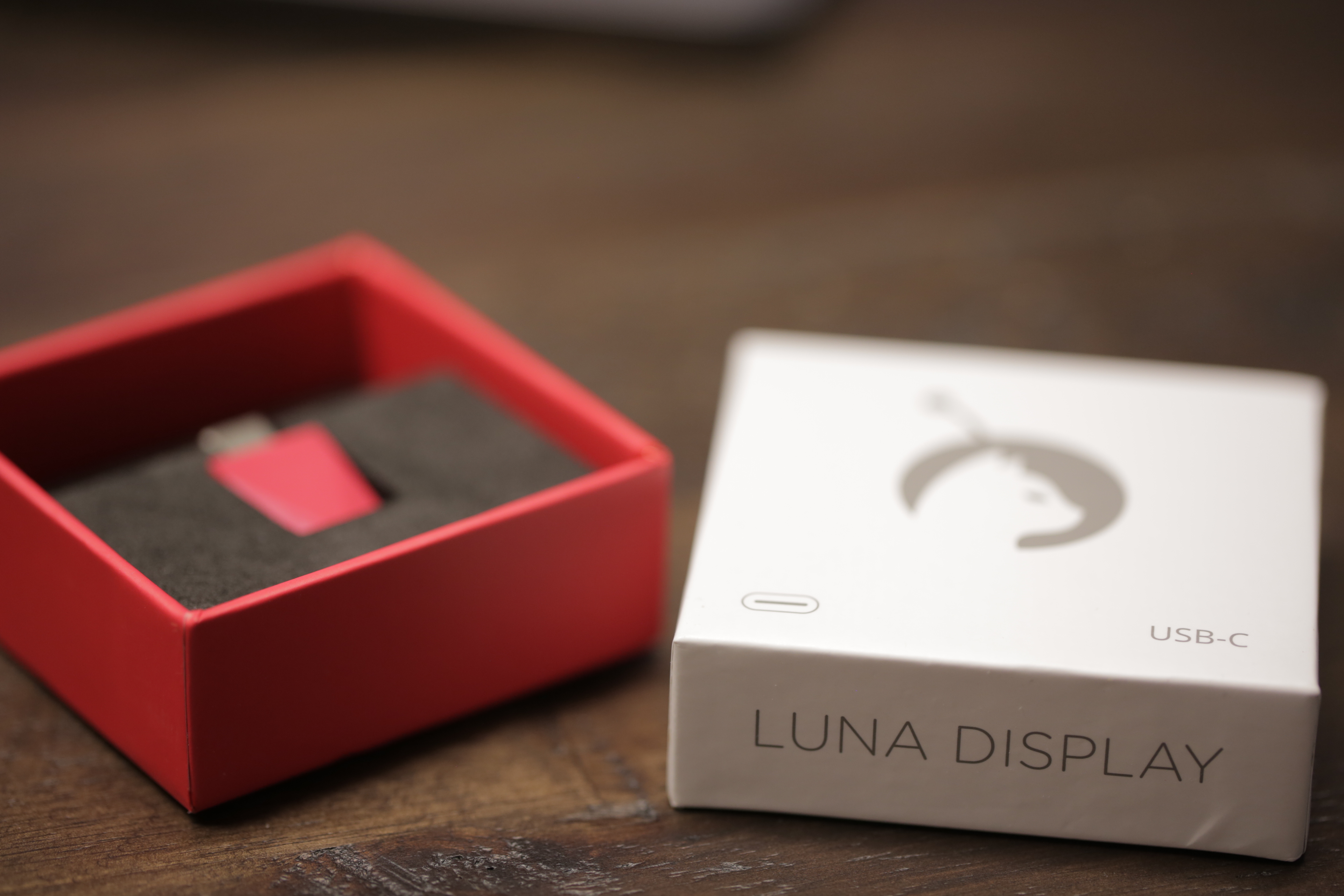
For a few, Luna Display feels like a game changer. I certainly got that feeling testing the tiny red dongle this week. The device’s promise is similar to Duet, but accomplishes the task wirelessly and with higher fidelity than its chief competitor.

Launched as a Kickstarter project last year, Luna is now available to everyone, priced at $80 (a $20 markup over the crowdfunded version). It’s not a pittance, and unless you’re someone who requires a secondary portable display for your Mac (and who happens to own an iPad), it’s not for you.

If, however, you can tick off all those boxes, the device has the potential to seriously alter your workflow on the road. As a frequent traveler who relies on a large secondary monitor at the office, I happen to be right at the center of that Venn diagram, so I’m pretty excited at the potential.

At home, the system worked like a charm. You plug the adapter into either a USB-C or Mini DisplayPort, make sure the two devices are connected to the same network and boom, you’ve got a second monitor.

Things were, admittedly, a bit trickier at TC’s New York headquarters, where the corporate Wi-Fi structure of our Verizon overlords is a veritable rat king of wireless signals. “Wi-Fi can be tricky,” as the Luna app puts it. Here I had to do everything manually, using the iPad’s camera to capture a QR code on my MacBook.

It took a couple of tries, but I was able to make it work. The real failsafe backup is doing it through a wired connection. Not ideal, but it does the trick.

Once up and running, I have to say, I was pretty impressed with the results. Once up and running, you can freely drag windows across the displays.

However, there were a few issues here and there. The pixelation when moving things that Darrell mentioned in his review hasn’t been fully solved. There were also some strange artifacts here and there — the DM popup window in Facebook was a bit of a mess, and the system had some issues with the overcrowded menu bar.

For the things I need (RSS feeds, browser, Slack), none of this was a deal breaker. And the ability to use touch on the second screen is about as close as we’re coming to a touchscreen Mac at any point soon.

Luna Display is available now in wide release. It also works with the company’s other product, AstroPad, which turns the iPad into a makeshift Wacom drawing tablet.

10 Oct 2018

The Hack Fund will use crypto to give startups early liquidity

Now that “utility” tokens have become a popular and international way to fund major blockchain projects, a pair of investors are creating a new way to turn tokens into true equities. The investors, Jonathan Nelson and Laura Nelson, have created Hack Fund, an early stage investment vehicle that allows startups to launch what amounts to “blockchain stock certificates,” according to Jonathan.

“Our previous business model exchanged equity from startup companies for services, and wrapped that equity into funds that we then sold to investors. These fund investors have included family offices, institutions, and high net worth individuals,” said Jonathan. “However, Hack Fund represents a new business model. Because Hack Fund leverages the blockchain, investors all over the world at all levels can participate in startup investing by trading blockchain stock certificates. Also, its SEC compliant structure means that it is also available to a limited number of accredited investors in the US.”

The team originally created Hackers/Founders, a tech entrepreneur group in Silicon Valley, and they now support 300,000 members in 133 cities and 49 countries. Hack Fund is a vehicle to support some of the startups in the Hackers/Founders network.

“HACK Fund, through its Hackers/Founders heritage, has a large, unique global network,” said Jonathan. “This provides Hack Fund with unparalleled reach and deal flow across the global technology market. There are a few blockchain-based funds, but they are limited themselves to blockchain-only investments. Unlike typical venture funds, HACK Fund will provide quick liquidity for investors, leveraging blockchain technology to make typically illiquid private stocks tradeable.”

The idea behind Hack Fund is quite interesting. In most cases investing in a company leads to up to ten years of waiting for a liquidity event. However, with blockchain-based stock certificates investors can buy shares that can be bought and sold instantly while company performance drives the value up or down. In short, startups become liquid in an instant, which can be a good thing or a bad thing, depending on the founding team.

“HACK Fund is a publicly traded closed-end fund. The fund’s venture investments are valued on a quarterly basis by an independent third party, audited and posted to the blockchain for all token holders to review. There are no K-1 statements issued, there is no partnership/LLC, rather HACK Fund is an investment company akin to Berkshire Hathaway which invests in the same manner as early-stage venture capital,” said Jonathan.

The team is raising a little over $2 million in an ICO to build out the fund. They’ve already raised most of their $100 million total goal from individual investors but the ICO will let retail investors buy some of the tokens as they are made available on the BRD wallet.

10 Oct 2018

Shujinko brings in $2.8M for its cloud security compliance platform

Shujinko — yes, like the Mortal Kombat character — is emerging from stealth today after raising $2.8 million in seed funding from Unusual Ventures, Defy, Vulcan Capital, PSL Ventures and Vas Ventures.

The Seattle-based cloud security compliance platform is rolling out of startup studio Pioneer Square Labs, which itself recently raised $15 million to expand its incubation program.

Founded by a former director and a manager of Starbucks’ cloud engineering team, Scott Schwan and Matt Wells, Shujinko automates the auditing process for cloud-based IT businesses with at least 50 million users.

Here’s how Schwan explained it to me: “When you pay taxes through an accountant, basically you end up collecting all these receipts, you have all this evidence that you collected over time and you end up having to talk through it with an auditor to prove you don’t have any issues. That is a painful process … In IT, they are doing those on a regular basis, sometimes multiple times a  year they are going through the equivalent of an IT audit.”

“When companies go through an IT audit they generally spend months manually gathering evidence, like screenshots of a firewall configuration or an [operating system] configuration,” Wells added. “That takes months of manual effort and what we are trying to do is alleviate that pain by automating that process.”

Schwan and Wells have a long professional history. They met in 2008 at Tommy Bahama, where Schwan was a security and PCI program manager and Wells was an application system administrator. A few years later, Schwan joined Cardfree, a software platform for merchants. Not long after, he encouraged Wells to follow him.

“What I saw in [Wells] was someone who had this real drive to continue to learn,” Schwan said. “It’s something I felt I had as well.”

Wells ultimately agreed to join Cardfree, and when Schwan left the startup in 2015 to join Starbucks’ cloud engineering team, Wells, once again, followed suit.

For both of them, the experience of working at such a massive enterprise was transformative.

“What we saw there were the trends in the industry and how other competitors in the space were struggling with their cloud migration and specifically with the compliance needs in the cloud,” Wells said.

Wells and Schwan left Starbucks in January, joining Pioneer Square Labs as entrepreneurs-in-residence to work on what would become Shujinko.

As for the name, Shujinko — aside from its Mortal Kombat affiliation — is Japanese for hero or protagonist.

Matt and I have worked in infrastructure and security for a long time and we are never that main character,” Schwan said. “You can’t really see what we do, but it’s really important … With Shujinko, we’re really looking to step out and become that main character in our story.”

10 Oct 2018

Google’s Waze has expanded its carpooling app to every U.S. state

Waze Carpool, the app designed to connect drivers and commuters, is now available throughout the U.S. with a special focus on connecting Amazon employees.

As part of the nationwide rollout announced Wednesday, Waze said the carpool app will be available at 50 Amazon Fulfillment Center. The company said it’s partnering with cities, businesses, transit agencies, and civic organizations as well.

Waze originally trialed the app in markets, including San Francisco, Sacramento and Monterey. Waze expanded access to the app across California, Texas, Massachusetts and Washington. Now, it’s everywhere in the U.S.

“Traffic is at an all-time high in the U.S., yet over 75% of commuters journey to work alone in a car,” founder and CEO Noam Bardin said in a statement. “Waze is in a unique position to help facilitate carpooling on a national level. By leveraging the Waze community and connecting the dots between how people are traveling and where they want to go, we can empower everyone to reduce the number of cars on the road now.”

Waze Carpool isn’t like other ride-hailing services. The app lets riders and drivers find their own carpool buddies based on profiles, star ratings, number of mutual friends, and customizable filters such as gender, co-worker or classmate, and proximity to preferred route.. The app is designed to show the best matches, such as those closest to a preferred route or a coworker on the same shift,  at the top of the list. Payment is handled within the app.

The app lets users schedule rides up to 7 days in advance and a group setting enables several people to plan to carpool together.

Riders can download Waze Carpool on iOS or Android. Drivers need to download the Waze app. The company is offering all new riders $2 rides for 21 days.

The company is also rewarding drivers and riders for referrals. Drivers get $20 cash for each referral, and riders get $20 credit for each referral, with a max of 10 referrals per person.

10 Oct 2018

Alexa can now reserve conference rooms

Amazon is debuting a new feature that will allow businesses to use Alexa for booking conference rooms. The addition is part of the Alexa for Business platform, and works with linked calendars from either Google’s G Suite or Microsoft Exchange, as well as over an API, arriving soon.

The feature is part of Amazon’s broader plan to put Alexa to work outside the home. At last year’s AWS re:Invent conference, Amazon first launched its Alexa for Business platform to allow companies to build out their own skills and integrations for practical business use cases. Amazon also spoke of integrations that would allow Alexa to support productivity tools and enterprise services, including those from Microsoft, Concur, Splunk, and others.

Shortly after, early partner WeWork integrated Echo devices in some of its own meeting rooms to test out how the smart assistant could be useful for things like managing meeting room reservations, or shutting off or turning on lights.

Now, Amazon wants to make booking rooms themselves possible just by asking Alexa.

As the company explains, it’s common in workplaces for people to walk from room to room to grab a space for an ad-hoc meeting, or to find a space for a meeting that’s running over. But to reserve the room, they often have to pull out their laptop, run an application, do a search, and then look through the search results to find an available room. The Room Booking skill will allow them to ask Alexa for help instead.

The feature requires read/write permission to users’ calendar provider to enable, but can then be used to check the availability of the conference room you’re in, by asking “Alexa, is this room free?”

Users can then schedule the room on the fly by saying, “Alexa, book this room for half an hour,” or whatever time you choose.

Alexa will also be able to confirm if the room is booked, when asked “Alexa, who booked this room?”

Amazon is making this functionality available by way of a Room Booking API, too, which is soon arriving in beta. This will allow businesses to integrate the booking feature with their own in-house or third-party booking solutions. Some providers, including Joan and Robin are already building a skill to add voice support to their own offerings, Amazon noted.

The feature is now one of several on the Alexa for Business platform, specifically focused on better managing meetings with Alexa’s assistance. Another popular feature is using Alexa to control conference room equipment, so you can start meetings by saying “Alexa, join the meeting.”

A handful of large companies have since adopted Alexa in their own workplaces, following the launch of the Alexa For Business platform, including Condé Nast, Valence, Capital One, and Brooks Brothers. And the platform itself is one of many ways Amazon is contemplating as to how Alexa can be used outside the home. It has also launched Alexa for Hospitality and worked with colleges on putting Echo Dots in student dorms. It also last month introduced its first Alexa device for vehicles.


10 Oct 2018

Dyson’s got a $500 air-powered curling iron

Moving air — that’s the through line across most of Dyson’s products. The vacuums, fans, hand dryers, hair driers — at their heart, they all the do the same thing. Same goes for the new Dyson Airwrap, which has figured out a way to leverage vacuum power into hair curling.

Here’s how Dyson describes it,

At the heart of this story comes a radical idea: harness Dyson’s digital motor to create a phenomenon known as the Coanda effect. The Coanda effect occurs when a high-speed jet of air flows across a surface and, due to differences in pressure, the air flow attaches itself to the surface. Taking advantage of this principle, Dyson’s team of aerodynamicists created a way to style hair using only air combined with heat.

That’s engineering talk for a device that shoots air through a half dozen holes, wrapping hair around the cylinder. Then, like a standard curling iron, it uses heat like a standard curling iron — though this one is much less hot than cheaper models, potentially saving your hair (and skin) in the process.

All of which is to say it’s not this:

Dyson says it spent six years researching/testing the product, which seems to be on-par with the company’s high engineering standards. No surprise then that the Airwrap isn’t cheap. The kit starts at $500, with the “complete” version running $550 for multiple hair types.

10 Oct 2018

French designers build a 3D-printed metal watch

French watchmaker Unitam and 3D printing company Stainless teamed up to build a unique 3D printed watch, essentially the first of its kind. The team created the watch case using laser sintering to melt stainless steel 316L powder on a Renishaw AM250 printer.

The watch, which uses French-made hands and a Miyota movement, isn’t completely 3D printed. However, because 3D printing is now nearly foolproof and almost as good as injection molding, the teams will begin mass producing and selling these watches in the Unitam in Paris.

The watchmaker and the metals company showed off their watch at the Micronora trade show in France’s watchmaking city, Besançon.

It’s a clever and unique use case for 3D printing and I’d love to see more. Sadly, the current 3D printing systems can’t make small, complex parts for watch movements so we’re stuck with making larger, less complex parts until the technology truly takes off.

10 Oct 2018

Product Hunt Radio: ‘Tinder babies’ and the power of connecting people online and offline

In this episode of Product Hunt Radio, I’m in Los Angeles talking to Brian Norgard and Jeff Morris Jr., both of whom may be indirectly responsible for a new term, “Tinder babies.”

Brian Norgard is an entrepreneur, investor and chief product officer at Tinder. He has worked on a number of other products and was Tinder’s first acquisition. He collaborated with Sean Rad on an earlier app called Chill, which we discuss on the podcast. Brian is also an investor in Lyft, SpaceX and AngelList.

Jeff Morris Jr. is the director of Product for Tinder’s revenue initiatives. He previously worked at Zaarly and has created a number of products, including one stretch over three months where he built and launched three products, reaching the top of Product Hunt. He is also an investor in Lyft, CryptoKitties, Particle, Brat and others.

In this episode:

  • The joy of turning online connections into real-world connections. Jeff is great at this. He once went biking with Lance Armstrong in Hawaii after reaching out to Armstrong on Twitter.
  • How seemingly minor design decisions, like adding a subtle animation to a play button, can “nudge” users into a new pattern of behavior and make products more enjoyable to use.
  • Brian and Jeff discuss the design of Tinder Places, including the thoughtfulness that went into the privacy features of the product, and how they took inspiration from Foursquare.
  • We get nostalgic and discuss some of our favorite products from the past, like Chill and Highlight. They leveraged location on mobile in an attempt to merge the online and offline world.
  • Jeff tells the story of the time he reached out on Twitter about a job opportunity and less than 48 hours later had moved from San Francisco to Kansas City.
  • Why Product Hunt has gained a reputation as a positive, fun and upbeat community and how subtle, very intentional design decisions — like our ridiculous Google Glass-sporting cat — contribute to the community and brand.

Of course, we also chat about some of their favorite products, including messaging apps, trivia games as well as a couple of now-obsolete apps that were onto something at the time but didn’t end up taking off.

We’ll be back next week, so be sure to subscribe on Apple Podcasts, Google Podcasts, Spotify, Breaker, Overcast or wherever you listen to your favorite podcasts.