Year: 2018

09 Oct 2018

Government watchdog says US weapons systems are vulnerable to hacks, but the Pentagon is slow to act

A government watchdog has said the Department of Defense has not done enough to protect critical weapons systems from cyberattacks.

The new report out of the Government Accountability Office on Tuesday said that the Pentagon has “not made weapon cybersecurity a priority,” and, although there have been some improvements over the years, the department’s “nascent understanding” of how to secure weapons systems has left officials scrambling on “how best to address weapon systems cybersecurity.”

The GAO was asked to review the Pentagon’s weapons systems cybersecurity and found a litany of vulnerabilities — which it didn’t disclose in detail as the contents were classified — but that the department “likely does not know the full extent of the problems.”

“A successful attack on one of the systems the weapon depends on can potentially limit the weapon’s effectiveness, prevent it from achieving its mission, or even cause physical damage and loss of life,” the report said.

According to its findings, the watchdog’s testers used relatively simple tools and techniques to take control of systems and operate almost undetected — because of poor password management and unencrypted communications.

“They could see, in real-time, what the operators were seeing on their screens and could manipulate the system,” the report read, and observe how operators responded to requests.

“Another test team reported that they caused a pop-up message to appear on users’ terminals instructing them to insert two quarters to continue operating,” it added.

In one case, testers were able to download more than 100 gigabytes of data from severs without detection.

“Here’s my password.” (Photo credit: EMMANUEL DUNAND/AFP/Getty Images)

Many of these flaws were exploited because the systems were running commercial or open-source software that operators “did not change the default password when the software was installed,” which “allowed test teams to look up the password on the Internet and gain administrator privileges for that software.”

Another security weakness documented by testers included a failure to patch software, even when known exploits had been developed and released online.

But that’s just the basic-level issues that the GAO reported as part of its limited tests to show that even the low-level skilled hackers could do damage — not accounting for the many more skilled attackers that may work for foreign adversaries or nation-state-backed groups.

In the past four years, the Pentagon has issued more than a dozen department-wide memos and policies to improve cybersecurity across the board. The GAO said it is “essential” that the department continues to develop and implement new cybersecurity initiatives.

A spokesperson for the Pentagon did not immediately respond to a request for comment.
09 Oct 2018

The Pixel 3’s best new features

Google unveiled a number of new products Tuesday at its big hardware event, including the Google Home Hub and Google Pixel Slate. But the Pixel 3, the company’s new smartphone, was the real star.

The Pixel 3, which is available in two sizes and starts at $799, comes in three colors and has a rear 12.2 megapixel camera as well as a dual front camera. What’s inside the phone is a host of new apps and features. The device is available for preorder today and will start shipping October 18.

Here’s a breakdown of some of best new and updated features in the Pixel 3.

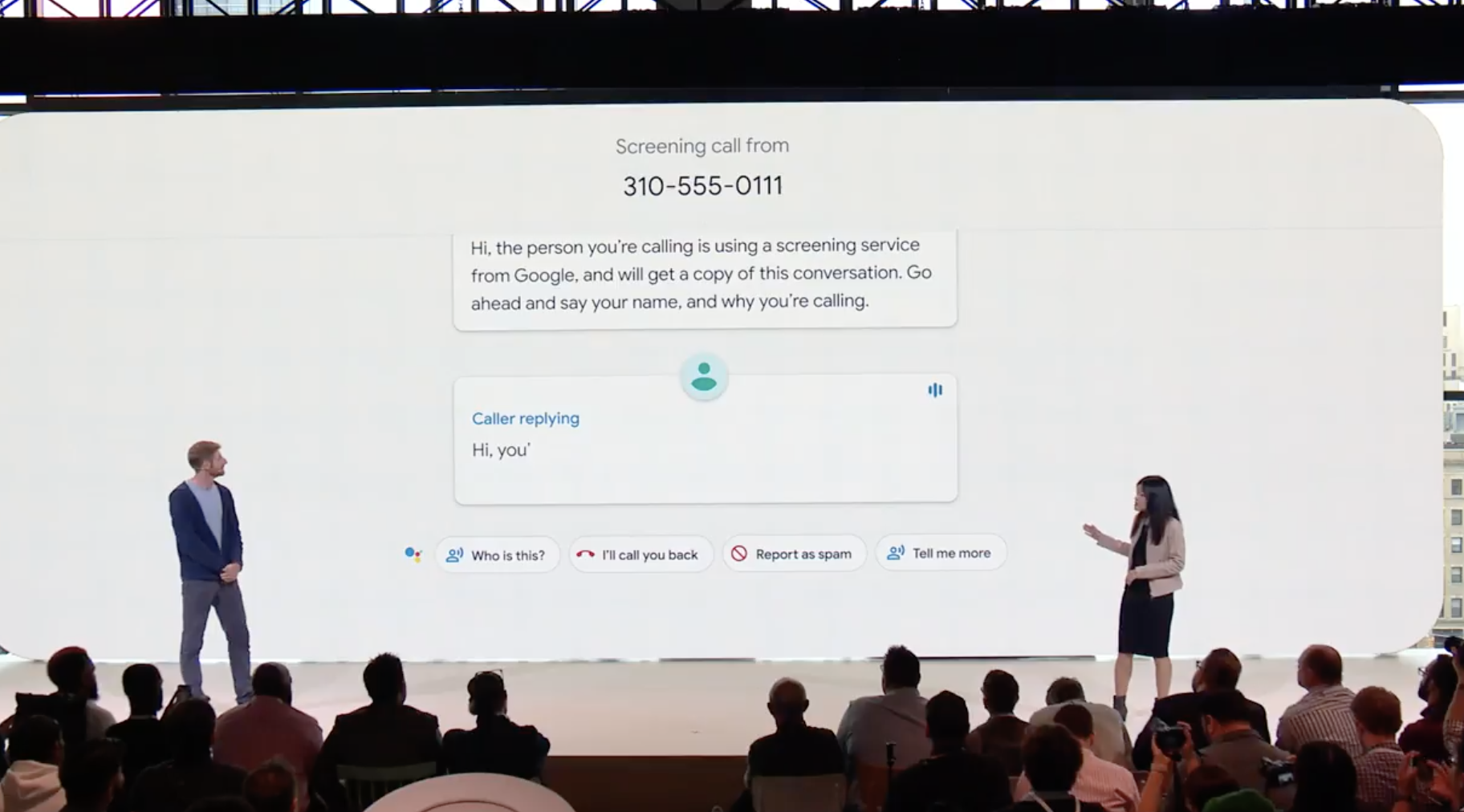
Call screen

The call screen option enables Google Assistant to answer an incoming call for you. The user just taps the call screen button and the phone will answer the call and ask who is calling and why.

The conversation is then transcribed in real time on the screen, letting you decide whether to answer or send a text in response.

Call screen launched Tuesday with the Pixel 3 and will roll out to other Pixel devices in November.

Google call screen

Security

The Pixel 3 comes with a new security chip that Google calls Titan M. The custom-built chip helps secure passwords and the operating system of the phone.

Speakers

Front-forward speakers are 40 percent louder and richer than in the previous Pixel smartphone.

YouTube Music

The new Pixel 3 ships with the YouTube Music streaming app and a free six-month subscription.

Google Lens

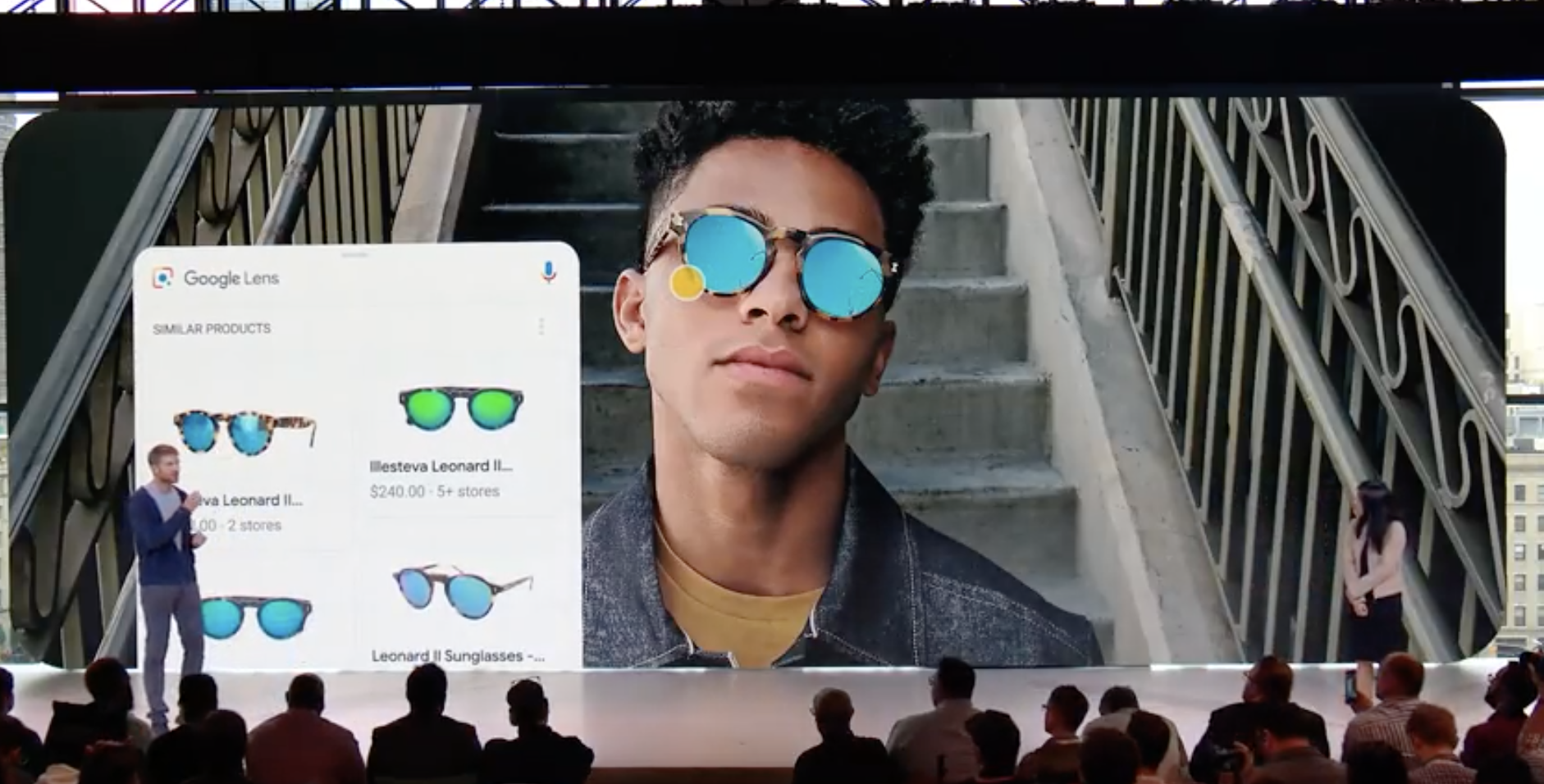
Google Lens is essentially an AI-enabled camera. The smartphone camera captures an image and the AI algorithm identifies it for you. The “style search” in Lens identifies the product in an image and helps you find that product online.

Google Lens also identifies landmarks, plants and animals, and will add events to your calendar. Point the camera on a takeout menu and it will highlight the number to call.

Google Lens

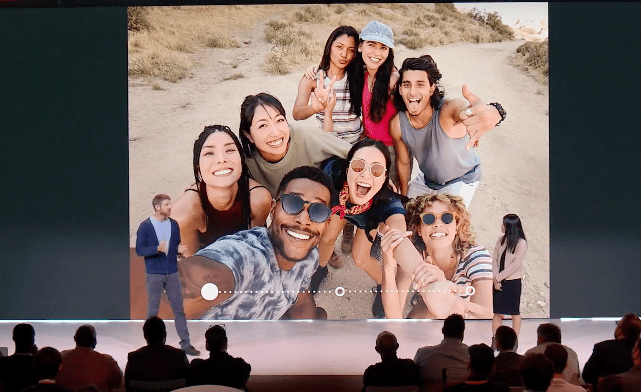
Group selfies

Pixel 3 comes with dual front cameras for selfies that require a wider view. Users just double tap the power button to open the camera and flick their wrist twice to activate selfie mode. From here, users zoom out to get to the group selfie.

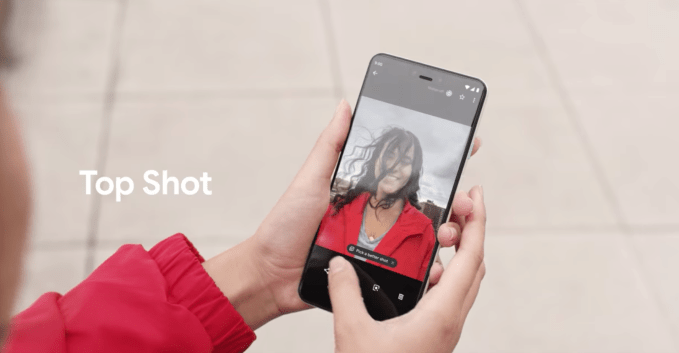
Top Shot

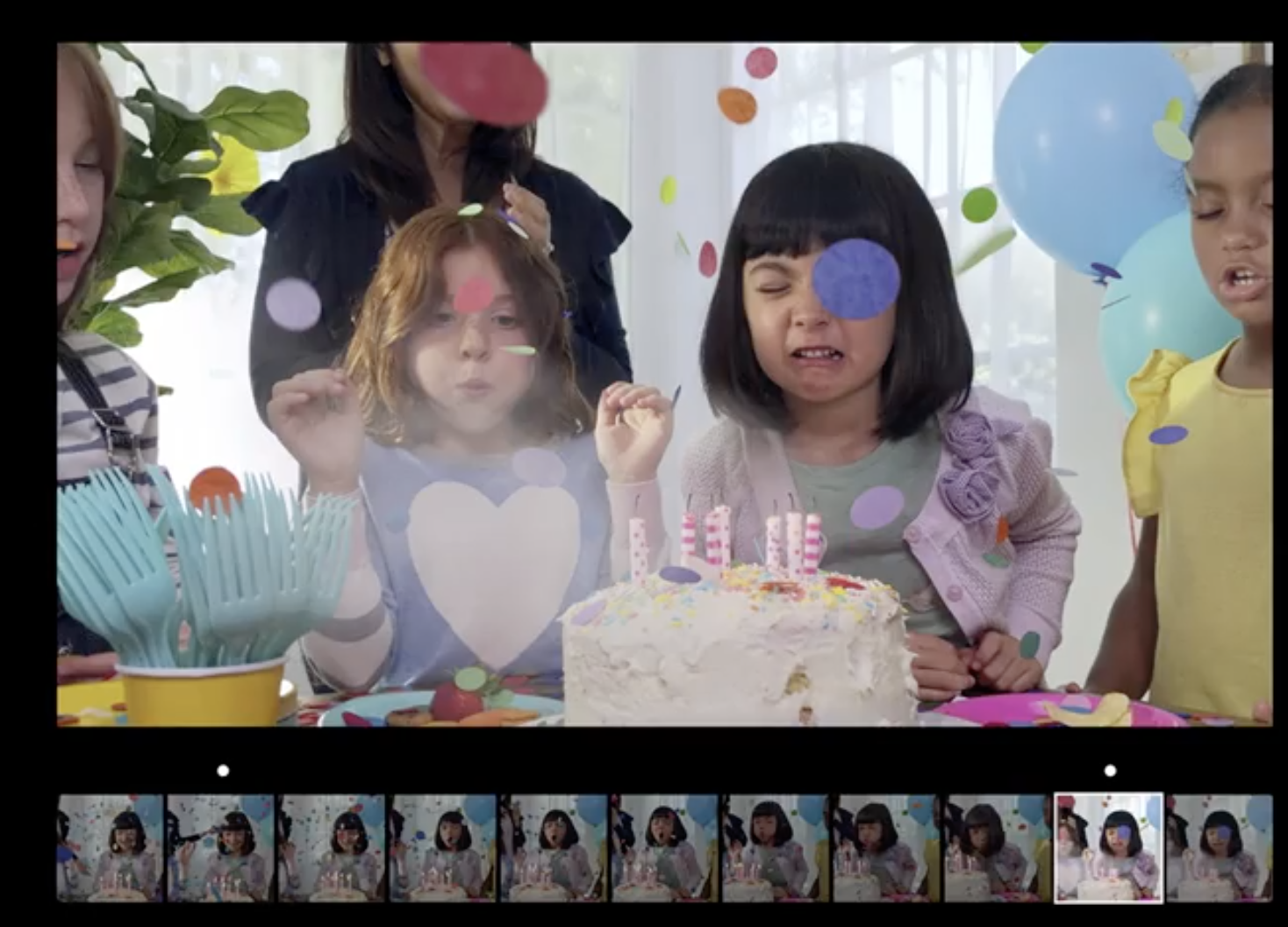
This photo feature captures alternate shots in HDR Plus and then recommends the best one. For instance, a user might try to take a photo of their child blowing out candles on a birthday cake. In the past, a missed shot was a missed shot. Top Shot captures the moments before or after you hit the shutter to take a photo and then automatically recommends the best one.

And if you want that other shot, you can pick that one too.

Google Pixel 3 Top Shot

Playground

The Playground feature adds reactive characters (like a dog or a dancing stereo) and adds captions and animated stickers to your photos and videos. Users can make their photos “come to life” with Playmoji, the characters that react to each other and to you.

Some of the options are characters like Iron Man from the Marvel Cinematic Universe. Google is working on a collaboration with Donald Glover to bring Childish Gambino to Playground later this year, as well.

Google Playground Childish Gambino

Photo booth mode

Yup, another camera feature. This feature will automatically take photos when you make a funny face or smile.


09 Oct 2018

Comparing Google Home Hub vs Amazon Echo Show 2 vs Facebook Portal

The war for the countertop has begun. Google, Amazon and Facebook all revealed their new smart displays this month. Each hopes to become the center of your Internet of Things-equipped home and a window to your loved ones. The $149 Google Home Hub is a cheap and privacy-safe smart home controller. The $229 Amazon Echo Show 2 gives Alexa a visual complement. And the $199 Facebook Portal and $349 Portal+ offer a Smart Lens that automatically zooms in and out to keep you in frame while you video chat.

For consumers, the biggest questions to consider are how much you care about privacy, whether you really video chat, which smart home ecosystem you’re building around and how much you want to spend.

  • For the privacy obsessed, Google’s Home Hub is the only one without a camera and it’s dirt cheap at $149.
  • For the privacy agnostic, Facebook’s Portal+ offers the best screen and video chat functionality.
  • For the chatty, Amazon Echo Show 2 can do message and video chat over Alexa, call phone numbers and is adding Skype.

If you want to go off-brand, there’s also the Lenovo Smart Display, with stylish hardware in a $249 10-inch 1080p version and a $199 8-inch 720p version. And for the audiophile, there’s the $199 JBL Link View. While those hit the market earlier than the platform-owned versions we’re reviewing here, they’re not likely to benefit from the constant iteration Google, Amazon and Facebook are working on for their tabletop screens.

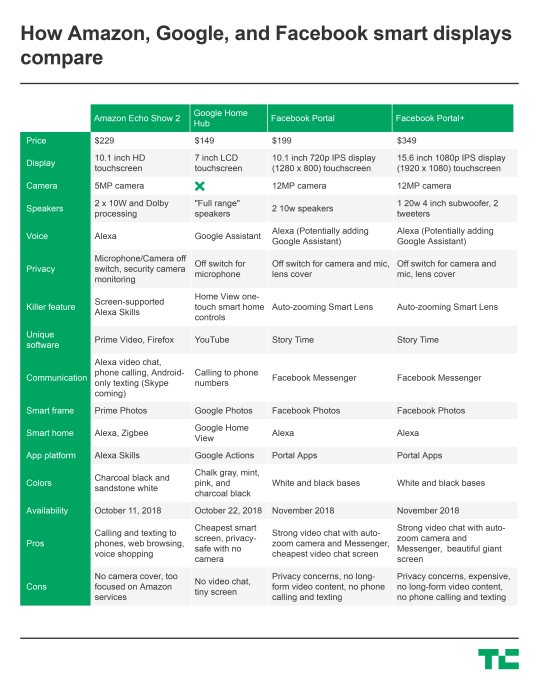
Here’s a comparison of the top smart displays, including their hardware specs, unique software, killer features and pros and cons:

09 Oct 2018

Making A Murderer returns on October 18

Making A Murderer is coming back to Netflix on October 18.

In 2015, Netflix released the 10-episode docuseries Making A Murderer, created by Laura Ricciardi and Moira Demos. The picture looked at the mystery surrounding the murder of Teresa Halbach. Steven Avery, a Manitowoc County man charged with the murder in 2007, was wrongfully convicted of sexual assault at the age of 22, and was exonerated by DNA evidence after serving 18 years in prison.

Making A Murderer examined the original allegations, the events surrounding the murder of Teresa Halbach, all laid within the context of Avery’s wrongful conviction and subsequent lawsuit against Manitowoc County.

The docuseries quickly gripped the attention of millions.

The trailer for Making A Murderer Part 2 shows attorney Kathleen Zellner joining Avery’s team as they seek to appeal the 2007 conviction.

You can check out the full trailer below. The series returns October 18.

09 Oct 2018

Emmanuel Macron meets with the French tech community

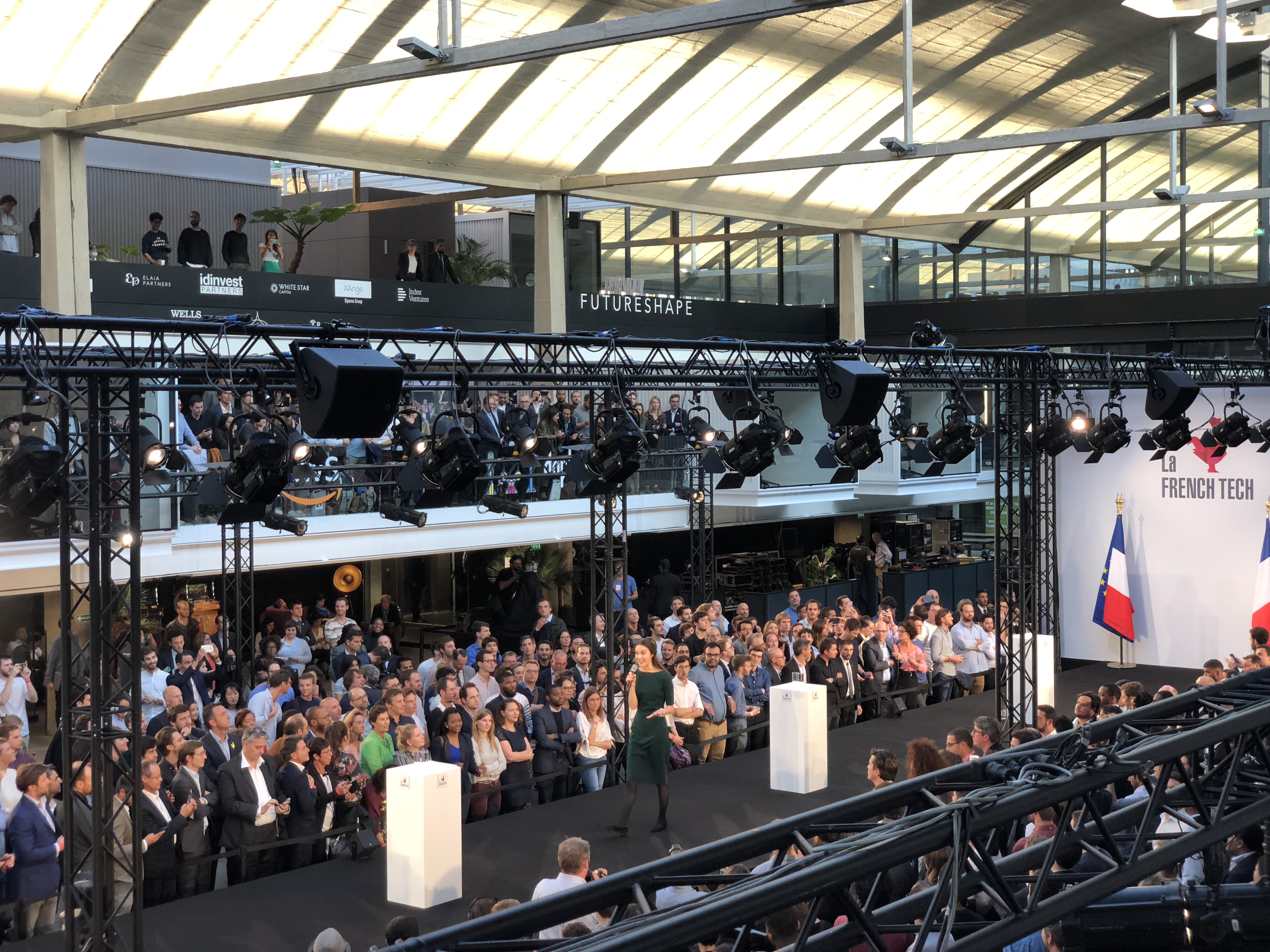
French President Emmanuel Macron came to France’s ginormous startup campus Station F to talk to the French tech community. The event is organized by La French Tech, the government initiative to promote and foster the startup community in France.

Station F director Roxanne Varza first took the stage to introduce the event. She announced that there will be more startups in the Fighters Program. Station F has created this program so that entrepreneurs from diverse backgrounds get a chance to relocate to Station F.

La French Tech new director Kat Borlongan then talked for a few minutes about the public initiative. “My firm belief is that La French Tech should operate just like all the startups in this room today,” she said.

According to her, it means that La French Tech should think about its users first, have a data-driven approach, and test and iterate.

Macron gave a very short speech and then held a Q&A sessions with tech entrepreneurs. This is a surprising format for Macron.

He mostly reassured entrepreneurs that things are changing and France is on the right path. He announced that the French Tech Visa would be simplified by March 2019.

Some entrepreneurs said there were paying too many taxes to hire talent in France. Macron refuted that. “I like to compare a researcher in Harvard with a researcher in France,” he said. “[In France], school is free and excellent, healthcare is free, there’s a retirement system. On the other side, there’s nothing.”

He also promised stronger antitrust rules at the European level. Tech giants sometimes dominate in Europe living no room for competition.

Macron finished by saying that tech companies also need to promote France’s system. They need to pay fair taxes, they need to think about tech’s effect on society. “I know one thing, the system will implode if you’re not responsible enough,” he said.

Things have changed in just over a year. When Macron first came to Station F for its grand opening, it was shortly after the elections. He was a popular President.

Now, most people dislike him, just like his predecessors François Hollande and Nicolas Sarkozy when they were in office. According to a source, he even thought about canceling today’s event given that he’s about to appoint some new faces in his government.

But Macron built his reputation on the so-called startup nation. He first became a public figure thanks to a grassroots approach built on top of the startup community. That’s why the startup community is still overwhelmingly in favor of Macron’s policies. And yet, there’s now a clear divide between the startup nation and the middle class at large, who think the President is out of touch and doesn’t care about them.

09 Oct 2018

Google ups the Pixel 3’s camera game with Top Shot, group selfies and more

Google’s Pixel 2 introduced one of the best smartphone cameras ever made and the Pixel 3 brings even more more bells and whistles sure to please mobile photographers. On paper, the Pixel 3’s camera doesn’t look much different than its recent forebear, but because it’s Google, software is where the device will really shine. We’ll go over everything that’s new.

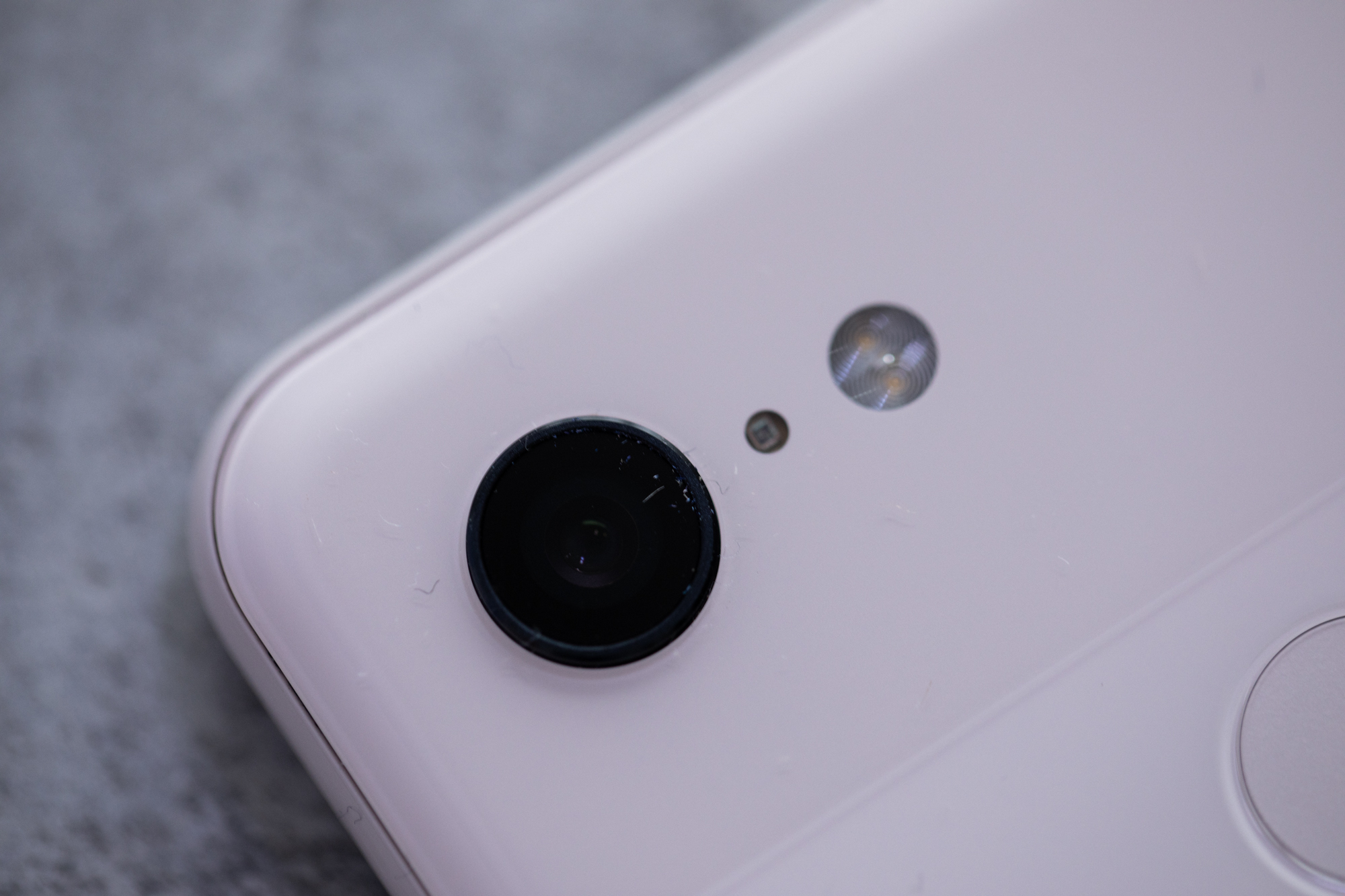
Starting with specs, both the Pixel 3 and the Pixel 3 XL will sport a 12.2MP rear camera with an f/1.8 aperture and an 8MP dual front camera capable of both normal field of view and ultra-wide angle shots. The rear video camera captures 1080p video at 30, 60 or 120 fps, while the front-facing video camera is capable of capturing 1080p video at 30fps. Google did not add a second rear-facing camera, deeming it “unnecessary” given what the company can do with machine learning alone. Knowing how good the Pixel 2’s camera is, we can’t really argue here.

Top Shot

With the Pixel 3, Google introduced Top Shot. With Top Shot, the Pixel 3 compares a burst set of images taken in rapid succession and automatically detects the best shot using machine learning. The idea is that the camera can screen out any photos in which a subject might have their eyes closed or be making a weird face unintentionally, choosing “smiles instead of sneezes” and offering the user the best of the batch. Stuff like this is usually gimmicky, but given Google’s image processing prowess it’s honestly probably going to be pretty good. Or as TechCrunch’s Matt Burns puts it, “Top Shots is Live Photo but useful” which seems like a fair assessment.

Super Res Zoom

Google’s next Pixel 3 camera trick is called Super Res Zoom, which is what it sounds like. Super Res Zoom enables the camera to take a burst of photos and then leverages the fact that each image is very slightly different due to minute hand movements, combining those images together to recreate detail “without grain” — or so Google claims. Because smartphone cameras are limited due to their lack of optical zoom, Super Res Zoom employs burst shooting and a merging algorithm to compensate for detail at a distance, merging slightly different photos into one higher resolution photo. Because digital zoom is notoriously universally bad, we’re looking forward to putting this new method to the test. After all, if it worked for Mars, it’s bound to work for concert photos.

Night Sight

A machine learning camera hack designed to inspire people to retire flash once and for all (please), Night Sight can visualize a photo taken in “extreme low light.” The idea is that machine learning can make educated guesses about the content in the frame, filling in detail and color correcting so it isn’t just one big noisy mess. If it works remains to be seen but given the Pixel 2’s already stunning low light performance we’d bet this is probably pretty cool.

Group Selfie Cam

Google knows what the people really want. One of the biggest hardware changes to the Pixel 3 line is the introduction of dual front-facing cameras that enable super-wide front-facing shots capable of capturing group photos. The wide angle front-facing shots feature a 97 degree field of view compared to the normal already fairly wide 75 degree field of view. Yes, Google is trying to make “Groupies” a thing — yes, that’s a selfie where you all cram in and hand the phone to the friend with the longest arms. Honestly, it might succeed.

Google has a few more handy tricks up its sleeve. In Photobooth mode, the Pixel 3 can snap the selfie shutter when you smile, no hands needed. With a new kind of motion tracking auto-focus option you can tap once to track the subject of a photo without needing to tap to refocus, a feature sure to be handy for the kind of people that fill up their storage with hundreds of out of focus pet shots.

Google Lens is also back, of course, but honestly we’ve never met anyone who uses it. And Google’s AR stickers are now called Playground and respond to actions and facial expressions. Google is also launching a Childish Gambino AR experience on Playground (probably as good as this whole AR sticker thing gets, tbh) which will launch with the Pixel 3 and come to the Pixel 1 and Pixel 2 a bit later on.

With the Pixel 3, Google will also improve upon the Pixel 2’s already excellent Portrait Mode, offering the ability to change the depth of field and the subject. And of course the company will still offer free unlimited full resolution photo storage in the wonderfully useful Google Photos, which remains superior to every aspect of photo processing and storage on the iPhone.

Happily, because much of what Google accomplishes in mobile photography is achieved on the software processing side, the last generation Pixel 2 isn’t getting left in the dust, either. Because they don’t rely on new hardware, most of the features that Google announced today for the Pixel 3 will likely be hitting the Pixel 2 as well, though we’ll sort that out and update this post to specify when that is not the case. So far, we know Group Selfies relies on the dual front camera, so that’s Pixel 3 only.

With its Pixel line, now three generations deep, Google has leaned heavily on software-powered tricks and machine learning to make a smartphone camera far better than it should be. Given Google’s image processing chops, that’s a great thing and most of its experimental software workarounds generally works very well. We’re looking forward to taking its latest set of photography tricks for a spin, so keep an eye out for our upcoming Pixel 3 hands-on posts and reviews.

09 Oct 2018

Google partners with tech retailer b8ta to let people demo smart home products

Try before you buy is the new name of the game. With items costing upwards of $100, people want to know what they’re getting themselves into before they commit to a costly gizmo — at least that’s what Google is betting on right now. Aligned with Google’s Made by Google event, the company is partnering with startup b8ta to create an interactive experience around its products.

These experiences are live at seven of b8ta’s flagship locations, which enable people to try out new tech products. Each demo experience is modeled after the different rooms of a home — living room, kitchen, home office and so on.

“We’re excited that Made by Google products are now available in the majority of b8ta locations across the country,” Google Director of Retail Marketing Janell Fischer said in a statement. “We’re always looking to make it easier for customers to try and shop our products, and this is a great example of that coming to life.”

It’s been a big year for b8ta. In April, the startup unveiled a Shopify-like solution for retailers called Built by b8ta, with Netgear as one of its first customers. Then, in June, Macy’s partnered with b8ta to enhance its experiential-based retail concept and went on to lead the startup’s $19 million Series B round.

09 Oct 2018

Lyft taps Obama’s transportation secretary to lead policy and advise founders

Lyft has hired Anthony Foxx, who served as President Barack Obama’s transportation secretary from 2013 to 2017, to lead its policy efforts, Bloomberg’s Eric Newcomer first reported. Foxx, who was formerly the mayor of Charlotte, North Carolina, is officially the chief policy officer and senior advisor to Lyft’s founders, Lyft President John Zimmer and Lyft CEO Logan Green.

In a Medium post, Foxx outlined why he’s joining Lyft. Here’s a snippet:

Transformations can happen quickly. Some take time. With so much talk about the growth of cities, the internet of things, the role of regulation in an era of rapid technological change, rising congestion and the need to open the doors of opportunity wider to all segments of the population, change is needed. I have spent much of my public life putting the building blocks in place for that transformation to occur. I see a future in which we get places safer, faster, smarter, cleaner and more connected to opportunity — and each other — than ever before. This future is within our grasp but it will not happen on its own. It will be the product of business and government working together. Because I believe the team at Lyft is best positioned to drive us in the right direction, I am proud to announce that I am joining their team today as Chief Policy Officer and Senior Advisor to the President and CEO.

WASHINGTON, DC – APRIL 29: U.S. President Barack Obama (R) listens as Charlotte Mayor Anthony Foxx speaks after announcing him as his nominee for Secretary of Transportation at the White House April 29, 2013 in Washington, DC. Foxx is the first Democrat elected as the Mayor of Charlotte in over 22 years and would be replacing outgoing Transportation Secretary Ray LaHood. (Photo by Win McNamee/Getty Images)

Last month, Lyft hit one billion rides shortly after the company made its official entrance into the scooter sharing space when it launched electric scooters in Denver, Colo. Lyft has since deployed its scooters in Santa Monica, Calif. as part of the city’s pilot program. Lyft’s entrance into scooters came close after its acquisition of bike-share company Motivate.

Lyft’s entrance into additional modalities means a new, complex regulatory space. Cities are actively grappling with how they want to regulate bike-share and electric scooter sharing. In San Francisco, Lyft is reportedly battling the city to get its scooters on the streets after the city’s transportation department decided to grant permits only to Skip and Scoot. Perhaps having Foxx, who says he has “made decisions on issues affecting mobility — everything from zoning and land use, to capital budgeting, to street resurfacing, to transit,” on board can help.

You can check out Foxx’s full Medium post here.

09 Oct 2018

Google’s Chromecast gets a refresh with support for faster Wi-Fi

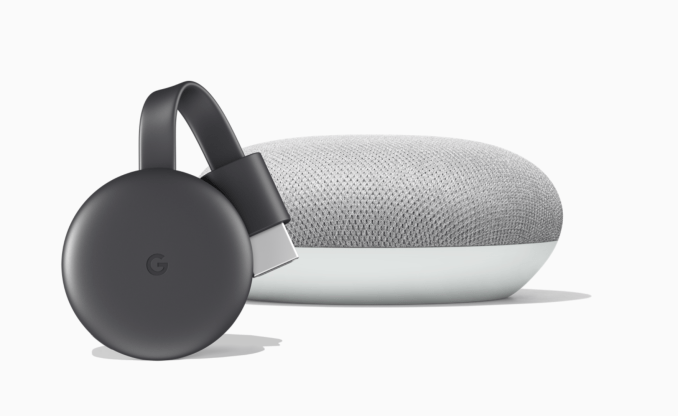
Google’s next-generation Chromecast device launched today – something that came as no surprise, given that Best Buy accidentally sold one to an in-store customer last month. The new streaming dongle doesn’t represent a significant update from the prior version. It’s still a round puck attached to a cable and costs $35, but now it supports faster, 5 GHz 802.11ac Wi-Fi, as had been expected.

The company chose not to focus on the Chromecast at its hardware event this morning, instead simply launching the updated device on the Google Store alongside the event itself.

The new device now sports a Google logo on the center of the puck, instead of the Chrome logo found on the 2015 model, which first introduced the round form factor. That change was meant to help better accommodate Chromecast’s new internals and make it easier to plug into TVs, Google had said.

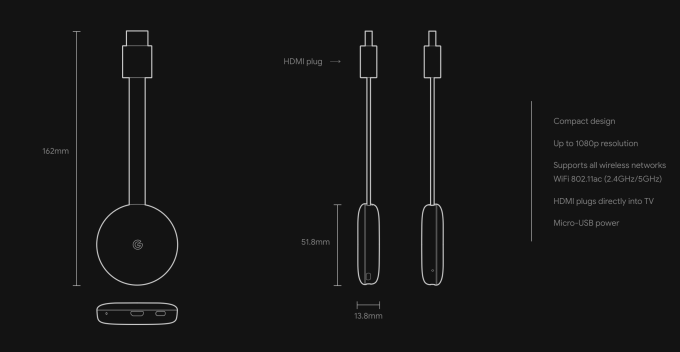
The third-generation Chromecast also features support for up to 1080p resolution up to 60fps, and plugs into TVs via the HDMI port, as before. It continues to have a micro-USB power connector. And it still doesn’t work with a remote – you use your phone for that through.

Chromecast’s companion app, Google Home, lets users set up and control their Chromecast, Google Home devices, and Google Assistant speakers. This was also given a redesign today with more of a focus on controlling the smart home.

The Chromecast still comes in two versions – this new, 3rd generation device and the 4K-ready Chromecast Ultra, which is $69.

But for just a little more than the $35 basic Chromecast, you can now buy a $40 4K-ready Roku Premiere or a $50 Fire TV Stick 4K. Perhaps Google is waiting for a bigger refresh to its Chromecast product line that makes its devices more competitive, before making any formal announcements here.

The third-gen Chromecast comes in Chalk and Charcoal, and is 51.8mm long and 13.8mm wide. That’s about the same as the second-gen, at 51.9 x 51.9 x 13.49 mm.

The Chromecast, like much of what Google announced today, wasn’t kept under wraps very well ahead of this event. In addition to the Best Buy sale last month (which another person reported, too), a U.K. retailer also sold the new Chromecast this morning for £29.99, according to reports.

09 Oct 2018

Google Pixel 3 and Pixel 3 XL up close and hands-on

“So you think you know,” Google teased via Twitter in the lead up today’s event. “Tune in tomorrow to see for yourself.” Turns out we were right. We basically knew everything there was to know in the lead up to today’s event, Pixel 3 and otherwise. Honestly there wasn’t really a heck of a lot to keep under wraps here.

At first blush, the Pixel 3 doesn’t feel like a monumental upgrade from its predecessor — a sentiment we had just about this time last year when the company introduced the Pixel 2. For some time now, Google’s insisted that the future of hardware would largely come courtesy of the software things — it’s precisely the sort of sentiment one would expect from a software company like Google.

That’s certainly at play here. Google spent little time talking about the hardware on either of the new handsets, instead focusing on what things like AI and ML can bring to the table on a product like this. Keep in mind, while Google quickly established itself as a premium smartphone maker, Pixel products are what they’ve always been: a showcase for all of the things Android can do in the most ideal conditions.

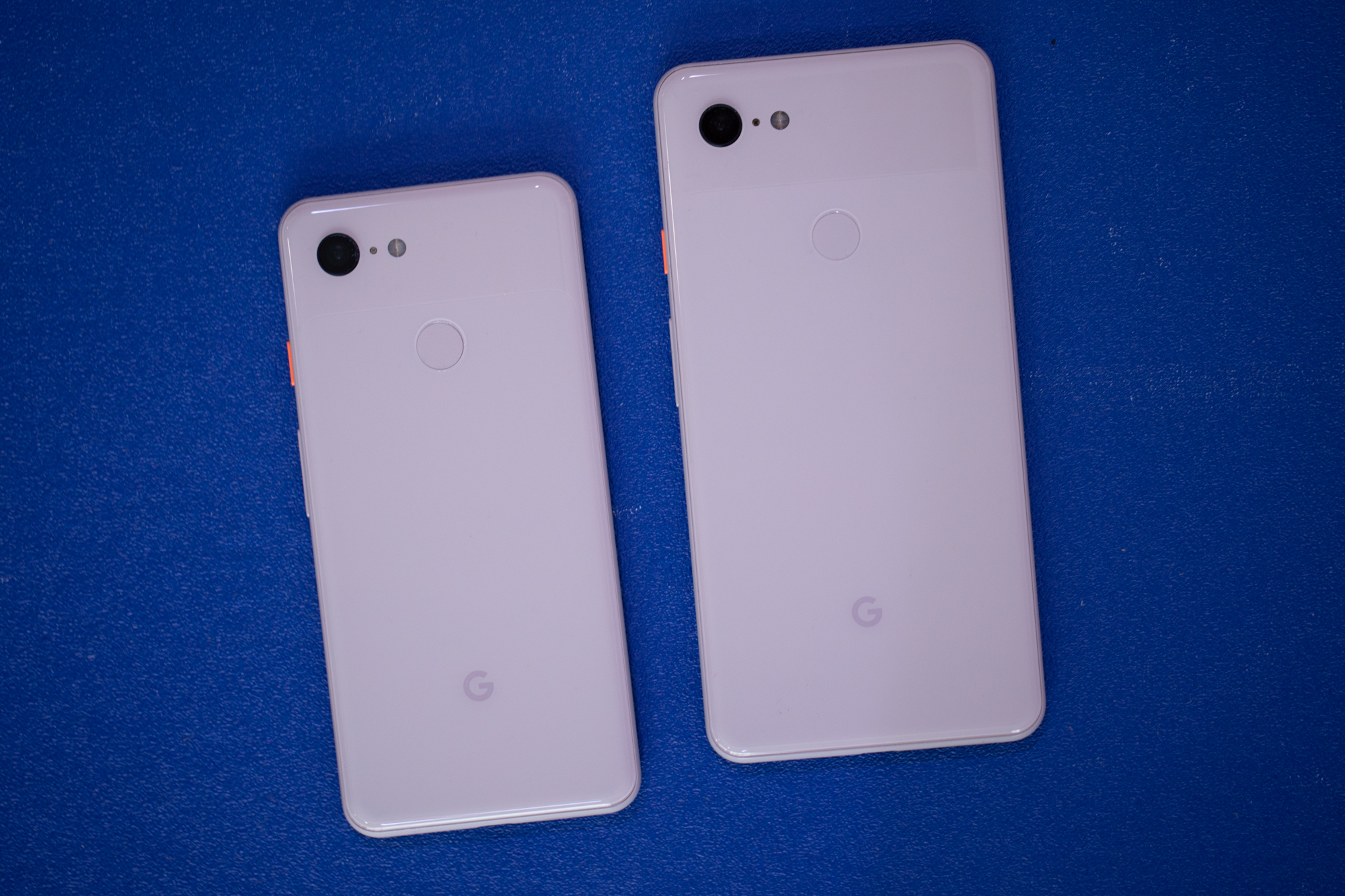
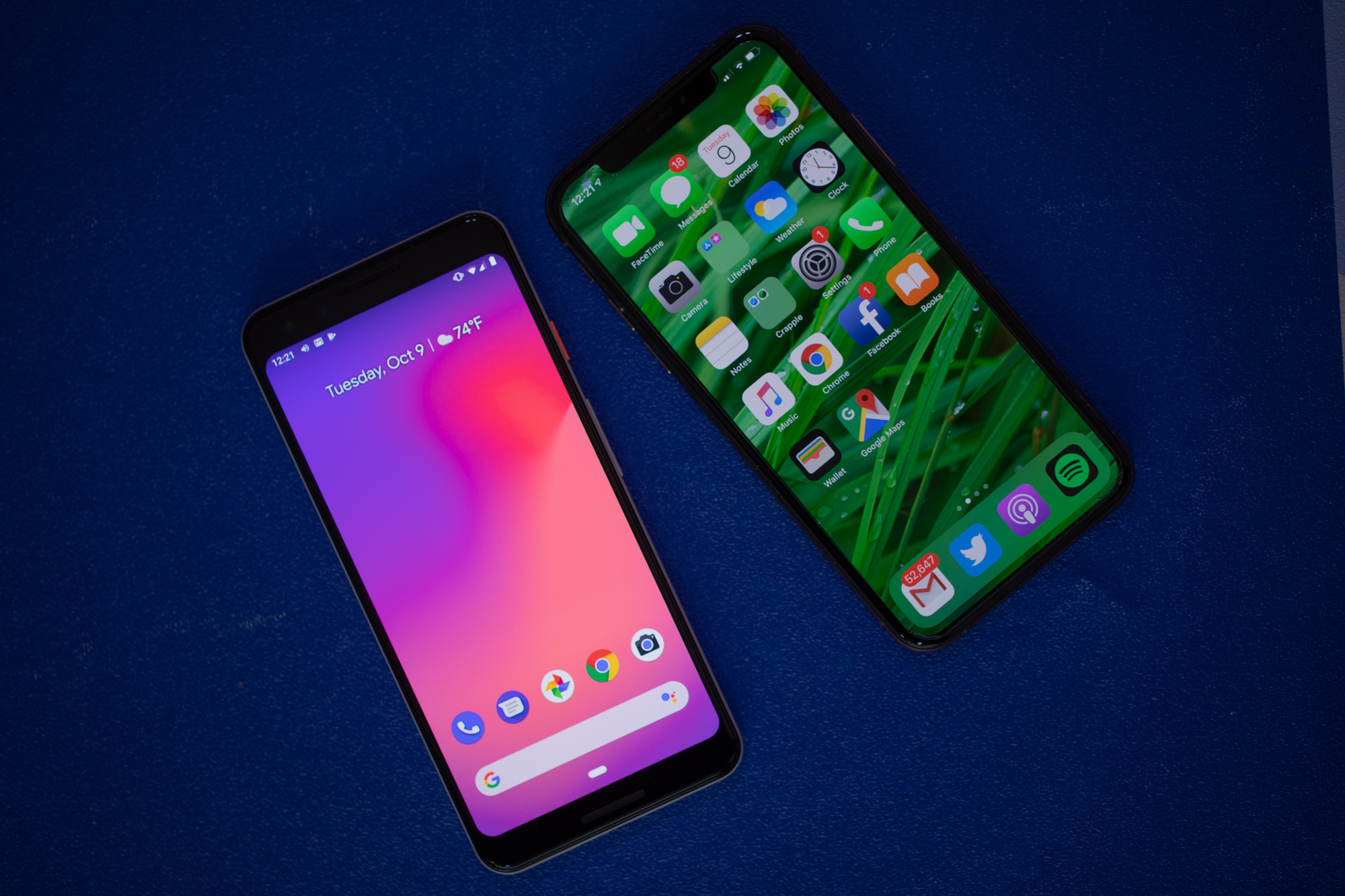
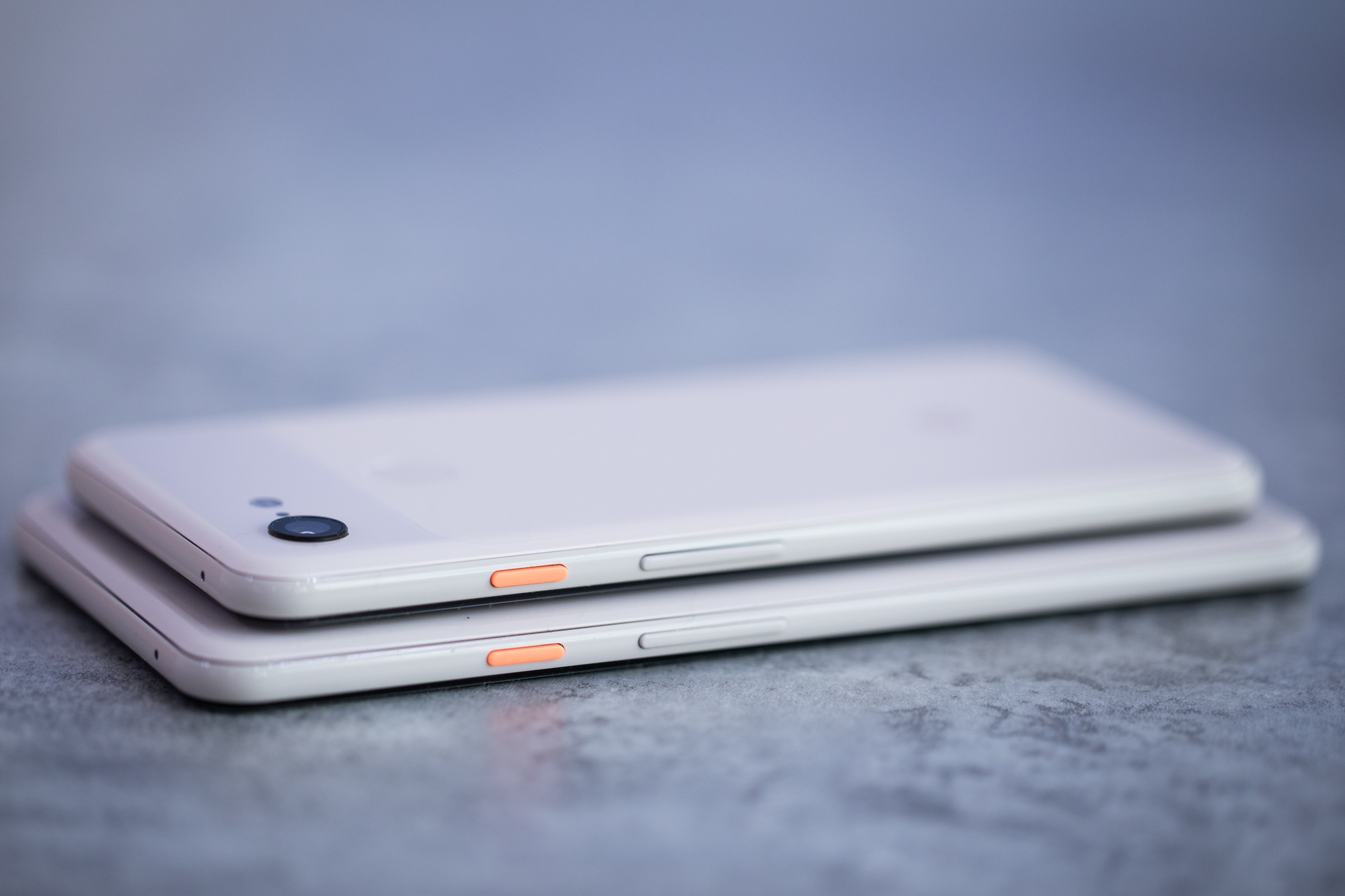
The new handsets don’t look radically different from the Pixel 2 — in fact, the casual observe would have some trouble distinguishing the two products at first glance. Once again, Google’s devices aren’t the slickest pieces of hardware — that title would likely either go to Apple or Samsung, depending on personal preference.

And as for the Pixel XL — the damn thing is downright massive, really earning its name this time out. Those 6.3 inches truly feel like 6.3 inches. As such, the larger device isn’t for the small of hand or limited of pocket. As initially reported, the larger Pixel has quite the notch this time, in keeping with Google’s embrace of the feature on the latest version of Android.

This is thanks, in no small part to the addition of a second front-facing camera. That brings much wider angle selfie shots to the table — Google fitting spent a fair bit of time talking selfies at today’s event. Welcome to 2018, I guess. It’s a curious choice, given the fact that the company bucked the trend by keeping a single rear-facing lens.

Again, the majority of the the camera features here actually come courtesy of Google’s own artificial intelligence and machine learning, which puts the device in a similar spot as the iPhone XS. The company really rattled through the camera features at the end of the presentation, but the super low light shots and zoom features are standouts I can wait to put through the ringer when we get our review units in the very near future.

I’ll admit that the squeeze for Assistant feature has really grown on me since the days HTC launched it on its own device. Certainly it trump something like Samsung’s devoted Bixby button — and not just because people actually use Google Assistant. It’s clear Assistant is only going to become more and more integral as the company moves forward.

The price is really the thing here. That’s sort of the unspoken truth in all of this. There was a time, not too long ago when $1,000 sounded like an insane amount to pay for a flagship smartphone. Of course, both Apple and Samsung have changed that math considerably, and Google is undercutting the companies at every turn possible.

Sure, $799 and $899 for the Pixel 3 and Pixel 3 XL aren’t exactly cheap, but in the age of the $1,000 flagship, it sounds like a downright deal.


more Google Event 2018 coverage