Year: 2018

09 Oct 2018

Spinnaker is the next big open source project to watch

Spinnaker is an open source continuous delivery (CD) platform from Netflix and Google, though it now also has the backing of other major software companies. Spinnaker 1.0 launched last July, so it’s not the newest kid on the block, but the service is slowly but surely gaining momentum now, with users that include Target, Adobe, Daimler and Capital One, as well as a growing ecosystem of vendors who support it.

Today, after a few years of working on the project without any formal structure in place, the Spinnaker project announced that it is growing up and putting a formal governance system in place at the project’s second community summit in Seattle this week.

Like Kubernetes, which has become the de facto standard for container orchestration tools, Spinnaker could become the same kind of standard for continuous delivery. That space, though, already has plenty of incumbents and established players, so chances are this will be a bit more of an uphill battle. Spinnaker and Kubernetes make for a pretty obvious pairing, though, so there’s now also plenty of Kubernetes startups that are looking at how they can best combine the two.

What’s most important in the short run, though, is that Spinnaker is now getting a formal governance structure whereas before, it was basically run as a GitHub project with a benevolent dictator in place.

“That’s something that the community’s been looking for in terms of how do people get a seat at the table,” Netflix’s Director of Delivery Engineering Andy Glover, who oversaw the development of Spinnaker, told me. “The project has largely been run by Netflix and Google. We’ve taken any questions from the community and big companies, whether they be Cisco or Target, about trying to figure out ‘what’s the deal here?’ How do we how do we reduce risk, how do we guard ourselves from Netflix closed-sourcing it or Google’s deciding to license it or something like that.”

So going forward, the project will have a technical steering committee and a steering committee. For now, those committees are staffed with Netflix and Google engineers, but the plan is to open it up to third parties as well. The new governance policy also outlines how developers can start committing code to the project.

In the early days, having Glover and others shepherd the project informally was just fine. Now that the community is growing, though, and more large companies are starting to use Spinnaker, Glover admits that to scale the project, others have to step in. “At Netflix, we tend to do a lot of experimentation without worrying too much up front,” he told me. “Let’s just run fast and see what happens. And with respect to Spinnaker, that was very much run the same way. We said we’d cross that bridge when we get to it and obviously, we got to that bridge a little while ago.”

One thing a lot of people have been wondering about is whether Spinnaker will eventually land at any of the major open source foundations like the Linux Foundation, the OpenStack Foundation or the Apache Foundation. Glover noted that this move is meant to set the stage for that.

Boris Renski, the founder of Mirants, which has recently made a major bet on Spinnaker, tells me that this new governance policy is very much needed (and he’d prefer the project to land with the OpenStack Foundation). He told me that today’s Spinnaker, without formal governance in place, isn’t always the most community-friendly place to be.

“Spinnaker has all the chances to become the de facto continuous delivery tool,” he told me. Putting the governance in place is only a first step, though, Renski actually believes that one of the challenges for the project is the fact that Kubernetes is already putting many of the CD tools for its community in place. Kubernetes, he argues, is suffering from “an OpenStack syndrome” where it has “its fingers in everything” (though to be fair, OpenStack has paired its efforts back quite a bit in recent years). That, he thinks, is not a healthy dynamic and he believes that more specialized tools are the way to go. But Kubernetes is the hot new thing right now and developers are gravitating to it. Yet CD solutions that only cater to Kubernetes discount that most enterprises will want to be able to deploy to other targets, too. Spinnaker, he argues, should be a friend to Kubernetes developers but still remain flexible enough to work for everybody.

He also noted that one problem with today’s Spinnaker community is that it’s mostly driven by users who are trying to solve a near-term tactical problem. “Those users don’t have time and bandwidth to solve longer-term, community-type problems,” he said. What the project still needs in his view is real “pluggability,” that is, the ability to extend Spinnaker and more easily integrate it with third-party systems.

Google, Microsoft and Amazon now back the project and it runs on their clouds. Pivotal, too, recently announced increased support for it and so are many other players in the continuous integration and delivery ecosystem. Pete Erickson, who organized this week’s Spinnaker Summit, told me that he’s expecting about 400 participants from 16 countries and 275 companies at the event. And Glover also noted that about 30 percent of attendees are new to Spinnaker and are simply attending to learn about it and how to bring it to their companies.
09 Oct 2018

Here are all the details on the new Pixel 3, Pixel Slate, Pixel Stand, and Home Hub,

At a special event in New York City, Google announced some of its latest, flagship hardware devices. During the hour-long press conference Google executives and product managers took the wraps off the company’s latest products and explained their features. Chief among the lot is the Pixel 3, Google’s latest flagship Android device. Like the Pixel 2 before it, the Pixel 3’s main feature is its stellar camera but there’s a lot more magic packed inside the svelte frame.

Pixel 3

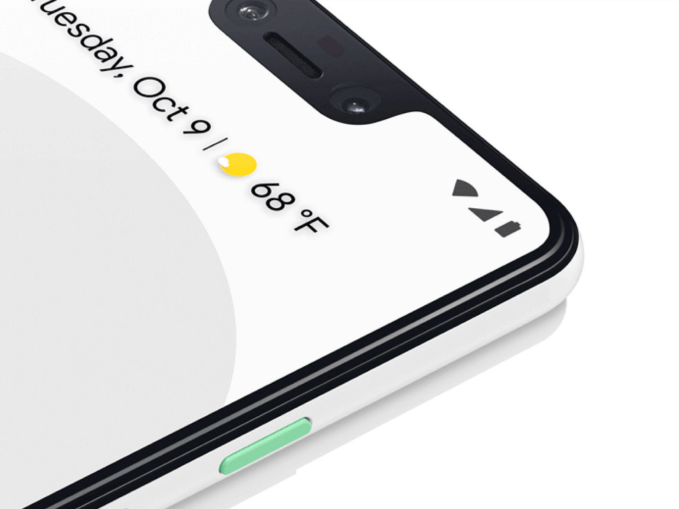
Contrary to some earlier renders, the third version of Google’s Android flagship (spotted by 9 to 5 Google) does boast a sizable notch up top, in keeping with earlier images of the larger XL. Makes sense, after all, Google went out of its way to boast about notch functionality when it introduced Pie, the latest version of its mobile OS.

The device is available for preorder today and will start shipping October 18, starting at $799. The larger XL starts at $899, still putting the product at less than the latest flagships from Apple and Samsung.

Pixel Slate

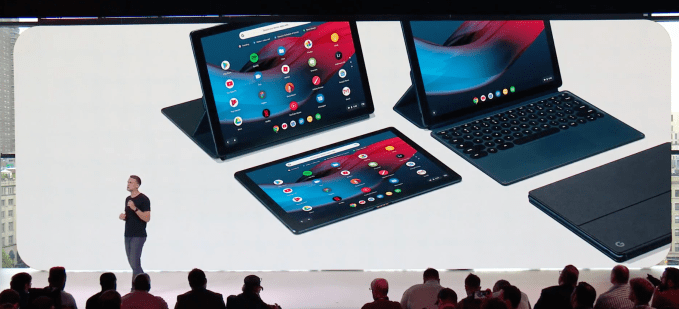
The device looks pretty much exactly like the leaks lead us to believe — it’s a premium slate with a keyboard cover that doubles as a stand. It also features a touch pad, which gives it the edge over products like Samsung’s most recent Galaxy Tab. There’s also a matching Google Pen, which appears to more or less be the same product announced around the Pixel Book, albeit with a darker paint job to match the new product.

The product starts at $599, plus $199 for the keyboard and $99 for the new dark Pen. All three are shipping at some point later this year.

Home Hub

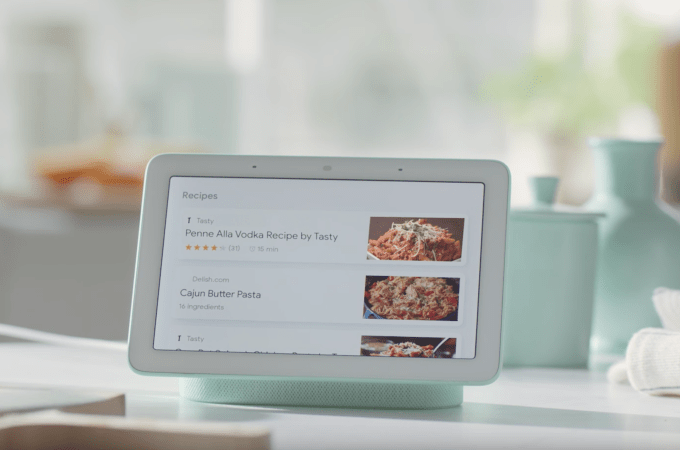
The device looks like an Android tablet mounted on top of a speaker — which ought to address the backward firing sound, which is one of the largest design flaws of the recently introduced Echo Show 2. The speaker fabric comes in a number of different colors, in keeping with the rest of the Pixel/Home products, including the new Aqua.

When not in use, the product doubles as a smart picture frame, using albums from Google Photos. A new Live Albums, which auto updates, based on the people you choose. So you can, say, select your significant others and it will create a gallery based on that person. Sweet and also potentially creepy. Machine learning, meanwhile, will automatically filter out all of the lousy shots.

The Home Hub is up for pre-order today for a very reasonable $149. In fact, the device actually seems like a bit of a loss leader for the company in an attempt to hook people into the Google Assistant ecosystem. It will start shipping October 22.

Pixel Stand

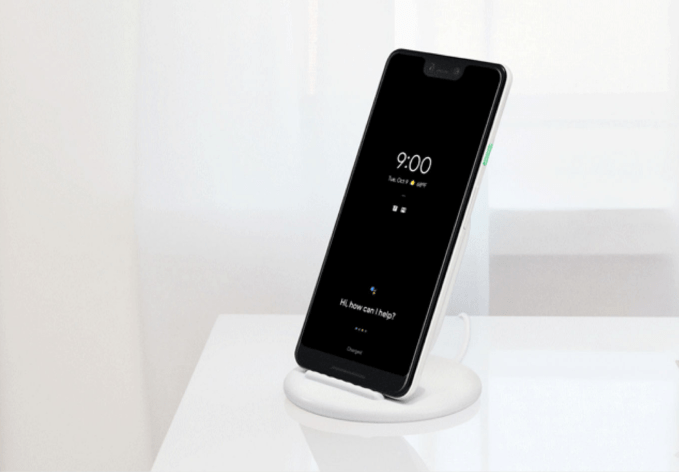
The Pixel Stand is basically a sleek little round dock for your phone. While it can obviously charge your phone, what’s maybe more interesting is that when you put your phone into the cradle, it looks like it’ll start a new notifications view that’s not unlike what you’d see on a smart display. It costs $79.

more Google Event 2018 coverage

09 Oct 2018

Google Lens comes to the Pixel 3 camera, can identify products

Google Lens, the technology that combines the smartphone camera’s ability to see the world around you with A.I. technology, is coming to the Pixel 3 camera, Google announced this morning. That means you’ll be able to point your phone’s camera at something – like a movie poster to get local theater listings, or even look up at actor’s bio, or to translate a sign in another language – and see results right in the camera app itself.

The integration is thanks to Google’s investment in A.I. technologies, something that was the underlying tie to everything Google announced today at its hardware event.

Lens, in particular, was first shown off at Google I/O back in 2017, before rolling out to new products like Google Image Search just weeks ago. Now, it’s in the camera itself – the most obvious place for the technology.

With Lens, you can point your camera at a takeout menu, Google says, and it will highlight the number to call.

Another feature is centered around shopping. With a long press, you can have Lens identify a product the camera sees in the viewfinder, and have it match it to real products. This is called “Style Search,” Google says.

As Google explained at the event, you can point your Pixel 3 camera at a friend’s cool new pair of sunglasses or some shoes you like in a magazine, and Lens will point you to where you can find them online and browse similar styles. The feature is similar to Pinterest’s visual search, which has been available for some time.

Also of note, Lens will be able to take some of its more common actions instantly in the camera, without the need for a data connection.

Google says this is possible by combining Pixel’s visual core with its years of work in search and computer vision.

“Being able to search the world around you is the next logical step and organizing the world’s information and making it more useful for people,” said Brian Rakowski, VP Product Management at Google.


09 Oct 2018

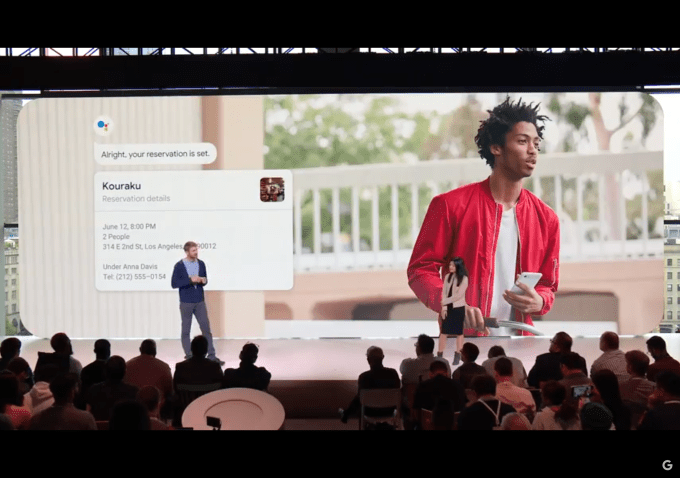
Google Duplex is coming to Pixel phones next month

Google today announced that it’ll start rolling out Duplex, its controversial Google Assistant feature that can make phone calls on your behalf, to Pixel phones next month.

The rollout will be city by city and Google didn’t yet clarify what Duplex will be able to do at first.

The company first demoed Duplex at its I/O developer conference this spring. In the demo at I/O, the Assistant was able to reserve tables at restaurants and make appointments at salons. Chances are, that’s what Duplex will be able to do at launch, too.

At the time, the feature was controversial because the Assistant basically tried to fool respondents into believing that it was a real human being. That also opened up legal questions, given that the tool had to record the calls, yet it didn’t announce that it did so. Google later said that the Assistant would announce itself on all calls.

Duplex will first launch in New York, Atlanta, Phoenix, and the San Francisco Bay Area and should be available there by the end of the year.

more Google Event 2018 coverage

09 Oct 2018

Google unveils the Pixel 3 XL, with a 6.3-inch screen and an $899 price tag

As part of this morning’s official unveiling of the Pixel 3, Google also announced its larger sibling, the Pixel 3 XL.

The news wasn’t a surprise, given the photos that leaked months ago (something that Google itself acknowledged by kicking off the event with a little montage of videos responding to early details). And Engadget’s Richard Lai had already gotten his hands on the phone in Hong Kong.

But what hadn’t actual come out were the details from the company tiself. As the name implies, a bigger version of the Pixel 3 (which has a 5.5 inch screen), with a 6.30inch screen. Google’s Liza Ma said the company was working to create an “edge-to-edge viewing experience” with a better screen-to-body ratio than previous screens.

One of the big selling points emphasized in Google’s presentation is the camera, including the Top Shot capability, which captures a number of alternate images when you take a photo, so you’re less likely to be cursing your timing if it isn’t just right. Naturally, all of that will be included in the Pixel 3 XL as well, along with other new features like call screening.

Pricing for the Pixel 3 XL starts at $899 and will arrive in the United States on October 18.

more Google Event 2018 coverage

09 Oct 2018

Pokémon GO will get Gen IV Pokémon “soon”

It’s been about 10 months since the last big batch of Pokémon (Gen III, as it’s known) started rolling out in Pokémon GO. At this point, if you’re still playing GO, you’ve probably caught just about everything there is to catch.

Missing that feeling of adding something new to your Pokédex? Good news: Gen IV is “arriving soon”.

Confirmation of the looming launch comes by way of a teaser trailer just dropped by Niantic and The Pokemon Company:

Sadly, “soon” is about as specific as they’re getting right now.

While Gen 4 (otherwise known as the “Sinnoh” generation) is made up of about 107 new Pokémon, I wouldn’t expect all of those to land at once. If Niantic’s past rollouts are any indication, it’s going to be staged in gradual chunks. Hell, even some Gen II Pokémon still haven’t shown up in the game (lookin’ at you, Smeargle!)

Though the teaser trailer doesn’t promise any specific Pokémon, the starters are all there: you see Turtwig’s twig, Chimchar’s silhouette, and a pack of Piplup swimming beneath the ice. (Oh, and that looks like Giratina’s glowing red eyes at the end there)

Meanwhile, in a separate blog post, Niantic touched on potentially controversial changes on the way:

  • The recently debuted weather system will soon have less of an effect on what Pokémon appear.
  • A “greater variety” of Pokémon will appear in a given area, and “at different rates”, suggesting changes to spawn patterns and perhaps the nest system.
  • They’re adjusting stats across the board (CP/HP/Defense/Stamina) to “narrow the gap” between most Pokémon and the strongest few.

While Niantic is presumably making these changes to make more Pokémon worthwhile beyond the same 10-15 maxed out ‘mon generally found sitting in gyms (with many hoping this means a new PVP battle system is on the way), it’s… a tough one to pull off. With the game having been out for over 2 years now, many players have spent hundreds of hours beefing up certain Pokémon to work within the game’s current mechanics. Shift up the stats, and everything changes.

09 Oct 2018

A new twist in Bloomberg’s ‘spy chip’ report implicates U.S. telecom

There’s a new wrinkle in the Bloomberg’s ongoing but controversial series on alleged hardware hacks affecting U.S. tech giants — despite heavy skepticism after the named companies rebuffed the allegations and critics poked holes in the reporting.

Bloomberg’s new report out Tuesday said that a U.S. telecom discovered that hardware it used in its datacenters was “manipulated” by an implant designed to conduct covert surveillance and exfiltrate corporate or government secrets.

The implant was found on an Ethernet connector — used to hard-wire device to a network — on a motherboard developed by Supermicro, a major computer manufacturer that was named in the first Bloomberg story.

It was that first report that claimed China had infiltrated a Supermicro factory to install chips on motherboards that went on to go into servers in datacenters operated by Apple and Amazon. Apple, Amazon and Supermicro denied the claims in a series of strong rebuttals. Supermicro’s said on Tuesday that it “still [has] no knowledge of any unauthorized components” and said it hadn’t been informed by any customer of the alleged security breach.

Although the report claims “fresh evidence of tampering” by China, it does not explicitly link the tampering to similar attacks on Apple and Amazon, or others.

What lends more credence to this second Bloomberg story than the first is that a security researcher said he inspected the implant first-hand, rather than the reporters having to rely on descriptions from several sources who allegedly had knowledge of the implants.

Yossi Appleboum, co-founder of Sepio Systems and former Israeli intelligence officer, provided Bloomberg with evidence and documentation — which wasn’t published alongside the story — that the alleged implant was introduced at the factory where the telecom’s equipment was built. He also said there are many ways that China’s supply chain is compromised and implants could be introduced.

Plot twist: Bloomberg didn’t name the telecom because of a non-disclosure agreement between Appleboum and the company.

We asked Appleboum several questions by email — including if the telecom company informed the FBI of the discovery — but he did not immediately respond to a request for comment. If that changes, we’ll update.

This new story certainly adds more to the mix on Bloomberg’s continuing reporting streak on hardware hacks, but doesn’t negate the apparent failings — or the lack of evidence — in its first report.

For its part, Bloomberg said as of Monday that it stood by its reporting.

But it’s difficult not to be skeptical, given the criticism on Bloomberg’s earlier reporting. Apple’s watertight statement to lawmakers explicitly denying the reporters’ claims shifted the onus onto Bloomberg to provide further evidence for its assertions in its original report, which the publication has yet to do.

Until then, it’s fair to take the reports with a healthy dose of salt.

09 Oct 2018

GE’s new light bulbs work with Google Assistant without a hub

What’s that you say, friend? Haven’t had enough Google news for the day? Have no fear. Here’s a little extra from the folks at General Electric. The company announced this afternoon that its C by GE bulbs are the first to carry Made for Google certification.

That means the bulbs will work with Google Home devices right out of the box, without the need for a smart home hub — which is nice, since none of the entry level devices sport the functionality. Screw the bulb in, and the Home device should detect it automatically, letting you turn it on and off via voice commands. That all happens via a bluetooth connection.

For good measure, the companies will be offering up a bundle featuring the Home Mini and pre-paired. That will run $55. The new Google-ready bulbs will hit retail on October 22. Two-packs of the C-Life and C-Sleep bulbs will run $25 and $35, respectively.

more Google Event 2018 coverage

09 Oct 2018

Google’s Home Hub has a screen but no camera ‘so that it is comfortable in private spaces’

Is Google finally taking consumers’ privacy concerns to heart? Today, the search and Android giant took the wraps off its $149 Home Hub, a new screen-based smart home device that lets you interact with Google services like Google Photos and connected smart home devices. It’s Google’s answer to the Amazon Echo Show and Facebook’s new Portal. But in this age of privacy, the company made an interesting feature choice: it will be shipping the first version of the device without a camera built in.

“We also consciously did not put a camera on so that it was comfortable to us in the private spaces of your home like your bedroom,” noted Diya Jolly, VP of product management in the presentation today, while going through other features on the device.

The feature — or lack thereof, as the case may be — is notable. Just yesterday, Facebook unveiled its own connected home screen device, the Portal, and Amazon has been working hard to push and update its Echo Show, its Alexa-powered home hub with a screen. Both Amazon and Facebook are focused on just now how to show images, but how to capture them and to use visual cues to build more intelligent services.

Google, it would seem, is taking a different approach: tech companies have been under the spotlight for how they are handling privacy these days, and Google’s decision to leave a camera out of this device plays into the idea of how tech companies are trying to be more sensitive to what users want — and maybe need, since we already have so many other devices with cameras on them.

For Google specifically, the timing is especially important: just this week the company announced that it would be shutting down Google+, its ill-fated social network that had a bug in it that exposed the private information of users. The optics — pun intended — of pushing out a new device with a camera on it, at a time when many wonder just how much information these smart home speakers are picking up, would look very bad indeed.

On the other hand, leaving a camera out could serve other ends for Google.

It helps it keep the cost of the device down, with $149 a very competitive price point.

It also could help Google keep this device from competing with others that it is pushing to users — specifically its phones, its new Pixel Slate tablet, which has a front-facing camera for video chat; and the Pixel Stand, which — when combined with the new Pixel 3 smartphone — essentially turns that device into a screen-based home hub that does have a camera.

Lastly, it helps Google start to build a roadmap for features that it could add into the main Home Hub product in later iterations, if it finds that users are requesting it.

more Google Event 2018 coverage

09 Oct 2018

Instagram’s app-based 2FA is live now, here’s how to turn it on

If you’d like to be sure you’re the only one posting elaborately staged yet casual selfies to your Instagram feed, there’s now a powerful new option to help you keep your account safe.

In late September, Instagram announced that it would be adding non SMS-based two-factor authentication to the app. Instagram confirmed to TechCrunch that the company rolled out the security feature last week and that non-SMS two-factor authentication is live now for all users.

Enabling two-factor authentication (2FA) adds an additional “check” to an account so you can be sure you’re the only one who can log in. Instagram previously only offered less secure SMS-based 2FA, which is vulnerable to SIM hijacking attacks but still better than nothing.

Now, the app supports authenticator apps that generate a code or send a user a prompt in order to prove that they are in fact the authorized account holder. When it’s available, enabling 2FA is one of the easiest, most robust basic security precautions anyone can take to protect any kind of account.

If you’d like to enable app-based 2FA now, and you really should, here’s how to do it.

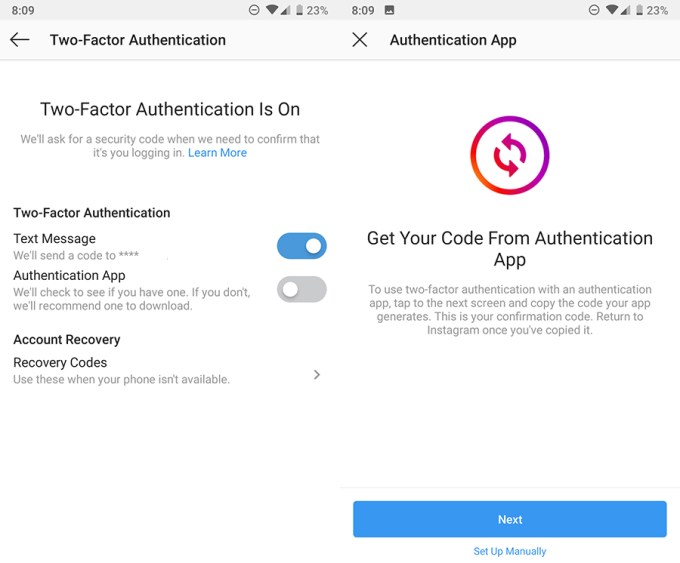
Open Instagram and navigate to the Settings menu. Scroll down into the Privacy and Security section and select Two-Factor Authentication. There, you’ll see two toggle options: Text Message and Authentication App. Choose Authentication App. On the next screen, Instagram will either detect existing authentication apps on your device, invite you to download one (Google Authenticator by default, Authy is a fine option too) or allow you to set up 2FA manually. Follow whichever option works best for you.

You’ll be asked to authenticate the device you’re on now, but you won’t have to do this every time for trusted devices once they have been authenticated. See? Not so bad. It was a long time for such a popular, well-resourced app to leave users unprotected by proper 2FA, but we’re glad it’s here now.

Additional reporting by Sarah Perez.