Year: 2018

09 Oct 2018

Google’s Pixel phones will soon get mobile Smart Compose in Gmail

Google today announced that its Pixel phones will soon get support for Smart Compose in Gmail. Smart Compose automatically finishes your sentences for you as you type, based on what Google knows about how you and others write similar sentences. Smart Compose can also auto-complete addresses for you.

Google first launched this feature with its redesigned Gmail for the web, but it’s now bringing this to mobile, too. On mobile, of course, a feature like this is even more interesting since typing on mobile is obviously harder. Google says that on the web, Smart Compose is already saving people a billion characters of typing per week.

It’s interesting that Google is launching this feature first on its Pixel phones. Maybe that’s because those phones also feature Google’s own AI chip.

In my own experience, Smart Compose is great when it works. Too often, it still doesn’t, but the good thing is that you can always ignore it and go your merry way without Smart Compose’s suggestions getting in your way.

Google did not say when this feature would launch, but chances are it’ll go live in the next few days or weeks.

more Google Event 2018 coverage

09 Oct 2018

The Pixel Slate is Google’s premium Chrome OS tablet

This is the Pixel Slate. Announced today among a flurry of hardware at the Made By Google event in New York, the product joins the Pixel Book as Google’s flagship Chrome OS products.

The device looks pretty much exactly like the leaks lead us to believe — it’s a premium slate with a keyboard cover that doubles as a stand. It also features a touch pad, which gives it the edge over products like Samsung’s most recent Galaxy Tab. There’s also a matching Google Pen, which appears to more or less be the same product announced around the Pixel Book, albeit with a darker paint job to match the new product.

The display features a density of 293ppi. Interestingly, the company is looking to pitch the product at creators, keeping the device more in line with the iPad Pro or various Surface products. Media consumption is a big piece as well — there’s a pair of stereo speaker grilles that flank the screen on the side bezels. The Slate will ship with three free months of YouTube TV.

Both front and rear facing cameras are 8MP, using the same machine learning found on the Pixel handsets. It can also shoot in wide screen and portrait mode.

The Slate naturally features the standard array of new Chrome features. The launcher suggests apps, while split screen lets users switch between multiple devices. The product has Google Assistant built in as well, of course, letting users interact via voice. Google says antivirus protections is built into the system with automatic updates. The power button, meanwhile, features a built-in fingerprint reader for boot up.

The Pixel Slate’s keyboard is called, get this, the Pixel Slate keyboard. The device automatically connects and the rounded keys are quiet (clearly a dig at those MacBooks) and backlit. The case doubles as both a stand and a case. Google’s worked with a number of developers here, including Adobe and, interestingly, Peloton, which is bringing fitness features to the device.

The product starts at $599, plus $199 for the keyboard and $99 for the new dark Pen. All three are shipping at some point later this year.

more Google Event 2018 coverage

09 Oct 2018

Messenger Lite launches on iOS, but only in Turkey

A few days ago, Facebook quietly introduced a “Lite” version of its Facebook app for iOS devices, but only in a single market, Turkey. The app had been previously available only on Android. Today, the company is following suit with a launch of Messenger Lite on iOS, again just in Turkey.

The launch was first spotted by app intelligence firm Sensor Tower.

Like the Facebook Lite iOS launch, Messenger Lite for iOS also touts a much smaller download size than the normal version, which today clocks in at a whopping 140MB.

Instead, Facebook Lite on iOS is only 10MB in size, the App Store description notes. That’s actually a bit bigger than Facebook Lite for iOS, which came in at 5MB, we should note.

The new app also claims to use less mobile data than Messenger proper, and installs quickly and runs efficiently.

Like Messenger, the chat app can be used with individuals or groups to send text messages, photos, videos, or links. However, according to comments from early users, the Lite version doesn’t show when contacts are online through a “status” dot on their profile or in a menu.

This is a similar feature set to Facebook Lite on Android, which also supports voice and video calls.

While the app instead has only been released to Turkey for the time being, it’s available in several other languages, which could be a hint of markets to come.

As the app is just getting off the ground, it’s only ranked at No. 99 for Social Networking on iPhone, and No. 26 on iPad as of the time of writing.

09 Oct 2018

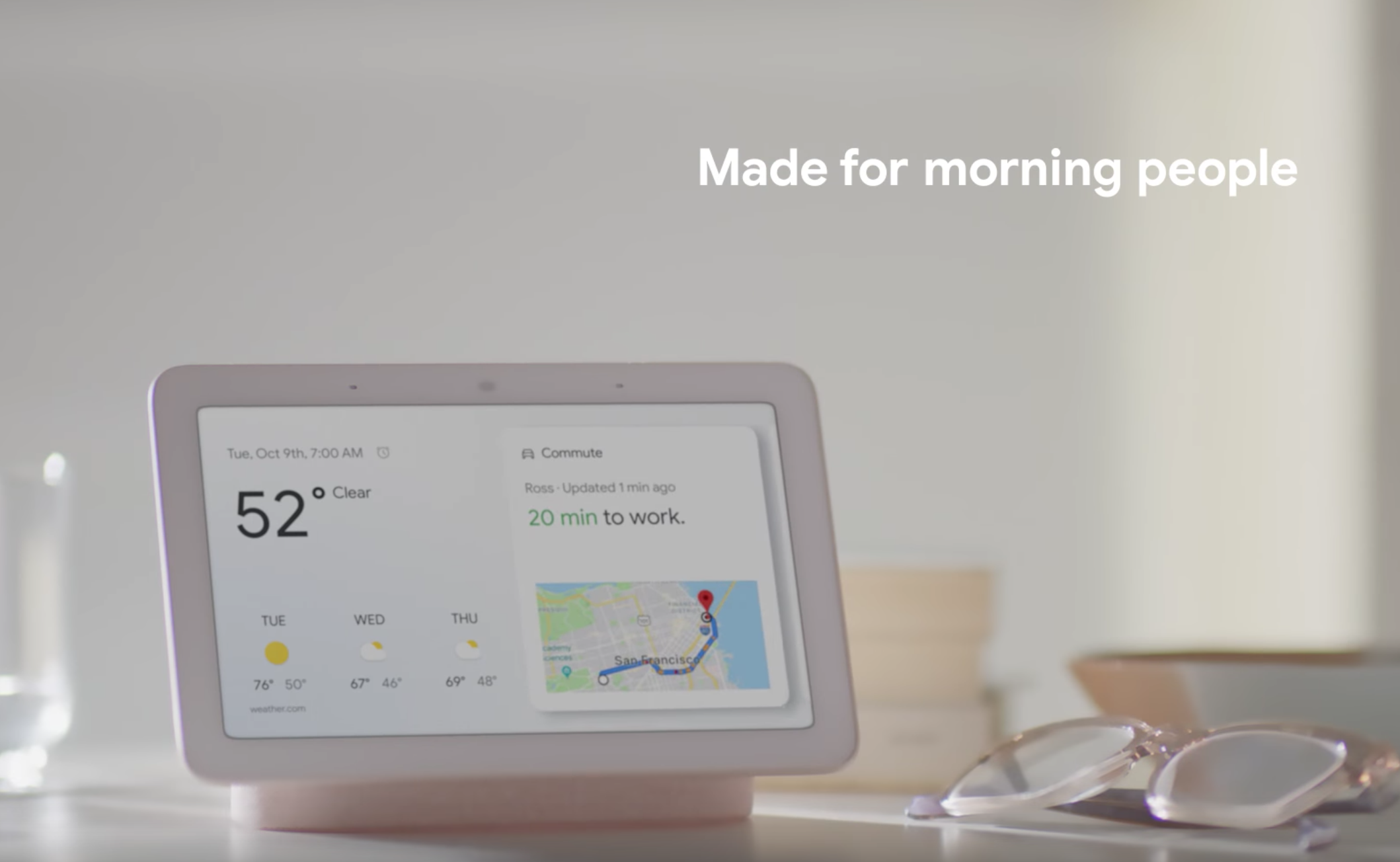
Here’s Google’s Echo Show competitor, the Home Hub

This is Google’s Echo Show competitor, the Home Hub. We knew it was coming, via an avalanche of leaks and now, moments before the event has officially kicked off, here it is in all of its glory by way of the full leaked product video (again spotted by 9 to 5 Google).  The product is a looker — especially compared to the last two generations of Amazon’s Echo Show.

The device looks like an Android tablet mounted on top of a speaker — which ought to address the backward firing sound, which is one of the largest design flaws of the recently introduced Echo Show 2. The speaker fabric comes in a number of different colors, in keeping with the rest of the Pixel/Home products, including the new Aqua.

The device joins a trio of “Smart Displays” for Google Assistant built by JBL, Lenovo and LG. Design-wise Lenovo’s was the best of the bunch, but the Home Hub looks to have outclassed it. The functions pretty much what you’d expect from these devices, including traffic, weather and cooking. Of course, Google’s got one key, not so secret weapon against Amazon: YouTube.

Google has also clearly made fitness a key piece here, showing off some yoga classes on the product, along with a touchscreen smart home control center. We’re here covering the event live in New York — more information as Google makes it officially official.

more Google Event 2018 coverage

09 Oct 2018

The Google Pixel 3 is official (thanks Verizon)

There are no surprises in the world of consumer electronics. We’ve already seen the Pixel 3 from every conceivable angle, both in video and still. And now, mere minutes before today’s event is set to kickoff, Verizon (the company that owns the company that owns TechCrunch, mind) has gone ahead and confirmed the thing on its site.

Contrary to some earlier renders, the third version of Google’s Android flagship (spotted by 9 to 5 Google) does boast a sizable notch up top, in keeping with earlier images of the larger XL. Makes sense, after all, Google went out of its way to boast about notch functionality when it introduced Pie, the latest version of its mobile OS.

The specs are admittedly still a bit spot via the carrier page, but the bullet points do confirm most of what we thought we knew about the handset. Google’s sticking to the single camera on the rear of the device, in contrast to the majority of the competition.

The front facing camera (hence the notch) has been improved here, bringing with it wide angle selfies, and the ability to skip photos where the subject is blinking (a feature found on other competing handsets, including the Galaxy Note 9.

No specifics on the battery yet, beyond “all day,” along with wireless charging on-board. The ability to access Google Assistant with a squeeze, first introduced by HTC on its own handsets, is back as well.

We’re here at the event, and we’ll  keep updating when Google finally spills the beans.

more Google Event 2018 coverage

09 Oct 2018

The Wing, a co-working space for women, opens its doors in San Francisco

Women-focused co-working space The Wing has made its way to California, opening its first of two planned locations in the state this morning.

On Sansome Street in San Francisco’s Financial District, The Wing hopes to attract professional women able to shell out $215 per month for access to its 8,000-square-foot workspace, which is complete with conference rooms, a cafe, a library stocked with books on feminist theory, a lactation room and more.

In addition to its chic decor and feminist messaging, The Wing is also known for its programming. Headquartered in New York City, where the company operates three of its four existing spaces, The Wing has hosted events with former Secretary of State Hillary Clinton, actress Jennifer Lawrence and New York Senator Kirsten Gillibrand, to name a few. The San Francisco location will be no different.

A spokesperson for The Wing tells me they have a fully booked calendar of politics, tech, entertainment and lifestyle-focused events prepped for members. In the first month, San Francisco Mayor London Breed will stop by, as will Democratic House Minority Leader Nancy Pelosi and Oakland Mayor Libby Schaaf.

[gallery ids="1729017,1729018,1729019,1729020,1729021"]

As a brand founded by women — Audrey Gelman and Lauren Kassan — and inspired by the women’s club movement of the 19th century, The Wing and its majority female staff very carefully and skillfully practice what they preach. In building their spaces, for example, they hire female architects to design and perfect the location. Their conference rooms are named for notable women. One, in particular, named for Dr. Christine Blasey Ford, stands out.

The dozens of art pieces scattered throughout The Wing are by female artists. The menu at The Wing’s cafe, which has a sign above it that reads “I’ll have what she’s having,” showcases women of the Bay Area’s food and beverage industries. Even the wines served at The Wing are made by female wine makers in California.

If there’s on thing about The Wing that stands out, it’s the startup’s attention to detail.

Founded in 2016, The Wing plans to open its next location, in West Hollywood, in early 2019.

The Wing is backed by venture capital firms NEA, Kleiner Perkins, Forerunner Ventures and BBG Ventures, as well as co-working unicorn WeWork. It has raised just over $40 million to date to expand its co-working spaces throughout the U.S. and beyond.

“The Wing answers a desire by women to connect with each other in an environment that aims to promote learning and camaraderie,” Forerunner’s Kirsten Green told TechCrunch. “It’s both a timely and timeless need. With so much focus on entrepreneurship and start-ups here in the Bay Area, The Wing offers the community that many independent women are looking for and can benefit from.”

09 Oct 2018

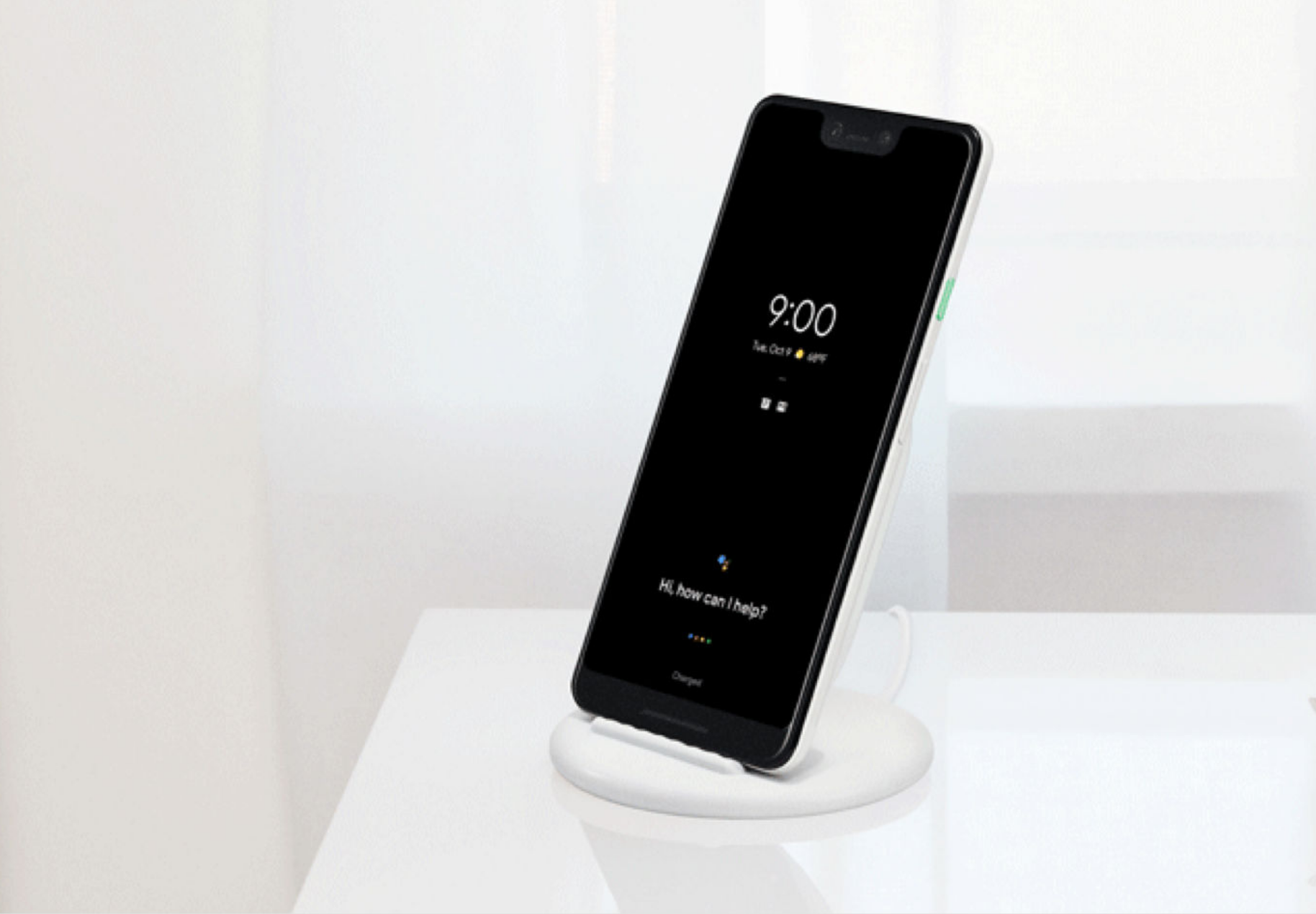
Here’s Google’s Pixel Stand

Google is launching its Pixel Stand today, a new wireless charging accessory for your Pixel phone that lets you dock your phone and — as you’ve probably guessed — sit your phone upright next to your bed or on your kitchen counter. That way, you can use it hands-free, similar to the new Google Assistant-powered smart displays that Google, Lenovo, LG and JBL have now announced.

While Google hasn’t officially announced this new gadget yet, we now know for sure that it’s coming, thanks to Verizon (via 9to5google), which put up its Pixel 3 page a bit too early. We expect Google will announce this at its annual hardware event, which is about to start.

The Pixel Stand is basically a sleek little round dock for your phone. While it can obviously charge your phone, what’s maybe more interesting is that when you put your phone into the cradle, it looks like it’ll start a new notifications view that’s not unlike what you’d see on a smart display.

You’ll be able to use it just like a Google Home and the Verizon page says you can use “one-touch shortcuts” or your voice.

We’ll update this post once we learn more details from Google’s official announcement or more features leak ahead of the official launch.

more Google Event 2018 coverage

09 Oct 2018

China’s fast-rising Bullet Messenger hit with copyright complaint

Bullet Messenger, a fast-rising Chinese messaging upstart that’s gunning to take on local behemoth, WeChat, has been pulled from the iOS App Store owing to what its owners couch as a copyright complaint.

Reuters reported the development earlier, saying Bullet’s owner, Beijing-based Kuairu Technology, claimed in a social media posting that the app had been taken down from Apple’s app store because of a complaint related to image content provided by a partner.

“We are verifying the situation with the partner and will inform you as soon as possible when download capabilities are resumed,” it said in a statement on its official Weibo account.

The company did not specify which part of the app has been subject to a complaint.

We’ve reached out to Apple to ask if it can provide any more details.

According to checks by Reuters earlier today, the Bullet Messenger app was still available on China’s top Android app stores — including stores owned by WeChat owner Tencent, as well as Baidu and Xiaomi stores — which the news agency suggests makes it less likely the app has been pulled from iOS as a result of censorship by the state, saying apps targeted by regulators generally disappear from local app stores too.

Bullet Messenger only launched in August but quickly racked up four million users in just over a week, and also snagged $22M in funding.

By September it had claimed seven million users, and Chinese smartphone maker Smartisan — an investor in Bullet — said it planned to spend 1 billion yuan (~$146M) over the next six months in a bid to reach 100M users. Though in a battle with a competitive Goliath like WeChat (1BN+ active users) that would still be a relative minnow.

The upstart messenger has grabbed attention with its fast growth, apparently attracting users via its relatively minimal messaging interface and a feature that enables speech-to-text transcription text in real time.

Albeit the app has also raised eyebrows for allowing pornographic content to be passed around.

It’s possible that element of the app caught the attention of Chinese authorities which have been cracking down on Internet porn in recent years — even including non-visual content (such as ASMR) which local regulators have also judged to be obscene.

Although it’s equally possible Apple itself is responding to a porn complaint about Bullet’s iOS app.

Earlier this year the Telegram messaging app fell foul of the App Store rules and was temporarily pulled, as a result of what its founder described as “inappropriate content”.

Apple’s developer guidelines for iOS apps include a section on safety that proscribes “upsetting or offensive content” — including frowning on: “Apps with user-generated content or services that end up being used primarily for pornographic content.”

In Telegram’s case, the App Store banishment was soon resolved.

There’s nothing currently to suggest that Bullet’s app won’t also soon be restored.

09 Oct 2018

Microsoft shows off government cloud services with JEDI due date imminent

Just a day after Google decided to drop out of the Pentagon’s massive $10 billion, 10-year JEDI cloud contract bidding, Microsoft announced increased support services for government clients. In a long blog post, the company laid out its government focused cloud services.

While today’s announcement is not directly related to JEDI per se, the timing is interesting just three days ahead of the October 12th deadline for submitting RFPs. Today’s announcement is about showing just how comprehensive the company’s government-specific cloud services are.

In a blog post, Microsoft corporate vice president for Azure, Julia White made it clear the company was focusing hard on the government business. “In the past six months we have added over 40 services and features to Azure Government, as well as publishing a new roadmap for the Azure Government regions providing ongoing transparency into our upcoming releases,” she wrote.

“Moving forward, we are simplifying our approach to regulatory compliance for federal agencies, so that our government customers can gain access to innovation more rapidly. In addition, we are adding new options for buying and onboarding cloud services to make it easier to move to the cloud. Finally, we are bringing an array of new hybrid and edge capabilities to government to ensure that government customers have full access to the technology of the intelligent edge and intelligent cloud era,” White added.

While much of the post was around the value proposition of Azure in general such as security, identity, artificial intelligence and edge data processing services, there were a slew of items aimed specifically at the government clients.

For starters, the company is increasing its FedRAMP compliance, a series of regulations designed to ensure vendors deliver cloud services securely to federal government customers. Specifically Microsoft is moving from FedRAMP moderate to high ratings on 50 services.

“By taking the broadest regulatory compliance approach in the industry, we’re making commercial innovation more accessible and easier for government to adopt,” White wrote.

In addition, Microsoft announced it’s expanding Azure Secret Regions, a solution designed specifically for dealing with highly classified information in the cloud. This one appears to take direct aim at JEDI. “We are making major progress in delivering this cloud designed to meet the regulatory and compliance requirements of the Department of Defense and the Intelligence Community. Today, we are announcing these newest regions will be available by the end of the first quarter of 2019. In addition, to meet the growing demand and requirements of the U.S. Government, we are confirming our intent to deliver Azure Government services to meet the highest classification requirements, with capabilities for handling Top Secret U.S. classified data,” White wrote.

The company’s announcements, which included many other pieces that have been previously announced, is clearly designed to show off its government chops at a time where a major government contract is up for grabs. The company announced Azure Stack for Government in August, another piece mentioned in this blog post.

09 Oct 2018

Freight trucking startup Shipwell gets a $10 million boost

Shipwell, a startup pitching a marketplace for domestic ground shipping and fleet and cargo management services for freight trucking companies, has raised $10 million in a new round of funding.

A booming American economy coupled with failing infrastructure and a low-margin business reluctant to adopt new technologies have put stress on domestic logistics companies in the $900 billion market for U.S. trucking services.

Shipwell combines a marketplace for shippers to connect with freight companies and online tools to manage those shipments. In effect, the company is pitching a version of the proprietary logistics management toolkit that has made Amazon so successful, to any retailer or outlet. 

We coordinate the freight, we pay the truckers, we help optimize the fleets,” says Shipwell president and co-founder, Jason Traff. 

Those services — and the company’s growing business among small and medium-sized suppliers to the construction industry — brought the Austin-based company to the attention of Fifth Wall Ventures, the Los Angeles based investment firm whose limited partners are among the biggest construction companies in the world.

For Fifth Wall the opportunity was clear. “Shipwell’s full-service, digitized brokerage platform can streamline the way many of our Anchor LPs and portfolio companies approach large-scale freight shipping,” the firm’s principal — and newest Shipwell board member — Vik Chawla wrote in a blog post announcing its most recent deal.

Fifth Wall led the company’s Series A round, which also included the new investor Global Founders Capital and previous investors First Round Capital, Base 10 Ventures, Capital Theory and Village Global .

The company’s business isn’t for big shippers that deal with thousands of shipments per-day, but rather the small and medium sized businesses that spend $100 million or less per-year on freight. And the small-fleet shipping companies that make up the bulk of the industry.

“In addition to the obvious use case for Shipwell customers who own warehousing, landlords can use Shipwell to become effective facilitators for their tenants,” according to Chawla. “Some Anchor LPs [the limited partners that provide capital for Fifth Wall to invest] are already engaged in this shipping ecosystem on behalf of their tenants, while others act as transport hubs. Beyond these, however, there are easy tie-ins within a number of key categories of Fifth Wall Anchors [sic] that regularly ship or receive freight—developers, of course, but also retail, office, homebuilding anchors.”

“We focus on the longer tail. If you are doing $50 million in freight per-year then you’re doing dozens of shipments per week,” said Traff. “Most of our freight is less than a truckload or a full truckload freight and it’s more long-haul.”

It hasn’t been a straight road for Traff and his co-founder Gregory Price. Traff originally got the startup bug in Asia, where he launched a company that would sell low-cost copies of old masters paintings. When he sold that business he moved back to the U.S. and pitched an idea to Y Combinator that eventually became Leaky, a car insurance company.

When Leaky shut down and its business was acquired by Navion in 2013, Traff moved to Austin to figure out his next move.I t was there that he ran into a fellow Massachusetts Institute of Technology alumnus named Greg Price and the two began hatching schemes for the company that would become Shipwell.

The two men began planning the business in 2016 and only launched the service in the beginning of this year. “Supply chains were very complex and there was a lot of building to do,” Traff said. 

Shipwell makes money by charging a commission on freight services and fees for its freight management software platform.

Ultimately this could create a new model to unify a fragmented industry. “This connective approach makes all of the difference in an industry with so many small companies at play,” Chawla wrote. “A surprising 89% of freight trucks in the U.S. are owned by carriers with fewer than five total trucks, and 99% of freight carriers possess fewer than 10 total trucks in their fleet. Despite the big business of freight shipping in the U.S., it’s actually a fragmented market of small businesses.”