Each October, Google throws one big “Made by Google” event to show off all of the new gadgets it’s been working on for months.
Today is that day. The event will start at 9 AM Pacific (12 PM in New York, 5 PM in London, and 12 AM Tuesday in China), and you can tune in right here.
While Google probably has some surprises up its sleeve, a seemingly endless stream of leaks has given us a good idea of what might be in store today. The Pixel 3 (the latest iteration of Google’s built-in-house Android phone) and the bigger, beefier Pixel 3 XL are almost certain. The Home Hub — perhaps best described as Google’s answer to the Amazon Echo Show — seems likely, too. Meanwhile, a new Chromecast has been floating around the FCC, and a tablet running Chrome OS popped its head up just days ago.
Whatever gets announced, we’ll be there. Tune in throughout the day for all of the news as it happens (and, as soon as we get our hands on the devices, our impressions!)
Each October, Google throws one big “Made by Google” event to show off all of the new gadgets it’s been working on for months.
Today is that day. The event will start at 8 AM Pacific (11 AM in New York, 4 PM in London, and 11 PM in China), and you can tune in right here.
While Google probably has some surprises up its sleeve, a seemingly endless stream of leaks has given us a good idea of what might be in store today. The Pixel 3 (the latest iteration of Google’s built-in-house Android phone) and the bigger, beefier Pixel 3 XL are almost certain. The Home Hub — perhaps best described as Google’s answer to the Amazon Echo Show — seems likely, too. Meanwhile, a new Chromecast has been floating around the FCC, and a tablet running Chrome OS popped its head up just days ago.
Whatever gets announced, we’ll be there. Tune in throughout the day for all of the news as it happens (and, as soon as we get our hands on the devices, our impressions!)
In statement to Bloomberg, Google spokesperson said “We are not bidding on the JEDI contract because first, we couldn’t be assured that it would align with our AI Principles. And second, we determined that there were portions of the contract that were out of scope with our current government certifications,” adding that Google is still “working to support the U.S. government with our cloud in many ways.”
The winner of the contract, which could last for up to 10 years, is expected to be announced by the end of the year. The project is meant to accelerate the Defense Department’s adoption of cloud computing and services. Only one provider will be chosen, a controversial decision that the Pentagon defended by telling Congress that the pace of handling task orders in a multiple-award contract “could prevent DOD from rapidly delivering new capabilities and improved effectiveness to the warfighter that enterprise-level cloud computing can enable.”
Google also addressed the controversy over a single provider, telling Bloomberg that “had the JEDI contract been open to multiple vendors, we would have submitted a compelling solution for portions of it. Google Cloud believes that a multi-cloud approach is in the best interest of government agencies, because it allows them to choose the right cloud for the right workload.”
Google’s decision no to bid for JEDI comes four months after it reportedly decided not to renew its contract with the Pentagon for Project Maven, which involved working with the military to analyze drone footage, including images taken in conflict zones. Thousands of Google employees signed a petition against its work on Project Maven because they said it meant the company was directly involved in warfare. Afterward, Google came up with its “AI Principles,” a set of guidelines for how it will use its AI technology.
Microsoft has made a strategic investment in ride-hailing and on-demand services company Grab as part of a deal that includes collaborating on big data and AI projects.
Under the agreement, Singapore-based Grab will adopt Microsoft Azure as its preferred cloud platformAzure cloud computing service.
Microsoft and Grab didn’t disclose financial terms.
The idea behind the tie-up is for Grab to use Microsoft’s product to scale its own digital platform, which has grown beyond ride-hailing. Grab also has its own payment service and makes food deliveries.
“Our partnership with Grab opens up new opportunities to innovate in both a rapidly evolving industry and growth region,” said Peggy Johnson, executive vice president at Microsoft, said in a statement.
The companies said they’ll also work on several “innovative deep technology projects,” including new authentication measures such as facial recognition with built-in AI (for drivers and customers who opt in) to replace the old-school method of checking IDs.
The companies will also investigate uses for natural language processing, machine learning and AI in Grab’s platform such as map creation, fraud detection services and the ability for passengers to take a photo of their current location and have it translated into an actual address for the driver.
Grab and Microsoft already have a loose connection of sorts via Toyota.
Toyota, which recently made a $1 billion investment into Grab (and another $1 billion from other investors), has been working with Microsoft for a couple of years now. In 2017, Microsoft agreed to license its patents for Internet-connected cars to Toyota, a milestone deal at the time that signaled the technology company’s willingness and interest to expand its transportation-related services.
The two companies struck a deal in April 2016 to create a data analytics company called Toyota Connect focused on bringing new Internet-connected services to cars. Toyota Connect uses Microsoft Azure to capture and evaluate data and help develop new products for drivers, businesses with car fleets, and dealers.
Microsoft has made a strategic investment in ride-hailing and on-demand services company Grab as part of a deal that includes collaborating on big data and AI projects.
Under the agreement, Singapore-based Grab will adopt Microsoft Azure as its preferred cloud platformAzure cloud computing service.
Microsoft and Grab didn’t disclose financial terms.
The idea behind the tie-up is for Grab to use Microsoft’s product to scale its own digital platform, which has grown beyond ride-hailing. Grab also has its own payment service and makes food deliveries.
“Our partnership with Grab opens up new opportunities to innovate in both a rapidly evolving industry and growth region,” said Peggy Johnson, executive vice president at Microsoft, said in a statement.
The companies said they’ll also work on several “innovative deep technology projects,” including new authentication measures such as facial recognition with built-in AI (for drivers and customers who opt in) to replace the old-school method of checking IDs.
The companies will also investigate uses for natural language processing, machine learning and AI in Grab’s platform such as map creation, fraud detection services and the ability for passengers to take a photo of their current location and have it translated into an actual address for the driver.
Grab and Microsoft already have a loose connection of sorts via Toyota.
Toyota, which recently made a $1 billion investment into Grab (and another $1 billion from other investors), has been working with Microsoft for a couple of years now. In 2017, Microsoft agreed to license its patents for Internet-connected cars to Toyota, a milestone deal at the time that signaled the technology company’s willingness and interest to expand its transportation-related services.
The two companies struck a deal in April 2016 to create a data analytics company called Toyota Connect focused on bringing new Internet-connected services to cars. Toyota Connect uses Microsoft Azure to capture and evaluate data and help develop new products for drivers, businesses with car fleets, and dealers.
Google+ is shutting down at last. Google announced today it’s sunsetting its consumer-facing social network due to lack of user and developer adoption, low usage and engagement. Oh, and a data leak. It even revealed how poorly the network is performing, noting that 90 percent of Google+ user sessions are less than five seconds long. Yikes.
But things weren’t always like this. Google+ was once heralded as a serious attempt to topple Facebook’s stranglehold on social networking, and was even met with excitement in its first days.
2011
June: The unveiling
The company originally revealed its new idea for social networking in June 2011. It wasn’t Google’s first foray into social, however. Google had made numerous attempts to offer a social networking service of some sort, with Orkut, launched in 2004 and shuttered in fall 2014; Google Friend Connect in 2008 (retired in 2012); and Google Buzz in 2010 (it closed the next year).
But Google+ was the most significant attempt the company had made, proclaiming at the time: “we believe online sharing is broken.”
The once top-secret project was the subject of severalleaksahead of its launch, allowing consumer interest in the project to build.
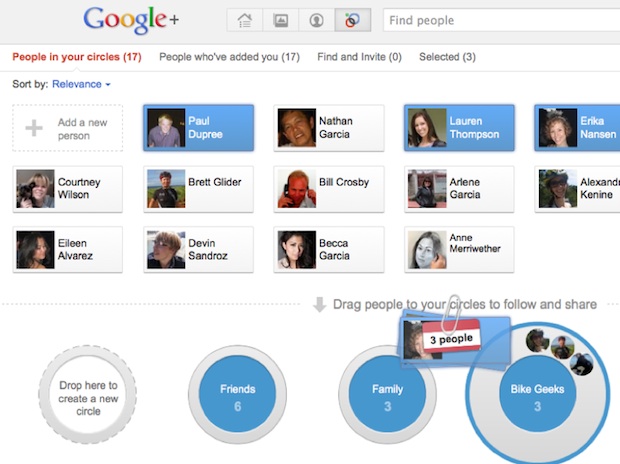
Led by Vic Gundotra and Bradley Horowitz, Google’s big idea to fix social was to get users to create groups of contacts — called “Circles” — in order to have more control over social sharing. That is, there are things that are appropriate for sharing with family or close friends, and other things that make more sense to share with co-workers, classmates or those who share a similar interest — like biking or cooking, for example.
But getting users to create groups is difficult because the process can be tedious. Google, instead, cleverly designed a user interface that made organizing contacts feel simpler — even fun, some argued. It also was better than the system for contact organization that Facebook was offering at the time.
Next thing you know, everyone was setting up their Circles by dragging-and-dropping little profile icons into these groups, and posting updates and photos to their newly created micro-networks.
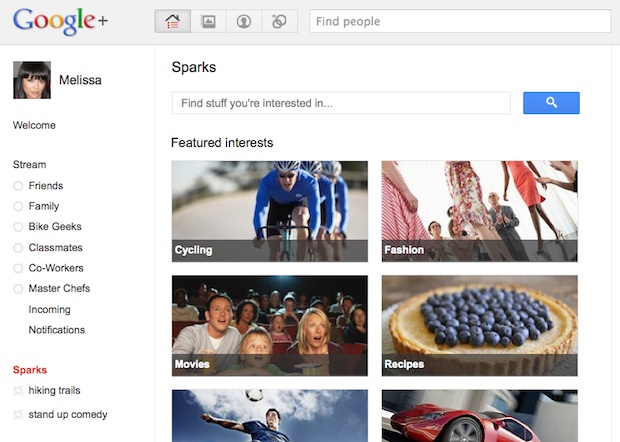
Another key feature, “Sparks,” helped users find news and content related to a user’s particular interests. This way, Google could understand what people liked and wanted to track, without having an established base of topical pages for users to “Like,” as on Facebook. But it also paved the way for a new type of search. Instead of just returning a list of blue links, a search on Google+ could return people’s profiles who were relevant to the topic at hand, matching pages and other content.
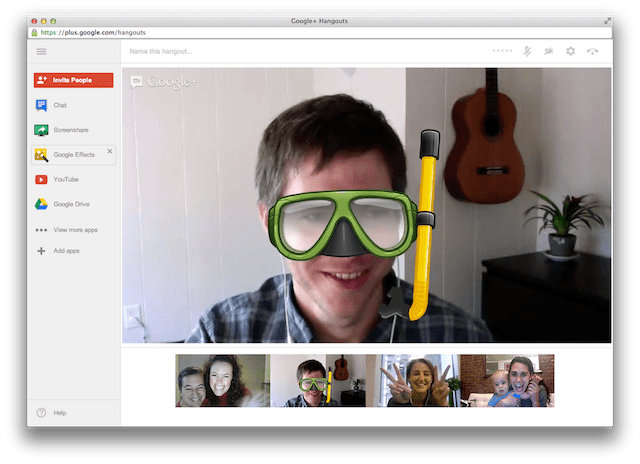
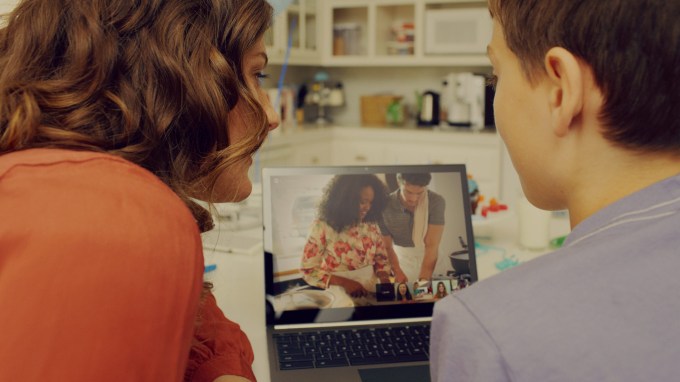
Google+ also introduced Hangouts, a way to video chat with up to 10 people in one of your Circles at once.
At the time, the implementation was described as almost magical. This was due to a number of innovative features, like the way the software focused in on the person talking, for example, and the way everyone could share content within a chat.
Early growth looked promising
Within two weeks, it seemed Google had a hit on its hands, as the network had reached 10 million users. Just over a month after launch, it had grown to 25 million. By October 2011, it reached 40 million. And by year-end, 90 million. Even if Google was only tracking sign-up numbers, it still appeared like a massive threat to Facebook.
Facebook CEO Mark Zuckerberg’s first comment about Google+, however, smartly pointed out that any Facebook competitor will have to build up a social graph to be relevant. Facebook, which had 750 million users at the time, had already done this. Google+ was getting the sign-ups, but whether users would remain active over time was still in question.
July: Backlashes over brands and Real Names policy
In an effort to compete with Facebook, Google+ also enforced a “real names” policy. This angered many users who wanted to use pseudonyms or nicknames, especially when Google began deleting their accounts for non-compliance. This was a larger issue than merely losing social networking access, because losing a Google account meant losing Gmail, Documents, Calendar and access to other Google products, too.
It wouldn’t fix some of these problems for years, in fact. Eric Schmidt even reportedly once suggested finding another social network if you didn’t want to use your real name — a comment that came across as condescending.
If you can’t beat ’em, force ’em! Google began to require users to have a Google+ account in order to sign up for Gmail. It was not a user-friendly change, and was the start of a number of forced integrations to come.
March: Criticism mounts
TechCrunch’s Devin Coldewey argued that Google failed to play the long game in social, and was too ambitious in its attempt with Google+. All the network really should have started with was its “+1” button — the clicks would generate piles of data tied to users that could then be searchable, private by default and shareable elsewhere.
June: Event spam goes viral
Spam remained an issue on Google+. This time, event spam had emerged, thanks to all the nifty integrations between Google+ and mission-critical products like Calendar.
Users were not thrilled that other people were able to “invite” them to events, and these automatically showed up on your Calendar — even if you had not yet confirmed that you would be attending. It made using Google+ feel like a big mistake.
November: Hangouts evolves
The following year after Google+’s launch, there was already a lot of activity around Hangouts — which interestingly, has since become one of the big products that will outlive its original Google+ home.
Video was a tough space to get right — which is why businesses like Skype were still thriving. And while Hangouts were designed for friends and family to use in Google+, Google was already seeing companies adopt the technology for meetings, and brands like the NBA for connecting with fans.
December: Google+ adds Communities
The focus on user interests in Google+ also continued to evolve this year with the launch of Communities — a way for people to set up topic-based forums on the site. The move was made in hopes of attracting more consumer interest, as growth had slowed.
It was a notable indication of how little love people had for Google+. YouTubers were downright pissed. One girl even crafted a profane music video in response, with lyrics like “You ruined our site and called it integration / I’m writing this song just to vent our frustration / Fuck you, Google Plusssssss!”
Google also started talking about Google+ as an “identity layer” with 500 million users to make it sound big.
2014
April: Vic Gundotra, Father of Google+, leaves Google
Google+ lost its founder. In April 2014, it was announced that Vic Gundotra, the father of Google+, was leaving the company. Google CEO Larry Page said at the time that the social network would still see investment, but it was a signal that a shift was coming in terms of Google’s approach.
Former TechCrunch co-editor Alexia Bonatsos (née Tsotsis) and editor Matthew Panzarino wrote at the time that Google+ was “walking dead,” having heard that Google+ was no longer going to be considered a product, but a platform.
The forced integrations of the past would be walked back, like those in Gmail and YouTube, and teams would be reshuffled.
July: Hangouts breaks free
Perhaps one of the most notable changes was letting Hangouts go free. Hangouts was a compelling product — too important to require a tie to Google+. In July 2014, Hangouts began to work without a Google+ account, rolled out to businesses and got itself an SLA.
July: Google+ drops its “real name” rule and apologizes
While Google had started rolling back on the real name policy in January of 2012 by opening rules to include maiden names and select nicknames, it still displayed your real name alongside your chosen name. It was nowhere near what people wanted.
Now, Google straight-up apologized for its decision around real names and hoped the change would bring users back. It did not. It was too late.
2015
May: Google Photos breaks free
Following Hangouts, Google realized that Google+’s photo-sharing features also deserved to become their own, standalone product.
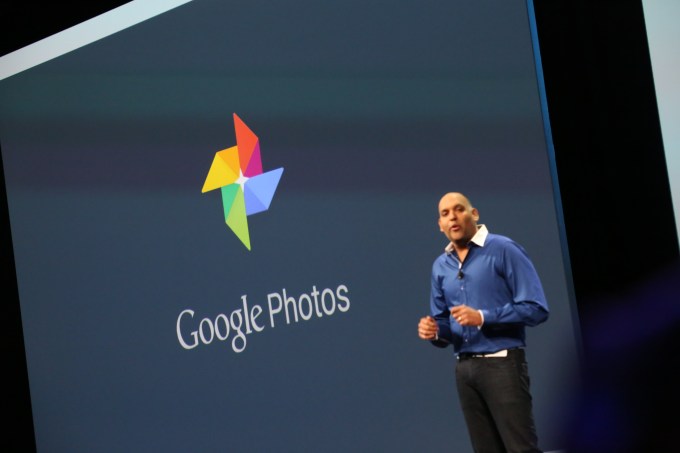
At Google I/O 2015, the company announced its Google Photos revamp. The new product took advantage of AI and machine learning capabilities that originated on Google+. This included allowing users to search photos for persons, places and things, as well as an update on Google+’s “auto awesome” feature, which turned into the more robust Google Photos Assistant.
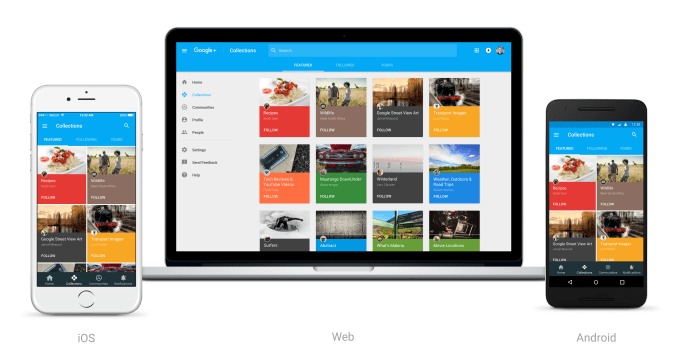
Bradley Horowitz, VP, Photos and Streams at Google and Product Director at Google, Luke Wroblewski, had teamed up to redesign Google+ around what Google’s data indicated was working: Communities and Collections. Essentially, the new Google+ was focused on users and their interests. It let people network around topics, but not necessarily their personal connections.
Horowitz explained at the time that Google had heard from users “that it doesn’t make sense for your Google+ profile to be your identity in all the other Google products you use,” and it was responding accordingly.
August: Hangouts on Air moved to YouTube Live
One of the social network’s last exclusive features, Hangouts on Air — a way to broadcast a Hangout — moved to YouTube Live in 2016, as well.
2017
Google+ went fairly quiet. The site was still there, but the communities were filling with spam. Community moderators said they couldn’t keep up. Google’s inattention to the problem was a signal in and of itself that the grand Google+ experiment may be coming to a close.
January: Classic design phased out
Google+ forced the change over to the new design first previewed in late 2015.
In January 2017, it no longer allowed users to switch back to the old look. It also took the time to highlight groups that were popular on Google+ to counteract the narrative that the site was “dead.” (Even though it was.)
August: Google+ removed share count from +1 button
The once ubiquitous “+1” button, launched in spring 2012, was getting a revamp. It would no longer display the number of shares. Google said this was to make the button load more quickly. But it was really because the share counts were not worth touting anymore.
2018
October 2018: Google+ got its Cambridge Analytica moment
A security bug allowed third-party developers to access Google+ user profile data since 2015 until Google discovered it in March, but decided not to inform users. In total, 496,951 users’ full names, email addresses, birth dates, gender, profile photos, places lived, occupation and relationship status were potentially exposed. Google says it doesn’t have evidence the data was misused, but it decided to shut down the consumer-facing Google+ site anyway, given its lack of use.
Data misuse scandals like Cambridge Analytica have damaged Facebook and Twitter’s reputations, but Google+ wasn’t similarly impacted. After all, Google was no longer claiming Google+ be a social network. And, as its own data shows, the network that remained was largely abandoned.
But the company still had piles of user profile data on hand, which were put at risk. That may lead Google to face a similar fate as the more active social networks, in terms of being questioned by Congress or brought up in lawmakers’ discussions about regulations.
In hindsight, then, maybe it would have been better if Google had shut down Google+ years ago.
The biggest cryptocurrency exchange wants to make its coin listing process a bit less sketchy.
In a Medium post on Monday, the company said that moving forward it would disclose fees that arise in the process of getting a coin listed on the exchange and donate all listing fees to charity. Specifically, its own charity: Blockchain Charity Foundation, “a not-for-profit organization dedicated to the advancement of blockchain-enabled philanthropy towards achieving global sustainable development.”
According to the blog post, Binance will allow any team trying to get listed to name its own fee, which the company now calls a “donation.” Binance says that it will not “dictate” that amount nor is there a minimum fee for a project to get listed.
The decision to open up about its listing fees is likely a response to prior accusations that Binance charged as much as $2.6M for projects that sought to get listed. At the time, the company denied those claims, made on Twitter.
It’s cute that @binance and @cz_binance are trying to save face. The listing fee is now a “donation” but if they aren’t a tax exempt organization (charity) then they can and will skim off the top of the donation and no one will ever know. Will they disclose past “donations” too?
While Binance suggested that it will disclose the amount of “donations” moving forward, it’s certainly possible for money to find its way back out of an in-house charitable arm.
“Binance will continue to use the same high standard for the listing review process,” Binance CEO Changpeng Zhao or “CZ” said in the post. “A large donation does not guarantee or in any way influence the outcome of our listing review process.”
Nubank, the Brazilian financial services company, has raised $180 million from the Chinese internet giant, Tencent.
Tencent has long been interested in financial services startups, and with its $90 million direct investment and another $90 million investment in the secondary market the company now has access to what is arguably the largest digital banking company in the world.
With the $4 billion valuation, it also makes Nubank one of the most highly valued privately held startups in Latin America.
News of the investment was first reported by The Information, which included the $4 billion figure.
For Nubank cofounders David Velez and Cristina Junqueira, the investment from Tencent means the addition of a strategic partner whose financial services products and transaction platform is unmatched by anything in Western Europe or the U.S.
Velez stressed that Nubank, which had raised $150 million in a February financing round led by DST, did not need the additional capital. “We found so much value in partnering with Tencent,” Velez said. “Particularly everything there is to learn about the Chinese financial market.”
Velez hopes to take those lessons and apply them back to the market in Brazil. China is in the forefront of financial services globally because of its technology companies’ ability to offer multi-product platforms. “They have built the playbook of how to use mobile.”
Through the investment, Tencent will gain an understanding of how Nubank has managed to service 5 million credit card holders, and the gameplan the company is deploying to develop its own savings accounts and other banking services.
“Over 20 million people have applied for the card,” said Velez. “There are active, engaged, customers that want to get everything from us.”
Junqueira estimates that the company will soon be able to serve tens of millions of Brazilians with either a savings account, a checking account, or credit.
The opportunity could be even bigger as Brazil’s central bank investigates the possibility of instant payments as well, looking to India’s experiment with demonetization as an example.
Both Junqueira and Velez said that the opportunity for financial services startups to achieve significant scale was far higher in emerging markets like Brazil than in developed markets, since the barriers to banking are so much higher.
Financial services, Velez said, has been controlled by massive oligopolies that have erected unfair obstacles to wealth creation for the masses. Nubank and other companies like it are working to change that.
Now the company has the benefit of Tencent’s guidance as it continues to push the envelope.
Facebook is making a video camera. The company wants you to take it home, gaze into its single roving-yet-unblinking eye and speak private thoughts to your loved ones into its many-eared panel.
The thing is called Portal and it wants to live on your kitchen counter or in your living room or wherever else you’d like friends and family to remotely hang out with you. Portal adjusts to keep its subject in frame as they move around to enable casual at-home video chat. The device minimizes background noise to boost voice clarity. These tricks are neat but not revelatory.
Sounds useful, though. Everyone you know is on Facebook. Or they were anyway… things are a bit different now.
Facebook, champion of bad timing
As many users are looking for ways to compartmentalize or scale back their reliance on Facebook, the company has invited itself into the home. Portal is voice activated, listening for a cue-phrase (in this case “Hey Portal), and leverages Amazon’s Alexa voice commands as well. The problem is that plenty of users are already creeped out enough by Alexa’s always-listening functionality and habit of picking up snippets of conversation from the next room over. It may have the best social graph in the world, but in 2018 people are looking to use Facebook for less — not more.
Facebook reportedly planned to unveil Portal at F8 this year but held the product back due to the Cambridge Analytica scandal, among other scandals. The fact that the company released the devices on the tail end of a major data breach disclosure suggests that the company couldn’t really hold back the product longer without killing it altogether and didn’t see a break in the clouds coming any time soon. Facebook’s Portal is another way for Facebook to blaze a path that its users walk daily to connect to one another. Months after its original intended ship date, the timing still couldn’t be worse.
Over the last eight years Facebook insisted time and time again that it is not and never would be a hardware company. I remember sitting in the second row at a mysterious Menlo Park press event five years ago as reporters muttered that we might at last meet the mythological Facebook phone. Instead, Mark Zuckerberg introduced Graph Search.
It’s hard to overstate just how much better the market timing would have been back in 2013. For privacy advocates, the platform was already on notice, but most users still bobbed in and out of Facebook regularly without much thought. Friends who’d quit Facebook cold turkey were still anomalous. Soul-searching over social media’s inexorable impact on social behavior wasn’t quite casual conversation except among disillusioned tech reporters.
Trusting Facebook (or not)
Onion headline-worthy news timing aside, Facebook showed a glimmer of self awareness, promising that Portal was “built with privacy and security in mind.” It makes a few more promises:
“Facebook doesn’t listen to, view, or keep the contents of your Portal video calls. Your Portal conversations stay between you and the people you’re calling. In addition, video calls on Portal are encrypted, so your calls are always secure.”
“For added security, Smart Camera and Smart Sound use AI technology that runs locally on Portal, not on Facebook servers. Portal’s camera doesn’t use facial recognition and doesn’t identify who you are.”
“Like other voice-enabled devices, Portal only sends voice commands to Facebook servers after you say, “Hey Portal.” You can delete your Portal’s voice history in your Facebook Activity Log at any time.”
This stuff sounds okay, but it’s standard. And, like any Facebook product testing the waters before turning the ad hose on full-blast, it’s all subject to change. For example, Portal’s camera doesn’t identify who you are, but Facebook commands a powerful facial recognition engine and is known for blurring the boundaries between its major products, a habit that’s likely to worsen with some of the gatekeepers out of the way.
Facebook does not command a standard level of trust. To recover from recent lows, Facebook needs to establish an extraordinary level of trust with users. A fantastic level of trust. Instead, it’s charting new inroads into their lives.
Hardware is hard. Facebook isn’t a hardware maker and its handling of Oculus is the company’s only real trial with the challenges of making, marketing — and securing — something that isn’t a social app. In 2012, Zuckerberg declared that hardware has “always been the wrong strategy” for Facebook. Two years later, Facebook bought Oculus, but that was a bid to own the platform of the future after missing the boat on the early mobile boom — not a signal that Facebook wanted to be a hardware company.
Reminder: Facebook’s entire raison d’être is to extract personal data from its users. For intimate products — video chat, messaging, kitchen-friendly panopticons — it’s best to rely on companies with a business model that is not diametrically opposed to user privacy. Facebook isn’t the only one of those companies (um, hey Google) but Facebook’s products aren’t singular enough to be worth fooling yourself into a surfeit of trust.
Gut check
Right now, as consumers, we only have so much leverage. A small handful of giant tech companies — Facebook, Apple, Amazon, Google and Microsoft — make products that are ostensibly useful and we decide how useful they are and how much privacy we’re willing to trade to get them. That’s the deal and the deal sucks.
As a consumer it’s worth really sitting with that. Which companies do you trust the least? Why?
It stands to reason that if Facebook cannot reliably secure its flagship product — Facebook itself — then the company should not be trusted with experimental forays into wildly different products, i.e. physical ones. Securing a software platform that serves 2.23 billion users is an extremely challenging task, and adding hardware to that equation just complicates existing concerns.
You don’t have to know the technical ins and outs of security to make secure choices. Trust is leverage — demand that it be earned. If a product doesn’t pass the smell test, trust that feeling. Throw it out. Better yet, don’t invite it onto your kitchen counter to begin with.
If we can’t trust Facebook to safely help us login to websites or share news stories, why should we trust Facebook to move an always-on counter-mounted speaker capable of collecting incredibly sensitive data into our homes? Tl; dr: We shouldn’t! Of course we shouldn’t. But you knew that.
The Casio Rangeman GPR-B1000 is comically large. That’s the first thing you notice about it. Based on the G-Shock design, this massive watch is 20.2mm thick and about 60mm in diameter, a true dinner plate of a watch. Inside the heavy case is a dense collection of features that will make your next outdoor adventure great.
GPR-B1000, which I took for an extended trip through Utah and Nevada, is an outdoor marvel. It has all of the standard hiking watch features including compass, barometer, altimeter, and solar charging, but the watch also has built-in GPS mapping, logging, and backtracking. This means you can set a destination and the watch will lead you and you can later use your GPS data to recreate your trek or even backtrack out of a sticky situation.
This is not a sports watch. It won’t track your runs or remind you to go to your yoga class. Instead it’s aimed at the backwoods hiker or off piste skier who wants to get from Point A to Point B without getting lost. The watch connects to a specialized app that lets you set the destinations, map your routes, and even change timezones when the phone wakes up after a flight. These odd features make this a traveler’s dream.
The watch design is also unique for Casio. Instead of a replaceable battery the device charges via sunlight or with an included wireless charger. It has a ceramic caseback – a first for Casio – and the charger fits on like a plastic parasite. It charges via micro USB.
It has a crown on the side that controls scrolling through various on-screen menus and the rest of the functions are accessed easily from dedicated buttons around the bezel. The watch is mud- and water-proof to 200 meters and it can survive in minus 20 degrees Celsius temperatures. It is also shock resistant.
The $800 GPR-B1000 is a beefy watch. It’s not for the faint of wrist and definitely requires a bit of dedication to wear. I loved it while hiking up and down canyons and mountains and it was an excellent travel companion. One of the coolest features is quite simply being able to trust that the timezone is correct as soon as you land in Europe from New York.
That said you should remember that this watch is for “Adventure Survival” as Casio puts it. It’s not a running watch and it’s not a fashion piece. At $800 it’s one of Casio’s most expensive G-Shocks and it’s also the most complex. If you’re an avid hiker, however, the endless battery, GPS, and trekking features make it a truly valuable asset.


 It had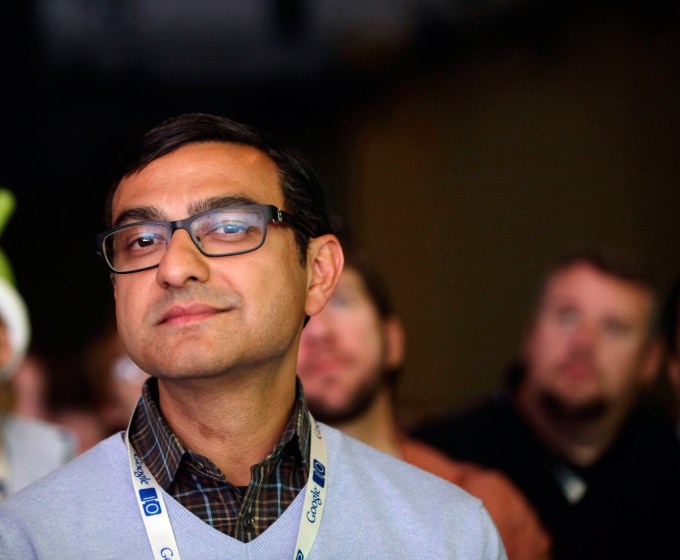
 (@FrankoCurrency)