Walmart is teaming up with MGM and others on original content for a free, ad-supported streaming service operated by Vudu . According to reports from Variety, Reuters, and CNBC, Walmart-owned Vudu will license original series created by MGM for this service, which will be based on franchises from MGM’s film and TV catalog. The shows will be family-friendly in nature, and exclusive to Vudu.
The news follows rumors that Walmart was working on its own subscription video-on-demand Netflix competitor, but Vudu says there’s nothing planned on that front for the time being. However, it’s not being ruled out for the future, the company noted.
Instead, the focus for now will be on short-form originals that will debut on Vudu’s “Movies On Us” service. Launched two years ago in October 2016, “Movies On Us” was Walmart’s first foray into ad-supported free streaming. The service today includes 5,000 movies and TV shows that consumers can watch for free, interrupted by the occasional ad break. It complements Vudu’s rental and purchase library of 150,000 films.
The new original series from MGM will arrive in the first quarter of 2019, and were described as “family-friendly, advertiser-friendly content.” The size of Walmart’s investment was unknown, but Vudu did tell Variety that it’s not intending to be a studio or create hundreds of new series. In other words, Walmart is not trying to take on Netflix here, nor is it spending billions of dollars on this effort.
MGM and Vudu also didn’t disclose what sort of series are being developed, but MGM’s film and TV library offers a lot of options, as Variety noted. It includes movies like James Bond, Rocky, RoboCop, Pink Panther, 21 Jump Street and The Hobbit franchises, for example.
Vudu plans to license more shows from others beyond MGM, but didn’t disclose details about those plans at this time.
LinkedIn, the social network for the working world with close to 600 million users and now under the wing of Microsoft, has announced an acquisition as it continues to work on expanding the ways that people already on the platform use it. It has acquired Glint, a startup that provides employment engagement services for businesses and other organizations.
Terms of the deal are not being disclosed. For some context, Glint had raised nearly $80 million — including these rounds for $27 million and and $20 million in the last two years — was valued at around $220 million in its last round according to PitchBook. Investors included Bessemer Venture Partners, Norwest Venture Partners, Shasta Ventures and Meritech Capital Partners.
Daniel Shapero, VP of Talent Solutions at LinkedIn, said that the team from Glint will join LinkedIn and continue to work as a salient entity within it under current Glint CEO and founder Jim Barnett.
One big focus for LinkedIn over the years has been how to expand the amount of engagement — and therefore revenue — it derives from paying customers, and in particular businesses that are on its platform. Today some of LinkedIn’s revenue generating products include premium memberships, recruitment (Talent Soutions) and education, by way of Lynda.com. Glint is another step ahead in that wider strategy to build out more services for those users, alongside existing services like education, CRM tools and, most recently, business intelligence.
And the blog post from Shapero, who heads up Talent Solutions, is another indication of how this will fit into LinkedIn’s recruitment business. Today a business might use LinkedIn for recruitment. Now, tomorrow, it can continue to use LinkedIn for more services around those employees once they have been hired. Glint’s current list of products including Employee Engagement, Employee Lifecycle, Manager Effectiveness, and Team Effectiveness. As we have described before, Glint works by way of employee surveys, which it then analyzes using machine learning, natural language processing and predictive analytics. Its reports measure how employees feel about things like management, compensation and workplace culture and makes suggestions for how companies can improve their scores.
The idea is that this helps to reduce the expense of recruiting and training new employees.
LinkedIn has already been building out solutions to help employees with their career development (for example with its educational products), and this will play an adjacent role on the company-wide front, since some of the feedback can be used to help tailor training courses for employees, and so on.
“We believe that Glint has uncovered a modern HR best practice that every company should do: Regularly gather employee feedback on work, culture, and leadership, and give leaders the tools they need to translate those insights into action,” Shapero writes. “At LinkedIn, as a customer of Glint, we’ve experienced the value that this brings first-hand. Glint provides executives with the tools to answer questions about the health and happiness of the talent they have, while giving managers at all levels the access and insight they need to improve.”
LinkedIn tells me that Glint will not be shutting down its existing service as it integrates into LinkedIn.
The timing of this announcement is also notable: LinkedIn is kicking off its big Talent Solutions conference and this helps set the tone for where it’s hoping to take the division.
Updated with more about what happens to Glint post-acquisition
A lot of secure sites are set to grind to a halt with security error messages in the next version of Google Chrome, after the browser will drop trust for a major HTTPS certificate provider following a series of security incidents.
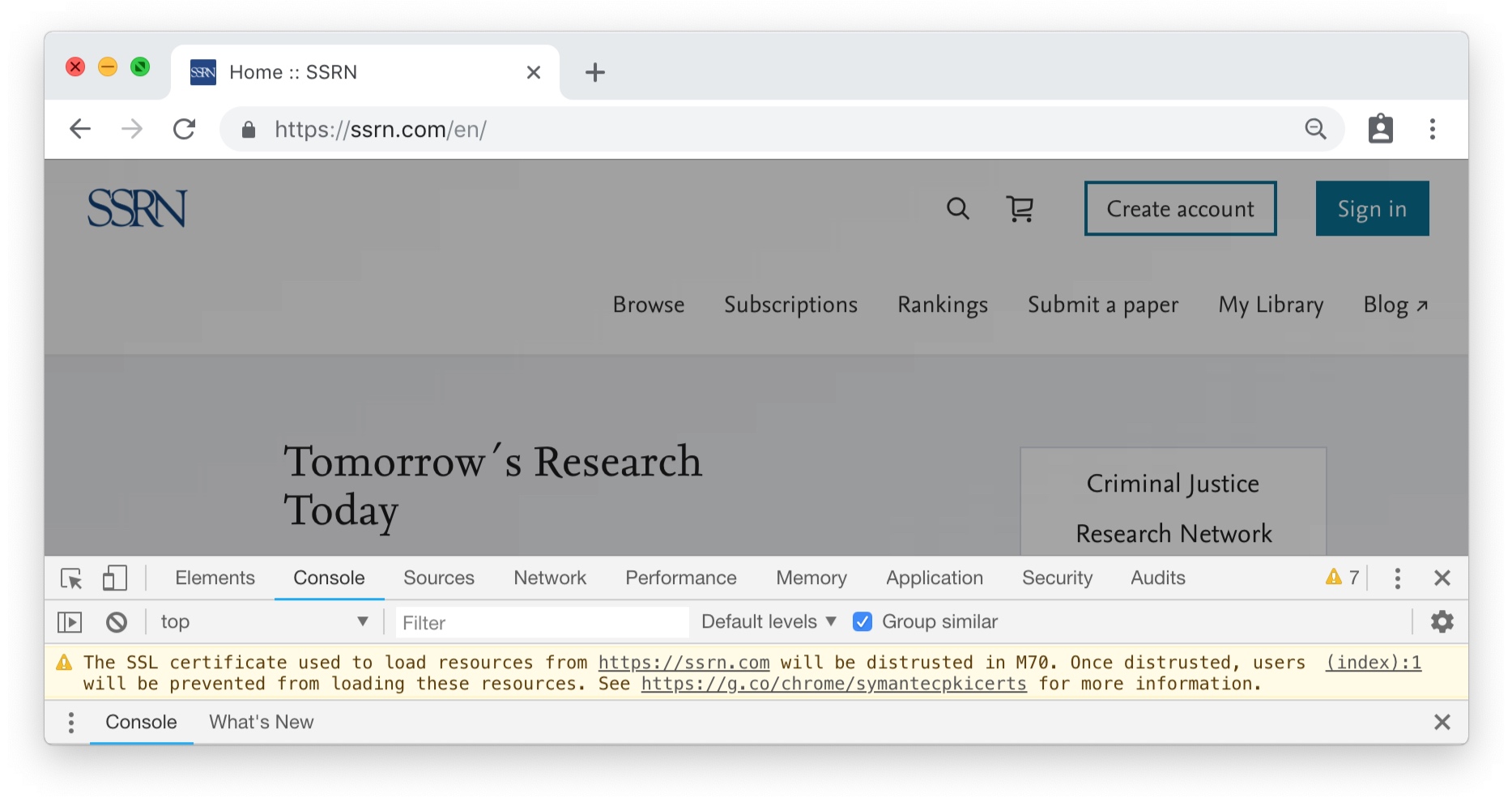
Chrome 70 is expected to be released on or around October 16, when the browser will start blocking sites that run older Symantec certificates issued before June 2016, including legacy branded Thawte, VeriSign, Equifax, GeoTrust and RapidSSL certificates.
Yet despite more than a year to prepare, many popular sites are not ready.
Ferrari, One Identity and Solidworks were named on the list but recently switched to new certificates, escaping any future outages.
You can check any website by pulling up the console in Chrome on any website. (Image: TechCrunch)
HTTPS certificates encrypt the data between your computer and the website or app you’re using, making it near-impossible for anyone — even on your public Wi-Fi hotspot — to intercept your data. Not only that, HTTPS certificates prove the integrity of the the site you’re visiting by ensuring the pages haven’t been modified in some way by an attacker.
Most websites obtain their HTTPS certificates from a certificate authority, which abide by certain rules and procedures that over time become trusted by web browsers.
If you screw that up and lose their trust, the browsers can pull the plug on all of the certificates from that authority.
That’s exactly why Google called it quits on Symantec certificates last year. The search giant, and others, accused Symantec of issuing misleading and wrong certificates — and later, it was discovered that Symantec allowed non-trusted organizations to issue certificates without the required rigorous oversight. That has forced thousands of sites to trash their paid-for certificates and replace them with new ones to prevent their site from flagging up with error messages once the Chrome 70 deadline hits.
But, just as much as browsers can lose trust in a certificate authority, it can also gain the trust of new ones.
Let’s Encrypt, a provider of free HTTPS certificates, gained trust from all the major browser makers — including Apple, Google, Microsoft and Mozilla — earlier this year. To date, the non-profit has issued more than 380 million certificates.
Fortnite Battle Royale was undoubtedly the big game of 2017, and 2018 is shaping up to be very similar. And with such popularity inevitably comes a swath of critics.
Take, for example, YouTuber Max Box. Using Fortnite’s replay mode, Max Box created a YouTube video that shows what Fortnite would look like in first-person mode.
The video is slightly buggy, but it’s about as close as we may ever get to seeing what Fortnite would look like in first person.
As it stands now, Fortnite uses third-person view, showing the player a view of themselves and the rest of the world from the perspective of their character’s right shoulder. Because of these mechanics, players are able to peek over cover or around walls without exposing themselves to incoming fire.
Because third-person view allows gamers to see their character in full, it also makes Epic’s main Fortnite revenue generator, premium skins and emotes, all the more valuable.
For those reasons, it seems unlikely that Epic would introduce a first-person mode.
That said, Epic will face new competition in the Battle Royale space with the introduction of CoD: Black Ops 4 Blackout mode on October 12. The game jumps in the ring with Fortnite, PUBG and H1Z1 as a first-person Battle Royale shooter.
Navionics, an electronic navigational chart maker owned by tech giant Garmin, has secured an exposed database that contained hundreds of thousands of customer records.
The MondoDB database wasn’t secured with a password, allowing anyone who knew where to look to access and download the data.
The company’s main products give boat, yacht and ship owners better access to real-time navigation charts, and boasts the “world’s largest cartography database.”
Bob Diachenko, Hacken.io’s newly appointed director of cyber risk research, said in a blog post that the 19 gigabyte database contained 261,259 unique records, including customer names and email addresses. The data also and information about their boat — such as latitude and longitude, boat speed and other navigational details — which Diachenko said likely updating in real-time.
After Diachenko contacted the company, Navionics shut down the server. A spokesperson did not return an email requesting comment.
It’s the latest in a string of MongoDB -based exposures. For years, the database was designed to sit behind firewalls and was not automatically password protected. Since more database have become connected directly to the internet, MongoDB refreshed its software to include a password by default. But many outdated installations are still unsecured.
Many exposed MongoDB databases have been accessed by hackers, had their contents downloaded and then wiped, and held to ransom.
Portal is not Facebook’s Echo Show. Call it a case of convergent evolution, wherein two companies arrived at similar looking products after approaching hardware from different angles. The problem Facebook sought to solve is one of face to face communication. It’s an attempt to remove the device from the act of video chatting.
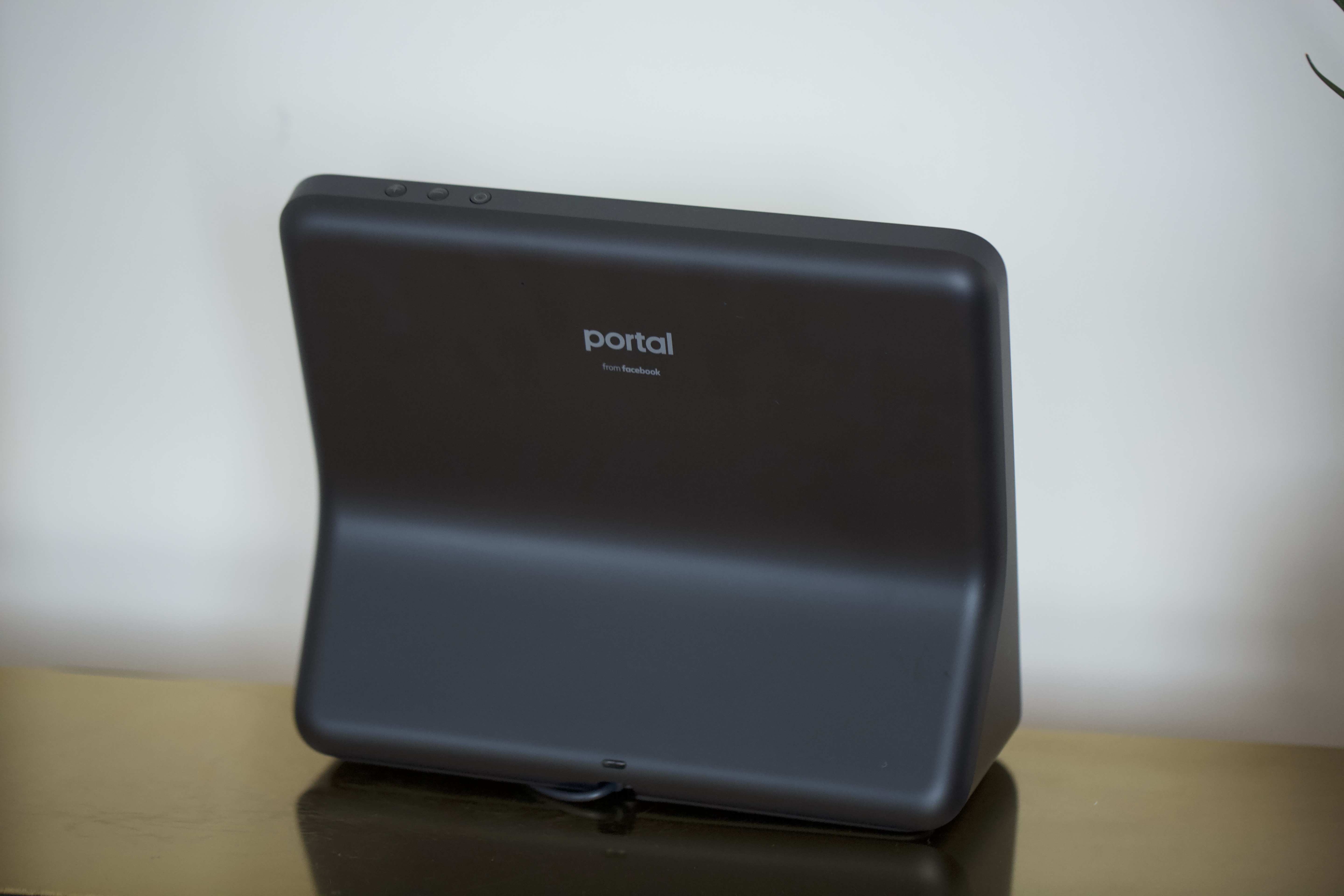
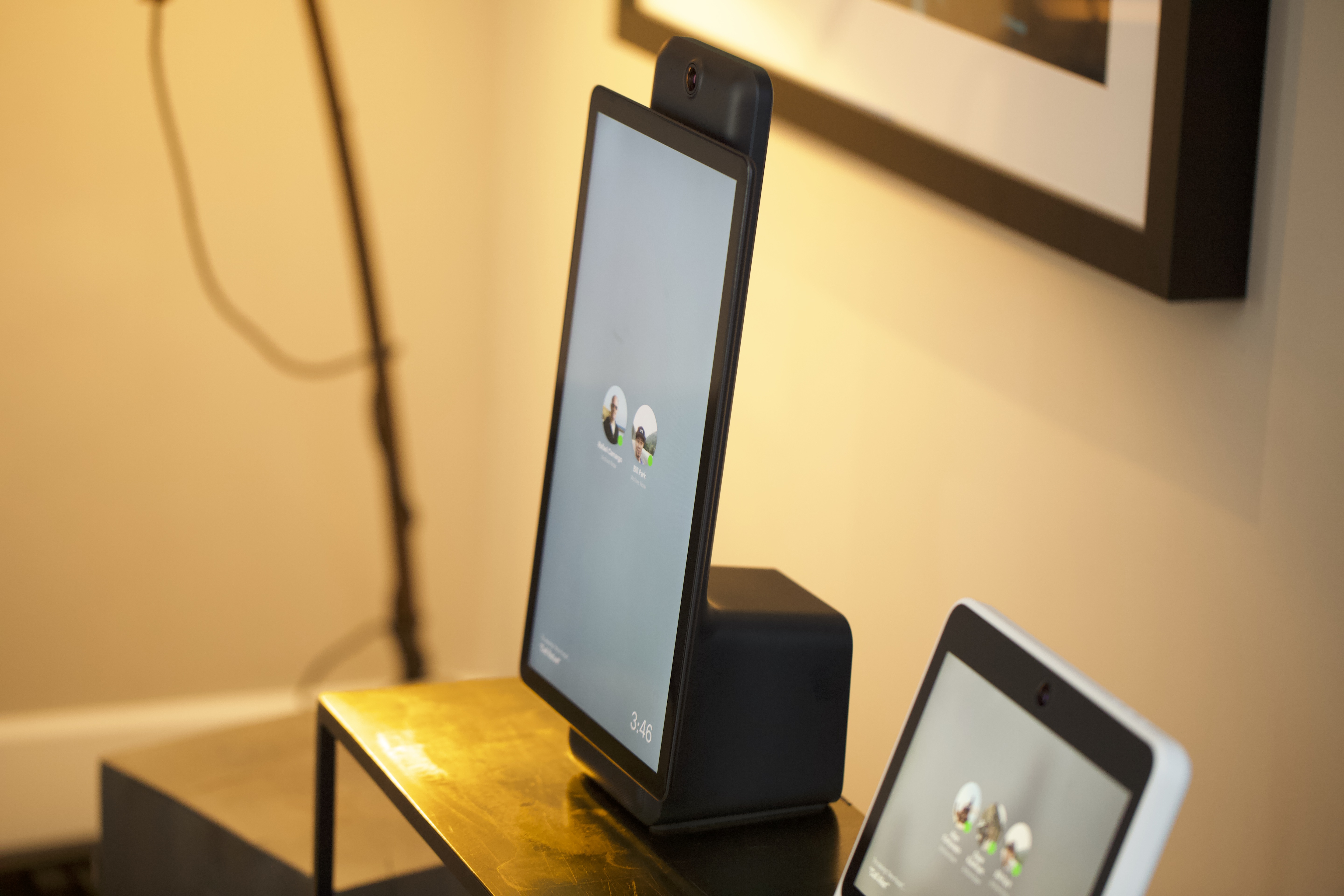
That Facebook, Amazon and Google’s smart display partners all ended up at a similar place is no coincidence, of course. Like those smart displays, the home teleconferencing device is essentially a propped up tablet. With Portal, however, the system takes two distinct form factors.
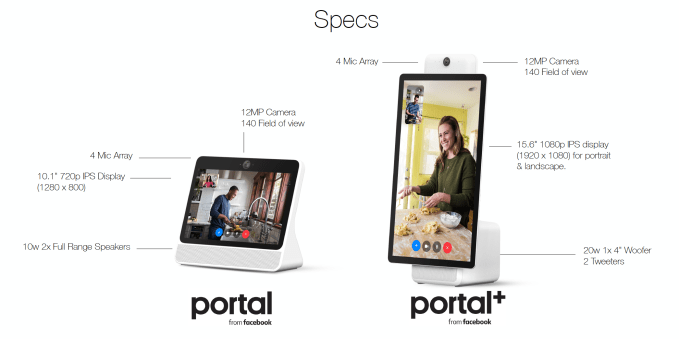
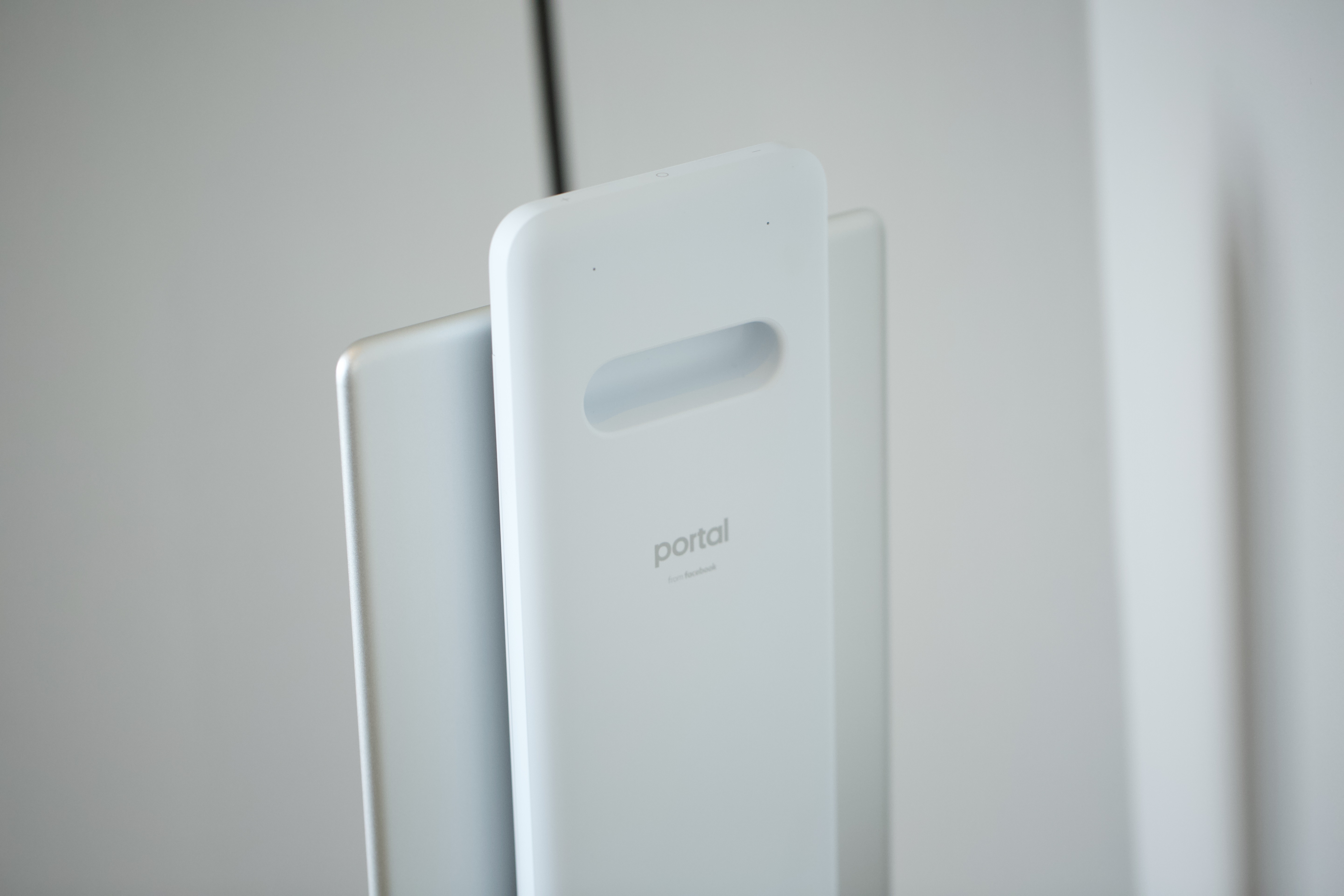
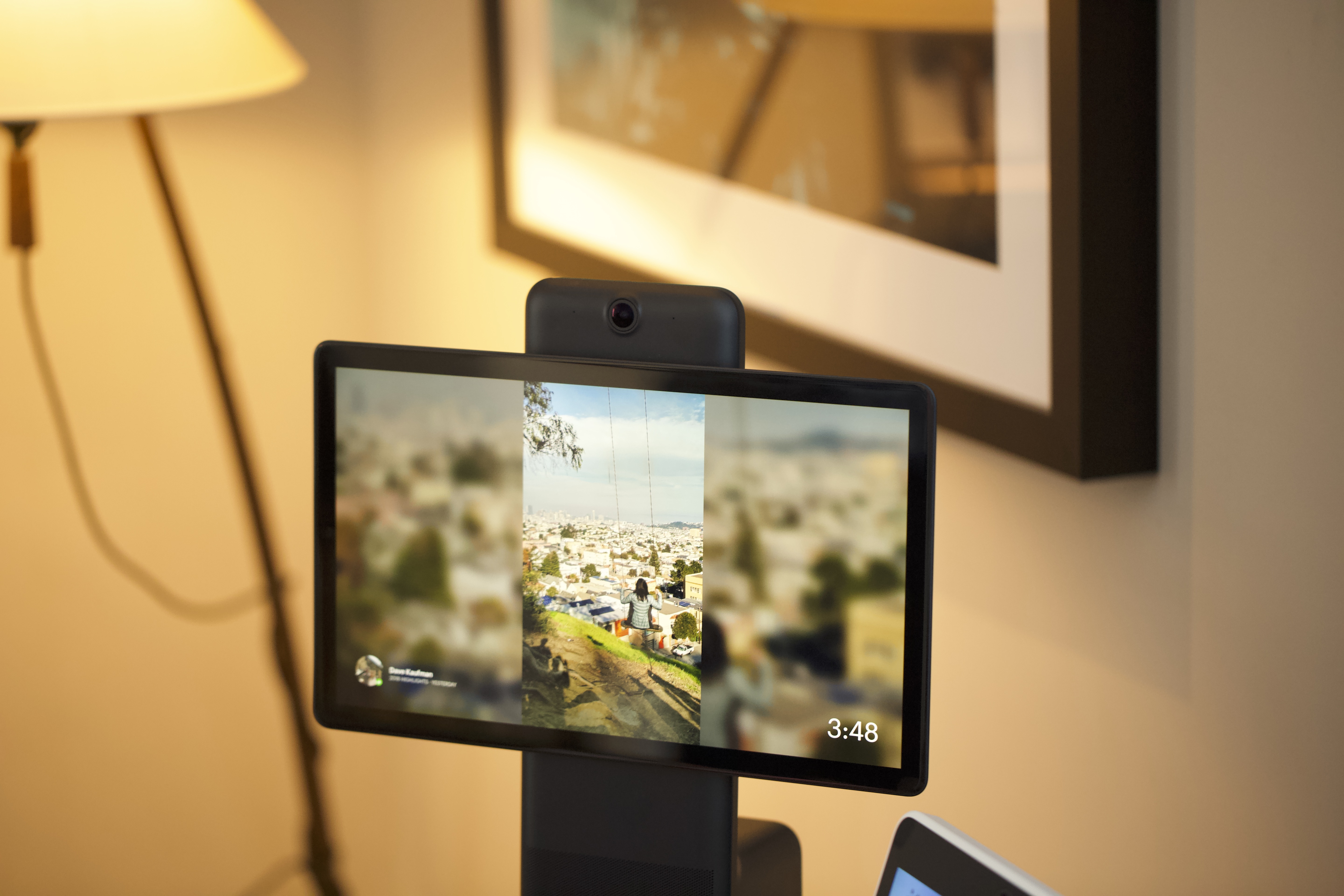
There’s the standard Portal, which looks quite a bit like Lenovo’s recently released Google Assistant Smart Display, and the more compelling Portal Plus. That larger model, with a 15 inch display (1920 x 1080) brings to mind recent enterprise attempts at telepresence robotics. The base is stationary here, but the display orientation can be swiveled into landscape or portrait mode.
What’s most remarkable, of course, is that this is the first true Facebook-produced piece of consumer electronics. It was never really a question of whether Facebook would create its own hardware — it was more a question of when, and what shape it would take. Unlike feeds, text chats and likes, video is the first real aspect of the company’s social platform that can justify a standalone device.
During a meeting with TechCrunch, the company cited this 2015 piece as an inspiration for the product. In it, Tim Urban lays out some pretty stark infographics pertaining to his own mortality. The piece also breaks down how much more face-to-face time the writer will ultimately spend with his parents, then in their mid-60s.
It’s kind of a bummer, honestly. Don’t read it on a plane. But here’s the takeaway:
“It turns out that when I graduated from high school, I had already used up 93 percent of my in-person parent time. I’m now enjoying the last 5% of that time. We’re in the tail end.”
I know, I know.
Portal’s creation dates back to the foundation of the hardware team two years ago. The team’s first product manager Rafa Camargo says there was some back and forth regarding whether it made sense for Facebook to finally launch first-party hardware in earnest.
“We spent six months trying to figure out how we expand the platforms Facebook has and toying with the idea of what we can do if we own the whole thing,” the former Googler tells TechCrunch. “Otherwise, what’s the point of hardware?”
The idea initial spark for Portal was struck a year and a half ago, leading Facebook to build out the Building 8 product team. In the intervening months, speculation has ramped up that the company was building either a Facebook Phone or Amazon Echo competitor. The latter, of course, was much closer to the truth (a least for now), though in some ways, Portal and Portal Plus are their own beasts entirely.
Video chat is far and away the focus here — and the implementation in the demos we’ve seen are actually pretty remarkable. In fact, the product is so focused on that singular feature that much of the rest of the product has languished in comparison.
Portal is not going to be the next centerpiece of your next smart home, for example. And the UI is pretty barebones and the app store is utterly lacking. There’s no web browser, and in spite of the large screen, you can’t watch videos through Netflix or Hulu or YouTube.In fact, ironically, this is one of the few pieces of consumer hardware on the market that won’t let you access your Facebook feed.
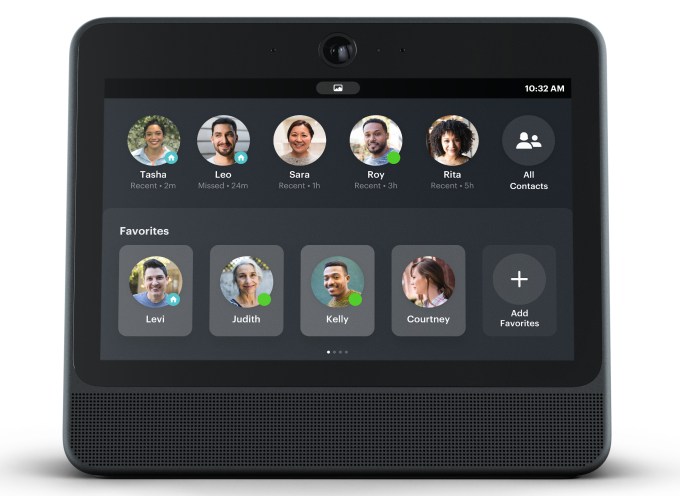
Of course, your Facebook account is still the key to logging in. By default (using the assorted array of algorithms), Portal will serve off up half a dozen people as your inner circle of communications. You can always tweak that list, however. Calling is pretty much what we’ve come to expect from these sorts of devices, albeit without the kind of overkill UX touches that many chat apps have.
It’s a full screen video, with a small overlay of what’s happening on your end. What’s most remarkable is the combination of AI and camera tricks that help the product focus on its subject. Portal identifies and tracks people, shifting the camera’s framing accordingly.
Facebook actually worked with a professional cinematographer there, to ensure smother transitions, panning the camera to track and zooming in an out (up to 10x) to fit as many people in frame as possible. The camera movement takes a bit of getting used to, but it’s well done and surprisingly smooth.
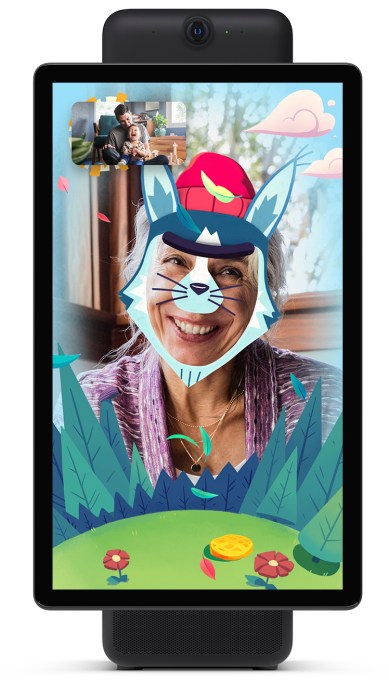
The other big aspect of the video is shared experiences. The simplest is using music apps like Spotify and Pandora to listen to songs simultaneously with someone however far away. While playing, there’s a visual overlay of the song, and the volume can be adjusted on either side of the conversation. There are also some early AR experiences, including Instagram filters and an adorable feature called Storytime, which feeds the narrator the text of a storybook via teleprompter, while overlaying visual aspects from the story.
All of this is very early stages, of course. Facebook has been demoing the device in private trials for roughly nine months with around 1,000 users. Part of that process is soliciting feedback for new features. At launch, the feature set will be fairly barebones, with additions rolling out over time.
The company isn’t disclosing a lot of information from a hardware perspective. The Plus has a 1080p screen, while the standard Portal is 720. There are decent sets of speakers on-board, along with a four mic array, which allows the systems to utilize Alexa for the assistant heavy lifting.
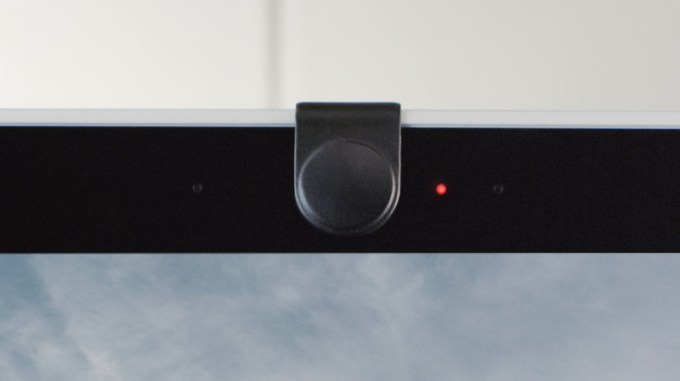
There is some native voice control, including the “Hey Portal” wake word, though interaction with the product is split between that and the touchscreen. There’s also an on-board button to switch off the camera when not in use, along with a lens cap for good measure.
The most surprising thing about the product (beyond its sheer existence) might actually be its price. The larger model runs $349 and the smaller is $199, putting it $20 below the Echo Show. There’s also a bundle that will get you two portals for $299. The device is clearly something of a loss leader for Facebook as the company explores hardware as an avenue for further engaging users.
Facebook’s first hardware product combines Alexa (and eventually Google Assistant) with a countertop video chat screen that zooms to always keep you in frame. Yet the fancy gadget’s success depends not on functionality, but whether people are willing to put a Facebook camera and microphone in their home even with a physical clip-on privacy shield.
Today Facebook launches pre-sales of the $199 10-inch screen Portal, and $349 15.6-inch swiveling screen with hi-fi audio Portal+, minus $100 if you buy any two. They’ve got “Hey Portal” voice navigation, Facebook Messenger for video calls with family, Spotify and Pandora for Bluetooth and voice-activated music, Facebook Watch and soon more video content providers, augmented reality Story Time for kids, a third-party app platform, and it becomes a smart photo/video frame when idle.
Knowing buyers might be creeped out, Facebook’s VP of Portal Rafa Camargo tells me “We had to build all the stacks — hardware, software, and AI from scratch — and it allowed us to build privacy into each one of these layers”. There’s no facial recognition and instead just a technology called 2D pose that runs locally on the device to track your position so the camera can follow you if you move around. A separate chip for local detection only activates Portal when it hears its wake word, it doesn’t save recordings, and the data connection is encrypted. And with a tap you can electronically disable the camera and mic, or slide the plastic privacy shield over the lens to blind it while keeping voice controls active.
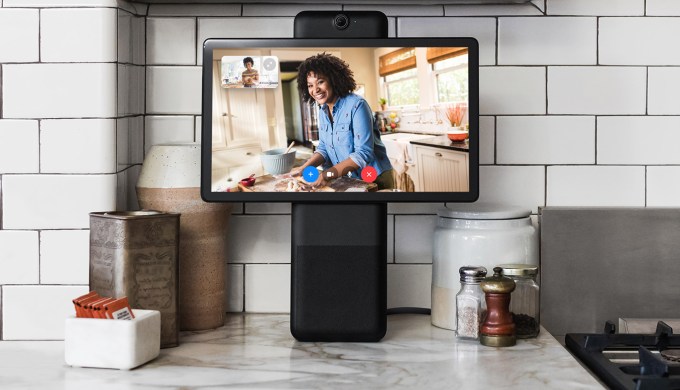
As you can see from our hands-on video demo here, Facebook packs features into high-quality hardware, especially in the beautiful Portal+ which has a screen you can pull from landscape to portrait orientation and impressive-sounding 4-inch woofer. The standard Portal looks and sounds a bit stumpy by comparison. The Smart Camera smoothly zooms in and out for hands-free use, though their are plenty of times that video chatting from your mobile phone will be easier. The lack of YouTube and Netflix is annoying, but Facebook promises there are more video partners to come.
The $199 Portal comes in $20 cheaper than the less functional Amazon Echo Show (read our gadget reviewer Brian Heater’s take on Portal below), and will also have to compete with Lenovo and Google’s upcoming version that might have the benefit of YouTube. Portal and the $349 Portal+ go on sale today on Portal.Facebook.com, Amazon, and Best Buy in both black and white base colors. They ship in November when they’ll also appear in physical Amazon Books and Best Buy stores.
Deep inside Facebook’s Menlo Park headquarters, the secretive Building 8 lab began work on Portal 18 months ago. The goal was to reimagine video chat not as a utilitarian communication tool, but for “the feeling of being in the same room even if you’re thousands of miles apart” Facebook Portal’s marketing lead Dave Kaufman tells me. Clearly drinking the social network’s kool-aid, he says that “it’s clear that Facebook has done a good job when you’re talking about the breadth of human connection, but we’re focusing on the depth of connection.”
The saddening motive? 93% of the face-to-face time we spend with our parents is done by the time we finish high-school, writes Wait but Why’s Tim Urban. “It felt like punch in the gut to people working at Facebook” says Kaufman. So the team built Portal to be simple enough for young children and grandparents to use, even if they’re too young or old to spend much time on smartphones.
Before you even wake up Portal, it runs a slideshow of your favorite Facebook photos and videos, plus shows birthday reminders and notifications. From the homescreen you’ll get suggested and favorite Messenger contacts you can tap to call, or you can just say “Hey Portal, call Josh.” Built atop the Android Open Source framework, Facebook designed a whole new UI for Portal for both touch and voice.
Portal uses your existing social graph instead of needing to import phone numbers or re-establish connections with friends. You can group video chat with up to seven friends, use augmented reality effects to hide your face or keep children entertained, and transfer calls to and from your phone. 400 million Facebookers use Messenger video chat monthly, racking up 17 billion calls in 2017, inspiring Facebook to build Portal around the feature. Kaufman says the ability to call phone numbers is in the roadmap, which could make Portal more tolerant of people who don’t live on Messenger.
Once a video call starts, the 140-degree, 12-megapixel Smart Lens snaps into action, automatically zooming and recentering so your face stays on camera even if you’re bustling around the kitchen or playing with the kids. A four-microphone array follows you too to keep the audio crisp from a distance. If a second person comes into view, Portal will widen the frame so you’re both visible. Tap on a person’s face, and Portal Spotlight crops in tight around just them. Unfortunately it can’t track pets, but that got so many requests from testers that Facebook wants to add it in.
Portal’s most adorable feature is called Story Time. It turns public domain children’s books into augmented reality experiences that illustrate the action and turn you into the characters. You’ll see the three little pigs pop up on your screen, and an AR mask lets you become the big bad wolf when you might impersonate his voice. Kids and grandparents won’t always have much to talk about, and toddlers aren’t great conversation partners, so this could extend Portal calls beyond a quick hello.
Beyond chat, Facebook has built a grip of third-party experiences into Portal. You can use Alexa to summon Spotify, Pandora, or IHeartRadio, and even opt to have songs play simultaneously on you and someone else’s Portal for a decentralized dance party. Portal+ in portrait mode makes a great playlist display with artwork and easy song skipping. The Food Network and Newsy apps let you watch short videos so you follow recipes or catch up on the world as you do your housework. And while you can’t actually browse the News Feed, Facebook Watch pulls in original premium video as well as some viral pap to keep you occupied.
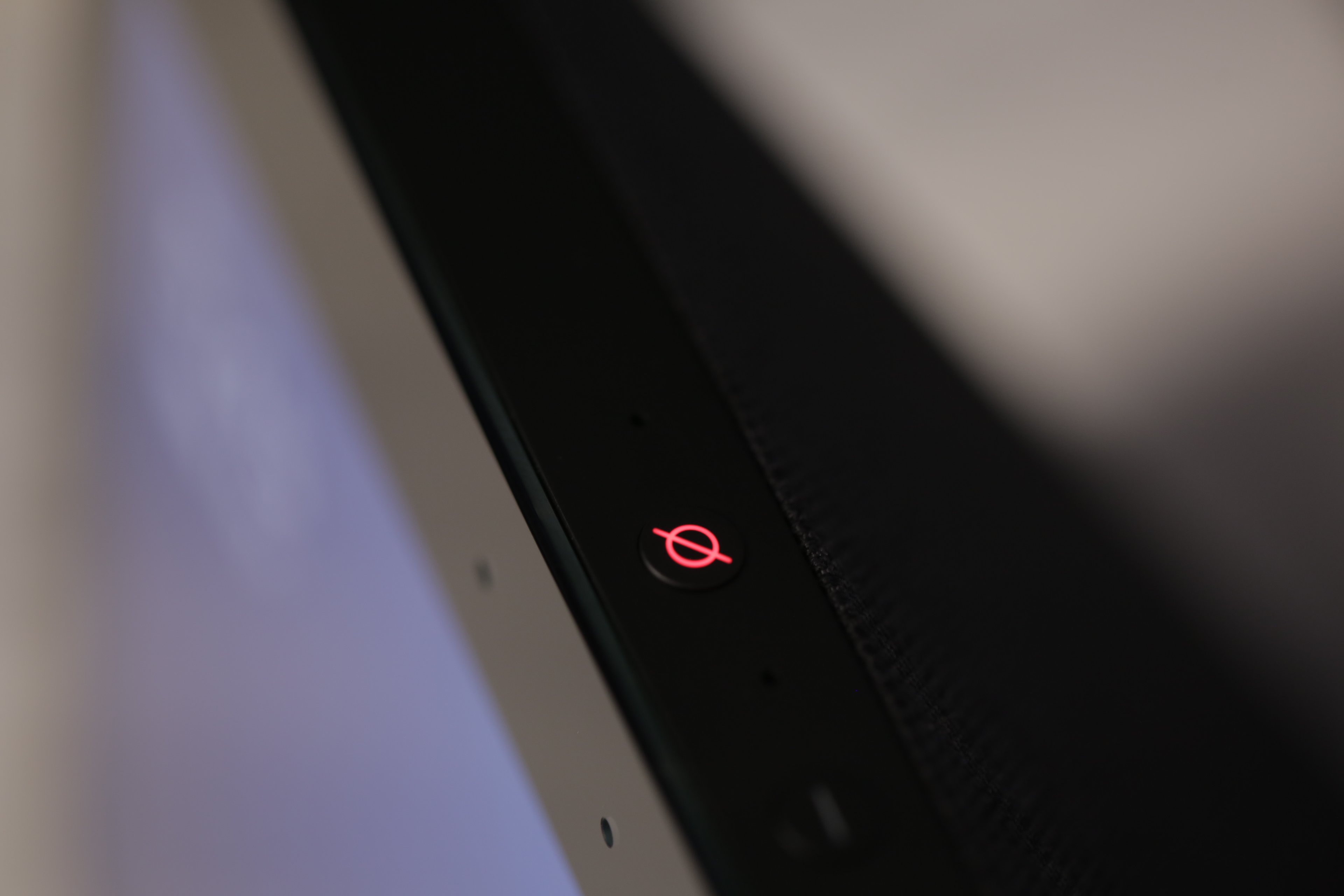
Still, after Cambridge Analytica and Facebook’s recent 50 million user breach, it’s understandable that some people would be scared to own Portal’s all-seeing eye. Privacy makes Portal a non-starter to many even as they seem comfortable with Google or Amazon having access to their dwelling. In hopes of assuaging fears, Facebook put a dedicated button atop Portal that electronically disconnects the camera and microphone so they can’t record, let alone transmit. Snap on the plastic privacy shield, and you’ll blind the lens while still being able to voice-activate music and other features. If you use these, especially when you’re not video chatting, the privacy threat drops signifcantly.
Facebook Portal’s physical camera privacy shield
Overall, Portal could replace your favorite Alexa device and add seamless video chatting through Messenger if you’re willing to pay the price. That’s both in terms of the higher cost, but also the ‘brand tax’ of welcoming the data-gobbler with a history of privacy stumbles into your home.
For a first-time hardware maker, Facebook did a remarkable job of building polished devices that add new value instead of reinventing the smart home wheel. Teaming up with Amazon and eventually Google instead of directly competing with their voice assistants shows a measure of humility most tech giants eschew. Yet a history of “move fast and break things” in search of growth has come back to haunt Facebook. Video chat is about spending time with people you love and trust, and Facebook hasn’t earned those feelings from us.
London ‘proptech’ startup Goodlord, which offers cloud-based software to help estate agents, landlords and tenants manage the rental process, has raised £7 million in Series B funding. The round is led by Finch Capital, with participation from existing investor Rocket Internet/GFC, and is roughly equal in size to Goodlord’s Series A in 2017. However, it would be fair to say a lot has happened since then.
In January, we reported that Goodlord had let go of nearly 40 employees, and that co-founder and CEO Richard White was leaving the company (we also speculated that the company’s CTO had departed, too, which proved to be correct). In signs of a potential turnaround, Goodlord then announced a new CEO later that month: serial entrepreneur and investor William Reeve (pictured), a veteran of the London tech scene, would now head up the property technology startup.
As I wrote at the time, Reeve’s appointment could be viewed as somewhat of a coup for Goodlord and showed how seriously its backers — which, along with Rocket Internet (and now Finch), also includes LocalGlobe and Ribbit Capital — were treating their investment and the turn-around/refocus of the company. With today’s Series B and news that Reeve has appointed a new CTO, Donovan Frew, that effort seems to be paying off.
Founded in 2014, unlike other startups in the rental market space that want to essentially destroy traditional brick ‘n mortar letting agents with an online equivalent, Goodlord’s Software-as-a-Service is designed to support all stakeholders, including traditional high-street letting agents, as well as landlords and, of course, tenants.
The Goodlord SaaS enables letting agents to “digitize” the moving-in process, including utilizing e-signatures and collecting rental payments online. In addition, the company sells landlord insurance, and has been working on other related products, such as rental guarantees, and “tenant passports.”
If Goodlord can reach enough scale, it wants to let tenants easily take their rental transaction history and landlord references with them when moving from one rental property to another as proof that they are a trustworthy tenant.
Meanwhile, the company says new funding will be used to build new products, grow its customer base, and invest in the further development of its proprietary technology to continue to make “renting simple and more transparent for letting agents, tenants and landlords”.
Last year, retail e-commerce sales worldwide reached $2.3 trillion, a 24.8 percent increase over the previous year, according to eMarketer. A growing percentage of that spend was being captured by startups with strong online identities that are savvy about collecting and analyzing their customer data.
Involved with many of them, from the eyewear company Warby Parker to the cosmetics startup Glossier to the athleisure brand Outside Voices, is Forerunner Ventures, a seven-year-old, San Francisco-based venture firm that has built its own name around expertise in e-commerce — and which sees a giant opportunity to fund many more brands.
Forerunner suddenly has much more capital to chase those opportunities, too, having just closed its fourth fund with $360 million in capital commitments. That’s almost exactly triple the size of its previous, $122, third fund, closed in 2016.
That investors are eager to give Forerunner more money to deploy isn’t surprising. In addition to a strong portfolio of still-private companies, which also includes the vitamin company RItual, the luggage company Away, and the men’s wellness brand Hims, the firm has already seen a number of big exits in recent years.
One of its very first checks, in fact, went to Dollar Shave Club, which sold to Unilever for $1 billion in 2016. Roughly one month later, Wal-mart spent $3.3 billion to acquire another of its startups, the web retailer Jet.com. Meanwhile, last year, a third investment, the menswear brand Bonobos, sold for $310 million, again to Wal-mart.
The firm — which was somewhat famously founded by former equity research analyst Kirsten Green and largely co-run by general partner Eurie Kim — also made a high-profile hire four months ago. It poached longtime VC Brian O’Malley, who’d spent the previous four years with Accel and who co-invested alongside Forerunner over the years, including in Away and Dollar Shave Club, as well as the booking platform HotelTonight and the home goods store Serena & Lily.
Not only does the move underscore that Forerunner is maturing, it signals a bigger push into software-as-a-service businesses, where O’Malley has been active, including by leading investments into companies like Duetto, which makes pricing, revenue management, and forecasting software for hotels and casinos worldwide.
Indeed, on a call with Green on Friday about the firm’s rapid growth since closing its first institutional fund with $40 million six years ago, she talked about Forerunner’s interest in business-to-business opportunities that support the firm’s broader thesis of focusing on the consumer.
She pointed, as an example, to Faire, an online marketplace that connects independent retailers directly with product manufacturers, so they can place wholesale orders and track shipments online, as well as return the items that don’t sell in their stores.
Another related bet is Inturn, which helps move excess inventory. Specifically, its subscription-based software pulls inventory data from whatever legacy systems a manufacturer or retailer may be operating; it then creates detailed product information about whatever is “excess” and shows it to off-price chains and other outlets and helps facilitates its sale.
Forerunner even has a bet on a Canadian robotics company, Attabotics, which is focused on warehousing and fulfillment.
Green also talked broadly about being able to write bigger checks and to better support some of Forerunner’s many breakout companies. But as she explained it, the firm plans to do little else differently going forward. If anything, she suggested, it will simply be capitalizing on the know-how about startups it has gleaned by working in the trenches with so many new brands over the last decade.
“Throughout my career, I’ve looked to understand cycles,” said Green. “Generally, I think there are micro cycles, where there’s lots of newness happening and high experimentation, and I think [toward that end] mobile is a new platform that’s just gaining momentum. You also have emerging areas like blockchain and AR and VR that aren’t mainstream and it’s not obvious when they’ll bust into the market in a big way but that stand to drive new waves of newness.”
Still, she added, “I’m feeling there’s also an opportunity now to leverage what’s been tested and tried over many years, things that are done with the benefit of perspective. We — and many of the founders we know, too — now have the benefit of having some lessons learned.”
Pictured above: Forerunner General Partners Green, O’Malley, and Kim.
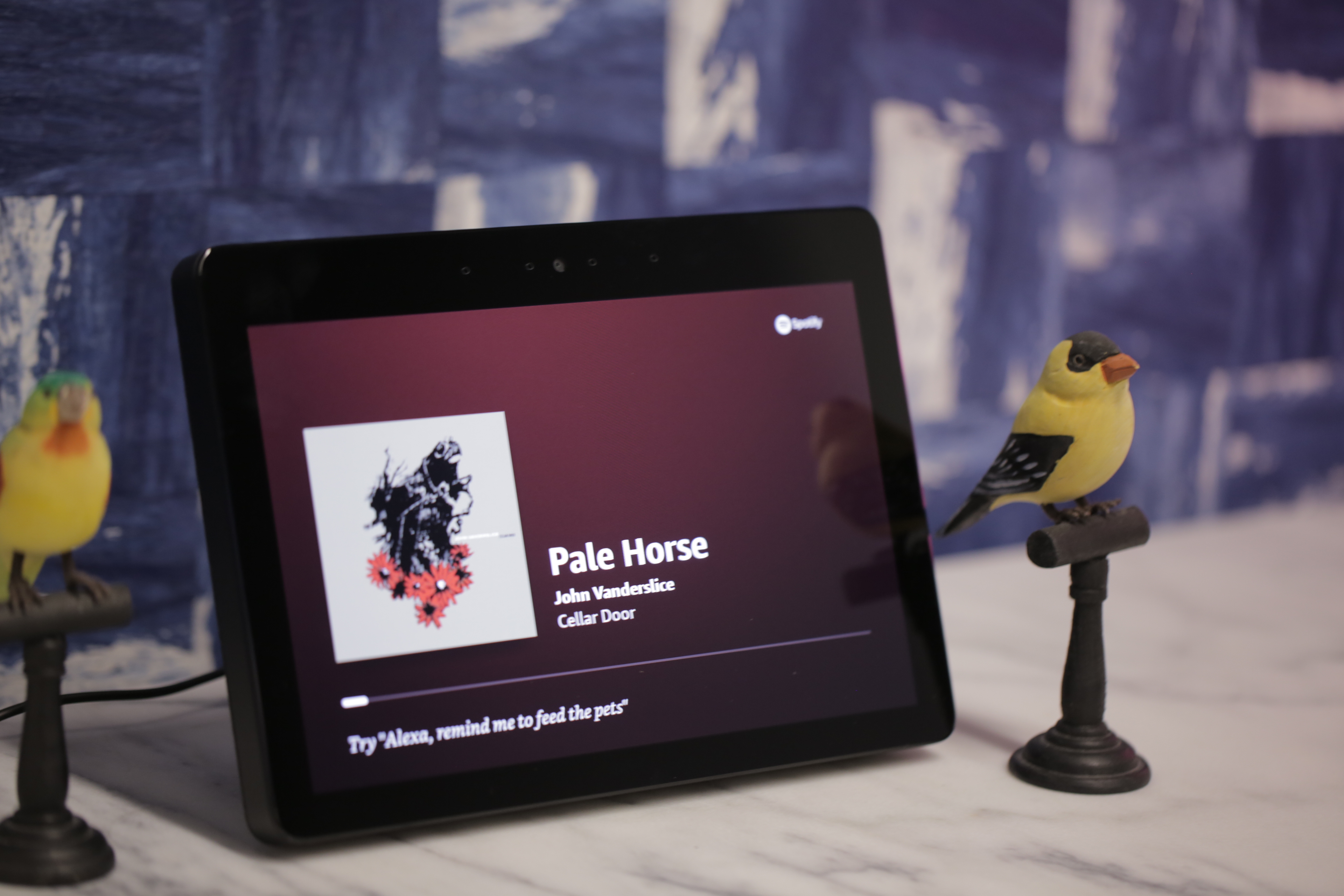
With the original Echo Show, Amazon added a new dimension to the smart speaker. To critics, the device was little more than a station tablet. For Amazon, however, the product unlocked a new vertical in the rapidly expanding category. The day to usefulness wasn’t always clear, but the potential certainly was, as Amazon and the competition looked to corner the smart home market.
Like most of the company’s first generation products, however, the hardware wasn’t great. The first Show was big and clunky. It looked dated before it even arrived in living rooms and kitchens. But it got the job done.
While the company hasn’t released sales figures for the product, the first gen clearly sold briskly in its early days, according to rankings. The numbers were ultimately hobbled by a war with Google that resulted in YouTube being pulled from the platform, but on a whole, the device appears to be a hit.
It’s already inspired a number of copycats. In January, Google announced a new Smart Display category relying on third parties to product their own Assistant-powered take on the device. And later this week, it’s expected to introduce its own competitor, the Home Hub. It’s fitting, then, that the second-gen Show bears Google’s unmistakable influence. Heck, it’s kind of theme in this latest batch of Echo devices.
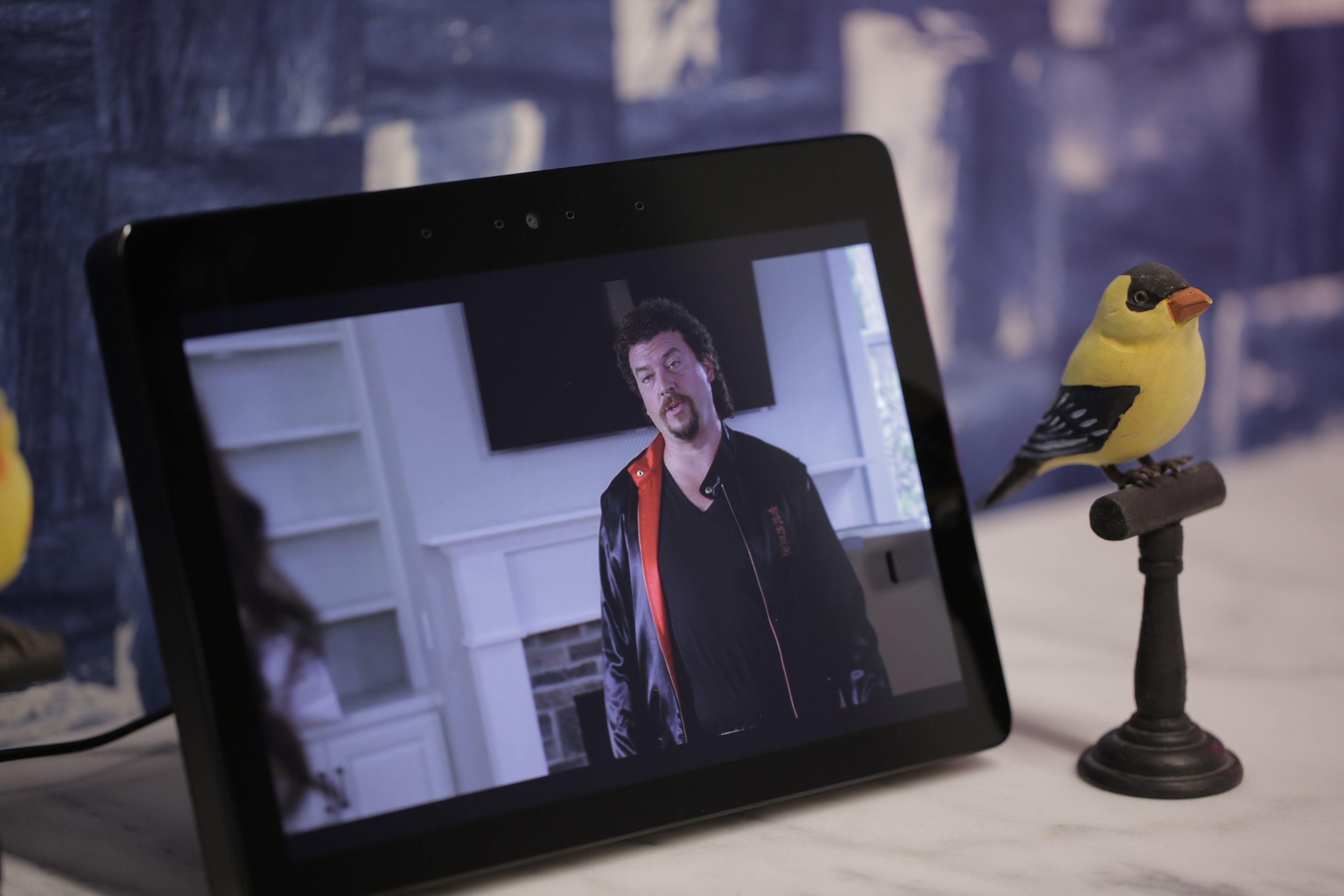
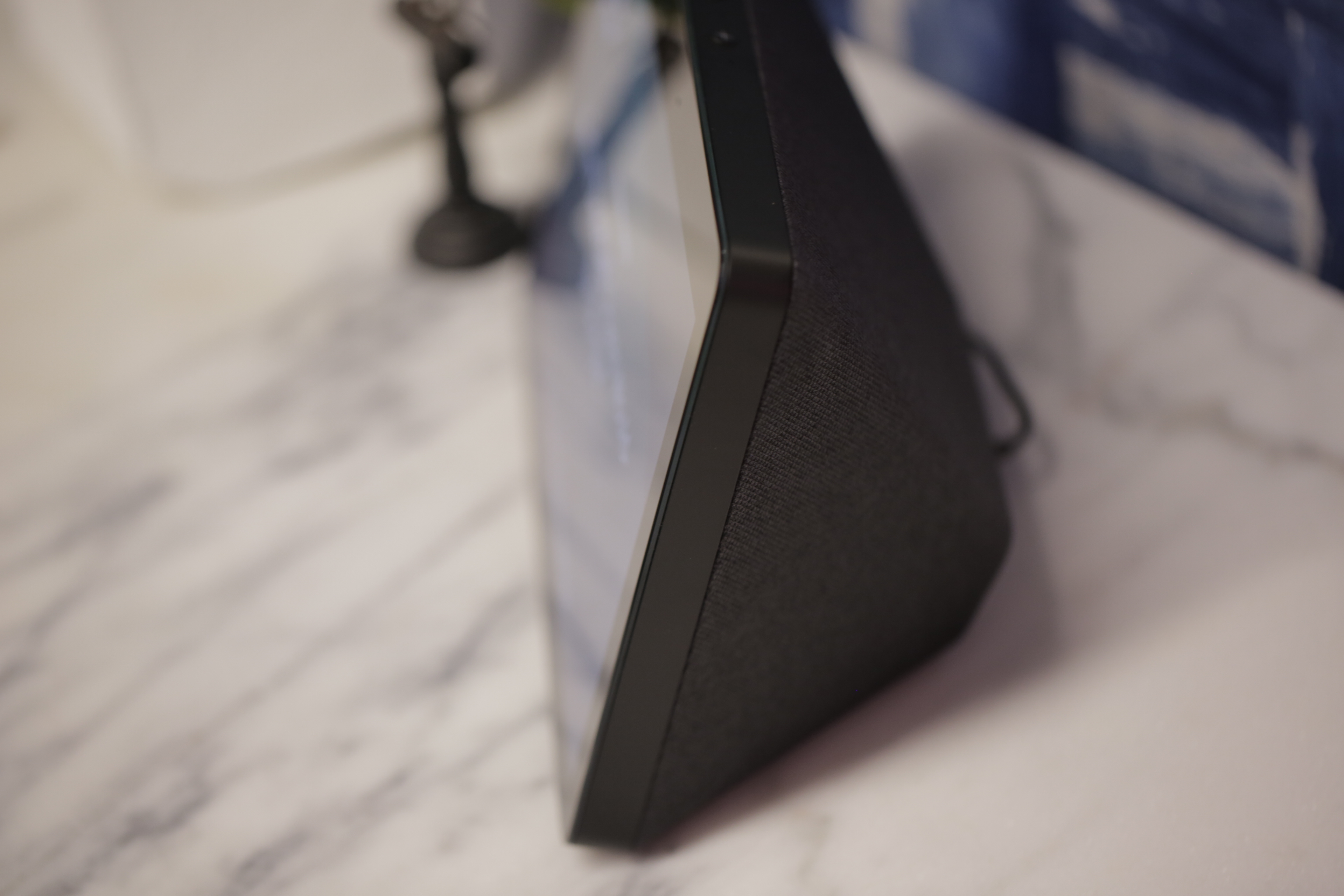
There’s little question that the new show is much better looking product than its predecessor. The big, thick, plasticky look has been traded in for something a bit more homey, with a softer, fabric covering. The front, which was previously home to both display and speaker, is now all screen — meaning those tablet comparisons aren’t going away any time soon.
Still, from a pure design perspective, Lenovo’s Smart Display is the one to beat. It’s still far and away the best looking of the bunch — though the aforementioned Home Hub could give it a run for its money in the near future.
The design choice means there’s a lot more room for screen, which has been increased from seven to 10.1 inches (with a still fairly sizable bezel). That extra real estate makes the product a more compelling offering for watching short videos or episodic TV shows (I don’t know that I’d recommend it for a full film just yet) and finally offers enough space for something like a browser to make sense on the product.
The speaker, meanwhile, has been moved to the rear of the device. It’s a decision that makes sense from an aesthetic perspective, but is a bit less than practical. When listening to music while writing this review, I found myself actually flipping it around.
Sound quality has been notably improved with improved drivers and Dolby bass, but things get a bit muffled when faced away from you. The bass is also a bit too powerful for its own good here, contributing to a muddying of the sound quality. Thankfully, Alexa now understands you when you ask her to turn down the bass.
Things improve a bit when you place it around six inches from a wall, reflecting the sound back at you. Of course, not every home set up can accommodate that orientation. Either way, I wouldn’t recommend looking to the Show as your primary music listening device. Apple and Google’s high end speakers simply sound better — or build your own using the various modular pieces the company announced at its last event.
With a larger display, the new Show demands touch. Amazon clearly recognized this during the redesign. While, like its predecessor, it’s designed to be voice-first device touch-based interactions are more prevalent here.
Exhibit A is the addition of Firefox. It’s a bit of a strange one. You can call it up with an, “Alexa, open Firefox,” but actually browsing the web is a bit trickier. There’s no skill yet for, say, “open TechCrunch.com in Firefox.” Rather, you’ll have to open Firefox and either type the URL with two fingers, or click the microphone icon to speak it.
It’s a nice option certainly, if a bit clunky. Also, there’s no multitouch pinch to zoom here — in fact, so far as I can tell, there’s no way to zoom in at all. What the browser does afford, however, is a workaround for YouTube. Say “Alexa, open YouTube,” and the Show will offer you the choice of watching content in either Firefox or the Silk browser. Sure, it’s not ideal compared to a native app, but until the companies kiss and make up, or, more likely, Amazon launches its own competing service, it will have to do.
The other big news here is a bit of a no-brainer. After bringing smart home hub functionality to the Echo line with the Plus, Amazon has done the same with the Show. The smart screen now features a Zigbee hub inside. Connecting devices is pretty straightforward — just put them in pairing mode and say “Alexa, discover my devices.” If everything goes right, the whole process should take under a minute.
Thankfully, an app redesign has arrived alongside the new devices, so those smart devices can be accessed on your mobile device, along with the Show. The app also lets users routines around groups of devices, so you can, say, turn up the lights, turn on the coffee and get the day’s news (shudder) with an “Alexa, good morning.”
The new Show is nice upgrade over its predecessor. It’s better looking, has a bigger screen and improved (if backwards) speakers, while smart home hub functionality and last year’s addition of security camera monitoring make it a control panel for the smart home. The ball is in your court, Google.


 Portal uses your existing social graph instead of needing to import phone numbers or re-establish connections with friends. You can group video chat with up to seven friends, use augmented reality effects to hide your face or keep children entertained, and transfer calls to and from your phone. 400 million Facebookers use Messenger video chat monthly, racking up 17 billion calls in 2017, inspiring Facebook to build Portal around the feature. Kaufman says the ability to call phone numbers is in the roadmap, which could make Portal more tolerant of people who don’t live on Messenger.