Year: 2018

08 Oct 2018

Faraday Future investor Evergrande Health now says the troubled startup is trying to back out of deal

Evergrande Health, the investor that bailed out besieged electric vehicle startup Faraday Future in a deal worth $2 billion this summer, is now accusing it of attempting to break an agreement it made with previous backer Season Smart. In June, Evergrande Health announced that would it take over the financial commitment made by Season Smart last November that saved Faraday Future from running out of cash. Now Evergrande Health says Faraday Future Jia Yueting has started arbitration in Hong Kong in an attempt to renege on its agreement with Season Smart.

Evergrande Health agreed in June to buy Season Smart’s 45% stake in Faraday Future for $860 million, an increase over the $800 million Season Smart originally paid, and then complete the deal with additional installments of $600 million in both 2019 and 2020.

But in a new filing with the Hong Kong stock exchange first reported by Reuters, Evergrande Health says it was informed in July by Faraday Future that the $800 million it received from Season Smart had already been spent, and that Smart King, the joint venture set up between Faraday Future and Season Smart, had been asked to provide another $700 million. As a result, Season Smart had entered into a supplemental agreement to advance $700 million.

Evergrande Health now accuses Faraday Future of “manipulating Smart King” by using its majority seats on Smart King’s board of directors to begin arbitration in Hong Kong claiming that Season Smart hasn’t fulfilled its payment conditions. Evergrande Health says Faraday Future is using this as a pretext to deprive Season Smart of its shareholder rights to approve Faraday Future’s future financing plans and terminate its agreements with Season Smart.

As a result, Season Smart has “engaged a team of international lawyers and will take all necessary actions” to protect its rights, as well as Evergrande Health’s interests.

Despite its deals with Season Smart and Evergrande Health, The Verge reports that Faraday Future’s financial woes have continued, with some of its company’s vendors and suppliers claiming that they have not been paid in weeks, and that Faraday is also contemplating layoffs. The Verge’s sources say at least three companies have filed liens with the California Secretary of State over payments owed by Faraday Future.

Meanwhile the company is facing a host of other legal and financial issues. These include a legal battle with its former CFO, Stefan Krause, who Faraday Future claims stole intellectual property (Krause has accused Faraday Future of defamation). Jia is also under fire over debts incurred by LeEco, the failed tech conglomerate he founded. The Chinese government froze his assets in 2017 and, in an unusual move, publicly ordered him to repay LeEco’s investors.

TechCrunch has contacted Faraday Future for comment.

08 Oct 2018

Watch SpaceX attempt its first West Coast ground landing

In a little over an hour, SpaceX will be attempting the launch of a used Falcon 9 rocket and subsequently looking to pull off an upright landing on the California coast.

This time will interestingly be the first West Coast landing that’s taking place on solid California ground as opposed to the drone barges that SpaceX has used in the past. This hasn’t been a matter of preference for SpaceX which has been trying to build its own land launch pad in the West Coast, but hasn’t gotten clearance yet, The Verge notes.

The purpose of the flight is the launch of the SAOCOM 1A, a satellite operated by Argentina’s Space Agency which in conjunction with another identical satellite will help gather soil and moisture information, according to SpaceX.

The launch is scheduled to happen at Vandenberg Air Force Base in California. The launch window will take place at 7:21 p.m. PDT with the satellite being released about 12 minutes after launch.

07 Oct 2018

ePrivacy: An overview of Europe’s other big privacy rule change

Gather round. The EU has a plan for a big update to privacy laws that could have a major impact on current Internet business models.

Um, I thought Europe just got some new privacy rules?

They did. You’re thinking of the General Data Protection Regulation (GDPR), which updated the European Union’s 1995 Data Protection Directive — most notably by making the penalties for compliance violations much larger.

But there’s another piece of the puzzle — intended to ‘complete’ GDPR but which is still in train.

Or, well, sitting in the sidings being mobbed by lobbyists, as seems to currently be the case.

It’s called the ePrivacy Regulation.

ePrivacy Regulation, eh? So I guess that means there’s already an ePrivacy Directive then…

Indeed. Clever cookie. That’s the 2002 ePrivacy Directive to be precise, which was amended in 2009 (but is still just a directive).

Remind me what’s the difference between an EU Directive and a Regulation again… 

A regulation is a more powerful legislative instrument for EU lawmakers as it’s binding across all Member States and immediately comes into legal force on a set date, without needing to be transposed into national laws. In a word it’s self-executing.

Whereas, with a directive, Member States get a bit more flexibility because it’s up to them how they implement the substance of the thing. They could adapt an existing law or create a new one, for example.

With a regulation the deliberation happens among EU institutions and, once that discussion and negotiation process has concluded, the agreed text becomes law across the bloc — at the set time, and without necessarily requiring further steps from Member States.

So regulations are powerful.

So there’s more legal consistency with a regulation? 

In theory. Greater harmonization of data protection rules is certainly an impetus for updating the EU’s legal framework around privacy.

Although, in the case of GDPR, Member States did in fact need to update their national data protections laws to make certain choices allowed for in the framework, and identify competent national data enforcement agencies. So there’s still some variation.

Strengthening the rules around privacy and making enforcement more effective are other general aims for the ePrivacy Regulation.

Europe has had robust privacy rules for many years but enforcement has been lacking.

Another point of note: Where data protection law is concerned, national agencies need to be properly resourced to be able to enforce rules, or that could undermine the impact of regulation.

It’s up to Member States to do this, though GDPR essentially requires it (and the Commission is watching).

Europe’s data protection supervisor, Giovanni Buttarelli, sums up the current resourcing situation for national data protection agencies, as: “Not bad, not enough. But much better than before.”

But why does Europe need another digital privacy law. Why isn’t GDPR enough? 

There is some debate about that, and not everyone agrees with the current approach. But the general idea is that GDPR deals with general (personal) data.

Whereas the proposed update to ePrivacy rules is intended to supplement GDPR — addressing in detail the confidentiality of electronic communications, and the tracking of Internet users more broadly.

So the (draft) ePrivacy Regulation covers marketing, and a whole raft of tracking technologies (including but not just cookies); and is intended to combat problems like spam, as well as respond to rampant profiling and behavioral advertising by requiring transparency and affirmative consent.

One major impulse behind the reform of the rules is to expand the scope to not just cover telcos but reflect how many communications now travel ‘over the top’ of cellular networks, via Internet services.

This means ePrivacy could apply to all sorts of tech firms in future, be it Skype, Facebook, Google, and quite possibly plenty more — given how many apps and services include some ability for users to communicate with each other.

But scope remains one of the contested areas, with critics arguing the regulation could have a disproportionate impact, if — for example — every app with a chat function is going to be ruled.

On the communications front, the updated rules would not just cover message content but metadata too (to respond to how that gets tracked). Aka pieces of data that might not be personal data per se yet certainly pertain to privacy once they are wrapped up in and/or associated with people’s communications.

Although metadata tracking is also used for analytics, for wider business purposes than just profiling users, so you can see the challenge of trying to fashion rules to fit around all this granular background activity.

Simplifying problematic existing EU cookie consent rules — which have also been widely mocked for generating pretty pointless web page clutter — has also been a core part of the Commission’s intention for the update.

EU lawmakers also want the regulation to cover machine to machine comms — to regulate privacy around the still emergent IoT (Internet of Things), to keep pace with the rise of smart home technologies.

Those are some of the high level aims but there have been multiple proposed texts and revisions at this point so goalposts have been shifting around.

So whereabouts in the process are we?

The Commission’s original reform proposal came out in January 2017. More than a year and a half later EU institutions are still stuck trying to reach a consensus. It’s not even 100% certain whether ePrivacy will pass or founder in the attempt at this point.

The underlying problem is really the scope of exploitation of consumers’ online activity going on in the areas ePrivacy seeks to regulate — which is now firmly baked into dominant digital business models — so trying to rule over all that after the fact of mainstream operational execution is a recipe for co-ordinated industry objection and frenzied lobbying. Of which there has been an awful lot.

At the same time, consumer protection groups in Europe are more clear than ever that ePrivacy should be a vehicle for further strengthening the data protection framework put in place by GDPR — pointing out, for example, that data misuse scandals like the Facebook-Cambridge Analytica debacle show that data-driven business models need closer checks to protect consumers and ensure people’s rights are respected.

Safe to say, the two sides couldn’t be further apart.

Like GDPR, the proposed ePrivacy Regulation would also apply to companies offering services in Europe not only those based in Europe. And it also includes major penalties for violations (of up to 2% or 4% of a company’s global annual turnover) — similarly intended to bolster enforcement and support more consistently applied EU privacy rules.

But given the complexity of the proposals, and disagreements over scope and approach, having big fines baked in further complicates the negotiations — because lobbyists can argue that substantial financial penalties should not be attached to ‘ambiguous’ laws and disputed regulatory mechanisms.

The high cost of getting the update wrong is not so much concentrating minds as causing alarms to be yanked and brakes applied. With the risk of no progress at all looking like an increasing possibility.

One thing is clear: The existing ePrivacy rules are outdated and it’s not helpful to have old rules undermining a state-of-the-art data protection framework.

Telcos have also rightly complained it’s not fair for tech giants to be able to operate messaging empires without the same compliance burdens they have.

Just don’t assume telcos love the proposed update either. It’s complicated.

Sounds very messy. 

Indeed.

EU lawmakers could probably have dealt with updating both privacy-related directives together, or even in one ‘super regulation’, but they decided to separate the work to try to simplify the process. In retrospect that looks like a mistake.

On the plus side, it means GDPR is now locked in place — with Buttarelli saying the new framework is intended to stand for as long as its predecessor.

Less good: One shiny worldclass data protection framework is having to work alongside a set of rules long past their sell-by-date.

So, so much for consistency.

Buttarelli tells us he thinks it was a mistake not to do both updates together, describing the blocks being thrown up to try to derail ePrivacy reform as “unacceptable”.

“I would like to say very clearly that the EU made a mistake in not updating earlier the rules for confidentiality for electronic communications at the same time as general data protection,” he told us during an interview this week, about GDPR enforcement, datas ethics and the future of EU privacy regulation.

He argues the patchwork of new and old rules “doesn’t work for data controllers” either, as they’re the ones saddled with dealing with the legal inconsistency.

As Europe’s data protection supervisor, Buttarelli is of course trying to apply pressure on key parties — to “get to the table and start immediately trilogue negotiations to identify a sustainable outcome”.

But the nature of lawmaking across a bloc of 28 Member States is often slow and painful. Certainly no one entity can force progress; it must be achieved via negotiated consensus and compromise across the various institutions and entities.

And when interest groups are so far apart, well, it’s sweating toil to put it mildly.

Entities that don’t want to play ball with a particular legal reform issue can sometimes also throw a delaying spanner in the works by impeding negotiations. Which is what looks to be going on with ePrivacy right now.

The EU parliament confirmed its negotiating mandate on the reform almost a year ago now. But MEPs were then stuck waiting for Member States to take a position and get around the discussion table.

Except Member States seemingly weren’t so keen. Some were probably a bit preoccupied with Brexit.

Currently implicated as an ePrivacy blocker: Austria, which holds the six-month rotating presidency of the EU Council — meaning it gets to set priorities, and can thus kick issues into the long grass (as its right-wing government appears to be doing with ePrivacy). And so the wait goes on.

It now looks like a bit of a divide and conquer situation for anti-privacy lobbyists, who — having failed to derail GDPR — are throwing all their energies at blocking and even derailing/diluting the ePrivacy reform.

Some Member States appear to be trying to attack ePrivacy to weaken the overarching framework of GDPR too. So yes, it’s got very messy indeed.

There’s an added complication around timing because the EU parliament is up for re-election next Spring, and a few months after that the executive Commission will itself turn over, as the current president does not intend to seek reappointment. So it will be all change for the EU, politically speaking, in 2019.

A reconfigured political landscape could then change the entire conversation around ePrivacy. So the current delay could prove fatal unless agreement can be reached in early 2019.

Some EU lawmakers had hoped the reform could be done and dusted in in time to come into force at the same time as GDPR, this May.

That was certainly a major miscalculation.

But what’s all the disagreement about?

That depends on who you ask. There are many contested issues, depending on the interests of the group you’re talking to.

Media and publishing industry associations are terrified about what they say ePrivacy could do to their ad-supported business models, given their reliance on cookies and tracking technologies to try to monetize free content via targeted ads — and so claim it could destroy journalism as we know it if consumers need to opt-in to being tracked.

The ad industry is also of course screaming about ePrivacy as if its hair’s on fire. Big tech included, though it has generally preferred to lobby via proxies on this issue.

Anything that could impede adtech’s ability to track and thus behaviourally target ads at web users is clearly enemy number one, given the current modus operandi. So ePrivacy is a major lobbying target for the likes of the IAB who don’t want it to upend their existing business models.

Even telcos aren’t happy, despite the potential of the regulation to even the playing field somewhat with tech giants — suggesting they will end up with double the regulatory burden, as well as moaning it will make it harder for them to make the necessary investments to roll out 5G networks.

Plus, as I say, there also seems to be some efforts to try to use ePrivacy as a vector to attack and weaken GDPR itself.

Buttarelli had comments to make on this front too, describing some data controllers as being in post-GDPR “revenge mode”.

“They want to move in sort of a vendetta, vendetta — and get back what they lose with the GDPR. But while I respect honest lobbying about which pieces of ePrivacy are not necessary I think ePrivacy will help first small businesses, and not necessarily the big tech startups. And where done properly ePrivacy may give more power to individuals. It may make harder for big tech to snoop on private conversations without meaningful consent,” he told us, appealing to Europe’s publishing industry to get behind the reform process, rather than applying pressure at the Member State level to try to derail it — given the media hardly feels well done by by big tech.

He even makes this appeal to local adtech players — which aren’t exactly enamoured with the dominance of big tech either.

“I see space for market incentives,” he added. “For advertisers and publishers to, let’s say, re-establish direct relations with their readers and customers. And not have to accept the terms dictated by the major platform intermediaries. So I don’t see any other argument to discourage that we have a deal before the elections in May next year of the European legislators.”

There’s no doubt this is a challenging sell though, given how embedded all these players are with the big platforms. So it remains to be seen whether ePrivacy can be talked back on track.

Major progress is certainly very unlikely before 2019.

I’m still not sure why it’s so important though.  

The privacy of personal communications is a fundamental right in Europe. So there’s a need for the legal framework to defend against technological erosion of citizens’ rights.

Add to that, a big part of the problem with the modern adtech industry — aside from the core lack of genuine consent — is its opacity. Who’s doing what; for what specific purposes; and with what exact outcomes.

Existing European privacy rules like GDPR mean there’s more transparency than there’s ever been about what’s going on — if you know and/or can be bothered to dig down into privacy policies and purposes.

If you do, you might, for example, discover a very long list of companies that your data is being shared with (and even be able to switch off that sharing) — entities with weird sounding names like Outbrain and OpenX.

A privacy policy might even state a per company purpose like ‘Advertising exchange’ and ‘Advertising’. Or ‘Customer interaction’, whatever that means.

Thing is, it’s often still very difficult for a consumer to understand what a lot of these companies are really doing with their data.

Thanks to current EU laws, we now have the greatest level of transparency there has ever been about the mechanisms underpinning Internet business models. But yet so much remains murky.

The average Internet user is very likely none the wiser. Can profiling them without proper consent really be fair?

GDPR sets out an expectation of privacy by design and default. So, following that principle, you could argue that cookie consent, for example, should be default opt-out — and that any website must be required to gain affirmative opt in from a visitor for any tracking cookies. The adtech industry would certainly disagree though.

The original ePrivacy proposal even had a bit of a mixed approach to consent which was accused of being too overbearing for some technologies and not strong enough for others.

It’s not just creepy tech giants implicated here either. Publishers and the media (TechCrunch included) are very much caught up in the unpleasant tracking mess, complicit in darting users with cookies and trackers to try to increase what remain fantastically low conversation rates for digital ads.

Most of the time, most Internet users ignore most ads. So — with horribly wonky logic — the behavioral advertising industry, which has been able to grow like a weed because EU privacy rights have not previously been actively enforced, has made it its mission to suck up (and indeed buy up) more and more user data to try to move the ad conversion needle a fraction.

The media is especially desperate because the web has also decimated traditional business models. And European lawmakers can be very sensitive to publishing industry concerns (for e.g., see their backing of controversial copyright reforms which publishers have been pushing for).

Meanwhile Google and Facebook are gobbling up the majority of online ad spending, leaving publishers fighting for crumbs and stuck having to do businesses with the platforms that have so sorely disrupted them.

Platforms they can’t at all control but which are now so popular and powerful they can (and do) algorithmically control the visibility of publishers’ content.

It’s not a happy combination. Well, unless you’re Facebook or Google.

Meanwhile, for web users just wanting to go about their business and do all the stuff people can (and sometimes need to do) online, things have got very bad indeed.

Unless you ignore the fact you’re being creeped on almost all the time, by snoopy entities that double as intelligence traders, selling info on what you like or don’t, so that an unseen adtech collective can create highly detailed profiles of you to try and manipulate your online transactions and purchasing decisions. With what can sometimes be discriminatory impacts.

The rise in popularity of ad blockers illustrates quite how little consumers enjoy being ad-stalked around the Internet.

More recently tracker blockers have been springing up to try to beat back the adtech vampire octopus which also lards the average webpage with myriad data-sucking tentacles, impeding page load times and gobbling bandwidth in the process, in addition to abusing people’s privacy.

There’s also out-and-out malicious stuff to be found already here too as the increasing complexity, opacity and sprawl of the adtech industry’s surveillance apparatus (combined with its general lack of interest in and/or focus on security) offers rich and varied vectors of cyber attack.

And so ads and gnarly page elements sometimes come bundled or injected with actual malware as hackers exploit all this stuff for their own ends and launch man in the middle attacks to grab user data as it’s being routinely siphoned off for tracking purposes.

It’s truly a layer cake of suck.

Ouch. 

The ePrivacy Regulation could, in theory, help to change this, by helping to support alternative business models that don’t use people-tracking as their fuel by putting the emphasis back where it should be: Respect for privacy.

The (seemingly) radical idea underlying all these updates to European privacy legislation is that if you increase consumers’ trust in online services by respecting people’s privacy you can actually grease the wheel of ecommerce and innovation because web users will be more comfortable doing stuff online because they won’t feel like they’re under creepy surveillance.

More than that — you can lay down a solid foundation of trust for the next generation of disruptive technologies to build on.

Technologies like IoT and driverless cars.

Because, well, if consumers hate to feel like websites are spying on them, imagine how disgusted they’ll be to realize their fridge, toaster, kettle and TV are all complicit in snitching. Ditto their connected car.

‘I see you’re driving past McDonald’s. Great news! They have a special on those chocolate donuts you scoffed a whole box of last week…’

Ugh. 

Yeah…

So what are ePrivacy’s chances at this point? 

It’s hard to say but things aren’t looking great right now.

Buttarelli describes himself as “relatively optimistic” about getting an agreement by May, i.e. before the EU parliament elections, but that may well be wishful thinking.

Even if he’s right there would likely still need to be an implementation period before it comes into force — so new rules aren’t likely up and running before 2020.

Yet he also describes the ePrivacy Regulation as “an essential missing piece of the jigsaw”.

Getting that piece in place is not going to be easy though.

07 Oct 2018

Elon Musk deserves tougher love from the SEC

Four Elon Musk tweets. One Securities and Exchange Commission lawsuit. Two settlement offers. Then some more Musk tweets taunting the SEC.

While Tesla continues to prove its doubters wrong as an automotive and energy business, the ongoing social media sideshow hangs over its finances. The stock rose to $310.70 per share on Monday, after Musk agreed to settle with the SEC last weekend. But the company ended this Friday around where it had been a week before, at $261.95 per share, seemingly driven by investor fears over the chief executive’s ongoing Twitter problem.

The SEC needs to help creative but impulsive entrepreneurs like Musk get off of social media and focus on building their companies—by being fair but firm.

So far, it’s been too easy, and that’s setting the wrong precedent. When companies go public, they’re agreeing to put the interests of their shareholders first. Impulsive tweeting breaks that bargain.

Once Musk rejected the first settlement, the SEC could have proceeded with its lawsuit and set an example. Musk’s tweets were just the kind of egregious behavior that would have been an easy win in court. The SEC wouldn’t have needed to prove any intent by Musk to defraud. It would’ve just had to prove that it was more likely than not that Musk had disclosed a materially false fact or a misleading one without context—not a high bar when you consider the very flimsy basis for Musk’s tweets.

How did we end up here?

It all started with a single tweet. On August 7, Elon Musk tweeted to his more than 22 million Twitter followers: “Am considering taking Tesla private at $420. Funding secured.” The frenzy that followed was amplified by three more Musk tweets.

Combined, these four tweets formed the basis of the SEC’s lawsuit against Musk filed in the Southern District of New York on September 27. In its suit, the SEC asked the court to remove Musk as both Chairman and CEO of Tesla, have Musk pay unquantified civil fines, and prohibit Musk from leading any publicly listed company for an unspecified time.

According to the SEC, Musk’s tweets were based on a roughly half hour meeting on July 31 between him and representatives of the Saudi sovereign wealth fund. At this meeting, the fund told Musk it’d bought nearly 5% of Tesla stock on the open market, and expressed interest in taking Tesla private. But Musk didn’t get any formal offer, he didn’t then get full legal advice about what it would take to go private, and he hadn’t even talked to the fund again before his August 7 tweets.  

Oh, and the $420 price? The SEC’s complaint claims Musk added 20% to the price of the stock at closing the day before his tweet, got $419 and rounded up to $420 because he thought his girlfriend would find it funny given 420’s significance.

Right after the SEC’s suit was filed, a reported settlement between Musk and the SEC would have allowed him to pay a $10 million fine, stay on as CEO and force him to step down as chairman for only two years. Considering what the SEC was suing for, those terms can only be described as generous. But Tesla’s board still rejected the settlement, reportedly because Musk threatened to quit if they accepted.  

The day after rejecting the settlement, Tesla lawyers were back at the SEC groveling. Musk had begrudgingly approved of settling as the company’s stock nosedived nearly 14% on the no-settlement news.  

Under the terms of settlement 2.0, the ban on Musk serving as chairman went from two to three years and the fine on Musk doubled to $20 million. Tesla also agreed to pay a fine of $20 million, to add two independent directors to its board and to elect an independent director as chairman to replace Musk. As part of the deal, Tesla is also required to implement procedures and controls to oversee Musk’s communications, including his social media usage.

Just hours after the judge presiding over the case asked Musk and the SEC to show the settlement was in the “public interest,” Musk took to Twitter again to taunt the very counterpart whose help he needs to get the court on board with the settlement: “Just want to [sic] that the Shortseller Enrichment Commission is doing incredible work. And the name change is so on point!” On cue, Tesla’s stock price fell after Musk’s latest tweet. 

The SEC may still pull the plug on the deal altogether, but—if history is prologue—that seems highly unlikely.

What’s wrong with Musk’s tweets?

The main issue is whether Musk’s tweets were false or at least misleading. Under the SEC’s rules, you can’t make a false material statement or not give enough context in making a statement to make sure it’s not misleading. You can easily see how Musk’s tweets can count as either false or—without any caveats about how preliminary the talks were—at least misleading.

Saying “funding secured,” means Tesla actually had the more than $70 billion probably needed to take the company private. No such funding was actually secured. No deal terms were discussed let alone agreed on with the Saudis. Even if Musk did have funding, approval was far from certain. Any going-private transaction would have required board approval. The Saudis had told Musk their investment may be contingent on Tesla building a factory in the Middle East, a condition which at least one Tesla board member described as a “non-starter.”

It’s not hard to imagine what led to Musk’s tweets. He has been outspoken about being hampered by the myriad requirements that come with being publicly listed. He called an analyst’s questions “boneheaded” and “dry” during Tesla’s May earning call. For years, he’s expressed frustration with short sellers. Musk must’ve genuinely been excited about the prospect of the Saudis taking Tesla private so he’d no longer have to deal with any of this.  

It’s true that disclosure requirements are onerous. It takes countless expensive lawyer hours just to make a single filing with the SEC, only to then have to make another filing the next quarter or with the next material development. The SEC itself moves slowly. It took until 2013 to accept tweets as a form of disclosure. It took until 2014 for it to agree that a hyperlink in a tweet is enough for disclaimer language, as opposed to needing the full disclaimer language within the limited characters allowed in a tweet.

But the SEC’s rules exist for a reason. They are intended to level the information differential between companies and their shareholders, and protect the millions of investors in public companies in the process. Musk may have been well intentioned in his tweets, but that doesn’t put him above the law, or make it okay for him to cause Tesla’s stock price to go on a rollercoaster ride. He can complain all he wants about the SEC’s rules, but these rules have been a requirement for public companies long before Tesla went public. By choosing the public route to get liquidity, Musk and Tesla knowingly signed up for these trade-offs.

Missed opportunity to set clear precedent

Ultimately, what matters most with any action that the SEC takes is the precedent it sets.

The SEC had a unique opportunity here to set an example of Musk’s egregious behavior. Instead, SEC Chairman Jay Clayton’s statement about the settlement made it look like the SEC was making an exception for Musk because he is so central to Tesla. Clayton said penalties for violating securities laws should be balanced with “the skills and support of certain individuals” that are important “to the future success of a company.”

In other words, it seems, you can behave more recklessly the more important you are.

Musk is absolutely central to Tesla, but that doesn’t mean he has to be the one to wear every hat at the company. There’s a reason Tesla has legal, policy and comms departments that go through rounds of approval before making corporate disclosures. It is not much to have asked Musk to call a lawyer in these departments before tweeting.

Instead of setting this double standard based on centrality of a director to a company, the SEC could have taken Musk to court and allowed the court to set a standard applicable to all directors equally. By going that route, Musk would have also had his day in court to argue before an impartial arbiter why the SEC’s actions in suing him were “unjustified.”

Even if the SEC did not want this one case drag on, leaving Tesla investor in limbo in the interim, it could have at least taken more time before agreeing to the second settlement. The specter of a continuing lawsuit would have served as a stronger deterrent than the two days it took from filing suit to coming to a settlement. Based on Musk’s tweets taunting the SEC after the settlement was agreed, it’d be hard to argue that he’s learned his lesson.

Instead Musk’s cult of being the be-all and end-all on all matters big or small at Tesla will continue. This ultimately disempowers others within the company, lulling them into a false sense of security based on the sacrosanct words of one person. According to the SEC, an investment bank analyst emailed Tesla’s Head of Investor Relations, Martin Viecha, on August 7 following Musk’s tweets asking for a clarification about the funding. Viecha responded within ten minutes with, “I can only say that the first Tweet clearly stated that ‘financing is secured’. Yes, there is a firm offer.”  

Viecha couldn’t have actually known that financing was secured any more than Musk did. He did not actually know whether or not there was a firm offer. But Tesla’s corporate culture clearly didn’t allow him to second guess the words of Musk, to the ultimate detriment of the entire company and its investors.

It may be Musk in the headlines these days, but other public-company CEOs have social media accounts too. What they say—or don’t say—can equally hurt investors and their own companies. If Musk can get away relatively unharmed with bending the rules, what will stop others from trying? The SEC’s indirect acknowledgement that the settlement terms with Musk are justified by Musk’s centrality to Tesla is exactly the kind of precedent other Silicon Valley leaders could latch onto to justify inappropriate social media behavior.

As counterintuitive as it may sound in a world where the most powerful seem to tweet with impunity, we should at least be holding directors of public companies fully accountable for tweets that violate securities law. Tweets and social media posts have real world consequences. Tesla shareholders deserve the brilliant technologist they bet their money on, not a social media troll.

The SEC’s handling of Musk’s tweets is so far a missed opportunity to make that point clear.

07 Oct 2018

Facebook poaches leaders of Refdash interview prep to work on Jobs

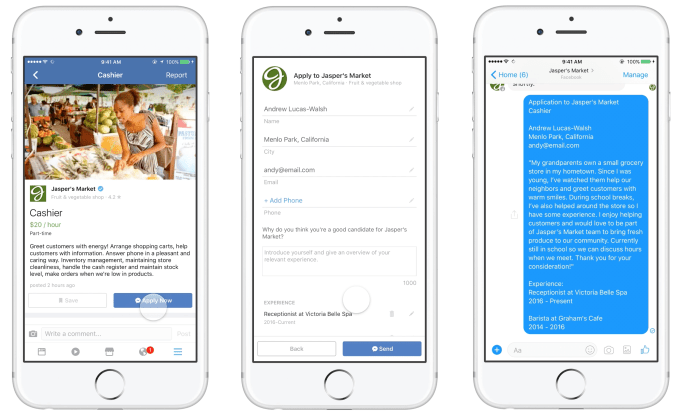
Facebook just snatched some talent to fuel its invasion of LinkedIn’s turf. A source tells TechCrunch that members of coding interview practice startup Refdash including at least some of its executives have been hired by Facebook. The social network confirmed to TechCrunch that members of Refdash’s leadership team are joining to work on Facebook’s Jobs feature that lets business promote employment openings that users can instantly apply for.

Facebook’s big opportunity here is that it’s a place people already browse naturally, so they can be exposed to Job listings even when they’re not actively looking for a company or career change. Since launching the feature in early 2017, Facebook has focused on blue-collar jobs like service and retail industry jobs that constantly need filling. But the Refdash team could give it more experience in recruiting for technical roles, connecting high-skilled workers like computer programmers to positions that need filling. These hirers might be willing to pay high prices to advertise their job listings on Facebook, siphoning revenue away from LinkedIn.

Facebook confirms that this is not an acquisition or technically a full acquihire, as there’s no overarching deal to buy assets or talent as a package. It’s so far unclear what exactly will happen to Refdash now that its team members are starting at Facebook this week, though it’s possible it will shut down now that its leaders have left for the tech giant’s cushy campuses and premium perks. Refdash’s website now says that “We’ve temporarily suspended interviews in order to make product changes that we believe will make your job search experience significantly better.”

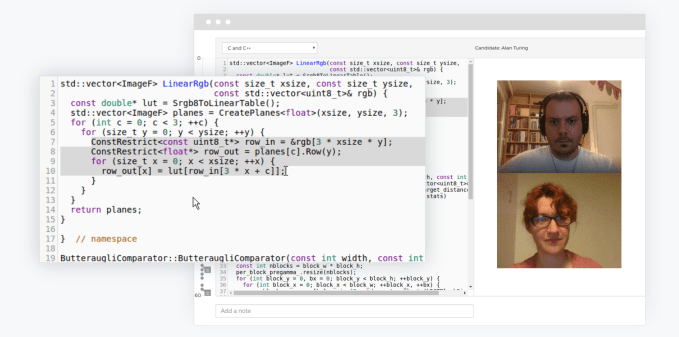
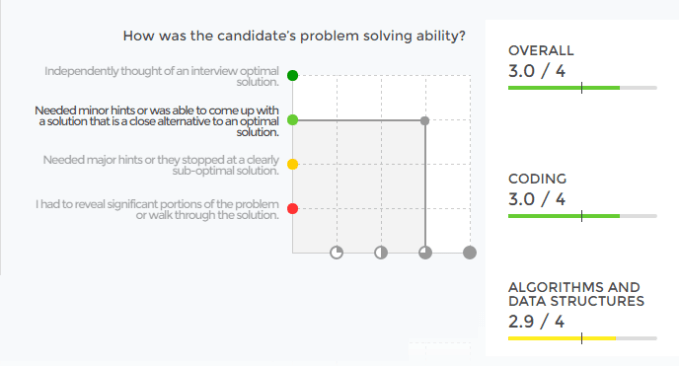
Founded in 2016 in Mountain View with an undisclosed amount of funding from Founder Friendly Labs, Refdash gave programmers direct qualitative and scored feedback on their coding interviews. Users would do a mock interview, get graded, and then have their performance anonymously shared with potential employers to match them with the right companies and positions for their skills. This saved engineers from having to endure grueling interrogations with tons of different hirers. Refdash claimed to place users at startups like Coinbase, Cruise, Lyft, and Mixpanel.

A source tells us that Refdash focused on understanding people’s deep professional expertise and sending them to the perfect employer without having to judge by superficial resumes that can introduce bias to the process. It also touted allowing hirers to browse candidates without knowing their biographical details, which could also cut down on discrimination and helps ensure privacy in the job hunting process (especially if people are still working elsewhere and are trying to be discreet in their job hunt).

It’s easy to imagine Facebook building its own coding challenge and puzzles that programmers could take to then get paired with appropriate hirers through its Jobs product. Perhaps Facebook could even build a similar service to Refdash, though the one-on-one feedback sessions it’d conduct might not be scalable enough for Menlo Park’s liking. If Facebook can make it easier to not only apply for jobs but interview for them too, it could lure talent and advertisers away from LinkedIn to a product that’s already part of people’s daily lives.

The co-founders of Refdash have something of a track record in building companies that get acquihired to help add new features to existing services. Nicola Otasevic and Andrew Carnot were respectively the founder and tech lead for Room 77, which was picked up by Google in 2014 to help rebuild its travel search vertical. At the time it was described as a licensing deal although Refdash’s founders these days call it an acquisition.

Building tools to improve the basic process of hiring via remote testing could help Facebook get an edge on technical recruiting, but it’s not the only one building such features. LinkedIn’s stablemate Skype (like LinkedIn, owned by Microsoft) last year unveiled Interviews to let recruiters test developers and others applying for technical jobs with a real-time code editor. LinkedIn has not incorporated it into its platform.

07 Oct 2018

The accessibility of the iPhone XS Max

I’ve heard it said many times recently by hosts of various Apple-focused podcasts that adapting to the new iPhone XS Max has felt like “coming home.” For these members of the so-called “Plus Club” — the whimsical name referring to the group of users who have chosen Plus models in the past — the return to a device with such a massive display felt instantly familiar, comfortable even.

After a year with the smaller, 5.8-inch iPhone X, I, too, have experienced these feelings of comfort and familiarity. I’ve been testing an iPhone XS Max, a review unit provided to me by Apple, for close to two weeks and am reminded every time I use it why I fell in love with the Plus models. As the old adage goes, bigger is better.

While the headlining aspect of Apple’s newest iPhone is the substantially better camera system, the key story for me, as a visually impaired person, is my return to the largest-screened iPhone. The XS Max is every bit as delightful (and accessible) as the Plus, made better by the inclusion of Face ID and an edge-to-edge display.

Adjusting to the size and weight

At last month’s event, Apple marketing boss Phil Schiller made a point to emphasize the fact that the iPhone XS Max has a larger display — the largest ever on an iPhone, the company says — in a smaller industrial design. This makes it possible, Schiller said on stage, for the XS Max to feel much like an iPhone 8 Plus. In my usage, his comparison seems spot-on; holding the XS Max feels identical to my previous Plus phones.

Why this is noteworthy from an accessibility perspective is a matter of dexterity. If you, like me, have cerebral palsy or other physical motor conditions, the way an object (any object, it isn’t limited to smartphones) feels in your hand when you hold it and carry it warrants serious consideration. In this context, if you have trouble manipulating the XS Max due to such motor delays, that very well may be the determining factor as to whether you choose it or opt for the smaller XS size.

In my review of the iPhone 6s three years ago, I said the 6s Plus wasn’t the phone for me, saying in part that “the Faustian bargain that it presents” was an offer to have a large-screened phone but only at the cost of using a physically unwieldy device. At the time, I reasoned the regular 6s was “good enough,” because I didn’t want such a gargantuan phone.

Not long thereafter, I did indeed switch to the 6s Plus, and I’ve never looked back. Turns out, big displays are the best, and I’ve acclimated to holding the larger device just fine.

Is the display big enough?

I freely admit to having a few moments of contemplation, in the midst of testing the XS Max with my year-old X nearby, where I wondered if the latter’s 5.8-inch screen was big enough for my needs. (Apple also gave me a regular XS to test, but since the X is nearly identical in size, I haven’t used it as thoroughly as I have the Max.) It isn’t small by any means, and I have enjoyed spending the last year having a relatively large display in a smaller body. The X (and XS, obviously) certainly are easier to carry and pocket than their larger brethren. To be perfectly honest, I never once wished my phone’s screen was bigger the entire time I used the iPhone X.

And yet, to reiterate what I wrote at the outset, as soon as I unboxed the XS Max and restored from my iCloud backup, it really did feel like coming home. Forget OLED, forget pixel density — having a 6.5-inch display is super nice and easier on my eyes. More screen means more content, which means less eye strain and fatigue. Given these factors, it was no contest as to what I prefer. Although I have multiple disabilities, my visual impairment is arguably the most important and the one I should prioritize above all others. I did that, and I’m happier for it.

The iPhone XS Max is, yes, the most accessible iPhone Apple’s built yet.

The lesson here is not insignificant, and illustrates the kind of practical life choices disabled people face on a daily basis. I was extremely pleased by the iPhone X; if it were the only new iPhone Apple released this year, I would jump to the XS. But it isn’t — the XS Max does exist, and the allure of its large display is too strong for me (and my vision) to pass up.

I do miss the Goldilocks-esque “just right” properties of the iPhone X/XS form factor. But if the loss of maneuverability begets a gain in visuals, I’ll make that trade-off every time.

Thoughts on ‘Advanced’ Face ID

When Face ID debuted last year, I soon discovered an issue where it had major problems recognizing my face despite having my face registered with the iPhone X. After some troubleshooting, I found the issue was due to the strabismus in my left eye. The colloquial term for it is “lazy eye,” but it’s a condition whereby one or both of the eyes aren’t set straight, and it wreaked havoc with the TrueDepth camera system. Even with my face “recognized” by the system, my phone would never unlock because Face ID thought I wasn’t looking at the phone even though I knew I was, in fact, definitely looking at it.

The remedy for this was to disable the Require Attention option in Face ID’s settings. When you do so, iOS warns you it makes the facial recognition system less secure than it could be, but it is the only way I can benefit from Face ID like anyone else. I haven’t had any issues for over a year now, and my iPhone X seemed to get better over time at seeing me; this is particularly true at extreme angles, such as when I lean over the phone while it sits on my kitchen table, for instance.

Face ID on the XS Max has been reliable, with Require Attention off, of course. My only quibble continues to be because I typically hold my phone close to my face to see, I’m still not consistently holding it far enough away that it unlocks properly. I get the playful “head shake” animation and enter my passcode more than I’d like, but instinctual habits are hard to break I suppose. At least Face ID learns me better every time I do so, which is a nice bit of machine learning on Apple’s part.

The bottom line

I’ve concluded my last several iPhone reviews by saying each model is “the most accessible iPhone yet.” However trite, I’m compelled to do it yet again because it’s an entirely accurate description.

I’ve been a happy returnee to the Plus Club. The larger display, along with Face ID and the edge-to-edge design, has been a joy to use. The iPhone XS Max is, yes, the most accessible iPhone Apple’s built yet. Truthfully, however, for as good as the XS line is, I’m even more amped at the existence of a blue iPhone, blue being my favorite color. It’s effectively a Max, and I get my blue too.

07 Oct 2018

U.S. government sides with Apple and Amazon, effectively denying Bloomberg ‘spy chip’ report

Homeland Security has said it has “no reason to doubt” statements by Apple, Amazon and Supermicro denying allegations made in a Bloomberg report published earlier this week.

It’s the first statement so far from the U.S. government on the report, casting doubt on the findings. Homeland Security’s statement echos near-identical comments from the U.K.’s National Cyber Security Center.

Bloomberg said, citing more than a dozen sources, that China installed tiny chips on motherboards built by Supermicro, which companies across the U.S. tech industry — including Amazon and Apple — have used to power servers in their datacenters. The chip can reportedly compromise data on the server, allowing China to spy on some of the world’s most wealthy and powerful companies.

Apple, Amazon and Supermicro later published statements on their websites. Bloomberg said it’s sticking by its story. And yet, this latest twist isn’t likely to leave anyone less confused, days after the story was first published.

Homeland Security protects the nation’s cyber defenses from both domestic and foreign threats. It’s rare for the government to issue a statement on an apparent threat which, according to Bloomberg, is a classified matter that’s been under federal investigation for three years.

The reality is that days after this story broke, it seems many of the smartest, technically minded, rational cybersecurity experts still don’t know who to believe — Bloomberg, or everyone else.

And until someone gets their hands on these apparent chips, don’t expect that to change any time soon.

07 Oct 2018

The next big restaurant chain may not own any kitchens

If investors at some of the biggest technology companies are right, the next big restaurant chain could have no kitchens of its own.

These venture capitalists think the same forces that have transformed transportation, media, retail and logistics will also work their way through prepared food businesses.

Investors are pouring millions into the creation of a network of shared kitchens, storage facilities, and pickup counters that established chains and new food entrepreneurs can access to cut down on overhead and quickly spin up new concepts in fast food and casual dining.

Powering all of this is a food delivery market that could grow from $35 billion to a $365 billion industry by 2030, according to a report from UBS’s research group, the “Evidence Lab”.

“We’ve had conversations with the biggest and fastest growing restaurant brands in the country and even some of the casual brands,” said Jim Collins, a serial entrepreneur, restauranteur, and the chief executive of the food-service startup, Kitchen United. “In every board room for every major restaurant brand in the country… the number one conversation surrounds the topic of how are we going to address [off-premise diners].”

Collins’ company just raised $10 million in a funding round led by GV, the investment arm of Google parent company, Alphabet. But Alphabet’s investment team is far from the only group investing in the restaurant infrastructure as a service business.

Perhaps the best capitalized company focusing on distributed kitchens is CloudKitchens, one of two subsidiaries owned by the holding company City Storage Solutions.

Cloud Kitchens and its sister company Cloud Retail are the two arms of the new venture from Uber co-founder and former chief executive, Travis Kalanick, which was formed with a $150 million investment.

As we reported at the time, Travis announced that he would be starting a new fund with the riches he made from Uber shares sold in its most recent major secondary round. Kalanick said his 10100, or “ten one hundred”, fund would be geared toward “large-scale job creation,” with investments in real estate, e-commerce, and “emerging innovation in India and China.”

If anyone is aware of the massive market potential for leveraging on-demand services, it’s Kalanick. Especially since he was one of the architects of the infrastructure that has made it possible.

Other deep pocketed companies have also stepped into the fray. Late last year Acre Venture Partners, the investment arm formed by The Campbell Soup Co., participated in a $13 million investment for Pilotworks, another distributed kitchen operator based in Brooklyn.

Meanwhile, Kitchen United has been busy putting together a deep bench of executive talent culled from some of the largest and most successful American fast food restaurant chains.

Former Taco Bell Chief Development Officer, Meredith Sandland, joined the company earlier this year as its chief operating officer, while former McDonald’s executive Atul Sood, who oversaw the burger giant’s relationship with online delivery services, has come aboard as Kitchen United’s Chief Business Officer.

The millions of dollars spicing up this new business model investors are serving up could be considered the second iteration of a food startup wave.

An earlier generation of prepared food startups crashed and burned while trying to spin up just this type of vision with investments in their own infrastructure. New York celebrity chef David Chang, the owner and creator of the city’s famous Momofuku restaurants (and Milk Bar, and Ma Peche), was an investor in Maple, a new delivery-only food startup that raised $25 million before it was shut down and its technology was absorbed into the European, delivery service, Deliveroo.

Ando, which Chang founded, was another attempt at creating a business with a single storefront for takeout and a massive reliance on delivery services to do the heavy lifting of entering new neighborhoods and markets. That company wound up getting acquired by UberEats after raising $7 million in venture funding.

Those losses are slight compared to the woes of investors in companies like Munchery, ($125.4 million) Sprig, ($56.7 million) and SpoonRocket ($13 million). Sprig and Spoonrocket are now defunct, and Munchery had to pull back from markets in Los Angeles, New York, and Seattle as it fights for survival. The company also reportedly was looking at recapitalizing earlier in the year at a greatly reduced valuation.

What gives companies like Kitchen United, Pilotworks and Cloud Kitchens hope is that they’re not required to actually create the next big successful concept in fast food or casual dining. They just have to enable it.

Kitchen United just opened a 12,000 square foot facility in Pasadena for just that purpose — and has plans to open more locations in West Los Angeles; Jersey City, N.J.; Atlanta; Columbus, Ohio; Phoenix; Seattle and Denver. Its competitor, Pilotworks, already has operations in Brooklyn, Chicago, Dallas, and Providence, R.I.

While the two companies have similar visions, they’re currently pursuing different initial customers. Pilotworks has pitched itself as a recipe for success for new food entrepreneurs. Kitchen United, by comparison is giving successful local, regional, and national brands a way to expand their footprint without investing in real estate.

“One of the directions that the company was thinking of going was toward the restaurant industry and the second was in the food service entrepreneurial sector,” said Collins. “Would it be a company that served restaurants with their expansions? Now, we’re in deep discussions with all kinds of restaurants.”

Smaller national fast food chains like Chick-Fil-A or Shake Shack, or fast casual chains like Dennys and Shoney’s could be customers, said Collins. So could local companies that are trying to expand their regional footprint. Los Angeles’ famous Canter’s Deli is a Kitchen United customer (and an early adopter of a number of new restaurant innovations) and so is The Lost Cuban Kitchen, an Iowa-based Cuban restaurant that’s expanding to Los Angeles.

Kitchen United is looking to create kitchen centers that can house between 10-20 restaurants in converted warehouses, big box retail and light industrial locations.

Using demographic data and “demand mapping” for specific cuisines, Kitchen United said that it can provide optimal locations and site the right restaurant to meet consumer demand. The company is also pitching labor management, menu management and delivery tools to help streamline the process of getting a new location up and running.

“In all of the facilities, all of the restaurants have their own four-walled space,” says Collins. “There’s shared infrastructure outside of that.”

Some of that infrastructure is taking food deliveries and an ability to serve as a central hub for local supplier, according to Collins. “One of the things that we’re going to be launching relatively soon here in Pasadena, is actually in-service days where local supplier and purveyors can come in and meet with seven restaurants at once.”

It’s also possible that restaurants in the Kitchen United spaces could take advantage of restaurant technologies being developed by one of the startup’s sister companies through Cali Group, a holding company for a number of different e-sports, retail, and food technology startups.

The Pasadena-based kitchen company was founded by Harry Tsao, an investor in food technology (and a part owner of the Golden State Warriors and the Los Angeles Football Club) through his fund Avista Investments; and John Miller, a serial entrepreneur who founded the Cali Group.

In fact, Kitchen United operates as a Cali Group portfolio company alongside Miso Robotics, the developer of the burger flipping robot, Flippy; Caliburger, an In-n-Out clone first developed by Miller in Shanghai and brought back to the U.S.; and FunWall, a display technology for online gaming in retail settings.

“Kitchen United’s data-driven approach to flexible kitchen spaces unlocks critical value for national, regional, and local restaurant chains looking to expand into new markets,” said Adam Ghobarah, general partner at GV, and a new director on the Kitchen United board. “The founding team’s experience in scaling — in addition to diverse exposure to national chains, regional brands, regional franchises, and small upstart eateries — puts Kitchen United in a strong position to accelerate food innovation.”

GV’s Ghobarah actually sees the investment of a piece with other bets that Alphabet’s venture capital arm has made around the food industry.

The firm is a backer of the fully automated hamburger preparation company, Creator, which has raised roughly $28 million to develop its hamburger making robot (if Securities and Exchange Commission filings can be believed). And it has backed the containerized farming startup, Bowery Farming, with a $20 million investment.

Ghobarah sees an entirely new food distribution ecosystem built up around facilities where Bowery’s farms are colocated with Kitchen United’s restaurants to reduce logistical hurdles and create new hubs.

“As urban farming like Bowery scales up… that becomes more and more realistic,” Ghobarah said. “The other thing that really stands out when you have flexible locations … all of the thousands of people who want to own a restaurant now have access. It’s not really all regional chains and national chains… With a satellite location like this… [a restaurant]… can break even at one third of the order volume.”


07 Oct 2018

I’m very sorry, but you’re going to have to learn to love the blockchain

I apologize. I get it. You hear “blockchain” and you immediately think “shady get-rich-quick schemes” or “bubble of magical fake Internet money” or “libertarian enfants terribles,” and when a true believer tries to explain to you why you should care, why it will change the world beyond just minting a new set of paper oligarchs, you think “wait, why not just use a database?” I hear you.

And you’re not wrong. In the developed world, at least, there isn’t a lot that Bitcoin can do which isn’t already handled better, and more safely, by banks and credit cards. The vast majority of other cryptocurrencies are basically penny stocks in an unregulated global stock market, except for the ones which are basically games of chance in a global casino, and the ones which are Bitcoin except actually secret and anonymous, which are technically amazing but don’t necessarily inspire greater confidence in the general applicability of the whole concept.

Ethereum is more interesting, you might grudgingly concede, with its whole “world computer” concept, running code and storing data on what is essentially a decentralized permissionless virtual machine scattered across thousands of nodes worldwide — but nobody actually uses it except to host the aforementioned stock market / casino, plus maybe the occasional memetic CryptoFad, and even if people did want to use it, they couldn’t, because it doesn’t scale.

All (currently) true. And let me hasten to stress that I’m not saying blockchains are going to take over the world. I stand by my stance that they are the new Linux, not the new Internet. I think it’s optimistic to project that they’ll wind up directly used by any more than a few percent of the population, those driven by the technology or the politics rather than convenience and ease of use.

But I think the existence of that alternative will be very important, because the mainstream Internet, the traditional Internet, and especially traditional social media, are poisoned by two original sins.

The first is advertising-driven media. This is creepy enough in and of itself: it leads directly to user tracking, browser fingerprinting, ad retargeting, clickbait farms like Outbrain / Taboola, ads that crash mobile browsers or obscure the content you actually wanted to see, autoplay interstitials which make TV commercials seem inobtrusive, etcetera. But it’s catastrophic for social media, because it incentivizes ever more engagement, which in turn incentivizes outrage generation, fake news, demonization of “the other side” whoever that may be, etc. — because those things lead to greater engagement, which lead to more advertising income. No matter what social media executives may say, the black hole of more money, higher profits, hitting their targets, and getting their bonuses will keep tugging at them, inexorably, so long as their business model is driven by advertising.

The second is the simple fact that, unless you design against this from the very beginning, technology tends to centralize power, courtesy of Metcalfe’s Law and other winner-takes-most effects. Which leads inevitably to the situation wherein a Facebook bug (an inexcusable but honest error) compromises the accounts of 50 million people, and in many cases their Tinder and Spotify and whichever other third-party accounts, as well … because Facebook has grown to be a centralized identity power on the Internet. And what can these people do? Which alternatives can they switch to? If they’re very upset and very resolute, they might be able to change to … other, equally centralized, similarly advertising-financed identity providers. But don’t count on it.

That’s why the mere existence of a permissionless decentralized alternative, one not financed by ads, one not ruled by any central titanic company, is important. And, my friends, I know you don’t want to hear this, but it’s getting really, really hard to imagine a decentralized network with a new financing model that doesn’t involve blockchains in one ore more way, shape, or form. This doesn’t mean we’ll all have to keep some kind of “wallet” full of private keys and run blockchain nodes on our phones and laptops. Some of the most interesting decentralization initiatives, notably Blockstack, use blockchains so subtly that you’ll hardly notice it. But they’re vital to them nonetheless.

So please, get over your knee-jerk repugnance. Look beyond the manipulated markets and the crazy casino. Accept that the fringe who first accept and champion a genuinely new idea tends to be disproportionately lunatic, especially if the idea relates to money … but that does not mean the idea itself is inherently so as well. There’s something more interesting than made-up money and get-rich-quick schemes going on here, and while I think it’s unlikely it’ll ever conquer the mainstream, I do believe there’s a genuine technically, politically, financially, and socially interesting alternative movement being born, behind all the sturm und drang and laughable scams. Watch carefully. Think again.

06 Oct 2018

Marshall’s Kilburn II is a ruggedly handsome bluetooth speaker

Marshall hasn’t been been shy about capitalizing on its legacy. The legendary English amplifier company has plastered its name on cans of beer and a line of refrigerators. It’s not the most crass branding we’ve seen, but it’s pretty damn silly.

At first glance, the same can be said for its line of bluetooth speakers and headphones, save for one important thing: they’re actually quite good. It’s been several years since the company branched out into consumer electronics, and along the way, it’s been remarkably consistent with the products that bear its iconic cursive logo.

Announced this summer at IFA, the Kilburn II doesn’t stray far from the familiar Marshall amplifier style. In fact, you’d be forgiven if you mistook the thing for a practice amp. Instead, it’s just a solidly built bluetooth speaker with a rubberized faux leather design that can take some serious bumps. It’s further ruggedized by way of a chainlink metallic grille up front.

The speaker is water resistant, so you can take it outside without much concern. That said, if you need a true all-weather speaker, I’d recommend looking at something from JBL. The Kilburn isn’t going to go swimming with you, but it’ll withstand a little spilt whiskey.

The sound quality is decent for speaker of this size. It’s not the best sound I’ve heard out of a bluetooth speaker, but if you’re looking for something portable to fill up a small room, it’s a pretty solid choice, and the treble and bass knobs up top will help you find find the perfect medium.

Unlike most bluetooth speakers, the Kilburn requires a proprietary plug for charging. That means no microUSB/USB-C. That’s understandable though, given the massive on-board battery, which should give more than 20 hours of life on a charge, watching the series of red bars creep down in the meantime.

At $299, it’s not a cheap bluetooth speaker, but it’s solid as far as the price point goes. It’s not going to replace your audiophile sound system any time soon, but at least it will look nice sitting next to your vinyl collection.