Year: 2018

05 Oct 2018

Deliverr raises $7M to help e-commerce businesses compete with Amazon Prime

When Amazon rolled out its membership-based two-day shipping service in 2005, e-commerce and customer expectations around fulfillment speed changed forever.

Today, more than 100 million people use Amazon Prime. That means, 100 million people are fully accustomed to two-day shipping and if they can’t have it, they shop elsewhere. As The Wall Street Journal’s Christopher Mims recently put it: “Alongside life, liberty and the pursuit of happiness, you can now add another inalienable right: two-day shipping on practically everything.”

Only recently have Amazon’s competitors begun to offer similar fast delivery options. About two years ago, Walmart launched its own free two-day delivery service for its owned-inventory; eBay followed suit, establishing a three-day or less delivery guaranteed option for shoppers in March 2017.

To power these Prime-like delivery options, Walmart, eBay and the Canadian e-commerce business Shopify are relying on a little upstart.

One-year-old Deliverr helps businesses offer rapid delivery experiences to their customers. Today, the company is announcing a $7.1 million Series A led by Joe Lonsdale’s 8VC, with participation from Zola founder Shan-Lyn Ma, Flexport chief executive officer Ryan Peterson and others.

The San Francisco-based startup uses machine learning and predictive intelligence to determine which of its warehouses to store its client’s goods.

Currently, Deliverr operates out of more than 10 warehouses in Texas, Missouri, Pennsylvania, Ohio and New Jersey, among other states, though co-founder Michael Krakaris says that number is growing every week. Its customers typically store inventory in three to five different locations based on Deliverr’s predictive algorithms.

Unlike Amazon, which owns more than 75 fulfillment centers, Deliverr doesn’t own its warehouses. Krakaris describes the company’s strategy as a sort of Uber for fulfillment.

“Uber didn’t change the physical infrastructure of cars. They didn’t build their own taxis. What they did was create software that could connect excess capacity drivers,” Krakaris told TechCrunch. “Most warehouses aren’t going to be full. We are going in and filling that extra space they wouldn’t otherwise fill.”

One of the startup’s tricks is to use brand-neutral packaging so any and all marketplaces could theoretically power fulfillment through Deliverr. Amazon, of course, sticks a Prime sticker on all its outgoing packages. And because Amazon’s fulfillment service is used by some eBay sellers, eBay items are known to show up at customers’ homes in Amazon-branded packaging. Not a great look for eBay.

You need an independent fulfillment service that can handle all these different fulfillment channels and be neutral,” Krakaris said.

Deliverr plans to use the investment to scale its team and ink partnerships with additional online retailers.

05 Oct 2018

Spotify Podcast submissions are open to all

Statistically speaking, there are roughly five podcasts for every human on the face of the Earth. And now they all finally have a home on Spotify. The streaming music giant this week opened podcast submissions to everyone through the beta of Spotify for Podcasters platform.

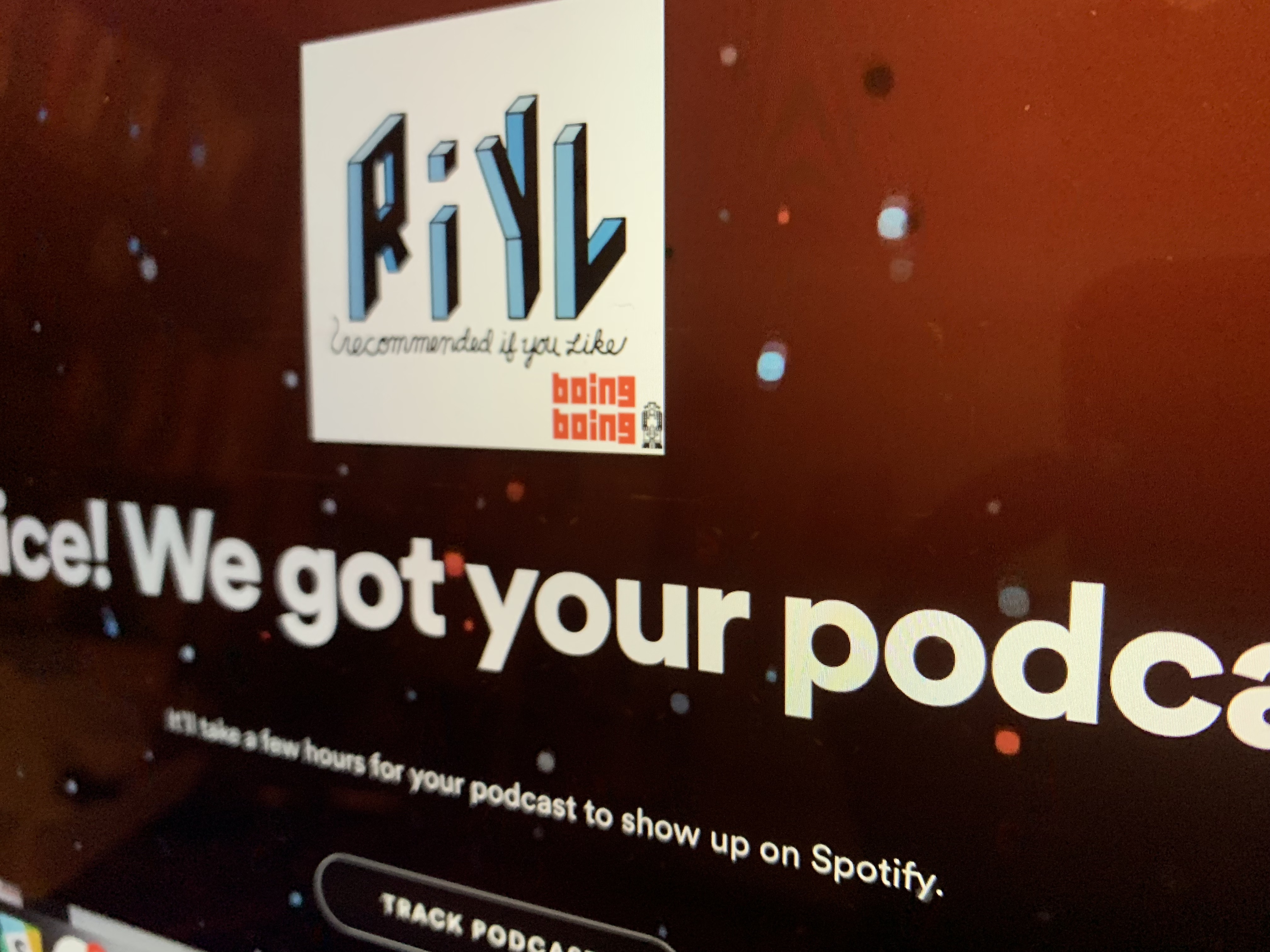
The submission process is wonderfully simple — In fact, I just did it myself (note the confetti):

Cut and paste your show’s RSS feed, pick a couple of categories, click submit. Boom, you’re done. After that, it should take a couple of hours for it to appear. So, you know, I’m writing a post or two in the meantime.

It’s been more than three years since Spotify added the ability to listen to podcasts, but the selection has been fairly thin soup. And isn’t the democratization of voices kind of the whole point of podcasting? It sort of defeats the purpose when you’re only able to listen to content from the top tier of publishers. Now that the service is taking on SoundCloud, however, it seems it’s finally ready to offer that same sort of opportunity to small podcast providers, as well.

Once the show is added, it will update automatically. Like iTunes, Spotify will offer up a number of listener metrics, including daily stats and engagement.

05 Oct 2018

Amazon’s revamped Alexa app makes it easier to manage your smart home

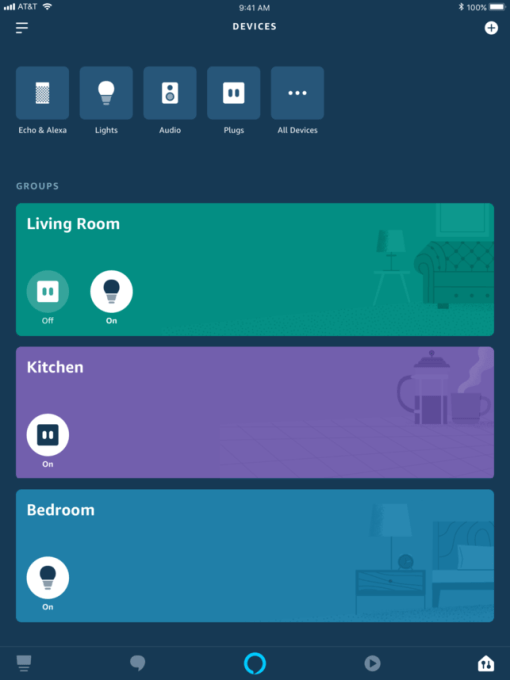
Amazon’s Alexa app has just been given a major visual overhaul, largely focused on helping users set up and control their smart home. From the app’s new devices tab, users can view all their different Alexa-enabled devices and groups on one screen, as opposed to switching between tabs like before. And the app is much more colorful, too. Instead of a set white icons on a dark background, Alexa’s device groups – like Living Room, Kitchen, Bedroom, etc. – now feature colorful backgrounds, so you can find the one you need with just a glance.

An overhaul of the devices section was needed, not only for aesthetic reasons, but because Alexa owners are stocking their house with more than one smart device.

According to a Nielsen report on smart speaker adoption released earlier this month, 4 out of 10 U.S. smart speaker owners today have more than one device, for example. Smart home device sales are also expected to reach nearly $96 billion in 2018 and grow to $155 billion by 2023, another report estimates.

Amazon itself sells a variety of smart devices, like Cloud Cam, Ring doorbells and Ring cameras. And it just introduced a whole mess of new Alexa-enabled devices at an event in Seattle last month, including everything from wall clocks to subwoofers to Alexa-powered microwaves.

It’s clear the retailer expects people to continue to build out their smart home, and its app needed to adapt accordingly.

In the new version of the app, the device types are displayed as icons across the top of the screen – starting with “Echo & Alexa” devices, then “Lights,” “Audio,” “Plugs,” and others. Below this are the colorful groupings of devices by room, each with their own “On/Off” button.

A small “+” button at the top right of the screen allows you to easily add your newest device, too.

Adding Bluetooth speakers to multi-room music groups is also now supported, the app’s update text says.

The redesign also makes it simpler to call, message or “drop in” on your other Alexa devices – the latter being the feature that turns Echo speakers into a voice-controlled intercom system of sorts, triggered by saying “Alexa, drop in on…” followed by the device name. It’s especially handy for larger homes, where there is an upstairs and downstairs, for example, or for reaching family members in another part of the house. You can also Drop In on trusted contacts, like grandma or grandpa.

Now, these communication options each have their own button at the top of the messaging screen in the app so you can just push a button to call, message or drop in, as you prefer.

The new Alexa app is live on the iOS App Store. Amazon hasn’t made a formal announcement about the changes, as they still be rolling out to users following the update.


05 Oct 2018

Elon’s sick burn, Coinbase funding rumors, and VC hiring trends

Hello and welcome back to Equity, TechCrunch’s venture capital-focused podcast, where we unpack the numbers behind the headlines.

This week was a treat. We had Danny Crichton in the studio. We had Connie Loizos in the studio. I was in the studio. And our guest, the excellent Andy McLoughlin, a partner at UnCork Capital, was in the studio as well.

Thus it was with much enthusiasm that we first got to talk about the latest Elon Musk tweet to move Tesla’s stock, causing the famous CEO’s best-known company even more self-inflicted damage.

What a mess.

Happily, we had a whole show planned out before that happened, so after cleaning up Musk’s latest we tucked into a bit of our normal fare: big rounds, IPOs, and venture moves.

Up first was the $100 million Hopper round. For those unaware, Hopper is a travel-focused company that helps folks with flexible schedules get cheap tickets to fun places. Who these people are who have flexible schedules isn’t clear to me at the moment, but I’m sure someone, somewhere, isn’t effectively their Google Calendar’s valet.

Also up this week: $165 million more for ZipRecruiter, and possibly $500 million more for Coinbase. A few thoughts. First, it was super interesting that this was only Zip’s second known round ever, and that Coinbase’s valuation could have been even higher than the rumor. Perhaps even 50 percent higher.

Scooting to the next, the impending Tencent Music IPO caught our fancy. It’s going to be big, it’s going to be splashy, and the company actually makes money. What an odd trio of things! Yes, there are companies in the world that go public and make money. Just not that many of them these days.

And finally. there’s news out of the a16z fortress: a new partner rises. As Connie notes during the show, Andreessen as a firm has been on a bit of a hiring kick. Which is fair, frankly, as it’s not like the shop is short of cash.

That and a few jokes along the way were all that we had time for. Shout out to Andy for being fun, and you, for sticking with the show. Chat soon!

Equity drops every Friday at 6:00 am PT, so subscribe to us on Apple PodcastsOvercast, Pocket Casts, Downcast and all the casts.

05 Oct 2018

Siilo injects $5.1M to try to transplant WhatsApp use in hospitals

Consumer messaging apps like WhatsApp are not only insanely popular for chatting with friends but have pushed deep into the workplace too, thanks to the speed and convenience they offer. They have even crept into hospitals, as time-strapped doctors reach for a quick and easy way to collaborate over patient cases on the ward.

Yet WhatsApp is not specifically designed with the safe sharing of highly sensitive medical information in mind. This is where Dutch startup Siilo has been carving a niche for itself for the past 2.5 years — via a free-at-the-point-of-use encrypted messaging app that’s intended for medical professions to securely collaborate on patient care, such as via in-app discussion groups and being able to securely store and share patient notes.

A business goal that could be buoyed by tighter EU regulations around handling personal data, say if hospital managers decide they need to address compliance risks around staff use of consumer messaging apps.
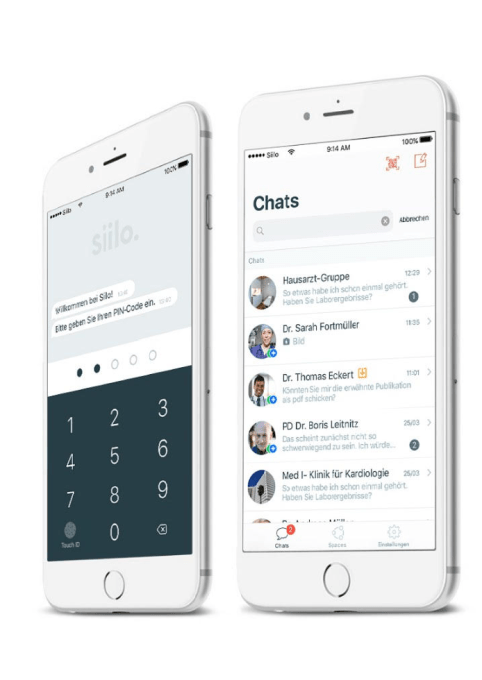
The app’s WhatsApp-style messaging interface will be instantly familiar to any smartphone user. But Siilo bakes in additional features for its target healthcare professional users, such as keeping photos, videos and files sent via the app siloed in an encrypted vault that’s entirely separate from any personal media also stored on the device.

Messages sent via Siilo are also automatically deleted after 30 days unless the user specifies a particular message should be retained. And the app does not make automated back-ups of users’ conversations.

Other doctor-friendly features include the ability to blur images (for patient privacy purposes); augment images with arrows for emphasis; and export threaded conversations to electronic health records.

There’s also mandatory security for accessing the app — with a requirement for either a PIN-code, fingerprint or facial recognition biometric to be used. While a remote wipe functionality to nix any locally stored data is baked into Siilo in the event of a device being lost or stolen.
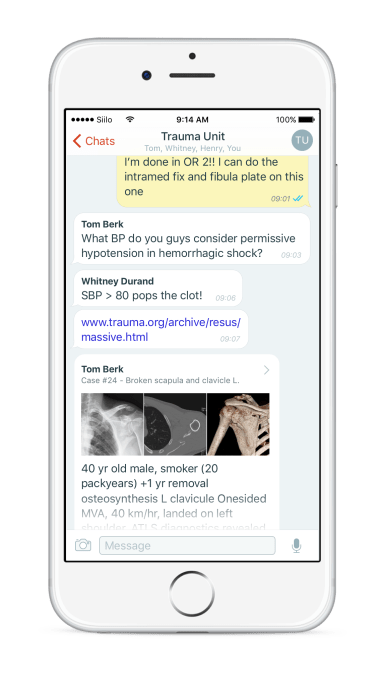
Like WhatsApp, Siilo also uses end-to-end encryption — though in its case it says this is based on the opensource NaCl library

It also specifies that user messaging data is stored encrypted on European ISO-27001 certified servers — and deleted “as soon as we can”.

It also says it’s “possible” for its encryption code to be open to review on request.

Another addition is a user vetting layer to manually verify the medical professional users of its app are who they say they are.

Siilo says every user gets vetted. Though not prior to being able to use the messaging functions. But users that have passed verification unlock greater functionality — such as being able to search among other (verified) users to find peers or specialists to expand their professional network. Siilo says verification status is displayed on profiles.

“At Siilo, we coin this phenomenon ‘network medicine’, which is in contrast to the current old-­fashioned, siloed medicine,” says CEO and co-founder Joost Bruggeman in a statement. “The goal is to improve patient care overall, and patients have a network of doctors providing input into their treatment.”

While Bruggeman brings the all-important medical background to the startup, another co-founder, Onno Bakker, has been in the mobile messaging game for a long time — having been one of the entrepreneurs behind the veteran web and mobile messaging platform, eBuddy.

A third co-founder, CFO Arvind Rao, tells us Siilo transplanted eBuddy’s messaging dev team — couching this ported in-house expertise as an advantage over some of the smaller rivals also chasing the healthcare messaging opportunity.

It is also of course having to compete technically with the very well-resourced and smoothly operating WhatsApp behemoth.

“Our main competitor is always WhatsApp,” Rao tells TechCrunch. “Obviously there are also other players trying to move in this space. TigerText is the largest in the US. In the UK we come across local players like Hospify and Forward.

“A major difference we have very experienced in-house dev team… The experience of this team has helped to build a messenger that really can compete in usability with WhatsApp that is reflected in our rapid adoption and usage numbers.”

“Having worked in the trenches as a surgery resident, I’ve experienced the challenges that healthcare professionals face firsthand,” adds Bruggeman. “With Siilo, we’re connecting all healthcare professionals to make them more efficient, enable them to share patient information securely and continue learning and share their knowledge. The directory of vetted healthcare professionals helps ensure they’re successful team­players within a wider healthcare network that takes care of the same patient.”

Siilo launched its app in May 2016 and has since grown to ~100,000 users, with more than 7.5 million messages currently being processed monthly and 6,000+ clinical chat groups active monthly.

“We haven’t come across any other secure messenger for healthcare in Europe with these figures in the App Store/Google Play rankings and therefore believe we are the largest in Europe,” adds Rao. “We have multiple large institutions across Western-Europe where doctors are using Siilo.”

On the security front, as well flagging the ISO 27001 certification it has for its servers, he notes that it obtained “the highest NHS IG Toolkit level 3” — aka the now replaced system for organizations to self-assess their compliance with the UK’s National Health Service’s information governance processes, claiming “we haven’t seen [that] with any other messaging company”.

Siilo’s toolkit assessment was finalized at the end of Febuary 2018, and is valid for a year — so will be up for re-assessment under the replacement system (which was introduced this April) in Q1 2019. (Rao confirms they will be doing this “new (re-)assessment” at the end of the year.)

As well as being in active use in European hospitals such as St. George’s Hospital, London, and Charité Berlin, Germany, Siilo says its app has had some organic adoption by medical pros further afield — including among smaller home healthcare teams in California, and “entire transplantation teams” from Astana, Kazakhstan.

It also cites British Medical Journal research that found that of the 98.9% of U.K. hospital clinicians who now have smartphones, around a third are using consumer messaging apps in the clinical workplace. Persuading those healthcare workers to ditch WhatsApp at work is Siilo’s mission and challenge.

The team has just announced a €4.5 million (~$5.1M) seed to help it get onto the radar of more doctors. The round is led by EQT Ventures, with participation from existing investors. It says it will be using the funding to scale­ up its user base across Europe, with a particular focus on the UK and Germany.

Commenting on the funding in a statement, EQT Ventures’ Ashley Lundström, a venture lead and investment advisor at the VC firm, said: “The team was impressed with Siilo’s vision of creating a secure global network of healthcare professionals and the organic traction it has already achieved thanks to the team’s focus on building a product that’s easy to use. The healthcare industry has long been stuck using jurassic technologies and Siilo’s real­time messaging app can significantly improve efficiency
and patient care without putting patients’ data at risk.”

While the messaging app itself is free for healthcare professions to use, Siilo also offers a subscription service to monetize the freemium product.

This service, called Siilo Connect offers organisations and professional associations what it bills as “extensive management, administration, networking and software integration tools”, or just data regulation compliance services if they want the basic flavor of the paid tier.


05 Oct 2018

Rejected journalist visa sparks press freedom fears in Hong Kong

There’s concern for the freedom of the press in Hong Kong after the government declined to renew the visa of a veteran Financial Times’ editor, dealing an alarming blow to the country’s thriving journalism community.

Victor Mallet, the FT’s Asia news editor who is also vice-president of the Foreign Correspondents’ Club, is effectively being expelled after he was denied a new work visa without reason. The incident follows a controversial FCC event in August, chaired by Mallet, which featured pro-Hong Kong independence activist Andy Chan.

“This is the first time we have encountered this situation in Hong Kong, and we have not been given a reason for the rejection,” an FT spokesperson told HKFP, which was first to report the news.

It is common for the Chinese government to turn down visa renewals for reporters — for example, BuzzFeed’s Megha Rajagopalan had her annual visa rejected last month after she published stories on the plight of China’s Uyghur Muslims — but Hong Kong has long been a bastion of free speech and free press. A range of global media uses the country as their regional HQ for that very reason, while a substantial amount of Chinese reporting is conducted by Hong Kong-based journalists on account of the trickiness of Chinese media visas. Expelling a reporter — and without reason — runs contrary to that.

“This is unprecedented. We expect foreign journalists to have this kind of visa rejection happen in China, but it has never happened in Hong Kong because Hong Kong has a tradition until recent years of respect for free speech,” Human Rights Watch’s Maya Wang told the New York Times.

The situation appears to be a direct response to Chan’s interview at the FCC, which was strongly criticized by the Hong Kong government and China’s Foreign Affairs Ministry. Former Hong Kong leader CY Leung went so far as to suggest that the FCC should be forced to give up its lease (which he incorrectly claimed was government-subsidized) while he claimed that hosting Chan was tantamount to giving “criminals and terrorists” air time. His successor Carrie Lim called the FCC event “regrettable and inappropriate.”

Chan’s Hong Kong National party, which pushes back on increased influence from Beijing, was formally outlawed last month. The ban, the first of its kind since the UK handed Hong Kong back to China in 1997, was made “in the interests of national security, public order or the protection of the rights and freedoms of others.”

05 Oct 2018

Forward Health, the healthcare messaging app, scores $3.9M led by Stride.VC

Forward Health, the U.K. startup that has built an app to help healthcare professionals communicate in a secure and compliant way, has picked up $3.9 million in seed funding.

Leading the round is Stride.VC, the new VC fund from Fred Destin, formerly a Partner at Accel, and Harry Stebbings, producer of the “The Twenty Minute VC” and most recently Entrepreneur-in-Residence at VC firm Atomico.

Additional backing comes from Albion Capital, while Forward already boasts a decent array of angel investors. They include health tech founders Jay Desai from U.S. company Patient Ping, and Melissa Morris from U.K.-based Lantum.

Founded in 2016 by U.K. doctors Barney Gilbert and Lydia Yarlott, with serial entrepreneur Philip Mundy (who previously founded Goodlord), Forward Health is a messaging app and broader communications platform designed for healthcare professionals, particularly those working in hospitals.

One overly simple way to think of it is as a “WhatsApp for doctors,” helping to wean healthcare professionals off of using the popular messaging app professionally, which is entirely unsuited for a regulated industry like healthcare. However, the bigger vision is to “connect healthcare systems around the world” by improving clinician-to-clinician (and potentially clinician-to-patient) communication and information-sharing with a platform that is built from the get-go to be secure, flexible and compliant.

“Healthcare communication is incredibly fragmented,” Forward Healthcare’s Mundy tells me. “This has a direct impact on how well clinicians can do their jobs and the level of care patients receive. Currently, doctors and nurses working within the NHS have to rely on an outdated and inefficient combination of pagers, landlines, switchboards and fax machines to contact each other. This 1960s infrastructure wastes huge amounts of time and can lead to critical delays in information flow”.

It is in this context that clinicians have resorted to alternative methods of communication, such as WhatsApp, which Mundy rightfully says are not fit for purpose and pose real risks.

“Any communication of this kind needs to support the exchange of highly sensitive patient information, any app used needs to be NHS digital compliant, GDPR compliant and operate within the highest levels of data security,” he explains. “WhatsApp and others don’t do this, meaning individual doctors could be liable should patient data be sent to the wrong contact or thread. Additionally, an app such as Forward is designed by and for doctors, meaning it can perform in just the right way”.

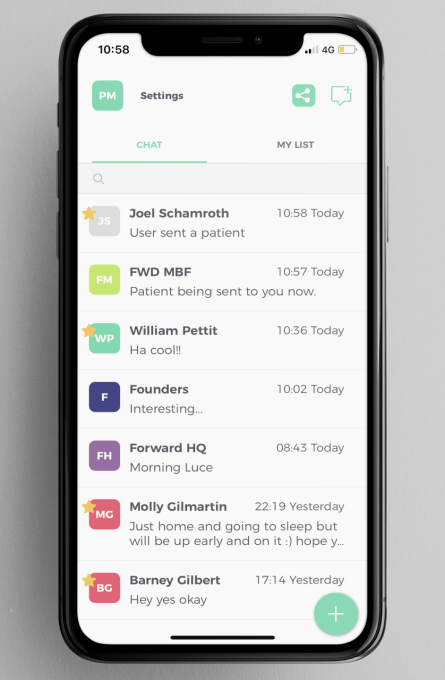
In Forward’s case, that means offering an in-app directory of healthcare professionals who work within the same hospital so that it is possible to message colleagues even if you don’t know their number, “safe exchange of information and images”, the ability to create task lists, and a way of ensuring everyone involved with a patient’s care “is on the same page and working from the same information”. The latter includes the ability for clinicians to share patient cards, akin to a mini electronic health record, on a need-to-know basis.

To that end, the Forward app is GDPR compliant, NHS IG Toolkit Certified, and meets the GMC’s confidentiality guidelines. Clinicians must have an approved NHS or Trust email address to log into the app. Over the last year it has been piloted with a community of 5,000 doctors across five partner hospitals.

In a call with Harry Stebbings — who led the round on behalf of Stride and whom I promised not to refer to as a podcaster-turned-VC (sorry, Harry, I’m a terrible person!) — he told me that Forward Health’s mission resonated with him personally due to his first-hand experience of how doctors communicate and share information in the NHS. It is quite well-known that Stebbings’ mother has MS, while more recently his father suffered a heart attack.

“I knew healthcare communication was broken when, post my father’s heart attack, they faxed his ECG scans,” he says, aghast.

When he was introduced to the Forward Health team, Stebbings says he already understood the problem. But, more so, he looks for founder-market fit and believes the Forward founders are extremely well-placed to solve this particular problem, with the right mixture of healthcare and product backgrounds.

He says that another thing that has impressed him is the bottom-up growth that the Forward app has garnered, which we both agree is a little reminiscent to how business social network Yammer originally penetrated corporations. This sees healthcare professionals download the app and sign up using their NHS email address, without the need for a central diktat. They then typically encourage colleagues to do the same, which creates further network effects. This viral growth is also benefiting from the current career path of junior doctors, who, as part of their training, move from hospital to hospital and in turn spread use of the Forward app.

Adds Mundy: “The last year has not only furthered our aims to help thousands of doctors and nurses avoid using pagers and WhatsApp, but it’s also shown us the scale of the clinical communication problem. It’s an issue at every level of healthcare, from A&E to community services, and affects all clinicians and every patient. With this capital, we’ll be able to work with even more clinicians across the UK to identify their challenges and expand our product to help solve them. We believe our current offering is just the start of what our platform is set to become”.

05 Oct 2018

Samsung forecasts record $15.5B profit thanks to chips not smartphones

Samsung’s last quarter of business saw its slowest growth of profits in a year thanks to weak sales of its flagship Galaxy S9 smartphone. But the company is about much more than just phones, and that’s why it is forecasting a record operating profit of nearly $15.5 billion for its upcoming Q3 results.

The Korean firm said in a filing that it expects to revenue jump five percent year-on-year to hit 65 trillion KRW ($57.5 billion) with an operating profit of 17.5 trillion KRW ($15.5 billion), which represents a 20 percent annual jump and an 18 percent increase on the previous quarter.

Samsung’s pre-earnings filings are brief and don’t contain detailed information about the performance of its business units, thus we can’t assess demand for its high-end phones — which include the Note 9 — in the quarter that Apple unveiled its newest iPhones. But the clues suggest that it is actually the more boring (but reliable) divisions that are, once again, responsible for Samsung’s strong forecast.

Chips account for some 80 percent of Samsung’s revenue and demand for DRAM, which is important in areas such as cloud, pushed prices up during Q3 but analysts suspect that the growth won’t last.

“Its earnings appeared to have peaked,” Mirae Asset Daewoo Securities analyst William Park told Reuters. “DRAM prices are going to fall, although not dramatically, and that will negatively impact its margins.”

We’ll know more when Samsung releases its full earnings this month.

05 Oct 2018

9 highlights from Snapchat CEO’s 6000-word leaked memo on survival

Adults, not teens. Messaging, not Stories. Developing markets, not the US. These are how Snapchat will make a comeback, according to CEO Evan Spiegel . In a 6,000-word internal memo from late September leaked to Cheddar’s Alex Heath, Spiegel attempts to revive employee morale with philosophy, tactics, and contrition as Snap’s share price sinks to an all-time low of around $8 — half its IPO price and a third of its peak.

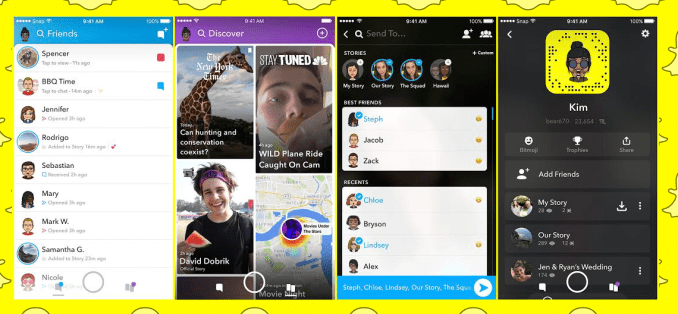
“The biggest mistake we made with our redesign was compromising our core product value of being the fastest way to communicate” Spiegel stresses throughout the memo regarding ‘Project Cheetah’. It’s the chat that made Snapchat special, and burying it within a combined feed with Stories and failing to build a quick-loading Android app have had disastrous consequences.

Spiegel shows great maturity here, admitting to impatient strategic moves and outlining a cohesive path forward. There’s no talk of Snapchat ruling the social app world here. He seems to understand that’s likely out of reach in the face of Instagram’s competitive onslaught. Instead, Snapchat is satisfied if it can help us express ourselves while finally reaching even meager profitability.

Snapchat may be too perceived as a toy to win enough adults, too late to win back international markets from the Facebook empire, and too copyable by good-enough alternatives to grow truly massive. But if Snap can follow the Spiegel game-plan, it could carve out a sustainable market through a small but loyal audience who want to communicate through imagery.

Here are the most interesting takeaways from the memo and why they’re important:

1. Apologizing For Rushing The Redesign

“There were, of course, some downsides to moving as quickly as a cheetah We rushed our redesign, solving one problem but creating many others . . . Unfortunately, we didn’t give ourselves enough time to continue iterating and testing the redesign with a smaller percentage of our community. As a result, we had to continue our iterations after we launched, causing a lot of frustration for our community.”

Spiegel always went on his gut rather than relying on user data like Facebook. Aging further and further away from his core audience, he misread what teens cared about. The appealing buzz phrase of “separating social from media” also meant merging messaging and Stories into a chaotic list that made both tougher to use. Spiegel seems to have learned a valuable lessen about the importance of A/B testing.

2. Chat Is King

“Our redesigned algorithmic Friend Feed made it harder to find the right people to talk to, and moving too quickly meant that we didn’t have time to optimize the Friend Feed for fast performance. We slowed down our product and eroded our core product value. . . . Regrettably, we didn’t understand at the time that the biggest problem with our redesign wasn’t the frustration from influencers – it was the frustration from members of our community who felt like it was harder to communicate . . . In our excitement to innovate and bring many new products into the world, we have lost the core of what made Snapchat the fastest way to communicate.”

When Snap first revealed the changes, we predicted that “Teen Snap addicts might complain that the redesign is confusing, jumbling all content from friends together.” That made it too annoying to dig out your friends to send them messages, and Snap’s growth rate imploded, with it losing 3 million users last quarter. Expect Snap to optimize its engineering to make messages quicker to send and receive, and it even sacrifice some of its bells and whistles to make chat faster in developing markets.

3. Snapchat Must Beat Facebook At Best Friends

“Your top friend in a given week contributes 25% of Snap send volume. By the time you get to 18 friends, each incremental friend contributes less than 1% of total Snap send volume each. Finding best friends is a different problem than finding more friends, so we need to think about new ways to help people find the friends they care most about.”

Facebook’s biggest structural disadvantage is its broad friend graph that’s bloated to include family, co-workers, bosses, and distant acquaintances.  That might be fine in a feed app, but not for Stories and messaging where you only care about your closest friends. With friend lists and more, Facebook has tried and failed for a decade to find better ways to communicate with your besties. This is the wedge through which Snapchat can attack Facebook. If it develops special features for luring your best friends onto the app and staying in touch with them for better reasons than just maintaining a Snap “Streak”, it could hit Facebook where it can’t defend itself.

4. Discover Soars As Facebook Watch And IGTV Stumble

“Our Shows continue to attract more and more viewers, with over 18 Shows reaching monthly audiences of over 10M unique viewers. 12 of which are Original productions. As a platform overall, we’ve grown the amount of total time spent engaging with our Shows product, almost tripling since the beginning of the year. Our audience for Publisher Stories has increased over 20% YoY, and we believe there is a significant opportunity to continue growing the number of people who engage with Discover content . . .We are also working to identify content that is performing well outside of Snapchat so that we can bring it into Discover. “

Discover remains Snapchat’s biggest differentiator, scoring with premium video content purposefully made for mobile. What it really needs, though, are a few must-see tentpole shows to drag in a wider audience that can get hooked on the reimagined digital magazine experience.

5. But Discover Is A Mess

“Our content team is working hard to experiment with new layouts and content types in the wake of our redesign to drive increased engagement.”

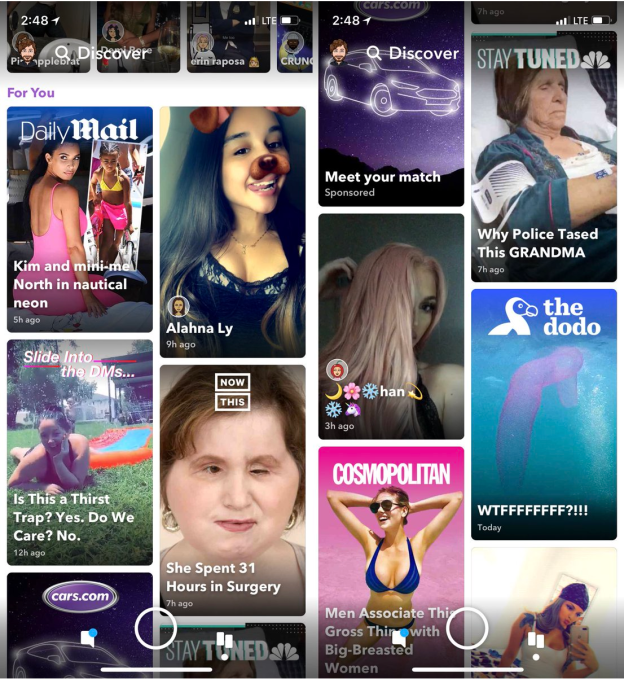
Snapchat Discover is an overcrowded pile of clickbait. News outlets, social media influencers, original video Shows, and aggregated user content collections all battle for attention in a design that feels overwhelming to the point of exhaustion. Thankfully Snapchat seems to recognize that more cohesive sorting with fewer images and headlines bombarding you might make Discover a more pleasant lean-back consumption experience.

6. Aging Up To Earn Money

“Most of the incremental growth in our core markets like the US, UK, and France will have to come from older users who generate higher average revenue per user . . . Growing in older demographics will require us to mature our application . . . Many older users today see Snapchat as frivolous or a waste of time because they think Snapchat is social media rather than a faster way to communicate. Changing the design language of our product and improving our marketing and communications around Snapchat will help users understand our value . . . aging-up our community in core markets will also help the media, advertisers, and Wall Street understand Snapchat.”

Snapchat can’t just be for cool kids anymore. Their lower buying power and lifestage make them less appealing to brands. The problem is that Snapchat risks turning off younger users by courting their older siblings or adults. If, like Facebook, users start to feel like Snapchat is a place for parents, they may defect in search of the next purposefully built to confuse adults to stay hip.

7. Finally Prioritizing Developing Markets

“We already have many projects underway to unlock our core product value in new markets. Mushroom allows our community to use Snapchat on lower-end devices. Arroyo, our new gateway architecture, will speed up messaging and many other services . . . It might require us to change our products for different markets where some of our value-add features detract from our core product value”

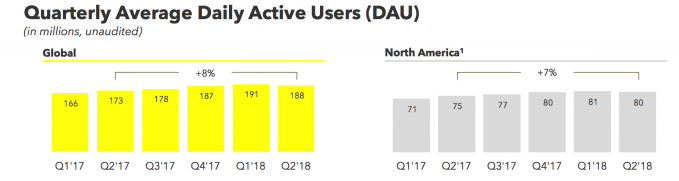
Sources tell me Snapchat’s future depends on the engineering overhaul of its Android app, a project codenamed ‘Mushroom’. Slow video load times and bugs have made Snapchat practically unusable on low-bandwidth connections and old Android phones in the developing world. The company concentrated on the US and other first-world markets, leaving the door open for copycats of Stories built by Instagram (400 million daily users) and WhatsApp (450 million daily users) to invade the developing world and dwarf Snap’s 188 million total daily users. In hopes of a smooth rollout, Snapchat is already testing Mushroom, but it will have to do a ton of marketing outreach to convince frustrated users who ditched the app to give it another try.

8. Fresh Ideas, Separate Apps

“We’re currently building software that takes the millions of Snaps submitted to Our Story and reconstructs parts of the world in 3D. We can then build augmented reality experiences on top of those models and distribute them as Lenses . . . If our innovation compromises our core product of being the fastest way to communicate, we should consider create [sic] separate applications or other ways of delivering our innovation.”

Snapchat has big plans for augmented reality. It doesn’t just want to stick animations over the top of anywhere, or create AR art installations in a few big cities. It wants to build site-specific AR experiences across the globe. And while everything the company has built to date has lived inside of Snapchat, it’s willing to spawn standalone apps if necessary so that it doesn’t bog down its messaging service. That could give Snapchat a lot more leeway to experiment.

9. The Freedom Of Profitability

“Our 2019 stretch output goal will be an acceleration in revenue growth and full year free cash flow and profitability. With profitability comes increased autonomy and freedom to operate our business in the long term best interest of our community without the pressure of needing to raise additional capital.”

Snapchat is still bleeding money, losing $353 million last quarter. Snapchat ended up selling 2.3 percent of its equity to a Saudi Arabian prince in exchange for $250 million to lengthen its rapidly shortening runway. And last year it took $2 billion from Chinese gaming giant Tencent. Deals like that could threaten Snapchat’s ability to prioritize its goals alone, not the moral imperatives or developer platforms that would benefit its benefactors. Once profitable, Snapchat won’t have to worry so much about struggling with short-term user growth and can instead focus on retention, societal impact, and its true purpose — creativity.

05 Oct 2018

Volvo’s Polestar brand is assembling prototypes of its first plug-in hybrid sports car

Polestar has started assembling verification prototypes of its upcoming plug-in hybrid sports car as Volvo’s standalone electric performance brand prepares to produce customer cars next year.

Verification prototypes of the Polestar 1 vehicle, which are built largely by hand, mark the first testing phase for production. The vehicles will be crashed and driven through different kinds of weather and on-road conditions — the kinds of tests that help engineers identify problems and tune the car.

The company plans to build 34 of these vehicles at a prototype production facility in Gothenburg, Sweden. Polestar will likely pay particular attention to how the carbon-fiber body of the vehicle holds up under testing. This is the first time that a brand in the Volvo Car Group has explored carbon fiber construction, according to Polestar, which noted that the company had to develop new equipment and use new construction techniques.

Polestar 1 verification prototype

That equipment will be transferred to its new factory in Chengdu, China, where customer cars will be produced.

Polestar plans to start production of the Polestar 1 in mid-2019, according to Polestar CEO Thomas Ingenlath. The company has said it will produce 200 Polestar 1 vehicles in the first full year of production. All of those $155,000 vehicles, which are destined for North America, have already been sold.

Polestar was once a high-performance brand under Volvo Cars. In 2017, the company was recast as an electric performance brand aimed at producing exciting and fun-to-drive electric vehicles — a niche that Tesla was the first to fill and has dominated ever since. Volvo has said it plans to invest more than $750 million into Polestar.

The Polestar 1 is the first model of the electric brand. However, the Polestar 1 is not a pure electric vehicle; it’s a plug-in hybrid with three electrical motors powered by twin 34 kilowatt-hour battery packs and a turbo and supercharged gas V4 up front.

Ingenlath views this initial model as a “bridge” to pure EVs. The Polestar 2 will be the company first all-electric vehicle and is designed to compete with Tesla Model 3. The Polestar 2 will be revealed early in 2019, with production starting a year later.