The traditional aviation industry typically moves rather slowly, but over the last few years, we’ve seen a number of upstarts that are challenging the status quo both in the general and commercial aviation business. One of those is Zunum Aero, which is looking to produce a small hybrid electric-powered commuter plane for six to 12 passengers, with plans to launch its first plane, the ZA10, in the early 2020s.
As Zunum today announced, it has chosen Safran’s twin-spool Ardiden 3Z light helicopter engine as the powerplant for its first planes. While you have probably never heard of Safran, the company is one of the biggest suppliers of engines for turbine helicopters, and chances are that if you see one in the air, it’s probably powered by a Safran engine.
“The Ardiden 3Z represents a very powerful complement to the ZA10 because of its exceptional performance, along with low operating and maintenance costs,” said Safran’s head of OEM sales Florent Chauvancy. “This announcement marks a new step forward in demonstrating Safran’s ability to offer hybrid propulsive solutions for tomorrow’s mobility solutions.”
As Zunum chief engineer Matt Knapp told me, the company always believes that hybrid engines were the way to go — at least for the foreseeable future. The planes, however, can be converted to a pure electric powertrain if and when batteries reach enough energy density to make this an option. Right now, the only way to offer a plane that can cover the kind of distance between say San Francisco and Portland, Oregon, is to opt for this hybrid solution. Planes that solely rely on battery power simply aren’t a viable option for this kind of mission. Knapp believes that battery power alone would get the plane to about 500 miles, which isn’t bad, but less than most airlines would require.
The promise is that the hybrid powertrain will still reduce emissions by 80 percent and that airlines can save 40 to 80 percent per short-haul flight. Indeed, the company promises costs of 8 cents per passenger mile. Currently, the average for most of the major U.S. airlines is significantly more than that, even with their long-haul operations in the mix. For regional carriers, it’s even higher than that.
The new propulsion system will offer a peak performance of the equivalent of 1,300 horsepower, which should get the plane to a cruise speed of 340 miles per hour. During cruise, which uses far less power than the initial climb, the plane can go all-electric.
As for the airframe itself, Knapp notes there really isn’t anything all that special about it. “It’s more or less designed for high utilization in a commercial setting,” he said.
Knapp also noted that the plane can be flown by a single pilot, though the FAA would limit those operations to flights with nine seats or fewer. In the long run, though, Knapp actually expects that many new planes will be flying autonomously.
Until then, though, Zunum still has to prove it can build an airplane. For now, the company plans to use the hybrid powertrain on a test aircraft that it recently purchased (an old Aero Commander, for you avgeeks) while it starts working on its airframe.
Ready for information about what may be one of the largest corporate espionage programs from a nation-state? The Chinese government managed to gain access to the servers of more than 30 U.S. companies, including Apple, according to an explosive report from Bloomberg published today.
Bloomberg reports that U.S-based server motherboard specialist Supermicro was compromised in China where government-affiliated groups are alleged to have infiltrated its supply chain to attach tiny chips, some merely the size of a pencil tip, to motherboards which ended up in servers deployed in the U.S.
The goal, Bloomberg said, was to gain an entry point within company systems to potentially grab IP or confidential information. While the micro-servers themselves were limited in terms of direct capabilities, they represented a “stealth doorway” that could allow China-based operatives to remotely alter how a device functioned to potentially access information.
Once aware of the program, the U.S. government spied on the spies behind the chips but, according to Bloomberg, no consumer data is known to have been stolen through the attacks. Even still, this episode represents one of the most striking espionage programs from the Chinese government to date.
The story reports that the chips were discovered and reported to the FBI by Amazon, which found them during due diligence ahead of its 2015 acquisition of Elemental Systems, a company that held a range of U.S. government contracts, and Apple, which is said to have deployed up to 7,000 Supermicro servers at peak. Bloomberg reported that Amazon removed them all within a one-month period. Apple did indeed cut ties with Supermicro back in 2016, but it denied a claim from The Information which reported at the time that it was based on a security issue.
Amazon, meanwhile, completed the deal for Elemental Systems — reportedly worth $500 million — after it switched its software to the AWS cloud. Supermicro, meanwhile, was suspended from trading on the Nasdaq in August after failing to submit quarterly reports on time. The company is likely to be delisted.
Amazon, Apple, Supermicro and China’s Ministry of Foreign Affairs all denied Bloomberg’s findings with strong and lengthy statements — a full list of rebuttals is here. The publication claims that it sourced its information using no fewer than 17 individuals with knowledge of developments, including six U.S. officials and four Apple “insiders.”
You can (and should) read the full story on Bloomberg here.
Juul Labs today filed a complaint with the United States International Trade Commission (ITC) claiming that several organizations are infringing on Juul Labs’ patents. Juul has asked the ITC to halt the importation, distribution and sale of these products in the U.S.
In all, eighteen entities are listed within the complaint as having infringed Juul patents. They predominantly hail from within the U.S. and China, with one based in France, according to the complaint.
Earlier this year, Juul Labs filed for trademark infringement against 30 different companies which were allegedly using the Juul design or name brand.
Obviously, competition is one reason to take legal action, but Juul has other priorities. The company is under an immense amount of scrutiny by the FDA and lawmakers with regards to underage usage of the product. Counterfeit products are often sold without any age verification, putting electronic nicotine delivery systems in the hands of yet more minors.
From the release:
Whereas Juul Labs implements strict manufacturing and quality controls during the manufacturing of its products, little is known about how most of the accused devices are manufactured. Similarly, whereas Juul Labs applies strict age-gating when selling its products through its website, many of the accused products appear to be sold with little or no real age-verification processes. Notably, in contrast to Juul’s products, many of the accused copy-cat products include inappropriate flavors, seemingly directed to attract underage users – flavors like “Bubble Bubble,” “Apple Juice” and “Sour Gummy.”
In mid-September, FDA Commissioner Scott Gottlieb announced that Juul and other vape makers would have 60 days to come up with a more robust, comprehensive plan to combat underage use of the products. That 60-day period is about half-way complete.
It’s unclear what the consequences will be for a plan that doesn’t meet the FDA’s satisfaction, but there has been plenty of talk about banning flavored liquids, which would be a severe blow to Juul and other e-cig companies.
The UK has directly accused Russia’s military intelligence agency, the GRU, of being behind a number of cyber attacks that took place between 2015 and 2017, calling them “indiscriminate and reckless” with a range of target types including political institutions, businesses, media and even sport.
It says the chaotic campaign of attacks by the GRU shows it is “working in secret to undermine international law and international institutions”.
The government has also identified 12 hacker group it believes the GRU to be associated with — including ‘Fancy Bear’, a group behind a string of cyber espionage attacks including the 2016 hack of the Democratic National Committee, which the government is also now directly linking to Russia’s military spy agency.
Of course it’s not the first time the Kremlin has been linked to politically motivated attacks (some of which haven’t even required actual hacking).
Nor is it the first time the GRU has been specifically linked to Fancy Bear. Cybersecurity firm Crowdstrike made the same link back in 2016 — with “high level confidence“.
But it’s a first for the UK government to make a link and public accusation of Russia for the attacks — likely intended to keep up geopolitical pressure on president Putin in the wake of the Sailsbury poisonings which it has also previously linked to two GRU agents. (The Kremlin later claimed the two were just tourists who happened to have been visiting the town on the same day as a former Russian double agent and his daughter were poisoned with a nerve agent.)
The UK’s National Cyber Security Center, which is a public-facing branch of the UK’s GCHQ spy agency, has published the latest cyber attack claims — writing that it has “identified that a number of cyber actors widely known to have been conducting cyber attacks around the world are, in fact, the GRU”.
“These attacks have been conducted in flagrant violation of international law, have affected citizens in a large number of countries, including Russia, and have cost national economies millions of pounds,” it adds.
The full list of hacker groups being linked to the Kremlin and “almost certainly” to the GRU — with what the NCSC calls “high confidence” — are:
APT 28
Fancy Bear
Sofacy
Pawnstorm
Sednit
CyberCaliphate
Cyber Berkut
Voodoo Bear
BlackEnergy Actors
STRONTIUM
Tsar Team
Sandworm
The other cyber attacks the government has now also publicly attributed to the GRU include:
an October 2017 ransomware attack by BadRabbit, which encrypted hard drives and rendered IT inoperable — resulting in disruption including to the Kyiv metro, Odessa airport, Russia’s central bank and two Russian media outlets
an August 2017 attack on the World Anti-Doping Agency in which confidential medical files relating to a number of international athletes were released
a phishing-based attack on an unnamed small UK-based TV station, which took place between July and August 2015, in which multiple email accounts were accessed and content stolen
The government also lists two attacks it says it had previously attributed to the GRU:
a June 2017 cyber attack that targeted the Ukrainian financial, energy and government sectors but which also spread to impact other European and Russian businesses
an October 2017 attack involving the VPNFILTER malware which infected thousands of home and small business routers and network devices worldwide. The NCSC notes that the infection “potentially allowed attackers to control infected devices, render them inoperable and intercept or block network traffic”
Commenting in a statement, foreign secretary Jeremy Hunt said:
These cyber attacks serve no legitimate national security interest, instead impacting the ability of people around the world to go about their daily lives free from interference, and even their ability to enjoy sport.
The GRU’s actions are reckless and indiscriminate: they try to undermine and interfere in elections in other countries; they are even prepared to damage Russian companies and Russian citizens. This pattern of behaviour demonstrates their desire to operate without regard to international law or established norms and to do so with a feeling of impunity and without consequences.
Our message is clear: together with our allies, we will expose and respond to the GRU’s attempts to undermine international stability.
Startup Battlefield is returning to Africa this December. TechCrunch will be hitting Lagos, Nigeria, bringing with it our Battlefield competition and a day’s worth of panel discussions, focused on topics facing the city’s startup scene.
Iyin “E” Aboyeji is the Founder and CEO of Flutterwave, a payment solution designed to transfer funds between Africa and abroad. The Lagos-based startup serves as a payment gateway for a number of high profile companies including Uber, TransferWise, booking.com and tuition platform, Flywire.
In July of this year, Flutterwave rasied a $10 million Series A led by Greycroft Partners and Green Visor Capital.
Other investors include Y Combinator, Omidyar Network, Social Capital, CRE Venture Capital and HOF Capital. Aboyeji will join us to discuss the potential of blockchain tech in Africa’s burgeoning startup scenes.
Kola Aina
Kola Aina is the CEO and founder of Ventures Platform, a Lagos-based VC firm focused on Africa. VP is among the largest accelerator/seed stage funders in the space with an eye toward solving local issues. In addition to serving as a Partner at the fund, Aina is also a mentor at World Bank Group and Google’s Launchpad Accelerator.
We’ve got plenty more speakers to announce in the coming weeks. You can grab your tickets to the event here.
Fake news and misinformation was a key tactic used by the Russians during the 2016 presidential election to try to sway voters against candidates and sow mistruths and mistrust.
Research out Thursday by the Knight Foundation found that more than 80 percent of the Twitter accounts that repeatedly spread false information during the 2016 election “are still active,” and are in some cases pushing more than a million tweets a day.
The foundation examined more than 10 million tweets from 700,000 accounts that were found linking to over 600 sites associated with misinformation and conspiracy theories. The researchers found 6.6 million of those tweets linked directly to fake news during the month before the 2016 election, and another four million tweets spreading fake news six months after the election.
Although that’s a decline, it’s still more fake news than anyone would want.
“Our democracy relies on access to news and information we can trust,” said Sam Gill, Knight Foundation vice president for communities and impact. “Right now, the discussion about misinformation online is based on anxiety and conventional wisdom.”
“That’s not good enough,” he said.
Twitter has spent the past year trying to clean up after the 2016 election, after which lawmakers attributed blame to the social media company for failing to do more to protect voters from misinformation. The company, with 330 million users, has stamped out tens of millions of accounts in the past year for spreading misinformation and other suspicious content.
When reached, Del Harvey, Twitter’s global vice president of trust & safety, disputed the findings:
“Firstly, this study was built using our public API and therefore does not take into account any of the actions we take to remove automated or spammy content and accounts from being viewed by people on Twitter. We do this proactively and at scale, every single day. Secondly, as a uniquely open service, Twitter is a vital source of real-time antidote to day-to-day falsehoods. We are proud of this use case and work diligently to ensure we are showing people context and a diverse range of perspectives as they engage in civic debate and conversations on our service.”
The Knight Foundation criticized Twitter for claiming it cracked down on automated and “spammy” accounts, and said that “so many easily identified abusive accounts is difficult to square with any effective crackdown.”
According to their findings, the researchers said that the accounts were densely interlinked by following each other, described as a “disinformation supercluster.” The accounts participate in “coordinated campaigns to push fake news” by tweeting links to only a handful of fake news sites.
“The core of this network remains highly active as this report goes to press,” said the researchers. “Both before and after the election, most Twitter links to fake news are concentrated on a few dozen sites, and those top fake and conspiracy sites are largely stable.”
“Reducing the social media audience of just the dozen most linked fake and conspiracy sites could dramatically reduce fake news on Twitter,” they concluded.
The company agreed to pay $892 million last March after pleading guilty to charges of violating U.S.-Iran sanctions — the same issue that triggered the initial ban from the Department of Commerce. A condition of that 2017 deal was that the company would be ‘monitored’ until 2020 to ensure against repeat offenses. That term has been extended by a further two years by a U.S. court — as Reuters reports — it had “falsely disciplined” employees who were part of the Iran trading activities.
ZTE had been required to terminate the senior members of staff and discipline the others involved.
ZTE disclosed the extension in a filing to the Hong Kong stock exchange. It added that the court-appointed monitor will also be given access to the same information as the monitor tied to the Department of Commerce. That means copmpany documents, information, facilities and personnel.
The company is the second largest provider of telecoms equipment in the world, it has over 75,000 employees and is suspected of close ties with the government. However, it is dependent on U.S-based companies for certain components which is why it is caught up in U.S. politics and regulators.
In less than two months, thousands of the best and brightest minds from the European and international tech startup scene will attend Disrupt Berlin 2018. The conference, which takes place November 29-30, draws participants from more than 50 countries across Europe, Asia and beyond. It’s two full days of connection, collaboration and — most of all — opportunity.
We want to make that opportunity available, affordable and accessible to as many people as possible. In that spirit, we’re excited to offer special discounts to students and nonprofit and government employees. Click here for details and to apply for discounted Innovator passes.
Here’s what you can access with an Innovator pass:
All three content stages (Main Stage, The Next Stage, Q&A Stage)
Videos of all stage content at the event (Q&A Stage programming is not recorded)
All Workshops
Startup Alley Expo with more than 500 startups and exhibitors
Full attendee list and the ability to connect with attendees via CrunchMatch
TC After Party (if you’re at least 21 years old)
Let’s talk discount eligibility, shall we?
First up: students. You must be currently enrolled in a grade school, high school, college or university program — or have graduated from a college or university program within the last six months. Note that coding schools do not qualify, and you can’t combine the student discount with any other discount offers. Your reduced Innovator pass to Disrupt Berlin will cost €130 plus VAT.
When you check in at Disrupt Berlin registration, you’ll need to show your valid student ID, proof of current enrollment or a copy of your official transcripts to receive your badge. If you don’t have your student credentials, you’ll have to pay the full on-site price of an Innovator pass.
Next up: nonprofits and government employees. The discount applies to current full-time employees of nonprofit organizations, federal, state or local government agencies, international government agencies and active military employees. The discounted Innovator pass will cost €495 plus VAT.
Nonprofit employees will need to provide their email address from their organization during the registration process. Government employees must provide their valid .gov email address during the registration process.
When you check in at Disrupt Berlin registration, you’ll need to show proof of current employment at your nonprofit (copy of 501c3 documentation) or government organization. Government contractors, including contractors working on government “Cost Reimbursable Contracts,” are not eligible for the government discount.
We accept the following forms of valid government ID:
Government-issued Visa, MasterCard or American Express
Government picture ID
Military picture ID
Federally Funded Research Development Corp (FFRDC) ID
If you don’t have your valid nonprofit or government credentials, you’ll have to pay the full on-site price of an Innovator pass. Note that you can’t combine the nonprofit or government discount with any other discount offers.
Disrupt Berlin 2018 takes place November 29-30, and this is a great way for students, nonprofits and government employees to take in everything the show has to offer for a discounted price. Don’t miss out. Apply to get your discounted Innovator passes today.
Nigerian digital payments startup Paga is gearing up for international expansion with a $10 million round led by the Global Innovation Fund.
The company is exploring the release of its payments product in Ethiopia, Mexico, and the Philippines—CEO Tayo Oviosu told TechCrunch.
Paga looks to go head to head with regional and global payment players, such as PayPal, Alipay, and Safaricom according to Oviosu.
“We are not only in a position to compete with them, we’re going beyond them,” he said of Kenya’s MPesa mobile money product. “Our goal is to build a global payment ecosystem across many emerging markets.”
Launched in 2012, Paga has created a multi-channel network and platform to transfer money, pay bills, and buy things digitally 9 million customers in Nigeria—including 6000 businesses.
Since inception, the startup has processed 57 million transactions worth $3.6 billion, according to Oviosu. He joined Cellulant CEO Ken Njoroge and Helios Investment Partners’ Fope Adelowo at Disrupt San Francisco to discuss fintech and Africa’s tech ecosystem.
The new round takes Jumo to $90 million raised from investors and also saw participation from existing backers that include Proparco — which is attached to the French Development Agency — Finnfund, Vostok Emerging Finance, Gemcorp Capital, and LeapFrog Investments.
Launched in 2014, Jumo specializes in social impact financial products. That means loans and saving options for those who sit outside of the existing banking system, and particularly small businesses.
To date, it claims to have helped nine million consumers across its six markets in Africa and originated over $700 million in loans. The company, which has some 350 staff across 10 offices in Africa, Europe and Asia, was part of Google’s Launchpad accelerator last year. Jumo is led by CEO Andrew Watkins-Ball, who has close to two decades in finance and investing.
Lagos based Paystack raised an $8 million Series A round led by Stripe.
In Nigeria the company’s payment API integrates with tens of thousands of businesses, and in two years it has grown to process 15 percent of all online payments.
In 2016, Paystack became the first startup from Nigeria to enter Y Combinator, and the incubator is doing some follow-on investing in this round.
Other strategic investors in this Series A include Visa and the Chinese online giant Tencent, parent of WeChat and a plethora of other services. Tencent also invested in Paystack’s previous round: the startup has raised $10 million to date.
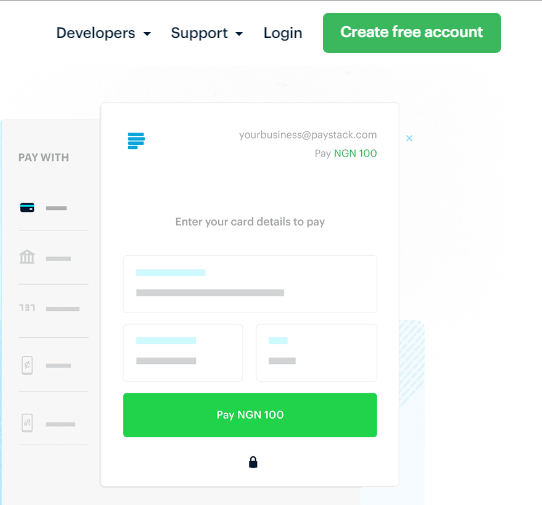
Paystack integrates a wide range of payment options (wire transfers, cards, and mobile) that Nigerians (and soon, those in other countries in Africa) use both to accept and make payments. There’s more about the company’s platform and strategy in this TechCrunch feature.
South African startup Yoco raised $16 million in a new round of funding to expand its payment management and audit services for small and medium-sized businesses as it angles to become one of Africa’s billion-dollar businesses.
To get there the company that “builds tools and services to help SMEs get paid and manage their business” plans to tap $20 billion in commercial activity that the company’s co-founder and chief executive, Katlego Maphai estimates is waiting to move from cash payments to digital offerings.
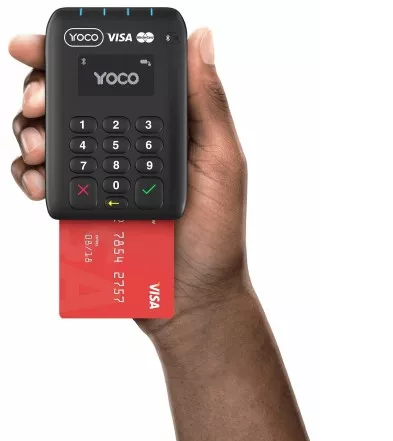
Yoco offers a point of sale card reader that links to its proprietary payment and performance software at an entry cost of just over $100.
With this kit, cash-based businesses can start accepting cards and tracking metrics such as top-selling products, peak sales periods, and inventory flows.
Yoco has positioned itself as a missing link to “solving an access problem” for SMEs. Though South Africa has POS and business enterprise providers — and relatively high card (75 percent) and mobile penetration (68 percent) — the company estimates only 7 percent of South African businesses accept cards.
Yoco says it is already processing $280 million in annualized payment volume for just under 30,000 businesses.
The startup generates revenue through margins on hardware and software sales and fees of 2.95 percent per transaction on its POS devices.
Yoco will use the $16 million round on product and platform development, growing its distribution channels, and acquiring new talent.
Emerging markets credit startup Mines.io closed a $13 million Series A round led by The Rise Fund, and looks to expand in South America and Asia.
Mines provides business to consumer (B2C) “credit-as-a-service” products to large firms.
“We’re a technology company that facilitates local institutions — banks, mobile operators, retailers — to offer credit to their customers,” Mines CEO and co-founder Ekechi Nwokah told TechCrunch.
Most of Mines’ partnerships entail white-label lending products offered on mobile phones, including non-smart USSD devices.
With offices in San Mateo and Lagos, Mines uses big-data (extracted primarily from mobile users) and proprietary risk algorithms “to enable lending decisions,” Nwokah explained.
Mines started operations in Nigeria and counts payment processor Interswitch and mobile operator Airtel as current partners. In addition to talent acquisition, the startup plans to use the Series A to expand its credit-as-a-service products into new markets in South America and Southeast Asia “in the next few months,” according to its CEO.
Nwokah wouldn’t name specific countries for the startup’s pending South America and Southeast Asia expansion, but believes “this technology is scalable across geographies.”
As part of the Series A, Yemi Lalude from TPG Growth (founder of The Rise Fund) will join Mines’ board of directors.
Digital infrastructure company Liquid Telecom is betting big on African startups by rolling out multiple sponsorships and free internet across key access points to the continent’s tech entrepreneurs.
The Econet Wireless subsidiary is also partnering with local and global players like Afrilabs and Microsoft to create a cross-border commercial network for the continent’s startup community.
“We believe startups will be key employers in Africa’s future economy. They’re also our future customers,” Liquid Telecom’s Head of Innovation Partnerships Oswald Jumira told TechCrunch.
With 13 offices on the continent, Liquid Telecom’s core business is building the infrastructure for all things digital in Africa.
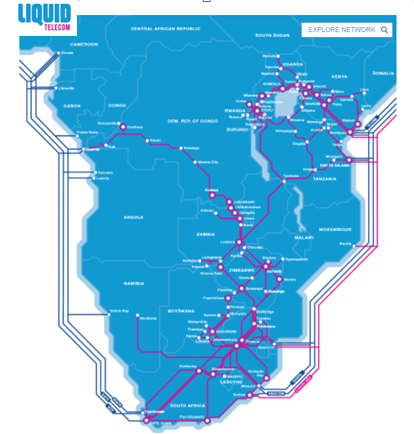
The company provides voice, high-speed internet, and IP services at the carrier, enterprise, and retail level across Eastern, Central, and Southern Africa. It operates data centers in Nairobi and Johannesburg with 6,800 square meters of rack space.
Liquid Telecom has built a 50,000 kilometer fiber network, from Cape Town to Nairobi and this year switched on the Cape to Cairo initiative—a land-based fiber link from South Africa to Egypt.
Though startups don’t provide an immediate revenue windfall, the company is betting they will as future enterprise clients.
“Step one…in supporting startups has been….supporting co-working spaces and events with sponsorships and free internet,” Liquid Telecom CTO Ben Roberts told TechCrunch. “Step two is helping startups to adopt…business services.”
Liquid Telecom provides free internet to 30 hubs in seven countries and is active sponsoring startup related events.
On the infrastructure side, it’s developing commercial services for startups to plug into.
“At the early stage and middle stage, we’re offering startups connectivity, skills development, and access to capital through the hubs,” said Liquid Telecom’s Oswald Jumira.
“When they reach the more mature level, we’re focused on how we can scale them up…and be a go to market partner for them. To do that they’ll need to leverage…cloud services.”
Microsoft and Liquid Telecom announced a partnership in 2017 to offer cloud services such as Microsoft’s Azure, Dynamics 365, and Office 365 to select startups through free credits—and connected to comp packages of Liquid Telecom product offerings.
On the venture side, Liquid Telecom doesn’t have a fund but that could be in the cards.
“We haven’t yet started investing in startups, but I’d like to see that we do,” said chief technology officer Ben Roberts. “That can be the next move onwards… from having successful business partnerships.”
And finally, tickets are now available here for Startup Battlefield Africa in Lagos this December. The first two speakers were also announced, TLcom Capital senior partner and former minister of communication technology for Nigeria Omobola Johnson and Singularity Investment’s Lexi Novitske will discuss keys to investing across Africa’s startup landscape.
Amazon’s announcement this week that it will raise its minimum wage for workers in the United States and United Kingdom earned it a wave of positive publicity, but backlash is already growing as reports emerge that its new pay structure will do away with monthly bonuses and stock option awards. In blog posts about the wage increase (slightly different ones were posted on its U.S. and U.K. sites), Amazon said it would replace its restricted stock unit [RSU] program with a direct stock purchase plan before the end of next year, and that the net effect of its changes would be “significantly more total compensation for employees,” but did not mention monthly bonuses.
According to Amazon employees who spoke to Yahoo News, however, monthly bonuses will end on November 1. Some workers who have been with the company for more than two years were already earning nearly $15 before the raise, but the publication reports that these workers “could lose thousands of dollars that they would have collected from the stock and monthly-bonus programs,” which include one called Variable Compensation Pay (VCP). Under VCP, workers who hit certain goals could earn up to 8% of their monthly income, with an average employee earning about $1,800 to $3,000 a year in bonuses, according to one of Yahoo News’ sources.
The pay structure change will also hurt many employees in the UK, the GMB, a major trade union, told the Guardian. The GMB says Amazon’s changes to its stock option and bonus programs could cost thousands of workers £1,500 in one year, amounting to “a stealth tax on its own wage increase.”
Amazon is increasing its minimum hourly wage in the U.S. from $7.25 to $15 an hour. In the UK, the minimum wage will increase from £8.30 to £10.50 for workers in London and from £8 to £9.50 outside of the capital. In its announcement on October 2, Amazon said “the net effect of this change and the new higher cash compensation is significantly more total compensation for employees, without any vesting requirements, and with more predictability.” Before the wage increase, Amazon faced mounting criticism after workers complained of poor labor conditions at its warehouses and low wages.
The Guardian reports that warehouse workers in the UK now receive one share of Amazon stock, currently worth about $1,953 (or £1,509), at the end of every year, along with one additional share every five years. According to the GMB, they can cash in those shares tax-free after holding onto them for two years. Therefore, the payout they would lose would be worth about half the £3,120 pay increase expected by the average Amazon warehouse worker outside of London, who earn about £17,000 a year, the union said. Furthermore, the GMB claimed workers will no longer get cash bonuses for meeting targets during the Christmas shopping period, but Amazon told the Guardian that no such bonus program exists.
TechCrunch has contacted Amazon for more information. In email sent to Yahoo News, CNBC and other media, an Amazon spokesperson said “The significant increase in hourly cash wages more than compensates for the phase out of incentive pay and RSUs. We can confirm that all hourly Operations and Customer Service employees will see an increase in their total compensation as a result of this announcement. In addition, because it’s no longer incentive-based, the compensation will be more immediate and predictable.”





 South African startup