Year: 2018

03 Oct 2018

N26 is launching its bank in the UK

Nearly a year after German fintech startup N26 announced that it would launch its service in the U.K., the company is launching in the U.K. N26 is already quite popular in the Eurozone, with more than 1.5 million customers. In this new market, it will face tough competition from existing players, such as Revolut, Monzo, Starling and many others.

N26 is going to roll out its product in multiple phases. Some lucky few will be able to open an account right away. The startup will then go through its waiting list — 50,000 people already left their email addresses to express interest. After that, anybody will be able to download the app and sign up.

This might sound like a convoluted process, but N26 expects a full public launch in just a few weeks. So it should be quite quick if everything goes as planned.

So what can you expect exactly? British customers will get all the basic N26 stuff with one killer feature — U.K. account numbers and sort codes. This way, customers will be able to receive payments and share banking information with their utility providers just like they would with a regular Barclays or Lloyds account.

When you open an N26 account, you get a true bank account and a MasterCard. Basic accounts are free, and N26 has a proper banking license — your deposits up to €100,000 are guaranteed by the European deposit guarantee scheme. You can then send and receive money and pay with your card. Sending money to other N26 users is instantaneous (they call it MoneyBeam).

N26 recently launched Spaces, a new feature that lets you create sub accounts and put some money aside. It’s still limited, but the company plans to add more features.

Your MasterCard works like any other challenger bank. Every time you use it, you receive a push notification. You can set payment and withdrawal limits, lock your card if you lose it and reset your PIN code. N26 will also bring Black and Metal plans to the U.K.

How does it compare to Revolut?

Let’s be honest, the elephant in the room is Revolut . The company has hundreds of thousands (if not over a million) customers in the U.K. N26 lets you do many of the things you can already do with your Revolut account.

So let me point out a few differences. As I noted, N26 has a banking license and U.K. banking information. N26 cards work in Apple Pay and Google Pay.

When it comes to international payments, N26 lets you pay with your card anywhere in the world without any additional fee. The company uses MasterCard’s conversion rates. Revolut first converts the money with its forex feature and then lets you spend your money.

There are an infinite number of forum posts about the exchange rates you’ll get. Sometimes Revolut is cheaper, sometimes N26 is cheaper. It mostly depends on the day of the week (Revolut conversion rates are more expensive on the weekend) and the currency. Unless you plan to spend tens of thousands of GBP during your vacation, you won’t see a huge difference on your bank statement.

Revolut also has many more features than N26. You can insure your phone, buy bitcoins, buy travel insurance, create virtual cards and more. It’s clear that N26 and Revolut have two different styles.

Revolut has a bigger user base than N26. But it’s always been a bit hard to compare them, as N26 wasn’t available in the U.K. Of course, they will both say there are tens of millions of people relying on old banks — multiple challenger banks can grow at the same time if they capture market share from those aging players. Still, the battle between N26 and Revolut is on.
03 Oct 2018

Kobo’s Forma e-reader takes on Kindle Oasis with an asymmetric design and premium price

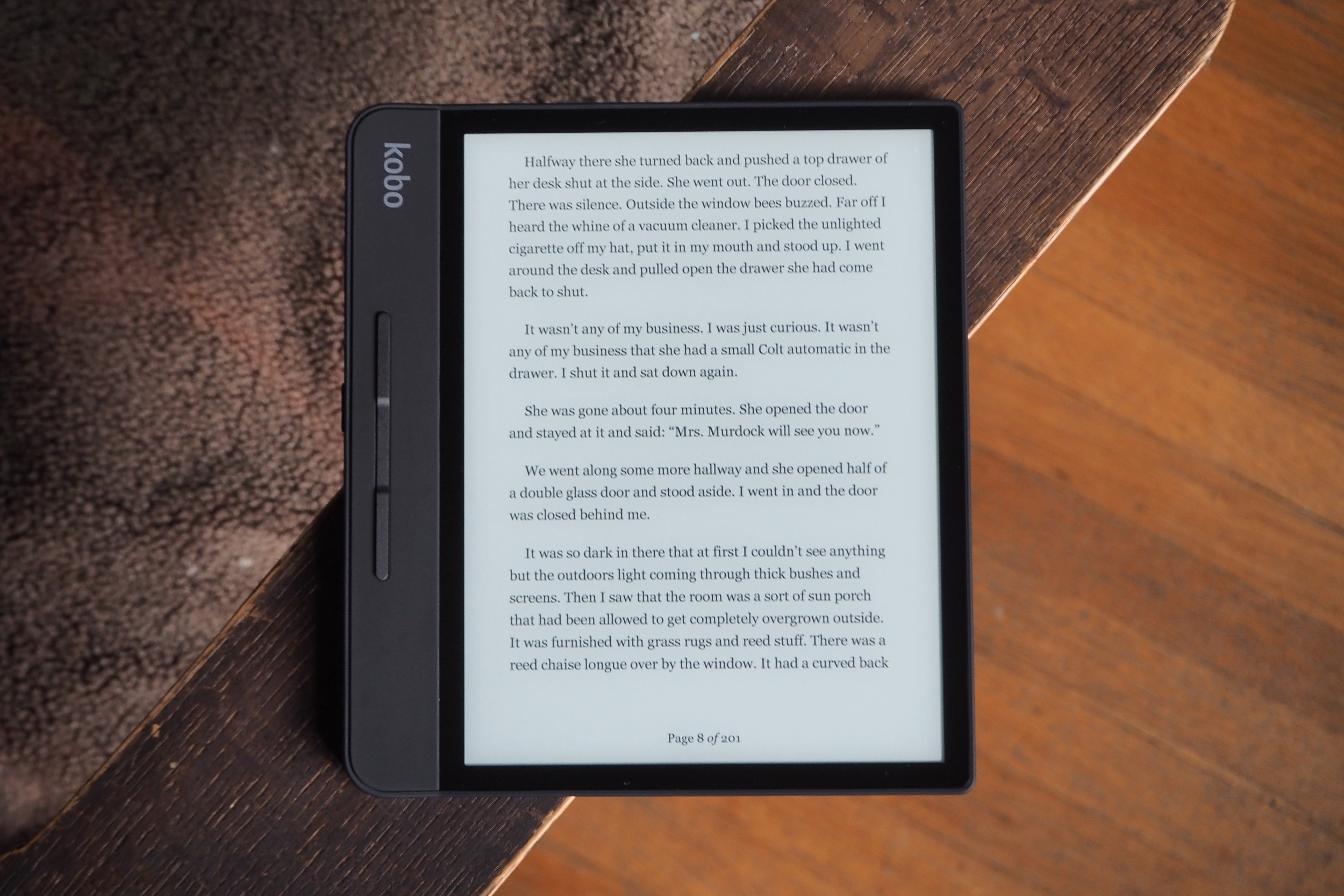
Kobo’s latest e-reader is a complete about-face from its anonymous, cheap, and highly practical Clara HD; the Forma is big, expensive, and features a bold — not to say original — design. It’s clearly meant to take on the Kindle Oasis and e-reader fans for whom price is no object.

The $280 Forma joins a number of other e-readers in using a one-handed design, something which is, we might as admit up front, isn’t for everyone. That said, I’ve found that my reading style on these devices has been able to adapt from one form factor to another — it’s not like they made it head-mountable or something. You still hold it like you would any other small device.

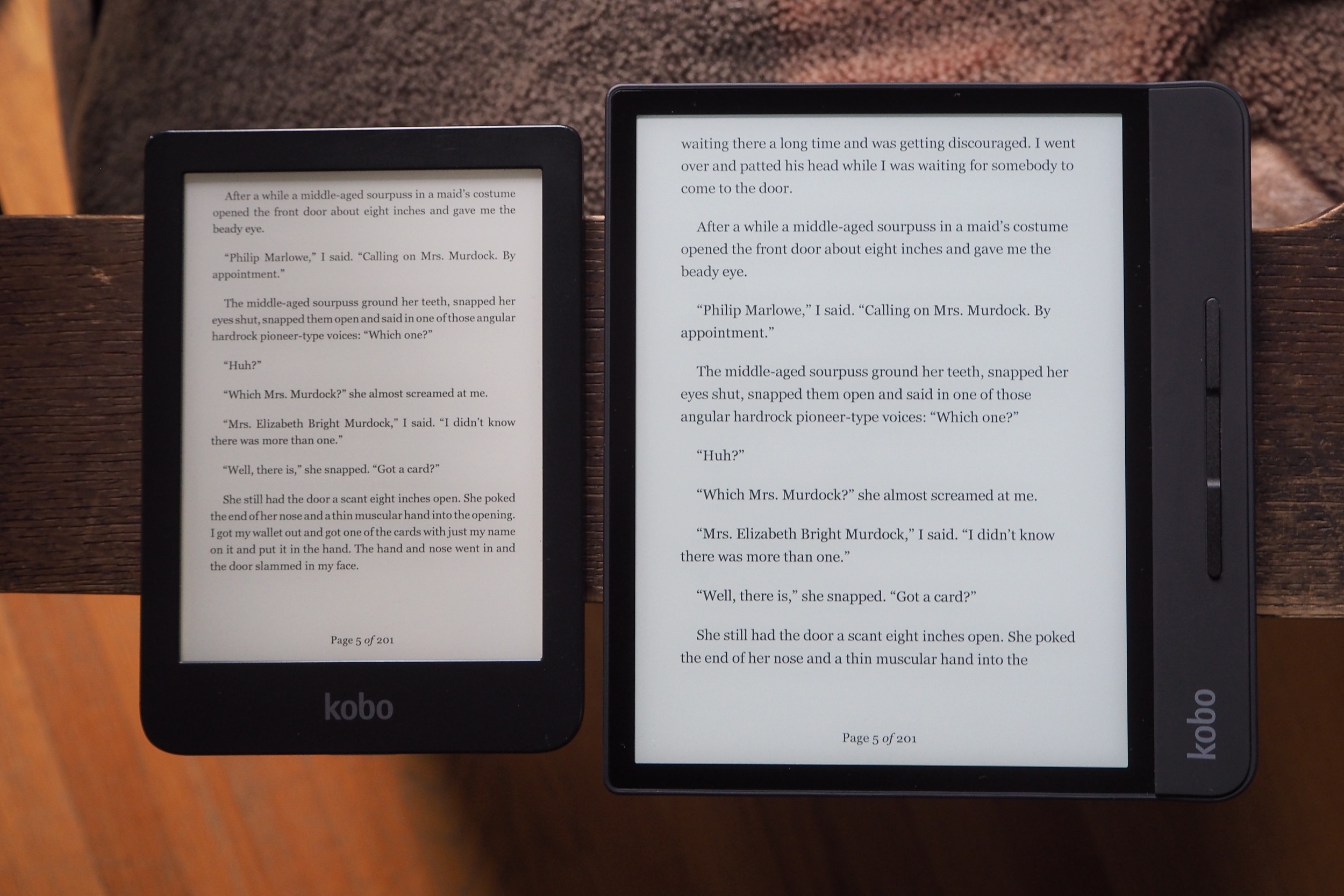
It uses an 8-inch E-Ink Carta display with 300 pixels per inch, which is more than enough for beautiful type. The frontlight — essentially a layer above the display that lights up and bounces light off it to illuminate the page — is a Kobo specialty, adjustable from very cold to very warm in cast and everywhere in between.

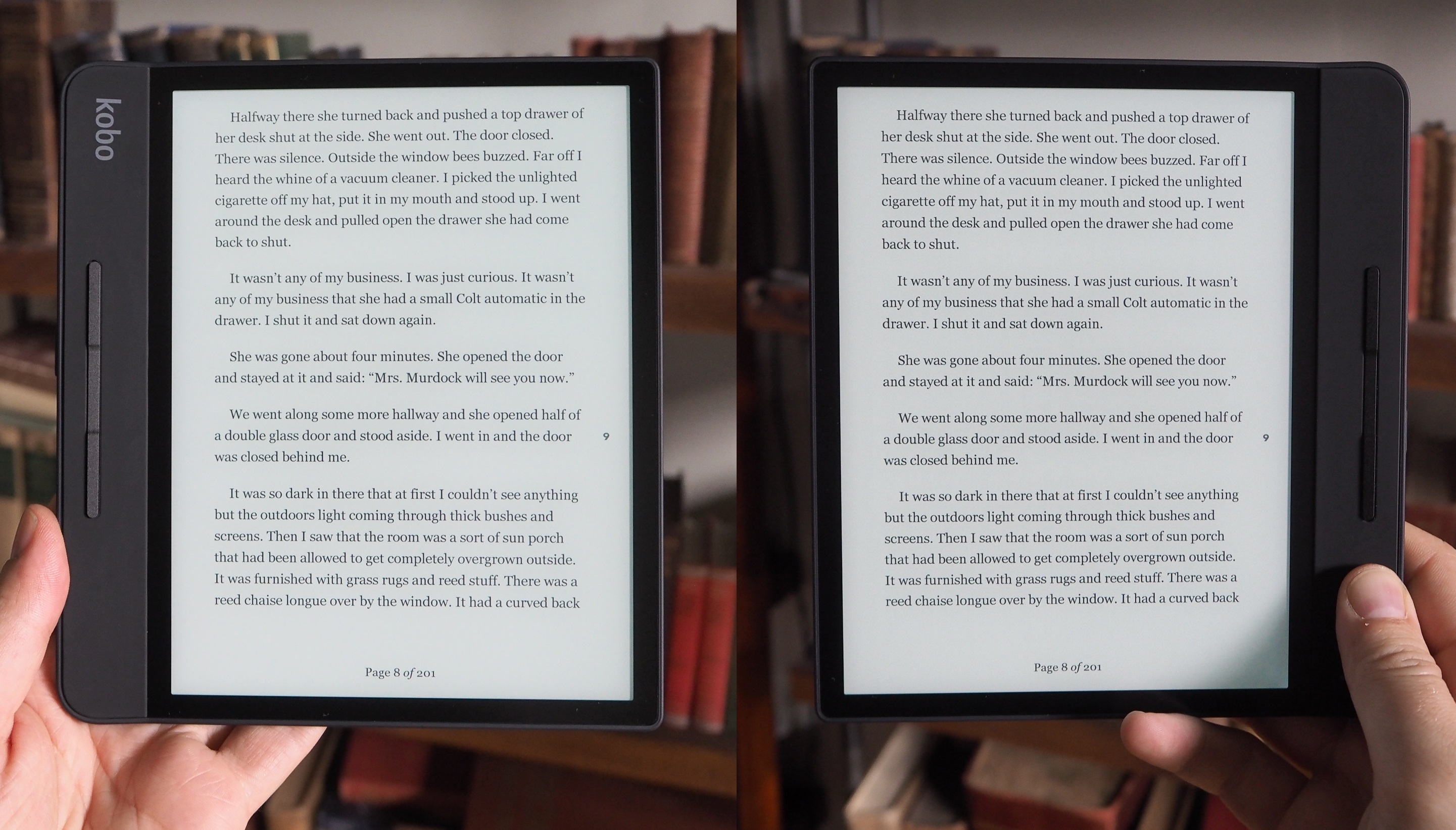
The Clara HD, Kobo’s best entry-level device, left, and the Forma. (The color cast of the screens is adjustable.)

The screen will be very similar to that of the Aura One, Kobo’s previous high-end reader, but the Forma’s asymmetric design gives it slightly closer to square dimensions.

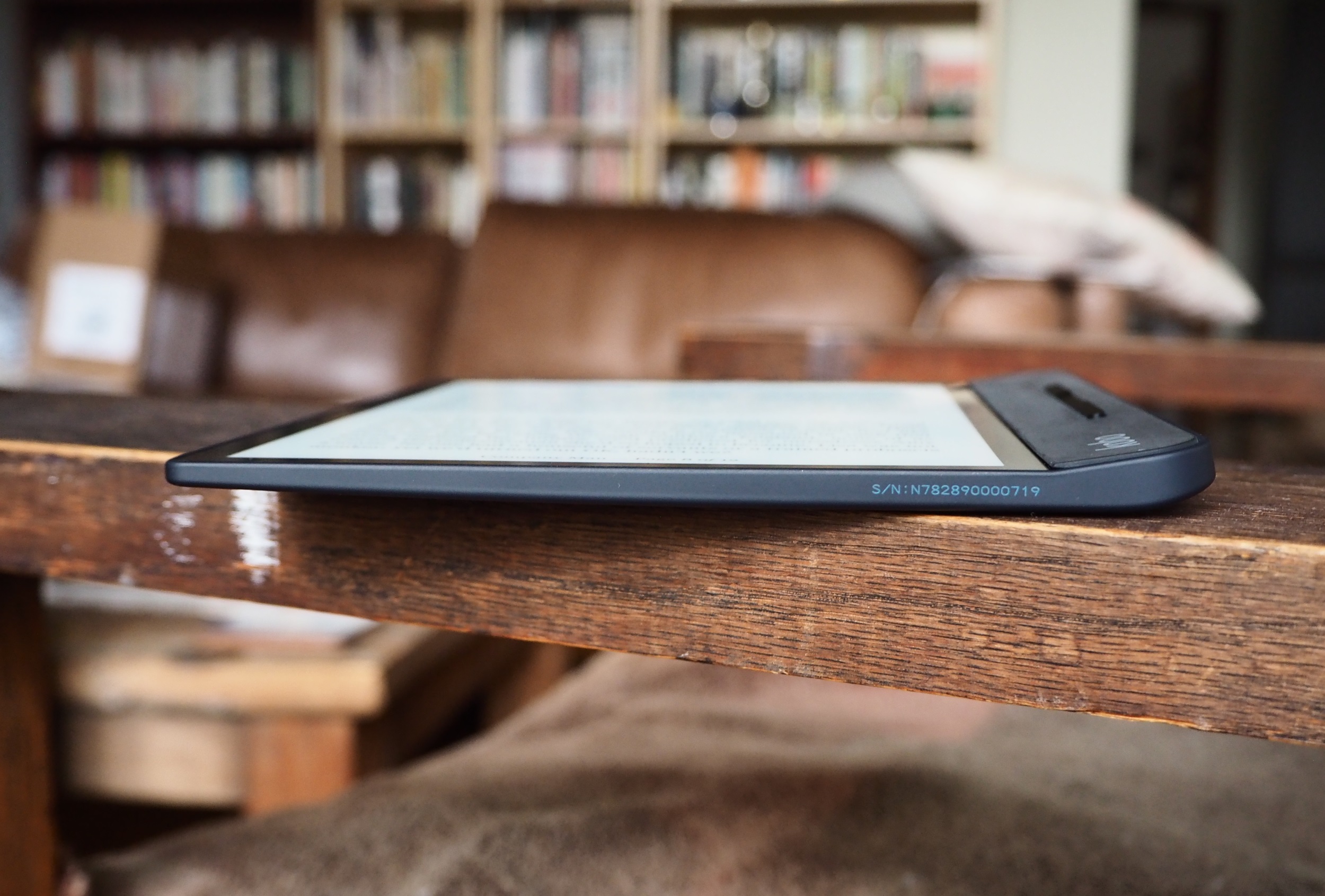
Where it differs from the Kindle Oasis is in size and a couple important particulars of design. The Forma is slightly larger, by about 20 millimeters (3/4″ or so) in height and width, and is ever so slightly but not noticeable thicker. (I didn’t have one to compare on hand, unfortunately.)

It’s also worth saying that like all Kobo devices, there are no forced advertisements on this one and you can load your own books as easy as that. To me Kindles aren’t even an option any more because of the “special offers” and limited file support.

Chin or ear?

The shape is similar, as anyone can see, but the Kobo team decided to go against having a flush front side and instead give the device a “chin,” as we used to call it on HTC phones, though being on the side it would perhaps more accurately be termed an “ear.” The screen, of course, is flat, but the grip on the side rises up from it at a 15 degree angle or so.

Is this better or worse than having a flush front? Aesthetically I prefer the flush screen but practically speaking it is better to have a flat back so it lies flat when you put it down or prop it against something. That the Oasis sits at a tilt when you set it down on a table is something that bothers me. (I’m very sensitive, as you can tell.)

[gallery ids="1725793,1725785,1725792,1725787,1725788,1725786"]

It’s still very light, only 30 grams more than the Clara, the same amount less than the Aura One, and nearly equal to the Oasis. Despite being larger than any of those, it’s no less portable. That said, the Clara will fit in my back pocket, and this one most definitely will not.

The device is fully waterproof, like the Oasis, although liquid on the screen can disrupt touch functionality (this is just a physics thing). Nothing to worry about, just wipe it off. The USB port is just wide open, but obviously it’s been sealed off inside. Don’t try charging it underwater.

I am worried about the material the grip is made of: a satin-finish plastic that’s very nice to the touch but tends to attract fingerprints and oils. Look, everyone has oils. But the grip of the Forma won’t let you forget it.

Although the power button is mushy and difficult to tell if you’ve pressed it right, the page-turn buttons are pleasantly clicky, and despite their appearance of being lever-like, they can easily be pressed anywhere along their length. Which goes forward and which backward switches automatically if you flip the reader over to use the other hand.

This flipping process happens more or less instantaneously, with a rare exceptions in my brief testing. Neither side feels more “correct,” for instance because of the weight distribution or anything.

The only one that doesn’t feel correct is the landscape mode. I’m not sure why someone would want to read this way, though I’m sure a few will like it. It just seems like a missed opportunity. Why can’t I have two pages displayed side by side, like a little pocket paperback? I’d love that! I’ve already asked Kobo about this and I assume that because I have done so, they will add it. As it is most books simply feel strange in this mode.

Familiar software, unfamiliar price

Text handling seems unchanged from Kobo’s other devices, which means it’s just fine — the typefaces are good and there are lots of options to adjust it to your taste book by book.

Kobo’s much-appreciated drag-and-drop book adding and support for over a dozen formats (epub, cbr, mobi, etc) is here as well with no changes. Pocket integration is solid and extremely useful.

The Forma (like Kobo’s other readers) does have Overdrive support, meaning that with a library card and account there you can easily request and read books from your local branch’s virtual stock. This is an underutilized service in general (by me as well) and I need to take advantage of it more.

So far, so good. But the real question is whether this thing is worth the $280 they’re charging for it — $30 more than the Kindle Oasis and even an even bigger jump over the Aura One. In my honest opinion, for most people, the answer is no. For the dollar you get a lot more from the Clara HD, which also has the advantage of being compact and pocketable.

But it must be said that the Forma is clearly a niche device aimed at people who use their e-reader a lot and want that bigger screen, the waterproofing, the thin profile, the one-handed design. There’s a smaller, but not necessarily small, number of people who are willing to pay for that. As it is the Forma is among the most expensive e-readers out there and it’s hard to justify that price for ordinary people who just want a good reader with the warmth control and good type.

The Forma is successful at what it aims to do — provide a credible competitor to Amazon’s most expensive device, and beat it at its own game in the ways Kobo usually beats Kindle. That much I can say for certain. Whether to buy it is between you and your wallet. Pre-orders start October 16.

03 Oct 2018

Cloudera and Hortonworks announce $5.2 billion merger

Over the years, Hadoop, the once high-flying open source platform, gave rise to many companies and an ecosystem of vendors emerged. It was long believed that some major companies would emerge from the pack and sure enough Hortonworks went public in 2014. Cloudera followed three years later, but the market slowed down and the two companies announced today that they are merging in a deal worth $5.2 billion, based on the price at the close of business yesterday.

Part of the problem with Hadoop, even though anyone could download it, was the sheer complexity of it. That’s where companies like Hortonworks and Cloudera came in. They packaged it for IT departments who wanted the advantage of a big data processing platforms, but didn’t necessarily want to build Hadoop from scratch.

These companies offered different ways of helping to attack that complexity, but over time with all the cloud-based big data solutions, rolling a Hadoop system seemed futile, even with the help of companies like Cloudera and Hadoop.

Photo: Garrett Heath on Flickr. Used under CC by 2.0 license.

In an interview in 2017, Carl Oloff, an analyst at IDC described the differences between the two companies, differences that may help them now as they become a single company.

Olof described Hortonworks as a “pure open source company,” one that packages, coordinates and manages that open source as a product for a subscription fee, and also sells support. He [said] the company’s products are aimed mostly at “big data technologists.”

Cloudera is a bit different, he said. “[It] offers packages that are mostly open source, but with tooling that is proprietary, and that are aimed at various classes of business problems. They sell to business managers. So their approach is different, and as a result, they have a higher percentage of their income derived from software than does Hortonworks,” Olofson told TechCrunch.

Sometimes the best answer to a fragmented market is coming together and that’s exactly what the two companies did today. The deal involves an all-stock merger in which each partner gets equal ownership, according to a statement announcing the deal.

Tom Reilly, the long-time CEO at Cloudera certainly sees the two companies as complimentary, offering customers something together that they couldn’t separately. “Our businesses are highly complementary and strategic. By bringing together Hortonworks’ investments in end-to-end data management with Cloudera’s investments in data warehousing and machine learning, we will deliver the industry’s first enterprise data cloud from the Edge to AI,” Reilly said in a statement.

As you might imagine, Hortonworks chief executive Rob Bearden concurred. “This compelling merger will create value for our respective stockholders and allow customers, partners, employees and the open source community to benefit from the enhanced offerings, larger scale and improved cost competitiveness inherent in this combination,” he said in a statement.

Cloudera, which was founded in 2008, raised over a billion dollars before going public, the vast majority coming in one major $740 million burst from Intel Capital in 2014. Hortonworks, founded three years later raised $248 million.


03 Oct 2018

How smartphone apps could help keep health records accurate

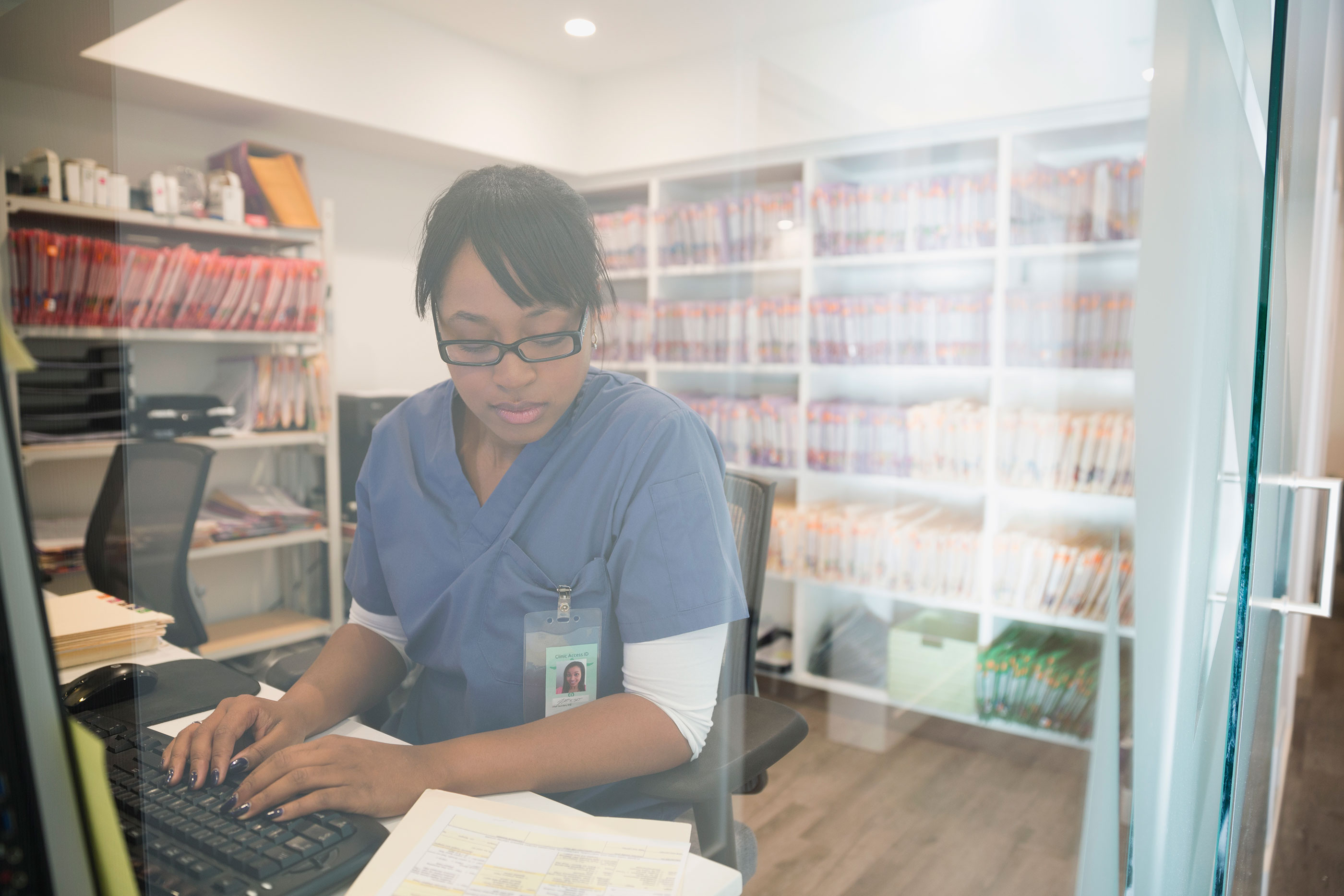
Suppose that the next time you go to a new doctor’s office, you wouldn’t have to balance a clipboard on your knee, write down your whole medical history, remember the five-syllable name of every medication you’re taking, and list all your allergies. Suppose that your smartphone could simply tap into the office’s computer system, where you could upload your entire medical history safely, securely, and accurately.

Such an app could ease the frustration patients feel when they fill out the forms for a new doctor. More importantly, it could help solve a serious but lesser-known problem that plagues hospitals and clinics: While the increased use of electronic health records has helped streamline record-keeping, providers aren’t always able to reliably pull together records for the same patient that are held in different hospitals, clinics, and doctor’s offices.

That was the scene in Boston in 2015, when emergency room doctors were struggling to treat a patient named Maureen Kelly—only to discover five different electronic records for Maureen Kelly, each with the same birthday and ZIP code. They had no way of knowing which record matched the patient in front of them. Was she the Maureen Kelly with diabetes? The Maureen Kelly who had only one kidney? And if they were to decide to send her record to a specialist outside the hospital, how could they know which of the five to send?

Fortunately, Maureen Kelly recovered. But to make the best possible medical decisions in cases like hers, doctors need immediate access to accurate patient data—including those from records held in other facilities. Digital systems should be able to seamlessly match records from a pediatrician in Pittsburgh or a surgeon in San Diego each and every time. An inability to do so—which could mean physicians not having important details, such as a patient’s drug allergies, chronic illnesses, or past surgeries—can mean the difference between life and death.

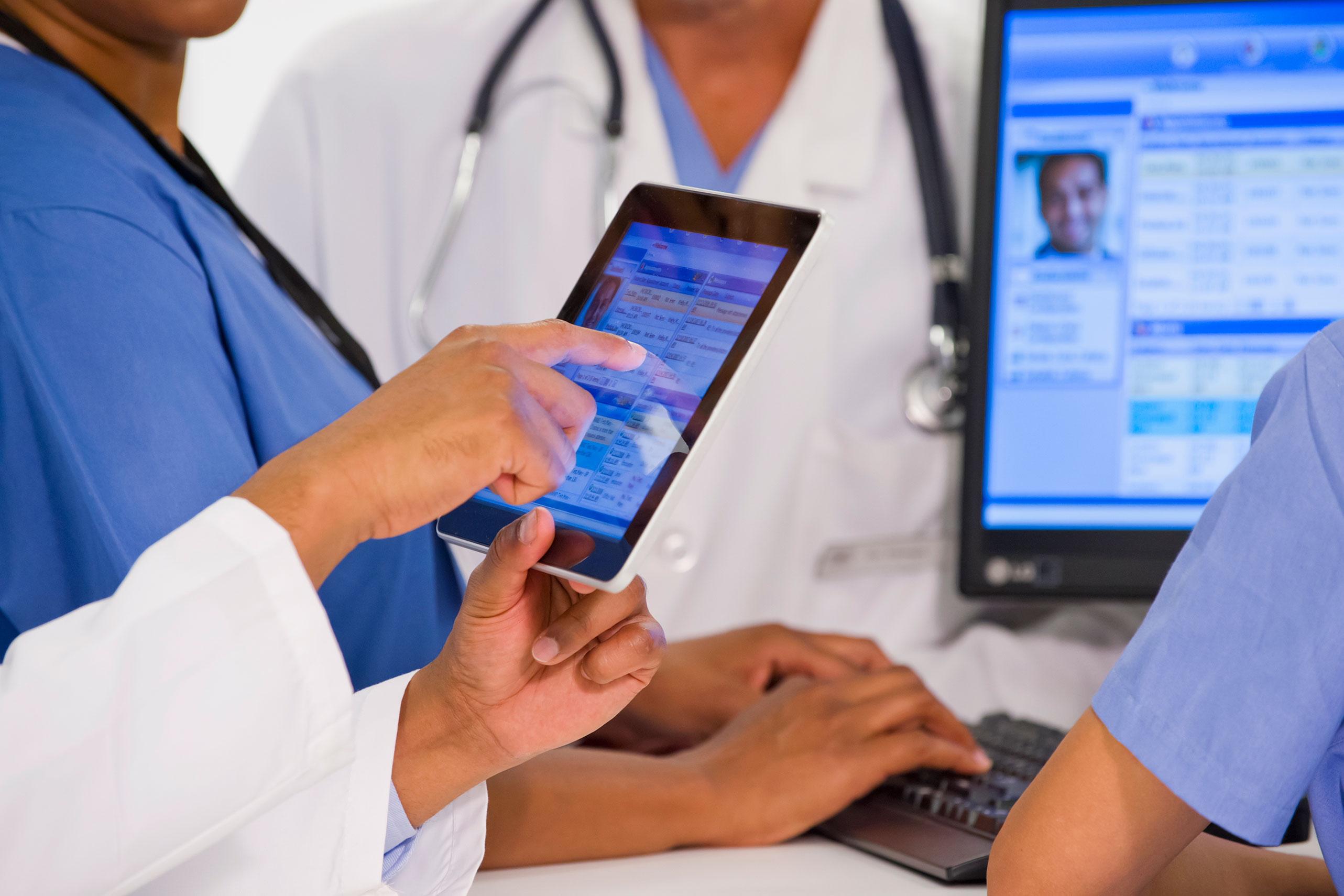
Doctors using digital tablet together in hospital (Photo: Ariel Skelley/Getty Images)

It’s hard enough keeping records straight within a single large hospital system; transferring them among different doctors’ offices and other hospitals is even more challenging. As digital health care systems have proliferated, they’ve used a variety of formats to record essential pieces of information, such as addresses and birthdates, that don’t easily transfer from one system to another. And, of course, patients’ identifying information isn’t static—birthdates don’t change but people move, change names through marriage or adoption, and more. Matches among different systems have also been stymied by data entry errors.

And while patient harm is the primary risk posed by inaccurate records, cost is no small consideration. The Office of the National Coordinator for Health Information Technology reported that each instance of a misidentified record cost the Mayo Clinic roughly $1,200—and that’s just within the Mayo system. These administrative costs are magnified when data are exchanged on a nationwide scale.

No one solution can solve every patient-matching problem. But The Pew Charitable Trusts is investigating several ideas. Pew recently asked the nonprofit RAND Corporation to evaluate solutions that would let patients exercise more control over how their records are matched. RAND looked at a variety of options and concluded that the growing use of smartphones offers a particularly promising opportunity to improve record matching in two ways.

Photo: Hero Images/Getty Images

First, smartphones could allow patients to verify their phone numbers at the point of care, perhaps by responding to a text message—a strategy already used in banking, travel, retail, and other industries. Once a number was confirmed by the patient, the hospital’s computer could use it automatically to match other records against that number with a higher degree of certainty.

Second, patients could use an app to enter their information—such as an address or even a driver’s license number—and have that information sent directly to the hospital when they check in for their visit. This would let patients update their information and voluntarily provide more accurate data to facilitate a match. Smartphone apps could eventually aggregate and transfer even more information—such as medication lists or health histories—and replace the paper on clipboards used today.

The smartphone approach will not solve this problem by itself. There are potential limitations—patients would need to own phones and know how to use them, and the system might not work in emergency situations when a patient didn’t have or couldn’t operate a smartphone—but the Pew Research Center found earlier this year thatmore than three-quarters of Americans now use smartphones, including nearly half of people older than 65.

To address the larger problem of patient matching, stakeholders must pursue a variety of solutions, including smartphone apps. Technology developers would be wise to advance and start pilot projects now of smartphones and a variety of other solutions, and demonstrate how they could be used to save lives, improve care, and reduce health care costs.

03 Oct 2018

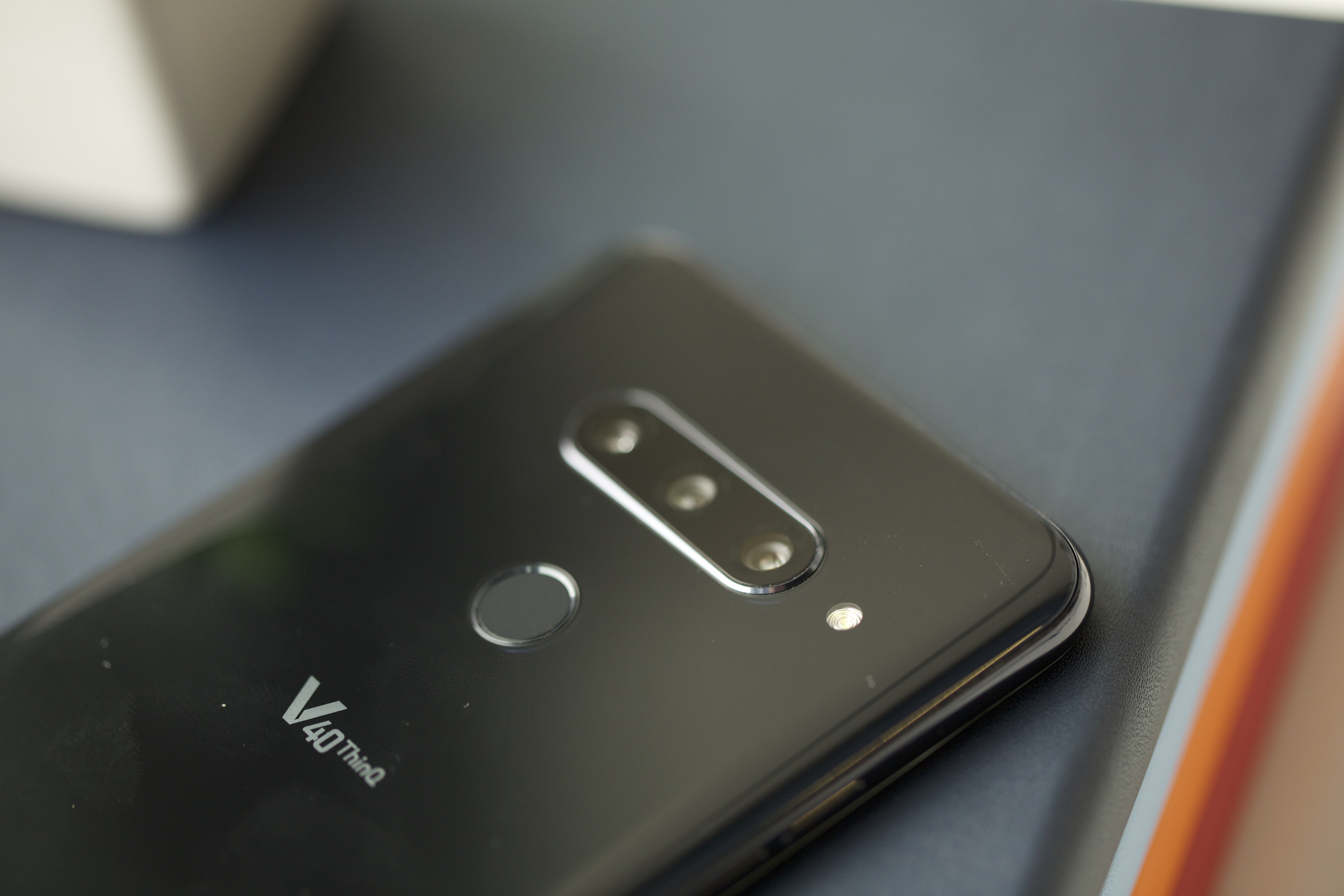
The V40 ThinQ is LG’s new five-camera smartphone

That’s two on the front and three on the rear. LG’s already teased the upcoming flagship quite a bit in the lead up to today’s announcement. Understandably so. It’s hard for a company like this to stand out in a world full of Apples and Samsungs — even with all of those lenses.

The South Korean company has never been afraid to push the envelope, and many of its smartphone innovations have become commonplace in recent years. Of course, LG’s not the first to bring a handset with three lenses to market — Huawei had the company beat by several months on that front with the P20.

Official images have been floating around for some time, but until now we haven’t actually seen them in action — or known precisely what each of the lenses does. Well, not officially, at least. The breakdown of the three horizontally oriented lenses is this: standard, super wide-angle and 2x optical zoom.

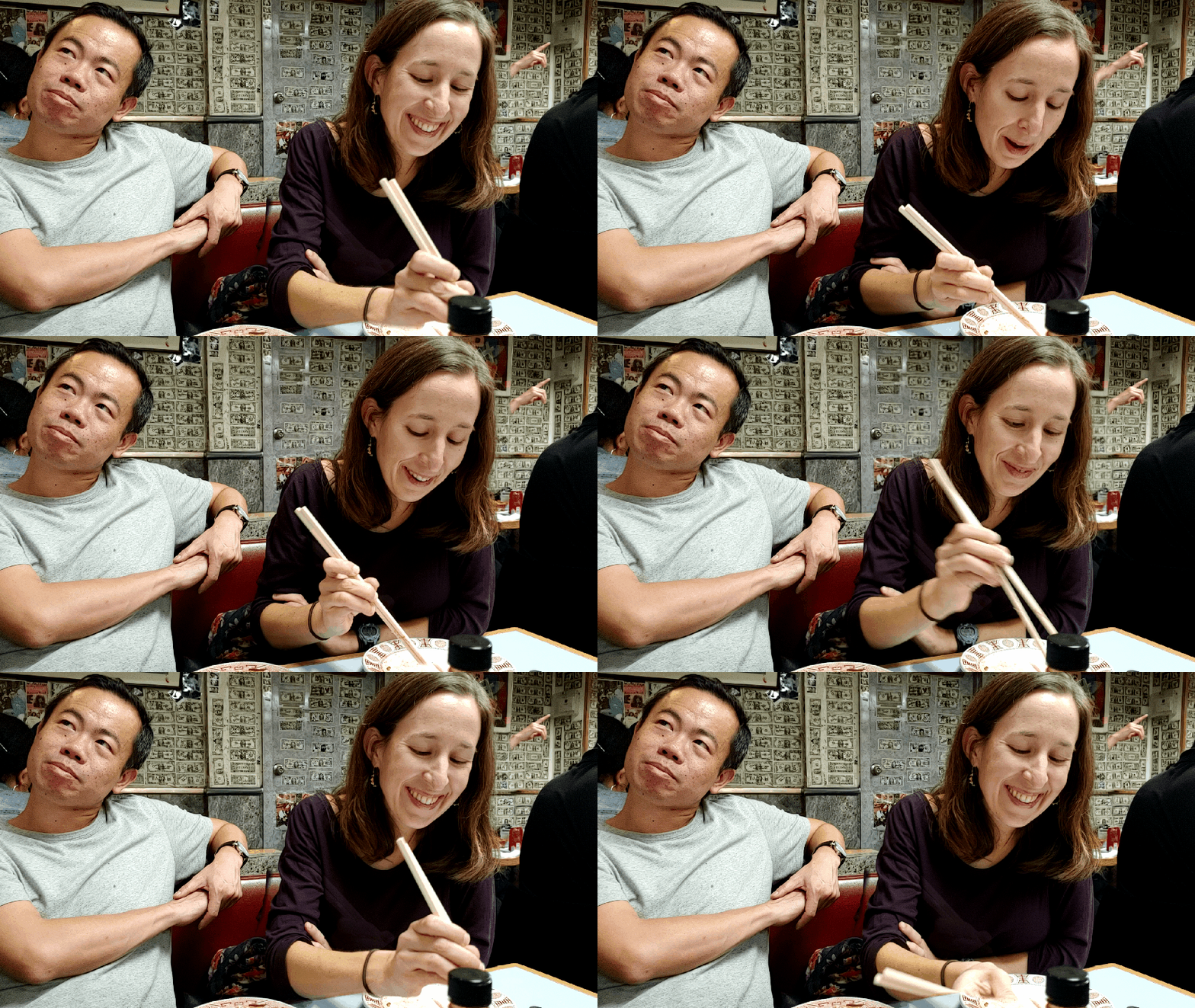
One click of a button and you can capture all three at once. Or you can just toggle between the three shots in preview mode. That’s really the easiest way, but it doesn’t afford you the bizarre Triple Shot function, which offers up an animated transition between shots. I’m still trying to figure out the real-world use for that bit.

It’s certainly less useful/interesting than the Cine Shot bit we wrote about earlier this week. That’s something I could certainly see myself using again, if only to fulfill my longtime goal of capturing the essence of Anthony singing karaoke. One day technology will catch up. Or maybe we’re just flying too close to the sun here.

The two front-facing cameras are 8 and 5 megapixels, taking standard and wide-angle shots, respectively. The phone retains the AI picture-taking features LG rolled out for its handsets back at Mobile World Congress, which adjust automatically, based on the sort of scenes they’re shooting.

The V40’s got a 6.4-inch QuadHD display, 6GB of RAM, 64GB of storage (plus a microSD slot) and sports a Snapdragon 845. Oh, and yep, there’s a headphone jack. 

03 Oct 2018

Can LG’s strange hybrid smartwatch breathe life into Wear OS?

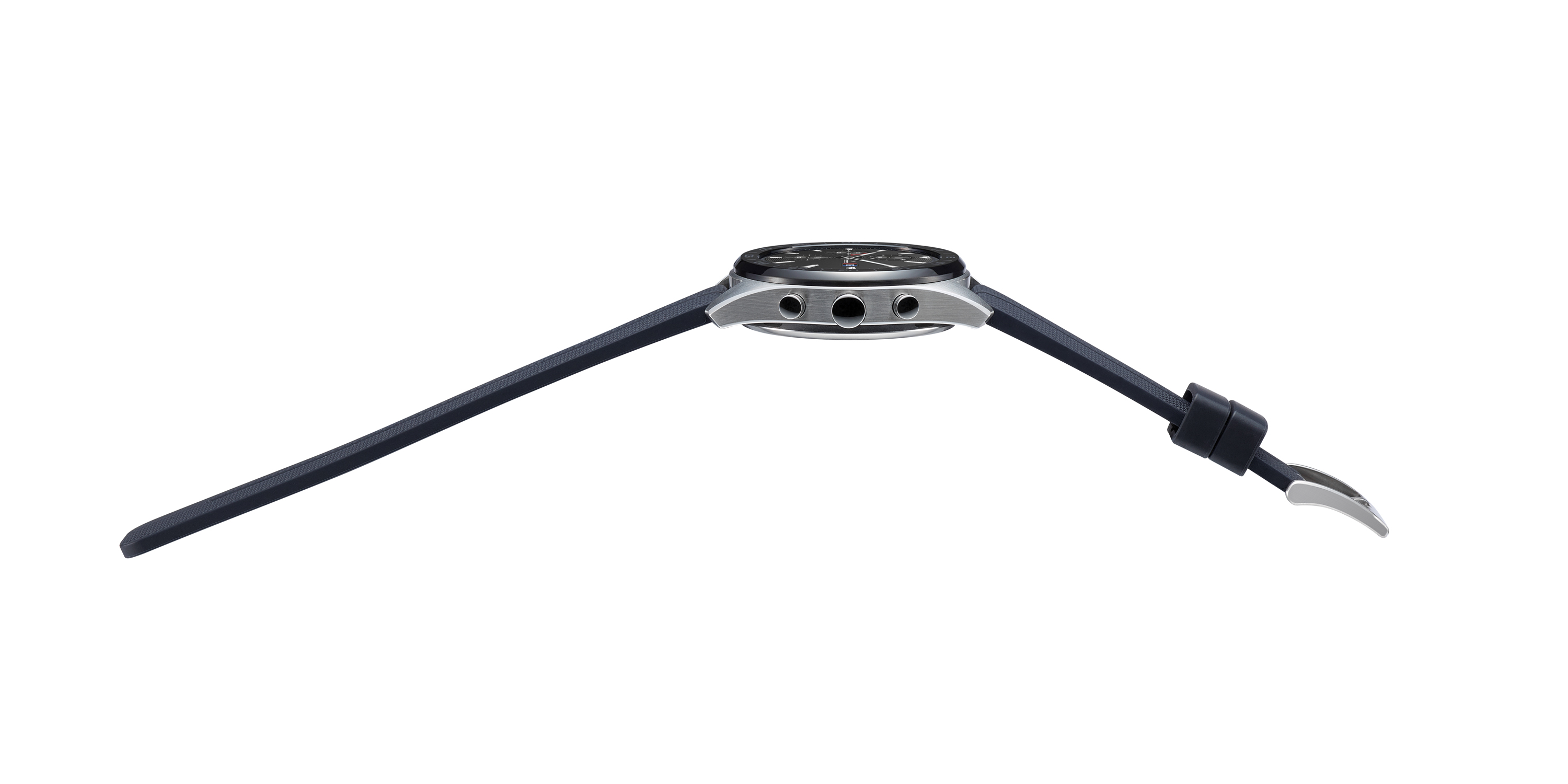
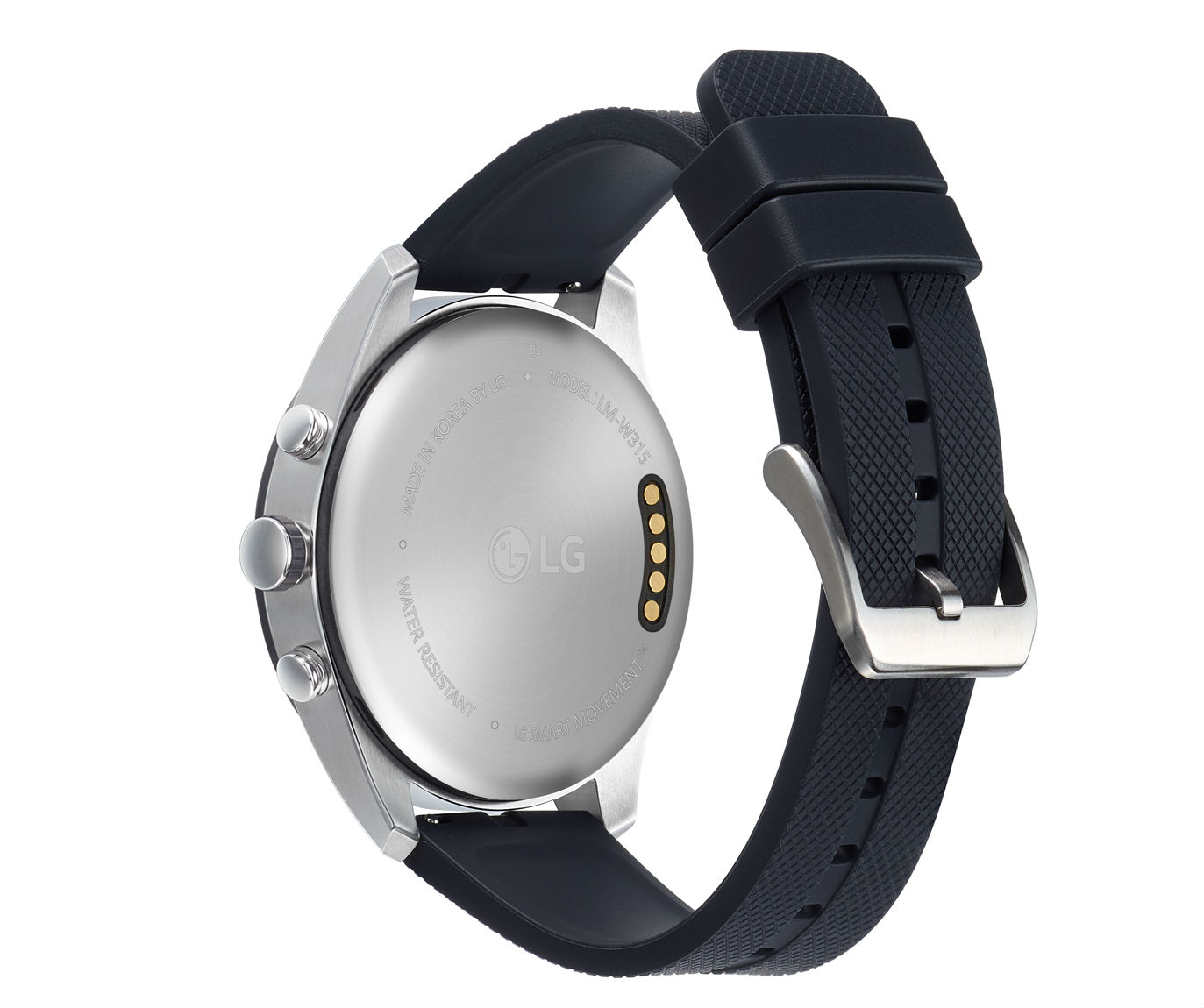
Along with the new V40 ThinQ, LG showed off this odd little addition. It’s true that hybrid smartwatches are no longer a novelty in and of themselves at this point, but the Watch W7 takes a bizarre approach to the category.

In fact, when the company first discussed the product at a briefing this week, we had a lot of questions — and unlike the phone, there weren’t any units present, lending more mystery to the thing.

The breakdown is basically this: it’s a Wear OS smartwatch with mechanical hands. So, like, a standard smartwatch display, with two physical watch hands doing their thing on top of it. You still interact via touch, though that actually happens via the glass on top. The hands, meanwhile, move to accommodate the text on the screen — and the text moves accordingly.

There’s a button on the side which, when pressed, move the hands out to 180 degrees. The text underneath then shifts up, so as to not be obscured by the physical parts. Also, the glass apparently lifts slightly when the hands realign. LG says the functionality was actually built into the latest version of Wear OS to accommodate LG’s Frankenstein watch.

It’s either a great idea or a terrible one. I’m honestly reserving judgement until we have a review unit in hand, though I will say I’m more excited to try this out than just about any mainstream wearable in recent memory. I mean, it’s nothing if not innovative.

During the briefing, LG said, “we’re trying to earn being on your wrist.” That’s a pretty tall order for Wear OS these days. After all, Apple is utterly dominant in the category, and while both Fitbit and Samsung have made strides on the Android side of the equation, neither one actually runs Google’s wearable operating system.

There’s certainly something to be said for mechanical hands — there’s the significant savings to battery life you get from not having to turn the display on to check the time. There’s also the fact that it actually looks pretty decent as a standard watch. The era of sporting a smartwatch for the sheer novelty has drawn to a close.

The W7 runs a pricey $450. Pre-orders for this weird thing open this Sunday. It hits stores on the 14th.

03 Oct 2018

Welcome Kirsten Korosec, Kate Clark, Zack Whittaker and some guy named Eric

We’ve got some new faces around TechCrunch, some of them real fresh and some who you might know. Though you might have seen some of their bylines around the site I thought it would be nice to officially welcome them to the site.

First up is Kirsten Korosec, who leads our transportation and mobility reporting. Kirsten is an accomplished and seasoned journalist in the space and has been with us for a few months writing, hosting panels at Disrupt and scooping major news. You’ll want to stay tuned to her coverage of this wild area of coverage as she deciphers Elon tweets, filters startup coverage and figures out how much horsepower a scooter actually needs. You might have seen one of Kirsten’s great pieces of original reporting on TC already like Comma.ai getting a new CEO, GM offering Cruise employees equity in Cruise, Skedaddle talking acquisition with the big ride sharing companies and outing Anthony Levandowski’s new stealthy self-driving startup called Kache.ai.

Kate Clark is one of our newest hires and is covering the startup and VC ecosystem in Silicon Valley alongside Danny Crichton, Connie Loizos, Megan Dickey and Lucas Matney. Kate comes to us from Pitchbook and has hit the ground running with a host of great stories like raises and acquisitions both large and small, scooter drama, as well as clever posts on sex tech and VC pay.

Our new security reporter Zack Whittaker has also been producing some great work in his time here as well. Zack comes from a 10-year stint at ZDNet and brings with him a deep understanding of security and privacy issues that are affecting so many companies large and small. He’s required reading on the topic, and he’s been proving it with great scoops like this one on Texas voter records being exposed, this story about iPhone apps being caught quietly monetizing your location and a huge breach of credit card data by Newegg.

Next is a gent you might know, Eric Eldon. Eric, who previously served as the co-editor of TechCrunch until he cleverly managed to escape to go live the easy life of doing a startup (called Hoodline), is back to work on a special new project Danny Crichton is heading up that we’re not quite ready to announce yet. Eric, as many of you likely know, is a fantastic editor and has spent quality time in the ups and downs of startup land, a perspective that will help tremendously as we try to keep making TechCrunch the last word in startups and emerging tech, as well as a genuinely useful resource for every founder, engineer, executive and aspirant in tech.

We’ve also got some new columnists and writers on other specific topics joining the team.

Eric Peckham will be writing on media and tech, and has interest in ML and blockchain and how traditional media companies are adapting. You may be familiar with his Monetizing Media newsletter. Joyce Yang is a former equity analyst who now writes a newsletter on Asia blockchain called Global Coin Research and is already writing a great column for us today. Gregg Schoenberg, who is the founder of Wescott Capital and co-founder of The Financial Revolutionist newsletter, is doing an interview series with us with CEOs and founders in the FinTech space. Conor Witt works at Citi’s strategy group and will be writing about FinTech for us with a new column. Finally, Ziad Reslan, a lawyer who is interested in the harder questions of policy issues, as well as John Chen, a former venture investor at Emergence (where he sourced the investment for Crunchbase), have also been writing occasional columns.

New hires to come

We’ve also got some open positions at TechCrunch, so if you know a good candidate, or are one yourself, please apply. We’re looking for a solid senior writer with an insatiable curiosity and a critical eye to bolster our startup coverage in San Francisco, as well as a science writer with a focus on emerging biotech and health tech from a consumer and enterprise perspective with variable location. Here, there, Mars, is ok. Since we now have events around the world, a desire for on-stage work is a plus. Feel free to use this link to apply for either or hit me up on Twitter @panzer.

In the engineering and product space, we’re in need of a Product Manager to oversee TC product, including our brilliant new site, events products, apps and more. We need an associate PM as well who has strong operational experience and a couple of additional engineers with strong front-end experience but with a major preference to those who have some WordPress and PHP experience because we work across the full stack to make stuff happen here. We need these folks to work on existing stuff as well as exciting new products. We’re a forward-looking site that is going to be pushing the boundaries of what publishing on the web and other locations looks like. If that sounds interesting to you, you know what to do.

With these people, and more to be announced, you may notice that we are making a commitment to covering the ground that we know you care about the most. We’re not going broad, we’re going deep, accurate and, as always, scrappy as hell. It’s going to be fun, talk soon.

03 Oct 2018

Northwest fast food chain hack exposed customer credit cards

A beloved regional burger chain in the Pacific Northwest is the latest fast food company to suffer a major data breach.

Burgerville, headquartered in Vancouver, Wash., disclosed today that any customers who used a credit or debit card from September 2017 to September 2018 at any of its locations may have had their card details stolen. The company operates 42 locations in the region.

In August, the FBI contacted Burgerville to notify the company that it had been targeted in a cyberattack. The company believed that intrusion to be “brief” until September 19, when an internal forensics team identified that the chain was still affected by malware running on its systems. Burgerville coordinated with the FBI to neutralize and contain the malware, working with an external cybersecurity firm.

“As soon as Burgerville learned the intrusion was still active, the company immediately began steps to completely eradicate this breach, necessitating that all Burgerville systems be taken offline and upgraded simultaneously without any warning to the criminals,” the company said in a press release.

TechCrunch contacted Burgerville and the FBI to ask how many customers might have been affected by the hack. The company declined to provide additional details at this time.

While the company has yet to disclose many technical details, it attributed the attack to Fin7, a “prolific” international cybercrime group. In August, the Department of Justice apprehended three members of Fin7 involved in “a highly sophisticated malware campaign targeting more than 100 U.S. companies, predominantly in the restaurant, gaming, and hospitality industries.” Believed to be a billion-dollar operation, Fin7 operates under the guise of a front company while selling stolen data in online marketplaces.

The attack on Burgerville was likely accomplished by malware that infected its point-of-sale systems — a common target in the recent surge of restaurant cyberattacks. In this case, the company confirms that attackers were able to exfiltrate names, credit card numbers, expiration dates and CVV numbers.

According to the Department of Justice report, Fin7 began many of its attacks with spear phishing campaigns that delivered attachments laced with an “adapted version” of the malware known as Carbanak. An FBI report provides more detail on the group’s methods.

As part of its August announcement, the Department of Justice noted that Fin7 was behind already disclosed hacks of Chipotle, Chili’s and other food chains, including local businesses in Western Washington that remained unnamed at the time.

03 Oct 2018

KZen raises $4 million to bring sanity to crypto wallets

KZen, a company run by former TC editor Ouriel Ohayon, has raised $4 million in seed to build a “better wallet,” obviously the elusive Holy Grail in the crypto world.

Benson Oak Ventures, Samsung Next, Elron Ventures invested.

Ohayon, who has worked at Internet Lab and founded TechCrunch France and Appsfire, wanted to create an easy-to-use crypto wallet that wouldn’t confound users. The company name is a play on the Japanese word kaizen or improvement and it also points to the idea of the zero-knowledge proof.

Omer Shlomovits, Tal Be’ery, and Gary Benattar are deep crypto researchers and developers and helped build the wallet of Ohayon’s dreams.

“We wanted something that did not feel like a pre-AOL experience, that was incredibly superior in terms of security, and simple to use,” he said. “We wanted a solution that brings peace of mind and that did not force the user into compromising between convenience and security which is, unfortunately, the current state of affairs. We quickly realized that this mission would not be possible to achieve with the same tools and ideas other companies tried to use so far.”

The app is launching this month and is being kept under wraps until then. Ohayon is well aware that the world doesn’t need another crypto wallet but he’s convinced his solution is the best one.

“The market does not lack solutions,” he said. “On the contrary, there are software wallets, hardware wallets, paper wallets, vaults, hosted custody. But there is no great solution. To be able to use a crypto wallet you either need a good dose of Xanax or a master’s degree in computer science or both, unless you want to depend on a central entity, which is even worse as the news are reminding us weekly.”

We’ll see as they use the cash to launch a crypto wallet that anyone – not just Xanax-eaters – can use.

03 Oct 2018

Facebook tests Snap Map-style redesign of Nearby Friends

Helping friends meet up offline has been a massive missed opportunity for Facebook . Whether because the brand is too creepy or the politely opt-in 2015 rollout of its location sharing feature wasn’t creepy enough, Facebook Nearby Friends never quite took off. Only 103 of my 1120 friends in San Francisco have it turned on.

It’s not the only one struggling with “The quest to cure loneliness”. Foursquare Swarm, Glympse, Apple’s Find My Friends, and Google Maps’ real-time coordinate sharing option have all failed to become a ubiquitous standard.

The redesigned map homescreen of Facebook Nearby Friends

But last year, Snapchat launched a different take on the idea based on its biggest acquisition ever, French app Zenly. With Snap Map, it wasn’t just about the utility of seeing a list of friends’ locations like on Facebook, but also splayed them out across map that you could dive into to see their latest geo-tagged Stories. It was as much about fun and content as it was about actually hanging out with people in person.

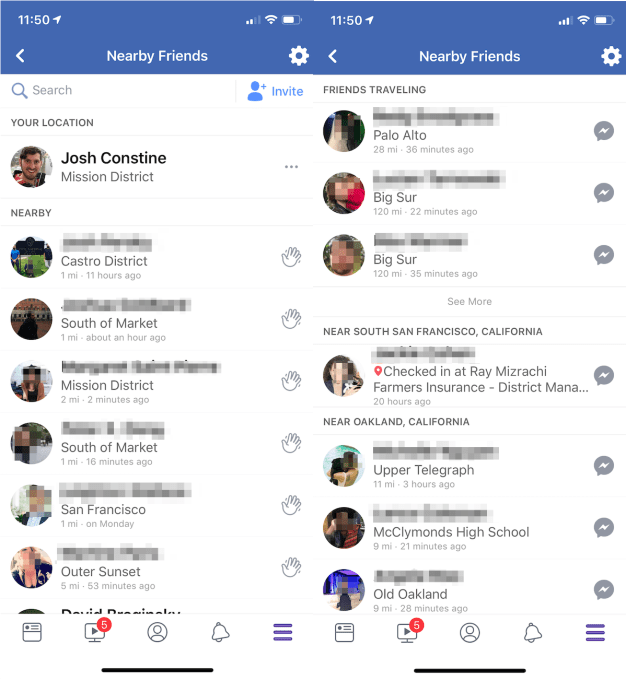
Now Facebook is testing a significant redesign of Nearby Friends that looks a lot more like Snap Map. It replaces the list view of the neighborhoods and cities friends are in with a map that groups friends together by city. A “view list” button opens up the former homescreen, though in both views you still can only see a friend’s approximate location in a neighborhood or city, not their exact coordinates. Facebook confirms to TechCrunch that “We’re testing a new design for Nearby Friends, a tool people have used for the past four years to meet with their friends in person. People have complete control over whether to use Nearby Friends or not. They can turn it on in the Nearby Friends bookmark.”

That statement both subtly promotes Facebook’s opt-in privacy setting for Nearby Friends while urging people to actually go back and activate it. The screenshot was generated from the code of Facebook’s Android app by mobile researcher and frequent TechCrunch tipster Jane Manchun Wong. Interestingly, after TechCrunch’s inquiry, Wong tells me Facebook appears to have deactivated server-side the ability to access the map feature.

The reason this matters is that Facebook is desperate for engagement, especially amongst younger users who are slipping away from it to Snapchat and Instagram. If revamped with this map and other improvements, Nearby Friends could become a more popular utility that keeps people opening Facebook. Getting more people to share their real-time location could open new opportunities for local ad targeting. And Facebook could benefit from showing it unlocks meaningful offline connection given its recent brand troubles following election interference and calls that it’s the opposite of “time well spent”.

The existing design of Facebook Nearby Friends

Snap Map was smart, but it’s sadly buried behind an awkward pinch gesture from Snapchat’s homescreen, or inside the search bar where some users wouldn’t expect it. Internal Snapchat usage data scored by Taylor Lorenz for The Daily Beast revealed that Snap Map had sunk from a high of 35 million daily unique viewers after its June 2017 launch to just 19 million by that September — merely 11 percent of Snapchat’s users at the time. Users never seemed to cease on it as a method of browsing Snapchat’s geo-tagged content.

Unfortunately, none of these location apps have figured out that meeting up isn’t all about location. It’s about availability. It doesn’t matter if I see my best friend is at a coffee shop right away if they’re not actually available to hang out. They could be on date, having a business meeting, or trying to get some work done. If I drop in just because I see they’re close by, it could be awkward. You’d have to first message them, but you can come off seeming desperate if they can’t or don’t want to meet up with you.

Location apps need an availability indicator similar to the green “online” dot used by many chat apps. You could toggle that on if you wanted to show you’re interested in some spontaneous friend time.

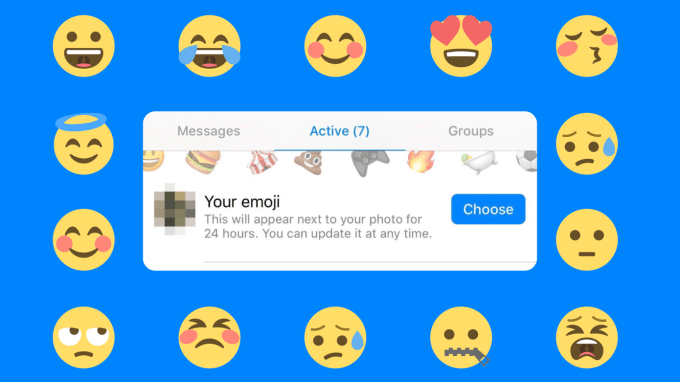
Facebook’s actually spent the last year trying to build this into Messenger in the form of “Your Emoji” status. It lets you pick an emoji like a martini, fork and knife, or barbell that’s temporarily overlaid on your profile pic thumbnail to let people know you’re down for drinking, getting dinner, or working out. The feature is yet to be widely tested, indicating that Facebook hasn’t quite cracked the nut of encouraging online meetups.

Ideally, Facebook would combine Nearby Friends and Your Emoji to help users share both approximately where they are and whether they want to hang out. The next step would be making it easy to watch a friend’s geo-tagged Facebook Story from wherever they are. And then, Facebook could further copy Snap Map by making public Stories and other location-based content accessible from the map so you could browse it for fun instead of the News Feed or Stories tray.

Still, making Nearby Friends work could require Facebook to rethink the privacy element. The friend graph has bloated to include family, co-workers, bosses, and distant acquaintances that users might not want to share their real-time location with. Finding a better way to let you share where you are with just your closest friends could make more people comfortable with the feature.

Facebook needs to rethink its entire product stack to embrace the high-definition cameras, big phone screens, and fast network connections that make it easier to convey information through imagery than text. Visual communication is the future and that goes far beyond Stories.