Year: 2018

02 Oct 2018

China has put the automotive renaissance into hyper drive

A tri-fold automotive renaissance, led by technology, has been playing out over the past few years. Electric vehicles finally have been embraced by mainstream consumers — and elevated by Tesla with long range and luxury quality. Meanwhile, rides on demand from Uber and Lyft have become a global movement that’s liberated personal mobility (and briefly snared China’s Didi the title of most valuable unicorn).

The third dimension, and most significant catalyst of this renaissance, is autonomous driving. Already, more than 15 million vehicles feature fundamental, Level 2 autonomy, thanks to  Mobileye, and Waymo is within reach of commercializing fully autonomous, Level 5 driving.

These innovations have earned enough momentum to draw luxury brands Mercedes and Cadillac into the fray. Yet vehicles combining all three aspects of this renaissance remain a niche market; EVs, for instance, last year accounted for only a little over 300,000 of the 18 million cars and trucks produced in North America.

It is China that will push this market into overdrive, guided by the Five Year Plan the country passed in 2016. It mandated 1 million electric vehicles be sold domestically by 2020, and 3 million by 2025. In the past year alone, China made itself the world’s largest EV market by a wide margin: Sales in the country reached 777,000 vehicles, more than doubling North America’s results.

A massive flood of capital is being directed toward this Five Year Plan, both from incumbent automakers and investors funding hundreds of new Chinese automakers. The incumbents — global brands such as GM and Volkswagen, and Chinese leaders such as SAIC and Dongfeng — face tremendous pressure from the army of investors at the gates. Powered by this new funding, as many as a dozen Chinese companies are on the verge of scaling, in the next three to five years, to a level it took Tesla a decade to reach.

Suddenly, every global automaker has a strategy for electrification, high-level autonomy and rides on demand, with products available to consumers now or in the next year. GM, for example, bought Cruise Automation and released Super Cruise on the Cadillac CTS 6; started mass producing Chevy Bolts and planning more than 20 new EV models in the next five years; invested in Lyft; and created Maven, its own ride-on-demand service, with autonomous rides due to start this year.

Without pressure from China, these new vehicles wouldn’t be arriving so soon, especially in an affordable offering.

Sure, global automakers had already started heading down this path once Tesla proved there was a market. But I’d argue that without pressure from China, these new vehicles wouldn’t be arriving so soon, especially in an affordable offering. When you look at the volume China is able to drive, prices go way down for crucial items like electric vehicle batteries and LIDAR. China’s scale has become the greatest accelerant to mainstream adoption of the next-generation vehicle.

In addition to pushing down the cost curve, the emergence of new Chinese companies eyeing the market (such as NIO, Byton, Faraday Future, Xiaopeng and WM Motors) has provided opportunities for promising new technical talent to emerge. As a result, the barriers to high-level autonomy and electrification may well become more easily surmounted.

Let’s take two major barriers for electric vehicles: The time required to charge them and the general shortage of charging stations. Now EV makers are pushing to establish charging networks: NIO is implementing battery swap stations, while Porsche is adding chargers to all its dealerships. In addition, wireless charging looms on the horizon: Dan Bladen, CEO of our portfolio company Chargifi, believes Apple’s decision to embrace wireless charging in the latest iPhone will pave the way for ubiquitous wireless vehicle charging.

The more people we have attacking these problems, the faster we’ll have mass-market solutions. This is a seismic shift in the automotive industry, and it couldn’t be more exciting.

Even further down the road, the innovation explosion in China’s automotive sector is poised to disrupt the entire U.S. automotive market. Much as we saw Germany, Japan and Korea make major headway versus Detroit in the late 20th Century, I believe it’s just a matter of time until Chinese brands take to American highways.
02 Oct 2018

This is Microsoft’s Surface Studio 2

One last piece of hardware from today’s Microsoft event. The company issued an update to what is arguably the most compelling member of the Surface family. The company’s innovative iMac competitor, the Surface Studio got a refresh today, as expected.

As with the other products announced at today’s event, things look pretty similar on the, you know, Surface. Like the Laptop, that’s actually just fine here. The Studio’s got one of the more groundbreaking designs you’ll find in a desktop PC. There are a number of key updates from a hardware perspective, however.

The 28-inch screen is 38 percent brighter, with 22 percent more contrast, according to the company’s numbers. It features a total of 13.5 million pixels.

The touchscreen features tilt sensitivity for pen input, with 4,096 levels of pressure and improved ink latency. Inside you’ll find Pascal graphics, coupled with up to a 2TB solid state drive. That’s an interesting move, given that Nvidia recently announced its next-generation Turing architecture. Those cards are still very expensive, though, and Nvidia continues to sell them side-by-side with its Pascal-based cards.

The Studio 2 worked admirably during the demo, with a speedy response time using the pen, along with on-board AI capable of transforming handwriting into text, while pulling corresponding images down from the cloud.


02 Oct 2018

Google launches voice assistant app to help people with limited mobility use their phones

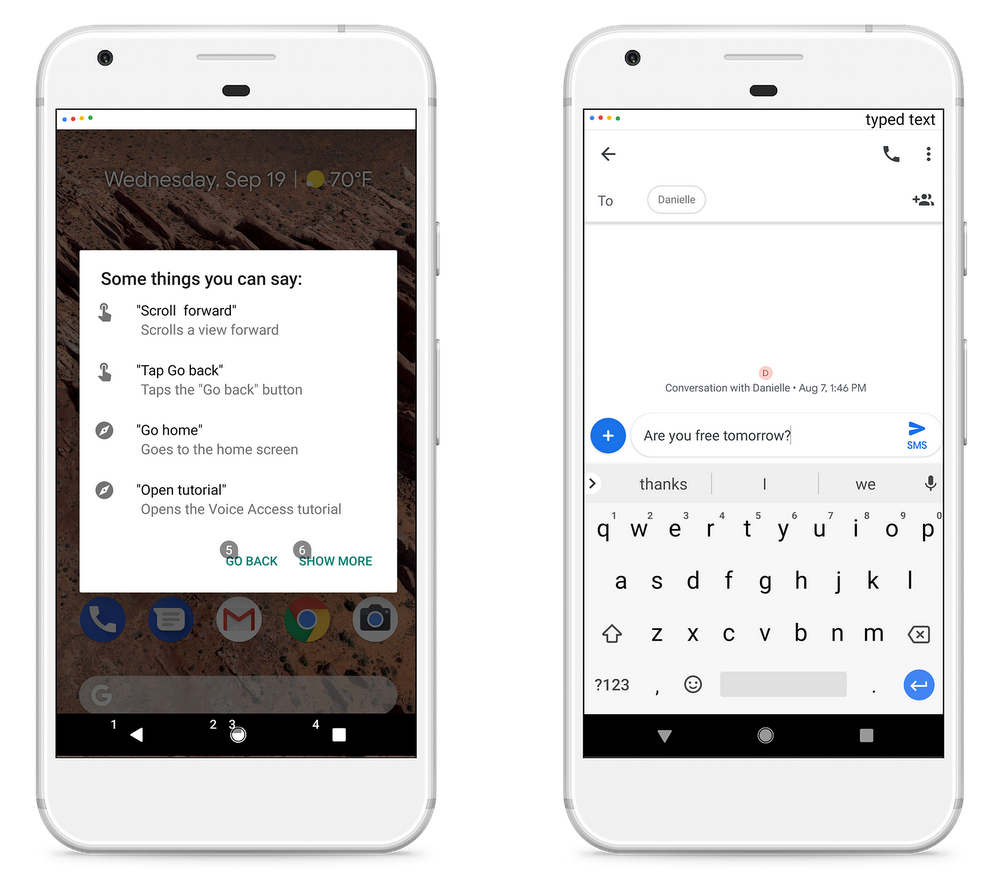
Google just introduced a new Android app to better enable people with limited mobility to use their phones. Called Voice Access, the app offers people a hands-free way to use apps, write and edit text and, of course, talk to the Google Assistant.

It’s designed to make it easier to control specific functions like clicking a button, and scrolling and navigating app screens. Currently, the app is only available in English, but Google is working on additional languages.

Google created the app in service of people with Parkinson’s disease, multiple sclerosis, arthritis and spinal cord injuries, but recognizes that the tool can also be helpful for people whose hands are tied with other tasks.

02 Oct 2018

Microsoft announces the Surface Laptop 2

Another bit of expected news at today’s big Microsoft event. Here’s the latest version of the Surface Laptop. Once again, not a lot of changes on the outside of the product — which might be for the best. After all, the Laptop is presently my favorite member of the Surface family.

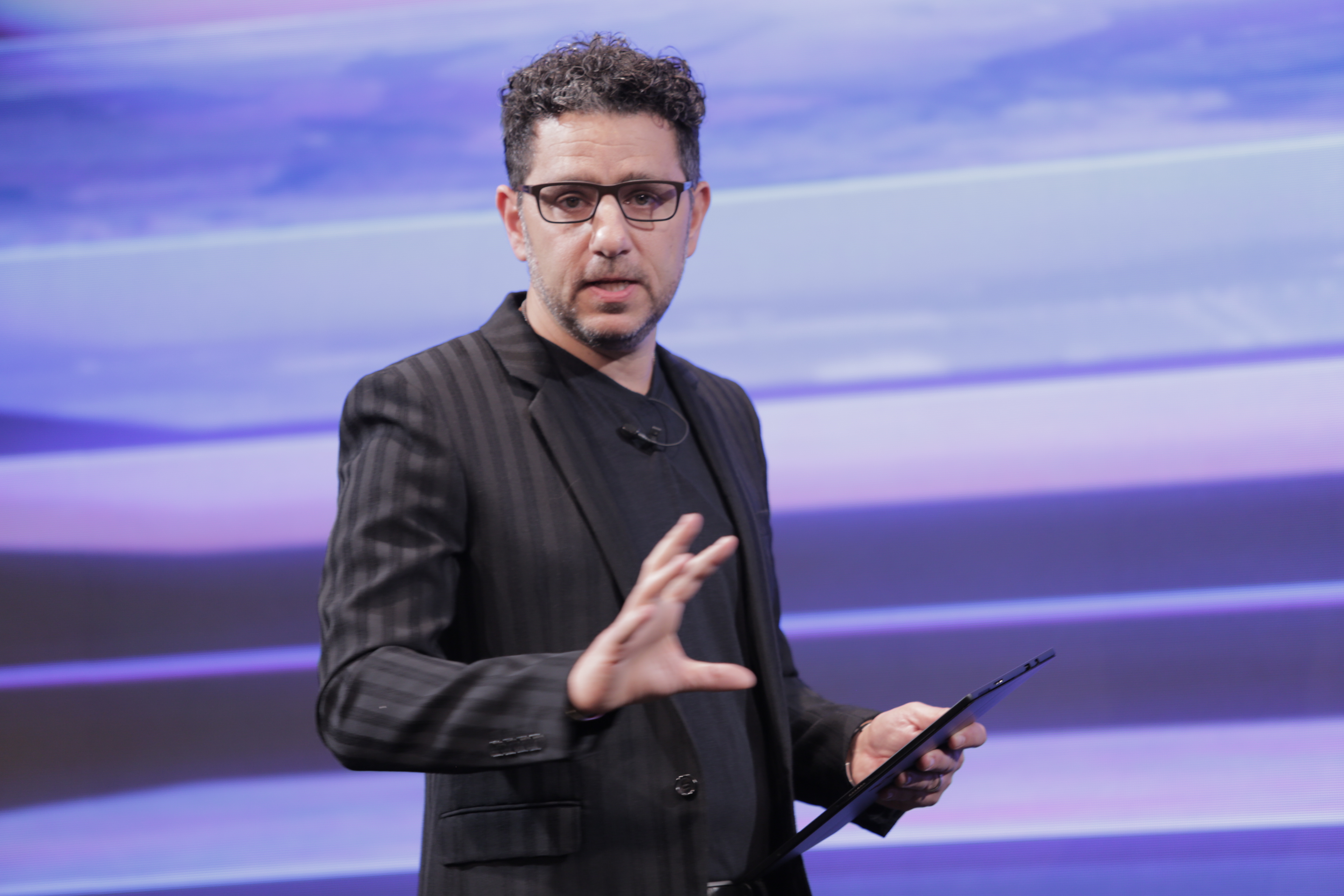
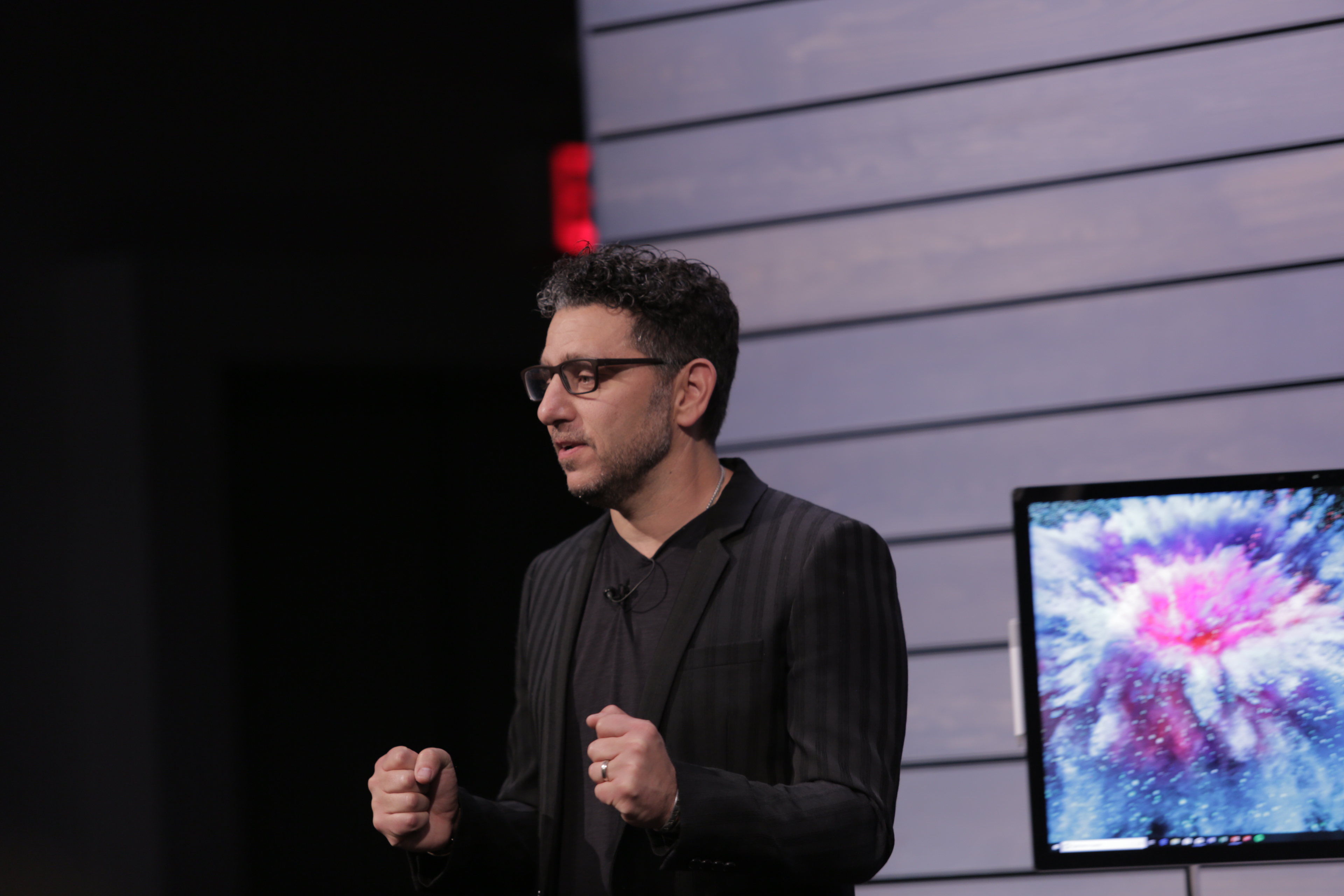
Product lead Panos Panay touched upon the keyboard, which is easily one of the device’s best features, particularly compared to the keyboard cases found on other Surface devices. Like the Pro, the new device now comes in a much slicker matte black. And, like the Pro, most of the key changes are inside.

The new Laptop is said to be 85 percent faster than its predecessor, thanks to an on-board 8th-gen Quad Core Intel processor. The battery also gets an impressive 14.5 hours, which should more than get you through that flight. That’s even more impressive because Microsoft is giving the laptop a brighter, thinner and higher-resolution display, too.

Pre-order for the device opens today, starting at $899. It will start shipping October 16.

02 Oct 2018

The Windows 10 October 2018 Update is now available

Microsoft today announced that the Windows 10 October 2018 update is now available. The company made the announcement at a small press event in New York, though it’s obviously no surprise that Microsoft decided to roll out the October update in the month that gave it its name.

As usual, these rollouts take a while. You can force the update now, but for those who want to wait, Microsoft will start the automatic updates on October 9.

Like most recent Windows updates, the October release isn’t going to blow you away with a new interface or crazy new features. Most of these updates now are incremental, but overall, the new release offers a number of interesting new features.

The most interesting of these is probably the new “Your Phone” app, which allows you to text from your PC using an Android phone that also runs Microsoft’s mobile companion app. In later iterations, that app will also sync notifications to your desktop, but for now, that’s not an option. There also are tools for continuing your workflow as you switch from your phone to PC (or vice versa). These features work for iOS users, too.

As far as syncing between devices goes, it’s worth noting that the update also will allow you to share your clipboard between PCs.

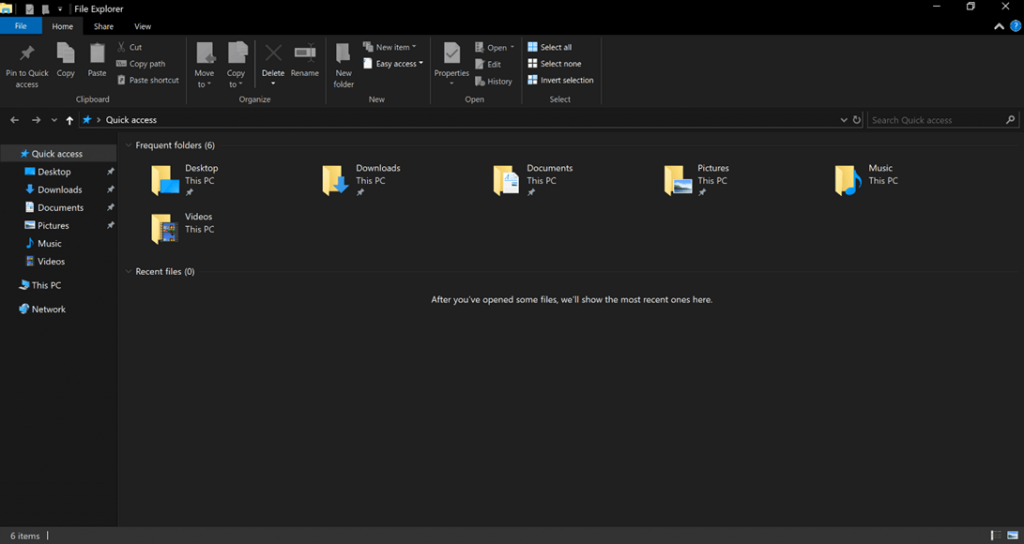
Since everybody likes a dark mode these days, the Windows 10 File Explorer now also includes a dark theme. There’s also a revamped search experience, as well as a new screenshot tool.

While the release includes plenty of other tweaks, both in terms of functionality and design, the most anticipated feature, Sets, didn’t make it into this release. Sets is probably the biggest change to the overall Windows user experience since the release of Windows 10, so maybe it’s no surprise that Microsoft is trying to perfect this. And perfection takes a while.

02 Oct 2018

This is the Surface Pro 6

Surprises? Later, perhaps. But for now, we’re getting pretty much what we expected out of today’s big Surface event — which is to say some refreshing of existing Surface products. First up is the latest version of the long-running Surface Pro.

As expected, the device looks pretty much exactly like its predecessor, save for a new coat of black paint. Microsoft Product lead Panos Panay noted that the product has a 99 percent consumer satisfaction rate by its count, which, perhaps, goes a way toward explaining why the product looks quite a bit like its predecessor.

The big changes are, as anticipated, inside. According to Panay, the device is 67 percent faster than its predecessor. Even more impressive, is the stated 13.5 hour battery life on the hardware. Microsoft also notes that the Pro 6 will have a 267ppi screen with the highest contrast ration available on a Surface Pro to date. It’ll support up to 16GB or RAM and an SSD with up to 1TB of storage.

Prices for the Pro 6 with a basic Core i5 processor will start at $999.


02 Oct 2018

VW fires jailed Audi CEO Rupert Stadler

VW AG has ended its contract with Rupert Stadler, removing the embattled executive as CEO and from the Audi and Volkswagen boards several months after he was arrested for his involvement in the cover-up of diesel emissions cheating at the company.

Stadler, who began working at Audi in 1990, is the latest executive at parent company Volkswagen AG to be ousted in the wake of the diesel emissions cheating scandal that erupted three years ago. The scandal has implicated numerous executives and several brands under VW Group, including Volkswagen, Audi and even Porsche.

The diesel emissions scandal broke in 2015 when it was revealed that Volkswagen Group’s so-called “Clean Diesel” vehicles had been fitted with software designed to cheat emissions tests.

Volkswagen fired its CEO Martin Winterkorn in 2015 for his connection to the scandal. Winterkorn was later charged with conspiracy and wire fraud in a U.S. court. Three years later, his replacement, Matthias Müller, was also removed as Volkswagen CEO and replaced with Herbert Diess.

Stadler was suspended as CEO following his arrest by German authorities in June in connection with a criminal investigation into the diesel emissions cheating. Stadler is still in jail.

Bram Schot has been acting as temporary CEO since Stadler’s arrest.

Here’s VW’s statement:

The supervisory boards of Volkswagen AG and AUDI AG have today consented to the conclusion of an agreement with Rupert Stadler on the termination of his offices as a member of the board of management of Volkswagen AG and chairman of the board of management of AUDI AG as well as of his service agreements. Mr. Stadler is leaving the companies with immediate effect and will no longer work for the Volkswagen Group. Mr. Stadler is doing so because, due to his ongoing pretrial detention, he is unable to fulfill his duties as a member of the board of management and wishes to concentrate on his defense. The contractual execution depends on the course and outcome of the criminal proceedings.

Stadler joined the company’s board in 2003. He was made chairman of Audi AG four years later. In 2010, Stadler was appointed to Volkswagen AG’s board.

02 Oct 2018

Tiger Global is in talks to invest in cryptocurrency unicorn Coinbase at $8B valuation

Days after reports emerged that Tiger Global had led the $245 million round for payments platform Stripe, the firm has set its sights on cryptocurrency trading platform Coinbase.

The six-year-old company is in negotiations with Tiger Global to raise up to $500 million at an $8 billion valuation, per Recode.

Coinbase declined to comment on the deal.

Coinbase was most recently valued at $1.6 billion following a $100 million round in August 2017, though the company had previously valued itself at $8 billion amid acquisitions talks with cryptocurrency startup Earn, which it paid $120 million for in April.

Capital from the upcoming deal may be used to buy out shareholders. San Francisco-based Coinbase, a leading digital currency exchange, is backed by Andreessen Horowitz, Ribbit Capital, Union Square Ventures, IVP, Spark Capital, Greylock Partners, Battery Ventures, Section 32, Draper Associates and several others. It’s raised $225 million in equity funding to date.

Tiger Global, for its part, is a hedge fund known for its crossover investments in emerging technology companies. The 16-year-old New York-based firm often writes sizeable checks in late-stage companies like Spotify, Ola and Flipkart. Lately, it’s also been busy writing smaller checks. In the last year, it’s led cannabis startup Green Bits’ $17 million Series A and participated in subscription billing and payment service Chargebee’s $18 million Series C.

According to PitchBook, Tiger Global has participated in 24 venture capital rounds so far in 2018.

This morning, Coinbase announced two new hires. The first is Jonathan Kellner, who joined as a managing director of its institutional coverage group. The former CEO of Instinet will lead institutional sales and support organizations and will focus on Coinbase’s effort to introduce cryptocurrency to hedge funds and other traditional institutional investors.

The second addition is Chris Dodds, who will join Coinbase’s board of directors. He currently serves on the board of Charles Schwab and is a senior advisor to The Carlyle Group.

Coinbase has made several additions to its c-suite this year as it enters a major growth phase and presumably preps for an IPO. Most recently, it brought on a former Fannie Mae exec Brian Brooks as its chief legal officer and LinkedIn’s Michael Li as its head of data.


02 Oct 2018

David Ulevitch is now a general partner at Andreessen Horowitz — a big get and the firm’s fourth new GP since June

David Ulevitch has had some strange dealings with investors over the years. Now, Ulevitch is himself one of them. The founder of OpenDNS, a company that sold to Cisco in 2016, is disclosing today that he has joined the venture firm Andreessen Horowitz (a16z) as its newest general partner. He is the fourth general partner to be announced by the firm since it brought aboard former federal prosecutor Katie Haun back in June.

Asked today what these new additions mean in terms of fundraising, the firm declined to say, but certainly, Ulevitch looks like a very smart hire. For one thing, he hustles. In fact, he was the general manager of Cisco’s security business until just yesterday, though he suggests that he’d been preparing to leave throughout the summer, including “talking with lots of people, figuring out how to get close to entrepreneurs and spending more time with the team here.”

Ulevitch has also been through some public ups and downs, which makes him relatable to other founders. In fact, I first met Ulevitch back in 2008, when I was writing a profile of internet pioneer Halsey Minor for a short-lived spin-off of Vanity Fair called Portfolio. Minor had co-founded the media company CNET before becoming an investor, and though he has an undeniable eye for talent, he was overspending wildly at the time in his personal life, which frustrated co-investors, as well as put the founders in his portfolio, including Ulevitch, in a precarious position.

It was an uncertain chapter for Ulevitch, whose popular company OpenDNS focused initially on consumers who wanted to block certain kinds of sites but later catered to enterprises, more of which had begun moving to “the cloud” and wanted to safely extend their service and content browsing policies to on-the-go employees. It also feels like a lifetime ago, suggests Ulevitch, whose sold the company for $635 million after raising less than $50 million altogether, including across a competitive funding that saw Sequoia Capital get involved with the company.

Interestingly, it was former Sequoia investor Michael Goguen — who was at the center of his own, separate drama a couple of years ago — who led the round. During a call today with Ulevitch, we couldn’t resist asking him how convinced he is that VCs are sane, let alone effective partners to founders. Laughing, he admitted to some “weird moments” in his career, but he also noted that he has been “able to work with great partners and board members” over the years, adding he was “always lucky to keep at arm’s length the stuff that people read about and you write about.”

Ulevitch sounds especially excited to work closely with Martin Casado, who previously co-founded the a16z-backed company Nicera (which sold to VMware in 2012), then joined a16z as a general partner in 2016. Casado has since led investments in an array of enterprise startups, including Yubico, a company behind a two-factor authentication key; the marketing activation platform ActionIQ; and the API marketplace RapidAPI.

Unsurprisingly, both paint a picture of a future that’s rife with opportunity for the two of them and the greater team, not to mention the entrepreneurs they hope to fund. Ulevitch observed on our call that there are currently four SaaS enterprise companies with valuations north of $100 billion: Salesforce, Adobe, Cisco, and Microsoft, saying that “there will be so many more of these. We’re really at the earliest innings.”

Casado, who also joined the call, said the same. “We’re starting to see enterprise mirror consumer companies in terms of having network effects and hypergrowth.” He pointed to Slack, which received one of its first checks from Andreessen Horowitz and is now valued by private investors at roughly $7 billion. He also pointed to GitHub, the popular Git-based code sharing and collaboration service that sold to Microsoft for $7.5 billion in stock four months ago, a company on which Andreessen Horowitz also made an early, and very big bet.

Said Casado of this “consumerization” of IT,  a “new generation of companies is following less of an enterprise go-to-market strategy and more of a consumer growth pattern.”

With the help of its growing team of investors, a16z is clearly aiming to be there as that playbook unfolds.

02 Oct 2018

Foursquare picks up $33 million Series F investment

Foursquare has today announced the partial close of a $33 million Series F financing, with $25 million already closed out and another $8 million inbound, according to the blog post.

The round was co-led by Simon Ventures and Naver Corp, with participation from Union Square Ventures, an existing investor.

Over the past four years, Foursquare has pivoted from a consumer-facing social application to an enterprise platform, giving brands, retailers and ad platforms a way to get accurate, location-based data about their customers and their conversion rates.

Foursquare CEO Jeff Glueck told TechCrunch that more than 90 percent of Foursquare’s revenue comes from the enterprise side of the business. Two of the company’s most popular products are Attribution and the Pilgrim SDK.

With Attribution, Foursquare allows retailers and publishers to effectively track the impact their media has on conversion at offline locations. Using a panel of 25 million, non-incentivized users, these brands and retailers can track their own impact, as well as make more informed campaign decisions using insights around foot traffic and visit history of certain demographics.

The Pilgrim SDK, on the other hand, allows brands and partners to deliver highly relevant notifications and other experiences to their own users by leveraging Foursquare’s troves of location data.

Foursquare customers include Tinder, AccuWeather, Spotify, Hilton, and iHeartMedia, and that doesn’t include the long list of brands — Uber, Apple, Microsoft, Samsung, and Twitter — whose platforms are powered by Foursquare location.

According to Glueck, one of Foursquare’s greatest advantages is that they can offer the same high-level capabilities as their competitors, such as Facebook and Google, while focusing solely on the value they’re delivering to partners.

“The success of Google or Facebook or Amazon makes them great companies but unreliable partners,” said Glueck. “The truth about these walled gardens is that they can change their terms and conditions on a whim. They’re not partner-oriented. They’re seeking domination. It’s important for an independent developer community to be able to partner with a company that has the same capabilities.”

Foursquare currently includes more than 100 million places in more than 150 countries on their platform, which powers apps that collectively serve more than 1 billion consumers.

This latest round, which increased the company’s valuation, brings Foursquare’s total funding to $240 million.