Year: 2018

16 Jul 2018

‘Serious concerns’ at FCC threaten to halt Sinclair-Tribune merger

The FCC has been under serious scrutiny by citizens, advocates, and politicians alike due to its laissez-faire attitude towards, in particular, the proposed Sinclair Broadcasting merger with Tribune. But the agency is showing some backbone today with a no-nonsense declaration that the merger can’t go through unless a few “serious concerns” are addressed. It’s not the outright disapproval many have recommended, but it’s better than an unconditional green light.

In a short memo posted to the agency’s site, FCC Chairman Ajit Pai explained that even under his notoriously (or blessedly, depending on your politics) deregulatory regime, the proposed deal is not acceptable as is. Here it is in full:

Based on a thorough review of the record, I have serious concerns about the Sinclair/Tribune transaction. The evidence we’ve received suggests that certain station divestitures that have been proposed to the FCC would allow Sinclair to control those stations in practice, even if not in name, in violation of the law. When the FCC confronts disputed issues like these, the Communications Act does not allow it to approve a transaction. Instead, the law requires the FCC to designate the transaction for a hearing in order to get to the bottom of those disputed issues. For these reasons, I have shared with my colleagues a draft order that would designate issues involving certain proposed divestitures for a hearing in front of an administrative law judge.

The issue is that the proposed Sinclair-Tribune merger would result in a company that controls a huge amount of TV stations — far more than is healthy for a single company. This was demonstrated effectively by a viral video demonstrated earlier this year showing news anchors at Sinclair stations reading the exact same script without acknowledging that it was under the direction of their owner. (Ironically, the script was regarding ethics and accountability in the media.)

In order to make the deal more palatable, Sinclair offered to divest itself of a number of stations. But these promises appear to have been “less than candid,” as former FCC counsel Gigi Sohn put it; “This transaction would place far too many free over-the-air broadcast stations and far too much power in the hands of one company,” she concluded.

Chairman Pai, surprisingly, appears to have come to the same conclusion. Perhaps Sinclair’s plans to puppeteer these stations were transparent, or perhaps there are too many eyes on the Commission right now to let something like this slide, but whatever the case, the merger can’t go forward without FCC approval — and now FCC approval won’t go forward without this hearing and revised divestiture plans.

This is a pleasant surprise for critics of the FCC who have repeatedly argued that the agency isn’t just soft on broadcasters and other big cable and internet businesses, but may be effectively in bed with them.

“As I have noted before, too many of this agency’s media policies have been custom built to support the business plans of Sinclair Broadcasting,” said Commissioner Rosenworcel in a statement accompanying and applauding the Chairman’s.  “With this hearing designation order, the agency will finally take a hard look at its proposed merger with Tribune. This is overdue and favoritism like this needs to end.”

The FCC’s multi-part “modernization” of rules governing media companies has contributed powerfully to the feeding frenzy of consolidation we’ve seen over the last couple years, and the Sinclair-Tribune merger is just one of many deals that watchdogs have warned about. But it seems that this one at least will get some consumer-positive checks in the near future.

16 Jul 2018

Instapaper is leaving Pinterest, two years after being acquired

Back in August of 2016, Pinterest acquired Instapaper, the read-it-later bookmarking service originally built by Marco Arment.

Just shy of two years later, Instapaper is going back to being independent.

In a blog post published this afternoon, the team clarifies that a new company called “Instant Paper, Inc.” has been formed to oversee Instapaper, and that it’ll largely be made up of the same folks who’ve worked on it since ~2013.

Don’t expect much to change, for better or worse — at least, not immediately. The company is waiting three weeks before officially transferring ownership, in order to “give [its] users fair notice about the change of control with respect to their personal information.”

The team doesn’t outline the reasoning for splitting away, but it has many users hoping its newly regained independence means it can become GDPR-compliant sooner than later. Instapaper shut off its services in Europe back in May so they could “make changes in light of [GDPR]”; two months later, the service remains offline in the EU.

Instapaper confirmed this afternoon that GDPR-compliance is still a goal:

16 Jul 2018

Apple emoji will soon include people with curly hair, white hair and superpowers

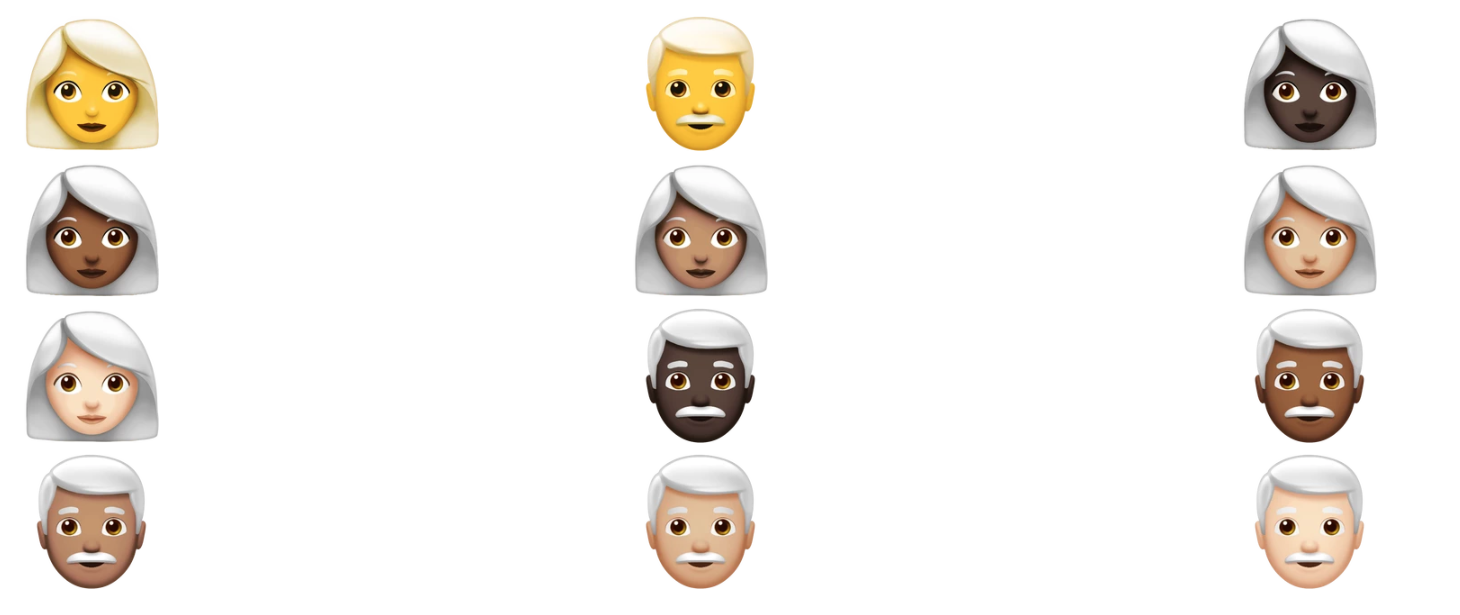
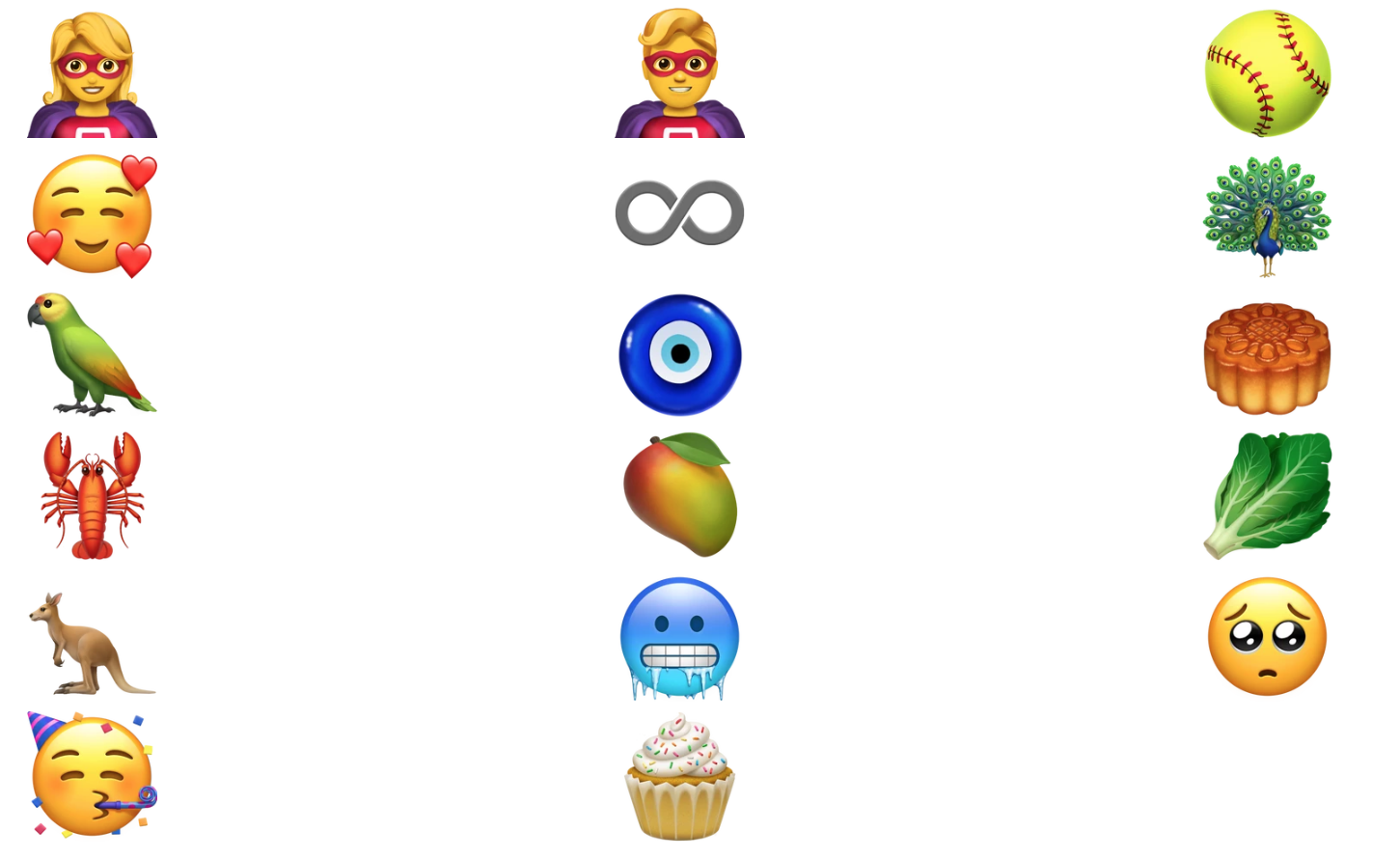
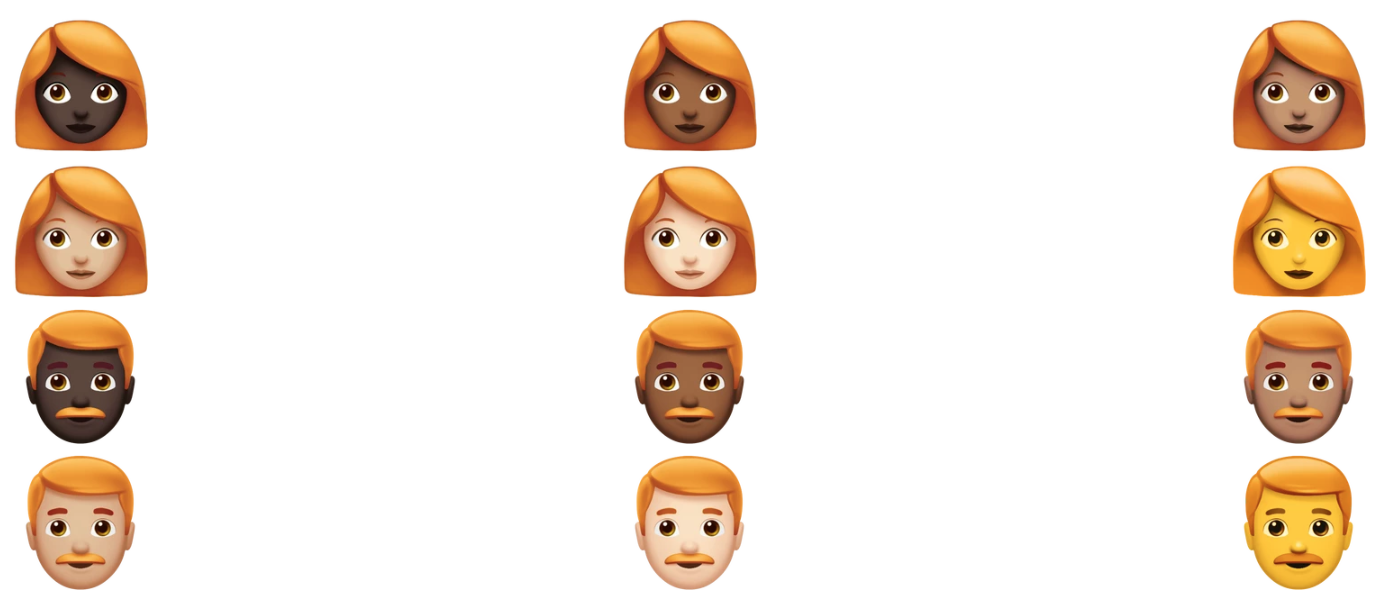
In honor of World Emoji Day (yes, that’s a thing), Apple is previewing some of its upcoming emoji. Later this year, Apple’s emoji set will feature people with a variety of hairstyles and colors, including curly hair, red hair and white hair. What you’re about to see are simply Apple’s take on emoji that were previously approved by the Unicode Consortium’s emoji subcommittee.

Folks with curly hair, rejoice!

Let’s hear it for the redheads


Like white on rice


No hair? No problem

Other fun emoji include a freezing face, peacock, mango, lobster, nazar amulet, superheroes and kangaroo.

Back in March, Apple proposed new emojis to represent people with disabilities in Unicode’s next batch of emoji. Then in May, Unicode announced some of the draft candidates for its next emoji release in Q1 2019 to include some of Apple’s proposed emoji, which featured a guide dog, an ear with a hearing aid and more. If you want to hear more about what goes into emoji approval, be sure to check out this interview with Jeremy Burge, vice-chair of the Unicode Emoji Subcommittee.


16 Jul 2018

Google Cloud’s LA region goes online

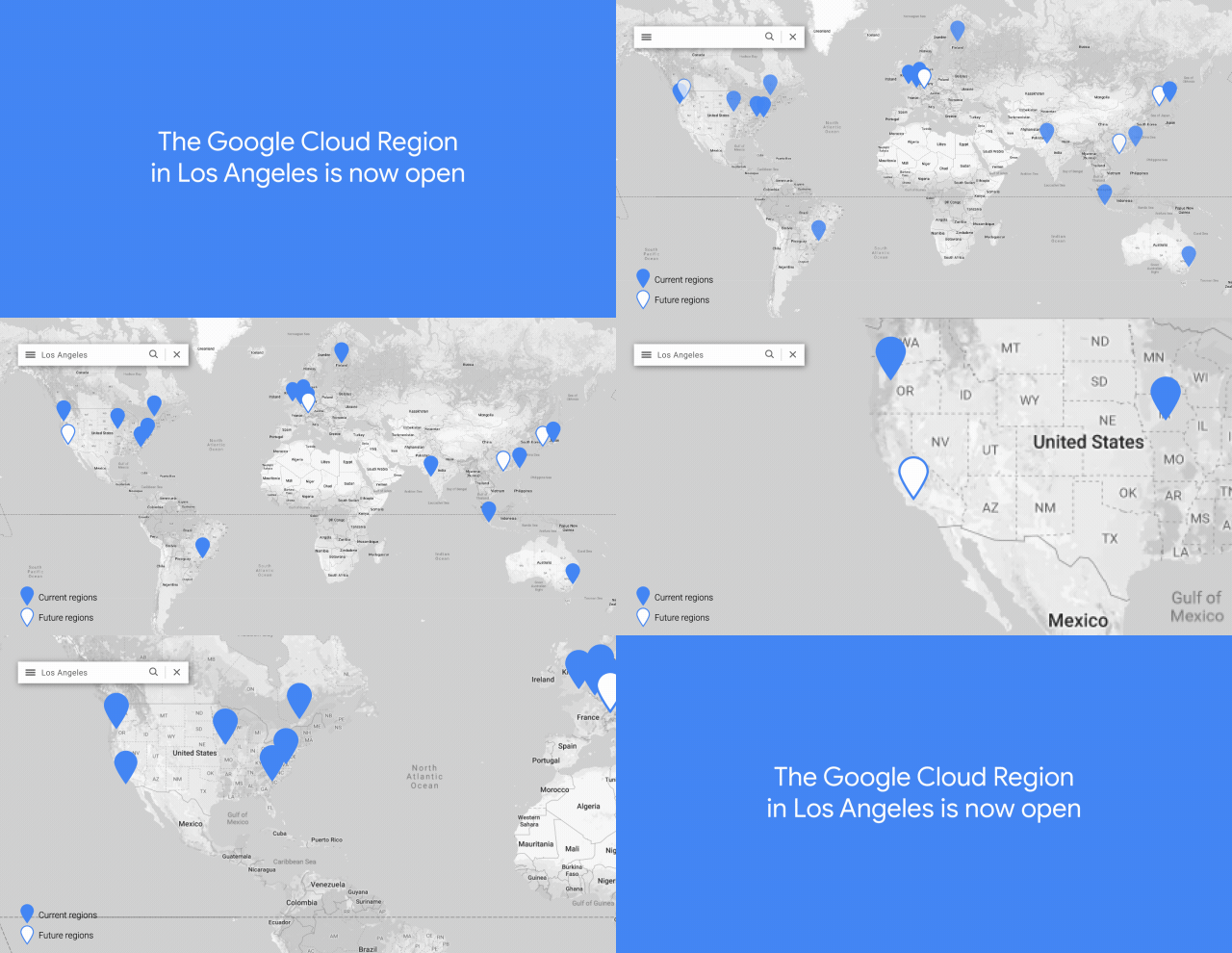
Google Cloud’s new region in Los Angeles is now online, the company announced today. This isn’t exactly a surprise, given that Google had previously announced a July launch for the region, but it’s a big step for Google, which now boasts five cloud regions in the United States. It was only three years ago that Google opened its second U.S. region and while it was slow to expand its physical cloud footprint, the company now features 17 regions around the world.

When it first announced this new region, Google positioned it as the ideal region for the entertainment industry. And while that’s surely true, I’m sure we’ll see plenty of other companies use this new region, which features three availability zones, to augment their existing deployments in Google’s other West Coast region in Oregon or as part of their overall global cloud strategy.

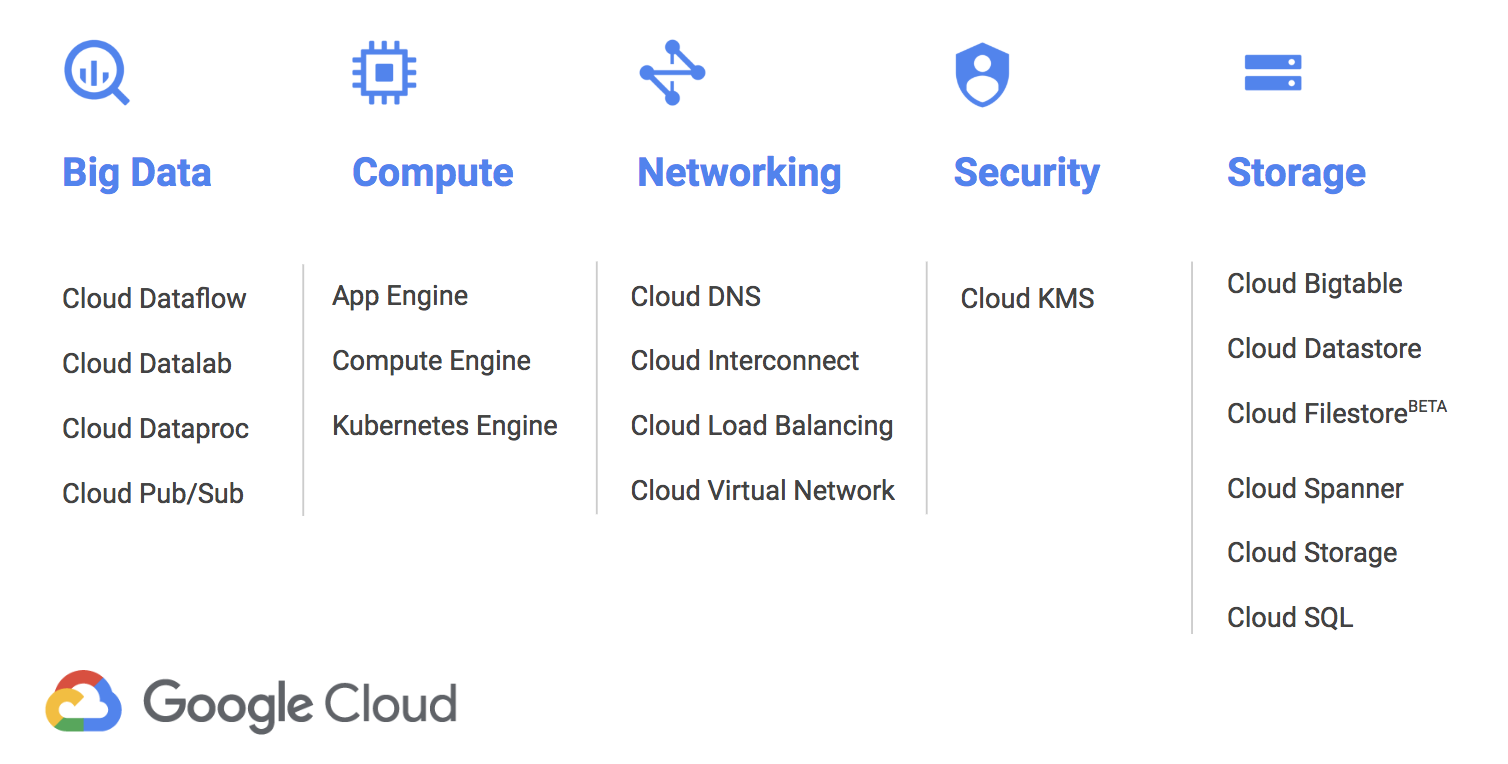
The new region is launching with all the core Google Cloud compute services like App Engine, Compute Engine and Kubernetes Engine, as well as all of Google’s standard database and file storage tools, including the recently launched NAS-like Cloud Filestore service. For businesses that have a physical presence close to L.A., Google also offers two dedicated interconnects to Equinix’s and CoreSite’s local LA1 data centers.

It’s worth nothing that Microsoft, which has long favored a strategy of quickly launching as many regions as possible, already offered its users a region in Southern California. AWS doesn’t currently have a presence in the area, though unlike Google, AWS does offer a region in Northern California.

16 Jul 2018

When In Rome is the first Alexa-powered board game

Years ago, in the heyday of home video, I played a boardgames that used VHS tapes and electronic parts to help spur the action along. From Candy Land VCR to Captain Power, game makers were doing the best they could with a new technology. Now, thanks to Alexa, they can try something even cooler – board games that talk back.

The first company to try this is Sensible Object. Their new game, When In Rome, is a family board game that pits two teams against each other in a race to travel the world. The game itself consists of a board and a few colored pieces and the real magic comes from Alexa. You start the game by enabling the When In Rome skill and then you start the game. Alexa then prompts you with questions as you tool around the board.

The rules are simple because Alexa does most of the work. The game describes how to set up the board and gets you started and then you just trigger with your voice it as you play.

The company’s first game, Beasts of Balance, was another clever hybrid of AR and real life board game action. Both games are a bit gimmicky and a bit high tech – you won’t be able to play these in a cozy beach house without Internet, for example – but it’s a fun departure from the norm.

Like the VCR games of yore, When In Rome depends on a new technology to find a new way to have fun. It’s a clever addition to the standard board game fare and our family had a good time playing it. While it’s not as timeless as a bit of Connect 4 or Risk, it’s a great addition to the boardgames shelf and a cool use of voice technology in gaming.

16 Jul 2018

Kapwing is Adobe for the meme generation

Need to resize a video for IGTV? Add subtitles for Twitter? Throw in sound effects for YouTube? Or collage it with other clips for the Instagram feed? Kapwing lets you do all that and more for free from a mobile browser or website. This scrappy new startup is building the vertical video era’s creative suite full of editing tools for every occasion.

Pronounced “Ka-pwing,” like the sound of a ricocheted bullet, the company was founded by two former Google Image Search staffers. Now after six months of quiet bootstrapping, it’s announcing a $1.7 million seed round led by Kleiner Perkins.

Kapwing hopes to rapidly adapt to shifting memescape and its fragmented media formats, seizing on opportunities like creators needing to turn their long-form landscape videos vertical for Instagram’s recently launched IGTV. The free version slaps a Kapwing.com watermark on all its exports for virality, but users can pay $20 a month to remove it.

While sites like Imgur and Imgflip offer lightweight tools for static memes and GIFs, “the tools and community for doing that for video are kinda inaccessible,” says co-founder and CEO Julia Enthoven. “You have something you install on your computer with fancy hardware. You should able to create and riff off of people,” even if you just have your phone, she tells me. Indeed, 100,000 users are already getting crafty with Kapwing.

“We want to make these really relevant trending formats so anyone can jump in,” Enthoven declares. “Down the line, we want to make a destination for consuming that content.”

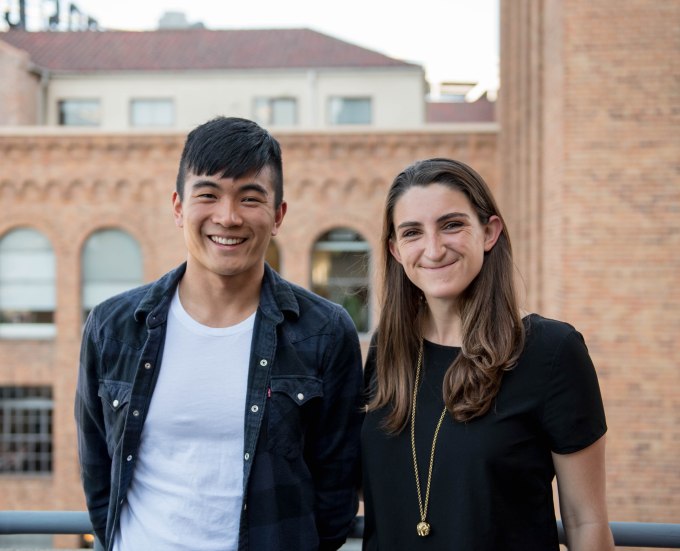
Kapwing co-founders Eric Lu and Julia Enthoven

Enthoven and Eric Lu both worked at Google Image Search in the lauded Associate Product Manager (APM) program that’s minted many future founders for companies like Quip, Asana and Polyvore. But after two years, they noticed a big gap in the creative ecosystem. Enthoven explains that “The idea came from using outdated tools for making the types of videos people want to make for social media — short-form, snackable video you record with your phone. It’s so difficult to make those kinds of videos in today’s editors.”

So the pair of 25-year-olds left in September to start Kapwing. They named it after their favorite sound effect from the Calvin & Hobbes comics when the make-believe tiger would deflect toy gunshots from his best pal. “It’s an onomatopoeia, and that’s sort of cool because video is all about movement and sound.”

After starting with a meme editor for slapping text above and below images, Kapwing saw a sudden growth spurt as creators raced to convert landscape videos for vertical IGTV. Now it has a wide range of tools, with more planned.

The current selection includes:

  • Meme Maker
  • Subtitles
  • Multi-Video Montage Maker
  • Video Collage
  • Video Filters
  • Image To Video Converter
  • Add Overlaid Text To Video
  • Add Music To Video With MP3 Uploads
  • Resize Video
  • Reverse Video
  • Loop Video
  • Trim Video
  • Mute Video
  • Stop Motion Maker
  • Sound Effects Maker

Kapwing definitely has some annoying shortcomings. There’s an 80mb limit on uploads, so don’t expect to be messing with much 4K videos or especially long clips. You can’t subtitle a GIF, and the meme maker flipped vertical photos sideways without warning. It also lacks some of the slick tools that Snapchat has developed, like a magic eraser for Photoshopping stuff out and a background changer, or the automatic themed video editing found in products like Google Photos.

The No. 1 thing it needs is a selective cropping tool. Instead of letting you manually move the vertical frame around inside a landscape video so you always catch the action, it just grabs the center. That left me staring at blank space between myself and an interview subject when I uploaded this burger robot startup video. It’s something apps like RotateNFlip and Flixup already offer. Hopefully the funding that also comes from Shasta, Shrug Capital, Sinai, Village Global, and ZhenFund will let it tackle some of these troubles.

Beyond meme-loving teens and semi-pro creators, Kapwing has found an audience amongst school teachers. The simplicity and onscreen instructions make it well-suited for young students, and it works on Chromebooks because there’s no need to download software.

The paid version has found some traction with content marketers and sponsored creators who don’t want a distracting watermark included. That business model is always in danger of encroachment from free tools, though, so Kapwing hopes to also become a place to view the meme content it exports. That network model is more defensible if it gains a big enough audience, and could be monetized with ads. Though it will put it in competition with Imgur, Reddit and the big dogs like Instagram.

“We aspire to become a hub for consumption,” Enthoven concluded. “Consume, get an idea, and share with each other.”

16 Jul 2018

Fastly raises another $40 million before an IPO

Last round before the IPO. That’s how Fastly frames its new $40 million Series F round. It means that the company has raised $219 million over the past few years.

The funding round was led by Deutsche Telekom Capital Partners with participation from Sozo Ventures, Swisscom Ventures, and existing investors.

Fastly operates a content delivery network to speed up web requests. Let’s say you type nytimes.com in your browser. In the early days of the internet, your computer would send a request to one of The New York Times’ servers in a data center. The server would receive the request and send back the page to the reader.

But the web has grown immensely, and this kind of architecture is no longer sustainable. The New York Times use Fastly to cache its homepage, media and articles on Fastly’s servers. This way, when somebody types nytimes.com, Fastly already has the webpage on its servers and can send it directly. For some customers, it can represent as much as 90 percent of requests.

Scale and availability are one of the benefits of using a content delivery network. But speed is also another one. Even though the web is a digital platform, it’s very physical by nature. When you load a page on a server on the other side of the world, it’s going to take hundreds of milliseconds to get the page. Over time, this latency adds up and it feels like a sluggish experience.

Fastly has data centers and servers all around the world so that you can load content in less than 20 or 30 milliseconds. This is particularly important for Stripe or Ticketmaster as response time can greatly influence an e-commerce purchase.

Fastly’s platform also provides additional benefits, such as DDoS mitigation and web application firewall. One of the main challenges for the platform is being able to cache content as quickly as possible. Users upload photos and videos all the time, so it should be on Fastly’s servers within seconds.

The company has tripled its customer base over the past three years. It had a $100 million revenue run rate in 2017. Customers now include Reddit, GitHub, Stripe, Ticketmaster and Pinterest.

There are now 400 employees working for Fastly. It’s worth noting that women represent 42 percent of the executive team, and 65 percent of the engineering leads are women, people of color or LGBTQ (or the intersection of those categories). And if you haven’t read all the diversity reports from tech companies, those are great numbers.

16 Jul 2018

Skype 8.0 launches on desktop with HD video, and soon encryption & call recording

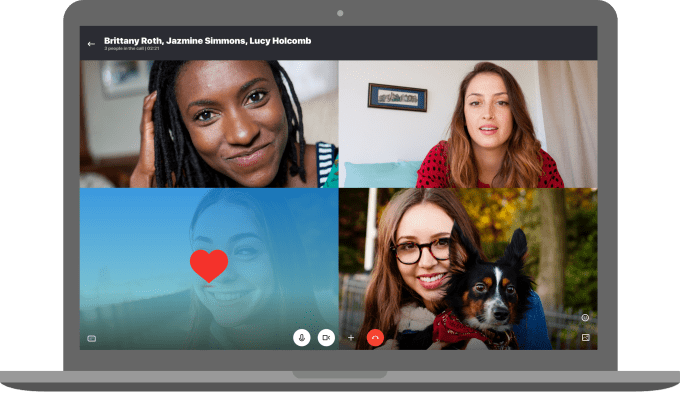
Skype’s redesign launched last year was met with mixed reviews, but the company is forging ahead by rolling out a number of its new features to other platforms, including the desktop. Microsoft today is launching Skype version 8.0 that will replace version 7.0 (aka Skype classic), the latter which will no longer function after September 1, 2018. The new release introduces a variety of features, including HD video and screen-sharing in calls, support for @mentions in chats, a chat media gallery, file and media sharing up to 300 MB, and more. It will also add several more features this summer, including most notably, supported for encrypted audio calls, texts, and file sharing as well as built-in call recording.

The 8.0 release follows on the update to Skype desktop that rolled out last fall, largely focusing on upgrading the visual elements of new design, like the color-coding in chat messages and “reaction” emojis. This release also included the chat media gallery and file sharing support, which are touted as new today, but may have already hit your desktop.

Although Skype still has some 300 million monthly users, it no longer appears to be growing. While once a must-have app for communication, Skype has faced increased competition over the years from the likes of Apple’s FaceTime, and other apps for texting and calls, like Messenger and WhatsApp, among others, plus new communication apps for business, like Slack. To better compete, Microsoft gave Skype a facelift starting last year, which introduced a number of social features seemingly aimed at a younger user base, including its own take on Stories.

Today’s desktop release focuses again on consumer-friendly features, with the added support of HD (1080px video) video calls which can include up to 24 people, as well as the Twitter-inspired @mentions.

Later this summer, Microsoft says Skype will add support for profile invites (to invite friends to join you on Skype), read receipts for messages, group links for chats and calls, and other features.

The most significant of the forthcoming additions includes an end-to-end encrypted experience where Skype audio calls, text messages, and shared files like images, audio and video, and secured with the industry standard Signal Protocol. Messages and notifications in these conversations will also be hidden in the chat list to keep the communication private.

And, at long last, Skype is adding built-in call recording. Many Skype users today use third-party add-ons in order to record calls – something that should have prompted Skype to react years ago by making this a native option. The calls will be recorded in the cloud and everyone in the call will be notified the call is being recorded, for privacy’s sake and for legal reasons. The recorded calls will additionally include everyone’s video and screen shares, Microsoft notes.

Skype 8.0 will also soon roll out to iPad users with features like quoted messages, personalized themes, chat list, @mentions, and more.

Skype version 7.0 will continue to work until the cut off date, Microsoft says. (If you’re not sure which version you’re on, here’s how to check on Windows, Mac and Linux desktops.) Afterwards, you’ll need to update to version 8.0 if you want to keep using Skype.

16 Jul 2018

Klang gets $8.95M for an MMO sim sitting atop Improbable’s dev platform

Berlin-based games studio Klang, which is building a massive multiplayer online simulation called Seed utilizing Improbable’s virtual world builder platform, has just bagged $8.95M in Series A funding to support development of the forthcoming title.

The funding is led by veteran European VC firm Northzone. It follows a seed raise for Seed, finalized in March 2018, and led by Makers Fund, with participation by firstminute capital, Neoteny, Mosaic Ventures, and Novator — bringing the total funding raised for the project to $13.95M.

The studio was founded in 2013, and originally based in Reykjavík, Iceland, before relocating to Berlin. Klang’s original backers include Greylock Partners, Joi Ito, and David Helgason, as well as original investors London Venture Partners.

The latest tranche of funding will be used to expand its dev team and for continued production on Seed which is in pre-alpha at this stage — with no release date announced yet.

Nor is there a confirmed pricing model. We understand the team is looking at a variety of ideas at this stage, such as tying the pricing to the costs of simulating the entities.

They have released the below teaser showing the pre-alpha build of the game — which is described as a persistent simulation where players are tasked with colonizing an alien planet, managing multiple characters in real-time and interacting with characters managed by other human players they encounter in the game space.

The persistent element refers to the game engine maintaining character activity after the player has logged off — supporting an unbroken simulation.

Klang touts its founders’ three decades of combined experience working on MMOs EVE Online and Dust 514, and now being rolled into designing and developing the large, player-driven world they’re building with Seed.

Meanwhile London-based Improbable bagged a whopping $502M for its virtual world builder SpatialOS just over a year ago. The dev platform lets developers design and build massively detailed environments — to offer what it bills as a new form of simulation on a massive scale — doing this by utilizing distributed cloud computing infrastructure and machine learning technology to run a swarm of hundreds of game engines so it can support a more expansive virtual world vs software running off of a single engine or server.

Northzone partner Paul Murphy, who is leading the investment in Klang, told us: “It is unusual to raise for a specific title, and we are for all intents and purposes investing in Klang as a studio. We are very excited about the team and the creative potential of the studio. But our investment thesis is based on looking for something that really stands out and is wildly ambitious over and above everything else that’s out there. That is how we feel about the potential of Seed as a simulation.”

16 Jul 2018

Netflix experiments with promoting its shows on the login screen

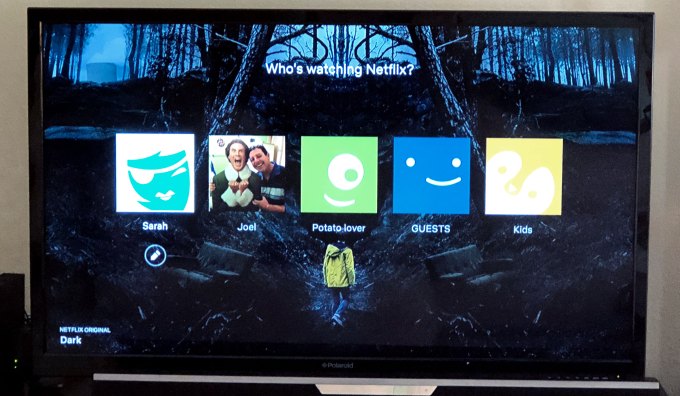
Netflix is testing a new way to promote its original shows – right on the login screen. A company spokesperson confirmed the streaming service is currently experimenting with a different login screen experience which replaces the black background behind users’ names and profile thumbnails with full-screen photos promoting a Netflix Original series or special, like “BoJack Horseman,” “Orange is the New Black,” “Dark,” “My Next Guest…”, “13 Reasons Why,” and several others.

We first noticed the change on a TV connected to a Roku media player and on a Fire TV, but Netflix says the test is running “for TV,” which means those on other TV platforms may see the promoted shows as well. (Our Roku TV, however, had the same black background on the login screen, we should note.)

The promoted shows aren’t necessarily those Netflix thinks you’d like – it’s just a rotating selection of popular originals.

Every time you return to the Netflix login screen, it will have refreshed the photo that’s displayed. After cycling in and out of the Netflix app several times on our TV, we found the image selection to be fairly random – sometimes the promoted show would repeat a couple of times before a new show hopped in to take its place.

Netflix will likely decide whether or not to move forward with the change to the login screen based on how well this new promotional effort works to actually increases viewership of its originals.

While it makes sense to better utilize this space, I’m not sold on having ads for adult-oriented shows appearing on the same login screen that’s used by a child. The ads themselves (so far) have not been inappropriate, but it doesn’t seem like a good fit for multi-person households and families. For example, I now have to explain to a school-ager why they can’t watch that funny-looking cartoon, “BoJack Horseman.” Meanwhile, when I was logging in to watch more grown-up fare, I saw an ad for the new “Trolls” kids’ show. Uh, okay. 

That said, this is still a much less intrusive way to advertise Netflix shows, compared with putting promos at the beginning of a show, like HBO does.

Netflix continually experiments with different ways to showcase its original programming, some of which eventually roll out to the wider user base – like the screensavers that launched last year, or the newer Stories-inspired mobile previews which arrived this spring.

The company is expected to spend up to $13 billion on original programing this year, so it makes sense that it wants to highlight top shows to users in the hopes of getting them hooked on content that they can’t get elsewhere. Retaining users is especially important given all the changes to the increasingly competitive streaming media space as of late, including the rise of live TV services, the AT&T-Time Warner merger, and Disney’s forthcoming Netflix competitor. Netflix is smart to double-down on its best asset: Originals.

The new test of promos on the login screen is only showing to a small percentage of users, Netflix says. That means you may not see them yourself, even if logging in to Netflix on a TV.

Image credits: Me. Photos are from my own Netflix account. My daughter likes to rename her account silly things, in case you’re wondering. Side note: I miss having real profile images instead of these stupid drawings. Why can’t we pick from characters on Netflix shows? That would be a fun way to promote the original series. After all, BuzzFeed has long since proven that people do like relating themselves to fictional characters, thanks to those “which character are you?” quizzes.