Year: 2018

29 May 2018

Acorns hits 3.5 million users, sees 100,000 sign-ups for retirement product in its first month

It looks like the investment service Acorns may turn into an oak faster than expected.

Billed as an automated investment manager for the people, Acorns is off to a blistering start with its new retirement account service picking up 100,000 accounts in its first month.

Unlike other investment services, Acorns takes spare change from transactions and rewards agreements with certain retailers to invest in a managed portfolio. The company’s initial “spare change” investment service cost $1 per month and its new retirement-focused account costs $2.

“If you’re an Acorns customer, within 60 seconds you can open up a retirement account,” says chief executive Noah Kerner.

Those fees ($2 per-month for the retirement account) are in place until a customer hits the $1 million investment threshold.

Kerner says that most of Acorns more than 3.5 million customers are investing roughly $50 to $60 per month into their core accounts, which is ideal for investors who aren’t particularly savvy about investing in the stock market.

“If someone put $10 into an Acorns account and that was all they ever did, it’s not a great deal,” says Kerner. “But that’s not what we’re trying to do. We’re trying to get people to save and invest.”

The average age of an Acorns customer is 32 years old with a median income falling somewhere between $50,000 and $60,000, Kerner said. And the accounts are coming from all over the country, rather than concentrated on the coasts like other automated investment managers, he says.

“The types of problems we’re trying to solve is that 70 percent of Americans don’t have a $1,000 emergency fund set up and 66 percent don’t have a dollar saved for retirement. Another 66 percent can’t pass a basic financial literacy test,” Kerner says.

And unlike other services, Kerner says that Acorns tries to be as transparent as possible about its pricing. “The way we think about pricing is from a subscription pricing perspective and to be really clear with our customers about exactly what they’re paying and exactly what they’re getting,” says Kerner.

Earlier this month, the company signed an agreement with BlackRock involving shared development resources for new product development in financial services.

“Acorns is a pioneer in creating innovative ways to engage investors in a mobile-first world. By deepening our understanding of how their customers use investment technologies, we can apply those learnings across BlackRock to evolve the products we build for our distribution partners,” said Rob Goldstein, BlackRock’s Chief Operating Officer, in a statement.

Financial services and investment apps continue to proliferate driven by a booming stock market, low interest rates and the rise of cryptocurrency speculation. While other companies have moved aggressively to incorporate more tools to encourage speculation, Acorns has taken the opposite approach.

The company emphasizes savings and portfolio diversification rather than day trading, margin trading or betting on the latest token offering from an unknown company.

This approach may actually prove more beneficial for the company’s customers in the long term. Kerner admonishes that customers should be as concerned about free trading services on the market as they are (arguably) about the free services they’re receiving from social networks, repeating that if a customer isn’t paying for a product, then they likely are the product.


29 May 2018

Acorns hits 3.5 million users, sees 100,000 sign-ups for retirement product in its first month

It looks like the investment service Acorns may turn into an oak faster than expected.

Billed as an automated investment manager for the people, Acorns is off to a blistering start with its new retirement account service picking up 100,000 accounts in its first month.

Unlike other investment services, Acorns takes spare change from transactions and rewards agreements with certain retailers to invest in a managed portfolio. The company’s initial “spare change” investment service cost $1 per month and its new retirement-focused account costs $2.

“If you’re an Acorns customer, within 60 seconds you can open up a retirement account,” says chief executive Noah Kerner.

Those fees ($2 per-month for the retirement account) are in place until a customer hits the $1 million investment threshold.

Kerner says that most of Acorns more than 3.5 million customers are investing roughly $50 to $60 per month into their core accounts, which is ideal for investors who aren’t particularly savvy about investing in the stock market.

“If someone put $10 into an Acorns account and that was all they ever did, it’s not a great deal,” says Kerner. “But that’s not what we’re trying to do. We’re trying to get people to save and invest.”

The average age of an Acorns customer is 32 years old with a median income falling somewhere between $50,000 and $60,000, Kerner said. And the accounts are coming from all over the country, rather than concentrated on the coasts like other automated investment managers, he says.

“The types of problems we’re trying to solve is that 70 percent of Americans don’t have a $1,000 emergency fund set up and 66 percent don’t have a dollar saved for retirement. Another 66 percent can’t pass a basic financial literacy test,” Kerner says.

And unlike other services, Kerner says that Acorns tries to be as transparent as possible about its pricing. “The way we think about pricing is from a subscription pricing perspective and to be really clear with our customers about exactly what they’re paying and exactly what they’re getting,” says Kerner.

Earlier this month, the company signed an agreement with BlackRock involving shared development resources for new product development in financial services.

“Acorns is a pioneer in creating innovative ways to engage investors in a mobile-first world. By deepening our understanding of how their customers use investment technologies, we can apply those learnings across BlackRock to evolve the products we build for our distribution partners,” said Rob Goldstein, BlackRock’s Chief Operating Officer, in a statement.

Financial services and investment apps continue to proliferate driven by a booming stock market, low interest rates and the rise of cryptocurrency speculation. While other companies have moved aggressively to incorporate more tools to encourage speculation, Acorns has taken the opposite approach.

The company emphasizes savings and portfolio diversification rather than day trading, margin trading or betting on the latest token offering from an unknown company.

This approach may actually prove more beneficial for the company’s customers in the long term. Kerner admonishes that customers should be as concerned about free trading services on the market as they are (arguably) about the free services they’re receiving from social networks, repeating that if a customer isn’t paying for a product, then they likely are the product.
29 May 2018

This is the first look at Nvidia’s wild new 750,000 sq ft building

Nvidia is preparing a new, massive building in Santa Clara, CA and this is it. Called Voyager, it will be larger than the building Nvidia just finished constructing by 250,000 square feet. And just like the other building, Endeavor, Voyager will share the same wild, distinctly Nvidia design.

Nvidia opened the first building, Endeavor, in 2017 and it feels like if a person could go into an Nvidia GPU. There’s green and sharp angles everywhere. Triangle skylights pepper the roof, which is also a triangle. It’s just two stories due to local zoning laws and it appears the new building will following much of the same trends.

Voyager will be 750,000 square feet and situated next to the Endeavor in Santa Clara. This puts the combined buildings’ square-footage at 1.25 million, which is a little less than half of Apple’s new HQ in Cupertino. Nvidia tells me the company is still planning the building’s staffing but expects the building will house its growing engineer teams. The company has 11,500 employees around the world with 5,000 in Santa Clara.

Nvidia is using Gensler to design the building and it will be constructed by Devcon, the same companies tapped for the first building. Construction is expected to start next month and take up to three and a half years.

I asked Nvidia why these buildings are named after notable spacecraft. The response is interesting. Endeavor and Voyager have the initial sounds of “En” and “V”, hence the initial sounds of Nvidia, while the names also suggest a sense of pushing frontiers. Cheesy? A bit, but still clever and I’ll buy it.

29 May 2018

This is the first look at Nvidia’s wild new 750,000 sq ft building

Nvidia is preparing a new, massive building in Santa Clara, CA and this is it. Called Voyager, it will be larger than the building Nvidia just finished constructing by 250,000 square feet. And just like the other building, Endeavor, Voyager will share the same wild, distinctly Nvidia design.

Nvidia opened the first building, Endeavor, in 2017 and it feels like if a person could go into an Nvidia GPU. There’s green and sharp angles everywhere. Triangle skylights pepper the roof, which is also a triangle. It’s just two stories due to local zoning laws and it appears the new building will following much of the same trends.

Voyager will be 750,000 square feet and situated next to the Endeavor in Santa Clara. This puts the combined buildings’ square-footage at 1.25 million, which is a little less than half of Apple’s new HQ in Cupertino. Nvidia tells me the company is still planning the building’s staffing but expects the building will house its growing engineer teams. The company has 11,500 employees around the world with 5,000 in Santa Clara.

Nvidia is using Gensler to design the building and it will be constructed by Devcon, the same companies tapped for the first building. Construction is expected to start next month and take up to three and a half years.

I asked Nvidia why these buildings are named after notable spacecraft. The response is interesting. Endeavor and Voyager have the initial sounds of “En” and “V”, hence the initial sounds of Nvidia, while the names also suggest a sense of pushing frontiers. Cheesy? A bit, but still clever and I’ll buy it.

29 May 2018

Apple’s HomePod is coming to Canada, France and Germany June 18

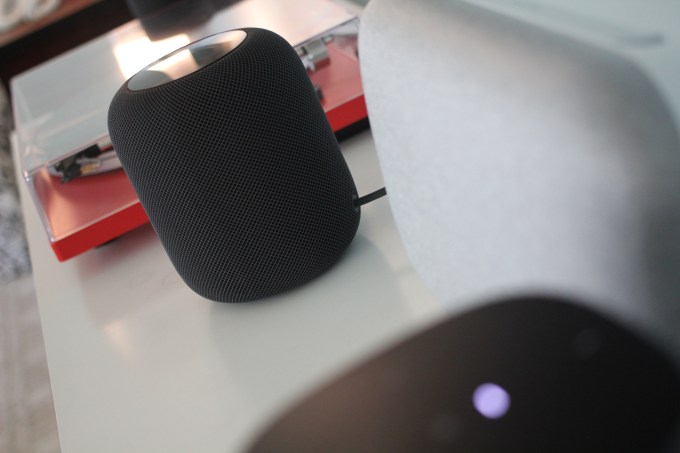
Buried amid the flurry of iOS 11.4 news issued by Apple today is one key piece of hardware news: the company’s high-end smart speaker will be arriving in a number of additional key markets next month. After hitting stores in February here in the States, the HomePod will be arriving in Canada, France and Germany on June 18. That brings the Siri-powered smart speaker’s availability up to half-a-dozen countries, including the U.K. and Australia.

The HomePod’s reception has been something of a mixed bag since launch. Apple’s been almost universally praised for the small speaker’s sound quality, but pricing and limited Siri functionality have left many users looking to other options in a category currently dominated by the likes Amazon and Google.  Apple hasn’t addressed sales figures to this point, but third-party reports have been pretty lack laster, thus far.

Of course, today’s iOS update brings some good news for HomePod owners — and should make the device a bit more well-rounded, so to speak. The long awaited addition of stereo pairing means you can buy not one, but two, of the $349 devices for your living, with each one managing a different stereo channel. AirPlay 2, meanwhile, brings some welcome upgrades for multi-room streaming through iOS — though the feature is set to be compatible with devices from a wide range of third-party manufacturers.

No word yet on how much the HomePod will run in its new countries.

29 May 2018

AirPlay 2 and HomePod stereo pairing arrive with iOS 11.4

iOS 11.4 arrives today, and with it, a bunch of welcome upgrades. The biggest updates here are, unsurprisingly, on the streaming media front, including the arrival of AirPlay 2, and the long awaited ability to pair up two HomePods for some stereo music living room listening.

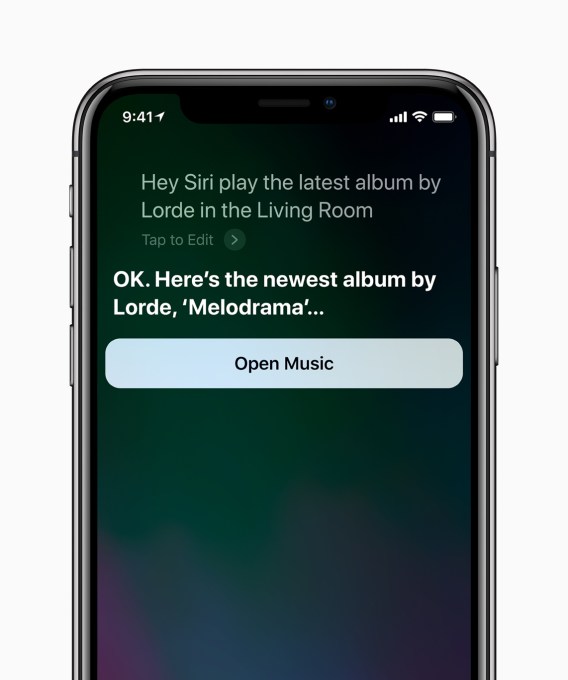
Among other things, AirPlay 2 brings with it improved multi-room audio, so users can seamlessly move songs from one room to the next or just play the same music in all rooms at once on any iOS device, Apple TV or HomePod, via Siri. You can also play different music in every room, with requests like “Hey Siri, play Crowded House in the kitchen,” which should be a nice addition for families.

There are also a number of third party manufacturers on board for AirPlay 2, meaning you’ll be able to use Siri to control music on speakers from some top names, including,  Bang & Olufsen, Bluesound, Bose, Bowers & Wilkins, Denon, Libratone, Marantz, Marshall, Naim, Pioneer and Sonos. Of course, from the sound of things, the system, naturally, works best with Apple’s own smart speaker.

The other big addition is the ability to pair HomePods. It’s something that Apple’s been promising since the early days of the smart speaker, and now it’s finally available as a free software update — for those who can afford to shell out for two $349 speakers, that is.

Once paired, the speakers rely on the A8 chip to sync and split the left and right stereo channels between the two devices. The speakers will recognize one another during setup and ask the user whether they want to form a stereo pair.

Speaking of the HomePod, the company also announced this morning that its smart speaker will be available in Canada, France and Germany on June 18.

29 May 2018

Meet Super Anthony, the fighting robot that lands mighty blows

If you’ve always wanted recreate the fighting scenes in Big Hero 6 with your own little fighting robots, now is your chance. Super Anthony is a rocking, socking robot that can punch, kick, roll, and jump and has enough torque to knock any other little robot off its little robot legs.

Super Anthony costs $1,299 for early birds and consists of a little frame 14 inches high and a set of 45 kg per servo punch force motors. The system is controlled via a standard game controller or phone app and it is “wear resistant” so you can keep fighting. This particular model won a straight-line walking competition so you know he has great legs.

“Super Anthony has a customized 15-axis crafted structure that provides intuitive control for full freedom of mobility. He can fight more swiftly and accurately than other robots,” the creators write.

The robot is shipping on November 2018 and it looks to be an interesting little opponent. While you probably need a few Super Anthonys to get a real fight going – a multi-pack costs $5,199 – you can still have fun and experiment with a single robot until you and your wacky friends invent nanobot technology that eventually kills your brother but lets you learn about teamwork along the way.

29 May 2018

US announces timeline for 25% tariff on Chinese tech products

After significant back-and-forth over the past few months, the White House intends to follow through with a pledge to place tariffs on imported Chinese technology goods while also tightening restrictions on investments by Chinese firms into American companies.

In a statement posted by the White House this morning, the administration said that it would impose a 25 percent tariff on $50 billion of Chinese high-tech goods “containing industrially significant technology.” That follows the conclusion of the U.S. Trade Representative’s Section 301 investigation into China’s industrial and intellectual property policies. What goods will be included in the tariff policy has been up for debate, but the final list will be released on June 15th. This package of tariffs is different than a separate package of tariffs focused on steel and aluminum production announced earlier this year.

The regulations around investment restrictions by Chinese companies will be announced at the end of June. The administration will also continue to litigate a case at the World Trade Organization over intellectual property protections.

All of these announcements should be taken with a shaker’s worth of salt though, since these are just the latest cards being played in a series of interconnected negotiations both internal to the White House and external with the Chinese government.

Internally, the White House has been riven with differences over how aggressively to prosecute the Chinese over its industry practices, with financiers like Treasury Secretary Steven Mnuchin taking a more flexible line while others like U.S. Trade Representative Robert Lighthizer and Director of the White House National Trade Council Peter Navarro have pushed for a much more aggressive approach. As different actors curry favor with President Donald Trump, their respective policies seem to appear and disappear.

Externally, the U.S. and China are engaged in a protracted multi-dimensional negotiation over the status of trade between the two countries. That includes both the approval of Qualcomm’s merger with NXP from the U.S. side, as well as re-authorizing a tech export license to China’s telecommunications manufacturer ZTE on the Chinese side. Expect more announcements and counter-announcements to come in the coming weeks as these negotiations continue.

For tech companies and startups, the uncertainty and lack of clarity around these tariff policies is difficult to manage. Product road maps and supply chains are being reconsidered as each new policy gets announced, making it difficult to manage future launches. While no one wants a tariff in the tech industry, clarity would certainly make any tariff much easier to stomach.

Even more challenging is the looming deadline for the announcement of investment restrictions. Given that venture capital rounds generally take several weeks to close because of the due diligence process, and the deadline for the announcement of these new investment restrictions is at the end of June, Silicon Valley founders should be hesitant to accept Chinese VC dollars while they await regulatory certainty from Washington.

I’ve written before that the national security implications of Chinese venture capitalists are overblown, but ultimately, the administration is going to have to develop a rule, and until more information is provided, any investment from a Chinese-connected firm could potentially be cut off at the last minute. Expect more developments on all of these policies as U.S. and Chinese negotiators continue hashing out a deal around trade.

29 May 2018

Apple is releasing iOS 11.4 with support for Messages in iCloud, AirPlay 2 and more

Apple this afternoon will officially release the latest version of its iOS software for your iPhone and iPad, iOS 11.4, which at last adds support for Messages in iCloud, along with other new features, including most notably, AirPlay 2 and an update that allows two HomePod speakers to work together as a stereo pair.

Messages in iCloud was first announced a year ago at WWDC 2017 as a way of keeping conversations up-to-date across all your Apple devices, including iPhone, iPad, Apple Watch and Mac. Its introduction means you’ll now be able to access your entire Messages history when you set up a new Apple device, and, when you delete a message from one device, that change syncs to all your devices.

In addition to the benefit of being able to access your entire conversation history, Messages in iCloud will be especially helpful to those who tend to save their all their conversations, but have a device without a lot of storage.

Typically, this has led to those conversations taking up a sizable amount of space – sometimes even gigabytes of storage, thanks to all the photos and attachments that are shared across iMessage these days. With Messages in iCloud, however, everything – including attachments – are stored in iCloud, which frees up local storage space for other things – like music downloads, videos, podcasts, books and apps, for example.

The messages are also end-to-end encrypted for security purposes. They’re protected with a key derived from information unique to the device, combined with the device passcode – which only the device owner should know. That means no one else could access or read the data.

The Messages in iCloud feature had first appeared in early betas of iOS 11 last summer, but was later pulled before the iOS public release. It later popped up again in the iOS 11.3 beta, but it was unclear when Apple would launch it, given that it had been left out of earlier iOS releases, despite all the beta testing.

Today, the feature will roll out to all users, via iOS 11.4.

Also new in iOS 11.4 are features focused on media and entertainment, including the launch of AirPlay 2 and support stereo pair for HomePod.

AirPlay 2 allows you to stream your music or podcasts in your home to different devices, all in-sync. You can play music in any room from any room, move music from one room to another, or play the same song everywhere using an iOS device, HomePod, Apple TV, or by asking Siri. For example, you could say, “Hey Siri, play jazz in the kitchen,” while continuing to have different music played in another room. You can also adjust the volume across all devices (“Hey Siri, turn the volume up everyone”), or play or stop music across devices. 

A number of speaker manufacturers are already committing to support AirPlay 2, including Bang & Olufsen, Bluesound, Bose, Bowers & Wilkins, Denon, Libratone, Marantz, Marshall, Naim, Pioneer and Sonos.

The previously announced support for HomePod stereo pairs, meanwhile, lets you add a second HomePod to a room and create a stereo pair which play left and right channel content separately. The HomePod devices will automatically detect and balance with each other, and detect their place in the room in order to offer a better sound.

Apple has been positioning its speaker to better compete with more high-end audio systems, like Sonos or Bose. Stereo pair support will allow it to better compete on that front, but device sales could be held back by those who prefer Amazon’s Alexa assistant, which ships on the Sonos One, to Apple’s Siri.

HomePod is also arriving in new markets beyond the U.S., U.K. and Australia with a June 18 launch in Canada, France and Germany.

Calendar support is also arriving for HomePod with iOS 11.4, along with the usual bug fixes and performance tweaks. However, calendar support won’t arrive in Canada, France and Germany until later in the year.

You can check for the iOS update from the Settings app, under “General –> Software Update.” HomePod owners can update from the Home app. The update is expected to arrive at 10 AM PT.

29 May 2018

Zipcar plans to roll out an all-electric fleet of over 300 Volkswagens in London

Zipcar is rolling out a fleet of 300 Volkswagen e-Golfs in London this year — in what the company is touting as the largest rollout of electric cars in a single English city.

Details from the company are still sketchy, but Zipcar said that the first electric vehicles will be available over the summer, with more hitting city streets throughout the remainder of the year.

Zipcar expects the fleet to top out at 325 by the end of the year.

The Boston -based company is offering those new eGolfs under its Flex service, which allows customers to pick up cars and drop them off anywhere in London. They’re accessible via the Zipcar app, the company said.

“With over 200,000 Zipcar members now in London, we are already seeing Londoners embracing car sharing rather than car owning in growing numbers. If we are to achieve healthier, cleaner streets, as set out in the Mayor of London’s latest Transport Strategy, this change away from car ownership and towards car access is essential,” said Zipcar’s UK general manager Jonathan Hampson, in a statement.

For Zipcar’s partner Volkswagen, the deal is a way to burnish the company’s now-tarnished reputation in the wake of the diesel emissions scandal that has cost the company roughly $25 billion billions and seen the company’s former chief executive indicted.

“This is an exciting step for Volkswagen. Thousands of Zipcar members will experience electric driving, perhaps for the first time, and we know they will love the functionality and ease of use that the all-electric e-Golf provides,” said Alison Jones, managing director of Volkswagen UK. “Inner-city residents are looking for alternatives to car ownership and this development of the relationship between Volkswagen and Zipcar offers the best of both worlds: on-demand driving and zero emission motoring across the UK’s capital.”