Year: 2018

30 Apr 2018

Walmart retreats from its UK Asda business to hone its focus on competing with Amazon

Walmart’s strategy to get itself fighting fit against Amazon saw one more development today.

This morning, UK supermarket chain Sainsbury’s announced a deal with Walmart to buy a majority stake in Asda, Walmart’s wholly-owned UK subsidiary. The deal values Asda at £7.3 billion ($10 billion), and if it closes will net Walmart £2.975 billion ($4 billion) in cash, a 42 percent share of the combined business as a “long-term shareholder”, and 29.9 percent voting rights in the combined entity, which will include 2,800 Sainsbury’s, Asda and Argos stores and 330,000 employees in the country.

Walmart also today disclosed that it will also recognize a non-cash loss of approximately $2 billion, “based on the current value of shares to be received and current foreign exchange rates.” (The pound and the UK economy have been having a hard time since the Brexit referendum.)

The news underscores how Walmart, off the back of a challenging quarter of e-commerce sales in the crucial holiday period (news that shook investors enough to send Walmart’s sock tumbling), is still trying to figure out the right mix of its business to fight off not just current retail competition, but also whatever form its competition might take in the future. At the moment, the one big common rival in both of those scenarios is Amazon.

In the US, Walmart has been trying out multiple routes for consumers to shop in new ways that address the kinds of options that the likes of Amazon now offers them. Targeting different geographies and demographics, Walmart has made big bets like its $3 billion acquisition of Jet.com; expanding its own new delivery services, and payment and return methods; as well as running pilots with various third parties like Postmates and DoorDash.

Internationally, it’s a different story. Walmart has a significantly reduced presence — its international business in aggregate is around one-third the size of its US business, $118 billion in FY2017 versus $318 billion. And with no clearly dominant position in any of its international markets, this has led the company to consider a variety of other options to figure out the best way forward.

“This proposed merger represents a unique and bold opportunity, consistent with our strategy of looking for new ways to drive international growth,” said Judith McKenna, president and CEO of Walmart International, in a statement. “Asda became part of Walmart nearly 20 years ago, and it is a great business and an important part of our portfolio, acting as a source of best practices, new ideas and talent for Walmart businesses around the world. We believe this combination will create a dynamic new retail player better positioned for even more success in a fast-changing and competitive UK market. It will unlock value for both customers and shareholders, but, at the same time, it’s the colleagues at Asda who make the difference, and this merger will provide them with broader opportunities within the retail group.  We are very much looking forward to working closely with Sainsbury’s to deliver the benefits of the combined business.”

“We believe the Combination offers a unique and exciting opportunity that benefits customers and colleagues,” said Doug McMillon, Walmart’s president and chief executive officer, in a statement. “As a company, we’ve benefited from doing business in the UK for many years, and we look forward to working closely with Sainsbury’s to deliver the benefits of the combination.”

The UK market is a prime example of the kind of scenario that hasn’t been working as well for Walmart as it could, and I think that the decision for Walmart to move back from its UK business has a strong link to the Amazon effect on the market.

In the UK, Asda is number-three in supermarket share, with a 15.6 percent stake, after leader Tesco and Sainsbury’s. All three of the leaders focus on traditional supermarket formats, and their modern-day UK twists. This translates to huge stores with multiple selections for each product ranging from bargain tiers to more expensive, premium varieties; sizeable chains of smaller convenience store-style locations; and online delivery of varying popularity.

The three tiers of operations may sound like diversification, but it’s actually very undiversified within its category, making for extreme price competition on products themselves (and that happens both before and after you buy: another smaller competitor, the online grocery delivery Ocado, regularly refunds me money, unprompted, on products it says are sold for less at competing stores).

On top of that, the big three have all been cannibalised in recent times — in part because of the insurgence of smaller, discount stores like Aldi and Lidl that forego brand names in favor of a smaller selection of often their own brands at a cheaper price (a little like Trader Joe’s, which is owned by Aldi, but often much less expensive); and in part because of a big shift to shopping online, an area where Amazon is hoping to only get bigger and is investing a lot. In addition to Amazon’s Whole Foods acquisition, in the UK specifically, this has included rumors that it’s eyed up the online-only shopping service Ocado, and it partners with another UK supermarket chain, Morrisons.

The fact that Amazon is now also branching into physical locations on the back of its strong online sales and corresponding logistics record is a major threat to Walmart and others that have built physical businesses first, and I think that Walmart has assessed all of the above and decided to throw in the towel on trying to tackle it on its own.

Notably, while Walmart on its own has been unable to reach a number-one position in the UK market, combined with Sainsbury’s (and as a minority partner) it will. Asda and Sainsbury’s would have a market share of over 31 percent (Sainsbury’s today has 15.8 percent; Asda 15.6 percent), putting it ahead of current leader Tesco (27.6 percent). That also means that the deal will face regulatory scrutiny, and might get suppered, or come with sell-off caveats, to go ahead.

The news about Asda in the UK comes amid a series of other chops and changes in Walmart’s business outside of its core US market.

In India, Walmart is inching closer to a deal to acquire a majority stake in online retailer Flipkart, the largest online retailer in the country that itself is feeling a lot of heat from Amazon.

Walmart’s $10 billion – $12 billion deal for Flipkart, which is now expected to be close at the end of June, would give the company a 51 percent stake of Flipkart, valuing the Indian online giant at about $18 billion. Amazon has made India — a fast-growing economy with strong consumer trends embracing digital commerce — a large priority in its international strategy, with plans to invest some xx billion into its efforts in the country.

Looking ahead, Walmart is also rumored to be looking at stepping away from Brazil.

It’s a long-term plan for the company. Two years ago, Walmart placed its e-commerce efforts in China into a venture with Alibaba’s JD.com as a partial retreat from that market.

After that Walmart seemed to put its efforts there on hold — its local Chinese corporate site ceasing to update after 2016 but not disappearing altogether. But more recently, just last month in fact, in a signal of how it hopes to continue to combine physical and digital retail — or online-to-offline, as its often called — Walmart opened a pared-down “high tech” supermarket. Here people can shop for a select number of food and other items, as well as browse for these and many more to buy online on JD Daojia (the JD venture) while in-store, and have them delivered.

The latest store in China, and Walmart’s approach there, could be an interesting template for what we might expect in the UK if its sale gets the green light from regulators. Sainsbury’s also owns Argos, a retailer that has essentially been built on the catalog and online sales model: there is no large-presence retail floor, and instead, people order items — either at a counter in the store itself, or online — and either have them delivered or pick them up at another counter in the shop itself. Could we see a scenario of similar “high-tech” supermarkets open in the UK, where the Asda brand is used in a similar turn with subsequently greatly reduced retail footprints?
 

30 Apr 2018

Coinbase CTO Balaji Srinivasan joins the speakers at TechCrunch’s first blockchain event

Boom, boom, boom! We’re announcing another big name for our upcoming blockchain event in Zug, Switzerland, on July 6 after Coinbase CTO Balaji Srinivasan joined the line-up.

The event — TC: Sessions Blockchain — will be TechCrunch’s first show dedicated to blockchain, it takes place in the world’s “Crypto Valley” and we’ll be joined by a host of top names. Some of those include Ethereum creator Vitalik ButerinRoham Gharegozlou, the founder of smash-hit blockchain game CryptoKittiesBrian Behlendorf, executive director of the Hyperledger Project, and OmiseGo CEO Jun Hasegawa.

Don’t miss it! Tickets are priced at 495 Swiss Francs — or around $500 — and they’re available from the event website here.

Fresh from announcing Buterin’s participation, we’re excited to host Srinivasan, who is another massively-respected thinker and visionary in the blockchain space.

Srinivasan became the first-ever CEO at Coinbase, the U.S. crypto giant that is now reportedly valued as high as $8 billion, in April after it bought Earn.com, where he had been CEO, in a deal priced at over $100 million.

Beyond the day job, Srinivasan is a board member at influential VC firm Andreessen Horowitz — which is planning its first dedicated crypto fund — and he holds a BS, MS, and Ph.D. in Electrical Engineering and an MS in Chemical Engineering from Stanford University. He previously founded genetic testing company Counsyl, and occasionally teaches at Stanford.

TechCrunch will sit down for a one-on-one interview with Srinivasan, a long-time blockchain advocate in Silicon Valley, to discuss a multitude of topics, some of which may include his plans for Coinbase, the blockchain talent war, blockchain adoption among Silicon Valley’s tech community, how he turned Earn.com around from a debt-plagued business into a Coinbase acquisition and more.

One thing we do know is he is charged with bringing more innovation to Coinbase, a company that only trades four cryptocurrencies — so he is keeping a keen eye on what is happening on the blockchain space.

“There’s a lot of amazing stuff happening,” he said in a recent interview with TechCrunch. “Atomic swaps, sharding, plasma, proof of stake, etc, and a big part of my job will be to take all of that stuff, and rank it based on whether we can use it to create new products for our users.”

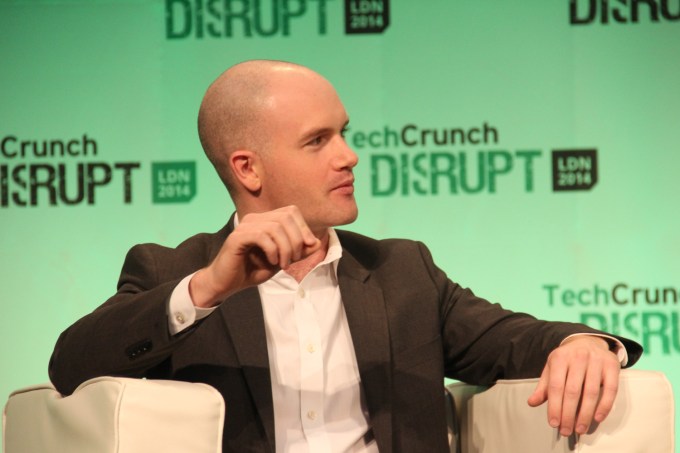
Coinbase CEO Brian Armstrong, pictured below at TechCrunch Disrupt London in 2014, called Srinavasan “one of the most respected technologists in the crypto field and… one of the technology industry’s few true originalists.”

Blockchain is the most disruptive new technology in technology today, and we’re excited to host our first show that is solely dedicated to the blockchain. The event takes place in the Swiss city of Zug — widely known as “Crypto Valley” due to its sizable number of crypto companies and a progressive approach to regulation — and it will bring together top figures from the blockchain space, developer community and business and startup worlds.

Other prominent speakers confirmed for the July 6 event include:

  • Roham Gharegozlou, the founder of smash-hit blockchain game CryptoKitties
  • Brian Behlendorf, executive director of the Hyperledger Project
  • Leanne Kemp, founder and CEO of Everledger
  • Jun Hasegawa, CEO and founder of Omise and OmiseGo
  • Mona El Isa, CEO and co-founder of Melonport
  • Colin Hanna, associate at Balderton Capital
  • Galia Benartzi, co-founder and head of Business Development at Bancor
  • Gert Sylvest, co-founder of Tradeshift and GM of Tradeshift Frontiers

You can get your hands on tickets now — they’re priced at 495 Swiss Francs, or around $500 — from the event website here.


If you’re interested in sponsoring the event, please contact us via this link.

Note: The author owns a small amount of cryptocurrency. Enough to gain an understanding, not enough to change a life.

30 Apr 2018

Baidu brings group of PE firms into its financial services business via $1.9B investment

Baidu has turned to the financial industry to bolster its consumer finance business. The Chinese search giant confirmed that it has sold a majority share in its Financial Services Group (FSG) business to a consortium of private equity firms in a deal worth $1.9 billion.

The business is in the consumer finance space and its services include credit and wealth management. Its competition, beyond traditional financial businesses, includes digital efforts from the likes of Tencent and Alibaba.

The deal — which had been speculated at the end of last year — sees FSG renamed to Du Xiaoman. The group of investors is led by TPG and The Carlyle Group, and it will pay around $1.06 billion for a majority stake. A further $840 million will be given to Du Xiaoman.

Following the transaction, Baidu will own 42 percent of the business, which will operate independently. Guang Zhu, who had been Baidu senior VP and GM of FSG, will become Du Xiaoman CEO.

It’s fairly common for China’s tech giants to incubate business which, when ready, are they spun out to raise capital from segment-specific investors. Indeed, JD.com — Tencent’s e-commerce partner — brought in a range of investors when it granted its financial services division independence via a spin-out two years ago.

Alibaba itself has long-courted investors for Ant Financial, its affiliate division that runs its Alipay mobile money business, its digital banking arm and other financial services. Ant was valued at $60 billion when it raised over $3 billion in 2016 and now the business — which is reportedly closing in on an IPO — is said to be raising as much as $10 billion more at a valuation that could hit $100 billion.

Outside of finance, Baidu’s iQiyi video streaming unit operates independently of the business in a similar model to Du Xiaoman. iQiyi raised over $1.5 billion from a clutch of private equity firms in 2017, before going on to list on the Nasdaq this past March. That’s very much the blueprint in this strategy.

“This transaction marks another milestone for Baidu to incubate new businesses with large opportunities and strong synergies with Baidu’s core business, on the heels of iQiyi’s public listing,” Robin Li, Chairman and CEO of Baidu, added in a statement.

But Baidu has also offloaded businesses that it deemed to be fringe. In food delivery for example, a space where it was out-manoeuvered by the competition, it sold its Waimai business to Ele.me, and then later sold its Ele.me shares to Alibaba when the e-commerce firm moved for a full buyout.

29 Apr 2018

Blue Origin’s New Shepard skims space in successful 8th test launch

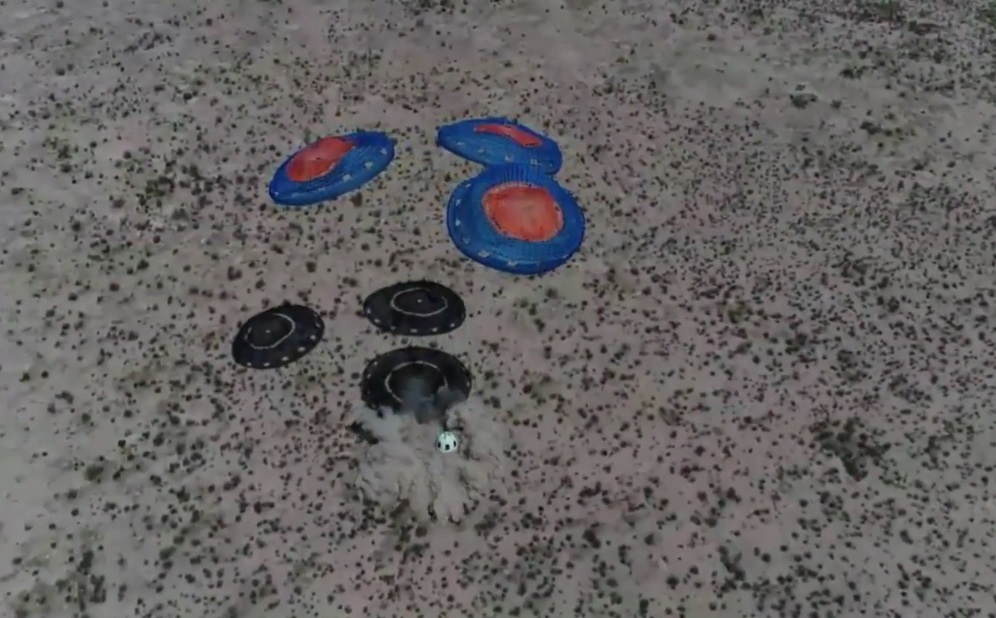
Blue Origin conducted the 8th launch of its New Shepard sub-orbital rocket and crew capsule today out in Texas, and things couldn’t have gone better for the growing space tourism company. The rocket ascended into a cloudless sky, reaching a max velocity of about 2,200 MPH, and delivered its capsule to the edge of space, where its occupant, “Mannquin Skywalker,” will have had a lovely view of the Earth.

New Shepard isn’t meant to deliver things into orbit, of course; Blue Origin has a different purpose and technology from the likes of SpaceX, focusing on giving people a quick, safe lift into space followed by a period of weightlessness and a pleasant descent.

That’s what was demonstrated today, and you can watch the whole thing live in the video below — the pre-launch coverage starts about half an hour in, and liftoff is at the 1h10m mark.

Everything went smoothly from liftoff to touchdown. I love watching the altitude graph filling in slowly at first, then blasting upward as the rocket gradually accelerates. After main-engine cutoff, which occurs just after crossing the Karmann Line, which indicates you’ve entered space, and anyone inside would experience weightlessness for about a minute and a half as the capsule slows down. Apogee for this flight was 347,000 feet, or about 106,000 meters.

While Mannequin Skywalker was enjoying microgravity, the booster was returning to Earth at high speed — over 2,600 MPH. The drag brake deploys around 100,000 feet up, reducing speed to a more manageable 370 MPH before the booster re-ignites at 2,500 feet and brings itself down to a hover landing.

This is one of the most obvious differences to a viewer between New Shepard’s booster and the Falcon 9s; New Shepard has more control over its thrust, allowing for a highly controlled landing where it could even float for a bit if necessary. The larger Falcon 9 has to land using much more powerful thrust, meaning if they aren’t careful, they might just take off again. It’s kind of like the difference between having to let up on the gas to ease into a parking spot, and having to pull the e-brake at precisely the right moment.

Meanwhile the capsule, with its higher apogee and greater drag, has been falling down this whole time, waiting for the right time to deploy its parachutes. It didn’t happen until below the 7,000-foot mark, making me sweat a bit. It wouldn’t be a good look to have your crew capsule impact at 240 MPH.

The commentator describes the capsule touchdown a minute or two later as a “beautiful soft landing,” though honestly it looks like it would give anyone inside something of a jolt. Let’s hope the seats are comfortable in that thing.

29 Apr 2018

Burning Man’s Larry Harvey passes after opening tech’s imagination

Larry Harvey normalized the abnormal, expanding the boundaries of what creators could attempt. That’s why there’s a special bond between Silicon Valley and Black Rock City, the desert settlement where Burning Man transpires. Both ditch “what are we supposed to do?” for “what can we do?”. Both encourage risky expression that appears insane to outsiders. And by establishing an open canvas just a few hours’ caravan from San Francisco, Harvey helped entrepreneurs come back freshly invigorated to make change.

Harvey passed away this weekend at age 70. But the sub-culture he convened and the infrastructure he built to support it will stretch that canvas to the dusty horizon year after year.

Google’s SkyBox Imaging satellites demonstrated the power of frequent aerial imagery by making this GIF that shows Burning Man being constructed and torn down.

Burning Man began as an exhibition of disruption on SF’s Baker Beach back in 1986. Igniting that first 9-foot effigy was an artful affront to the status quo. Meanwhile, a technology-driven shift in consciousness was underway just a hour’s drive south. Burning Man and Silicon Valley evolved in parallel, straddling the concept of the open platform. Rather than dictating what should be done, each provided the tools and autonomy necessary for their participants to birth new experiences and opportunities.

The relocation of Burning Man that Harvey helped orchestrate in the early 1990s would exemplify this boundary-less vision. The Black Rock Desert outside of Reno, Nevada is perception-warpingly flat in every direction, punctuated only by the art that participants install. It’s a landscape free of distraction, and that sensory deprivation seems to coax novel ideas from those it envelopes. When you stare past the edge of the world into the sunrise, your thoughts laid bare, dreams seem to crystallize more easily. The emptiness shouts back “why haven’t you built this yet?”

There’s a good reason why founders from Google, Facebook, Tesla, and many more startups attend Burning Man. It dismantles your pre-conceived notions about what’s possible. This is an important characteristic for those seeking different solutions to emergent problems, and one that can wane with age as we become more accustomed to life the way it is.

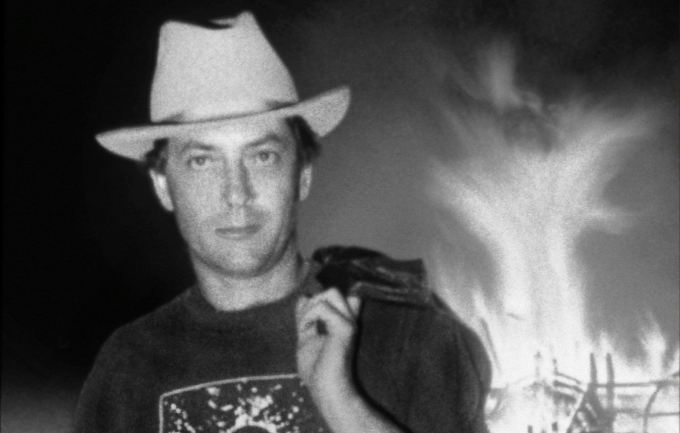
Larry Harvey [Image via BurningMan.org]

Great startups often come from challenging an underlying premise about how the world operates. Nowhere makes that malleability as tangible as Burning Man, where you can’t buy anything, the goal is simply to delight others, everyone responsible is welcome, and self-reliance is undergirded by a generous community. Harvey helped institute The 10 Principles that leave attendees wondering how to terraform “the default world” to closer mimic this ephemeral society.

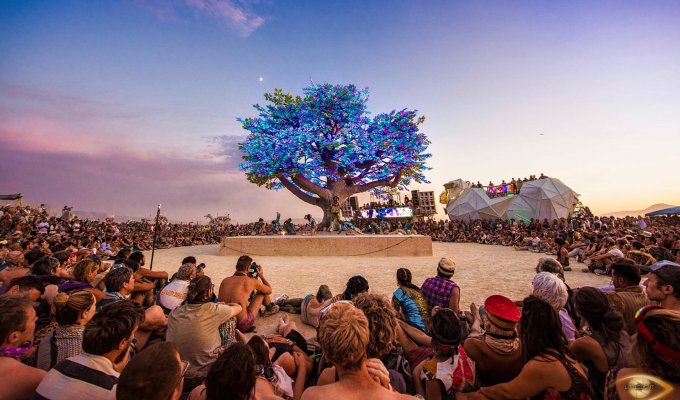
From Burning Man sprung early attempts at self-driving vehicles, as the Disco Fish art car’s pilots sought to make it avoid pedestrians in the inky night. Pioneers of LED technology bring glowing sculptures, each year brighter than the last. In 2017, Symmetry Labs invented a way to use Apple’s ARKit to map the positions of thousands of LED leaves so patterns could roll through its Tree Of Tenere. Google’s SkyBox Imaging micro-satellites demonstrated how frequent aerial imagery could reveal transportation and population trends by making the GIF above of Burning Man’s construction.

I’ve seen cross-company tribes of tinkerers working the kinks out of accelerometer light-up shoes, VR theater performances, and all manners of team management software. It’s a chance to test one’s talents beyond the container of capitalism.

Symmetry Labs pioneers new LED technology at Burning Man with the Tree Of Tenere

Transformative moments spur word of mouth, and soon Burning Man would be faced the questions about how to scale to its newfound popularity ‘A good problem to have’ as Silicon Valley calls it, but a problem nonetheless. Harvey could have slipped away into the festival he created. There was plenty of fun to be had. The frivolity does lure leaders away from their worldly responsibilities at times when their teams need execution, not more enlightenment.

Instead, Harvey stuck together with a cadre of fellow organizers to convert Burning Man into a non-profit with the appropriate longevity. Sure, there would be more tourists, more unindoctrinated rookies, more pampered rich folk, and more ‘sparkle ponies’ who just came to show off and take Instagrams rather than contribute. At its worst, Burning Man is a party for the privileged, unconcerned with suffering elsewhere. Yet the old guard worked tirelessly to sustain the core cooperative ethos of the event and push the tangential to the city’s edges.

I’ve gone for 10 years and the magic remains, despite the anecdotes you hear. There might be more affluent techies in expensive RVs than before, but many from the industry earnestly embody Harvey’s ideals of radical inclusion, decomodification, and communal effort. I’ve seen billionaires sweating as they cook grilled cheese for strangers in the blazing sun, and on their hands and knees picking motes of trash off the “playa” floor.

Burning the Man [Image via BurningMan.org]

Now at 70,000 attendees per year, Burning Man offers an escape into a creation, but also an escape from digital inundation. It’s one of the few metropolises you don’t need a mobile phone to navigate. Harvey called for immediacy and participation. People find that in a week off the grid, freed from the social contracts of constant electric connectivity. Cell service is creeping in, you see a few more people trying to text, and some bring their airplane-mode devices out to snap pictures, yet face-to-face communication rules. Being offline gives a sensation of having all of your mind’s tangled wires unplugged and reorganized neatly. For those jacked into the tech world’s ever-churning news cycles and product roadmaps, this rejuvenation is ecstatic.

Most obituaries encapsulate a life lost. But the elemental Larry Harvey has been decentralized and instilled into a legion of self-expressionists. While the event might only touch a tiny fraction of the world, those inspired by it build for everybody. Harvey’s legacy is restored, celebrated, and returned to dust each Labor Day. He succeeded, because no one ever doubts the Man will burn again.

[Image via Burners.me]

29 Apr 2018

Richard Branson’s Virgin Hyperloop partners with backer DP World to launch logistics startup

Virgin Hyperloop One and DP World are launching a new joint venture, DP World Cargospeed, four months after the high-speed transportation technology developer tapped the Saudi shipping company in its $50 million financing.

The company’s stated goal is to deliver palletized cargo more efficiently by combining super high-speed promise of hyperloop transportation with new logistics technologies to accelerate deliveries along Virgin Hyperloop One’s planned routes between Mumbai and Pune in India; in Saudi Arabia, and in the United Arab Emirates.

Announced with much fanfare and in the presence of Sultan Ahmed Bin Sulayem and Virgin Hyperloop chairman Richard Branson, the new company is basically built on buzzwords like “on-demand” and the promise of future performance.

Right now there’re only 10 kilometers of Virgin Hyperloop track being built (and they’re all in India).

Although there’s not much more than a bunch of pontificating palaver around hyperloop technologies now, the startup companies and their corporate backers do present an compelling vision of the future of transportation.

As China sinks billions into a new silk road to connect the world to its powerful new economic engine, incredibly fast, incredibly efficient logistics will become increasingly important — especially if it can be made more environmentally sustainable by harnessing renewable energy.

“The global growth of e-commerce is driving a dramatic shift in both consumer and business behavior. On-demand deliveries are a novelty today. Tomorrow it will be the expectation,” Branson said in a statement announcing the new company. “DP World Cargospeed systems powered by Virgin Hyperloop One will enable ultra-fast, on-demand deliveries of high-priority goods and can revolutionise logistics, support economic zones, and create thriving economic megaregions.”

Hyperloop transportation is basically shooting a container through a really really big pneumatic tube really really fast. The technology uses magnetic levitation to propel the people-and-product laden pods through the tube with little friction. Hypothetically the hyperloop should be able to achieve speeds of around 300 meters per second — faster than the fastest high speed rail technologies in use today.

Hurdles to getting a system like this up and running are immense. Most of the shipping world still runs on logistics systems designed in the 19th and 20th centuries that remain resistant to 21st century innovations

DP World Cargospeed systems, enabled by Virgin Hyperloop One technology, will transport high-priority, time-sensitive goods including fresh food, medical supplies, electronics, and more. It will expand freight transportation capacity by connecting with existing modes of road, rail and air transport.

“Based on McKinsey’s assessment of our technology, Virgin Hyperloop One-enabled supply chains can dramatically impact business bottom lines by reducing both finished goods inventory and required warehouse space by 25%,” said Rob Lloyd, the chief executive officer of Virgin Hyperloop One.

For Virgin Hyperloop One, the new joint venture with DP World is another sign of the company’s continued renaissance since bringing Virgin aboard. The once scandal-wracked startup now has a partner with seemingly unlimited pockets and a consummate salesman and spokesperson in the chairman’s seat on the company’s board.

Branson, for one, is all in on the technology (at least until Virgin Orbit starts blasting off in earnest).

“The reason I became chairman of this company, I found this ridiculously exciting,” Branson told CNBC. “I think if we can build Virgin Hyperloops in a number of different countries, connecting countries, that will bring the world much closer.”

29 Apr 2018

Black Founders Matter wants to raise $10 million to fund black-led startups

A few months ago, Marceau Michel met up with a fellow entrepreneur, Kathryn Brown of ScoutSavvy, to discuss their triumphs and tribulations of their time in the tech industry. That’s when the two discovered they were running into the same issue: lack of funding.

Unfortunately, Michel, an African-American founder, is not alone. Just one percent of venture-backed companies are led by black founders. In an attempt to address this problem, Michel is looking to engage the public to help in an area where traditional investors seem to lack the willingness.

“A lot of lip service is given to diversity and inclusion but the actual practicability of it lacks,” he told me.

With Black Founders Matter, the goal is to bring the tenacity of the Black Lives Matter movement to the startup industry.

“If there’s a brick wall that is standing between minorities and their dreams as entrepreneurs, how can we help the regular person help us in dismantling the wall between us and our dreams?” he posited.

Black Founders Matter has a simple premise of selling t-shirts and sweatshirts for the purpose of not necessarily being political, “but literal,” Michel told me. The apparel, which costs anywhere from $49.99 to $69.99, aims to generate revenue while raising awareness about black and female founders.

To date, Black Founders Matter has sold a little under $10,000 worth of t-shirts. The goal, however, is to hit $10 million in sales within the next two years, and then funnel that money into black-led startups.

“We can shake up venture funding and what it looks like and who gets it,” Michel said.

As Michel works to get all the funds in place, he’s working to build a committee that will ultimately decide how to delegate the money. In addition to running Black Founders Matter, Michel is running his own startup, on-demand staffing company Werk Horse.

“What we’re trying to do is create something I think the whole world needs,” Michel said. “I’m not just trying to solve a problem for black people, but for everyone.”

Through Werk Horse and Black Founders Matter, Michel hopes people will start looking at black people as CEOs, founders, CFOs and CTOs. Once that happens, Michel is convinced “they’re not going to shoot us” and it will shift “the misconception people have about black people.”

29 Apr 2018

How the digital economy shapes American cities

From home- and ride-sharing apps to TV and movie streaming subscriptions to social media platforms – Internet companies have transformed our lives.

Today the internet sector contributes approximately $1 trillion, or 6 percent of GDP, to the national economy, as well as 3 million jobs and 231,000 businesses. These digital economy jobs and businesses are thriving in almost every city — and in metro areas across the country.

The truth is undeniable: cities are shaping the next chapter in America’s history, and the digital economy is a driving force. While venture capital in the tech industry has historically concentrated in a handful of U.S. cities, metro areas nationwide are benefiting from the internet sector.

Local policymakers are demonstrating leadership and building deeper internet ecosystems, resulting in new businesses emerging everywhere. Meanwhile, cities across the country are popping up as new tech hubs by mixing unique cultural and historical traits with innovative policy approaches.

We believe that cities broaden this growth even further by highlighting success from the ‘ground up’ and diffusing the success of local innovation into the national policy dialogue. Those cities that best integrate digital technologies into their economies and ecosystems can achieve more for their residents — and those that do not could fall behind.

In our report, Here They Come: A Look at the Future of Cities in the Internet Age, published by the National League of Cities and Internet Association, we focused on actionable lessons and examples of innovation leadership in four unique cities: Columbus, Ohio, Kansas City, Missouri, Phoenix, and Pittsburgh. We chose these cities for their major internet-sector presences — and for the valuable lessons offered by their successful community-oriented programs.

In Columbus, homegrown tech firms are setting up shop and workers from the coasts are moving in to take advantage of a friendly business environment and booming tech scene. The city has quietly built the right environmental factors to foster tech businesses and is now reaping the benefits — perhaps most notably through its victory in the national Smart City Challenge for its technology-integrated transportation system plan.

Kansas City has one of the fastest growing tech scenes of the past decade, and boasts a higher concentration of internet sector and STEM workers than New York, Los Angeles, or Chicago. The city has taken care to develop economic inclusion plans to ensure the sector’s benefits are diffused across its residents — while also applying the tech start-up mentality to its unique cultural traditions, such as in its Arts Incubator program.

In Phoenix, leaders are actively pushing economic diversification and experimentation through digital technology. They have opened up government data for the public, welcomed autonomous vehicles, and are working with local partners to better understand the strengths and weaknesses of the area’s labor force.

In Pittsburgh, the city is using the world-class tech talent groomed in its universities to revitalize the region and attract offices for numerous major internet firms. Local stakeholders have partnered with private sector firms to develop and test state-of-art technologies. The city is also examining its own internal processes for tech applications, such as in procurement.

All of these cities demonstrate that strong, local digital economies have underlying strengths that help them thrive, ranging from robust partnerships to a focus on economic inclusion. Throughout our research, eight key lessons surfaced again and again to guide city investment in the tech economy:

  • Transportation systems are critical infrastructure and can rapidly benefit from new technologies. From autonomous vehicles to more seamless and connected public transportation, the future of mobility is reliant on technology to thrive.
  • Open data provides win-win opportunities to cities and community members. Businesses can use the data to improve products, services, and efficiency while governments can gain important insights on services and community needs.
  • Rapid procurement system pilot projects allow for faster development of innovative city services while minimizing the risk from larger scale implementations.
  • Partnerships are key to achieving policy goals. Governments can often draw on the technical expertise of the private sector while businesses can use the vision and policy expertise of local leaders to find better solutions.
  • Capitalize on the unique cultural and historical assets. Rather than imitating another place, cities should look at how they can merge their unique heritage with tech.
  • Emphasize the importance of economic inclusion. Build programs that allow every resident the opportunity to connect with the internet and every business the opportunity to build digital tools.
  • Experiment with new programs through pilot systems. Small scale projects are a valuable way to test ideas, but also manageable for local start-ups who may not yet have the capacity for a full-scale implementation.
  • Invest time and resources to build well-rounded labor markets and diverse economies. Internet tools can bolster any business and industry, but those tools require individuals with training.

Ultimately, when fostered with intent, the internet sector provides great promise for cities to use technology to build more inclusive, innovative economies. As we near the start of the 2020s, it is increasingly evident that cities are leading the national agenda on innovation.

The digital economy is driving an unprecedented expansion of ever-smarter, more-connected cities — and local leaders would do well to prepare now.