Year: 2018

19 Apr 2018

Cambridge Analytica was reportedly exploring an ICO

In the most 2018 thing of the year so far, Reuters and The New York Times are both reporting that Cambridge Analytica was talking to crytpocurrency experts in preparation for the launch of its own initial coin offering. Of course, things may have gotten a bit off-track when the company was revealed to have obtained the data of as many as 87 million Facebook users. Life, as they say, comes at you fast.

According to Reuters sources, the embattled firm was looking to issue its own digital currency in an effort to raise upwards of $30 million. Understandable, perhaps — startups reportedly raised $5.6 billion through ICOs in 2017 alone. Surely Cambridge Analytica was well positioned to get in on that action. 

The company wouldn’t confirm whether it was still looking toward digital currency as a fundraising method moving forward, though it did tell the news agency that  using blockchain for security purposes is still very much on the table.

“Prior to the Facebook controversy, we were developing a suite of technologies to help individuals reclaim their personal data from corporate entities and to have full transparency and control over how their personal data are used,” a spokesperson said. “We were exploring multiple options for people to manage and monetize their personal data, including blockchain technology.”

The Times also confirms via leaked emails that CA’s work with another digital currency, Dragon Coin, “associated the firm” with a gangster know as Broken Tooth. Though Dragon Coin’s founder denies any connection with Mr. Tooth.

19 Apr 2018

Reddit hires former Time Inc. exec Jen Wong as COO

Reddit, one of the internet’s largest hubs for both traffic and controversy, announced today that it has hired former Time Inc. President of Digital Jen Wong to take on the role of COO.

She will be tasked with managing Reddit’s business strategy, working out of the company’s New York office. Wong left Time Inc. earlier this year when the company was acquired by Meredith Corp for $1.84 billion.

In a blog post, the company detailed the scope of her role as COO. A major focus will be building the company’s advertising strategy.

Her goals as COO will align closely with her past experience at Time, PopSugar, and AOL: using her media, publisher, advertising, and operations expertise to help us build out our offerings for users, advertisers, and partners; applying her experience building successful digital advertising offerings for internet media giants to our own ads platform; and, through it all, working to grow our business while staying true to the things that make Reddit unique.

Despite claiming 330 million monthly active users, Reddit is still a relatively small operation by Silicon Valley standards. A major part of that is that they’ve been slow to build out a sophisticated advertising product, though in recent months they’ve begun rolling out native ads in the company’s mobile apps.

“Jen is a seasoned digital veteran and successful executive at some of the biggest media companies in the world, her experience and vision will help carry Reddit’s momentum forward in the years to come,” Reddit CEO Steve Huffman said in a statement.

19 Apr 2018

SNK may be making a mini-console stuffed with arcade classics

If you’ve worked through the amazing selection of games provided by the NES and SNES Classic Editions, you may be in luck: SNK, the legendary arcade game creator behind the likes of Metal Slug and Samurai Shodown, is teasing what looks like its own tiny arcade cabinet.

Teased as part of the company’s 40th anniversary, the shrouded gadget definitely doesn’t look like a NEO-GEO, or even a NEO-GEO Pocket. Gizmodo notes that the description mentions a “new game machine,” but no details beyond that. The tall, boxy outline suggests a small arcade cabinet, and the slab in front of it looks a lot like an arcade controller.

It wouldn’t be a particularly original creation — there are dozens of tiny arcade cabinets with built-in games, but the truth is none of them is particularly good. They’re novelties, perfectly fun for a laugh, but the hardware – compared with the impressive solidity of real arcade controllers and the NEO-GEO’s itself – just isn’t there.

If I had to guess, I’d say this is an arcade cabinet-style console with improved internals, a decent screen to accommodate games newer than 1996, and a separate, perhaps even wireless arcade controller. Price… I’d put it at $200 or $250. Extra controller (and you’ll want it), my guess is $60. I could easily be way off, though. Maybe they’d even let us plug in our old Tanksticks?

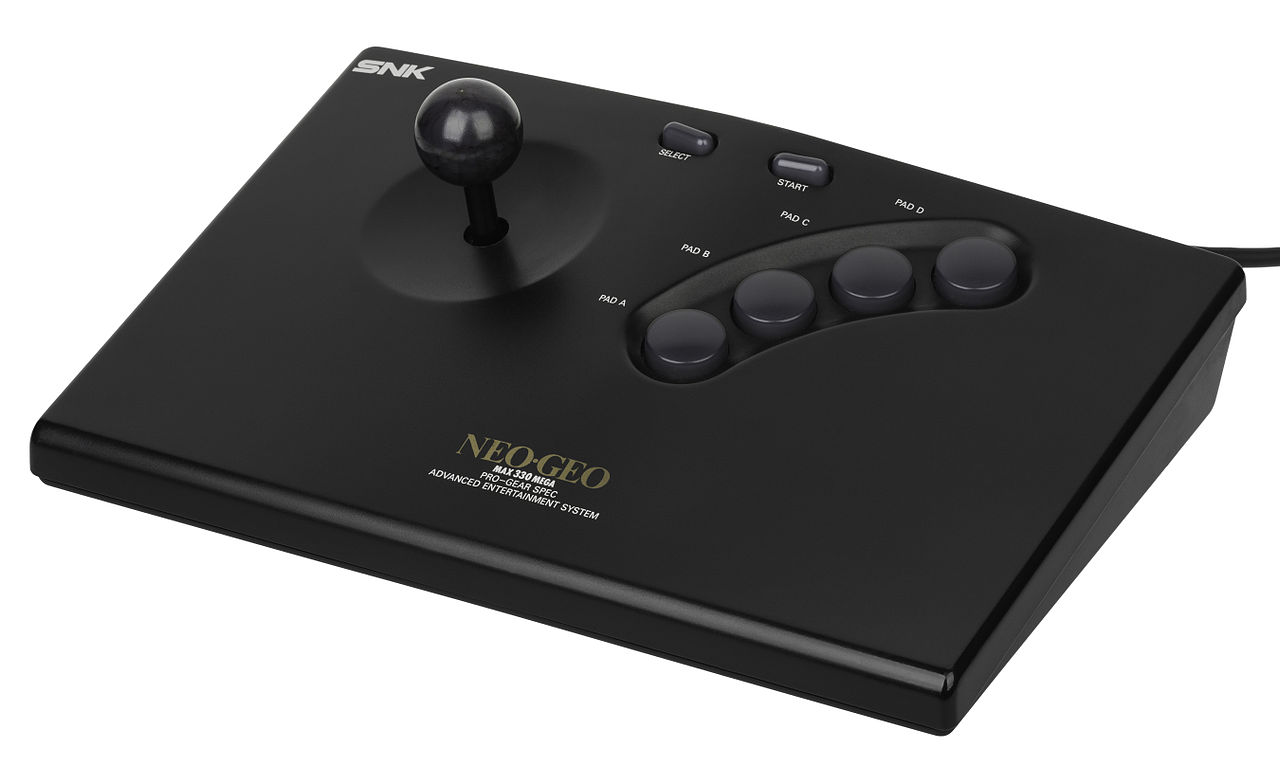
An original NEO-GEO controller. You can feel the sturdiness from where you sit.

Inside, you’ll probably find a generous helping of SNK classics, likely limited to arcade and NEO-GEO titles. Even without SNK’s classic games for home consoles like the NES. My eyes were watering as I scrolled down the list of games the company has put out and which may end up on this device.

King of the Monsters 2? Last Resort? Twinkle Star Sprites? King of Fighters, Samurai Shodown, and all the other fighters? Not to mention Metal Slug and its sequels. The amount of quarters I’ve sunk into these fantastic, beautiful games is uncountable.

If SNK is smart, they’ll make it possible to add new games to the system, too. There are plenty to choose from, as the company catered to a number of niches. Having them available for a few bucks each would be a dream — and anyway, if this isn’t a possibility, people will just hack new ROMs onto the system.

Whatever the case is, you can be sure I’m already jockeying for position to review the thing. I’ll let you know the second I hear anything.

19 Apr 2018

Lyft drivers’ lawsuit against Uber over ‘Hell’ program isn’t over

A class-action lawsuit led by a number of Lyft drivers against Uber regarding the alleged “Hell” spying program is moving forward in an amended way. The lawsuit, brought by Lyft driver Michael Gonzales on behalf of other Lyft drivers, alleges Uber wrongfully intercepted the communications and whereabouts of Lyft drivers, and resulted in the loss of revenue.

Uber reportedly used Hell to track Lyft drivers to see how many were available to give rides and what their prices were. Hell could allegedly also determine if people were driving for both Uber and Lyft.

Judge Jacqueline Scott Corley dismissed most of the lawsuit yesterday, but is allowing Lyft drivers to file an amended complaint that pertains to monetary losses as a result of unfair competition. In Judge Corley’s ruling, she determined the plaintiff did not sufficiently argue Uber’s violation of the Wiretap Act via interception of communications. Judge Corley also dismissed the plaintiff’s claim that Uber violated the Stored Communications Act and the California Invasion of Privacy Act.

Additionally, Judge Corley dismissed the claim that Uber violated the California Comprehensive Computer Data Access and Fraud Act with leave to amend “to the extent Plaintiff can allege facts that plausibly suggest Uber violated a particular subsection of the Act.”

While Judge Corley dismissed the majority of the plaintiff’s claims, Gonzales can file an amended complaint specifically pertaining to unfair competition. From the ruling:

Plaintiff alleges that by encouraging drivers to use the Uber platform exclusively, and not also drive for Lyft, that reduced the supply of Lyft drivers thereby increasing wait times and causing Lyft drivers to experience decreased earnings; in particular, the longer wait time would cause a passenger to cancel the Lyft request and request a new ride from Uber. (FAC ¶ 9, 101, 102.) These factual allegations, which the Court must accept as true, are sufficient to satisfy the lost money or property requirement of UCL standing.

Judge Corley went on to say that Gonzales sufficiently argued he lost revenue as a result of Uber’s attempts to decrease the supply of Lyft drivers.

“Whether Plaintiff will be able to prove that allegation is a question for another day,” Judge Corley wrote.

This comes after Judge Corley dismissed Gonzales’ original complaint with leave to amend in August. Gonzales then filed an amended complaint seeking similar relief with two additional claims. The added claims alleged Uber violated the Federal Stored Communication Act and the California Computer Fraud and Abuse Act. In response, Uber filed a motion to dismiss.

I’ve reached out to Uber and will update this story if I hear back.

19 Apr 2018

Lyft drivers’ lawsuit against Uber over ‘Hell’ program isn’t over

A class-action lawsuit led by a number of Lyft drivers against Uber regarding the alleged “Hell” spying program is moving forward in an amended way. The lawsuit, brought by Lyft driver Michael Gonzales on behalf of other Lyft drivers, alleges Uber wrongfully intercepted the communications and whereabouts of Lyft drivers, and resulted in the loss of revenue.

Uber reportedly used Hell to track Lyft drivers to see how many were available to give rides and what their prices were. Hell could allegedly also determine if people were driving for both Uber and Lyft.

Judge Jacqueline Scott Corley dismissed most of the lawsuit yesterday, but is allowing Lyft drivers to file an amended complaint that pertains to monetary losses as a result of unfair competition. In Judge Corley’s ruling, she determined the plaintiff did not sufficiently argue Uber’s violation of the Wiretap Act via interception of communications. Judge Corley also dismissed the plaintiff’s claim that Uber violated the Stored Communications Act and the California Invasion of Privacy Act.

Additionally, Judge Corley dismissed the claim that Uber violated the California Comprehensive Computer Data Access and Fraud Act with leave to amend “to the extent Plaintiff can allege facts that plausibly suggest Uber violated a particular subsection of the Act.”

While Judge Corley dismissed the majority of the plaintiff’s claims, Gonzales can file an amended complaint specifically pertaining to unfair competition. From the ruling:

Plaintiff alleges that by encouraging drivers to use the Uber platform exclusively, and not also drive for Lyft, that reduced the supply of Lyft drivers thereby increasing wait times and causing Lyft drivers to experience decreased earnings; in particular, the longer wait time would cause a passenger to cancel the Lyft request and request a new ride from Uber. (FAC ¶ 9, 101, 102.) These factual allegations, which the Court must accept as true, are sufficient to satisfy the lost money or property requirement of UCL standing.

Judge Corley went on to say that Gonzales sufficiently argued he lost revenue as a result of Uber’s attempts to decrease the supply of Lyft drivers.

“Whether Plaintiff will be able to prove that allegation is a question for another day,” Judge Corley wrote.

This comes after Judge Corley dismissed Gonzales’ original complaint with leave to amend in August. Gonzales then filed an amended complaint seeking similar relief with two additional claims. The added claims alleged Uber violated the Federal Stored Communication Act and the California Computer Fraud and Abuse Act. In response, Uber filed a motion to dismiss.

I’ve reached out to Uber and will update this story if I hear back.

19 Apr 2018

Cheddar’s digital news network is coming to Hulu, too

Cheddar isn’t done making deals with the over-the-top streaming TV providers. Only yesterday, news came out that Cheddar was the first digital-only network to launch a channel on YouTube’s streaming TV service, YouTube TV. Today, the company is announcing a similar deal with Hulu, which will bring its programming to Hulu’s href="https://techcrunch.com/2018/01/09/hulu-17m-subscribers/"> more than 17 million subscribers.

The new distribution agreement will see Hulu adding Cheddar’s live linear network, plus exclusive morning and afternoon news briefs, key highlights and a selection of Cheddar Originals.

This combination of live and on-demand programming will be available to Hulu’s Live TV subscribers, while the daily news briefs and select other content will be made available to Hulu’s on-demand viewers.

The on-air channel will launch to Live TV viewers later this month.

This is a slightly different deal than the one Cheddar cut with YouTube TV, which was focused more on making Cheddar’s linear programming available to the service’s users. In addition, YouTube TV didn’t only add Cheddar’s flagship business news network, it also added Cheddar’s new general news channel, Cheddar Big News.
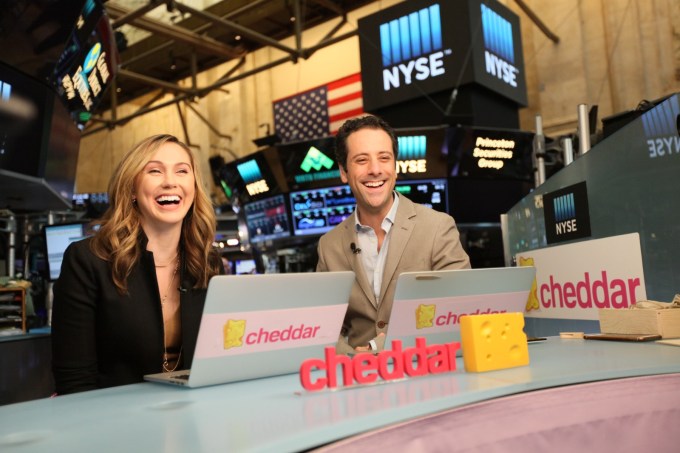
However, YouTube TV is catering to a younger demographic who may be more familiar with the Cheddar brand, and more attracted to digital networks in general, rather than their cable TV counterparts. That fits well with Cheddar’s own viewership demographics — 1 in 5 millennials (ages 18 through 24) know of Cheddar, and they’re “decades” younger than those who watch traditional news networks, the company notes.

For Hulu, the new addition means it’s gaining a network that could make its service more appealing to “cord nevers” — the (often young) group of consumers who are choosing never to sign up for a pay TV subscription in the first place. These users still want access to TV news, though, says Hulu.

“Our live TV viewers watched more than 24 million hours of news in the first quarter of 2018, so clearly they are hungry for news content,” said Tim Connolly, SVP, Head of Partnerships and Distribution at Hulu, in a statement about the deal with Cheddar. “We’re happy to partner with a post-cable millennial-focused network like Cheddar to pack even more value into our live offering and give our younger viewers access to a greater, more diverse selection of live news options,” he said.

Cheddar has shifted away from consumer-facing subscriptions and is now an ad-supported network. Around 95 percent of revenue comes from ads and sponsorships. The company may be sharing a portion of ad revenue with streamers as part of these deals.

Live TV services are only one way Cheddar is being distributed. The company has a number of deals across the web and mobile devices, including on Sling TV, YouTube TV, Philo, Comcast X1, Altice One, Pluto, Molotov in Europe, Twitter, Facebook, Twitch, Amazon and elsewhere. This month, it will also launch a show on Snapchat. Thanks to this wide distribution on tech platforms, Cheddar is seeing hundreds of thousands of daily live viewers and hundreds of millions of video views a month on social platforms.


19 Apr 2018

Apple has a new iPhone recycling robot named ‘Daisy’

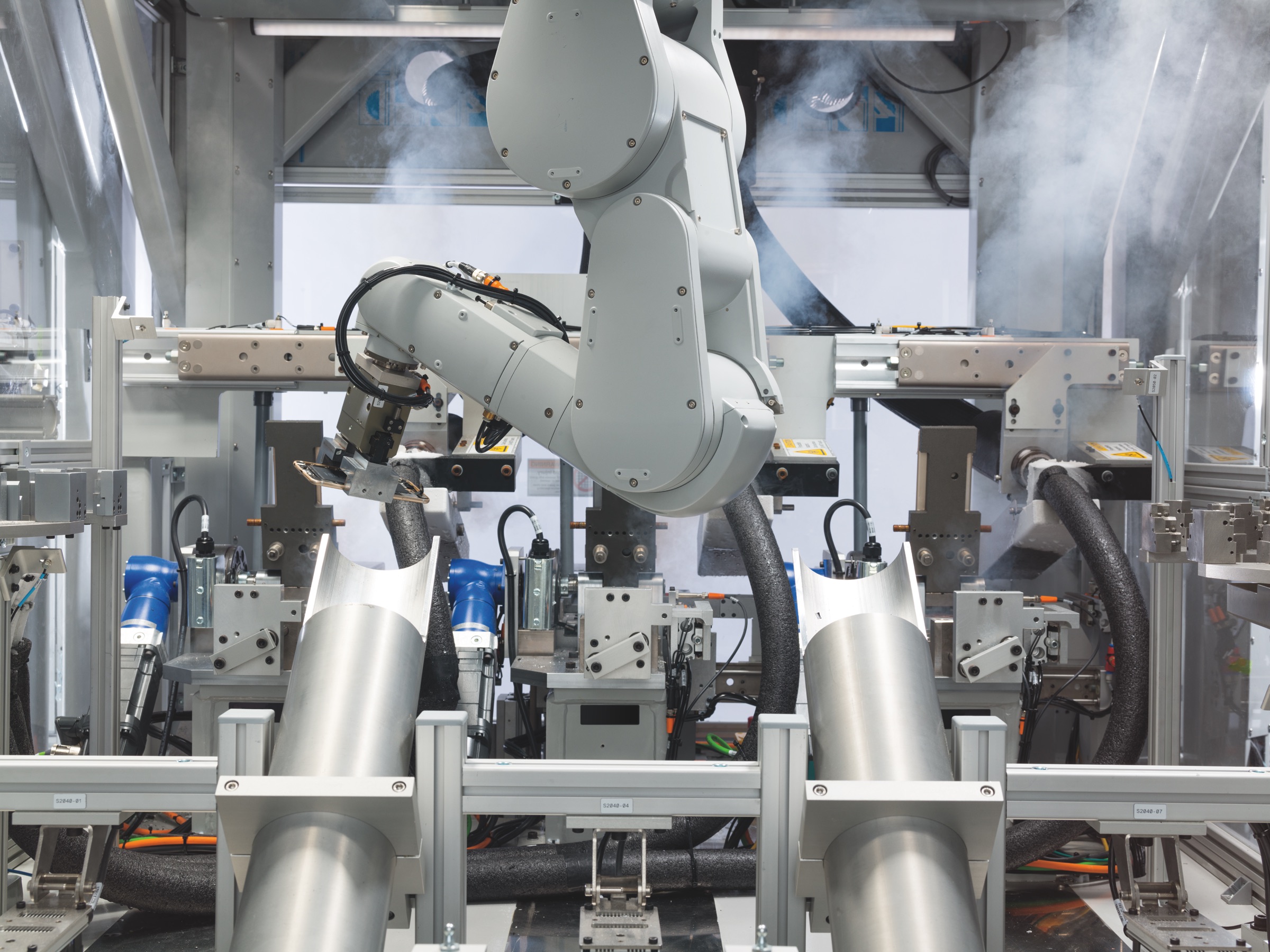
Meet Daisy. Apple’s latest recycling robot was revealed, not coincidentally, a few days before Earth Day, in a press announcement summing up the company’s recent environmental accomplishments. The new ‘bot is an update to Liam, the recycling robot the company announced back in 2016.

Daisy was developed in-house by Apple engineers, using some of Liam’s parts — a recycling of sorts. The industrial robot is able to disassemble nine different versions of the iPhone, sorting all of their reusable components in the process. In all, Daisy is capable of taking apart a full 200 iPhones in a given hour, proving a solid alternative to traditional methods that can destroy valuable components in the process. Any connection to HAL 3000, however, is surely coincidental. 

Along with Daisy, Apple’s also using the occasion to announce GiveBack, an addition to its recycling program. For every device customers turn in or trade from now until April 30, the company will make a donation to Conservation International, a Virginia-based environmental nonprofit. Eligible devices will still qualify for an in-store or gift card credit. 

For good measure, there’s also a new Apple Watch challenge coming for Earth Day, encouraging people to get outside on Sunday and enjoy the planet. The announcements come a week after Apple announced that it had achieved its goal of powering its global facilities with 100 percent renewable energy.

19 Apr 2018

Laura Tyson will be speaking at TC Sessions: Robotics May 11 at UC Berkeley

We’re less than a month out from TC Sessions: Robotics, and we’ve still got some key names to share with you for the big event. We’ve already announced some of the top names in robotics, including Playground’s Andy Rubin, Boston Dynamics’ Marc Raibert, Ayanna Howard of Zyrobotics, Chris Urmson of Google and U.C. Berkeley professor and SuitX founder, Homayoon Kazerooni.

Today we’re excited to add Laura Tyson to the list. Tyson is the Faculty Director, Institute for Business & Social Impact at Berkeley’s Haas Business and Public Policy Group. She has previously served as the Director of the National Economic Council and the Chair of the US President’s Council of Economic Advisers, under President Bill Clinton.

Tyson will be joining us to discuss the impact of AI and automation on economics and the human workforce, along with Fetch Robotics CEO, Melonee Wise and more, in a panel moderated by Ars Technica Editor-At-Large and author of Autonomous, Annalee Newitz.

In addition to all of our great human speakers, we’ve also got some really exciting robotic demos. U.C. Berkeley’s Ken Goldberg will be bringing along Dex-Net. The system utilizes an off-the-shelf industrial robotic gripper designed by ABB. Trained using a deep neural network and 6.7 million data points, the system is able to perform extremely dextrous pick and place functions — a major hurdle in the world of industrial robotics.

Dex-Net will be joined by the some of the industry’s most cutting-edge robots, including Boston Dynamics’ SpotMini and Agility Robotics’ bipedal Cassie.

Click here to see the full agenda, workshop schedule, and check out more speakers.

Buy your ticket today.

Student tickets are just $45 – you can book those here.

We’re always on the lookout for great sponsors, connect with us here about sponsorship opportunities for this landmark event.


19 Apr 2018

Crypto-collectibles and Kitties marketplace Rare Bits raises $6M

Rare Bits wants to be eBay for the blockchain, where you buy, sell, and trade non-fungible crypto-goods. After CryptoKitties raised $12 million from Andreessen Horowitz last month for its digital collectibles game, there’s been an explosion of interest in the space. But without a popular marketplace, it’s hard to find the goods you want at the right price. Now a team of former Zynga staffers is building out its crypto-collectible auction and commerce site with a $6 million round led by Nabeel Hyatt at Spark Capital, and joined by First Rount Capital, David Sacks’ Craft Ventures, and SVAngel.

Because of the Ethereum ledger, for the first time, users can truly own their digital items” says co-founder Amitt Mahajan. “Previously in mobile or social games, virtual items earned through play or by spending money were actually owned by the company operating the game. If they shut down their servers, the items would go away and users would be out of luck. We believe this new asset class represents a paradigm shift in digital property whereby centralized assets will be moved onto decentralized systems” For now, Rare Bits isn’t slapping any extra fees on its marketplace, compared to paying 1 percent to 4 percent on other marketplaces like Open Sea and Wyvern Exchange. Instead, if a crypto-item developer charges a fee on secondary sales, say 5 percent, they’ll split that with Rare Bits for arranging the transaction.
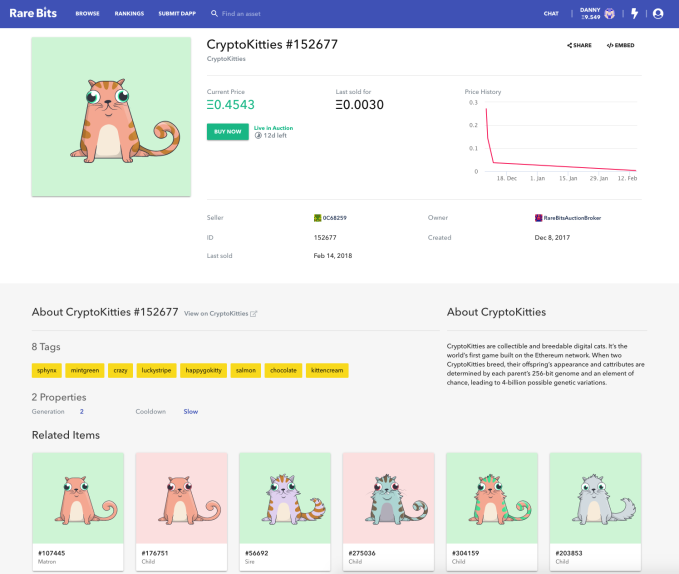
Users get the benefit of having all their crypto-collectibles in a single wallet. They can see historical pricing before they buy anything thanks to the transparency of the Ethereum ledger, whether they want to “Buy Now” or win an auction. They collectors can also see related items rather than transacting in a vacuum.

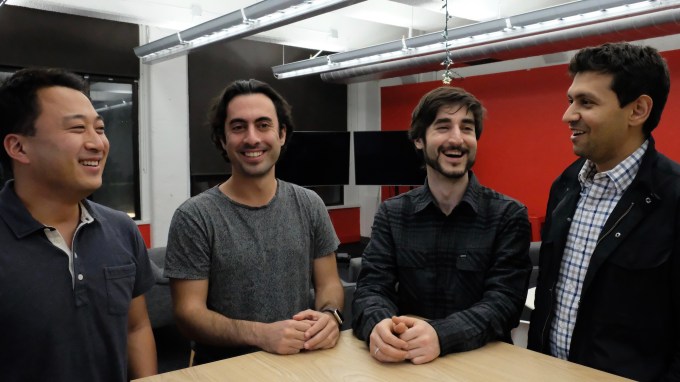
Rare Bits founders from left: Danny Lee, Payom Dousti, Dave Pekar, and Amitt Mahajan.

Mahajan, Danny Le, and Dave Pekar all met after selling their gaming startups to Zynga. [Disclosure: I know Pekar from college] Their fourth co-founder Payom Dousti worked at crypto VC fund 1/0 Capital and sold his sports analytics startup numberFire to FanDuel. With experience across the gaming, virtual good, and crypto space, Mahajan tells me “We thought long and hard about potentially building blockchain-based games ourselves but ultimately decided that there was a larger opportunity in focusing on crypto-based property as a whole.” The Rare Bits exchange launched in February and did over $100,000 in transactions in its first month.

With some CryptoKitties selling elsewhere for as much as $200,000, investors liked the idea of taking a cut of everyone’s transactions rather than just launching another digital trading card. That led Rare Bits to raise a $1 million seed from Macro Ventures and angels like Steve Jang and Robin Chan. As scaling issues threaten to prevent the Bitcoin and Ethereum blockchains from supporting micropayments and mainstream commerce, new use cases like crypto-collectibles are taking the spotlight.

19 Apr 2018

Walmart launches ‘Check Out With Me’ for on-the-spot checkouts in hundreds of U.S. stores

Walmart announced on Thursday it’s beginning to test new technology that arms store staff with mobile devices for checking out customers from the floor. The devices will first be put into use in Walmart’s “Lawn & Garden Centers” in over 350 U.S. stores, where there’s the most need for a mobile checkout experience like this.

Before, customers shopping for items like mulch, soil or flowers may have had to go inside the physical store to pay for their Lawn & Garden purchases, which was often challenging due to the size and weight of these items. Now, th aey’ll be able to pay on the spot with store staff’s help.

The new service, which Walmart is calling “Check Out With Me,” involves store employees wearing a small carrying case equipped with a Bluetooth receipt printer. Their cellular device works as the barcode scanner and the credit card swiper for the transactions.

Staff assists the customers by scanning large items – like bags of mulch – while it’s still on the shelf, so customers don’t have to load heavy carts and push them through the store or to one of the Lawn & Garden Center’s fixed checkout stations. They can just carry them straight to their car parked nearby.

The service will help Walmart with its sales that take place outside the Lawn & Garden Center, too.

“During the summer, we also sell a lot of items like mulch, live plants, and potting soil outside of the store – similar to Home Depot or Lowe’s,” a spokesperson said. “This new option allows people to pay for those items on the spot versus paying in the store then going outside to load the items.”

The retailer says it’s not hiring additional staff for Check Out With Me, but will use existing employees for the service.

This isn’t the first time Walmart has used mobile technology to speed up checkouts. The company also offers Walmart Pay for in-store checkout, which involves scanning a barcode on customers’ phones to pay at the register. And its Sam’s Club warehouse club offers Scan & Go, which lets customers skip the checkout line by scanning items as they shop, then showing their e-receipt at the door on their way out.

Upgrades that make checkout quicker are especially important to retailers today in light of increased competition from Amazon, which has now established a physical presence through Whole Foods, its own bookstores, and its new Amazon Go stores.

In the latter, customers don’t have to check out at all – cameras, A.I. systems, and sensor technology let them simply grab items and leave. The idea is to offer a faster way for consumers to buy items, while also tying their day-to-day purchases to their Amazon account to get a more holistic view of the shoppers’ habits. Other companies are offering similar systems for other retailers, like AiFi, IMAGR, and Standard Cognition. And Walmart has been said to be testing checkout-free technology as well.

In the meantime, Check Out With Me is available in over 350 U.S. stores, starting today. That’s a small subset of Walmart’s 4,700 U.S. stores, but the company considers the rollout a “test” for the time being.