Year: 2018

18 Apr 2018

You can now play Star Wars AR Holochess on your iPhone

As the future of technology continues to give us plenty of things we wish it hadn’t, we’re still managing to get some simple pleasures out of the way.

Star Wars Holochess can now be played on the iPhone in your pocket in full augmented reality glory. The game may have only occupied a few seconds of screen time, but the familiar outlandishness of the concept resonated with fans.

The news means you no longer need Lenovo’s AR headset to operate the game within the Star Wars: Jedi Challenges mobile app on iOS. (The app is also available for the Google Play Store, but no dice on ARCore support quite yet.)

Lenovo’s Mirage headset is a tad complicated to get running with, it requires a sort of tracking beacon in order to anchor things to the real world. That being said, the hardware is fairly good and the content is surprisingly solid for a branded app. With ARKit support, Apple’s augmented reality platform simplifies things quite a bit for users and brings people to the app without having to buy hardware.

There’s still a lot more you can only play with in the headset, but Lenovo says there’s about 2-3 hours of gameplay in Holochess alone, which is about the length of time I’ve casually spent in ARCore experiences to begin with so that’s worth something.

18 Apr 2018

With loans of just $10, this startup has built a financial services powerhouse in emerging markets

Peris Kimeli and Betsy Cheruyot were students at Kenyatta University thinking about launching a business when they applied for their first loans from the mobile lending company, Tala.

Hoping to get a clothing business off the ground and make some money to live on while going to school, the two young Kenyans downloaded the Tala mobile app, and within minutes received loans totaling about $15.

“Between us and poverty, we had about 200 shillings,” Kimeli said of her early days starting their business. “We were like, what are we going to eat? Our parents said, ‘No. We’re not going to send money… You go figure it out’ So we went and we did that.”

Kimeli and Cheruyot took that $15 loan and went to Nairobi’s famous secondhand market, Gikomba, where they bought 15 dresses at 100 shillings each and resold them in dorms and hostels for 200 shillings.

“Two remained, but we had no problem — since we could keep them, we could wear them. By the end of the month, we had 7000 [shillings],” Kimeli said. “We borrowed again — this time we borrowed 3000 [shillings] — we went out and bought some more dresses, and that’s how we’ve been.”

Peris Kimeli and Betsy Cheruyot in Nairobi. Photo courtesy of Tala

Similar stories are playing out in cities across the world — in countries like India, Mexico, the Philippines and Tanzania — all because of Tala, a young, Santa Monica, Calif.-based, financial services startup.

Now in its fourth year, Tala has already distributed around $300 million in loans to 1.3 million borrowers like Kimeli. The company plans to continue expanding its geographical reach and range of financial services, thanks in part to $65 million in new financing from billionaire backed investment funds like Steve Case’s Revolution Growth fund.

“We see Tala as a company building the future of finance. They have quickly become one of the leading mobile-first lenders in emerging markets where well over 3 billion consumers do not have access to traditional banks,” says Case.

Shivani Siroya, the founder and chief executive officer at Tala, knows just how important — and transformational — outside investment can be for individuals in emerging markets.

Siroya was introduced to the power of financial independence working with the United Nations Population Fund.

“I ended up interviewing 3500 people, in person, across nine different countries,” Siroya says. “What I did was go to their homes with them. Walk with them to work and sit there in the back of their stores and tally how many customers came in and how many products they sold. How much money goes under the mattress and how much oney goes to allowances… These individuals are hard-working and they are credit worthy, but you couldn’t lend to them because they couldn’t be documented.”

Siroya launched Tala in March 2014 to create a mechanism for providing credit scores to financial institutions so that these undocumented women could get the loans they needed to become financially independent and entrepreneurial, she says. What Tala’s founder quickly realized was that the easiest way to create credit scores that other financial institutions would recognize would be for Tala to start issuing loans itself.

The app — available for download on Android devices — works by collecting data on texts and calls, merchant transactions, overall app usage, and personal identifiers on a mobile phone to create an instantaneous profile of its potential borrowers. Customers simply download the app, apply for a loan and receive a decision in seconds. Most Tala borrowers, actually receive their credit in less than 10 minutes.

Shivani Siroya (Tala CEO) at TechCrunch Disrupt NY 2017

Siroya started Tala’s lending in Kenya — in part because of the robust mobile payment infrastructure that exists in the country — before eventually expanding to the Philippines and then Tanzania. By the end of last year Tala had added operations in Mexico and India to span more geographies than any of the other unsecured mobile lenders in the market. The company boasts 215 employees across offices in Santa Monica, Nairobi, Dar Es Salaam, Manila, Mexico City, Mumbai, and Bangalore. 

Tala typically lends around $70 to its borrowers, but loans range from $10 on the low end to $500 at the high end. “The point of credit is leveraging your income to improve your quality of life,” Siroya says. Lower loan sizes could mean a product that’s geared more towards consumption than towards leveraging a product to invest for economic stability, she says.

“We want to start at $10, because we realize that 70% of our customers are using this for working capital. They’re small business owners. That’s really the gap in the market,” says Siroya.

Tala’s borrowers are usually paying back the loans within 30 days and the company charges a 11% to 15% interest on the money it disburses.

The company raised its first capital in 2013 from Lowercase Capital, Google Ventures, and Collaborative Fund. With the new financing, led by Revolution Ventures, Siroya now has $50 million in equity to match another $30 million in credit facilities. Steve Murray, a managing partner of Revolution Growth — and former director on the board of business lending startup Kabbage — will be joining Tala’s board of directors with the latest round.

Previous investors, including the growth investment firm IVP, Data Collective, Lowercase Capital, Ribbit Capital, and Female Founders Fund, also participated in Tala’s latest financing.

“We have been fortunate to invest in Twitter and Dropbox and a lot of other companies. but when I think about the companies that we have had the opportunity to back that will have the greatest impact on the world, Tala is certainly one of them,” says IVP general partner, Jules Maltz. “That’s because it has the opportunity to reach the 2 billion people who are unbanked and don’t have access to financial products.”

Those 2 billion include thousands just like Nairobi’s budding new entrepreneur, Kimeli.

“I believe in the magic of taking risks and new beginnings,” says Kimeli. “If we hadn’t began on that day, we could have just been desperate now. As in, we might not have a place to eat, maybe. It’s good to take risks, to start something new.”


18 Apr 2018

Squarefoot raises $7M to give offices an easier way to find space

While smaller companies are seeing a lot of new options for distributed office space, or can pick up a couple offices in a WeWork, eventually they get big enough and have to find a bigger office — but that can end up as one of the weirdest and most annoying challenges for an early-stage CEO.

Finding that space is a whole other story, outside of just searching on Google and crossing your fingers. It’s why Jonathan Wasserstrum started Squarefoot, which looks to not only create a hub for these vacant offices, but also have the systems in place — including brokers — to help companies eventually land that office space. Eventually companies as they grow have to graduate into increasingly larger and larger spots, but there’s a missing sweet spot for mid-stage companies that are looking for space but don’t necessarily have the relationships with those big office brokers just yet, and instead are just looking through a friend of a friend. The company said today that it has raised $7 million in a new financing round led by Rosecliff Ventures, with RRE Ventures, Triangle Peak Partners, Armory Square Ventures, and others participating.

“If you talk to any CEO and you ask what they think about commercial real estate brokers, they’ll say, ‘oh, the guys that send an email every week,'” co-founder Jonathan Wasserstrum said. “The industry has been slow to adopt because the average person who owns the building is fine. They don’t wake up every morning and say this process sucks. But the people who wake up and say the process sucks are looking for space. That was kind of one fo the early things that we kind of figured out and focused a lot of attention on aggregating that tenant demand.

Squarefoot starts off on the buyer side as an aggregation platform that localizes open office space into one spot. While companies used to have to Google search something along the lines of “Chelsea office space” in New York — especially for early-stage companies that are just starting to outgrow their early offices — the goal is to always have Squarefoot come up as a result for that. It already happens thanks to a lot of efforts on the marketing front, but eventually with enough inventory and demand the hope is that building owners will be coming to Squarefoot in the first place. (That you see an ad for Squarefoot as a result for a lot of these searches already is, for example, no accident.)

Squarefoot is also another company that is adopting a sort of hybrid model that includes both a set of tools and algorithms to aggregate together all that space into one spot, but keep consultants and brokers in the mix in order to actually close those deals. It’s a stance that the venture community seems to be increasingly softening on as more and more companies launch with the idea that the biggest deals need to have an actual human on the other end in order to manage that relationship.

“We’re not trying to remove brokers, we have them on staff, we think there’s a much better way to go through the process,” Wasserstrum said. “When I am buying a ticket to Chicago, I’m fine going to Kayak and I don’t need a travel agent. But when I’m the CEO of a company and about to sign a three-year lease that’s a $1.5 million liability, and I’ve never done this before, shouldn’t I want someone to help me out? I do not see in the near future this e-commerce experience for commercial real estate. You don’t put it in your shopping cart.”

And, to be sure, there are a lot of platforms that already focus on the consumer side, like Redfin for home search. But this is a big market, and there already is some activity — it just hasn’t picked up a ton of traction just yet because it is a slog to get everything all in one place. One of the original examples is 42Floors, but even then that company early on faced a lot of troubles trying to get the model working and in 2015 cut its brokerage team. That’s not a group of people Wasserstrum is looking to leave behind, simply because the end goal is to actually get these companies signing leases and not just serving as a search engine.

18 Apr 2018

StudioBricks is a Barcelona-based startup that sends you a studio in a box

My friend Rick is a voiceover artist and works in Ohio – right along the flight path for jets taking off and landing at the Columbus airport. As a result, he said, he had to record late at night when the airport closed, a limitation that he found exasperating.

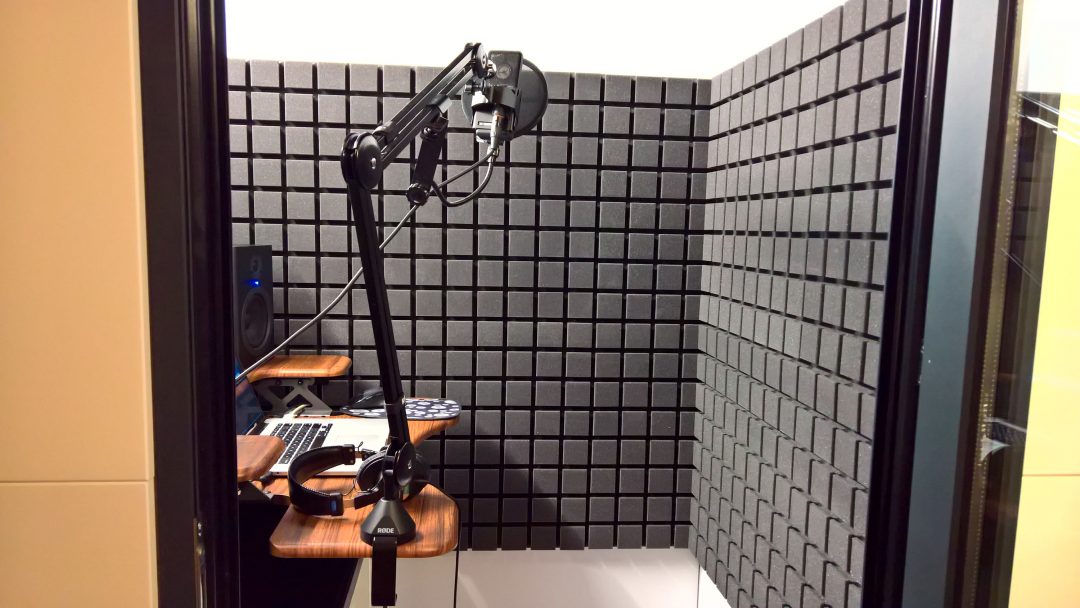
Enter StudioBricks, a cool startup from Barcelona. Founded by Guillermo Jungbauer, the small company makes and sells soundproof studios that click together like LEGO. The company started in 2008 and created a USA subsidy in 2014.

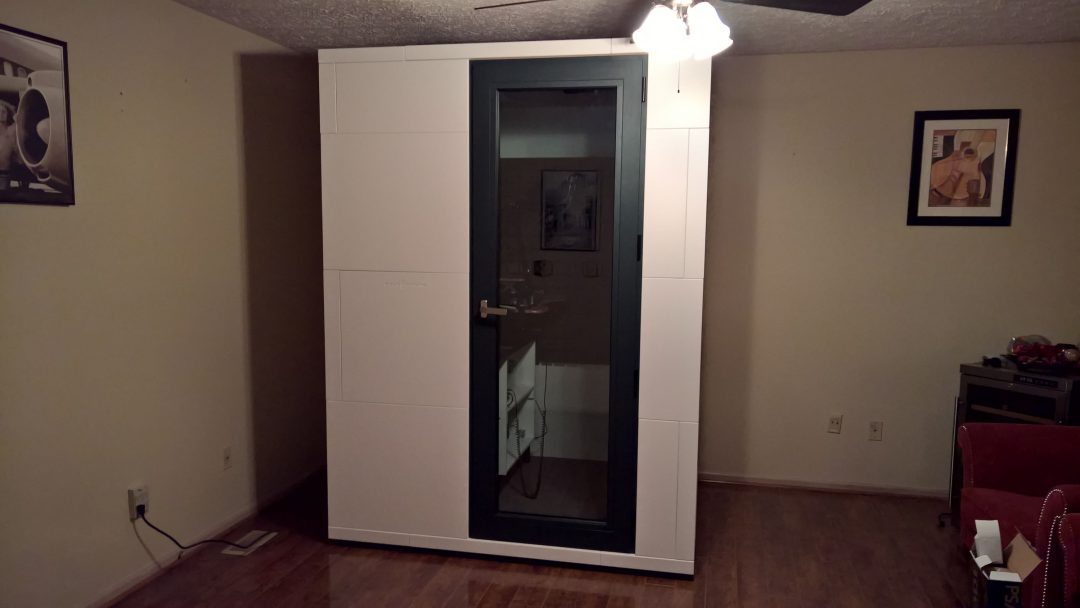
StudioBricks aren’t cheap. Rick paid $9,940 for his including almost $2,000 shipping. However, he said, it’s been a life-saver.

“The Studiobricks sound isolation booths are designed to be incredibly fast and easy to install without compromising the booths excellent sound isolating properties,” said Jungbauer. “This is achieved thanks to its modular panels which are built of high performance sound isolating materials and can simply be slotted together.”

The company sold 1,053 cabins in 207 and they’re on track to keep growing.

“About ten years ago I created the first booth as rehearsal space out of his own need as saxophonist,” said Jungbauer. “I developed the first bricks with acoustic engineers already having in mind the market possibilities.”

The system includes a ventilation system, a heavy, sound-proof door, and solid, sound-proofed wall panels. Rick, in his long build post, found it easy build and quite effective at keeping the plane noise at bay.

“From the beginning on Studiobricks aims to be eco-friendly. We are in a continuous process of improvement and have a strong commitment with the environment,” said Jungbauer. “That means that both, on an organisational level and product level we are improving continuously our processes and product considering the best options regarding the environment. For example years ago we changed our lacquer to a water based one. Our plant is the first and right now only in Spain using a biomass based central heating boiler.”

It’s cool to see a small European company selling a niche product gain such success. Because the company solves a notoriously difficult and wildly frustrating problem they are getting all the organic traction they need to keep going. Given the rise of corporate podcasting and other recording needs, a system like StudioBricks makes perfect sense. Considering it can be put together by two people in a few hours it is almost like the Ikea of vocal studios – compact, easy to build, and incredibly useful.

And now Rick doesn’t have to worry about the Delta flight from JFK intruding on his audio book reading session. Ganar-ganar, as they say in Barcelona.

18 Apr 2018

Amazon taps Best Buy to begin selling its smart TVs with Alexa

Amazon is looking to sell its Fire TV Edition smart televisions in a big box store, but thankfully it’s not Whole Foods. Instead, Amazon will be tapping a retailer whose life it has made incredibly difficult over the years, Best Buy, to begin selling smart televisions with its Fire TV capabilities baked in.

The displays from Toshiba and Best Buy’s own Insignia brand will come in 4K and HD varieties, with Best Buy exclusively partnering with Amazon to sell more than ten models of TVs starting this summer.

“Amazon and Best Buy have a long history of working together, and today we take our partnership to a new level,” Amazon CEO Jeff Bezos said in a statement.

There are a host of smart TVs already being sold at Best Buy stores, Amazon’s Fire TV products do pretty much everything that those do, but the direction integration of Alexa which can be used with the included remote control is definitely a major selling point.

Buying a TV remains one of the few technology purchases where an in-store visit feels pretty essential. Reviews are only so helpful and as resolutions climb, viewers need to see 4K televisions in real life to see if it’s something they need. Even as the prices have come down on the large screens, Best Buy has continued to devote a sizable section of their store space to TV gallery-viewing.

Though Amazon’s growth has been well-documented in the last several years, Best Buy has also had a surprising amount of success on Wall Street with the company more than doubling its share price in the past two years.

18 Apr 2018

Voicera scoops up AI note-taking app Wrappup

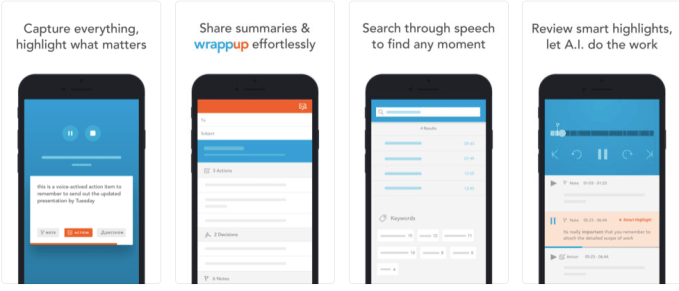
Voicera wants to be the company that eliminates the need for human note taking once and for all. Their vision is an AI-driven voice recognition system that not only takes notes, but identifies speakers and summarizes key points and action items. Today, the company announced it had acquired a similar startup, Wrappup, an AI-fueled note taking app that fits in nicely with that vision.

The Wrappup team is joining Voicera immediately. Terms were not disclosed.

Voicera CEO Omar Tawakol certainly saw the fit. “Both companies approached the problem with meetings in synergistic ways. Wrappup’s mobile-first, in-person meeting product complements and extends Voicera’s initial focus on conference calls,” he said in a statement.

Wrappup’s special strength it turns out it is identifying the salient points in a meeting in a mobile context. To that end, the company also announced the launch of a new mobile app. Chances are this combining of these two companies has been in the works for some time, and is just being made official today.

Photo: Voicera

Wrappup CEO Rami Salman says joining forces with Voicera creates a more compelling and powerful solution for customers. “Our combined tech stack and AI algorithms more accurately identify and summarize important moments from all your meetings, regardless of where they are held,” he said in a statement.

Voicera’s voice recognition tool is a cloud service called Eva. It is designed to remove the task of note taking from the meeting experience. The company got a $13.5 million Series A last month from some big-time investors including e.ventures, Battery Ventures, GGV Capital and Greycroft. They also got some attention from enterprise corporate venture investors including GV (the investment firm affiliated with Google), Microsoft Ventures, Salesforce Ventures and Workday Ventures. The level of these investors shows the company is attacking a real pain point for meeting attendees.

Wrappup is based in Dubai and was founded in 2015. Its raised $800,000 to date. It works with existing meeting tools including GoToMeeting from Citrix, WebEx from Cisco, UberConference and Zoom.

18 Apr 2018

Basis, a year-old startup that’s building a price-stable cryptocurrency, just raised $133 million from top investors

If you own any Bitcoin, you’re probably in the habit of watching its price fluctuate wildly. What you aren’t doing is using your Bitcoin to buy things. It’s too valuable, not to mention unpredictable.

Enter Basis, a year-old, 10-person, Hoboken, N.J.-based cryptocurrency startup at work on a “stable coin” whose elastic supply will ostensibly expand and contract to keep its value at about a dollar instead of all over the map. The company’s big idea: to develop a new token that people will actually use, instead of use to speculate.

Investors apparently love what Basis is cooking up. The upstart is announcing today that it has raised a somewhat stunning $133 million in funding from Bain Capital Ventures, GV, longtime hedge fund manager Stan Druckenmiller, one-time Federal Reserve governor Kevin Warsh, Lightspeed Venture Partners, Foundation Capital, Andreessen Horowitz, WingVC, NFX Ventures, Valor Capital, Zhenfund, Ceyuan, Sky Capital, Digital Currency Group and others.

Reuters reported on part of the round last October, though CEO Nader Al-Naji, who cofounded the company with former Princeton classmates Lawrence Diao and Josh Chen, didn’t share specifics at the time on how much the company was in the process of raising.

Al-Naji continues to keep details close to the vest, declining in an interview yesterday to discuss when, exactly, Basis’s tokens will be in circulation. He also declined to share when he believes the token could see widespread adoption or to elaborate about the “major apps” with which Basis plans to integrate.

He did explain his love of Bitcoin, which started during his senior year at Princeton in 2012 when he managed to mine 22 Bitcoins. (“There was free electricity on campus,” he told us with a laugh.) It returned in 2016 when, as he readily admits, he noticed his Bitcoin’s value begin to soar.

The three founders, who worked at D. E. Shaw and Google out of school, also have their eye on three ways to get Basis adopted. They think the developing world is one target market, given that many of countries’ currencies are devaluing at a rate of 10 percent of more right now. (Bitcoin was intended to solve the problem of developing nations but its currency has proved too volatile for the task.)

They see Basis positioned well to take advantage of the large crowdfunding market, in part because if you’re crowdfunding for more than a few days, the prices of many currencies can move, which is not ideal, particularly if those currencies are moving in a line toward the ground.

Not last, they imagine that cryptocurrency exchanges that are currently dealing with all kinds of pricing gyrations will embrace Basis.

How it works isn’t crystal clear to us as of this writing, but when demand is rising, the system will create more Basis, and when demand is falling, the company will reduce Basis’s supply to create an increase in price. We gather from its white paper that early investors benefit off this supply and demand.

Basis is not the only company working to develop a stable cryptocurrency for people who want to use digital currency as easily as they do fiat currencies. A growing number of companies sees the opportunity that Basis has in its sights. (You can learn more about some of them here.)

Still, Al-Naji sees Basis playing a winner-takes-all game. “We do believe that one winner will capture the most of the mind share and create products and an ecosystem that uses its cryptocurrency, and we think once that foothold is in place,” it’s game over for other competitors, he suggests.

Certainly, the kind of backing it’s announcing looks to help toward that end. More details would help, too.

We’ll have a bit more on this story later this morning…


18 Apr 2018

Wonolo picks up $13M to create a way to connect temp workers with companies

AJ Brustein was out spending time with a member of his merchandising team when a nearby store ran out of stock of some goods — but there was no one on staff responsible for that location. Fortunately, the employee he was with had already showed him how to restock the shelves, and he offered to peel off and do it himself.

But that gap in the workforce may have just continued, leading directly to potential lost revenue for companies that sell products in those stores. That’s why Brustein and Yong Kim started Wonolo, a tool to connect companies with temporary workers in order to fill the unexpected demand those companies might face in those same out-of-stock situations. Wonolo employees sign up for the platform, and the companies that partner with the startup have an opportunity to grab the necessary workers they need on a more flexible basis. Wonolo today said it has raised $13 million in a new financing round led by Sequoia Capital, including existing investors PivotNorth and Crunchfund, and new investor Base10. Sequoia Capital’s Jess Lee is joining the company’s board of directors as part of the financing.

“There’s a big opportunity  helping people fill in their schedule with shifts,” Brustein said. “We really found there’s this huge untapped market of people who are looking for work who are underemployed. Let’s say Mary is a great worker and has a great job at the Home Depot, but no matter how good she, is she can only get 29 hours of work. It’s hard to manage schedules between different employers that want you to work the same hours. That’s the market we’ve really focused on, the underemployed market, which is a growing unfortunate trend in the U.S. That’s changed a little bit about the types of jobs we have on the platform.”

Wonolo is essentially looking to replace the typical temp agency experience, which helps workers find positions with companies that need a more limited amount of time. Meanwhile, those workers get an opportunity to fill in extra shifts that they might need for additional income on a more flexible schedule. Once a company posts a job to Wonolo, employees will get notified that it’s available and then get a chance to pick up those shifts, and when the job is approved those workers get paid right away.

While the jobs that Wonolo is suited for are more along the lines of merchandising, events staff, or more general labor, the hope is that the service will also expose those employees to a variety of companies who may actually end up wanting to hire them at some point. It allows them to get a good snapshot of all the work that’s available, and theoretically would help offer them an additional step on a career path that could get them to a direct full-time job with any of the companies from which they might end up accepting jobs.

“We thought we could address [the idea of being able to deal with unpredictability] better than temp staffing, and we realized the antidote was flexibility on the worker side,” Brustein said. “We could match them with these jobs that would unpredictably pop up. When we dug into it, we realized flexibility was something that was just completely lacking for workers. We took a very different approach to the way that people will often recruit talent for staffing agencies or their own employees. We are looking at character traits.”

Wonolo was born out of Brustein and Kim’s experience at Coca-Cola, where they had an opportunity to work with a major brand for a number of years. After a while, they got an opportunity to start working on a more entrepreneurial project, and that’s when that whole merchandising scenario played out and prompted them to start working on Wonolo. That part about character traits is an important part for Wonolo, Brustein said — because as long as someone can complete a job, they don’t have to be an absolute expert, as long as they are there ready and good to go.

There are, of course, companies trying to create platforms for temporary workers, like TrueBlue, and Brustein said Wonolo will inevitably have to compete with more local players as it looks to expand. But the hope is that aiming to tap the same kind of flexibility that made Uber so popular for temporary staffers — and potentially that pathway to a big career opportunity — will be one that attracts them to their service.

18 Apr 2018

Here’s the 23rd batch of 500 Startups companies

500 Startups may soon be coming up on the one-year mark for the end of a tumultuous saga involving its founder, but its accelerator classes still continue to plug along — and its next batch is now getting ready to roll.

The firm’s 23rd batch of startups this year consists of the usual mix of business to business and consumer companies (even coffee) that end up in each class. This class is definitely a smaller one, but it still seems to spread a pretty wide number of different verticals. There’s also, of course, a blockchain track for this class, though a small percentage of the startups in it are taking part of that — and there was still a certain rigor they had to have to run through it.

“For every major tech movement, for every tech phase, there’s the infrastructure phase and the deployment phase,” 500 Startups partner Marvin Laio said. “Our view, with the blockchain, we’re in the infrastructure phase. A lot of these projects outside that we see and read about, they’re kind of bad. They’re really applications. There’s no point having a mobile app if you don’t have the app store. You need to build out the app store. For better or worse, we’re in the infrastructure phase right now.”

The firm is still clearly making some pretty big changes, including an unconventional deal with the Abu Dhabi Financial Group (ADFG) that gives it a stake in the firm’s parent company. The terms of that deal weren’t disclosed, it was another move among many by CEO Christine Tsai to begin to rework the mechanics of how the firm works — especially as it hopes to succeed as both a venture fund as as a program for entrepreneurs looking to get their companies off the ground. Dave McClure, the firm’s co-founder, resigned last year following allegations of sexual misconduct, and since then it’s been trying to get back to business as usual.

500 Startups takes a similar approach to other accelerators, where they will invest around $150,000 for a small chunk of equity and then take on a small amount of that back (a little more than $37,000) for program fees. The firm has primarily been known for its savvy when it comes to growth and marketing, so the support entrepreneurs get usually has that as a core part of the experience.

Here’s the next batch of 500 Startups companies:

  • Chipper — A mobile app that helps student loan borrowers pay off debt faster through round ups from everyday transactions and contributions from family and friends.
  • Copper Cow Coffee — A service that brings specialty Vietnamese coffee to offices and homes biodegradable pour over technology.
  • Finedine Menu — A management platform for restauranteurs to create data driven digital menus for a smarter dining experience.
  • Harmonica — A mobile application that helps users find the right life partner that focuses on quality and fits conservative cultures.
  • Koreaboo — A digital media company that creates and shares viral Korean pop culture content in English to millions of people around the world.
  • Lexop — A digital process server that allows law firms and property managers prove the delivery of their emails in a legal and trackable way.
  • Lexyom — An online platform that provides users with smart legal answers and tailored legal services using artificial intelligence.
  • Libra Credit — A global lending platform that allows anyone to borrow money against their crypto-curriences and crypto-assets
  • Metadium — An identity service platform that provides the fundamentals for various services providers to develop their business on the blockchain.
  • Orchard — A program for affordable smartphone insurance to enterprises, leveraging diagnostic software to make device support and claims a seamless self-serve experience.
  • Purple Go — Enables retailers in the $36B vision care industry to reach today’s omni-channel consumer with seamlessly integrated online and in-store mobile software services.
  • reflect — A mental health platform that reimagines in-person therapy to be more accessible and effective by using data-driven matching to increase engagement and outcomes.
  • Salusive Health — A nurse-based healthcare provider that offers a technology platform with clinical services to help physician practices streamline disease management.
  • Shezlong — An online mental health platform focusing in the Middle East and North Africa region that allows patients to be connected with licensed therapists via video visit on mobile or web.
  • Solana — A high performance blockchain that can scale over 700,00 transactions per second on stock hardware.
  • Starship — A mobile health savings account with automated investing built for humans.
  • StructionSite Inc — Lets construction project teams access the jobsite remotely and compare design to reality.
18 Apr 2018

Google Chrome now mutes annoying videos that autoplay with sound

There’s good news for Google Chrome users, the latest version of the world’s most popular web browser has arrived with a new feature that prevents websites from automatically playing sound. That means that pre-loaded videos, and other content that involves sound, won’t blare out unless you specifically choose to enable it to.

Aside from being a major annoyance, autoplay videos consume more data and can slow down the general browsing experience, which is particularly important when on a mobile device.

The update is due to ship to users in the coming days. The feature has been in development for Chrome since last year, but there are some exceptions.

Autoplay will only be allowed when the media itself doesn’t include sound, or when the user has indicated that they are interested in the media. In that latter case, interest is determined by a number of factors. Those include if the user has frequently played the media on the site before when visiting from a desktop browser, if they’ve tapped or clicked on the screen during the browsing session, or if they’ve added the site to their home screen on mobile.

VentureBeat, which first reported the arrival of the latest version of Chrome, found that results on YouTube were mixed — with some videos appearing to autoplay — but that does seem like the point of navigating to the world’s largest video website.

Nonetheless, Chrome also includes more granular controls that allow a user to permanently block autoplay videos on a particular website domain. So anyone could prevent YouTube.com or any other website from playing audio on launch if they wish to.