Year: 2018

16 Apr 2018

Scoop launches corporate carpooling in Portland

Carpooling app Scoop, which recently raised $10 million in funding, is expanding into its fourth market, Portland.

Scoop is a corporate carpooling service that works with companies like LinkedIn, Workday, T-Mobile and Symantec. In conjunction with its launch in Portland, Scoop is bringing on Oregon Health Science University as a customer.

“OHSU is continually striving to make getting to and from work as easy as possible for our employees,” OHSU Campus Services VP Scott Page said in a statement. “Our Transportation Demand Management team is pleased to add this service to our menu of options aimed at making the commute easier.”

With Scoop, trips are pre-scheduled, so you can select from one or more times you’d be willing to leave in the morning and afternoon, and have up until 9pm the night before for morning trips and 3:30pm the day of for afternoon trips to schedule your ride. After the deadline, Scoop’s algorithms work to automatically create the most efficient carpools based on routes, detours, company preference, favorites and more.

To date, Scoop has facilitated more than two million carpool rides. In addition to the SF Bay Area and Portland, Scoop operates in Seattle and Reno.

Scoop is not the only, nor the first company to do carpooling. Lyft, for example, began as a carpooling service called Zimride, which is now owned by Enterprise. There’s also Carma, which partners with federal and state transportation agencies.

Scoop has raised a total of $46 million in funding from investors like BMW iVentures, Signia, Index Ventures and others.

16 Apr 2018

Osama Hashmi on “Exponential Social Impact challenges”

This week on Technotopia I talked to Osama Hashmi, founder of Mocha 7 and a deep thinker on the topics of AI, blockchain, and the future. Hashmi was a bit of a downer in my optimistic view of the future but he had plenty to say, especially on the topic of human growth and improvement.

“There are many Exponential Social Impact challenges ahead and a positive future that can come from that,” he said. “We can put together an innovation ecosystem to solve this in a very positive way – but we have to start thinking about this.”

Take a listen and see what this positive – if wary – founder has to say about our collective futures. You can also read his book, Innovation Thinking.

Technotopia is a podcast by John Biggs about a better future. You can subscribe in Stitcher, RSS, or iTunes and listen the MP3 here.

16 Apr 2018

Teachable raises $4M to create a tool to turn any online class into a true business

Online coursework is exploding across all kinds of verticals and fields of expertise — but those courses inevitably end up on platforms like Udemy, and for Ankur Nagpal, that’s really not a way to build a true business.

That’s why Nagpal started Teachable, a platform for experts that want to create a business around their coursework that helps them build an entire online education suite beyond just platforms like Coursera or Udemy. Niche expertise can be way too valuable for just a simple marketplace like Coursera, Nagpal says, and experts in those areas — even seminars on mindfulness or Feng Shui — should be able to make more than just a few thousand dollars a year off that coursework. Nagpal said the company has raised an additional $4 million in equity from existing investors Accomplice Ventures and AngelList co-founder Naval Ravikant.

“In the past, if you wanted to teach courses, you could either put it in the marketplace or have it on your own website — with your brand and domain name and full control of everything — but there’s no easy way to do it,” Nagpal said. “It’s the difference between listing a physical good on Amazon and having your own storefront. While you could make a few thousand dollars on Udemy, you couldn’t build a sustainable business selling courses for $10 to $15.”

That fundraise, however, comes with a whopping $134 million valuation in the end as the company expects to be profitable by the end of Q4 this year. Teachable has around 10 million students across 125,000 courses, with 12,000 paying customers on the platform. Nagpal says it is aiming for a business that will generate more than $200 million in sales this year, which might not be so far off given the speed at which it has ramped up from just $5 million in 2015 to around $90 million in 2017.

In Teachable’s earliest days, instructors focused on marketing or programming, which is where a lot of online coursework got its start when the value of knowledge skills like Ruby or Python skyrocketed. But since then, Teachable has grown into a platform where users with niche skill sets can create robust coursework, and if they already have content ready to go like videos, can get their domain up and running in just a few hours. Teachable has a multi-tier pricing structure ranging from taking small transaction fees to a paid subscription of nearly $299 a month in order to manage its online domains, which is designed to appeal to a wide variety of potential instructors looking to get their start.

“If you look at our top 10 or 20 instructors, there’s virtually no pattern of verticals that are successful,” Nagpal said. “[The popular courses are based on] professional skills, or learning to play a musical instrument, or fly a drone, or even financial empowerment. There’s almost an anti-pattern.”
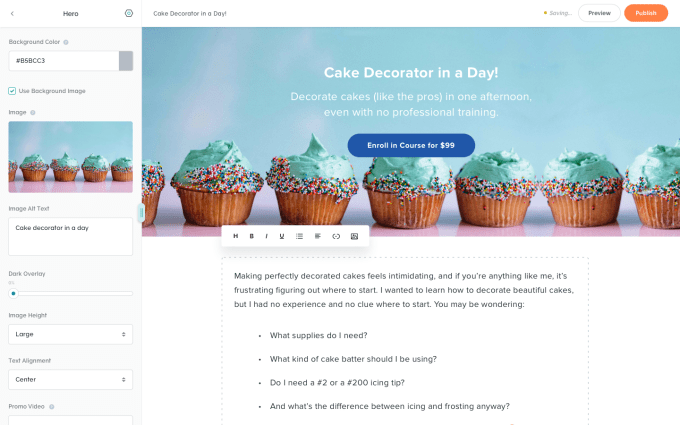
And again, these aren’t supposed to be courses that get wrapped up into a $49 per-month subscription. Courses in highly specific verticals — like something like Feng shui — can cost up to a hundred dollars or more. But the idea is that these seminars have so much value that students who are looking to dive deep into them are willing to go beyond the cost of just a Udemy in order to get the most valuable content. Teachable aims to make it easy to port the kind of content instructors might post on one of those marketplaces to quickly get them up and running with their own independent online course.

That free plan with a transaction fee is ultimately what at least piques the interest of potential instructors, and Teachable also hosts workshops to try to get them more excited about the opportunity — and then get them to start paying as they look to attract more and more students and need a more robust toolkit, like advanced reporting. or priority product support. The company doesn’t really focus on paid marketing because Nagpal says it’s “not very good at it,” as it primarily leans on word of mouth and affiliates.

“Courses on marketplaces are effectively commoditized,” he said. “I would buy the top-rated courses, but the first course is as valuable as the second or third. On our platform, if people are buying the Ruby on Rails course, it’s probably because they’ve followed an expert on that for a year. What I’m buying is not commoditized, I have a relationship with that person. Their content is much more valuable. All the sales are generated through an instructor.”

Nagpal said he got his start building a bunch of, well, bad Facebook apps like personality quizzes and really simple flash games in the early days of the Facebook Platform. Getting such an early glimpse at that behavior on the Facebook Platform is pretty controversial today with the massive privacy scandal Facebook faces after Cambridge Analytica, a political research firm, ended up with personal data of up to 87 million people through a simple app on the Facebook Platform. Nagpal, however, said what now seems like a treasure trove of data was at the time not really all that useful for that business.

“We got some of that data, but to us it was junk and we never stored it,” he said. “It just seemed like noise.”
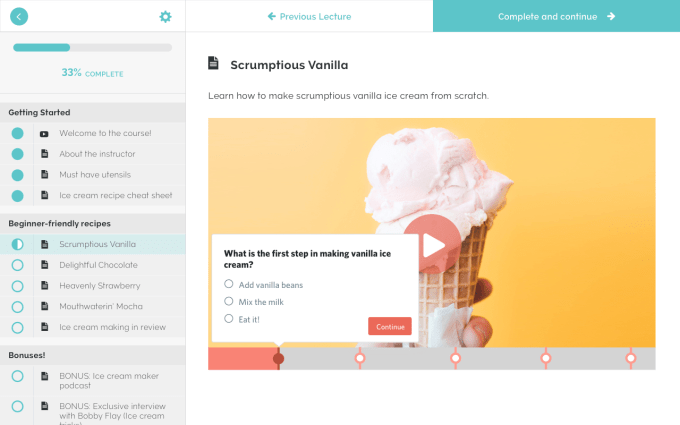
The biggest challenge for Teachable, Nagpal says, is making sure instructors actually want to remain instructors. The free tier might attract them to getting started, but instructors might just get burnt out from being instructors in general — whether that’s on Teachable or a marketplace like Udemy. The real competition, he says, are platforms like YouTube and other time sinks for content creators. To keep them on board, Teachable hopes to expand to other verticals of content like coaching and services. That, too, might keep it ahead of marketplaces like Coursera and eventually woo instructors with the opportunity to build an entire online business on Teachable.

“Every month we have 50 people getting more [than the top paid instructor on a platform like Skillshare],” he said. “The sustainability of the business is very different. It’s really hard to make a living selling $10 courses. On our platform, the average price point is closer to $100, which in turn gets reinvested to create actually good content. We’re finding most of the instructors don’t just sell courses, and they have multiple income streams. We’re trying to see if we can get our checkout product powering all that. That creates network lock-in.”

Teachable also took on a few smaller investors including Shopify founder Tobias Lutke, Weebly founder Chris Fanini, Lynda.com CEO Eric Robison, and Getty Images founder Jonathan Klein.
16 Apr 2018

The Skagen Falster is a high fashion Android wearable

Skagen is a well-know maker of thin and uniquely Danish watches. Founded in 1989, the company is now part of the Fossil group and, as such, has begin dabbling in both the analog with the Hagen and now Android Wear with the Falster. The Falster is unique in that it stuffs all of the power of a standard Android Wear device into a watch that mimics the chromed aesthetic of Skagen’s austere design while offering just enough features to make you a fashionable smartwatch wearer.

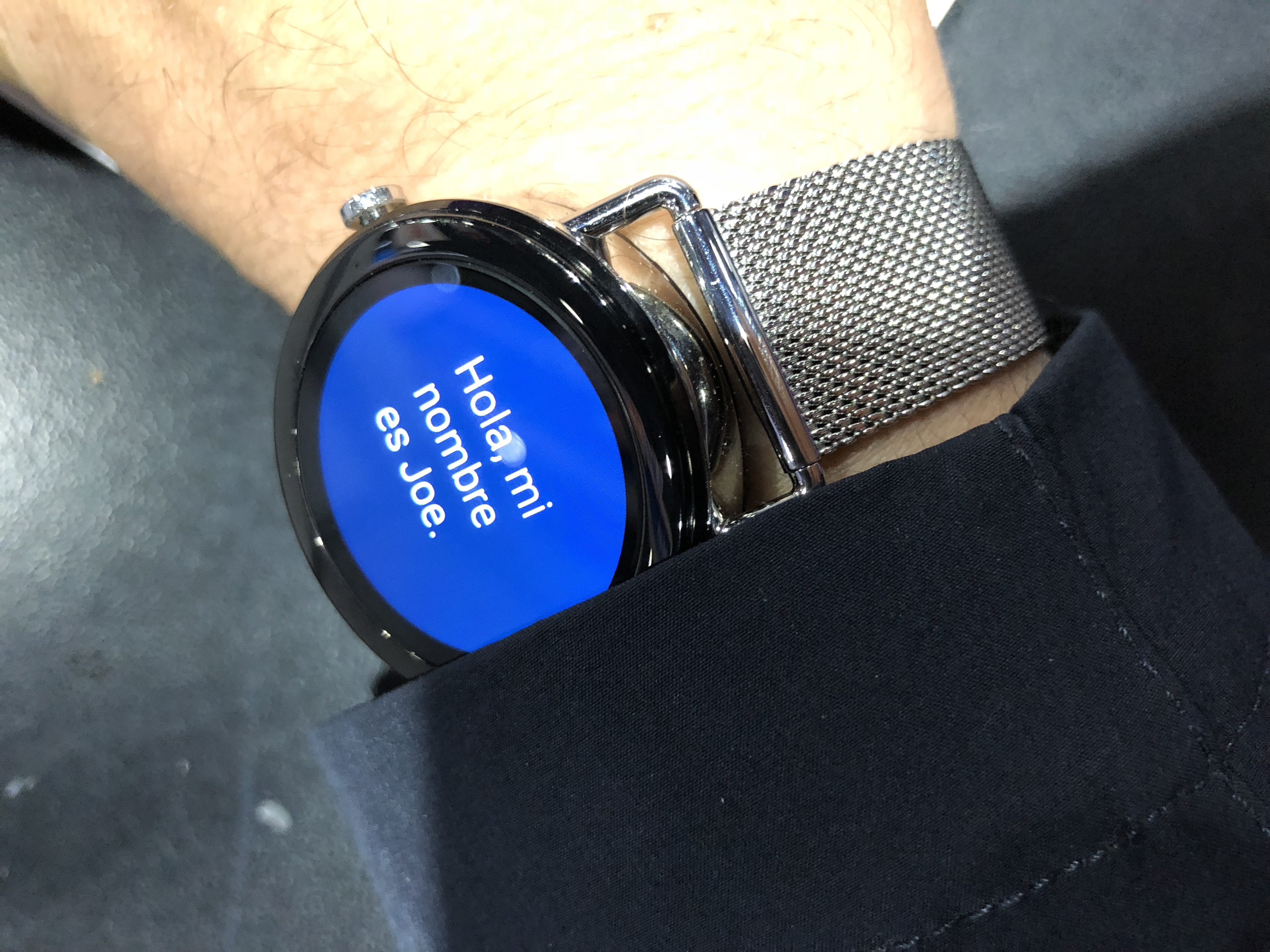
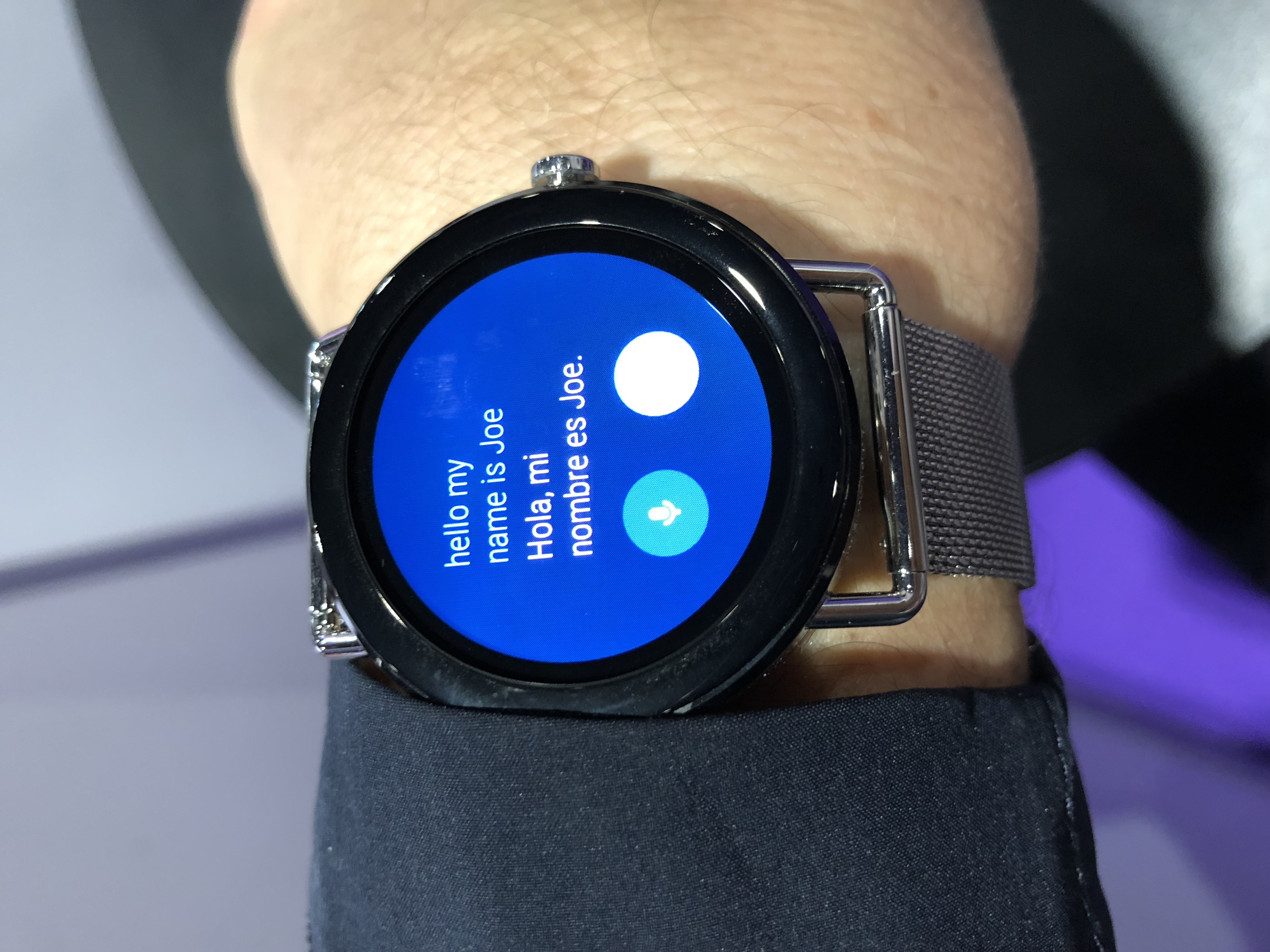
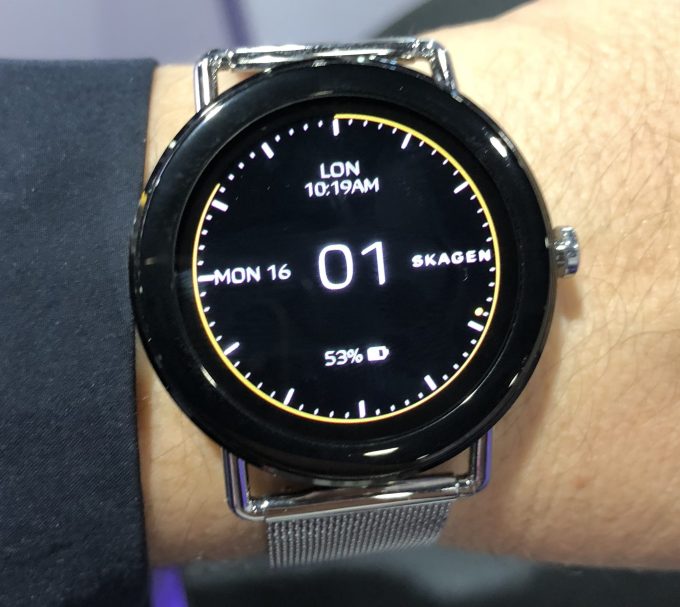
The Falster, which costs $275 and is available now, has a fully round digital OLED face which means you can read the time at all times. When the watch wakes up you can see an ultra bright white on black time-telling color scheme and then tap the crown to jump into the various features including Android Fit and the always clever Translate feature that lets you record a sentence and then show it the person in front of you.

You can buy it with a leather or metal band and the mesh steel model costs $20 extra.

Sadly, in order stuff the electronics into such a small case, Skagen did away with GPS, LTE connectivity, and even a heart-rate monitor. In other words if you were expecting a workout companion then the Falster isn’t the Android you’re looking for. However, if you’re looking for a bare-bones fashion smartwatch, Skagen ticks all the boxes.

[gallery ids="1622526,1622527,1622528,1622529"]

What you get from the Flasterou do get, however, is a low-cost, high-style Android Wear watch with most of the trimmings. I’ve worn this watch off and on few a few weeks now and, although I do definitely miss the heart rate monitor for workouts, the fact that this thing looks and acts like a normal watch 99% of the time makes it quite interesting. If obvious brand recognition nee ostentation are your goal, the Apple Watch or any of the Samsung Gear line are more your style. This watch, made by a company famous for its Danish understatement, offers the opposite of that.

Skagen offers a few very basic watch faces with the Skagen branding at various points on the dial. I particularly like the list face which includes world time or temperature in various spots around the world, offering you an at-a-glance view of timezones. Like most Android Wear systems you can change the display by pressing and holding on the face.

It lasts about a day on one charge although busy days may run down the battery sooner as notifications flood the screen. The notification system – essentially a little icon that appears over the watch face – sometimes fails and instead shows a baffling grey square. This is the single annoyance I noticed, UI-wise, when it came to the Falster. It works with both Android smartphones and iOS.

What this watch boils down to is an improved fitness tracker and notification system. If you’re wearing, say, a Fitbit, something like the Skagen Falster offers a superior experience in a very chic package. Because the watch is fairly compact (at 42mm I won’t say it’s small but it would work on a thinner wrist) it takes away a lot of the bulk of other smartwatches and, more important, doesn’t look like a smartwatch. Those of use who don’t want to look like we’re wearing robotic egg sacs on our wrists will enjoy that aspect of Skagen’s effort, even without all the trimmings we expect from a modern smartwatch.

Skagen, like so many other watch manufacturers, decided if it couldn’t been the digital revolution it would join it. The result is the Falster and, to a lesser degree, their analog collections. Whether or not traditional watchmakers will survive the 21st century is still up in the air but, as evidenced by this handsome and well-made watch, they’re at least giving it the old Danish try.

16 Apr 2018

Sword Health raises $4.6M for its digital physiotherapy solution

Sword Health, a startup operating out of Portugal that has developed a digital physiotherapy solution to enable patients to be treated remotely in their own homes, has raised $4.6 million in seed funding. Backing the round is Green Innovations, Vesalius Biocapital III, and other unnamed investors in the U.S. and Europe.

The company says it will use the new capital, which adds to an earlier ~$1.2 million grant from the European Commission, to accelerate the development of new digital therapies and drive global growth.

Using what it describes as a combination of “high-precision motion tracking sensors” and the latest advances in AI, the Sword Health solution aims to make the delivery of physiotherapy infinitely more scalable, in recognition that there is a worldwide shortage of physiotherapists. Its flagship product “Sword Phoenix” provides patients with interactive physical rehabilitation exercises from the comfort of their own home, supervised by remote physiotherapists.

“Twenty years ago my brother had a car accident. What I realised then (and this is still true now) is that there is a huge gap between the demand for physical therapy and our ability, as a developed society, to deliver that therapy,” Sword Health co-founder and CEO Virgílio Bento tells me.

“The problem is that the physical rehabilitation industry has not changed in the last 50 years. We’re still very much dependent on the one-to-one patient-therapist interaction, which is the gold standard, but it is not a scalable model and is actually very costly for both patients and healthcare providers”.

To remedy this, Bento and the Sword team began work on what he calls a “digital physical therapist” concept. The idea is that by using motion sensors attached to the appropriate places of a patient’s body, combined with an AI-driven user interface that can take that motion data and give instant feedback, some of what a physiotherapist does can be augmented by machines.

“With Sword Phoenix, clinical teams extend their therapeutic footprint to each patient’s home, scale their reach and are able to devote more time to delivering the human touch,” he says.

To date, Bento says Sword is working with insurance companies, national health services, health maintenance organisations and providers in the U.S., Canada, Australia, Norway, and the startup’s home country, Portugal.

“These customers are able to provide higher quality physical therapy services directly in the patient’s home and decrease operational costs at the same time – an accomplishment that is only possible in healthcare through enlightened use of data analysis and technology,” he adds.

In terms of competitors, Bento argues that the majority of health tech companies are focused on developing technologies that improve the one-to-one patient therapist interaction (e.g., Tyromotion, Hocoma). “This incremental improvement is not the solution because it does not result in a paradigm shift,” he says.

With that said, Bento does conceded that there are other startups trying to create a digital therapist. One I’ve covered in detail is Atomico-backed Hinge Health, which has developed a digital solution for musculoskeletal (MSK) disorders.

16 Apr 2018

Sword Health raises $4.6M for its digital physiotherapy solution

Sword Health, a startup operating out of Portugal that has developed a digital physiotherapy solution to enable patients to be treated remotely in their own homes, has raised $4.6 million in seed funding. Backing the round is Green Innovations, Vesalius Biocapital III, and other unnamed investors in the U.S. and Europe.

The company says it will use the new capital, which adds to an earlier ~$1.2 million grant from the European Commission, to accelerate the development of new digital therapies and drive global growth.

Using what it describes as a combination of “high-precision motion tracking sensors” and the latest advances in AI, the Sword Health solution aims to make the delivery of physiotherapy infinitely more scalable, in recognition that there is a worldwide shortage of physiotherapists. Its flagship product “Sword Phoenix” provides patients with interactive physical rehabilitation exercises from the comfort of their own home, supervised by remote physiotherapists.

“Twenty years ago my brother had a car accident. What I realised then (and this is still true now) is that there is a huge gap between the demand for physical therapy and our ability, as a developed society, to deliver that therapy,” Sword Health co-founder and CEO Virgílio Bento tells me.

“The problem is that the physical rehabilitation industry has not changed in the last 50 years. We’re still very much dependent on the one-to-one patient-therapist interaction, which is the gold standard, but it is not a scalable model and is actually very costly for both patients and healthcare providers”.

To remedy this, Bento and the Sword team began work on what he calls a “digital physical therapist” concept. The idea is that by using motion sensors attached to the appropriate places of a patient’s body, combined with an AI-driven user interface that can take that motion data and give instant feedback, some of what a physiotherapist does can be augmented by machines.

“With Sword Phoenix, clinical teams extend their therapeutic footprint to each patient’s home, scale their reach and are able to devote more time to delivering the human touch,” he says.

To date, Bento says Sword is working with insurance companies, national health services, health maintenance organisations and providers in the U.S., Canada, Australia, Norway, and the startup’s home country, Portugal.

“These customers are able to provide higher quality physical therapy services directly in the patient’s home and decrease operational costs at the same time – an accomplishment that is only possible in healthcare through enlightened use of data analysis and technology,” he adds.

In terms of competitors, Bento argues that the majority of health tech companies are focused on developing technologies that improve the one-to-one patient therapist interaction (e.g., Tyromotion, Hocoma). “This incremental improvement is not the solution because it does not result in a paradigm shift,” he says.

With that said, Bento does conceded that there are other startups trying to create a digital therapist. One I’ve covered in detail is Atomico-backed Hinge Health, which has developed a digital solution for musculoskeletal (MSK) disorders.

16 Apr 2018

New York’s programming ed tech startup, General Assembly, sells to Adecco for $413 million

The European human resources services company Adecco Group said that is acquiring the New York-based, programming, design, and management training startup General Assembly for $413 million.

With the acquisition, Adecco adds to its ability to provide job training and re-skilling services for businesses. It’s proof that General Assembly’s own business has come a long way since its early days as a startup offering continuing education or training programs for new entrants into the tech-enabled white collar workforce.

General Assembly was worth $440 million after its last, $70 million investment round, according to a report in Axios, which means that early stage investors will see a nice return on their investment while many later stage backers — including Wellington Management and Fresco Capital are looking at some pretty flat returns.

Investors likely popping some corks right now include Alex Ohanian’s Initialized Capital, Maveron, and Bezos Expeditions, the venture capital fund of Amazon founder Jeff Bezos (who clearly needs the money).

It’s not an ignominious outcome for General Assembly, which brought in $100 million in 2017, but not the exit that many in the New York tech ecosystem had hoped for.

Over time, General Assembly became less of a consumer facing business and transitioned into one that was serving primarily business clients — which means access to Adecco Group’s over 100,000 businesses is a big boon to the company’s continued expansion plans.

“By offering General Assembly’s services alongside the Group’s existing talent development, career transition and professional staffing solutions we will be able to better respond to… client needs, enhancing both access to and the supply of the most in-demand skills,” said Alain Dehaze, chief executive of the Adecco Group, in a statement.


The company will continue to operate as a separate division and will continue to be led by Jake Schwartz, General Assembly’s founder and chief executive. Schwartz will report to Sergio Picarelli on Adecco’s executive committee.

“General Assembly has always been about creating bridges between education and employment — that’s what has allowed us to scale to 20 campuses, 50,000 alumni, and over 300 Fortune 500 clients,” says Schwartz, in a statement. “As our work with employers has grown, so has our need to connect in a deeper way with the world of human capital, and that is why we are so excited about the transformational opportunities that come with this partnership.”

Adecco has been on a mini-shopping spree lately for venture-backed human resources startups. Earlier this year, the company acquired Vettery in a $100 million deal. That company had developed a marketplace where job candidates could look at offers and schedule interviews with potential employers that interested them — with the potential to receive a signing bonus from Vettery when they took a position.

It’s clear that technology is radically transforming the human resources industry — with new startup companies offering matching, vetting, training, and retraining technologies for employers and job seekers alike.

With these two acquisitions Adecco seems to be pulling the trigger on the starting gun for consolidation in the space. It’s another example of large corporations looking to buy their way into innovation — before they’re overwhelmed by a potential new generation of competitors.

16 Apr 2018

Ola will add 10,000 electric rickshaws to its India fleet over the next year

Ola announced today that it will add 10,000 electric auto-rickshaws to its fleet in India over the next 12 months. The program, called “Mission: Electric,” is part of its ambitious plan to put one million electric vehicles on the road by 2021. The company launched a trial EV program last year in the city of Nagpur, but has reportedly run into some recent road bumps.

Three-wheel rickshaws are a popular way of making quick trips in many cities and can be hailed through Ola’s app; the company’s electric vehicle trial program in Nagpur, which started in May 2017, already includes rickshaws. As part of “Mission: Electric,” Ola said it will add 10,000 new electric rickshaws across three additional cities this year.

To enable drivers to switch to EVs, Ola’s program also includes infrastructure like rooftop solar panels and charging stations. Last month, however, Factor Daily reported that Ola is scaling back its electric vehicle plans after India’s government appeared to become less enthusiastic about creating an explicit EV policy, despite its previously stated goal of making all new vehicles electric by 2030.

Around the same time, Reuters reported that many Ola drivers participating in its Nagpur trial wanted to switch back to fuel-powered cars because of long waiting times at charging stations and higher operating costs.

An Ola representative told TechCrunch that the company has installed charging dockets at the homes of some drivers so they can save time by swapping out batteries, stating that “with new technologies like battery swapping, the charging experience has been significantly improved.” Ola is currently in discussions with several state and municipal governments about where to launch its electric rickshaw program and is “willing to work with any city committed to sustainable mobility solutions.”

“We have clocked more than four million [electric] kilometers and have learned the ins and outs of vehicles, capabilities and applications. We have learned real-world operating challenges and cost implications of chargers, batteries and solars,” she added. “Deployment of electric vehicles would require support of like-minded partners.”

16 Apr 2018

Meet TechCrunch in Africa Next Week

Last October, TechCrunch launched Startup Battlefield Africa in Nairobi, Kenya, where Lori Systems, SynCommerce & AgroCenta, were among the judges top picks. This week, TechCrunch is headed back to Africa to checkout the amazing startups taking root for our global Startup Battlefield competitions. Startup Battlefield at Disrupt in San Francisco September 5-7th is now open, and founders can apply here.

Startup Battlefield Director, Samantha Stein will be in Lagos, Nigeria and Accra, Ghana to meet with founders, investors, angels, and established entrepreneurs across the ecosystem. Startups and investors can learn more about TechCrunch’s Startup Battlefield program at one of the upcoming meet and greets listed below.
Founders will learn how to apply for Battlefield with a solid application, and investors will learn how to refer companies in their portfolio.

Meet and greats are already filling up, so make sure to RSVP ASAP.

Startup Battlefield is TechCrunch’s renowned startup launch competition. The Startup Battlefield alumni community comprises almost 750 companies that have raised over $8 billion USD, and produced over 105 successful exits and IPOs.

2018 TechCrunch Africa Meet and Greets

Lagos, Nigeria

April 17th, Tuesday
Host: CC Hub
Time: 1:30pm – 3:00pm
RSVP

April 18th, Wednesday
Host: MEST
Time: 3:30pm
**This is an invite only event

Accra, Ghana

April 20th, Friday
Host: MEST
Time: 3:00pm – 5:30pm
RSVP

April 20th, Friday
Host: Impact Hub
Time: 6:00pm – 7:30pm
RSVP
*For questions, please email battlefield@techcrunch.com


16 Apr 2018

Meet TechCrunch in Africa Next Week

Last October, TechCrunch launched Startup Battlefield Africa in Nairobi, Kenya, where Lori Systems, SynCommerce & AgroCenta, were among the judges top picks. This week, TechCrunch is headed back to Africa to checkout the amazing startups taking root for our global Startup Battlefield competitions. Startup Battlefield at Disrupt in San Francisco September 5-7th is now open, and founders can apply here.

Startup Battlefield Director, Samantha Stein will be in Lagos, Nigeria and Accra, Ghana to meet with founders, investors, angels, and established entrepreneurs across the ecosystem. Startups and investors can learn more about TechCrunch’s Startup Battlefield program at one of the upcoming meet and greets listed below.
Founders will learn how to apply for Battlefield with a solid application, and investors will learn how to refer companies in their portfolio.

Meet and greats are already filling up, so make sure to RSVP ASAP.

Startup Battlefield is TechCrunch’s renowned startup launch competition. The Startup Battlefield alumni community comprises almost 750 companies that have raised over $8 billion USD, and produced over 105 successful exits and IPOs.

2018 TechCrunch Africa Meet and Greets

Lagos, Nigeria

April 17th, Tuesday
Host: CC Hub
Time: 1:30pm – 3:00pm
RSVP

April 18th, Wednesday
Host: MEST
Time: 3:30pm
**This is an invite only event

Accra, Ghana

April 20th, Friday
Host: MEST
Time: 3:00pm – 5:30pm
RSVP

April 20th, Friday
Host: Impact Hub
Time: 6:00pm – 7:30pm
RSVP
*For questions, please email battlefield@techcrunch.com