
Year: 2018

12 Apr 2018

Dutch uni spinout gets $1.2M for its zero ink printing tech

Tocano, a spinout from Delft Technology University in the Netherlands which is working on an inkless printing technology, has closed a €1 million angel round to fund the next stage of its tech development and move a step closer to building its first commercial product.

The startup began as the graduate student project of co-founder Venkatesh Chandrasekar who, along with fellow student Van der Veen, founded the business in 2015, gaining early backing from the university.

The team now consists of eight employees and is part of the business incubator Yes!Delft.

Now it’s true there are already some ‘inkless’ printing technologies in use commercially. One we covered back in 2009 is Zink: A color printer which doesn’t require ink cartridges in the actual printer; but does require special Zink photo paper which has colored ink embedded in it. So an ‘inkless printer’, technically, but not actually ink-less technology.

Tocano’s tech — which it is branding Inkless — has a much cleaner claim to the name because it doesn’t involve having to use ink-saturated paper. Nor any other type of special paper, such as thermal-coated paper — which is another type of inkless printing already in use (such as for receipts).

Rather they are using an infrared laser to burn the surface of the paper — so carbonization is being used as the printing medium.

And they claim their technique is able to produce black and white printing with blacks as dark and stable as ink-based prints. Though, clearly, they’re still early in the development process.

Here’s a photo of their current prototype, alongside a sample of text printed with it:
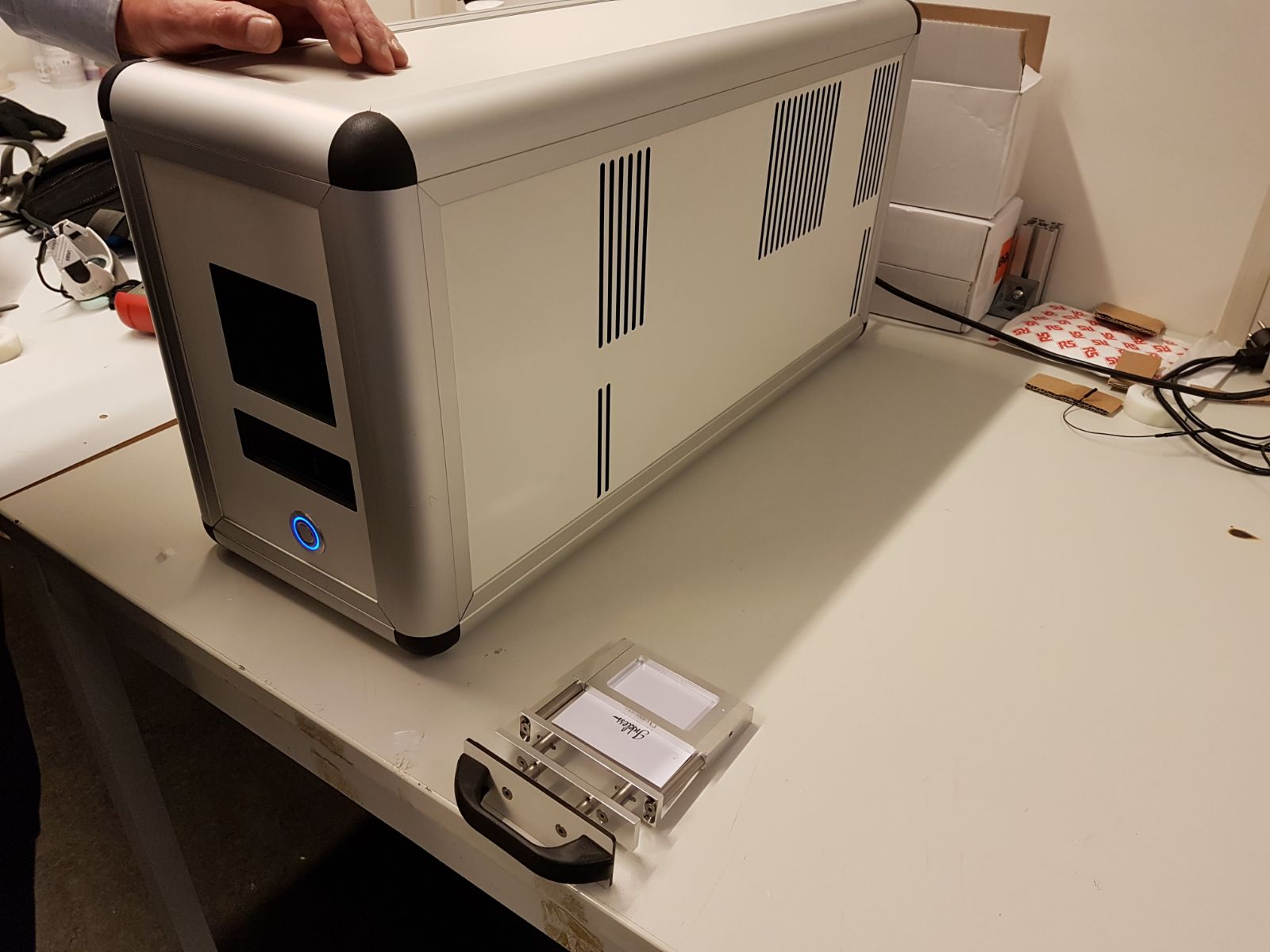
The angel funding will be used to try to reach what they dub “a competitive printing performance”. After which they say they’ll need to raise more money to build the first product — so they’re already planning the next financing round (for the end of the year).

“With this money we can make our technology ‘development-ready’, which means that we can meet the required quality and speed performance requirements so that we can begin with the development of our first product”, says co-founder and CEO Arnaud van der Veen in a statement.

“[The] next round will either be financed by strategic partners or venture capitalists. The first meetings have already taken place.”

If they can successfully productize their laser carbonization technique the promise is printing without the expense, waste and limits imposed by ink refills plus other consumables.

“I always compare this to the transition from the analogue camera to the digital camera,” says van der Veen.  “Suddenly people were able to make unlimited photos and it was not needed to replace the films. Likewise, with our printing solutions, refill and replacement of ink and consumables will not be needed.”

Though quite how expensive the next-gen laser printer machines themselves will be if/when they arrive on shop shelves remains to be seen.

Tocano says its first product will be aimed at industrial users for packaging and labelling use cases — such as printing barcodes, shelf life data and product codes on packages and labels.

Its ambition is to range out after that, bringing additional printer products to market targeting other business users — and eventually even the consumer market.

“Our first product will fit [the packaging/labelling] market but after that we will make the technology accessible for production printers, office printers, consumer printers and receipt printers. In all these market we can offer the same advantages, a cheaper and more sustainable printer without any hassle with ink, cartridges or toners,” he adds.
12 Apr 2018

Applications for Startup Battlefield at Disrupt SF are now open

Listen up startup fans — the moment you’ve all been waiting for has arrived. Applications to Startup Battlefield are finally open! Now, we told you that Disrupt San Francisco 2018 is going to be our biggest, boldest, most ambitious Disrupt ever: triple the floor space, 12 technology tracks, four unique stages and more than 10,000 people. Clearly, an “ordinary” Startup Battlefield simply will not do. Drum roll, please.

This year, we’re doubling the prize for the Startup Battlefield competition. That’s right, the grand-prize winner will take home $100,000 in cold, hard, non-equity cash. How’s that for motivation? Drop whatever you’re doing and apply today.

Startup Battlefield takes place at Disrupt San Francisco on September 5-7, 2018 at Moscone Center West. TechCrunch editors will review all applications and select between 15-30 of the top early-stage startups to compete. Each team will receive expert pitch coaching from our seasoned TechCrunch Startup Battlefield team.

Come the big day, the competitors have six minutes on the Disrupt SF Main Stage to pitch their company to a panel of judges — consisting of well-known investors, entrepreneurs and technologists — and then answer any questions they may ask. From that initial cohort, the judges will choose five teams to enter a second and final round of pitching to a fresh team of judges. From that impressive gang of five one winner will claim the illustrious Disrupt Cup and receive the largest equity-free cash prize in TechCrunch Disrupt history. Imagine what your company could do with that kind of bank — not to mention the massive media exposure and access to eager investors.

This entire thrilling, nerve-wracking process plays out in front of a live audience numbering in the thousands, and it’s also live-streamed around the world (and available later on-demand) on TechCrunch.com, YouTube, Facebook and Twitter.

Here’s the thing. You stand to gain a lot even if you don’t actually win Startup Battlefield. Consider this: Every company that competes in Startup Battlefield joins the Startup Battlefield alumni community. This community consists of almost 750 companies that have collectively raised more than $8 billion in funding and produced more than 100 exits. Names like Mint, Dropbox, Yammer, Fitbit, Getaround and Cloudflare might ring a bell. The networking possibilities are limitless.

And, of course, Disrupt SF offers three days packed with exciting and cutting-edge tech programming, world-class speakers, Startup Alley, Q & A Sessions, the Virtual Hackathon and world-class networking made easy with the CrunchMatch platform.

Disrupt SF 2018 takes place on September 5-7, 2018 at Moscone Center West. Don’t miss your chance to compete in the biggest Startup Battlefield ever. Apply right now.

12 Apr 2018

SpaceX has authorized new shares that could value it at $24B

SpaceX has authorized a new Series I round for 3 million shares in a new round that will be worth up to $507 million, according to a certificate of incorporation document filed in Delaware.

If all shares in this round are issued, the new round would value SpaceX at around $23.7 billion, according to the new filing provided by Lagniappe Labs, creator of the Prime Unicorn Index. We’ve previously reported that SpaceX was planning to raise around $500 million in a financing round led by Fidelity, helping provide a lot of liquidity for the company as it begins to ramp up its plans to grow its ambitious launch schedule. While the filing does not confirm that it has raised the full $500 million, it serves as another data point to support that the company has picked up an additional huge influx of cash. The 3 million shares are priced at $169, in the range that we previously reported mid March.

The FCC in March gave SpaceX the green light to launch a network of thousands of satellites to blanket the globe with broadband access. Each additional flight offers SpaceX an opportunity to not only prove out its efficiency as a launching company, but also that it can provide a wide array of companies with a potentially cheaper option to get equipment into orbit for purposes like providing broadband. SpaceX already runs plenty of missions to the International Space Station. SpaceX also won a $290 million contract with the U.S. Air Force to launch three GPS satellites.

SpaceX isn’t the only company that may end up providing a new generation of orbital launches, like Jeff Bezos’ Blue Origin. Virgin Galactic also successfully tested its rocket-powered spacecraft for the first time since 2014 earlier this week, and while the details on that launch are still very slim it shows that there’s a wide variety of companies that see potential in figuring out a lower-cost way to get equipment into orbit.

We also previously reported that there could be a secondary offering that could also total up to $500 million in shares. That would run through special purpose vehicles, according to what we’re hearing, which would give investors an opportunity to get some liquidity in the company as it looks to remain private a little longer with the new financing.

We reached out to SpaceX for a comment and will update the story when we get back.

12 Apr 2018

Sophia Amoruso, Carbon’s Joseph DeSimone, and Adidas’ Eric Liedtke to crash Disrupt SF

Disrupt lands in San Francisco this September, and the agenda is shaping up to be absolutely amazing.

With new digs at Moscone West and expanded capacity, we expect Disrupt SF (September 5-7) to be the biggest and best conference TechCrunch has ever had. And, in large part, that’s credited to our incredible guests.

Today, we’re pleased to announce that GirlBoss Media CEO Sophia Amoruso, as well as Carbon CEO Joseph DeSimone and Adidas CMO Eric Liedtke, will be joining us on the Disrupt stage.

Sophia Amoruso

It’s been four years since GirlBoss Sophia Amoruso graced the Disrupt stage.

A lot has changed since then. Amoruso stepped down as CEO of Nasty Gal, which soon after filed for bankruptcy. She exposed her personal life, and faced harsh criticism, on a brief Netflix original series called GirlBoss.

But Amoruso is neither down nor out. The serial entrepreneur has started another venture by a familiar name. Amoruso described GirlBoss Media to investors as “Oprah for millennials and Supreme with boobs.”

Inspired by Amoruso’s memoir #GirlBoss, GirlBoss Media aims to motivate women to take action in their lives.

There’s something spectacular about falling off the horse and getting back up again, and we’re extremely excited to hear Amoruso tell her story in her own words on the Disrupt SF stage in September.

Bonus: We’re bringing in former TechCrunch co-editor Alexia Tsotsis to conduct the interview, four years after she interviewed Amoruso at Disrupt NY 2014. Tsotsis is now the founder of an SF-based seed-stage fund called Dream Machine.

Joseph DeSimone and Eric Liedtke

You might not equate sneakers with technological advancement, but Carbon and Adidas could quickly prove you wrong.

Carbon, the 3D printing startup that has raised more than $420 million, has fundamentally changed manufacturing by creating a proprietary CLIP tech that speeds up the process of additive manufacturing by leaps and bounds.

Looking for proof of concept? Look no further than Adidas, who has invested in Carbon to help manufacture its 3D-printed Futurecraft sneakers. Carbon’s 3D printers (in relatively small numbers) are able to build out particularly impressive mid-soles, which feature 20,000 struts, a feat that would be far more difficult and exhaustive to accomplish through traditional manufacturing.

That said, Carbon is scaling quickly, with the duet planning to print shoes in the ‘hundreds of thousands of pairs’ this year, jumping to the millions by 2019.

Carbon co-founder and CEO Joseph DeSimone (winner of the $500K Lemelson-MIT prize in 2008) and Adidas Executive Board Member (global brands) Eric Liedtke (named 2017 CMO of the year in Germany) will join us on stage to discuss a range of topics, from upending traditional manufacturing to the relationship between incumbents and disruptive startups.

Disrupt SF runs from September 5 to September 7 at Moscone West. Tickets are available now.

12 Apr 2018

Spotify acquires music licensing platform Loudr

Spotify announced this morning it has acquired the music licensing platform Loudr, which offers products and services that allow content creators, aggregators, and digital music services to identify, track and pay royalties to music publishers. Proper licensing and royalty payments have been a difficult issue for Spotify over the years. The company has faced multiple copyright infringement lawsuits from music rights holders – including, most recently, a $1.6 billion dollar suit from Wixen Music Publishing, which represents artists like Tom Petty, Missy Elliot, Stevie Nicks and Neil Young.

The suit claims that Spotify has been using thousands of songs without a proper license, and a followed a proposed $43 million settlement involving music rights holders claims against Spotify in a class-action lawsuit, Ferrick v. Spotify.

The problems surrounding music rights are also subject of new legislation – the Music Modernization Act – which is supported by both music and technology companies. It focuses, in part, on the development of a new system to compensate songwriters in the age of online services.

Loudr’s technology can help Spotify be better prepared for the technical challenges that come with tracking rights, and specifically mechanical licenses – a holdover from an era when music was pressed onto physical media, like a CD or record, for example. Spotify, like other digital services, didn’t follow the procedures for these mechanical licenses, which led to the class action lawsuit and settlement.

“What Loudr has built is more than just a smart and easy way for artists to obtain mechanical licenses; it’s true music industry innovation,” said Adam Parness, ‎Global Head of Publishing at Spotify, in a statement. “The Loudr team perfectly complements Spotify’s music publishing operation and, together, we believe we can continue to foster a more open, streamlined, and modern music publishing landscape.”

Spotify declined to share the deal terms.

Loudr was founded in 2013, and has raised under a million in funding, according to Crunchbase. The company’s team of publishing nine specialists and technologists will join Spotify’s team in New York, the company says.


12 Apr 2018

ServiceTitan is LA’s least likely contender to be the next billion-dollar startup

The city of Glendale, Calif. seems like an unlikely place to grow one of the next billion-dollar startups in the booming Los Angeles tech ecosystem.

Located at the southeastern tip of the San Fernando Valley, the Los Angeles suburb counts its biggest employers as the adhesive manufacturer Avery Dennison; the Los Angeles industrial team for the real estate developer CBRE; the International House of Pancakes; Disney Consumer Products; DreamWorks Studios; Walt Disney Animation and Univision. “Silicon Beach” this ain’t.

But it’s here in the (other) Valley’s southernmost edge that investors have found a startup they consider to be the next potential billion-dollar “unicorn” that will come out of Los Angeles. The company is ServiceTitan, and its market… is air conditioners.

More specifically, it’s the contractors that service equipment like the heating, ventilation and cooling systems at commercial and residential properties across the U.S.

Founded by Ara Mahdessian and Vahe Kuzoyan in 2012, ServiceTitan is very much an up-and-coming billion-dollar business that’s a family (minded) affair.

Mahdessian and Kuzoyan met on a ski trip organized by the Armenian student associations at Stanford and the University of Southern California back when both men were in college.

Both programmers, the two reconnected after doing stints as custom developers during and after college, and then when they were developing tools for their families’ businesses as residential contractors in the Los Angeles suburb of Glendale.

The two men built a suite of services to help contractors like their fathers manage their businesses. Now following a $62 million round of funding led by Battery Ventures last month, the company is worth roughly $800 million, according to people with knowledge of the investment, and is on its way to becoming Los Angeles’ next billion-dollar business.

Battery isn’t the only marquee investor to find value in ServiceTitan’s business developing software managing day labor.

Iconiq Capital, the investment firm managing the wealth of some of Silicon Valley’s most successful executives (the firm counts Facebook chief executive Mark Zuckerberg, and senior staff like Dustin Moskovitz and Sheryl Sandberg; Twitter chief Jack Dorsey; and LinkedIn founder and chief executive Reid Hoffman among its clients, according to a 2014 Forbes article), has also taken a shine to the now-gargantuan startup from Glendale.

It was Iconiq that put a whopping $80 million into ServiceTitan just last year — and while the 2017 cash infusion may have been larger, the company’s valuation has continued to rise.

That’s likely due to a continually expanding toolkit that now boasts a customer relationship management system, efficient dispatching and routing, invoice management, mobile applications for field professionals and marketing analytics and reporting tools.

“ServiceTitan’s incredibly fast growth is a testament to the brisk demand for new mobile and cloud-based technology that is purpose-built for the tradesmen and women in our workforce,” said Battery Ventures general partner Michael Brown — who’s taking a seat on the ServiceTitan board.

What distinguishes the ServiceTitan business from other point solutions is that they’ve taken to targeting not mom-and-pop small businesses but franchises like Mr. Rooter and George Brazil. Gold Medal Service, John Moore Services, Hiller Plumbing, Casteel Air, Baker Brothers Plumbing and Air Conditioning and Bonney may not be household names, but they’re large providers of contractors who work under those brands.

The company counts 400 employees on staff, and will look to use the money to continue to grow out its suite of products and services, according to a March statement announcing the funding.

And as Battery Ventures investor Sanjiv Kalevar noted in a blog post last year, the opportunity for software companies serving blue-collar workers is huge.

For people sitting at our desks and working behind laptops on programs like Microsoft Office, it can be easy to overlook the large, sometimes forgotten, workforce out there in construction, manufacturing, transportation, hospitality, retail and many other multi-billion dollar industries. Indeed, more than 60% of U.S. workers and even more globally fall into these “blue collar” industries.

By and large, these workers have not benefitted much from recent technology improvements available to office-based workers—think new email and workplace-collaboration technologies, or advanced sales and HR systems. Never mind the long-term opportunities for companies in these sectors from technologies like artificial intelligence, drones, and virtual or augmented reality; hourly and field workers are dealing with much more basic on-the-job challenges, like finding work, getting their jobs done on time and getting paid. These more basic needs can be solved with seemingly simple technologies—software for billing, scheduling, navigation and many other business workflows. These kinds of technologies, unlike AI, don’t automate away workers. Instead, they empower them to be more efficient and productive.

12 Apr 2018

Bubblz lets you collaborate on painful processes

Meet Bubblz, a French startup that wants to optimize all the boring processes that slow you down. If you’re trying to hire someone, if you need to collect information from many people, if you regularly put together marketing campaigns, you can use Bubblz to automate all the steps and collaborate with your coworkers.

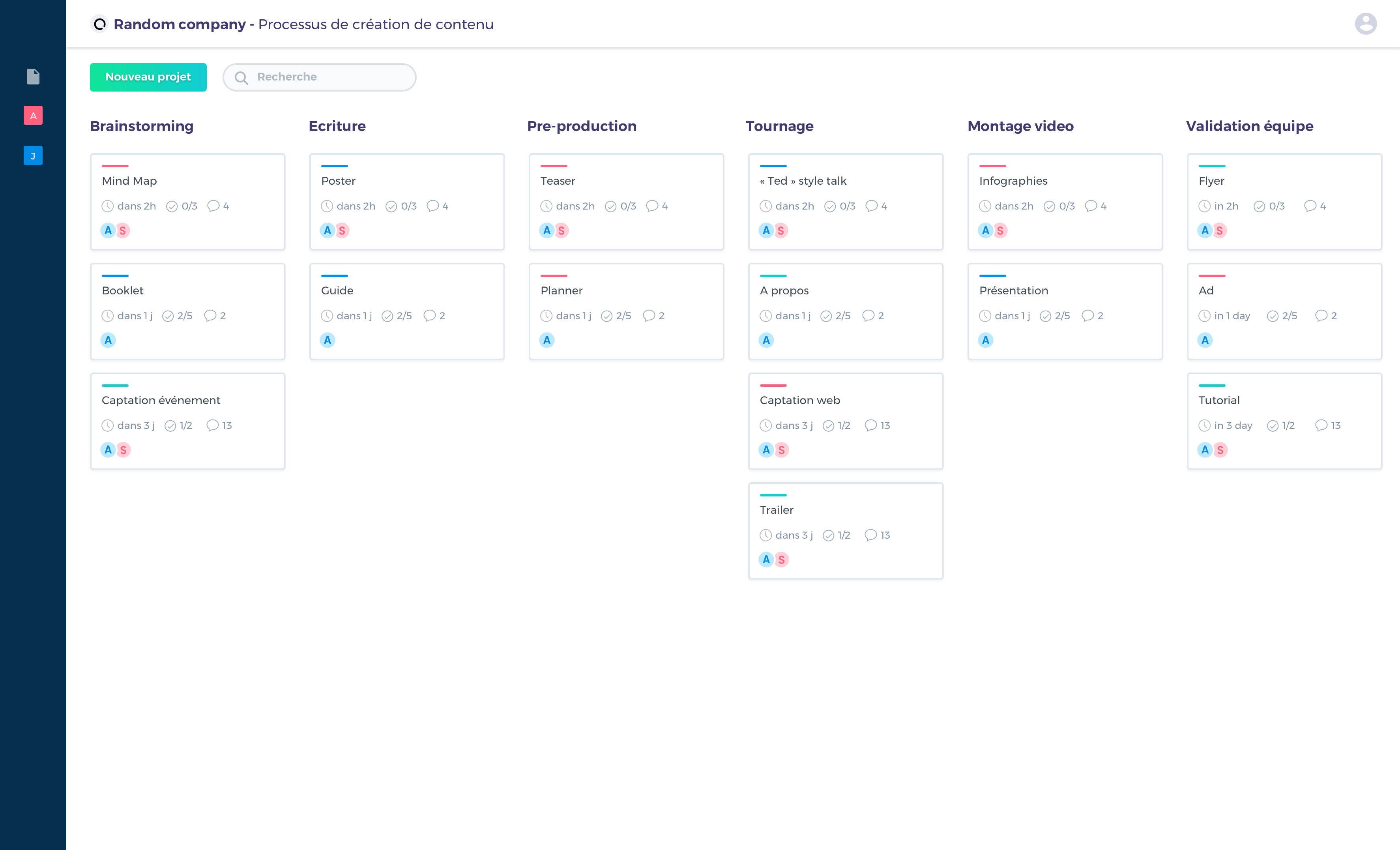
Many people use Trello or another kanban-based tool to manage potential new hires and all sorts of processes that require multiple steps. Bubblz uses the same metaphor but with a few extra tricks.

Setting up a process is going to take some thinking and a bit of time. But the idea is that you’ll save a lot of time once you have created a process in Bubblz.

Each step is represented as a column. You can then configure some actions based on each step. For instance, if you’re trying to hire someone, your first step could be an online form to collect information and upload files.

After that, you can review each application and configure multiple buttons. If you click yes, it can move the application to the next column. If you click no, it can send a rejection email and archive the application.

If you decide to hire someone, you can track that the person has signed their contract or automatically send an email to the IT department to make them aware of the new hire. You can define a short todo list for each step.

This is just an example but you can use Bubblz for other painful processes. You can create a new process from scratch or import one from the process library. I don’t think it makes sense to use Bubblz for everything, but it’s the kind of services that can make sense for some very specific issues and departments.

Bubblz uses a software-as-a-service approach. You can create a basic account for free, and the company also offers paid monthly plans for advanced features.

12 Apr 2018

Uber introduces a bunch of new safety features

In a post today, Uber CEO Dara Khosrowshahi announced a slew of new features for the app, designed to address growing concerns over rider safety. A majority of the additions are contained within a handy Safety Center landing page inside the app.

The section features a bunch of insight into the company’s process for screening its drivers, Uber’s on-going partnerships with law enforcement and the company’s insurance policies. There’s also a new Emergency button that connects riders directly to a 911 operator from inside the app.

That feature also displays real-time location from the moving car, including addresses, so riders can share that information directly with the emergency operator. Khosrowshahi says a version of the feature is also arriving for the driver side of things in the near future.

In Denver, Uber will also be testing a pilot partnership with emergency call startup RapidSOS capable of automatically sending location information to 911. Another partnership with National Emergency Number Association — though that one’s a bit more of a long term payoff, designed to help improve emergency call routing.

An update to the Share My Ride feature lets riders choice up to five contacts who will receive information on their trips, letting them arrive at their destination. They can also opt to only have the feature kick in during night-time rides.

Khosrowshahi also promises to beef up Uber’s screening process. “In the past, Uber conducted background check reruns in jurisdictions where required,” he writes. “Going forward, we’ll proactively rerun criminal and motor vehicle checks each year, regardless of whether there is a legal obligation to do so.”

The company is also utilizing a new system aimed at notifying the company when drivers in the system are involved in a criminal offense.

12 Apr 2018

Last call on Early Bird tickets for TC Robotics at UC Berkeley, May 11

After tomorrow, April 13, ticket prices for TC Sessions: Robotics will jump $100 for the May 11 event hosted at UC Berkeley.

Buy your early bird $249 tickets today before these savings fly the coop!

You’ll get full access to the conference, workshops and closing networking reception. Lunch and breakfast are included.

The event’s stage will feature some of the robotics industry’s most groundbreaking devices from Agility Robotics, Boston Dynamics, SuitX and of course, UC Berkeley.

In addition to the amazing on-stage robot demos, we’re bringing in some of the world’s leading minds on all things robotics:

Andy Rubin, Playground Global
Marc Raibert, Boston Dynamics
Robert Full, UC Berkeley
Melonee Wise, Fetch Robotics
Raquel Urtasun, Uber
Manish Kothari, SRI Ventures
Click here to see the full agenda, workshop schedule, and check out more speakers.

Buy your early bird ticket today for maximum savings while you still can.

Student tickets are just $45 – you can book those here.

We’re always on the lookout for great sponsors, connect with us here about sponsorship opportunities for this landmark event.

12 Apr 2018

Investing app Stash partners with Green Dot to expand into banking

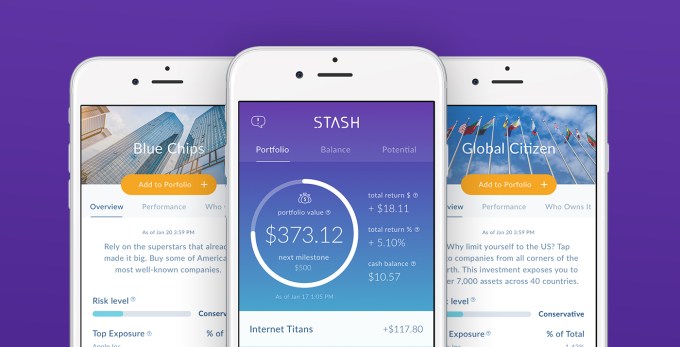
Stash, the finance app favored by first-time investors who are just learning the market, is getting into banking. The company announced this morning it will roll out a set of mobile-first banking services aimed at those left behind by traditional banks. The services include bank accounts with debit cards, no overdraft fees, access to a network of free ATMs across the U.S., as well as financial guidance on spending, saving, investing, and planning for retirement.

The startup itself isn’t becoming a bank, however. Instead, it has partnered with Green Dot Corporation and its subsidiary, Green Dot Bank, which is where the accounts will actually be housed. That means Stash accounts are protected by FDIC insurance, like any other bank.

The introduction of banking services in Stash comes at a time when the finance app market has begun to swiftly capitalize on younger users’ disinterest in standard banks with their physical branches and high fees, as well as millennials’ savvy use of technology for managing money.

There’s also increased interest from major players in finding new ways to serve the under-banked and unbanked – people who today often rely on payday lenders and check cashers, instead of having their own bank accounts.

In recent weeks, Amazon was reported to be in discussions with banks  about its own launch of consumer-facing banking services, for example. And just days ago, PayPal announced its own launch of banking products for the unbanked. In addition, peer-to-peer money transfer apps – including PayPal’s Venmo and rival Square Cash – have been edging their way into banking with by handing out debit cards to users, which are tied to their online accounts. And there are now numerous digital banking services to choose from, for those who don’t need a bank with branches – like BBVA’s SimpleChime, and Varo Money.

In other words, Stash will have some competition.

However, the company’s advantage here is that it’s not just a banking services provider – it’s also offering services that help teach people how to invest, save, and plan for their future, and can automate much of the activity required to build up your emergency funds or IRA.

The company aims to bring similar insights to its banking services, allowing people to view personalized insights about their spending behavior, and leverage its “Stash Coach” technology for financial guidance.

Stash, which just announced a $37.5 million Series D in February, had said then that its next steps would involve a move into banking. It claimed 1.5 million customers at the time of the raise – a figure that’s now grown to 2 million. It’s also says  around 40,000 new clients are joining weekly.

The average Stash user is 29, but the company’s broader vision is to go after anyone – not just millennials – in need of simpler, mobile tools for banking, saving and investing.

“There are more than 100 million Americans who need a banking product just like the one we are building with Green Dot. Stash is committed to being a true partner and source of support for our clients, and for those who have systematically been left behind,” said Brandon Krieg, Stash’s co-founder and CEO, in a statement.

Stash’s announcement today is focused on its partnership with Green Dot, but it didn’t say when the banking services would actually go live in the app for all users. It also hasn’t yet disclosed its fee structure – something the company tells us will be disclosed more specifically when banking services are closer to launch

In the meantime, Stash’s app for investors is a free download on iOS and Android.