Month: June 2019

18 Jun 2019

Carmen Sandiego returns to Google Earth with a new caper

Google Earth first made use of its rich global 3D visualization as a backdrop for a Carmen Sandiego tie-in back in March, but today there’s a new adventure to explore. After solving The Crown Jewels Caper, amateur home gumshoes are now tasked with finding out the secrets of The Keys to the Kremlin Caper, which kicks off in Russia, as you might’ve guessed from the name.

Google makes use of the Netflix re-imagining of the classic globetrotting Carmen Sandiego character, which debuted in a 1985 computer game released by Broderbund Software. The Google Earth version includes pixelated graphics and gameplay inspired by the original series, with the modern look that’s used in the Netflix show by educational publisher Houghton Mifflin Harcourt.

The game can be played on Android, iOS or desktop (via Chrome) and has a lot of the same charm and appeal of the original series, with similar educational value in terms of highlighting some key cultural and geographic details along the way as you investigate the case.

18 Jun 2019

Salesforce Customer Data Platform begins to take shape

Salesforce announced it is making progress toward releasing a Customer Data Platform (CDP) this week at Salesforce Connections in Chicago. While the company is talking in greater detail about the platform, they are calling Customer 360, it won’t be available for pilot customers until this Fall.

The idea behind the CDP isn’t all that different from good old-fashioned CRM, but instead of using a single source of data in a single database, Salesforce’s bread-and-butter product, it draws upon a variety of sources. Martin Khin, SVP for product strategy at Salesforce Marketing Cloud says that the company found that the average customer uses 15 significant sources of data to build a much more comprehensive picture of the customer.

In the 1990s, tracking customer data in a CRM was a fairly straightforward process. You had basic information like company name, address, phone number, main contacts and perhaps a listing of what each customer purchased, but as it has become increasingly crucial to gather enough data to fully understand the customer, it takes a richer set of data.

This whole area of creating a central database like a CDP is something that Salesforce, Adobe and others have begun to discuss in the last year. When you’re dealing with multiple sources of data, it becomes much more than a customer tracking problem. It becomes a serious data integration issue as the data is coming from a variety of disparate sources.

Khin says it comes down to pulling three main areas together. The first is identity management, in the sense that you have to be able to stitch together who this person is as he or she moves across the different data sources. It’s crucial to understand that this is the same individual in each channel and interaction, regardless of the system where the interaction occurs, and even if the customer started out without identifying themselves.

Once you have that identity foundation, which is the key to all of this, you can begin to build that 360 degree picture in the CDP, and with that, you can engage with the customer across multiple channels in a more intelligent way, based on actual detailed data about the person.

If the idea is to provide increasingly customized interactions, it requires as much data as you can gather to offer customized messages across each medium. The danger here is that you’re building a complete picture of each consumer in a central database, which in itself becomes a central point of failure. If a hacker were to breach that database, the prize would be a huge treasure trove of personal customer information.

Khin says Salesforce recognizes this of course, and cites Chairman Marc Benioff’s trust mantra. If that happened, it would be a huge breach of customer trust (and of their customers) and while it’s impossible to full protect any database, Salesforce considers security a huge priority.

The other issue is privacy around this information, especially in light of GDPR customer privacy rules in Europe, and other privacy initiatives coming down the pike in other countries. Khin says Salesforce customers have permission toggles they can turn on or off, depending on the region they are in.

For now, the Salesforce CDP is taking another step towards becoming an actual product. On the plus side, it could mean more meaningful, highly targeted marketing, but on the negative side, it’s a lot of personal information sitting in one place, and that’s something that every vendor building a CDP needs to take into consideration.

18 Jun 2019

Xiaomi’s latest products for Russia include its smart TVs and flagship Mi 9T

Xiaomi, best known for its smartphones, is making serious inroads into Russia as it launched a collection of products in the country where some 145 million people live. That includes its smart TVs featuring 700,000 hours of content, smart wristbands, wireless earbuds, and flagship phone Mi 9T, which is identical to its recently announced Redmi K20 for China under a different identifier.

Customers can find these products online on Xiaomi’s website and offline at its 31 authorized retail stores across the country. Xiaomi aims to boost the number of Mi Stores to 100 this year, a company spokesperson told TechCrunch. Russian news outlet Kommersant first reported the plan last week.

Xiaomi began shipping to Russia back in 2017 by introducing three handset models and its offering has since broadened. Russia marks the third international country following India and Indonesia — its biggest markets outside China — where it has rolled out smart TVs, a new area of growth for the Hong Kong-listed company.

The three Mi TV models will be available from June 25th with prices ranging from 11,990 rubles ($186.56) to 33,990 rubles ($528.88).

The TV push comes as Xiaomi copes with a global slowdown in smartphone shipment. TVs, like phones, can be an important channel for Xiaomi — which has long billed its software as a differentiator from conventional hardware companies — to sell app services and ads. It came as no surprise that Xiaomi recently bought a small stake in TCL, the world’s third-largest LCD TV maker, to ramp up its production capability in building next-gen connected TVs.

The expansion in Russia also reflects Xiaomi’s ambition to grow its overseas markets, which in the first quarter made up 38% of its overall revenue.

“These three TV models are a symbol of our sincere devotion to Russian consumers; their user experience is important to us when we are developing new devices and localizing them,” said Janet Zeng, vice president of international development at Xiaomi Mi TV.

18 Jun 2019

Palm’s tiny phone is available unlocked at $350

The first time I showed the Palm phone to the TechCrunch staff, they were excited. At the very least, it was a unique take on the category, designed to be a second phone for those moments that didn’t require a larger, bulkier device.

But reality set in pretty quickly. The device’s capabilities were severely limited by a number of factors, including size. The biggest issue, however, was a Verizon exclusive that only let users purchase the device as a second handset tied to an existing account.

Back in April, the company announced that the 3.3-inch phone could be purchased as a standalone device — albeit still through Verizon or US Mobile. Today, it’s expanding that, making the handset available unlocked, so it will work with AT&T, Verizon, T-Mobile and MetroPCS SIMs.

The phone’s available “at only” $350. That’s cheap compared to many full-sized, mid-tier handsets, but cheapness is certainly a relative concept. It still seems like a lot for a second phone, and while it’s certainly adorable, I’d strongly advise against anyone using it as a primary handset. Heck, it’s not even all that great as a standalone MP3 player.

If you’re still interested, you can pre-order it today — and Palm will throw in a $30 leather case with neck and wrist lanyards. It starts shipping in six to eight weeks.

18 Jun 2019

Two Sigma leads $12m series A for expert knowledge network NewtonX

Knowledge is the fuel of business. Every decision requires a full understanding of the data underlying it, and that means reaching out not only to an organization’s own staff for insight, but also to experts in the wider world. Management consultants, research agencies, and data providers make hundreds of billions of dollars per year attempting to answer key questions for business executives.

Sometimes they are successful, but many times, finding the right expert can be vexing. For the most important decisions, having multiple experts or even hundreds of experts provide their opinion might be critical to success.

Germain Chastel and Sascha Eder know the problem well. Former McKinsey consultants, they worked with some of the top technology companies in the Valley attempting to answer their questions — but oftentimes struggled to do so given the unique problems that confront those organizations. “We realized it was really hard to find experts who could teach them something and had the insights that were relevant,” Chastel explained.

In early 2017, the two left McKinsey and eventually joined forces with Anuja Ketan, and together the trio formed NewtonX. NewtonX is a “knowledge access platform” which attempts to intelligently answer questions posed to it by business clients. Clients answer a carefully calibrated series of questions to properly vet and scope a query, and then NewtonX farms it out to it network of experts for insight.

That rapid-response network has now gotten the attention of Two Sigma Ventures, the venture wing of the high-flying algorithmic-trading hedge fund, which led a $12 million Series A round into New York City-based NewtonX. That’s a follow up to a $3 million seed round co-led by Third Prime Capital and Xfund last year.

Today, the company offers two main product lines. First is what it calls Expert Calls, which are similar to the traditional expert network offering of companies like GLG. Here, a client answers a series of structured questions to determine a single expert to talk to and get feedback from.

The more interesting product to me, and the one representing 70% of the startup’s revenue right now, is Expert Surveys. With this product, the goal is to ask a business question to a wider number of experts who might provide a variety of responses. So, for instance, NewtonX could potentially answer a query such as how CIOs at large Fortune 500 companies are budgeting for cybersecurity this year.

Where NewtonX gets interesting is that it doesn’t want to just casually facilitate these calls and surveys, but instead, the startup wants to build out a true knowledge graph that can better answer questions faster with each activity on the platform. As the platform gets smarter about knowledge, the idea is that on-boarding a new client or initiating a new survey or question will be faster since the platform will already know many of the nuances of that particular field of business.

Over the two and a half years since the company’s founding, it has found wide support among businesses. It counts Microsoft, 23&Me, and Gartner as public clients, and also has a list of 20 corporates already on the platform. Chastel told me that nine of the top ten management consulting firms have also used NewtonX services, and many top research firms have also used the product.

Early revenues has allowed the company to expand early. It has 32 employees at its offices near Grand Central, and Chastel noted to me that a majority of employees and a majority of managers are women. He said that the firm’s technology to identify experts on the web is also the basis for their own recruiting efforts.

With the new funding, the company intends to grow to 100 head count locally, and also expand out is client success and expert success teams.

18 Jun 2019

Volvo teams up with Nvidia to develop self-driving commercial and industrial trucks

Volvo and Nvidia announced a new partnership today aimed at developing the next-generation decision-making engine for Volvo Group’s fully autonomous commercial trucks and industrial service vehicles. The partnership will use Nvidia’s Drive artificial intelligence platform, which encompasses processing data from sensors, perception systems, localization, mapping and path prediction and planning.

Volvo already has some freight vehicles with autonomous technology on board in early service, but these are deployed in tightly controlled environments and operate supervised, as at the Swedish port of Gothenburg. The partnership between Nvidia and Volvo Group is intended to help not only test and deploy a range of autonomous vehicles with AI decision-making capabilities on board, but also eventually ensure these commercial vehicles can operate on their own on public roads and highways.

Transport freight is only one target for the new joint effort – Nvidia and Volvo will also seek to build autonomous systems and vehicles that can handle garbage and recycling pickup, operate on construction sites, at mines, and in the forestry industry, too. Nvidia notes on its blog that its solution will help address soaring demand for global shipping, driven by increased demand for consumer package delivery. It’ll also cover smaller-scale use cases such as on-site port freight management.

The agreement between the two companies will span multiple years, and will involve teams from both companies sharing space both in Volvo’s HQ of Gothenburg, and Nvidia’s hometown of Santa Clara, California.

Nvidia has done plenty with autonomous trucking in the past, including an investment in Chinese self-driving trucking startup TuSimple, powering the intelligence of the fully driverless Einride transport vehicle and working with Uber on its ATG-driven truck business.

18 Jun 2019

Sources: J.P. Morgan working on a secretive digital banking project based out of London

A number of incumbent backs are known to be developing new digital-first products in a bid to keep the new wave of challenger banks at bay and now it appears that the latest to make that move is J.P. Morgan.

According to sources, the investment bank has begun recruiting for a secretive skunkworks project within London’s burgeoning fintech industry. Very few details are known about what exactly J.P. Morgan plans to build, although TechCrunch understands the bank is busy hiring high level developers with full-stack and cloud-based dev skills for the new project, along with other personnel.

One source tells me that interested candidates are being asked to sign an NDA, and that the project is still in its formative stages. They say the plan is to essentially build a startup within a corporation that will be run independently and entirely separately from J.P. Morgan’s existing technology and businesses. The bank is only hiring for permanent positions rather than contractors in order to keep it “secret,” another source tells me.

Meanwhile, for the few people I’ve spoken to who have heard about the project there’s speculation that J.P. Morgan is developing a competitor to “Marcus,” the digital bank launched by Goldman Sachs that focuses on savings and offers a competitive interest rate. That would also put it up against challenger banks such as Atom, Tandem and savings marketplace Raisin.

However, one source tells me they’ve heard that J.P. Morgan’s skunkworks project could in fact be a much more ambitious cloud-based banking platform on which numerous products can be launched. That would be more akin to a core banking SaaS platform or “AWS for Banking,” along the lines of Starling’s core banking product or Germany’s solarisBank or London’s 11:FS Foundry.

18 Jun 2019

Optimizely raises $50M Series D round for its experimentation platform

Optimizely, a platform that offers tools for A/B testing and personalization on the web and in mobile apps, today announced that it has raised a total of $105 million. This includes a $50 million Series D round led by Goldman Sachs Private Captial, with the participation of Accenture Ventures, as well as $55 million line of credit from Bridge Bank.

Goldman Sachs’s Michael Kondoleon will join Optimizely’s Board of Directors as a board member.

“We’re excited to reach this milestone because these investments cement our leadership position in the market,” Optimizely CEO Jay Larson told me. “We can invest more in products to put an even bigger gap between Optimizely and our competition. We can expand geographically. And we will continue to grow our team of world-class digital optimization experts. This is a big day for Optimizely and a big day for the experimentation and personalization industry.”

The company notes that about a quarter of the Fortune 100 currently uses its services. the company says it now handles over 6 billion events a day and that its customers have tripled their investments in digital experience optimization in the last two years. Current customers include the likes of Gap, Visa, IBM, StubHub, Metromile, Lending Club and Sonos.

In total, Optimizely has now raised more than $200 million, excluding the line of credit. The additional $55 million from Bridge Bank are a bit unusual, but not completely out of the ordinary for companies at this stage. “Bridge Bank is proud to continue working with Optimizely, a global leader at the forefront of the digital experience optimization market,” said Mike Lederman, senior vice president and western region director of Bridge Bank’s technology banking group. “Optimizely is on a path of substantial growth and the additional capital will help them continue to build market-leading products that are used by an increasing number of top global brands.”

As is pretty much standard for companies at this stage, Optimizely will use the new funding to drive growth.

18 Jun 2019

Facebook announces Libra cryptocurrency: All you need to know

Facebook has finally revealed the details of its cryptocurrency Libra, which will let you buy things or send money to people with nearly zero fees. You’ll pseudonymously buy or cash out your Libra online or at local exchange points like grocery stores, and spend it using interoperable third-party wallet apps or Facebook’s own Calibra wallet that will be built into WhatsApp, Messenger, and its own app. Today Facebook released its white paper explaining Libra and its testnet for working out the kinks of its blockchain system before a public launch in the first half of 2020.

Facebook won’t fully control Libra, but instead get just a single vote in its governance like other founding members of the Libra Association including Visa, Uber, and Andreessen Horowitz who’ve invested at least $10 million each into the project’s operations. The association will promote the open-sourced Libra blockchain and developer platform with its own Move programming language plus sign up businesses to accept Libra for payment and even give customers discounts or rewards. Facebook is launching a subsidiary company also called Calibra that handles its crypto dealings and protects users’ privacy by never mingling your Libra payments with your Facebook data so it can’t be used for ad targeting. Your real identity won’t be tied to your publicly visible transactions. But Facebook/Calibra and other founding members of the Libra Association will earn interest on the money users cash in that is held in reserve to keep the value of Libra stable.
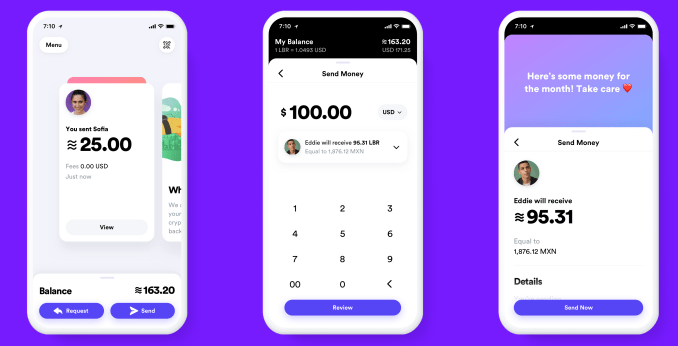
Facebook’s audacious bid to create a global digital currency that promotes financial inclusion for the unbanked actually has more privacy and decentralization built in than many expected. Instead of trying to dominate Libra’s future or squeeze tons of cash out of it immediately, Facebook is instead playing the long-game by pulling payments into its online domain. Facebook’s VP of blockchain David Marcus explains the company’s motive and the tie-in with its core revenue source, telling me “if more commerce happens, then more small business will sell more on and off platform, and they’lll want to buy more ads on the platform so it will be good for our ads business.”

The Risk And Reward Of Building The New PayPal

In cryptocurrencies, Facebook saw both a threat and an opportunity. They held the promise of disrupting how things are bought and sold by eliminating transaction fees common with credit cards. That comes dangerously close to Facebook’s ad business that influences what is bought and sold. If a competitor like Google or an upstart built a popular coin and could monitor the transactions, they’d learn what people buy and could muscle in on the billions spent on Facebook marketing. Meanwhile, the 1.7 billion people who lack a bank account might choose whoever offers them a financial services alternative as their online identity provider too. That’s another thing Facebook wants to be.

Yet existing cryptocurrencies like Bitcoin and Ethereum weren’t properly engineered to scale to be a medium of exchange. Their unanchored price was susceptible to huge and unpredictable swings, making it tough for merchants to accept as payment. And cryptocurrencies miss out on much of their potential beyond speculation unless there are enough places that will take them instead of dollars, and the experience of buying and spending them is easy enough for a mainstream audience. But with Facebook’s relationship with 7 million advertisers and 90 million small businesses plus its user experience prowess, it was well poised to tackle this juggernaut of a problem.

Now Facebook wants to make Libra the evolution of PayPal. It’s hoping Libra will become simpler to set up, more ubiquitous as a payment method, more efficient with fewer fees, more accessible to the unbanked, more flexible thanks to developers, and more long-lasting through decentralization.

“Success will mean that a person working abroad has a fast and simple way to send money to family back home, and a college student can pay their rent as easily as they can buy a coffee” Facebook writes in its Libra documentation. That would be a big improvement on today, when you’re stuck paying rent in insecure checks while exploitative remittance services like charge an average of 7% to send money abroad, taking $50 billion from users annually. Libra could also power tiny microtransactions worth just a few cents that are infeasible with credit card fees attached, or replace your pre-paid transit pass.

If Facebook succeeds and legions of people cash in money for Libra, it and the other founding members of the Libra Association could earn big dividends on the interest. And if suddenly it becomes super quick to buy things through Facebook using Libra, businesses will boost their ad spend there. But if Libra gets hacked or proves unreliable, it could cost lots of people around the world money while souring them on cryptocurrencies. And by offering an open Libra platform, shady developers could build apps that snatch not just people’s personal info like Cambridge Analytica, but their hard-earned digital cash.

How Does Libra Work?

By now you know the basics of Libra. Cash in a local currency, get Libra, spend them like dollars without big transaction fees or your real name attached, cash them out whenver you want. Feel free to stop reading and share this article if that’s all you care about. But the underlying technology, the association that governs it, the wallets you’ll use, and the way payments work all have a huge amount of fascinating detail to them. Facebook has released over 100 pages of documentation on Libra and Calibra, and we’ve pulled out the most important facts. Let’s dive in.

The Libra Association – Crypto’s New Oligarchy

Facebook knew people wouldn’t trust it to wholly control the cryptocurrency they use, and it also wanted help to spur adoption. So Facebook recruited the founding members of the Libra Association, which oversees the development of the token, the reserve of real-world assets that gives it value, and the governance rules of the blockchain. Each founding member paid a minimum of $10 million to join and optionally become a validatory node operator (more on that later), gain one vote in the Libra Association council, and be entitled to a share (proportionate to their investment) of the dividends from interest earned on the Libra reserve users pay fiat currency into to receive Libra.

The 28 soon-to-be founding members of the association and their industries, previously reported by The Block’s Frank Chaparro, include:

  • Payments: Mastercard, PayPal, PayU (Naspers’ fintech arm), Stripe, Visa
  • Technology and marketplaces: Booking Holdings, eBay, Facebook/Calibra, Farfetch, Lyft, Mercado Pago, Spotify AB, Uber Technologies, Inc.
  • Telecommunications: Iliad, Vodafone Group
  • Blockchain: Anchorage, Bison Trails, Coinbase, Inc., Xapo Holdings Limited
  • Venture Capital: Andreessen Horowitz, Breakthrough Initiatives, Ribbit Capital, Thrive Capital, Union Square Ventures
  • Nonprofit and multilateral organizations, and academic institutions: Creative Destruction Lab, Kiva, Mercy Corps, Women’s World Banking

Facebook says it hopes to reach 100 founding members before the official Libra launch and it’s open to anyone that meets the requirements including direct competitors to like Google or Twitter.

To join, members must have a half rack of server space, a 100mbps or above dedicated internet connection, a full-time site reliability engineer, and enterprise-grade security. Businesses must hit two of three thresholds of a $1 billion USD market value or $500 million in customer balances, reach 20 million people a year, and/or be recognized as a top 100 industry leader by a group like Interbrand Global or the S&P.

Crypto-focused investors must have over $1 billion in assets under management, while Blockchain businesses must have been in business for a year, have enterprise grade security and privacy, and custody or staking greater than $100 million in assets. And only up to one-third of founding members can by crypto-related businesses or invidually invited exceptions. Facebook also accepts research organizations like universities, and non-profits fulfilling three of four qualties including working on financial inclusion for over five years, multi-national reach to lots of users, a top 100 designation by Charity Navigator or something like it, and/or $50 million in budget.

The Libra Association will be responsible for picking recruiting more founding members to act as validator nodes for the blockchain, fundraising to jumpstart the ecosystem, designing incentive programs to reward early adopters, and doling out social impact grants. A council with a representative from each member will help choose the association’s managing director who will appoint an executive team, elect a board of 5 to 19 top representatives.

Each member including Facebook/Calibra will only get up to one vote or 1% of the total vote (whichever is larger) in the Libra Association council. This provides a level of decentralization that protects against Facebook or any other player hijacking Libra for its own gain.

The Libra Currency – A Stablecoin

A Libra is a unit of the Libra cryptocurrency that’s represented by a three wavy horizontal line unicode character like the dollar is represented by $. The value of a Libra is meant to stay largely stable so it’s a good medium of exchange since merchants can be confident they won’t be paid a Libra today that’s then worth less tomorrow. The Libra’s value is tied to a basket of bank deposits and short-term government securities for a slew of historically stable international currencies including the dollar, pound, europ, swiss franc, and yen. The Libra Association maintains this basket of assets and can change the balance of its composition if necessary to offset major price fluctuations in any one foreign currency so that the value of a Libra stays consistent.

The Libra Association is still hammering out the exact start value for the Libra, but it’s meant to somewhere close to the value of a dollar, euro, or pound so it’s easy to conceptualize. That way, a gallon of milk in the US might cost 3 to 4 Libra, similar but not exactly the same as with dollars.

The idea is that you’ll cash in some money and keep a balance of Libra that you can spend at accepting merchants and online services. You’ll be able to trade in your local currency for Libra and vice versa through certain wallet apps including Facebook’s Calibra, third-party wallet apps, and local resellers like convenience or grocery stores where people already go to top-up their mobile data plan.

The Libra Reserve – One For One

Each time someone cashes in a dollar or their respective local currency, that money goes into the Libra Reserve and an equivalent value of Libra is minted and doled out to that person. If someone cashes out from the Libra Association, the Libra they give back are destroyed/burned and they receive the equivalent value in their local currency back. That means there’s always 100% of the value of the Libra in circulation collateralized with real world assets in the Libra Reserve. It never runs fractional. And unliked “pegged” stable coins that are tied to a single currency like the USD, Libra maintains its own value — though that should cash out to roughly the same amount of a given currency over time.

When Libra Association members join and pay their $10 million minimum, they receive Libra Investment Tokens. Their share of the total tokens translates into the proportion of the dividend they earn off of interest on assets in the reserve. Those dividends are only paid out after Libra Association uses interest to pay for operating expenses, investments in the ecosystem, engineering research, and grants to non-profits and other organizations. This interest is part of what attracted the Libra Association’s members. If Libra becomes popular and many people carry a large balance of the currency, the reserve will grow huge and earn significant interest.

The Libra Blockchain – Built For Speed

Every Libra payment is permanently written into the Libra blockchain — a cryptographically authenticated database that acts as a public online ledger designed to handle 1000 transactions per second. The blockchain is operated and constantly verified by founding members of the Libra Association who each invested $10 million or more for a say in the cryptocurrency’s governance and the ability operate a validator node.

When a transaction is submitted, each of the nodes runs a calculation based on the existing ledger of all transactions. Thanks to a Byzantine Fault Tolerance system, just two-thirds of the nodes must come to consensus that the transaction is legitimate for it to be executed and written to the blockchain. A structure of Merkle Trees in the code makes it simple to recognize changes made to the Libra blockchain.

Transactions on Libra cannot be reversed. If an attack compromises over one-third of the validator nodes causing a fork in the blockchain, the Libra Association says it will temporarily halt transactions, figure out the extent of the damaage, and recommend software updates to resolve the fork.

Transactions aren’t entirely free. They incur a tiny fraction of a cent fee to pay for “gas” that covers the cost of processing the transfer of funds similar to with Ethereum. This fee will be negligible to most consumers, but when they add up the gas charges will deter bad actors from creating millions of transactions to power spam and denial-of-service attacks.

Move Coding Language – For Moving Libra

The Libra blockchain is open source with an Apache 2.0 license and any developer can build apps that work with it using the Move coding language. The blockchain’s prototype launches its testnet today, so it’s effectively in developer beta mode until it officially launches in the first half of 2020. The Libra Association is working with HackerOne to launch a bug bounty system later this year that will pay security researchers for safely identifying flaws and glitches. In the meantime, the Libra Association is implementing the Libra Core using the Rust programming language since it’s designed to prevent security vulnerabilities, and the Move language isn’t fully ready yet.

Move was created to make it easier to write blockchain code that follows an author’s intent without introducing bugs. It’s called Move because its primary function is to move Libra coins from one account to another, and never let those assets be accidentally duplicated. The core transaction code looks like “LibraAccount.pay_from_sender(recipient_address, amount) procedure”. Eventually, Move will be able to create smart contracts for programmatic interactions with the Libra blockchain. Until Move is ready, developers can create modules and transaction scripts for Libra using Move IR, which is high-level enough to be human-readable but low-level enough to be translatable into real Move bytecode that’s written to the blockchain.

The Libra ecosystem and the Move language will be completely open to use and build, which presents a sizable risk. Crooked developers could prey on crypto novices, claiming their app works just the same legitimate ones, and that it’s safe since it uses Libra. But if consumers get ripped off by these scammers, the anger will surely bubble up to Facebook. Even though it’s tried to distance itself sufficiently via its subsidiary Libra and the association, many people will probably always think of Libra as Facebook’s cryptocurrency and blame it for their woes.

Using Libra In The Wild

So how do you actually own and spend Libra? Through Libra wallets like Facebook’s own Calibra and others that will be built by third-parties, potentially including Libra Association members like PayPal. The idea is to make sending money to a friend or paying for something as easy as sending a Facebook Message. You won’t be able to make or receive any real payments until the official launch next year, though.

None of the Libra Association members agreed to provide details on what they’ll build on the blockchain, but we can take Facebook’s Calibra wallet as an example of the basic experience. Calibra will launch alongside the Libra currency on iOS and Android within Facebook Messenger, WhatsApp, and a standalone app. When users first sign up, they’ll be taken through a Know Your Customer anti-fraud process where they’ll have to provide a government issued photo ID and other verification info. They’ll need to conduct due diligence on customers and report suspicious activity to the authorities.


From there you’ll be able to cash in to Libra, pick a friend or merchant, set an amount to send them and add a description, and send them Libra. You’ll also be able to request Libra. It’s also likely that Calibra will offer an expedited way of paying merchants, liking scanning your or their QR code.

By default, Facebook won’t import you contact or any of your profile information but may ask if you wish to do so. It also won’t share any of your transaction data back to Facebook, so it won’t used to target you with ads, rank your News Feed, or otherwise earn Facebook money directly. Data will only be shared in specific instances in aggregated, anonymized ways or due to a request from law enforcement.

Facebook just tried to reinvent money. Next year, we’ll see if the Libra Association pulls it off.


18 Jun 2019

The rise of the gig economy helps London-based insurtech Zego to raise $42M

A couple of years ago London-based startup Zego realised gig-economy workers would need insurance, and went on to raise a very healthy £6 million in Series A funding, led by Balderton Capital. Its first products were pay-as-you-go scooter and car insurance for food delivery workers.

It’s now announced a $42million raise in one of the largest funding rounds for a European insurtech start-up, in a Series B investment was led by pan-European investment firm Target Global, specialists in the fintech and mobility space, with other backers including TransferWise founder Taavet Hinrikus. The proceeds will be used to for Zego’s expansion across Europe and to increase the workforce from 75 to 150.

The raise takes the firm to a Toal of $51million in funding, with new investors Latitude joining existing backers Balderton Capital and Tom Stafford of DST Global. The investment comes as the company claims a whopping 900% growth over the past 12 months.

Zego caters to the new mobility services, such as ride-hailing, ride sharing, car rental and scooter sharing and offers a range of policies from minute-by-minute insurance to annual cover, providing more flexibility than traditional insurers, with pricing based on usage data from vehicles.

This means it’s become popular with scooter and car delivery drivers, plus van and taxi fleets. The firm currently insures a third of the UK’s food delivery market, largely through partnerships with Deliveroo, Just Eat and Uber Eats.

Sten Saar, CEO and co-founder of Zego, said: “When we built Zego from scratch three years ago, our mission was to transform the insurance sector by creating products which truly reflected the rapidly changing world of transport… The world is becoming more urbanized and because of this, we are moving from traditional ownership of vehicles to shared ‘usership’. This means that the rigid model of insurance that has existed for hundreds of years is no longer fit for purpose.”

Ben Kaminski, Partner of lead investors Target Global, said: “With the growth of new mobility services, Zego identified a major gap in the insurance market and created a unique business model to fill it, which the incumbents will find very difficult to replicate. The potential of this company is almost limitless, and I fully expect to see its UK success mirrored across Europe and beyond in the coming years.”