Month: June 2019

13 Jun 2019

Neurobehavioral health company Blackthorn pulls in $76 million from GV to treat mental disorders

There are numerous challenges to finding effective treatments for mental disorders. However, Blackthorn Therapeutics, a neurobehavioral health company using machine learning to create personalized medicine for mental health, is betting its technological approach to finding drugs that work will put it ahead of the competition. Lucky for them, GV and other biotech investors have shown they agree by adding another $76 million in Series B financing to the coffers.

Today, Blackthorn announced the close of its $76 million series B round from GV, Scripps Research, Johnson & Johnson Innovation and a bevy of other biotech investment firms, including Polaris Partners, Premier Partners, Vertex Ventures HC, Alexandria Venture Investments, Altitude Life Science Ventures, ARCH Venture Partners, and Biomatics Capita.

Blackthorn has been heads down the last couple of years on a clinical trial for a drug that could potentially treat mood disorders. In April, the company announced positive results from its phase I trial for the drug.

The company plans to use the funding to advance its clinical-stage programs for mood disorders as well as for potential treatment of autism spectrum disorder, advancing towards clinical investigation in 2020.

Brian Chee, a managing partner at Polaris Partners, Lori Hu, a managing director at Vertex Ventures HC, and Julie Sunderland, a managing director at Biomatics Capital have joined Blackthorn’s board as directors in conjunction with the funding.

Blackthorn also recently added two people to its executive team. Jane Tiller has joined as chief medical officer and Laura Hansen as vice president, corporate affairs.

“BlackThorn was founded to bring new therapies to patients by applying advances in computational sciences to address patient heterogeneity, one of the biggest historical challenges in the field of neuropsychiatric drug development,” said Blackthorn’s president and COO Bill Martin, Ph.D. “Three years later, insights from our data-driven approaches are yielding patient enrichment strategies that could increase probability of clinical trial success and improve patient outcomes. We are grateful for our investors’ support to continue advancing our platform and therapeutic pipeline as we build out a world-class team at the intersection of technology and clinical neuroscience.”


13 Jun 2019

Verified Expert Growth Marketing Agency: Right Side Up

Right Side Up is not your typical growth marketing agency. As a former entrepreneur and in-house growth marketer for startups like Eventbrite, founder Tyler Elliston says he created RSU as a way to help his former self. RSU recruits a collective of expert growth marketers and partners them with various companies, but unlike a traditional agency, RSU actively encourages growth teams to hire their top talent.

It may seem counterintuitive, but two and a half years later, with more than 250 marketers in their “growth collective”, and having helped 120+ companies, Tyler seems to be fulfilling his vision. Learn more about RSU’s unique approach to growth marketing for startups.

On what makes Right Side Up unique

“They can support individual channel marketing needs across all levels of seniority and sophistication, as well as a full-fledged interim VP of Marketing needs.” Micah Moreau, SF, VP, Growth Marketing, DoorDash

“There are a number of lessons that I learned as an in-house marketer and a founder, that have become the underpinning for how we operate the business. Great performance comes from great marketers, not from companies or brands. It’s really about the person doing the work. So, our goal is to find the best marketers as they are today, instead of training junior talent, which is a common agency practice.”

Advice to startup founders

“A lot of what we consider growth marketing is simply scaling a one to one conversation with a prospective customer. So, if you can get a prospect in front of you and you can persuade them, how do you do that? How do you talk about it? That’s your positioning. What are you offering them?

That’s your value prop. I would recommend doing one on one conversations at a small scale before you try scaling it. Be in touch with your customer and then think about growth as automating what’s happening on a very small scale.”


Below, you’ll find the rest of the founder reviews, the full interview, and more details like pricing and fee structures. This profile is part of our ongoing series covering startup growth marketing agencies with whom founders love to work, based on this survey and our own research. The survey is open indefinitely, so please fill it out if you haven’t already.


Interview with Right Side Up founder Tyler Elliston

Yvonne Leow: Tell me a little bit about how you got into growth and why you decided to start Right Side Up.

Tyler Elliston: I came to the Bay Area in 2006 because I wanted to help build tech companies. I went to Berkeley to get my MBA and basically gave myself two years to figure out how to best plug into the startup community.

I eventually started a company and raised venture capital, but I really struggled to crack customer acquisition, and of all the hats I wore as an entrepreneur, growth marketing felt particularly fun and challenging. So, I went on this quest to find the answers to customer acquisition, and it was difficult to find people who could help me unlock growth channels. I often heard, “Oh, I did this for my company,” but it wouldn’t work for us.

13 Jun 2019

Zume buys packaging company, with eyes on plant-based plastic alternative

Zume Inc. (they of the robotic pizza) has acquired Southern California-based Pivot, designer of plant-based packaging material. Along with the deal, Zume will be opening up a 70,000 square foot manufacturing plant in the area.

Zume notes that it has actually been in the food packaging industry in one form or other since 2016, when it introduced a compostable pizza box made the fibers of discarded sugarcane. This acquisition find the company expanding its offering into additional containers, including bowls, plates cups, trays and cutlery.

The startup has set the lofty goal of replacing one billion plastic and styrofoam containers by next year. It’s an admirable target — food packing waste is undeniably out of control, and is likely to only get worse before it gets better.

“Food delivery is upending the food system as we know it, and we believe that the powerful consumer demand signals it generates can be a force creating a more sustainable world,” Zime CEO Alex Garden said in a release tied to the news. Food packaging is a huge part of this equation because it not only provides critical consumption data but it also provides useful information from the farm where its materials are sourced to the final disposal.”

The new manufacturing plant is the first of several in the U.S. in the works from the company.

13 Jun 2019

India plans to have its own space station

India plans to have its own space station in the future and conduct separate missions to study Sun and Venus, it said on Thursday, as the nation moves to bolster its status as a leader in space technologies and inspire the young minds to take an interest in scientific fields.

India’s space agency said today that it will begin working on its space station following its first manned mission to space, called Gaganyaan (which means “space vehicle” in Sanskrit), in 2022 — just in time to commemorate 75 years of the country’s independence from Britain. The government has sanctioned Rs 10,000 crores ($1.5 billion) for Gaganyaan mission, it was unveiled today.

“We have to sustain the Gaganyaan program after the launch of the human space mission. In this context, India is planning to have its own space station,” said Dr Kailasavadivoo Sivan, chairman of Indian Space Research Organization (ISRO). ISRO is India’s equivalent to NASA.

“While navigation, communication, and earth observation are going to be the bread and butter for us, it is missions such as Chandrayaan (Sanskrit for “moon vehicle”), Mangalyaan (Sanskrit for “Mars vehicle”), and Gaganyaan that excite the youth, unite the nation, and also pave a technological seed for the future.”

“This is our ambition. We want to have a separate space station. We will launch a small module for conducting microgravity experiments,” he said in a press conference. Gaganyaan aims to send a crew of two to three people to space for a period of up to seven days. The spacecraft will be placed in low earth orbit of 300-400 km (186 – 248 miles).

The agency will submit a detailed report on how it intends to set up the space station to the government after the Gaganyaan mission. It currently believes it would take five to seven years to conceptualize the space station.

On the sidelines of the announcement, ISRO also unveiled Aditya-L1, a mission to study the Sun’s corona that impacts the change in climate on Earth, for the first half of next year, and a similar mission aimed at Venus, which it plans to conduct over the next few years. “Not only Sun and moon, we hope to reach other planets, like Venus,” he said.

The ambitious announcements come a day after the space agency said it will launch a lunar mission on July 15 this year in an attempt to become only the fourth nation — after the United States, Russia, and China — to land on the moon.

That mission, dubbed Chandrayaan-2, involves a lander, an orbiter, and a rover that the agency has built itself. India concluded its first mission to the moon in 2008, when it completed more than 3,400 orbits and played an instrumental role in the discovery of water molecules on the moon.

India’s space agency has specialized in low-cost space launches since the early 1960s, when components of rockets were transported by bicycles and assembled by hands. In 2014, it sent a spacecraft to Mars for $74 million, significantly lower than $671 million the U.S. spent for a Mars mission the same year. In early 2017, the nation launched a flock of 104 satellites into space over the course of 18 minutes, setting a new global record.

13 Jun 2019

Target launches a dedicated shopping site for same-day delivery, powered by Shipt

Target is ramping up its same-day delivery efforts, following news of Amazon’s plans to increase Prime speeds and Walmart’s recent launch of free, next-day delivery in select markets. This morning, Target announced it’s making it easier to shop its same-day selection directly from its website, with the deliveries powered by Shipt.

The retailer acquired grocery delivery service Shipt for $550 million in 2017, in order to accelerate its digital fulfillment efforts. Following the deal, Target has continued to offer same-day delivery through Shipt on grocery items and other day-to-day needs, like household, pet and baby items. While Shipt delivers for other local grocers and stores as well, Target’s prices in Shipt aren’t marked up.

However, until now, Target shoppers would have to go to the Shipt website or download the app to browse the same-day selection from Target. It wasn’t an integrated experience. That changes with today’s launch of a dedicated shopping section on Target.com available at target.com/sameday.

Here, online shoppers can browse the 65,000 items offered for same-day delivery through Target.com, including groceries, household items, pet items, baby needs, and even some apparel. They can also easily reorder items they’ve previously purchased, or search through specific categories for new things to order.

The Target.com same-day assortment is largely similar to what’s available through the Shipt app, we understand, with the exception of adult beverages which are only available through Shipt in select markets.

The same-day shopping experience on Target.com offers a different look-and-feel from Shipt’s website — it’s not just a Target-branded wrapper around the Shipt website.

Target’s site offers clickable categories at the top of the page, like “Grocery,” “Household Essentials,” “Pets,” “Baby,” and more, each with a colorful icon. Individual product pages also look like any other product page on Target.com with various options for pickup or delivery, as well as features for subscribing to regular purchases for a discount, or adding the item to a list or registry.

The key difference is that the delivery option is now “Same Day,” which wasn’t offered before. (A button to ship it through Target Restock, a next-day service, is also available if the order isn’t as urgent.)

At checkout, shoppers can choose to pay a flat $9.99 per delivery fee for same-day service or can instead opt for a four-week trial of a Shipt annual membership. If you choose the latter, the trial converts to a $99 per year membership after the free period ends, unless you cancel.

A Shipt membership additionally includes the option to shop from other local and national retailers. The app supports over 60 retailers, but members only see those that are nearby.

The launch of the dedicated same-day selection on Target.com represents the first time Target shoppers without a Shipt membership could take advantage of same-day delivery for a fee. The option joins several other ways that Target lets people shop its site, including same-day store pickup, Drive Up (a curbside pickup service), next-day shipping through Target Restock, as well as traditional shipping.

For Target REDcard holders, there’s another perk with using the new same-day website, too. They’ll now be able to pay with REDcard to save 5% on purchases.

Plus, Target’s online shoppers can take advantage of weekly ad promotions, like “buy 3 items for a $5 Target GiftCard,” for example, which wasn’t possible in Shipt.

As on Shipt, Target.com’s same-day shoppers can edit or add items to their order up to an hour before their delivery, and save multiple addresses associated with their account.

“With same-day delivery now available directly within the Target.com experience, we’ve made it even easier for our guests to shop at Target – while still getting the great value, curated product assortment and helpful guest service they’ve come to expect,” said Dawn Block, Target Senior Vice President, Digital, in a statement.


13 Jun 2019

Calendar influencers? Event social network IRL raises $8M

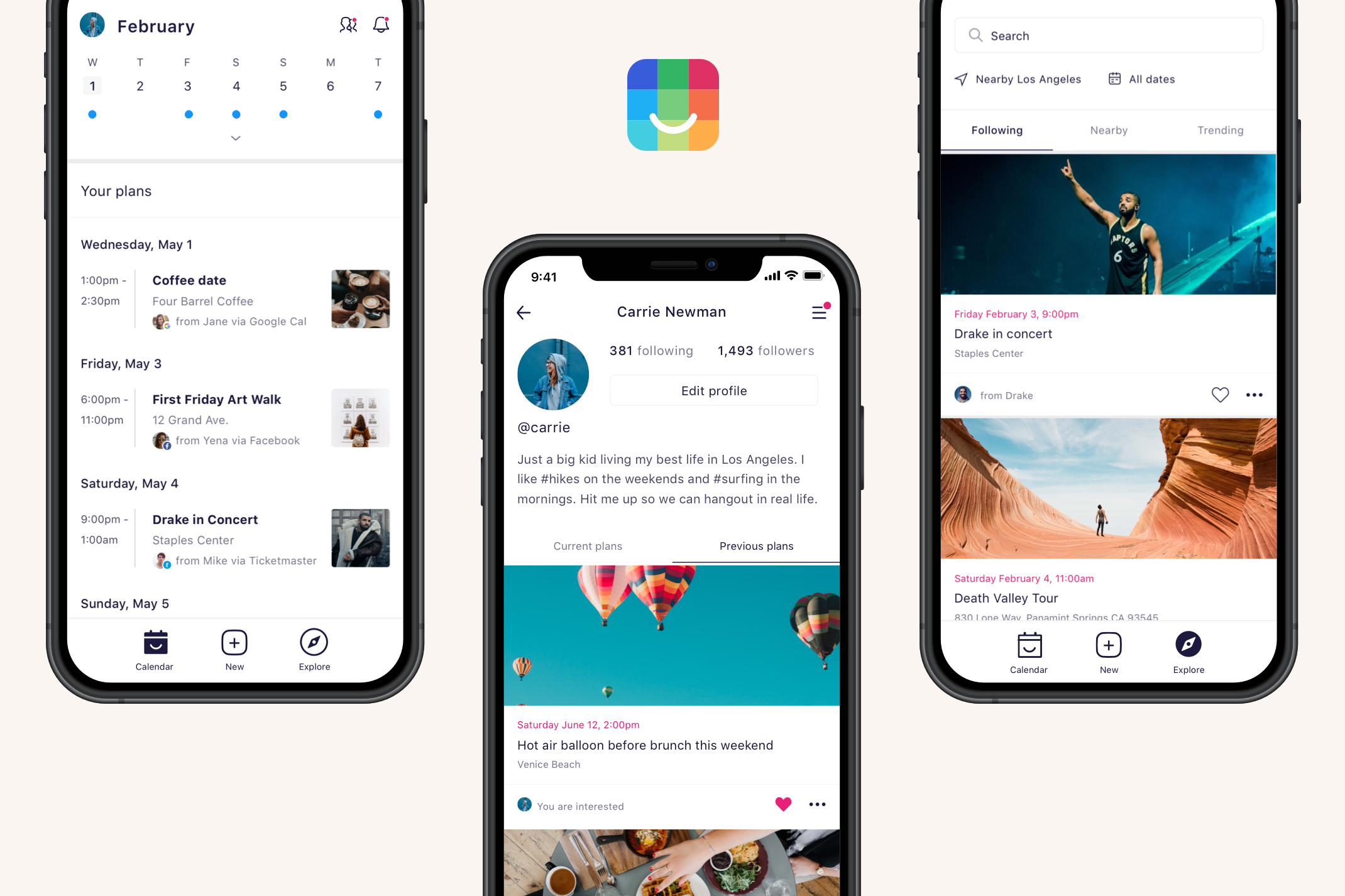
Why is there no app where you can follow party animals, concert snobs, or conference butterflies for their curated suggestions of events? That’s the next phase of social calendar app IRL that’s launching today on iOS to help you make and discuss plans with friends or discover nearby happenings to fill out your schedule.

The calendar, a historically dorky utility, seems like a strange way to start the next big social network. Many people, especially teens, either don’t use apps like Google Calendar, keep them professional, or merely input plans made elsewhere. But by baking in an Explore tab of event recommendations and the option to follow curators, headliners, and venues, IRL could make calendars communal like Instagram did to cameras.

“There’s Twitter for ‘follow my updates’, there’s Soundcloud for ‘follow my music’, but there’s no ‘follow my events'” IRL CEO Abe Shafi tells me of his plan to turbocharge his calendar app. “They’re arguably the best product that’s been built for organizing what you’re doing but no one has Superhuman’d or Slack’d the calendar. Let’s build a super f*cking dope calendar!” he says with unbridled excitement. He’ll need that passion to persevere as IRL tries to steal a major use case from SMS, messaging apps, and Facebook .

Finding a new opportunity for a social network has attracted a new $8 million Series A funding round for IRL led by Goodwater Capital and joined by Founders Fund and Kleiner Perkins. That builds on its $3 million seed from Founders Fund and Floodgate, whose partner Mike Maples is joining IRL’s board. The startup has also pulled in some entertainment and event CEOs as strategic investors including Warner Bros president Greg Silverman, Lionsgate films president Joe Drake, and Classpass CEO Fritz Lanman to help it recruit calendar influencers users can follow.

Filling Your Social Calendar

IRL CEO Abe Shafi

In Shafi, investors found a consumate extrovert who can empathize with event-goers. He dropped out of Berkeley to build out his recruitment software startup getTalent before selling it to HR platform Dice where he became VP of product. He started to become disillusioned by tech’s impact on society and almost left the industry before some time at Burning Man rekinkled his fever for events.

Shafi teamed up with PayPal’s first board member Scott Banister and early social network founder Greg Tseng. Shafi’s first attempted Gather pissed off a ton of people with spammy invites in 2017. By 2018, he’d restarted as IRL with a focus on building a minimalist calendar where it was easy to create events and invite friends. Evite and Facebook Events were too heavy for making less formal get-togethers with close friends. He wisely chose to geofence his app and launch state by state to maximize density so people would have more pals to plan with.

IRL is now in 14 states with a modest 1.3 million monthly active users and 175,000 dailies, plus 3 million people on the waitlist. “50% of all teens in Texas have downloaded IRL. I wanted to focus on the central states, not Silicon Valley” Shafi explains. Users log in with a phone number or Google, two-way sync their Google Calendar if they have one, and can then manage their existing schedule and create mini-events. The stickiest feature is the ability to group chat with everyone invited so you can hammer out plans. Even users without the app can chime in via text or email. And unlike Facebook where your mom or boss are liable to see your RSVPs, your calendar and what you’re doing on IRL is always private unless you explicitly share it.

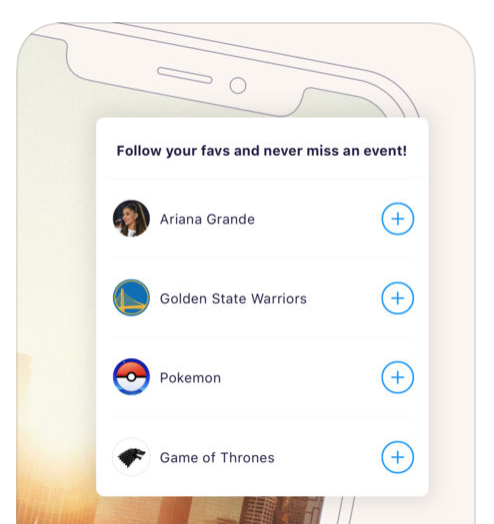
The problem is that most of this could be handled with SMS and a more popular calendar. That’s why IRL is doubling-down on event discovery through influencers, which you can’t do anywhere else at scale. With the new version of the app launching today, you’ll be recommended performers, locations, and curators to follow. You’ll see their suggestions in the Explore tab that also includes sub-tabs of Nearby and Trending happenings. There’s also a college-specific feed for users that auth in with their school email address. Curators and event companies like TechCrunch can get their own IRL.com/… URL people can follow more easily than some janky list of events of gallery of flyers on their website. Since pretty much every promoter wants more attendees, IRL’s had little resistance to it indexing all the events from Meetup.com and whatever it can find.

IRL is concentrating on growth for now, but Shafi believes all the intent data about what people want to do could be valuable for directing people to certain restaurants, bars, theaters, or festivals, though he vows that “we’re never going to sell your data to advertisers.” For now IRL is earning money from affiliate fees when people buy tickets or make reservations. Event affiliate margins are infamously slim, but Shafi says IRL can bargain for higher fees as it gains sway over more people’s calendars.

Unfortunately without reams of personal data and leading artificial intelligence that Facebook owns, IRL’s in-house suggestions via the Explore tab can feel pretty haphazard. I saw lots of mediocre happy hours, crafting nights, and community talks that weren’t quite the hip nightlife recommendations I was hoping for, and for now there’s no sorting by category. That’s where Shafi hopes influencers will fill in. And he’s confident that Facebook’s business model discourages it moving deeper into events. “Facebook’s revenue driver is time spent on the app. While meaningful to society, events as a feature is not a primary revenue driver so they don’t get the resources that other features on Facebook get.”

Yet the biggest challenge will be rearranging how people organize their lives. A lot of us are too scatterbrained, lazy, or instinctive to make all our plans days or weeks ahead of time and put them on a calendar. The beauty of mobile is that we can communicate on the fly to meet up. “Solving for spontaneity isn’t our focus so far” Shafi admits. But that’s how so much of our social lives come together.

My biggest problem isn’t finding events to fill my calendar, but knowing which friends are free now to hang out and attend one with me. There are plenty of calendar, event discovery, and offline hangout apps. IRL will have to prove they deserve to be united. At least Shafi says it’s problem worth trying to solve. “I know for a fact that the product of a calendar will outlive me.” He just wants to make it more social first.

13 Jun 2019

Monzo, the UK challenger bank with over 2 million users, expands to the US

Monzo, the U.K. challenger bank with more than two million customers and a unicorn valuation to go with it, has formally announced its U.S. expansion.

The tentative move — which TechCrunch exclusively reported was underway five months ago — will see a U.S. Monzo app and connected Mastercard debit card made available via in-person signups at events to be held soon. The roll-out will initially consists of a few thousand cards, supported by a waitlist in preparation for a wider launch.

In a call, Monzo co-founder and CEO Tom Blomfield told me he thinks the key to cracking North America is to create a fully localised version of Monzo based on carefully listening to U.S. users in order to find market-fit. There are obvious and less obvious cultural and technical differences in the way Brits and Americans save, spend and manage their finances and this will require significant product divergence.

In other words, Monzo isn’t presuming that specific features of the U.K. offering, which is currently seeing 200,000 people sign up each month, will automatically resonate with customers across the pond. To equally succeed in the U.S., it will be about the details and in a sense the company will need to act like a startup within what is now a scale-up if it is to repeat much of the Monzo playbook.

In the U.K., Monzo currently has an NPS score of 80, which Blomfield says is unusually high for a bank. He also tells me 60% of U.K. signups remain long-term active, transacting at once per week. However, as a counterpoint, the percentage of Monzo users that pay their salary into the Monzo account sits at between about 27% and 30% of active users, suggesting that a significant number of Monzo customers aren’t yet using it as their main account. Monzo’s definition of salaried is anyone who deposits at least £1,000 per month by bank transfer.

Returning back to America, Monzo says it will develop the U.S. version into a “fully-featured digital account” that can be accessed on your smartphone and will have the ability to extend into various “Monzo and third-party financial services”.

Initially, the challenger bank is partnering with an established U.S. bank, but is also working on applying for its own U.S. bank license. As in the U.K., the plan is to build and own as much of its technology stack as possible, which Blomfield says will be needed to give Monzo the agility to serve U.S. customers successfully.

To achieve this, Monzo will open an office in L.A., California, chosen “because it isn’t San Francisco,” says Blomfield. He says he was mindful of putting Monzo within the Silicon Valley bubble where rents are not only ridiculously high but product groupthink could be detrimental.

Meanwhile, Monzo joins a growing list of London-based B2C fintechs hoping to conquer America. Earlier today, money management app Emma announced that it had launched in the U.S. via a partnership with Plaid. Another example is banking chatbot and app Cleo, which quietly entered the U.S. nine months ago.

Added to this, Blomfield has always talked openly about his ambition to bring Monzo to the U.S. Over the years the challenger bank has attracted an array of U.S. investors. They include General Catalyst, Thrive Capital, Goodwater Capital, Stripe, Michael Moritz and Instagram co-founder Kevin Systrom. Most recently, TechCrunch reported that Y Combinator is also set to join the company’s cap table.

13 Jun 2019

Emma, the London-based money management app, launches in the US and Canada

Emma, the U.K. money management app (now calling itself your “best financial friend”), has launched in the United States and Canada — and is now one of a plethora of London fintechs venturing states-side.

Competing banking app Cleo entered the U.S. nine months ago, and challenger bank Monzo is thought to be gearing up to launch across the pond soon, to name just two.

Emma says the U.S. launch comes after partnering with Plaid, the U.S.-based fintech that specialises in bank account aggregation. The London startup says that with its U.S. launch, 350 million people will now be able to have access to Emma’s money management features.

Described as your “financial friend,” the Emma app connects to your bank accounts (and crypto wallets) to help you budget, track spending and save money. It aims to help you understand things like how much money you have left to spend until your next payday, track and find wasteful subscriptions, and preemptively avoid going into your bank’s overdraft.

The PFM-styled app was launched in the U.K. in January 2018 and claims more than 100,000 downloads in just a year “without any marketing spend”. Furthermore, the company says users open the app five times a week, twice a day, and are using it as a “true alternative” to their traditional banking app.

13 Jun 2019

Spotify’s redesign simplifies navigation and highlights podcasts

Spotify is officially rolling out its redesigned experience which puts a greater emphasis on podcasts. The company today announced a new version of its “Your Library” section is being rolled out now to paying subscribers on its Premium plan. Its goal is to make it easier to move between Music and Podcasts and find the podcast shows and episodes you want to hear.

The company in May previewed this news with select press while the redesign was in testing.

With the update, users will be able to swipe or tap to switch between music and podcasts, while the latter also features three sections for podcast management: Episodes, Downloads, and Shows.

The Episodes tab lets you seek out new episodes or resume the podcasts you’re already listening to, picking up where you left off. As you scroll down, you’ll find other newly released episodes from the shows you follow. In other words, the experience prioritizes your in-progress episodes over a strict chronological order.

The Downloads tab is where you can manage the episodes you’ve saved for offline listening and the Shows tab is where you can manage the podcasts you follow and check out their prior episodes. The shows are ranked in this section by whichever ones have the newest episodes.

Meanwhile, the Music tab has been updated to make it easier to get to the content you want to access. Where before users were presented with a list (Playlists, Stations, Songs, Albums, etc.) to dive into, you’ll now be dropped directly into the Playlist section.

To get to the Artists or Albums, you swipe or tap to reach their section. To add an Artist, you still “follow” them as before, and albums you favorite (by tapping the heart) are saved to the Albums section. You can also save all an album’s songs to your “Liked Songs” playlist by tapping the three-dot more menu (…) then choosing “Like all songs.”

The redesign places far less emphasis on video content, an earlier focus for the streaming music provider. This year, Spotify has instead doubled down on podcasts, believing in its ability to shift radio advertising over to its app by offering better targeting.

It’s been selling its own ads on its original podcasts since mid-2018. However, paid subscriptions still account for the bulk of Spotify’s revenue today — €1,385 million versus just €126 million from advertising in Q1, and subscriptions are growing faster than advertising at 34% vs. 24%, respectively.

The company has been ramping up on podcasts across the board, with acquisitions in the market like  GimletParcast, and Anchor as well as investments in original programming and exclusives. Just yesterday, Spotify announced a new personalized playlist that combines music and podcasts, as well.

Beyond its podcast focus, Spotify’s redesigned app is much easier to navigate — addressing a concern that some have had with the overall experience. Spotify’s busy interface is often cited by those who opt for Apple Music as one of the reasons they prefer the competitor’s app. To some extent, this is personal preference. But arguably, Spotify has been overdue for an update given its shifting attention.

Spotify says the updated design is live today for Premium users.


13 Jun 2019

Airbnb launches ‘Adventures’ for tourists seeking more thrills

Airbnb has debuted a new extension of its growing business in providing travel experiences in addition to temporary housing – it’s called Airbnb Adventures, and it’s effectively a collection of tours and trips lasting between three days and a week that go beyond the usual city walking tour.

One such trip, for example, is a wildlife excursion in Kenya that spans three days and centers around a walking trip with a promise to “encounter lions” as well as a campfire learning session, and “bush tea.” The cost is $500 per person, which includes five meals, drinks and two nights’ stay in a tent.

To source these ‘Adventures,’ Airbnb is working with local experts and tour companies, and doing so directly rather than working with larger tour providers that can be a one-to-many connection for sourcing like it does with some of its more vanilla Experiences. The direct route is probably necessary for these types of experiences, which have more implications in terms of liability and insurance. The company is also working with a third-party for verifying the certifications that are often required to provide these kinds of activities safely.

Airbnb is increasingly investing in ares that complement its core product of short-term peer-to-peer vacation housing rentals, and it debuted Experiences, of which Adventures is a part, in 2016. It’s also recently been reported that the company is exploring streaming media. It’s also expected to go public sometime this year, and recently claimed profitability in its operations.