Month: June 2019

13 Jun 2019

IBM, KPMG, Merck, Walmart team up for drug supply chain blockchain pilot

IBM announced its latest blockchain initiative today. This one is in partnership with KPMG, Merk and Walmart to build a drug supply chain blockchain pilot.

These four companies are coming to together to help come up with a solution to track certain drugs as they move through a supply chain. IBM is acting as the technology partner, KPMG brings a deep understanding of the compliance issues, Merk is of course a drug company and Walmart would be a drug distributor through its pharmacies and care clinics.

The idea is to give each drug package a unique identifier that you can track through the supply chain from manufacturer to pharmacy to consumer. Seems simple enough, but the fact is that companies are loathe to share any data with one another. The blockchain would provide an irrefutable record of each transaction as the drug moved along the supply chain, giving authorities and participants an easy audit trail.

The pilot is part of set of programs being conducted by various stakeholders at the request of the FDA. The end goal is to find solutions to help comply with the U.S. Drug Supply Chain Security Act. According to the FDA Pilot Program website, “FDA’s DSCSA Pilot Project Program is intended to assist drug supply chain stakeholders, including FDA, in developing the electronic, interoperable system that will identify and trace certain prescription drugs as they are distributed within the United States.”

IBM hopes that this blockchain pilot will show it can build a blockchain platform or network on top of which other companies can build applications. “The network in this case, would have the ability to exchange information about these pharmaceutical shipments in a way that ensures privacy, but that is validated,” Mark Treshock, global blockchain solutions leader for healthcare and life sciences at IBM told TechCrunch.

He believes that this would help bring companies on board that might be concerned about the privacy of their information in a public system like this, something that drug companies in particular worry about. Trying to build an interoperable system is a challenge, but Treshock sees the blockchain as a tidy solution for this issue.

Some people have said that blockchain is a solution looking for a problem, but IBM has been looking at it more practically with several real-world projects in production including one to track leafy greens from field to store with Walmart and a shipping supply chain with Maersk to track shipping containers as they move through the world

Treshock believes the Walmart food blockchain is particularly applicable here and could be used as a template of sorts to build the drug supply blockchain. “It’s very similar, tracking food to tracking drugs, and we are leveraging or adopting the assets that we built for food trust to this problem. We’re taking that platform and adapting it to track pharmaceuticals,” he explained.

13 Jun 2019

IBM, KPMG, Merck, Walmart team up for drug supply chain blockchain pilot

IBM announced its latest blockchain initiative today. This one is in partnership with KPMG, Merk and Walmart to build a drug supply chain blockchain pilot.

These four companies are coming to together to help come up with a solution to track certain drugs as they move through a supply chain. IBM is acting as the technology partner, KPMG brings a deep understanding of the compliance issues, Merk is of course a drug company and Walmart would be a drug distributor through its pharmacies and care clinics.

The idea is to give each drug package a unique identifier that you can track through the supply chain from manufacturer to pharmacy to consumer. Seems simple enough, but the fact is that companies are loathe to share any data with one another. The blockchain would provide an irrefutable record of each transaction as the drug moved along the supply chain, giving authorities and participants an easy audit trail.

The pilot is part of set of programs being conducted by various stakeholders at the request of the FDA. The end goal is to find solutions to help comply with the U.S. Drug Supply Chain Security Act. According to the FDA Pilot Program website, “FDA’s DSCSA Pilot Project Program is intended to assist drug supply chain stakeholders, including FDA, in developing the electronic, interoperable system that will identify and trace certain prescription drugs as they are distributed within the United States.”

IBM hopes that this blockchain pilot will show it can build a blockchain platform or network on top of which other companies can build applications. “The network in this case, would have the ability to exchange information about these pharmaceutical shipments in a way that ensures privacy, but that is validated,” Mark Treshock, global blockchain solutions leader for healthcare and life sciences at IBM told TechCrunch.

He believes that this would help bring companies on board that might be concerned about the privacy of their information in a public system like this, something that drug companies in particular worry about. Trying to build an interoperable system is a challenge, but Treshock sees the blockchain as a tidy solution for this issue.

Some people have said that blockchain is a solution looking for a problem, but IBM has been looking at it more practically with several real-world projects in production including one to track leafy greens from field to store with Walmart and a shipping supply chain with Maersk to track shipping containers as they move through the world

Treshock believes the Walmart food blockchain is particularly applicable here and could be used as a template of sorts to build the drug supply blockchain. “It’s very similar, tracking food to tracking drugs, and we are leveraging or adopting the assets that we built for food trust to this problem. We’re taking that platform and adapting it to track pharmaceuticals,” he explained.

13 Jun 2019

Privacy policies are still too horrible to read in full

A year on from Europe’s flagship update to the pan-EU data protection framework the Commission has warned that too many privacy policies are still too hard to read and has urged tech companies to declutter and clarify their T&Cs. (So full marks to Twitter for the timing of this announcement.)

Announcing the results of a survey of the attitudes of 27,000 Europeans vis-a-vis data protection, the Commission said a large majority (73%) of EU citizens have heard of at least one of the six tested rights guaranteed by the General Data Protection Regulation (GDPR), which came into force at the end of May last year. But only a minority (30%) are aware of all their rights under the framework.

The Commission said it will launch a campaign to boost awareness of privacy rights and encourage EU citizens to optimise their privacy settings — “so that they only share the data they are willing to share”.

In instances of consent-based data processing, the GDPR guaranteed rights include the right to access personal data and get a copy of it without charge; the right to request rectification of incomplete or inaccurate personal data; the right to have data deleted; the right to restrict processing; and the right to data portability.

The highest levels of awareness recorded by the survey was for the right to access their own data (65%); the right to correct the data if they are wrong (61%); the right to object to receiving direct marketing (59%) and the right to have their own data deleted (57%).


Commenting in a statement, Andrus Ansip, VP for the Digital Single Market, said: “European citizens have become more aware of their digital rights and this is encouraging news. However, only three in ten Europeans have heard of all their new data rights. For companies, their customers’ trust is hard currency and this trust starts with the customers’ understanding of, and confidence in, privacy settings. Being aware is a precondition to being able to exercise your rights. Both sides can only win from clearer and simpler application of data protection rules.”

“Helping Europeans regain control over their personal data is one of our biggest priorities,” added Věra Jourová, commissioner for justice, consumers and gender equality, in another supporting statement. “But, of the 60% Europeans who read their privacy statements, only 13% read them fully. This is because the statements are too long or too difficult to understand. I once again urge all online companies to provide privacy statements that are concise, transparent and easily understandable by all users. I also encourage all Europeans to use their data protection rights and to optimise their privacy settings.”

Speaking at a Commission event to mark the one-year anniversary of the GDPR, Jourova couched the regulation as “growing fast” and “doing well” but said it needs continued nurturing to deliver on its promise — warning against fragmentation, or so-called ‘gold-plating’, by national agencies adding additional conditions or taking an expansive interpretation of the rules.

She also said “strong and coherent” enforcement is essential — but claimed fears that national watchdogs will become “sanctioning machines have not materialised”.

Though she made a point of emphasizing that: “National data protection authorities are the key for success.”

And it’s fair to day that enforcement remains a rare sight one year on from the regulation being applied — certainly in complaints attached to tech giants (Google is an exception) — which has fuelled a narrative in some media outlets that tries to brand the entire update a failure. But it was never likely data watchdogs would rush to judgement on a sharply increased workload at the same time as they were bedding into a new way of working for cross-border complaints, under GDPR’s one-stop-shop mechanism.

Regulators have also been conscious that data handlers are finding their feet under the new framework, and have allowed time for their compliance. But from here on in it’s fair to say there will be growing expectation from EU citizens for enforcement to uphold their rights.

The EU data protection agency with the biggest bunch of strategic keys where GDPR is concerned is the Irish Data Protection Commission — which has seen complaints filed since the regulation came into force more than double, thanks to the country being a (low tax) favorite for tech giants to base their European HQs.

The Irish DPC has around 18 open investigations into tech giants at this stage — including, most recently, a formal probe of Google’s adtech, which is in response to a number of complaints filed across Europe about how real-time bidding systems handle personal data.

Adtech veteran Quantcast‘s processing and aggregating of personal data is also being formally probed.

Other open investigations on the Irish DPC’s plate include a large number of investigations into various aspects of multiple Facebook owned businesses, as well as a smaller number of probes into Apple, LinkedIn and Twitter’s data handling. So it is certainly one to watch.

In comments at today’s event to mark the one-year anniversary of the GDPR, Ireland’s data protection commissioner indicated that some of these investigations will result in judgements this summer.

“We prioritise fair and high quality judgements. We keep our focus on the job. We have a big quantity of large scale investigations on the way and some of them will be finalised this summer,” said Helen Dixon .

Also speaking at the event, Qwant’s founder Eric Leandri said GDPR has been a boon to his pro-privacy search engine business — suggesting it has increased its growth rate to 30% per week.

“People who understand what data privacy means are inclined to protect their privacy,” he added.

13 Jun 2019

Facebook backs social commerce startup Meesho in first India investment

As Facebook explores ways to generate revenue from WhatsApp, the company is now turning to a startup that already has a lead. The social juggernaut said today it has invested in social-commerce startup Meesho in what is the first time the firm takes equity in an Indian startup.

Neither Facebook nor Meesho, which prior to this announcement had raised about $65 million, shared financial terms of the deal. A source familiar with the matter told TechCrunch the size of the capital was “very significant.”

Meesho, a Y Combinator alumnus, is an online social commerce that connects sellers with customers on social media platforms such as WhatsApp. The four-year-old startup claims to have a network of more than 2 million resellers who largely deal with apparels and electronics items.

These resellers are mostly homemakers, most of whom have purchased a smartphone for the first time in recent years. Meesho has most of its customers in smaller cities and towns, popularly dubbed as India 2 where the next phase of internet users are joining from. These are two things that attracted Facebook to Meesho, Ajit Mohan, VP and Managing Director of Facebook India, told TechCrunch in an interview.

“A platform that is aimed at India 2 and has such a large user base of women — when most people online in India are predominantly men — is a remarkable achievement,” he said. According to several estimates, males account for more than 80% of India’s internet user base.

Meesho claims that it is helping thousands of resellers earn more than Rs 25,000 ($360) each month. In an interview with TechCrunch last year, Meesho co-founder and CEO Vidit Aatrey said the startup, which operates in India currently, planned to enter international markets.

Even as WhatsApp is a crucial play for Meesho, the startup will continue to work with other social media platforms, Facebook’s Mohan said. Last year, Facebook launched its Marketplace, which operates in the same space as Meesho. Mohan said the company does not see Meesho as a vehicle to expand its own family of services.

On the contrary, Facebook is now open to exploring investment in other startups that are building unique solutions for the Indian market. “Wherever we believe there is opportunity beyond the work we do today, we are open to exploring further investment deals,” he said. There is no particular category that Facebook is necessarily focused on, he added.

Even as Facebook has not made any push to make WhatsApp expand beyond a communications service, users in India, the service’s largest market, are increasingly finding ways to incorporate Facebook’s app into their businesses.

13 Jun 2019

Facebook backs social commerce startup Meesho in first India investment

As Facebook explores ways to generate revenue from WhatsApp, the company is now turning to a startup that already has a lead. The social juggernaut said today it has invested in social-commerce startup Meesho in what is the first time the firm takes equity in an Indian startup.

Neither Facebook nor Meesho, which prior to this announcement had raised about $65 million, shared financial terms of the deal. A source familiar with the matter told TechCrunch the size of the capital was “very significant.”

Meesho, a Y Combinator alumnus, is an online social commerce that connects sellers with customers on social media platforms such as WhatsApp. The four-year-old startup claims to have a network of more than 2 million resellers who largely deal with apparels and electronics items.

These resellers are mostly homemakers, most of whom have purchased a smartphone for the first time in recent years. Meesho has most of its customers in smaller cities and towns, popularly dubbed as India 2 where the next phase of internet users are joining from. These are two things that attracted Facebook to Meesho, Ajit Mohan, VP and Managing Director of Facebook India, told TechCrunch in an interview.

“A platform that is aimed at India 2 and has such a large user base of women — when most people online in India are predominantly men — is a remarkable achievement,” he said. According to several estimates, males account for more than 80% of India’s internet user base.

Meesho claims that it is helping thousands of resellers earn more than Rs 25,000 ($360) each month. In an interview with TechCrunch last year, Meesho co-founder and CEO Vidit Aatrey said the startup, which operates in India currently, planned to enter international markets.

Even as WhatsApp is a crucial play for Meesho, the startup will continue to work with other social media platforms, Facebook’s Mohan said. Last year, Facebook launched its Marketplace, which operates in the same space as Meesho. Mohan said the company does not see Meesho as a vehicle to expand its own family of services.

On the contrary, Facebook is now open to exploring investment in other startups that are building unique solutions for the Indian market. “Wherever we believe there is opportunity beyond the work we do today, we are open to exploring further investment deals,” he said. There is no particular category that Facebook is necessarily focused on, he added.

Even as Facebook has not made any push to make WhatsApp expand beyond a communications service, users in India, the service’s largest market, are increasingly finding ways to incorporate Facebook’s app into their businesses.

13 Jun 2019

China opens Nasdaq-style board to lure tech firms back home

China’s much-anticipated Science and Technology Innovation board officially launched in Shanghai today, marking Beijing’s major step in drawing high-potential tech companies to list at home.

The new Star Market, first announced by President Xi Jinping in November, is expected to be a key fundraising avenue for tech companies from an array of stages, given its criteria (link in Chinese) are less stringent than other domestic boards. Beijing has over the past year encouraged local firms to become more self-reliant in producing chips and other core technologies as an escalating trade war threatens to cut China off the U.S. supply chain.

The new startup board began taking applications in late March and have so far received applications from 122 companies, according to information from the Shanghai Stock Exchange .

The tech bourse opened as China’s ecommerce titan Alibaba filed confidentially for a second listing in Hong Kong, according to sources cited by Bloomberg and Reuters. A spokesperson for Alibaba declined to comment.

Rumors of Alibaba’s potential IPO have swirled for months, but the Hangzhou-based firm has recently accelerated its application process as the U.S.-China trade war intensifies, a person familiar with the matter told TechCrunch.

Other Chinese firms that want to be closer to home now have another option to raise equity. Through the new tech board, China will allow loss-making companies to list on an exchange for the first time. This will likely draw promising, pre-profit tech firms that would have otherwise chosen to list in New York for more lax regulations.

For example, unprofitable companies with an income of at least 300 million yuan ($43.43 million) from the previous year are allowed to list in Shanghai if they have a minimum market capitalization of 2 billion yuan and generated a cash flow of no less than 100 million yuan over the past three years.

The board will also be the first to have adopted a “registration-based” IPO system designed to streamline applications and limit the securities authority’s influence over pricing and timing of a flotation.

Companies with a dual-class shareholding structure, which has proven popular with a range of tech giants including Facebook, Alphabet, Alibaba and JD.com, will also be eligible to apply. Alibaba famously snubbed the Hong Kong Stock Exchange after the bourse rejected its application over its corporate structure. HKEX recently dropped its dual-class ban and admitted that Alibaba’s decision to list in New York had compelled it to rethink the restriction. 

Applicants that adopt the variable interest entities (VIE) structure, a controversial framework that many Chinese internet firms use to operate as domestic companies controlled by foreign entities, are also welcome to apply.

13 Jun 2019

Zava bags $32M to expand its AI-free telehealth service in Europe

More money is being injected into the telehealth space in Europe. Zava, a long-time player that bills its online service as offering a “discreet and convenient” alternative to an in-person doctor visit, has just announced a $32 million Series A round, led by growth equity firm HPE Growth.

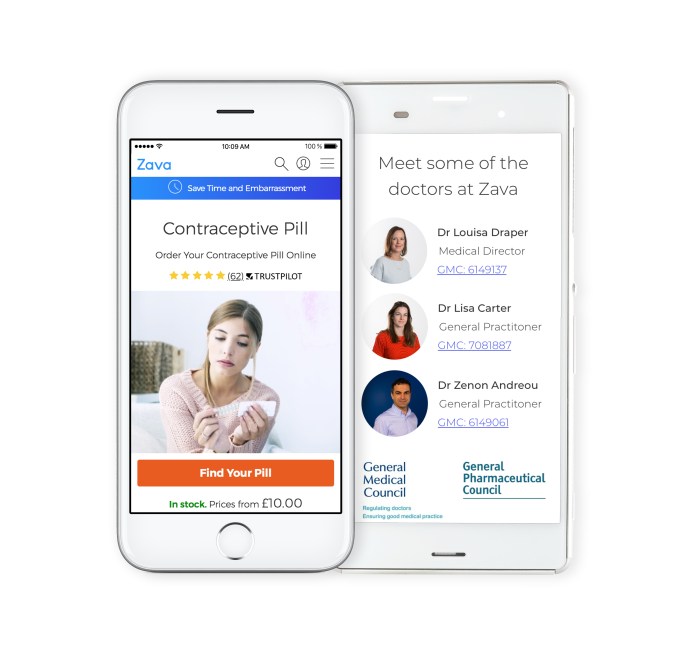
Zava relies on patients filling in an online medical questionnaire which is reviewed by a person from its team of in-house doctors/clinicians as part of the remote consultation process. Test kits and/or medicine can follow in the post or be sent to a pharmacy for the patient to collect.

“Zava provides reliable and convenient access to a qualified clinical team, via written communication, which drives an effective patient:doctor relationship,” says co-founder and CEO David Meinertz. “The questions we ask in our written questionnaire are exactly the same questions a GP would ask — but the patient can do this in their own time, meaning their answers are often more thorough.”

“Our patients feel more comfortable not having to discuss medical conditions that they might find embarrassing face to face, so we often find our patient answers are very direct,” he adds. “We’re not replacing doctors with AI and we are not just putting doctors on video. Zava is providing healthcare that enables doctors to treat patients more efficiently and more safely.”

Commenting on the Series A in a statement, Harry Dolman, partner at HPE Growth, added: “Zava offers a unique and highly scalable model to deliver a more convenient healthcare experience to patients while radically improving the efficiency of healthcare professionals, enabling healthcare systems to reduce the overall costs associated with primary care.”

The startup was founded nearly a decade ago, in 2010, and had only previously raised an angel round of $1.4M back in 2012 from an entrepreneur in Hamburg — but was profitable until the end of 2018. “We are now in investment mode,” Meinertz tells TechCrunch.

The growth opportunity its investors are spotting is both to expand to more markets, initially across Europe, but also to supplement over-stretched state healthcare services — with Zava gearing up to make a sales pitch to state healthcare services in the UK, France and Germany.

Its early profits have come from offering paid services either direct to patients, or via working with insurance companies or partnering with pharmacies. The next stage will be to open up a dual track in key markets such as the UK — supplementing direct paid consultations with winning business from the state funded National Health Service so the service is offered to their patients free-at-the-point-of-use.

Although at this stage Zava has not provided any details of state healthcare contracts it has won.

“We’re delighted that our latest investment will help fund the research required to enter this space in the UK, Germany and France,” says Meinertz of the Series A. “We feel passionately about the transformation of primary care and the Zava healthcare platform is primed to support it.”

“As Zava grows and scales in the UK, we are looking to work closely with the NHS to help it become more efficient. This will mean that we will be working with two distinct models in the UK, one where patients pay Zava for the services they receive from us, or, two, access Zava through the NHS and receive healthcare free of charge at the point of care,” he adds.

“Due to the different requirements of the healthcare systems in France and Germany, we are already exploring different routes to enter the statutory healthcare markets in these countries.

“In Germany, we will work with statutory and private insurance companies to provide healthcare to patients free at the point of care.”

Meinertz says the new funding will also go on expanding Zava’s medical and technology capabilities — to offer “many new services for patients across Europe”, with women’s health a near term focus.

“We will be launching dozens of new services in the UK and other markets during Q3 and Q4 of 2019. In particular, we are focussing on women’s health in the coming months, as well as new test-kits and mental health services,” he says, adding: “With our latest investment we are investigating routes to replicate Zava’s success in the current markets to new markets to accelerate growth. Our intention is to launch in two additional European markets by 2021.”

Since 2011, Zava has provided three million paid consultations across the six markets it operates in in Europe — with 1M those taking place in 2018 alone.

Every month it says almost 100,000 patients access its service from the UK, Germany, France, Austria, Switzerland and Ireland to seek advice, tests or treatment for a growing range of conditions.

On the surface, Zava’s approach looks considerably ‘lower tech’ than some of the other digital health startups also targeting a younger, tech-savvy generation of patients — such as London-based Babylon Health, which uses an AI chatbot as part of its telehealth mix.

But what it may lose in triaging scale and immediacy, by requiring patients spend time filling in a detailed questionnaire in order to access remote healthcare — vs offering a more dynamic chatbot-style Q&A with a patient — could represent a longer term, sustainable advantage if Zava can show this method reduces the risks of errors and misdiagnosis, especially as usage scales, and does indeed help to foster a stronger link between patient and app, as it claims.

“Patients fill in an online questionnaire giving details on their symptoms, past medical history and personal circumstances. This medical information is reviewed by one of our doctors who then decide the best course of action, whether this is prescribing medication, offering a diagnostic test, giving advice or requesting further information from the patient,” says Meinertz explaining Zava’s approach.

“The medical questionnaires have been developed by the clinical team and passed rigorous testing to ensure safe treatment to our patients.”
Patient dissatisfaction rates do appear to be an early challenge for ‘digital first’ healthcare services.

For example, an Ipsos Mori evaluation of Babylon Health’s rival GP at Hand service, published earlier this year, found high levels of patient churn — with one in four patients found to have left the practice since July 2017 vs an average across London during the same period of one in six.

How well Zava’s questionnaire review process scales will be key. (Trustpilot reviews of its current UK service skew overwhelmingly positive — but a full 3% of reviewers have left the lowest possible rating, with complaints including canceled orders, lost/delayed packages, privacy-related complaints and even the wrong strength medicine being sent.)

Currently the startup has an in-house clinical team comprised of more than 20 doctors, pharmacists and healthcare professionals. Though the plan with the new funding is to grow headcount.

“The majority of this team sits in our London head office but we offer flexibility for our staff, meaning that consultations can be offered by remote doctors. With this in mind, we have doctors based in France, Switzerland and Germany too who treat Zava patients,” adds Meinertz.

The typical Zava patient is a man or a woman aged between 20 and 40 who is resident in a major city.

“They are patients who are dissatisfied with their current healthcare options and they’re willing to try something new,” he says. “They want to avoid a face to face interaction or an inconvenient appointment, accessibility and reliability are the most important factors to them.”

While this tech-savvy target demographic may be willing to try an app over a traditional trip to the GP, they’re unlikely to stick around long if the underlying service doesn’t live up to their expectations. So there are major challenges for telehealth players like Zava — to make sure patients remain satisfied with the quality and reliability of the service as usage scales, and to find ways to foster a genuine sense of connection with remote doctors sitting in the equivalent of a call center. A shiny app wrapper on its own won’t go far.


13 Jun 2019

Lifen raises $22.7 million for its healthcare messaging platform

French startup Lifen is raising a $22.7 million (€20 million) funding round. Partech is leading the round with Idinvest Partners and Majycc eSanté Invest also participating. Existing investors Serena and Daphni are also investing again.

Most of the healthcare industry in France still relies on good old physical letters with stamps and everything. Lifen wants to help practitioners and hospitals switch to digital letters instead to save time and money.

While it’s easy to send a digital receipt instead of printing one, it gets a bit more complicated with health information. Companies have to comply with regulation and make sure that everything remains confidential. Lifen says that everything is encrypted in transit and at rest, and the company can’t access your data.

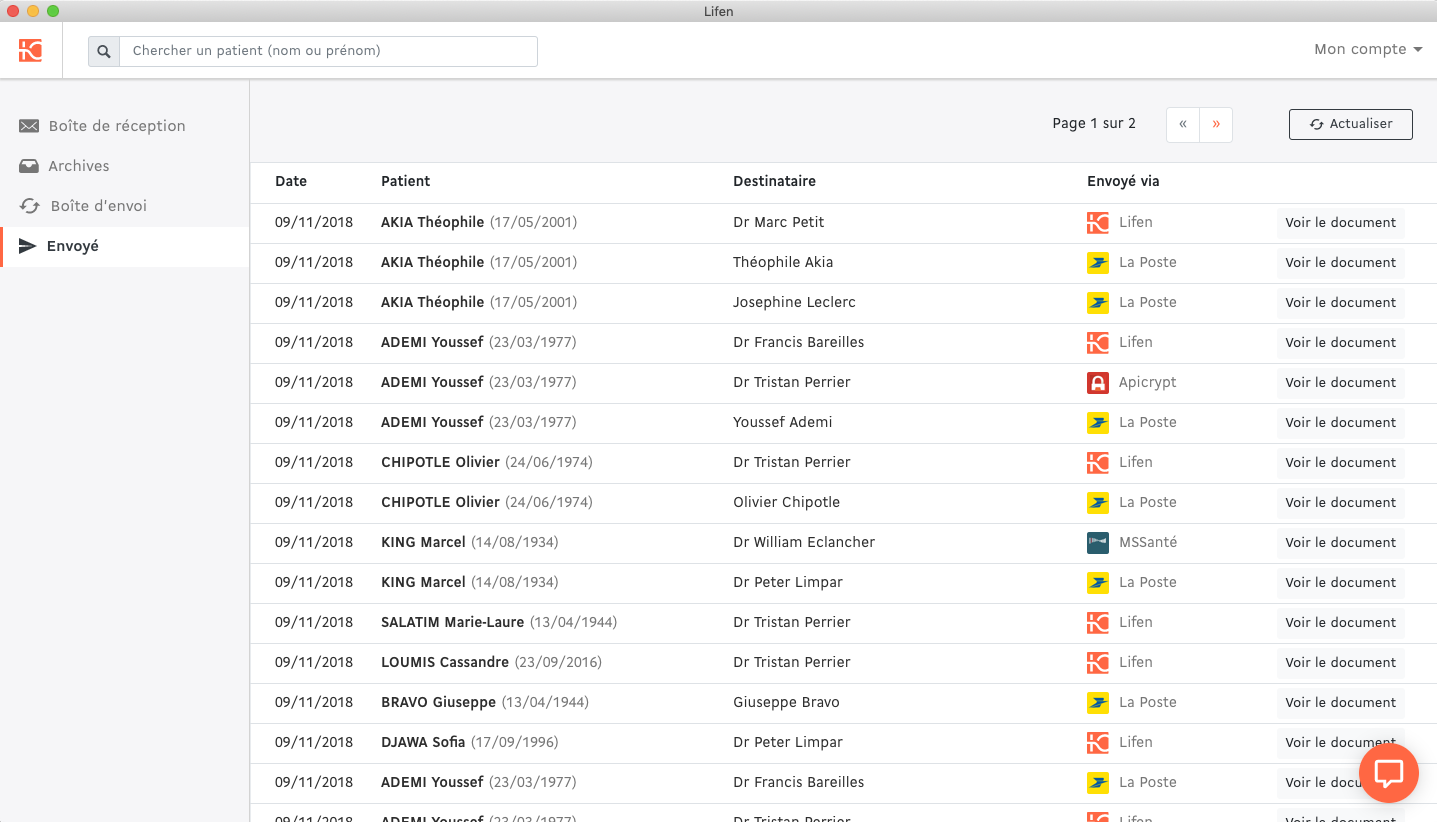
Lifen acts as an interface with multiple electronic messaging protocols — MS Santé, Apicrypt, Zepra and Medimail. You can send a letter using those protocols in a few clicks. And because paper isn’t going to die overnight, you can also send letters through the French postal service using Lifen as well.

The startup manages a directory of healthcare professionals and also handles read receipts. When it comes to receiving messages, Lifen acts as a unified inbox that lets you receive messages, documents and reports from various channels — it essentially looks like an email interface with an inbox and an outbox. You can then export each document and sort them in a patient folder.

When it comes to user experience, the startup tries to automate as many things as possible. After setting up Lifen, you can select it as a printer in the printing popup — it’s compatible with any app that supports printing.

The service then tries to detect names and addresses to figure out who is supposed to receive the letter. Lifen searches its directory to find out how to contact this particular healthcare professional.

Individual healthcare professionals can access Lifen for €25 per month. And I’m sure hospitals pay a lot more to access the service.

13 Jun 2019

Lifen raises $22.7 million for its healthcare messaging platform

French startup Lifen is raising a $22.7 million (€20 million) funding round. Partech is leading the round with Idinvest Partners and Majycc eSanté Invest also participating. Existing investors Serena and Daphni are also investing again.

Most of the healthcare industry in France still relies on good old physical letters with stamps and everything. Lifen wants to help practitioners and hospitals switch to digital letters instead to save time and money.

While it’s easy to send a digital receipt instead of printing one, it gets a bit more complicated with health information. Companies have to comply with regulation and make sure that everything remains confidential. Lifen says that everything is encrypted in transit and at rest, and the company can’t access your data.

Lifen acts as an interface with multiple electronic messaging protocols — MS Santé, Apicrypt, Zepra and Medimail. You can send a letter using those protocols in a few clicks. And because paper isn’t going to die overnight, you can also send letters through the French postal service using Lifen as well.

The startup manages a directory of healthcare professionals and also handles read receipts. When it comes to receiving messages, Lifen acts as a unified inbox that lets you receive messages, documents and reports from various channels — it essentially looks like an email interface with an inbox and an outbox. You can then export each document and sort them in a patient folder.

When it comes to user experience, the startup tries to automate as many things as possible. After setting up Lifen, you can select it as a printer in the printing popup — it’s compatible with any app that supports printing.

The service then tries to detect names and addresses to figure out who is supposed to receive the letter. Lifen searches its directory to find out how to contact this particular healthcare professional.

Individual healthcare professionals can access Lifen for €25 per month. And I’m sure hospitals pay a lot more to access the service.

13 Jun 2019

Curve, the all-your-cards-in-one banking app, introduces 1% instant cashback with Curve Cash

Curve, the London fintech that now describes itself an “over-the-top banking platform,” is unveiling a re-vamped cashback feature in a bid to draw in more customers for the premium versions of its Curve card. The company lets you consolidate all of your bank cards into a single Curve card and app to make it easier to manage your spending and access other benefits.

With the new Curve Cash programme, customers get 1% instant cashback on top of any existing rewards cards that they have plugged into the app, potentially earning customers double rewards on purchases. You simply pick from the list of retailers supported for cashback — you are allowed to choose between 3 and 6 retailers, depending on which Curve plan you are on — and then get 1% cashback for an purchases made at those stores.

The list of supported retailers spans over 60 top brands including most notably Amazon, Apple, Sainsbury’s, Waitrose, TFL, Uber, Gett, Spotify, and Netflix. There is no doubt that is a better choice of brands than many existing cashback schemes, and could go someway to softening the blow of losing Amex support for the second time earlier this year.

However, while the revamped cashback offering is available across all Curve products, the free version of Curve offers cashack for only the first 90 days. Otherwise Curve Metal customers will earn 1% instant cashback on purchases at six retailers at a time, and can receive Curve Cash for an unlimited period; Curve Black customers will be able to choose three retailers at a time, and can also receive Curve Cash for an unlimited period; Curve Blue customers will be able to choose three retailers at a time for an introductory 90 days.

Noteworthy is that Curve’s cashback is being powered in three ways: like many other cards or fintechs offering cashback, the London startup is partnering with a number of rewards providers to support many of the retailers in its Curve Cash programme. Others are offered via direct partnerships it has negotiated. I also understand from my own sources that cashback at some retailers — such as Amazon where Curve doesn’t have any kind of formal partnership — are being cross subsidised from revenue Curve is generating elsewhere.

Meanwhile, the new Curve Cash follows the launch of Curve Customer Protection in February, which attempts to address one of the criticisms of using Curve in relation to losing additional consumer protections typically offered by credit cards you plug into the app. Curve says it now provides faster purchase protection on eligible purchases of up to £100,000 made with any Curve card.

Along with cashback, other Curve features include fee-free spending abroad, and “Go Back in Time,” which lets you retroactively switch the card you used to pay up to 14-days after a purchase.