Month: June 2019

12 Jun 2019

Krisp’s smart noise-cancelling gets official release and pricing

Background noise on calls could be a thing of the past if Krisp has anything to do with it. The app, now available on Windows and Macs after a long beta, uses machine learning to silence the bustle of a home, shared office, or coffee shop so your voice and the voices of others comes through clearly.

I first encountered Krisp in prototype form when we were visiting UC Berkeley’s Skydeck accelerator, which ended up plugging $500,000 into the startup alongside $1.5M round from Sierra Ventures and Shanda Group.

Like so many apps and services these days, Krisp uses machine learning. But unlike many of them, it uses the technology in a fairly straightforward, easily understandable way.

The machine learning model the company has created is trained to recognize the voice of a person talking into a microphone. By definition pretty much everything else is just noise — so the model just sort of subtracts it from the waveform, leaving your audio clean even if there’s a middle school soccer team invading the cafe where you’re running the call from.

It can also mute sound coming the other direction — that is, the noise on your friend’s side. So if they’re in a noisy street and you’re safe at home, you can apply the smart noise reduction to them as well.

Because it changes the audio signal before it gets to any apps or services, it’s compatible with pretty much everything: Skype, Messenger, Slack, whatever. You could even use it to record podcasts when there’s a leaf blower outside. A mobile version is on the way for release later this year.

It works — I’ve tested it, as have thousands of other users during the beta. But now comes the moment of truth: will anyone pay for it?

The new, official release of the app will let you mute the noise you hear on the line — that is, the noise coming from the microphones of people you talk to — for free, forever. But clearing the noise on your own line, like the baby crying next to you, after a two week trial period, will cost you $5 per month or $50 per year. You can collect free time by referring people to the app, but eventually you’ll probably have to shell out.

Not that there’s anything wrong with that: a straightforward pay-as-you-go business model is refreshing in an age of intrusive data collection, pushy “freemium” platforms, and services that lack any way to make money whatsoever.

12 Jun 2019

ARM shows SoftBank does tech PE the right way

Private equity firms get a bad rap — and not without reason. In the prototypical example, a bunch of men in suits (and these folks always seem to be men for some reason) swoop in from Manhattan with Excel spreadsheets and pink slips, slashing and burning through an organization while ladening the balance sheet with debt in an algebraic alchemy of monetary extraction.

Vultures, parasites, octopuses — these are folks who almost certainly won popularity contests in high school and now seem to be shooting for most unpopular person to be compared to a crustacean in the Finance section of the WSJ (and there is some damn strong competition in those pages).

Sometimes that restructuring can save an org, and yes, many companies need a Marie Kondo armed with a business plan. But it’s a model that works best for, say, retail chains, and traditionally has been wholly incompatible with the tech industry.

Tech is a tough place for private equity buyouts, since the biggest expense for most companies is talent (i.e. R&D), and cutting R&D is usually the quickest path to cutting the valuation of the asset you just acquired. Unlike retail or manufacturing, there are just less cost levers to manipulate to make the numbers look better, and so PE firms have generally shied away from big tech acquisitions.

So it was interesting talking to Simon Segars this week in New York. Segars is the CEO and longtime executive at ARM Holdings, the UK-headquartered chip designer that powers billions of devices worldwide. Over the past two decades, ARM has had just an incredible run: last year, its designs were imprinted on 22.9 billion chips, thanks largely to the now ubiquitous adoption of smartphones across the world.

That success has been under stress though. As Brian Heater analyzed in his State of the Smartphone, smartphone growth has slowed in most markets as consumers extend their upgrade cycles and the pace of innovation has slowed. Add in the on-going trade kerfuffle between the U.S. and China, and suddenly being the worldwide leading designer of smartphone chips isn’t as enviable as it was even just a few years ago.

As a public company facing this landscape, ARM would have faced incredible pressure from investors to meet short-term revenue targets while cutting back on R&D — the very source of future growth the company has relied on its entire history. But ARM isn’t a public company — instead, SoftBank founder and CEO Masayoshi Son bought out the company entirely in 2016 for $32 billion.

Rather than being pegged to its stock price or a quick return to a PE shop, ARM is now seemingly evaluated on growth in its intellectual property and strategy for capturing new markets. “I’m in a very fortunate position where, despite the slowing of the smartphone market, … I’ve got an owner that says, invest, you know, invest like crazy to make sure you capture these ways of growth in the future, which is what we’re doing,” Segars explained to TechCrunch.

The company could have just doubled down on its existing product lines, but SoftBank’s ownership has opened the floodgates to explore other areas that could use ARM expertise. The company is now focused (if one can focus on many things) on everything from 5G and networking to IoT and autonomous driving. “We look to be in the right place at the right time with the right technology to catch the upswing into the future,“ Segars said.

That strategy requires some serious audacity though. ARM’s EBITDA was $225 million last year (21% lower than the year before) on $1.8 billion in net sales, which year-over-year grew a paltry 0.2% according to SoftBank’s latest financials. Meanwhile, operating expenses are up from the addition of hundreds of new employees and a new headquarters campus in Cambridge outside London. R&D isn’t cheap, nor does it payoff quickly.

Yet, that is exactly how Son and SoftBank approach this take-private transaction. “During the acquisition process, Masa said to me, ‘You run the business, I only care about long-term strategy, not going to interfere, you know, you know what you’re doing.’ … [and] Masa has been absolutely true to his word on that,” Segars said. “From a day-to-day basis, SoftBank leaves us completely alone.”

And unlike the bean counters that plague most PE shops, Son isn’t interested in detailed operational data from the firm. “When I give tactical updates… he’s asleep, [but] try stopping him when he’s talking about long-term strategy,” Segars said.

And unlike the PE model of dumping a bunch of high-interest corporate debt on the balance sheet to eke out returns, SoftBank has — at least, so far — avoided that particular tactic. While there were ruminations that SoftBank was considering cashing out some dollars from ARM using loans early last year, such rumors have apparently not panned out. Segars confirmed that “we have none” when we asked about leverage, which has otherwise plagued much of the rest of SoftBank Group and its various entities.

While ARM clearly has a bullish owner who somehow uses financial wizardry to give the company the resources it needs to grow, Son doesn’t have an infinite timeline for the company. Much like classic PE firms with 5-7 year time horizons to harvest returns, Son has already spoken out loud about pushing ARM back into the public markets in roughly five years time.

“I’m pretty sure, the night before we go public again, I’m going to be thinking ‘Man, I wish we’d had more time, you know, five years sounds like a lot,” Segars said. But “the way I talk about it within ARM is we’re in an investment phase now … and the goal is that by the time we re-list, … the revenues from these new markets are taking off and that’s flowing to the bottom line and we get back to a world of growing top line and expanding margins.”

In other words, ARM is a classic PE deal, but with the focus on actually getting the fundamentals in the business right without that financial alchemy and employee firing sadness. Maybe the plan will work, or maybe it won’t, but it is the right approach to handling the growth of a tech company.

How many other tech companies could use such an approach? How many other companies are currently languishing if only they had more focused owners with a true growth mindset to invest in the future? Silicon Valley has created trillions of dollars in market value over the past two decades, but there is even more waiting to be unlocked. And the best part is, it doesn’t even require an Excel macro to make it happen.


12 Jun 2019

RealityEngines.AI raises $5.25M seed round to make ML easier for enterprises

RealityEngines.AI, a research startup that wants to help enterprises make better use of AI, even when they only have incomplete data, today announced that it has raised a $5.25 million seed funding round. The round was led by former Google CEO and Chairman Eric Schmidt and Google founding board member Ram Shriram. Khosla Ventures, Paul Buchheit, Deepchand Nishar, Elad Gil, Keval Desai, Don Burnette and others also participated in this round.

The fact that the service was able to raise from this rather prominent group of investors clearly shows that its overall thesis resonates. The company, which doesn’t have a product yet, tells me that it specifically wants to help enterprises make better use of the smaller and noisier datasets they have and provide them with state-of-the-art machine learning and AI systems that they can quickly take into production. It also aims to provide its customers with systems that can explain their predictions and are free of various forms of bias, something that’s hard to do when the system is essentially a black box.

As RealityEngines CEO Bindu Reddy, who was previously the head of products for Google Apps, told me the company plans to use the funding to build out its research and development team. The company, after all, is tackling some of the most fundamental and hardest problems in machine learning right now — and that costs money. Some, like working with smaller datasets, already have some available solutions like generative adversarial networks that can augment existing datasets and that RealityEngines expects to innovate on.

Reddy is also betting on reinforcement learning as one of the core machine learning techniques for the platform.

Once it has its product in place, the plan is to make it available as a pay-as-you-go managed service that will make machine learning more accessible to large enterprise, but also to small and medium businesses, which also increasingly need access to these tools to remain competitive.

12 Jun 2019

Fundraising 101: Do VC associates matter?

Building a company is fueled by highs and lows, but one of the few moments of potential ecstasy (or perhaps for grizzled veterans, deep annoyance) is the VC outreach email. You are building your startup on deforming IKEA desks eating frozen dinners when out of nowhere, a major VC firm reaches out and wants to discuss a potential investment.

But then you look up your interlocutor online and find that they have that completely enigmatic title of “Associate.” Heck, that email may well have been from me over the years.

What do you do? Do you connect with someone who may well be working at a prominent firm and try to engage? Do you flat out ignore it? Do you equivocate and delay?

In short, do VC associates matter to your fundraise?

First, what exactly are associates and what do they do?

The best way to understand the work of a venture firm is to look at their actual activities rather than the titles or listed duties of any individual person. On the investment side, there are three main activities: analytics, networking / deal sourcing, and closing.

12 Jun 2019

Homeland Security’s Jeanette Manfra is coming to Disrupt SF

We can’t talk cybersecurity without hearing from the government.

We’re thrilled to announce Homeland Security Assistant Director Jeanette Manfra, a senior executive at the department’s Cybersecurity and Infrastructure Security Agency (CISA), will be at Disrupt SF.

Manfra is one of the federal government’s most experienced cybersecurity civil servants. She currently leads CISA’s cybersecurity efforts in protecting and strengthening the country’s most important infrastructure, like the power grid and water supplies. A decade-long government career professional, she previously served as acting deputy under secretary for cybersecurity at the National Protection and Programs Directorate, a division of Homeland Security dedicated to protecting government networks and critical infrastructure, later absorbed by CISA after the agency was created by President Trump in November 2018.

Prior to Homeland Security, Manfra served in the U.S. Army as a communications specialist and a military intelligence officer.

For years, cybersecurity warfare was somewhat limited to governments attacking governments. But the threat landscape has changed, and the new battleground is both in government and in the private sector.

Now under one roof, CISA acts as the nation’s cybersecurity risk adviser — working closely with government departments to protect federal systems and networks, and private industry to advise and warn on ongoing and emerging threats.

The agency has recently doubled down on its efforts to ensure election security, as well as risks to the U.S. supply chain.

Cybersecurity is one of those universal topics that affects every consumer, business, enterprise and government. We’re excited to talk shop with Manfra about the state of the security union.

Disrupt SF is in San Francisco on October 2-4, and tickets are available here.

12 Jun 2019

Helium launches $51M-funded “LongFi” IoT alternative to cellular

With 200X the range of WiFi at 1/1000th of the cost of a cellular modem, Helium’s “LongFi” wireless network debuts today. Its transmitters can help track stolen scooters, find missing dogs via IoT collars, and collect data from infrastructure sensors. The catch is that Helium’s tiny, extremely low-power transmission chips rely on connecting to P2P Helium Hotspots people can now buy for $495. Operating those hotspots earns owners a cryptocurrency token Helium promises will be valuable in the future.

The potential of a new wireless standard has allowed Helium to quietly raise $51 million over the past few years from GV, Khosla Ventures, and Marc Benioff including a new $15 million round led by Union Square Ventures. That’s in part because one of Helium’s co-founders is Napster inventer Shawn Fanning. Investors are betting that he can change the tech world again, this time with a wireless protocol that like WiFi and Bluetooth before it could unlock unique business opportunities.

Helium already has some big partners lined up including Lime, which will test it for tracking its lost and stolen scooters and bikes when they’re brought indoors obscuring other connectivity or their battery is pulled out deactivating GPS. InvisiLeash will partner with it to build more trackable pet collars. Agulus will pull data from irrigation valves and pumps for its agriculture tech business, Nestle will track when its time to refill water in its ReadyRefresh coolers at offices, and Stay Alfred will use it to track occupancy status and air quality in buildings.

Helium says its already pre-sold 80% of its Helium Hotspots, but the lack of a concrete return on investment could deter later adopters from buying the expensive device. And without enough Helium Hotspots, the Helium network won’t function.

12 Jun 2019

Apollo raises $22M for its GraphQL platform

Apollo, a San Francisco-based startup that provides a number of developer and operator tools and services around the GraphQL query language, today announced that it has raised a $22 million growth funding round co-led by Andreessen Horowitz and Matrix Partners. Existing investors Trinity Ventures and Webb Investment Network also participated in this round.

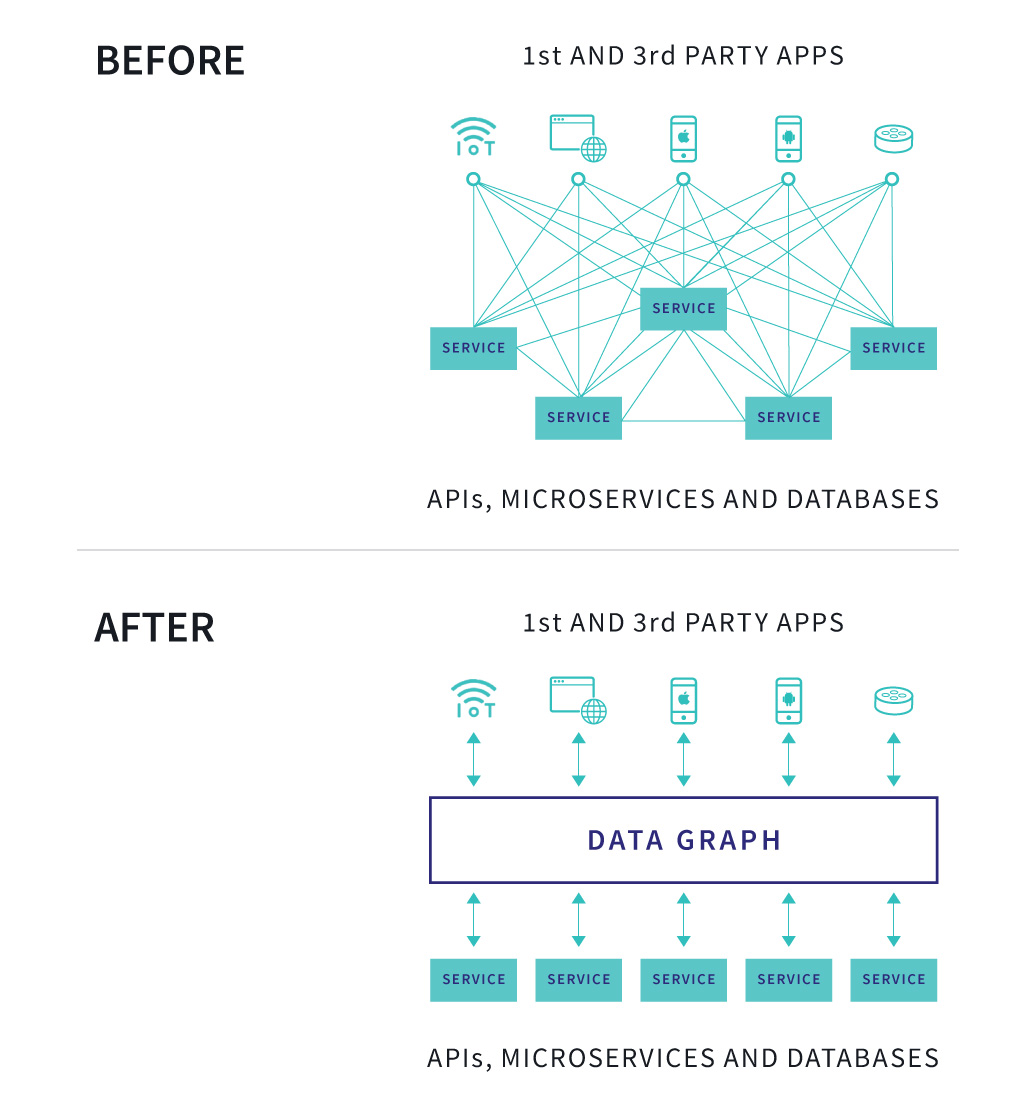
Today, Apollo is probably the biggest player in the GraphQL ecosystem. At its core, the company’s services allow businesses to use the Facebook-incubated GraphQL technology to shield their developers from the patchwork of legacy APIs and databases as they look to modernize their technology stacks. The team argues that while REST APIs that talked directly to other services and databases still made sense a few years ago, it doesn’t anymore now that the number of API endpoints keeps increasing rapidly.

Apollo replaces this with what it calls the Data Graph. “There is basically a missing piece where we think about how people build apps today, which is the piece that connects the billions of devices out there,” Apollo co-founder and CEO Geoff Schmidt told me. “You probably don’t just have one app anymore, you probably have three, for the web, iOS and Android . Or maybe six. And if you’re a two-sided marketplace you’ve got one for buyers, one for sellers and another for your ops team.” Managing the interfaces between all of these apps quickly becomes complicated and means you have to write a lot of custom code for every new feature. The promise of the Data Graph is that developers can use GraphQL to query the data in the graph and move on, all without having to write the boilerplate code that typically slows them down. At the same time, the ops teams can use the Graph to enforce access policies and implement other security features.

“If you think about it, there’s a lot of analogies to what happened with relational databases in the 80s,” Schmidt said. “There is a need for a new layer in the stack. Previously, your query planner was a human being, not a piece of software, and a relational databased is a piece of software that would just give you a database. And you needed a way to query that database and that syntax was called SQL.”

Geoff Schmidt, Apollo CEO, and Matt DeBergalis, CTO.

GraphQL itself, of course, is open source. Apollo is now building a lot of the proprietary tools around this idea of the Data Graph that make it useful for businesses. There’s a cloud-hosted graph manager, for example, that lets you track your schema, as well as a dashboard to track performance, as well as integrations with continuous integration services. “It’s basically a set of services that keep track of the metadata about your graph and help you manage the configuration of your graph and all the workflows and processes around it,” Schmidt said.

The development of Apollo didn’t come out of nowhere. The founders previously launched Meteor, a framework and set of hosted services that allowed developers to write their apps in JavaScript, both on the front-end and back-end. Meteor was tightly coupled to MongoDB, though, which worked well for some use cases but also held the platform back in the long run. With Apollo, the team decided to go in the opposite direction and instead build a platform that makes being database agnostic the core of its value proposition.

The company also recently launched Apollo Federation, which makes it easier for businesses to work with a distributed graph. Sometimes, after all, your data lives in lots of different places. Federation allows for a distributed architecture that combines all of the different data sources into a single schema that developers can then query.

Schmidt tells me that the company started to get some serious traction last year and by December, it was getting calls from VCs that heard from their portfolio companies that they were using Apollo.

The company plans to use the new funding to build out its technology to scale its field team to support the enterprises that bet on its technology, including the open source technologies that power both the service.

“I see the Data Graph as a core new layer of the stack, just like we as an industry invested in the relational databased for decades, making it better and better,” Schmidt said. “We’re still finding new uses for SQL and that relational database model. I think the Data Graph is going to be the same way.”

12 Jun 2019

Stride raises $2.2M from JetBlue, NFX for its guided trips marketplace

Group travel, it’s something you either love or hate, but Stride, which describes itself as a marketplace for “experiential multi-day and multi-destination packaged trips planned by experts,” wants to change this perception. The service, which was co-founded by former Starwood Hotels and Viator executive Gavin Delany, today announced that it has raised a $2.2 million seed round from JetBlue Ventures and NFX. In addition, it rolled out its new TripFinder feature, which makes it easier to find the right tour from the over 30,000 travel itineraries from its partners in its database.

The service first launched in 2016. Delany decided to focus on trips because of his own frustration with finding the right operator to hike the Inca Trail in Peru. “At the time, there was no platform that allowed you to search and compare different itineraries and operators,” he told me. And that’s exactly what Stride wants to do: help you find the right operator, no matter whether you are looking for a relaxed multi-day, multi-generational jaunt through Europe or a personalized extreme sports adventure.

[gallery ids="1841072,1841066,1841067,1841068,1841069,1841070,1841071"]

Unsurprisingly, most of Stride’s users are exactly the kind of travelers you’d expect to be interested in a guided tour. They tend to be older, more affluent and obviously interested in seeing the world. “They have the time, they have the money and they have the inclination to see the world. They want their adventure, but they want their comfort, too,” said Delany. Still, the company is also seeing a growing interest from younger clients who want to use the service to book small group or private tours, as well as pre-planned self-guided itineraries.

That’s where TripFinder comes in, which makes it far easier to find the right tour by guiding you through a few questions about who you are, where you want to travel and what style of travel you are interested in, including how much free time you expect to have during your guided experience.

Since Delany worked in the travel industry, he had the connection to find investors for Stride’s first institutional round. “We had been in conversations with JetBlue Ventures for about a year before they ended up investing. We just had that relationship and sharing what our vision was,” Delaney said. He noted that JetBlue was especially interested because of the user engagement that Stride was seeing. Indeed, Stride says it drove over $330 million in tour bookings last year and expects to surpass $1 billion in 2019.

Stride doesn’t expect that any of the larger travel sites like TripAdvisor or Expedia will really cut into its market anytime soon. Guided tours are a relatively small market for these companies, compared to the trillion dollar flight and hotel booking market. In addition, these multi-day and multi-destination tours are simply far more complex than commodity flight and hotel bookings.

The company plans to use the new funding to build out its platform and expand the range of tour in its lineup to cover even more places. “The core thing we’re most excited about is making this type of extraordinary world travel extremely easy,” Delaney said.

12 Jun 2019

Google opens its Android security key tech to iPhone and iPad users

Google will now allow iPhone and iPad owners to use their Android security key to verify sign-ins, the company said Wednesday.

Last month, the search and mobile giant said it developed a new Bluetooth-based protocol that will allow modern Android 7.0 devices and later to act as a security key for two-factor authentication. Since then, Google said 100,000 users are already using their Android phones as a security key.

Since its debut, the technology was limited to Chrome sign-ins. Now Google says Apple device owners can get the same protections without having to plug anything in.

Signing in to a Google account on an iPad using an Android 7.0 device. (Image: Google)

Security keys are an important security step for users who are particularly at risk of advanced attacks. They’re designed to thwart even the smartest and most resourceful attackers, like nation-state hackers. Instead of a security key that you keep on your keyring, newer Android devices have the technology built-in. When you log in to your account, you are prompted to authenticate with your key. Even if someone steals your password, they can’t log in without your authenticating device. Even phishing pages won’t work because only legitimate websites support security keys.

For the most part, security keys are a last line of defense. Google admitted last month that its standalone Titan security keys were vulnerable to a pairing bug, potentially putting it at risk of hijack. The company offered a free replacement for any affected device.

The security key technology is also FIDO2 compliant, a secure and flexible standard that allows various devices and running different operating systems to communicate with each other for authentication.

For now, Google said the Android security key will be limited to sign-ins to Google accounts only.

12 Jun 2019

Only 48 hours left for early-bird tickets to TC Sessions: Mobility 2019

If you’re wild about anything and everything related to mobility and transportation, you do not want to miss the TC Sessions: Mobility 2019 conference in San Jose, Calif. on July 10.

If you’re also wild about saving money, then synchronize your Apple watches — there are 48 hours left to score the early-bird price and save $100. That train leaves the station on Friday, June 14 at 11:59 p.m. (PT), so book your pass now.

More than 1,000 of the industries’ top technologists, founders, investors, engineers and researchers will be there to explore the current and future states of transformational technologies — flying taxis, delivery drones, dockless scooters, autonomous vehicles and more.

World-class speakers and TechCrunch editors will look at both the exciting benefits and the formidable challenges that will ultimately and profoundly affect billions of people around the world. Here’s a taste of what’s coming (you can also check out the full agenda):

  • Bringing Ethics to Self-Driving Cars: Voyage’s Oliver Cameron and Uber’s Clark Haynes will discuss ethical decision-making in autonomous vehicles and detail how robot cars are designed to prioritize some objects over others.
  • Will Venture Capital Drive the Future of Mobility? Michael Granoff (Maniv Mobility), Ted Serbinski (Techstars) and Sarah Smith (Bain Capital) will debate the uncertain future of mobility tech and whether VC dollars are enough to push the industry forward.
  • Rebuilding the Motor City: Ken Washington, Ford’s CTO and vice president of research and advanced engineering, will discuss how the historic automaker is rapidly changing its culture and processes while it prepares for an electric future.
  • The Last Mile: Challenges and Opportunities for Startups: Regina Clewlow, Populus founder and CEO, and Stonly Baptiste, Urban Us co-founder break down what it means to be a last-mile innovation business — the money needed to succeed, how data and technology will change the way people move from Point A to Point B and the hurdles that stand in the way.

TC Sessions: Mobility 2019 takes place on July 10, and you have only 48 hours left to get wild, be an early-bird and save $100. Get your ticket today.

Is your company interested in sponsoring or exhibiting at TC Sessions: Mobility? Contact our sponsorship sales team by filling out this form.