Month: June 2019

11 Jun 2019

Telegram’s crypto tokens are (kind of) going on sale to the public for the first time

Telegram, the most hyped ICO in the history of ICOs, is finally making its tokens available to retail investors through a limited listing that will precede a full sale later this year — but there are a lot of catches.

The messaging company, which serves as the de facto chat app for the crypto community, raised a record-high $1.7 billion last year through a token sale that was limited to accredited investors. The listing saw unprecedented demand despite a project which, some industry critics argued, recycled old ideas and proposed unmeetable goals.

Now its Gram token will go on sale to regular crypto buyers for the first time next month through a listing on crypto exchange Liquid on July 10. The arrangement is a limited offering before a full public sale in October, but the U.S, China and Japan are among countries where it will not be sold.

It’s notable that Liquid, which recently claimed to have raised funding at a $1 billion valuation, hasn’t struck a deal with Telegram directly. Instead, it has agreed to list an undisclosed number of tokens held by Gram Asia, an organization headquartered in Korea that claims to be the largest holder of Grams in Asia. For now, neither side is saying how many will be on offer and at what price.

Indeed, the press release announcing the deal includes no contribution from Telegram — there is, for example, no quote from its reclusive CEO Pavel Durov — and it sources two media reports to claim that Telegram’s beta program on its testnet is apparently working as planned.

That’s a pretty strange situation, even for the world of crypto, since it is convention for companies to endorse sales and partnerships.

“Unfortunately, that’s Telegram and how they have operated from the beginning,” Liquid CEO Kayamori told TechCrunch in an interview this week.

Despite that ominous radio silence, Kayamori assured us that this token listing is above board and very much part of the plan for TON — the ‘Telegram Open Network’ project that’s being developed by the funds raised through the ICO.

Kayamori said that TON is on track to make a full launch as early as October and that this partial listing from Gram Asia is part of that overall strategy.

Sure, that’s the rhetoric, but it is easy to assume other reasons behind the sale. Such as that Gram Asia is cashing in on anticipation of the full launch or, worse, that the group is dumping its tokens before a product.

Kayamori claimed that isn’t the case.

“A public sale window always planned between the testnet launch and mainnet [full] launch,” he said. “They wanted to work with a regulated exchange to see how it goes before it gets listed [in full] in October.”

“Telegram already has an ecosystem, developers and early token buyers and TON ventures, there are already communities being built up. Based on discussions within these communities, GRAM Asia has put its best step forward to do this public sale,” Kayamori added.

The “regulated” part is important.

One of the reasons Telegram kept quiet during the token sale was to avoid running into legal problems, such as those that fellow chat app Kik is experiencing right now. That caused plenty of issues at the time — with scammers cashing in on demand and token buyers themselves left confused — and the approach means there are many caveats around the sale on Liquid.

Most notably, the Gram tokens will not be tradeable.

Buyers will essentially buy tokens from Gram Asia which, until the tokens are released in October, will be held in USDC — the stable coin backed by Coinbase among others. Only when the distribution process begins will the buyers receive their tokens, but the process itself will be divided into four tranches with one-quarter of the buyer’s tokens distributed every three months.

Kayamori conceded that there may be unofficial over the counter trading, but Liquid “can’t control” that.
Liquid is betting that listing Telegram’s Gram tokens, even in small quantity, will boost its exchange

Then there are aggressive limits on who can buy.

The exchange will require rigorous KYC for prospective buyers, and there is a significant list of countries where Gram tokens will not be sold, and that includes the U.S. and Japan.

The full list is as follows:

Afghanistan, Albania, Bahamas, Belarus, Bosnia & Herzegovina, Botswana, Burundi, Cambodia, Canada, Central African Republic, Cote D’Ivoire, Crimea, Cuba, Democratic People’s Republic of Korea, Democratic Republic of Congo, Eritrea, Ethiopia, Ghana, Guinea, Guinea-Bissau, Iran, Iraq, Japan, Kosovo, Kyrgyzstan, Laos, Lebanon, Liberia, Libya, Macedonia, Malawi, Mali, Moldova, Mozambique, Myanmar (Burma), Pakistan, Serbia, Somalia, South Sudan, Sudan, Syria, Tanzania, Timor-Leste, Trinidad & Tobago, Tunisia, Turkmenistan, Uganda, United States of America (USA), Uzbekistan, Venezuela, Yemen, and Zimbabwe.

Kayamori said he is confident that there will be significant demand despite those restrictions. He explained there is the potential to add more tokens if the allocation — the size of which is not being shared — sells out.

Liquid doesn’t have anything like the volume of top exchanges Binance, OkEx and others that do more than $1 billion in trading daily — Coinmarketcap data ranks it 83rd with over $900 million traded over the last seven days — but it tries to stand out with a focus on regulation. That’s to say that it adheres to regulation in markets like Japan, the bet being that some companies will prefer that approach for their token sales or buying.

That’s worked in terms of this deal with Gram Asia, but it remains to be seen whether it can go from a splashy partnership to one that actually drives significant trading, user engagement and new sign-ups.

For Telegram, the Liquid listing will be an early but limited look at the market’s appetite for its token.
11 Jun 2019

Changes to Facebook Graph Search leaves online investigators in a lurch

When Facebook Graph Search launched six years ago, it was meant to help users discover content across public posts on the platform. Since then, the feature stayed relatively low-profile for many users (its last major announcement was in 2014 when a mobile version was rolled out), but became a valuable tool for many online investigators who used it to collect evidence of human rights abuses, war crimes and human trafficking. Last week, however, many of them discovered that Graph Search features had suddenly been turned off, reports Vice.

Graph Search let users search in plain language (i.e. sentences written the way people talk, not just keywords), but more importantly, it also let them filter search results by very specific criteria. For example, users could find who had liked a page or photo, when someone had visited a city or if they had been in the same place at the same time with another person. Despite the obvious potential for privacy issues, Graph Search was also an important resource for organizations like Bellingcat, an investigative journalism website that used it to document Saudi-led airstrikes in Yemen for its Yemen Project.

Other investigators also used Graph Search to build tools like StalkScan, but the removal of Graph Search means they have had to suspend their services or offer them in a very limited capacity. For example, StalkScan’s website now has a notice that says:

“As of June 6th, you can scan only your own profile with this tool. After two years and 28M+ StalkScan sessions, Facebook decided to make the Graph Search less transparent. As usual, they did this without any communication or dialogue with activists and journalists that used it for legitimate purposes.The creepy graph search itself still exists, but is now less accessible and more difficult to use. Make sure to check yourself with this tool, since your data is still out there!”

Facebook may be trying to take a more cautious stance because it is still dealing with the fall out from several major security lapses, including the Cambridge Analytica data scandal, as well as the revelation earlier this year that it had stored hundreds of millions of passwords in plain text.

In a statement to Vice, a Facebook spokesperson said “The vast majority of people on Facebook search using keywords, a factor which led us to pause some aspects of graph search and focus more on improving keyword search. We are working closely with researchers to make sure they have the tools they need to use our platform.” But one of Vice’s sources, a current employee at Facebook, said within the company there is “lots of internal and external struggle between giving access to info so people can find friends or research things (like Bellingcat), and protecting it.”

TechCrunch has contacted Facebook for more information.

11 Jun 2019

AWS is now making Amazon Personalize available to all customers

Amazon Personalize, first announced during AWS re:Invent last November, is now available to all Amazon Web Services customers. The API enables developers to add custom machine learning models to their apps, including ones for personalized product recommendations, search results and direct marketing, even if they don’t have machine learning experience.

The API processes data using algorithms originally created for Amazon’s own retail business,  but the company says all data will be “kept completely private, owned entirely by the customer.” The service is now available to AWS users in three U.S. regions, East (Ohio), East (North Virginia) and West (Oregon), two Asia Pacific regions (Tokyo and Singapore) and Ireland in the European Union, with more regions to launch soon.

AWS customers who have already added Amazon Personalize to their apps include Yamaha Corporation of America, Subway, Zola and Segment. In Amazon’s press release, Yamaha Corporation of America Director of Information Technology Ishwar Bharbhari said Amazon Personalize “saves us up to 60% of the time needed to set up and tune the infrastructure and algorithms for our machine learning models when compared to building and configuring the environment on our own.”

Amazon Personalize’s pricing model charges five cents per GB of data uploaded to Amazon Personalize and 24 cents per training hour used to train a custom model with their data. Real-time recommendation requests are priced based on how many are uploaded, with discounts for larger orders.

11 Jun 2019

Korean hotel platform Yanolja raises $180M at a valuation of over $1B

The travel tech industry has got another unicorn. Following the likes of Airbnb, OYO, Traveloka and Klook, Korea’s Yanolja said today it has closed a $180 million Series D round that takes it valuation beyond $1 billion.

The investment is led by GIC, a Singapore sovereign wealth fund, and Booking Holdings, the U.S. firm behind travel services such as Booking.com, Agoda.com and more. The company had previously raised around $60 million, according to Crunchbase data. In 2017, Bloomberg reported that its valuation was over $500 million.

Yanolja is best known for reinventing the concept of love hotels in Korea — turning them from seedy places into attractive short-term rental options for young people and travelers. Founded by a former hotel worker, Lee Su-jin, it started out as an advertising platform for love hotels before adding its own app-based booking service.

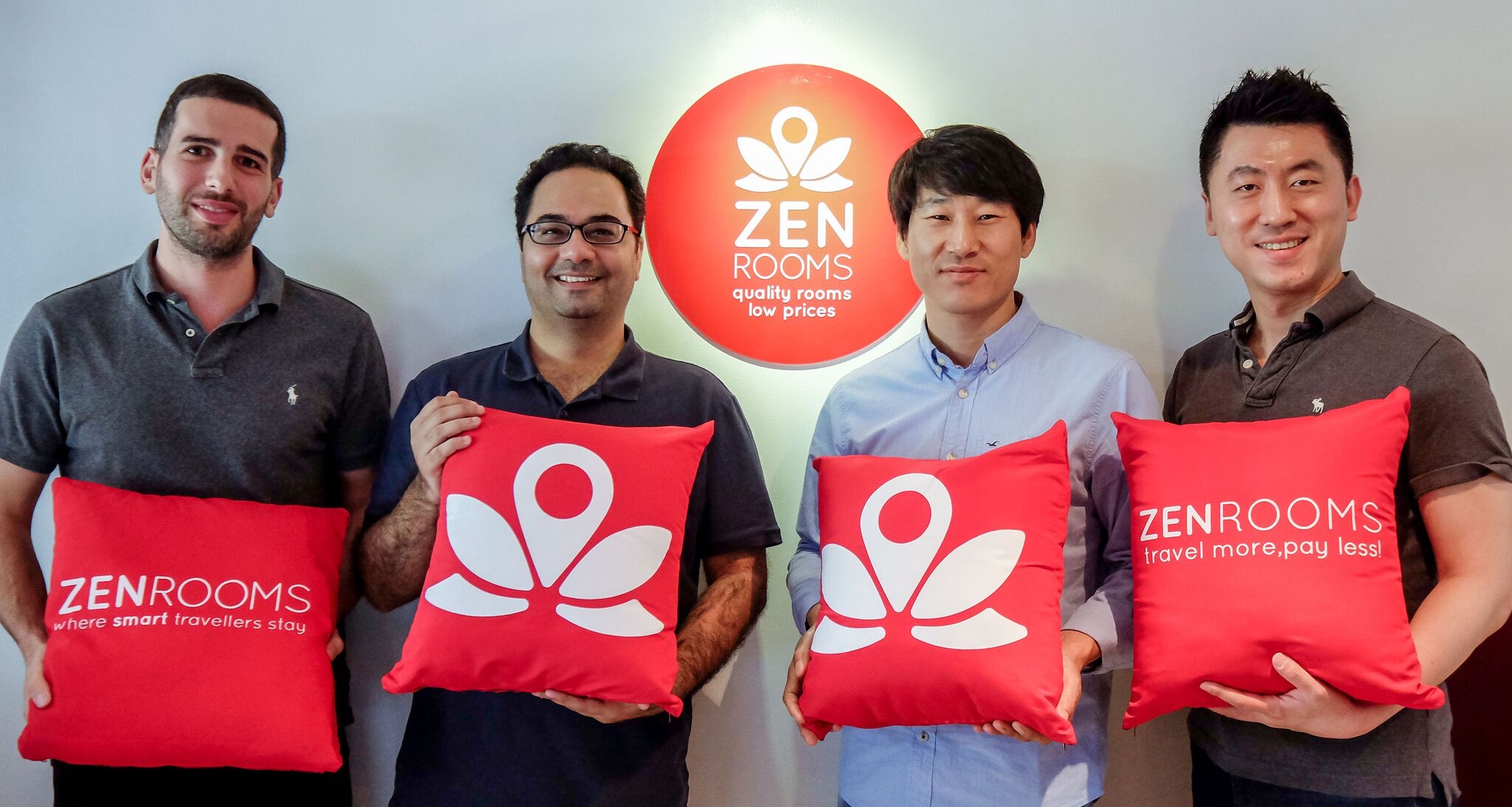
Today it claims more than 200 hotels in Korea and it has expanded overseas. Last year, it struck a deal to invest $15 million into Zen Rooms, a Rocket Internet-backed budget hotel network, in what could eventually become an acquisition. Now, it is spreading its wings through a partnership with Agoda, the hotel booking platform owned by Booking.

Yanolja stepped into Southeast Asia last year after it invested $15 million into Zenrooms

There are certainly parallels between Yanolja and OYO, the India company that has reformed unorganized small hotels by introducing minimum standards and a network effect for businesses. OYO has won the backing of SoftBank’s Vision Fund, raising $1 billion last year, while Airbnb is also an investor.

Flushed with cash, the Indian company has expanded into China, where it claims to be the country’s second-largest hotel chain, Southeast Asia and, most recently, Europe through the $415 million acquisition of Leisure Group from Axel Springer.

Like OYO, Yanolja is counting on going overseas to develop its business.

“We are very keen to go global,” CEO Kim Jong-yoon told Reuters in an interview following the new financing.

Going public is also a priority. Bloomberg reported back in 2017 that the wheels were in motion, but things have taken longer. Kim told Reuters that 2022 is the rough timeframe for an IPO, presumably, that means the company will give its international expansion plan to chance to run first.

Still, its growth certainly shows potential.

Yanolja said that its revenue has grown an annual rate of over 70% over the past five years. Reuters added that revenue last year reached 188.5 billion KRW ($160 million) — that’s nearly double the previous year but the company is not profitable yet.

11 Jun 2019

Square Enix shows off Final Fantasy VII Remake, Avengers and more – watch the trailers here

The long series of press conferences that marks the beginning of E3 is nearly at an end, with Square Enix the last to present, if you don’t count Nintendo tomorrow. The company leaned hard on nostalgia, piling remake upon remaster, but had a few surprises as well. Okay, maybe not “surprises,” but there was some good stuff.

The curtain rose, literally, on the title many gamers have been waiting on for years: the remake of RPG classic Final Fantasy VII. We saw a bit of this game in action last month, but this was much more comprehensive.

Yoshinori Kitase, producer of the title, speaking through a translator, thanked the crowd for their “support and patience over these years,” decades rather, during which fans never stopped clamoring for a remake. In fact, they clamored all the way through the whole on-stage demo.

The crowd went wild at the news that the game would cover two Blu-ray discs, each of which is of course many, may times the size of the original discs the game came from. The first chapter, set in the city of Midgar, has evolved to become a new game in its own right, he explained.

It has a combination of action and more traditional RPG mechanics — instead of turns you build up the ability to freeze time and take more tactical actions like using an item, casting spells, and so on. You’ll be able to switch between characters, of course, but this is definitely more in the line of XV than the original.

The game is playable at the Square Enix booth, which got everyone nice and riled up, especially seeing Tifa in action. You can watch the new, extended trailer below:

(Incidentally, the pre-order bonuses are ridiculous.)

Plugs for Life is Strange 2, Octopath Traveler, and remasters of FF Crystal Chronicles and the Last Remant followed. Then came Dragon Quest Builders 2 and DQ 11, which look as charming and fun as they have in months past. The Kingdom Hearts DLC Remind was shown off, and the expansion for Final Fantasy XIV as well. Two “celebrated classics” from the SaGa series got remastered. And the Final Fantasy VIII is also getting a much-deserved remaster, which is highly relevant to my interests.

As you can see, the presentation wasn’t exactly packed with surprises — but hey, Square Enix knows what its fans like, and honestly remakes and remasters are hot right now. But where’s my Final Fantasy Tactics?

One of the few new games we saw, top-down indie racing game called Circuit Superstars, looks like it could be a fun time when it comes out next year:

Final Fantasy Brave Exvius, one of the franchise’s mobile branches, is getting a sequel called War of the Visions — with a Game of Thrones-style introducing a variety of houses and their specialties. “Now in development.”

People Can Fly showed a cinematic trailer for a new IP called “Outriders” that could be cool, but it’s awfully hard to tell. It’s meant to be a strong narrative game with drop-in-drop-out multiplayer, but as they aren’t showing any gameplay yet. They’re a good studio (‘ll never forget Painkiller) so I’m sure they’ll make something interesting by the time the mid-2020 release date rolls around.

We got our best look yet at Oninaki, the action RPG from the creators of Lost Sphear and I Am Setsuna. Sure, it looks like something off the PlayStation 3, but so did the last two, and they were good.

A trailer for the new Avengers game from Crystal Dynamics received a warm welcome, though it was hard not to notice that the main characters were considerably different from the MCU versions. You won’t be controlling a virtual Chris Evans or Scarlett Johansson, sorry to say. This is the studio’s “unique take” on the team, which is fair, but coming as it does shortly after Endgame, a little disappointment is allowed.

The actors playing the characters in the game got a chance to introduce themselves and the complexities of their roles, which is certainly nice. Here’s hoping they have the chemistry the MCU team do — a short, dour clip of Banner arguing with Stark didn’t do much to convince, but the truth is Crystal Dynamics is good at characters and we should just let them do their thing.

The game itself looks good, a partly-online, story-driven thing with “no loot boxes” and every new area and character available for free. We’ll know more once we’ve played it at Square Enix’s booth. It’s coming out on everything but Switch in May of 2020, and PS4 users will get “early beta access” and some “unique benefits.”

Then the press conference ended abruptly. Just like this post!

11 Jun 2019

Square’s The Avengers stars vaguely familiar versions of Marvel’s iconic heroes

This evening’s Square E3 press was…something. After more than an hour of Final Fantasy remasters, the publisher closed things out with far and away its most eagerly awaited game. Licensing some white hot IP, the RPG masters at Square are offering up their own take on Earth’s mightiest heroes.

Bay Area-based Crystal Dynamics addressed what appears to be an inability to license the likenesses of familiar actors like Robert Downey Jr. and Scarlett Johansson, referring to the team as its “interpretation of these iconic characters.”

Granted, the team has been around well before the Marvel Cinematic Universe, but those players hoping to play as their favorite actors are clearly S.O.L. here.

We didn’t see much in the way of gameplay here (more of that’s to come on the show floor this week), but Crystal’s describing the title as either a single or co-op gameplay, centered around an original story that involves the superheroes attempting to stop the destruction of the city by the Bay (from the uncanny valley to the Silicon one). From the looks of it, things don’t go great.

Beyond that, the company gave a behind the scenes peek of the voice actors involved, to a smattering of applause from an audience clearly exhausted after cheerly maniacally over 60 minutes of remade Final Fantasies.

The game is coming to PS4, Xbox One and Google Stadia May 15, 2020.

11 Jun 2019

Moving deeper into enterprise cloud, Intel picks up Barefoot Networks

When it launched out of stealth just three years ago, Barefoot Networks was hailed as a company that would transform the way a generation of computing giants like Facebook, Alphabet, Amazon and Microsoft would function while making chip manufacturers like Intel and networking companies like Cisco take notice

Now, Intel has not only taken notice, it’s acquired Barefoot Networks for an undisclosed amount.

It’s a sign of just how important cloud computing has become, and an opportunity for Intel to stake more of a claim in the networking space after losing ground to the GPU manufacturers whose chipsets have been in demand since the rise of gaming, graphics, and artificial intelligence made them ascendant.

Essentially, Barefoot Networks chips allow its customers to program whatever functionality they need on to the networking chips that Barefoot sells them. 

Previously, companies could customize network architecture down to everything BUT the chipset. The lack of programmable chips meant that network architectures couldn’t be quite as responsive as a company like Facebook, Microsoft, or Google would want, because they were always working around chipsets that had been designed for specific functions.

Based in Santa Clara, Calif., Barefoot Networks was launched from stealth in late 2016 by Dr. Craig Barratt, a former Stanford University professor whose work was critical to the development of the networking architectures that allowed Alphabet, Facebook and others to operate at the massive scale they now have.

As these companies demanded more customized hardware ranging from chipsets to enable their various machine learning algorithms to manage and monitor content (and win Go games), to the servers and routers that they’ve put up in their own internal networks Barratt realized they’d need chipsets that they could modify.

With the acquisition, Intel adds a core knowledge set around p4-programmable high speed data paths, switch silicon development, P4 compilers, drivers oftware, network telemetry and computational networking.

It also provides another bulwark against rival chip manufacturer, Broadcom .

No word from some of Barefoot Networks investors on the result for them in this acquisition. The company raised $155.4 million from investors including Tencent Holdings, DHVC, Alibaba Group, Dell Technologies Capital, Hewlett Packard Enterprise, and Lightspeed Ventures.

11 Jun 2019

Oculus sold $5 million worth of Quest content in first 2 weeks on sale

Facebook’s Oculus Quest standalone VR headset hasn’t been out long, but VP of AR/VR Andrew Bosworth says the company is already selling a substantial amount of content for the device.

At Vox Media’s Code conference, the exec detailed that in the first two weeks of sales there has been $5 million in content sales. We have not gotten any details on device sales, though Facebook has never shares sales data on their VR products.

The $399 headset does not require a PC or phone to operate and offers camera-based positional tracking like higher-end PC headsets have in the past. At launch the company’s store had just over 50 titles available to download, with a mixture of free titles and games costing as much as $30.

Companies in the VR space — even Facebook — have been reticent to discuss sales because there have been so few success stories. Facebook has gone all-in on the Quest’s launch, their marketing campaigns have been substantial so it makes sense that they’re willing to detail their successes here.

11 Jun 2019

Facebook says it’s shipping new Portal hardware in the fall

Facebook’s Portal devices may still have plenty of privacy questions lingering around them since launch, but that hasn’t swayed the company’s dedication to bringing more video chat hardware to market.

Onstage at Vox Media’s Code Convention, Facebook’s VP of AR/VR Andrew Bosworth shares that sales of the existing hardware were “really good,” but more interestingly let fly that there would be new form factors of Portal hardware coming to market in the fall of this year.


Most signs point to this device being the “Ripley” device that popped up in Portal firmware code late last year. Cheddar had reported that the camera device would attach to the top of a TV and pipe the video feed to its screen. This cuts down on the need to have a wholly dedicated video chat device and allows Facebook to put their hardware in more central locations in people’s homes.

There is of course the possibility that Facebook has even more form factors up their sleeves, but this seems like a potentially low-cost option that would make a lot of sense for them to get out there.


11 Jun 2019

Uber rival Bolt returns to London 21 months after a TfL investigation shut it down

Bolt, the Uber rival formerly known as Taxify, is taking a significant step this week in its effort to build out its transportation-on-demand business across the biggest cities in Europe and Africa, which currently covers 25 million users in 30 countries and 100 cities: it’s finally opening for business again in London, the biggest ride-hailing market in Europe.

“Finally” and “again” are the operative words here: the Tallinn-based company had launched in London as far back as September 2017 — nearly two years ago — only to shut down its services after three days, when Transport for London, the city’s transportation regulator, started to investigate the terms of its license.

It turned out that not all was right in the state of Estonia . To roll out its services more quickly, Taxify (as it was then known) had acquired a London firm with a license valid until 2019 and had launched its own service using that loophole. At a time when TfL was decidedly unhappy with Uber and was already fielding complaints from politicians, a drivers’ association and union reps over Taxify’s launch, the writing was on the wall and Taxify shut down its service.

Slow and steady wins the race

Bolt’s run-in, and eventual cooperation, with TfL underscores the shift we have seen in the transportation market over the last few years in London, which has changed from a hacker mentality of “move fast, break things” to “slow and steady wins the race.”

“So far, there has been a monopoly, which leads to the same problems of higher prices and poor service,” Bolt’s CEO and founder Markus Villig said in an interview this week. “We are here first to fix that, but it will take two to three years to do so.”

Launching with a car-only service in London (it has other transportation products, such as scooters, in other cities like Paris), Bolt is — even before adding in that three year fix-it plan — nevertheless coming to the market relatively late.

Uber has been active for years and is just one of a number of incumbent private car-based ride providers, which include other on-demand transportation services like MyTaxi (owned by Bolt’s investor Daimler) and Gett, other fleet-based providers like Addison Lee, a plethora of local mini-cab firms and, of course, independent Black Cab drivers.

But with late arrival also comes a more knowledgeable approach built on the experience (vast operating costs) shouldered by others.

First and foremost, Villig said the new and improved Bolt will be hoping to woo away both drivers and passengers with competitive discounts based, it seems, mainly on undercutting dominant providers.

On the driver side, Bolt will change a 7.5% commission for the first two months before switching to a 15% commission, which it claims is up to half of what other firms charge, and works out on average to 10% more earnings than driving with competitors.

On the passenger side, Bolt will be launching with a 50% discount that will then default to regular rates that will still be between 5% and 10% cheaper than competitors’.

Price competition is not the only area where Bolt is making a modification. There is also a big change in the app’s safety features: specifically, it will launch with a “panic button” that will let both passengers and drivers alert bolt and police if they feel they are in danger, and also to alert Bolt’s trust and safety team to open a ticket and address the problem.

Villig said that this safety feature is not a default in every market where it operates. It is a variant of a feature that Bolt uses in, for example, its South African business “where safety is also an issue” and while it was not directly mandated by TfL, Villig noted that it pointedly asked about safety features and so this was included, along with other new features, such as sharing details of your ride with a contact.

Safety will also extend to increased vetting of drivers before they ever join the platform — again, to a level higher than in some other markets that have not had track records of safety incidents.

Better service comes at a price

With the drivers getting better commissions and passengers getting lower prices, Villig said that Bolt itself would be absorbing the cost of offering everything.

“The operational costs are higher than in other cities, but the opportunities are so large and there is such a need for an alternative, that it made sense.”

That will, inevitably, mean more funding. Although it has already raised around $185 million — with $176 million of that coming last year in a round led by Daimler that valued Bolt at $1 billion — that will run down fast through launches and the extra operational costs associated with them.

(Uber and Lyft’s books, now open to the world post their public listings, detail the hundreds of millions of dollars that ridesharing efforts can potentially cost companies before they can hope to turn a profit.)

Indeed, we confirmed in May that Bolt was indeed raising another round at a valuation of over $1 billion. This week, Villig said that it has “nothing to announce” on that front just yet. In addition to Daimler, the company is backed by Didi (the Chinese ride-hailing giant) and, ironically, Uber, by virtue of its Didi divestment deal in China,

While expanding beyond motor vehicles might be putting the cart before the horse, so to speak, Bolt does have plans to stay for the long run and use its positioning to become one of two market leaders. That will also eventually take Bolt to other modes of transportation beyond cars, but using a light-touch approach.

“All we want on micro-mobility is to be a platform,” Villig said. “W don’t want to own hundreds of thousands of bikes and other vehicles. The question is: how do we enable all that to appear.” He anticipates that Bolt will start to offer bikes — and other other transportation forms as regulators allow them — by next year.