Year: 2019

09 Nov 2019

Week in Review: Airbnb is just the beginning

Hey everyone. Thank you for welcoming me into you inbox yet again.

I got some awesome responses to the #DeleteLinkedIn newsletter last week, a few dozen emails (some of them angry) and plenty of tweets. Looking forward to chatting with some of you soon. On that note, I’m currently in China for a TechCrunch event that we’re having in Shenzhen and will be taking some time offline to travel a bit so I won’t be arriving in your inboxes the next two weeks. Week in Review will be back in your inboxes the weekend after Thanksgiving so you’ll have to savor this newsletter until then.

If you’re reading this on the TechCrunch site, you can get this in your inbox here, and follow my tweets here.


The big story

If there’s been a collective theme to some of the tech backlash of the past couple years, it’s been an evolving vision towards platform responsibility.

Social media platforms have earned the lion’s share of this discussion to date. This has largely been due to the political landscape and gripes with both liberals and conservatives for how the site handles content policing. The prevailing libertarian view that tech platforms weren’t responsible for what was enabled by their platforms has fallen out of vogue.

What continues to surprise me is how little accountability or expectations there still seems to be for marketplace platforms. Speech is a crucial part of the internet, but so is buying and selling and it shocks me how big some startups have been able to get without delivering some basic buyer protections.

http://www.twitter.com/lucasmtny/1190027153099952128?s=20

Through some great investigations from the Wall Street Journal, we’ve seen how fast and loose Amazon has been playing with third-party sellers getting free reign on the site. There have been countless stories of scammers infiltrating sites like Airbnb and eBay and operating in grey areas that allow them to rip off buyers. Last week, a reporter at Vice delivered a scathing deep dive into a scam she fell victim to on Airbnb’s platform.

This week, Airbnb announced that by next year they are pledging to verify all of their listings, something that seems more than a little overdue. Standing behind the properties being booked on their platform was seemingly the last box to check before driving to the IPO hoop.

More from our story:

Airbnb  properties will soon be verified for accuracy of photos, addresses, listing details, cleanliness, safety and basic home amenities, according to a company-wide email sent by Airbnb co-founder and chief executive officer Brian Chesky on Wednesday.

Airbnb is just another highly valued startup that has been trying to take the past of least resistance to outsized future value. Verifying properties is a difficult issue to brace. Sellers are certainly not the only scammers on Airbnb, and buyers abusing this new system is a guarantee. But keeping both sides in some sort of satisfaction equilibrium is Airbnb’s messy, god-given task.

Airbnb has garnered more grumblings than most due to bad customer experiences, but it’s just a harbinger of what comes next. 2020 being a presidential election year in the U.S. means that the public might still be too busy with lambasting Zuckerberg to give marketplaces their due watchful eye in the near term, but the bell is tolling for these marketplaces and it’d be wise for them to pay attention to the writing on the wall.

Send me feedback
on Twitter @lucasmtny or email
lucas@techcrunch.com

On to the rest of the week’s news.
GettyImages 1005682070 1

(Photo by Justin Sullivan/Getty Images)

Trends of the week

Here are a few big news items from big companies, with green links to all the sweet, sweet added context:

  • Twitter’s Saudi Arabian infiltration
    One of the wilder stories this week was how Saudi Arabia reportedly lifted sensitive contact info from Twitter via employees at the company that they paid off. There’s a lot in this saga and while Twitter seems to have done most things right, it is a pretty nightmarish scenario.
  • T-Mobile and Sprint get hitched
    The telecom marriage of two of the United States top four carriers cleared its last major hurdle as the FCC gave the deal its blessing. There’s still some residual legal hurdles for the two to wrap up in good faith, but this deal is done.
  • Adobe makes good on a promise
    The promises of tablet computing have always been a little ambitious in terms of timing, but Photoshop is finally arriving on the iPad and with that, one decade-long wish list item has been realized.
GAFA Gaffes

How did the top tech companies screw up this week? This clearly needs its own section, in order of badness:

  1. California isn’t happy with Zuckerberg:
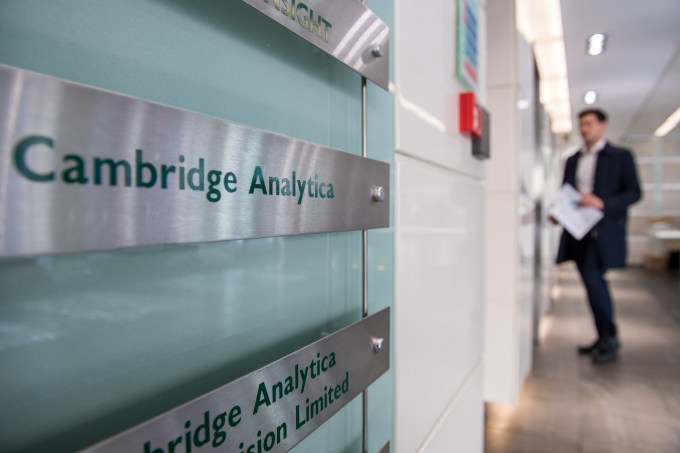
    [California accuses Facebook of ignoring subpoenas in state’s Cambridge Analytica investigation]
  2. Google’s board is investigating some executive impropriety:
    [Alphabet’s board is investigating execs over claims of sexual harassment and other misconduct]

Disrupt Berlin

DISRUPT SF 530X350 V2 berlin

It’s hard to believe it’s already that time of the year again, but we just announced the agenda for Disrupt Berlin and we’ve got some all-stars making their way to the stage. I’ll be there this year, get some tickets and come say hey!

Sign up for more newsletters in your inbox (including this one) here.
09 Nov 2019

A browser bug was enough to hack an Amazon Echo

Two security researchers have been crowned the top hackers in this year’s Pwn2Own hacking contest after developing and testing several high profile exploits, including an attack against an Amazon Echo.

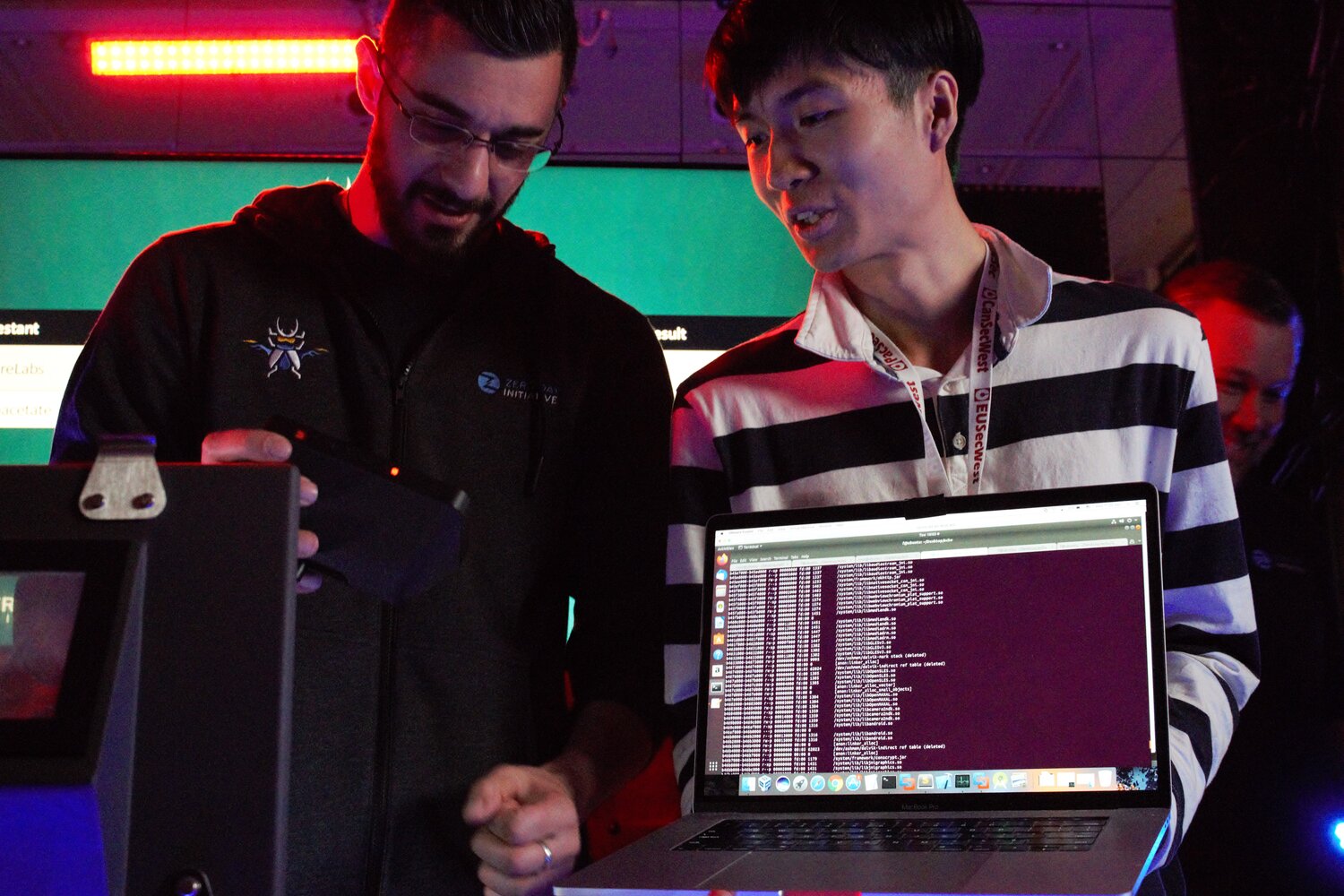
Amat Cama and Richard Zhu, who make up Team Fluoroacetate, scored $60,000 in bug bounties for their integer overflow exploit against the latest Amazon Echo Show 5, an Alexa-powered smart display.

The researchers found that the device uses an older version of Chromium, Google’s open-source browser projects, which had been forked some time during its development. The bug allowed them to take “full control” of the device if connected to a malicious Wi-Fi hotspot, said Brian Gorenc, director of Trend Micro’s Zero Day Initiative, which put on the Pwn2Own contest.

The researchers tested their exploits in a radio-frequency shielding enclosure to prevent any outside interference.

“This patch gap was a common factor in many of the IoT devices compromised during the contest,” Gorenc told TechCrunch.

Amat Cama (left) and Richard Zhu (right), who make up Team Fluoroacetate. (Image: ZDI)

An integer overflow bug happens when a mathematical operation tries to create a number but has no space for it in its memory, causing the number to overflow outside of its allotted memory. That can have security implications for the device.

When reached, Amazon said it was “investigating this research and will be taking appropriate steps to protect our devices based on our investigation,” but did not say what measures it would take to fix the vulnerabilities — or when.

The Echo wasn’t the only internet-connected device at the show. Earlier this year the contest said hackers would have an opportunity to hack into a Facebook Portal, the social media giant’s video calling-enabled smart display. The hackers, however, could not exploit the Portal.

09 Nov 2019

Original Content podcast: Apple’s star-studded ‘Morning Show’ gets off to a bumpy-but-promising start

We weren’t sure what to expect from the launch of Apple’s new subscription streaming service. There were reports that the company was committed to staying family friendly, rather than exploring the adult content and creative liberties that both premium cable and streaming can offer. Plus, most of the trailers were pretty underwhelming.

For our 100th (!) episode, your regular Original Content podcast hosts are joined by TechCrunch writer Sarah Perez to discuss all the Apple TV+ shows we’ve sampled so far — “For All Mankind,” “See,” “Dickinson” and even “Snoopy in Space.” And we were pleasantly surprised by what we found.

Just a few episodes in, “For All Mankind” (an alternate history in which the Soviet Union won the race to the moon) and “See” (set in a world where everyone has lost the sense of sight) have turned some of us into fans. And even “Dickinson” — which has the seemingly impossible task of telling Emily Dickinson’s story using modern slang— turns out to be a strange and watchable experiment.

We save our most extensive discussion for the most high-profile title of the bunch: “The Morning Show,” which stars Jennifer Aniston as Alex Levy, longtime host of an AM news show also called “The Morning Show,” and Reese Witherspoon as local news anchor Bradley Jackson, whose confrontation at a coal mine protest ends up going viral right as Alex’s show implodes, thanks to sexual misconduct allegations against her longtime co-host Matt Kessler (played Steve Carell).

Obviously, the show has star power, and the leads are supported by talented and familiar faces like Billy Crudup, Mark Duplass and Gugu Mbatha-Raw.

The performances are all strong, with Aniston and Witherspoon carrying the show: Aniston convincingly portrays a woman who’s both devastated by the revelations of her on-screen partner’s behavior and desperate to seize the opportunity that these revelations create. Witherspoon, meanwhile, adds complex shading to perhaps her trademark role as a spunky, ambitious upstart.

The writing, on the other hand, is a bit uneven. There’s an unfortunate tendency towards speechifying about big themes like The Role of Journalism in America — at times, it feels almost Sorkin-esque, but without the eloquence or snappiness of Aaron Sorkin’s best dialogue.

So far, though, the speeches have been balanced out by strong characterization and some satisfyingly dramatic twists.

You can listen in the player below, subscribe using Apple Podcasts or find us in your podcast player of choice. If you like the show, please let us know by leaving a review on Apple. You can also send us feedback directly. (Or suggest shows and movies for us to review!)

And if you want to skip ahead, here’s how the episode breaks down:
0:00 Intro
0:30 Apple TV+ roundup
27:02 “The Morning Show” review (spoiler-free)

09 Nov 2019

Original Content podcast: Apple’s star-studded ‘Morning Show’ gets off to a bumpy-but-promising start

We weren’t sure what to expect from the launch of Apple’s new subscription streaming service. There were reports that the company was committed to staying family friendly, rather than exploring the adult content and creative liberties that both premium cable and streaming can offer. Plus, most of the trailers were pretty underwhelming.

For our 100th (!) episode, your regular Original Content podcast hosts are joined by TechCrunch writer Sarah Perez to discuss all the Apple TV+ shows we’ve sampled so far — “For All Mankind,” “See,” “Dickinson” and even “Snoopy in Space.” And we were pleasantly surprised by what we found.

Just a few episodes in, “For All Mankind” (an alternate history in which the Soviet Union won the race to the moon) and “See” (set in a world where everyone has lost the sense of sight) have turned some of us into fans. And even “Dickinson” — which has the seemingly impossible task of telling Emily Dickinson’s story using modern slang— turns out to be a strange and watchable experiment.

We save our most extensive discussion for the most high-profile title of the bunch: “The Morning Show,” which stars Jennifer Aniston as Alex Levy, longtime host of an AM news show also called “The Morning Show,” and Reese Witherspoon as local news anchor Bradley Jackson, whose confrontation at a coal mine protest ends up going viral right as Alex’s show implodes, thanks to sexual misconduct allegations against her longtime co-host Matt Kessler (played Steve Carell).

Obviously, the show has star power, and the leads are supported by talented and familiar faces like Billy Crudup, Mark Duplass and Gugu Mbatha-Raw.

The performances are all strong, with Aniston and Witherspoon carrying the show: Aniston convincingly portrays a woman who’s both devastated by the revelations of her on-screen partner’s behavior and desperate to seize the opportunity that these revelations create. Witherspoon, meanwhile, adds complex shading to perhaps her trademark role as a spunky, ambitious upstart.

The writing, on the other hand, is a bit uneven. There’s an unfortunate tendency towards speechifying about big themes like The Role of Journalism in America — at times, it feels almost Sorkin-esque, but without the eloquence or snappiness of Aaron Sorkin’s best dialogue.

So far, though, the speeches have been balanced out by strong characterization and some satisfyingly dramatic twists.

You can listen in the player below, subscribe using Apple Podcasts or find us in your podcast player of choice. If you like the show, please let us know by leaving a review on Apple. You can also send us feedback directly. (Or suggest shows and movies for us to review!)

And if you want to skip ahead, here’s how the episode breaks down:
0:00 Intro
0:30 Apple TV+ roundup
27:02 “The Morning Show” review (spoiler-free)

09 Nov 2019

Watch MIT’s ‘mini cheetah’ robots frolic, fall, flip – and play soccer together

MIT’s Biomimetics Robotics department took a whole herd of its new ‘mini cheetah’ robots out for a group demonstration on campus recently – and the result is an adorable, impressive display of the current state of robotic technology in action.

The school’s students are seen coordinating the actions of 9 of the dog-sized robots running through a range of activities, including coordinated movements, doing flips, springing in slow motion from under piles of fall leaves, and even playing soccer.

The mini cheetah weights just 20 lbs, and its design was revealed for the first time earlier this year by a team of robot developers working at MIT’s Department of Mechanical Engineering. The mini cheetah is a shrunk-down version of the Cheetah 3, a much larger and more expensive to produce robot that is far less light on its feet, and not quite so customizable.

The mini cheetah was designed for Lego-like assembly using off-the-shelf part, as well as durability and relative low cost. It can walk both right-side up, and upside down, and its most impressive ability just might be the way it can manage a full backflip from a stand-still. It can also run at a speed of up to 5 miles per hour.

Researchers working on the robot set out to build a team of them after demonstrating that first version back in May, and are now working with other teams at MIT to loan them out for additional research.

09 Nov 2019

This Week in Apps: Photoshop for iPad bombs, Google Play’s new rewards program, iOS bug fixes

Welcome back to This Week in Apps, the Extra Crunch series that recaps the latest OS news, the applications they support, and the money that flows through it all. What are the developers talking about? What Do app publishers and marketers need to know? How is international politics playing out in the App Store? What apps is everyone using?

As November kicks off, we’re looking at a number of big apps launches from Microsoft and Adobe — as well as what went wrong. We’re also looking at the iOS bug-squashing release, a bunch of data about app install trends around the world, Google Play’s new loyalty program and what it means for developers, the continued scrutiny of Chinese apps by the U.S. government, and more.

Fast Facts

eMarketer remindS us that it recently put out a big report on app installs with a ton of insights. It’s actually been live for a few months, but ICYMI, here are some of the key data points and highlights:

  • The average iPhone user in the U.S. downloaded 47 apps in 2018, up from 44 in 2017.
  • The average number of apps installed is rising — up 15% from 2016. In the U.S., Japan, South Korea, and Australia, users had more than 100 apps downloaded in 2018.
  • Smartphone users spend the most time using their top 5 apps. In 2017, the top 5 accounted for 87% of usage. Now (Apr. 2019) it’s 83%. The No. 1 app had a 49% share of the time spent, now it’s 44%.
  • The number of smartphone users in the U.S. will grow just 3% in 2019, compared with 13.2% in India and 12.1% in Indonesia.
  • Related, app downloads grew 165% in India from 2016 to 2018. In China, 70%. In Indonesia, 55%. And in Brazil, 25%. The U.S. app downloads grew just 5%.
  • In June 2019, the App Store had 1.8 million apps compared with Google Play’s 3.1 million.
  • 43% of iOS app install referrals came from Facebook properties, and only 6.6% came from Google properties.
  • Apple Search Ads drove 12% of non-organic installs in May 2019.
  • In-app video ads outperform display ads. Install-to-register rates for video were 35.1% in Q1
    2019 on the Liftoff network, compared with 28.5% for display ads.
  • App engagement drop-off rates after day one are the biggest in shopping apps. (25% engagement after the first day, but 8% at 30 days). Travel also sees a big drop-off. (20% after the first day and 6% after 30 days).

Headlines

iOS Bug Squashing: Apple fixed the iOS bug that killed your background apps. Apple this week finally squashed a very annoying bug in iOS 13 that made the OS overly aggressive about killing background apps and tasks. Apps like Safari, YouTube, Overcast and others were impacted, leading users to lose emails or the video they were watching just when they switched away for a few seconds. What Apple can’t fix is a growing concern that Apple has “lost the plot” following a series of extremely buggy software updates across its product line, which made users hesitant to upgrade to macOS Catalina, and bricked people’s HomePods.

Google admits it can’t secure the Play Store on its own: Google this week announced partnerships with security firms ESET, Lookout, and Zimperium to form what it has branded the “App Defense Alliance.” The goal, the company says, is to unite the security industry to fight malicious apps across Android’s ecosystem of 2.5 billion devices. Basically, Google will integrate its own detection systems with each partner’s scanning engine to help it uncover potential risks and threats. However, the fact that Google is now essentially outsourcing security to a partner ecosystem is an admission of failure, to some extent, about its abilities to keep the Play Store free from bad actors on its own. (But of course, we all knew that already, right?)
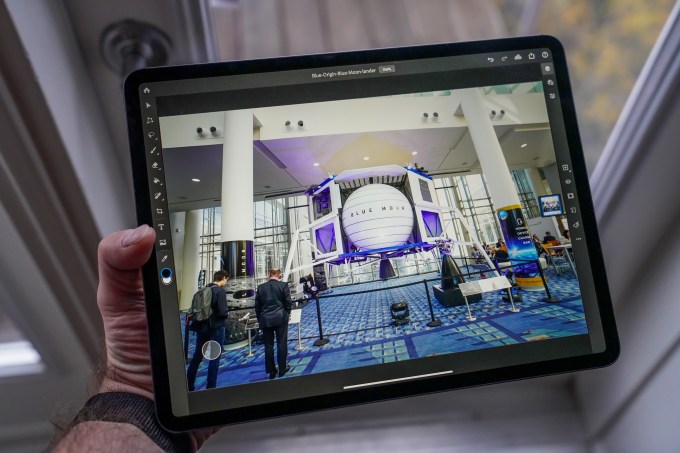
Photoshop for iPad is tanking: Adobe released its most important mobile app ever with this week’s launch of Photoshop for iPad. But fans panned the app because it’s missing several key features. Like RAW support! The app now has 2 stars out of 5…yikes. So what went wrong?

To read more, subscribe to Extra Crunch.

09 Nov 2019

Startups Weekly: Airbnb’s growing pains

Hello and welcome back to Startups Weekly, a weekend newsletter that dives into the week’s noteworthy startups and venture capital news. Before I jump into today’s topic, let’s catch up a bit. Last week, I wrote about Uber’s new “money” team. Before that, I told you about how SoftBank is screwing up.

Remember, you can send me tips, suggestions and feedback to kate.clark@techcrunch.com or on Twitter @KateClarkTweets. If you don’t subscribe to Startups Weekly yet, you can do that here.


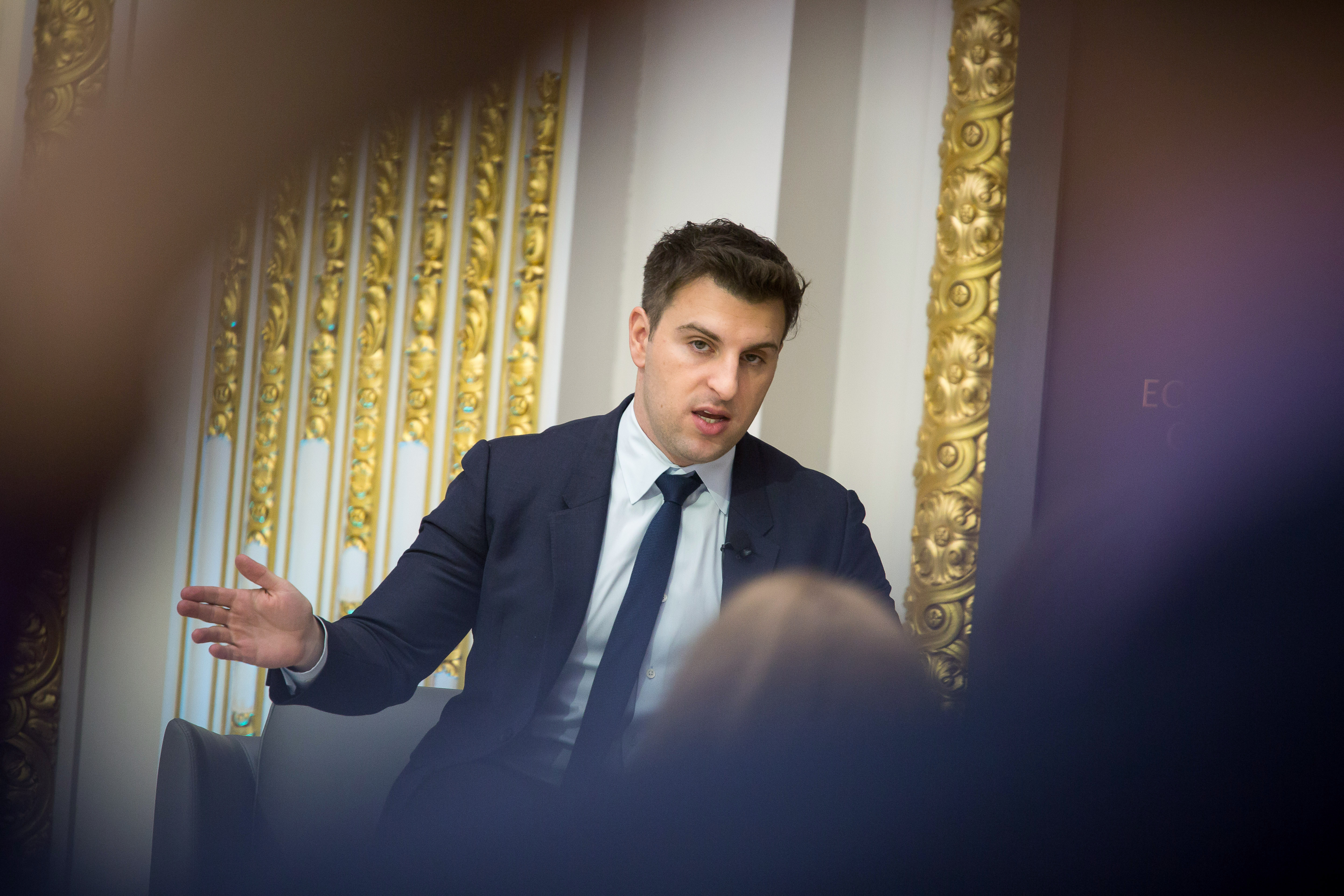
Brian Chesky, chief executive officer and co-founder of Airbnb Inc. (Michael Nagle/Bloomberg via Getty Images)

Airbnb’s growing up

Following the death of five people at a Halloween party hosted at a California Airbnb rental, and a scathing Vice report outlining Airbnb’s failure to prevent nation-wide scams, the company says it will begin verifying all seven million of its listings.

Airbnb properties will soon be verified for accuracy of photos, addresses, listing details, cleanliness, safety and basic home amenities, according to a company-wide email sent by Airbnb co-founder and chief executive officer Brian Chesky on Wednesday. All rentals that meet the company’s new standards will be “clearly labeled” by December 15, 2020, he notes. Beginning next month, Airbnb will rebook or refund guests who check into rentals that do not meet the new accuracy standards.

These changes, outlined fully here, come as Airbnb preps for an IPO or a direct listing slated for 2020. The company was in need of some serious additions to its barely-there security measures and it also needed to make a grand gesture (or two) to Wall Street following multiple PR disasters over the last two weeks. Airbnb’s response to the recently-highlighted problems will help determine how it fares on the public market and given its quick and seemingly comprehensive response, money managers may be pleased.


38818582982 37b9719635 o

TechCrunch Disrupt Berlin 2017 in Berlin on 5 December 2017. ImageXDante for TechCrunch

Meet me in Berlin

The TechCrunch team is heading to Berlin again this year for our annual event, TechCrunch Disrupt Berlin, which brings together entrepreneurs and investors from across the globe. We announced the agenda this week, with leading founders including Away’s Jen Rubio and UiPath’s Daniel Dines. Take a look at the full agenda.

I will be there to interview a bunch of venture capitalists, who will give tips on how to raise your first euros. Buy tickets to the event here.


VC deals

09 Nov 2019

Microsoft uses AI to diagnose cervical cancer faster in India

More women in India die from cervical cancer than in any other country. This preventable disease kills around 67,000 women in India every year, more than 25% of the 260,000 deaths worldwide.

Effective screening and early detection can help reduce its incidence, but part of the challenge — and there are several parts — today is that the testing process to detect the onset of the disease is unbearably time-consuming.

This is because the existing methodology that cytopathologists use is time consuming to begin with, but also because there are very few of them in the nation. Could AI speed this up?

At SRL Diagnostics, the largest chain to offer diagnostic services in pathology and radiology in India, we are getting an early look of this. Last year, Microsoft partnered with SRL Diagnostics to co-create an AI Network for Pathology to ease the burden of cytopathologists and histopathologists.

SRL Diagnostics receives more than 100,000 Pap smear samples every year. About 98% of these samples are typically normal and only the remaining 2% samples require intervention. “We were looking for ways to ensure our cytopathologists were able to find those 2% abnormal samples faster,” explained Dr. Arnab Roy, Technical Lead for New Initiatives & Knowledge Management at SRL Diagnostics.

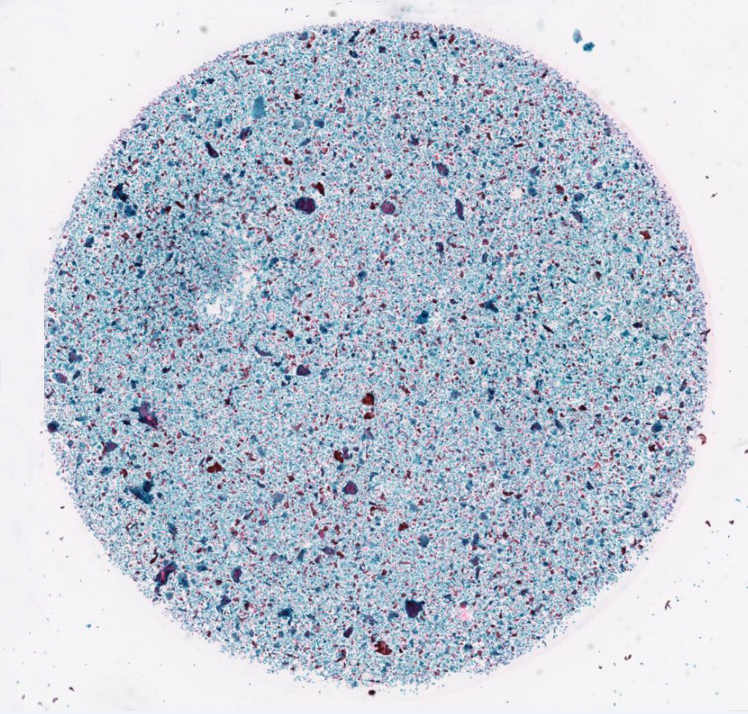
Cytopathologists at SRL Diagnostics studied digitally scanned versions of Whole Slide Imaging (WSI) slides, each comprising about 300-400 cells, manually and marked their observations, which were used as training data for Cervical Cancer Image Detection API.

A digitally scanned version of a Whole Slide Imaging (WSI) slide, which is used to train the AI model

Then there was the challenge of subjectivity. “Different cytopathologists examine different elements in a smear slide in a unique manner even if the overall diagnosis is the same. This is the subjectivity element in the whole process, which many a time is linked to the experience of the expert,” reveals Dr. Roy.

Manish Gupta, Principal Applied Researcher at Microsoft Azure Global Engineering, who worked closely with the team at SRL Diagnostics, said the idea was to create an AI algorithm that could identify areas that everybody was looking at and “create a consensus on the areas assessed.”

Cytopathologists across multiple labs and locations annotated thousands of tile images of cervical smear. They created discordant and concordant notes on each sample image.

“The images for which annotations were found to be discordant — that is if they were viewed differently by three team members — were sent to senior cytopathologists for final analysis,” Microsoft wrote in a blog post.

This week, the two revealed that their collaboration has started to show results. SRL Diagnostics has started an internal preview to use Cervical Cancer Image Detection API. The Cervical Cancer Image Detection API, which runs on Microsoft’s Azure, can quickly screen liquid-based cytology slide images for detection of cervical cancer in the early stages and return insights to pathologists in labs, the two said.

The AI model can now differentiate between normal and abnormal smear slides with accuracy and is currently under validation in labs for a period of three to six months. It can also classify smear slides based on the seven-subtypes of cervical cytopathological scale, the two wrote in a blog post.

During the internal preview period, the exercise will use more than half-a-million anonymized digital tile images. Following internal validation, the API will be previewed in external cervical cancer diagnostic workflows, including hospitals and other diagnostic centers.

“Cytopathologists now have to review fewer areas, 20 as of now, on a whole slide liquid-based cytology image and validate the positive cases thus bringing in greater efficiency and speeding up the initial screening process,” Microsoft wrote.

“The API has the potential of increasing the productivity of a cytopathology section by about four times. In a future scenario of automated slide preparation with assistance from AI, cytopathologists can do a job in two hours what would earlier take about eight hours!” Dr. Roy said.

SRL Diagnostics-Microsoft consortium said they are hopeful their APIs could find application in other fields of pathology such as diagnosis of kidney pathologies and in oral, pancreatic and liver cancers. The consortium also aims to expand its reach with tie-ups with private players and governments and expand the reach of the model even in remote geographies where the availability of histopathologists is a challenge.

The announcement this week is the latest example of Microsoft’s ongoing research work in India. The world’s second most populous nation has become a test bed for many American technology companies to build new products and services that solve local challenges as they look for their next billion users worldwide.

Last week, Microsoft announced its AI project was helping improve the way driving tests are conducted in India. The company has unveiled a score of tools for the Indian market in the last two years. Microsoft has previously developed tools to help farmers in India increase their crop yields and worked with hospitals to prevent avoidable blindness. Last year, the company partnered with Apollo Hospitals to create an AI-powered API customized to predict risk of heart diseases in India.

Also last year, the company also worked with cricket legend Anil Kumble to develop a tracking device that helps youngsters analyze their batting performance. Microsoft has also tied up with insurance firm ICICI Lombard to help it process customers’ repair claims and renew lapsed policies using an AI system.

09 Nov 2019

Roku puts a remote on your wrist with new Apple Watch app

The Roku remote is coming to your wrist. The company announced today the launch of an Apple Watch app that lets you control your Roku device, including Roku media players and select Roku TVs, with a tap — just like the Roku mobile app, but sized for your wrist.

Considered the limited screen real estate, the app is fairly robust in terms of its feature set.

In addition to the expected media controls — like the ability to play and pause what you’re watching –, the app also offers a home button, the select button (“OK”), a back button and directional arrows. And it includes a way to launch your favorite channels, which are organized in order of the most recently launched to make them easier to access. That way, if you always watch Netflix, you don’t have to scroll down to find it.

In addition, the tiny remote app includes voice search functionality. To activate, you just tap the voice icon, then say things like “Launch Hulu” or “search for comedies,” or even change sources, like “switch to HDMI 1” for your Roku TV, the company explains. This will work on Apple Watch versions 1 through 5.

And if you have a Roku Ultra or a Roku TV with the Remote Finder functionality which uses an audible chime to locate a lost remote control in the couch cushions, you can also use the Roku Apple Watch app to signal your Roku remote to start making a noise.

All these features will be familiar to anyone who has already used the Roku remote for smartphones, as the Apple Watch app is just a miniaturized version. The only thing it’s missing is the ability to stream The Roku Channels’ free movies, but obviously that’s not a feature you’ll want on your wristwatch. (I mean…right?)

To get the Roku Apple Watch app, you’ll need to download or update your Roku iOS app to the latest version (6.1.3), and the app will appear on your Watch as long as you haven’t disabled “Automatic App Install” in the Watch’s Settings.

09 Nov 2019

Roku puts a remote on your wrist with new Apple Watch app

The Roku remote is coming to your wrist. The company announced today the launch of an Apple Watch app that lets you control your Roku device, including Roku media players and select Roku TVs, with a tap — just like the Roku mobile app, but sized for your wrist.

Considered the limited screen real estate, the app is fairly robust in terms of its feature set.

In addition to the expected media controls — like the ability to play and pause what you’re watching –, the app also offers a home button, the select button (“OK”), a back button and directional arrows. And it includes a way to launch your favorite channels, which are organized in order of the most recently launched to make them easier to access. That way, if you always watch Netflix, you don’t have to scroll down to find it.

In addition, the tiny remote app includes voice search functionality. To activate, you just tap the voice icon, then say things like “Launch Hulu” or “search for comedies,” or even change sources, like “switch to HDMI 1” for your Roku TV, the company explains. This will work on Apple Watch versions 1 through 5.

And if you have a Roku Ultra or a Roku TV with the Remote Finder functionality which uses an audible chime to locate a lost remote control in the couch cushions, you can also use the Roku Apple Watch app to signal your Roku remote to start making a noise.

All these features will be familiar to anyone who has already used the Roku remote for smartphones, as the Apple Watch app is just a miniaturized version. The only thing it’s missing is the ability to stream The Roku Channels’ free movies, but obviously that’s not a feature you’ll want on your wristwatch. (I mean…right?)

To get the Roku Apple Watch app, you’ll need to download or update your Roku iOS app to the latest version (6.1.3), and the app will appear on your Watch as long as you haven’t disabled “Automatic App Install” in the Watch’s Settings.