Year: 2019

08 Nov 2019

Every startup is a bank–or wants to be

Hello and welcome back to Equity, TechCrunch’s venture capital-focused podcast, where we unpack the numbers behind the headlines.

This week we did something just a little bit new. Kate was in studio at TechCrunch’s SF HQ. Alex was in his dork cave in Providence. And we had a guest in the studio as well. We’ve done similar setups before, but never with video all around. So, welcome to a slightly new chapter in Equity’s production history (all praise to Chris for making it work, video will be out today on TechCrunch’s YouTube page).

Our guest this week was the excellent Sarah Smith from Bain Capital Ventures. Before she turned to writing checks, Smith worked for both Quora and Facebook. Her fun fact? She’s an avid and competitive player of board games.

First up we dug into one of Kate’s latest, a piece looking at the influencer space, venture investments into it, and what’s next for the power of the Instagram-famous. She highlights startups like Influence, Cameo, Karat and more.

Next up, Deserve raised $50 million from Goldman Sachs, making the round something that was worth touching on. Later, Alex spoke with the company’s CEO and picked up more context, but what matters for today is that Deserve is doubling-down on its credit card fintech service, not doing what other companies that handle money are up to, namely trying to become neobanks at high speed.

Speaking of which, why is every fintech or finservices startup becoming a bank? Partially because they can, partially because it can be lucrative, and partially because, we found out, it’s a way to juice customers that they’ve already paid to acquire. Want to make your CAC expenses look more efficient? Stretch out that LTV!

And then we spent a minute on Uber’s results, which proved better than but wound up being poorly received.

Glad you guys came back for another episode, we’ll see you soon.

Equity drops every Friday at 6:00 am PT, so subscribe to us on Apple PodcastsOvercastSpotify and all the casts.

08 Nov 2019

Lyft is adding Chrysler Pacificas to its AV fleet and opening a new dedicated self-driving test facility

Lyft has another year of building out its autonomous driving program under its belt, and the ride-hailing company has been expanding its testing steadily throughout 2019. The company says that it’s now driving four times more miles on a quarterly basis than it was just six months ago, and has roughly 400 people worldwide dedicated to autonomous vehicle technology development.

Going into next year, it’s also expanding the program by adding a new type of self-driving test car to its fleet: Chrysler’s Pacifica hybrid minivan, which is also the platform of choice for Waymo’s current generation of self-driving car. The Pacifica makes a lot of sense as a ridesharing vehicle, since it’s a perfect passenger car with easy access via the big sliding door and plenty of creature comforts inside. Indeed, Lyft says that it was chosen specifically because of its “size and functionality” and what those offer to the Lyft AV team when it comes to “experiment[ing] with the self-driving rideshare experience. Lyft says it’s currently working on building these test vehicles out in order to get them on the road.

Lyft’s choice of vehicle is likely informed by its existing experience with the Pacificas, which it encountered when it partnered with Waymo starting back in May, with that company’s autonomous vehicle pilot program in Phoenix, Arizona. That ongoing partnership, in which Waymo rides are offered on Lyft’s ride-hailing network, is providing Lyft with plenty of information about how riders experience self-driving ride-hailing, Lyft says. In addition to Waymo, Lyft is also currently partnering with Aptiv on providing self-driving services commercially to the public through that company’s Vegas AV deployment.

In addition to adding Pacificas to its fleet alongside the current Ford Fusion test vehicles it has in operation, Lyft is opening a second facility in addition to its Level 5 Engineering Center, the current central hub of its global AV development program. Like the Level 5 Engineering Center, its new dedicated testing facility will be located in Palo Alto, and having the two close together will help “increase the number of tests we run,” according to Lyft. The new test site is designed to host intersections, traffic lights, roadway merges, pedestrian pathways and other features of public roads, all reconfigurable to simulate a wide range of real-world driving scenarios. Already, Lyft uses the GoMentum Station third-party testing facility located in Concord, California for AV testing, and this new dedicated site will complement, rather than replace, its work at GoMentum.

Meanwhile, Lyft is also continually expanding availability of its employee self-driving service access. In 2019, it increased the availability of self-driving routes for its employees three-fold, the company says, and it plans to continue to grow the areas covered “rapidly.”

08 Nov 2019

Alibaba to invest $3.3B to bump its stake in logistics unit Cainiao

Alibaba is doubling down on its logistics affiliate Cainiao, two years after acquiring a majority stake in the firm. The Chinese giant said today it would invest an additional 23.3 billion yuan (about $3.33 billion) to raise its equity in Cainiao to 63% from 51%.

Cainiao was co-founded by Alibaba in 2013 to bring organization in Chinese logistics, particularly around e-commerce deliveries. And it has delivered: Today Cainiao powers a significant volume of Alibaba’s logistics needs in the nation and elsewhere. Department store owner Intime Group, conglomerate Fosun Group, and a number of other logistics firms also own stakes in Cainiao.

In 2017, Alibaba said it was bumping its stake in Cainiao to 51% from 47%, and at the time committed to spend more than 100 billion yuan to expand the logistics business over five years.

More to follow…

08 Nov 2019

Prices increase tonight: Buy Disrupt Berlin 2019 early bird passes now

We get it. You’re deep in the weeds starting your startup, building your business, expanding your empire. Startuppers are frequently overworked, prone to procrastination and last-minute decision making.

We’re here to tell you today’s the last day you can score early bird savings to Disrupt Berlin 2019. The early bird deadline ends tonight at 11:59 p.m. (CEST). Don’t pay more than necessary. Beat the deadline, and buy your early bird pass to Disrupt Berlin right now.

As usual, we have a great lineup of speakers, and you’ll learn from the best at Disrupt. Here are just a few examples of what’s on tap. For more detail, go study the Disrupt Berlin 2019 agenda.

Growing from a humble garage project into a global competitor may be possible, but easy? Not so much. Learn the fine art of scaling your startup from a panel of experts who’ve been to the mountaintop. You’ll hear from Holger Seim, founder and CEO of Blinkist, Karoli Hindriks, founder and CEO of Jobbatical and Sophie Alcorn, founding partner of Alcorn Immigration Law.

Brexit — the mere word strikes uncertainty in the hearts of U.K. and European startups. Talk about jangled nerves. We’ll hear three experts discuss decision making in the face of Brexit’s chaotic landscape. Investor Bindi Karia, founder Glenn Shoosmith and VC Volker Hirsch offer their unique perspectives on how to make the right decisions in the face of these obstacles.

If you’re into rapidly changing landscapes, don’t miss eToro’s Yoni Assia and Charlie Delingpole of ComplyAdvantage as they talk fintech. You’ll hear lessons they learned along the way and how today’s startups can change the future of finance.

Hiroki Takeuchi, GoCardless co-founder, CEO and fintech expert, has led the eight-year-old company to the point where it has a shot at becoming a global leader in direct debit payments. He’ll join us to talk about resilience and why he sees a big opportunity for B2B use cases.

There’s so much more to take in at Disrupt Berlin. What happens when you mix creativity and raw talent and then subject it to intense pressure? Head on over to the Extra Crunch Stage to watch the Hackathon finalists pitch products they designed, coded and created in 24 hours. Who will win the individual sponsored challenges and who will win $5,000 from TechCrunch editors for best overall hack?

Disrupt Berlin 2019 takes place on 11-12 December, and you have just a few hours left to take advantage of early bird pricing. Buy your early bird pass before 11:59 p.m. (CEST) tonight and save up to €500.

Is your company interested in sponsoring or exhibiting at Disrupt Berlin 2019? Contact our sponsorship sales team by filling out this form.

08 Nov 2019

Google hires former Disney and Star executive to head its India business

Google said on Friday it has appointed Sanjay Gupta, a former top executive with Disney India and Star, as the manager and vice president of sales and operations for its India business.

Gupta will be replacing Rajan Anandan, who left the company to serve VC fund Sequoia Capital India as a managing director in April this year.

Gupta served as a managing director at Disney India and Star (which now Disney owns) before joining the Android -maker. He helped Star make a major push in the digital consumers business through Hotstar, where he aggressively worked on partnerships and licensing for cricket rights and other content.

Hotstar, which is now owned by Disney, has cashed in on the popularity of cricket and reported 300 million users earlier this year. (Facebook roped in Ajit Mohan, the former chief executive of Hotstar, to head its India operations late last year.) Gupta also held top executive roles at other companies including Bharti Airtel telecom network.

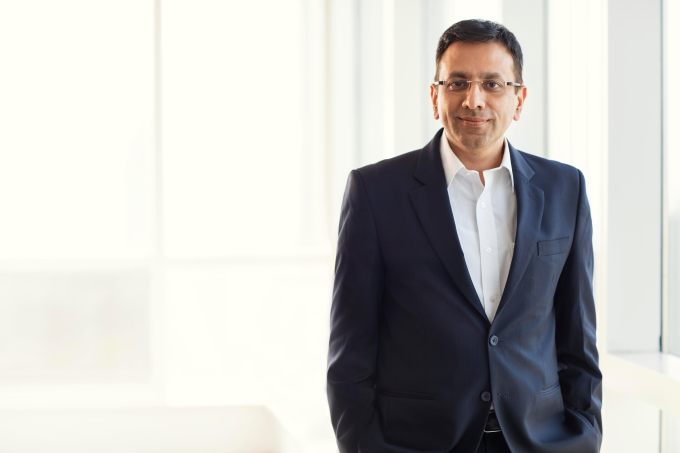
Sanjay Gupta, a former top executive at Disney and Star, is now the head of Google’s India business

In a statement, Gupta said, “it’s an exciting opportunity to leverage the power of technology to solve some of India’s unique challenges and make Internet an engine of economic growth for people and communities. I am happy to join the passionate teams across Google and look forward to contributing to India’s digital journey as it becomes an innovation hub for the world.”

When Anandan, a long-time influential and widely respected Google executive, left the company earlier this year, Google said Vikas Agnihotri, who is the director of sales for the firm’s India operations, would be taking over. For Google, this was the latest high profile departure in Asia. Karim Temsamani, head of Asia Pacific (APAC) at Google, also left the company earlier this year.

Even as India contributes little to Google’s bottom line, the company has grown increasingly focused on India and other Asian markets to develop products and services that solve local problems and address barriers that are hindering growth in these markets.

In a statement, Scott Beaumont, President of Google APAC, said company’s operation in India “is important and strategic for its own sake but also for the innovation which then feeds breakthroughs elsewhere in Google.”

Gupta will also have to oversee some major challenges, including the fast growth of Facebook’s advertising business in India and an antitrust issue with the local regulator.

08 Nov 2019

Sir Martin Sorrell’s Silicon Valley charm offensive

Sir Martin Sorrell is the kind of founder who people in Silicon Valley most prize. He has enjoyed huge success, having built the world’s biggest advertising conglomerate over 32 years, WPP. He’s also out for revenge. Soon after WPP’s board began investing an “allegation of misconduct” — it later asked him to pay back $200,000 in personal expenses — Sorrell left the company in a huff, forming another market player, S4 Capital, six weeks later.

Sorrell has a playbook that he knows works, too. Like London-based WPP, which he and a partner launched by buying a controlling stake in publicly traded company that made wire baskets and teapots — which it then used to launch a global shopping spree — S4 reverse-merged itself into Derriston Capital, a small shell company that went public on the London Stock Exchange in 2016 and rebranded as S4. Then it started bulking up.

Already S4 — which Sorrell funded himself with £40 million, and that has raised tens of millions more from other institutions for acquisitions — has successfully pursued nine companies, though Sorrell stresses these are mergers. “All half cash and half stock.” No long lock-ups, either, says Sorrell, who was bouncing around the U.S. this week before heading to the Web Summit event in Lisbon. “If you want to sell your company, if you want to make a quick kill and get out, we’re not interested. If you want to sign up to our vision” and help turn S4 is a powerhouse in its own right, that’s a different story, he suggests.

Silicon Valley is seemingly a big piece of the puzzle. Last month, S4 Capital finalized a deal to $150 million deal to merge with the largest digital agency in the region, nine-year-old Firewood, with S4 paying $112 million up front (half shares, half cash) and the balance coming if Firewood hits its targets for the year. It also late last year merged with the San Francisco-based digital media and programmatic consultancy MightyHive in a deal valued at $150 million.

Sticking it to WPP on occasion seems to be another part of Sorrell’s strategy. S4 Capital’s first acquisition, for example, of the Dutch digital production agency MediaMonks, came at the expense of WPP, which had also been trying to buy the company. The WSJ reported at the time that S4 agreed to pay roughly $350 million for the agency.

The broad idea, he says, is to focus S4 entirely on digital advertising and on media and marketing services specifically, where in 2019, for the first time, the world’s advertisers will spend  more than half of their ad budgets. “The digital media industry is up 6 percent [for the year] and it’s down for traditional media, so we’re going where the growth is and pushing on an open door, unencumbered by legacy or analog businesses.”

Asked whether he doesn’t also have an axe to grind when it comes to WWP — which is steeped in both the digital and traditional ad worlds — Sorrell doesn’t hesitate. “I want to see this approach succeed. And if that’s an axe, that’s correct.”

Much of that approach centers on partnering with, rather than trying to compete, with the giants of ad tech, including Facebook and Google. Other current tech clients include Apple, Salesforce, Microsoft, LinkedIn, Uber, and ServiceNow, which, according to Sorrell, treat S4’s creative and strategic marketing professionals as extensions of their internal marketing teams.

Firewood, for example, will embed teams within companies like Google to “understand the client as well as possible,” Sorrell says, adding: “We don’t compete with [these companies]. We service them; we work with them. If we’re being crude about it, we’re resellers for each one of them. They don’t want to get into the service business.” (One assignment about which Sorrell seems especially proud centers on Netlix, for which MediaMonks put together 15-second video snippets from its third season of “Narcos” that catered to different audiences by using different tag lines and different edits. “Personalization at scale is critically important,” says Sorrell.)

Asked whether he thinks some of these tech clients should be broken up, given the lock on customer data they have, he insists that he does not, “as long as they’re transparent and they really exercise the power they have responsibly.”

Asked how S4 overcomes the growing number of people who don’t think companies are acting responsibly with their private information and might increasingly opt out of sharing it, Sorrell shrugs off the concern. “My view is that as long as the consumer knows what they’re letting themselves in for, it’s fine. If i know how my data will be used, in simple language, [I’m not going to opt out.] I think we’ll have differentiated models, [such as] ‘I want to control my data so [you’re going to pay me for it in some fractional way].’ The problem is caused by people not knowing what’s being done with their data.”

The real problem,” Sorrell continues, “is the size of these companies. When Apple was the first to become a trillion-dollar company, [former Goldman Sachs CEO Lloyd Blankfein] was asked which would be the first $2 trillion company, and he said there won’t be one because no nation-stage would allow a company to get to $2 trillion. You see this in China, too. I’ve heard concerns expressed about the size of Alibaba, too. It’s not just a Western phenomenon.”

And what about political ads, we ask Sorrell. Should these platforms be running them, no matter their content? That one, he says is “very difficult. My view has always been that these are media companies that are responsible for the content flowing through their pipes. I think they are acknowledging it; Facebook has thousands of people monitoring content.

“But should we take political advertising or not? Well, in the U.K. You have to be truthful. If the ads aren’t truthful, we’ve got trouble.

“I think Zuckerberg made the argument that his people know what’s a fact or not, but arbitrating what’s the truth or not is quite difficult,” he concedes.

Sorrell is much less circumspect about traditional ad giants, like the one he himself built across three decades before leaving it abruptly last year. Perhaps it’s unsurprising, given his new endeavor, but he says those companies, with their tangle of properties, most of which are run like independent fiefdoms, should most definitely be dismantled. “I don’t think they have a chance of making it with the legacy assets they have.”

Sorrell recalls one “snotty comment” made by one of the established players, regarding his new venture: “Someone called us a spec in the mirror.”

Continues Sorrell, “When you’re in a car crash, that spec in the mirror catches up with you very quickly.”


08 Nov 2019

Disney+ will launch in the UK, Germany, Italy, France, and Spain in March 2020


Disney+ will launch in the US, Canada, and the Netherlands on November 12th, a bit shy of a week from today. On November 19th, it’ll expand to Australia and New Zealand.

But what about the rest of the world?

Disney has kept a bit quiet about its plans for other countries, presumably because going live in another country is a bit more complicated than just flipping a switch. Every country tends to have different privacy/tax laws regarding subscription services, and rights and licensing for each bit of content has to be detangled with respect to existing deals.

Now, at least, we’ve got a launch date for five more countries: Disney says that Disney+ will launch in the UK, Germany, Italy, France, and Spain on March 31st.

This news might be slightly less intriguing for folks in the UK, who’ve had streaming access to a pretty massive collection of Disney stuff by way of DisneyLife — a streaming service that served as a test run of sorts for Disney since its launch back in 2015. But hey, The Mandalorian!

One thing worth noting: don’t expect Disney+ to be exactly the same around the world. Thanks to those aforementioned rights/licensing deals that may already be in place around the world, as Disney puts it, “Titles may vary by territory.”

08 Nov 2019

Disney+ will launch in the UK, Germany, Italy, France, and Spain in March 2020


Disney+ will launch in the US, Canada, and the Netherlands on November 12th, a bit shy of a week from today. On November 19th, it’ll expand to Australia and New Zealand.

But what about the rest of the world?

Disney has kept a bit quiet about its plans for other countries, presumably because going live in another country is a bit more complicated than just flipping a switch. Every country tends to have different privacy/tax laws regarding subscription services, and rights and licensing for each bit of content has to be detangled with respect to existing deals.

Now, at least, we’ve got a launch date for five more countries: Disney says that Disney+ will launch in the UK, Germany, Italy, France, and Spain on March 31st.

This news might be slightly less intriguing for folks in the UK, who’ve had streaming access to a pretty massive collection of Disney stuff by way of DisneyLife — a streaming service that served as a test run of sorts for Disney since its launch back in 2015. But hey, The Mandalorian!

One thing worth noting: don’t expect Disney+ to be exactly the same around the world. Thanks to those aforementioned rights/licensing deals that may already be in place around the world, as Disney puts it, “Titles may vary by territory.”

07 Nov 2019

Elon Musk says building the first sustainable city on Mars will take 1,000 Starships and 20 years

SpaceX CEO Elon Musk went into a bit more detail about the timelines and vehicle requirements to not only reach Mars, but to set up a sustainable base on the red planet that can serve as an actual city, supporting a local population. That’s the long-term vision for Musk and his space technology company, after all – making humans an interplanetary species. The timeline that Musk discussed today, replying to fans on Twitter, might be both incredibly impressed or incredibly ambitious, depending on your perspective.

Addressing a question about comments he made earlier this week at the U.S. Air Force startup pitch day event in California, Musk said that his stated launch cost of only around $2 million per Starship flight are essentially required, should the final goal be to set up a “self-sustaining city on Mars.” In order to make that city a reality, he added, SpaceX will need to to build and fly around 1,000 Starships according to his estimates, which will need to transport cargo, infrastructure and crew to Mars over the course of around 20 years, since planetary alignment only really allows for a realistically achievable Mars flight once every two years.

Musk addressed more near-term potential for Starship as well, including how much payload capacity Starship will provide for Earth orbital transportation. Starship’s design is intended to maximize re-use, and in fact Musk noted that ideally it can fly up to three times per day. That amounts to more than 1,000 flights per year per Starship, which means that if they end up with as many Starships as they currently have built Falcon rockets (around 100) and those can each transport as much as 100 tons to orbit, then on an annual basis, SpaceX will be able to launch upwards of 10 million tons to orbit per year.

To put that in perspective, Musk points out that if you take all cargo-bearing spacecraft currently in operation into account, the total payload capacity is just 500 tons per year – with Falcon series rockets from SpaceX itself making up around half of that.

That’s a lot of payload; in fact, it’s probably more than there will be demand for in any near-term time scale. But it’s also true that Musk envisions a future where orbital space is a much busier place, and a staging ground for orbital cargo transfer and refuelling as Moon and Mars-bound spacecraft ready themselves for the outward journey.

Of course, to set up a permanent, sustainable city on Mars, we first have to get there with a crewed flight. There’s another step between now and then, which is landing astronauts back on the Moon. NASA has set 2024 as its goal for that milestone, and SpaceX has said it hopes to land Starship there by as early as 2022 to help with staging in preparation for that landing. In the past, Musk has discussed crewed Mars mission also taking place as early as 2024, but that goal seems mighty aspirational (as do most of his timelines) from where we sit today.

07 Nov 2019

Star Wars and Marvel content is most popular among Disney+ trial users, report finds

Early adopters of Disney+ are mostly watching Marvel and Star Wars movies and TV shows, according to a new third-party report by SimilarWeb out today. The analytics firm measured Disney+ usage in its debut market, the Netherlands, where the service went live for a trial run back in September ahead of its global rollout.

This soft launch gave Disney a chance to work out some of the kinks before its wider availability starting in the U.S. and Canada on November 12, which will soon be followed by other international markets.

But the launch also gave third-party measurement firms early insight into what content is performing best on the new streaming service.

In the Netherlands, 6 of the top 10 most viewed programs during the first month were TV series, and just 4 were movies. This included the most-watched film and No.1 most-watched program, Marvel Studios’ Avengers: Infinity War. That was followed by the TV series Marvel’s Agents of S.H.I.E.L.D., then Star Wars: The Clone Wars, and Marvel Studios’ Black Panther, which rounded out the top 5.

Star Wars and Marvel content also dominated the top 10 lists of the most-viewed movies and TV shows during this time. Marvel snagged 4 of the top spots for most-viewed series while Star Wars grabbed 2 others.

Meanwhile, Marvel movies grabbed 3 of the top spots among most-watched movies during the first month, while Star Wars grabbed 4 other spots.

Though the data is early and limited to a single market, it does seem to point to Disney’s newer franchises, — rather than its timeless animation classics or even its Pixar hits — as being the biggest draws among Disney+’s first users.

But this could also mean that Disney will need to do more to convince families with younger children of the need to subscribe in order to gain access to Disney’s kids’ content. Kids’ programming is something that’s relatively plentiful these days across rival streamers, including Netflix, Hulu, Amazon Prime — and even HBO, which has a deal with Sesame Workshop. (And its upcoming service HBO Max has already locked down new Sesame Street episodes.)

Modern streaming services long ago realized that funding and licensing children’s programming was an easy way to get entire families on board — which meant more users, more watch hours, and more expensive subscription plans. Even more recent newcomers to streaming are following the same path, as Roku has with the launch of its Kids & Family section on its free The Roku Channel. 

The new streaming data arrives as Disney reported its fiscal fourth-quarter earnings on Thursday. The company beat Wall St. expectations with earnings per share of $1.07, adjusted, versus $0.95 expected and revenue of $19.1 billion versus $19.04 billion expected. The company also announced the availability of the Disney+ app on Amazon Fire TV, which will also go live on November 12.

During an earnings call with investors, Disney CEO Bob Iger said the Disney+ test in the Netherlands indicated the service is appealing to a “far broader” demographic group than the company expected.

A recent survey hosted by the recommendations app Likewise, however, found that more men than women were interested in subscribing to Disney+ (46% men said they were considering vs. 37% women). It also found interest in the service skewed younger with 58% of Millennials indicating interest versus 38% of Gen X and only 21% of Boomers.

The full results from SimilarWeb’s Disney+ study are below.

Top 10 most-viewed content in September in the Netherlands:

  1. Marvel Studios’ Avengers: Infinity War (movie)
  2. Marvel’s Agents of Shield (series)
  3. Star Wars: The Clone Wars (series)
  4. Star Wars Rebels (series)
  5. Marvel Studios’ Black Panther (movie)
  6. Marvel’s Agent Carter (series)
  7. Phineas and Ferb (series)
  8. Incredibles 2 (movie)
  9. Beauty and the Beast (movie)
  10.  The Suite Life of Zack and Cody (series)

Top 10 TV shows

  1. Marvel’s Agents of S.H.I.E.L.D.
  2. Star Wars The Clone Wars
  3. Star Wars Rebels
  4. Marvel’s Agent Carter
  5. Phineas and Ferb
  6. The Suite Life of Zack and Cody
  7. Marvel’s Runaways
  8. Marvel Comics’ X-Men
  9. Disney Ducktales
  10. .Kim Possible 

Top 10 Movies

  1. Marvel Studios’ Avengers: Infinity War
  2. Marvel Studios’ Black Panther
  3. Incredibles 2
  4. Beauty and the Beast
  5. Rogue One: A Star Wars Story
  6. Solo: A Star Wars Movie
  7. Star Wars: The Last Jedi
  8. High School Musical
  9. Star Wars: The Phantom Menace
  10. Marvel Studios’ The Avengers