Year: 2019

07 Nov 2019

T-Mobile sugar-coats Sprint merger with promises of free data — but only if it’s approved

The planned $26 billion merger between T-Mobile and Sprint has been approved by the Justice Department and the FCC, but it’s not a sure thing yet. To sweeten the deal, T-Mobile is dangling three big free and cheap data initiatives that will only go through if the merger does. A little sugar helps the medicine go down.

Contingent on creating the “New T-Mobile,” there are three big moves planned, all of which to be fair sound great:

  • 10 years of free 5G for all police, fire, emergency medical services, and other first responders countrywide
  • Free wireless service and reduced cost devices to 10 million disconnected households in U.S. and Puerto Rico
  • New $15/month prepaid plan with unlimited talk and text and 2GB of data

Obviously these are all aimed at making it seem like T-Mobile is concerned with the public good. And no one is disputing that these programs would help a lot of people out. It just feels like such a transparent play to balance out the anti-competitive risks of the merger.

FCC Commissioner Brendan Stark speculated in his dissent from yesterday’s approval decision that the merger would lead to three 900-pound gorillas that would “divide up the market, increase prices, and compete only for the most lucrative customers.”

FCC Chairman Ajit Pai, on the other hand, asserts that the merger “will provide New T-Mobile with the scale and spectrum resources necessary to deploy a robust 5G network across the United States,” and make it competitive with Verizon and AT&T. (Disclosure: TechCrunch is owned by Verizon Media, but this does not affect our coverage.)

Although the regulatory hurdles are out of the way, the merger still faces a lawsuit from a collection of states who oppose the deal. That’s due to go to court soon, but may be either dismissed or delayed due to the fact that the complaints were filed before the Justice and FCC approvals, and the stipulations that came with.

07 Nov 2019

Ubiquiti combines router and Wi-Fi access point with UniFi Dream Machine

Ubiquiti is a well-known brand if you care about networking. Many companies, schools and public spaces use Ubiquiti access points to broadcast a Wi-Fi network across an entire building. Earlier this week, the company announced a new device called the UniFi Dream Machine.

This new device is interesting as it addresses the prosumer segment directly. If you’re looking for plug-and-play mesh Wi-Fi routers, Ubiquiti has a range of routers under the AmpliFi brand. If you’re a networking professional, you’re probably more interested in a modular system with rackable routers and switches.

The Dream Machine sits in between those two segments. It combines a router, a switch with four Ethernet ports and a Wi-Fi access point. It has an integrated cloud key that lets you control your network and system traffic.

On the routing front, the Dream Machine has an integrated security gateway, which lets you create firewall policies. It supports everything you’d expect from a high-end router, such as quality of service, VLAN support, site-to-site VPN and remote VPN.

On the switching front, there’s one WAN port to connect to the internet and four Gigabit Ethernet ports. On the wireless networking front, the Dream Machine supports 802.11ac Wave 2 (“Wi-Fi 5”) with a 4×4 MU-MIMO antenna.

Behind the scene, the device uses a 1.7GHz ARM Cortex-A57 processor. It has 2GB of RAM and 16GB of storage and consumes up to 26W.

And of course, you can tweak every setting using Ubiquiti’s network controller software. The pill-shaped device costs $299. This product is probably an overkill for most people. But if you’re a networking nerd like me and you want to be able to control your network, it could be a good entry point.

07 Nov 2019

Older Samsung smart TVs to lose Netflix support next month

An unspecified number of smart TVs manufactured by Samsung will lose native support for Netflix next month, the companies said in an announcement this week.

Netflix app installed — or available for — Samsung smart TVs manufactured in 2010 and 2011 (C and D lineups) — and likely sold for many years after that — will stop functioning December 2, Samsung alerted customers this week. In a statement, a company spokesperson said these TV models were sold only in the U.S. and Canada.

In its statement, the top smart TV manufacturer advised affected customers to look for a game console, streaming media player, set-top box or other devices that still support Netflix app to continue their binge-watching sessions.

A Netflix spokesperson cited technical limitations for the change. “We’ve notified all impacted members with more information about alternative devices we support so they can keep enjoying Netflix uninterrupted,” the person added.

It’s unclear how many people are impacted by this change. A Netflix spokesperson said “a small number” of TVs were affected. Samsung has been the top smart TV vendor worldwide for several years, according to several estimates.

The developement comes weeks after Netflix alerted several Roku customers that they, too, will lose access to the streaming service on December 1. Roku 2050X, Roku 2100X, Roku 2000C, Roku HD Player, Roku SD Player, Roku XR Player, Roku XD Player are the streaming devices that will lose access to Netflix.

07 Nov 2019

Ghost wants to retrofit your car so it can drive itself on highways by 2020

A new autonomous vehicle company is on the streets — and unbeknownst to most, has been since 2017. Unlike the majority in this burgeoning industry, this new entrant isn’t trying to launch a robotaxi service or sell a self-driving system to suppliers and automakers. It’s not aiming for autonomous delivery, either.

Ghost Locomotion, which emerged Thursday from stealth with $63.7 million in investment from Keith Rabois at Founders Fund, Vinod Khosla at Khosla Ventures and Mike Speiser at Sutter Hill Ventures, is targeting your vehicle.

Ghost is developing a kit that will allow privately owned passenger vehicles to drive autonomously on highways. And the company says it will deliver in 2020.

This kit isn’t going to give a vehicle a superior advanced driving assistance system. The kit will let human drivers hand control of their vehicle over to a computer, allowing them to do other activities such as look at their phone or even doze off.

The idea might sound similar to what Comma.ai is working on, Tesla hopes to achieve or even the early business model of Cruise. Ghost CEO and co-founder John Hayes says what they’re doing is different.

A different approach

The biggest players in the industry — companies like Waymo, Cruise, Zoox and Argo AI — are trying to solve a really hard problem, which is driving in urban areas, Hayes told TechCrunch in a recent interview.

“It didn’t seem like anyone was actually trying to solve driving on the highways,” said Hayes, who previously founded Pure Storage in 2009. “At the time, we were told that this is so easy that surely the automakers will solve this any day now. And that really hasn’t happened.”

Hayes noted that automakers have continued to make progress in advanced driver assistance systems. The more advanced versions of these systems provide what the SAE describes as Level 2 automation, which means two primary control functions are automated. Tesla’s Autopilot system is a good example of this; when engaged, it automatically steers and has traffic-aware cruise control, which maintains the car’s speed in relation to surrounding traffic. But like all Level 2 systems, the driver is still in the loop.

Ghost wants to take the human out of the loop when they’re driving on highways.

“We’re taking, in some ways, a classic startup attitude to this, which is ‘what is the simplest product that we can perfect, that will put self driving in the hands of ordinary consumers?’ ” Hayes said. “And so we take people’s existing cars and we make them self-driving cars.”

The kit

Ghost is tackling that challenge with software and hardware.

The kit involves hardware like sensors and a computer that is installed in the trunk and connected to the controller area network (CAN) of the vehicle. The CAN bus is essentially the nervous system of the car and allows various parts to communicate with each other.
Vehicles must have a CAN bus and electronic steering to be able to use the kit.

The camera sensors are distributed throughout the vehicle. Cameras are integrated into what looks like a license plate holder at the back of the vehicle, as well as another set that are embedded behind the rearview mirror.

A third device with cameras is attached to the frame around the window of the door (see below).
Initially, this kit will be an aftermarket product; the company is starting with the 20 most popular car brands and will expand from there.

Ghost intends to set up retail spaces where a car owner can see the product and have it installed. But eventually, Hayes said, he believes the kit will become part of the vehicle itself, much like GPS or satellite radio has evolved.

While hardware is the most visible piece of Ghost, the company’s 75 employees have dedicated much of their time on the driving algorithm. It’s here, Hayes says, where Ghost stands apart.

How Ghost is building a driver

Ghost is not testing its self-driving system on public roads, an approach nearly every other AV company has taken. There are 63 companies in California that have received permits from the Department of Motor Vehicles to test autonomous vehicle technology (always with a human safety driver behind the wheel) on public roads.

Ghost’s entire approach is based on an axiom that the human driver is fundamentally correct. It begins by collecting mass amounts of video data from kits that are installed on the cars of high-mileage drivers. Ghost then uses models to figure out what’s going on in the scene and combines that with other data, including how the person is driving by measuring the actions they take.

It doesn’t take long or much data to model ordinary driving, actions like staying in a lane, braking and changing lanes on a highway. But that doesn’t “solve” self-driving on highways because the hard part is how to build a driver that can handle the odd occurrences, such as swerving, or correct for those bad behaviors.

Ghost’s system uses machine learning to find more interesting scenarios in the reams of data it collects and builds training models based on them.

The company’s kits are already installed on the cars of high-mileage drivers like Uber and Lyft drivers and commuters. Ghost has recruited dozens of drivers and plans to have its kits in hundreds of cars by the end of the year. By next year, Hayes says the kits will be in thousands of cars, all for the purpose of collecting data.

The background of the executive team, including co-founder and CTO Volkmar Uhlig, as well as the rest of their employees, provides some hints as to how they’re approaching the software and its integration with hardware.

Employees are data scientists and engineers, not roboticists. A dive into their resumes on LinkedIn and not one comes from another autonomous vehicle company, which is unusual in this era of talent poaching.

For instance, Uhlig, who started his career at IBM Watson Research, co-founded Adello and was the architect behind the company’s programmatic media trading platform. Before that, he built Teza Technologies, a high-frequency trading platform. While earning his PhD in computer science he was part of a team that architected the L4 Pistachio microkernel, which is commercially deployed in more than 3 billion mobile Apple and Android devices.

If Ghost is able to validate its system — which Hayes says is baked into its entire approach — privately owned self-driving cars could be on the highways by next year. While the National Highway Traffic Safety Administration could potentially step in, Ghost’s approach, like Tesla, hits a sweet spot of non-regulation. It’s a space, that Hayes notes, where the government has not yet chosen to regulate.


07 Nov 2019

MIT develops a robot that can grow like a plant when it needs some extra reach

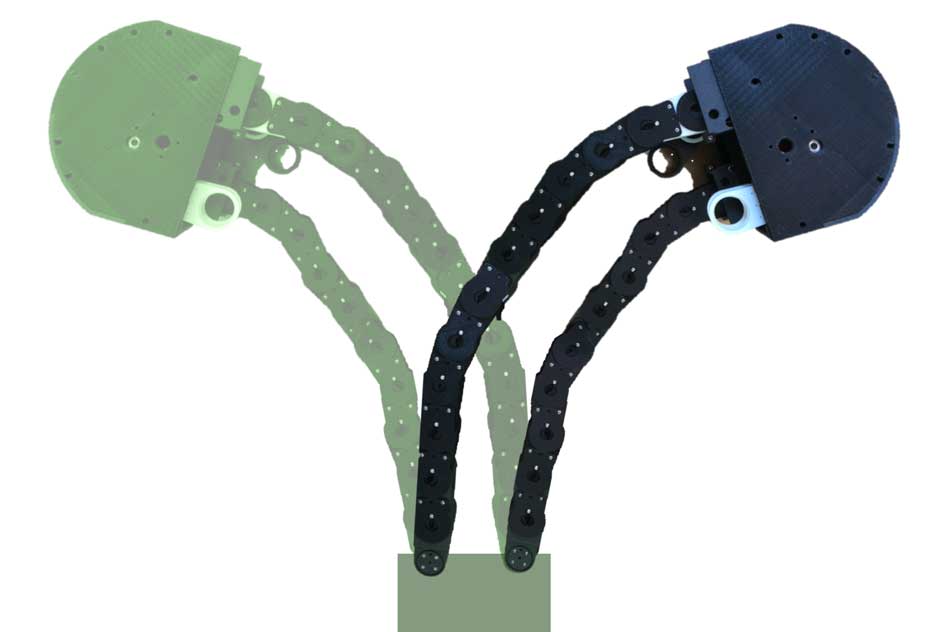
MIT has developed a new kind of robot that can essentially extend itself – ‘growing’ in a way that’s surprisingly similar to how a young plant grows upwards. The way researchers accomplished this uses a robot that is crucially not a soft robot, which means that it can both extend itself to reach up to a previously unreachable height, or through a gap to a hard-to-get-at area, while also retaining the rigidity and strength necessary to support a gripper or other mechanism on its tip and do work like tighten a bolt, or manipulate a handle.

This new robot solves a fairly common challenge for industrial and commercial robots, which is reaching into tight spaces or navigating cluttered parts of factories or warehouses. Most robots that are in service in industry today essentially need a wide open space to operate, and factory layouts are designed to provide these to accommodate them. They’re also essentially fixed in terms of their dimensions: It’s rare to find a robot that can truly morph to meet the needs of different tasks.

As mentioned, soft robotics has done some work in addressing the fixed nature of existing robots, but to date, not much that’s been done with soft robotics can also accommodate the need for robots to work with what are called in robotics “end effectors,” or at least the variety that includes grippers and heavy duty cameras or sensors, which tend to have a significant weight and require a stable platform from which to operate.

MIT’s robot solves this using a chain-like apparatus, not too different from a bicycle chain. The difference is that its links are interlocking blocks that can ‘lock’ into one another to form a rigid column, and then ‘unlock’ to return to a flexible state. This means a robot could pack this chain-like appendage, loose in a container, drive across a factory floor to a bit of machinery, and then extend a growing ‘arm’ inside the machinery where it otherwise wouldn’t be able to reach to manipulate a control, or to point a sensor to check for damage, for instance.

Roboticists have termed this the ‘last foot’ problem – similar in nature to the ‘last mile’ in transportation, since it involves going from a wide, relatively easy to access space to a more difficult to reach area. In autonomous vehicles, that might be getting from the curb to a person’s doorstep. In industrial robotics, it’s about going from working out in the open to working in tight, confined spaces.

Unlocking this kind of flexibility for industrial robotics could go a long way to opening up entirely new and more varied applications of robots on the job, so the development of these kinds of ‘grobots’ definitely has plenty of potential outside the lab.

07 Nov 2019

Capital One replaces security chief after data breach

Capital One has replaced its cybersecurity chief, four months after the company disclosed a massive data breach involving the theft of sensitive data on more than 100 million customers.

A spokesperson for Capital One confirmed the news in an email to TechCrunch.

“Michael Johnson is moving from his role as chief information security officer to serve as senior vice president and special advisor dedicated to cyber security,” said the spokesperson.

Mike Eason, who served as chief information officer for its commercial banking, has replaced Johnson as interim cybersecurity chief while a permanent replacement is found.

The Wall Street Journal first reported the news.

Capital One is continuing to assess the aftermath from its July data breach, which saw a hacker take millions of credit card application data between 2005 and 2019 from customers applying for credit cards. The data leaked also includes names, addresses, postal addresses, phone numbers, email addresses, dates of birth, and self-reported income, as well as credit scores, and credit limits.

Paige Thompson, a Seattle resident, was taken into custody by the FBI following the disclosure, accused of breaking into the banking giant’s cloud-based environment. Subsequent research showed that the alleged hacker and former Amazon Web Services employee, may have obtained sensitive corporate data on other companies, including Vodafone, Ford, and Ohio’s Department of Transportation.

It was reported this week that Thompson would be released from custody, pending trial.

07 Nov 2019

Capital One replaces security chief after data breach

Capital One has replaced its cybersecurity chief, four months after the company disclosed a massive data breach involving the theft of sensitive data on more than 100 million customers.

A spokesperson for Capital One confirmed the news in an email to TechCrunch.

“Michael Johnson is moving from his role as chief information security officer to serve as senior vice president and special advisor dedicated to cyber security,” said the spokesperson.

Mike Eason, who served as chief information officer for its commercial banking, has replaced Johnson as interim cybersecurity chief while a permanent replacement is found.

The Wall Street Journal first reported the news.

Capital One is continuing to assess the aftermath from its July data breach, which saw a hacker take millions of credit card application data between 2005 and 2019 from customers applying for credit cards. The data leaked also includes names, addresses, postal addresses, phone numbers, email addresses, dates of birth, and self-reported income, as well as credit scores, and credit limits.

Paige Thompson, a Seattle resident, was taken into custody by the FBI following the disclosure, accused of breaking into the banking giant’s cloud-based environment. Subsequent research showed that the alleged hacker and former Amazon Web Services employee, may have obtained sensitive corporate data on other companies, including Vodafone, Ford, and Ohio’s Department of Transportation.

It was reported this week that Thompson would be released from custody, pending trial.

07 Nov 2019

Spotify’s podcasting app Anchor now helps you make trailers

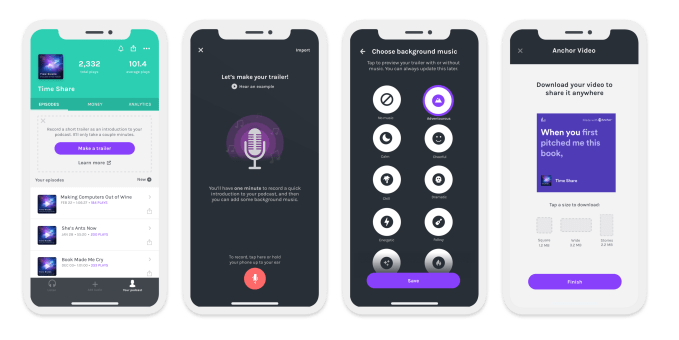
Spotify’s simple podcasting suite, Anchor, is today introducing a new feature designed to help creators promote their podcast: trailers. On the Anchor app for iOS and Android, podcasters will now be able to create a dedicated trailer for their podcast that combines an introduction and some background music, then turns it into an animated video that can be shared across social media and the wider web.

The trailer will also be made available within the podcast’s RSS feed, where it’s marked with the “trailer” episode type.

Anchor had already offered a way for users to mark episodes of their podcast as a trailer within the app, but the new feature makes it simpler to create a trailer through a more integrated experience.

For example, when you push the button to record, you have one minute to introduce your podcast — and a warning will flash when that minute is about to be up. When you’re satisfied with the recording, you can then browse through Anchor free library of background music, which is organized by mood — like adventurous, calm, dramatic, cheerful, energetic, funky, chill, etc. Or you can opt to go without music, if you prefer.

And if you already have a voice recording saved elsewhere, you can import it into Anchor to use as your trailer.

There are other options today for creating podcast trailers, like those from services like Wavve, Headliner, or Audiogram, for example. But Anchor’s goal is to be the one-stop-shop for everything a new podcaster needs to get started, and that includes promotional tools like this.

However, many professional podcasters still view Anchor as a sort of entry-level product and turn to more advanced audio editing suites to craft their shows. But over time, these extra, handy features could help Anchor to earn a place in podcaster’s workflow, even if it’s not their end-to-end solution.

Podcasting has become an important vertical for Anchor’s parent company Spotify, which led to it acquiring both Anchor and Gimlet earlier this year for $340 million. And its investments in podcasts, which have also included the acquisition of podcast network Parcast, have been starting to pay off.

The company reported in July its podcast audience had doubled in size since last year. In October, it said the number of podcast listeners on its service grew 40% from the prior quarter, and it now had 500,000 titles hosted on its platform.

Spotify can monetize podcasts in two ways, as with music — through ads and by pushing people into premium subscriptions. It now has 113 million paying customers and 248 million monthly actives. And once Spotify’s users are subscribed to a number of podcast shows, they’re more likely to stay with the service. In addition, podcasts don’t come with the licensing costs associated with record label deals, which Spotify also surely likes.

Anchor’s new trailers feature is live now on both iOS and Android.


07 Nov 2019

YouTube’s homepage redesign focuses on usability, giving you control over recommendations

YouTube’s homepage is getting a makeover. The company announced today an updated, cleaner design that does away with information density to instead give more room to the videos and their titles, plus other new features like an “Add to Queue” option on the desktop, a desktop version of YouTube’s stop suggesting feature, and more.

The design changes rolling out today are focused on the desktop and tablet versions of YouTube, not the YouTube mobile website or app, the company says.

Google, as of late, has been doing away with tighter, more compact displays of text and imagery in its products, allowing the content itself to have more room to breathe. For example, the makeover of the Google News in Search spread out news articles into cards, instead of more compressed groupings of headlines. These sorts of changes benefit readability, but they also mean there’s less content visible on the page before you have to scroll down.

The same now goes for YouTube.

In the updated design, there are fewer videos per row as YouTube is allowing for longer video titles and larger video thumbnails, which makes it easier to see what the video is about.

It’s also adding higher resolution previews and is giving more space to the channel icons beneath each video, so you can quickly identify those from your favorite creators.

These changes will impact the homepage’s layout, to some extent.

YouTube says it’s removing some of the content shelves — those areas where it organizes videos by channels and topics. The new homepage will still show some of these same videos, but they won’t be grouped into these shelves anymore. Instead, YouTube’s new design shows videos in shelves like Breaking News and Top News, when it makes sense.

Meanwhile, YouTube is bringing its “Add to queue” option to the desktop. Now, you’ll be able to click on a button on the video thumbnail to either add the video to your Watch Later list, as you can today, or now, to your queue.

You can also do this while still watching a video that’s been minimized to the corner of the page.

Queues are a useful way of quickly building out a playlist on the fly, but they aren’t meant to take the place of a proper playlist — that is, they’re not meant to be saved for later viewing once the queue is complete. YouTube says its desktop queue clears when you close your browser. That means if you want to save videos for viewing across devices, you’ll still want to use the “Watch Later” button as before.

Another new feature is one that’s making the jump from mobile to desktop.

Earlier this year, YouTube had rolled out a series of changes that allowed users to gain more control over what videos were appearing on their homepage and in their Up Next suggestions, which is powered by algorithms. It introduced a “stop suggesting” feature in the form of a button that would allow you to stop being shown videos from a particular channel.

Now that same “Don’t recommend channel” option will be available on the desktop.

You’ll find it on the three-dot menu next to a video on the homepage. Once clicked, that channel’s videos won’t hit your YouTube homepage again. However, this is not a full “block” button — the videos can still come up in search, the Trending tab, or if you visit the channel directly.

Also earlier this year, the YouTube Android app was updated with a new feature that allowed users to select their favorite topics and customize their Home feed with related videos.

This same feature will make its way to desktop and tablets in the near future, but isn’t ready in time for today’s launch.

All the changes today are a big boost for readability and usability, though for some creators they may also be a double-edged sword. On the one hand, creators’ videos are being given more real estate on the homepage and their own branding is larger. But on the other, the decreased homepage density means there are fewer spots available to showcase videos before viewers have to scroll down.

The latter changes focused on allowing users more direct input into what videos are shown to them arrive at a time when YouTube has come under pressure, along with other social media companies, for helping to spread hate speech and disinformation by way of algorithms that continually adapt to display more of people want, no matter how terrible.

To what extent YouTube is culpable is being heavily debated. Contrary to earlier reports, one newer study indicated that it’s not so much the algorithm that radicalizes people, but rather the active communities they find online. But it’s a complex issue. And those who have extricated themselves from dark YouTube rabbit holes point to a variety of factors that led them astray — feeling of isolation, depression, and not knowing one’s place in the world, for example, combined with video recommendations that invite them deeper into ever more extremist online communities.

YouTube’s response has so far been to stand by free speech (at least to some extent), while also giving users more tools to make decisions for themselves — like the changes mentioned above.

This sentiment of “if you don’t like it, just don’t watch it” (now by way of an algorithm-override button) isn’t unique to YouTube. These days, it’s common to see people respond to others who are getting angry on Facebook threads by telling them to “just keep scrolling.” In other words, there’s a growing sense that people will have to take personal responsibility to navigate today’s web, as filled as it is with things that a large majority doesn’t want to see.

YouTube says its updated design will begin rolling out today across desktops and YouTube apps on Android and iOS tablets, and will reach everyone soon.

07 Nov 2019

WhatsApp’s latest feature, Catalogs, caters to small businesses skipping the web for mobile

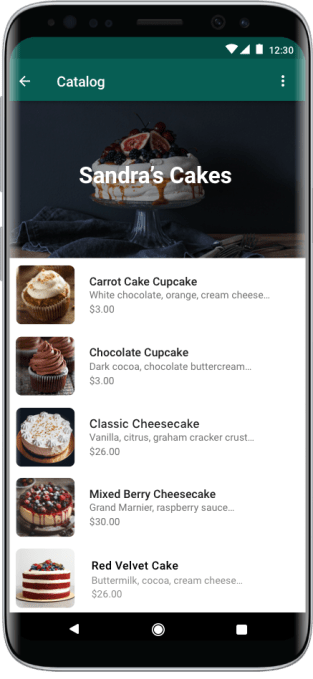
WhatsApp is expanding the capabilities of its dedicated app for business owners who want to reach their customers on smartphones. The Facebook-owned company is today introducing a new “catalogs” feature to the WhatsApp Business app that will allow the businesses to showcase and share their products and services to potential customers, who can browse photos, view prices, and read product descriptions to help inform their purchase decisions.

These catalogs effectively serve as a mobile storefront on WhatsApp — and one that can be operated without the need for a web page at all. Instead, the business owner simply visits the new Catalog option in their app’s settings and uploads photos of whatever is they’re selling and fill out the details which can optionally include a product or service code (e.g. a SKU), if need be.

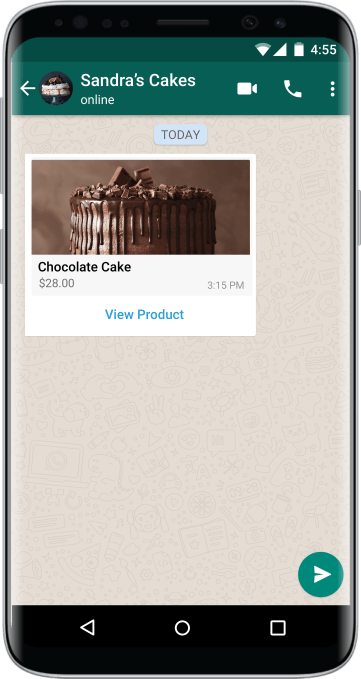
These catalog items can then be sent to customers in a WhatsApp chat message. For example, if a customer asks about a particular item or for a recommendation, the business owner can tap to send a particular item from their catalog that includes all the information the customer wants to know.

The catalogs are particularly appealing to WhatsApp’s customer base in emerging markets, where much of users’ online activity is taking place inside apps instead of on the wider web. As new users come online in these regions, they’re often skipping the PC revolution entirely and going straight to smartphones instead.

Already, the WhatsApp Business app is claiming a portion of that market. Earlier this year, the company said the app had reached some 5 million business customers.

The Catalogs feature today joins several others designed with the needs of businesses in mind, including business profiles, quick replies for messages, chat labels, and automated messages.

WhatsApp says the new feature is available to businesses using the WhatsApp Business app on both Android and iPhone in Brazil, Germany, India, Indonesia, Mexico, the U.K., and the U.S., for the time being. It will roll out to other worldwide markets “soon,” but didn’t offer a more exact launch time frame.