Year: 2019

08 Jan 2019

Neofect’s powered glove for people with paralysis is shipping this summer

Neofect’s come a ways since we first saw them at CES this time last year.  Late last month, the San Francisco-based team completed an Indiegogo round, picking up north of $28,000 — around 130 percent of its initial goal for the NeoMano.

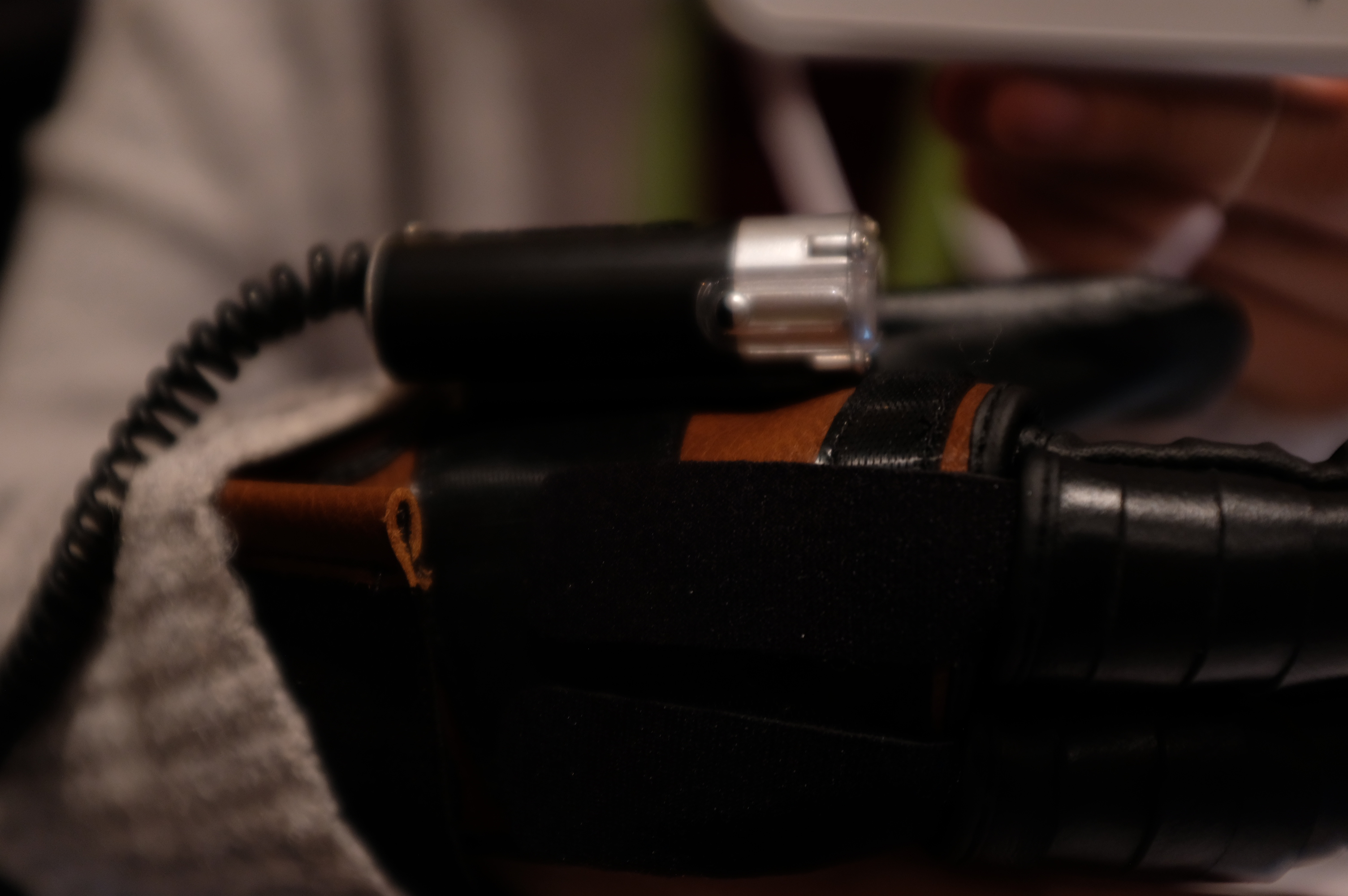
The leather hand-worn device is designed to give users mobility in a paralyzed hand, due to conditions like stroke, MS and ALS. It wraps around the thumb, index and middle finger, letting users perform otherwise simple daily tasks like brushing teeth, opening doors and drinking from a cup.

The glove is attached to a pulley, which, in turn, is connected to a detachable motor powered by AAA batteries. A bluetooth controller is held in the other hand to control to open and close the device.

The device certainly looks far closer to production than the prototype we saw at last year’s show — in fact, the company says it’s currently on track to actually deliver the product to market this June. Of course, picking one up post-Indiegogo will likely cost you a pretty penny. The product is currently listed at $1,999.

08 Jan 2019

Blue launches a $100 XLR mic

Blue has done a find job carving a niche for itself in the burgeoning world of amateur podcasters. The company’s USB microphones like the Yeti and Snowball have become a stable among those launching shows with limited experise and budget.

This week at CES, the company (now a part of Logitech) offered an interesting take on its existing line with the Ember, a stick mic that swaps USB for the more ubiquitous (in the world of audio, at least) XLR.

The device retains the company’s familiar retro design and price point, coming in a penny under $100. It’s an interesting take on the category, and perhaps a growing niche as many users look to take a step toward a more serious audio setup.

Of course, the company’s got a lot more competition on the XLR microphone, from mainstays like Shure, whose popular SM-57 costs right around the same and Rode, which has also been making some compelling podcasting mics. The Ember features a cardiod pickup designed to pick up the speaker’s audio and not ambient room noise.

Blue’s offering is available for pre-order and should start shipping in April.

08 Jan 2019

Toyota is developing fighter jet-inspired safety features for cars and wants to share it

Toyota Research Institute had a breakthrough last year in its pursuit to make driving safer. It was so profound that Toyota wants to open up to other automakers.

The inspiration was modern-day fighter jets, which use a low-level flight control system to translate the intent of the pilot and keep the aircraft stable and tucked neatly inside a specific safety envelope. TRI calls it blended envelope control, an approach that lets its “Guardian” driver assist system combine and coordinate the skills of the human driver and the vehicle they’re driving.

TRI CEO Gill Pratt revealed Monday during CES 2019 the research arm’s progress, an explanation of its approach, and most importantly, its intent to share its Guardian driver assist with other automakers. TRI is calling it “Guardian for all.”

To be clear, Toyota Guardian or the “Guardian for all,” system isn’t in production cars, nor will it be for some time. Pratt isn’t even entirely sure how this would be delivered to the rest of the industry. In a roundtable discussion with reporters, Pratt said he wasn’t sure if they would license the software, or a combination of hardware and software to automakers. He only noted that Toyota has the desire and intent to open it up to the rest of the automotive industry.

TRI, and Toyota as a result, have taken a dual approach to autonomy that it calls “Guardian” and “Chauffeur.” The automaker intends to eventually develop and deploy fully autonomous cars to serve an aging population, the disabled, or whomever might need a robotaxi. But as Pratt noted Monday, there is still much to be done before these types of vehicles will be on the road in any meaningful way.

In the meantime, Pratt says “we have a moral obligation to apply automated vehicle technology to save as many lives as possible as soon as possible.”

That’s where the other part of that dual approach called Guardian comes in. Guardian is technology that operates in the background and steps in when needed. The driver is always driving, but Guardian is watching, sensing and anticipating problems. 

Toyota Guardian is designed to amplify human control of the vehicle, not replace it, the company said. TRI showed a video during its CES presentation that of a three-car accident that included one of its self-driving research vehicles being driven in manual mode. The vehicle’s sensors were all on capturing data, however.

TRI contends that this blended envelope approach of Guardian would have anticipated or identified the pending incident and employed a corrective responsive in coordination with driver input. In this specific case, TRI’s modeling and testing determined that the system would have prompted the vehicle to accelerate out of the way to avoid the accident altogether.

08 Jan 2019

Anker’s new phone sized charger can power a laptop and costs just $30

This charger needs to be in my life. It’s tiny. The new Anker PowerPort Atom PD 1 offers 30w charging in a package the size of a phone charger. It’s basically a 1.5-inch cube — if the plugs are ignored, of course. And it’s only $30.

Even with the small size, the Atom PD1 offers the same power delivery found in Apple’s much larger 30w USB-C charger: 5V @ 3A, 9V @ 3A, 15V @ 2A, 20V @ 1.5A. That’s good enough to recharge any phone, tablets including the new iPad Pro and small laptops including the new 13-inch MacBook Air.

Anker employed Gallium Nitride instead of Silicon, which allowed the company to drastically reduce the size of the components. Apparently, GaN offers increased performance with lower resistance and more efficient conductivity.

“I think that within the next 5 years, electronics companies will leave Silicon behind and will shift to GaN components,” said Steven Yang, CEO of Anker Innovations, said in a released statement. “We’ve had a great run with Silicon, but it’s time to move onto something better.”

This product has been in the works for sometime. Anker teased it in a 27w version in 2018 but I’m stoked to see the company upped the power output for its release.

The Anker PowerPort Atom PD 1 will be released in January for $30.

08 Jan 2019

This wireless charging alarm clock from Anker looks pretty nice

I have an Echo Spot by my bed right now, and I feel kind of weird about it. Have a camera and microphone that close to where I sleep is probably not a great idea. This alarm clock from Anker, on the other hand, is something I can get behind.

The Soundcore Wakey is actually pretty nice look looking, so far as these things go. And better yet, it’s got an inductive charging pad on top, so you can just plop your phone on when it’s time to catch a few Zs.

As someone who falls asleep with his phone in his bed more often than he cares to admit, perhaps this could help shake that terrible habit. I mean, probably not, but it’s worth a shot, certainly.

The Wakey has two five-watt speakers, 10 preset alarms and does FM (but not AM) radio, if rousing to the sounds of a Morning Zoo crew is more your thing. There are also six white noise sounds to help lull you to sleep in the first place.

The alarm clock is due out in the Spring for $100.

08 Jan 2019

Motiv is bringing NFC-based payments to its fitness ring

Announced way back at CES 2016, Motiv’s fitness ring was surprisingly capable and accurate for its tiny form factor. Earlier this year, the startup promised to bring even more functionality to the finger, starting with biometric authentication that uses a wearer’s gait to unlock devices.

This year at the show, the company’s got a handful of additional new features to showoff. Most interesting among them is upcoming addition of mobile payments, via NFC. How, precisely the platform works remains to be soon, though the company promises security through the biometrics.

Interesting, the company also claims to be adding ECG (electrocardiogram) readings. Again, details are pretty scant on the feature, which is due out next year. Of course, Apple recently brought the feature to its smartwatch,  and others are no doubt following suit soon.

It will be interesting to see how the company manages to fit that into the ring’s form factor —surely it must be running out of unused space by now. Ditto for how all of this ultimately impacts the life of the ring’s tiny built-in battery. No word on whether Motiv is actively pursuing FDA approval for the new medical feature.

08 Jan 2019

Meural shows off a newer, smaller version of its smart art display

When Electric Objects was bought by Giphy, the company soon shutdown the hardware team and got rid of the subscription fees for existing content. While Meural actually bumped up its annual subscription after getting acquired by Netgear, the company is also continuing to release new hardware.

The company just took the wraps off its Meural 3.0 art display.

Its latest offering doesn’t shake things up too much. There’s no Netgear router embedded beneath the display. The new release is all about a sleeker more modern design for the smart art screen, alongside a new smaller 21.5″ size designed to bring a cheaper entry price (though pricing has oddly not been finalized yet) and some nice size contrast with the 27″ model so people can get all crazy with Instagram-friendly gallery layouts.

The frames come in black, white, light wood and dark wood designs. While you were totally stuck with whatever frame you initially purchased in previous gen designs, the new look also brings modularity so if you have a change of heart or need to adapt your art display to a new look you’ll be able to swap frames easily.

The company’s working to bring more art collections to its subscription product, and will be adding collections from National Geographic, Norman Rockwell & Saturday Evening Post, and The Little Prince.

Specs obviously only matter so much on a device like this, which is still very much exclusively designed for showcasing artwork. That being said, it’s rocking 8GB of onboard memory, 2GB of RAM and a quad-core 1.8 Ghz CPU. It being a Netgear company now, the company has updated the WiFi chipset as well with the goal of “mor stable, higher performance.” The display has been updated to be more power efficient as well, using about 20 percent less energy than previous generations.

Still waiting on a price and release date for the new displays though the previous-gen 27″ screen started at $595.

08 Jan 2019

Nvidia dives into a new business segment with Drive AutoPilot

Nvidia’s automotive ambitions seemed targeted solely on creating a platform to enable fully autonomous vehicles, notably the robotaxis that so many companies hope to deploy in the coming decade.

It turns out that Nvidia has also been working a more near-term product that opens it up to a different segment in the automotive industry. The company announced Monday at CES 2019 that it has launched Nvidia Drive AutoPilot, a reference platform that automakers can use to bring more sophisticated automated driving features into their production vehicles. This is not a self-driving car product, although it will likely be misinterpreted as such.

The Drive AutoPilot system is meant to make those advanced driver assistance system in today’s cars even better. It enables highway merging, lane changes, lane splits, pedestrian and cyclist detection, parking assist, and personal mapping as well as in-cabin features like driver monitoring, AI copilot capabilities, and advanced in-cabin visualization of the vehicle’s computer vision system. It also allows for over-the-air software updates, a capability that automakers, with the exception of Tesla, have been slow to adopt.

Nvidia already has two customers for Nvidia Drive AutoPilot — a name not to be confused with Tesla’s consumer-facing semi-autonomous system Autopilot. (It should be noted that a Tesla uses a derivative of Nvidia’s Drive platform, although that could change. Tesla has been developing its own chip, otherwise known as “Hardware 3.”

On Monday, Tier 1 suppliers Continental and ZF announced that by 2020 they will have partially automated driving systems ready for production that are based on the Drive AutoPilot platform.

Nvidia argues that there’s a market for this improved automation, noting a recent Insurance Institute for Highway Safety study that found existing Level 2 ADAS systems “offer inconsistent vehicle detections and poor ability to stay within lanes on curvy or hilly roads, resulting in a high occurrence of system disengagements where the driver abruptly had to take control.” Level 2 is a designation from SAE that means the vehicle’s automated system can handle accelerating, braking and steering, but must still be monitored by the driver, who should be prepared to take control at any time.
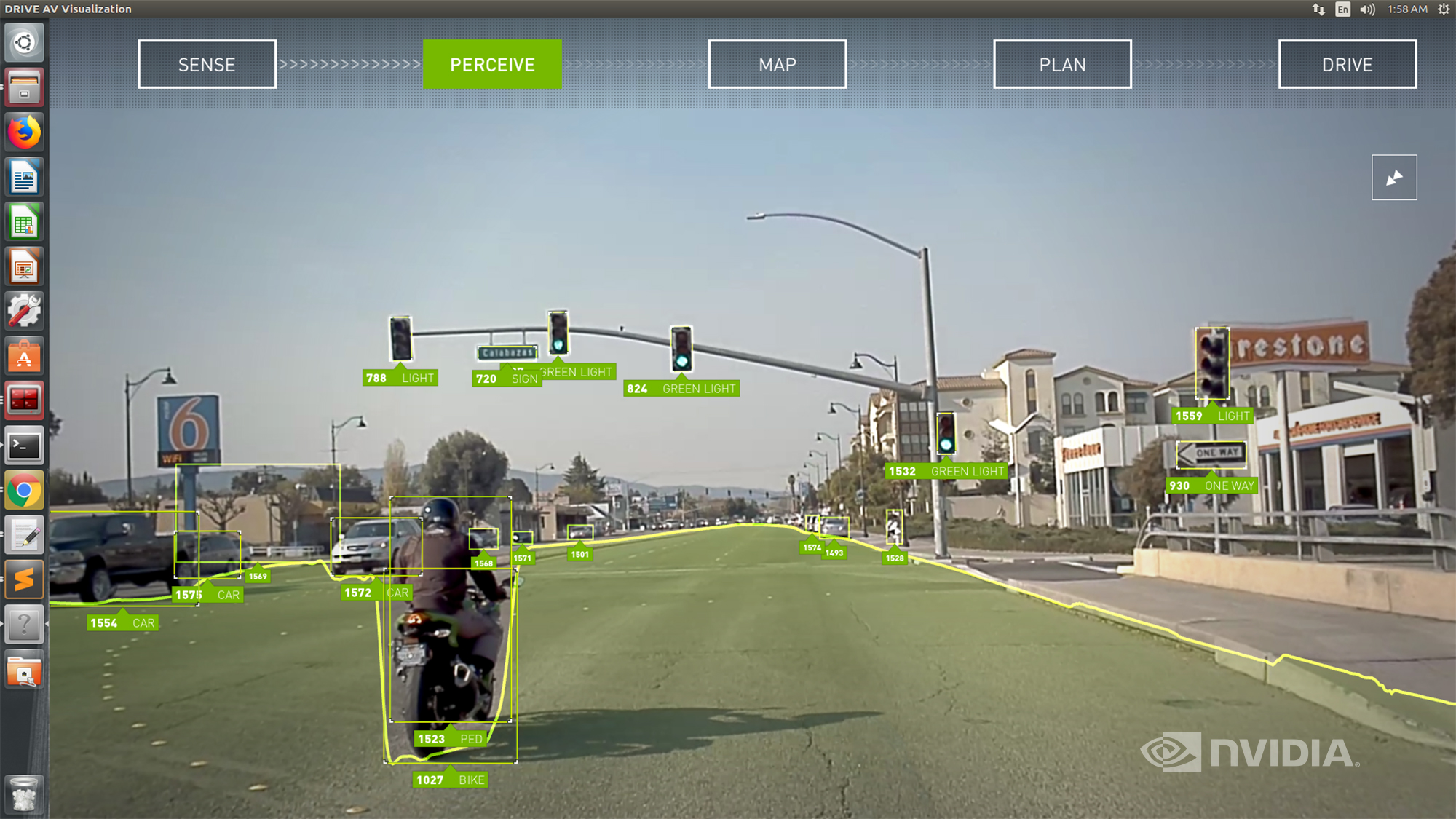
nvidia-drive-software

Nvidia doesn’t make plug-and-play type systems. Instead, Continental, ZF or other suppliers can take this reference platformand use it to deliver any combination of more advanced automation. For example, Continental will use it to produce an automated driving and parking solution that will be available to customers by 2020.

The foundation of the Drive AutoPilot is Nvidia’s Xavier system-on-a-chip processor, which can handle some 30 trillion operations per second. Then it adds Nvidia’s Drive software to process deep neural networks for perception as well as data pouring in from surround camera sensors.

The Drive AutoPilot system is part of Nvidia’s broader Drive platform. It’s also designed to complement the company’s Nvidia Drive AGX Pegasus system that provides Level 5 capabilities for robotaxis.


“A full-featured, Level 2+ system requires significantly more computational horsepower and sophisticated software than what is on the road today,” Rob Csongor, vice president of Autonomous Machines at Nvidia said, adding that the company’s system makes it possible for carmakers to quickly deploy advanced autonomous solutions by 2020 and to scale this solution to higher levels of autonomy faster.


08 Jan 2019

AfterShokz launches bone conduction sunglasses

Where does one go after launching a fairly successful bone conduction headphone line? Sunglasses. Seems as good an option as any. This week at CES, AfterShokz announced the launch of sub-brand OptiShokz, which leverages the company’s technology for a line of active sunglasses.

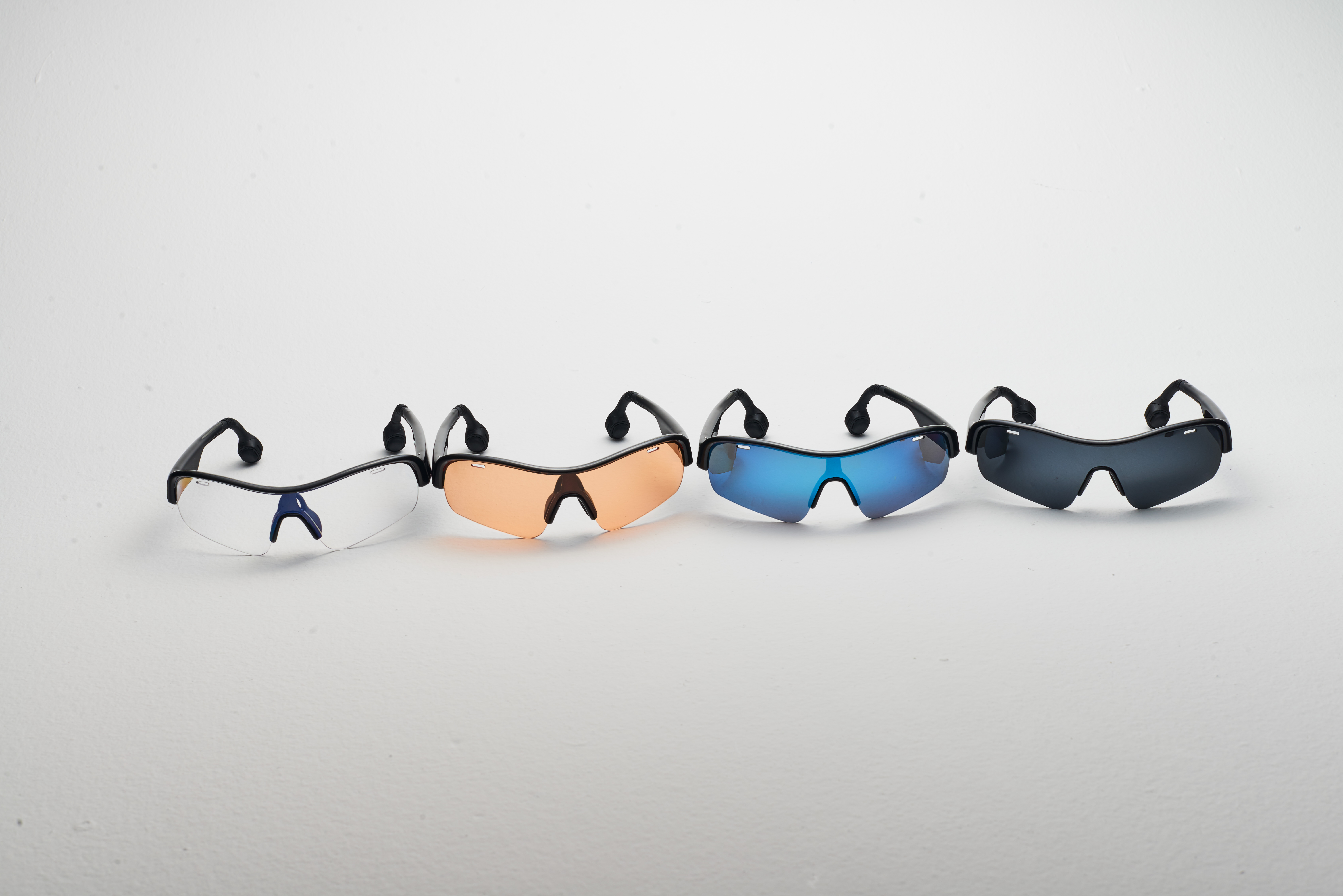
OptiShokz’s first product is the unfortunately named Revvez, which will launch via Indiegogo campaign mid-February. No price yet (likely that will depend on whether you opt-in to the pre-sale), but the glasses are IP55 water resistant and should get around six hours of playback on a charge. The lenses, meanwhile, are available in a bunch of different color options, including Polarized Grey, REVO Blue, Gradient Grey, Transparent, and Bright Yellow.

I tried an early version of AfterShokz and was a bit underwhelmed by the quality of of the bone conduction, but things seem to have improved a fit bit since then. Also, there’s something to be said for an audio technology that doesn’t obstruct your ears when you’re out, say, mountain biking. Of course, attaching this to a pair of sunglasses ultimately makes them less versatile than a standard pair of headphones.

Says AfterShokz, “In a six-year study, experts found that 116 people in the US died or seriously injured themselves due to a lack of environmental awareness that stemmed from wearing headphones. Most often, these injuries occurred in urban environments as headphone users were struck by oncoming trains or traffic.”

Not a big number granted, but better safe than sorry, certainly.

08 Jan 2019

Ubtech shows off pair of humanoid robots at CES

You’d be forgiven for not knowing the name Ubtech, Honestly, I wasn’t really familiar with the Chinese company until late 2017, when they brought a biopedal stormtrooper robot by our offices. The company’s about to get a pick up some traction, however. Last year, it announced that it had scored an $820 million Series C, led by Tencent.

With that little bit of wind it its sails, the company took to CES this week in full force, showing off a small army of robots. At the center of the announcements are updates to the company’s humanoid bots, Walker and Cruzr.

The bipedal Walker stands nearly five feet tall and weighs a beefy 170 pounds. The robot’s newly redesigned hands are capable of grasping and manipulating objects, while the self-balancing torso makes for smooth bipedal movement The robot interacts with its environment in a number of ways, including voice, touch and vision. Ubtech says Walker will be launching “in the very near future.”

Cruzr, meanwhile, is designed to help provide customer service, making it something akin to Softbank’s Pepper. The wheeled robot is already in use in a number of locations. A revamped version of the robot with an amped up processor, LTE connectivity and improved servos will be arriving soon, marking the first time Cruzr has been on sale in North America.

Specific timing and price are still TBD.