Year: 2019

07 Jan 2019

Vizio adds Apple AirPlay and HomeKit integrations to its SmartCast smart TV platform

Apple is reportedly gearing up for a new streaming TV service to rival Netflix, Amazon and Google this year, but in the meantime, it is also expanding interoperability with more third parties like smart TV makers to make what it already has available easier to use in the living room.

In the latest development, smart TV maker Vizio today announced at the CES consumer electronics show that it’s adding support for AirPlay 2 and HomeKit to its SmartCast interactive TV platform. The integration will mean that Vizio TV owners can link their other Apple devices up to their TVs to browse and watch content from iTunes, as well as any photos, videos or music on those devices. Then, through HomeKit, they can also control that content and the rest of the TV using Apple’s voice assistant Siri.

Vizio said that the feature will be rolled out first to beta users of the SmartCast 3.0 platform in the U.S. and Canada in Q1 2019. In Q2, it will be rolled out to all SmartCast TV users via a free, over-the-air update to the 3.0 version of the platform.

“At our core, Vizio is committed to delivering value. SmartCast 3.0 is one of the ways we’re doing just that. By adding support for Apple AirPlay 2 and HomeKit, users can play content from their iPhone, iPad and Mac directly to SmartCast TVs, and enable TV controls through the Home app and Siri,” said Bill Baxter, Chief Technology Officer, Vizio, in a statement.

He added that this also will make Vizio the first smart TV brand to offer the ability for consumers to use any major voice assistant — Siri, Amazon’s Alexa or Google Assistant (the latter two integrations were added previously) — to control their sets. “We’re excited to be the first in the marketplace to support such a wide range of ways for consumers to sit back and enjoy the entertainment they love.” The Google Assistant functionality is also expanding to control more services such as the launching of apps and switching inputs.

The Vizio / Apple news comes just one day after Vizio’s bigger rival Samsung — which has a 33 percent share of the smart TV market in the US compared to Vizio’s 24 percent — also debuted an Apple AirPlay integration, along with a new tab directly linking to iTunes in Samsung’s interactive platform.

The iTunes app is an exclusive to Samsung for the time being, but the Vizio deal lays the groundwork for more collaboration between Vizio and Apple ahead. Vizio, notably, is not a direct competitor to Apple in other business areas in the way that Samsung is.

For Vizio, this is a significant step ahead for the company at a time when it is playing some catchup against Samsung, which once trailed Vizio but gradually overtook it as the leading smart TV player. I’d argue that Vizio is also still recuperating from its no-good, very bad 2017.

Its series of unfortunate events included a failed $2 billion acquisition of the company by Chinese maker LeEco after LeEco itself fell apart; a lawsuit against LeEco over that deal breaking down; another lawsuit, this time from the FTC (settled for $2.2 million) over snooping on its customers’ viewing habits; and a third suit brought by AMD, this time over graphics patent infringement, which AMD has since won.

This is actually the first time that Vizio has been at CES in years, which is also saying something. The company is also using the event to announce its newest range of 4K HDR smart TVs and audio equipment, including sound bars and subwoofers.

On the side of Apple, taken together, the two integrations with Vizio and Samsung underscore Apple’s challenges and ambitions at the moment.

The company last week warned the market that sales of its iPhone smartphone — for years now the company’s undisputed growth engine — would be falling short of expectations for a number of reasons. (They included worse-than-expected sales in China, where price and feature competition is fierce; a global slowdown in phone sales as the market saturates; and weaker demand for its new, expensive models.

Apple, as you know, has over the years been building up a services model to complement its hardware business — with apps, music, video, cloud services and more — and many believe that the company will start to focus on that even more to offset slowdowns in its hardware sales, as well as to boost the sales of that hardware. (Hence the rumors of a Netflix-style OTT video service.)

It’s an opportunity for sure, but not a guaranteed win. Apple TV — the company’s existing bridge to content on televisions — hasn’t managed to overtake the collective popularity of other smaller middleware like Google’s Chromecast and Amazon’s Fire TV and Fire stick. And the OTT market is very crowded already, with offerings from all of the above, pay-TV providers, smart TV makers and more.

Given all of the above, it will be worth watching to see who else might have Apple-related news this week and if a kinder, more device-agnostic Apple-as-services provider emerges as a theme at CES this week.
07 Jan 2019

Huawei debuts a new laptop and tablet at CES

A pair of new devices from Huawei are making their debut on-stage at CES in Vegas this week. The more interesting of the two is the MateBook 13, a slim addition to the company’s line of premium Windows laptops.

The 13-inch laptop is 0.59 inches thick and weighs 2.86 pounds, giving it a similar footprint to the latest MacBook Air. The price is certainly right though, starting at $999 for the i5 version with integrated graphics. The i7 version, which sports an NVIDIA GeForce MX150, meanwhile, runs an additional $300.

The display 2160 x 1440 at 200ppi, coupled with a large trackpad and spill resistant keyboard. The both configurations have 8GB of memory built in, either 256 or 512GB of storage and a battery that promises around 10 hours of video playback. There’s a headphone jack, along with one USB-C on either side. It’s not a lot of ports, but at least the company had the forethought to split them up.

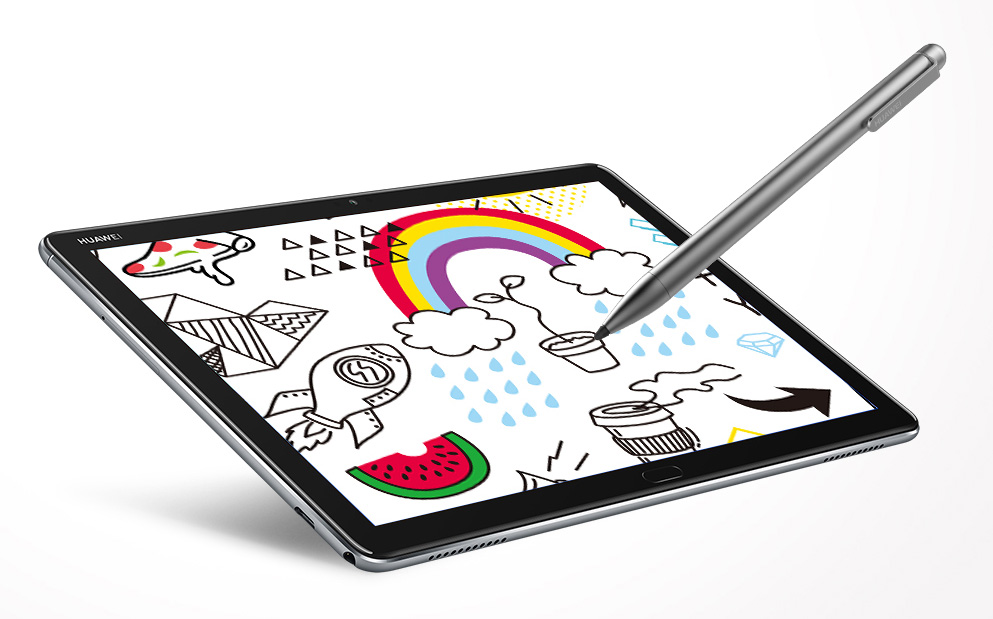
The MM5 Lite, meanwhile, is the latest addition addition to the company’s MediaPad line of tablets. Like the Matebook, the new slate marks a budget entry into the line, here priced starting at $299.

That gets you a 10.1 inch 1920 x 1200 display, 3GB of memory and 32GB of storage (augmented by a microSD. There’s a USB-C slot for quick charging and, unlike the new iPad, a headphone jack. There are four speakers on-board as well, sporting Harman Kardon certification, while the 7,500 mAh battry should give you around 13 hours of playback by Huawei’s estimation.

Both devices are hitting retail this month. 

07 Jan 2019

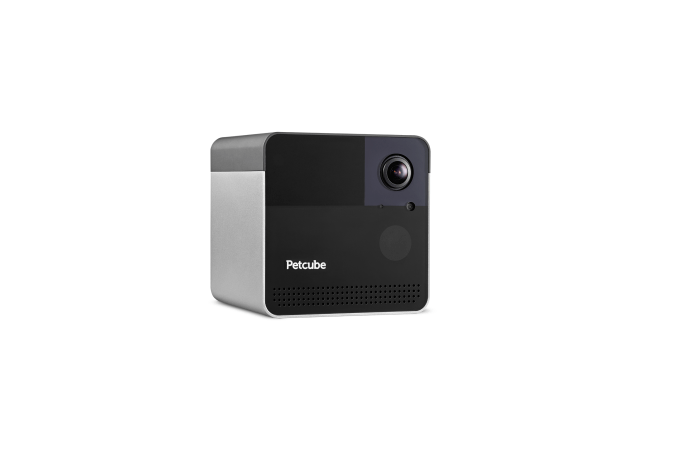
Petcube upgrades its pet cameras, which now have Alexa built in

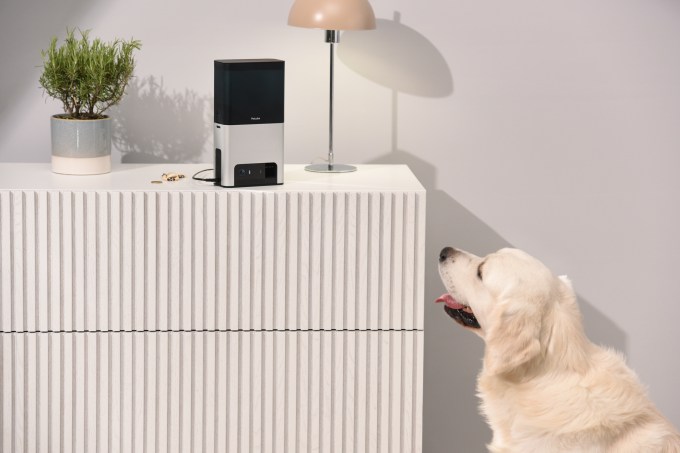
Petcube’s popular line of pet cameras let people monitor, talk to and interact with their dogs and cats while away – including by doing things like doling out treats or turning on a laser toy, for example. Today, the pet camera maker is upgrading its line with two new devices, the Petcube Bites 2 and Petcube Play 2. These are redesigned and reimagined versions of the company’s existing pet cameras, which now offer improved sound and connectivity, a 180-degree ultra-wide lens, as well as built-in support for Alexa.

Both cameras now include a wide angle lens with up to 180 degree full-room views, so you can see more of the room than before. They also now include a premium audio experience with full duplex sound, a 4-microphone array and speaker bar. The cameras offer improved connectivity, with support for both 2.4 and 5 GHz Wi-Fi, as well.

Beyond the tech spec upgrades, what pet owners may be more excited about is the cameras’ new ability to work with Alexa, without requiring a separate Amazon Echo or other Echo device.

Instead, Petcube cameras can now take the place of a small smart speaker, like the Echo Dot, for example. Through Alexa, Petcube camera owners will be able to play music (hence the need for better sound), control other smart home devices, set alarms, listen to the news, check the weather, and more. They’ll also have access over 50,000 Alexa skills from their devices, including Petcube’s own companion voice application.

With the Alexa voice app, pet owners will be able to ask Alexa to fling treats, play with their pet, or order more pet supplies from Amazon, the company says. This Alexa skill was previously available to older generation devices, but required that the customer had their own Alexa device – now the Petcube is the Alexa device.

The two cameras are getting other tweaks, too.

The treat-dispensing device called the Petcubes Bites 2 has been redesigned to be more compact, so it can better fit into smaller spaces. It now also has a better “treat flinging” mechanism and can support a wider variety of treat sizes than before, so you can better control treat portions. The mechanism flings with more precision, too.

Meanwhile, the Petcube Play 2 is a redesigned version of the cube-shaped camera that includes a built-in laser toy, which has been re-engineered to be more precise and smoother than the prior version, Petcube claims.

Both also offer 1080p HD video, 4x digital zoom and night vision.

As before, the pet camera hardware is used to entice pet owners to sign up for the Petcube Care subscription. The system leverages A.I. to figure out what pets are doing, detect if there’s human movement in the frame, register if the dog begins barking or the cat mewing, and identify other abnormal behaviors. In those cases, pet owners would receive an alert so they know to check in on their device, pet and home.

Subscribers also get discounts on pets products and services from Mars Petcare, Wellness, Trupanion, Rover, Audible, Vetted, KONG, and others. The pricing plan for Petcube Care starts at $2.99 per month.

The new cameras come in Matte Silver and Carbon Black design options. The Petcube Bites 2 is $249 and the Petcube Play 2 is $199 on Petcube.com.

07 Jan 2019

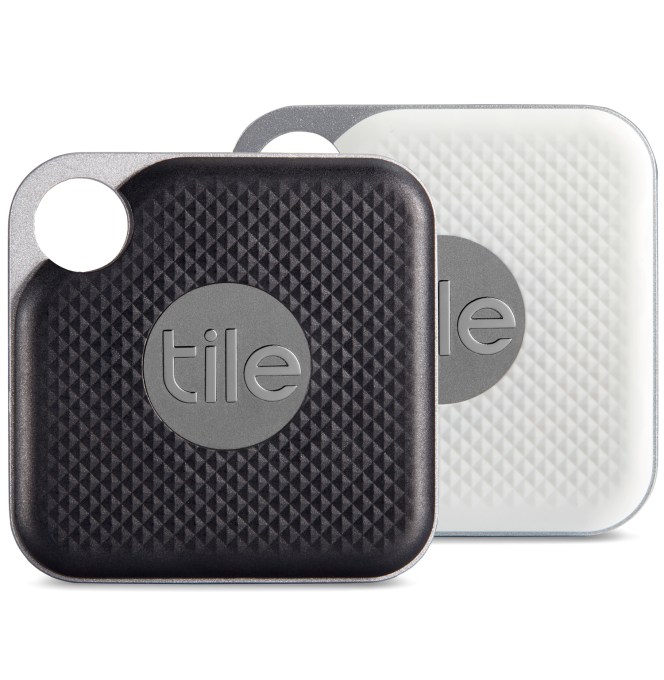
Tile partners with BLE chip makers to bring its location-tracking technology to more products

Tile, a company best known for its keychain-style lost item trackers aimed at consumers, is expanding its location-tracking technology to new devices besides its own. The company today announced it has partnered with a number of BLE chip companies to integrate its tracking technology directly onto their chips.

Tile’s new partners on this front include Qualcomm, Dialog, Silicon Labs and Toshiba, the company says.

These companies will produce BLE chips that feature Tile’s location-tracking technology. This, in turn, will allow manufacturers to build devices that work with Tile right out of the box. Those that do so will be able to promote their products as “Find with Tile” enabled.

For some of Tile’s partner manufacturers – like Bose and Skullcandy, for example – this sort of integration allows them to better compete with Apple, whose own “Find My iPhone” technology is now able to track down all sorts of Apple products, including AirPods and Apple Watch.

Skullcandy began working with Tile last summer, and is now one of several audio integrations ahead for Tile, along with Sennheiser, Sol Republic, Plantronics, and Anker, who all have Tile-enabled products planned.

“Knowing Tile’s finding technology will be available for activation at the production phase makes integration fast and seamless, and opens new ideas for how we can use it from product conception,” said Skullcandy CEO Jason Hodell, in a statement shared today.

Tile has been looking for ways to expand its revenue beyond device sales alone for some time. Tile sales have been growing steadily going from 10 million to 15 million units sold from 2016 to 2017, and from 15 million to 22 million units sold from 2017 to 2018.

But the company doesn’t share how many people are active Tile customers nor will it speak to its revenue. It also had to trim its staff in early 2018, due to underwhelming holiday sales.

Being able to license out its tech to others could then be a way for it to expand its business.

The company declined detail its agreements with BLE chip makers or device manufacturers, but the company tells TechCrunch that it has seen a “higher-than-expected” rate of customers who are introduced to Tile through a partner then convert to become a Tile users. Many of these customers then also upgrade to its Premium subscription.

Tile last year began working with Bose and other partners, to start embedding its technology into various devices, including the Bose SoundSport Wireless and QuietControl 30 headphones, which also launched Tile integrations summer.

Other partners working with Tile have also included Samsonite, Propeller Health, Boosted, Starling, Herschel, Away Travel, SuitSupply, Blunt Umbrellas, G-RO, This is Ground, Fossil, Kenneth Cole, Ricardo Beverly Hills, Axiom, Nomad, Keysmart, and Keyline/Bianca, among others.

Tile says its new audio partners will launch Tile-integrated devices in the months ahead, but didn’t have exact timeframes for each.

“With the introduction of our BLE chip partnerships, Tile is becoming a foundational building block for BLE-enabled product manufacturers in a variety of verticals, from audio and cameras, to laptops and wearables,” said CJ Prober, who was named Tile CEO last fall, in a statement. “With over 20 billion BLE devices forecasted to ship in the next four years, ‘Find with Tile’ will soon be a key everyday feature in consumer products.”

BLE partnerships are only one way Tile has been expanding. The company last year took in a strategic investment from Comcast, which been working with Tile by allowing Xfinity customers to locate Tiles using their TV remote. Tile also updated its lost item trackers, the Tile Mate and Tile Pro, to offer replaceable batteries that automatically ship through subscription in the hopes of attracting more customers and creating a recurring revenue stream beyond the hardware.


07 Jan 2019

Apple shows off new smart home products from HomeKit partners

Apple recently invited reporters to meet a handful of companies announcing new products at this year’s Consumer Electronics Show. The common theme: All of these products connect to Apple’s HomeKit platform for smart home devices.

By integrating with HomeKit, these companies make their products configurable and controllable via Apple devices, specifically through the Home app and Siri. Last year, Apple rolled out a new software authentication system, which meant that manufacturers no longer needed to include an MFi chipset to be part of the program.

This isn’t a comprehensive list of all the HomeKit-integrated products that will be announced at CES, but it provides a snapshot of what’s coming to the ecosystem in 2019 — smart light switches, door cameras, electrical outlets and more. Here they are:

  • New Wemo Light Switches (pictured above) from Belkin that start at $39.99. They allow you to control your lights with Siri or the Home App, and are planned for release in spring or summer of this year.
  • A smart light strip and a smart power strip from Eve, a company focused on HomeKit-integrated accessories.
  • A new smart outlet from ConnectSense, allowing customers to monitor the power consumption of each outlet. Unlike the company’s existing Smart Outlet² (which fits over existing outlets), the In-Wall SmartOutlet is — as the name implies — actually installed in your wall. It’s scheduled for release in the first half of 2019.
  • Kwikset is expanding its Premis lineup of touchscreen smart locks with a new model that it describes as offering a more contemporary and sleek look.
  • Mighton plans to launch its Avia smart lock in May. Beyond their more high-tech functions, Avia products are also supposed to be particularly secure locks, and are by the UK police’s Secured by Design initiative.Nanoleaf Canvas - Pacman
  • The Nanoleaf Canvas is a modular smart lighting system that can create fun, beautiful patterns and even respond to music. A Nanoleaf Starter Kit costs $248.
  • Netatmo is announcing a Smart Video Doorbell allowing customers to see, on their phone, who’s ringing the doorbell. It’s also announcing a Smart Indoor Air Quality Monitor that measures air quality, humidity level, temperature and noise.
07 Jan 2019

Open source monetization startup Tidelift raises $25m series B

The curse of open source software is that it is used in pretty much every application and device on the planet, and yet, has pretty much no business model. Sustaining open source is a critical problem for the future of software, because without a durable source of income, the developers behind these critical projects cannot invest their full energies to improve, maintain, and secure them.

Tidelift, a startup founded by a group of long-time open source engineers and executives, has taken on the problem in a compelling way. As I wrote about them last year as part of a deep dive into open source sustainability:

Tidelift is designed to offer assurances “around areas like security, licensing, and maintenance of software,” [Tidelift CEO Donald] Fischer explained. The idea has its genesis in Red Hat, which commercialized Linux. The idea is that companies are willing to pay for open source when they can receive guarantees around issues like critical vulnerabilities and long-term support. In addition, Tidelift handles the mundane tasks of setting up open source for commercialization such as handling licensing issues.

That’s pretty much still the mission of the company, and now it has even more resources to grow. The company announced today that it has raised $25 million in Series B financing led by return backers General Catalyst, Foundry Group, and Matthew Szulik, the former chairman and CEO of open source leader Red Hat, which was acquired by IBM last year in a blockbuster $34 billion deal. That’s a follow-up to a $15 million Series A round last year.

Since I covered Tidelift last June, the company has expanded from its initial launch in the Javascript ecosystem to also offer assurances to packages within the Java, Python, PHP, .NET, and Ruby ecosystems. Among the well-known open-source projects covered under the Tidelift Subscription today are Apache Struts, Vue.js, Gulp, Carbon, Jekyll, Beautiful Soup, and Mongoose. Tidelift says that its subscription now cover hundreds of open source packages.

In addition to covering more packages, Tidelift announced last September that they had reached $1 million in open source maintainer commitments. In a press release, the company highlighted community and discussion platform Discourse as a customer.

CEO Fischer told me that “Our bottom line is that open source doesn’t just need ‘funding.’ It needs a business model that works for creators and users alike, at massive scale.” The company intends to use the new funding to further expand its coverage of popular open source packages and partner with more open source creators.

07 Jan 2019

Garmin adds LTE to its music-focused smartwatch

Garmin’s long been a sort of secret success story in the world of wearables. The company rarely gets mentioned in the same breath as Apple and Fitbit — or even Android Wear and Samsung — but it’s found a nice life beyond GPS systems.

One thing the company’s products products have lacked until now is LTE functionality. The option has become a mainstay for Apple and Samsung products, and certainly makes sense for what is ostensibly a fitness.

The option will be arriving first on the vivoactive 3 Music, the streaming-focused wearable it introduced over the summer. One of the product’s selling points was the ability to download offline playlists from the likes of iHeartRadio and Deezer. Of course, having a device that’s always connected via Verizon does render that functionality slightly moot. Though Garmin will be adding some more notable services soon, including Spotify.

The main case use here — as with other LTE-enabled wearables — is the ability to take the watch out and leave your phone behind. Garmin’s certainly built up the feature set over the generations, including the addition of Garmin Pay, so you can buy stuff on the go.

The wearable promises up to five days of battery with light usage. That shrinks dramatically down to four hours, however, when you fire up LTE and start streaming or using GPS tracking.

Pricing is still TBD on the watch, which drops later this quarter.

07 Jan 2019

Samsung CES 2019 liveblog

It’s not really CES until Samsung has taken the stage. The company’s annual keynote is one of the tentpole events for the giant consumer electronics show. Sure, the company keeps its mobile powder dry until Mobile World Congress rolls around, but CES is the time when the rest of company’s businesses can shine.

It’s hard to say for sure what will be on display at today’s event, but if past years are any indication (and they usually are), the event will be focused on PCs, home entertainment and appliances. You can also be pretty sure that we’ll be getting a little Bixby action at the event, as the company looks to expand the appeal of its also-ran smart assistant.

Rumors have offered a peek at a handful of other possibilities, including the addition of a more budget-minded version of the Galaxy Home smart speaker — the HomePod competitor Samsung has yet to actually hit the market. Other possibilities include wearables and, perhaps, some content offerings to go along with the latest wave of 8K sets.

The event kicks off at 2PM PT, 5PM ET. 

07 Jan 2019

Samsung CES 2019 liveblog

It’s not really CES until Samsung has taken the stage. The company’s annual keynote is one of the tentpole events for the giant consumer electronics show. Sure, the company keeps its mobile powder dry until Mobile World Congress rolls around, but CES is the time when the rest of company’s businesses can shine.

It’s hard to say for sure what will be on display at today’s event, but if past years are any indication (and they usually are), the event will be focused on PCs, home entertainment and appliances. You can also be pretty sure that we’ll be getting a little Bixby action at the event, as the company looks to expand the appeal of its also-ran smart assistant.

Rumors have offered a peek at a handful of other possibilities, including the addition of a more budget-minded version of the Galaxy Home smart speaker — the HomePod competitor Samsung has yet to actually hit the market. Other possibilities include wearables and, perhaps, some content offerings to go along with the latest wave of 8K sets.

The event kicks off at 2PM PT, 5PM ET. 

07 Jan 2019

Autonomous trucking startup TuSimple is taking 3 to 5 commercial trips a day

A little more than a year ago, autonomous trucking startup TuSimple —flush with a fresh round of venture capital — was preparing to scale up its testing to two full truck fleets in China and the U.S.

TuSimple, a China-based company with an R&D facility in San Diego and test operations in Tucson, has put that money to use.

The startup, which launched in 2015, is taking three to five fully autonomous trips per day for customers on three different routes in Arizona, TuSimple said Monday at CES 2019 in Las Vegas. All of these trips have two safety engineers, one who is behind the wheel, and another monitoring the data pouring in during each trip.

That’s a milestone for TuSimple and the burgeoning autonomous trucking industry, which is getting increasingly crowded.

TuSimple isn’t disclosing its customers. The company did say it has 12 contracted customers.

TuSimple isn’t slowing down either. The startup plans to expand from the 11 autonomous trucks it has operating in the U.S. today to 40 by June. An additional route from Arizona to Texas will come online in early 2019, the company said.

“Exactly one year after debuting our prototype system at CES 2018, we’re now running up to five commercial trips a day in Arizona, expanding our fleet and moving quickly toward our goal of creating the first commercial self-driving truck,” TuSimple founder, president and CTO Xiaodi Hou said.tusimple truck

TuSimple, which is displaying a Navistar International LT semi-truck at CES, also announced that it’s working with Tier 1 supplier Cummins Inc.to enable powertrain integration with its autonomous technologies.

TuSimple, which is backed by Nvidia and Sina, operator of China’s biggest microblogging site Weibo, is working on a “full-stack solution.” This wonky industry term means TuSimple is developing and bringing together all of the technological pieces required for autonomous driving. The startup is developing a Level 4 system, a designation by the SAE that means the vehicle takes over all of the driving in certain conditions.

An important piece of TuSimple’s approach is its camera-centric perception solution. Much of the autonomous vehicle tech industry has focused on LiDAR to improve the perception of the vehicle, arguably one of the most difficult tasks of automated driving. But LiDAR has its limitations, especially for trucks traveling at speeds of 55 miles per hour and faster on highways.

LiDAR can detect objects like cars to about 250 meters, although the optimal quality falters past 150 meters.  TuSimple’s camera-based system has a vision range of 1,000 meters, the company says.