Year: 2019

11 Dec 2019

Nodle crowdsources IoT connectivity

Nodle, which is competing in the TechCrunch Disrupt Berlin Startup Battlefield this week, is based on a simple premise: What if you could crowdsource the connectivity of smart sensors by offloading it to smartphones? For most sensors, built-in cell connectivity is simply not a realistic option, given how much power it would take. A few years of battery life is quite realistic for a sensor that uses Bluetooth Low Energy.

Overall, that’s a pretty straightforward idea, but the trick is to convince smartphone users to install Nodle’s app. To solve this, the company, which was co-founded by Micha Benoliel (CEO) and Garrett Kinsman, is looking to cryptocurrency. With Nodle Cash, users automatically earn currency whenever their phones transmit a package to the network. That connection, it’s worth noting, is always encrypted, using Nodle’s Rendevouz protocol.

The company has already raised $3.5 million in seed funding, mostly from investors in the blockchain space: Blockchange, Work Play Ventures (Marc Pincus), Blockchain Ventures (Blockchain.com), Olymp Capital, Bootstraplabs and Blockhead.

It’s worth noting that this isn’t Benoliel’s first rodeo in this space. He also co-founded the mesh networking startup Open Garden, which used a somewhat similar approach a few years ago to crowdsource connectivity (and which made a bit of a splash with its FireChat offline chat app back in 2014). Open Garden, too, competed in our Startup Battlefield in 2012 and won our award for most innovative startup. Benoliel left his CEO position there in early 2016, but Nodle definitely feels like an iteration on the original idea of Open Garden.

“We define the category as crowd connectivity,” Benoliel told me. “We leverage crowdsourced connectivity for connecting things to the internet. We believe there are a lot of benefits to doing that.” He argues that there are a number of innovations converging right now that will allow the company to succeed: Chipsets are getting smaller, and an increasing number of sensors now uses Bluetooth Low Energy, all while batteries are getting smaller and more efficient and blockchain technology is maturing.

Given the fact that these sensors depend on somebody with a phone coming by, this is obviously not a solution for companies that need to get real-time data. There’s simply no way for Nodle to guarantee that, after all. But the company argues it is a great solution for smart cities that want to get regular readouts of road usage or companies that want to do asset tracking.
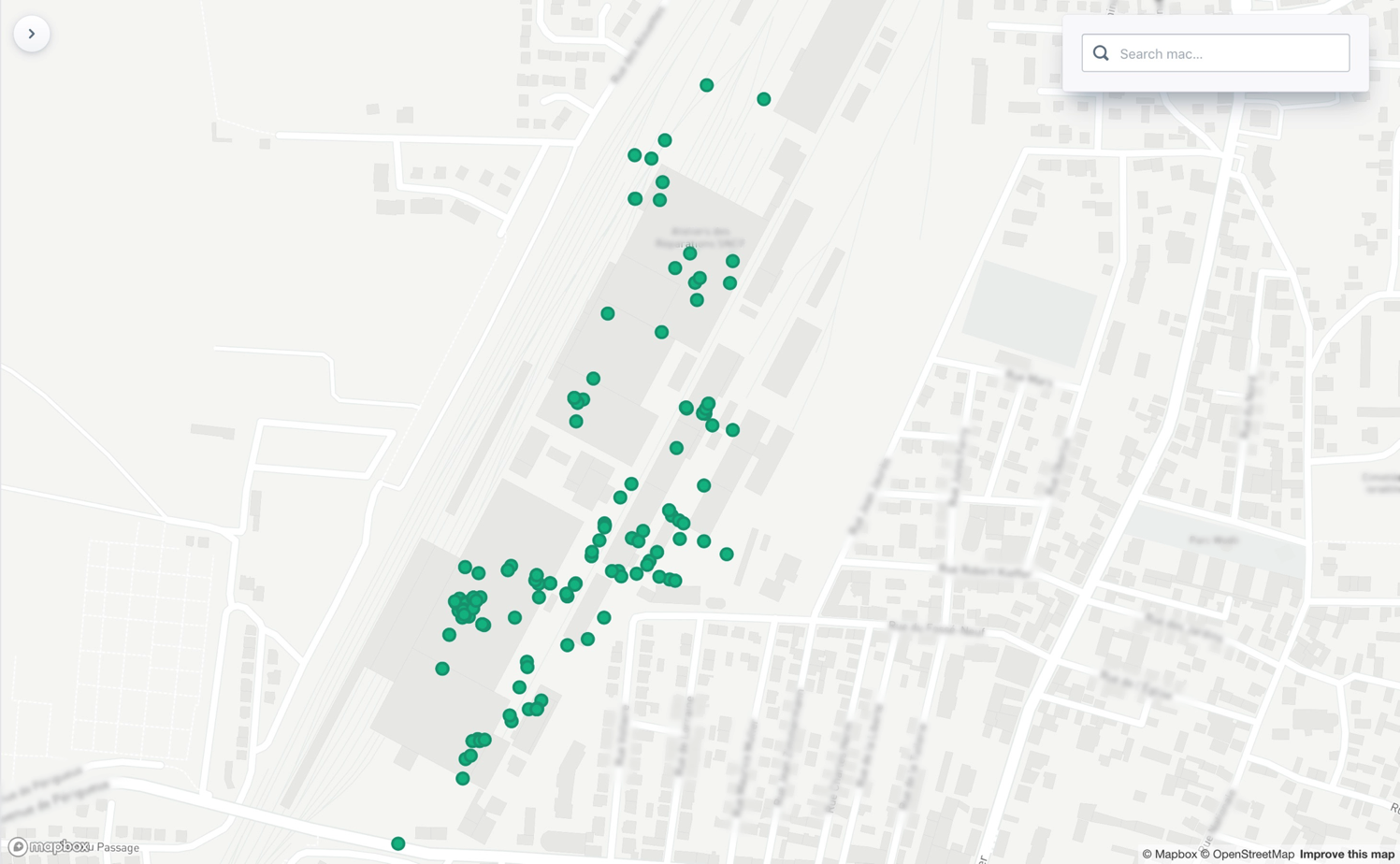
“We do not address real-time connectivity, which is what you can do with more traditional solutions,” Benoliel said. “But we believe IoT is so broad and there is so much utility in being able to collect data from time to time, that with out solution, we can connect almost anything to the internet.”

While some users may want to simply install the Nodle Cash app to, well, make some Nodle cash, the team is also betting on working with app developers who may want to use the platform to make some extra money from their apps by adding it to the Nodle network. For users, that obviously means they’ll burn some extra data, so developers have to clearly state that they are opting their users into this service.

[gallery ids="1922759,1922749,1922756"]

The team expects a normal user to see an extra 20 to 30 MB of traffic with Nodle installed, which isn’t really all that much (users of the standalone Nodle app also have the option to cache the data and postpone the transfer when they connect to Wi-Fi). Some app developers may use Nodle as an alternative to in-app payments, the team hopes.

The company is also already working with HTC and Cisco Meraki, and has a number of pilot projects in the works.

If you want to give it a try, you can install the Nodle Cash app for Android now.

11 Dec 2019

Larry Page’s secret war on the flu

Now that Larry Page has stepped down as CEO of Google’s parent company Alphabet, he could be following in Bill Gates’s footsteps and tackling global health challenges.

According to charity and business documents obtained by TechCrunch, the billionaire co-founder of Google has been quietly waging a war on the flu.

Thousands of children and teachers in San Francisco’s Bay Area will receive free flu shots at their schools this year from Shoo The Flu, which describes itself as a “community-based initiative.” In fact, it is wholly funded by a for-profit company controlled by Page. Another of his companies, Flu Lab, is supporting multi-million dollar efforts to develop a universal flu vaccine. Neither effort makes public Page’s role in them.

11 Dec 2019

Inovat modernizes tax reimbursement for streamlined international shopping

If you’ve ever traveled to Europe and purchased something, you’re either likely aware that you can get the Value-Added Tax (VAT) reimbursed once you depart since it’s actually only intended for taxpaying residents of the country wherein its charged. Whether or not you actually bother to get your VAT reimbursement might depend on how convenient it is to do so, and generally speaking, the process is paper-based and pretty annoying. Inovat is a startup that aims to simplify and digitize the process so that it’s not such a pain, opening the door for people to get more of the money they’re rightly owed.

Inovat accomplishes this with an app, available on mobile or on desktop, which employs optical character recognition (OCR) and machine learning to interpret receipts you upload or photograph, determine how much VAT you should be owed for your purchase, and prepare the requisite forms for submission to a customs officer or via an online customs filing form like those found at some airports.

Innovat co-founders Ilya Melkumov and Sonya Baranova came up with the idea because they themselves had encountered the problem of VAT remittance many times, as Russian and Ukranian nationals respectively, traveling within Europe and making purchases on their trips. Melkumov, a former professional e-sports player, met Inovat’s CTO Igor Titov while playing games online, after the two struck up a conversation about getting VAT returns.

Melkumov and Baranova both believed the outdated process, which included high fees and often required paper forms or a lot of manual work to track receipts, could benefit from technologies that are helping improve and modernize other areas related to economics, like the finance industry. They mapped out the currently available solutions, figured out what the industry didn’t yet have and where they could offer solutions. They then quickly got to work building the actual product.

“In July we got together, and by September we had the first version of the product and we started testing it ourselves,” Melkumov told me in an interview. “From there, we started automating parts of it – we had to solve the scalability, we had to understand how we could scan and extract the information from the recipes in a scalable manner.”

That’s where Titov came in, bringing experience from work done for banks and other clients to help make it technically feasible. The resulting app is easy to use, and takes what was a painful and complicated process and makes it as easy as remembering to snap a photo when you make a purchase. They also say they can return up to 50 percent greater refunds to customers versus traditional methods.

“You go to a store, you get the receipt, you take a picture of the receipt,” Melkumov explained. “Then we analyze the receipt and create a unique digital form, which has all your receipts compiled in one digital form linked to a QR code and then you scan that with the customs officer (or automated scanning) and get that processed right away.”

Inovat is focused entirely on the U.K. right now, and its product is designed specifically for that reimbursement flow. That market alone represents $4.3 billion, Melkumov estimates, so it’s large enough for them to focus on it narrowly for now. But, he adds that they definitely have their eye on potential expansion down the road.

“The European market is around $20 billion, and we’ve been contacted by multiple European governments towards creating a more digital tax refund solution,” he said. “Next steps for us is definitely expansion into other European countries.”

11 Dec 2019

Audi experiments with a ride share service in Southern Germany using an EV and gasoline fleet

Audi Business Innovation is testing out a ride sharing service in Southern Germany called BITS that uses both gasoline and electric vehicles in its fleet.

To manage the service, Audi has turned to Fleetonomy, a fleet management service that offers white labeled ride hailing app services and fleet management technology.

The company develops technology to handle fleet utilization and improve efficiency by bringing visibility to maintenance constraints, real-time demand and supply availability.

The service provides long-distance drives across Southern Germany with a mix of electric and internal combustion powered vehicles.

“The need for flexible mobility among customers is growing and is set to become an additional focus area for the automotive industry said Nico Gropper, Audi Business Innovation GmbH, in a statement. “We always aspire to be at the forefront of these developments. Services that include both electric and ICE vehicles have to deal with additional levels of complexity in order to run smoothly and solving these complexities with the right technology partner is crucial to the operational and financial success of the entire service.”

After a successful initial test in October, the company is planning on doing more with the service. The new partnership with Fleetonomy gives Audi both an app-based bespoke ride hailing service and a way to manage a fleet of both electric and combustion vehicles.

The tech can be used to address range anxiety issues by supplying specific vehicles for trips that are scheduled for certain distances so that battery capacity isn’t as much of an issue and so that routes can be managed by optimizing for charging time and locations.

Using Fleetonomy, Audi has dispatch and scheduling management dashboards, and presents a mobile  app for both passengers and drivers (it’s an Uber-like experience that automakers can control themselves).

“Automotive manufacturers worldwide are expanding their role as service providers of on-demand mobility services and are looking for efficient ways to manage their fleets in order to create services that are both profitable as well as provide a great traveling experience,” said Fleetnomy Co-Founder & CEO Israel Duanis, in a statement. “Fleetonomy’s advanced mobility platforms are up for the task in Audi Business Innovation’s new mobility project, BITS, and we are immensely honored to be the technology partner chosen to power this first-of-its-kind service. We are looking forward to continuing to support Audi Business Innovation in their New Mobility journey.”

11 Dec 2019

Teeoh’s avatar social platform aims to beat the odds

The success stories of failed gaming startups that went onto strip elements of their infrastructure and pivot into wider markets like Slack has led plenty of game developers to “platformize” their tech to varying degrees of success.

Teeoh is looking to create an avatar-based events platform centered around startup culture. The startup is launching its product into private beta today at TechCrunch Disrupt Berlin’s Startup Battlefield.

Co-founders Don Stein and Jon Hibbins leverage connections with startup ecosystems to create a platform structured around entrepreneurial content. They’ve tested meetups with organizations like Startup Grind alongside events like AMAs with venture capitalists like Tim Draper.

Hibbins previously founded Psytec, a game development studio that built VR titles like the Windlands series. Stein spent the past several years in Silicon Valley investing in AR/VR companies and sourcing deals for larger venture firms.

Teeoh won’t be available in VR, instead focusing on mobile and desktop platforms, hoping to pitch an alternative to teleconferencing software like Zoom that is more bespoke for meetups where participants can single out and chat with individual users in a virtual environment.

The U.K. team is admittedly entering a difficult space.

Few areas have seemed to earn more entrepreneurial attention and less traction to date than avatar startups. Most of these startups have been VR-based which hasn’t exactly widened their addressable user base, but Teeoh is hoping that its focus on more accessible platforms can minimize the friction of users adopting a more cartoonish approach to interacting online.

11 Dec 2019

Nyxo is building an app-based, sleep-coaching program

Few areas of health tech appear as untapped as the technology around how we sleep. Far too many people spend much of their waking hours obsessed with how to maximize their hours in bed.

Nyxo is building an app-based sleep-coaching program to help users track and improve their quality of sleep in a four-week program.

Consumer health tech apps have always had a bit of an uphill battle when it comes to bringing complete experiences to customers. Data collection is a pain and you’re left building products for the lowest common denominator. Nyxo is trying to make it easier on themselves by taking input from most sleep trackers out there, or you can simply use the startup’s app to gather information about your sleep quality.

Most sleep-tracking apps out there will give you some tips about when to stop drinking coffee, but the quality of sleep coaching generally ends there. Nyxo’s founding team is looking to leverage university research from the University of Helsinki to deliver more specific insights about their sleep rhythm and why their sleep is suffering.

The lesson plan focuses on topics like strategies for developing sleep routines, the relationship between sleep and exercise, how sleep can affect your weight and plenty of other quick reads that can help you be more mindful and develop better habits. You’ll also have quick access to statistics on the available sleep data that you’re feeding the app.

The startup is heavily banking on the interest of companies to have well-rested employees, partnering with them to provide their services to employees. Nyxo is also pitching the service directly to consumers with a dedicated app and a $7.99 per month cost.

11 Dec 2019

Hawa Dawa monitors air quality block-by-block to help cities make decisions


If city governments had a block-by-block understanding of their city’s own ever changing air quality, how might it impact the decisions they make?

Thats the concept behind Hawa Dawa, the first company pitching today in the TechCrunch Disrupt Berlin Startup Battlefield. Hawa Dawa combines data sources like satellites and dedicated air monitoring stations to build a granular heat map of air pollutants, selling this map to cities and companies as a subscription API.

While the company notes it’s hardware agnostic, it does build its own IoT sensors for companies and cities that might not have existing air quality sensors in place.

(Curious about the name? Co-founder Karim Tarraf tells me it’s roughly based on the words for “air purity” or “air medicine” in a number of languages, including Swahili, Turkish, and Persian.)

With this data, a city could, for example, opt to change how it routes traffic to minimize vehicle exhausts in particularly polluted streets and monitor how changes are actually impacting the air. A real estate company might help customers with pulmonary issues like asthma find potential homes in neighborhoods that tend to have the cleanest air. Shipping companies could potentially use the data to better plan their sea routes to minimize the impact of emissions.

Hawa Dawa’s data currently covers over 20 cities across Germany, Switzerland, and the UK.

They’ve raised over €1.2m to date, with plans to close another “pre-series A” round shortly.

11 Dec 2019

Daimler and Bosch take a mixed mobility approach to autonomous vehicles

A fleet of Mercedes-Benz S Class vehicles are now plying the roads of San Jose, California as part of a robotaxi pilot project that Daimler and Bosch have been developing for two and a half years, but the launch itself could be chalked up as a mere blip on the autonomous vehicle scene.

At last count, 65 companies have permits to test autonomous vehicles in California. And a handful of companies, including Waymo and Zoox, have the additional permit from the California Public Utilities Commission to transport passengers in their robotaxis through the state’s Autonomous Vehicle Passenger Service pilot.

It’s a milestone for German automaker Daimler and Bosch, one of the world’s largest automotive tech and hardware suppliers, but the most noteworthy aspect is how the pilot has been structured. The companies’ approach provides a marker of sorts for exactly where the “race” to develop and deploy commercial autonomous vehicle stands. In short: this is no sprint. Adventure or expedition racing — a contest that requires strategy, partnerships, expertise in multiple areas, endurance and a head for navigating risk— might be a more apt analogy.

Much of the media coverage has focused on the launch of the pilot or that it will use self-driving Mercedes-Benz S-Class vehicles, the Sonderklasse (special class) of the automaker’s portfolio. What might have been missed is that this is really two projects in one.

11 Dec 2019

Watch Disrupt Berlin Day 1 live right here

Good morning, and welcome to another Disrupt!

Today, we come to you from beautiful (and cold) Berlin, Germany, for Day 1 of Disrupt Berlin.

On the Main Stage, we’ll hear from European tech leaders like Hiroki Takeuchi (GoCardless), Sebastian Siemiatkowski (Klarna) and the senior partners at Atomico, including Sophia Bendz, Siraj Khaliq, Hiro Tamura and Niall Wass. Bob van Djik, CEO of Naspers and Disrupt SF speaker, returns to the stage today alongside Brainly CEO Michal Borkowski.

On the Extra Crunch stage, thought leaders across the industry will provide insights on how to better build a startup. For instance, we’ll have a panel on How To Raise Your Series A, with Jessica Holzbach (Penta), Louise Dahlborn Samet (Blossom Capital) and Hannah Seal (Index Ventures). We’ll also hear from Sophie Alcorn (Alcorn Immigration Law), Karoli Hindriks (Jobbatical), Holger Seim (Blinkist) on How to Scale Your Startup Globally.

And, of course, throughout the day, we’ll collectively enjoy pitches from the Startup Battlefield. Fourteen startups will launch their products live on stage in front of a panel of expert VC judges. The winner will take home the Disrupt Cup, $50,000, and eternal glory.

It’s going to be an amazing day. So sit back, relax, and enjoy the show!

11 Dec 2019

Accel and Index back Tines, as the cybersecurity startup adds another $11M to its Series A

It was just a couple of months ago that Tines, the cybersecurity automation startup, raised $4.1 million in Series A funding led by Blossom Capital, and now the Dublin-based company is disclosing an $11 million extension to the round.

This additional Series A funding is led by venture capital firm Accel, with participation from Index Ventures and previous backer Blossom Capital. The extra cash will be used to continue developing its cybersecurity automation platform and for further expansion into the U.S. and Europe.

Founded in February 2018 by ex-eBay, PayPal and DocuSign security engineer Eoin Hinchy, and subsequently joined by former eBay and DocuSign colleague Thomas Kinsella, Tines automates many of the repetitive manual tasks faced by security analysts so they can focus on other high-priority work. The pair had bootstrapped the company as recently as October.

“It was while I was at DocuSign that I felt there was a need for a platform like Tines,” explained Hinchy at the time of the initial Series A. “We had a team of really talented engineers in charge of incident response and forensics but they weren’t developers. I found they were doing the same tasks over and over again so I began looking for a platform to automate these repetitive tasks and didn’t find anything. Certainly nothing that did what we needed it to, so I came up with the idea to plug this gap in the market.”

To remedy this, Tines lets companies automate parts of their manual security processes with the help of six software “agents,” with each acting as a multipurpose building block. The idea is that, regardless of the process being automated, it only requires combinations of these six agent types configured in different ways to replicate a particular workflow.

In addition, the platform doesn’t rely on pre-built integrations to interact with external systems. Instead, Tines is able to plug in to any system that has an API. “This means integration with commercial, off-the-shelf products, or existing in-house tools is quick and simple, with most security teams automating stories (workflows) within the first 24 hours,” says the startup. Its software is also starting to find utility beyond cybersecurity processes, with several Tines customers using it in IT, DevOps, and HR.

“We heard that Eoin, a senior member of the security team at DocuSign (another Accel portfolio company), had recently left to start Tines, so we got in touch,” Accel’s Seth Pierrepont tells TechCrunch. “They were in the final stages of closing their Series A. However, we were so convinced by the founders, their product approach, and the market timing, that we asked them to extend the round”.

Pierrepont also points out that a unique aspect of the Dublin ecosystem is that many of the world’s largest tech companies have their European headquarters in the country (often attracted by relatively low corporation tax), “so it’s an incredibly rich talent pool despite being a relatively small city”.

Asked whether Accel views Tines as a cybersecurity automation company or a more general automation play that puts automation in the hands of non-technical employees for a multitude of possible use cases, Pierrepont says, given Hinchy and Kinsella’s backgrounds, the cybersecurity automation sector should be the primary focus for the company in the short term. However, longer term it is likely that Tines will be adopted across other functions as well.

“From our investment in Demisto (which was acquired by Palo Alto Networks earlier this year), we know the security automation or SOAR category (as Gartner defines it) very well,” he says. “Demisto pioneered the category and was definitively the market leader when it was acquired. However, we think the category is just getting started and that there is still a ton of whitespace for Tines to go after”.

Meanwhile, in less than a year, Tines says it has on-boarded 10 enterprise customers across a variety of industries, including Box, Auth0 and McKesson, with companies automating on average 100 thousand actions per day.