Year: 2019

22 Oct 2019

Magento begins to integrate more deeply into the Adobe stack

When Adobe acquired Magento, the e-commerce platform aimed at SMBs, last May for $1.68 billion, you knew it would only be a matter of time before the company would begin integrating its new purchase into the Adobe technology stack. Today, at the MagentoLive customer conference in Amsterdam, Magento announced some new integrations with Adobe.

Perhaps the most important piece is that Magento tools are beginning to take advantage of the Adobe intelligence layer they call Sensei. They are using Sensei in conjunction with Adobe Analytics and Adobe Target to collect data and offer more personalized recommendations. “We have had rules-based recommendations for years and years, but we’ve rewritten this capability to be driven by Adobe Sensei,” Peter Sheldon, senior director of strategy at Adobe explained. This new capability will be available starting in January when they will be opening up an early access program.

Brent Leary, founder at CRM Essentials, says that the Sensei integration is the beginning of a more complete integration with the Adobe stack that should help Magento’s small-to-medium sized business customers offer much more personalized experiences than would typically be in their reach.

“This will provide a fuller end-to-end analysis of what kinds of content and experiences will take people from clicks to conversions to subscriptions. And having a clearer understanding of the digital customer journey provides more opportunities to automate personalized “next best actions” that improve the journey experience,” Leary told TechCrunch.

The company is also integrating with Adobe Stock to allow customers to have access to the massive Adobe content library, which includes images, templates, media assets, stock videos, premium image collections and so forth. “We see a lot of opportunities to leverage the creative tools on the Creative Cloud side of the business. For our merchants, creating highly engaging visual content is an integral part of their day,” Sheldon said.

In addition, the company announced a couple of external integrations including one with Amazon in the UK to make it easier for Magento users there to become Amazon merchants directly from Magento. This capability had been available in the US earlier this year, according to Sheldon.

Finally, the company announced, that in addition to running Magento on AWS, customers can choose to run it on Azure if they wish. This will help attract customers, who are running their operations on Azure.

22 Oct 2019

Luge Capital raises $85M to invest in Canadian fintech startups

There are 831 financial technology startups headquartered in or operating in Canada, according to data collected by Fintech Growth Syndicate, yet only a handful of venture capital funds specializing in the region and sector.

Luge Capital, a fintech and AI-focused venture capital fund headquartered in Montreal and Toronto, is looking to close that gap. The firm has raised $85 million for its debut fund and plans to make seed investments as small as $150,000 and as large as $2 million.

The relatively new outfit, founded in 2018, is led by David Nault, a former vice president at iNovia Capital, and Karim Gillani, who previously led corporate development for Xoom, the PayPal -acquired remittances startup.

Luge Capital is backed by iA Financial Group, BDC Capital, Caisse de dépôt et placement du Québec, Desjardins Group, La Capitale, Sun Life Financial and Fonds de solidarité FTQ. In a somewhat unusual series of events, some of the limited partners approached Nault and Gillani and said if they raised a fund, they would bankroll them. And so the pair left their jobs to raise a debut vehicle to support fintech companies in Canada’s growing tech scene.

Luge Capital will deploy capital to startups across North America, but will focus on Canadian tech.

“We’ve seen growth in terms of absolute numbers of fintech companies,” Gillani tells TechCrunch. “We think it’s because there’s new access to capital. Companies can now find themselves getting funded and there’s a bigger appetite for larger companies to partner with these startups.”

Luge Capital has to date made five investments, three of which they were able to disclose. Gillani says they’ve provided checks to Flinks, which helps businesses connect apps and users’ bank accounts; Owl, a provider of a service that supports financial institutions with customer onboarding, fraud detection and more; and insurance technology company Finaeo.

According to PitchBook, nearly $3 billion has been invested in Canadian startups, a record year for the country.

“We are going to see more growth in venture in Canada,” says Gillani. “I think we are going to see founders in Canada having more of a global mindset such that they look at Canada as an initial market for them, with a focus to expand geographically soon after they’ve been able to prove the model in Canada. And I think because of that dynamic, we are going to see more and more outside capital to finance these founders.”

22 Oct 2019

FT launches a new consulting arm focused on helping businesses use consumer data

As more and more news businesses turn to paywalls and subscriptions, The Financial Times looks like an early model and success story — a few months ago the organization announced that it’s passed 1 million paying readers, with digital subscribers accounting for more than three-fourths of its circulation.

Now The FT is looking to share some of what it’s learned (and further diversify its business) by launching a new consulting unit called FT Strategies.

Chief Data Officer Tom Betts told me that The FT built a lot of the technology behind its subscription efforts. At first, the team assumed that it might be able to build a business selling that technology to other publishers. After all, Vox Media and The Washington Post are both trying to do something similar with their content management systems.

So it was surprising to hear Betts say that FT Strategy is actually “a pure consulting business.”

Asked whether The FT might eventually start selling a tech product as well, he replied, “Never say never about the technology dimension, but I think as we did our market research and started talking to customers and looking more at the technological landscape out there, we realized that over the years, many of the elements of the technology we have built have become commoditized.”

That doesn’t mean there’s a technology stack that publishers can buy off-the-shelf that can meet all their needs (there’s at least one startup called The News Project trying to piece that stack together).

But Betts argued, “Even if you go and buy best-of-breed technology, that doesn’t mean you can assembly it in the right way to make it useful and meaningful to scale and grow direct-to-consumer revenues. And most importantly it doesn’t mean that you know how to operate it with teams and how to actually use it to successfully scale and grow your business.”

That’s precisely what FT Strategies is trying to provide. In fact, Betts said the company has already been quietly testing out the idea in beta and built up a customer list that includes Bonnier, The Business of Fashion, Penguin Random House and the V&A — so not just news companies, but also a book publisher and an art and design museum.

“I believe that the capabilities that we’e built, clearly they are salient to other news publishers, but I believe that they span far beyond that,” Betts explained.

He went on to argue that FT Strategies could potentially work with any company that’s “either facing disruption as the news media industry has” or that’s in a sector that’s part of the broader direct-to-consumer trend — basically, any company that needs help figuring out “how do we market to individuals, how do we build relationships to individuals, how do we leverage those relationships both so that the consumers have the most positive and engaging experience with our products and to maximize revenue.”

As for whether any of these business might be leery about giving another company — and, in some cases, a competitor — access to their customer data, Betts said that philosophically, the FT believes that “a healthy paid content ecosystem is good for the FT and it’s good for all the publishers that participate in it.”

More concretely, he said his team is “very clear internally about having the Chinese walls and professional standards for FT Strategy that ensures the right levels of confidentiality of clients’ data [so] their confidential information doesn’t leak back into the core operation.”

22 Oct 2019

Former Stitch Fix COO Julie Bornstein is rewriting the e-commerce playbook

More than two years after Julie Bornstein–Stitch Fix’s former chief operating officer–mysteriously left the subscription-based personal styling service only months before its initial public offering, she’s taking the wraps off her first independent venture.

Shortly after departing Stitch Fix, Bornstein began building The Yes, an AI-powered shopping platform expected to launch in the first half of 2020. She’s teamed up with The Yes co-founder and chief technology officer Amit Aggarwal, who’s held high-level engineering roles at BloomReach and Groupon, and most recently, served as an entrepreneur-in-residence at Bain Capital Ventures, to “rewrite the architecture of e-commerce.”

“This is an idea I’ve been thinking about since I was 10 and spending my weekends at the mall,” Bornstein, whose resume includes chief marketing officer & chief digital officer at Sephora, vice president of e-commerce at Urban Outfitters, VP of e-commerce at Nordstrom and director of business development at Starbucks, tells TechCrunch. “All the companies I have worked at were very much leading in this direction.”

Coming out of stealth today, the team at The Yes is readying a beta mode to better understand and refine their product. Bornstein and Aggarwal have raised $30 million in venture capital funding to date across two financings. The first, a seed round, was co-led by Forerunner Ventures’ Kirsten Green and NEA’s Tony Florence. The Series A was led by True Ventures’ Jon Callaghan with participation from existing investors. Bornstein declined to disclose the company’s valuation.

“AI and machine learning already dominate in many verticals, but e-commerce is still open for a player to have a meaningful impact,” Callaghan said in a statement. “Amit is leading a team to build deep neural networks that legacy systems cannot achieve.”

Bornstein and Aggarwal withheld many details about the business during our conversation. Rather, the pair said the product will speak for itself when it launches next year. In addition to being an AI-powered shopping platform, Bornstein did say The Yes is working directly with brands and “creating a new consumer shopping experience that helps address the issue of overwhelm in shopping today.”

As for why she decided to leave Stitch Fix just ahead of its $120 million IPO, Bornstein said she had an epiphany.

“I realized that technology had changed so much, meanwhile … the whole framework underlying e-commerce had remained the same since the late 90s’ when I helped build Nordstrom.com,” she said. “If you could rebuild the underlying architecture and use today’s technology, you could actually bring to life an entirely new consumer experience for shopping.”

The Yes, headquartered in Silicon Valley and New York City, has also brought on Lisa Green, the former head of industry, fashion and luxury at Google, as its senior vice president of partnerships, and Taylor Tomasi Hill, whose had stints at Moda Operandi and FortyFiveTen, as its creative director. Other investors in the business include Comcast Ventures and Bain Capital Ventures

22 Oct 2019

Here’s the very last trailer for Star Wars: The Rise of Skywalker

And there we have it: the very last trailer for a Star Wars movie focusing on the Skywalkers*.

After 42 long years of Jedi returning, clones attacking, and Force awakenings… the three pack of trilogies that is the “Skywalker saga” comes to an end this December with the release of Episode IX: The Rise of Skywalker.

As with the last few Star Wars movies, Rise of Skywalker’s final trailer dropped right in the middle of Monday Night Football. This comes roughly six months after the first teaser landed back in April.

Rise of Skywalker is set to open on December 20th according to the billboards… which means it’s actually opening the evening of December 19th in much of the US due to midnight screenings and timezone rules. If your goal is to see it as early as possible to avoid spoilers and whatnot, double check when your theater’s first screening actually is.

(* until the inevitable point down the road when another Skywalker trilogy is announced… because, well, people like the Skywalkers.)

22 Oct 2019

Through partnerships and a new software toolkit, Nvidia looks to surf the 5G wave

Nvidia is making a hard pitch at this year’s Mobile World Congress Los Angeles that the future of software defined 5G networks should be powered by its chipsets.

Through the launch of a new software development toolkit and a series of partnerships announced today with Ericsson (for networking); Microsoft (for its cloud computing); and Red Hat (for its Kubernetes expertise), Nvidia is pitching telecommunications companies that its chipsets are the best base for managing the breadth of new services 5G networking will enable.

Getting in on the ground floor would be a huge win for the chip manufacturer, especially since 5G antennas will need to be fairly ubiquitous to be effective.

Helping to make that case is the launch of a new software development toolkit that will let telecommunications companies take more advantage of the “network slicing” abilities (allowing telecom companies to dial up and down capacity on a session-by-session basis) that 5G networking provides.

In a keynote speech from Nvidia’s chief executive, Jensen Huang, ahead of the convention, the company’s pitch is that embedding its chipsets and new software into those networks is the best way for telecom companies to add dynamically provisioned additional services.

The company has developed two software development kits: a CUDA Virtual Network Function, which provides optimized inputs and outputs and processing; and CUDA Baseband, which has a GPU-accelerated signal processing pipeline.

What’s more, the Aerial software development kits run on top of Nvidia’s previously announced EGX stack, which works with the new containerized software development paradigm dominated by Kubernetes.

The GPU-enabled off-the-shelf servers that telecoms can all be installed with NVIDIA software as containers that run on Kubernetes.

If the software is one new hook for telecommunications companies, Nvidia’s “collaboration” wth Ericsson could be another.

With Ericsson, Nvidia hopes to build out its abilities to virtualize radio area network architectures to make the networking technology lower-cost, more scalable, and more energy efficient. 

“With NVIDIA we will jointly look at bringing alternatives to market for virtualizing the complete radio access network,” Fredrik Jejdling, executive vice president and head of Networks at Ericsson, said, in a statement.

Another partner that Nvidia is bringing to the table is Microsoft, whose Azure cloud services will be more tightly integrated with Nvidia’s EGX hardware and software like the Metropolis video analytics tools.

“In a world where computing is becoming embedded in every place and every thing, organizations require a distributed computing fabric that spans the cloud and edge,” said Satya Nadella, chief executive of Microsoft, in a statement. Nvidia represents the edge, and Microsoft is making a pitch to be the cloud service provider. 

Tighter connectivity to cloud services is one way that Nvidia can ensure its stack of hardware and software tools makes an appealing choice for telecommunications companies casting around for the right hardware provider to complement their networking services. Another is to make sure that Nvidia’s chipsets are developer friendly.

To achieve that, the company also is expanding on its partnership with RedHat to speed up the adoption of Kubernetes in data centers and to telecom infrastructure through the newly announced Nvidia Aerial software development toolkit. 

“The industry is ramping 5G and the ‘smart everything’ revolution is beginning. Billions of sensors and devices will be sprinkled all over the world enabling new applications and services,” said Huang. “We’re working with Red Hat to build a cloud-native, massively scalable, high-performance GPU computing infrastructure for this new 5G world. Powered by the NVIDIA EGX Edge Supercomputing Platform, a new wave of applications will emerge, just as with the smartphone revolution.”


21 Oct 2019

India moves closer to regulating internet services as it fears ‘unimaginable disruption to democracy’

India said on Monday that it is moving ahead with its plan to revise existing rules to regulate intermediaries — social media apps and others that rely on users to create their content — as they are causing “unimaginable disruption” to democracy.

In a legal document filed with the country’s apex Supreme Court, the Ministry of Electronics and Information Technology said it would formulate the rules to regulate intermediaries by January 15, 2020.

In the legal filing, the government department said the internet had “emerged as a potent tool to cause unimaginable disruption to the democratic polity.” Oversight of intermediaries, the ministry said, would help in addressing the “ever growing threats to individual rights and nation’s integrity, sovereignty and security.”

The Indian government published a draft of guidelines for consultation late last year. The proposed rules, which revise the 2011 laws, identified any service — social media or otherwise — that have more than 5 million users as intermediaries.

Government officials said at the time that modern rules were needed, otherwise circulation of false information and other misuse of internet platforms would continue to flourish.

The Monday filing comes as a response to an ongoing case in India filed by Facebook to prevent the government from forcing WhatsApp to introduce a system that would enable revealing the source of messages exchanged on the popular instant messaging platform, which counts India as its biggest market with more than 400 million users.

Some have suggested that social media platforms should require their users in India to link their accounts with Aadhaar — a government-issued, 12-digit biometric ID. More than 1.2 billion people in India have been enrolled in the system.

Facebook executives have argued that meeting such demands would require breaking the end-to-end encryption that WhatsApp users enjoy globally. The company executives have said that taking away the encryption would compromise the safety and privacy of its users. The Supreme Court will hear Facebook’s case on Tuesday.

India’s online population has ballooned in recent years. More than 600 million users in India are online today, according to industry estimates. The proliferation of low-cost Android handsets and access to low-cost mobile data in the nation have seen “more and more people in India become part of the internet and social media platforms.”

“On the one hand, technology has led to economic growth and societal development, on the other hand there has been an exponential rise in hate speech, fake news, public order, anti-national activities, defamatory postings, and other unlawful activities using Internet/social media platforms,” a lower court told the apex court earlier.

21 Oct 2019

“People fix things. Tech doesn’t fix things.”

Veena Dubal is an unlikely star in the tech world.

A scholar of labor practices regarding the taxi and ride-hailing industries and an Associate Professor at San Francisco’s U.C. Hastings College of the Law, her work on the ethics of the gig economy has been covered by the New York Times, NBC News, New York Magazine, and other publications. She’s been in public dialogue with Naomi Klein and other famous authors, and penned a prominent op-ed on facial recognition tech in San Francisco — all while winning awards for her contributions to legal scholarship in her area of specialization, labor and employment law.

At the annual symposium of the AI Now Institute, an interdisciplinary research center at New York University, Dubal was a featured speaker. The symposium is the largest annual public gathering of the NYU-affiliated research group that examines AI’s social implications. Held at NYU’s largest theater in the heart of Greenwich Village, Dubal’s event gathered a packed crowd of 800, with hundreds more on the waiting list and several viewing parties offsite. It brought together a relatively young and diverse crowd that, as my seatmate pointed out, contained basically zero of the VC vests ubiquitous at other tech gatherings.

AI Now’s symposium represented the emergence of a no-nonsense, women and people of color-led, charismatic, compassionate, and crazy knowledgeable stream of tech ethics. (As I discussed with New Yorker writer Andrew Marantz recently, not all approaches to tech ethics are created equal). AI Now co-founders Kate Crawford and Meredith Whittaker have built an institution capable of mobilizing significant resources alongside a large, passionate audience. Which may be bad news for companies that design and hawk AI as the all-purpose, all glamorous solution to seemingly every problem, despite the fact that it’s often not even AI doing the work they tout.
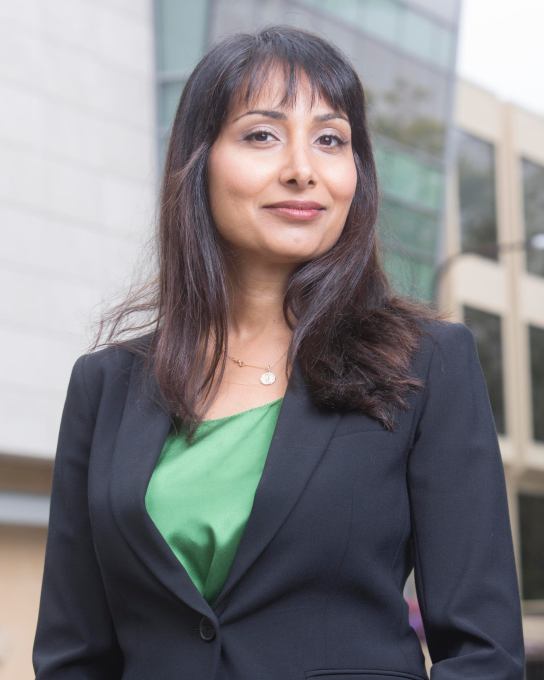
veenadubal

Legal scholar Veena Dubal.

As the institute’s work demonstrates, harmful AI can be found across many segments of society, such as policing, housing, the justice system, labor practices and the environmental impacts of some of our largest corporations. AI Now’s diverse and inspiring speaker lineup, however, was a testament to a growing constituency that’s starting to hold reckless tech businesses accountable. The banking class may panic at the thought of a Warren or Sanders presidency, but Big Tech’s irresponsible actors and utopian philosopher bros should be keeping a watchful eye on the ascendance of figures like Clark, Whittaker, and Dubal, along with their competence.


I won’t attempt a more detailed review of AI Now’s conference here; the organization will put out an annual report summarizing and expanding on it later this year; and if you’re intrigued by this piece, get on their mailing list and go next year.

Below is my conversation with Dubal, where we discuss why the AI Now Institute is different from so many other tech ethics initiatives and how a scholar of taxis became a must-read name in tech. Our conversation ends with the story of one well-off white male software engineer who experienced surprising failure, only to realize his own disillusionment helped him connect to a much greater purpose than he’d ever envisioned.

Epstein: Let’s start by talking about the AI Now Symposium. What does it mean for you to be here as one of the featured speakers?

Dubal: It’s so awesome for a center like this to to say that what Uber drivers are doing to organize to better their conditions is actually related to tech. For the last half decade at least, I’ve been doing what is considered tech work, but very much at the periphery. Because we weren’t explicitly doing computer science-related work, I think people didn’t think of the research people like me do as being at all [related to tech]… it was “just” labor. It wasn’t tech, even though it is on [workers] backs that the whole tech industry exists. So it’s powerful to be included in this conversation.

And for this particular event, they’ve done such a good job of [inviting speakers] whose research is thought of as on the periphery, but should be at the center in terms of what is really important from an ethics perspective. Ruha Benjamin [a Professor of African American Studies at Princeton and founder of Princeton’s JustData Lab]’s work is amazing and then the two people that I’m on the panel with, Abdi Muse [Executive Director of the Awood Center in Minneapolis, a community organization focused on advocating for and educating Minnesota’s growing East African communities about their labor rights], organizes warehouse workers in Minnesota, who are the reason Amazon can facilitate the transcontinental flow of goods in the way that they do.
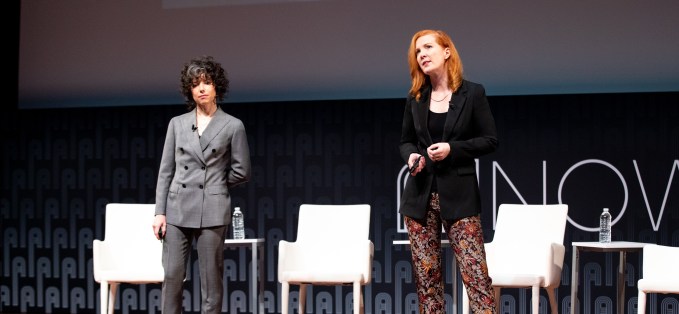
AI Now co-founders

AI Now co-founders Meredith Whittaker and Kate Crawford.

And Bhairavi Desai [Executive Director of the New York Taxi Worker’s Alliance] — I’ve known her for 10 years and she has, from the very beginning, been fighting this gig nonsense. To have them in the room and centered, to have their voices centered instead of on periphery, is just so awesome for me.

Epstein: It’s very clear that AI Now is dedicated to doing that, maybe even moreso than any other peer organization I can identify. How do you see AI Now, as an organization, positioned among their various peers?

Dubal: It’s a great question. I’ve looked at a couple of other more nonprofity things that do tech and equality, and you are absolutely right; more so than any other organization, [AI Now] centers the people who are often at the periphery. Everything that they do is very deliberative.
They aren’t moving through things really quickly, onto the next project really quickly. Every decision they make is thoughtful, in terms of the people that they hire, for example, or how they do an event, or who they include in an event. It’s just very, very thoughtful, which is not how most things in tech, period, run.

Epstein: They’re not moving fast. They’re not breaking things.

Dubal: Exactly. They’re not breaking things. They’re fixing things. And the other thing is, even The TechEquity Collaborative, a nonprofit in San Francisco, there’s a tech utopian imaginary that guides their work. They really have a belief that the technology is going to fix things.
AI now, based on all the interactions I’ve had with them, My sense is that their ethos is very much about how people fix things. Tech doesn’t fix things.

So they’re centering the people who can fix things. They’re in a powerful place, and I think because they’re so sophisticated in the work that they do, they have a powerful voice, which is unusual for people who are interested in the subaltern and in the issues that hurt the most marginalized.

Epstein: Yes. What made me want to come all the way here from Cambridge, MA, where we are not exactly suffering from a shortage of tech ethics initiatives, and what made me decide to miss a lot of the Disrupt conference even though I work for TechCrunch, is that it’s rare that you have an organization that is able to combine to things: genuinely fighting for the marginalized, or helping the subaltern speak; and actually achieving a very significant public voice. Usually it’s maybe one or the other but not both.


21 Oct 2019

Report: SoftBank is taking control of WeWork at an ~$8B valuation

WeWork, once valued at $47 billion, will be worth as little as $7.5 billion on paper as SoftBank takes control of the struggling co-working business, CNBC reports.

SoftBank, a long-time WeWork investor, plans to invest between $4 billion and $5 billion in exchange for new and existing shares, according to CNBC . The deal, expected to be announced as soon as tomorrow, represents a lifeline for WeWork, which is said to be mere weeks from running out of cash and has been shopping several of its assets as it attempts to lessen its cash burn.

WeWork declined to comment.

To be clear, it is reportedly the Vision Fund’s parent company, SoftBank Group Corp. that is taking control, with SoftBank International chief executive officer Marcelo Claure stepping into to support company management, per reports.

The Japanese telecom giant’s move comes precisely four weeks after co-founder and former CEO Adam Neumann relinquished control of the company and transitioned into a non-executive chairman role, and about three weeks after WeWork decided to delay its highly-anticipated initial public offering. WeWork’s vice chairman Sebastian Gunningham and the company’s president and chief operating officer Artie Minson are currently serving as WeWork’s co-CEOs.

In addition to those personnel shake-ups, WeWork has lost its communications chief, Jimmy Asci, its chief marketing officer Robin Daniels and several others. Meanwhile, the company has slashed hundreds of jobs, and opted to shut down its school, WeGrow, in 2020.

Now expected to go public in 2020, WeWork was also said to be in negotiations with JPMorgan for a last-minute cash infusion. The company, now a cautionary tale, will surely continue to reduce the sky-high costs of its money-losing operation in the upcoming months.

WeWork revealed an unusual IPO prospectus in August after raising more than $8 billion in equity and debt funding. Despite financials that showed losses of nearly $1 billion in the six months ending June 30, the company still managed to accumulate a valuation as high as $47 billion, largely as a result of Neumann’s fundraising abilities.

“As co-founder of WeWork, I am so proud of this team and the incredible company that we have built over the last decade,” Neumann said in a statement confirming his resignation last month. “Our global platform now spans 111 cities in 29 countries, serving more than 527,000 members each day. While our business has never been stronger, in recent weeks, the scrutiny directed toward me has become a significant distraction, and I have decided that it is in the best interest of the company to step down as chief executive. Thank you to my colleagues, our members, our landlord partners, and our investors for continuing to believe in this great business.”

21 Oct 2019

6 tips founders need to know about securing their startup

If you’ve read anything of mine in the past year, you know just how complicated security can be.

Every day it seems there’s a new security lapse, a breach, a hack, or an inadvertent exposure, such as leaving a cloud storage server unprotected without a password. These things happen, but they don’t have to; aecurity isn’t as difficult as it sounds, but there’s no one-size-fits-all solution.

We sat down with three experts on the Extra Crunch stage at TechCrunch’s Disrupt SF earlier this month to help startups and founders understand what they need to do, when, and why.

We asked Google’s Heather Adkins, Duo’s Dug Song, and IOActive’s Jennifer Sunshine Steffens for their best advice. Here’s what they had to say.

Quotes have been edited and condensed for clarity.

1. Don’t put off the security conversation

The one resounding message from the panel: don’t put security off.

“There are basically three areas that folks should start considering how to bucket those risks,” said Duo’s Song. “The first is corporate risk in defending your users and applications they access. The second is application security and product risk. A third area is is around production, security and making sure that the operation of your security program is something that keeps up with that risk. And then a fourth — a new and emerging space — is trust, and not just privacy, but also safety.”

It’s better to be proactive about security than to be reactive to a data breach; not only will it help your company bolster its security posture, but it also serves as an important factor in future fundraising negotiations.

Song said founders have a “very direct obligation” to think about security as soon as they take someone else’s money, but especially when a company starts gathering user or customer data. “You have to put yourself in the shoes of those folks whose data you have to protect,” he said. “It’s not just your existential threats to your business, but you do have a responsibility, right to figure out how to do this well.”

IOActive’s Steffens said startups are already a target — simply because it’s assumed many won’t have thought much about security.

“A lot of attackers will go after startups who have high value data, because they know security is not a priority and it’s going to be a lot easier to get ahold of,” she said. “Data these days is extraordinarily valuable.”

2. Start with the security basics

Google’s Adkins, who runs the search giant’s internal information security team, joined the company almost two decades ago when it was just the size of a large startup. Her job is to keep the company’s network, assets, and employees safe.

“When I got there, they were so fanatical about security already, that half of the job was already done,” she said. “From the moment [Google] took its first search query, it was thinking about where those logs are stored, who has access to them, and what is its responsibility to its users,” she said.

“Startups who are successful with security are those where the chief executive and the founders are fanatical from day one and understand what threats exist to the business and what they need to do to protect it,” she said.

Song said many popular products and technologies these days come with strong security by default, such as iPhones, Chromebooks, security keys and Windows 10.

“You’re better off than the 90% of large companies out there,” he said. “That’s one of those few strategic advantages you have as a smaller, nimbler organization that doesn’t have a lot of legacy,” he added. “You can do things better from the start.”

“A lot of the basics are still key,” said Steffens. “Even as we come out with the new shiny technology, having things like firewalls and antivirus, and multi-factor authentication.”

“Security doesn’t always have to be a money thing,” she said. “There’s a lot of open source technology that’s really great.”

3. Start looking at security as an investment

“The sooner you start thinking about security, the less expensive it is in the end,” said Steffens.

That’s because, the experts said, proactive security gives companies an edge over competitors who tack on security solutions after a breach. It’s easier and more cost-effective to get it right the first time without having to fill in gaps years later.

It might be a hard sell to funnel money into something where you won’t actively see financial returns, which is why founders should think of security as investments for the future. The idea is that if you spend a little money at the start, it can save you down the line from the inevitable — a security incident that will cost you in bad headlines, lost customer trust, and potentially fines or other sanctions.