Year: 2019

03 Oct 2019

No near-term IPO for Impossible Foods, CEO says

The market was receptive to meat replacement products, as the Beyond Meat public offering recently indicated. But rival meat alternative maker Impossible Foods doesn’t see an IPO on its near-term roadmap, according to its founder and CEO, Patrick Brown.

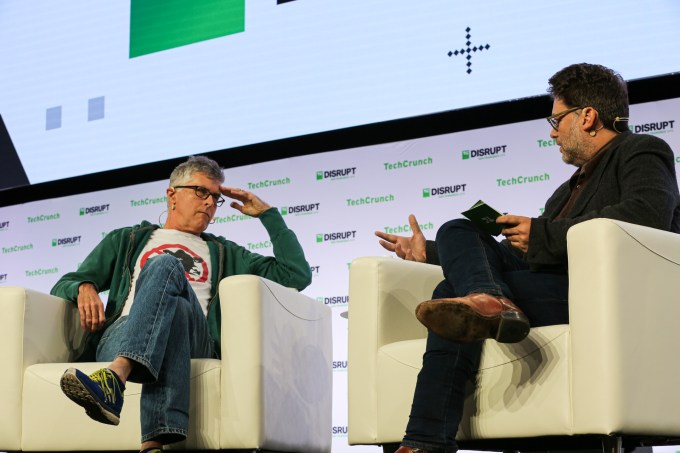
Speaking to the audience at TechCrunch Disrupt SF 2019 on Wednesday, Brown said the company has its hands full growing its business, and going public isn’t something it wants to do anytime soon.

Asked onstage how Impossible Foods will get the money to achieve its goals as a company, and if that meant an IPO was coming soon, the exec agreed that, yes, Impossible Foods does have hugely ambitious goals that require a lot of resources. But it’s not going to the public markets to acquire them, at this point.

disrupt patrick brown 0576

“We’ll have to get those resources either from investors, or from getting our profit margins to the point where we can scale at the velocity that we want to scale with the profit we make from our business,” said Brown. “It’ll be a while before we’re at that point. So we’ll definitely have to raise more money, I would say we are not looking in the near-term future toward an IPO,” he continued.

“As anyone here probably knows, there’s a lot of complications that come with that. We have our hands full, growing our business, doing our core job. And we have great investors, and we have a lot of private investors who are willing to bet on us and so forth,” Brown pointed out.

“So at this point, it’s not, it’s not something that we need, And, and we can just take our time about it, basically,” he said.

The exec also laid out some of the company’s longer-term plans for how he sees the product line growing.

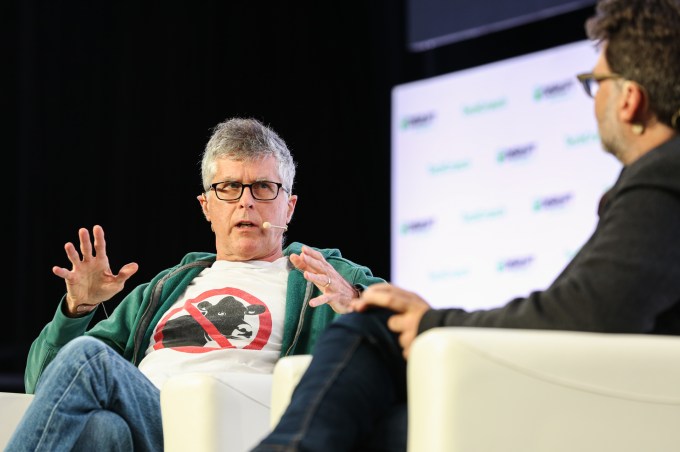
disrupt patrick brown 0578

Impossible Foods chose to focus on beef as its initial product because beef production, by far, has the most destructive impact on the environment. However, the company says its future is in R&D — a team that has 120 people today, and Brown says he plans to double.

Impossible Foods had already made steak prototypes, but isn’t near scaling in that area, the CEO said. The interviewer, TechCrunch editor Johnathan Shieber, also noted he had tried some of the fried chicken products the company had in the works.

“We want to have the know-how and the technology platform to be able to make this entire gamut of products,” Brown said. Ultimately, he explained, the goal is to make the products that consumers prefer to the products that come from animals.

This will present a variety of technology, food science, chemistry, and material sciences challenges, to address factors like flavor, texture, juiciness, and more.

It may also require the company to address the health concerns some have with the meat alternatives, which tend to have higher sodium levels. (Lowering the burger’s sodium is something the company is working on in the next version, we’re told.)

disrupt patrick brown 0558

Brown also briefly touched on the nature of Impossible Foods’ existing business partnerships, such as the recent one with Burger King which sells an Impossible Whopper, as well as others like White Castle and Fatburger.

Those chains sell burgers at low price points, which raises questions about how much money Impossible Foods is making from those deals.

“I can’t give you the exact data because it’s confidential information. I mean, I would, but my CFO would kill me,” joked Brown.

“So the but I can say that basically our product is being sold in lots of mass market places — Burger King, White Castle, Fatburger — tons of these burger chains that sell their burgers at a price that’s affordable to mainstream consumers. It’s great for their business; it’s usually profitable for them. And we’re not losing money on those sales, either. So you can draw your own conclusions,” he added.

The BK deal also was non-exclusive, Brown said, which means the company could continue to work with other fast food businesses, like McDonald’s.

In fact, the CEO believes places like that will eventually come knocking on his door, not the other way around.

“We’re not trying to outperform veggie burgers, we’re trying to outperform the cow. And if we focus on that, and produce the most delicious, healthiest, affordable ground beef on the market, I don’t think we’re going to have to beg McDonald’s or anyone else to put it on their menu,” he said.


03 Oct 2019

Sony’s new A9 II mirrorless full-frame camera has the speed sports photographers need

Sony announced a successor to its popular A9 mirrorless interchangeable lens full-frame camera today. The A9 II carries over some of the specs and stats of its predecessor, like the 24.2 megapixel stacked imaging sensor, but adds an upgraded BIONZ X image processor, which powers the much more powerful autofocus capabilities in the new camera.

Sony debuted a number of improved AF features on its A6400 APS-C camera earlier this year, and its brought those and more to the A7R IV it launched at the beginning of September, and on this new iteration of the A9. There’s real-time eye autofocus for both people and animals, with right and left eye selection for animals, along with real-time eye AF during movie shooting, and the company’s real-time object tracking, which basically sticks your focus point to whatever you want to point it at remarkably well, based on my experience with it in other modern Sony cameras.

Other new features to the camera include a body with upgraded dust and moisture resistance, which Sony also brought to the A7R IV, as well as a beefier design with a deeper grip that should be a welcome change in terms of ergonomics, especially for photographers with bigger hands. And while it uses the same battery, it also is rated for slightly more shots.

[gallery ids="1891690,1891689,1891687,1891688,1891685,1891684,1891683"]

Sony also brought its new digital audio interface to the hotshoe on the camera, again something it first introduced in the A7R IV. That will let you use their new shotgun mic and XLR adapter to pipe audio from external sources into the camera when recording video.

This camera is really intended to meet the needs of photographers who need high-speed capture capabilities, and Sony has bumped things up there, too. You get blackout-free, silent continuous shooting at up to 20fps, with a buffer size capable of capturing 361 JPGs or 239 of Sony’s ‘compressed’ RAW files in one continuous go – it can also calculate AF and auto exposure at up to 60 times per second, so each of these should be in focus and properly exposed even in changing lighting conditions.

The new A9 II goes on sale in November, and will be priced at $4,500 for the body only.

03 Oct 2019

IronSource, a mobile adtech startup, confirms $400M+ raise at $1+ valuation

On the same day that two Israeli-founded adtech startups, Taboola and Outbrain, announced a merger to create a $2 billion company, another Israel-founded company focusing on advertising and marketing for mobile has also closed a huge funding round. IronSource, which has built a video ad network and user acquisition technology for mobile app publishers, has raised between $400 million and $450 million in funding. The money is coming from investment giant CVC, which is getting a minority stake in the business in this deal, valuing the company at over $1 billion.

The company is not being specific on the exact amount raised, describing it only as over $400 million. Israeli media yesterday reported that it would be a $450 million deal to value the company at around $1.55 billion. However, we have confirmed with the company that these numbers are in fact not accurate.

Alongside the merger of Taboola and Outbrain, ironSource’s investment underscores a couple of important trends. First, Israel continues to churn out some significant big data startups that are using their technology specifically for marketing and advertising ends. Second, we’re seeing a collective effort from a number of smaller (but strong) businesses to challenge the biggest tech players currently in the industry, namely Google, Facebook and Amazon, who dominate both in desktop and mobile advertising (and by association, marketing, as advertising is often used as the building block for marketing campaigns).

On the part of ironSource, the company said it’s on track to make $1 billion in revenue this year, and it is profitable (and has been from early on, when it was raising much more modest sums from a low-profile list of investors that is understood to include Viola Ventures, 83North and Leonard Blavatnik, the man behind Access Industries).

“As one of the world’s most respected private equity firms, CVC has a track record of successfully partnering with companies to drive global growth,” said Tomer Bar Zeev, CEO and Co-Founder of ironSource, in a statement. “As such they are the perfect partner for this next phase in our journey, as we continue to scale internationally, engage with A-class partners and invest heavily in building out our offering for game developers.”

The company has a core focus on gaming apps, and as these have become a perennial favorite for mobile consumers — mobile gaming is expected to generate revenues of $180 billion by 2021, ironSource says — ironSource’s business has grown, too. Its customers and partners include software, app and game developers with the list including the likes of EA, Zynga and Kongregate.

“We’re witnessing the creation of a sector, gametech, which supports this growing ecosystem, with tailor-made tech solutions such as advertising, marketing, analytics, market intelligence, CRM and more,” said Bar-Zeev. “Our continued investment in this industry is part of a wider goal to be the go-to partner for any game developer looking to scale their game business.”

While that is a big and well-served area of the industry, what perhaps makes ironSource more interesting and unique is that it couples the tech it sells to developers with technology and services for mobile networks and device makers by way of its Aura solution, which helps them with engagement and content distribution to help them build alternative revenue streams on their networks. IronSource said this technology is integrated on more than 120 million mobile devices globally as of today.

“We are delighted to be partnering with such an innovative and exciting technology business,” said Daniel Pindur, Partner at CVC Capital Partners, in a statement. “The investment in ironSource is a unique opportunity to support a well-respected founder-led organization to accelerate its growth. We look forward to working with Tomer Bar Zeev and his team to take the company to the next level.”

03 Oct 2019

Europe’s top court sets new line on policing illegal speech online

Europe’s top court has set a new line for the policing of illegal speech online. The ruling has implications for how speech is regulated on online platforms — and is likely to feed into wider planned reform of regional rules governing platforms’ liabilities.

Per the CJEU decision, platforms such as Facebook can be instructed to hunt for and remove illegal speech worldwide — including speech that’s “equivalent” to content already judged illegal.

Although any such takedowns remain within the framework of “relevant international law”.

So in practice it does not that mean a court order issued in one EU country will get universally applied in all jurisdictions as there’s no international agreement on what constitutes unlawful speech or even more narrowly defamatory speech.

Existing EU rules on the free flow of information on ecommerce platforms — aka the eCommerce Directive — which state that Member States cannot force a “general content monitoring obligation” on intermediaries, do not preclude courts from ordering platforms to remove or block illegal speech, the court has decided.

That decision worries free speech advocates who are concerned it could open the door to general monitoring obligations being placed on tech platforms in the region, with the risk of a chilling effect on freedom of expression.

Facebook has also expressed concern. Responding to the ruling in a statement, a spokesperson told us:

“This judgement raises critical questions around freedom of expression and the role that internet companies should play in monitoring, interpreting and removing speech that might be illegal in any particular country. At Facebook, we already have Community Standards which outline what people can and cannot share on our platform, and we have a process in place to restrict content if and when it violates local laws. This ruling goes much further. It undermines the long-standing principle that one country does not have the right to impose its laws on speech on another country. It also opens the door to obligations being imposed on internet companies to proactively monitor content and then interpret if it is “equivalent” to content that has been found to be illegal. In order to get this right national courts will have to set out very clear definitions on what ”identical” and ”equivalent” means in practice. We hope the courts take a proportionate and measured approach, to avoid having a chilling effect on freedom of expression.”

The legal questions were referred to the CJEU by a court in Austria, and stem from a defamation action brought by Austrian Green Party politician, Eva Glawischnig, who in 2016 filed suit against Facebook after the company refused to take down posts she claimed were defamatory against her.

In 2017 an Austrian court ruled Facebook should take the defamatory posts down and do so worldwide. However Glawischnig also wanted it to remove similar posts, not just identical reposts of the illegal speech, which she argued were equally defamatory.

The current situation where platforms require notice of illegal content before carrying out a takedown are problematic, from one perspective, given the scale and speed of content distribution on digital platforms — which can make it impossible to keep up with reporting re-postings.

Facebook’s platform also has closed groups where content can be shared out of sight of non-members, and where an individual could therefore have no ability to see unlawful content that’s targeted at them — making it essentially impossible for them to report it.

While the case concerns the scope of the application of defamation law on Facebook’s platform the ruling clearly has broader implications for regulating a range of “unlawful” content online.

Specifically the CJEU has ruled that an information society service “host provider” can be ordered to:

  • … remove information which it stores, the content of which is identical to the content of information which was previously declared to be unlawful, or to block access to that information, irrespective of who requested the storage of that information;
  • … remove information which it stores, the content of which is equivalent to the content of information which was previously declared to be unlawful, or to block access to that information, provided that the monitoring of and search for the information concerned by such an injunction are limited to information conveying a message the content of which remains essentially unchanged compared with the content which gave rise to the finding of illegality and containing the elements specified in the injunction, and provided that the differences in the wording of that equivalent content, compared with the wording characterising the information which was previously declared to be illegal, are not such as to require the host provider to carry out an independent assessment of that content;
  • … remove information covered by the injunction or to block access to that information worldwide within the framework of the relevant international law

The court has sought to balance the requirement under EU law of no general monitoring obligation on platforms with the ability of national courts to regulate information flow online in specific instances of illegal speech.

In the judgement the CJEU also invokes the idea of Member States being able to “apply duties of care, which can reasonably be expected from them and which are specified by national law, in order to detect and prevent certain types of illegal activities” — saying the eCommerce Direction does not stand in the way of states imposing such a requirement.

Some European countries are showing appetite for tighter regulation of online platforms. In the UK, for instance, the government laid out proposals for regulating a board range of online harms earlier this year. While, two years ago, Germany introduced a law to regulate hate speech takedowns on online platforms.

Over the past several years the European Commission has also kept up pressure on platforms to speed up takedowns of illegal content — signing tech companies up to a voluntary code of practice, back in 2016, and continuing to warn it could introduce legislation if targets are not met.

Today’s ruling is thus being interpreted in some quarters as opening the door to a wider reform of EU platform liability law by the incoming Commission — which could allow for imposing more general monitoring or content-filtering obligations, aligned with Member States’ security or safety priorities.

“We can trace worrying content blocking tendencies in Europe,” says Sebastian Felix Schwemer, a researcher in algorithmic content regulation and intermediary liability at the University of Copenhagen. “The legislator has earlier this year introduced proactive content filtering by platforms in the Copyright DSM Directive (“uploadfilters”) and similarly suggested in a Proposal for a Regulation on Terrorist Content as well as in a non-binding Recommendation from March last year.”

Critics of a controversial copyright reform — which was agreed by European legislators earlier this year — have warned consistently that it will result in tech platforms pre-filtering user generated content uploads. Although the full impact remains to be seen, as Member States have two years from April 2019 to pass legislation meeting the Directive’s requirements.

In 2018 the Commission also introduced a proposal for a regulation on preventing the dissemination of terrorist content online — which explicitly included a requirement for platforms to use filters to identify and block re-uploads of illegal terrorist content. Though the filter element was challenged in the EU parliament.

“There is little case law on the question of general monitoring (prohibited according to Article 15 of the E-Commerce Directive), but the question is highly topical,” says Schwemer. “Both towards the trend towards proactive content filtering by platforms and the legislator’s push for these measures (Article 17 in the Copyright DSM Directive, Terrorist Content Proposal, the Commission’s non-binding Recommendation from last year).”

Schwemer agrees the CJEU ruling will have “a broad impact” on the behavior of online platforms — going beyond Facebook and the application of defamation law.

“The incoming Commission is likely to open up the E-Commerce Directive (there is a leaked concept note by DG Connect from before the summer),” he suggests. “Something that has previously been perceived as opening Pandora’s Box. The decision will also play into the coming lawmaking process.”

The ruling also naturally raises the question of what constitutes “equivalent” unlawful content? And who and how will they be the judge of that?

The CJEU goes into some detail on “specific elements” it says are needed for non-identical illegal speech to be judged equivalently unlawful, and also on the limits of the burden that should be placed on platforms so they are not under a general obligation to monitor content — ultimately implying that technology filters, not human assessments, should be used to identify equivalent speech.

From the judgement:

… it is important that the equivalent information referred to in paragraph 41 above contains specific elements which are properly identified in the injunction, such as the name of the person concerned by the infringement determined previously, the circumstances in which that infringement was determined and equivalent content to that which was declared to be illegal. Differences in the wording of that equivalent content, compared with the content which was declared to be illegal, must not, in any event, be such as to require the host provider concerned to carry out an independent assessment of that content.

In those circumstances, an obligation such as the one described in paragraphs 41 and 45 above, on the one hand — in so far as it also extends to information with equivalent content — appears to be sufficiently effective for ensuring that the person targeted by the defamatory statements is protected. On the other hand, that protection is not provided by means of an excessive obligation being imposed on the host provider, in so far as the monitoring of and search for information which it requires are limited to information containing the elements specified in the injunction, and its defamatory content of an equivalent nature does not require the host provider to carry out an independent assessment, since the latter has recourse to automated search tools and technologies.

“The Court’s thoughts on the filtering of ‘equivalent’ information are interesting,” Schwemer continues. “It boils down to that platforms can be ordered to track down illegal content, but only under specific circumstances.

“In its rather short judgement, the Court comes to the conclusion… that it is no general monitoring obligation on hosting providers to remove or block equivalent content. That is provided that the search of information is limited to essentially unchanged content and that the hosting provider does not have to carry out an independent assessment but can rely on automated technologies to detect that content.”

While he says the court’s intentions — to “limit defamation” — are “good” he points out that “relying on filtering technologies is far from unproblematic”.

Filters can indeed be an extremely blunt tool. Even basic text filters can be triggered by words that contain a prohibited spelling. While applying filters to block defamatory speech could lead to — for example — inadvertently blocking lawful reactions that quote the unlawful speech.

The ruling also means platforms and/or their technology tools are being compelled to define the limits of free expression under threat of liability. Which pushes them towards setting a more conservative line on what’s acceptable expression on their platforms — in order to shrink their legal risk.

Although definitions of what is unlawful speech and equivalently unlawful will ultimately rest with courts.

It’s worth pointing out that platforms are already defining speech limits — just driven by their own economic incentives.

For ad supported platforms, these incentives typically demand maximizing engagement and time spent on the platform — which tends to encourage users to spread provocative/outrageous content.

That can sum to clickbait and junk news. Equally it can mean the most hateful stuff under the sun.

Without a new online business model paradigm that radically shifts the economic incentives around content creation on platforms the tension between freedom of expression and illegal hate speech will remain. As will the general content monitoring obligation such platforms place on society.


03 Oct 2019

Instagram launches Threads, a Close Friends chat app with auto-status

What if Instagram could automatically tell you’re Close Friends you’re ? (home), ? (working), ? (on the move), or ? (chilling and might want to hang out)? That’s the idea behind Instagram’s new companion app Threads, a Close Friends-only messaging experience that opens to the camera with shortcuts for instantly sending specific people photos and videos. Threads offers two brand new features called Status and Auto-Status that allow you to manually set an emoji as an away message to show Close Friends what you’re up to, or opt in to letting Instagram select one automatically based on your location, accelerometer, and even your phone’s battery level.


Instagram Threads Auto StatusLaunching globally today on iOS and Android, this is Facebook and Instagram’s next big swing at Snapchat, specifically targeting its top use case: rapid-fire camera and text messaging with your best friends. Sick of randos in your inbox? Only people in your Instagram Close Friends list show up in Threads so you can trust its notifications are important. You can still just use Instagram Direct in the main app or the two in parallel, though.

What’s most unique is that Threads finally sees the launch the Facebook “Your Emoji” status feature we reported it was prototyping 18 months ago. Threads Status and Auto-Status offer conversation starters, contextual clues to why someone might not respond, and opportunities to meet up offline. But importantly, it leaves out a map or any exact location sharing to avoid being creepy and instead focus on what Close Friends are up to — which determines if they can chat or hang out more than where they are.

Threads offers “persistent connection”, Instagram’s Director of consumer product management Robby Stein tells me. It was designed with three priorities: the ability to “fully control who can reach you”, speed because “If most of your messages only go to a couple of people, why isn’t the expedience built around that?”, and “Having more of a connection through the data . . . even if you don’t have time for a conversation.”

By building Threads as a separate app, Instagram has little to lose if it flops and could learn about what features to pull back into its main app. But if it succeeds, Threads cement itself as where you stay in touch with your favorite people, while pigeonholing other messaging options like SMS, WeChat, as Snapchat as noisy channels full of unwanted alerts.

Close Friends Only

Instagram Close Friends ThreadsSocial networks have an inevitable problem. Eventually out of coincidence and courtesy, you add too many people as friends, filling the apps with people who’s content you don’t care about and who’s messages you don’t always want. Facebook, the catch-all network for everything from family to bosses to acquaintances. That leads people to feel uncomfortable sharing too much, and to distrust that the notifications they get are important.



Now Instagram is doubling-down on Close Friends which launched last November at TechCrunch Disrupt Berlin to let you secretly set a special group of best pals who get to see special Stories you set as visible to only them. Facebook had tried complicated Lists products in the past and never seen them gain significant traction because it’s too tough to keep track of who’s in each. Instagram nailed the concept with a single list you edit as needed, though people don’t know if they’re added or removed. I’m surprised Facebook doesn’t already have its own Close Friends feature and it’d be smart to build one.

Close Friends creates the foundation for Threads. The only entries in your inbox are Close Friends, which you can edit in the app with the list syncing with your list on Instagram. You can hide any of those chats or group chats with exclusively close friends if you don’t want to see them.

When you open Threads, you’ll see open immediately to the camera like Snapchat. At the bottom are “Camera Shortcuts” that show friends’ faces you can tap on to send a photo or tap and hold for a video. You can also tap the “default camera” shutter and the select everyone you want to message. Swiping up reveals the Threads inbox, where you can tap into a conversation for a full-featured messaging experience just like in Instagram Direct.

03 Oct 2019

SpaceX’s Falcon 9 rocket and Crew Dragon arrive at Cape Canaveral ahead of key test for crew flight

SpaceX’s facility at Cape Canaveral just received a crucial new delivery: A Falcon 9 rocket and Crew Dragon capsule that it will be using for an upcoming in-flight abort test. This test, which will demonstrate the spacecraft and launch system’s ability to abort the launch mid-flight in case of any emergencies, is an important and necessary step before SpaceX can fly Crew Dragon with any actual people on board.

This test will replicate a ‘worst case scenario’ of sorts, by staging a crew capsule separation at the point of ‘Max Q,’ which is the part of the launch where the rocket is exposed to the most severe atmospheric forces prior to making it to space. At this point during the abort test, the Crew Dragon will show that it can detach from the Falcon 9 rocket and propel itself away to a safe distance in order to protect the astronauts on board.

spacex crew dragon abort test

Back in 2015, SpaceX completed the lead-up to this, which was a pad abort test that demonstrated the escape process in case the mission needs to be canceled earlier, before the spacecraft has left the launch pad. Earlier this year, SpaceX was conducting an abort test for its SuperDraco rocket engine for Crew Dragon when an error caused an explosion that destroyed the capsule. Since that was supposed to be the capsule used for this in-flight test, SpaceX had to finish manufacturing a new one before this test could take place.

Now that the rocket and capsule are both at the Cape, the test shouldn’t be that far off. That’s great news for SpaceX, which is still targeting the end of this year for its first crewed demonstration flight for Crew Dragon – though even the company’s own leadership has indicated that’s an increasingly difficult target to hit given where we’re at in the year.

03 Oct 2019

Harness launches Continuous Insights to measure software team performance

Jyoti Bansal, CEO and co-founder at Harness, has always been frustrated by the lack of tools to measure software development team performance. Harness is a tool that provides Continuous Delivery as a Service, and its latest offering, Continuous Insights, lets managers know exactly how their teams are performing.

Bansal says a traditional management maxim says that if you can’t measure a process, you can’t fix it, and Continuous Insights is designed to provide a way to measure engineering effectiveness. “People want to understand how good their software delivery processes are, and where they are tracking right now, and that’s what this product, Continuous Insights, is about,” Bansal explained.

He says that it is the first product in the market to provide this view of performance without pulling weeks or months of data. “How do you get data around what your current performance is like, and how fast you deliver software, or where the bottlenecks are, and that’s where there are currently a lot of visibility gaps,” he said. He adds, “Continuous Insights makes it extremely easy for engineering teams to clearly measure and track software delivery performance with customizable, dashboards.”

Harness measures four key metrics as defined by DevOps Research and Assessment (DORA) in their book Accelerate. These include deployment frequency, lead time, mean-time-to-recovery and failure change rate. “Any organization that can do a better job with these would would really out-innovate their peers and competitors,” he said. Conversely companies doing badly on these four metrics are more likely to fall behind in the market.

pasted image 0

Image: Harness

By measuring these four areas, it not only provides a way to track performance, he sees it as a way to gamify these metrics where each team tries to outdo one another around efficiency. While you would think that engineering would be the most data-driven organization, he says that up until now it has lacked the tooling. He hopes that Harness users will be able to bring that kind of rigor to engineering.

03 Oct 2019

Lyft launches a driver rewards program

Lyft is rolling out rewards for its drivers to give them access to things like cash bonuses, ride credits, and free or discounted tax services. Initially, the rewards program will be available to drivers in Austin, Boston, Chicago, Denver, Minneapolis-St. Paul, Nashville, New Orleans, New Jersey, Philadelphia, Pittsburgh and Washington, D.C.

Drivers earn points for every eligible dollar earned while they drive during their respective city’s busiest hours. From there, drivers can redeem the points for cash bonuses and Lyft rider credits.

For drivers with a 90% or higher acceptance rate who have a rating of at least 4.9 (Platinum or Gold), they have access to exclusive features. That includes the ability to see the estimated length of trip time and direction before they accept the ride.

Those who reach Platinum status can claim a monthly AT&T phone plan credit, a Lyft direct debit card with 5% cash back on all gas prices, free 24/7 roadside assistance from AllState and free Turbo Tax for self-employed workers.

5 Hero 3up white bg

In November, Uber launched a rider loyalty program. That same month, Uber unveiled Uber Pro, a rewards program for drivers in ten cities. Since then, Uber has rolled out Pro to an additional 20 markets.

This comes shortly after gig worker bill AB 5 was signed into law by California Governor Gavin Newsom.

AB-5 will help to ensure gig economy workers are entitled to minimum wage, workers’ compensation and other benefits by requiring employers to apply the ABC test. The bill, first introduced in December 2018, aims to codify the ruling established in Dynamex Operations West, Inc. v Superior Court of Los Angeles. In that case, the court applied the ABC test and decided Dynamex wrongfully classified its workers as independent contractors.

According to the ABC test, in order for a hiring entity to legally classify a worker as an independent contractor, it must prove the worker is free from the control and direction of the hiring entity, performs work outside the scope of the entity’s business and is regularly engaged in work of some independently established trade or other similar business.

Clearly, Lyft is trying to do what it can to make its drivers happy and perhaps minimize the potential of future labor-related lawsuits.

Already, Lyft has put in $30 million toward a campaign initiative to ensure it can continue to classify its drivers and independent contractors. Uber, similarly, has also put in $30 million toward that same initiative.

03 Oct 2019

Stock trading app Robinhood revamps its newsfeed with The Wall Street Journal and ad-free videos

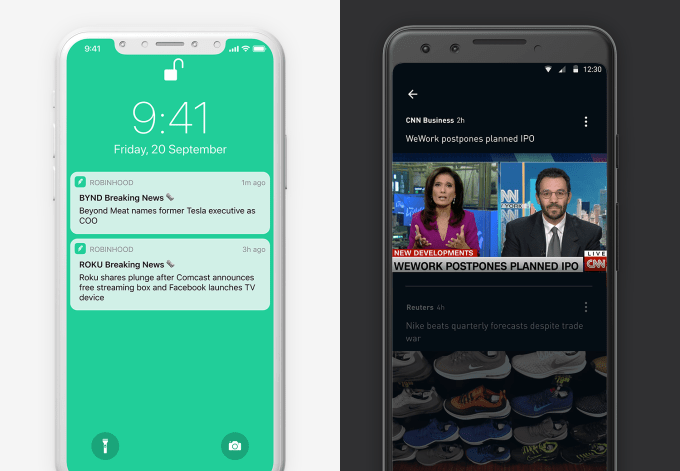
Robinhood may be best known its free stock trading, but today it’s rolling out a new version of the newsfeed, adding content from Reuters, Barron’s and market coverage from The Wall Street Journal, with no paywall or additional charge.

In addition, Robinhood is introducing video into the newsfeed, with ad-free videos from CNN Business, Cheddar and (again) Reuters.

The startup, which recently raised $323 million at a $7.6 billion valuation, has been showing more interest in content lately with the acquisition of the financial podcast and newsletter MarketSnacks — and as part of the redesign, the newsletter (now called Snacks) can be read directly in the app.

“A lot of this is not even about making investment decisions,” Robinhood’s Vice President of Product Josh Elman told me. “[Some users] check Robinhood very, very often just to consume the news and understand the companies that they’re watching, the ones that they are invested in and continuing to hold.”

He added that just buying and selling stocks is “sort of a utility,” so Robinhood wants to help its users “to feel informed, to be empowered to make their own decisions.”

Robinhood newsfeed

Before redesigning the newsfeed, Elman said the team did a seven-day study, where they asked subjects to create a diary of “all of their experiences reading and understanding market news.”

Among other things, Elman’s team learned that people “really want to read news from multiple, trusted sources,” which is why Robinhood is partnering with these publications. In addition, they saw that people like watching videos: “Even if it’s in the background, ultimately, people really told us they feel more confident and control in their decisions.”

Along with bringing in new content (which, again, is taken out from behind paywalls and is ad-free), Elman said the Robinhood newsfeed also features “all-new algorithms and a whole new display layer.” Robinhood users can see the new interface for themselves, but I was curious about those algorithms.

“We start with the companies you either own and hold in your portfolio or are watching, what types of sources do you frequently like to watch … and we make sure that we’re bringing you that news as much as possible,” Elman said. “And we have a lot of room to grow from here.”

03 Oct 2019

Publisher adtech startups Taboola and Outbrain merge in $850M deal to take on Google and Facebook

Some consolidation is afoot in the world of advertising. Taboola and Outbrain, rivals that both operate advertising-based content recommendation engines for publishers — which typically appear in the form of boxes at the bottom of articles online that feature a mix of stories from the publications themselves, plus ads and sponsored content from other sites — are forming a single company.

The aim: to bulk up to a customer list that will now number 20,000 online properties to compete better against the likes of Facebook and Google, online advertising giants that present the biggest competitive threat to both adtech startups and the publishers who are Taboola and Outbrain’s customers.

The two companies, both founded out of Israel but headquartered in New York, describe the deal as a merger, but the combined entity will be called Taboola, with Taboola’s founder Adam Singolda securing the CEO slot. Further, Taboola is paying Outbrain investors $250 million in cash plus a 30% share of the combined companies. The merger is creating a company that will be valued at $2 billion, making the transaction value of this deal $850 million.

Singolda said in an interview that each of them is already profitable and each was already clearing $1 billion in revenues annually. Taboola had individually passed a $1 billion valuation years ago. (Taboola had raised $160 million from investors that include Comcast, Fidelity, and Pitango; Outbrain had raised $194 million with investors including Index, HarbourVest and Lightspeed.)

The deal is literally years in the making. Reports of talks between the two go back as far as 2015, but Singolda said they have actually been talking for the better part of a decade. (Outbrain was founded in 2006, Taboola was founded in 2007.)

The reason it’s taken so long was down to ironing out the details and getting longtime rivals to trust each other.

“It took time to build trust and to get to know each other,” Singolda said. “We needed more time to get to where we are now.”

The reason it finally happened was the existence of a collective threat. “Definitely the pressure of Google and Facebook, and the opportunity to give then a proper fight by increasing our reach was important to us.”

Between Taboola and Outbrain, the companies now have ties to a list of the biggest online media properties around today — with the combined group now working with CNBC, NBC News, USA TODAY, BILD, Sankei, Huffington Post, Microsoft, Business Insider, The Independent, El Mundo, Le Figaro, CNN, BBC, The Washington Post, The Guardian, Spiegel Online, El País and Sky News.

Taboola and Outbrain have positioned themselves as something of the last chance saloon for media companies that have continued to base all or at least some part of their business models on advertising.

In that context, the combined audience scale that Taboola and Outbrain will now have gives them the kind of leverage they believe could help these publishers continue making ad revenues on their own sites, and off the networks of companies like Google, Facebook and Amazon.

Today, these three collectively account for some 70% of all online advertising revenues, and importantly, a large part of the traffic that leads to that revenue is coming on the networks of the companies themselves, through features like search or YouTube (on Google) and Facebook’s news feed. (And that’s a list that Facebook is going to try to extend later this month when it launches its news tab to create an even more dedicated space to news on Facebook itself.)

Taboola and Outbrain’s basic advertising building block, on the other hand, are the widgets that it runs at the bottom of articles on publishers’ own sites, putting the focus back on building and monetizing their traffic there.

Screenshot 2019 10 03 at 05.12.48Although there is a lot that is similar between the two, there are differences that will potentially create a company that will continue expanding into other areas. For example, Outbrain acquired a company in 2017 called Zemanta that has given it a foothold in programmatic advertising, while Taboola has made moves to expand into video inventory to better compete with the force of YouTube in video advertising.

“We will have lot of work ahead merging the products and we have big competition ahead of us,” Singolda said. “But we have no choice. These are big companies and we have to give them a fight.”

Looking ahead, Singolda said that after the task of integration is underway — which will include not just bringing together technology, but thousands of employees — it will think about what steps to take next. That could include considering a public listing, or raising more money as a private company. Because it’s currently profitable with cash in the bank, Taboola will have some time before it needs to make any decisions.

In addition to Singolda taking the CEO role, there are some other executive shifts. Eldad Maniv, President & COO of Taboola and David Kostman, co-CEO of Outbrain, are not being given any executive titles at the new company yet,  but will help with the transition. Yaron Galai — who had been the CEO of Outbrain — “will remain committed to the success of the combined company, and actively assist with the transition for the 12 months following the closing.”