Year: 2019

01 Oct 2019

Skydio’s second-gen ‘self-flying’ drone is faster, smaller and half the price

There weren’t many scenarios where consumer were deciding between buying the original Skydio R1 autonomous drone and something from DJI. The R1 was the second drone in your arsenal, it was a couple grand and it gave users an experience that was technically impressive, occasionally useful and a little bizarre.

It was exciting but it was still one hell of a niche. The startup had raised $70 million in funding from Andreessen Horowitz, IVP and Playground Global to create a different kind of autonomous drone.

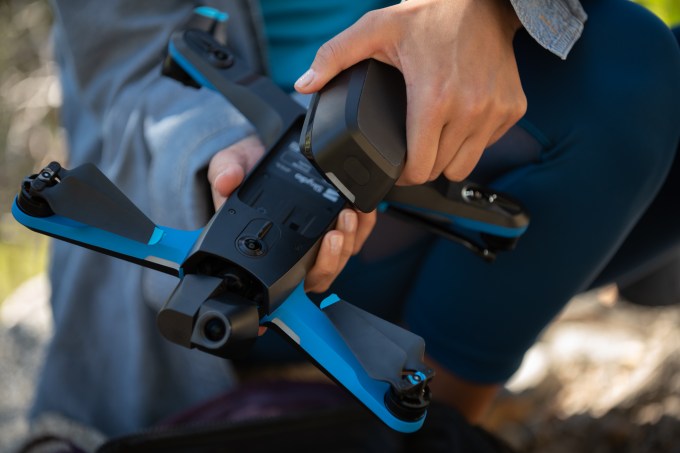
While the first-generation looked and felt like a prototype, the startup’s soon-to-be-released Skydio 2 meets the functionality desires one would have for their primary drone. The drone is half the price at $999, faster, much smaller and more portable, has longer battery life and can be flown more conventionally with optional accessories.

The biggest issue with the R1 was that its standout autonomous mode was the overpowering default. Here you were buying a $2,000 product and once it got to be dusk, it wouldn’t even get off the ground. You were limited in distance, limited in speed, and you were ultimately stuck with a device that could handle edge cases but stumbled on the basics. It enabled shots you could never think of doing — barreling barreling down a mountainside on a snowboard with the drone hot on your tail — but you couldn’t easily pilot the drone for sweeping panoramic shots, instead having to rely on the baked-in cinematic movements called “dronies.”

The Skydio 2 is still meant to primarily be an autonomous companion; the $149 controller is a separate accessory as is the $149 beacon which lets the drone fly at greater distance and track users more accurately. The drone has a 200m flight range to the phone, a 1.5km range to the beacon and a 3.5m range to the controller.

front open altScreen

It can do all of this much faster now and for a bit longer. The top speed now maxes out 36 miles per hour, compared to 26 miles per hour on the first-generation. The battery life sits at 23 minutes, which still falls short of what DJI’s Mavic 2 is capable of, but is an improvement over Skydio’s previous-generation.

I had the chance to fly the drone around with the new controller and this drone is perhaps at its most impressive when you forget how smart it is. Piloting the Skydio 2 straight for a group of trees with the controller — a nightmare for even seasoned drone pilots — is a cakewalk as the drone finds its own way around branches and trunks using your guidance to move forward as its key objective while figuring out the details on its own. For novice fliers that are never going to be experts, this is pretty priceless functionality and takes plenty of the nerves out of the process — in my brief demo at least.

The consumer drone market has plenty up against it, but at this price point, the Skydio 2 seems to make a decent sell to a wider swath of consumers than its leading competitors.
skydio2lifestyle 19

The drone is doing more with less, it now has just 6 onboard tracking cameras, compared to the 12 its first generation had. When it comes to the image quality on the Skydio 2’s non-tracking gimbal-stabilized camera, everything seemed up to snuff for the 4K 60fps but I’ll have to spend some more time with the drone before I can judge how things look.

When you stare down the realities of the drone market, Skydio has built an incredibly competitive drone that’s coming in at a more palatable price point. The startup’s first iteration was an experiment for action camera enthusiasts, the Skydio 2 could shift the consumer drone market in a way that few have in DJI’s world.

The $999 drone is launching in November in limited quantities. The company is taking $100 reservations ahead of launch over at its website now. The startup says buyers of its first drone, which launched early last year, will be able to get the Skydio 2 at a “significantly discounted price.”
01 Oct 2019

Auto workers’ strike pushes GM losses past $1 billion

The workers strike against General Motors — now in its third week — has cost the automaker more than $1 billion during the third quarter, according to a research note from J.P. Morgan analyst Ryan Brickman.

And those losses are accelerating with each passing week. GM lost about $480 million during the first week of the strike and another $575 million in the second, according to Brickman. GM is losing about $82 million of potential profit in North America every day.

TechCrunch will update the article if GM responds to a request for comment.

The effects of the production stoppage, which began Sept. 16 when 49,000 United Auto Workers went on strike, is causing a ripple effect through the Detroit automaker’s global operations. AP reported Tuesday that GM has shut down its pickup truck and transmission factories in Silao, Mexico, affecting 6,000 workers there. GM has also had to close an engine factory in Mexico and an assembly plant in Canada because of the strike.

“GM’s US production stopped immediately when the UAW [United Auto Workers] walked off the job on September 16 and we estimate its Canadian and Mexican facilities became progressively impacted throughout the first week,” Brinkman wrote in his research note this week.

Jefferies analyst Philippe Houchois also weighed in this week noting that the strike could restrict GM’s ability to make investments.

While pay, benefits and the status of temporary workers are the primary drivers of the strike, so are concerns about changes within the automaker towards electrification. GM and the rest of the automotive industry are pouring money into developing electric vehicles. But this shift is also affecting workers because electric vehicles, which require fewer parts, are easier to build. The UAW has said the shift from gas to electric engines could lead to a loss of 35,000 jobs over the next few years, according to a research study conduct by the union and recently noted by CNBC.

Last November GM CEO and Chairman Mary Barra announced plans to cut more than 14,000 jobs in North America, shutter factories and eliminate several car models in an effort to transform into a nimble company focused on high-margin SUVs, crossovers and trucks and investments in future products like electric and autonomous vehicles.

The actions were meant to safeguard the automaker from an expected downturn in the U.S. market and increase GM’s annual free cash flow by about $6 billion. But it has also caused discontent and concern among workers.

01 Oct 2019

UPS gets FAA approval to operate an entire drone delivery airline

UPS announced today that it is the first to receive the official nod from the Federal Aviation Administration (FAA) to operate a full “drone airline,” which will allow it to expand its current small drone delivery service pilots into a country-wide network.

In its announcement of the news, UPS said that it will start by building out its drone delivery solutions specific to hospital campuses nationwide in the U.S., and then to other industries outside of healthcare.

UPS racks up a number of firsts as a result of this milestone, thanks to how closely its been working with the FAA throughout its development and testing process for drone deliveries. As soon as it was awarded the certification, it did a delivery for WakeMed hospital in Raleigh, N.C. using a Matternet drone, and it also became the first commercial operator to perform a drone delivery for an actual paying customer outside of line of sight thanks to an exemption it received to do this from the government.

This certification, officially titled FAA’s “Part 135 Standard certification,” offers far-reaching and broad license to companies who attain it – much more freedom than any commercial drone operation has had previously in the U.S. Here’s a good summary of just how broad UPS can operate under its new designation:

The FAA’s Part 135 Standard certification has no limits on the size or scope of operations. It is the highest level of certification, one that no other company has attained. UPS Flight Forward’s certificate permits the company to fly an unlimited number of drones with an unlimited number of remote operators in command. This enables UPS to scale its operations to meet customer demand. Part 135 Standard also permits the drone and cargo to exceed 55 pounds and fly at night, previous restrictions governing earlier UPS flights.

Obviously, it’s a huge win for UPS Flight Forward, which is the dedicated UPS subsidiary the company announced it had formed back in July to focus entirely on building out the company’s drone delivery business. But there’s still a lot left to do before you can expect UPS drones to be a regular fixture, or even at all visible in the lives of the average American.

The courier outlined its next steps from here, which include expanding service to new hospitals and medial facilities, building out ground-based detection and avoidance systems for its drone fleets, building a central operation control facility and partnering with new drone makers to create different kinds of delivery drones for different payloads.

01 Oct 2019

Streamlit launches open source machine learning application development framework

Streamlit, a new machine learning startup from industry veterans, who worked at GoogleX and Zoox, launched today with a $6 million seed investment and a flexible new open source tool to make it easier for machine learning engineers to create custom applications to interact with the data in their models.

The seed round was led by Gradient Ventures with participation from Bloomberg Beta. A who’s who of solo investors also participated including Color Genomics co-founder Elad Gil, #Angels founder Jana Messerschmidt, Y Combinator partner Daniel Gross, Docker co-founder Solomon Hykes and Insight Data Science CEO Jake Klamka.

As for the product, Streamlit co-founder Adrien Treuille, says as machine learning engineers he and his co-founders were in a unique position to understand the needs of engineers and build a tool to meet their requirements. Rather than building a one-size-fits-all tool, the key was developing a solution that was flexible enough to serve multiple requirements, depending on the nature of the data the person is working with.

“I think that Streamlit actually has, I would say, a unique position in this market. While most companies are basically trying to systemize some part of the machine learning workflow, we’re giving engineers these sort of Lego blocks to build whatever they want,” Treuille explained.

self driving 1

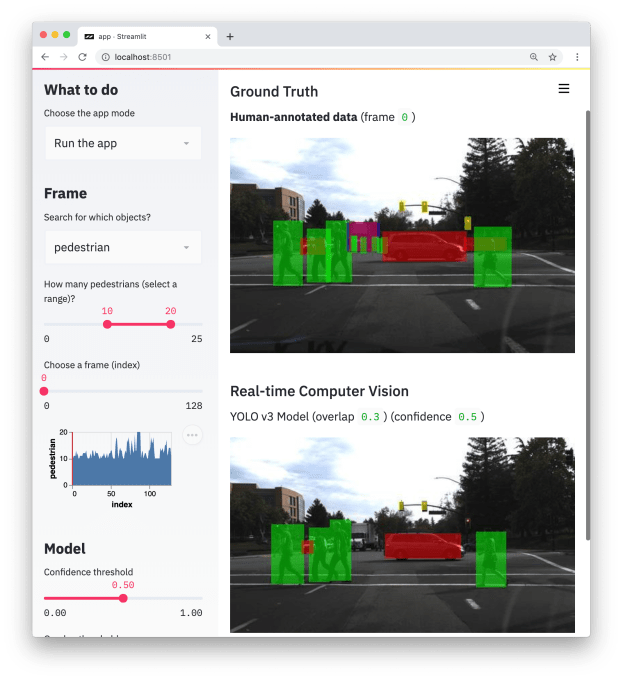
Customized self-driving car data application built with Streamlit that enables machine learning engineers to interact with the data.

Treuille says that highly trained machine learning engineers that have unique set of skills actually end up spending an inordinate amount of their time building tools to understand the vast amounts of data they have. Streamlit is trying to help them build these tools faster using the kind of programming tools they are used to work with.

He says that with a few lines of code, a machine learning engineer can very quickly begin building tools to understand the data and help them interact with it in whatever way makes sense based on the type of data. That may mean building a set of sliders with different variables to interact with the data, or simply creating tables with subsets of data that make sense to the engineer.

Treuille says that this toolset has the potential to dramatically transform the way machine learning engineers work with the data in their models. “As people who are machine learning engineers and have seen this and know what it’s like to go through these challenges, It was really exciting for us to say, there’s a better way of doing this and not just a little bit better, but something that will turn a project that would have taken four weeks and 15,000 lines of code into something that you can do in an afternoon.”

The toolkit is available on GitHub for download starting today.

01 Oct 2019

Knowable launches its “not a podcast” $100 audio classes

Books on tape were the lifeblood of self-help. But eLearning startups like Khan Academy and Coursera demanded our eyes, not just our ears. Then came podcasts that make knowledge accessible yet rarely focus on you retaining and applying what they teach.

Today, a new startup called Knowable is launching to provide gaze-free audio education at $100 per 8-hour course on topics like How To Start A Startup or How To Sleep Better. The idea is that by layering chapter summaries and eventually interactive activities atop premium, long-form, ad-free lessons, it can become the trusted name in learning anywhere. With always-in Bluetooth earbuds and smart speakers becoming ubiquitous, we can imbibe content in smaller chunks in new environments. Knowable wants to fill that time with self-improvement.

The big question is whether Knowable can differentiate its content from free alternatives and build a moat against copycats through savvy voice-responsive learning exercises so you don’t forget everything.

To evolve beyond the podcast, Knowable has raised a $3.75 million seed round led by Andreessen Horowitz ‘s partner Connie Chan, and joined by Upfront, First Round, and Initialized. “The market is ready for a company like Knowable. Their timing is right and their team possesses the rare combination of product expertise and creative media experience necessary to win. That’s why I’m not just hosting Knowable’s first course, Launch a Startup , we’re also one of the earliest investors in the company” says Initialized’s Alexis Ohanian.

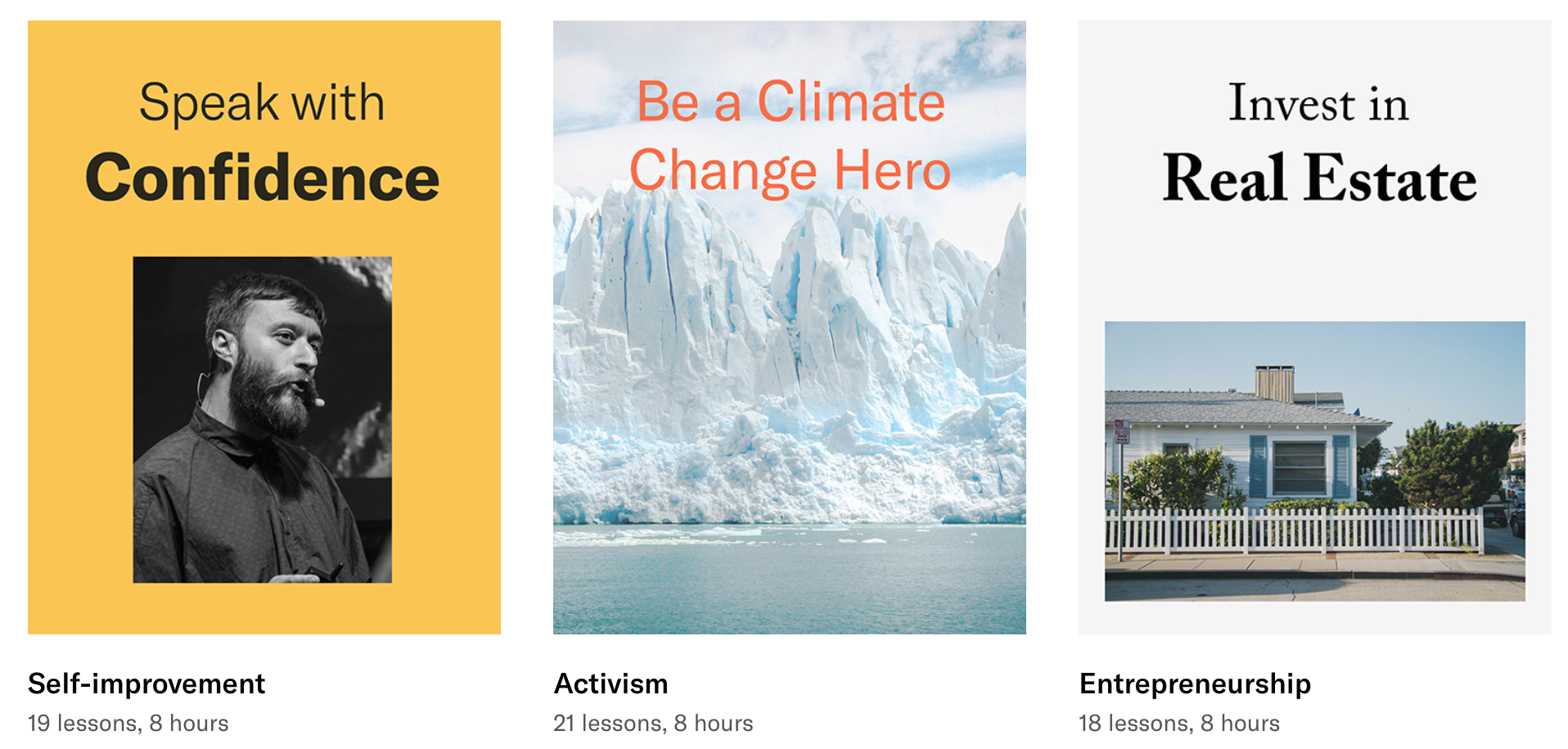
Knowable Courses

There’s certainly a market opportunity. 32% of Americans listen to podcasts monthly, up from 26% in 2018, with 74% of those citing the desire to learn. Half of Americans have listened to an audiobook. The eLearning market is $190 billion today but projected to grow to $300 billion as bloated and expensive higher education succumbs to cheaper and more focused options.

But to score consistent revenue, Knowable must build up its library and execute on plans to offer a subscription service with access to updates on prior lessons. A major challenge will be bundling classes on the right topics that don’t exhaust users so they keep listening and paying.

Building A School From Sound

“My first-generation immigrant parents came here without college degrees. Great teachers let me move up the socioeconomic ladder pretty quickly” says Knowable co-founder Warren Schaeffer. “The genesis of the idea came from our shared interest in education and the value of great teachers.”

Schaeffer and his co-founder Alex Benzer have already been through the struggles of startup life together. After meeting at MuckerLab in LA and splitting from their respective co-founders, in 2007 they created SocialEngine, a community website builder that sold to Room 214. Next they built up a video platform for independent creators called Vidme that raised $9 million but never became sustainable before selling to Giphy in 2018.

The pair had glimpsed how great content could rope in an audience, but felt like the true potential of the podcast hadn’t been explored. Why did they have to be produced on the cheap, distributed on generic platforms, and supported by ads? Knowable emerged as a way to create luxury audio, delivered through a purpose-built app, and paid for with direct sales or subscriptions. Instead of recording unscripted discussions as episodes, they mapped out course curriculum and filled them with structured advice from experts.

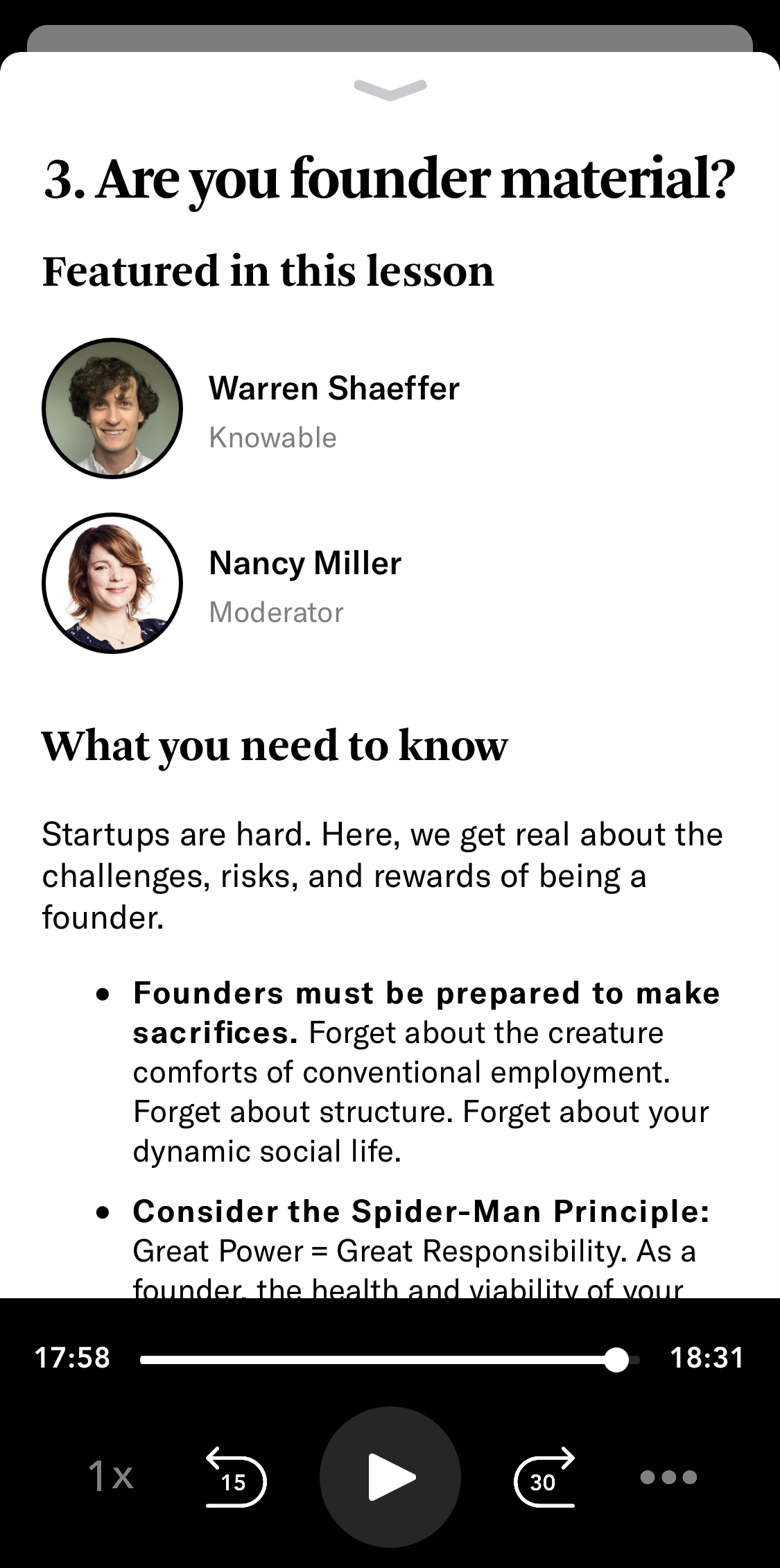
Knowable ChaptersI’m a few hours into the Ohanian-hosted How To Launch A Startup. It’s certainly a lot more efficient than trying to learn the basics just through storytelling from podcasts like Reid Hoffman’s Masters Of Scale or NPR’s How I Built This. One chapter breaks down the top ways startups die and the traits you’ll need to persevere. From optimism and resilience operating in unstructured environments to a refusal to make excuses why you can’t succeed, Ohanian cooly recaps the learnings at the end of the chapter. Open the app, and you’ll get a written summary plus suggested blog posts and books for diving deeper. An accompanying 95-page PDF workbook collects all the key learnings for rapid review later.

The topic is huge, though, and Knowable is at its best when it’s distilling knowledge into neatly packaged lists and frameworks. The course’s weakest moments are when it feels most like a podcast, with somewhat meandering conversations with random founders discussing how they dealt with problems. Meanwhile, it currently lacks some basic tools like in-app notetaking and sharing, or as wide a range of playback speeds and rewind options as you’ll get on Audible. “We don’t think of ourselves as a podcast company” Schaeffer says, but that’s still who he’s competing against.

What’s also missing is any true interactivity. The downside of audio learning is that if you’re not paying full attention, it’s easy to zone out. Knowable needs to develop voice- and touch-controlled exercises to help users apply and retain the lessons. However, Schaeffer says that “we’re on a mission to make education more accessible and quizzes might be an impediment to that” which leaves questions about what the learning activities will look like, even though they’re crucial to users coughing up $100 per class.

Snackable Audio Education

Knowable’s bid for virality is the ability to give a friend a code to take the class with you. It’s also hoping big-name experts and quality driven by a team cobbled together from NPR, Washington Post, William Morris Endeavor, Masterclass, and Vice will set it apart. They’ve got a lot of work ahead to grow beyond the six courses currently available.

For the moment, Knowable feels a bit late with its homework. It has the potential and demand to reinvent audio learning but currently sounds too similar to what’s already everywhere. I was hoping for a Bandersnatch for education that made a broadcast experience feel more like a game.

But the opportunity will only continue to grow as we spend more of our lives in earshot of AirPods and Echoes. With a broad enough library and clever editing, one day you might tell Knowable “teach me something about venture capital in 8 minutes” as you walk to the coffee shop. That’s going to have a much better impact on your life than just scrolling through another feed.


01 Oct 2019

Relativity, a new star in the space race, raises $160 million for its 3-D printed rockets

With $160 million in new financing, Relativity Space is now one step closer to fulfilling its founders’ vision of making the first rockets on Mars.

Tagging along for the ride are a motley assortment of millionaires and billionaires, movie stars and media moguls that are providing the money the rocket launch services provider and manufacturer of large-scale, 3-D printers needs to achieve its goals.

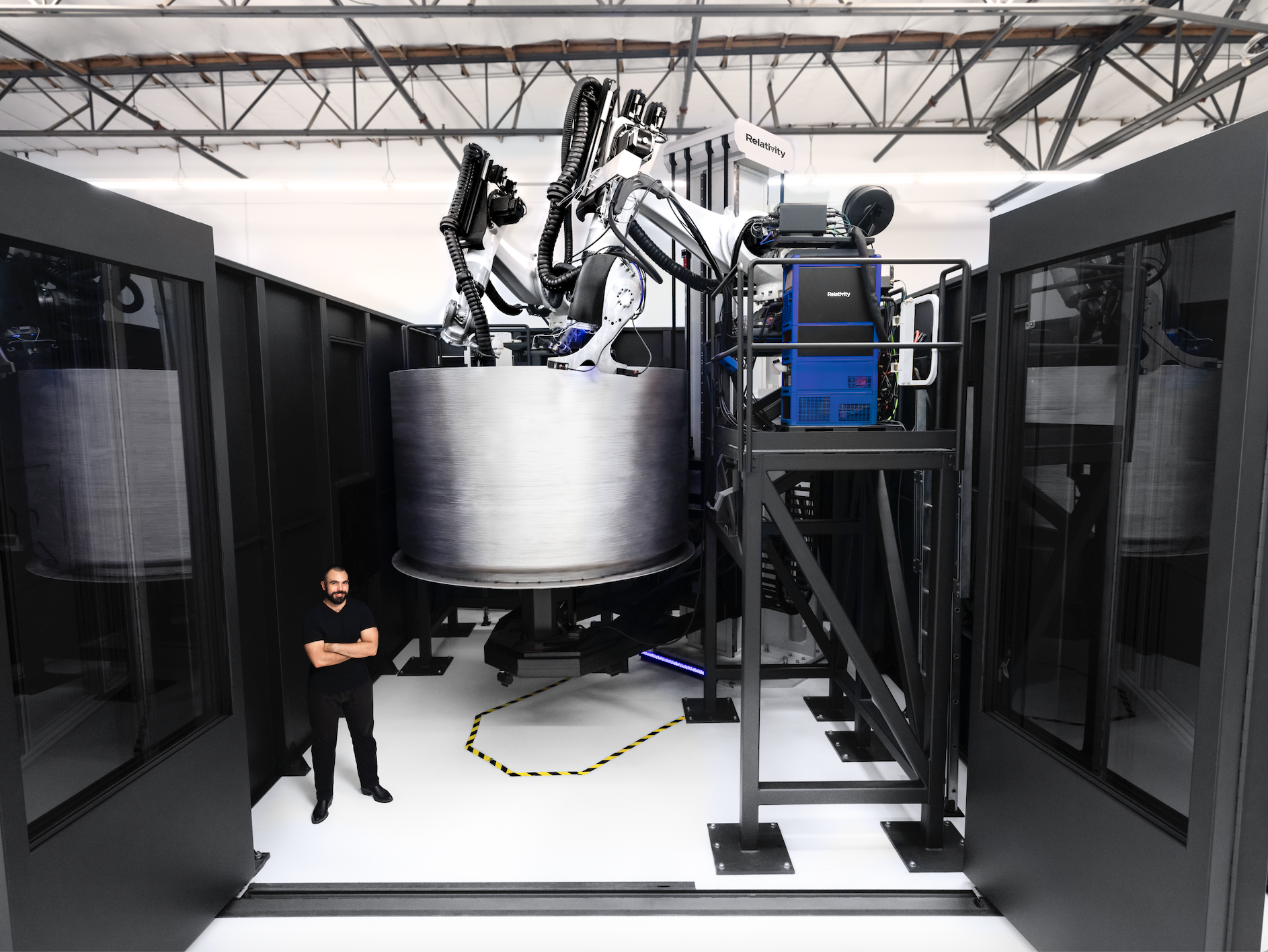
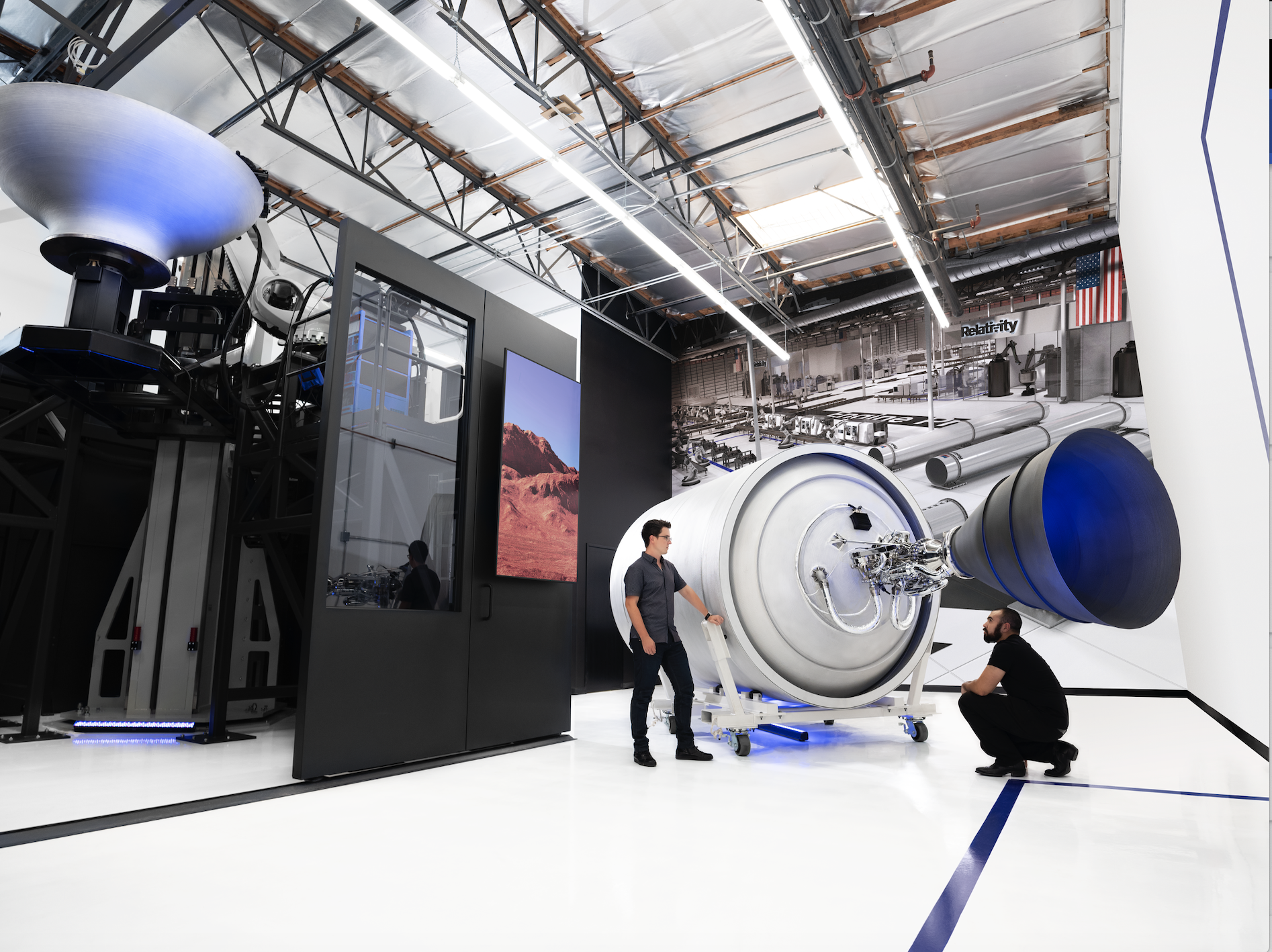
The new financing will give Relativity the cash to fully build its “Stargate” factory, a semi-autonomous, full-scale production facility that will house the company’s massive 3-D printers and produce its first rocket, the Terran 1.

Using its proprietary printing technology, Relativity says it can slash the time it takes to develop a rocket from design to launch by up to two years. Manufacturing can be done within 60 days, according to the company’s claims, and its vehicles have a payload capacity of up to 1250 kilograms (SpaceX’s largest rockets will have roughly 100 times that payload capacity).

Space startups and established companies alike are now rocketing forward with plans to support the race to establish a foothold on the surface of the Moon as a first step toward getting humanity’s first footsteps on Mars.

Even as Relativity was finalizing the details of this new financing round, Elon Musk was unveiling new details . about his Starship, designed to carry heavy payloads to the Moon and Mars; and NASA began doling out cash to companies that would provide transportation, infrastructure, and support for future lunar missions.

For now, Relativity remains focused on the clear, near-term business opportunity of getting more satellites into the Earth’s orbit for telecommunications companies.

The financiers funding the company’s plans are a mix of Silicon Valley venture capital firms and members of Hollywood’s elite, which is only fitting for a company whose headquarters are in Los Angeles, but whose business takes it to the far flung research centers and launch facilities which support the U.S. space industry.

From Hollywood, Relativity has managed to coax cash from the founder of the Creative Artists Agency, Michael Ovitz, and the Academy Award-winning actor Jared Leto (whose venture capital portfolio is as impressive as it is diverse). Zillow co-founder Spencer Rascoff and Lee Fixel, the former superstar investor for Tiger Global, are also on board.

The two firms leading the deal are Bond Capital, a relatively new growth capital investment firm co-founded by the celebrated Wall Street financial analyst, Mary Meeker, and former private equity investor, Noah Knauf (after their stint running KPCB’s growth capital arm); and Tribe Capital, which was formed in the wake of the dissolution of Social Capital.

Screen Shot 2019 10 01 at 6.26.03 AM

Relativity Space chief technology officer Jordan Noone next to one of the company’s 3-D printers

If anything, the presence of a growth capital investment firm like Bond, which has not invested in companies operating in what some investors have considered to be frontier markets or technologies, speaks to the strength of the space industry as a whole.

“Our entire investment strategy is to invest at the inflection points where things cross over from froniter to mainstream investments,” says Knauf. “We’ve spoken to what amounts to billions of dollars in potential demand for the company over time… They need a faster, better, cheaper solution.”

Some of Bond’s fears are likely alleviated by the fact that Relativity has already signed a number of agreements with satellite companies looking to get their equipment into space. To date, Relativity has publicly announced contracts with four vendors including: Telesat and Mu Space for their low earth orbit constellations, and Spaceflight and Momentus, which provide ride-share and in-space shuttle positioning services for small and medium-sized satellites.

And, over the past year, the company has been steadily building out launch and manufacturing infrastructure to support its lofty ambitions and initial customers.

Relativity has already built fully printed first and second stage structures; assembled the second stage of the Terran 1;  completed its first turbopump tests; and conducted more than 200 engine hotfire tests at its facility in NASA’s Stennis Space Center. Relativity has also completed tests of its avionics architecture and hardware and conducted an analysis of the vehicle’s design and coupled loads.

Relativity’s launch, manufacturing and test facilities are spread among Cape Canaveral, NASA’s Stennis Space Center and the company’s Los Angeles headquarters. The company expects to secure a polar and Sun Synchronous Orbit (SSO) capable launch site by the end of 2019.

It also doesn’t hurt that the company has developed sophisticated manufacturing technologies that have terrestrial applications, if the rocket business fails to take off.

The fit here is perfect for rockets and perfect for aerospace categories,” Knauf says of the company’s proprietary 3-D printing technology. “These guys have built the world’s largest 3-D printer.” 

Those printers and the software-defined, flexible manufacturing capabilities that they enable have massive value on their own, but Relativity co-founders Tim Ellis (a former Blue Origin employee) and Jordan Noone (who worked at SpaceX previously) are focused on building and launching their own rockets — on Earth and eventually on Mars.

“We’re really really truly focused on the rockets for now,” says Ellis. “Being an application layer company is what’s more interesting … [and] we’re seeing so much demand for the rocket launches.”

Ellis also has his eyes fixed beyond the low Earth orbit launch services that the company currently provides. “We’re building the future of humanity space,” he says. “Everyone is on board with this vision of 3-D printing . on Mars.”

Screen Shot 2019 10 01 at 6.26.39 AM

Relativity Space co-founders Tim Ellis and Jordan Noone (Image courtesy of Relativity Space)

01 Oct 2019

Pandora puts its personalization powers to work in a revamped app

Pandora is doubling down on personalization and revamping its app in order to better compete with rivals like Spotify and Apple Music. Today, the company is introducing a new mobile experience which includes a dedicated “For You” tab where a continually updated feed of content is presented to users, including both music and podcast recommendations and more. This content is personalized to the individual, based on factors like the day of the week, the time of day, and Pandora’s predictions about your mood, among other things.

The new personalized feed will also help the company to better showcase more of its exclusive content — like its music-and-podcast combos, called “Pandora Stories,” for example. Or the dozens of SiriusXM talk shows that became Pandora podcasts, following its acquisition.

“Our listeners have told us that they love the utility of Pandora — it’s drop-dead easy, it works, it knows me, It’s really simple,” explains Pandora’s Chief Product Officer, Chris Phillips. “But what they haven’t been able to understand and have easy enough access to is all the content and programming that we have available on Pandora — the new content, new programming, and the unique content that you can’t get other places,” he says.

The For You tab aims to change that by turning Pandora’s personalization capabilities onto its broader catalog and exclusives, then crafting a scrollable feed with dozens of ways to listen.

SuperbrowseHeroStatic 002

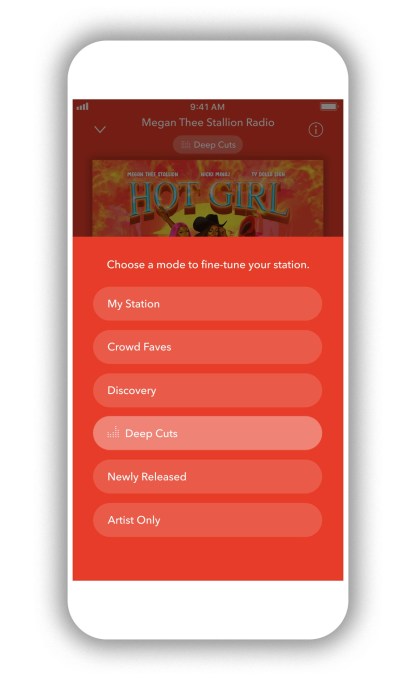
Here, you’ll be able to tap into Pandora Modes,  for example, which is a new way to listen to Pandora Stations. The feature was previously available on the web, and has now come to mobile for the first time with today’s launch.

Pandora Modes let you toggle between ways to customize your stations. You can opt for modes that will tweak the station to play things like the most popular songs (“crowd faves”), the deep cuts, new releases, artist-only tracks, and more.  You can also opt for a “discovery” mode to have Pandora introduce you to new artists you may like, as related to the station in question.

Another section in the For You tab lets you browse by categories, including by genre, by new music, podcasts, moods, playlists, decades and by trending.

The “Moods & Activities” section, meanwhile, will present collections of music based on current trends — for example, one of the available “moods” is “fall” and another could be “rainy day,” matched up with the day’s weather. You can also dig into this section for moods to match your activity, like workout, gaming, studying, family time, and more.

As you scroll down the For You page, you’ll come across your podcast recommendations and personalized playlists. And Pandora can create some 80 different versions of the latter, which include playlists by moods, activities, genres, and more all powered by its Music Genome.

Plus, the combined Pandora and SiriusXM editorial team of around 25 creates hundreds of human-curated playlists, too.

PandoraModes BlogImage

In total, there are some 35 different modules in Pandora’s new For You feed, some of which are shown to every user while others appear dynamically based on time of day and day of week. Its suggestions will also be tailored to your own likes and interests, thanks to your own listening behavior and explicit signals, like thumbs up and thumbs down.

That means your For You tab will be unique to you, and you can later be targeted with specific promotions — like the content to emerge from that deal between SiriusXM/Pandora and Drake, for example, if relevant to your interests. (Hey, it’s better than that time when Spotify put Drake’s face on every playlist.)

Despite the personalization, the feed will still include some insights powered by the larger Pandora population, so you can see what’s popular and trending more broadly across the service.

In time, Pandora plans to roll out even more modules to build out the experience further.

100 billion thumbs are what’s powering all this,” adds Phillips, speaking of Pandora’s recent milestone, which measured the number of thumbs up and down clicks from users. Until now, he says, Pandora “hadn’t really brought together the community…and the power of our personalization, but not just for stations — for all the playlists, albums, songs, and artists,” Phillips continues. “And then the idea that we lay on top of all of this…the idea of what time of day it is, and what might be interesting based on what we predict your mood is right now,” he says.

The “For You” tab and other features are arriving today on Pandora for iOS and Android.

01 Oct 2019

Pitch, a presentation startup from Wunderlist’s founders, raises $30M more to take on PowerPoint

The software industry is no spring chicken, and that fact that brought us to an interesting moment in technology: some of the biggest legacy apps — ubiquitous as they may be — are getting revisited by smaller and more fleet-of-foot startups, who are building new apps that they hope will disrupt their respective Goliaths. In the latest turn, a startup out of Berlin — whose founders have already sold a company to Microsoft — is today announcing the closed beta, of Pitch, a new take on presentation software that hopes to compete against the likes of… Microsoft, specifically PowerPoint.

Along with this, Pitch is announcing that it has raised an additional $30 million in funding led by Thrive Capital, with participation also from Kevin Systrom and Mike Krieger (Instagram’s co-founders) and Rahul Vohra (Superhuman’s founder). It comes on top of a $19 million round Pitch raised a year ago from Index Ventures, BlueYard, Slack, and a number of other angels well versed in the art of software disruption (they included the CEO of Zoom, the CEO of DataDog and the co-founder of Elastic).

Founded by the same people who built Wunderlist — the popular to-do app (backed by many of the same investors) that Microsoft acquired in 2015 and then eventually announced it would shut down to develop its own competing service, To-Do — Pitch has been fairly under the radar since last October, while it has been building the first version of its service. The invite-only phase that we are in now is a gradual advancement on that: the purpose of the beta, CEO Christian Reber noted, is to gather usage information and feedback from beta testers to figure out how to shape the app for a future full launch.

This means that there isn’t really a product to test right now — when I asked, Reber told me that I would need to wait at least a few weeks go get onboarded — but that the wheels are definitely in motion, now fuelled by a significant amount of capital.

The main push behind building Pitch, Reber said, was this idea of revisiting processes that have been around for a long time, that are very entrenched as a result, but don’t actually work that well and could stand to be rethought with all of the advances of technology in mind. PowerPoint is a prime candidate for disruption: launched waaaay back in 1987 (!), it has over 1 billion installations and 500 million users, making it the biggest and oldest rooster in a large field of presentation tools.

“We loved the idea of building pitch as a product,” he said. “There has been so much innovation in design in the last few years, when you consider companies like Figma, and it led us to wonder: why have presentation tools stagnated? We loved the idea of building a better version of PowerPoint, but my business brain told me it’s a terrible idea. Why enter a market with products like Keynote and PowerPoint?”

The answer to that question came when the team started to play around with prototypes to get feedback from friends, which Reber said helped them understand the business opportunity of changing what is essentially a stagnant format into a living one. (That positive progress is also a big reason, I’m guessing, behind why Pitch is continuing to extend the testing and building phase into a closed beta.)

Reber said the choice to build Pitch was also informed by his experience as an investor, where he has focused on a number of apps that are also rebuilding services otherwise dominated by established software. (His investment portfolio includes Notion, which is building a virtual workspace.)

There’s an interesting lesson to be learned in the launch of Pitch when you consider what else has been occupying Reber’s time on the work front: he has also been busy trying to buy back Wunderlist, which despite the announcement that it would shut down, still remains operational and has millions of active users.

Reber said that he has no regrets about selling Wunderlist when he did. Although the company was growing he knew that ultimately there needed to be a bigger platform play that they didn’t feel they had the firepower to build, and looking at the fate and downfall of Evernote — always a big inspiration for Reber and his team — he knew they made the right choice by selling to Microsoft.

Be that as it may, though, seeing the product languish and get ignored at Microsoft has been tough.

“I emailed the leadership team at Microsoft quite a few times to see if I could buy it back, since I could see that it was struggling to shut it down without screwing the users,” he said, making them an offer: “You can give it back to me. Keep the team and everything else if you want. Everyone wins.” Not so fast, though, a year later, and he’s taken his pitch (so the speak!) to Twitter.  “They have gone radio silent,” he said.

While Wunderlist might have emerged at a time when it might not have been possible to conceive of how to build an app without the platform play firmly in place around it, it seems that this is a maxim that is not quite as simple anymore — which is one reason why Reber thought he could buy back Wunderlist and run with it.

“The most challenging question for any new software company, especially if you think of the example of Slack, is the one of platform,” Reber said. “Microsoft is building Teams and pre-installing it on Windows, forcing users to at least try it. It’s an extremely unfair advantage in my opinion and something you are continually fighting against if you are a startup.

“But at the same time I Think all these companies building new stuff are building things that connect deeply with each other — Slack, Zoom and Airtable are all tightly integrated. That means you can build really large companies without having whole suites of products.”

Longer term, there will need to be choices made about which direction a startup takes, whether to stay independent or make a play as a platform itself, or jump to another platform. But for now, it’s not one that Pitch will have to make.

“We invest in fast-growing companies with big market potential, and Pitch is in a strong position to create a great product in a market that’s ripe for change. The demand for Pitch is already clear by the thousands of companies who have expressed interest in the limited preview,” Joshua Kusher from Thrive Capital said in a statement. “We believe in Pitch both because of the product vision but also because of the team. As investors in Wunderlist, we built strong relationships with the founders and are excited to work with them again at Pitch.

01 Oct 2019

WhatsApp is testing a self-destructing messages feature

WhatsApp users may soon get the ability to have their messages self-destruct after a set period of time. That’s according to a highly-reliable tipster who spotted the feature combing through the code of a beta version of the app.

Twitter user WABetaInfo said on Tuesday that the recently released public beta of WhatsApp for Android — dubbed v2.19.275 — includes an optional feature that would allow users to set their messages to self-destruct.

The ability to have messages disappear forever after a fixed amount of time could come in handy to users who share sensitive information with friends and colleagues on the app. It’s one of the most popular features on instant messaging client Telegram, for instance.

2EE9D669 87D1 4CC2 842F 2644E7549ED9

Image: WABetaInfo

Telegram offers a “secret chat” feature wherein users can engage with each other and their messages disappear from their devices after a set amount of time. The messaging platform says it does not store the text on its servers and restricts users from forwarding the messages, or take a screenshot of the conversation, to ensure there is “no trail” of the texts.

“All secret chats in Telegram are device-specific and are not part of the Telegram cloud. This means you can only access messages in a secret chat from their device of origin. They are safe for as long as your device is safe in your pocket,” it explains.

Facebook, which owns WhatsApp, also offers a “secret chat” feature on its Messenger app. But there, the secret chat feature only encrypts end-to-end messages and media content shared between two users. On WhatsApp, messages between users are end-to-end encrypted by default.

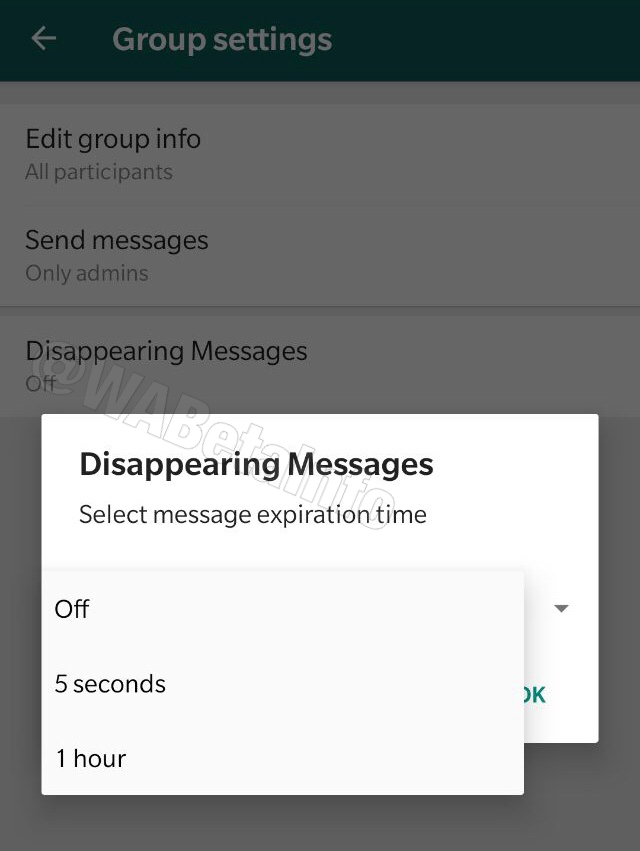
Currently, WhatsApp is testing the feature in a group setting that supports participation from multiple individuals. Messages could be set to self-destruct as soon as five seconds after they have been sent and as late as an hour. Additionally, an image shared by WABetaInfo shows that group administrators will have the ability to prevent other participants in the group from texting.

Some third-party WhatsApp apps have allowed self-destructing messages feature in the past. But in recent years, WhatsApp has started to crack down on third-party services to ensure safety of its users.

It remains unclear how soon — if ever — WhatsApp plans to roll out this feature to all its users. We have reached out to them for comment.

01 Oct 2019

Backed by Expa, Aero is a premium air travel startup with $16M in funding

Aero, a new air travel startup backed by Garrett Camp’s startup studio Expa, is officially announcing the appointment of its first CEO: Uma Subramanian, who previously launched Airbus’ helicopter service Voom.Flights.

The startup is also revealing that it’s raised a total of $16 million in funding. In addition to Expa, GGV Capital also invested.

Aero said its goal is to offer the luxury of private jet travel while charging “less than the cost of commercial first class.” To do this, it matches up travelers who are going to the same destination, putting them on direct flights into and out of private airports.

That means the flight itself should be what Aero described as a luxurious, social experience — and you also get to skip the nightmare of airport security. For example, the company ran test flights over the summer in partnership with a European air carrier, transporting passengers directly between Mykonos (Greece) and Ibiza (Spain), and it plans to start selling tickets to Telluride and La Paz (Mexico) next month.

Camp (who, in addition to Expa, co-founded StumbleUpon and Uber) previously invested in private jet startup BlackJet, which eventually shut down.

When asked for who’s been taking these flights so far, a company spokesperson said, “Our customers are experience driven, and skew towards millennial and Gen Z customers who believe that seamless air should be part of their travel experience.”

Aero also said it’s developing a mobile-first booking and ticketing system.

“I am super excited to be leading the Aero team to bring to life our vision of ushering in a new golden age of air travel,” Subramanian said in a statement. “I believe that flying should be a magical experience – not just getting from A to B, but rather an experience to be savored and shared. We want to be the premier air carrier for the experience economy.”