Year: 2019

16 Sep 2019

I hope Apple Arcade makes room for weird cool shit

Apple Arcade seems purpose built to make room in the market for beautiful, sad, weird, moving, slow, clever and heartfelt. All things that the action, shooter and MOBA driven major market of games has done nothing to foster over the last decade.

I had a chance to play a bunch of the titles coming to Apple Arcade, which launched today in a surprise move for some early testers of iOS 13. Nearly every game I played was fun, all were gorgeous and some were really really great.

A few I really enjoyed, in no particular order:

20190524 WCF GameplayScreenshot wcf screenShot mcFishShakeJump 1080

Where Cards Fall — A Snowman game from Sam Rosenthal. A beautiful game with a clever card-based mechanic that allows room for story moments and a ramping difficulty level that should be fantastic for short play sessions. Shades of Monument Valley, of course, in its puzzle + story interleave. Super satisfying gameplay and crisp animations abound.

20190729 Overland GameplayScreenshot 09 Basin

Overland — Finji — Overland is one of my most anticipated games from the bunch, I’ve been following the development of this game from the Night in the Woods and Canabalt creators for a long time. It does not disappoint, with a stylized but somehow hyper-realized post apocalyptic turn-based system that transmits urgency through economy of movement. Every act you take counts. Given that it’s a rogue like, the story is told through the world rather than through an individual character’s narrative and the world does a great job of it.

20190517 Oceanhorn2 Oceanhorn2 Screenshot 7

Oceanhorn 2 — Cornfox & Brothers — The closest to a native Zelda you’ll get on iOS — this plays great on a controller. Do yourself a favor and try it that way.

20190712 Spek GameplayScreenshot Spek Screen C 3

Spek — RAC7 — One of those puzzle games people will plow through, it makes the mechanics simple to understand then begins to really push and prod at your mastery of them over time. The AR component of the app seems like it will be a better party game than solo experience, but the effects used here are great and it really plays with distance and perspective in a way that an AR game should. A good totem for the genre going forward.

I was able to play several of the games across all three platforms including Apple TV with an Xbox controller, iPhone and iPad. While some favored controller (Skate City) and others touch controls (Super Impossible Road), all felt like I could play them either way without much difficulty.

There are also some surprises in the initial batch of games like Lego Brawls — a Smash Brothers clone that will be a big hit for car rides and get togethers I think.

My hope is that the Apple Arcade advantage, an agressive $4.99 price and prime placement in the App Store, may help to create an umbrella of sorts for games that don’t fit the ‘big opening weekend’ revenue mold and I hope Apple leans into that. I know that there may be action-oriented and big name titles in the package now and in the future, and that’s fine. But there are many kinds of games out there that are fantastic but “minor” in the grand scheme of things and having a place that could create sustainability in the market for these gems is a great thing.

The financial terms were not disclosed by Apple but many of the developers appear to have gotten up front money to make games for the platform and, doubtless, there is a rev share on some sort of basis, probably usage or installs. Whatever it is, I hope the focus is on sustainability, but the people responsible for Arcade inside Apple are making all the right noises about that so I have hopes.

I am especially glad that Apple is being aggressive with the pricing and with the restrictions it has set for the store, including no in-app purchases or ads. This creates an environment where a parent (ratings permitting) can be confident that a kid playing games from the Arcade tab will not be besieged with casino ads in the middle of their puzzle game.

There is, however, a general irony in the fact that Apple had to create Apple Arcade because of the proliferation of loot box/currency/in-app purchase revenue models. An economy driven by the App Store’s overall depressive effect on the price of games and the decade long acclimation people have had to spending less and less, down to free, for games and apps on the store.

By bundling them into a subscription, Apple sidesteps the individual purchase barrier that it has had a big hand in creating in the first place. While I don’t think it is fully to blame — plenty of other platforms aggressively promote loot box mechanics — a big chunk of the responsibility to fix this distortion does rest on Apple. Apple Arcade is a great stab at that and I hope that the early titles are an indicator of the overall variety and quality that we can expect.
16 Sep 2019

Apple Arcade is now available for some iOS 13 beta users

If you’re running a beta version of iOS 13 or 13.1, chances are you can now open the App Store and subscribe to Apple Arcade. The company has been rolling out its new subscription service, as MacRumors spotted. It works on my iPhone running a public beta version of iOS 13.1.

Apple Arcade requires iOS 13, tvOS 13 or macOS Catalina, which means that you won’t be able to access the service before updating to the new major versions of the operating systems. The final version of iOS 13 is set to launch on Thursday on the iPhone.

Originally announced earlier this year, Apple has been working on an ad-free gaming service that lets you download and play games for a monthly subscription fee. These games have no ads or in-app purchases.

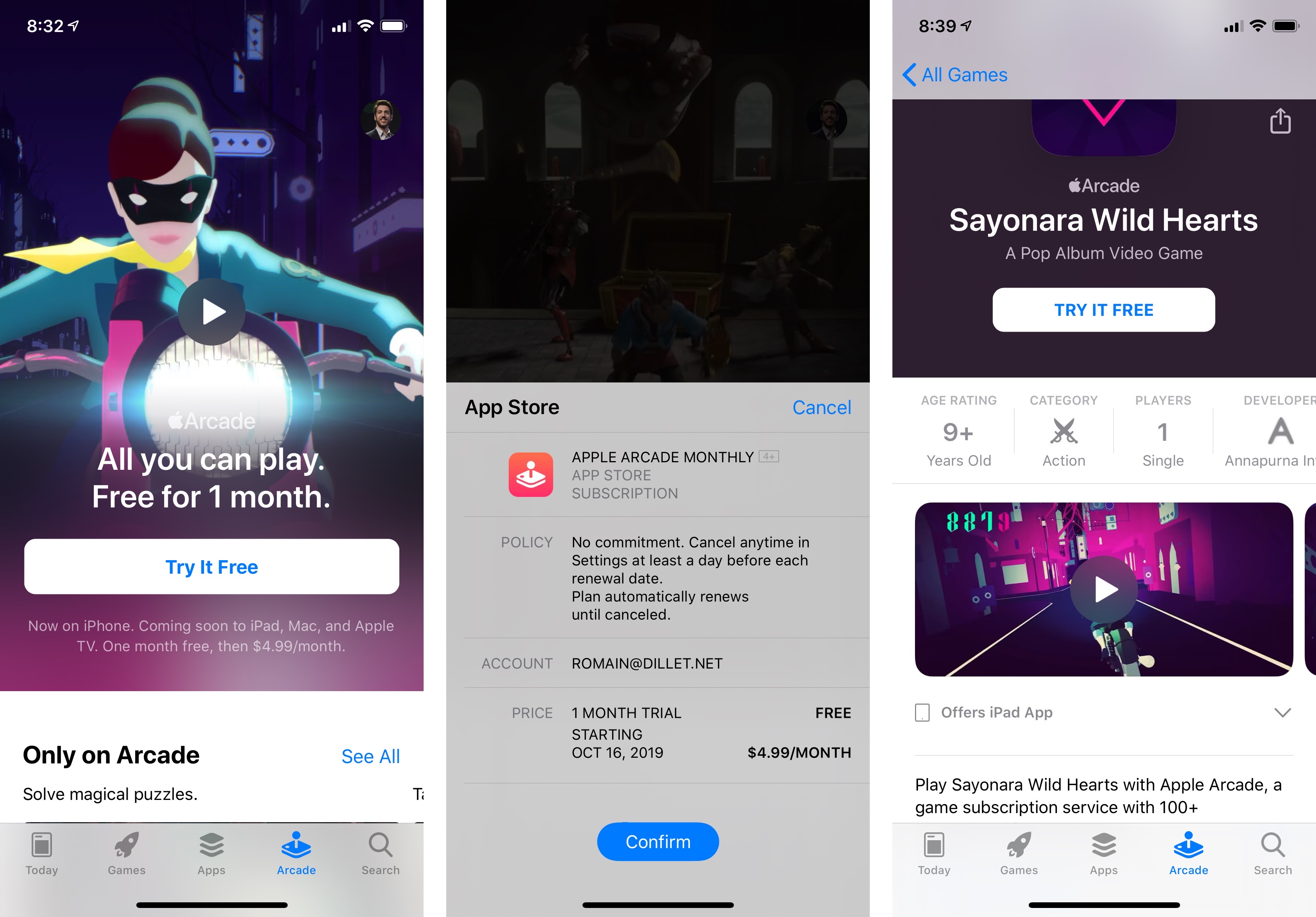
Essentially, you pay $4.99 per month to access a library with dozens of games. Subscriptions include a one-month free trial and work with family sharing.

You can browse the selection of games without subscribing. There are currently 53 games available, but Apple said that it plans to launch over 100 games this fall.

Apple Arcade 1

Each game has its own App Store page with a trailer, screenshots and some new icons indicating the age rating, category, number of players and more.

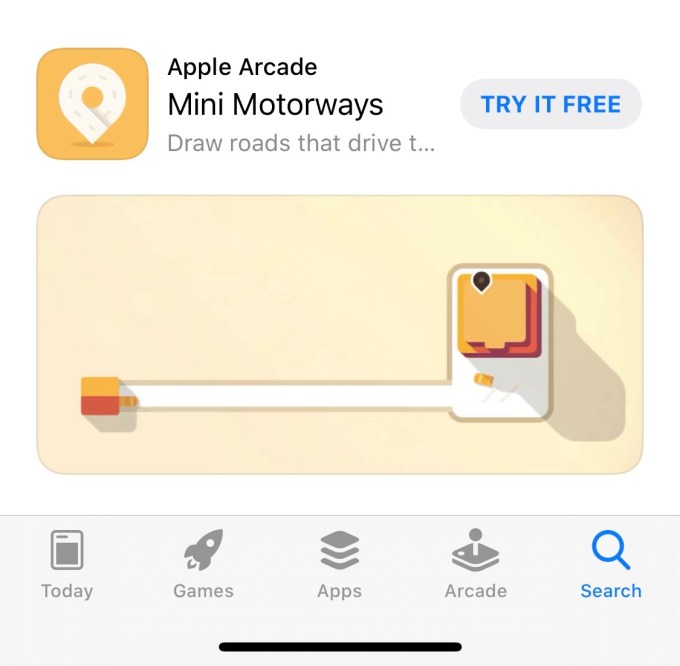
If you search for a game on the App Store and you’re not an Apple Arcade subscriber, you get a new button that tells you that you can try it free by subscribing to Apple Arcade. It also says “Apple Arcade” above the app name.

Apple Arcade 2

16 Sep 2019

California bill looks to close data gaps in the criminal justice system

The California state legislature has passed AB-1331, a criminal justice data bill that aims to improve the quality of criminal justice records and creates a pathway for courts to share data with researchers. The bill is awaiting a signature of approval by California Gov. Gavin Newsom.

Authored by Assemblyperson Robert Bonta, the bill seeks to address the data gaps in criminal history records that “undermine their accuracy and reliability,” according to an AB 1331 fact sheet.

For example, the Department of Justice estimates that 60% of arrest records are missing disposition information, such as the judge’s ruling or sentencing. This can lead to criminalizing people who may be innocent. In addition, because pretrial risk assessment tools require timely and accurate information, any missing data could result in low-risk people being detained or high-risk individuals being released.

There are very few data collection standards In California, a state in which the criminal justice landscape is “highly decentralized” and each entity is responsible for its own data collection, Mikaela Rabinowitz, director of national engagement and field operations at non-partisan criminal justice data analysis organization Measures for Justice told TechCrunch. This makes it hard for the California Department of Justice to accurately track people across those systems, she said.

To address this, AB 1331 aims to establish clear collecting and reporting requirements for law enforcement agencies and courts. The legislation is designed to help law enforcement agencies to make better decisions about defendants and enable courts to share data with organizations like Measures for Justice, which aims to change the way we measure and understand criminal justice data.

In 2016, California passed the OpenJustice Data Act, which led to the creation of a criminal justice data platform available to the public. The interactive platform, spearheaded by the California Department of Justice, features data from California’s 1,000-plus law enforcement agencies to allow for side-by-side comparison of agencies, like the San Francisco Police Department versus the Los Angeles Police Department.

While the OpenJustice platform represented a major step in the right direction, it wasn’t enough. AB 1331 now seeks to address the gaps that still exist within the data on both people and processes.

“You can’t change what you can’t see, and good decision-making really starts with the data and facts,” Measures for Justice Executive Director and President Amy Bach told TechCrunch. “If you want good decision-making, you need to have better data processes at the local and state level, and you have to increase data for outside researchers. This is a really exciting step forward. Basically, California is being welcomed into a prestigious group of pioneering states like Florida and Connecticut that have recently passed bills to address the criminal justice system.”

Nationwide, criminal justice reform has been having a moment lately. Last March, Florida signed into law a comprehensive and standardized data collection and public reporting process. Connecticut, meanwhile, has repealed the death penalty, decriminalized small amounts of cannabis and reformed its pardon and parole processes over the last several years. And Colorado passed a bill to make jail capacity data to public. California is now the latest state to make headway in closing the data gaps in the criminal justice system.

“I think this is a huge frontier,” Rabinowitz said. “I think criminal justice has been really far behind other public systems in making use of data, both in terms of investing in the tech necessary for high-quality data but also in terms of using research to drive decision-making. It’s certainly far behind where education or public health are. As we see criminal justice becoming more and more of a critical policy issue and political issue, there is more interest in having the data necessary to make informed criminal justice decisions.”

16 Sep 2019

Netflix acquires global streaming rights for “Seinfeld” starting in 2021

Netflix has just scored a major content deal that could help it to stem the loss of subscribers as competition among streamers heats up. The company announced it has acquired the global streaming rights to the popular sitcom “Seinfeld,” which will bring all 180 episodes of the Emmy winner to the Netflix subscribers starting in 2021.

The timing of this addition is critical for Netflix, as “Seinfeld” will go to air the same year that the streamer loses one of its most-watched pieces of content: re-runs of “The Office.” It will also follow Netflix’s loss of another iconic sitcom — when “Friends” exits the service in 2020.

Despite the age of the content in question, these are still highly expensive deals because of the evergreen nature of the shows and their ability to reach new fans who weren’t old enough to have watched the shows when they originally aired.

Beyond that, these re-runs have massive audiences. For example, Nielsen found that “The Office” is the most-watched show on Netflix, despite the streamer’s multi-billion dollar investments in its own original content which is far more heavily promoted across its platform.

And that original content isn’t performing well, as of late, making it even more critical for Netflix to hold on to at least some of its classic library content. Last quarter, the company lost U.S. subscribers for the first time since 2011. The company didn’t cite increased competition as a factor, as many of its challengers — like Disney+, Apple TV+, and HBO Max — have yet to launch. Instead, it pointed to price hikes and a programming slate that failed to attract subscribers.

Meanwhile, Netflix was recently outbid for rights to “The Office,” as NBCU paid $500 million to pull the hit from Netflix when its deal ends in 2021. Netflix also lost “Friends” to WarnerMedia, which paid $425 million to bring the classic show to its new service HBO Max for five years, starting in 2020.

Given the “Seinfeld” deal with Sony Pictures Television is for worldwide distribution to Netflix’s roughly 150 million subscribers, its price should be in that same ballpark if not higher. (Netflix isn’t discussing deal terms).

“Seinfeld is the television comedy that all television comedy is measured against. It is as fresh and funny as ever and will be available to the world in 4K for the first time,” said Ted Sarandos, Chief Content Officer for Netflix, in a statement. “We can’t wait to welcome Jerry, Elaine, George and Kramer to their new global home on Netflix.”

Classic sitcoms aren’t the only things Netflix has been dropping, as of late.

It also this year exited the Marvel superhero business with the cancellations of “Jessica Jones” and “The Punisher,” after having already axed “Iron Fist,” “Luke Cage” and “Daredevil,” ahead of the launch of Disney+. And it has canceled a number of other under-performing series, including “The OA,” “Tuca & Bertie,” “Designated Survivor,” “She’s Gotta Have It,” and its remake of “One Day at a Time.”

16 Sep 2019

Canal+ will bundle Netflix subscriptions in France

Canal+ wants to provide an alternative to the great unbundling of video streaming services. France’s leading pay-TV group announced that it will sell Netflix subscriptions starting on October 15.

Instead of having to subscribe to multiple different services, Canal+ hopes that customers are looking for the ability to pay a monthly subscription for multiple services at once. This strategy is somewhat similar to Amazon Prime Video Channels and Apple TV Channels in the U.S.

People who subscribe to Canal+ for €20 per month (or €10 per month if you’re under 26) will be able to add a package of movies and TV shows for another €15 per month.

This package contains a standard Netflix subscription that lets you stream content in HD on two devices at once, which usually costs €12 per month in France. In addition to Netflix, you can also access OCS, which includes all HBO content and various live TV channels and on-demand content.

Overall, you get a ton of original content from Canal+, Netflix and HBO for €35 per month. But Canal+ already says that the package that includes Netflix won’t cost €15 forever. You can expect a price hike at some point in the coming months.

Canal+ provides its own set-top box and also has distribution deals with all major telecommunications companies in France. But even after launching an over-the-top offering that doesn’t require a set-top box, Canal+ has been steadily losing subscribers over the past few years. Netflix says that it currently has 6 million subscribers in France.

Over the past few years, Canal+ has been operating a shift from live TV to on-demand streaming. In addition to its usual TV channels with a mix of live sports, movies and TV shows, you can now stream movies and TV shows from a popular iOS and Android app called myCanal.

Canal+ customers who have a Canal+ set-top box will also be able to add the new package with Netflix. If you’re an existing Netflix subscribers, you’ll be able to link your Netflix account with your Canal+ account to tell Netflix that you’re already paying through Canal+ and stop Netflix billing. It’s still unclear whether Netflix content will be available in the myCanal app.

16 Sep 2019

$100M Grant for the Web fund aims to jump-start a new way to pay online

Getting paid for providing content online isn’t simple, and as the ad-based economy continues to collapse pretty much everyone is looking for alternatives. One problem: While the web is great at moving images and audio and files around, it has a real problem with money. Coil, Mozilla, and Creative Commons hope to change that with a native web payments standard and $100M to get it off the ground.

“Web monetization” is the name of the game here, not just generally but also the specific new web protocol being proposed. It’s meant to be an open, interoperable standard that will let anyone send money to anyone else on the web.

That doesn’t mean it sprang fully formed out of nowhere, though. It’s based on a protocol called Interledger pursued by former Ripple CTO Stefan Thomas in his new company Coil.

“We were basically applying the concept of internet protocol to payments — routing little packets of money,” Thomas told TechCrunch, though he was quick to add that it’s not blockchain-powered. Those systems, he said, are useful in their place, but end up bogged down in upkeep and administration. And services like Flattr are great, he said, but limited by the fact that they’re essentially run by a single company.

Interledger, he explained, is a protocol for securely and universally connecting existing payment systems in a totally agnostic way. “It supports any underlying payment structure, bitcoin or a bank ledger or whatever, and any connection you use, satellite or wi-fi, it doesn’t care. We were working on on it for a long time, since like 2015, and last year were like, well, how do we get this out into the real world?”

The answer was a new company, for one thing, but also partnering with open web advocates at Mozilla and Creative Commons on Grant for the Web, a $100M fund to disburse with their input. Both have a seat at the table in selecting grant recipients, and the latter is a recipient itself.

“This is an opportunity for CC to experiment with optional micropayments in CC Search,” said Creative Commons interim CEO Cable Green. “If users want to provide micropayments to authors of openly licensed images, to show gratitude, we’re interested in exploring these options with our global community.”

“An open source micropayment protocol and ecosystem could be good for creators and users,” he continued. “Building a web that doesn’t rely on data acquisition and advertising is a good thing.”

The $100M fund is all Coil money, which makes sense as Coil was founded to promote and develop the Interledger and Web Monetization protocols. Huge funding pushes don’t seem like the ordinary way to establish new web standards, but Thomas explained that payments are a unique case.

“The underlying business model for the web is kind of broken,” he said. And that’s partly by design: Enormous companies with vested interests in existing payment and monetization structures are always working to maintain the status quo or shift it in a favorable direction — companies like Google that rely on advertising, or Visa and others that power traditional payment methods.

“From our perspective, what the standard is ultimately competing with is proprietary platforms with billions in funding,” Thomas said.

The $100M fund will be spread out over five years or so, and will be awarded both to companies and people that use or plan to use the Web Monetization standard in an interesting way, and to content creators who are poorly served by existing monetization methods.

Long tail content that’s nevertheless important, like investigative journalism or documentaries from and by marginalized communities, is one of the targets for the fund. Grants could come in the form of direct funding, or matching subscribers’ contributions. There’s no quid pro quo, Thomas said, except for a hard minimum of half the content being released under an open license like Creative Commons — which that organization is likely excited about.

Right now a subscription-based browser extension that allows easy payments to sites that have implemented the standard is the only way to get in the door. Admittedly that’s not a very sexy onboarding experience. But part of the fund is intended to juice the development and adoption of the standard much more widely.

It’s a way — though an expensive one, sure — to show that an alternative model exists to the traditional ad-based or subscription-based methods of supporting content.

You can sign up now to be notified when they start accepting grant applications at grantfortheweb.org.

16 Sep 2019

Will Smith and Ang Lee are coming to Disrupt SF

We’re announcing a big addition to the Disrupt SF Agenda: Will Smith and director Ang Lee will be joining us to discuss their upcoming film “Gemini Man.”

They’ve both had long careers in the movie business — Lee’s titles include “Crouching Tiger, Hidden Dragon,” “Brokeback Mountain” (which won him an Academy Award for Best Director) and “Life of Pi” (ditto). And Smith, of course, has starred in countless box office hits, most recently “Aladdin,” while also delivering critically-acclaimed performances in films like “Ali” and “Concussion.”

But they’re not resting on their laurels. “Gemini Man” features Smith in a dual role — he plays assassin Henry Brogan, as well as Junior, a younger clone who’s been sent to kill his older self — with “jaw-dropping” effects from Weta Digital.

“Gemini Man” and Netflix’s new Martin Scorsese film “The Irishman” take different approaches (“The Irishman” uses effects to make its actors look younger, while “Gemini Man”‘s Junior is full CGI creation), but they both point to a new cinematic world, where stars like Smith, Robert De Niro and Al Pacino can play themselves at any age, without relying on younger counterparts or resorting to heavy and unconvincing layers of makeup.

We’ll talk to Lee and Smith about what it was like working with these effects, and how else they might change the way movies get made. We’ll also ask about the future of the industry, Lee’s other experiments with cutting-edge technology and Smith’s startup investments through Dreamers Fund, which he created with Japanese athlete Keisuke Honda.

Smith and Lee join an absolutely star-studded agenda that includes the likes of Marc Benioff, Evan Spiegel, Marillyn Hewson, Chris Dixon, Shan-Lyn Ma, and Ashton Kutcher in his debut as a Battlefield Finals judge.

Disrupt SF runs October 2 to October 4 at the Moscone Center in the heart of San Francisco. Tickets are available here.

16 Sep 2019

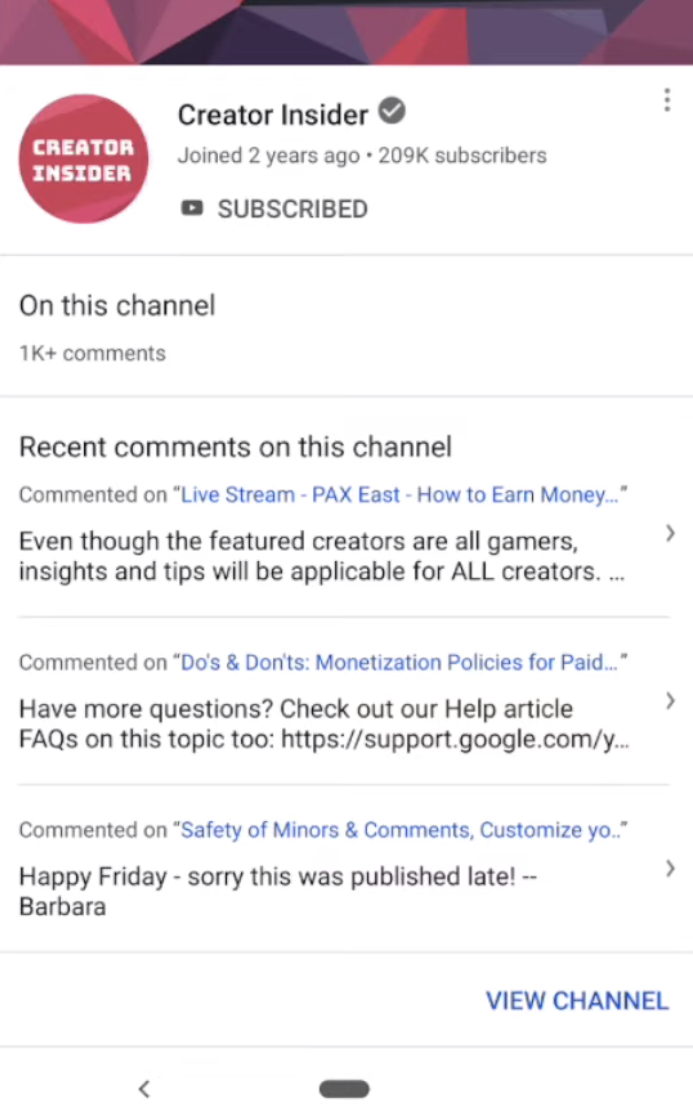
YouTube tests profile cards that show users’ comment history

YouTube commenters will now have their channel loyalty — or their tendency to troll — exposed, thanks to a new feature called profile cards, now in testing. Recently announced by way of YouTube’s Creator Insider channel, where the company shares updates and changes with its creator community, these new profile cards would appear whenever you clicked on a commenter’s name, and would list all their other recent comments on the channel.

Currently, if you click on a commenter’s name, you’re redirected to their channel page on YouTube.

But that doesn’t allow the video creator or other commenters to learn much about the person behind a given comment, in many cases, as not everyone publishes to YouTube. The commenter’s channel could be sparse, out of date, or completely unrelated to the topic at hand.

With the new profile cards, however, you’ll instead be able to see all the recent comments left on the channel over the past 12 months. However, it won’t show their comments left on other channels at this time. In other words, it’s not a full user profile, similar to what you would find on other message board sites like Reddit, where a complete comment history is available for each user.

“It will help you get a sense of what this person is writing,” explains YouTube Director of Product Management, Tom Leung, in the annoucement published in the past week. “We hope that it will strengthen connections with others in the YouTube community and will help creators recognize some of their best commenters,” he added.

youtube profile cards

Though not mentioned, the new feature could also help creators recognize some of their worst commenters, as well — meaning, those who only show up to troll, derail discussions, or otherwise cause problems.

Being able to see a history of someone’s comments would allow a video creator or moderator to make a more informed decision about whether future comments from the same user should be hidden or, conversely, if the user is trustworthy enough to earn a spot on the “approved users” list so their comments get published automatically.

The new profile card will also include a link to the commenter’s YouTube channel, but it doesn’t redirect you there as before. YouTube didn’t say how broadly the experiment is being rolled out for testing’s sake, but it was well-received by the community members reacting to the announcement at the time.

The test is one of several experiments running on YouTube at present. Another will allow video creators to display a personalized message to help attract new subscribers, the video also noted.

16 Sep 2019

Google will unveil the Pixel 4 and other new hardware on October 15

Google will reveal the next Pixel in greater detail at an event happening October 15 in New York, the company confirmed via invites sent to media today. We already know the Pixel 4 will be revealed at this event, because Google has already dropped some official images and feature details for the new Android smartphone, but we’ll probably see more besides given that the invite promises “a few new things Made by Google.”

Here’s what we know so far about the Pixel 4: Everything. Well okay, not everything, but most things. Like it’ll use Google’s cool Soli radar-based gesture recognition technology, for both its updated face unlock and some motion controls. Infinite leaks have show that it’ll have a body design that includes a single color/texuture back, what looks like a three-camera rear cluster (wide angle, standard and zoom lens lily), a 6.23-inch OLED display can the XL with image resolution of 3040×1440, with a 90Hz mode that will make animations and scrolling smoother.

unnamed

The animation Google sent out with the invites for its 2019 hardware event.

It also has rather large top and bottom bezels, a rarity for smartphones these days, but something that Google apparently felt was better than going with a notch again. Plus, it has that Soli tech and dot projectors for doing the new face unlock which might require more space up top.

In terms of other hardware, there’s less in terms of solid info to go on, but there are rumours of a new ChromeOS-based Pixelbook plus new Google Home smart speakers, and we could also see more of Stadia, Google’s cloud gaming service which launches in November. Google could also show off additional surprises, including maybe Chromecast updates, or an update to Google Wifi to take advantage of the newly certified Wifi 6 standard.

Basically, there could be a lot of surprises on hand even if the Pixel 4 is more or less a known quantity, and we’ll be there to bring you all the news October 15 as it happens.

16 Sep 2019

Daily Crunch: Salesforce launches vertical clouds

The Daily Crunch is TechCrunch’s roundup of our biggest and most important stories. If you’d like to get this delivered to your inbox every day at around 9am Pacific, you can subscribe here.

1. Salesforce doubles down on verticals, launches Manufacturing and Consumer Goods Clouds

Salesforce unveiled two new business units today as part of its strategy to build specialized solutions for specific industries.

For example, with its Manufacturing Cloud, Salesforce says it has built a way for sales agreements to link up with a company’s ERP and forecasting software, allowing for improved demand prediction.

2. Samsung’s Galaxy Tab S6 combines creative flexibility with great design

Darrell Etherington says the new Galaxy Tab S6 (with pricing starting at $649.99) expands the definition of what a tablet can be.

3. Facebook rolls out new video tools, plus Instagram and IGTV scheduling feature

The highlights include better ways to prep for and simulcast live broadcasts, ways to take better advantage of Watch Party events, new metrics to track video performance and a much-anticipated option to schedule Instagram/IGTV content for up to six months in advance.

4. Hear how to build a billion-dollar SaaS company at TechCrunch Disrupt

This year we’ll welcome three people to the Extra Crunch stage who know first-hand what it takes to join the billion-dollar club: Battery Ventures partner Neeraj Agrawal, HelloSign COO Whitney Bouck and Harness CEO Jyoti Bansal.

image001 1

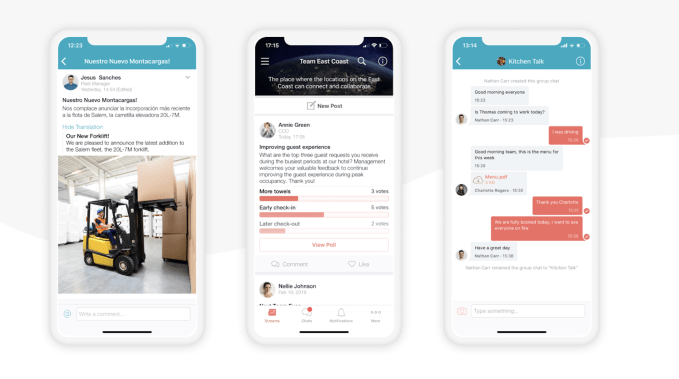
5. Beekeeper raises $45M Series B to become the ‘Slack for non-desk employees’

Beekeeper has built a mobile-first communications platform for employers who need to communicate with blue-collar and service-oriented workers.

6. How to get people to open your emails

We tackle the obvious stuff that can help with low open rates, as well as bigger challenges: Let’s say 60% of your audience opens your email — how can you get the remaining 40% to open and read it too? (Extra Crunch membership required.)

7. This week’s TechCrunch podcasts

The Equity team has some thoughts on the latest WeWork drama, and how it shows that valuations are essentially meaningless. And on Original Content, we review the Netflix documentary series “The Family.”