Year: 2019

09 Sep 2019

Google Nest Hub Max review

There were two standout features I really appreciated off the bat about the original Nest (nee Google Home) Hub: its compact size and its lack of camera. The new Nest Max has decidedly neither of those things.

After releasing a model that offered an interesting alternative to the Echo Show, Google’s taking Amazon’s flagship smart screen head-on with the Max. It’s a device that leverages the learnings of the earlier, smaller model, while applying new case users.

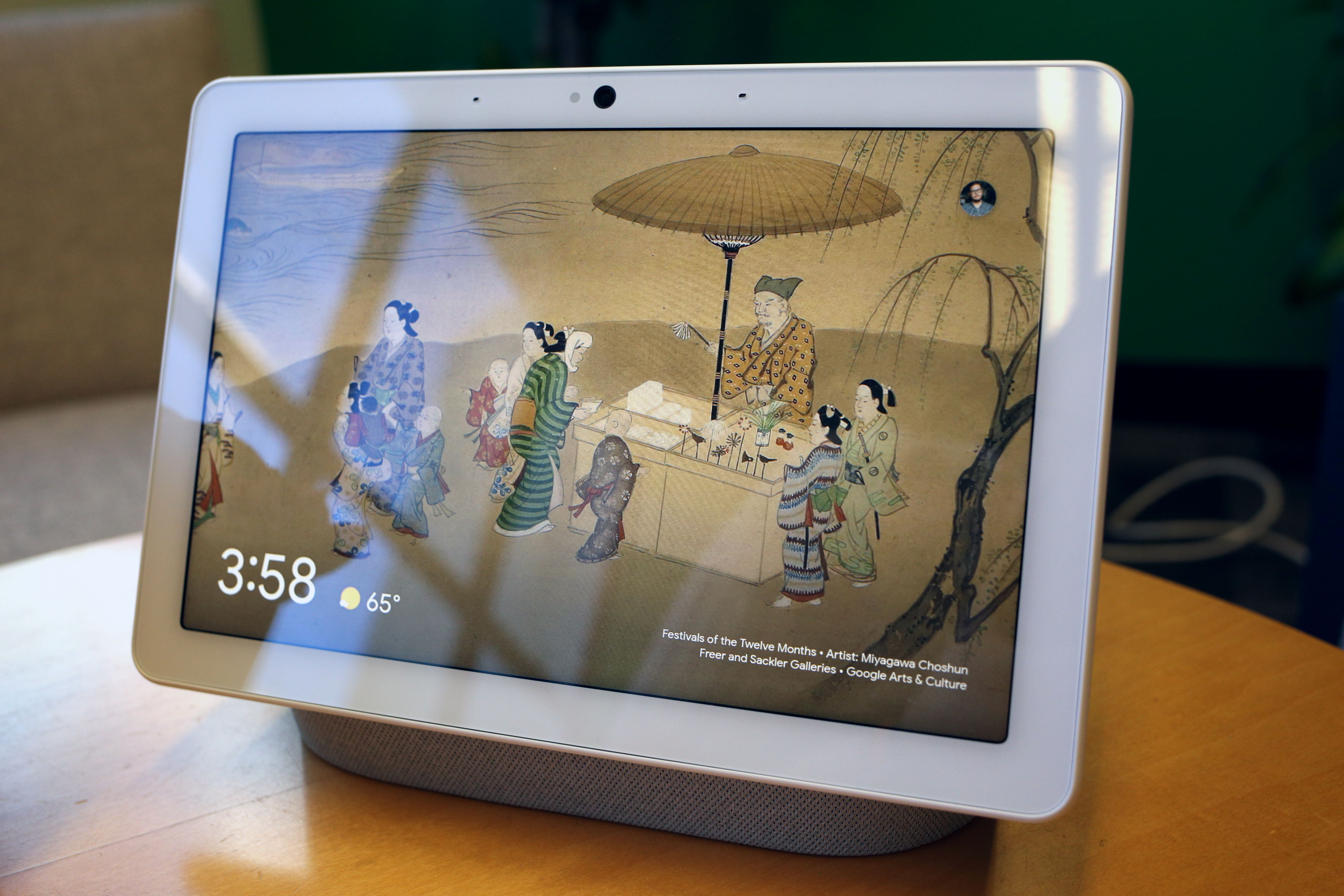
As far as design goes, Google decided not to mess with a good thing here. The Max is nearly identical to the Hub, albeit scaled up, from seven inches to ten. The form factor is the familiar tablet mounted atop a fabric speaker base. It’s simple, it’s subtle, and it will fit in with most decors. Lenovo’s given Google a run for its money with its own Assistant displays, but so far as I’m concerned the Nest line is still the best looking product in the category.
O92A2311

The addition of a camera is really the most radical difference here for a few reason. The most immediate is, of course, security. Google successful avoided inserting itself into that conversation with the original Hub. The reason was simple: it was a product designed to live on nightstands. Sure, the topic of privacy is a slippery slope that most of us have already tumbled halfway down, but for many the idea of introducing a cloud-connected camera into the bedroom was understandably a bridge or two too far.

Facebook, notably, stepped into yet another hornets’ nest when it launched its camera-sporting Portal device amid its own privacy scandal(s) — and rightfully so. Google, however, has inserted itself back into that conversation with Hub Max. Put in the company’s position, one would imagine doing as much as possible to ease users’ peace of mind about privacy concerns.

A physical shutter is a pretty quick and easy way to do precisely that. It’s a helpful sort of shorthand — heck, even Facebook included a clip-on shutter in hopes of nipping some of those concerns in the bud. It’s honestly a bit baffling that Google didn’t do the same — a strange oversight it appears to have made largely for aesthetic reasons.
O92A2336

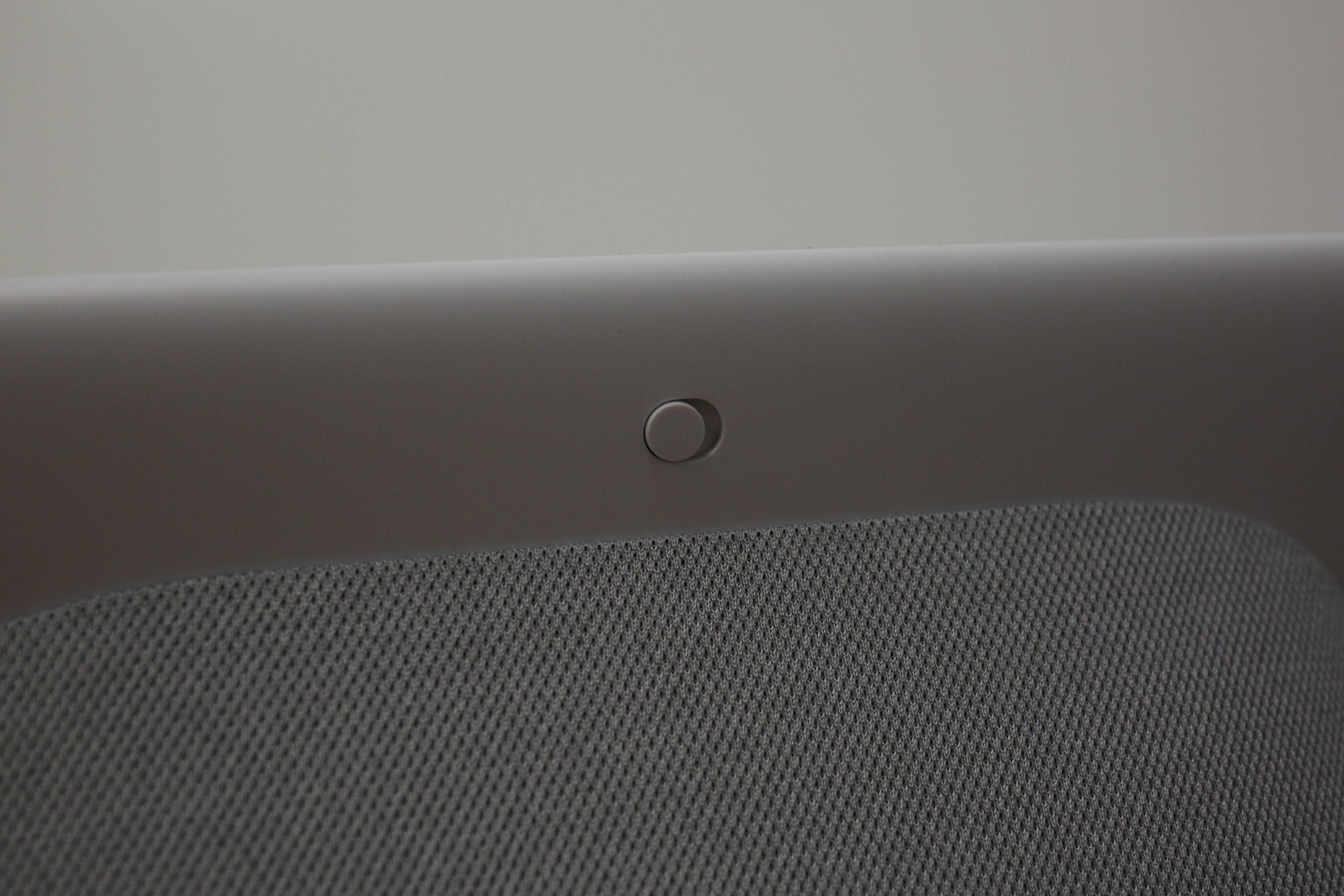
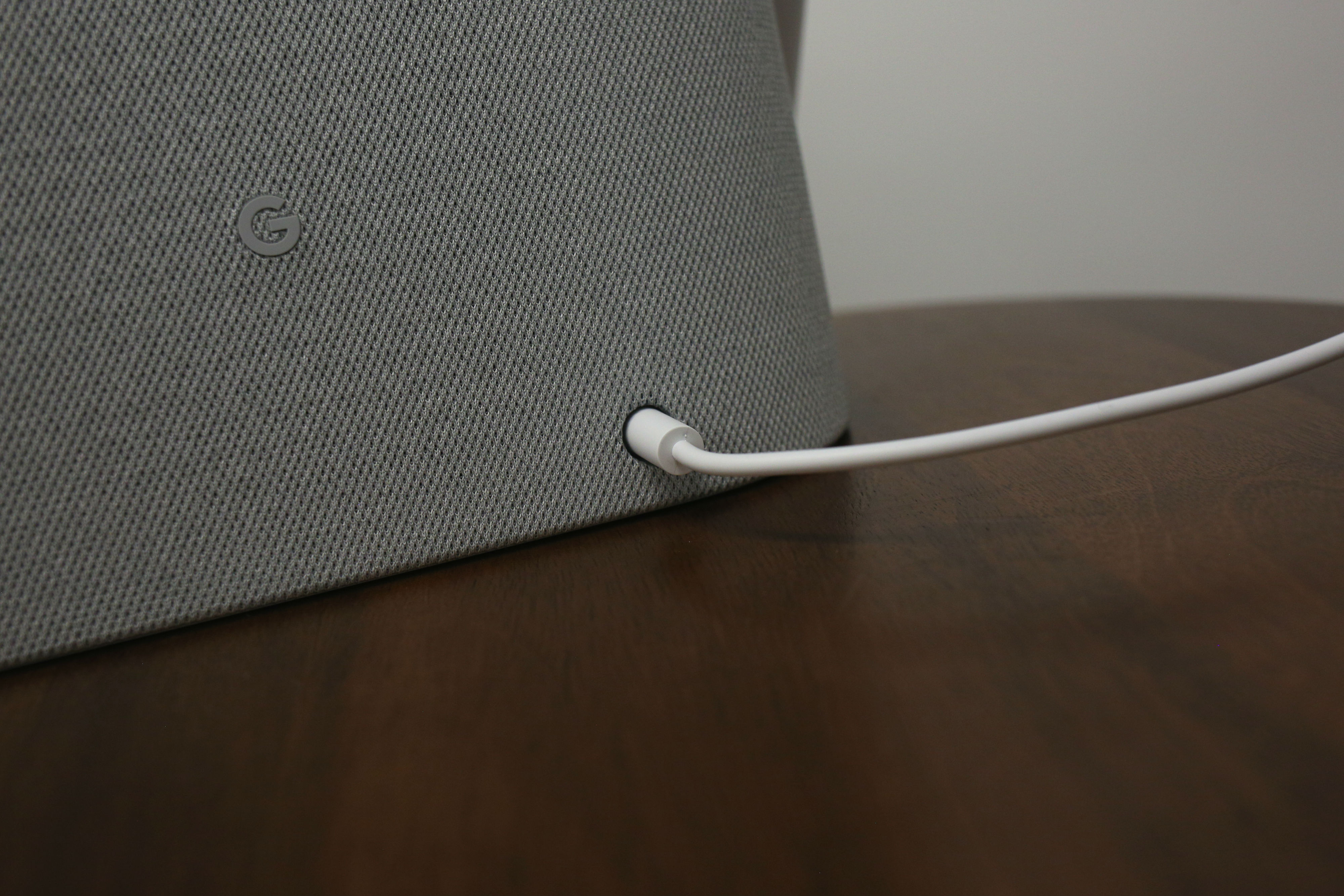
There is, of course, a switch in the rear, which turns off both the microphone and camera, illuminating a red light to the side of the camera in the process. That a red light can both indicate either camera off or record on different devices is a design conversation for another day, I suppose.

But Google’s decision to include a camera isn’t arbitrary. The truth is that it effectively unlocks a whole slew of new functionality here and further distinguishes Nest Hub products from Amazon’s offerings. And, naturally, it also unlocks further privacy concerns in the process. The biggest piece of the puzzle is a kind of personalization that wouldn’t be accessible through other means.
O92A2333

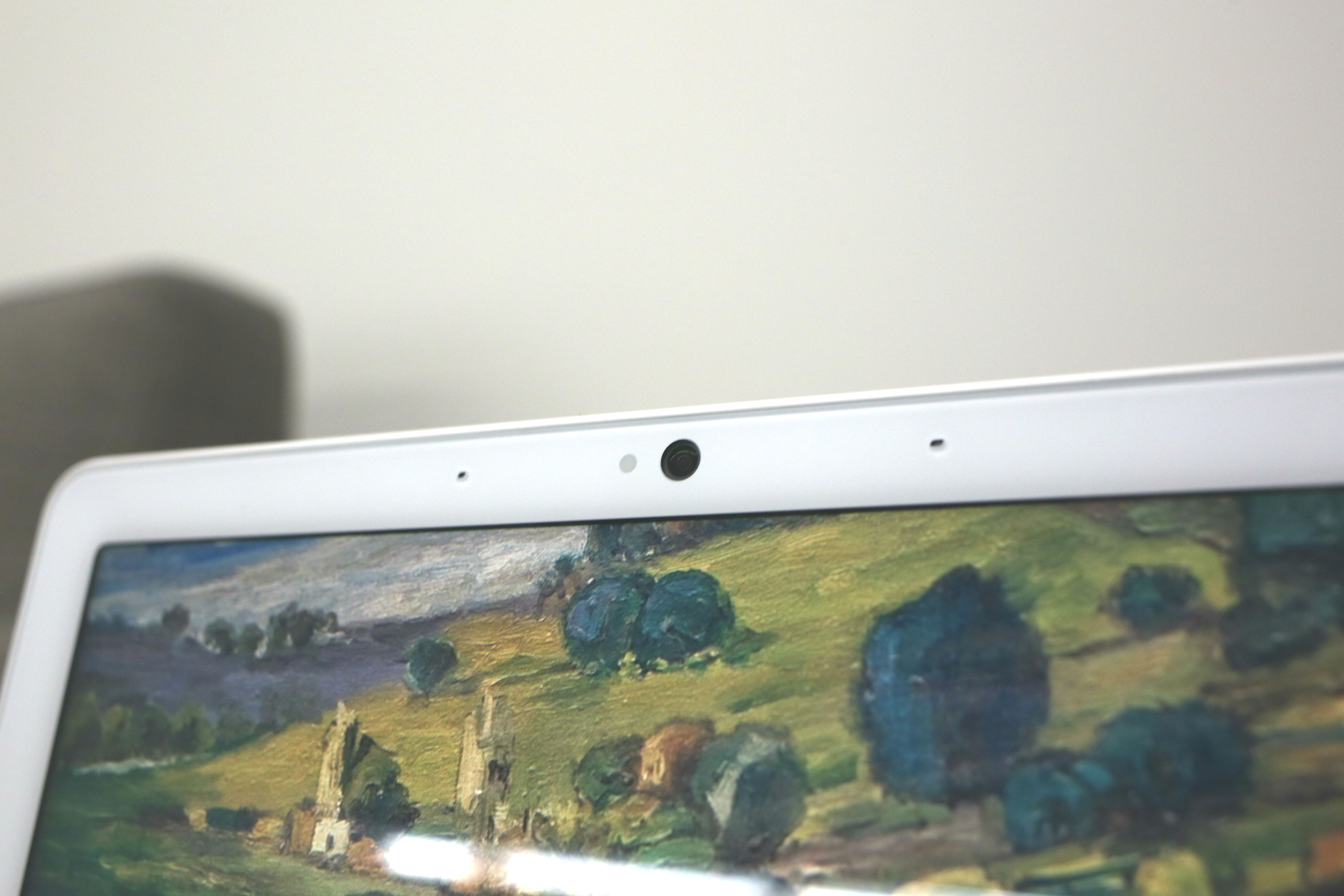
During setup, the device walks you through a similar process that smartphones implement to enable unlock. Using your phone’s camera, it grabs a 3D image of your face. When the Nest Hub Max spots you, it will greet you with a note along the lines of “Good afternoon, Brian,” and the image of you associated with your Google profile. When you’re locked in, the device tailors all of its suggestions to you. It’s a clever way of swapping between accounts.

Of course, like so many other things, it feels like a piece of a slippery slope. Google, of course, has already identified the sound of your voice, which it can also use to provide bespoke content, but that’s a less dynamic approach to this kind of implementation. You can certainly opt out, though you’ll be missing out on a reasonably large piece of the puzzle here.
O92A2326

The camera also brings the ability to video chat through Duo. The Hub Max utilizes a similar zoom feature as Facebook’s Portal — a dynamic pan that was initially positioned as that product’s killer app. Implementation here is similarly effective, moving and zooming out to follow the subject and included additional people at once. The digital zooming does notably degrade image quality, however.

The other big piece of the puzzle is security camera functionality. It is, after all, a Nest device. Given that it’s not a devoted security product, however, Google is positioning that feature as more of a supplement to existing Nest devices. In other words, you place your Nest Cam in key areas and use the Hub Max’s camera to fill in the gaps. It works similarly to those devoted devices (including features like geofencing), though it lacks some features like night vision.

O92A2361

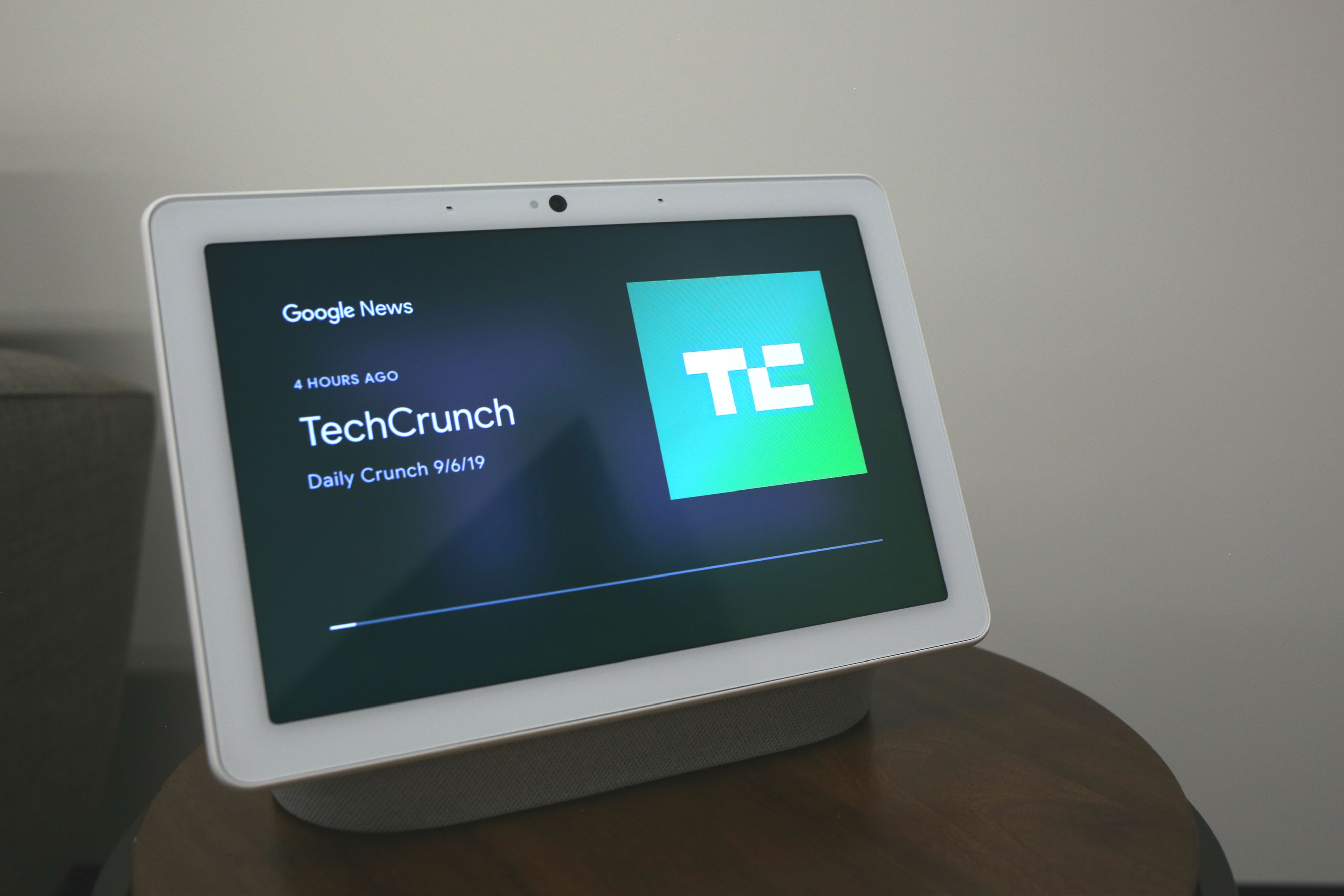
Handily, the device will let you know when it’s being used as a camera, sporting a “Nest Cam being viewed” notification, for added privacy. And, of course, it can be used with a variety of other connected cameras and smart home devices, serving as a kind of centralized control panel. There are a handful of compatible video services that can be added on set up, including HBO Now and CBS. No Netflix at the moment — and likely no Amazon Prime, ever, though Chromecast functionality addresses that to some degree.

The bottom speaker is bigger, louder and bassier (and stereo, to boot) than the original Home Hub. But it’s probably not sufficient for most as a standalone speaker. That said, the ability to pair it with another Home speaker makes it a nice companion to something like the Home Max, with the inclusion of a screen that displays and serves as a control panel while you’re listening to music.
O92A2355

Notably, there are only two mics on board — fewer than many comparable smart home devices. In spite of the mics and improved sound, however, Google hasn’t built in the spatial-based level tuning you get on the higher-end Home Max.

At $229 (and available now), the Nest Hub Max is priced to compete with the Echo Show. It’s a stronger entry in most respects, and while the camera carries the aforementioned privacy concerns, it’s a clear sign of how Google’s strengths are coming together to create a superior smart home product.
09 Sep 2019

AppZen nabs $50M to build AI tools for expenses and other finance team work

AI now touches every aspect of how a company operates — from forming the core of the service itself, through to customer interactions, building new things, and helping with mundane paperwork and other back-office tasks. Today, one of the faster-growing startups in the latter category is announcing a round of funding as it continues on its own path: AppZen, which builds AI-powered tools to automate functions within the finance department, has raised another $50 million in funding led by Coatue Management with previous investors Redpoint Ventures and Lightspeed Venture Partners also participating.

We understand from sources that this funding has been raised at a $500 million valuation, which is a huge hike. For some context, the company in October of last year raised a $35 million round led by Lightspeed that put it at a post-money valuation of $175 million.

The Series C — which brings the total raised by the company to just over $100 million — will be used to continue expanding the platform and its capabilities, CEO Anant Kale said in an interview (Kale co-founded the company with Kunal Verma, who is its CTO).

To date, AppZen’s biggest product has been a service that automatically audits expenses — comparing, for example, an employee’s charges with travel that person has undertaken (along with many other data points) to see if the charges match up; as well as making sure the expenses are compliant with company policies and raising flags when they are not.

This is the product that has won the company a ton of business from huge businesses, which now number 1,500 (another point of comparison: this is more than double the 650 customers it had last October). AppZen users include Amazon, Nvidia, Salesforce, and three of the top ten banks in the US, four of the top ten media companies, three of the top ten pharmaceutical manufacturers, two of the top five aerospace companies, a number of other software providers and (disclaimer) Verizon, which happens to own us.

Going forward, while the company continues to see a lot of traction with its existing products in auditing how a company pays out money, the plan will be to build that out to other functions of the finance department, covering, for example, other areas where the finance department makes evaluations to determine spend and money collection (billing) across the business.

“There have been so many decades where nothing new was developed for finance departments,” Kale said of the opportunity.

That’s an opportunity that is so big — enterprise IT overall is forecast to be a $1 trillion market by Gartner this year — that AppZen will be facing a large range of competitors, not just those applying automation and AI to auditing expenses but those coming from other angles like robotic process automation (RPA) that are looking to expand from their computer-vision-based tasks into a deeper set of tools addressing other back-office needs. And that’s before you consider the number of other giant businesses (such as SAP) that provide expense management software, the very tools that AppZen helping to be used in a better way by their clients.

For now, though, AppZen is growing fast, and has secured a formidable place as a reliable partner for its customers.

“AppZen allows enterprises to do something they’ve never been able to do – audit 100 percent of their spend at scale and with the team they have, all before payments go out the door. AI lets these enterprises dramatically reduce spend, comply with policy and streamline process,” said Thomas Laffont, Senior Managing Director for Coatue Management, in a statement. “When we met Anant, Kunal and the team, we were struck by their AI expertise and finance transformation vision, not to mention the company’s clear and rapid execution in the market. ”

At the end of the day, however, even with all the strides that artificial intelligence has help us make, there is always a catch. In this case, automating more repetitive tasks and calculations that had been the domain of humans doubtless must reduce operational costs in an organization, and generally speed up the process, but AI is not always perfect, and sometimes replacing people with those systems makes it very hard to query results if there is a hiccup.

“Our goal is to make sure employees don’t get too frustrated,” Kale said of the learning process, words that apply not just to the companies building these services, but those organizations buying them, too.


09 Sep 2019

Uizard scores $2.8M seed round for its app wireframe to prototype dev tool

Uizard, the Copenhagen-based startup that is using “machine intelligence” to quickly turn app sketches into prototypes, has raised $2.8 million in seed funding.

The round is led by Nordic VC firm byFounders, with participation from LDV Capital, av8 Ventures, and New York Venture Partners. A number of individuals are also investing, including Scott Kurnit, Julia Qiu, Lars Houbak, and Alex Spiro.

Aiming to accelerate the ideation phase of website and app design, Uizard says it legerages “advanced” machine learning and computer vision to turn a simple sketch into a basic prototype for almost immediate testing.

Sketched can be drawn with pen and paper, photographed, and then uploaded to Uizard for the AI to do its work. “Imagine hand-sketching wireframes on your notebook during a meeting and being able to present a functional prototype from these ideas only seconds after,” reads the company’s pitch.

“Anyone who ever visited the product team office at any tech company would have noticed the thousands of sketches and wireframes covering the whiteboards, sticky notes, and notebooks,” Uizard co-founder and CEO Tony Beltramelli tells me.

“Designers are constantly scribbling their latest ideas but it literally takes days to implement them into testable prototypes”.

Beltramelli says that Uizard enables product teams to go from sketches to working code in as little time as possible. “The value of our product is all about speed of execution,” he adds.

Typical users of the product, which is currently operating as a free to use beta, are UX design teams in enterprises, agencies, and startups.

Beltramelli claims Uizard doesn’t yet have direct competitors and the closest so far has been Airbnb and Microsoft who have showed interest in developing their own non-commercial “sketch2code” technologies.

“UX design teams currently rely on traditional design studios to create interactive prototypes such as Figma, Sketch, Adobe XD, and InVision,” he tells me.

On that note, Uizard is also announcing that it has hired Rizwan Khan, formerly sales executive and first international business hire at InVision, as its Chief Commercial Officer. Notably, Benjamin Wilkins, lead designer of Airbnb’s Sketch2code, has also joined the Uizard product advisory board.

09 Sep 2019

Uizard scores $2.8M seed round for its app wireframe to prototype dev tool

Uizard, the Copenhagen-based startup that is using “machine intelligence” to quickly turn app sketches into prototypes, has raised $2.8 million in seed funding.

The round is led by Nordic VC firm byFounders, with participation from LDV Capital, av8 Ventures, and New York Venture Partners. A number of individuals are also investing, including Scott Kurnit, Julia Qiu, Lars Houbak, and Alex Spiro.

Aiming to accelerate the ideation phase of website and app design, Uizard says it legerages “advanced” machine learning and computer vision to turn a simple sketch into a basic prototype for almost immediate testing.

Sketched can be drawn with pen and paper, photographed, and then uploaded to Uizard for the AI to do its work. “Imagine hand-sketching wireframes on your notebook during a meeting and being able to present a functional prototype from these ideas only seconds after,” reads the company’s pitch.

“Anyone who ever visited the product team office at any tech company would have noticed the thousands of sketches and wireframes covering the whiteboards, sticky notes, and notebooks,” Uizard co-founder and CEO Tony Beltramelli tells me.

“Designers are constantly scribbling their latest ideas but it literally takes days to implement them into testable prototypes”.

Beltramelli says that Uizard enables product teams to go from sketches to working code in as little time as possible. “The value of our product is all about speed of execution,” he adds.

Typical users of the product, which is currently operating as a free to use beta, are UX design teams in enterprises, agencies, and startups.

Beltramelli claims Uizard doesn’t yet have direct competitors and the closest so far has been Airbnb and Microsoft who have showed interest in developing their own non-commercial “sketch2code” technologies.

“UX design teams currently rely on traditional design studios to create interactive prototypes such as Figma, Sketch, Adobe XD, and InVision,” he tells me.

On that note, Uizard is also announcing that it has hired Rizwan Khan, formerly sales executive and first international business hire at InVision, as its Chief Commercial Officer. Notably, Benjamin Wilkins, lead designer of Airbnb’s Sketch2code, has also joined the Uizard product advisory board.

09 Sep 2019

The Vivaldi browser lands on Android

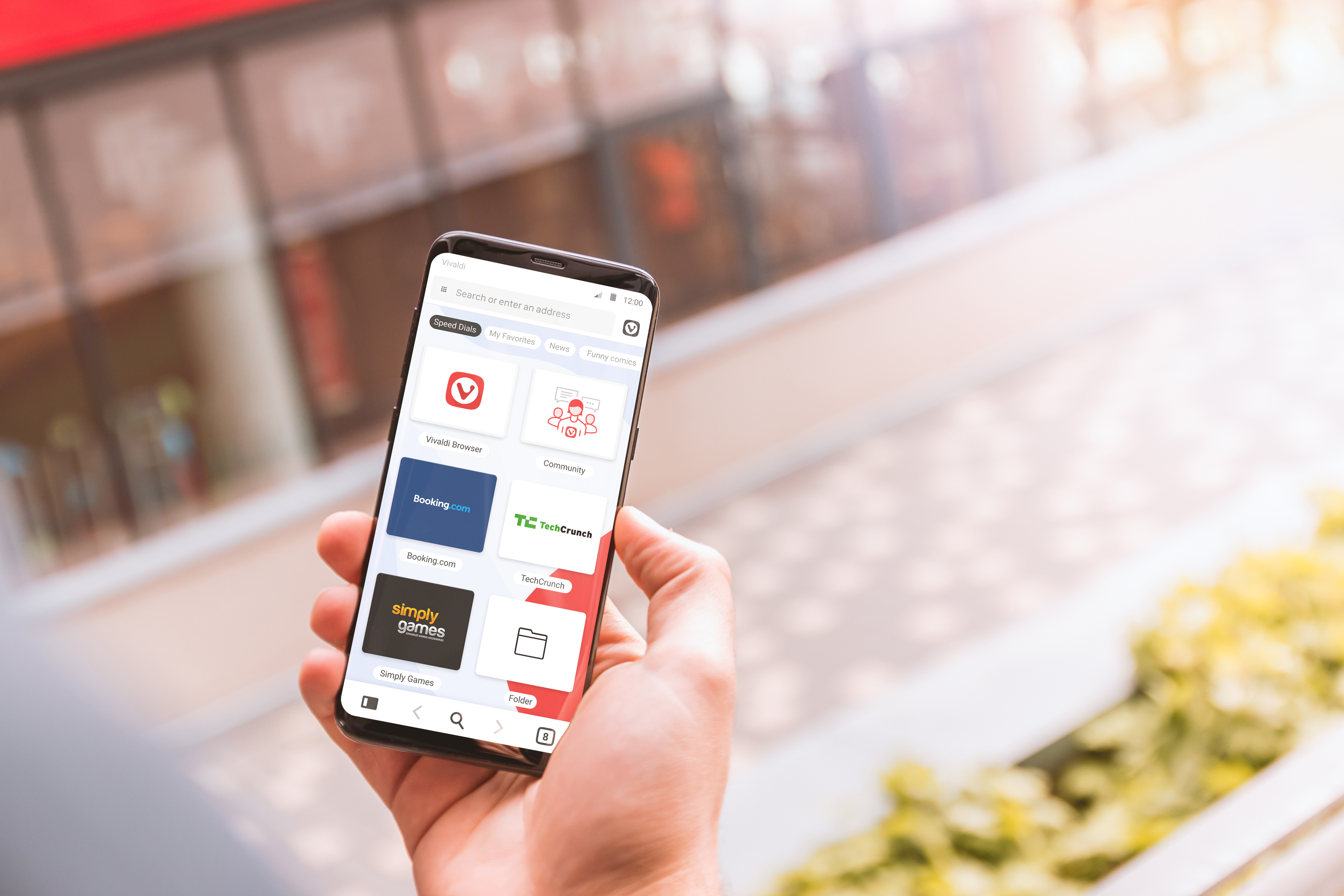
Vivaldi has long billed itself as a browser for advanced users who want to be able to customize their browser to their heart’s content. With that mission, it managed to get a foothold in the desktop market, but until now, the browser company co-founded by Opera’s former CEO Jon von Tetzchner, didn’t have a presence on mobile. That’s changing today with the launch of Vivaldi for Android, which retains the browser’s look, feel and speed without getting bogged down in trying to bring all of its myriad features to mobile.

For the most part, I like to use the same browser on desktop and mobile, simply to keep my bookmarks in sync (and Vivaldi says it doesn’t use Google’s servers to sync, in case you’re worried about being tracked). For the longest time, that was one of the reasons why I always switched away from Vivaldi on the desktop again, despite the fact that the browser is essentially made for a user like me. With the mobile version, I think that’ll change.

vivaldi ui explained 980x551

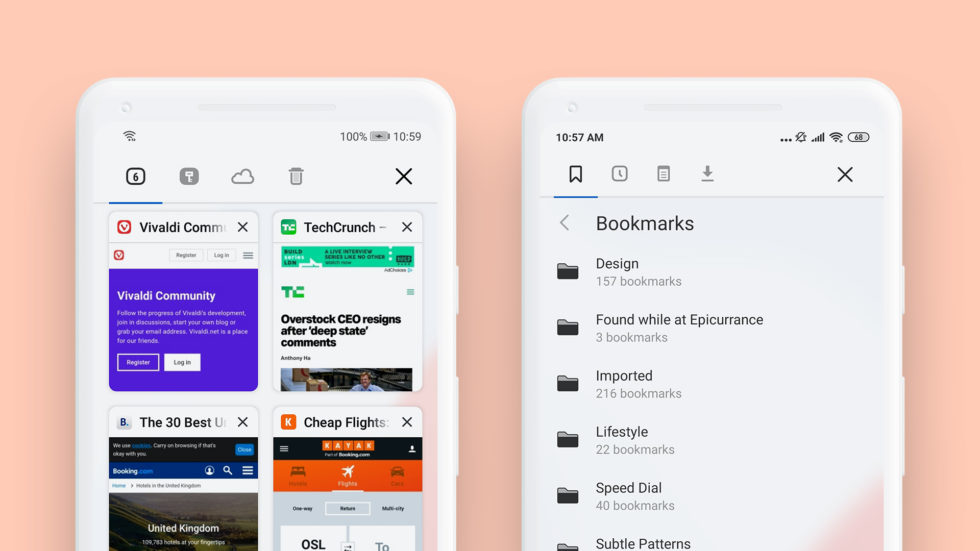
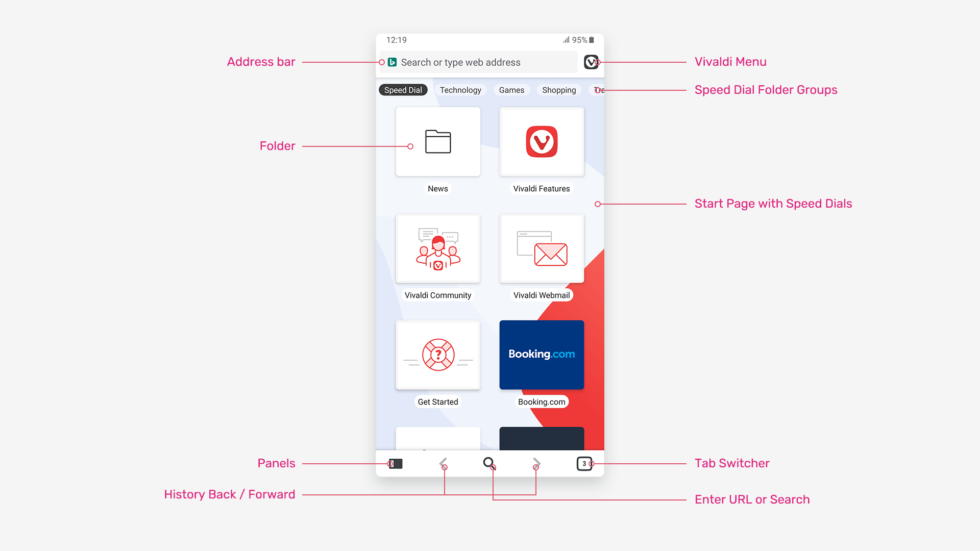
The overall browser experience is pretty straightforward. I appreciate the fact that the Vivaldi team put all of the standard UI features (backwards, forward, tab switcher and URL/search) at the bottom. You can still use the address bar at the top of the screen and the menu, too, of course, but in this age of giant screens, I appreciate a browser that can be used with one hand for much of the time.

article feature 4 screenshot 980x551

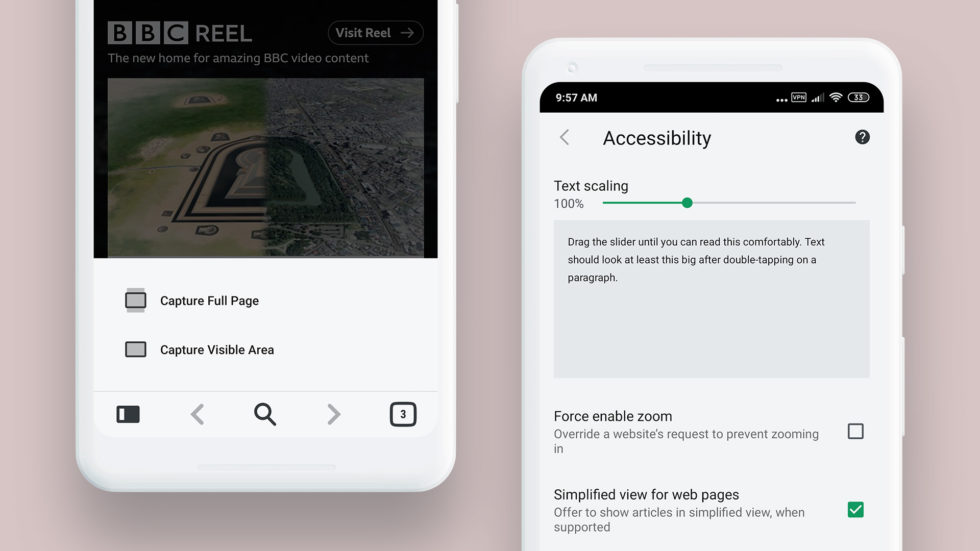
As far as features go, Vivaldi covers all the bases, with speed dials and bookmarks, some advanced tab management features that aren’t usually available on mobile, including the ability to clone tabs, and a screenshots feature that lets you capture either the full page or just the visible area. If you regularly use different search engines, you can also use Vivaldi’s shortcuts in the address bar (think ‘d’ for DuckDuckGo, for example). There’s also a reader view and pretty much everything else you expect from a modern mobile browser.

article feature 2 bookmark 980x551

One area where I’d like to see a bit more work from Vivaldi in general, both on mobile and desktop, is tracking protection. That’s been a focus for Firefox in many of its recent releases and even Microsoft’s new Chrome-based Edge browser is offering the ability to block trackers by default. Vivaldi, at least in its current form, doesn’t yet any tracking protection by default. That’s not much of an issue on the desktop, where you can easily install an extension, but on mobile, I’d like the company to do a bit more.

Overall, Vivaldi on Android is a worthwhile contender. It’s fast and easy to use — and if you’re already using Vivaldi on the desktop, it’s a no-brainer. Even if you’re not, it’s still worth a shot and may just get you to try the desktop version, too.

vivaldi in use galaxyS8

09 Sep 2019

The Vivaldi browser lands on Android

Vivaldi has long billed itself as a browser for advanced users who want to be able to customize their browser to their heart’s content. With that mission, it managed to get a foothold in the desktop market, but until now, the browser company co-founded by Opera’s former CEO Jon von Tetzchner, didn’t have a presence on mobile. That’s changing today with the launch of Vivaldi for Android, which retains the browser’s look, feel and speed without getting bogged down in trying to bring all of its myriad features to mobile.

For the most part, I like to use the same browser on desktop and mobile, simply to keep my bookmarks in sync (and Vivaldi says it doesn’t use Google’s servers to sync, in case you’re worried about being tracked). For the longest time, that was one of the reasons why I always switched away from Vivaldi on the desktop again, despite the fact that the browser is essentially made for a user like me. With the mobile version, I think that’ll change.

vivaldi ui explained 980x551

The overall browser experience is pretty straightforward. I appreciate the fact that the Vivaldi team put all of the standard UI features (backwards, forward, tab switcher and URL/search) at the bottom. You can still use the address bar at the top of the screen and the menu, too, of course, but in this age of giant screens, I appreciate a browser that can be used with one hand for much of the time.

article feature 4 screenshot 980x551

As far as features go, Vivaldi covers all the bases, with speed dials and bookmarks, some advanced tab management features that aren’t usually available on mobile, including the ability to clone tabs, and a screenshots feature that lets you capture either the full page or just the visible area. If you regularly use different search engines, you can also use Vivaldi’s shortcuts in the address bar (think ‘d’ for DuckDuckGo, for example). There’s also a reader view and pretty much everything else you expect from a modern mobile browser.

article feature 2 bookmark 980x551

One area where I’d like to see a bit more work from Vivaldi in general, both on mobile and desktop, is tracking protection. That’s been a focus for Firefox in many of its recent releases and even Microsoft’s new Chrome-based Edge browser is offering the ability to block trackers by default. Vivaldi, at least in its current form, doesn’t yet any tracking protection by default. That’s not much of an issue on the desktop, where you can easily install an extension, but on mobile, I’d like the company to do a bit more.

Overall, Vivaldi on Android is a worthwhile contender. It’s fast and easy to use — and if you’re already using Vivaldi on the desktop, it’s a no-brainer. Even if you’re not, it’s still worth a shot and may just get you to try the desktop version, too.

vivaldi in use galaxyS8

09 Sep 2019

DHL expands Africa eShop online retail app to 34 countries

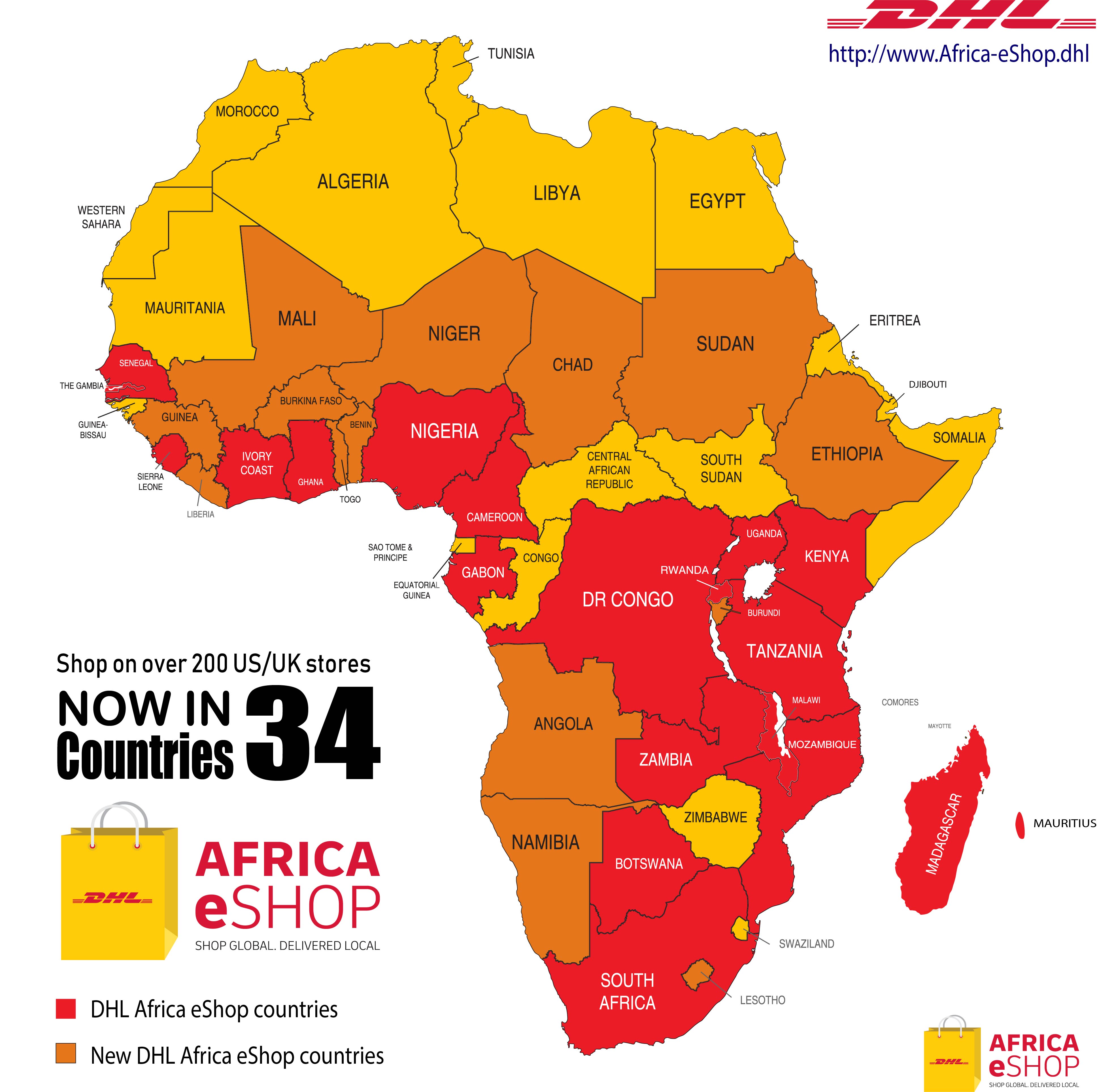
DHL  has expanded its DHL Africa eShop business to 13 additional markets, upping the presence of the global shipping company’s e-commerce platform to 34 African countries.

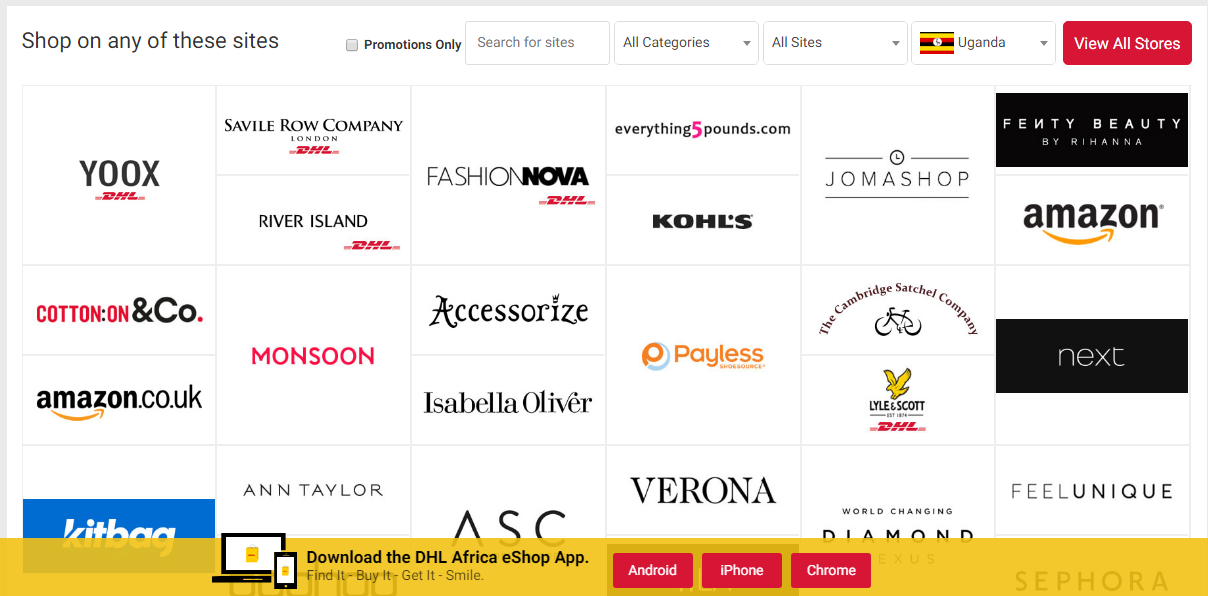
DHL  href="https://techcrunch.com/2019/04/11/dhl-launches-africa-eshop-app-for-global-retailers-to-sell-into-africa/">went live with the digital retail app in April, bringing more than 200 U.S. and U.K. sellers — from Neiman Marcus to Carters — online to African consumers.

Africa eShop operates using startup MallforAfrica.com’s white label fulfillment service, Link Commerce. Similar to MallforAfrica’s model, the arrangement allows Africa eShop users to purchase goods directly from the websites of any of the app’s global partners.

This week’s expansion is the second for DHL’s Africa eShop, after adding 9 markets in May.

DHL’s moves run parallel to significant developments this year in the Africa’s online retail scene—namely Jumia’s big capital raise through its IPO.

Here are Africa eShop’s latest additions: Angola, Benin, Burkina Faso, Burundi, Chad, Ethiopia, Guinea, Lesotho, Namibia, Niger, Sudan, Togo, and Zimbabwe.

MallforAfrica CEO Chris Folayan points to the novelty of online sales in many of Africa eShop’s new markets.

“For some of these countries no one has really tapped into e-commerce the way we’re tapping into it, with an ability to buy online and also buy online directly from places like Macy’s or Amazon,” he told TechCrunch on a call.

DHL Africa eShop Stores

Payment methods include local fintech options, such as Nigeria’s Paga and Kenya’s M-Pesa. DHL Africa eShop leverages the shipping giant’s existing delivery structure on the continent, through its DHL Express courier service.

To add some context, someone with a mobile phone and bank account in, say, Niger can now use DHL’s app to shop at Macys.com and have anything from designer sneakers to kitchenware shipped to their doorstep in Central-Africa.

DHL AFRICA ESHOP MAP

DHL Africa eShop is also offering incentives to entice first-time digital consumers.

“We will be launching with a promo, buy any 5 items from over 100 retail partners and get a $20 flat shipping fee. This is DHL’s way of showing they are dominant in shipping and eCommerce in Africa.”

As TechCrunch highlighted this spring, the launch and expansion of DHL’s MallforAfrica supported platform is creating a competitive scenario with e-commerce unicorn Jumia.

Jumia is Africa’s most visible e-tailer and operates consumer retail and online service verticals in 14 African countries. Headquartered in Lagos, the company raised more than $200 million in an NYSE IPO this April.

DHL launched the Africa eShop product the day before Jumia went public and made its first country expansion only weeks after.

There’s a brewing business debate on which platform is best positioned to capture a larger share of a projected $2.1 trillion in consumer spending (10% online) expected in Africa by 2025.

Then there’s the question of who’s largest. DHL Africa eShop touts itself as “Africa’s Largest Online Shopping Platform.” Jumia said, “We believe that our platform is the largest e-commerce marketplace in Africa,” in its SEC F-1 filing.

On the prospect of going head to head with Africa’s best funded e-commerce company, Chris Folayan is somewhat circumspect.

“We’re note focused on competing with Jumia, but in a way it’s starting to happen as a result of our expansion and growth,” he said.

Two main spectators in a MallforAfrica, Jumia match up could be the big global e-commerce names.

Alibaba has talked about Africa expansion, but for the moment has not entered in full.

Amazon offers limited e-commerce sales on the continent, but more notably, has started with AWS services in Africa.

DHL and partner MallforAfrica plan to bring Africa eShop to all 54 African countries in coming years.


09 Sep 2019

Freeda raises another $16 million for its media brand for women

Italian startup Freeda Media has raised a $16 million Series B round. Existing investor Alven is leading the round, with Endeavor Catalyst, UniCredit and others also participating. UniCredit is also granting the company a debt facility of $3 million.

The company has managed to attract millions of followers on Instagram, Facebook and other social media platforms. It runs short videos, quick interviews and articles. In other words, Freeda wants to create a social version of Elle, Teen Vogue, Vanity Fair, Cosmopolitan or Man Repeller.

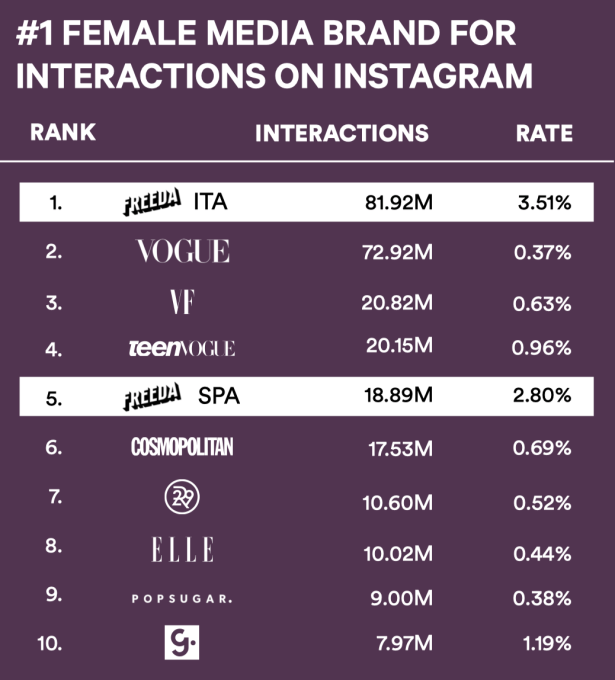
Freeda is currently live in Italy, Spain and South America. The company currently has 5 million women engaging with their content every day. It reaches 80% of Italian and Spanish women aged 18-34 every month.

On Instagram in particular, the startup says that it is the first female media brand in the world with 100 million interactions in 2019 alone:

Screen Shot 2019 09 04 at 6.13.31 PM

With today’s founding round, the goal is clearly on international expansion. The startup is opening an office in London and plans to launch in the U.K. and other English-speaking markets. There are currently 160 people working for Freeda.

The company is still mostly focused on branded content to monetize its audience. But Freeda wants to expand beyond this revenue stream with a new direct-to-consumer brand. You can expect to be able to buy Freeda-branded products starting in 2020.

09 Sep 2019

American tariffs are having a bigger impact on U.S.-based Amazon vendors than their competitors in China, according to SellerMotor

The series of tariffs imposed by the United States on Chinese goods has impacted both U.S. and China-based Amazon vendors, but U.S. sellers are taking a bigger hit to their sales, according to data from cross-border e-commerce analytics company SellerMotor. The gap has widened since the round of tariffs on Chinese goods announced in the summer of 2018 by the Trump administration.

Founded in 2016, SellerMotor provides data and ad analytics about Amazon and an automation platform for sellers. For its research, the company analyzes data from 568 million SKUs, or almost all the active products and brands on Amazon’s U.S. site.

For this particular data set, SellerMotor analyzed 480,000 SKUs from Chinese sellers and 17.9 million from U.S. sellers.

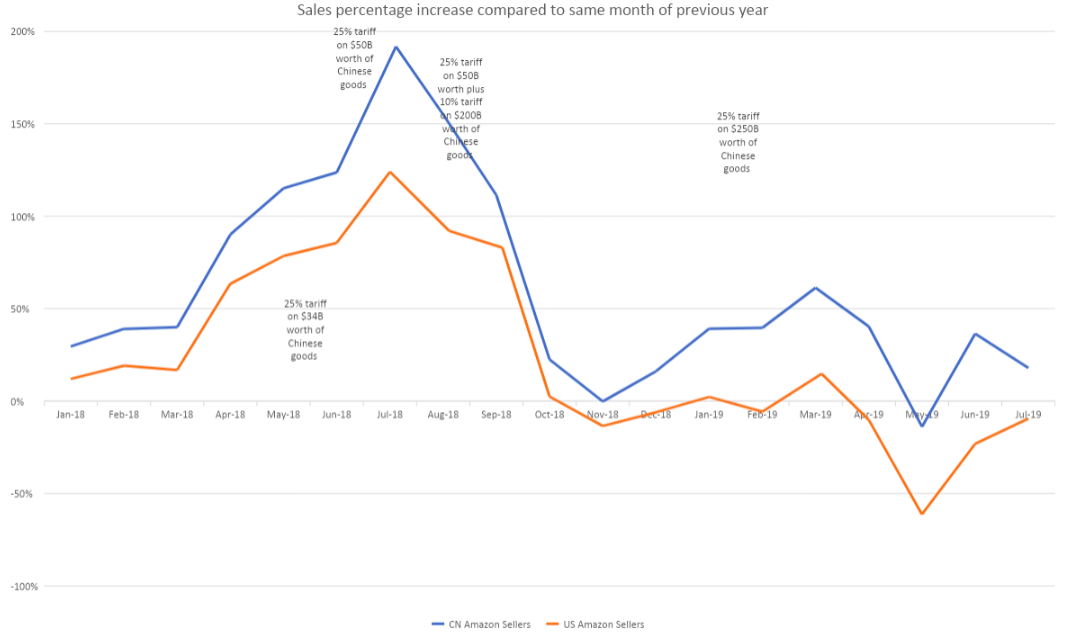
In July 2018, a U.S. tariff on $34 billion in Chinese goods went into effect. That month, Chinese vendors’ sales grew 174% year-over-year, while U.S. sellers saw a 124% increase. As the tariff war between China and the U.S. intensified that summer, however, U.S. and China-based both sellers saw their growth stall, with U.S. sellers coping with a bigger impact, as shown in the graph below from SellerMotor. In September 2018, when the U.S. placed a 25% tariff on $50 billion in Chinese goods, plus a 10% tariff on $200 billion in Chinese goods, U.S. sellers saw their year-over-year sales growth slow down to 54%, compared Chinese sellers’ sales growth of 111%.

SellerMotor data

According to SellerMotor’s data, U.S.-based Amazon sellers have seen their year-over-year monthly sales decrease every month since November 2018. By March 2019, when a 25% tariff was placed on $250 billion in Chinese goods, Chinese vendors’ year-over-year sales grew by 61%, but U.S. sellers saw their sales decrease by 3%.

While many U.S.-based Amazon sellers also get their supplies from China, Chinese sellers have better control over their supply chain and closer relationships with their suppliers (in some cases, even equity partnerships), allowing them more flexibility, SellerMotor COO Sibao Chen tells TechCrunch. These deeper ties give vendors the leeway to negotiate things like smaller batches of products when necessary. As the tariff war forces smaller competitors out of the market, having more control over the supply chain lets these sellers quickly step into the gaps they leave behind. “Whoever is quick to grab these fragments will become even larger in size, because the market is there and that can help with growth momentum for the largest companies,” Chen says.

Chen adds that the way many Chinese e-commerce sellers organize their operations may also give them an edge over U.S. sellers. The company currently has about 60,000 clients in China and launched in the U.S. in June.

“I have been talking to a lot of U.S. and Chinese clients and the way that these Chinese clients are organized is that usually for each product group. So if there is an electronics company selling iPhone charging cables and also headsets, each of these product groups would probably have two to five people running the thing, like a mini-company, and they are organized, incentivized and almost completely independent within their group and given a lot of autonomy,” Chen says. “This is a very common form of organization within the Chinese retail and e-commerce industry and this is something we believe could have given them an edge in terms of the speed that they react to external impacts such as the tariffs.”

09 Sep 2019

Spendesk raises $38.4 million for its corporate card and expense service

French startup Spendesk has raised another $38.4 million Series B round with existing investor Index Ventures leading the round. The company has raised $49.4 million (€45 million) over the years.

Spendesk is an all-in-one corporate expense and spend management service. It lets you track expenses across your company, empower your employees with a clear approval process and simplify your bookkeeping.

The service essentially works like Revolut or N26, but for corporate needs. After you sign up, you get your own Spendesk account with an IBAN. You can top up that account and define different sets of policies.

For instance, you can set payment limits depending on everyone’s job and define who’s in charge of approving expensive payments. After that, everyone can generate virtual cards for online payments and get a physical card for business travel.

When you’re on the road, you can pay directly using Spendesk just like any corporate card. If you have to pay in cash or with another card, you can take a photo of the receipt from the Spendesk mobile app and get your money back.

Many Spendesk users also leverage the service for other use cases. For instance, you can define a marketing budget and let the marketing team spend it on Facebook or Google ads using a virtual card.

You can also track all your online subscriptions from the Spendesk interface to make sure that you don’t pay for similar tools. If you hire freelancers, you can also upload all your invoices to the platform, export an XML with your outstanding invoices and import it to your banking portal.

Spendesk tries to be smarter than legacy expense solutions. For instance, the company tries to leverage optical character recognition (OCR) to match receipts with payments, autofill the VAT rate, etc.

With today’s funding round, the company plans to open offices in Berlin and London, add more currencies and develop new features. Over the past year, the company went from 20 employees to 120 employees. There are now 1,500 companies using Spendesk in Europe.