Year: 2019

06 Sep 2019

Paid streaming music subscriptions in U.S. top 60M, says RIAA

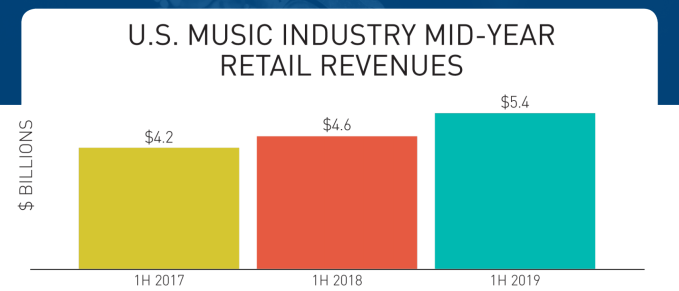
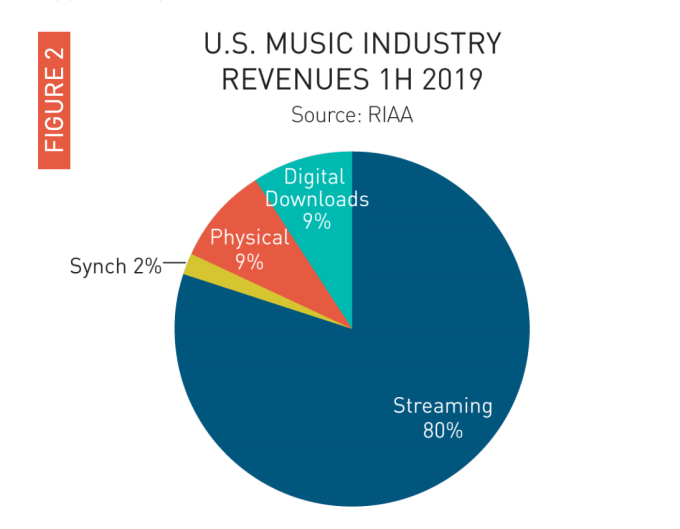
Streaming music subscriptions continue to drive the U.S. music industry’s growth and revenues, according to a new report from the Recording Industry Association of America (RIAA) released this week. The organization said total music revenue grew 18% to $5.4 billion in the first half of 2019, with streaming music accounting for 80% of industry revenues. The report also noted the number of paid subscriptions topped 60 million in the U.S. for the first time.

Screen Shot 2019 09 06 at 3.45.29 PM

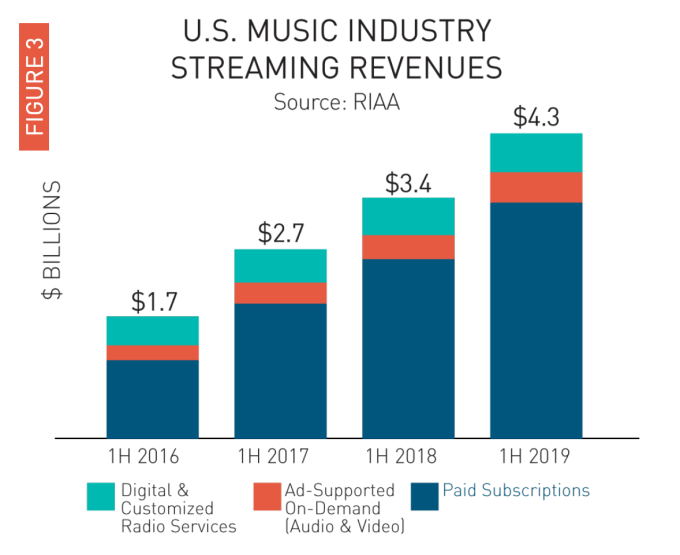
Streaming revenues grew 26% to $4.3 billion in the first half of the year.

This broad figure includes paid versions of Spotify, Apple Music, Amazon Music, and others, as well as digital radio service revenues like those from Pandora, Sirius XM, and other internet radio, plus ad-supported streaming like YouTube, Vevo, and the ad-supported version of Spotify. Screen Shot 2019 09 06 at 3.46.43 PM

Meanwhile, paid subscription streaming is continuing to grow, too, said the RIAA. Year-over-year, paid subscriptions grew 31% to reach $3.3 billion and remain the biggest growth driver for industry revenues.

In the first half of 2019, paid subscriptions made up 62% of all U.S. industry revenues and 77% of U.S. streaming music revenues.

Screen Shot 2019 09 06 at 3.47.18 PM

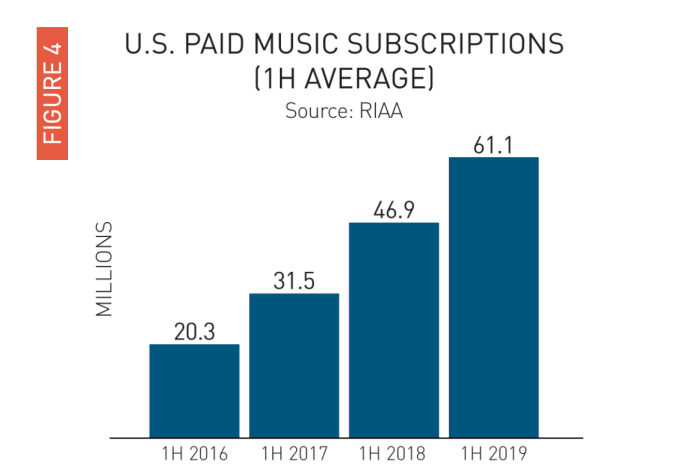
The number of paid subscriptions to full on-demand streaming services grew 30% to 61.1 million in the first half of the year, at an average pace of over 1 million new subscriptions per month.

This doesn’t include the “Limited Tier” subscriptions like Pandora Plus or that Echo-only subscription to Amazon Music, for example, where various factors limit access to a full catalog across devices or restrict some on-demand features. This category saw $482 million in revenues, up 39% from the year prior.

“Thanks to that breakneck growth, plus continued modest drops in digital downloads and new physical sales, streaming now generates 80% of music business revenues and has fundamentally reshaped how fans find, share, and listen to the songs and artists they love,” wrote RIAA Chairman & CEO Mitch Glazier, about the new figures.

Screen Shot 2019 09 06 at 3.47.50 PM

Ad-supported on-demand services grew 25% year-over-year to $427 million, while digital radio service grew 5% to $552 million in the first half of 2019.

However, the gains made by streaming were somewhat offset by declines in digital downloads, as Glazier noted.

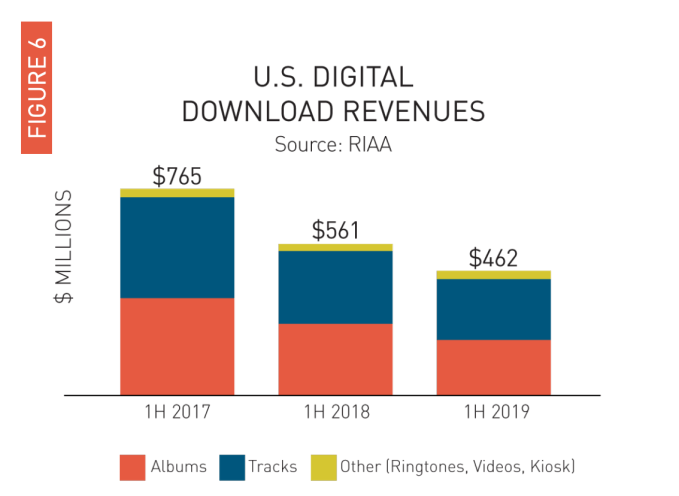
Revenues in this category fell 18% to $462 million in the first half of the year, with digital track sales down 16% year-over-year and digital album revenues down 23%. Overall, digital download only accounted for 8.6% of total industry revenues.

Screen Shot 2019 09 06 at 3.48.11 PM

Physical product revenues grew 5% to $485 million in the first half of 2019, but the RIAA attributed this to a reduction in returns.


06 Sep 2019

Watch India’s Chandrayaan-2 make its historic moon landing attempt right here

It’s a big day for India’s highly audacious Chandrayaan-2 mission. The nation will attempt to land its lunar orbit on the moon’s surface later today as it inches closer to become the fourth in the world to complete a successful lunar landing.
ISRO, India’s equivalent of NASA, will be live streaming the landing on its website, and YouTube channel.

Additionally, if you are tuning in from India, dozens of channels including Doordarshan (DD1), Disney India, National Geographic, Star Plus and Star Bharat, DD News, will live telecast the India’s mission to the moon. The landing is scheduled for between 1pm and 2pm Pacific Time (4pm to 5pm Eastern Time; 8pm to 9pm GMT).

ISRO launched its 142 feet tall spacecraft from the the Satish Dhawan Space Centre, Sriharikota in Andhra Pradesh on July 15. The spacecraft consists of an orbiter, a lander named Vikram (named after Vikram Sarabhai, the father of India’s space program), and a six-wheeled rover named Pragyaan (Sanskrit for “wisdom”). Earlier this week, the lander that carried the rover detached from the orbiter.

The mission’s budget is just $141 million, significantly lower than those of other countries, and less than half of the recently released blockbuster “Avengers: Endgame .”

Commenting on the landing, India’s Prime Minister Narendra Modi, who will be watching the nation’s attempt at the moon landing from ISRO’s office, said earlier today that, “India, and the rest of the world will yet again see the exemplary prowess of our space scientists.”

Chandrayaan-2 aims to land on a plain surface that covers the ground between two of the Moon’s craters, Simpelius N and Manzinus C — that is about 375 miles from the South Pole. It’s an understudied region that no one has seen closely yet.

NASA astronaut Jerry Linenger, said in a televised program today, “I just want everyone to know that the whole world is following this and it is not just Indians. This is the first time any country is going to the South Pole of the Moon! India is leading this and as a representative of the US, we are nervous and we are hoping for success. This increases the knowledge base of the Moon.”

06 Sep 2019

Porsche increases stake in electric car maker Rimac Automobili to 15.5%

Porsche AG is increasing its stake in Croatian electric vehicle components and hypercar company Rimac Automobili. The increased stake is the latest effort by Porsche to invest more into electric mobility, particularly in battery technology.

It was just 14 months ago that Porsche took a 10% stake in Rimac. Now, the German automaker is pushing that to 15.5%, according to an announcement Friday.

Porsche intends to intensify its collaboration in the field of battery technology, Lutz Meschke, deputy chairman of Porsche’s executive board. Porsche, which just introduced its all-electric Taycan sports car, has said it will invest more than $6 billion into electric mobility through 2025. The automaker spent more than $1 billion developing the Taycan, a cost that included expanding its factory.

For the unfamiliar, Rimac was founded by Mate Rimac in 2009 and is perhaps best known for its electric hypercars such as the two-seater C Two that it debuted in 2018 at the Geneva International Motor Show.

The vehicle produces an extraordinary 1,914 horsepower, has a top speed of 256 miles per hour and can accelerate from 0 to 60 mph in 1.85 seconds. That’s faster than Tesla’s next-generation Roadster prototype that CEO Elon Musk unveiled in November 2017. The Rimac’s battery is no slouch either and gets 404 miles to a single charge under the more generous NEDC estimates. Still, that blows away other EVs on the market. 

But Rimac, which is based in Zagreb and employs around 550 people, does more than produce hypercars. The company focuses on battery technology within the high-voltage segment, engineers and manufactures electric powertrains and develops digital interfaces between humans and machines. The company also develops and produces electric bikes. This strand of the business was established in 2013 in the form of the sister company Greyp Bikes.

“Gaining Porsche as a stakeholder was one of the most important milestones in our history. The fact that Porsche is now increasing its stake is the best form of confirmation for our collaboration and represents the foundation for an even closer relationship,” Mate Rimac, the company’s founder said in a statement. “We are only at the start of our partnership – yet we have already met our high expectations. We have many collaborative ideas that we aim to bring to life in the future. The fundamental focus is creating a win-win situation for both partners and offering our end customers added value by developing exciting, electrified models.”

Porsche isn’t the only automaker interested in Rimac. The company has already worked with Renault, Jaguar, and Aston Martin. And in May 2019, Hyundai Motor Company and Kia Motors jointly invested €80 million, or around $90 million, into Rimac. Under that deal, the three parties agreed  to collaborate on the development of high-performance electric vehicles.

06 Sep 2019

Pagerduty’s Jennifer Tejada and Box’s Aaron Levie will talk IPOs at TC Disrupt SF

Pagerduty‘s CEO Jennifer Tejada and Box co-founder and CEO Aaron Levie both guided their companies to successful IPOs, with Box going public in 2015 and Pagerduty listing its stocks only a few months ago. Both of them will join us on the first day of TechCrunch Disrupt SF on October 2 to talk about their experiences in getting their companies to this point and managing the changes that come with being a public company.

It took both companies about ten years to get to their IPOs. Levie co-founded the content management and file sharing service Box in 2005 and Pagerduty first launched as a basic notification tool for on-call developers in 2009, with Tejada joining as CEO in 2016. Box has already experienced its share of ups and down in the stock market and Pagerduty’s IPO in April launched its stock right into one of the more volatile markets in recent years.

At Disrupt, though, we’ll focus on what these two CEOs did to get their companies ready to go public and the process of listing a company — and what, in hindsight, they would’ve done differently.

Box’s road, especially, was rather long and winding. It took the company nine months from filing its S-1 to actually IPOing — in part because the reaction to the numbers it disclosed in its S-1 was pretty negative at the time.

Pagerduty, on the other hand, had a more straightforward path, in part thanks to its strong financial position before it filed.

Disrupt SF runs October 2 to October 4 at the Moscone Center in the heart of San Francisco. Tickets are available here.

06 Sep 2019

Daily Crunch: Apple Music comes to the web

The Daily Crunch is TechCrunch’s roundup of our biggest and most important stories. If you’d like to get this delivered to your inbox every day at around 9am Pacific, you can subscribe here.

1. Apple Music launches a public beta on the web

While this is the first time Apple has made its music service available on the web, the recent popularity of an unofficial website suggested that there’s some pent-up demand here.

The beta website includes most of Apple Music’s core features, but if you’re a new user looking to sign up, you’ll have to do that elsewhere, through the mobile or desktop app, for now.

2. NY attorney general will lead antitrust investigation into Facebook

In a statement, New York Attorney General Letitia James said her team “will use every investigative tool at our disposal to determine whether Facebook’s actions may have endangered consumer data, reduced the quality of consumers’ choices, or increased the price of advertising.”

3. Alibaba acquires NetEase Kaola in deal worth $2 billion

Alibaba-owned Tmall Global and Kaola are China’s largest and second-largest cross-border e-commerce platforms, respectively, and as a result of the deal, Kaola will be integrated into Tmall.

xiaomi india

4. Xiaomi has shipped 100 million smartphones in India

The Chinese giant, which has held the top smartphone vendor position in India for eight straight quarters, said budget smartphone series Redmi and Redmi Note have been its top selling lineups in the nation.

5. Facebook is making its own deepfakes and offering prizes for detecting them

Facebook, Microsoft and many others are banding together to help make machine learning capable of detecting deepfakes — and they want you to help.

6. YouTube launches a dedicated Fashion vertical

The new vertical, YouTube.com/Fashion, will attempt to better organize some of the video platform’s fashion content, including style videos from top creators, industry collaborations, live streams from the runway, inside looks into the fashion industry, behind-the-scenes video and vlogs from fashion icons.

7. How early-stage startups can use data effectively

Koen Bok outlines what he’s learned from his experience using data to take design software company Framer from seed round to Series B. (Extra Crunch membership required.)

06 Sep 2019

Agave wants to fill the need Google Hire’s impending shutdown will create

With the scheduled 2020 shutdown of Google Hire, the tech giant’s applicant tracking system, there’s more room for startups to emerge as the go-to tool for hiring managers. Agave, which has $1 million in funding from SV Angel, Box Group and others, is aiming to serve that need.

Agave is a free hiring platform that offers job postings, hosted career pages, customer relationship management tools, and full API read and write access. Agave also offers two paid tiers, ranging from $2 per user a month to $6 per user a month, that offers features like automated e-mail follow-up services, interview scheduling or pre-formulated offer letters. It’s available today, but it’s still early days in invite-only mode.

Similar to Google Hire, Agave is focused on small- to medium-sized businesses — anywhere from 20 to 500 employees.

“That’s the sweet spot,” Agave founder Jared Tame told TechCrunch. “After 20 people, companies tap out their referral networks and need to get more active about sourcing talent. After a certain point, it makes sense to use an ATS because the processes start to break down.”

[gallery ids="1878446,1878467,1878468"]

Tame started the company because of his own experience working as a hiring manager and feeling frustrated with some of the products out there, he said.

Despite Google Hire’s impending shutdown, Agave still faces other competitors in the space, including Lever, which has $72.8 million in funding and Greenhouse, which has $110.1 million in funding. Right now, Agave has a handful of startups using its platform but is hoping to entice additional customers with its 48-hour guarantee for migrations from Google Hire to Agave.

06 Sep 2019

Apple doesn’t want Google ‘stoking fear’ about serious iOS security exploits

Apple has issued a tart response to an extensive report by Google of a serious security flaw in iOS. The flaw, which let an attacker gain root access to a device visiting a malicious website, was reported last week. Apple wants to “make sure all of our customers have the facts,” which is funny, because it’s likely we wouldn’t have any of the facts if Google had not so rigorously documented this issue.

In a brief news post, Apple says that it has heard concerns from its customers and wants to make sure they know they are not at risk.

The attack, Apple says, was “narrowly focused” and not an exploit “en masse.” “The attack affected fewer than a dozen websites that focus on content related to the Uighur community,” Apple wrote.

While it’s true that only a small number of websites were affected, Google said that those websites were visited thousands of times per week — and the attacks were active for about two months. Even a conservative estimate based on these numbers suggests more than a hundred thousand devices could easily have been probed and, if vulnerable, infected. If only 1 in 100 were iPhones, that would be root access to a thousand of the target population. That rock bottom estimate already sounds pretty “en masse” to me.

Furthermore, while it may make the non-Uighurs among us feel better that we were not the targets of this campaign, it’s cold comfort as the targeted demographic could just as easily have been a political or religious institution we do take part in.

Apple takes issue with Google’s suggestion that this offered “the capability to target and monitor the private activities of entire populations in real time.” This was, according to Apple, “stoking fear among all iPhone users that their devices had been compromised.”

Yet Google’s warning in this case seems relevant. An undetectable root exploit for current iPhones deployed via website popular among a targeted population? That should stoke fear among all iPhone users, since it seems clear that they very well could have been compromised before now. After all, there’s no evidence this Uighur-targeted attack was the only one.

Apple points out that “when Google approached us, we were already in the process of fixing the exploited bugs.” That’s great. But who then wrote up a long technical discussion of the issue so that other security researchers, along with consumers, will be aware?

It’s a bit troubling for Apple to say that “iOS security is unmatched” during the discussion of an incredibly dangerous and powerful exploit that was apparently deployed successfully against an ethnic minority by, almost certainly, the only nation-state that has any interest in doing so. Has Apple explained to the Uighurs whose phones were invisibly and completely taken over by malicious software that it’s okay because “security is a never-ending journey”?

Had Google’s Project Zero researchers not documented this problem, we probably would never have heard about it except as an anonymous “security fixes” decimal point in our mobile operating systems.

Journey or no journey, this was a serious security failure that appears to have been successfully and maliciously exploited in the wild. Apple’s sour grapes and defensive language are out of place here, and a mea culpa would have behooved the company better.

06 Sep 2019

APIs are the next big SaaS wave

While the software revolution started out slowly, over the past few years it’s exploded and the fastest-growing segment to-date has been the shift towards software as a service or SaaS.

SaaS has dramatically lowered the intrinsic total cost of ownership for adopting software, solved scaling challenges and taken away the burden of issues with local hardware. In short, it has allowed a business to focus primarily on just that — its business — while simultaneously reducing the burden of IT operations.

Today, SaaS adoption is increasingly ubiquitous. According to IDG’s 2018 Cloud Computing Survey, 73% of organizations have at least one application or a portion of their computing infrastructure already in the cloud. While this software explosion has created a whole range of downstream impacts, it has also caused software developers to become more and more valuable.

The increasing value of developers has meant that, like traditional SaaS buyers before them, they also better intuit the value of their time and increasingly prefer businesses that can help alleviate the hassles of procurement, integration, management, and operations. Developer needs to address those hassles are specialized.

They are looking to deeply integrate products into their own applications and to do so, they need access to an Application Programming Interface, or API. Best practices for API onboarding include technical documentation, examples, and sandbox environments to test.

APIs tend to also offer metered billing upfront. For these and other reasons, APIs are a distinct subset of SaaS.

For fast-moving developers building on a global-scale, APIs are no longer a stop-gap to the future—they’re a critical part of their strategy. Why would you dedicate precious resources to recreating something in-house that’s done better elsewhere when you can instead focus your efforts on creating a differentiated product?

Thanks to this mindset shift, APIs are on track to create another SaaS-sized impact across all industries and at a much faster pace. By exposing often complex services as simplified code, API-first products are far more extensible, easier for customers to integrate into, and have the ability to foster a greater community around potential use cases.
Screen Shot 2019 09 06 at 10.40.51 AM

Graphics courtesy of Accel

Billion-dollar businesses building APIs

Whether you realize it or not, chances are that your favorite consumer and enterprise apps—Uber, Airbnb, PayPal, and countless more—have a number of third-party APIs and developer services running in the background. Just like most modern enterprises have invested in SaaS technologies for all the above reasons, many of today’s multi-billion dollar companies have built their businesses on the backs of these scalable developer services that let them abstract everything from SMS and email to payments, location-based data, search and more.

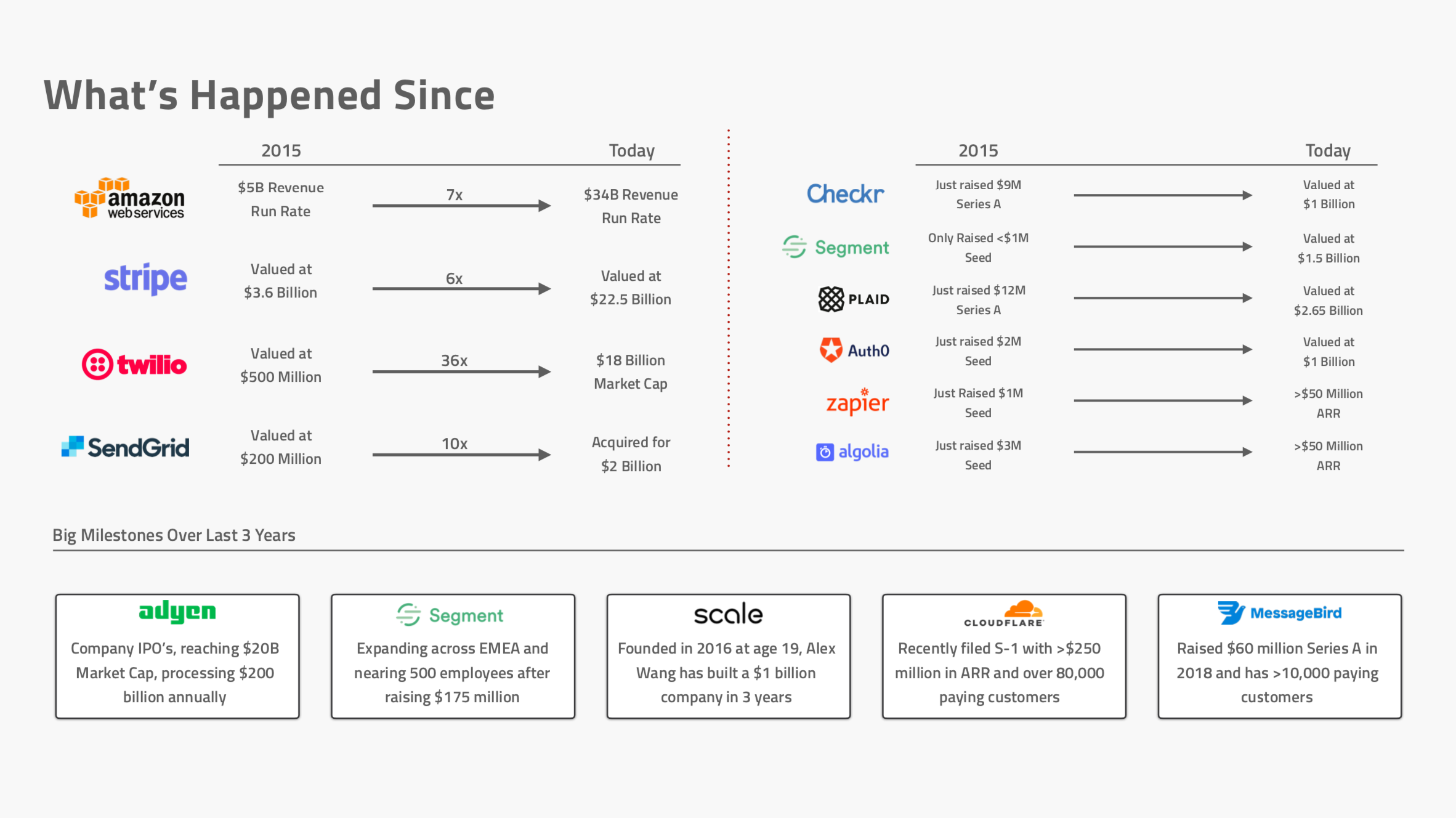
Simultaneously, the entrepreneurs behind these API-first companies like Twilio, Segment, Scale and many others are building sustainable, independent—and big—businesses.

Valued today at over $22 billion, Stripe is the biggest independent API-first company. Stripe took off because of its initial laser-focus on the developer experience setting up and taking payments. It was even initially known as /dev/payments!

Stripe spent extra time building the right, idiomatic SDKs for each language platform and beautiful documentation. But it wasn’t just those things, they rebuilt an entire business process around being API-first.

Companies using Stripe didn’t need to fill out a PDF and set up a separate merchant account before getting started. Once sign-up was complete, users could immediately test the API with a sandbox and integrate it directly into their application. Even pricing was different.

Stripe chose to simplify pricing dramatically by starting with a single, simple price for all cards and not breaking out cards by type even though the costs for AmEx cards versus Visa can differ. Stripe also did away with a monthly minimum fee that competitors had.

Many competitors used the monthly minimum to offset the high cost of support for new customers who weren’t necessarily processing payments yet. Stripe flipped that on its head. Developers integrate Stripe earlier than they integrated payments before, and while it costs Stripe a lot in setup and support costs, it pays off in brand and loyalty.

Checkr is another excellent example of an API-first company vastly simplifying a massive yet slow-moving industry. Very little had changed over the last few decades in how businesses ran background checks on their employees and contractors, involving manual paperwork and the help of 3rd party services that spent days verifying an individual.

Checkr’s API gives companies immediate access to a variety of disparate verification sources and allows these companies to plug Checkr into their existing on-boarding and HR workflows. It’s used today by more than 10,000 businesses including Uber, Instacart, Zenefits and more.

Like Checkr and Stripe, Plaid provides a similar value prop to applications in need of banking data and connections, abstracting away banking relationships and complexities brought upon by a lack of tech in a category dominated by hundred-year-old banks. Plaid has shown an incredible ramp these past three years, from closing a $12 million Series A in 2015 to reaching a valuation over $2.5 billion this year.

Today the company is fueling an entire generation of financial applications, all on the back of their well-built API.
Screen Shot 2019 09 06 at 10.41.02 AM

Graphics courtesy of Accel

Then and now

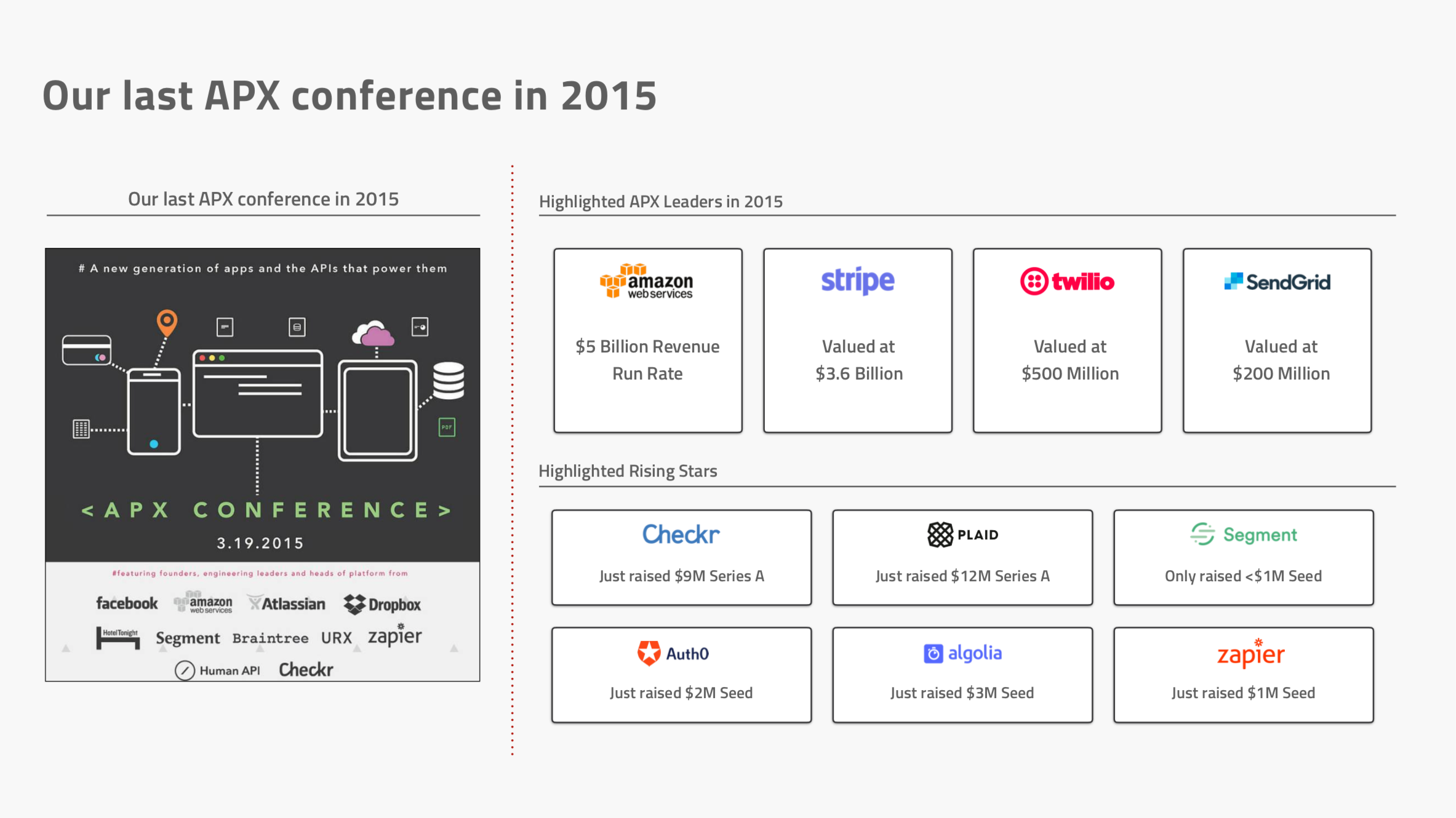
Accel’s first API investment was in Braintree, a mobile and web payment systems for e-commerce companies, in 2011. Braintree eventually sold to, and became an integral part of, PayPal as it spun out from eBay and grew to be worth more than $100 billion. Unsurprisingly, it was shortly thereafter that our team decided to it was time to go big on the category. By the end of 2014 we had led the Series As in Segment and Checkr and followed those investments with our first APX conference in 2015.

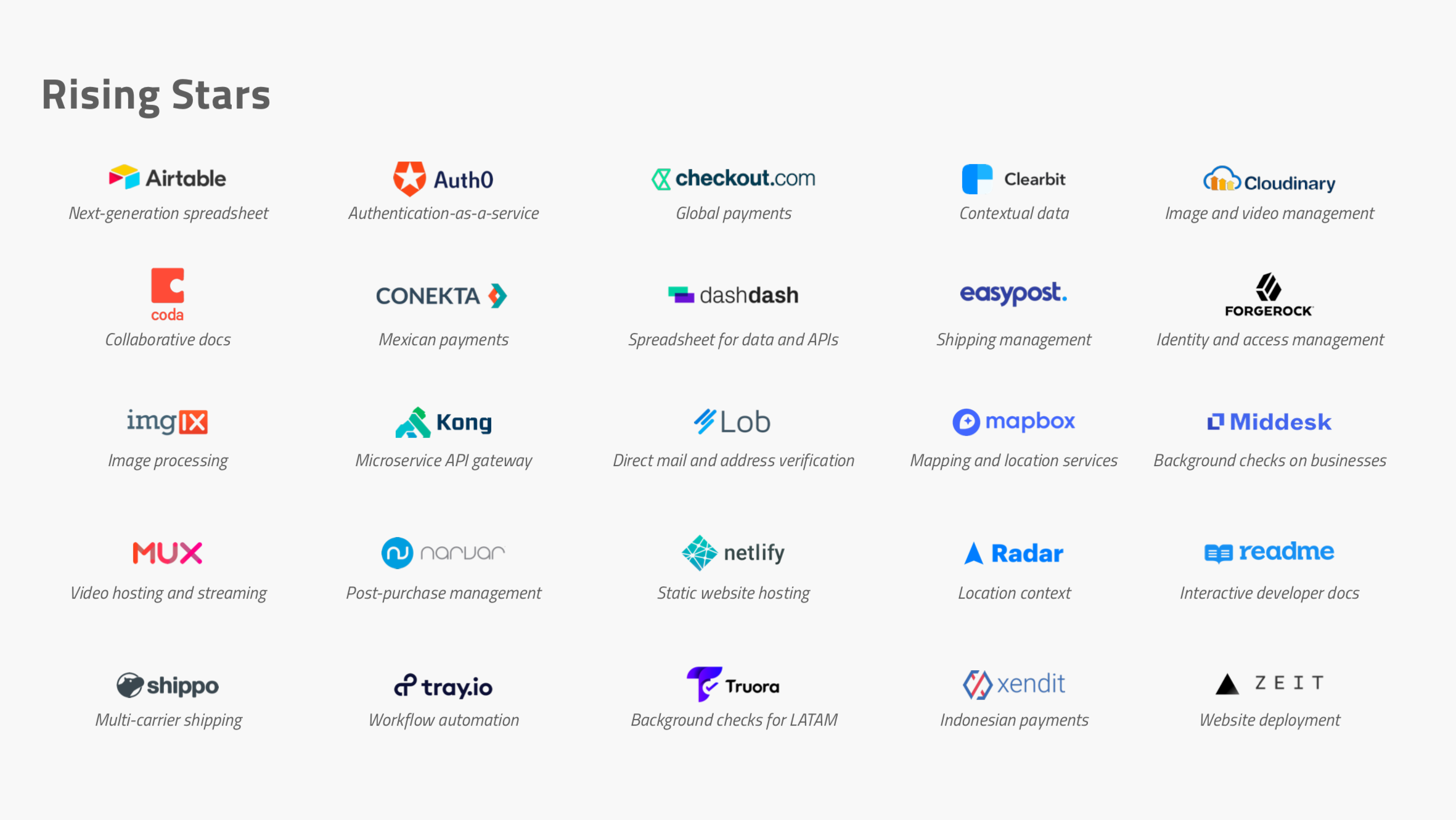
Plaid, Segment, Auth0, and Checkr had only raised Seed or Series A financings! And we are even more excited and bullish on the space. To convey just how much API-first businesses have grown in such a short period of time, we thought it would be useful perspective to share some metrics over the past five years, which we’ve broken out in the two visuals included above in this article.

While SaaS may have pioneered the idea that the best way to do business isn’t to actually build everything in-house, today we’re seeing APIs amplify this theme. At Accel, we firmly believe that APIs are the next big SaaS wave — having as much if not more impact as its predecessor thanks to developers at today’s fastest-growing startups and their preference for API-first products. We’ve actively continued to invest in the space (in companies like, Scale, mentioned above).

And much like how a robust ecosystem developed around SaaS, we believe that one will continue to develop around APIs. Given the amount of progress that has happened in just a few short years, Accel is hosting our second APX conference to once again bring together this remarkable community and continue to facilitate discussion and innovation.
Screen Shot 2019 09 06 at 10.41.10 AM

Graphics courtesy of Accel

06 Sep 2019

Anti-utopian type design with Monotype’s Charles Nix

Monotype recently introduced a new typeface called Ambiguity, created by its Type Director, Charles Nix. Its unusual proportions deliberately challenge typographical conventions, going wide where a letter was once narrow and vice versa. I had a chance to talk to Nix about the genesis of Ambiguity and the state of type design; The conversation was interesting enough that I felt I should publish it more or less intact.

The interview has been slightly edited for clarity and conciseness. I started by asking for a little background on Monotype and what Nix does.

Charles Nix: Monotype is a very old company. It’s at least 125 years old, if not hundreds of years, just based on the number of foundries that have consolidated over the last 200 years. The current iteration of Monotype is the largest purveyor of digital fonts in the world.

The Monotype Studio is a discrete section within it that creates and manages type collections. There are around 60 of us, a dozen or so of which are type designers.

We help customers navigate the library, because it’s vast. We make do typeface recommendation, identification, pairing; we also help customers by modifying existing typefaces slightly in order to make them perform more uniquely.

And lastly the studio does custom design work, so we work with customers in order to identify their type needs, then create custom type solutions from the ground up.

Devin Coldewey: You mentioned the company is an amalgamation of foundries and studios from a century and more. The digital era seems like an exciting and weird one to be in type because the tools are so strong and distribution is so straightforward. Is this a good time to be in type versus 10, 20, 50 years ago?

Nix: I mean, you’re talking to a type designer, so any time working on type is a good time. But I agree with what you said, this time and this company, I want to say it’s all been leading up to this moment.

The tools and communication regarding typography, the typographic plenty, the awareness of typographic history, all these things are so amazing and focused at this point, there’s no more exciting time in the history of type to be involved.

Coldewey: What do you think is the biggest change in the last decade or so? Digitally the adoption of high-DPI screens has probably made type look a lot better, but I don’t know whether it’s actually changed what people do, or how it’s designed or approached.

Tools, distribution, and awareness — those three things are coming together to create the greatest typographic plenty in the history of the world.

Nix: There’s a triangulation of factors that are affecting type design at this point. One is the tools — and I always make this distinction, popular tools versus democratic tools. The tools aren’t democratic, but they’re popular enough, and they’re available enough, not freely obviously, but much much more freely and more accessible than any time in the 500 years of type founding, right?

As you pointed out, type is and has been for the last 30 years software. And slightly longer actually, if you look back to the early, early digital type, but now and in the public consciousness, it’s software. So distribution is crazy fast, and widespread.

My mother, she’s a special case because she helped my dad, who was a printer, so she knows more about type than most mothers. But in 1985 she could probably name five or six typefaces off the top of her head. And now she and everybody else’s mother has a favorite typeface, right?

That’s a huge change in the way that the world views type. What will come into sharper focus in the coming years is how those people harness the ability of typefaces to help modulate their own language, to help tell the story of what they say in print.

So tools, distribution, and awareness — those three things are coming together to create the greatest typographic plenty in the history of the world.

06 Sep 2019

Looking to become the meme-based social network of the gaming world Medal.tv raises $9 million

When Medal.tv first launched on the scene, the company was an upstart trying to be the social network for the gaming generation.

Since its debut in February, the clipping and messaging service for gamers has amassed 5 million total users with hundreds of thousands of daily active users. And now it has a $9 million new investment from firms led by Horizons Ventures, the venture capital fund established by Hong Kong multi-billionaire Li Kashing.

“We’re seeing sharing of short-form video emerge as a means of self-expression and entertainment for the current generation. We believe Medal’s platform will be a foundation for interactive social experiences beyond what you can find in a game,” says Jonathan Tam, an investor with Horizons Ventures .

Medal sees potential both in its social network and in the ability for game developers to use the platform as a marketing and discovery tool for the gaming audience.

“Friends are the main driver of game discovery, and game developers benefit from shareable games as a result. Medal.tv is trying to enable that without the complexity of streaming,” says Matteo Vallone, the former head of Google Play games in Europe and an angel investor in Medal.

Assets Web 1

It’s a platform that saw investors willing to fork over as much as $20 million for the company, according to chief executive Pim DeWitte. “There are still too many risks involved to take capital like that,” DeWitte says.

Instead the $9 million from Horizons, and previous investors like Makers Fund will be used to steadily grow the business.

“At Medal, we believe the next big social platform will emerge in gaming, perhaps built on top of short-form content, partially as a result of gaming publishers trying to build their own isolated gaming stores and systems,” said DeWitte, in a statement. “That drives social fragmentation in the market and brings out the need for platforms such as Medal and Discord, which unite gamers across games and platforms in a meaningful way.”

As digital gaming becomes the social medium of choice for a generation, new tools that allow consumers to share their virtual experiences will become increasingly common. This phenomenon will only accelerate as more events like the Marshmello concert in Fortnite become the norm.

“Medal has the exciting potential to enable a seamless social exchange of virtual experiences,” says Ryann Lai, an investor from Makers Fund.