
Year: 2019

04 Dec 2019

Android’s ‘Focus Mode’ exits beta, adds new scheduling features

Google is expanding its suite of “Digital Wellbeing” tools for Android devices with a new feature, Focus Mode, launching today. This feature allows users to turn off distractions — like social media updates or email notifications — for a period of time, so you can get things done without interruption. Focus Mode was first announced at Google’s I/O developer conference this May, and has been in beta testing until now, Google says.

Unlike Do Not Disturb, which can mute sounds, stop vibrations and block visual disturbances, Focus Mode is only about silencing specific apps.

Within the Digital Wellbeing settings, users select which apps they find most distracting — like Facebook, YouTube, Gmail, games or anything else that tends to steal their attention. These apps can be paused temporarily, which stops those apps’ notifications. Plus, if you try to open the app, Focus Mode reminds you they’re paused.

During beta testing, Google said tester feedback led to the creation of a new enhancement for Focus Mode: the ability to set a schedule for your app breaks. This allows you to continually block app notifications for the days and times you choose — like your 9 AM to 5 PM working hours, for example.

There’s also a new option to take a break from Focus Mode, which allows you to use to use the blocked apps for a time, then return to Focus Mode without entirely disabling it to do so. In addition, if you finish your work or other tasks early one day, you can now turn off Focus Mode for that day without breaking its ongoing weekly schedule.

The Focus Mode feature is one of now many investments Google has made into its comprehensive Digital Wellbeing feature set, which was originally introduced at Google I/O 2018 but initially only on Pixel devices. Since then, Google has expanded access to Digital Wellbeing features and further integrated its features — including parent control app Family Link — into the Android OS.

It has also developed digital wellbeing apps outside of its core Digital Wellbeing product, with October’s launch of a handful of wellbeing experiments. This set of apps included a notification mailbox, unlock clock, and even an easy way to printout important information from your phone so you don’t have to keep checking your device throughout the day, among other things.

Elsewhere across Google’s product line it has developed settings and controls devoted to wellbeing, like YouTube’s reminders to “take a break,” automations for Gmail, downtime settings for Google Home, and more.

Google says the new version of Focus Mode exits beta testing today and is rolling out to all devices that support Digital Wellbeing and parental controls, including Android 9 and 10 phones.

04 Dec 2019

Watch SpaceX launch a twice-flown Dragon capsule to the ISS live

SpaceX is set to launch its 19th Commercial Resupply Mission (CRS) for the International Space Station today, with a liftoff time scheduled for 12:51 PM EST (9:51 AM EST). The launch will take off from Cape Canaveral Air Force Station in Florida, and will use a Dragon cargo capsule that SpaceX has already flown twice previously, first in 2014 and then again in 2017. The stream above should start at around 15 minutes prior to liftoff, so at around 12:36 PM EST.

This launch will also include a recovery attempt for the Falcon9 booster being used, which will perform a controlled return to Earth and aim to land on the floating drone landing ship ‘Of Course I Still Love You,’ which will be waiting in the Atlantic Ocean.

On board the Dragon bound for the ISS will be around 5,700 lbs of supplies, including experiment and research materials to support the ongoing science mission of the station and the astronauts on board. One of those pieces of cargo is a new ‘robot hotel’ that will provide a protected parking space for mission-critical robots at the ISS when they’re not in use.

The CRS-19 mission has a backup window of Thursday, December 5 at 12:29 PM EST (9:29 AM PST) should today’s launch not go off as planned for any reason.

04 Dec 2019

Watch SpaceX launch a twice-flown Dragon capsule to the ISS live

SpaceX is set to launch its 19th Commercial Resupply Mission (CRS) for the International Space Station today, with a liftoff time scheduled for 12:51 PM EST (9:51 AM EST). The launch will take off from Cape Canaveral Air Force Station in Florida, and will use a Dragon cargo capsule that SpaceX has already flown twice previously, first in 2014 and then again in 2017. The stream above should start at around 15 minutes prior to liftoff, so at around 12:36 PM EST.

This launch will also include a recovery attempt for the Falcon9 booster being used, which will perform a controlled return to Earth and aim to land on the floating drone landing ship ‘Of Course I Still Love You,’ which will be waiting in the Atlantic Ocean.

On board the Dragon bound for the ISS will be around 5,700 lbs of supplies, including experiment and research materials to support the ongoing science mission of the station and the astronauts on board. One of those pieces of cargo is a new ‘robot hotel’ that will provide a protected parking space for mission-critical robots at the ISS when they’re not in use.

The CRS-19 mission has a backup window of Thursday, December 5 at 12:29 PM EST (9:29 AM PST) should today’s launch not go off as planned for any reason.

04 Dec 2019

Lessons from M-Pesa for Africa’s new VC-rich fintech startups

In African fintech, the fourth quarter of 2019 brought big money to new entrants.

Chinese investors put $220 million into OPay and PalmPay — two fledgling startups with plans to scale in Nigeria and the broader continent. Several sources told me the big bucks had created anxiety for more than few payments ventures in Nigeria with similar strategies and smaller coffers. They may not need to fret just yet, however: lessons from Africa’s most successful mobile-money case study, M-Pesa, suggest that VC alone won’t buy scale in digital finance.

Startups and fintech in Africa

Over the last decade, Africa has been in the midst of a startup boom accompanied by big growth in VC and improvements in internet and mobile penetration.

Some definitive country centers for company formation, tech hubs and investment have emerged; Nigeria, South Africa and Kenya lead the continent in numbers for all those categories. Additional strong and emerging points for innovation and startups across Africa’s 54 countries and 1.2 billion people include Ghana, Tanzania, Ethiopia, and Senegal.


The continent surpassed $1 billion in VC to startups in 2018 and per research done by Partech and WeeTracker, fintech is the focus of the bulk of capital and deal-flow.

By several estimates,  Africa is home to the largest share of the world’s unbanked and underbanked population.

This runs parallel to the region’s off-the-grid SME’s and economic activity — on display and in commercial motion through the street traders, roadside kiosks and open-air markets common from Nairobi to Lagos.

IMF estimates have pegged Africa’s informal economy as one of the largest in the world. Thousands of fintech startups have descended onto this large pool of unbanked and underbranked citizens and SMEs looking to grow digital finance products and market share.

In this race, the West African nation of Nigeria — home to Africa’s largest economy and population — is becoming an epicenter for VC. Many fintech-related companies are adopting a strategy of scaling there first before expanding outward.

Enter PalmPay and OPay

That includes new entrants OPay and PalmPay, which raised so much capital in fourth quarter 2019. It’s notable that both were founded in 2019 and largely incubated by Chinese actors.

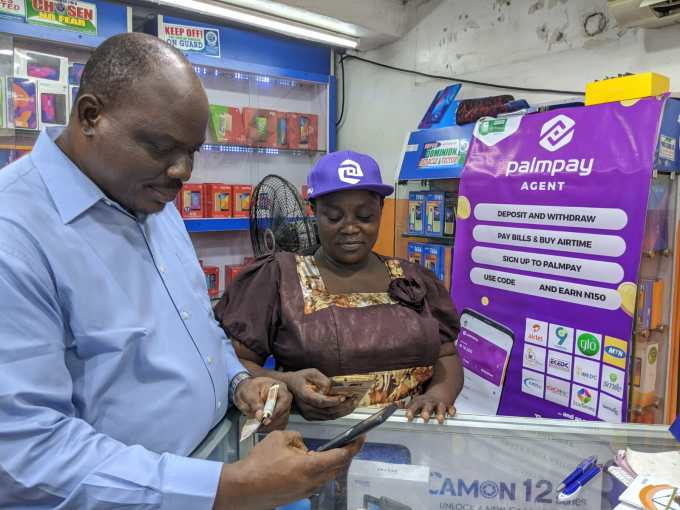
PalmPay, a consumer-oriented payments product, went live in November with a $40 million seed-round (one of the largest in Africa in 2019) led by Africa’s biggest mobile-phones seller — China’s Transsion. The startup was upfront about its ambitions, stating its goals to become “Africa’s largest financial services platform,” in a company statement.

To that end, PalmPay conveniently entered a strategic partnership with its lead investor. The startup’s payment app will come pre-installed on Transsion’s mobile device brands, such as Tecno, in Africa — for an estimated reach of 20 million phones in 2020.
PalmPay also launched in Ghana in November and its U.K. and Africa-based CEO, Greg Reeve, confirmed plans to expand to additional African countries in 2020.

If PalmPay’s $40 million seed round got founders’ attention, OPay’s $120 million Series B created shock-waves, coming just months after the mobile-based fintech venture raised $50 million — making OPay’s $170 million capital haul equivalent to roughly a fifth of all VC raised in Africa in 2018.

Founded by Chinese owned consumer internet company Opera — and backed by 9 Chinese investors — OPay is the payment utility for a suite of Opera -developed internet based commercial products in Nigeria that include ride-hail apps ORide and OCar and food delivery service OFood.

With its latest Series A, OPay announced it would expand in Kenya, South Africa, and Ghana.

In Nigeria, OPay’s $170 million Series A and B announced in the span of months dwarfs just about anything raised by new and existing fintech players, with the exception of Interswitch.

The homegrown payments processing company — which pioneered much of Nigeria’s digital finance infrastructure — reached unicorn status in November when Visa took a reported $200 million minority stake in the venture.

A sampling of more common funding amounts for payments ventures in Nigeria includes established fintech company Paga’s $10 million Series B. Recent market entrant Chipper Cash’s May 2019 seed-round was $2.4 million.

There is a large disparity between fintech startups in Nigeria with capital raises in ones and tens of millions vs. OPay and PalmPay’s $40 and $120 million rounds. Conventional wisdom could be that the big-capital, big spending firms have an unmistakable advantage in scaling digital payments in Nigeria and other markets.

A look at Kenya’s M-Pesa may prove otherwise.

04 Dec 2019

Disrupt Berlin 2019 opens in just one week

Synchronize your watches, dust off your passports and pack your bags, startuppers. Disrupt Berlin 2019 kicks off in just seven short days. Thousands of you — representing more than 50 countries — will arrive in Berlin ready to learn, exhibit, compete and network for two action-packed days.

Good news for professional procrastinators and last-minute decisions makers. Buy a late registration pass to Disrupt Berlin now, and you can still save up to €200 over the onsite ticket price.

There’s so much to do in just two days — how will you spend your time at Disrupt?

Hear from the leading names, minds, makers and shakers of the early-stage startup community. These are the folks who’ve dreamed, launched, pivoted, scaled and succeeded. And they’ll be on hand to share how they did it. Here are just two of the presentations we have on tap for you. You’ll find the complete schedule of events and presentations in the Disrupt Berlin ’19 agenda.

How to Fit Blockchain into Your Startup Strategy: Chances are, you keep hearing about this “blockchain” thing — and maybe you’re ignoring it but deep down, you know you should probably think about how it could help your startup. To help you with that and maybe demystify blockchain a bit, too, we’ll be joined by Justin Drake (Ethereum Foundation), Ash Egan (Accomplice VC) and Ashley Tyson (Web3 Foundation) — all of whom have deep roots in the blockchain community.

From Startup Battlefield to IPO: In 2010, Cloudflare participated in one of the very first Disrupt Battlefields and a few months ago, the company made its debut on the New York Stock Exchange. In this conversation with Co-founder and CEO Matthew Prince, we’ll talk about Cloudflare’s path to an IPO, the unique challenges it faced, and what’s next for the company.

And speaking of Startup Battlefield, don’t miss this epic throwdown as a cadre of the very best startups takes the Main Stage to launch to the world. They’ll pitch to an expert panel of judges and vie for the Disrupt Cup, $50,000 and potentially life-altering investor and media attention.

Enjoy watching startuppers compete? Get this — we’re holding the TC Hackathon finals on the Extra Crunch Stage. The 10 finalists chose from a range of sponsored challenges — each with its own cash prize. Then they endured a grueling, sleep-deprived 24 hours to create and code a working product that solves a real-world problem.

Be there as they power through a two-minute pitch to a panel of expert judges. And stick around to see who earns the title of best over-all hack — along with $5,000 — from the TechCrunch editors.

Network among hundreds of outstanding startups in Startup Alley, our exhibition hall. That’s also where you’ll find the TC Top Picks. TechCrunch editors chose these companies — fine startups one and all — to represent the best in these tech categories: AI/Machine Learning, Biotech/Healthtech, Blockchain, Fintech, Mobility, Privacy/Security, Retail/E-commerce, Robotics/IoT/Hardware, and CRM/Enterprise.

You have just seven days before all glorious heck breaks loose in the form of Disrupt Berlin 2019. Don’t miss out on the opportunity, the fun, the connection and the community. Buy your pass today and save up to €200. We’ll see you in Berlin!

Is your company interested in sponsoring or exhibiting at Disrupt Berlin 2019? Contact our sponsorship sales team by filling out this form.

04 Dec 2019

Prolific wants to challenge Amazon’s Mechanical Turk in the online research space

Prolific, a U.K.-based startup that wants to make it easier to conduct online research, has raised $1.2 million in seed funding.

The round is co-led by Silicon Valley-based Pioneer Fund, and Altair Capital, with support from various angel investors based in the Bay Area. Prolific is also a graduate of Y Combinator and presented at YC’s demo day this past summer.

Founded in 2014 by Ekaterina Damer and Phelim Bradley, doctoral students at Sheffield and Oxford universities respectively at the time, Prolific offers an online tool to easily recruit and pay research participants and conduct what it calls “ethical and trustworthy” research. The idea was born out of Damer’s own frustration with existing options, including Amazon’s Mechanical Turk (MTurk), when carrying out research for her own PhD.

“I was struggling to recruit participants for my research,” she tells TechCrunch. “None of the available tools were fit for purpose because they were either obscure, expensive or really slow! By ‘obscure’ I mean: It wasn’t clear who the participants were, how they were treated and whether the data quality would be any good! I considered Amazon’s Mechanical Turk (MTurk), the most widely used tool for academic research, but it only had U.S. American and Indian participants and a distinct lack of European ones”.

This led her and Bradley to create Prolific as a better alternative to MTurk and it wasn’t long before other colleagues at Sheffield and Oxford started using the product. Just a year in, Prolific was being used by researchers globally, including those from Stanford, Oxford, Yale, and UPenn.

“It’s grown from there almost purely through word-of-mouth, with over 3,000 customers now from researchers and companies around the world!’ says Damer.

Prolific also counts the World Bank and several Fortune 500 companies as customers, and claims to reach a network of 70,000-plus active research participants from a wide range of backgrounds.

“The problem is that behavioural research on the internet is broken,” Damer explains. “Finding participants is difficult and slow and the data you get from other platforms is often low quality because incentives are not aligned or you’re dealing with legacy platforms that don’t leverage tech.

“Customers want participants and data they can trust, but they typically have to resort to platforms which provide disengaged people who sign up for pennies. Or they even end up collecting data from fraudsters and human-assisted bots. Researchers across academia and industry are desperate for higher quality sampling solutions”.

To fix these issues, Damer says that Prolific is building research technology that makes people-based research “more effective and efficient” than existing solutions, from sourcing participants, to prescreening for the right target demographics, to automating participant payments. The startup also employs what it calls proprietary user validation technology that uses statistical algorithms and machine learning to catch bots and bad actors, which Damer says plague many of the company’s competitors.

“It’s actually quite shocking how competitors often squeeze their participants (or ‘workers’) because they see them as a commodity,” she adds. “This means that participants are either disengaged or try to game the system. In contrast, we have many positive incentives built into our platform. Participants can prequalify for studies so they never get kicked out randomly, we encourage and collect two-way feedback… researchers love that they can talk to participants directly through our interface in case questions, feedback or concerns arise, and we mandate a minimum pay of $6.50 (£5) per hour. All of this creates trust and virtuous cycles that power our growth”.

Damer frames Prolific’s broader mission as making “trustworthy data about people more accessible”. “Our core belief is that access to high quality psychological and behavioural data is the foundation for great research and ultimately, for progress in business, tech, and society,” she says. “The bigger vision is to build the most powerful and flexible infrastructure for research on the internet”.

That’s not to say that Prolific doesn’t have competitors that are also attempting to make online research and insights more accessible and of better quality.

Companies like CloudResearch, and Positly utilise MTurk’s API, but Damer says that has limitations since “great data and great research starts with a great community,” which, arguably, MTurk isn’t.

There are also well-established operations such as Nielsen, Dynata (formally Research Now SSI), YouGov, Cint, IpsosMori, Qualtrics Panels, and SurveyMonkey Audience, along with newer players like Attest, and Respondent.io.

04 Dec 2019

Otta picks up £850,000 seed to match you to relevant jobs

Otta, one of the latest startups aiming to fix what it sees as a broken job search and recruitment market, has picked up £850,000 in seed funding. Backing the young London company is LocalGlobe, along with a number of U.K. angel investors and founders.

The latter includes Paul Forster (co-founder of Indeed), Shakil Khan (an early investor in Spotify and founder of Student.com), Matt Robinson (co-founder of Nested and GoCardless), Duncan Jennings (founder of VoucherCodes), and Carlos Gonzalez-Cadenas (COO at GoCardless).

Founded in June this year by former Nested employees Sam Franklin, Theo Margolius and Xav Kearney — all of whom are 25 years of age or under — Otta wants to make it easier to find suitable skilled jobs at fast-growing companies. The startup does this via an initial online quiz, followed by a UI that shows you one potentially suitable job at a time, with a matching algorithm claiming to get more personalised as you provide feedback.

“Job seekers are frustrated by the amount of noise from most job search experiences,” CEO Sam Franklin tells me. “LinkedIn returns 25,000 software engineering jobs in London. There is very limited opportunity to filter these results down to what you care about. Plus the recommendations are ordered by how much companies are paying, not by what results are truly best”.

He says that while working at Nested he would often see engineers receive 50 or more messages or emails per month from recruiters, and yet those engineers would never engage. Digging a little deeper, he was told that potential candidates felt they couldn’t rely on recruiters because they aren’t in your corner. “They only push you the roles where they have commercial agreements in place,” he observes.

That has seen Otta “handpick” over 300 of London’s most innovative companies, says Franklin. From well-known brands like Revolut and Spotify to emerging companies such as WhiteHat and Cuvva. “The curation of quality companies alone adds a lot of value to job seekers,” he says.

Otta surfaces information such as whether the company hiring has a visa sponsorship licence, the exact office location (not just London), recent funding and founder profiles.

“For individual jobs we label the tech-stack used and pull out the most important requirements,” explains Franklin. “Jobs are shown one-at-a-time (instead of in a list format) and this means we collect more feedback on what candidates like and dislike. This feedback and additional data is really helpful for us to deliver better recommendations. Similar to how Spotify makes recommendations based on what you listen to, we use machine learning to recommend you jobs based on which jobs you like and dislike. Recommendations improve as our collection of users spend more time on the platform”.

Since launching in August 2019, Otta says that “thousands” of job seekers using the platform have shortlisted over 20,000 roles, although the company is yet to attempt to monetise this engagement.

“We currently aren’t monetising the platform, despite being asked by plenty of companies to help them recruit for certain roles,” says Franklin. “We have committed to only making money in a way that improves the experience for candidates. So this means we won’t charge companies to post jobs, as we want candidates to see all the fantastic roles suited to them. We also won’t allow companies to pay to influence our search results, as we want to show candidates their best roles first”.

Instead, the plan is to charge companies to proactively engage with Otta’s “high-quality pool” of candidates. The idea is to try and add value to both sides of the marketplace, akin to a much more targeted LinkedIn Recruiter. “Companies will get to reach out to active candidates that are interested in their company, and candidates will get directly contacted by their favourite companies without being spammed by recruiters,” promises the Otta CEO.

04 Dec 2019

Meet Europe’s top VCs at Disrupt Berlin

Silicon Valley’s top venture capital firms, from Sequoia to Benchmark to Accel, are investing more and more dollars overseas, as more globally-minded unicorns crop up across Europe.

As Forbes recently noted, U.S. VCS are “bonkers for European startups,” with “more money … flowing into European tech than ever.” Seems like a great time to sit down with U.S. and European investors to get a better sense of what’s happening here. Conveniently, we’re gathering top venture capitalists at our annual European conference, TechCrunch Disrupt Berlin, next week.

For starters, we’ll have Forward Partners managing partner Nic Brisbourne, Target Global partner Malin Holmberg and DocSend founder Russ Heddleston together to provide exclusive fundraising advice to entrepreneurs. They’ll sit down with me for 45 minutes to shed light on the biggest challenges founders face while raising VC, how to perfectly crap your pitch and how to know if an investor is interested in your upstart.

Sequoia’s Andrew Reed, who’s worked on the firm’s investments in Bird, Figma, Front, Loom, Rappi, UiPath and more, will join us, too. From Index Ventures, a noted U.S. and U.K. investor, we’ll welcome principal Hannah Seal. From Atomico, a European venture capital firm, partner Sophia Bendz, partner Siraj Khaliq, partner Hiro Tamura and partner Niall Wass will all be in attendance. And from SoftBank, we’ll hear from SoftBank Vision Fund investment director Carolina Brochado and SoftBank Investment Advisors partner David Thevenon.

Roxanne Varza will give an update on Station F, the world’s biggest startup campus based in Paris. Varza first unveiled Station F at TechCrunch Disrupt back in December 2016; naturally, we’re excited to see what she has to stay this time.

As for others making the trip to Berlin from the U.S., we’ve got Joyance Partners investment partner Holly Jacobus and Accomplice partner Ash Egan on deck. The rest of the line-up includes some of Europe’s top VCs, including Accel partner Andrei Brasoveanu, Blossom Capital partner Louise Dahlborn Samet, Balderon Capital partner Suranga Chandratillake and principal Colin Hanna, Luminous Ventures founding partner Isabel Fox, Amadeus Capital Partners partner Volker Hirsch, Point Nine Capital partner Christoph Janz, dynamics.vs partner Tanja Kufner, Northzone partner Paul Murphy, Ada Ventures founding partner Matt Penneycard and Dawn Capital partner Evgenia Plotnikova.

Read the entire Disrupt Berlin agenda here. Tickets to the show are still available!

04 Dec 2019

In a first, Amazon launches a battery-powered portable Echo speaker in India

After launching nearly a dozen Echo speaker models in India in two years, Amazon said on Wednesday it is adding one more to the mix that addresses one of the most requested features from customers in the nation: Portability.

The e-commerce giant today unveiled the Echo Input Portable Smart Speaker Edition, a new variant in the lineup that includes a built-in battery. The 4,800mAh enclosed battery will offer up to 10 hours of continuous music playing or up to 11 hours of stand-by life, the company said.

“Portability has been one of the most requested features in India,” said Miriam Daniel, VP of Alexa Devices. “You want to be able to carry Alexa with you from room to room within your homes. So we have designed something just for you.”

The battery-powered Echo model, designed exclusively for India, is priced at 5,999 Indian rupees ($84). Users can currently purchase it at an introductory price of Rs 4,999 ($70) and the device will begin shipping on December 18.

There is an array of four LEDs that light up when a user taps the power button to show battery level.

More to follow…

04 Dec 2019

Carbon dioxide emissions are set to hit a record high this year (it’s not fine, but not hopeless)

Carbon dioxide emissions, one of the main contributors to the climate changes bringing extreme weather, rising oceans, and more frequent fires that have killed hundreds of Americans and cost the U.S. billions of dollars, are set to reach another record high in 2019.

That’s the word from the Global Carbon Project, an initiative of researchers around the world led by Stanford University scientist Rob Jackson.

The new projections from the Global Carbon Project are set out in a trio of papers published in “Earth System Science Data“, “Environmental Research Letters“, and “Nature Climate Change“.

That’s the bad news. The good news (if you want to take a glass half-full view) is that the rate of growth has slowed dramatically from the previous two years. However, researchers are warning that emissions could keep increasing for another decade unless nations around the globe take dramatic action to change their approach to energy, transportation and industry, according to a statement from Jackson.

“When the good news is that emissions growth is slower than last year, we need help,” said Jackson, a professor of Earth system science in Stanford’s School of Earth, Energy & Environmental Sciences (Stanford Earth), in a statement. “When will emissions start to drop?”

Globally, carbon dioxide emissions from fossil fuel sources (which are over 90 percent of all emissions) are expected to grow 0.6 percent over the 2018 emissions. In 2018 that figure was 2.1 percent above the 2017 figure, which was, itself, a 1.5 percent increase over 2016 emissions figures.

Even as the use of coal is in drastic decline around the world, natural gas and oil use is climbing, according to researchers, and stubbornly high per capita emissions in affluent countries mean that reductions won’t be enough to offset the emissions from developing countries as they turn to natural gas and gasoline for their energy and transportation needs.

“Emissions cuts in wealthier nations must outpace increases in poorer countries where access to energy is still needed,” said Pierre Friedlingstein, a mathematics professor at the University of Exeter and lead author of the Global Carbon Budget paper in Earth System Science Data, in a statement.

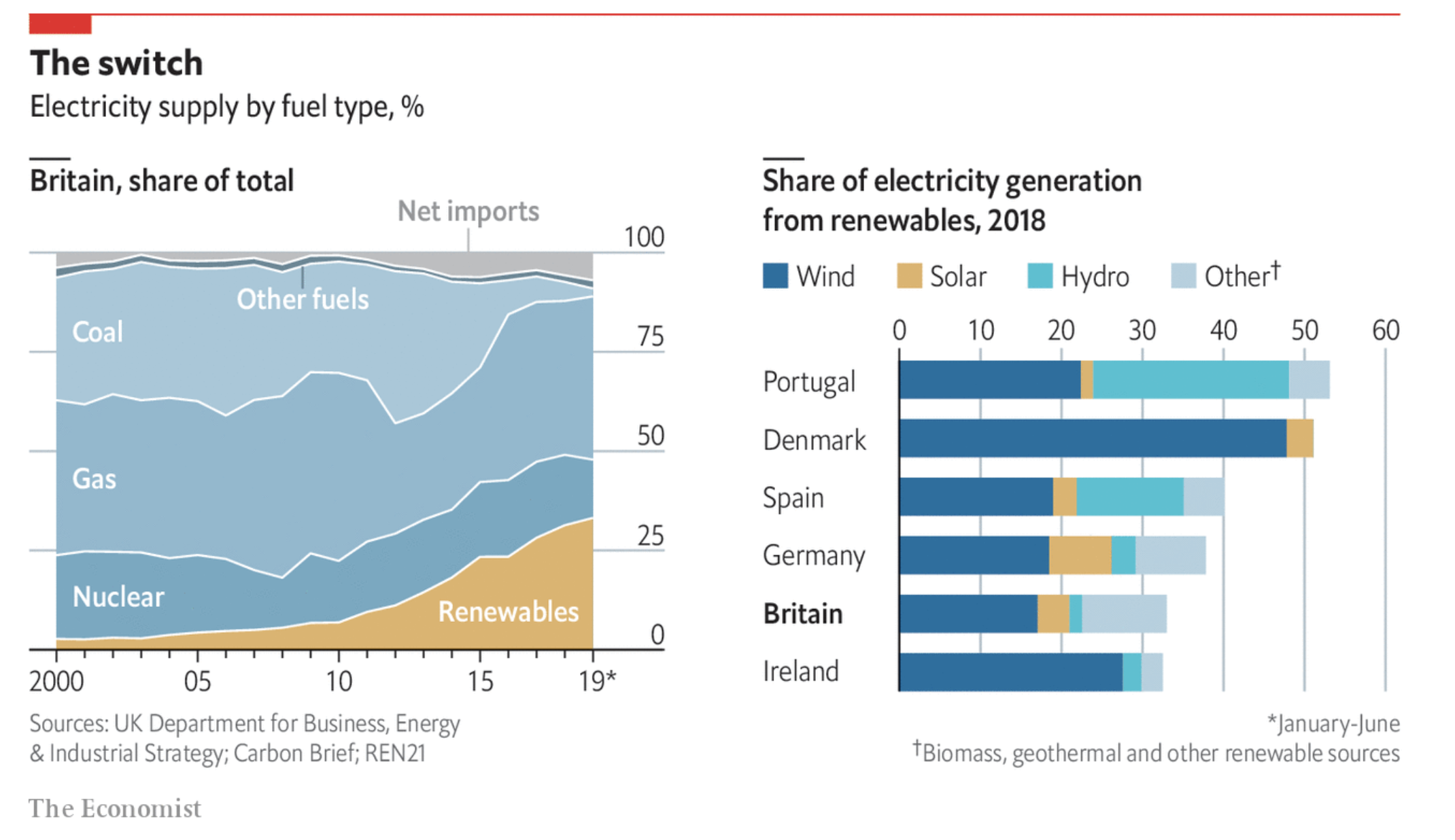
Some countries are making progress. Both the UK and Denmark have managed to achieve economic growth while simultaneously reducing their carbon emissions. In the third quarter of the year, renewable power supplied more energy to homes and businesses in the United Kingdom than fossil fuels for the first time in the nation’s history, according to a report cited by “The Economist”.

Costs of wind and solar power are declining so dramatically that they are cost competitive with natural gas in many parts of the wealthy world and cheaper than coal, according to a study earlier in the year from the International Monetary Fund.

Still, the U.S., the European Union and China account for more than half of all carbon dioxide emissions. Carbon dioxide emissions in the U.S. did decrease year-on-year — projected to decline by 1.7 percent — but it’s not enough to counteract the rising demand from countries like China, where carbon dioxide emissions are expected to rise by 2.6 percent.

And the U.S. has yet to find a way to wean itself off of its addiction to cheap gasoline and big cars. It hasn’t helped that the country is throwing out emissions requirements for passenger vehicles that would have helped to reduce its contribution to climate change even further. Even so, at current ownership rates, there’s a need to radically reinvent transportation given what U.S. car ownership rates mean for the world.

U.S. oil consumption per person is 16 times greater than in India and six times greater than in China, according to the reports. And the United States has roughly one car per-person while those numbers are roughly one for every 40 people in India and one for every 6 in China. If ownership rates in either country were to rise to similar levels as the U.S. that would put 1 billion cars on the road in either country.

About 40 percent of global carbon dioxide emissions were attributable to coal use, 34 percent from oil, 20 percent from natural gas, and the remaining 6 percent from cement production and other sources, according to a Stanford University statement on the Global Carbon Project report.

“Declining coal use in the U.S. and Europe is reducing emissions, creating jobs and saving lives through cleaner air,” said Jackson, who is also a senior fellow at the Stanford Woods Institute for the Environment and the Precourt Institute for Energy, in a statement. “More consumers are demanding cheaper alternatives such as solar and wind power.”

There’s hope that a combination of policy, technology and changing social habits can still work to reverse course. The adoption of new low-emission vehicles, the development of new energy storage technologies, continued advancements in energy efficiency, and renewable power generation in a variety of new applications holds some promise. As does the social adoption of alternatives to emissions intensive animal farming and crop cultivation.

“We need every arrow in our climate quiver,” Jackson said, in a statement. “That means stricter fuel efficiency standards, stronger policy incentives for renewables, even dietary changes and carbon capture and storage technologies.”