Year: 2019

31 Aug 2019

Did your aluminum Apple Watch mysteriously crack itself? Apple might replace the screen for free

So your aluminum Series 2 or Series 3 Apple Watch is suddenly cracking around the edges… but you don’t remember bumping it on anything, or being particularly rough with it.

Surprise! It might not be your fault at all.

Apple says that they’ve determined that “under very rare circumstances”, the displays on aluminum Series 2 and 3 are developing cracks that can wrap around the rounded edges.

The good news? If Apple determines your display crack is caused by this newly discovered issue, they’ll replace the screen for free. The bad news? It’s not the kind of thing they can fix at the Genius Bar, so getting it patched up means shipping the Watch to Apple and being without it for 5+ days.

(It sounds like the kind of cracks they’re looking for are pretty specific — they’re looking for cracks that developed around the rounded edges, as pictured above. So if you really just dropped something on the watch and the display got obliterated, you probably aren’t gonna be able to pull a fast one here.)

As spotted by MacRumors, Apple has a full list of watches that are going to be covered under this new screen replacement program here. The company says that all eligible aluminum Series 2 and 3 watches will be covered under this new screen replacement program for 3 years from its original retail purchase date, or one year from today — whichever is longer.

31 Aug 2019

Labor Day Special: One extra week on early-bird pricing for Disrupt SF 2019

Happy (almost) Labor Day to all the hardworking members of the early-startup community — entrepreneurs, founders, investors, engineers and everyone in between. We know how hard you work to build your dream, so we’re cutting you a break and extending our early-bird pricing on passes to Disrupt San Francisco 2019 through 11:59 p.m. (PST) on September 6. One extra week to save up to $1,300.

Don’t fritter away this absolute last opportunity to save big bucks on our flagship event, where you’ll find more than 10,000 attendees, 400 media outlets and a passel of eager investors. Get your early-bird tickets now.

Disrupt events always feature incredible speakers, and we’ve got an amazing agenda lined up for you this year. Let’s take a look at just some of the discussions and interviews you’ll enjoy over the course of three Disruptive days.

Reigniting the Space Race: Blue Origin CEO Bob Smith intends to return the U.S. to crewed spaceflight, with a goal of doing so this year with its first suborbital trips. Hopefully, we can also get Smith to tell us the ticket price for a trip, once it begins taking on paying customers.

Could the U.S. Government Be Your Next Investor: No founder likes dilution, which is why the U.S. government is becoming an increasingly popular source for early-stage, ambitious venture capital. Hear from Steve Isakowitz (The Aerospace Corporation) along with other VC leaders and founders who have navigated the process to discover your next source of non-dilutive capital.

How to Build a Sex Tech Startup: As the old adage goes, sex sells. Cyan Banister (Founders Fund), Cindy Gallop (MakeLoveNotPorn) and Lora Haddock (Lora DiCarlo) will discuss the opportunities — and challenges — of building a successful sex tech startup, and how to capitalize on a market that’s projected to be worth more than $123 billion by 2026.

The Grass Is Greener: The cannabis industry is projected to reach $50 billion in 10 years. Keith McCarty (Wayv) and Bharat Vasan (Pax Labs) represent two of the biggest names in the market. Hear the duo talk about an industry with undeniable potential, but plenty of red tape to deal with, too.

Quite the appetizer, no? Then there’s the big event that everyone wants to watch — Startup Battlefield. Which awesome startup will outshine the rest and take home $100,000?

Want to meet and greet even more top early-stage startups? Be sure to stop by Startup Alley and connect with the TC Top Picks — and hundreds of other cool startups. This year, our editors hand-picked 45 companies that represent the very best in their tech categories. Check the list of winners right here so you can see which ones you want to meet IRL.

Disrupt San Francisco 2019 takes place October 2-4. Enjoy your Labor Day weekend, but be sure to take advantage of the one-week early-bird price extension. Buy your passes to Disrupt SF and save up to $1,300 — but only if you beat the new deadline: September 6 at 11:59 p.m. (PST).

Is your company interested in sponsoring or exhibiting at Disrupt San Francisco 2019? Contact our sponsorship sales team by filling out this form.

30 Aug 2019

VW Group to pay $96.5M to settle inflated fuel economy lawsuit

VW Group of America said Friday it has reached an agreement with thousands of U.S. customers over alleged inflated fuel economy information on about 98,000 gas-powered vehicles from its four brands, Audi, Bentley, Porsche and Volkswagen.

The agreement involves alleged misinformation about fuel economy on 98,000 vehicles, or about 3.5% of the model year 2013-2017 VW Group vehicles sold or leased in the United States. The fuel economy will be restated to reflect a discrepancy of one mile per gallon, when rounded according to the U.S.-specific “Monroney” label requirements, according to the EPA.

Most of the vehicles affected by the overstatement of fuel economy were from Audi, Bentley and Porsche, including the 2013, 2014, 2015 and 2016 Audi A8L, RS7 and S8 vehicles. Other affected models include variants of the Porsche Cayenne such as the Cayenne S and Cayenne Turbo.

Volkswagen does not admit wrongdoing under the terms of the settlement.

Eligible customers will receive payments ranging from $5.40 to $24.30 for each month the vehicle is owned or leased. The total value of the settlement, which is subject to court approval, is $96.5 million, according to VW.

Volkswagen Group of America will also adjust its Greenhouse Gas credits to account for any excess credits associated with the fuel economy discrepancy.

Potential claimants will have to submit a claim to receive compensation. However, owners do not need to take any action at this time. Individual class members will receive information about their rights and options (including the option to “opt out” of the settlement agreement) if the court grants preliminary approval of the proposed agreement, according to VW.

30 Aug 2019

Investors are joining a sizable funding round for Bear Robotics, whose robots serve food to restaurant patrons

There’s almost no end to the number of jobs that could be replaced altogether or in some part by smart machines, from radiologists to truck drivers to, gulp, journalists. You might be tempted to sob about it to your friendly restaurant server, but wait! It’s a robot, too!

So it may be if the 25-person, Redwood City, Ca.,-based startup, Bear Robotics, has its way. The two-year-old company makes “robots that help,” and specifically, they make robots that will deliver food to restaurant customers.

It’s a market that’s seemingly poised for disruption. As Bear says in its own literature about the company, it was founded to address the “increased pressure faced by the food service industry around wages, labor supply, and cost efficiencies.”

CEO John Ha, a former Intel research scientist turned longtime technical lead at Google who also opened, then closed, his own restaurant, witnessed the struggle firsthand. As the child (and grandchild) of restaurateurs, this editor can also attest that owning and operating restaurants is a tricky proposition, given the expenses and — even more plaguing oftentimes — the turnover that goes with it.

Investors are apparently on board with the idea. According to a new SEC filing, Bear has so far locked down at least $10.2 million from a dozen investors on its way to closing a $35.8 million round. That’s not a huge sum for many startups today, but it’s notable for a food service robot startup, one whose first model, “Penny,” spins around R2D2-like, gliding between the kitchen and dining tables with customers’ food as it is prepared.

At least, this is what will theoretically happen once Bear begins lining up restaurants that will pay the company via a monthly subscription that includes the robot, setup and mapping of the restaurant (so Penny doesn’t collide into things), along with technical support.

In the meantime, Bear’s backers, which the startup has yet to reveal, may be taking a cue in part from Alibaba, which last year opened a highly automated restaurant in Shanghai where small robots slide down tracks to deliver patrons’ meals.

They may also be looking at the bigger picture, wherein everything inside restaurants is getting automated — from robotic chefs that fry up ingredients to table-mounted self-pay tablets — with servers one of the last pieces of the puzzle to be addressed.

That doesn’t meant Bear or other like-minded startups will take off any time soon in restaurants that aren’t offering a futuristic experience. One of the reasons that people have always headed to restaurants is for good-old human interaction. In fact, with take-out ordering on the rise, people — waiters, bartenders, restaurant owners who flit around the dining room to say hello — may prove one of the only reasons that customers show up at all.

30 Aug 2019

At-home blood testing startup Baze rakes in $6 million from Nature’s Way

By now, the venture world is wary of blood testing startups offering health data from just a few drops of blood. However, Baze, a Swiss-based personal nutrition startup providing blood tests you can do in the convenience of your own home, collects just a smidgen of your sanguine fluid through an MIT manufactured device, which, according to the company, is in accordance with FDA regulations.

The idea is to find out (via your blood sample) what vitamins you’re missing out on and are keeping you from living your best life. That seems to resonate with folks who don’t want to go into the doctor’s office and separately head to their nearest lab for testing.

And it’s important to know if you are getting the right amount of nutrition — Vitamin D deficiency is a worldwide epidemic affecting calcium absorption, hormone regulation, energy levels and muscle weakness. An estimated 74% of the U.S. population does not get the required daily levels of Vitamin D.

“There are definitely widespread deficiencies across the population,” CEO and Baze founder Philipp Schulte tells TechCrunch. “[With the blood test] we see that we can actually close those gaps for the first time ever in the supplement industry.”

While we don’t know exactly how many people have tried out Baze just yet, Schulte says the company has seen 40% month-over-month new subscriber growth.

That has garnered the attention of supplement company Nature’s Way, which has partnered with the company and just added $6 million to the coffers to help Baze ramp up marketing efforts in the U.S.

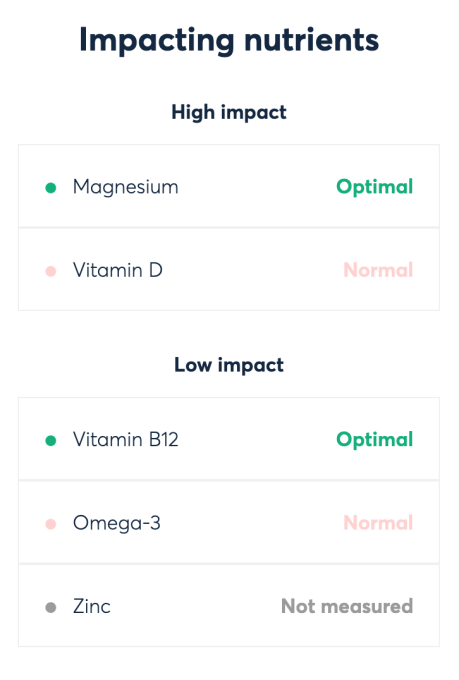
Screen Shot 2019 08 30 at 2.27.12 PMI had the opportunity to try out the test myself. It’s pretty simple to do. You just open up a little pear-shaped device, pop it on your arm and then press it to engage and get it to start collecting your blood. After it’s done, plop it in the provided medical packaging and ship it off to a Baze contracted lab.
I will say it is certainly more convenient to just pop on a little device myself — although it might be tricky if you’re at all squeamish as you’ll see a little bubble where the blood is being sucked from your arm. For anyone who hesitates, it might be easier to just head to a lab and have another human do this for you.

The price is also nice, compared to going to a Quest Diagnostics or LabCorp, which can vary depending on what vitamins you need to test for individually. With Baze it’s just $100 a pop + any additional supplements you might want to buy via monthly subscription after you get your results.

Baze’s website will show your results within about 12 days (though Schulte tells TechCrunch the company is working on getting your results faster). It does so with a score and then displays a range of various vitamins tested.

I was told that, overall, I was getting the nutrients I require with a score of 74 out of 100. But I’m already pretty good at taking high quality vitamins. The only thing that really stuck out was my zinc levels, which I was told was way off the charts high after running the test through twice. Though I suspect, as I am not displaying any symptoms of zinc poisoning, this was likely the result of not wiping off my zinc-based sunscreen well enough before the test began.

For those interested in conducting their own at-home test and aren’t afraid to prick themselves in the arm with something that looks like you might have it on hand in the kitchen, you can do so by heading over to Baze and signing up.

30 Aug 2019

Someone hacked Jack Dorsey’s own Twitter account

A hacker has broken into Jack Dorsey’s own Twitter account.

It’s not clear how it happened, but the hacker posted over a dozen tweets in quick succession, including racial epithets. Not only that, it means the unnamed hacker also has access to the Twitter chief executive’s private direct messages.

Dorsey has over 4.21 million followers.

Twitter allows users to secure their accounts with two-factor authentication. Facebook boss Mark Zuckerberg once had his Twitter account hacked because his account didn’t use the secondary security feature. He also had a ridiculously easy-to-guess password.

It’s not known how Dorsey’s account was hacked. Often the cause is a password reuse attack, where hackers take breached usernames and passwords from one website and run them against another site. Accounts who share passwords from site to site are more likely to get hacked.

We’ve reached out to Twitter for more but did not immediately hear back.

30 Aug 2019

…or you can always buy a $40 wood case for your Apple Card

Apple really unleashed the spoofs and goofs when the care instructions were spotted online for its new Credit card. Of particular note were warnings against contact with denim and leather— common materials for people who own wallets and/or wear pants.

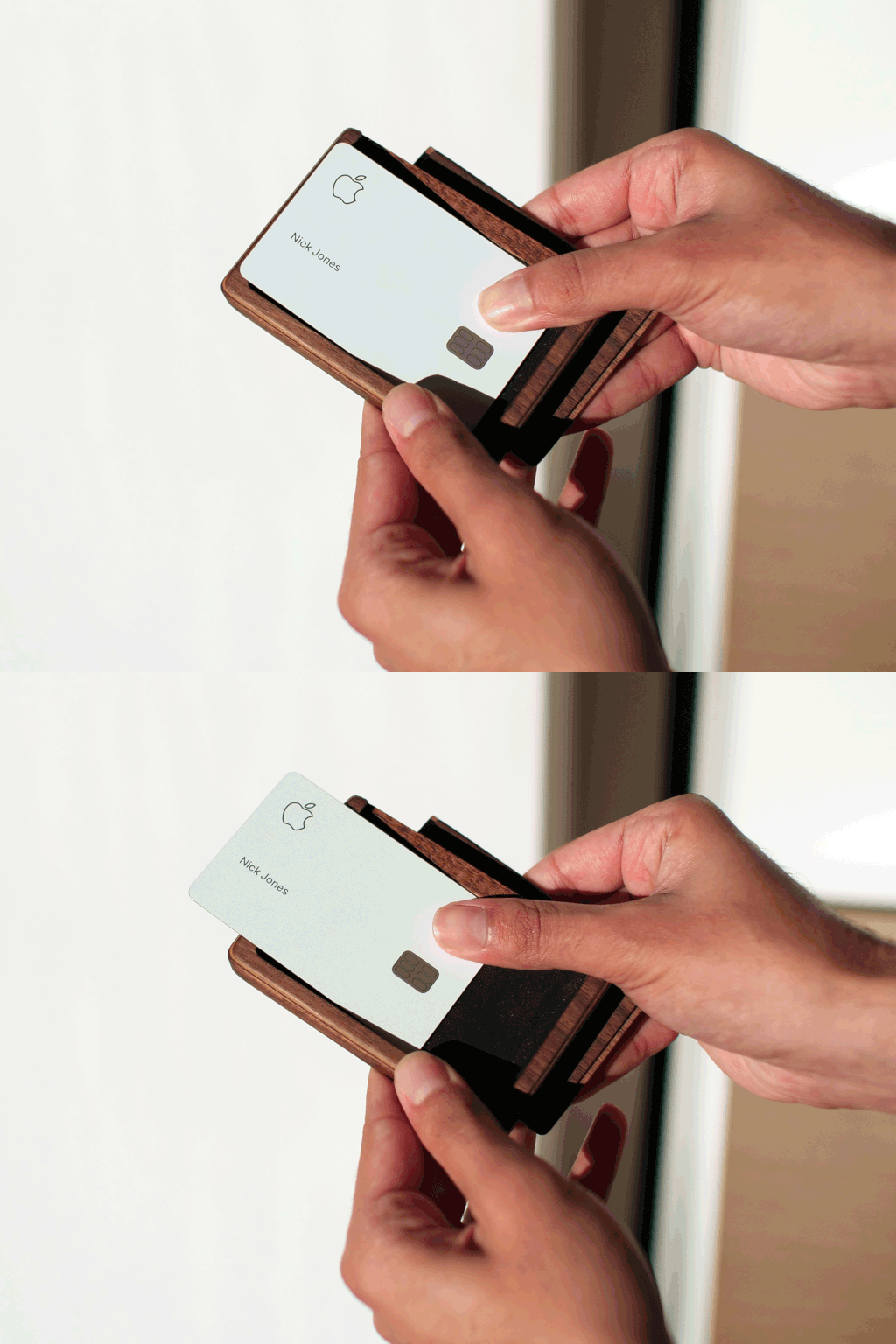
In the intervening week and change, I’m sure more than one entrepreneur had the thought of targeting those very specific parameters. Take Pittsburg-based KerfCase, which is offering this $39 wooden card case with a pop up feature for the card. It looks nice, I suppose. I mean, it’s the nicest wooden Apple Card case I’ve seen all afternoon (though I’m bound to get 50 more in my inbox after posting this).

slideup 1024x1024

Founder Benjamin Saks notes that the project started out a bit tongue-in-cheek, but eventually it became a real project and turned out pretty well. I understand that penicillin was discovered in similar fashion.

30 Aug 2019

Xbox Live is down for many

If you were trying to sneak in a quick game on Xbox Live during your Friday afternoon lunch break and found that you can’t get online: don’t worry, you’re not alone.

While Microsoft’s Xbox Live Status page still says all things are good to go (Update: Microsoft’s status page has now caught up with the outage, and says that it’s impacting sign-ins, account creations, and searches), reports are pouring in of an outage keeping many users from logging in.

Microsoft acknowledged the problem on Twitter, saying that they’re “looking into it now”

Story developing…

30 Aug 2019

Skype upgrades its messaging feature with drafts, bookmarks and more

Skype is best known for being a video calling app and, to some extent, that’s because its messaging feature set has been a bit underdeveloped. Today, the company is working to change that image with a series of improvements to Skype’s chatting features aimed at further differentiating it from rival apps.

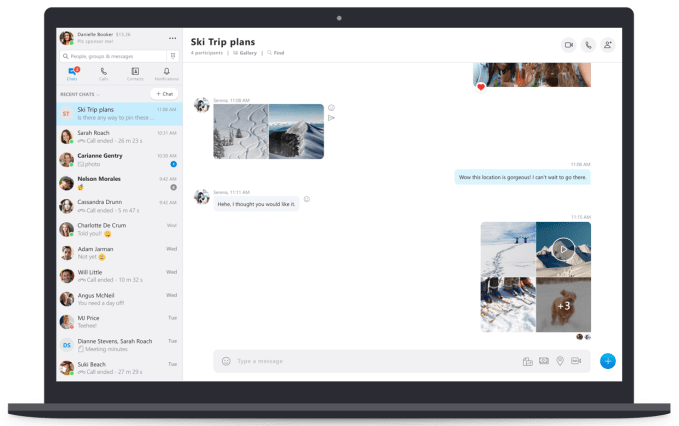
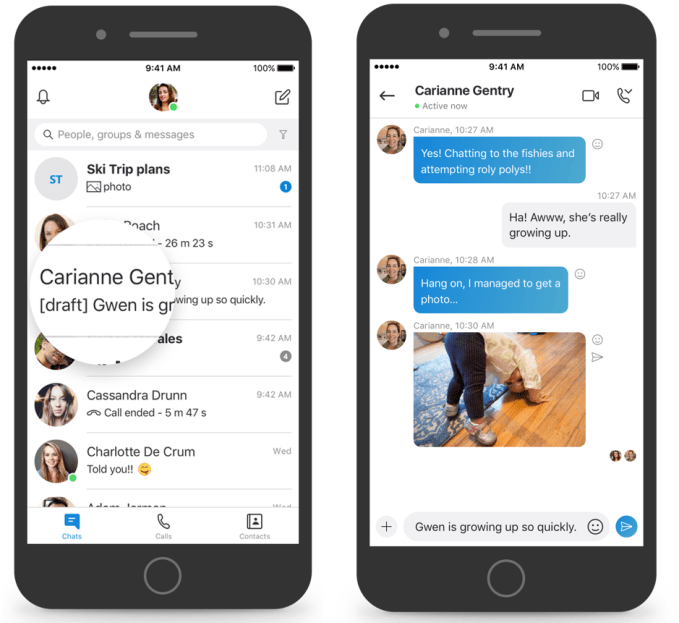
One of the most useful of the new features is support for Message Drafts.

Similar to email, any message you type up in Skype but don’t yet send is saved within the conversation with a “draft” tag attached. That way you can return to the message to finish it and send it later on.

Skype new features 1b

It’s a feature it would be great to see other messaging clients adopt, as well, given how much of modern business and personal communication takes place outside of email.

People have wanted the ability to draft and schedule iMessage texts for years — so much so that clever developers invented app-based workarounds to meet consumers’ needs. Some people even type up their texts in Notepad, while waiting for the right time to send them.

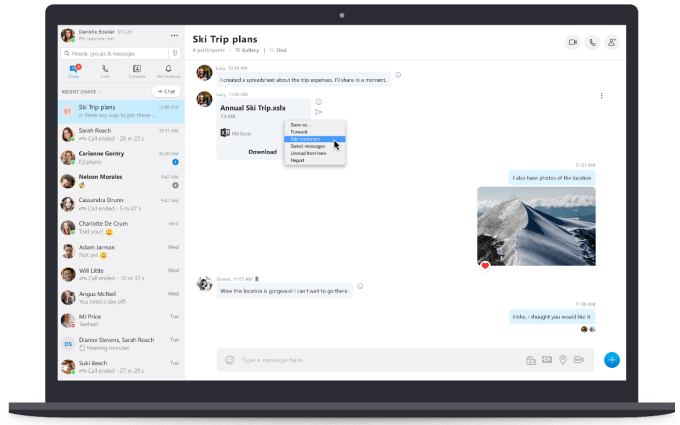
In another email-inspired addition, Skype is also introducing the ability to bookmark important messages. To access this option, you just have to long-press a message (on mobile) or right-click (on desktop), then tap or click “Add Bookmark.” This will add the message to your Bookmarks screen for easy retrieval.

Skype new features 2

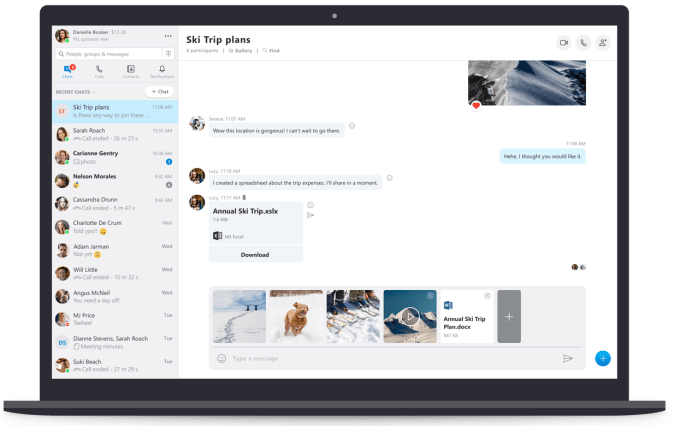
You’ll also now be able to preview photos, videos, and files before you send them through messages — a worthwhile improvement, but one that’s more about playing catch-up to other communication apps than being particularly innovative.

Skype new features 4

And if you’re sharing a bunch of photos or videos all at once, Skype will now organize them neatly. Instead of overwhelming recipients with a large set of photos, the photos are grouped in a way that’s more common to what you’d see on social media. That is, only a few are display while the rest hide behind a “+” button you have to click in order to see more.

Skype new features 3b

Unrelated to the messaging improvements, Skype also rolled out split window support for all versions of Windows, Mac, and Linux. (Windows 10 support was already available).

As one of the older messaging apps still in use, Skype is no longer the largest or most popular, claiming only 300 million monthly active users compared to WhatsApp’s 1.5 billion, for example.

However, it’s good to see its team getting back to solving real consumer pain points rather than trying to clone Snapchat as it mistakenly tried to do not too long ago. (Thankfully, those changes were rolled back.) What Skype remaining users appreciate is the app’s ease-of-use and its productivity focus, and these changes are focused on that direction.

Outside of the expanded access to split view, noted above, all the other new features are rolling out across all Skype platforms, the company says.


30 Aug 2019

Credit Sesame, a platform for managing loans and credit scores, picks up $43M en route to IPO

Household debt in the US continues to rise and as of this year now stands at nearly $14 billion. Now, one of the startups that’s building tools to help consumers better cope with that is announcing a round of funding and plans for an IPO — signs of the demand for its services, and its success to-date.

Credit Sesame — which lets consumers check their credit scores and evaluate options to rebalance existing debts and loans to improve that score and thus their overall “financial health” in the words CEO and founder Adrian Nazri — has raised $43 million. With the company already profitable and growing revenues 90% each year for the last five, Nazari said that this round is likely to be the last round the company raises before it goes public.

Credit Sesame is not disclosing its valuation, in part because this round is likely to have some more money added to it. But Nazari noted that it’s on track to be valued at over $1 billion when it does close in the coming months. It’s now raised $110 million in total.

The round is a mixture of equity and debt, and includes both strategic and financial investors. Led by growth-stage investors ATW Partners, it also includes participation from previous investors. Past backers of Credit Sesame include Menlo Ventures, Inventus Capital, Globespan Capital, IA Capital Groups, Symantec, Capital One Ventures, and Stanford University. There will also likely be new investors coming to the company when the round does expand.

The reason the startup is raising both equity and debt is worth a note: Nazari said Credit Sesame is profitable and has been “for some time,” Nazari noted, so when it raises money now, it would prefer to do so with less dilution. The funding will be going towards continuing to work on Credit Sesame’s artificial intelligence algorithms, and to continue expanding this business, but not likely acquisitions: there are a lot of companies in the fintech arena that are working on products adjacent to what Credit Sesame does, but Nazari said that it would likely only start to work on some M&A and consolidation plays after it IPOs, using the proceeds from that to fuel that.

In addition to a number of companies building tools and products to help people manage their money better, there are direct competitors to Credit Sesame, too, including Credit Karma, NerdWallet, Experian, ClearScore, Equifax and many more. Nazari’s view is that while Credit Sesame maybe targeting a similar initial function, its approach and how helps you manage your credit score is what differentiates it.

The company has coined the term “Personal Credit Management” (as opposed to personal financial management), and has built an algorithm it calls RoboCredit, which is based on a basic score provided by TransUnion (one of the big agencies that calculates scores, alongside Equifax and Experian) but also includes other factors that it calculates to show consumers what actions they can take to improve their scores. Checking initial scores is free on Credit Sesame, as are evaluating options for how to rebalance loans and other debts to help improve the score. But users that take products referred through the engine — such as refinancing a mortgage or taking a new credit and/or transferring your existing balance — or other premium services (such as an advanced level of identity theft protection), pay fees to do so.

The credit rating industry has seen some big setbacks in the last several years — first the big breach at Equifax, and then the Consumer Financial Protection Bureau fining both Equifax and TransUnion for misrepresenting what kind of data it was providing to consumers, and for not being transparent enough in its charges. But Nazari said that in fact, this has had a positive impact on the company.

“The impact from Equifax has been net positive,” he explained. “Incidents like these create awareness and the need for consumers to watch their credit and be on top of that,” he noted. “Identity theft from breaches could happen any time.” 

Indeed, online security has become a bit of an unknown variable for many of us: we can try to prepare as much as possible, but we never know what news of a new breach might come around the corner, or when one fragment of our disclosed information might be the missing piece to someone using it to steal something from us. On the other hand, the startup is giving more transparency at least to how some of the other aspects of our online financial identity work, and how it can be used by others to evaluate us as consumers.

“Credit Sesame is revolutionizing how consumers manage their credit. What once was a mystery and black box is now distilled by Credit Sesame’s PCM platform into easy to digest actionable insights that can effortlessly and meaningfully change a consumer’s credit and financial health,” said Kerry Propper, co-founder and managing partner at ATW Partners, in a statement. “We’re thrilled to open the gates to a new age of Personal Credit Management with the Credit Sesame team leading the space.”