Year: 2019

03 Dec 2019

Gift Guide: 12 must-read books for 2019 as recommended by Extra Crunch readers

Books are fundamentally about stories, and 2019 (and really, the past decade) has been the story of technology’s domination of every industry and function of society. Founders and tech executives are more powerful than ever, and how we use that power for good or evil will deeply shape the future of our world.

Whether it’s the sudden rise of TikTok and the ubiquity of social networks in business, economics, and politics, or the coming conflagration of climate change, or the challenges of personal and professional development, or just finding your way in building a startup, there was just an avalanche of books published this year on every topic near and dear to a technologist’s and founder’s heart.

I wanted to get a sense of what our readers thought were the best books they read this year, and so I reached out to our Extra Crunch membership to ask for their recommendations. Perhaps unsurprisingly for a group of people who actually pay for deeper journalism, our EC readers submitted dozens and dozens of book recommendations on every subject imaginable.

From those recommendations, I carefully selected a list of just 12 books that seemed the most recommended by our readers and also captured the zeitgeist of the times we are living in. Every book here is great and important, and I only wish we had more time to read them all.

How to handle the coming total disruption of society by technology

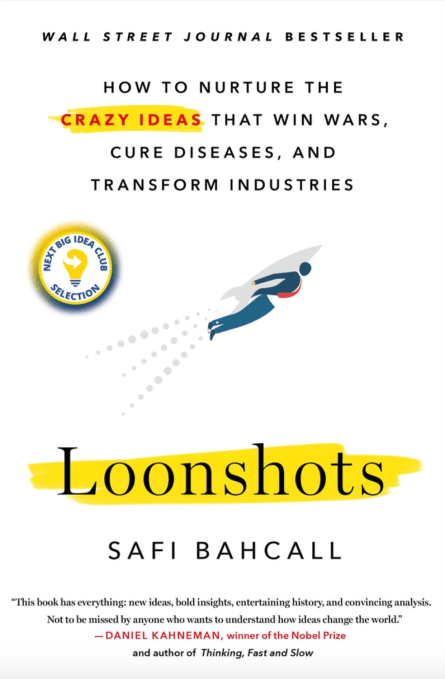
Loonshots: How to Nurture the Crazy Ideas That Win Wars, Cure Diseases, and Transform Industries by Safi Bahcall

St. Martin’s Press / 368 pages / March 2019
Publisher’s Link

Anyone who has worked long enough in innovation and technology knows that great ideas can come from anywhere. But how do those ideas actually go from mere thoughts to actions and products, while avoiding the organizational politics that often prevent them from seeing the light of day in the first place?

Safi Bahcall, a PhD physicist from Stanford who co-founded and led Synta Pharmaceuticals as CEO through its IPO on NASDAQ in 2007, has been thinking about serendipity in science for years, and Loonshots is his first book. In it, Bahcall borrows concepts from science to move beyond looking purely at organizational culture to investigating organizational structure, investigating how we design our teams and how that can play an outsized role in whether new ideas flourish — or are killed on the spot.

Widely lauded by luminaries and a bestseller on Amazon and the Wall Street Journal, the book asks one of the most important questions in innovation today and gives a series of vignettes on how to improve our ability to handle spontaneity. A great book for the disrupting — and the disrupted.

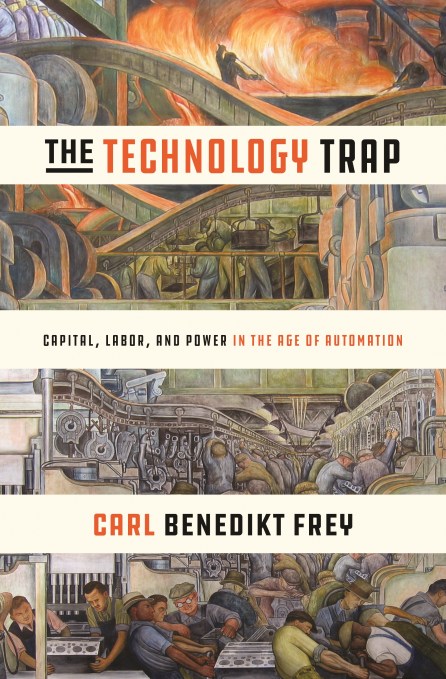
The Technology Trap: Capital, Labor, and Power in the Age of Automation by Carl Benedikt Frey

Princeton University Press / 480 pages / June 2019
Publisher’s Link

Digital disruption is all around us. Artificial intelligence is quickly eliminating millions of middle-class jobs, and fears of automation are growing among more and more workers, polarizing our politics and complicating the future of business.

Yet, all of this has happened before. More than a century ago, technologies like replaceable parts and the steam engine combined to create one of the greatest transformations our society has ever seen in the Industrial Revolution. But just how did the Industrial Revolution happen, and how did it affect everyday people in England, America, and elsewhere?

Carl Benedikt Frey, a fellow at Oxford University and director of the Programme on Technology & Employment at the Oxford Martin School, investigates the short, medium, and long-term consequences of the Industrial Revolution on workers, finding that in fact the changes had extraordinarily negative consequences in the short term. His lessons from this pivotal moment in history can help technology leaders avoid the biggest risks today in how we design human/AI systems in the coming age of automation.

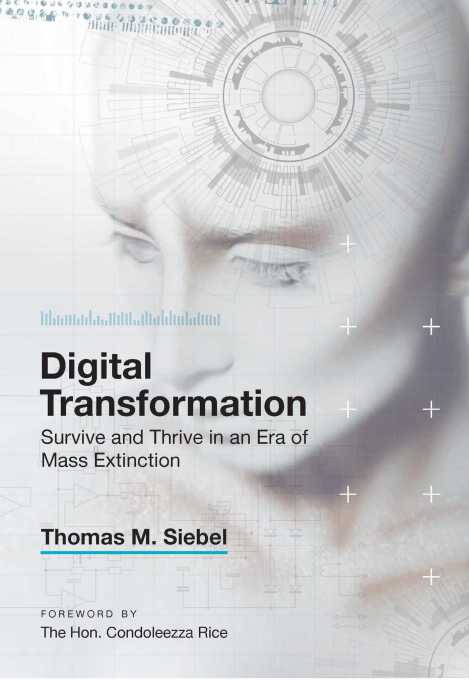
Digital Transformation: Survive and Thrive in an Era of Mass Extinction by Thomas M. Siebel

RosettaBooks / 256 pages / July 2019
Publisher’s Link

You’ve re-built your structure based on Loonshots, and learned the lessons of The Technology Trap, but ultimately, many leading enterprise companies today are facing extinction from a number of new technology waves like elastic cloud computing and the internet of things. For those not doing the disrupting but rather on the receiving end, what exactly are you supposed to do?

Billionaire entrepreneur Tom Siebel, who founded Siebel Systems and eventually merged it into Oracle in 2006 for nearly $6 billion, wrote his first book in almost two decades on the topic of how legacy companies can navigate these turbulent times. Through Digital Transformation, Siebel tries to offer the disrupted a primer on just what is going on in AI and other big tech waves to help executives understand what strategies they can use to defend their businesses.

A brisk and reasonably short read, Digital Transformation offers key lessons, even if they may well be ignored by most before it is too late.

How to deal with tech’s inadequacies and head-banging, stupid behavior

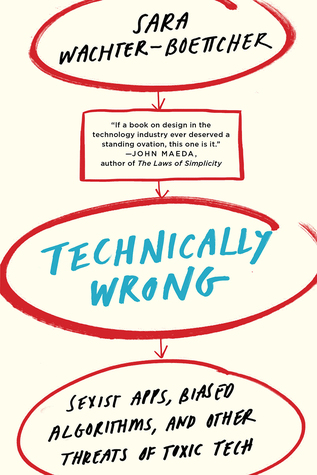
Technically Wrong: Sexist Apps, Biased Algorithms, and Other Threats of Toxic Tech by Sara Wachter-Boettcher

W. W. Norton & Company / 240 pages / October 2017
Publisher’s Link

While we love writing about the growth of innovative products and startups here at TechCrunch, the other side of that coin is that there has been a constant cavalcade of dumb actions by founders and engineers the past few years that has turned many sour on the future of our industry. Whether it is sexism in financial underwriting or employee political controversies (stories just from the last few days), technology is increasingly under a microscope — and the industry doesn’t look good at full resolution.

Technically Wrong, a book by consultant and tech critic Sara Wachter-Boettcher, tries to take a more playful approach to all these challenges by just sort of splaying them all out together for the world to see. While ostensibly targeted at the general public, the idiocies that Wachter-Boettcher identifies should be taught in every software engineering, product management, and UX design class.

As one Extra Crunch member wrote in their endorsement:

This is my favourite book. It highlights examples of bias in tech and how this has led to negative or even harmful applications in society. It makes a strong case for any developer to consider how their tech may be biased or have potential to be used for harm. A must read.

Given the plague of scandals hitting tech, the book is perhaps a tad out of date just two years post-publication, but its lessons are invaluable and will stand the test of time.

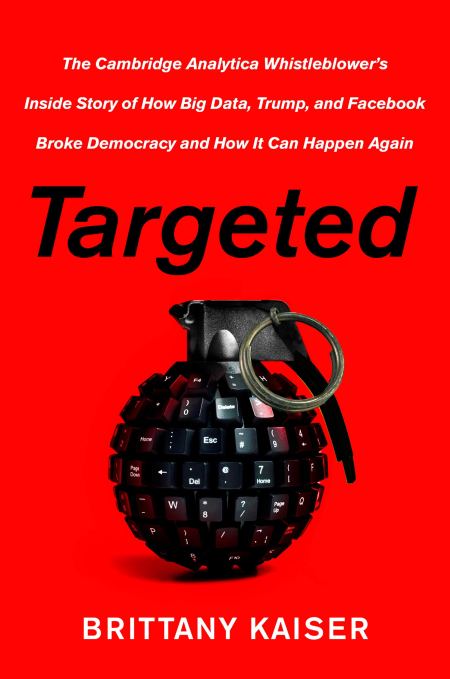
Targeted: The Cambridge Analytica Whistleblower’s Inside Story of How Big Data, Trump, and Facebook Broke Democracy and How It Can Happen Again by Brittany Kaiser

Harper / 400 pages / October 2019
Publisher’s Link

Perhaps no scandal has rocked the tech industry — or politics in general — quite like the Cambridge Analytica imbroglio that not only showed the power that Facebook and other social networks have over us through our user data, but also the scale to which that data influences purchasing decisions and of course, our elections.

Brittany Kaiser was a consultant and former Obama campaign worker who joined Cambridge Analytica hoping to make a difference. I guess in a way she did, eventually learning the true nature of big data and how that intersects with the needs of campaign managers. Through Targeted, she writes about her experience on the ground floor of the organization, and also places the company in the context of the broader challenges facing technology and ethics going forward. It’s a cri de coeur for other tech industry workers to think about how their work is affecting society and perhaps tapping out in much the way that Kaiser did.

Targeted is competing directly with Mindf*ck: Cambridge Analytica and the Plot to Break America by Christopher Wylie for this year’s best memoir on the sordid story. Targeted got the recs from EC readers though, and it’s certainly a story that deserves more than one point of view.

How to think about the biggest news stories this year

We Are The Weather: Saving the Planet Begins at Breakfast by Jonathan Safran Foer

Farrar, Straus and Giroux / 288 pages / September 2019

Publisher’s Link

Climate change was all over the news this year, and perhaps nowhere more than in tech’s central headquarters of Silicon Valley, which faced fires and repeated blackouts this year as utility company PG&E struggled to deliver power amidst California’s changing climate. But climate change isn’t just something that is “happening” — it’s being driven by the choices we make every single day.

Long-time novelist Jonathan Safran Foer returns to the theme of his sole non-fiction book Eating Animals to look at how our decisions around food are directly impacting the health of the planet. While it may seem like what we eat for breakfast is but a minor drop of carbon in a massive ocean, the reality is that our collective and aggregated decisions have huge implications for how our food systems are organized.

Foer brings his literary talents to bear on the subject, creating a textured and at times stream-of-consciousness account that interleaves climate change fear, personal anecdotes, and short stories to create a compelling case for changing our daily habits in ways that align with the needs of our environment. It may not be tuned to every reader’s preferred style, but few books connect all the dots on this subject quite like We Are The Weather

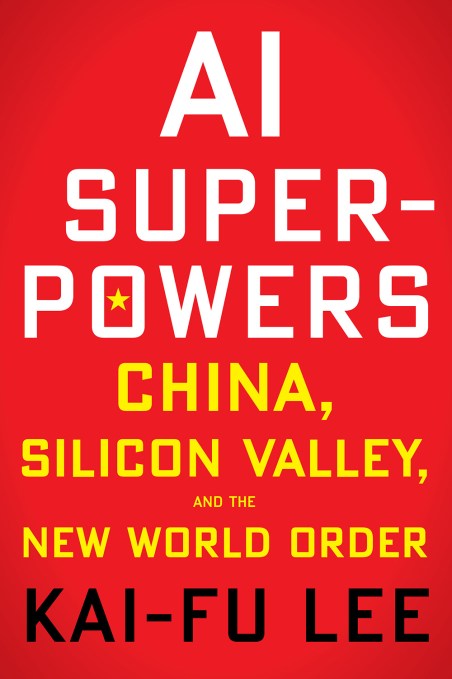
AI Superpowers: China, Silicon Valley, and the New World Order by Kai-Fu Lee

Houghton Mifflin Harcourt / 272 pages / September 2018
Publisher’s Link

Another storyline that just kept rearing its head in the headlines this year was China. From the trade war and tariffs between Trump and Xi, to the increasing security risks of Chinese industrial espionage, to the surveillance technology that companies like Huawei are exporting to undergird digital authoritarianism, China’s actions are transforming our world (and at least from this side of the Pacific, not for the positive).

One locus of competition between the U.S. and China though remains focused on artificial intelligence, and which country will take the lead in this critical new market. China has invested prodigious amounts of funding into the industry through its Made in China 2025 plan, while the United States continues to have some of the leading research groups and companies in the space.

Kai-Fu Lee, a well-known trans-Pacific venture capitalist, tries to demystify and de-intensify the arms race story by carefully investigating what is really taking place in the AI labs and products from leading companies like Didi, Baidu, and Google. Less focused on fear than on analysis, Lee brings to bear his decades of experience on the subject to offer readers an in-depth, sober, and ultimately compelling look at how Chinese and American efforts around AI differ, and just how they can learn from each other. It was also our most recommended book by EC members, and I’ve also personally loved it (and discussed it a bit, although never truly got around to reviewing it – sorry!)

How to think about stories

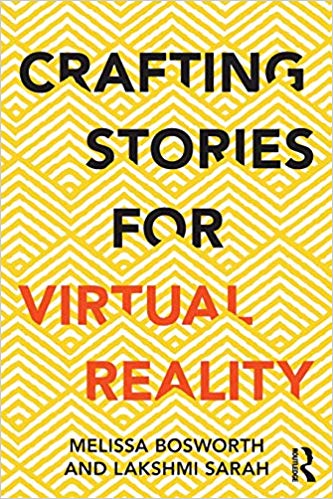
Crafting Stories for Virtual Reality by Lakshmi Sarah and Melissa Bosworth

Routledge / 258 pages / October 2018
Publisher’s Link

McLuhan’s oft-repeated and often wrongly-interpreted “the medium is the message” is a key aspect of communications studies, but another angle is that the medium determines the types of stories that can be communicated. Books, radio, and television are platforms that offer storytellers certain tools and constraints, and over the decades (and for books, centuries), we have learned how to mold and optimize our visions to those intrinsic limits.

Virtual reality though is a whole new field, and as a medium, it is just getting started. How do we take advantage of the immersiveness intrinsic to VR? What are the new limits on storytelling, and what norms around plot and characters are going to have to be established to make this medium accessible to viewers?

Multimedia journalists Lakshmi Sarah and Melissa Bosworth wrote Crafting Stories for Virtual Reality as a primer for any storyteller that wants to learn more about how immersive media, augmented reality, and virtual reality are going to transform storytelling, reporting, and entertainment into the future.

As one EC reader wrote in their recommendation:

It provides a really good overview of different types of virtual reality and how they can be shaped to resonate with audiences in different ways. For anyone considering VR, it’s incredibly helpful.

It’s certainly early days, and books like this almost certainly have a short half-life. Nonetheless, for those looking to explore stories in VR, this is just the title to get up-to-speed on this small but rapidly growing segment of the tech industry.

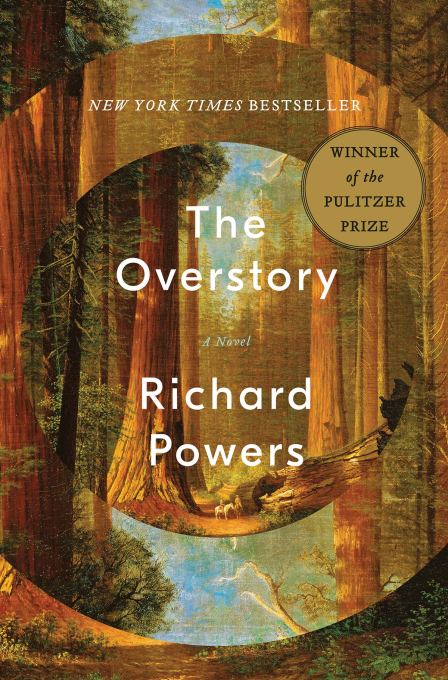
The Overstory by Richard Powers

W. W. Norton & Company / 512 pages / April 2018
Publisher’s Link

Our EC readers are heavy on the non-fiction, but we did occasionally get some recommendations for fiction. One popular novel was Richard Powers’ The Overstory, which won this year’s Pulitzer Prize for Fiction. So, okay, clearly a critic favorite. But what makes the novel so unique and compelling in a year that had a serious number of great entries?

Similar to Foer above, Powers is concerned about how humans and climate change are coming together to devastate our natural environment and particularly, our trees and forests. The Overstory is really a multitude of stories of Americans who connect with nature and each other to start to take action to address the massive changes coming and already in progress.

This is the twelfth novel for Powers, who in addition to literature, has a background in physics and was formerly a computer programmer. His work on The Overstory was partly inspired by time he spent in Silicon Valley while at Stanford, where he observed California’s famed redwood trees. If you are looking for a thought-provoking novel, you don’t need to look too much farther.

How to help yourself in the tech world

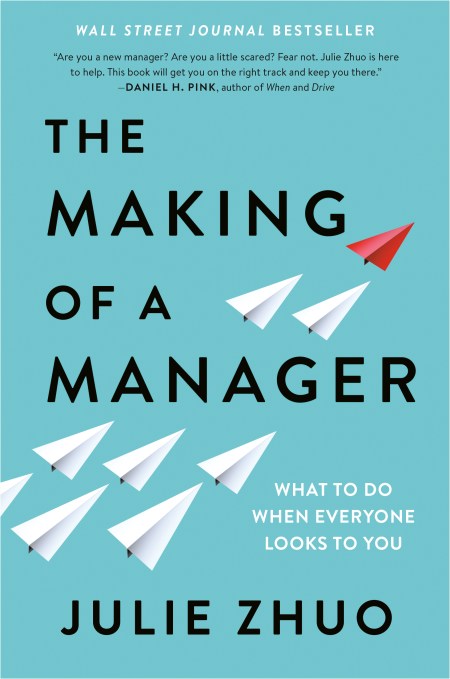
The Making of a Manager: What to Do When Everyone Looks to You by Julie Zhuo

Portfolio / 288 pages / March 2019
Publisher’s Link

There is an archetypical story that happens at rapidly growing startups. A founder hires friends and people they know, builds a team, launches a product, and strikes gold. As growth continues unabated, more and more people are hired — forcing the startup to invent a management structure to bring some level of organization to the chaos. But managers are hard to find, and there are already employees with some level of tenure at the company. And so those early employees are often moved up rapidly to managerial and executive roles, suddenly handling direct reports with no experience whatsoever.

Julie Zhuo, VP of Design at Facebook, has written a guide for exactly these first-time, suddenly-promoted managers on exactly what they should be doing to begin bringing order to the chaos. This book is definitely in the self-help, management guru wing of the bookstore, but Zhuo’s personal experience going through this transformation shows through in her examples and clearly defined points for improvement.

One EC reader wrote in their recommendation:

One of the biggest org fallacies of fast-growing startups is promoting great ICs into first-time management roles and expecting they’ll quickly turn into great people managers with little training, mentorship, or role-models. Since that almost always works to plan, Julie, the first designer and later head of design at Facebook, wrote a book outlining all the challenges of being that first-time manager and the learnings along the way. A book I recommend to my team across the board.

The Making of a Manager targets a unique audience with unique insights and is worth a read.

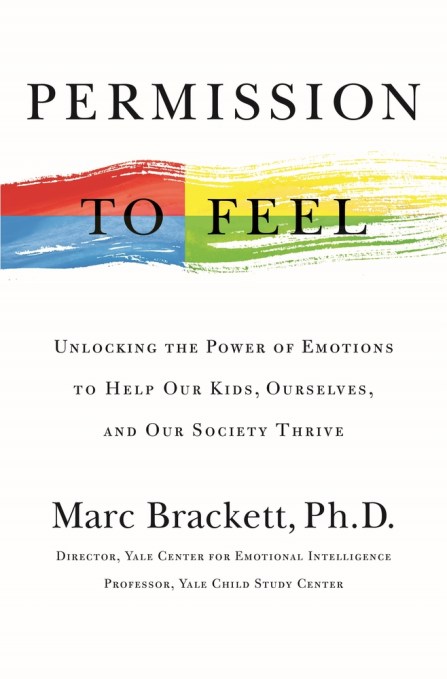
Permission to Feel: Unlocking the Power of Emotions to Help Our Kids, Ourselves, and Our Society Thrive by Marc Brackett

Celadon Books / 304 pages / September 2019
Publisher’s Link

This was a surprising recommendation from the EC membership, but once I investigated it, completely understood why it fits on this list. One of the biggest challenges for children is their emotional development — how do they interact with the world and with other people? How do they listen to themselves and how they are feeling?

It’s not just children though, since all of us can improve how we respond to the daily stresses on our lives.

That’s why Marc Brackett, the founding director of the Yale Center for Emotional Intelligence, explores how we handle our emotions and why it is important to give and receive “permission to feel.” He offers an acronym (of course he does) called RULER to manage our emotional lives better:

  • Recognizing emotions in oneself and others.
  • Understanding the causes and consequences of emotion.
  • Labeling emotions with precise words.
  • Expressing emotions taking context and culture into consideration.
  • Regulating emotions effectively to achieve goals and wellbeing.

Considering that tech can often be one of the least emotionally hospitable industries out there, Brackett’s thoughts and solutions seem like a perfect fit for improving the quality and well-being of our workplaces and lives.

How to be an entrepreneur

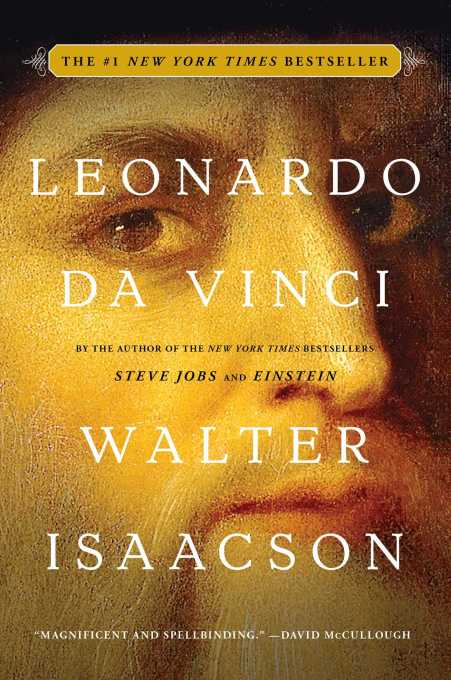
Leonardo Da Vinci by Walter Isaacson

Simon & Schuster / 624 pages / October 2017
Publisher’s Link

Isaacson is probably best known today for his 2011 biography of Steve Jobs, but he has followed up that magnum opus with another dive into another entrepreneur, this time quintessential Renaissance man Leonardo Da Vinci. You’ve got all the typical Isaacson accoutrements here: the storyline, the characters, the life lessons, the inspiration. I don’t know how anyone can walk away from a book like this and not be deeply inspired by the power of a single human to change the world (or at least invent new ones!)

As one EC member wrote in their recommendation: “Curiosity and imagination lead to awareness and innovation. He perfected the art. A lesson for all.”

The book first came out two years ago with a paperback version coming out about a year ago, so perhaps noteworthy that our EC members still find deep value in this biography and its lessons.

03 Dec 2019

OrbitsEdge partners with HPE on orbital datacenter computing and analytics

What kinds of businesses might be able to operate in space? Well datacenter are one potential target you might not have thought of. Space provides an interesting environment for datacenter operations, including advanced analytics operations and even artificial intelligence, due in part to the excellent cooling conditions and reasonable access to renewable power supply (solar). But there are challenges, which is why a new partnership between Florida-based space startup OrbitsEdge and Hewlett Packard Enterprises (HPE) makes a lot of sense.

The partnership will make OrbitsEdge a hardware supplier for HPE’s Edgeline Converged Edge Systems, and basically it means that the space startup will be handling everything required to “harden” the standard HPE micro-datacenter equipment for use in outer space. Hardening is a standard process for getting stuff ready to use in space, and essentially prepares equipment to withstand the increased radiation, extreme temperatures and other stressors that space adds to the mix.

OrbitsEdge, founded earlier this year, has developed a proprietary piece of hardware called the “SatFrame” which is designed to counter the stress of a space-based operating environment, making it relatively easy to take off-the-shelf Earth equipment like the HPE Edgeline system and get it working in space without requiring a huge amount of additional, custom work.

In terms of what this will potentially provide, the partnership will mean it’s more feasible than ever to set up a small-scale datacenter in orbit to handle at least some of the processing of space-based data right near where it’s collected, rather than having to shuttle it back down to Earth. That process can be expensive, and difficult to source in terms of even finding companies and infrastructure to use. As with in-space manufacturing, doing things locally could save a lot of overhead and unlock tons of potential down the line.

03 Dec 2019

AWS launches new local zone in LA

AWS announced a new local zone today in LA, designed to provide customers in southern California with a set of higher bandwidth, lower latency compute resources. It’s not a coincidence that this area is the epicenter of the entertainment industry.

Having a local zone gives LA-area companies, whether that’s related to video processing, gaming, ad tech or machine learning, access to a much more localized set of resources, wrote Jeff Barr of AWS in a blog post announcing the new zone.

“Today we are launching a Local Zone in Los Angeles, California. The Local Zone is a new type of AWS infrastructure deployment that brings select AWS services very close to a particular geographic area. This Local Zone is designed to provide very low latency (single-digit milliseconds) to applications that are accessed from Los Angeles and other locations in Southern California,” Barr wrote

As he pointed out, LA is home to a lot of companies that require this kind of local compute for gaming, 3D modeling and rendering, video processing (including real-time color correction), video streaming and media production pipelines.

The LA zone is actually part of a broader US West (Oregon) Region. Those customers who want to take advantage of the new zone will have to opt in by selecting it in the Local Zones console. It will be billed separately, but also includes access to savings plans.

03 Dec 2019

The remains of India’s first lunar lander have been found on the Moon

India’s Vikram lander was very near making its proud creators the fourth country in history to touch down on the moon — but it was not to be, and the craft was lost. Now India has a bit of closure: The remains of the lander have been located on the Moon’s surface.

After the accident, the United States’ Lunar Reconnaissance Orbiter made a pass over the intended landing zone and snapped some pictures. Shanmuga Subramanian, an engineer in Channai, India, was poring over them when he noticed what appeared to be the marks of debris.

“Using the data I calculated and from ISRO’s live telemetry data, I deduced that it might be something like [2-2.5 kilometers around] the landing site,” Subramanian told India Today. He spent hours every day looking over imagery of the area. “I did find a small white little dot which was something different from the surroundings. When I compared with old images from 2010, I found this was not there, so I thought, it has to be a piece of the lander.”

He emailed his findings to NASA, which got back to him a short while later confirming what he had found. ISRO had originally said the lander impacted 500 meters from its intended landing site, and the actual point was some 750 meters to the northwest.

Closer inspection by experts revealed the impact site itself, as well as a number of pieces of debris and the trails they left in the lunar soil as they tumbled.

It’s little comfort for ISRO and the agency’s supporters to see the parts of their cherished spacecraft scattered across the surface of the Moon, but it’s visceral reminder of how incredibly close they got to making that mission a success, and how proud the country can be of that accomplishment.

03 Dec 2019

Verizon and AWS announce 5G Edge computing partnership

Just as Qualcomm was starting to highlight its 5G plans for the coming years, Verizon CEO Hans Vestberg hit the stage at AWS re:Invent to discuss the carrier’s team up with the cloud computing giant.

As part of Verizon’s (TechCrunch’s parent company, disclosure, disclosure, disclosure) upcoming focus on 5G edge computing, the carrier will be the first to use the newly announced AWS Wavelength. The platform is designed to let developers build super low latency apps for 5G devices.

Currently, it’s being piloted in Chicago with a handful of high profile partners, including the NFL and Bethesda, the game developer behind Fallout and Elder Scrolls. No details yet on those specific applications (though remote gaming and live streaming seem like the obvious ones), but potential future uses include things like smart cars, IoT devices, AR/VR — you know, the sorts of things people cite when discussing 5G’s life beyond the smartphone.

“AWS Wavelength provides the same AWS environment — APIs, management console, and tools — that they’re using today at the edge of the 5G network,” AWS CEO Andy Jassy said on-stage. Starting with Verizon’s 5G network locations in the US, customers will be able to deploy the latency-sensitive portions of an application at the edge to provide single-digit millisecond latency to mobile and connected devices.”

As Verizon’s CEO joined Vestberg on stage, CNO Nicki Palmer joined Qualcomm in Hawaii, to discuss the carrier’s Mmwave approach to the next-gen wireless. The technology has raised some questions around its coverage area. Verizon has addressed this to some degree with partnerships with third-parties like Boingo.

The company plans to have coverage in 30 U.S. cities by end of year. That number is currently at 18.

03 Dec 2019

AWS announces new enterprise search tool powered by machine learning

Today at AWS re:Invent in Las Vegas, the company announced a new search tool called Kendra, which provides natural language search across a variety of content repositories using machine learning.

Matt Wood, AWS VP of artificial intelligence said that the new search tool uses machine learning, but doesn’t actually require machine learning expertise of any kind. Amazon is taking care of that for customers under the hood.

You start by identifying your content repositories. This could be anything from and S3 storage repository to OneDrive to Salesforce — anywhere you store content. You can use pre-built connectors from AWS, provide your credentials, and connect to all of these different tools.

Kendra then builds an index based on the content it finds in the connected repositories, and users can begin to interact with the search tool using natural language queries. The tool understands concepts like time, so if the question is something like ‘When the IT Help Desk is open,’ the search engine understands that this is about time, checks the index and delivers the right information to the user.

The beauty of this search tool is not only that it uses machine learning, but based on simple feedback from a user, like a smiley face or sad face emoji, it can learn which answers are good and which ones require improvement, and it does this automatically for the search team.

Once you have it set up, you can drop the search on your company intranet or you can use it internally inside an applications and it behaves as you would expect a search tool to do with features like type ahead.

03 Dec 2019

Postscript raises $4.5M to help Shopify shops stay connected with customers over SMS

Back in February, we wrote that Postscript “wants to be the Mailchimp for SMS.” Now they’ve raised $4.5 million to help get it done.

This round was lead by Accomplice, and backed by Kayak co-founder Paul English, Wufoo co-founder Kevin Hale, Klaviyo co-founder Andrew Bialecki, Drift co-founder Elias Torres, Front co-founder Mathilde Colin, and Podium co-founders Eric Rea and Dennis Steele. The Postscript team is currently made up of 14 people.

Postscript is meant to help e-commerce companies — specifically Shopify shops, currently — connect with their existing customers over SMS. Their Shopify plugin lets store owners run SMS marketing campaigns with customers who’ve opted in, have two-way conversations with users who respond, and analyze the data to figure out what’s working.

Got a new product hitting the shelves, and want to let your most frequent customers know first? Plug the message into Postscript’s dashboard, tell it what segment of your customer base you want to receive it, and send away. Their analytics backend will tell you how many people received it, how many actually clicked through, and how much revenue you pulled in from those clicks.

If a customer types out a text and responds, it’ll pop up in the backend like a support ticket. Shop owners and employees can respond and have direct conversations, answer questions, and close out the ticket through the dashboard — or they can automatically pipe them into services like Zendesk or Zapier.

But what about spam? Our text message inboxes tend to feel like the last refuge from the overwhelming onslaught of marketing messages that have ruined e-mail; do we really want shops pinging our phones directly every time they’ve got a new pair of pants?

It seems like Postscript is pretty mindful of this, and is building things in a way that limits just how ‘spammy’ anyone on the platform can be — partly because (as we’ve seen with e-mail) flooding users with unwanted messages ensures that messages just don’t get opened, and partly because SMS is much more tightly regulated than many other messaging protocols. Under the Telephone Consumer Protection Act (TCPA) in the US, for example, SMSing marketing messages to someone without an explicit opt-in can get the company nailed with fines of thousands of dollars per text.

As Lucas Matney wrote in February:

The opt-in process for phone communications is already a bit more codified in the U.S., and as companies attempt to stay in the good graces of GDPR for fear of the EU god, it might be more likely they tread carefully.

As such, everything is opt-in, and easily opted out of if a user changes their mind. It also helps, of course, that sending SMS isn’t free for the companies. Each SMS you send to a customer who doesn’t care is money wasted — so there’s interest on all sides on limiting messages to just the folks who actually want them.

Postscript pricing varies depending on how many messages a shop is looking to send each month. Paid plans start at $50 a month for 1,500 SMS, climbing up to $2,000 per month for 83,000 messages — after that, they ask shops to reach out for a custom plan. Postscript co-founder Alex Beller tells me the company currently has around 530 paying customers, each spending anything from $50 per month to “the mid 5 figures.”

03 Dec 2019

SoftBank pours $100M into Mexico’s Konfio

Three months after Goldman Sachs lent $100 million to Mexican fintech Konfio, SoftBank has invested another $100 million into the financial services company. The investment confirms Reuters’ August report that SoftBank was in advanced talks with the startup – now one of the most heavily-funded fintechs in Mexico. 

SoftBank is continuing to expand its Mexican portfolio, which now includes used car buying platform Kavak and payments startup Clip. Aside from Mexico, SoftBank has primarily focused its $5 billion Latin America fund on Brazil – and recently marked its entry into Argentina with an injection into financial services company Uala in a $150 million investment co-led by Tencent. 

As traditional banks shy away from small to medium sized business loans in Mexico, Konfio’s credit underwriting service provides a faster alternative. Konfio uses a data-first approach to enable fast credit assessment for SMBs looking to grow their businesses. The service can disburse credit in a one-day turnaround, as opposed to locking users into a traditional months-long approval process that can often require collateral. 

Meanwhile, if you’re a startup gathering massive amounts of data on the Latin America’s growing middle class, SoftBank might be interested in your growth funding. The Japanese conglomerate seems to want to know everything it can about Latin America’s consumer spending habits, mobile usage, and personal banking user behavior.

Watch Konfio founder and CEO David Arana’s panel at TechCrunch’s São Paulo event here.

03 Dec 2019

Alfred Lin, the Sequoia partner and former Zappos COO, thinks this retail startup could be a generation-defining brand

When the storied venture firm Sequoia likes a deal, it will sometimes not only lead one of its financing rounds but fund it exclusively — no matter how that impacts earlier investors. Given the firm’s powerful brand, it’s hard to complain (too much), even if it means that earlier backers see their stakes diluted.

Such looks to be the case with Dolls Kill, an eight-year-old, San Francisco-based online boutique for “misfits” and “miss legits,” that began selling platform shoes and other club-type clothing and has apparently grown like a weed, alongside the festivals that its customers attend, from Burning Man to Coachella.

The company has just raised $40 million in Series B funding from Sequoia, and when we talked yesterday with cofounder and CEO Bobby Farahi about the deal — which brings Dolls Kill’s funding to roughly $60 million — he said there was “no room” for earlier backers, including the consumer-focused venture firm Maveron.

He quickly added that the company’s board members — specifically Maveron partner Jason Stoffer, along with former Hot Topic CEO Betsy McLaughlin — have been instrumental in helping the company “think through growth while maintaining authenticity.”

It’s easy to appreciate enthusiasm around the brand, which employs around 400 people, has retail stores in both San Francisco and L.A., and sells its own clothes under an array of different brands, as well as sells the clothing of third parties whose aesthetic happens to fit that of Dolls Kill at any particular moment in time. As says cofounder and CEO Bobby Farahi, “RIght now there’s a resurgence in ’90s fashion, but in another year, we could move on to other third-party brands that we believe will resonate with our customers.”

Fahari doesn’t break out how much of the company’s clothing is made by the startup itself — in China and the U.S., among other “international” locations, according to Fahari. He shies from sharing many metrics at all, in fact. But the company, whose counter culture  approach began at the fringes of society, has seemingly gone mainstream as young shoppers increasingly ditch logos and increasingly look to express who they are through what Farahi calls “her inner IDGF.” Adds Farah, “I think the macro world changed a lot to give us a lot of tailwinds.”

It also has — for now, at least — a deep connection to its customers. The company has three million Instagram followers and earlier this year, when the brand toured an ice cream truck filled with a particular combat boot called the Billionaire Bling Boot to more than 30 U.S. cities, customers “four blocks long” waited in line to buy them, says Fahari.

In another creative twist, it opened its L.A. location –which looks more like a nightclub — to shoppers at midnight on Black Friday and it stayed open the following 24 hours.

Sequoia — which reached out to the company directly — told Farahi that it had looked at a lot of fashion brands and “they said we believe you’re the next generation-defining brand, the way The Gap was in the ’80s,” recounts Fahari. “I think they see the company not just as a brand but also a movement.”

Certainly, Sequoia’s Alfred Lin — who as Zappos’s COO helped grow the company into the giant that Amazon acquired in 2009 — understands such things given the famously strong early emphasis at Zappos on company culture and growing while remaining true to its early employees and customers.

As for the name Dolls Kill, the brand was the idea of Fahari’s wife and cofounder Shoddy Lynn, who chose the “dichotomous words, one very soft and one very hard,” says Fahari, saying that while “the brand is very girly, these girls aren’t taking shit from anybody.”

Adds Fahari, “And the domain was available.”

03 Dec 2019

Alfred Lin, the Sequoia partner and former Zappos COO, thinks this retail startup could be a generation-defining brand

When the storied venture firm Sequoia likes a deal, it will sometimes not only lead one of its financing rounds but fund it exclusively — no matter how that impacts earlier investors. Given the firm’s powerful brand, it’s hard to complain (too much), even if it means that earlier backers see their stakes diluted.

Such looks to be the case with Dolls Kill, an eight-year-old, San Francisco-based online boutique for “misfits” and “miss legits,” that began selling platform shoes and other club-type clothing and has apparently grown like a weed, alongside the festivals that its customers attend, from Burning Man to Coachella.

The company has just raised $40 million in Series B funding from Sequoia, and when we talked yesterday with cofounder and CEO Bobby Farahi about the deal — which brings Dolls Kill’s funding to roughly $60 million — he said there was “no room” for earlier backers, including the consumer-focused venture firm Maveron.

He quickly added that the company’s board members — specifically Maveron partner Jason Stoffer, along with former Hot Topic CEO Betsy McLaughlin — have been instrumental in helping the company “think through growth while maintaining authenticity.”

It’s easy to appreciate enthusiasm around the brand, which employs around 400 people, has retail stores in both San Francisco and L.A., and sells its own clothes under an array of different brands, as well as sells the clothing of third parties whose aesthetic happens to fit that of Dolls Kill at any particular moment in time. As says cofounder and CEO Bobby Farahi, “RIght now there’s a resurgence in ’90s fashion, but in another year, we could move on to other third-party brands that we believe will resonate with our customers.”

Fahari doesn’t break out how much of the company’s clothing is made by the startup itself — in China and the U.S., among other “international” locations, according to Fahari. He shies from sharing many metrics at all, in fact. But the company, whose counter culture  approach began at the fringes of society, has seemingly gone mainstream as young shoppers increasingly ditch logos and increasingly look to express who they are through what Farahi calls “her inner IDGF.” Adds Farah, “I think the macro world changed a lot to give us a lot of tailwinds.”

It also has — for now, at least — a deep connection to its customers. The company has three million Instagram followers and earlier this year, when the brand toured an ice cream truck filled with a particular combat boot called the Billionaire Bling Boot to more than 30 U.S. cities, customers “four blocks long” waited in line to buy them, says Fahari.

In another creative twist, it opened its L.A. location –which looks more like a nightclub — to shoppers at midnight on Black Friday and it stayed open the following 24 hours.

Sequoia — which reached out to the company directly — told Farahi that it had looked at a lot of fashion brands and “they said we believe you’re the next generation-defining brand, the way The Gap was in the ’80s,” recounts Fahari. “I think they see the company not just as a brand but also a movement.”

Certainly, Sequoia’s Alfred Lin — who as Zappos’s COO helped grow the company into the giant that Amazon acquired in 2009 — understands such things given the famously strong early emphasis at Zappos on company culture and growing while remaining true to its early employees and customers.

As for the name Dolls Kill, the brand was the idea of Fahari’s wife and cofounder Shoddy Lynn, who chose the “dichotomous words, one very soft and one very hard,” says Fahari, saying that while “the brand is very girly, these girls aren’t taking shit from anybody.”

Adds Fahari, “And the domain was available.”