Year: 2019

03 Dec 2019

Daily Crunch: Cyber Monday is bigger than ever

The Daily Crunch is TechCrunch’s roundup of our biggest and most important stories. If you’d like to get this delivered to your inbox every day at around 9am Pacific, you can subscribe here.

1. Cyber Monday totalled $9.2B in US online sales, smartphones accounted for a record $3B

Cyber Monday — the final day of the extended Thanksgiving weekend that traditionally kicks off holiday season spending — broke another e-commerce record: U.S. shoppers racked up a total of $9.2 billion in online sales, according to figures from Adobe.

That said, there is an undercurrent of sluggishness. Following the pattern set during Thanksgiving and Black Friday, Adobe had predicted that spending would reach $9.4 billion — so the actual total fell a bit short.

2. DHS wants to expand airport face recognition scans to include US citizens

In a filing, the department has proposed that all travelers — not just foreign nationals or visitors — will have to complete a facial recognition check before they are allowed to enter the U.S., and also to leave the country.

3. Facebook expands its efforts against ad discrimination

Under the terms of a settlement with the ACLU and other civil rights groups earlier this year, Facebook has been taking steps to prevent discriminatory ad targeting. Today, it’s expanding the enforcement of these rules beyond Facebook Ad Manager to encompass every other place where someone might buy ads on Facebook.

4. AWS launches Braket, its quantum computing service

Amazon isn’t building its own quantum computer. Instead, it’s partnering with D-Wave, IonQ and Rigetti and making their systems available through its cloud.

5. Twitter launches a Privacy Center to centralize its data protection efforts

The Twitter Privacy Center will host information about Twitter’s initiatives, announcements and new privacy products, as well as other communication about security incidents. The company says it wanted to create a centralized resource so it would be easier to find all the information about Twitter’s work in this area.

6. Why Notion is staying small as its valuation gets bigger

We interview Akshay Kothari, COO of work tools startup Notion, in which he discusses the company’s philosophy of staying small — as well as challenges to this strategy as competitors raise massive sums. (Extra Crunch membership required.)

7. Marvel’s new ‘Black Widow’ trailer teases the spy thriller Natasha Romanoff deserves

It’s kind of crazy that we’re only getting a “Black Widow” movie now, but at least the cast — David Harbour! Florence Pugh! Rachel Weisz!! — looks amazing.

03 Dec 2019

AWS announces UltraWarm tier for Amazon Elasticsearch Service

AWS announced a new tier for Amazon Elasticsearch Service. And it could potentially lead to some cost savings. It is now available in preview. There are now two storage tiers for Amazon Elasticsearch Service — hot and UltraWarm.

Hot is still the most effective tier when you care about performance. You can use the hot tier for indexing and anything that requires fast access to data.

With UltraWarm, you can store up to 900TB of storage and get up to 90% in cost reduction compared to existing options. With UltraWarm, Amazon Elasticsearch Service looks at blocks of data and determines if they’re frequently accessed or not frequently accessed. Not frequently accessed data is moved to S3, which helps you save money.

Interestingly, you can query and visualize Elasticsearch data across both hot and UltraWarm data. Data stored on the UltraWarm tier uses the same APIs, so you can use the same tools you already use. You can also enable encryption at rest and in flight, integrated alerting, SQL querying just like you were already doing.

The UltraWarm tier leverages he AWS Nitro System to cache and query data. Customers can access the preview in the US East (N. Virginia) and US West (Oregon) regions.

03 Dec 2019

AWS speeds up Redshift queries 10x with AQUA

At its re:Invent conference, AWS CEO Andy Jassy today announced the launch of AQUA (the Advanced Query Accelerator) for Amazon Redshift, the company’s data warehousing service. As Jassy noted in his keynote, it’s hard to scale data warehouses when you want to do analytics over that data. At some point, as your data warehouse or lake grows, the data starts overwhelming your network or available compute, even with today’s highspeed networks and chips. So to handle this, AQUA is essentially a hardware-accelerated cache and promises up to 10x better query performance than competing cloud-based data warehouses.

“Think about how much data you have to move over the network to get to your compute,” Jassy said. And if that’s not a problem for a company today, he added, it will likely become one soon, given how much data most enterprises now generate.

With this, Jassy explained, you’re bringing the compute power you need directly to the storage layer. The cache sits on top of Amazon’s standard S3 service and can hence scale out as needed across as many nodes as needed.

AWS designed its own analytics processors to power this service and accelerate the data compression and encryption on the fly.

Unsurprisingly, the service is also 100% compatible with the current version of Redshift.

In addition, AWS also today announced next-generation compute instances for Redshift, the RA3 instances, with 48 vCPUs and 384GiB of memory and up to 64 TB of storage. You can build clusters of these with up to 128 instances.

03 Dec 2019

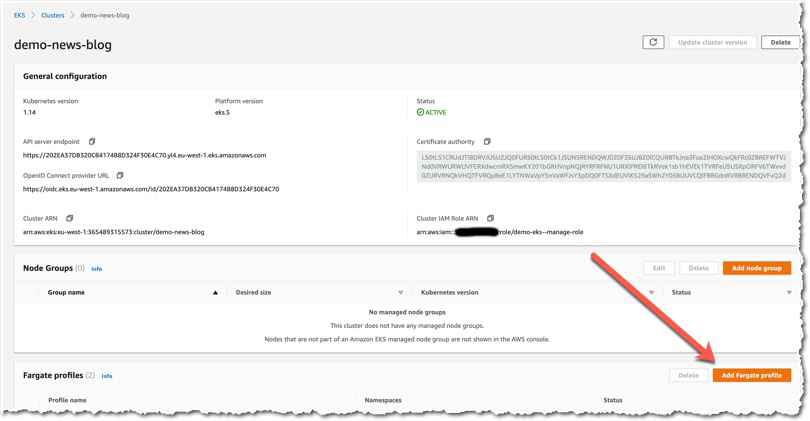
AWS announces EKS on Fargate is available

Today at AWS re:Invent in Las Vegas, the company announced that Elastic Kubernetes Service is available on Fargate.

EKS is Amazon’s flavor of Kubernetes. Fargate is a service announced in 2017 that enables you to launch containerized applications without worrying about the underlying infrastructure.

“Starting today, you can start using Amazon Elastic Kubernetes Service to run Kubernetes pods on AWS Fargate. Amazon EKS and Fargate make it straightforward to run Kubernetes-based applications on AWS by removing the need to provision and manage infrastructure for pods,” the company wrote in a blog post announcing the new feature.

Pods are simply a group of containers you launch on the same Kubernetes cluster. If you think about the fact that Kubernetes enables you to launch these pods in an automated fashion, it makes sense to also provision the underlying infrastructure required to run those pods in an automated fashion.

“With AWS Fargate, you pay only for the amount of vCPU and memory resources that your pod needs to run. This includes the resources the pod requests in addition to a small amount of memory needed to run Kubernetes components alongside the pod. Pods running on Fargate follow the existing pricing model,” the company wrote in the blog.

That means developers won’t have to worry about over provisioning because Fargate should run the exact number of resources needed to run that pod at any given moment and no more.

This feature is available starting today in US East (N. Virginia), US East (Ohio), Europe (Ireland), and Asia Pacific (Tokyo).

03 Dec 2019

Amazon Robotics head Tye Brady will be speaking at TC Sessions Robotics+AI 2020 at UC Berkeley

We’re gearing up for another great TC Sessions Robotics+AI March 3 at UC Berkeley, and we’ve got some big names to announce. Last week, it was AI expert Stuart Russell and today we’re pleased to note that we’ll be joined by Amazon Robotics Chief Technologist, Tye Brady.

A co-founder of MassRobotics, Brady has held a number of high profile positions throughout the robotics and aerospace industries, including positions at Draper Laboratory, the Massachusetts Autonomous Air Vehicle Research and Innovation Consortium and IEEE. It’s at Amazon, however, that he’s had his largest impact on the future of robotics and retail.

Founded in 2012 with the acquisition of Kiva Systems, Amazon Robotics leverages fulfillment center robots to transform warehouses across the nation. Amazon has amassed one of the world’s largest robotic workforces, with more than 100,000 deployed across various warehouses across the U.S. The system all present unique potential to help streamline the company’s massive number of packages.

During Brady’s tenure, the robotics have become an increasingly essential element of Amazon’s day-to-day operations, working alongside human counterparts to increase the efficiency of the company’s already speedy services. The executive will join us to discuss the company’s efforts and the future of the automation-driven workforce.

Join our 4th annual TC Sessions: Robotics & AI on March 3 at UC Berkeley’s Zellerbach Hall for a remarkable day with the world’s top roboticists, investors, founders, and AI engineers. The day features a full day or programming lead by TechCrunch’s editors on the main stage, a pitch-off competition featuring early-stage startups, numerous breakout and speaker Q&A sessions, and much more.

Get your early bird pass here and save $100 before prices go up. Interested in sponsoring? Please get in touch.

03 Dec 2019

Google Photos adds a chat feature to its app

An argument could be made that Google has over-indulged in its creation of way too many messaging apps in years past. But today’s launch of a new messaging service — this time within the confines of Google Photos — is an integration that actually makes sense.

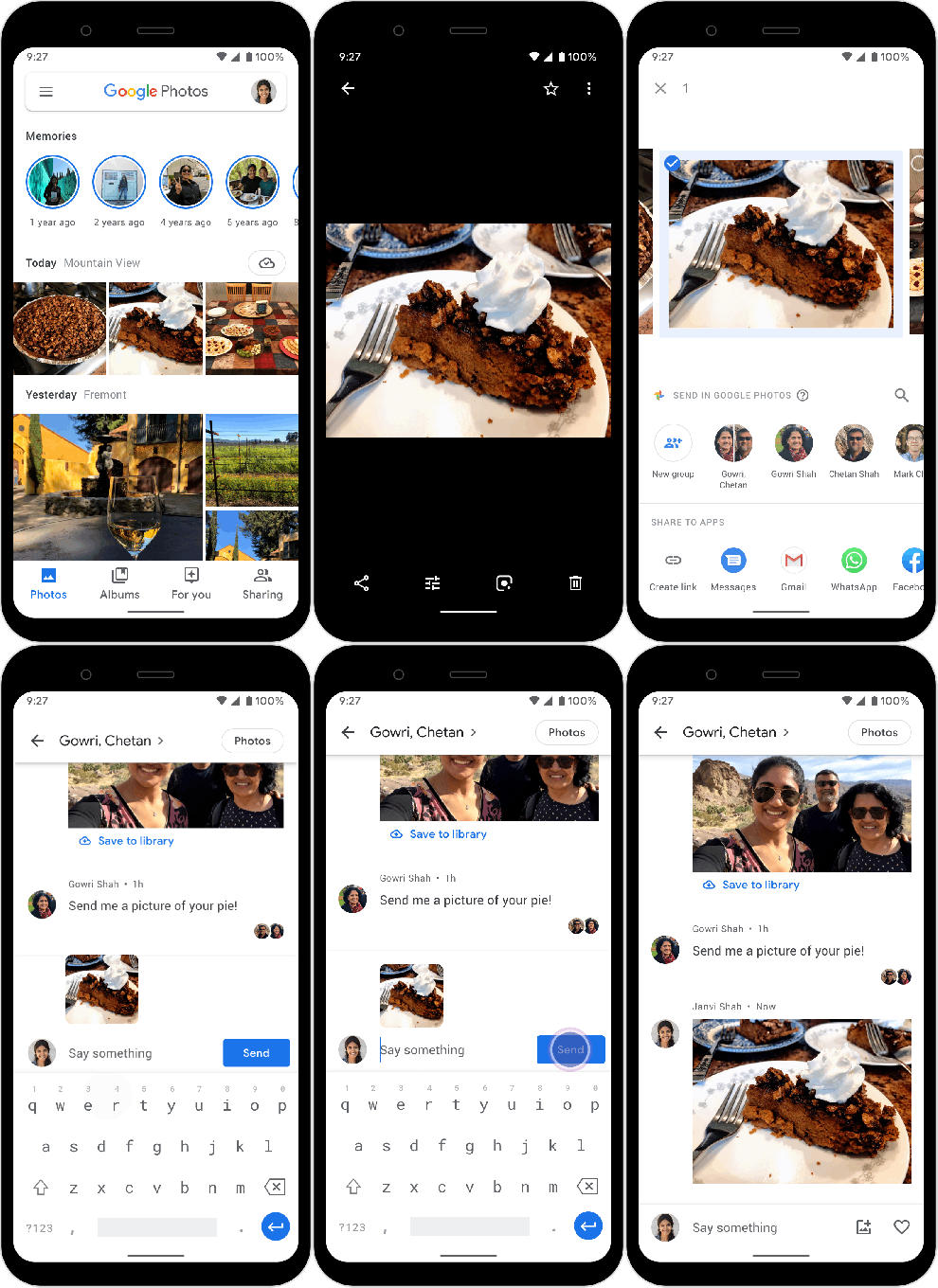
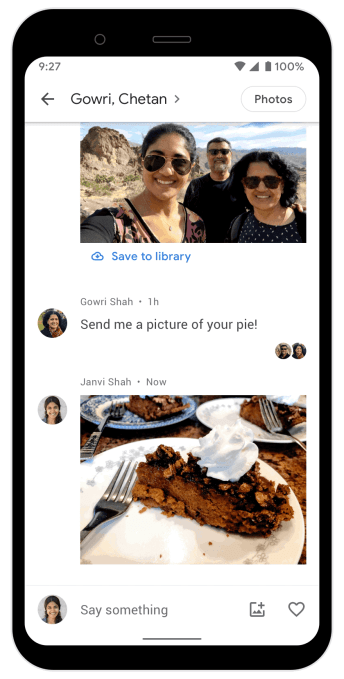
The company is rolling out a way to directly message photos and chat with another user or users within the Google Photos app. The addition will allow users to quickly and easily share those one-off photos or videos with another person, instead of taking additional steps to build a shared album.

The feature itself is simple to use. After selecting a photo and tapping share, you can now choose a new option “Send in Google Photos.” You can then tap on the icon of your most frequent contacts or search for a user by name, phone number of email.

The recipient will need a Google account to receive the photos, however, because they’ll need to sign-in to view the conversation. That may limit the feature to some extent, as not everyone is a Google user. But with now a billion some Google Photos users out there, it’s likely that more of the people you want to share will have an account, rather than not.

You can also use this feature to start a group chat by selecting “New group,” then adding recipients.

Once a chat has been started, you can return to it at any time from the “Sharing” tab in Google Photos. Here, you’ll be able to see the photos and videos you each shared, comments, text chats and likes. You can also save the photos you want to your phone or tap on the “All Photos” option to see just the photos themselves without the conversations surrounding them.

Explains Google, the idea with the new direct sharing option is not to replace users’ preferred messaging apps — a strategy that differs from Google’s investments in apps like Hangouts and Allo in previous years. Instead, the feature wants to relocate some of the photo-sharing activity that takes place in messaging apps to Google Photos.
Google had tried a similar idea with direct video sharing and messaging from the YouTube app. But the company later shut down that feature ahead of YouTube’s announcement of the $170M FTC fine for violating U.S. children’s privacy laws, COPPA. Likely, the chat feature there would have complicated YouTube’s product, now under increased regulatory scrutiny, because many kids were using direct messaging as a way to work around parental controls and other blocks on traditional messaging apps.

Google Photos makes more sense as a place to directly message friends and family, though, and the Google account requirement means users will have to be 13 or older to gain access. (Unless parents created a Google account for their child).

Direct messaging was previously announced as “coming soon” alongside Google Photos’ big fall update that also included the launch of Stories and other features.

The new feature is launching today but the rollout will take place over the next week. It will be supported across platforms, including iOS, Android and web.

03 Dec 2019

AWS announces new ARM-based instances with Graviton2 processors

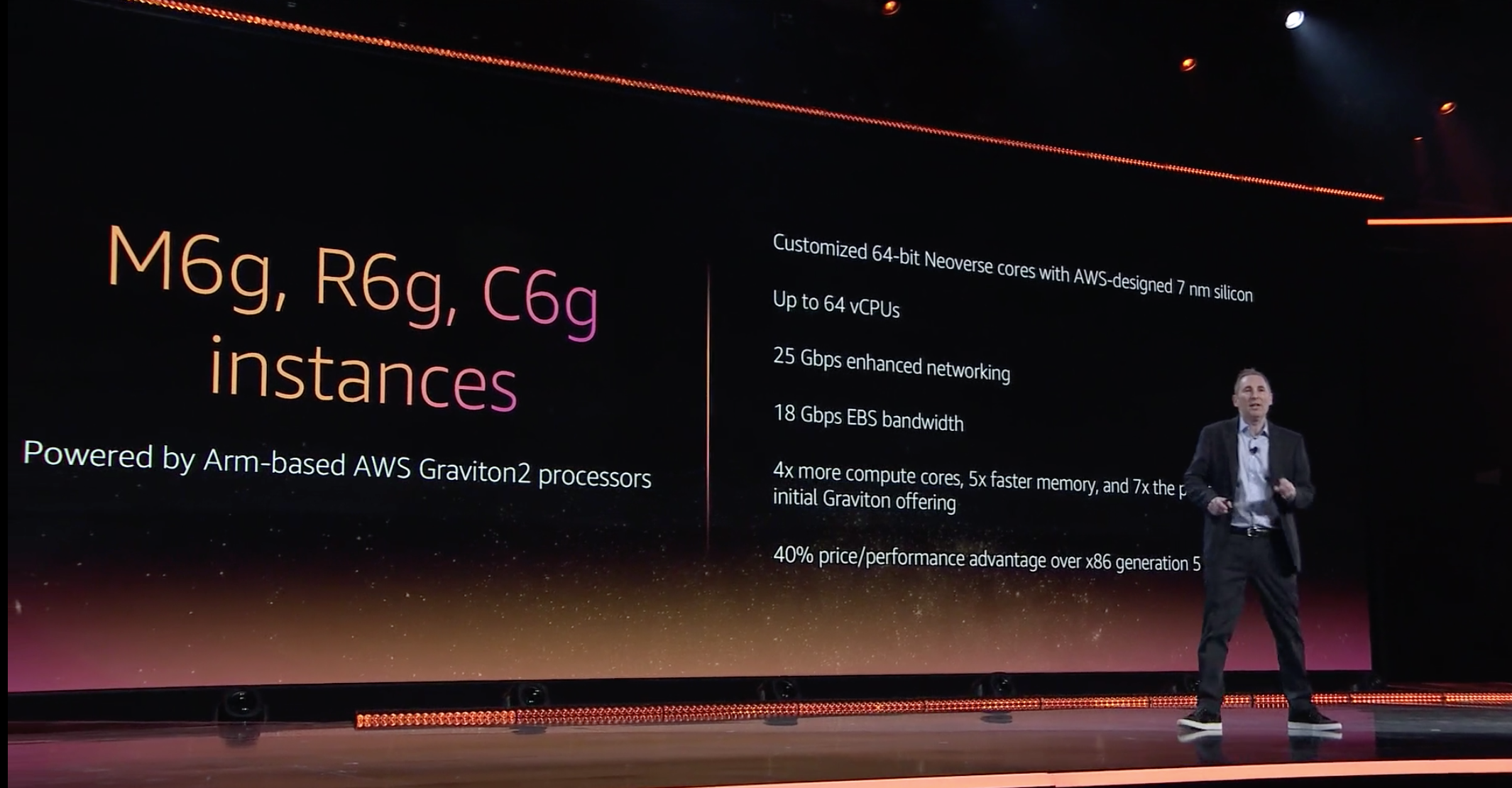
AWS, the cloud division of Amazon, just announced the next generation of its ARM processors, the Graviton2. This is a custom chip design with a 7nm architecture. It is based on 64-bit ARM Neoverse cores.

Compared to first-generation Graviton processors (A1), today’s new chips should deliver up to 7x the performance of A1 instances in some cases. Floating point performance is now twice as fast. There are additional memory channels and cache speed memory access should be much faser.

The company is working on three types of Graviton2 EC2 instances that should be available soon. Instances with a “g” suffix are powered by Graviton2 chips. If they have a “d” suffix, it also means that they have NVMe local storage.

There will be :

  • General purpose instances (M6g and M6gd)
  • Compute-optimized instances (C6g and C6gd)
  • Memory-optimized instances (R6g and R6gd)

You can choose instances with up to 64 vCPUs, 512 GiB of memory and 25 Gbps networking.

And you can see that ARM-powered servers are not just a fad. AWS already promises a 40% better price/performance ratio with ARM-based instances when you compare them with x86-based instances.

AWS has been working with operating system vendors and independent software vendors to help them release software that runs on ARM. ARM-based EC2 instances support Amazon Linux 2, Ubuntu, Red Hat, SUSE, Fedora, Debian and FreeBSD. It also works with multiple container services (Docker, Amazon ECS, and Amazon Elastic Kubernetes Service).

03 Dec 2019

Non-obvious fundraising tips from a Silicon Valley outsider

When it comes to workplace productivity and communication apps, it can often feel like Slack, Trello and Asana have the market cornered.

But Aydin Mirzaee saw past the crowded space. In his previous work, Aydin often found himself wishing for a better feedback and productivity tool — and one that catered specifically to people managing a team. In 2017, he and his co-founders began working on Fellow, based in Ottawa.

“Account managers have Salesforce,” Aydin says. “We didn’t see the equivalent tool for managers of people, so we decided to build Fellow.”

The idea clearly resonated: in June, Fellow landed Shopify as one of its first customers and closed $6.5 million in seed funding. Aydin offered a lot of great tips for fundraising during our interview. Below, I’ve gathered four pieces of actionable feedback from this Canadian founder.

1. Dig the well before you’re thirsty 

Before working on Fellow, Aydin had already started and sold his first software company, Fluidware. But there was one major difference between Aydin’s first startup and Fellow: Fluidware was entirely bootstrapped.
“Once we sold our first company, I knew that at some point there would be another one,” Aydin says. “So I had to build up my network from scratch, knowing that someday it was going to be useful.”
With the possibility of creating a venture-backed startup on the horizon, Aydin attended VC events and messaged venture firms, introducing himself and asking if they were open to meetings or if they were hosting any events in the near future.

It’s like that proverb: dig the well before you’re thirsty.

“Start now,” he says. “Go to VC-sponsored events, build up that network, and offer to advise companies in their portfolios.”
The key is to create those relationships and offer value long before you’re making any asks of them. Not only will VCs get to know you and value your expertise, but you’ll also get a sense of which partners you really enjoy spending time with — which is even more important in the long run.

2. Use the ‘caller ID test’

Inovia Capital led Fellow’s seed round. The company also got investments from Felicis Ventures, Garage Capital and several angels. How did Aydin choose his seed investors? He chose the partners who he aligned with best.

“It’s not the firm that matters,” Aydin says. “What really matters is who the partner is.”

And when it comes to picking a VC partner, Aydin recommends asking yourself a really simple question to figure out if you’re working with the right one: “Are you excited when your phone rings and you see that person’s name on the caller ID?”

If so, great. If you feel anxiety or dread, however, you may be better off with a different investor. For Aydin, choosing Inovia as a lead investor was a natural fit since he’d known Karamdeep Nijjar for nearly four years after they first met in the startup space (turns out there really is something to the ‘dig the well before you’re thirsty’ thing).

“I always had so much fun talking and working with Karam that it was just like, ‘Oh, this is just another excuse for me to talk to you all the time,’” Aydin says.

03 Dec 2019

AWS launches its custom Inferentia inferencing chips

At its re:Invent conference, AWS today announced the launch of its Inferentia chips, which it initially announced last year. These new chips promise to make inferencing, that is, using the machine learning models you pre-trained earlier, significantly faster and cost effective.

As AWS CEO Andy Jassy noted, a lot of companies are focussing on custom chips that let you train models (though Google and others would surely disagree there). Inferencing tends to work well on regular CPUs, but custom chips are obviously going to be faster. With Inferentia, AWS offers lower latency and three times the throughput at 40% lower cost–per inference compared to a regular G4 instance on EC4.

The new Inf1 instances promise up to 2,000 TOPS and feature integrations with TensorFlow, PyTorch and MXNet, as well as the ONNX format for moving models between frameworks. For now, it’s only available in the EC2 compute service, but it wil come to AWS’s container services and its SageMaker machine learning service soon, too.

Updating…

03 Dec 2019

Apple and Google reveal the best apps and games of 2019

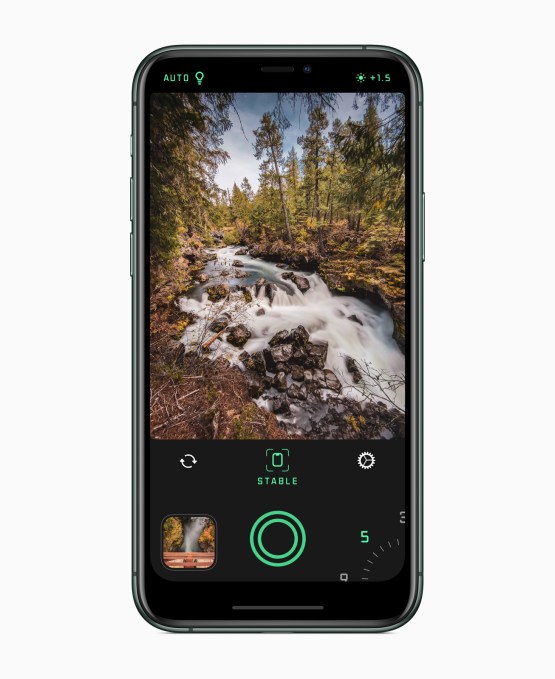
Continuing their annual tradition, Apple and Google have released their list of the best apps and games of 2019. Apple, for the first time, held a real-world event to celebrate its winners, where it crowned A.I.-powered camera app, Spectre Camera as its best iPhone app of the year and Sky: Children of the Light as its best game. Google, meanwhile, dubbed teen messaging app Ablo as its app winner and Call of Duty: Mobile as its best game.

Apple’s event held in New York put its winning developers in front of media in order to demonstrate their apps and games. The event was less formal than the Apple Design Awards held at the company’s worldwide developer conference each year, and instead focused on private presentations to press.

Apple said its winners this year sit “at the nexus of digital and pop culture,” but its list really better highlights what Apple thinks are the key selling features for its devices. For example, with Spectre Camera by Lux Optics, it’s about the iPhone’s ability to serve as your main camera even for complicated tasks like long-exposure photos.

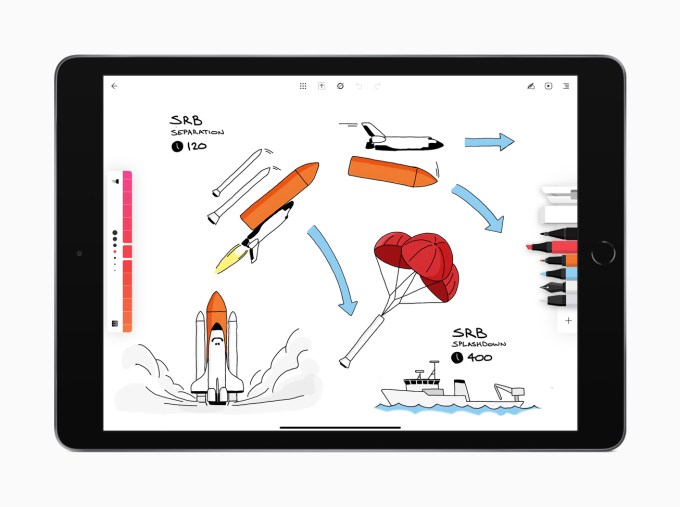
The iPad app of the year was Flow by Moleskine, an app that already won a 2019 Design Award. In this case, the digital notebook app shows off a top iPad use case of being a device aimed at creative professionals. Users can take advantage of its digital graphite pencils and chisel-tipped markers to draw and sketch as they could in real life.

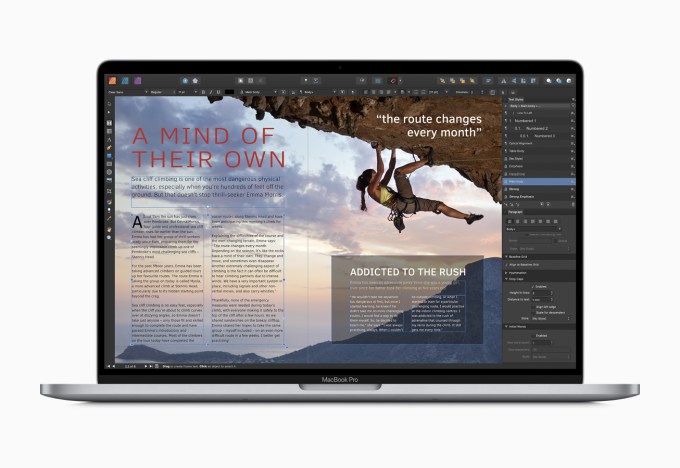
The Mac app of the year, Affinity Publisher by Serif Labs, allows users to design and publish books, magazines, brochures, posters, and more — a task that best lends itself to a larger device with a full-sized keyboard.

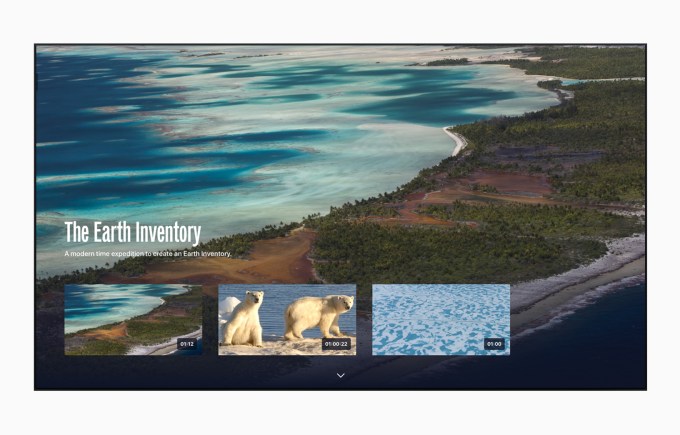
Finally, the Apple TV app of the year, The Explorers by The Explorers Network, showcases something that works best on your TV’s larger, high-def screen. The app’s community of photographers and videographers are working together to create a visual inventory of the natural world, which you can enjoy on your big screen.

Apple’s iPhone Game of the Year, Sky: Children of the Light by thatgamecompany (makers of Journey, the 2013 Game of the Year), iPad Game of the Year Hyper Light Drifter by Abylight S.L., and Mac Game of the Year GRIS by Nomada Studio, are all the sort of beautiful-designed games that Apple prefers to showcase.

Today’s gaming market has become over-filled with free-to-play titles due to the sort of supported business models that work on the App Store. That’s something Apple Arcade is an attempt to correct, in fact. Apple winners show that even free games can be works of art.

Sky: Children...is a free to play social adventure with in-app purchases, but is also beautiful and creative. Similarly, adventure game Hyper Light, was already a visual arts award winner at the Independent Games Festival. And GRIS has been described as one of the most gorgeous games.

[gallery ids="1919528,1919530,1919526"]

The Apple TV Game of the Year, Wonder Boy: The Dragon’s Trap by DotEmu was developed by LizardCube with the cooperation of series creator Ryuichi Nishizawa, to bring an 80’s cult classic back to life. That’s part of one of Apple’s larger App Store gaming trends — a year of “blockbusters reimagined.”

Apple also gave mention of other launches in this space like Mario Kart Tour, Dr. Mario World, Minecraft Eart, Pokémon Masters, Assassin’s Creed Rebellion, Gears POP!, The Elder Scrolls: Blades, Alien: Blackout, and Google’s Game of the Year, Call of Duty: Mobile.

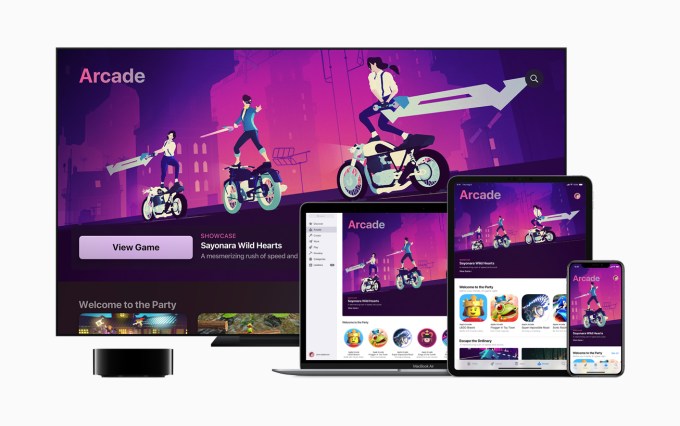
And in what could be the start of a new tradition, Apple also anointed an Apple Arcade Game of the Year with the gorgeous, fast-paced and music-filled Sayonara Wild Hearts developed by Simogo and published by Annapurna Interactive.

Apple’s year-end list also highlighted App Store non-gaming trend of  “Storytelling,” which featured a variety of apps to tell stories, including visually, as well as through audio and text. Noted apps here were Anchor, Canva, Unfold, Steller, Spark Camera, Over, and Wattpad.

Google doesn’t go all-out as Apple does for its “Best of 2019” picks.

Instead, it simply featured best app Ablo and best game Call of Duty: Mobile as its editorial picks, then leaves the rest to a User’s Choice. Voters selected the same game, but gave the Best App award to a video editor, Glitch Video Effects.

[gallery ids="1919563,1919561,1919562"]

Google’s full list also includes Google Play’s best ebooks, audiobooks, TV shows and Movies, which you can see here.