Year: 2019

05 Aug 2019

Four days left for early-bird tickets to TC Sessions: Enterprise 2019

We’re just one month away from TC Sessions: Enterprise, which takes place on September 5 at the Yerba Buena Center in San Francisco. But you have only four days left to score an early-bird ticket and save yourself $100. Right now, you pay $249, but once the clock strikes 11:59 p.m. (PT) on August 9, the bird flies south and the price flies north. Get your early-bird ticket today and save.

Focused on the current and future state of enterprise software, this day-long conference offers tremendous value — even at full price. Considering the rate at which this $500 billion industry acquires startups — and how quickly it’s evolving — TC Sessions: Enterprise makes perfect sense for enterprise-minded founders, investors, CTOs, CIOs, engineers and MBA students (student tickets cost $75).

We’ve packed the conference with interviews, panel discussions, Q&As and breakout sessions. TechCrunch editors will dig deep to separate hype from reality as they explore crucial issues, complex technologies and investment trends with both industry giants and up-and-coming startups.

Here’s a sample of just some of what we have planned. You can also check out the agenda — and we might add a few surprises along the way.

Curious about the latest in enterprise investment? TechCrunch editor Connie Loizos will interview VCs Jason Green, founder and general partner at Emergence; Maha Ibrahim, general partner at Canaan Partners; and Rebecca Lynn, co-founder and general partner at Canvas Ventures. They’ll examine trends in early-stage enterprise investments and discuss different sectors and companies that have their attention.

Maybe you want to learn from a founder who’s been there and done that. Don’t miss Aaron Levie, Box co-founder, chairman and CEO, as he outlines what it took to travel the entire startup journey. He’ll also offer his take on the future of data platforms.

Want to cover more ground at TC Sessions: Enterprise? Take advantage of our group discount and bring the whole team. Buy four or more tickets at once and save 20%. Don’t forget: For every ticket you buy to TC Sessions: Enterprise, we’ll register you for a free Expo Only pass to TechCrunch Disrupt SF on October 2-4.

TC Sessions: Enterprise takes place on September 5, but your chance to save $100 ends in just four short days. Don’t wait — buy an early-bird ticket today, and we’ll see you in September!

Is your company interested in sponsoring or exhibiting at TC Sessions: Enterprise? Contact our sponsorship sales team by filling out this form.

05 Aug 2019

Doubling down on business travelers, Airbnb acquires Urbandoor

Airbnb has today announced the acquisition of Urbandoor, a platform that offers extended stays to corporate clients. The terms of the deal were not disclosed.

Urbandoor was founded in 2015, according to Crunchbase. One of the big differentiators between Urbandoor and Airbnb was not only its focus on business travelers, relocation, etc., but also that Urbandoor negotiated directly with multifamily owners rather than renters.

In other words, Urbandoor went directly to big real estate companies such as <a href=”https://www.greystar.com>Greystar and convinced building owners, not renters, that extended stay rentals are a beneficial proposition. In fact, Greystar invested in Urbandoor, though the company’s complete financing history is unclear.

With this acquisition, Airbnb’s goals are two-fold.

The first is to increase supply on the Airbnb for Work side of the business, which continues to grow at a rapid clip. Originally launched as Airbnb for Business, the corporate side of Airbnb accounts for 15 percent of all bookings on the platform, and has grown 3x from 2015 to 2016, and again from 2016 to 2017. According to the company, 700,000 companies have used the service to plan their business travel.

Though there seems to be plenty of demand for Airbnb properties from corporate clients, supply remains an issue. Corporate clients aren’t looking for the average Airbnb, but rather something with more amenities, such as a doorman or gym. This holds especially true for extended stays.

Urbandoor helps increase that inventory on the supply side. Urbandoor’s footprint includes apartment communities in more than 1,500 cities across more than 60 countries across the globe.

The second goal for Airbnb goes slightly deeper. While renters across the world have made a little extra income from the platform, the $35 billion behemoth still faces challenges when it comes to working alongside building owners.

Urbandoor has already built relationships with those multifamily owners for the purposes of extended stays. With the acquisition, Airbnb may be able to convince these same parties to start thinking about the value proposition of setting aside units for short-term stays, as well, which would allow Airbnb to bypass renters in some scenarios.

Here’s what Urbandoor cofounder Erik Eccles had to say in a prepared statement:

We started Urbandoor because we wanted to connect traveling and relocating professionals with the right apartment every time, anywhere. Joining the Airbnb family will help us make good on our goals and expand our work with multifamily and corporate housing partners to bring even more great places to stay to Airbnb travelers.

As part of the deal, the entire Urbandoor team will move over to Airbnb. There are currently no plans to sunset the Urbandoor brand.

05 Aug 2019

Patrick Brown, the chief executive of Impossible Foods, is coming to Disrupt

Impossible Foods is having quite the year.

In the past seven months, the company has signed a nationwide deal with Burger King, weathered a demand surge that saw supplies dwindle and stocks of its signature Impossible burger sell out across the country, and raised fears among players in the $98 billion meat market that they could lose their grip on the American diet.

In October, the principal architect of this impossibly bold assault on the meat market will take the stage at Disrupt SF to talk about it all.

Patrick Brown has been on a wild ride since launching Impossible Foods in 2011. The idea for the company came to Brown, already a famous geneticist, while on sabbatical from his position as a professor of biochemistry at Stanford University School of Medicine.

In his earlier research Brown had already helped define the mechanism by which HIV and other retroviruses incorporate their genes into the cells they infect. At Stanford, Brown and his colleagues developed a new technology that lets researchers monitor the activity of all of the genes in a genome and analyze, identify and interpret gene expression.

It was that work with genetics that led Brown to identify Impossible Foods’ key innovation, the development of synthetic heme — a molecule that makes meat… well… meaty.

Driven by the desire to address the environmental impact of animal farming, Brown and Impossible Foods have ambitious plans to develop plant-based alternatives to fish, poultry, and beef around the world.

Along the way, Impossible has riled the beef industry, faced down supply chain snafus and made an unlikely ally in Burger King — one of the largest purveyors of beef patties in the U.S.

On our stage in San Francisco, Brown will talk about it all. It’s sure to be a fascinating conversation that will leave our audience with a lot of meaty issues to chew on.

Disrupt SF runs October 2 – October 4 at the Moscone Center in San Francisco. Tickets are available here.

05 Aug 2019

SoftBank-backed Fair taps three executives to lead vehicle subscription app expansion

Fair, the vehicle subscription startup backed by SoftBank, is loading its executive team with veterans in the tech, venture and automotive industries as it seeks to build out its Uber leasing program and expand beyond North America.

Fair.com today announced three key hires to lead the development of its car subscription app, financing department and leasing program with Uber.

Jay Trinidad, a former Google and Discovery Networks executive, is now chief product officer. Trinidad will direct the company’s app development and technology efforts. Former chief accounting officer of TrueCar John Pierantoni has been hired as senior vice president of finance and risk.

Pat Wilkison, general partner of venture firm Exponential Partners — an early investor in Fair — will run the startup’s Uber program.

The three hires are critical additions for the three-year-old startup as it tries to convince consumers to try its car-as-a-service platform over buying or leasing a vehicle from a traditional dealership or other online sales upstarts. The advantage for Fair, aside from the $1.5 billion treasure chest it has amassed — is the platform itself.

The company was founded by automotive, retail and banking executives, including Scott Painter, former founder and CEO of TrueCar, on the premise that today’s consumers, including those in the gig economy, want flexibility.

Fair has tweaked the traditional lease to give consumers more options. Users can subscribe to the program and switch vehicles through the term of their “lease.”

It’s a capital-intensive business model that requires the kind of experience that Painter believes these three executives can deliver.

The hires will help drive Fair’s aggressive efforts around payment, infrastructure and financial planning as it scales its flexible car ownership model internationally and tries to make a name for itself on the global stage.

“A critical part of our transformation effort is deepening our bench of talented executives to set us up for success now and into the future,” Painter said.

The three hires come on the heels of rapid growth, a critical acquisition and huge Series B funding round of $385 million led by SoftBank, with participation from Exponential Ventures, Munich Re Venture’s ERGO Fund, G Squared and CreditEase.

“After closing $385M in our Series B, it’s time to put that capital to work for us to buy cars and propel growth—with this new executive team providing us with important insights and leadership.” Painter said in a statement. “Jay will eliminate execution risk and bring in operational and strategic expertise, Pat is an investor-turned-employee crusader, while John is a world-class financial and accounting expert around whom we can build a sound subscription business and strong auto insurance division.”

Fair acquired in January 2018 the active leasing portfolio of Xchange Leasing, a service Uber first established in 2015 to lease new and nearly new vehicles to drivers who did not come to the service with their own cars.

That acquisition laid the foundation for what has become a big piece of Fair’s business today. Some 45% of Fair’s cars are used by Uber drivers today.

Fair also has aspirations to expand beyond the U.S., Trinidad told TechCrunch in a recent interview. The company hasn’t publicly disclosed which countries it might go to first. Europe and Asia, particularly considering Trinidad’s long background in the region, would be the most likely markets for Fair.

In the next year, the company hopes to move into international markets and grow its workforce, which will likely mean moving into a bigger office, Trinidad said.

“I really think in a year’s time, at least in the markets we’re targeting such as Los Angeles and San Francisco, you’ll start to hear ‘Why not Fair a car instead of buying or leasing one?’ It will be a third option people consider.”

05 Aug 2019

AT&T is offering free Spotify to select Unlimited subscribers

AT&T is sweetening the deal on its Unlimited & More Premium plan this week, with the addition of free Spotify Premium. That amounts to a $10 a month savings for those paying the $80 a month for the wireless service. The plan offers one of seven free partner services, including HBO, Cinemax, Showtime, Starz, VRV, Pandora and now Spotify .

There’s fine print, because of course there is. The deal applies specifically to the Unlimited & More Premium plan, while other AT&T subscribers can get a six month trial of Premium for free. After that time, things revert to the regular price.

Existing Spotify Premium subscribers, meanwhile, can keep their account but get the service for free by signing up on all of the proper places on AT&T’s site.

The deal mirrors a similar partnership between Verizon and Apple Music, the services’ largest competitors, respectively. AT&T is currently the U.S.’s largest carrier by a slight edge. Spotify, meanwhile, continues to have a sizable advantage in paid subscriber numbers at more than 100 million, to Apple’s 60 million.

05 Aug 2019

UK watchdog eyeing PM Boris Johnson’s Facebook ads data grab

The online campaigning activities of the UK’s new prime minister, Boris Johnson, have already caught the eye of the country’s data protection watchdog.

Responding to concerns about the scope of data processing set out in the Conservative Party’s Privacy Policy being flagged to it by a Twitter user, the Information Commissioner’s Office replied that: “This is something we are aware of and we are making enquiries.”

The Privacy Policy is currently being attached to an online call to action that ask Brits to tell the party what the most “important issue” to them and their family is, alongside submitting their personal data.

Anyone sending their contact details to the party is also asked to pick from a pre-populated list of 18 issues the three most important to them. The list runs the gamut from the National Health Service to brexit, terrorism, the environment, housing, racism and animal welfare, to name a few. The online form also asks responders to select from a list how they voted at the last General Election — to help make the results “representative”. A final question asks which party they would vote for if a General Election were called today.

Speculation is rife in the UK right now that Johnson, who only became PM two weeks ago, is already preparing for a general election. His minority government has been reduced to a majority of just one MP after the party lost a by-election to the Liberal Democrats last week, even as an October 31 brexit-related deadline fast approaches.

People who submit their personal data to the Conservative’s online survey are also asked to share it with friends with “strong views about the issues”, via social sharing buttons for Facebook and Twitter or email.

“By clicking Submit, I agree to the Conservative Party using the information I provide to keep me updated via email, online advertisements and direct mail about the Party’s campaigns and opportunities to get involved,” runs a note under the initial ‘submit — and see more’ button, which also links to the Privacy Policy “for more information”.

If you click through to the Privacy Policy will find a laundry list of examples of types of data the party says it may collect about you — including what it describes as “opinions on topical issues”; “family connections”; “IP address, cookies and other technical information that you may share when you interact with our website”; and “commercially available data – such as consumer, lifestyle, household and behavioural data”.

“We may also collect special categories of information such as: Political Opinions; Voting intentions; Racial or ethnic origin; Religious views,” it further notes, and it goes on to claim its legal basis for processing this type of sensitive data is for supporting and promoting “democratic engagement and our legitimate interest to understand the electorate and identify Conservative supporters”.

Third party sources for acquiring data to feed its political campaigning activity listed in the policy include “social media platforms, where you have made the information public, or you have made the information available in a social media forum run by the Party” and “commercial organisations”, as well as “publicly accessible sources or other public records”.

“We collect data with the intention of using it primarily for political activities,” the policy adds, without specifying examples of what else people’s data might be used for.

It goes on to state that harvested personal data will be combined with other sources of data (including commercially available data) to profile voters — and “make a prediction about your lifestyle and habits”.

This processing will in turn be used to determine whether or not to send a voter campaign materials and, if so, to tailor the messages contained within it. 

In a nutshell this is describing social media microtargeting, such as Facebook ads, but for political purposes; a still unregulated practice that the UK’s information commissioner warned a year ago risks undermining trust in democracy.

Last year Elizabeth Denham went so far as to call for an ‘ethical pause’ in the use of microtargeting tools for political campaigning purposes. But, a quick glance at Facebook’s Ad Library Archive — which it launched in response to concerns about the lack of transparency around political ads on its platform, saying it will imprints of ads sent by political parties for up to seven years — the polar opposite has happened.

Since last year’s warning about democratic processes being undermined by big data mining social media platforms, the ICO has also warned that behavioral ad targeting does not comply with European privacy law. (Though it said it will give the industry time to amend its practices rather than step in to protect people’s rights right now.)

Denham has also been calling for a code of conduct to ensure voters understand how and why they’re being targeted with customized political messages, telling a parliamentary committee enquiry investigating online disinformation early last year that the use of such tools “may have got ahead of where the law is” — and that the chain of entities involved in passing around voters’ data for the purposes of profiling is “much too opaque”.

“I think it might be time for a code of conduct so that everybody is on a level playing field and knows what the rules are,” she said in March 2018, adding that the use of analytics and algorithms to make decisions about the microtargeting of voters “might not have transparency and the law behind them.”

The DCMS later urged government to fast-track changes to electoral law to reflect the use of powerful new voter targeting technologies — including calling for a total ban on microtargeting political ads at so-called ‘lookalike’ audiences online.

The government, then led by Theresa May, gave little heed to the committee’s recommendations.

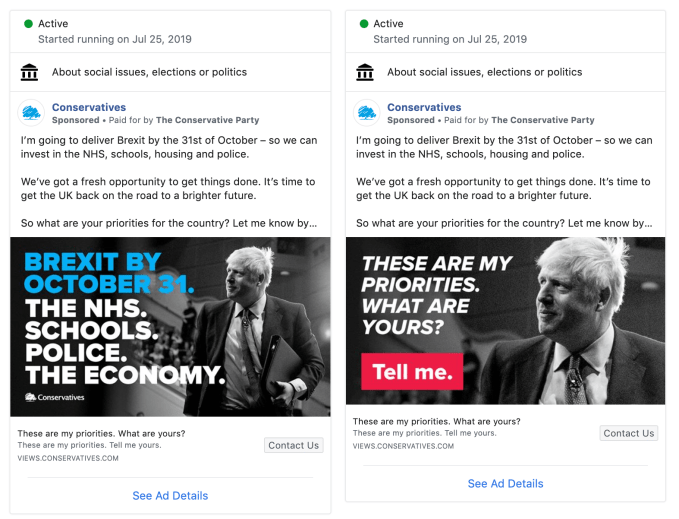
And from the moment he arrived in Number 10 Downing Street last month, after winning a leadership vote of the Conservative Party’s membership, new prime minister Johnson began running scores of Facebook ads to test voter opinion.

Sky News reported that the Conservative Party ran 280 ads on Facebook platforms on the PM’s first full day in office. At the time of writing the party is still ploughing money into Facebook ads, per Facebook’s Ad Library Archive — shelling out £25,270 in the past seven days alone to run 2,464 ads, per Facebook’s Ad Library Report, which makes it by far the biggest UK advertiser by spend for the period.
Screenshot 2019 08 05 at 16.45.48

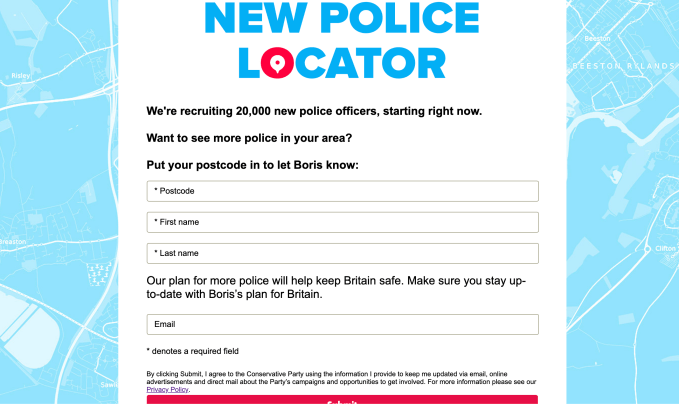
The Tories’ latest crop of Facebook ads contain another call to action — this time regarding a Johnson pledge to put 20,000 more police officers on the streets. Any Facebook users who clicks the embedded link is redirected to a Conservative Party webpage described as a ‘New police locator’, which informs them: “We’re recruiting 20,000 new police officers, starting right now. Want to see more police in your area? Put your postcode in to let Boris know.”

But anyone who inputs their personal data into this online form will also be letting the Conservatives know a lot more about them than just that they want more police on their local beat. In small print the website notes that those clicking submit are also agreeing to the party processing their data for its full suite of campaign purposes — as contained in the expansive terms of its Privacy Policy mentioned above.

So, basically, it’s another data grab…
Screenshot 2019 08 05 at 16.51.12

Political microtargeting was of course core to the online modus operandi of the disgraced political data firm, Cambridge Analytica, which infamously paid an app developer to harvest the personal data of millions of Facebook users back in 2014 without their knowledge or consent — in that case using a quiz app wrapper and Facebook’s lack of any enforcement of its platform terms to grab data on millions of voters.

Cambridge Analytica paid data scientists to turn this cache of social media signals into psychological profiles which they matched to public voter register lists — to try to identify the most persuadable voters in key US swing states and bombard them with political messaging on behalf of their client, Donald Trump.

Much like the Conservative Party is doing, Cambridge Analytica sourced data from commercial partners — in its case claiming to have licensed millions of data points from data broker giants such as Acxiom, Experian, Infogroup. (The Conservatives’ privacy policy does not specify which brokers it pays to acquire voter data.)

Aside from data, what’s key to this type of digital political campaigning is the ability, afforded by Facebook’s ad platform, for advertisers to target messages at what are referred to as ‘lookalike audience’ — and do so cheaply and at vast scale. Essentially, Facebook provides its own pervasive surveillance of the 2.2BN+ users on its platforms as a commercial service, letting advertisers pay to identify and target other people with a similar social media usage profile to those whose contact details they already hold, by uploading their details to Facebook.

This means a political party can data-mine its own supporter base to identify the messages that resonant best with different groups within that base, and then flip all that profiling around — using Facebook to dart ads at people who may never in their life have clicked ‘Submit — and see more‘ on a Tory webpage but who happen to share a similar social media profile to others in the party’s target database.

Facebook users currently have no way of blocking being targeted by political advertisers on Facebook, nor indeed no way to generally switch off microtargeted ads which use personal data to select marketing messages.

That’s the core ethical concern in play when Denham talks about the vital need for voters in a democracy to have transparency and control over what’s done with their personal data. “Without a high level of transparency – and therefore trust amongst citizens that their data is being used appropriately – we are at risk of developing a system of voter surveillance by default,” she warned last year.

However the Conservative Party’s privacy policy sidesteps any concerns about its use of microtargeting, with the breeze claim that: “We have determined that this kind of automation and profiling does not create legal or significant effects for you. Nor does it affect the legal rights that you have over your data.”

The software the party is using for online campaigning appears to be NationBuilder: A campaign management software developed in the US a decade ago — which has also been used by the Trump campaign and by both sides of the 2016 Brexit referendum campaign (to name a few of its many clients).

Its privacy policy shares the same format and much of the same language as one used by the Scottish National Party’s yes campaign during Scotland’s independence reference, for instance. (The SNP was an early user of NationBuilder to link social media campaigning to a new web platform in 2011, before going on to secure a majority in the Scottish parliament.)

So the Conservatives are by no means the only UK political entity to be dipping their hands in the cookie jar of social media data. Although they are the governing party right now.

Indeed, a report by the ICO last fall essentially called out all UK political parties for misusing people’s data.

Issues “of particular concern” the regulator raised in that report were:

  • the purchasing of marketing lists and lifestyle information from data brokers without sufficient due diligence around those brokers and the degree to which the data has been properly gathered and consented to;
  • a lack of fair processing information;
  • the use of third-party data analytics companies with insufficient checks that those companies have obtained correct consents for use of data for that purpose;
  • assuming ethnicity and/or age and combining this with electoral data sets they hold, raising concerns about data accuracy;
  • the provision of contact lists of members to social media companies without appropriate fair processing information and collation of social media with membership lists without adequate privacy assessments

The ICO issued formal warnings to 11 political parties at that time, including warning the Conservative Party about its use of people’s data.

The regulator also said it would commence audits of all 11 parties starting in January. It’s not clear how far along it’s got with that process. We’ve reached out to it with questions.

Last year the Conservative Party quietly discontinued use of a different digital campaign tool for activists, which it had licensed from a US-based add developer called uCampaign. That tool had also been used in US by Republican campaigns including Trump’s.

As we reported last year the Conservative Campaigner app, which was intended for use by party activists, linked to the developer’s own privacy policy — which included clauses granting uCampaign very liberal rights to share app users’ data, with “other organizations, groups, causes, campaigns, political organizations, and our clients that we believe have similar viewpoints, principles or objectives as us”.

Any users of the app who uploaded their phone’s address book were also handing their friends’ data straight to uCampaign to also do as it wished. A few months late, after the Conservative Campaigner app vanished from apps stores, a note was put up online claiming the company was no longer supporting clients in Europe.


05 Aug 2019

Huawei’s in-house OS could show up on phones this year

Huawei has almost certainly been working on a software contingency plan for some time now, prepping for a worst case scenario. When the U.S. announced that it was blacklisting the Chinese hardware giant earlier this year, those plans were likely accelerated.

One of the things that’s still unclear, however, is what role the company’s Hongmeng OS will fill. Recent reports have suggested that the operating system was built for IoT and other industrial applications. However, the software may also be forked specifically to run on low-end mobile devices.

State-run media outlet Global Times issued a report based on sources this morning suggesting that Hongmeng could appear on a low-end phone later this year. The OS is clearly far less robust than Android in its current state, but could wind up on a new device priced at 2,000 yuan (~$290). The report adds that Huawei is set to reveal the operating system in full later that this week at its Developer Conference in Dongguan, China.

At present, Hongmeng doesn’t appear purpose-built to replace Google’s operating system, but Huawei is getting ready for the possibility of a future that completely cuts the company off from access to U.S.-built hardware and software. For the time being, at least, the company seems focused on continuing to use Android for its high-end flagships, while potentially building out Hongmeng on more entry-level devices.

05 Aug 2019

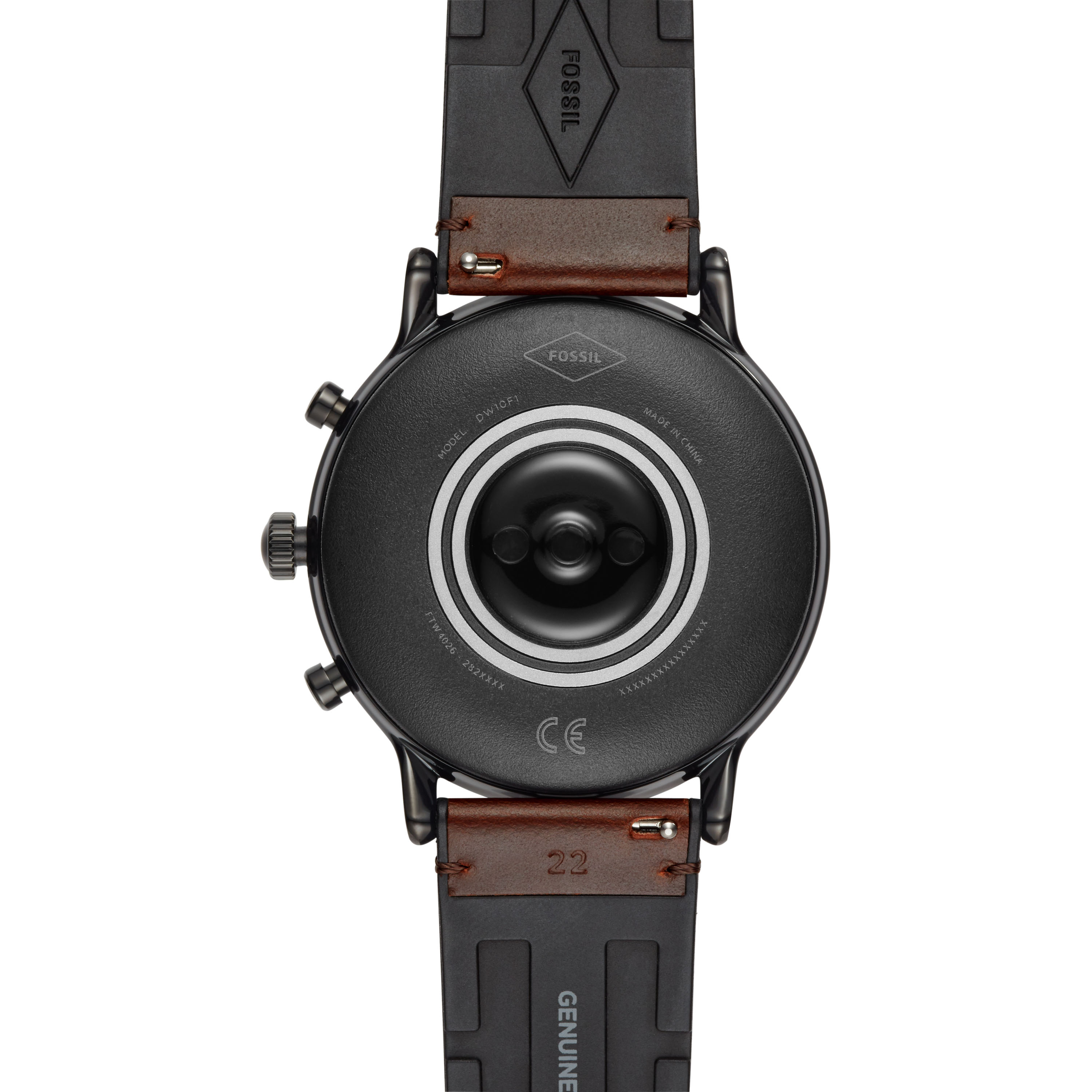
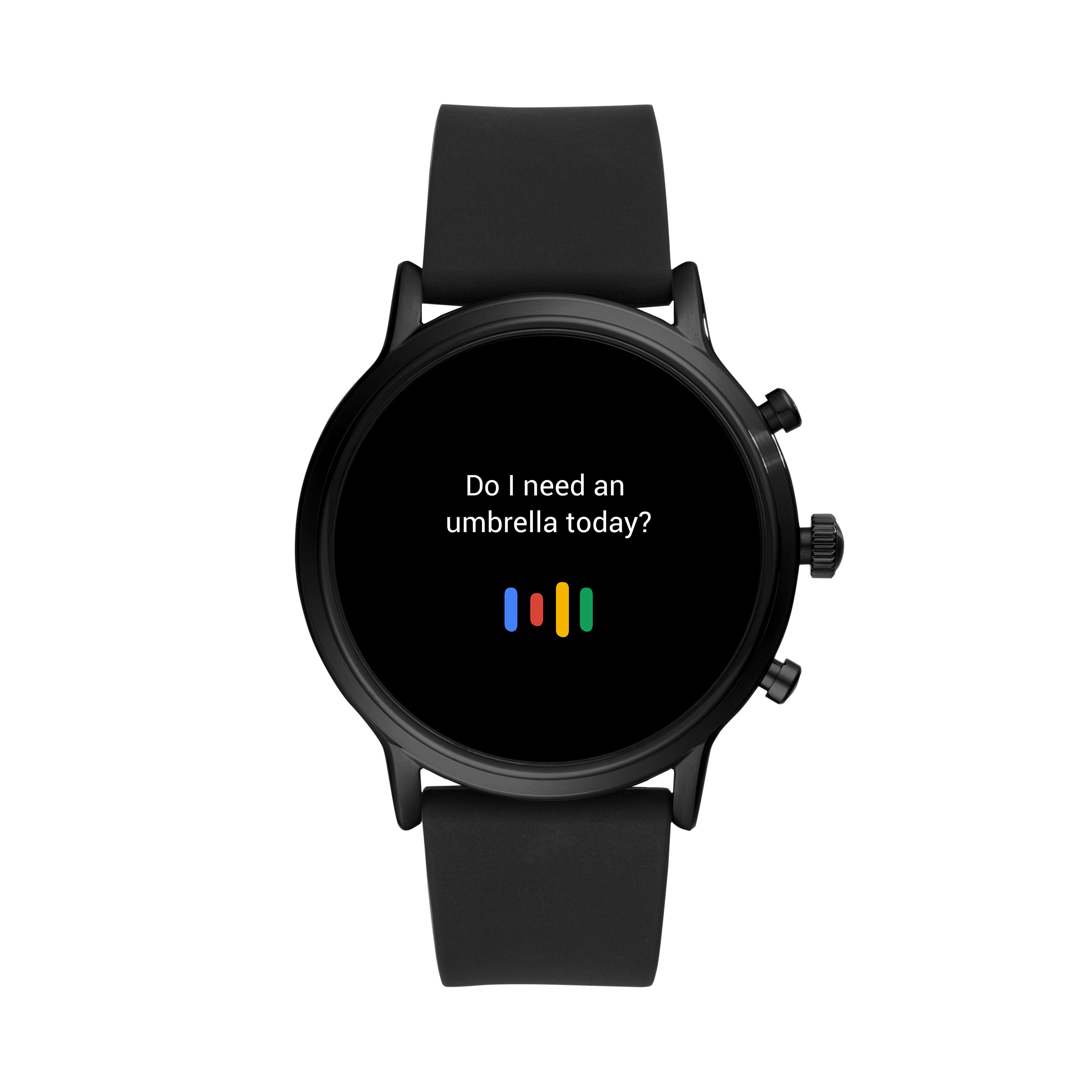
Fossil releases its latest Wear OS watch

Wear OS’s struggles have not been the result of a lack of trying from all parties. Google’s been trying in earnest to break into the wearables game for several years, and in spite of some high profile hardware partners, the company has failed to make a dent.

At this point it’s honestly tough to get too excited about a new Fossil smartwatch, but who knows, perhaps we’ve achieved a kind of critical mass this time out. After all, Google plunked down $40 million in January to puck up a chunk of Fossil’s smartwatch R&D — including a device it was currently working on.

That, one imagines, is the Gen 5 that Fossil just announced. The devices arrives in the wake of Qualcomm’s big wearables push with the Snapdragon Wear 3100 chip used in this device, along with some new arrives for Google’s wearable operating system.

FTW4026 3

So, what does this all mean? Fossil, Google and Qualcomm are all powerhouses in their respective fields, but the trio have a tough road ahead of them. Apple continues to utterly dominate the smartwatch space. Fitbit has made an interesting push of late, even if the last go ‘round was a bit disappointing from a feature and sales perspective. Beyond that, it will be fight for the remainder of the field with the likes of Samsung and Garmin.

Google Assistant is clearly an important part of the push. A new swim proof speaker brings the ability to hear back responses and lets users take calls and get audible alerts. There’s a digital cardiogram on-board, highlighting the company’s attempt to compete with the likes of Fitbit and Apple on the health front, with the ability to monitor for different conditions like diabetes and sleep apnea.

Fossil has also developed a new battery mode that tunes out certain power-draining features in order to extend life to days at a time on a charge. Wear OS’s new Tiles feature, meanwhile, offers easy access to information at a glance.

FTW4025 10

Design-wise it’s fairly nice — simple but strong. Pretty much what you’d you’d expect out of Fossil, these days.

The new watch is only available in a 44mm version, however, which honestly is a pretty big missed opportunity, as the company is cutting out a large potential market. It’s available starting today at $295.

05 Aug 2019

Samsung’s new Galaxy Watch still lacks the line’s best feature

I didn’t hide my disappointment very well when I saw that Samsung had killed the mechanical spinning bezel for the original Watch Active. Samsung’s watches have been pretty solid in recent years, providing one of the stronger Apple Watch alternatives, especially in the days before Fitbit launched the Versa.

And while I’ve preferred their more minimalist designs (the Gear S2 was a particular high-water mark from that standpoint), the spinning bezel as a navigation device has long been the Tizen watch’s best feature, outshining Apple’s crown.

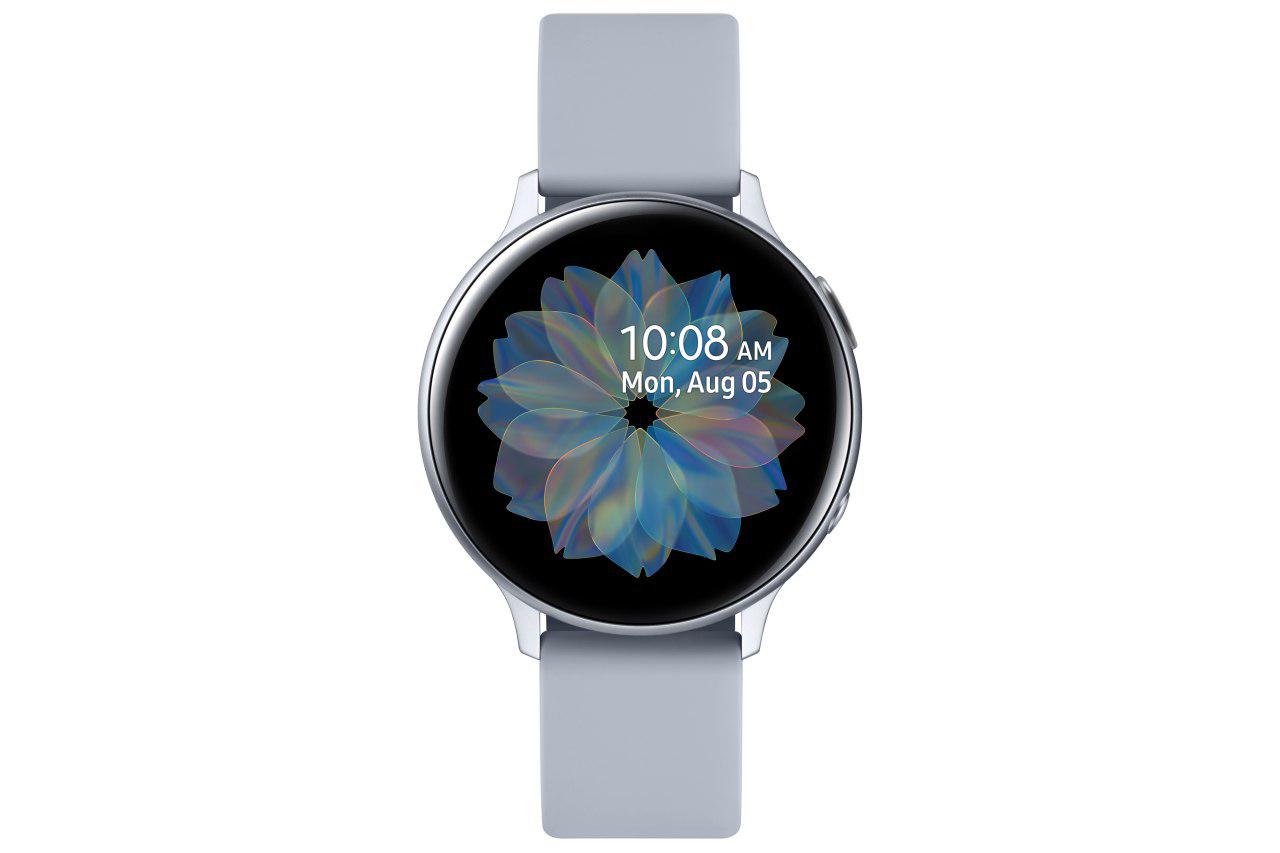
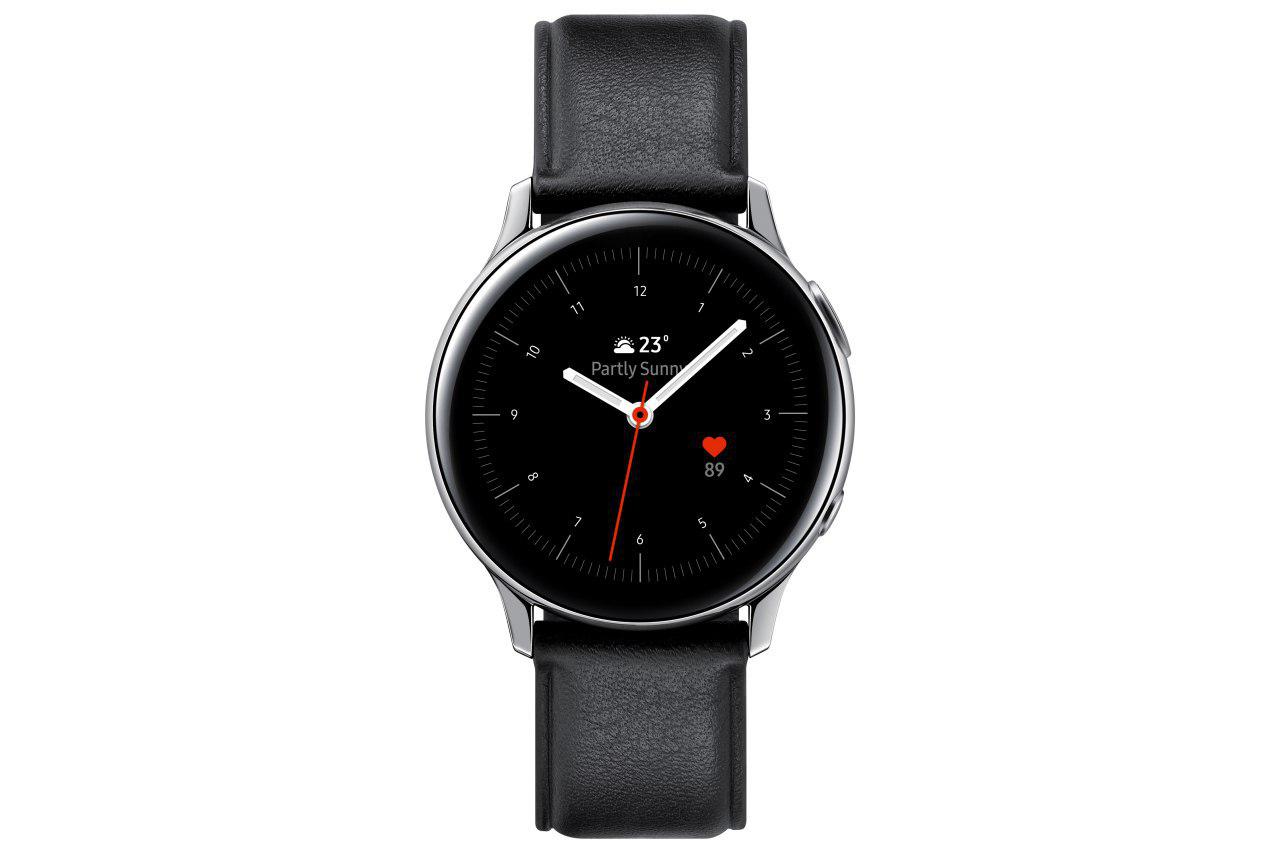
Announced this morning, the Active 2 addresses the issue — somewhat. The mechanical spinning is still gone, but the company has incorporated haptic feedback into the edges, given a kind of approximation turning the piece. I tried it. It feels okay, assuming it’s a cost-cutting measure. But there’s a certain satisfaction in twisting the older bezel that’s lacking.

Here’s hoping it’s not a design the company plans to implement across the board. Though the company referring to the new version as a “brand new upgrade” doesn’t give me a lot of hope for the poor bezel’s future.

photo 2019 08 02 07 02 18

Interestingly, the Galaxy Watch Active 2 isn’t designed to replace either the standard Galaxy Watch or the original Watch Active, which was introduced less than six months back. Rather, it’s a mid-tier device that slots between the two.

I do appreciate the relative minimalism of design. It’s better looking and more comfortable than the bulkier Galaxy Watch. And with 40 and 44 millimeter options, it should fit on a fairly broad range of different wrists.

Among the more interesting additions on the software side is My Style, an addition to the app that takes a photo of what you’re wearing and adjusts the color of the face to match accordingly, coupled with one of five different patterns.

photo 2019 08 02 07 02 37

Health is, as ever, an important piece. Heck, it’s right there in the name. Of the 39 different workouts, seven are auto-activated, while a new Running Coach feature offers motivation. There’s also guided meditation and stress level tracking. Interestingly, the handset has the hardware for tracking ECG/EKG, but the functionality won’t be available at launch. Samsung wants to do some opt-in data tracking first, but I suspect a lack of FDA approval also played a role there.

The Active 2 will be available September 27 at $280 for the 40mm version and $300 for the 40mm. Pre-orders start Tuesday. There’s also an LTE version coming in September, with pricing still TBD.

05 Aug 2019

Monzo says it wasn’t storing ‘some’ customer PINs correctly, but has now fixed the bug

Monzo, the fast-growing challenger U.K. challenger bank that recently soft-launched in the U.S., is disclosing a potential, albeit relatively limited, security oversight that saw customer PINs stored incorrectly within the company’s internal systems.

Discovered on Friday, the “bug” has now been squashed after being spotted by one of Monzo’s security engineers, co-founder and CEO Tom Blomfield told me on a call just a few moments ago. He said that even though an audit hasn’t surfaced any fraud as a result, the upstart bank was emailing affected customers to inform them what had happened and to advise that they change their PIN, because being totally transparent “is the right thing to do”.

In a blog post just published, Monzo provides the following context for the bug, including who could access customer app PINs as a result:

We ask for your PIN whenever you want to make a payment, or do anything else that’s sensitive on your Monzo account.

And as your bank, we keep a record of your PIN so we can check you’ve entered it correctly. We store them in a particularly secure part of our systems, and tightly control who at Monzo can access them.

On Friday 2nd August, we discovered that we’d also been recording some people’s PINs in a different part of our internal systems (in encrypted log files). Engineers at Monzo have access to these log files as part of their job.

Monzo says it has since deleted the PIN information that was stored in this way, and that by 5:25am on Saturday morning, it had released updates to the Monzo apps. “Over the weekend, we then worked to delete the information that we’d stored incorrectly, which we finished on Monday morning,” writes the bank.

Next step: emailing the half a million customers affected, less than a fifth of U.K. Monzo customers.

“If we’ve contacted you to tell you that you’ve been affected, you should head to a cash machine to change your PIN to a new number as a precaution,” advises Monzo. “You can do this by putting your Monzo card into the cash machine, entering your old PIN and choosing ‘PIN services’. Then choose ‘Select a new PIN’ and change it to a new number”.

If goes without saying that if you are a Monzo user and spot anything unusual on your account, you should get in touch with Monzo immediately via in-app chat or by calling the phone number listed on your Monzo debit card.

More to follow…