
Year: 2019

02 Dec 2019

Twitter launches a Privacy Center to centralize its data protection efforts

Twitter today is launching a new resource that aims to serve as the central place for everything related to the company’s efforts around privacy and data protection, the Twitter Privacy Center. The new site will host information about Twitter’s initiatives, announcements, new privacy products, and other communication about security incidents.

The company says it wanted to create a centralized resource so it would be easier to find all the information about Twitter’s work in this area. However, the impacts of Europe’s data protection regulation, GDPR, likely also spurred Twitter’s efforts on this front, along with other data laws.

For its own purposes, Twitter now needs to have a more organized approach to consumer data privacy. As a result, it makes sense to put Twitter’s work and announcements onto a consumer-facing site that’s easy to navigate and use.

The new Twitter Privacy Center splits information between what’s aimed users and what’s for partners. On the latter front, it has dedicated pages for GDPR, CCPA (California Consumer Privacy Act), and Global DPA (Data Processing Addendum), for example.

The users’ section, meanwhile, directs visitors to Twitter’s Terms, Privacy Policy, Account Settings, Service Providers, and more.

In its newly updated policies, Twitter says the entity serving the E.U. or European Economic Area, is Twitter International Company, not Twitter. This change gives Twitter the ability to test features and settings and provide users with a different set of controls outside of its main product.

For example, Twitter says it may test additional opt-in or opt-out preferences, prompts or other requirements for advertisements. Some of this work may make its way back to Twitter eventually.

Twitter’s new Terms also clarify that its intellectual property license says that the content users provide may be curated, transformed, and translated by Twitter.

Plus, Twitter’s Privacy Policy has been modified with clarifications around how Twitter processes data, how tweets are shared with developers, and other changes.

In its announcement, Twitter spins its history a bit by saying how privacy has been its focus since the service’s creation in 2006. That’s a funny stance, given its product has been that of a public social media platform, not a private one — a sort of public SMS, in fact.

Twitter notes how users are able to be anonymous on its platform, a feature it says was built with privacy in mind. In reality, Twitter’s creation was inspired by SMS but Twitter remained an ambiguous product for years, until its user base grew and figured out what they wanted Twitter to be. Much of what Twitter is today — even its conventions like the @ mention and the retweet — grew organically, not by design.

The company’s announcement today also states its privacy and data protection work going forward will be focused on three key areas: 1) to fix Twitter’s technical debt — meaning upgrading older systems to support their current uses; 2) to build privacy into all new products it launches; and 3) accountability.

Products now go through reviews by Twitter’s Information Security, Product and Privacy Counsel teams, and its independent Office of Data Protection, ahead of launch. In addition, Twitter’s Data Protection Officer, Damien Kieran, will provide an independent assessment of all privacy and data protection-related work to Twitter’s board of directors every quarter to ensure Twitter remains on track.

“It’s so common to hear tech companies say: ‘Privacy is not a privilege; it is a fundamental right’ that those words have become a cliche. People have become desensitized to hearing companies say, ‘we value your privacy,’ and are worn out from being asked to accept privacy policies that they rarely, if ever, even read,” read Twitter’s announcement about the launch of the new Twitter Privacy Center, jointly authored by both Kieran and Twitter Product Lead, Kayvon Beykpour.

“Many companies make these declarations without even showing people what actions they are taking to protect their privacy. And let’s be honest, we have room for improvement, too,” it stated.
02 Dec 2019

Tuft & Needle exposed thousands of customer shipping labels

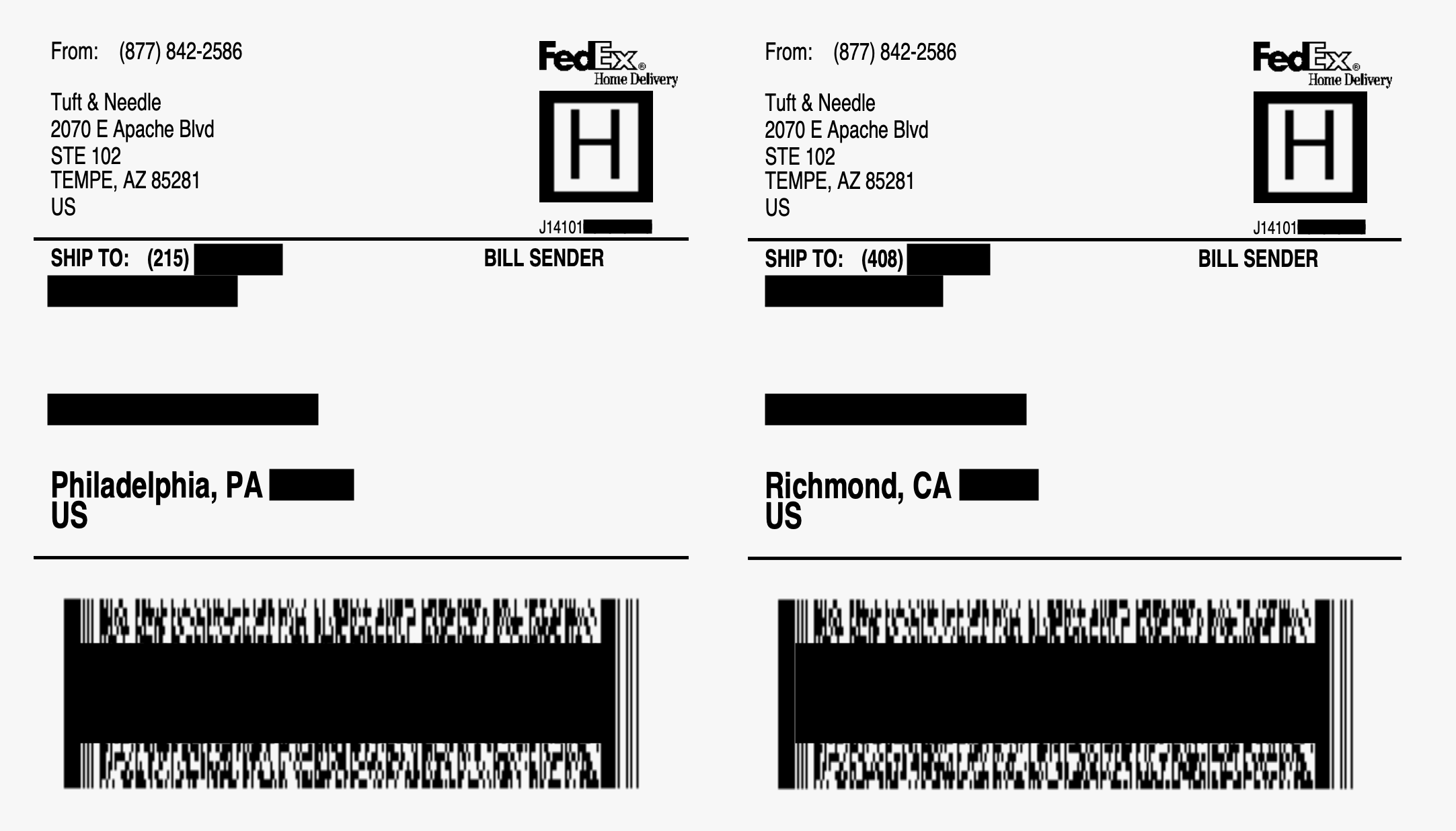
Mattress and bedding giant Tuft & Needle left hundreds of thousands of FedEx shipping labels containing customer names, addresses, and phone numbers on an unprotected cloud server.

More than 236,400 shipping labels were found on an Amazon Web Services (AWS) storage bucket without a password, allowing anyone who knew the easy-to-guess web address access to the customer data. Often, these AWS storage buckets are misconfigured by the owner by being set to “public” and not “private.”

The exposed labels were created between 2014 and 2017 during the company’s early years. Tuft & Needle was founded in 2012 in Arizona. But some labels were printed as recently as 2018.

It’s not known for how long the storage bucket was left open.

Two customer shipping labels of the hundreds of thousands exposed. We have redacted the shipping labels to protect the customers’ privacy. (Screenshot: TechCrunch)

U.K.-based penetration testing company Fidus Information Security found the exposed data. TechCrunch verified the data by matching names and addresses against public records.

We contacted Tuft & Needle about the data exposure on Monday. The storage bucket was quickly shut down.

“We’ve secured any potential exposure and are investigating the matter further,” said spokesperson Brooke Figlo in an email.

Tuft & Needle said it would “comply” with any applicable state data breach notification laws, but did not explicitly say if the company would inform customers of the security lapse.

02 Dec 2019

New Amazon tool simplifies delivery of containerized machine learning models

As part of the flurry of announcements coming this week out of AWS re:Invent, Amazon announced the release of Amazon SageMaker Operators for Kubernetes, a way for data scientists and developers to simplify training, tuning and deploying containerized machine learning models.

Packaging machine learning models in containers can help put them to work inside organizations faster, but getting there often requires a lot of extra management to make it all work. Amazon SageMaker Operators for Kubernetes is supposed to make it easier to run and manage those containers, the underlying infrastructure needed to run the models, and the workflows associated with all of it.

“While Kubernetes gives customers control and portability, running ML workloads on a Kubernetes cluster brings unique challenges. For example, the underlying infrastructure requires additional management such as optimizing for utilization, cost and performance; complying with appropriate security and regulatory requirements; and ensuring high availability and reliability,” AWS’ Aditya Bindal wrote in a blog post introducing the new feature.

When you combine that with the workflows associated with delivering a machine learning model inside an organization at scale, it becomes part of a much bigger delivery pipeline, one that is challenging to manage across departments and a variety of resource requirements.

This is precisely what Amazon SageMaker Operators for Kubernetes has been designed to help DevOps teams do. “Amazon SageMaker Operators for Kubernetes bridges this gap, and customers are now spared all the heavy lifting of integrating their Amazon SageMaker and Kubernetes workflows. Starting today, customers using Kubernetes can make a simple call to Amazon SageMaker, a modular and fully-managed service that makes it easier to build, train, and deploy machine learning (ML) models at scale,” Bindal wrote.

The promise of Kubernetes is that it can orchestrate the delivery of containers at the right moment, but if you haven’t automated delivery of the underlying infrastructure, you can over (or under) provision and not provide the correct amount of resources required to run the job. That’s where this new tool combined with SageMaker can help.

“With workflows in Amazon SageMaker, compute resources are pre-configured and optimized, only provisioned when requested, scaled as needed, and shut down automatically when jobs complete, offering near 100% utilization,” Bindal wrote.

Amazon SageMaker Operators for Kubernetes are available today in select AWS regions.

02 Dec 2019

Fulcrum, which provides freelance placement opportunities for technical projects, raises $1 million

La Jolla, Calif.-based Fulcrum, a job placement company for technical projects, has raised $1 million in a seed round of funding from the local technology investment firm Greatscale Ventures along with several private co-investors, the company said.

The company has what it calls a fully compliant service for hiring freelancers onto technical projects that had previously only been the purview of full-time staffers — or work that would have been outsourced to pricey consulting firms.

Fulcrum says that its job-placement platform meets the regulatory requirements in 90 countries and is designed to give businesses the ability to design, manage and execute projects on-demand.

The company scrapes all marketplaces that freelancers currently use and on boards them through its own service so that they can work effectively with large corporations.

02 Dec 2019

AWS launches Braket, its quantum computing service

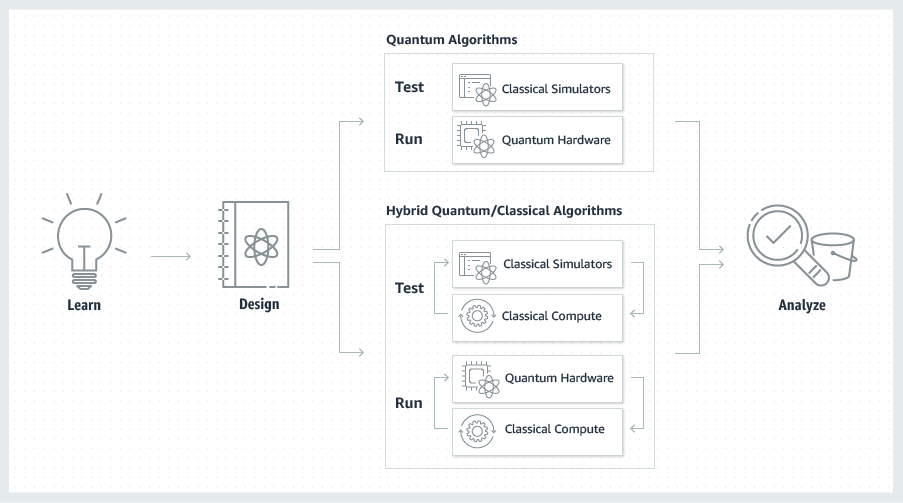
While Google, Microsoft, IBM and others have made a lot of noise around their quantum computing efforts in recent months, AWS remained quiet. The company, after all, never had its own quantum research division. Today, though, AWS announced the preview launch of Braket (named after the common notation for quantum states), its own quantum computing service. It’s not building its own quantum computer, though. Instead, it’s partnering with D-Wave, IonQ and Rigetti and making their systems available through its cloud. In addition, it’s also launching the AWS Center for Quantum Computing and AWS Quantum Solutions Lab.

With Braket, developers can get started on building quantum algorithms and basic applications and then test them in simulations on AWS, as well as the quantum hardware from its partners. That’s a smart move on AWS’s part since it’s hedging its bets without incurring the cost of trying to build a quantum computer itself. And for its partners, AWS provides them with the kind of reach that would be hard to achieve otherwise. Developers and researchers, on the other hand, get access to all of these tools through a single interface, making it easier for them to figure out what works best for them.

“By collaborating with AWS, we will be able to deliver access to our systems to a much broader market and help accelerate the growth of this emerging industry,” said Chad Rigetti, founder and CEO of Rigetti Computing .

With its research center for quantum computing, Amazon is starting to do some long-term research as well, though. As is so often the case with AWS, though, I think the focus here is on making the technology accessible to developers more so than on doing basic research.

Updating…

02 Dec 2019

Diversity-focused VC fund Harlem Capital debuts with $40M

Harlem Capital has upgraded from angel syndicate to full-fledged venture capital fund, closing its debut effort on an oversubscribed $40.3 million.

The firm was launched by managing partners Henri Pierre-Jacques and Jarrid Tingle in New York City’s Harlem neighborhood in 2015. The pair have since graduated from Harvard Business School and hired two venture partners, Brandon Bryant and John Henry, and two senior associates to help expand their portfolio. The over-arching goal: invest in 1,000 diverse founders over the next 20 years.

“We fundamentally believe we are a venture fund with impact, not an impact fund,” Pierre-Jacques tells TechCrunch. “The way we generate impact is to give women and minority entrepreneurs ownership.”

Capital from Harlem Capital Partners Venture Fund I, an industry-agnostic vehicle that invests in post-revenue businesses across the U.S., will be used to lead, co-lead or participate in $250,000 to $1 million-sized seed or Series A financings. To date, the team has backed 14 companies, including B2B feminine hygiene product Aunt Flow, gig economy marketplace Jobble and pet wellness platform Wagmo. Harlem Capital plans to add another 22 businesses to Fund 1.

You need diversity funds like ourselves to get this market anywhere close to parity. Harlem Capital managing partner Jarrid Tingle

With its first fund close, Harlem Capital becomes one of the largest venture capital funds with a diversity mandate. Despite an increasing amount of punishing data exposing the gender and race gap in venture capital, minority founders continue to rake in just a small percentage of funding each year. According to a RateMyInvestor and Diversity VC report released earlier this year, most VC dollars are invested in companies run by white men with a university degree. Other recent data indicates startups founded exclusively by women raised just 2.2% of overall VC funding in 2018, with numbers on pace to increase only slightly in 2019. Meanwhile, the median amount of funding raised by black female founders, as of 2018, was $0.

The stark contrast in funding for female versus male entrepreneurs or white women versus black women founders is in part a result of a lack of diversity amongst general partners at venture capital funds and amongst the limited partners that choose which venture capital funds to provide capital. While there’s little data available on diversity of LPs, 81% of VC firms didn’t have a single black investor as of 2018.

“There’s no rational reason why this problem exists,” Tingle tells TechCrunch. “It persists because VC funds in general have been closely held and clustered around Silicon Valley. They come from particular schools with particular networks with a small head count that doesn’t turn over frequently. Some firms have strategically added a few partners here and there, but not enough to change the organization. You need diversity funds like ourselves to get this market anywhere close to parity.”

“A lot of investors are frankly missing out on opportunities,” Tingle adds.

Having met through the Management Leadership for Tomorrow Program, a nonprofit organization identifying a new generation of leadership, Tingle and Pierre-Jacques have built a prolific internship program at the firm. With as many as six interns admitted each quarter, the goal is to train future investors of color.

Limited partners in Harlem Capital Partners Fund I include TPG Global, State of Michigan Retirement Systems, the Consumer Technology Association and Dorm Room Fund .

02 Dec 2019

Score Cyber Monday savings on TechCrunch Sessions 2020 passes

Have we got a Cyber Monday deal for you. TC Sessions: Robotics+AI (March 3) and TC Sessions: Mobility (May 14) are coming back to California in 2020 with early bird tickets starting at $275 and $250 respectively. But if you buy your pass today, you’ll save an extra 15 percent on each event. How sweet is that?

Don’t delay, startuppers. Buy your pass to TC Sessions: Robotics & AI and/or TC Sessions: Mobility before this one-day deal expires promptly tonight at 11:59 pm PT.

Oh, and did we mention that all Startup exhibitor tables are also 15% off? Tables are good for early-stage startups and comes with 4 tickets and demo area at the conference. Book table for Mobility here or one for Robotics here.

It doesn’t take artificial intelligence to recognize great opportunity, and you’ll find plenty of it at our day-long exploration of the latest issues, trends, tech and products in robotics+AI and Mobility. At each of last year’s events, 1,000+ of each category’s top minds and makers gathered for live interviews, demos and workshops featuring world-renown technologists, founders and investors — not to mention world-class networking.

Past Robotics+AI Speakers:

  • Marc Raibert, Boston Dynamics
  • Melonee Wise, Fetch Robotics
  • Colin Angle, iRobot

Past Mobility Speakers:

  • Ted Serbinski, Techstars
  • Nils Wollny, Holoride
  • Ken Washington, Ford

We’re just getting started on building out the event agenda and we’ll announce plenty more speakers and panelists over the coming months, so keep checking back.

Mark your calendar, join us at UC Berkeley on March 3 for TC Sessions: Robotics or come on by to San Jose on May 14 for TC Sessions: Mobility and spend an entire day with the best and brightest minds and makers. Don’t miss this Cyber Monday opportunity to save an extra 15 percent to Robotics+AI and/or Mobility.

02 Dec 2019

Researchers find making a sick reef sound like a healthy one could help its recovery

A new study, published in Nature Communications (via Washington Post), found promising early results from an experiment wherein sounds that you’d hear from a healthy reef are played back at a reef that’s dying. It may sound a bit like a bait-and-switch, but previous research has shown that one way to help reefs that are under duress is to encourage diverse and abundant fish populations, which can help counteract the downward spiral that ultimately leads to reef death.

Over the course of six weeks, researchers from the UK and Australia played audio recordings over speakers installed underwater at dead patches found in Australia’s Great Barrier Reef. The recordings were taken from healthy sections, and included a range of sounds typical to thriving coral communities, including noises made by fish, shrimp, molluscs and other reef-dwellers. These sounds act as cues for young fish looking to settle down and establish communities of their own.

The researchers found that up to twice as many fish ended up populating the reefs where these sounds were played, versus areas in similar states of decay where they were not. They also found that there was more biodiversity at these locations, with up to 50 percent more species in the mix vs. the control sites, and that the new denizens who did make their way to the reefs with the artificial sounds tended to set up to stay.

On its own, bringing fish populations back to dead and dying reefs won’t reverse the damage done. But this technique could be used in tandem with others being developed by scientists and researchers, including re-planting fresh coral and developing heat-resistant coral strains, to return vibrancy and life to portions of the oceans’ reefs where human activity has taken a serious toll.

02 Dec 2019

Top Israeli VC talks cybersecurity, diversity and ‘no go’ investments

It’s no secret that Israel is second only to the U.S. for its leading cybersecurity acumen, talent, startups and successful exits.

Israel is a powerhouse in both offensive and defensive cyber operations, with cybersecurity giants CyberArk, Check Point, Radware, and Illusive Networks all founded in the country in recent years. For more than two decades behind the scenes and powering some of the country’s largest cybersecurity startups was Jerusalem Venture Partners (JVP), a major venture capital firm in the region with more than $1.4 billion raised to date.

Now, the firm is pushing further into the early stage cybersecurity space. With a $220 million fund dedicated to early stage and pre-seed companies, the venture capital firm has expanded to New York.

Erel Margalit, JVP’s founder and executive chairman, spoke to Extra Crunch about why New York is a prime location for early-stage cybersecurity startups and how Israel became an incubator for some of the world’s biggest cybersecurity companies.

We also discussed why diversity is critical to his firm, how he separates fact from fiction in the security world, ethical investing, and which kinds of companies he would never invest in.

This interview has been edited for clarity and length.

TechCrunch: Tell me a little about your firm and your current work on early-stage investments.

Erel Margalit: I established JVP 25 years ago. A lot of what we were doing in the beginning was taking defense-related technologies, like wireless and fiber optics and large data systems, and transforming them through the communications world into the commercial world. Now we have 14 companies — some of which have been very successful. We’re now at a different stage where we’ve partnered with New York City to create the biggest hub in the city for the next generation of companies — the sorts that are scaling up with solutions that are not necessarily the big solution today,

Israel as a cybersecurity powerhouse

You’ve seen three or four really successful exits in the last few years from former startups you’ve helped to build out. What does the formula look like that results in these successful exits?

One of the things that we’re trying to do with second-generation entrepreneurs is we’re saying, instead of building a company to be sold for $250 million, why don’t we build a sales organization that would reach $250 million in a few years and instead build a very significant robust sales and marketing organization?

Israel has big ideas, but we’re small country. That’s why North America — especially the U.S. — is a key first go-to market. But it’s not always easy to get it right when you’re trying to get into the U.S. and scale in a big way. However, if you are successful, a lot of Israeli companies are also able to sell into European countries and Asian countries. And so what you get is what I call a “mini-multinational,” which is a small organization that’s able to get its first customers in a bunch of places around the world. So — go forward, and then build a sales and marketing organization that is just as strong as your research and your development organization.

Israel has a conscripted military — one that invests heavily in both cybersecurity and offensive cyber capabilities. That’s one way Israel got a considerable amount of cyber talent in one place. But what else contributes to Israel’s ability to create so many strong cybersecurity startups?

Israel needs to be as strong as the seven countries around it. And the only way to do it was through technology. Cybersecurity today is one of the main means of technologically understanding what’s going on. There are state-backed cyberattacks happening all the time — they’re attacking utilities, they’re attacking the banks, but what’s going on now is they’re also attacking democracy and the individual’s rights for something that’s becoming a national issue. The British didn’t have a fair election on Brexit. The same thing happened in the United States.

I think that a lot of us understand that from just protecting large organizations and countries. Now we’re moving to protecting individual democracies and our free way of living. Everything is online. Everything now is penetrable. And if you don’t have the next-generation of strategies, you’re not going to not going to be able to continue to operate.

On the New York hub

The cybersecurity hub in New York clearly means a lot to you. Why did you choose to build a hub in New York and not somewhere else in North America?

02 Dec 2019

Cyber Monday totalled $9.2B in US online sales, smartphones accounted for a record $3B

Cyber Monday — the final day of the extended Thanksgiving weekend that traditionally kicks off holiday season spend — broke another e-commerce record: US shoppers racked up a total of $9.2 billion in online sales, according to figures from Adobe.

To put that number into some perspective, at its peak, consumers were spending $11 billion per minute, this was the first day to see sales via smartphones break the $3 billion mark, and this was $1.3 billion more than shoppers spent on Cyber Monday a year ago (remember the days when breaking $1 billion was a big deal?). There has so far been just over $72 billion spent online since the beginning of November.

On the other hand, there is an undercurrent of more sluggish buying than had been anticipated. Following the pattern set during Thanksgiving and Black Friday — the total actually just fell short of what Adobe had expected for the day, which was $9.4 billion. Adobe expected an increase of nearly 19%; in the end it was more like 16.5%.

(And it should be noted that a forecast for sales Salesforce was even more conservative: it projected that Cyber Monday sales would total $8 billion in U.S. sales and $30 billion worldwide — representing 15% and 12% year-over-year growth, respectively.)

That’s despite very aggressive pricing on the part of online sellers. “Retailers unlocked sales earlier to combat a shorter shopping season, while continuing to drive up promotion of the big branded days including Black Friday and Cyber Monday,” said John Copeland, head of Marketing and Consumer Insights at Adobe, in a statement. “Consumers capitalized on deals and ramped up spending, especially on smartphones, where activity increased on days when shoppers were snowed or rained in.”

Top items sold on the day included Frozen 2 Toys, L.O.L Surprise Dolls, NERF products, Madden 20, Nintendo Switch, Jedi Fallen Order, Samsung TVs, Fire TV, Airpods and Air Fryers. One report claims Apple may have sold as many as 3 million pairs of AirPods from Black Friday until Cyber Monday. (RIP my bank account.) The best deals on the day were for TVs (19% savings on average).

The final figures for the day might have a slight shift as Adobe finishes all of its tallies. It follows a morning total of $473 million, and sales passing the $5 billion mark at 5pm Pacific time — a sign of just how much shopping online — more than $4 billion — happens in the evening hours (indeed, some refer to them as the “golden hours” of retail).

(Adobe’s forecasts and reports are based on over 1 trillion visits to U.S. online retail sites and 55 million SKUs. And its Adobe Analytics service is able to measure transactions from 80 of the top 100 U.S. retailers.)

While Black Friday’s online shopping has seen brick-and-mortar stores competing for the same shoppers, and Thanksgiving still has a seam of tradition underpinning it that keeps some people away from consumerism, Cyber Monday is the day of sales and shopping perhaps most dedicated to the pursuit of product procurement via the web. Folks are back at work, and less likely to go into physical stores, but they’re still shopping for holiday bargains.

The $3 billion of products purchased via smartphones accounted for about one-third of all sales. In itself, this is huge, as smartphone growth was up 46%: in other words, smartphone growth is outpacing and very much driving overall growth of online sales.

Browsing continues to also be popular but is growing less fast: smartphones drove 54% of all site visits, up 19% on a year ago. This makes sense since people might casually look for deals while on the go, but when it comes to sitting down and doing all the fiddly parts of entering card numbers and addresses, people opt for more comfortable keyboards and larger screens.

Some of the trends that Adobe picked up in the days leading up to Cyber Monday are continuing to be played out. These include the fact that the big are getting bigger. That is to say, larger e-commerce giants, with sales of over $1 billion annually, continue to make the most during these huge promotional periods.

Their sales have gone up 71% this year, compared to smaller retailers’ share going up by just 32%. They saw a 71% boost in revenue so far, while the smaller online retailers saw a 32% boost.

Part of the reason for this is because larger retailers can give bigger discounts; because they simply have larger ranges of items; and lastly because they have a more flexible range of choices when it comes to delivery. Adobe noted that the trend of “buy online, pickup in-store/curbside” services was up 43% over last year. 

Through this weekend, consumers spent $7.4 billion, including “Small Business Saturday” and “Super Sunday,” which are newer terms for the big shopping days after Thanksgiving and Black Friday.

In addition to the usual factors that influence Cyber Monday sales, this year’s shopping period may get a boost from the bad weather, too (storms are currently swirling around different regions of the US). When extreme weather arrives, shoppers tend to stay indoors and shop at home. On Black Friday, for example, states that recorded more than two inches of snow saw a 7% bump in online sales.

“Online shopping received some unexpected boosts this holiday season. Retailer fears of a shorter season meant that deals came much sooner than usual, and consumers took notice. In some areas of the country, adverse weather in the form of snow and heavy rain meant that many opted to stay home instead and grabbed the best deals online. Just look at Black Friday, which brought in $7.4 billion online and is just below last year’s Cyber Monday at $7.9 billion,” said Taylor Schreiner, principal analyst and head of Adobe Digital Insights.

“Consumers are reimagining what it means to shop during the holidays, with smartphones having a breakout season as well. We expect that consumers will spend $14 billion more this holiday season via their phones,” Schreiner added.

Last but not least, another trend Adobe is tracking points to why the biggest online retailers like Amazon are getting increasingly involved in the advertising business. Adobe notes that paid search accounted for 24.4% of sales (up 5.2% on last year), more than three percentage points more than actual direct traffic (21.2% and declining). “Natural” search accounted for 18.8% of sales, while email accounted 16.8% (up 8.9% YoY). Social media, as a category, has “minimal impact” when it comes to driving online sales (just 2.6%) but — true to form — it’s proving to be a big influencer, driving some 8% of visits and up 17.5% over a year ago.

Updated with final figures from Adobe