Year: 2019

27 Nov 2019

Apple and Google Maps accommodate Russia’s annexation of Crimea

Global politics are difficult to navigate ordinarily, but in times of conflict companies that aim to provide an unbiased service, such as a map or search function, may have to come down on one side or another. Apple just came down at least partly on the side of Russia in its controversial annexation of Crimea from Ukraine, and Google has accommodated Russian interests as well.

The large peninsula on the north side of the Black Sea was brought under Russian control in 2014 during political unrest there concerning Crimea’s status within Ukraine. World leaders decried the move, saying that Russia had deliberately helped instigate the crisis there in order to take advantage of it, and violated Ukraine’s sovereignty with its military presence.

While the controversy surrounding these events are ongoing (indeed, the events themselves are too, in a way), companies like Apple and Google don’t have the luxury of waiting for history’s judgment to do things like update their maps.

Both, for instance, until recently labeled locations in Crimea as being part of Ukraine. But Russia has made official complaints to the companies and warned them that it is considered a criminal act to refer to Crimea as other than a Russian territory. Now both companies have made concessions to Russian demands.

Apple in its Maps and Weather app now shows locations in Crimea as being part of Russia, when being viewed from that country. Russian authorities today said that “Apple fulfilled its obligations and brought the applications on its devices in compliance with the requirements of the Russian legislation.”

If you’re viewing from the U.S., both Apple and Google appear to take something of a neutral stance, if any stance can be said to be neutral. The Crimean peninsula appears as neither Russian nor Ukrainian on both Apple and Google Maps, with some rather strange gymnastics to accomplish it.

For example, in Google Maps there is a prominent border on the north side dividing Crimea from Kherson Oblast (a Ukrainian province), much heavier than lines between other provinces. Clicking Kherson Oblast on the border brings up a description and outline, while clicking Crimea seems to do nothing at all. On cities and random locations located in Crimea, there is no country at all in the space where it is normally displayed:
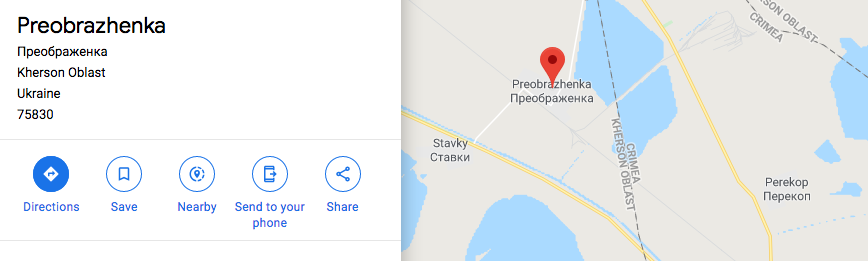

On both Apple and Google Maps, there is no border at all between Crimea and Russia where it would normally appear, across Taman Bay. Yet on one side of the bay locations are prominently labeled as Russian, while on the other they are devoid of a country affiliation.

I’ve asked Google and Apple for comment on when and how they decided to implement their current maps and will update this post if I hear back. It’s very likely that both will justify these decisions with the fact that they must adhere to local laws. But what happens when two sets of local laws diverge in the same location?

My point here is not to take sides for or against any of these representations, but to show that companies like Apple and Google are in a tight spot when it comes to these situations, and their information is far from complete or authoritative. In this case we see that they have different results for different places, concessions for some governments in spite of international concern, and the reduction of some services to a non-functional state (comparatively) in order to avoid controversy.

Just something to keep in mind whenever you look up information on services provided by global companies — they’re not objective sources, though of course arguably nothing is.

27 Nov 2019

Gift Guide: Essential security and privacy gifts to help protect your friends and family


There’s no such thing as perfect privacy or security, but there’s a lot you can do to lock down your online life. And the holiday season is a great time to encourage others to do the same. Some people are more likely to take security into their own hands if they’re given a nudge along the way.

Here we have a selection of gift ideas — from helpful security solutions to unique and interesting gadgets that will keep your information safe, but without breaking the bank.

A hardware security key for two-factor

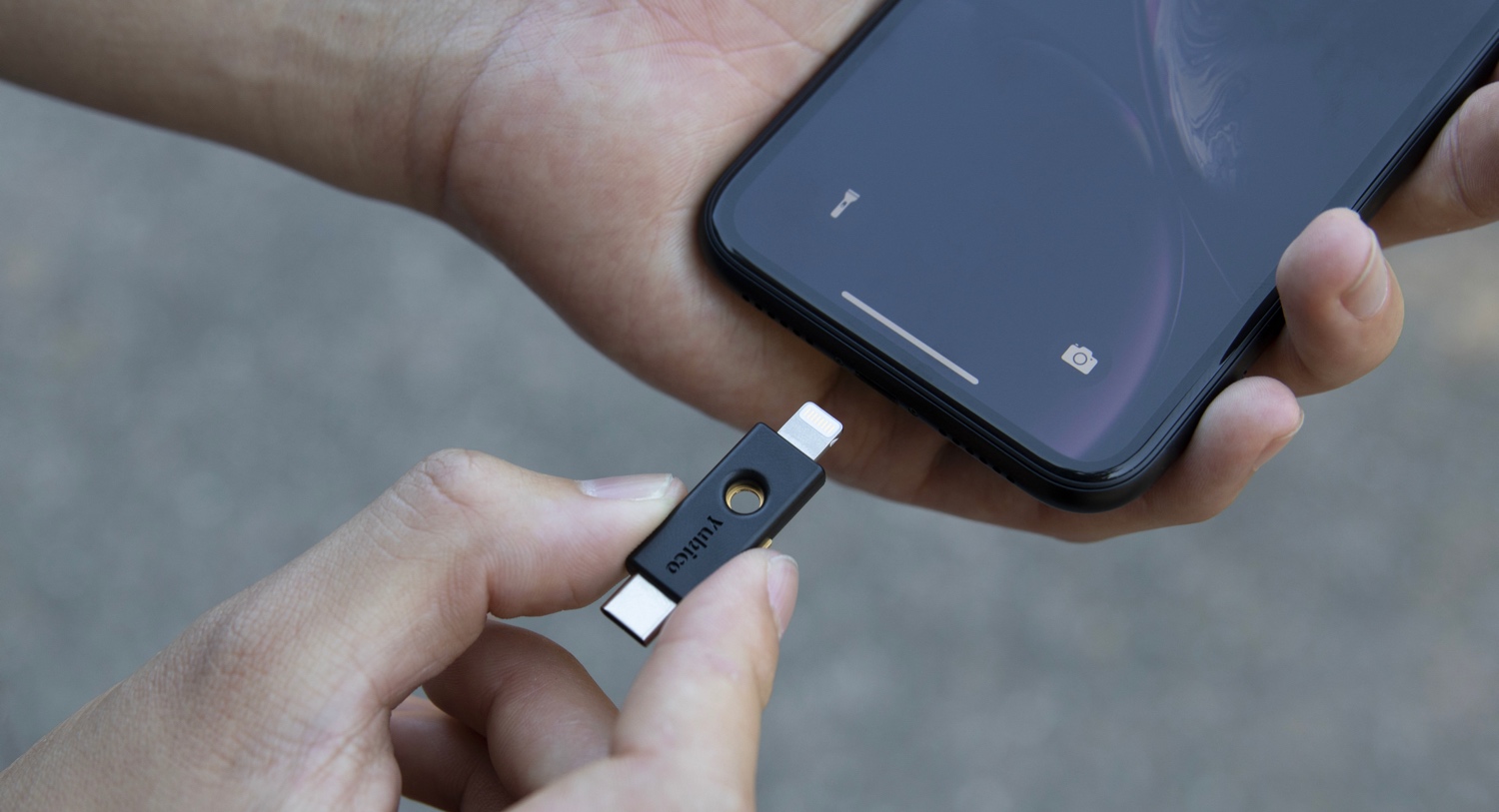
Your online accounts have everything about you and you’d want to keep them safe. Two-factor authentication is great, but for the more security minded there’s an even stronger solution. A security key is a physical hardware key that’s even stronger than having a two-factor code going to your phone. These keys plug into your USB port on your computer (or the charger port on your phone) to prove to online services, like Facebook, Google, and Twitter, that you are who you say you are. Google’s own data shows security keys offer near-unbeatable protection against even the most powerful and resourced nation-state hackers. Yubikeys are our favorite and come in all shapes and sizes. They’re also cheap. Google also has a range of its own branded Titan security keys, one of which also offers Bluetooth connectivity.

Price: from $20.
Available from: Yubico Store | Google Store

Webcam cover

Surveillance-focused malware, like remote access trojans, can infect computers and remotely switch on your webcam without your permission. Most computer webcams these days have an indicator light that shows you when the camera is active. But what if your camera is blocked, preventing any accidental exposure in the first place? Enter the simple but humble webcam blocker. It slides open when you need to access your camera, and slides to cover the lens when you don’t. Support local businesses and non-profits — you can search for unique and interesting webcam covers on Etsy

Price: from $5 – $10.
Available from: Etsy | Electronic Frontier Foundation

A microphone blocker

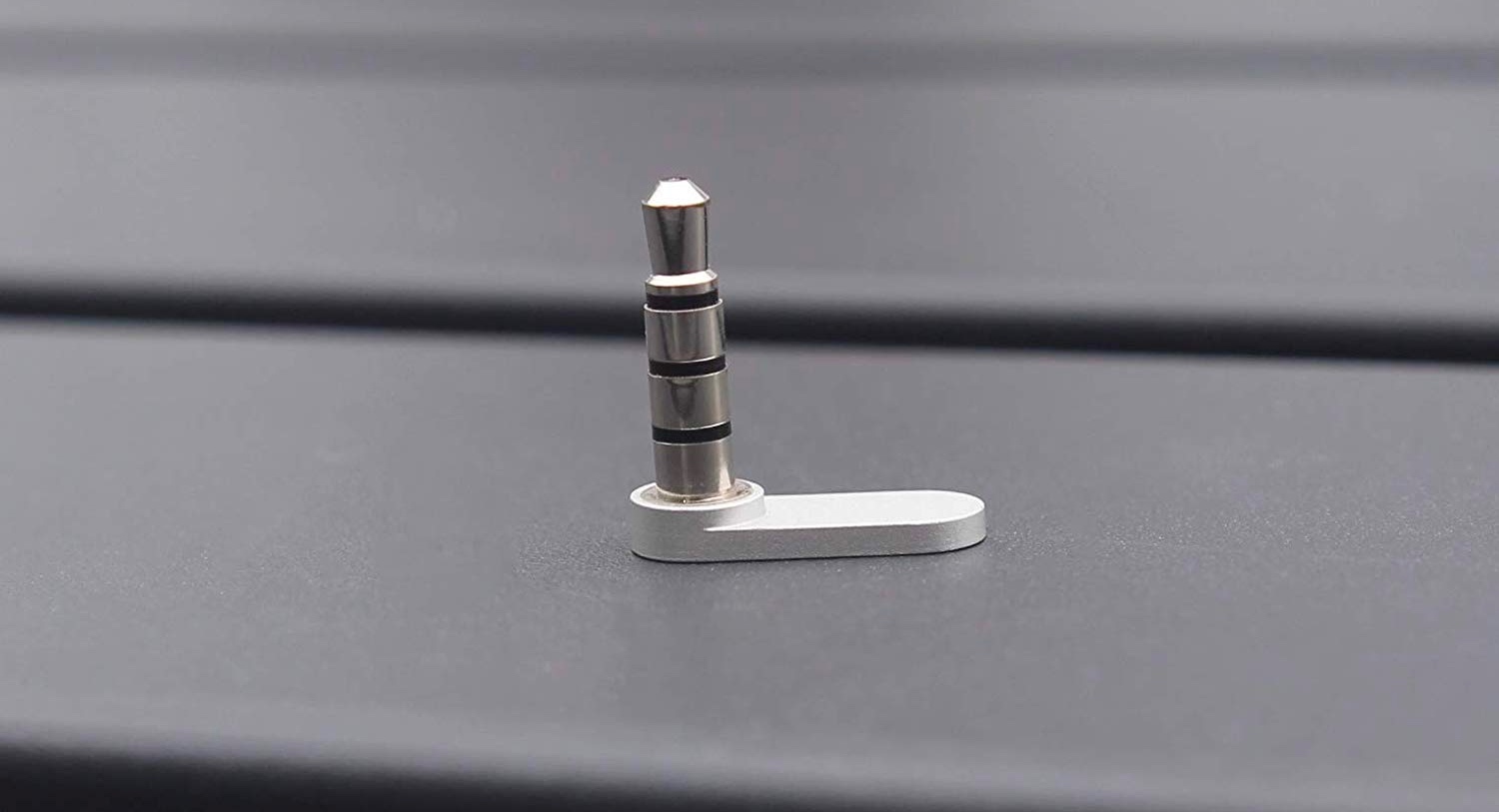
Now you have you webcam cover, what about your microphone? Just as hackers can tap into your webcam, they can also pick up on your audio. Microphone blockers contain a semiconductor that tricks your computer or device into thinking that it’s a working microphone, when in fact it’s not able to pick up any audio. Anyone hacking into your device won’t hear a thing. Some modern Macs already come with a new Apple T2 security chip which prevents hackers from snooping on your microphone when your laptop’s lid is shut. But a microphone blocker will work all the time, even when the lid is open.

Price: $6.99 – $16.99.
Available from: Nope Blocker | Mic Lock

A USB data blocker

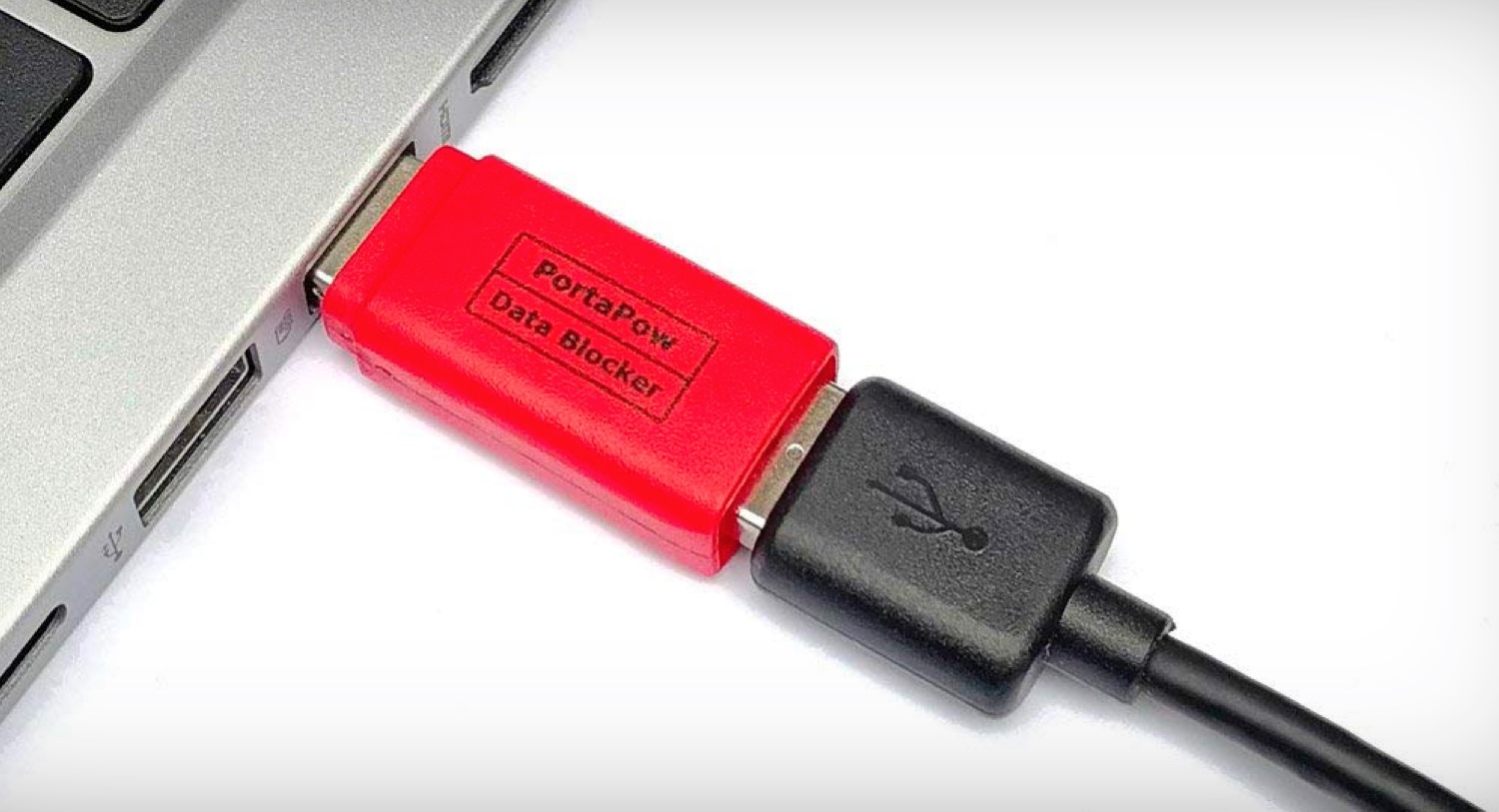
You might have heard about “juice-jacking,” where hackers plant malicious implants in USB outlets, which steal a person’s device data when an unsuspecting victim plugs in. It’s a threat that’s almost unheard of, but proof-of-concepts have shown how easy it is to implant malicious components in legitimate-looking cables. A USB data blocker essentially acts as a data barrier, preventing any information going in or out of your device, while letting power through to charge your battery. They’re cheap but effective.

Price: from $6.99 and $11.49.
Available from: Amazon | SyncStop

A privacy screen for your computer or phone

How often have you seen someone’s private messages or document as you look over their shoulder, or see them in the next aisle over? Privacy screens can protect you from “visual hacking.” These screens make it near-impossible for anyone other than the device user to snoop at what you’re working on. And, you can get them for all kinds of devices and displays — including phones. But make sure you get the right size!

Price: from about $17.
Available from: Amazon

A password manager subscription

Password managers are a real lifesaver. One strong, unique password lets you into your entire bank of passwords. They’re great for storing your passwords, but also for encouraging you to use better, stronger, unique passwords. And because many are cross-platform, you can bring your passwords with you. Plenty of password managers exist — from LastPass, Lockbox, and Dashlane, to open-source versions like KeePass. Many are free, but a premium subscription often comes with benefits and better features. And if you’re a journalist, 1Password has a free subscription for you.

Price: Many free, premium offerings start at $35.88 – $44.28 annually
Available from: 1Password | LastPass | Dashlane | KeePass

Anti-surveillance clothing

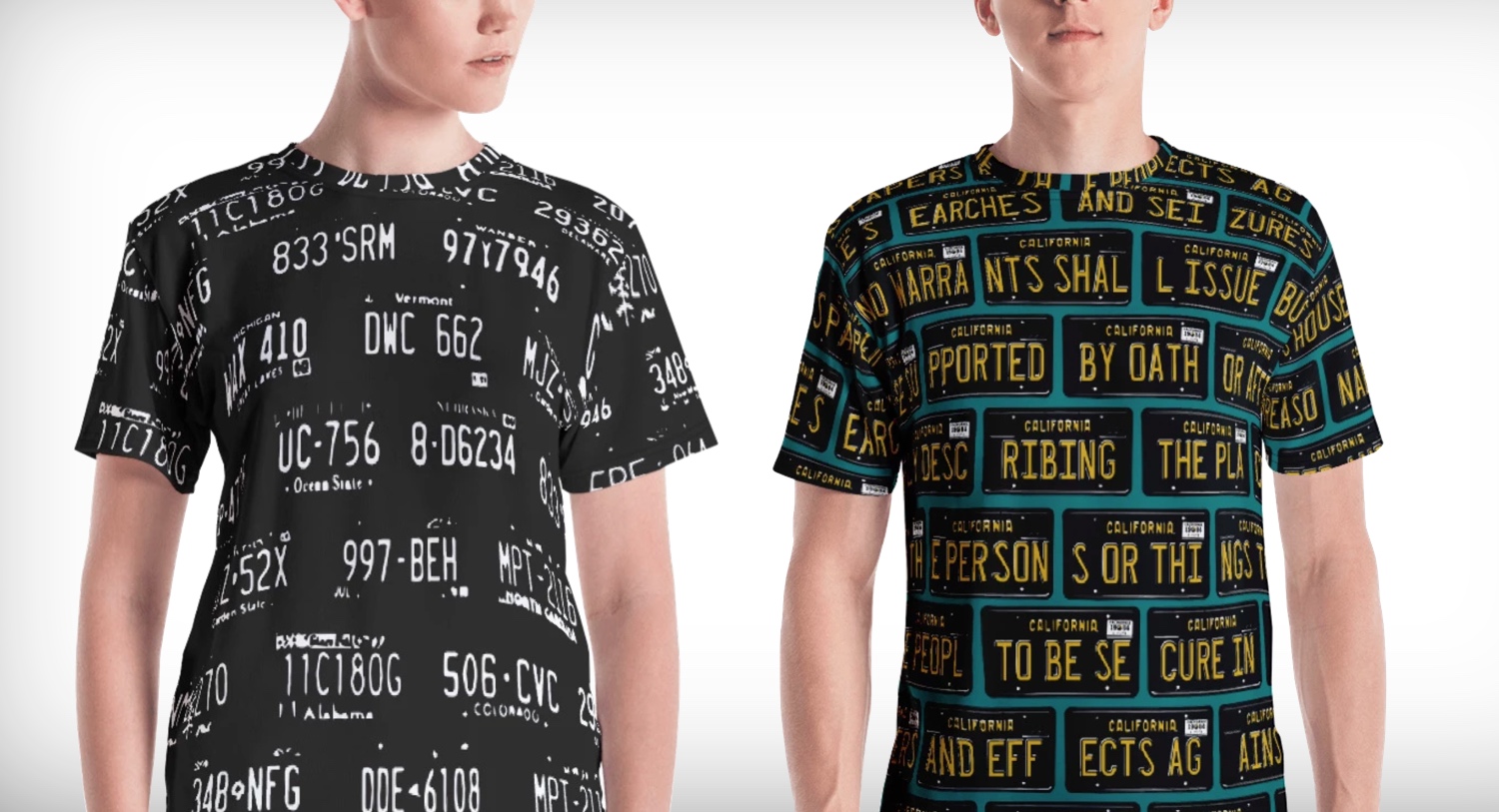
Whether you’re lawfully protesting or just want to stay in “incognito mode,” there are — believe it or not — fashion lines that can help prevent facial recognition and other surveillance systems from identifying you. This clothing uses a kind of camouflage that confuses surveillance technology by giving them more interesting things to detect, like license plates and other detectable patterns.

Price: $35.99.
Available from: Adversarial Fashion

Pi-hole

Think of a Pi-hole as a “hardware ad-blocker.” A Pi-hole is a essentially a Raspberry Pi mini-computer that runs ad-blocking technology as a box that sits on your network. It means that everyone on your home network benefits from ad blocking. Ads may generate revenue for websites but online ads are notorious for tracking users across the web. Until ads can behave properly, a Pi-hole is a great way to capture and sinkhole bad ad traffic. The hardware may be cheap, but the ad-blocking software is free. Donations to the cause are welcome.

Price: From $35.
Available from: Pi-hole | Raspberry Pi

And finally, some light reading…

There are two must-read books this year. NSA whistleblower Edward Snowden’s “Permanent Record” autobiography covers his time as he left the shadowy U.S. intelligence agency to Hong Kong, where he spilled thousands of highly classified government documents to reporters about the scope and scale of its massive global surveillance partnerships and programs. And, Andy Greenberg’s book on “Sandworm”, a beautifully written deep-dive into a group of Russian hackers blamed for the most disruptive cyberattack in history, NotPetya, This incredibly detailed investigative book leaves no stone unturned, unravelling the work of a highly secretive group that caused billions of dollars of damage.

Price: From $14.99.
Available from: Amazon (Permanent Record) | Amazon (Sandworm)

27 Nov 2019

Twitter tests new conversation features from twttr prototype, rollout planned for 2020

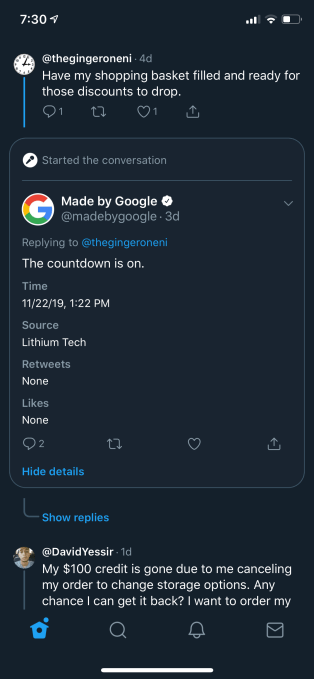
Twttr, the prototype app Twitter launched earlier this year, has been testing new ways to display conversations, including through the use of threaded replies and other visual cues. Now, those features have been spotted on Twitter.com, giving the service a message board-like feel where replies are connected to original tweeter and others in a thread by way of thin, gray lines.

As you may recall, the goal with twttr was to give Twitter a place outside of its main app to publicly experiment with more radical changes to the Twitter user interface, gain feedback, then iterate as needed, before the changes were rolled out to Twitter’s main user base. Since its arrival in March, the prototype twttr app has focused mainly on how threaded conversations would work, sometimes including different ways of labeling the posters in a thread, as well.

Currently, for example, twttr labels the original poster — meaning the person who started a conversation — with a little microphone icon, similar to Reddit. It’s also testing a way to view the tweet details in a card-style layout you can activate with a tap.

But its main focus continues to be on the display of the threads themselves.

Following its launch, the work on twttr slowed as did the excitement over its exclusive, invite-only Twitter experience. Instead of being a continual testbed of new ideas, twttr mostly rolled out small tweaks to threads. And it never branched out beyond conversation redesigns to test entirely new features, like Twitter’s recently launched Topics, for example.

In August, Sara Haider, who had been heading up the design of Conversations on Twitter — a role that included running twttr — announced she would be moving to a new team at the company. Meanwhile, Suzanne Xie, who had just joined Twitter by way of the Lightwell acquisition, stepped in to lead Conversations instead. She confirmed at the time that part of her role would be working with the twttr team to bring its best parts to the main Twitter app.

That work now appears to be underway.

Noted reverse engineer Jane Manchun Wong spotted a conversation tree layout being developed on Twitter.com, identical to the one found on twttr.

And just this week, the feature was tweaked a bit more to include the ability to focus on a specific tweet, even from a permalink — also similar to twttr’s card-style layout, which highlights tweets you tap within a thread in the same way.

Wong wasn’t opted into an A/B test on Twitter.com to view this feature but rather found it through her investigative techniques, we understand.

Twitter confirmed what she found is part of the company’s broader plan to bring twttr’s features to Twitter — a rollout that will take place next year, a spokesperson said.

In addition, the company is considering how to use the twttr app to experiment with other features going forward, it says.


27 Nov 2019

Twitter tests new conversation features from twttr prototype, rollout planned for 2020

Twttr, the prototype app Twitter launched earlier this year, has been testing new ways to display conversations, including through the use of threaded replies and other visual cues. Now, those features have been spotted on Twitter.com, giving the service a message board-like feel where replies are connected to original tweeter and others in a thread by way of thin, gray lines.

As you may recall, the goal with twttr was to give Twitter a place outside of its main app to publicly experiment with more radical changes to the Twitter user interface, gain feedback, then iterate as needed, before the changes were rolled out to Twitter’s main user base. Since its arrival in March, the prototype twttr app has focused mainly on how threaded conversations would work, sometimes including different ways of labeling the posters in a thread, as well.

Currently, for example, twttr labels the original poster — meaning the person who started a conversation — with a little microphone icon, similar to Reddit. It’s also testing a way to view the tweet details in a card-style layout you can activate with a tap.

But its main focus continues to be on the display of the threads themselves.

Following its launch, the work on twttr slowed as did the excitement over its exclusive, invite-only Twitter experience. Instead of being a continual testbed of new ideas, twttr mostly rolled out small tweaks to threads. And it never branched out beyond conversation redesigns to test entirely new features, like Twitter’s recently launched Topics, for example.

In August, Sara Haider, who had been heading up the design of Conversations on Twitter — a role that included running twttr — announced she would be moving to a new team at the company. Meanwhile, Suzanne Xie, who had just joined Twitter by way of the Lightwell acquisition, stepped in to lead Conversations instead. She confirmed at the time that part of her role would be working with the twttr team to bring its best parts to the main Twitter app.

That work now appears to be underway.

Noted reverse engineer Jane Manchun Wong spotted a conversation tree layout being developed on Twitter.com, identical to the one found on twttr.

And just this week, the feature was tweaked a bit more to include the ability to focus on a specific tweet, even from a permalink — also similar to twttr’s card-style layout, which highlights tweets you tap within a thread in the same way.

Wong wasn’t opted into an A/B test on Twitter.com to view this feature but rather found it through her investigative techniques, we understand.

Twitter confirmed what she found is part of the company’s broader plan to bring twttr’s features to Twitter — a rollout that will take place next year, a spokesperson said.

In addition, the company is considering how to use the twttr app to experiment with other features going forward, it says.


27 Nov 2019

Twitter to add a way to ‘memorialize’ accounts for deceased users before removing inactive ones

Twitter has changed its tune regarding inactive accounts after receiving a lot of user feedback: It will now be developing a way to “memorialize” user accounts for those who have passed away, before proceeding with a plan it confirmed this week to deactivate accounts that are inactive in order to “present more accurate, credible information” on the service. To the company’s credit, it reacted swiftly after receiving a significant amount of negative feedback on this move, and it seems like the case of deceased users simply wasn’t considered in the decision to proceed with terminating dormant accounts.

After Twitter confirmed the inactive account (those that haven’t tweeted in more than six months) cleanup on Tuesday, a number of users noted that this would also have the effect of erasing the content of accounts whose owners have passed away. TechCrunch alum Drew Olanoff wrote about this impact from a personal perspective, asking Twitter to reconsider their move in light of the human impact and potential emotional cost.

In a thread today detailing their new thinking around inactive accounts, Twitter explained that its current inactive account policy has actually always been in place, but that they haven’t been diligent about enforcing it. They’re going to begin doin so in the European Union partly in accordance with local privacy laws, citing GDPR specifically. But the company also says it will now not be removing any inactive accounts before first implementing a way for inactive accounts belonging to deceased users to be “memorialized,” which presumably means preserving their content.

Twitter went on to day that it might expand or refine its inactive account policy to ensure it works with global privacy regulations, but will be sure to communicate these changes broadly before they go into effect.

It’s not yet clear what Twitter will do to offer this ‘memorialization’ of accounts, but there is some precedent they can look to for cues: Facebook has a ‘memorialized accounts’ feature that it introduced for similar reasons.

27 Nov 2019

Twitter to add a way to ‘memorialize’ accounts for deceased users before removing inactive ones

Twitter has changed its tune regarding inactive accounts after receiving a lot of user feedback: It will now be developing a way to “memorialize” user accounts for those who have passed away, before proceeding with a plan it confirmed this week to deactivate accounts that are inactive in order to “present more accurate, credible information” on the service. To the company’s credit, it reacted swiftly after receiving a significant amount of negative feedback on this move, and it seems like the case of deceased users simply wasn’t considered in the decision to proceed with terminating dormant accounts.

After Twitter confirmed the inactive account (those that haven’t tweeted in more than six months) cleanup on Tuesday, a number of users noted that this would also have the effect of erasing the content of accounts whose owners have passed away. TechCrunch alum Drew Olanoff wrote about this impact from a personal perspective, asking Twitter to reconsider their move in light of the human impact and potential emotional cost.

In a thread today detailing their new thinking around inactive accounts, Twitter explained that its current inactive account policy has actually always been in place, but that they haven’t been diligent about enforcing it. They’re going to begin doin so in the European Union partly in accordance with local privacy laws, citing GDPR specifically. But the company also says it will now not be removing any inactive accounts before first implementing a way for inactive accounts belonging to deceased users to be “memorialized,” which presumably means preserving their content.

Twitter went on to day that it might expand or refine its inactive account policy to ensure it works with global privacy regulations, but will be sure to communicate these changes broadly before they go into effect.

It’s not yet clear what Twitter will do to offer this ‘memorialization’ of accounts, but there is some precedent they can look to for cues: Facebook has a ‘memorialized accounts’ feature that it introduced for similar reasons.

27 Nov 2019

Latin America roundup: Neobanks raise $205M+; Softbank backs VTEX

Argentina’s Ualá became the most recent Latin American fintech to receive a growth-stage funding ($150 million) from Asian investors, Tencent and Softbank. 

This marks Tencent’s second round of investment in Ualá, the first coming in April 2019. Tencent also invested $180M in Brazil’s leading neobank, Nubank in 2018. With Ualá, Tencent and Softbank will join a team of investors including Soros, Goldman Sachs, Endeavor, Monashees, Ribbit Capital, and Jefferies LLC, who have backed Ualá since it was founded in 2016. Ualá has provided over 1.3M accounts for unbanked and under-banked Argentine customers in the past two years and recently launched new products for lending and savings. 

Ualá was not the only neobank celebrating a significant round this month; Brazil’s Neon raised a $94M Series B round from Banco Votorantim and General Atlantic just one week earlier. Neon offers a fully-digital bank card to almost 2M customers across Brazil, mostly concentrated in Rio de Janeiro and São Paulo. The round will enable Neon to expand beyond Brazil’s biggest cities and double its user base in 2020. 

Neon has raised $121M to date, with previous investors Quona Capital, Propel Venture Partners, Omidyar Network, and Monashees, also joining their most recent round. The two-year-old startup has been expanding its product offerings to include credit, investment, and most recently, a personal lending line in July 2019.

Neon’s products are helping to bring banking services to a famously complex and competitive market in Brazil. Brazil’s largest neobank, Nubank, is valued at $10B+, has 10M customers in Brazil and Mexico, and is now the most-downloaded neobank in the world. Brazil’s banking sector is one of the most lucrative in the world, with credit card interest rates reaching triple digits, whereas Nubank and competitors offer more US-style rates, putting Brazilian banks on the defensive against disruptors like Nubank and Neon who will drive competition. 

With strong funding from Asia, Brazilian, and US-based backers, these neobanks are gaining traction across the region to provide banking services to the 50% of Latin America’s population that is still excluded from traditional financial institutions. 

Softbank invests $140M in VTEX

VTEX, a Brazilian cloud e-commerce platform for large companies, joined the growing list of Softbank’s Brazilian portfolio companies, including QuintoAndar, MadeiraMadeira, Creditas, Buser, Gympass, and Loggi. The Japanese investor is supporting VTEX with a $140M investment to help the startup expand internationally and develop new products. 

VTEX already has 14 offices in Latin America, Europe, and the US, and serves over 2500 global clients including Ambev, Nestle, North Face, Coca Cola, and General Electric. VTEX’s solution involves a comprehensive digital commerce platform including order management, B2B marketplaces, web and in-store points of commerce, and customer service. As the back-end for some of the world’s largest companies, VTEX provides an enormous opportunity for integration with other marketplaces and platforms. 

LinkedIn expands to Mexico

Mexico is Latin America’s second-largest market after Brazil for many US tech companies like Uber and Facebook. In November 2019, both LinkedIn and Stripe announced their intention to expand into the Mexican market with offices and operations. Over 13 million of Linkedin’s 92 million total clients are in Mexico, making this country a logical place for Linkedin’s second Latin America office. Linkedin opened their first Latin America offices in São Paulo in 2013. 

The Mexican office will open in July 2020 and will help LinkedIn produce more Spanish-language content, as well as bring users closer to large clients like BBVA and Aeromexico. 

Notable Rounds and Acquisitions from November

  • Brazilian bank Itaú acquired growth-hacking and digital consulting startup, Zup, for a $140M deal that will be disbursed over four years. Zup will help the bank improve and develop digital channels for customer acquisition and management. Although Itaú now owns 51% of Zup, the two companies will continue to operate separately and under different brands for the foreseeable future. Acquisitions of this size are still very rare in Latin America and provide liquidity into the startup ecosystem that can promote the development of a more dynamic environment for tech companies. 
  • MUY Tech, a Colombia cloud kitchen startup, raised $15M this month to expand into Mexico and Brazil. MUY uses AI technology to predict food trends and create less waste, allowing users to order personalized meals from MUY’s physical restaurants or through a mobile app. The startup currently serves more than 200,000 meals per month, according to founder Jose Calderon, who previously exited Domicilios to Delivery Hero. Mexican investor ALLVP led the round with support from previous investor Seeya.
  • Brazilian mobility startup Kovi raised a $30M Series B led by Global Founders Capital and Quona Capital, with support from previous investors Monashees, Maya Capital, Kevin Efrusy, Y Combinator, Broadhaven Ventures, Justin Mateen, and ONEVC. Kovi rents cars to drivers that work for rideshare companies like Uber, Didi, or Cabify to make quality vehicles available to these potential gig-economy workers. They will use this investment to grow the team and fleet, as well as exploring new geographies. 
  • Mexico’s virtual supermarket, Justo, raised $10M in a seed round from Foundation Capital to continue growing in the local market. Justo is the first grocery store in Mexico with no physical branches, using a D2C model that has been increasing in popularity in Latin America. The startup was founded by Ricardo Weder, the former president of Cabify, earlier in 2019 to disrupt the wasteful grocery industry. 
  • Brazil’s identity verification startup, idwall, raised $10M from Qualcomm Ventures to continue developing facial recognition software that helps large companies like Loggi, 99, and OLX to verify the identity of their employees and customers.

Looking ahead to December, Latin American financial institutions are on the lookout for a shaky future based on the recent unrest in countries like Chile, Bolivia, Ecuador, and Colombia. This instability might provide a competitive edge for fintech startups who can use real-time data to adapt more quickly to the changing situation. 

What to watch next? International investors have not pulled out of the region despite recent political turmoil and many are willing to wait out this period to support their startups. While we may not have access to Q4 2019 for a few months, it will be interesting to see if growth and investment have been rocked by the changes of the past two months. Certainly the status quo for the traditional players in Latin America is rapidly changing, potentially leaving room for startups to take over more market share and compete for disgruntled customers.

27 Nov 2019

Box looks to balance growth and profitability as it matures

Prevailing wisdom states that as an enterprise SaaS company evolves, there’s a tendency to sacrifice profitability for growth — understandably so, especially in the early days of the company. At some point, however, a company needs to become profitable.

Box has struggled to reach that goal since going public in 2015, but yesterday, it delivered a mostly positive earnings report. Wall Street seemed to approve, with the stock up 6.75% as we published this article.

Box CEO Aaron Levie says the goal moving forward is to find better balance between growth and profitability. In his post-report call with analysts, Levie pointed to some positive numbers.

“As we shared in October [at BoxWorks], we are focused on driving a balance of long-term growth and improved profitability as measured by the combination of revenue growth plus free cash flow margin. On this combined metric, we expect to deliver a significant increase in FY ’21 to at least 25% and eventually reaching at least 35% in FY ’23,” Levie said.

Growing the platform

Part of the maturation and drive to profitability is spurred by the fact that Box now has a more complete product platform. While many struggle to understand the company’s business model, it provides content management in the cloud and modernizing that aspect of enterprise software. As a result, there are few pure-play content management vendors that can do what Box does in a cloud context.

27 Nov 2019

This robot scientist has conducted 100,000 experiments in a year

Science is exciting in theory, but it can also be dreadfully dull. Some experiments require hundreds or thousands of repetitions or trials — an excellent opportunity to automate. That’s just what MIT scientists have done, creating a robot that performs a certain experiment, observes the results, and plans a follow-up… and has now done so 100,000 times in the year it’s been operating.

The field of fluid dynamics involves a lot of complex and unpredictable forces, and sometimes the best way to understand them is to repeat things over and over until patterns emerge. (Well, it’s a little more complex than that, but this is neither the time nor the place to delve into the general mysteries of fluid dynamics.)

One of the observations that needs to be performed is of “vortex-induced vibration,” a kind of disturbance that matters a lot to designing ships that travel through water efficiently. It involves close observation of an object moving through water… over, and over, and over.

Turns out it’s also a perfect duty for a robot to take over. But the Intelligent Tow Tank, as they call this robotic experimentation platform, is designed not just to do the mechanical work of dragging something through the water, but to intelligently observe the results, change the setup accordingly to pursue further information, and continue doing that until it has something worth reporting.

“The ITT has already conducted about 100,000 experiments, essentially completing the equivalent of all of a Ph.D. student’s experiments every 2 weeks,” say the researchers in their paper, published today in Science Robotics.

The hard part, of course, was not designing the robot (though that was undoubtedly difficult as well) but the logic that lets it understand, at a surface level so to speak, the currents and flows of the fluid system and conduct follow-up experiments that produce useful results.

Normally a human (probably a grad student) would have to observe every trial — the parameters of which may be essentially random — and decide how to move forward. But this is rote work — not the kind of thing an ambitious researcher would like to spend their time doing.

So it’s a blessing that this robot, and others like it, could soon take over the grunt work while humans focus on high-level concepts and ideas. The paper notes other robots at CMU and elsewhere that have demonstrated how automation of such work could proceed.

“This constitutes a potential paradigm shift in conducting experimental research, where robots, computers, and humans collaborate to accelerate discovery and to search expeditiously and effectively large parametric spaces that are impracticable with the traditional approach,” the team writes.

You can read the paper describing the Intelligent Tow Tank here.

27 Nov 2019

Daily Crunch: Twitter will delete dormant accounts

The Daily Crunch is TechCrunch’s roundup of our biggest and most important stories. If you’d like to get this delivered to your inbox every day at around 9am Pacific, you can subscribe here.

1. Twitter will free up handles by deleting inactive accounts

“As part of our commitment to serve the public conversation, we’re working to clean up inactive accounts to present more accurate, credible information people can trust across Twitter,” the company said.

Sounds like a smart move, with one big catch: If someone with a Twitter account died more than six months prior and no one else has their login, their account will be deleted. So hopefully, Twitter will come up with a way to memorialize these accounts.

2. Facebook buys VR studio behind Beat Saber

Virtual reality doesn’t have many hit games yet, but Facebook is buying the studio behind one of the medium’s biggest titles. It says Beat Games will join Oculus Studio but will continue to operate independently.

3. Indian scooter rental startup Bounce raises $150M

Bounce, formerly known as Metro Bikes, allows customers to rent a scooter for as little as Rs 1 (0.1 cents) per kilometer and Rs 1.5 per hour. Sources told us the new financing round values the startup “well over $500 million.”

4. Netflix leases New York’s Paris Theatre

Netflix is expanding its theatrical presence by signing a long-term lease for a historic single-screen venue in New York City. This follows reports that the streaming company is also working to buy the Egyptian Theatre in Los Angeles.

5. Cloudflare CEO Matthew Prince is coming to Disrupt Berlin

Back in 2010, web performance and security company Cloudflare launched on-stage at our Disrupt SF Battlefield. And as Prince loves to remind us, the company came in second.

6. Gift Guide: STEM toys for your builders-in-training

Yep, it’s gift guide season. Here’s our updated roundup of the latest wares clamoring to entice and inspire kids with coding tricks and electronic wizardry.

7. We’re democratizing information about startups with Extra Crunch

The Daily Crunch includes links to Extra Crunch stories just about every day. But if you’re still wondering what exactly TechCrunch’s premium membership program offers, here’s a 45-second video explaining everything you need to know.