Year: 2019

09 Jul 2019

Habito, the digital mortgage broker, will begin direct lending via its own mortgages

Habito, the London startup that has spent the last three years dragging the mortgage process online, is to begin direct lending via its own range of mortgages. Starting with ‘buy to let’ mortgages, the move represents the first time the fintech startup has expanded beyond brokerage after it received regulatory approval to become a mortgage lender in its own right early last year.

Eighteen months in the making, Habito says it has developed a proprietary lending platform from scratch in order to be able to offer its own innovative mortgage products that plug some of the gaps in the current market. Founder and CEO Daniel Hegarty tells me he hopes other lenders will eventually want to use the same rails to launch their own digital lending products but in the meantime the company is excited to launch direct lending.

Longer term, Hegarty says the idea is that a rising tide in terms of customer experience and the speed and certainty smarter use of technology affords, will help to lift all boats within the mortgage lending space.

Habito’s first mortgage product is a range of buy-to-let mortgages, claiming to have the widest selection of Loan to Values and fixed-rate periods currently on the market. Using its proprietary technology, Habito says it aims to cut the timeframe from mortgage application to offer in half.

To do this, the Habito platform integrates with the conveyancing process to add more transparency for the homebuyer, while the number of documents needed is said to be significantly reduced. In addition, the Habito “Instant Decision” is a feature devised to replace the mortgage “Decision in Principle,” which the company says is outdated and often unreliable, without sacrificing time to approval.

“All valuations are instructed automatically, fraud checks are automated and all documentation is handled digitally, meaning that customers won’t have to wait for physical post to progress their application,” says Habito.

It is also worth noting that Habito’s direct mortgages will be Habito branded but will not sit on the company’s balance sheet. The mortgages are being funded via a commitment of £500 million investment provided by an unnamed “leading, FCA-regulated financial institution”.

Habito is also keen to stress that its brokerage will operate as a separate business line and continue to provide “free, impartial, whole-of market mortgage advice to its customers” (as it is regulated to do so). The fact that the FCA approved Habito becoming a lender alongside running its brokerage business is also noteworthy and suggests that the U.K. regulator isn’t concerned about the company’s ability to keeps its business lines segregated. How the wider market views the development by Habito to become a lender and a broker remains to be seen.

Meanwhile, Habito says that company buy-to-let and portfolio landlord mortgages will launch later this year. Beyond this, the startup is working with a number of “large financial institutions” to bring a range of residential mortgages to market in the coming months.

One area that Hegarty says is ripe for innovation are mortgages suitable for self-employed people who don’t have a traditional financial footprint. Another opportunity the startup is eyeing up are mortgages with a much longer fixed term, which are more common in other countries but in the U.K. are typically restricted to two to three years.

09 Jul 2019

Richard Branson’s Virgin Galactic will be the first publicly traded company for human spaceflight

The race to become the first publicly traded company dedicated to human spaceflight is over, and Virgin Galactic has won.

The company will be listing its shares on the New York Stock Exchange through a minority acquisition made by Social Capital Hedosophia; the special purpose acquisition company created by former Facebook executive Chamath Palihapitiya as part of his exploration of alternative strategies to venture capital investing as the head of Social Capital — according to a report in The Wall Street Journal.

Formed with a $600 million commitment roughly two years ago, the SPAC is expected to make an $800 million commitment to Virgin Galactic, according to the Journal’s reporting.

Unlike other launch companies like Elon Musk’s Space Exploration Technologies Corp., Virgin Galactic has focused on suborbital launches for conducting experiments and taking tourists up to space. SpaceX is investing more heavily in the development of launch capabilities for lunar and interplanetary travel — and commercial applications like Internet connectivity via satellite.

Jeff Bezos’ Blue Origin also reportedly has plans for space tourism while pursuing several commercial and government launch contracts (and a lunar lander).

Virgin Galactic was initially in discussions with the kingdom of Saudi Arabia for a roughly $1 billion capital infusion, but Virgin Galactic’s billionaire chief executive, Richard Branson, walked away from the deal in the wake of the kingdom’s assassination of Washington Post journalist, Jamal Kashoggi.

That’s when Palihapitiya stepped in, according to the Journal. The billionaire financier needed to do something with the capital he’d raised for the Hedosophia SPAC since the investment vehicles have to make an investment within a two-year timeframe or be wound down.

Likely, the Virgin Galactic business made a tempting target. The company already has roughly $80 million in commitments from people around the world willing to pay $250,000 for the privilege of a suborbital trip to the exosphere.

Virgin Galactic launched as a business in 2004, two years after SpaceX made its first fledgling steps toward creating a private space industry, and was the first company to focus on space tourism and launching small satellites into orbit. The company’s commercial division, Virgin Orbit, is still competing for satellite launch capabilities.

Like most privately funded space companies, Virgin Galactic was a pet project of the billionaire behind it, with the Journal estimating that Branson has put nearly $1 billion into the company already.

The new $800 million means that the SPAC isn’t the only investor in Virgin Galactic. Palihapitiya is taking a $100 million investment into the company too. In return the vehicle will own roughly 49% of the spaceflight business as it trades on the open market.


09 Jul 2019

Spotify Lite for Android gets an official launch in 36 countries

Spotify’s Lite app is now official. The app has been in beta since last year, and now Spotify is officially releasing it in 36 countries worldwide.

The app is designed to work on patchy or weak internet connections and, at just 10MB, it is small enough to cater to lower-end devices that have limited storage or older phones. Spotify Lite is limited to Android devices running version 4.3 or newer, and it is open to both paying and non-paying users. For those worried about maxing out their data plan, the app comes with an optional limit that can tell you when you are close to hitting that buffer.

Spotify claims that 90 percent of the features of the main app are available in Lite, in particular areas around multiple — including video and cover artist — are omitted as they are not critical to the core experience.

A spokesperson told TechCrunch that, as of now, there are no plans to bring the Lite experience to iOS. That makes sense as the majority of people who would benefit from the stripped-down experience would be Android owners.

The overall goal here is to expand Spotify’s reach beyond the current user base by focusing on emerging markets or older users. The company currently claims 217 million users, of which 100 million are paying customers. For comparison, Apple Music passed 60 million users in June.

India is likely to be a key focus. Spotify introduced Lite in India in June, months after the full service went live in the country in February.

spotify

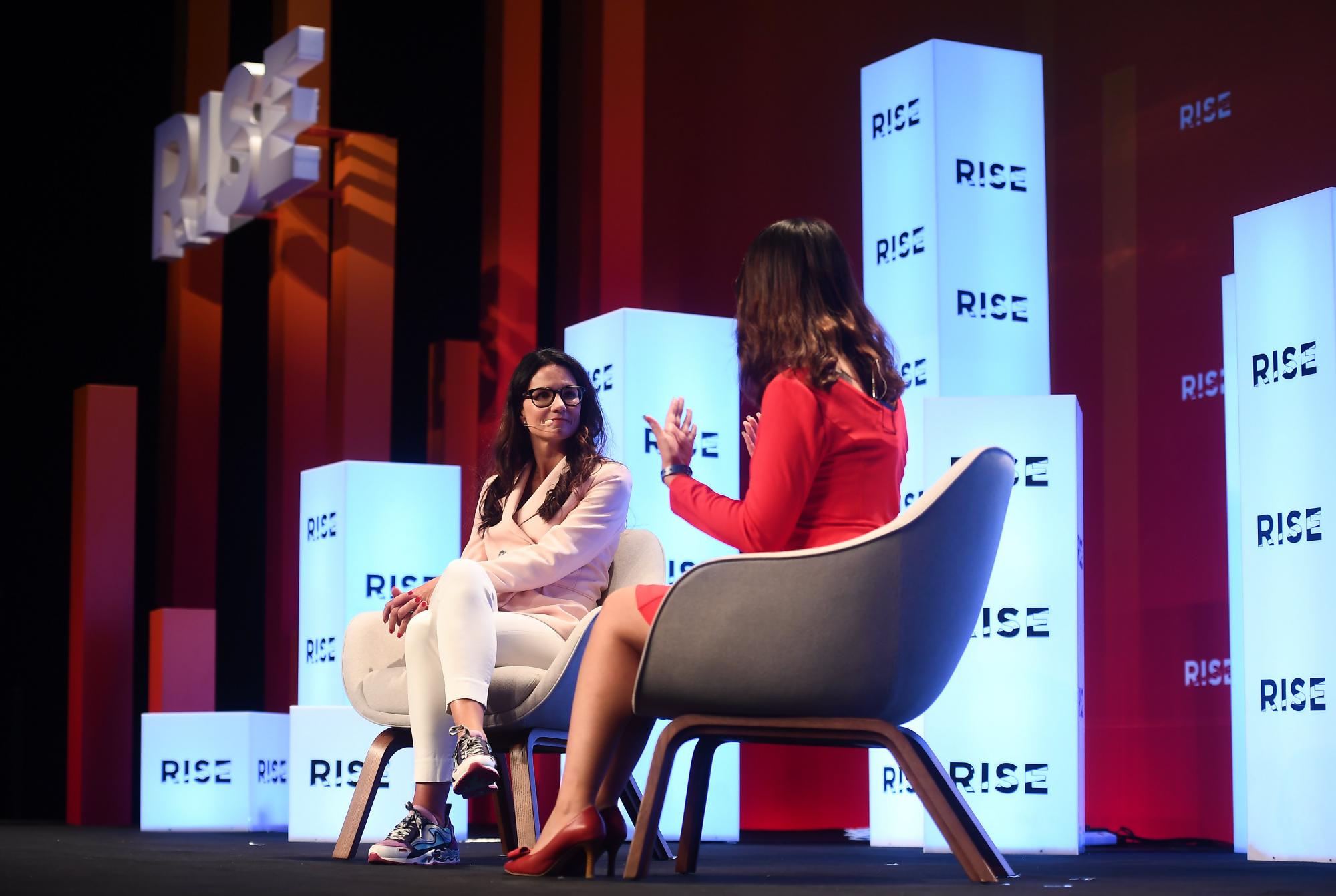
Cecilia Qvist, Global Head of Markets, Spotify (left) annnounced the release of Spotify Lite on stage at Rise in Hong Kong (Photo By David Fitzgerald/Sportsfile via Getty Images)

According to Google Play Store data, Spotify Lite has been downloaded more than one million times. Expect that numbers to rocket as the company goes to town promoting Lite as an alternative entry point for its service.

Lite apps have been popularized by services such as Facebook, Messenger and YouTube which have tapped demand, particularly in emerging markets where data speeds tend to be inconsistent and lower-end devices are more prevalent.

09 Jul 2019

InDriver launches ride-hail app in fourth African country, Uganda

Global ride-hail startup InDriver launches its app-based service in Kampala (Uganda) this week.

After going live in Nairobi in June—the online taxi company now operates in four African countries: Kenya, Uganda, South Africa, and Tanzania

Founded in Russia and now headquartered in New York, InDriver’s mobile-app allows passengers to name their own fare for nearby drivers to accept, decline, or counter. The startup operates in 200 cities, is used by 26 million people, and has raised $15 million in two rounds from Leta Capital, according to a release, Crunchbase, and a company spokesperson.

InDriver entered Latin America and Tanzania in 2018. The startup sees a value proposition for Africa based around urbanization, demographics, and some of the unique characteristics of its platform.

“We think Africa is going to be a big market for us because there’s a lot of cities and high population [areas] that still don’t have access to ride-hail applications,” InDriver’s Chief Marketing Officer Egor Fedorov told TechCrunch on a call.

He believes InDriver can reach an additional market segment in African cities—one that may overlook other ride-hail options that require cards to sign up or don’t feature bidding. The startup’s mobile-app allows for cash-payment and InDriver views itself more as an IT service than a taxi company, according to Federov. The company does not directly finance or brand cars in Africa. InDriver charges a percentage of each ride to generate revenue and doesn’t currently take commission from drivers in Africa, though it does in other markets.

For now, InDriver will stick to car-based taxi service in Africa (with no immediate plans to enter the motorcycle taxi space) or add things it does in other markets, such as truck rental services.

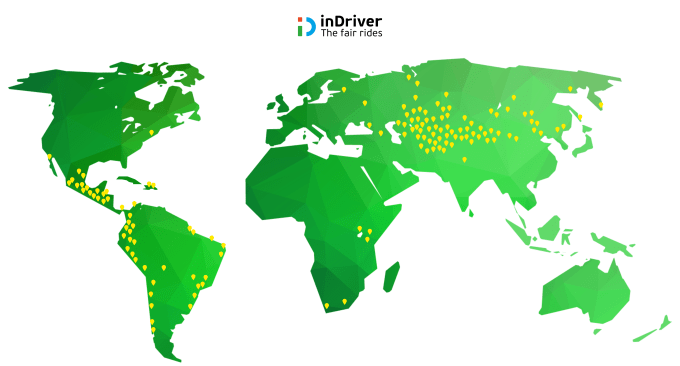
InDriver MapOn marketing outreach for Kampal, InDriver will rely primarily on word-of-mouth gained by (what it projects) as cheaper prices and bringing price-negotiation (common to the continent’s taxi markets) to a quick and controlled online process.

InDriver’s Uganda expansion comes at a time when Africa’s ride-hail markets are becoming a multi-wheeled, Pan-African, and global affair.  A lot of VC is accumulating and expansion happening around the continent’s online car taxis, moto-taxi startups, and car and motorcycle delivery-services.

Uber operates in eight African countries and last year joined global ride-hail company Bolt (previously Taxify) to add motorcycle-taxi services on the continent.

On the local level, Ethiopian auto-taxi startup ZayRide announced it will expand to West Africa in August.

Africa’s motorcycle ride-hail market—worth an estimated $4 billion—has also seen a flurry of investment and expansion. Nigeria’s MAX announced a $7 million round backed by Yamaha to expand in West Africa and pilot electric e-motos. Global web-browser company Opera launched its ORide moto-taxi service in Nigeria last month.

And Uganda-based motorcycle ride-hail company SafeBoda expanded into Kenya and recently raised a Series B round, co-led by the venture arms of Germany’s Allianz and Indonesia’s Go-Jek.

So whether by two wheels or four, Africa’s on-demand transit market is moving rapidly. Time, attrition, and burn-rate will tell which startups—including InDriver—can stay in the race for market-share or are forced off the road.


09 Jul 2019

Tesla will not “refresh” its Model S or Model X electric vehicles

Tesla owners and customers hoping for a refreshed Model S or Model X are going to be waiting indefinitely. Tesla CEO Elon Musk tweeted Monday night that there will be no “refreshed” Model X or Model S coming.

In automotive speak, refreshed typically means small revisions to a vehicle model that extend beyond the typical yearly updates made by manufacturers. A refresh is not a major redesign, although there’s often a noticeable change to the vehicle model.

The company will make minor ongoing changes to the luxury electric sedan and sport utility vehicle, Musk said. One recent example is Tesla has taken the Model 3 rear drive unit as the front drive unit in the S and X. That change went into production three months ago, Musk said in the tweet.

Musk added that the interior of the Model S and Model X will remain the same. There’s been speculation that Tesla would eventually change the X and S interiors to match the newer Model 3.

The S and X are sticking around, however. Tesla won’t discontinue either model for now, according to Musk when asked via Twitter if the company would get rid of the S and X and new release new model lines for “anticipated full self-driving capabilities.”

It’s unclear if Tesla will eventually phase out its flagship S and its complicated X, which Musk once described as an act of hubris. Neither vehicle garners as many sales as its cheaper counterpart, the Model 3. Tesla delivered 17,650 Model S and X vehicles compared to 77,550 Model 3s in the second quarter.

09 Jul 2019

A vulnerability in Zoom’s Mac client could allow websites to turn on cameras without permission

A vulnerability in the Mac client for popular web conferencing app Zoom may allow any website to join a video call without permission, writes software engineer and security researcher Jonathan Leitschuch. In a Medium post published today, Leitschuch detailed the vulnerability, writing that it remains an issue even if users have uninstalled the Mac client: “If you’ve ever installed the Zoom client and then uninstalled it, you still have a localhost webserver on your machine that will happily reinstall the Zoom client for you, without requiring any user interaction on your behalf besides visiting a webpage. This re-install ‘feature’ continues to work to this day.”

Leitschuch included patches for the vulnerability, including how to disable the ability for Zoom to turn on your webcam when joining a meeting, a terminal command for disabling video by default and instructions on how to shut down the web server and remove web server application files.

In a timeline, Leitschuch said that the vulnerability was originally disclosed to Zoom on March 26, with a proposed “quick fix,” but that Zoom took 10 days to confirm the vulnerability, and that despite talking to the company he only saw on June 24 that Zoom had implemented the quick fix.

“Ultimately, Zoom failed at quickly confirming that the reported vulnerability actually existed and they failed at having a fix to the issue delivered to customers in a timely manner. An organization of this profile and with such a large user base should have been more proactive in protecting their users from attack,” he wrote.

Leitschuch added that he is publicizing the vulnerability because “this is essentially a Zero Day. Unfortunately, Zoom has not fixed this vulnerability in the allotted 90-day disclosure window I gave them, as is the industry standard. As such, the 4+ million users of Zoom on Mac are now vulnerable to an invasion of their privacy by using this service.”

A Zoom spokesperson told TechCrunch that “Zoom is working with a security researcher who raised concerns about video-on-by-default as a security vulnerability: Zoom by default turns on the video of a user when they join a meeting. This could, in theory, create the potential for a hacker to trick a target into joining a video meeting on camera. Of note, we have no indication that this has ever happened.”

In a longer statement, the company said that currently, “All first-time Zoom users, upon joining their first meeting from a given device, are asked whether they would like their video to be turned OFF. For subsequent meetings, users can configure their client video settings to turn OFF video when joining a meeting. Additionally, system administrators can pre-configure video settings for supported devices at the time of install or change the configuration at anytime.”

It added that “As part of our July 2019 release, Zoom will apply and save the user’s video preference from their first Zoom meeting to all future Zoom meetings. Users and system administrators can still configure their client video settings to turn OFF video when joining a meeting. This change will apply to all client platforms.”

09 Jul 2019

Uber CTO says competing with Didi is ‘very healthy’ despite their complicated relationship

Competing with a company that counts you as an investor is hardly conventional — some might call it strange — but for Uber it’s a situation that is not only normal but essential.

That’s according to the ride-hailing giant’s CTO, Thuan Pham, who talked about the complicated rivalry Uber has with China’s Didi Chuxing, which counts each other as investors. Uber famously exited China in 2016 — it has since left Southeast Asia and merged with a rival in Russia, too — and part of that deal saw it take nearly six percent of the Chinese company’s business while Didi got equity in Uber. Yet, years later, the two compete in the growing Latin America market, where Didi is making aggressive moves, and also in Australia.

“If you don’t have competition then you can become complacent because there’s no competition to challenge,” Pham said during an interview at the Rise conference in Hong Kong today. “This competition is definitely a very healthy thing, it’s very very necessary.”

When competing in China, “both of the companies had to be on our best in order to compete,” Pham said, and he maintains that iron continues to sharpen iron on the other side of the planet.

“Even after we exited [China] we ran into them in other markets as well,” he added. “Our philosophy [is that] if they are doing something better in terms of features, we try harder to close the gap and surpass them. In the areas where our services are better, we try not to rest on our laurels because we see them trying to catch up all the time.”

Pham didn’t address the fact that Uber owns pieces of its rivals directly — and thus it burns money competing with them — but he did allude to that fact that the battle in some markets may make or break ride-hailing services.

“The best few companies will ultimately get to stay around and the lesser companies will get absorbed,” he said.

uber 2

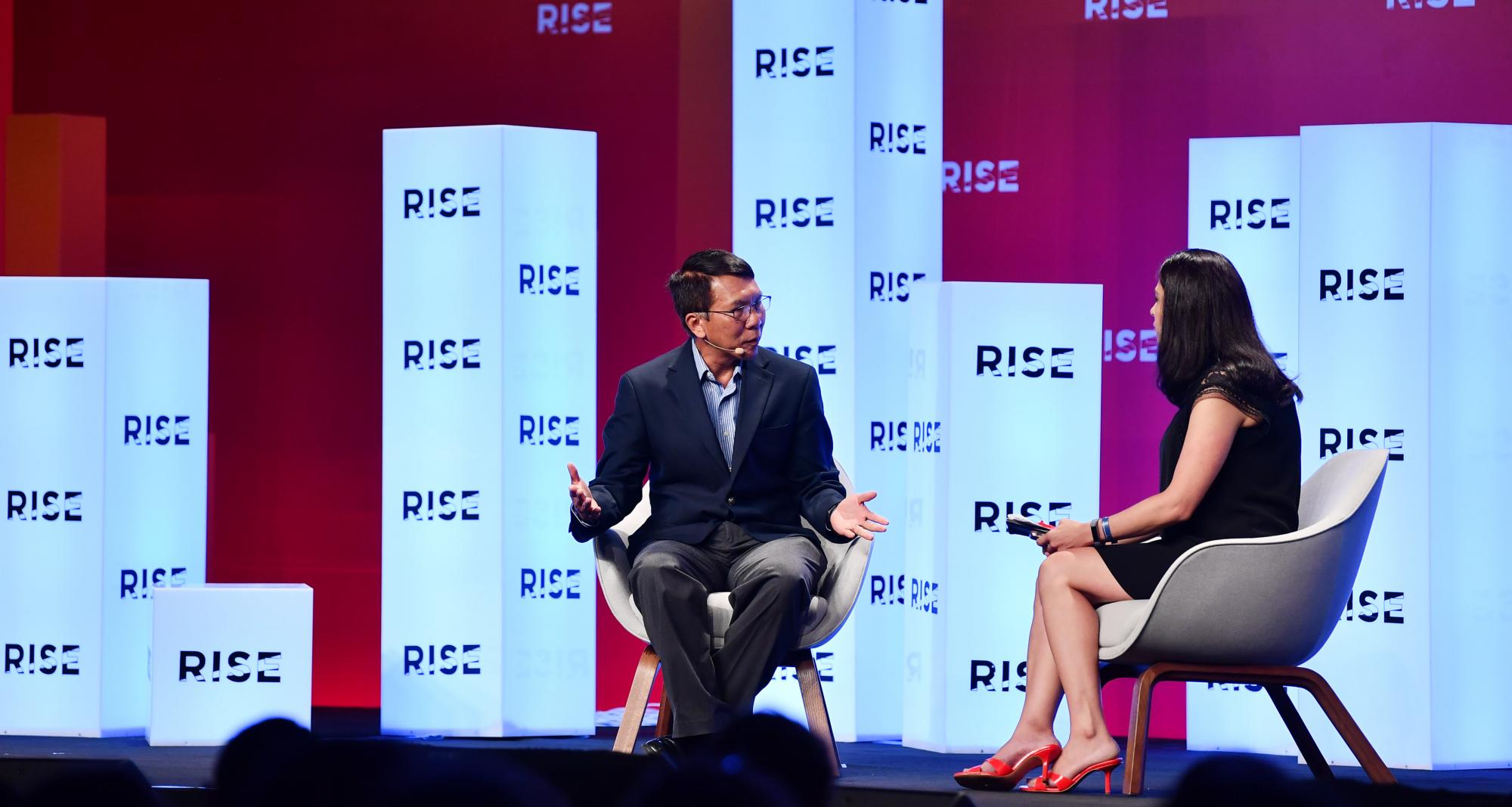
HONG KONG , Hong Kong – 9 July 2019; Thuan Pham, CTO, Uber, left, with Shelly Banjo, Asia Tech Reporter, Bloomberg, on Centre Stage during day one of RISE 2019 at the Hong Kong Convention and Exhibition Centre in Hong Kong. (Photo By Stephen McCarthy/Sportsfile via Getty Images)

Uber’s relationship with its competition is very tangled. It owns stakes in Didi and Grab and its M&A activity included buying Careem in the Middle East for $3.1 billion. Didi, meanwhile, spent $1 billion to acquire Brazil’s 99 to kickstart its Latin America business — Uber is said to have bid for 99 unsuccessfully. Didi is also a prolific investor and it owns stakes in Ola, Grab, Careem and Bolt, each of which competes with Uber… which counts Didi as a shareholder.

An added wrinkle to the global rivalry is that investors such as SoftBank, its Vision Fund and Coatue own stakes in multiple ride-hailing services.

Despite a trio of global retreats which suggest that Uber’s one-size-fits-all approach to international markets struggles against localized plays, Pham maintained that Uber’s approach is still to “build globally.”

That may be up for debate, but those retreats do give the company interesting options for the future. Already, Uber has made billions on paper from the stakes it owns in markets where it exited. The big question is whether, in the long term, it’ll cash out of those deals and realized profits or look at M&A opportunities to re-enter those regions. It’s certainly a unique situation.

09 Jul 2019

Amazon warehouse workers in Minnesota plan to strike on Prime Day over labor practices

Amazon warehouse workers in Minnesota are planning to strike during Prime Day on July 15, one of the company’s biggest sales events. Bloomberg reports that about 100 employees are expected to walk out for a total of six hours to demand changes in labor practices, including converting more temporary workers to employees and relaxing productivity quotas that they say create unsafe working conditions.

Striking workers at Amazon’s warehouse in Shakopee, Minnesota will be joined by several engineers in a show of solidarity. The activism is being led by the Awood Center, a workers’ rights advocacy group, and backed by the Service Employees International Union, the Teamsters and the Minnesota chapter of the Council on American-Islamic Relations.

In a statement to Bloomberg, Amazon claimed that it “offers already what this outside organization is asking for,” including hourly rates from $16.25 to $20.80 with benefits. It also said that “on average” 90 percent of workers at the Shakopee warehouse are full-time Amazon employees and it provides coaching for people who are not reaching their productivity quotas.

Amazon announced last October that it was raising minimum wage for all workers to $15 an hour, but many workers said that increase was not enough, especially since it was also getting rid of incentive pay and restricted stock unit grants (the company claimed that its new wage hike compensated for the new wage structure).

There are more than 100 Amazon warehouses in the United States and the walkout will probably not affect logistics on Prime Day, but it is notable as the latest example of activism against the company’s labor practices, which are also under scrutiny from lawmakers. Democratic candidates Bernie Sanders and Elizabeth Warren have made Amazon’s practices a key part of their platforms. For example, Sanders introduced legislation aimed at forcing Amazon, Walmart and other large companies to pay higher wages, while Amazon is one of the tech companies Warren wants to break up.

According to the Bloomberg report, stronger unions in Europe mean Amazon employees there often stage walkouts on important sales days like Prime Day and Black Friday, but this is the first time American employees have walked out during a major sales events. The Minnesota strike follows other activism by Amazon warehouse workers in Minnesota, including a three-hour strike in March for better working conditions and calls last year for more prayer time and reduced workloads during fasting for Ramadan led by East African Muslim immigrants.

09 Jul 2019

Volkswagen and Autodesk turned a vintage Microbus into a tech design showcase

Volkswagen and Autodesk teamed up to celebrate the 20th anniversary of one of the automaker’s biggest R&D facilities with an iconic vintage VW Microbus that looks retro on the outside but packs a ton of tech on the inside, including an electric powertrain and significant weight savings afforded through use of ‘generative design.’

That’s the design practice in which designers use software to autonomously create (or ‘generate,’ get it?) designs based on input of their desired performance requirements, the materials they have available, or what they’re using in terms of manufacturing.

In this case, one of the key requirements for this retrofit was saving space and weight to make the Microbus more energy efficient. That’s what led to things like the almost organic-looking wheel design, which offer 18 percent weight savings vs. standard wheels. Similarly, the steering wheel, rear-view side mirror mounts and back bench supports sport similar, root-structure like looks that it was grown more than manufactured.

[gallery ids="1853239,1853238,1853237,1853236"]

In addition to light weight, strength and ease of construction, designers on the project say they hope that these results of generative design generally invite touch more often from users of the vehicle, which is not typically a result of utilitarian support structure design for your average car.

Engineers and designers from both Autodesk (which has also done generative design collaborations with GM and NASA JPL previously) and Volkswagen’s Innovation and Engineering Center California worked together on this project, but it’s just a show car so don’t expect to be able to buy any tree vans anytime soon.

09 Jul 2019

HQ Trivia has paid out $6M, but winners complain of delays

HQ Trivia’s troubles continue after a failed mutiny to oust the CEO, a 92% decline in downloads since versus a year ago, and layoffs of 20% of its staff last week. Users continue to complain about delays for payouts of their prizes from the live mobile trivia game, and about being booted from the game for no reason while on the final question.

Notably, Jeopardy winner Alex Jacob claims he hasn’t been paid the $20,000 he won on HQ Trivia on June 10th. This could shake players faith in HQ and erode their incentive to compete.

An HQ Trivia representative tells TechCrunch that the game has paid out $6.25 million to date and that 99% of players have been eligible to cash out within 48 hours of winning, but some winners may have to wait up to 90 days for it to ensure they didn’t break the rules to win. Given Jacob’s large jackpot, it’s possible the delay could be due to the company investigating to ensure he won fairly, though he’s clearly skilled at trivia given he won Jeopardy’s Tournament Of Champions in 2015. Jacob did not respond to requests for interview.

“We strive to make a game that is fair and fun for all players. As such, we have a rigorous process of reviewing winners for eligibility to receive cash prizes. Infrequently, we disqualify players for violating HQ‘s Terms of Service and Contest Rules” HQ Trivia’s press alias anonymously reponded to our request for comment. “It may take some eligible winners up to 90 days to receive cash prizes, however 99% of players have been able to cash out within 48 hours of winning a game and we have paid out a total of $6,252,634.58 USD to winners since launch.”

It seems that HQ’s internal problems are now metastasizing into public issues. Its team being short-staffed and distracted by weak morale could lengthen payout delays, which make players worry if they’ll ever get their cash. When they share those sentiments to social media, it could discourage others from playing. That, combined with concerns that bots and cheaters are winning the games, splitting the jackpots into tiny fractions so legitimate winners get less, has hurt the perception of HQ as a game where the smartest can win big.

Back in April, TechCrunch reported that 20 of HQ’s 35 staffers were preparing a petition to the board to remove CEO and co-founder Rus Yusupov for mismanagement. Yusupov caught wind of the plot and fired two of the leaders of the movement. However, HQ’s board decided it would bring in a new CEO. Board member and Tinder CEO Elie Seidman told TechCrunch that Yusupov had accepted he would be replaced by someone with the ability fire him and that a CEO search was ongoing. The startup’s lead investor Lightspeed has pledged to provide 18 months of funding once a new CEO was hired.

However, multiple sources tell TechCrunch that a new CEO has yet to be installed. One source tells me that management had promised a new CEO by the beginning of August, but that Yusupov had stalled the process seemingly to remain in power. HQ Trivia, Yusupov, and Seidman did not respond for requests for comment regarding the CEO search.

When asked about morale at the company, a source familiar with HQ’s internal situation told me “It’s terrible.” Yusupov is said to continue to be tough to work with, making decisions without full buy-in from the rest of the company. A substantial portion of the team was allegedly unaware of plans to launch a $9.99 subscription tier for HQ’s second game HQ Words until the company tweeted out the announcement.

Hopefully HQ Trivia can find a new captain to steer this ship back into smoother waters. The game has hundreds of thousands of players and many more with fond memories of competing. There’s still hope if it can evolve the product to give new users a taste of gameplay without waiting for the next scheduled match, find new revenue in expanded brand partnerships, fight off the bots and cheaters, and get everyone paid promptly. Perhaps there’s room for television tie-ins to bring HQ to a wider audience.

But before the startup can keep quizzing the world, HQ Trivia must endure its internal tests of resolve and find a champ to lead it.