Year: 2019

27 Nov 2019

This debut venture firm, backed by an Argentine conglomerate, is investing $60 million in far-flung U.S. startups

Nico Berardi considers himself to be a citizen of the world, with a penchant for travel and a wide range of interests. Unlike many other VCs, who’ve increasingly specialized their mandates as the market has grown more crowded, Berardi is nearly as wide-ranging in his approach to venture capital, too.

Somewhat counterintuitively, it’s paying off. At least, Berardi’s venture firm, Animo Ventures, has been investing a $60 million debut vehicle since closing it in July of last year.

It’s an impressive, surprising, amount for someone raising a fund for the first time, but then, Berardi’s trajectory into the world of venture capital hasn’t been completely straightforward, either. First, Berardi grew up in Argentina and started his professional life at a community-focused nonprofit Techo, a kind of Habitat for Humanity focused on Latin America. He was so good at his development job, in fact, that he was moved to Miami as the CEO of Techo’s U.S operations.

It was there, over his six year career with the organization, that he was first introduced to the world of investing. Specifically, encouraged by several board members who were angel investors — and aided by some backing from the Knight Foundation — Berardi left in 2014 to launch a still-active angel investor group called Miami Angels that funnels around $3.5 million into roughly 10 local companies each year. In quick succession, he then applied to and was accepted into the tuition-based Kauffman Fellows Program, fell in love with a medical student in Boston, and headed to Harvard Business School to be closer to her, spending his summers with the Boston (and San Francisco-based) early-stage firm Resolute Ventures.

He imagined he’s land in San Francisco with Resolute afterward, he says, but when that student — now his wife — wound up landing a job back in Miami, he headed there instead and decided to launch his own venture firm. Enter Animo, a Latin word that means with intention or purpose and also, notes Bernardi, “sounds international.”

The latter matters because while Berardi is the sole general partner of the firm, he’s running it with two colleagues, neither of whom lives in the U.S. One of these is partner Antonio Osio, a native Mexican who was running his own firm, Capital Invent, when he first met Berardi through Kauffman Fellows. (“I poached him,” says Berardi.) They also have an operations partner in Caro Acevedo, who worked with Berardi as his COO at Techo and who still lives in Argentina.

As for the money, Berardi says it “mostly comes from Latin America and Europe,” including from anchor investor Techint. It’s a 60,000-person Argentine conglomerate that owns steel, construction, oil, gas, and healthcare businesses around the world and whose CEO, Paulo Rocco, sees Animo as a way to put the company’s resources into new materials sciences and manufacturing technology and machine learning startups, says Berardi.

“We want to make a dent in the universe, and there aren’t a lot of Latinx investors around and we want to carry that flag,” he offers.

To date, Animo has announced 11 deals, all in the U.S., including six investments in New York and six others in other places, including Scottsdale, Az.; Toronto, Ontario; Miami; and Richmond, Va.

Notably, Animo does not have plans to invest in Latin American companies, though it has backed a number of Latin American founders in the U.S. “I think every investor has their own set of biases,” says Berardi. “Our diversity numbers point in that way, but it hasn’t been a conscious effort. That’s just who we are.” He adds a much bigger focus for the firm is using its connections in “tier one ecosystems” like San Francisco and New York to “help [founders] outside the bubble enter it.”

Berardi does say there are a few things Animo won’t consider. “We stay away from FDA-regulated stuff because we don’t understand it well enough and therefore can’t be useful.” Mostly, however, he’s open to anyone and everyone who appreciates hard work, he suggests. “We’re younger, we’re hungry. We work 100-hour weeks and travel like crazy people.”

To underscore his point, Berardi tells a story about Intello, a SaaS operations platform that helps companies manage their SaaS spend, usage and compliance data. The startup had rented a booth at a conference organized by Okta, the publicly traded identity and access management company. “They didn’t have enough people to man the booth,” says Berardi, “and I was in town, so I was like, ‘I’ll man the booth with you in a cloud suit.’ They thought I was joking and I made an idiot of myself, but it drew a lot of people to the booth.”

Pictured above from left to right, Animo founders Nico Berardi, Caro Acevedo, and Antonio Osio.

27 Nov 2019

You can take my Dad’s tweets over my dead body

Editor’s note: Drew is a geek who first worked at AOL when he was 16 years old and went on to become a senior writer at TechCrunch. He is now the VP of Communications for venture equity fund Scaleworks.

There are a few ways that people use Twitter, but for the most part the ones who have pushed the social platform into the national lexicon are regular users who like to communicate with each other using the thing. They’re the ones who use it a lot. They’re the ones who make Twitter go.

Now, mind you, I’m an extreme case. I share a lot. I’ve shared my cancer diagnoses, my stem cell treatment, new jobs, my wedding. And the loss of my father Barry.

Today, Twitter announced that it will reclaim dormant accounts. That is, if you haven’t logged into yours for a long time, it is considered inactive and will be included in the reclamation process.

At first I thought that was pretty cool. There are a ton of accounts that get squatted on, forcing new users to use crappy AOL-like names, such as Joe583822. No fun at all. And these accounts aren’t even in use! As in not active.

No big deal.

But then I saw this:

My heart sank. And I cried. You see, I didn’t think about this. It is a big deal.

My father’s Twitter account isn’t active. He passed away over four years ago. My Dad was a casual tweeter at best. He mostly used it because I, well, overused it. And it was charming. Once in a while he’d chime in with a zinger of a tweet and I’d share it humbly with the folks who kindly follow me.

He got a kick out of that, and so did I. I still do. I still read his tweets, and from time to time I still share them with you. It’s my way, odd or not, of remembering him. Keeping his spirit alive. His tweets are timestamped moments that he shared with the world.

And Twitter is sweeping them up like crumpled-up paper and junk in a dustbin.

Surely, my father isn’t the only person who has passed away and left a Twitter account unkept — or, as the company puts it, “inactive.” I can think of a few others. And I get even more upset at the thought of their thoughts disappearing. I might not remember everyone we’ve lost, but not being able to recall something they’ve said or shared in the past is depressing.

When people ask me why I use Twitter so much, it’s mostly because I see the platform as a living organism. It’s not perfect. In fact, it’s awful sometimes. Lately, a lot of times.

During events and during holidays it’s almost as if that tiny little app on my phone has a pulse. And a heart. Because of course it does: It’s full of human beings with feelings and real thoughts. That’s what makes Twitter Twitter.

And just because someone’s pulse no longer beats doesn’t mean their thoughts no longer matter.

I sincerely hope that Twitter didn’t think about this first and reverse course. Perhaps they’ll offer a way to memorialize an account. I don’t have my dad’s login. I can’t “wake up” his account to keep it safe. I am truly sad at the thought of losing some of his quirky nerdy tweets.

Especially this one:

My dad thought I was the only person on the damn site and I never corrected him or schooled him on Twitter. He used it the way he wanted to, and that reminds me of the person he was. If you take that away from me, then what is Twitter anyway?

Facebook allows you to memorialize someone’s page and that’s pretty great. Unfortunately, my father’s page was deactivated and deleted without my having been consulted. By the time I realized it was gone, Facebook told me there was nothing it could do. It was really traumatizing for me and my other family members. So many interactions there, thoughts, smiles. A timeline. No, a time capsule.

Just gone. Like my dad.

Big tech companies are good at a lot of things, but what they seem to lack is collective empathy and heart. When humans use the things you build and you stop treating them like humans, but rather like bits and bytes and revenue dollars, you’ve given your soul away. And maybe it’s just me getting older, but I’ve had about enough of it.

To quote the late great Barry Olanoff:

Think about it, Twitter. Do better. Because every time you make me question your humanity, I’m one step closer to not being that whale of a user that helped get you here in the first place.

26 Nov 2019

Netflix leases New York’s Paris Theatre

Netflix is expanding its theatrical presence by signing a long-term lease for The Paris Theatre, a historic single-screen venue in New York City.

This follows reports that Netflix is also working to buy the Egyptian Theatre in Los Angeles. And while these might seem like odd moves for a streaming company, they may also be necessary iof Netflix wants to continue working with high-profile filmmakers like Martin Scorsese and Noah Baumbach.

After all, although Scorsese’s latest film “The Irishman” and Baumbach’s “Marriage Story” are both playing in theaters, they’re appearing on a limited number of screens.

In the case of “The Irishman,” Netflix reportedly hoped for a bigger rollout but failed to get the big theatrical chains on-board because the company would only wait four weeks (shorter than the traditional window of theatrical exclusivity) before launching the movie online.

Despite its deep pockets, Netflix’s theatrical challenges might dissuade other Scorsese-caliber filmmakers from signing with the service, particularly if it affects the likelihood that “The Irishman” and “Marriage Story” (and last year’s “Roma,” which won three Oscars but lost out for Best Picture) will be able to win major awards.

So by buying or leasing theaters of its own, Netflix can ensure that its films will get the cachet of a big-screen release. It can also host glitzy premieres and other events.

As for the Paris Theatre, it opened in 1948, and reopened earlier this month to screen “Marriage Story.” (By the way: I highly recommend seeing “Marriage Story” on the big screen — I’ve already done so twice.)

“After 71 years, the Paris Theatre has an enduring legacy, and remains the destination for a one-of-a kind movie-going experience,” said Chief Content Officer Ted Sarandos in a statement. “We are incredibly proud to preserve this historic New York institution so it can continue to be a cinematic home for film lovers.”

26 Nov 2019

Report alleges Amazon worked with Indiana to downplay warehouse worker’s death and safety concerns

It’s strange that no matter how hard Amazon denies that its warehouses are terrible, dangerous places to work, the reports to that effect just keep coming out. Not only that, but now a whistleblower alleges the company worked with Indiana officials to erase a workplace safety violation that cost a man his life.

Reveal News reports the whistleblower’s account of Phillip Lee Terry’s death in 2017 and the subsequent efforts to shift blame from Amazon to the deceased. The full report is worth reading; it implicates Amazon, the head of Indiana’s Occupational Safety and Health Administration (OSHA), and even the governor.

The short version is this: Terry died on the job in a forklift accident. An investigation conducted by the whistleblower, John Stallone, found that Amazon had failed to provide adequate safety training. Citations were issued and $28,000 in fines proposed. But Stallone’s boss, IOSHA’s director, directly contacted Amazon and discussed how they might reduce those fines and place the blame on Terry.

Stallone knows this because he was in the room and recorded the conversation, which Reveal News listened to. Amazon told TechCrunch that it “worked directly with [IOSHA] during the inspection and in follow-up discussions to provide Mr. Terry’s training records.” When I asked directly whether the company disputed Stallone’s account of the call, the representative suggested I contact the Indiana state government instead.

A few days later, Stallone said, he was called into the office of Indiana’s Labor Commissioner, Rick Ruble, and found the governor, Eric Holcomb, there as well. He was told to stop pursuing the case, according to Stallone’s account, because of — you guessed it — Indiana’s aspirations to host Amazon’s HQ2.

Stallone soon quit, and a year later, the fines were reversed and all four safety violations were struck from the record. Instead it is listed as an “unpreventable employee misconduct,” meaning Terry was legally responsible for his own death — counter to the conclusions of the investigation, which had Terry’s coworker on the record stating Amazon had failed to provide proper training.

Governor Holcomb retaliated with a statement denying any involvement with a Labor Department case, denying he ever had the meeting Stallone describes, called the allegations “fabricated” and the report “irresponsible and deliberately misleading… heinous lies.”

It’s hard to imagine why Stallone would fabricate such a meeting, when other efforts by state officials to quash these violations and fines are on record. It has not yet been shown beyond the two competing claims whether the meeting indeed took place, but presumably it was informal anyway, which provides the governor plausible deniability.

This would all be harder to believe if we hadn’t seen the frenzy of servility Amazon’s HQ2 announcement provoked nationwide. Or if the allegations of poor working conditions at Amazon warehouses hadn’t continued to pile up in the meantime. Reveal’s investigations related to the whistleblower’s case show an alarmingly high number of injuries at Amazon’s facilities.

In a statement, Amazon said that it takes “an aggressive stance on recording injuries no matter how big or small,” leading to higher numbers than other, similar work environments. As usual, workers at the warehouses dispute Amazon’s account, recalling systematic efforts to under-report and increases in injuries coming from automation.

One thing is certain: Ordering from Amazon during the holidays adds pressure to a warehouse system that by many accounts is already operating at superhuman levels — with very human costs. Perhaps shopping local is a better move this year.

26 Nov 2019

Beer-loving commerce startup TapRm raises $1.5M

Jason Sherman, founder and CEO of TapRm (pronounced “taproom”), says it’s time for beer-lovers to do more of their shopping online.

It’s an industry that Sherman knows well, having worked as an attorney at Anheuser Busch and at the alcohol giant’s ZX Ventures incubator. He said it was through the job that he began wondering why only 0.2% of beer purchases take place online.

The answer, he suggested, is fundamentally regulatory, with different rules in different states, but each of them adhering to some form of the three-tier system —where alcohol is produced by one group of businesses, distributed by another group and finally sold to consumers by a third. That means a brewery could get into legal trouble for selling its beer online.

Sherman said his startup TapRm — which has raised $1.5 million in funding — accommodates these rules by “finding unique licenses that have existed and [bringing] certain licenses together,” ultimately allowing it to find “legal ways to combine those tiers.”

In other words, TapRm is able to serve as both distributor and retailer. So it works with breweries to sell their beer to more than 600 bars, restaurants and supermarkets, but it also allows them to sell their beer directly to consumers, via branded websites. In fact, Sherman said TapRm rewards breweries for prioritizing online sales.

Jason Sherman

Jason Sherman

“We give back a portion of all sales for everything they sell online, so they have an incentive to push traffic to their … site,” he said. “If you sell through TapRm, you get back $2 to $8 on every case, depending on your volume.”

Sherman acknowledged that as a consumer, you may be perfectly happy to “go down the road to get your Corona or your Heineken any day of the week” — and if so, there may not be any reason for you to buy from TapRm. But if you’re a fan of a brewery that you can’t find in stores, or if you’re you’re simply “tired of having to rely on what’s on the shelf” and you want to try something new, then online purchases could be your best bet.

That focus on enabling craft breweries to sell to consumers, rather than simply serving as a delivery system for brick-and-mortar liquor stores, is also what distinguishes TapRm from startups like Drizly.

In addition, the company operates an online marketplace of its own and provides beer recommendations across its different online storefronts. When I wondered whether any customers were concerned about the startup promoting competing breweries, Sherman said he hasn’t gotten any complaints, because breweries see the TapRm marketplace as “another retail outlet.”

He added, “We would never up-sell and cross-sell completely competitive products, ever.”

The startup currently delivers throughout New York state, with two-hour delivery in Brooklyn. Sherman said he remains focused on “building our footprint in New York City,” but he also plans to launch in three additional cities next year.

The funding was led by The Broe Group, with participation from VU Venture Partners, Branded Strategic Hospitality and others.

26 Nov 2019

Use agile budgeting to manage your cash

How should a growth company manage its budget? Does an annual budget approval process even make sense in a fast-moving firm?

My friends who are executives at large, established companies complain about how fixed budgets lead to gamesmanship. An executive who wastefully spends down their travel and expense budget at year-end to justify an equal or larger budget next year may also fail to take advantage of a great marketing opportunity with a December 31 deadline — because they spent their budget on T&E.

However, in a startup, the most common scenario is that projections get missed. Paul Bianco, CEO of Graphite Financial*, says “entrepreneurs are characteristically optimistic by nature and often present their board best-case-scenario budgets and projections. Inevitably, things cost more and take longer than expected. I encourage entrepreneurs to correct course with a re-forecast early and often. The worst thing you can do is dig in your heels and hope things will miraculously get better. Being transparent enough to say ‘look, we expected X to happen, but now we expect Y to happen, this is why, and this is what we’re doing about it’ is an admirable trait.”  

Here’s the solution I have recommended to some of my portfolio companies: “agile budgeting,” i.e., monitoring a few key variables, while giving managers significant flexibility. Entrepreneur Jeff Magnusson provides a sample agile budgeting workbook. Sean Colrock, Director of Client Partnerships at Wiss & Company, suggests at a minimum you track: cash on hand; fume date, and burn rate. The next most important set of metrics are sales by category; working capital (cash and other current assets, less current liabilities); EBITA and gross margin. Ben Horowitz writes that you can ruin your company with a bad budgeting process and recommends a similar approach.

Regardless of whether you take a traditional or agile budgeting approach, Robert A. Howell, Professor of Business Administration at Tuck, writes that you should turn your budgeting process upside down by “reformat[ting] planning and budgeting templates to highlight cash rather than accounting net income.”

This agile approach is not restricted to small startups. In Stop Budgeting, Start Improving, Brad Power writes:

26 Nov 2019

Use agile budgeting to manage your cash

How should a growth company manage its budget? Does an annual budget approval process even make sense in a fast-moving firm?

My friends who are executives at large, established companies complain about how fixed budgets lead to gamesmanship. An executive who wastefully spends down their travel and expense budget at year-end to justify an equal or larger budget next year may also fail to take advantage of a great marketing opportunity with a December 31 deadline — because they spent their budget on T&E.

However, in a startup, the most common scenario is that projections get missed. Paul Bianco, CEO of Graphite Financial*, says “entrepreneurs are characteristically optimistic by nature and often present their board best-case-scenario budgets and projections. Inevitably, things cost more and take longer than expected. I encourage entrepreneurs to correct course with a re-forecast early and often. The worst thing you can do is dig in your heels and hope things will miraculously get better. Being transparent enough to say ‘look, we expected X to happen, but now we expect Y to happen, this is why, and this is what we’re doing about it’ is an admirable trait.”  

Here’s the solution I have recommended to some of my portfolio companies: “agile budgeting,” i.e., monitoring a few key variables, while giving managers significant flexibility. Entrepreneur Jeff Magnusson provides a sample agile budgeting workbook. Sean Colrock, Director of Client Partnerships at Wiss & Company, suggests at a minimum you track: cash on hand; fume date, and burn rate. The next most important set of metrics are sales by category; working capital (cash and other current assets, less current liabilities); EBITA and gross margin. Ben Horowitz writes that you can ruin your company with a bad budgeting process and recommends a similar approach.

Regardless of whether you take a traditional or agile budgeting approach, Robert A. Howell, Professor of Business Administration at Tuck, writes that you should turn your budgeting process upside down by “reformat[ting] planning and budgeting templates to highlight cash rather than accounting net income.”

This agile approach is not restricted to small startups. In Stop Budgeting, Start Improving, Brad Power writes:

26 Nov 2019

Gift Guide: STEM toys for your builders-in-training

Welcome to TechCrunch’s 2019 Holiday Gift Guide! Need help with gift ideas? We’re here to help! We’ll be rolling out gift guides from now through the end of December, so check back regularly.

We’ve refreshed our annual STEM toy gift guide with the latest wares clamoring to entice and inspire kids with coding tricks and electronic wizardry. Yes folks! Another year, another clutch of shiny gizmos making grand claims of computing smarts in child-friendly packaging.

But lean in to this market and you’ll find a number of STEM toy makers have winked out of existence since this time last year, or else been folded into others’ empires. Such as littleBits selling to Sphero this fall, or Root Robotics being picked up by robot vac giant iRobot in June.

Some of the remaining indie players are leaning heavily on IP licensing deals from big brands (e.g Kano’s co-branded Disney kit) as a tactic to grab attention. Others are concentrating their effort on selling direct to schools (e.g. Sphero, after a pivot last year — now with an expanded educational toolbox having picked up littleBits). Ozobot is another that’s been dialing up its focus on classrooms. Though, as we’ve reported, selling complex STEM learning devices to schools isn’t always easy. More consolidation and exits seem highly likely.

It’s perhaps also a sign of tricky times in the kid-tech/edtech category that Kano, one of the earliest of the alternative STEM computer makers, has jumped into bed with tech giant Microsoft too — selling its first Windows powered PC this year.

It’s clear that some of the experimental energy which fired up the category a few years ago has faded, as sales and outcomes haven’t gone the distance or lived up to the hype. Kids are fickle customers, as parents know. The market has responded by shaking out a bit. It also means some of what’s offered is starting to feel a bit formulaic and same-y. (And, well, Disney.)

Still, kids of all ages remain roundly spoilt for techie stuff to interact with. Not least because it’s never been easier for toymakers to bolt-on a bit of drag-and-drop in-app coding to give their plaything a STEM dimension. Mainstream giants like LEGO are also staying the course to try and grab a bigger chunk of the action. Generally you’ll find products with more polish than in years past, if not always as original and ambitious.

It’s also fair to say that promises of clever gadgets to power a kids’ coding revolution are looking rather less pristine than they used to after all the unboxing and, er, abandoning. Reality bytes, you could say.

Affordable smartphones and tablets maintain their competitive squeeze at the top of the category. They can be a more versatile option than most STEM gizmos, though rising concern about children’s screen time may push parents to seek out physical and tactile alternatives. Meanwhile, a mobile device is typically required to bring a STEM toy to life — as most (though not all) are essentially Bluetooth add-ons.

All that said there are still original and inspiring gifts to be had — and it’s good to see more focus on teaching creative skills, not only tech and engineering. Of course it’s always a case of horses for courses in this category. If your child won’t touch anything unless it’s wearing a Frozen princess dress/Star Wars cloak then you’ll be resigned to shelling out for the usual merch. May the tech force be with you as you search!


Adafruit
1161 02

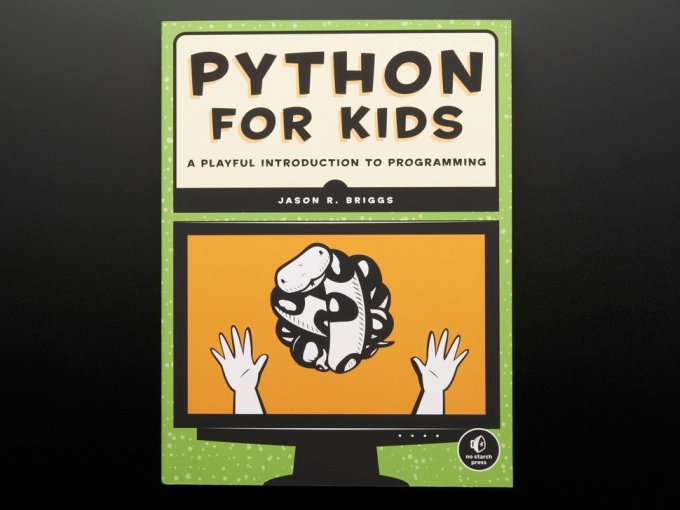
Product: Python for Kids
Price: $35
Age: 10+

Description: Maker-focused and electronics hobbyist brand Adafruit sells all sorts of electronics goodies. It also has a dedicated sub-section for Young Engineers where it offers a range of own brand kits and third party wares for kids of all ages with the aim of sparking an interest in computing and electronics. Such as this Python for Kids book which takes a child-friendly approaching to seriously learning the Python programming language — so instead of a dull grey textbook you get text interspersed with cartoony illustrations, fun examples, puzzles and plenty of color. The book is intended for kids aged 10+.

For even younger children Adafruit is ranging this Snap Circuits Jr kit: A tool-free box for kids aged 8+ which gives them more than 100 projects to build from snap together modules.

For older children comfortable with a little soldering, there’s this Solar Powered SKULL Blinky LED Pendant, devised by Lumen Electronic Jewellery — for a little creative, battery-less maker bling.

Adafruit also ranges kits from UK startup, Tech Will Save Us — such as this DIY Gamer Kit for budding techies. The first challenge is to put all its pieces together (soldering required). If done right your child will have an Arduino-based handheld games console with a matrix screen perfect for playing classics like Snake and Tetris.

That’s just a taster. Adafruit’s marketplace site offers plenty more ideas and kits for little makers.

Brilliant

Brilliant product screenshot all devices


Product: Gift subscription courses
Price: From $25 for one month
Age: 13+

Description: If you don’t want to gift a learning toy, Brilliant.org has you covered with gift subscriptions for its STEM-focused digital courses (options include one month, or a full year). The philosophy behind its courses is to teach core concepts in math, science, and engineering through fun but challenging puzzles and problem solving — with the visual sweetener of surreal cartoony illustrations to keep you inspired.

The courses aren’t exclusively designed for children so may not suit every teen. But for children already firmly engaged with math and science there’s plenty of mind-tickling stuff here to push logic and curiosity further.

GoldieBlox

goldieblox cloud light

Product: DIY Floating Cloud Light
Price: $30
Age: 8+

Description: Slime-wrangling, glitter-bespeckled tween YouTuber (stuff) hackers, GoldieBlox, have put a crafty twist on STEM maker kits this year. The children’s multimedia company has built up a maker following online for its DIY project videos. You can see them assemble this DIY cloud light in this video — and gift it to your own budding hardware hacker in handy kit form. The box includes all the necessary parts to put the lamp together, plus a couple of cards offering STEM facts. It’s pretty light touch learning, though. The main focus is clearly on fun and practical making. Glue and scissors at the ready!

Kano
Kano Disney Frozen II Coding Kit

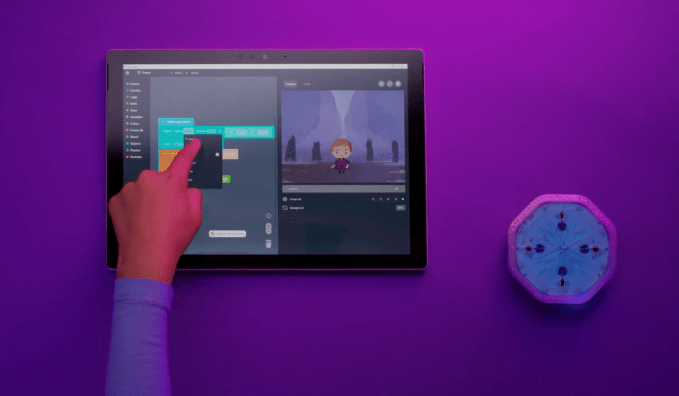
Product: Disney Frozen II Coding Kit
Price: $80
Age: 6+

Description: UK startup Kano was one of the first in the modern wave of STEM device builders. It began with the idea of offering kids a build-it-yourself computer to learn coding, before expanding into brightly colored DIY IoT gizmos. More recently it’s got into co-branded e-products. First a Harry Potter Coding Kit — offering a motion-sensitive wand as the interface between real-world gestures and on-screen code. Now it’s thrown its lot in with Disney, inking a two-year IP licensing deal. So enter the Disney Frozen II Coding Kit, new for 2019, which packages a build-it-yourself gesture-sensor with a Disney-flavored block-based coding bundle accessed via the companion app. Kids use hand gestures to manipulate cartoon versions of their favorite characters and Disney landscapes on screen. So the e-product requires a compatible tablet or computer to function.

For parents of youngsters who prefer Disney’s other mega franchise, Star Wars, to Frozen‘s singing princesses and snowmen you only need point your peepers at Kano’s The Force Coding Kit instead, which offers much the same experience — but in a sci-fi wrapper. 

Product: Kano PC

kano pc

Price: $300
Age: K-12 (from 4+ to 19)

Description: Kano has more learn-to-code machinery to sell you this year. It’s latest DIY computer — the Kano PC — is a fully fledged Windows 10 computer. This is a radical departure from its alternative origins building atop the single-board Raspberry Pi. Now your Kano dollars get you an Intel Atom Quad core chipset running at 1.44 GHz powering a plug-and-play hardware bundle comprised of a touchscreen unit plus keyboard case. If the Microsoft Surface had a kid this would basically be it.

At this point, and at this price-point, you might be wondering why not just buy an actual Windows PC? To try to answer that Kano is touting “exclusive apps” of its own design that come pre-loaded on the device — offering guided learning in the areas of coding skills, programmable graphics and for understanding the inner workings of computers. The company’s approach to teaching coding runs the gamut from block-based drag-and-drop interfaces through to typed code, with projects offered in Python, Javascript and Terminal commands. Hence the Kano PC is targeted at a very broad age range. Though, as it’s also a Windows PC, you might find your kids just using it to play Minecraft instead…  

KinderLab
KinderLab Kibo

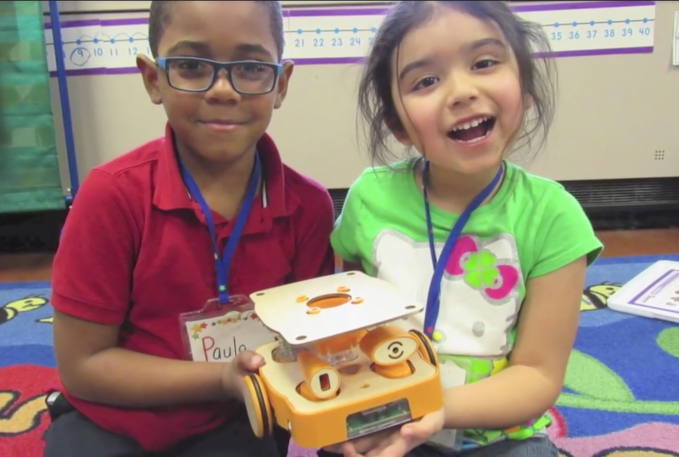
Product: KIBO robot kits
Price: From $200
Age: 4-7

Description: KinderLab has been making screen-free programmable STEAM (that ‘A’ is for arts) robotics kits since 2014 but the company is now making a wider push to get individual parents on board by selling its kits on Amazon. How does Kibo work? Kids play and learn by plugging a variety of proprietary sensors and outputs into ports on the wheeled bot. Such as motion and light sensors. Another add-on, which company calls an “art platform”, lets kids embellish and customize the robot by designing paper hats to stick on it to dress it in a new context or character. The coding element comes in via a built in barcode scanner that’s used to read instructions off of physical wooden code blocks. This means kids can ‘program’ the robot without using any screens at all. 

KinderLab’s approach to teaching foundational engineering design concepts began life as a publicly funded research project. The company says Kibo draws on 20 years of learning science (as well as several years of active prototype testing in classrooms) to firm up its educational value. The academic backstory means there’s a wealth of curriculum-aligned content accompanying Kibo. This definitely feels like one of the more substantial and thoughtful STEM products on the market. It’s also great to see a product that leaves room for kids to introduce their own ideas.

Learning Resources

Learning Resources Coding Critters

Product: Coding Critters
Price: $40
Age: 4-10

Description: Learning Resources has been teaching young kids to grok the basics of sequential coding since late 2017, with its Botley programmable robot. New in its range of STEM toys for 2019 are Coding Critters: Remote control programmable pets targeted at young preschoolers. The entirely screen-free approach to teaching basic STEM concepts combines button-based controls on the battery-powered animal characters, themed code cards for reference and a storybook for parents to play a role in the narrative.

LEGO

lego boost star wars

Product: Star Wars Boost Droid Commander set
Price: $200
Age: 8+

Another one for Star Wars fans: This Lego Boost kit gives kids a bunch of Lego bricks and robot parts to put together three classic droids from the Disney-owned movie franchise. Boost being Lego’s more elementary robotics kit offering (vs the veteran Mindstorms platform). Once the Bluetooth-controlled droids have been assembled the companion app lets kids control and program them to carry out a series of missions, using a simple, block-based drag-and-drop coding interface.

Star Wars sound effects and music are included. But you’ll need to supply your own tablet to run the software. Or, well, you could just buy your kids a box of basic Lego bricks and let their imagination go wild.

Makeblock

Makeblock mTiny

Product: mTiny

Price: $180
Age: 4+
Description:
Shenzhen-based STEM kit maker, Makeblock, has unboxed a new cutesy learning robot for toddlers this year. Given the preschooler target there’s no screens on mTiny (unless you count the bot’s emotive, shape-shifting eyes). Instead the package includes coding cards, themed map pieces and a storybook for controlling and interacting with the sensor-laden bot. The company says the product is designed to foster logical thinking via interactive play. And its marketing materials make grand claims about exposing kids to a range of cross-curricular concepts, from math to art, as well as coding logic.

To control mTiny, kids use the companion tap pen. Either as a joystick, or to execute code-based programming — by tapping it on the code cards. The sequence of these cards determines its movements and actions. The bot can also read and respond to scenery markings on the themed floor tiles.

Mand Labs

Mand Labs

Produce: KIT-1
Price: $150
Age: 8+

Description: Budding engineers won’t be short of experiments if gifted this electronics breadboarding project kit from Mand Labs. Kit-1 contains 165 electronics components — the real-deal; not adapted for child’s play — plus tools and reference books for carrying out 54+ projects and experiments. Step-by-step projects like building an automatic night lamp, a security alarm or temperature sensor. The kit is intended as an entry into electronics so kids build circuits on a breadboard, rather than messing around with soldering. The kit is housed in a toolbox-style carry-case so it’s portable enough to take to a friend’s house. The product also comes with nine-hours’ worth of HD learning videos for extended learning support.

Pai Technology

Botzees

Product: Botzees Robotics Kit
Price: $100
Age: 4+
Description: 
Pai Technology‘s range of STEM toys have an augmented reality twist. So as well as physical stuff to play with — block-based robots in this case — there’s a ‘code your own’ virtual adventure element adding a digital dimension. New in its range for this year is the Botzees Robotics Kit. In the box are six sensor-laden programmable robots in press-together block form. They’re controlled via a companion app with a basic, block-based coding interface. The app also offers 30 interactive AR puzzles for blended real-and-virtual world play, which the company says help teach foundational coding concepts like sequencing, looping, and conditional coding. Although tor parents wanting to reduce kids’ screen time the focus on AR probably won’t be welcomed as kids will need to be stuck in front of a tablet to get the most out of Botzees.

Raspberry Pi
Raspberry Pi 4

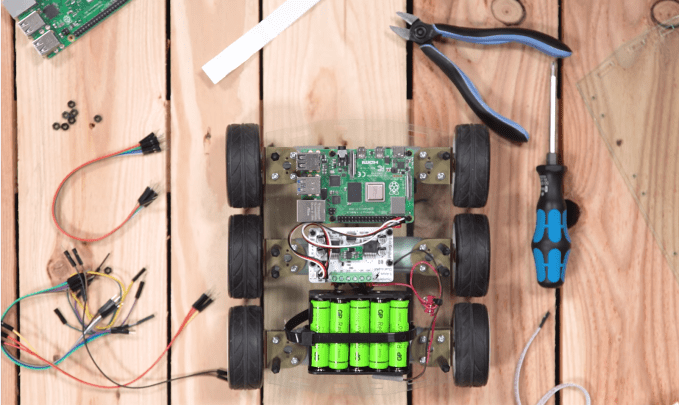
Product: Raspberry Pi 4 Model B
Price: $35
Age: It depends

Description: The latest Raspberry Pi single board computer, the Pi 4, dials up memory, speed and power, packs plenty of ports and boasts onboard wireless networking and Bluetooth. For seasoned makers the possibilities really are endless. But for parents wanting to inspire kids to learn coding the Pi Foundation‘s philosophy may look daunting. It’s not one of lots of hand-holding out of the box. The theory is that hard challenge to required to really learn. That means if you buy Pi as is you’re getting the raw board, an OS to grapple with and an engaged community for learning support. It certainly won’t suit every child — but if you want to challenge a capable young mind that’s already showing a talent for digging into detail and figuring things out the Pi 4 is a low budget, high potential option vs the many more basic (but pricey) plug-and-play devices which have piled into the market since Pi arrived to shake up the microprocessor scene.

Sphero

rvr launchweb 0211

Product: RVR
Price: $250
Age: 5+
Description: 
Sphero is best know for its spherical remote-controlled robots but the company has this year branched out with a crowdsourced rover robot design called RVR. The more traditional four-wheeled design is sensor-packed and touted as an all terrain beast. The RVR can be driven (via app) right out of the box but has been designed for customization, with ports to accommodate third-party hardware — such as Raspberry Pi, Arduino, BBC micro:bit, or Sphero’s own littleBits. So it’s an extensible, hardware hackable, programmable robotics platform. On the software side, the Sphero Edu app offers a choice of coding styles to expand its educational potential — namely: Draw & Drive, Scratch Blocks and JavaScript.

Product: Specdrums 

Specdrums

Price: From $65
Age: 5+

Description: Musical edtech startup Specdrums is another Sphero acquisition. The premise behind its learning product is simple: Tap a color to make a sound. It achieves this with a wearable — a Bluetooth-connected, light-sensing ring (or pair of rings) — linked to its app. So it’s learning to jam, rather than learning to code but with plenty of techie smarts. The Specdrums’ Mix app offers musical loops and curated sound packs; playback and sound production tools; plus the ability to record your own samples. Aka everything a budding musician needs to tap out and mix impromptu beats, while looping in the real world as their musical playground.

Note the standard kit only contains one ring plus a colored playpad; for two rings the price steps up to $100. For the kit to work your child needs access to a smartphone or tablet to run the app and playback the music.

Ubtech

Ubtech

Product: JIMU Robot Mythical Series: FireBot Kit
Price: $130
Age: 8+

Description: Shenzhen-based Ubtech has been in the STEM robotics kit game for a number of years. New for 2019 is this motorized, LED-light-breathing dragon. As with previous kits in its brick-based JIMU series, the first step for the budding techie is to follow instructions and assemble their robot from all the constituent parts. Then the companion app offers a drag-and-drop code-block interface for programming FireBot and bringing its sensing powers to life.


26 Nov 2019

Xerox tells HP it will bring takeover bid directly to shareholders

Xerox fired the latest volley in the Xerox -HP merger letter wars today. Xerox CEO John Visentin wrote to the HP Board that his company planned to take its $33.5 billion offer directly to HP shareholders.

He began his letter with hostile tone befitting a hostile takeover attempt, stating that their refusal to negotiate defied logic. “We have put forth a compelling proposal – one that would allow HP shareholders to both realize immediate cash value and enjoy equal participation in the substantial upside expected to result from a combination. Our offer is neither “highly conditional” nor “uncertain” as you claim,” Visentin wrote in his letter.

He added, “We plan to engage directly with HP shareholders to solicit their support in urging the HP Board to do the right thing and pursue this compelling opportunity.”

The letter was in response to one yesterday from HP in which it turned down Xerox’s latest overture, stating that the deal seemed beyond Xerox’s ability to afford it. It called into question Xerox’s current financial situation, citing Xerox’s own financial reports, and took exception to the way in which Xerox was courting the company.

“It is clear in your aggressive words and actions that Xerox is intent on forcing a potential combination on opportunistic terms and without providing adequate information,” the company wrote.


Visentin fired back in his letter, “While you may not appreciate our “aggressive” tactics, we will not apologize for them. The most efficient way to prove out the scope of this opportunity with certainty is through mutual due diligence, which you continue to refuse, and we are obligated to require.”

He further pulled no punches writing that he believes the deal is good for both companies and good for the shareholders. “The potential benefits of a combination between HP and Xerox are self-evident. Together, we could create an industry leader – with enhanced scale and best-in-class offerings across a complete product portfolio — that will be positioned to invest more in innovation and generate greater returns for shareholders.”

It would seem that the game is now on as Xerox is taking a no-holds barred approach to the situation. The pen is now in HP’s hands as we await the next letter and see how the printing giant intends to respond to the latest missive from Xerox.

26 Nov 2019

Facebook buys the VR studio behind Beat Saber

Virtual reality doesn’t have many hit games yet, but Facebook is buying the studio behind one of the platform’s biggest titles.

Facebook announced today that it will be buying Beat Games, the game studio behind Beat Saber, a rhythm game that’s equal parts Fruit Ninja and Guitar Hero — with light sabers of course.

Terms of the deal weren’t disclosed, but we’re sniffing around for a price tag. The studio will join Oculus Studios but will continue to operate independently at their HQ in Prague.

This is an interesting direction change for Oculus, which has spent much of the past four years refining how it grows the content ecosystem for its virtual reality headsets.

Initially the studio produced some of the content in-house while dumping hundreds of millions of dollars into tons of exclusives from indie studios that were interested in playing around with the VR medium. In the past couple years there’s been a new direction change as the company has funneled more money into fewer high-profile studios, trying to court big titles to the Oculus platform. slowly moving away from in-house VR content production over the past several years, instead opting to back third-party studios building content.

Buying Beat Games and bringing it into the fold of Oculus Studios suggest Facebook may be interested in following the strategies Microsoft and Sony have employed as they’ve bought up small studios and funded new titles. One thing Facebook is claiming they aren’t after is platform exclusivity, saying Beat Games will continue to support the platforms that they are already on.

So, what’s in all of this for Facebook then?

Beat Games was one of the more successful VR game studios out there — they had announced earlier this year that they had sold more than 1 million copies of the game — but part of the reason they were prosperous was because they were so lean. When I profiled the studio last year, they had just 8 employees and had opted out of raising any VC funding.

Meanwhile, as VR’s most popular game, Facebook had a bit riding on their continued success. Facebook highlighted the studio’s success specifically at its its VR developer conference and had included a limited version of the studio’s game for free on its Oculus Quest headsets. Buying the studio means allowing them to expand ambitions without being concerned about profitability.

Beat Games had begun expansion by partnering with musicians to release their songs as levels in the game, partnering with artists like Imagine Dragons and Panic at the Disco to bring paid level packs to Beat Saber. One can imagine that Facebook will have a much easier time making conversations happen with top artists.

One thing that die-hard fans of the game will likely not enjoy is how this acquisition will impact user mods. The studio had introduced tools for users to create their own songs with uploaded audio files and unsurprisingly there’s a good deal of content that’s probably not supposed to be on there. With a small game studio that stuff was more likely to slide, but Facebook has the resources to crack down on it so I’m guessing they’ll have to.

In a blog post, the company acknowledged as much, “We understand and appreciate the value that modding brings to Beat Saber when done so legally and within our policies. We’re going to do our best to preserve the value that mods bring to the Beat Saber player base.”

Exiting to Facebook is one of the few ideal M&A outcomes in mind for investors that are looking to back a consumer VR startup. Beat Games got there without any venture backing. I profiled Beat Games earlier summer, and spoke with co-founder Jaroslav Beck about his desire to keep the team small and his concerns about survival.