Year: 2019

25 Nov 2019

Rocket Lab readies Electron for its first launch with rocket recovery systems on board

Rocket Lab is getting ready to fly its tenth mission, delayed from its first launch window last week and now making its second attempt. Aside from being a milestone 10th mission (dubbed ‘Running Out of Fingers,’ ha), this will be the first time that Rocket Lab includes technology designed to help it eventually recover and reuse elements of its launch vehicle.

After first designing its Electron launch platform as a fully expendable spacecraft, meaning it could only do one way trips to bring cargo to orbit, Rocket Lab announced that it would be moving towards rocket reusability at an event hosted by CEO and founder Peter Beck in August. To make this happen, the company will be developing and testing the tech necessary to recover Electron’s first-stage rocket booster over the course of multiple missions.

To be clear, this mission has the primary goal of delivering a number of small satellites on behalf of paying customers, including microsatellites from Alba Orbital and a Tokyo -based company called ALE that is using microsatellites to simulate particles from meteors. But Rocket Lab will also be testing recovery instrumentation loaddd on board the Electron vehicle, including guidance and navigation systems, as well as telemetry and flight computer hardware. This will be used to gather real-time data about the process of re-entry for Electron’s first stage, and Rocket Lab will also attempt to make use of a reaction control system to control the orientation of the booster as it re-enters.

While this mission will only test those elements of the recovery system, eventually, the goal is to have the Electron first-stage re-enter and deploy a parachute to slow its descent, after which it’ll be intercepted by a helicopter and caught mid-air, with the helicopter effectively towing it to its final drop-off point. It’s a different approach from SpaceX’s powered propulsive landing, but one that’s quite a bit easier from a technical perspective, and mad possible by the lighter weight of the Electron booster, vs. the larger and heavier SpaceX Falcon 9 first stage.

Rocket Lab has completed what’s known as a ‘wet dress rehearsal,’ which is basically a simulated run-up to launch with propellant loaded into the actual rocket, and should be ready to go for later this week, provided conditions are favorable and all other factors remain clear for launch.

You can watch the launch live right here:

25 Nov 2019

Explore hundreds of startups exhibiting at Disrupt Berlin 2019

Seventeen, lieblings. That’s how many days stand between you and Disrupt Berlin 2019, which takes place on 11-12 December. Here’s a pro tip for savvy investors. Use this time to jumpstart your networking strategy and make the most of your two days at Disrupt. How? We have a plan for that.

More on that in a minute, but first an important reminder. If you don’t have a ticket yet, get a move on. The deadline to buy your early-bird pass is 8 November at 11:59 p.m. (CEST). Beat the clock and you can save up to €500.

Alright back to the plan. Hundreds of early-stage startups will exhibit their tech products, services and platforms in Startup Alley. This presents investors with both a huge opportunity and a challenge. The good news? We’ve posted the first batch of Startup Alley exhibitors at Disrupt Berlin. You can explore the list, narrow the possibilities and do your research before you even pack your suitcase.

Don’t forget that Startup Alley is also the place to meet and greet our recently announced TC Top Picks. TechCrunch editors sorted through hundreds of applications and chose up to five exceptional startups to come to Disrupt Berlin that represent the best of each of these categories: AI/Machine Learning, Biotech/Healthtech, Blockchain, Fintech, Mobility, Privacy/Security, Retail/E-commerce, Robotics/IoT/Hardware, CRM/Enterprise and Education.

Now, combine your pre-Disrupt prep with CrunchMatch, our free business match-making platform that helps you find, connect and schedule meetings with people based on mutual business goals and interests. When the platform goes live (we’ll notify you), fill out your profile outlining specific roles, goals and the type of people you want to meet. Investor profiles might include investment categories, preferred funding stage and geographic preferences. Founders would list category, stage, location, funding status, etc.

CrunchMatch will suggest meetings and send out invitations (which recipients can easily accept or decline). You can also use CrunchMatch to reserve meeting spaces where you can network in comfort and relative quiet.

Strategic planning helps you save time and improve efficiency. No more time wasted talking to the wrong people. And you’ll have more time to take in other important aspects of Disrupt — like watching an outstanding cadre of startups compete in the Startup Battlefield. Or maybe you want to listen in as experts discuss Brexit. Check out the Disrupt Berlin agenda to find what else strikes your fancy.

Disrupt Berlin 2019 takes place on 11-12 December. Whether you’re an investor searching for innovative startups, a founder looking for collaborators or you simply want to take in the latest tech ideas, researching the Startup Alley exhibitors listed here will help you make the most of your valuable time. We’ll see you in 17 days, lieblings!

Is your company interested in sponsoring or exhibiting at Disrupt Berlin 2019? Contact our sponsorship sales team by filling out this form.

25 Nov 2019

Scribd raises $58M for subscription e-books and audiobooks

Scribd has raised $58 million in new funding led by growth firm Spectrum Equity.

The company first launched as a document-sharing service in 2007 before creating an e-book subscriptio in 2013. It now offers access to a library of e-books, audiobooks, newspapers and magazines for $8.99 per month. (Access is unlimited for most subscribers, but Scribd can cap the reading and listening of its most active users.)

At the beginning of this year, the company announced that it had more than 1 million paying subscribers. It also said it was seeing more than 100 million visitors each month (many of them brought in by the free document-sharing), it’s been profitable since 2017 and it’s bringing in $100 million in annual recurring revenue.

Since then, the company has launched an original content initiative focused on works that are longer than a magazine article but shorter than a traditional book. It’s also started to create localized experiences for international markets like Mexico.

In the announcement, co-founder and CEO Trip Adler said the new funding “will enable us to continue to operate sustainably and efficiently while accelerating our growth, product innovations, content acquisition and continued investment in our employees.”

Scribd previously raised a total of $47.8 million in funding, according to Crunchbase, most recently in a Series D that was announced nearly five years ago.

Spectrum Equity, meanwhile, has backed companies like Ancestry, Grubhub, Headspace and SurveyMonkey.

“As a differentiated content library, including robust user-generated content and ebooks and audiobooks from top tier publishers, Scribd is poised to be the leading online subscription reading service for consumers across the globe,” said Spectrum Equity Managing Director Pete Jensen in a statement. “Spectrum has been fortunate to be a part of successfully scaling several digital content businesses, and we look forward to partnering with Trip and the entire management team to help make Scribd a part of readers’ everyday lives.”

In addition to announcing the funding, Scribd said it has hired Tony Grimmick as its first chief financial officer, Meghan Cochran as its first vice president of product and Patsy Mangan as its first vice president of people.

25 Nov 2019

Anti-money laundering software startup TookiTaki raises $11.7 million in additional Series A funding

TookiTaki, a startup that develops machine learning-based financial compliance software, announced today it has raised a $11.7 million in additional Series A funding, led by Viola Fintech and SIG Asia Investment, with participation from Normura Holdings. Existing investors Illuminate Financial, Jungle Ventures and SEEDs Capital also returned for the extension, which brings TookiTaki’s total Series A (first announced in March) to $19.2 million.

The company is using the funding to enhance their anti-money laundering (AML) and reconciliation software, and to hire for its offices in the United States, Singapore and India.

In a press statement, Viola Fintech general partner Tomer Michaeli said “With almost twenty years’ experience that Viola has in the AML sector, we found Tookitaki’s approach to be very unique. Its pragmatic way of creating an overlay on top of legacy AML systems helps increase accuracy and significantly lower operating costs for financial institutions. Moreover, its regulator-ready ‘glass box’ solution shows an innovative approach and a deep understanding of the challenges in the modern AML solutions market.”


[gallery ids="1916308,1916307"]

TookiTaki was co-founded by CEO Abhishek Chatterjee and COO Jeeta Bandopadhyay in 2012. When TechCrunch reported on its seed round in 2015, the company provided data analytics to marketers. But it decided to focus its machine-learning platform for predictive analytics on regulatory compliance in late 2016 after realizing that there is a bigger business opportunity for vertical AI than a horizontal platform play, the founders told TechCrunch in an email.

Chatterjee was an associate at JP Morgan during the 2008 financial crisis and worked with U.S. regulators to make sure the bank’s products complied with new regulations. During that time, he says he realized that current anti-money laundering solutions reduced the effectiveness of compliance programs, and also struggled to keep up with the growth of digital banking and online transactions. Many legacy AML software had high false positive rates, TookiTaki’s founders say, and also missed activity by more sophisticated money launderers.

TookiTaki claims it reduces false positives for transaction monitoring by 50%, a result validated by Deloitte. Its software uses explainable machine learning models, which means their decisions are broken down in a way that can be easily understood by compliance staff, while providing them with the details they need for investigations. TookiTaki’s products can also help minimize costs by using a distributed computing framework, so it can be deployed in the cloud or on premise.

The software has two main modules: one that looks for suspicious transactions across different systems, and names screening, which screens for high-risk individual and corporate customers. Other TookiTaki features include machine learning algorithms that are constantly updating for new money laundering patterns and dividing alerts into low, medium and high-risk, making it easier for companies to figure out how to prioritize investigations.

25 Nov 2019

Uber has again been denied licence renewal in London over safety risks

Two months after being given a two-month reprieve on its licence to operate in London, Uber has once again been denied a full renewal by the city’s transport regulator — which said today that it had found a “pattern of failures” which put “passenger safety and security at risk”.

Uber has confirmed it will appeal the decision.

The UK capital is a major European market for Uber, which claims to have 3.5 million users and 45,000 registered drivers in the city.

The ride-hailing giants’ troubles in London began in 2017 when Transport for London (TfL) made the shock decision to deny its licence renewal, citing a range of concerns including how Uber reported criminal offences; carried out background checks on drivers; and its use of proprietary software it developed that could be used to block regulatory oversight.

In the latest decision against Uber TfL concludes the company is not “fit and proper” to hold a private hire vehicle licence, saying it identified thousands of regulatory breaches — with a key issue being a change to Uber’s systems that allowed unauthorised drivers to upload their photos to other Uber driver accounts.

“This allowed [unauthorised drivers] to pick up passengers as though they were the booked driver, which occurred in at least 14,000 trips — putting passenger safety and security at risk,” TfL writes.

“This means all the journeys were uninsured and some passenger journeys took place with unlicensed drivers, one of which had previously had their licence revoked by TfL.”

It also identified another safety and security failure that allowed dismissed or suspended drivers to create an Uber account and carry passengers.

“TfL recognises the steps that Uber has put in place to prevent this type of activity. However, it is a concern that Uber’s systems seem to have been comparatively easily manipulated,” it adds.

The regulator says it identified further serious breaches, including several insurance-related issues. Some of these led it to prosecute Uber, earlier this year, for causing and permitting the use of vehicles without the correct hire or reward insurance in place.

While TfL highlights “a number of positive changes and improvements to [Uber’s] culture, leadership and systems”, since the company was granted a 15-month provisional licence by a magistrate in June 2018 — including noting that it has interacted with TfL in “a transparent and productive manner” — it concludes it cannot ignore the risks posed by “a pattern of failures” from “weak systems and processes”.

“This pattern of regulatory breaches led TfL to commission an independent assessment of Uber’s ability to prevent incidents of this nature happening again. This work has led TfL to conclude that it currently does not have confidence that Uber has a robust system for protecting passenger safety, while managing changes to its app,” it says.

Uber can continue to operate in London during the appeals process. So passengers will likely see no change in the short term. TfL says Uber has 21 days to file an appeal.

During the appeals process the company may also seek to implement changes to demonstrate to a magistrate that it is fit and proper by the time of the appeal hearing. So, again, it’s possible Uber could win another provisional licence in future, depending on the steps it takes to improve its systems. But there’s no doubt the regulator is in the driving seat at this point.

TfL says it will continue to “closely scrutinise” Uber during any continued operation, including checking it meets the 20 conditions it set out in September 2019.

“Particular attention will be paid to ensuring that the management have robust controls in place to manage changes to the Uber app so that passenger safety is not put at risk,” it adds.

Commenting in a statement, Helen Chapman, director of licensing, regulation and charging at TfL, said: “Safety is our absolute top priority. While we recognise Uber has made improvements, it is unacceptable that Uber has allowed passengers to get into minicabs with drivers who are potentially unlicensed and uninsured.

“It is clearly concerning that these issues arose, but it is also concerning that we cannot be confident that similar issues won’t happen again in future. If they choose to appeal, Uber will have the opportunity to publicly demonstrate to a magistrate whether it has put in place sufficient measures to ensure potential safety risks to passengers are eliminated. If they do appeal, Uber can continue to operate and we will closely scrutinise the company to ensure the management has robust controls in place to ensure safety is not compromised during any changes to the app.”

Responding to TfL’s decision in a statement, Uber’s regional general manager for Northern & Eastern Europe, Jamie Heywood, dubbed it “extraordinary and wrong”.

“We have fundamentally changed our business over the last two years and are setting the standard on safety. TfL found us to be a fit and proper operator just two months ago, and we continue to go above and beyond,” he said. “On behalf of the 3.5 million riders and 45,000 licensed drivers who depend on Uber in London, we will continue to operate as normal and will do everything we can to work with TfL to resolve this situation.”

On driver ID specifically, Heywood added: “Over the last two months we have audited every driver in London and further strengthened our processes. We have robust systems and checks in place to confirm the identity of drivers and will soon be introducing a new facial matching process, which we believe is a first in London taxi and private hire.”


25 Nov 2019

Detectify raises additional €21M for its ethical hacker network

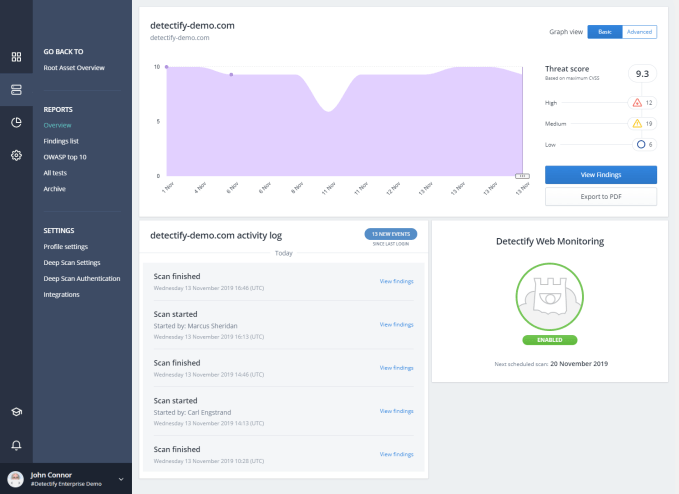
Detectify, the Sweden born cybersecurity startup that offers a website vulnerability scanner powered by the crowd, has raised €21 million in further funding.

Leading the round is London-based VC firm Balderton Capital, with participation from existing investors Paua Ventures, Inventure and Insight Partners.

Detectify says the new funding will be used to continue to hire “world-class” talent to further accelerate the company’s growth and deliver on its mission to reduce internet security vulnerabilities.

Founded in late 2013 by a self-described group of “elite hackers” from Sweden, the company offers a website security tool that uses automation to scan websites for vulnerabilities to help customers (i.e. developers) stay on top of security. The more unique part of the service, however, is that it is in part maintained — or, rather, kept up to date — via the crowd in the form of Detectify’s “ethical hacker network”.

As we explained when the startup raised its €5 million Series A round, this sees top-ranked security researchers submit vulnerabilities that are then built into the Detectify scanner and used in customers’ security tests. The clever part is that researchers get paid every time their submitted module identifies a vulnerability on a customer’s website. In other words, incentives are kept aligned, giving Detectify a potential advantage and greater scale compared to similar website security automation tools.

Detectify co-founder and CEO Rickard Carlsson tells me the company has made a lot of progress in the past 12 months, including building out the crowdsourcing part of its proposition in order to grow the number of known vulnerabilities.

“Modules from crowdsourcing hackers have now generated 110,000 plus vulnerabilities in our customer base,” he says. “And the community is about 2.5 times as large now”.

In the last year, Detectify has also expanded its client base in the U.S, and says it now counts leading software companies such as Trello, Spotify and King as customers.

The young startup seems to scoring well on the gender diversity front, too. It says that almost half (45%) of the company’s 83 employees are female, including 50% at C-level. In addition, there are close to 30 nationalities across Detectify’s Stockholm and Boston offices.

Adds James Wise, partner at Balderton Capital, in a statement: “Detectify brings together the power of human ingenuity, the immense scalability of software, and a strong culture of transparency and integrity to provide world-class security to everyone. This is a fundamentally new approach to protecting businesses from new cyber security threats, and alongside our other cyber security investments, including Darktrace, Recorded Future & Tessian, we see Detectify as part of a new wave of solutions to make the web safer for everyone.”

25 Nov 2019

Leaked Chinese government documents detail how tech is used to escalate the persecution of Uighurs

In less than two weeks, two major reports have been published that contain leaked Chinese government documents about the persecution of Uighurs and other Muslim minorities in China. Details include the extent to which technology enables mass surveillance, making it possible to track the daily lives of people at unprecedented scale.

The first was a New York Times article that examined more than 400 pages of leaked documents detailing how government leaders, including President Xi Jinping, developed and enforced policies against Uighurs. The latest comes from the International Consortium of Investigative Journalists, an independent non-profit, and reports on more than 24 pages of documents that show how the government is using new technologies to engage in mass surveillance and identify groups for arrest and detainment in Xinjiang region camps that may now hold as many as a million Uighurs, Kazakhs and other minorities, including people who hold foreign citizenship.

These reports are significant because leaks of this magnitude from within the Communist Party of China are rare and they validate reports from former prisoners and the work of researchers and journalists who have been monitoring the persecution of the Uighurs, an ethnic group with more than 10 million people in China.

As ICIJ reporter Bethany Allen-Ebrahimian writes, the classifed documents, verified by independent experts and linguists, “demonstrates the power of technology to help drive industrial-scale human rights abuses.” Furthermore, they also force members of targeted groups in Xinjiang region to live in “a perpetual state of terror.”

The documents obtained by the ICIJ detail how the Integrated Joint Operations Platform (IJOP), an AI-based policing platform, is used by the police and other authorities to collect personal data, along with data from facial-recognition cameras and other surveillance tools, which is then fed into an algorithm to identify entire categories of Xinjiang residents for detention. The Human Rights Watch began reporting on the IJOP’s police app in early 2018 and the ICIJ report shows how powerful the platform has become.

The Human Rights Watch reverse-engineered the IJOP app used by police and found that it prompts them to enter a wide range of personal information about people they interrogate, including height, blood type, license plate numbers, education level, profession, recent travel and even household electric-meter readings, data which is then used by an algorithm that determines which groups of people should be viewed as “suspect.”

The documents also say that the Chinese government ordered security officials in Xinjiang to monitor users of Zapya, which has about 1.8 million users, for ties to terrorist organizations. Launched in 2012, the app was created by DewMobile, a Beijing-based startup that has received funding from InnoSpring Silicon Valley, Silicon Valley Bank and Tsinghua University and is meant to give people a way to download the Quran and send messages and files to other users without being connected to the Web.

According to the ICIJ, the documents show that since at least July 2016, Chinese authorities have been monitoring the app on some Uighurs’ phone in order to flag users for investigation. DewMobile did not respond to ICIJ’s repeated requests for comments. Uighurs who hold foreign citizenship or live abroad are not free from surveillance, with directives in the leaked documents ordering them to be monitored as well.

Allen-Ebrahimian describes the “grinding psychological effects of living under such a system,” which Samantha Hoffman, an analyst at the Australian Strategic Policy Institute, says is deliberate: “That’s how state terror works. Part of the fear that this instills is that you don’t know when you’re not OK.”

The reports by the New York Times and the ICIJ are important because they counter the Xi administration’s insistence that the detention camps are “vocational educational and training centers” meant to prevent extremist violence and help minority groups integrate into mainstream Chinese society, even though many experts now describe the persecution and imprisonment of Uighurs as cultural genocide. Former inmates have also reported torture, beatings and sexual violence including rape and forced abortions.

But the Chinese government continues to push its narrative, even as evidence against it grows. The Chinese embassy in the United Kingdom told the Guardian, an ICIJ partner organization, that the leaked documents “pure fabrication and fake news” and insisted that “the preventative measures have nothing to do with the eradication of religious groups.” (The Guardian published the embassy’s response here.)

In October, the United States placed eight companies, including SenseTime and Megvii, on a trade blacklist for the role the Commerce Department says their technology has played in China’s campaign against Uighurs, Kazakhs and other Muslim minority groups. But the  documents published by the New York Times and ICIJ show how deeply entrenched the Chinese government’s surveillance technology has become in the daily life of Xinjiang residents and underscores how imperative it is for the world to pay attention to the atrocities being carried out against minority groups there.

25 Nov 2019

Max Q: NASA signs up new Moon delivery companies

Sign up here to receive Max Q weekly in your inbox, starting December 15.

There were lot of highlights in the space industry this past week (even though a rocket launch that was supposed to happened is now pushed to Monday). The biggest news for commercial space might just be that NASA signed on five new companies to its list of approved vendors for lunar payload delivery services, bringing the total group to 14.

SpaceX is among them, and Musk’s company had its own fair share of news this week, too – some good, some bad. One things’ for sure: Even going in to the last week in November, there’s still plenty of news to come in this industry before the year’s out.

  1. NASA selects five new vendors for commercial lunar payloads

Artist’s rendering of Blue Origin’s Blue Moon lander.

The five include Blue Origin, SpaceX, Ceres Robotics, Sierra Nevada Corporation and Tyvak Nano-Satellite Systems. This doesn’t necessarily mean all or any of these companies will actually fly anything to the Moon on behalf of NASA, but it does mean they can officially bid for the chance. Alongside 9 other companies selected previously by NASA, their bids will be considered by the NASA based on cost, viability and other factors.

  1. SpaceX Starship prototype blows its lid

This is the bad news I referred to earlier: SpaceX’s Starship Mk1 prototype in Texas blew up just a little bit during cryo testing. This test is designed to simulate extreme cold conditions that the spacecraft could endure during flight, and it clearly didn’t. But Elon Musk was optimistic, saying just after the incident that they’ll move on to a more advanced design right away.

  1. Sierra Nevada Corporation details an expendable cargo container for its Dream Chaser spaceship

SNC’s Shooting Star module. Credit: SNC.

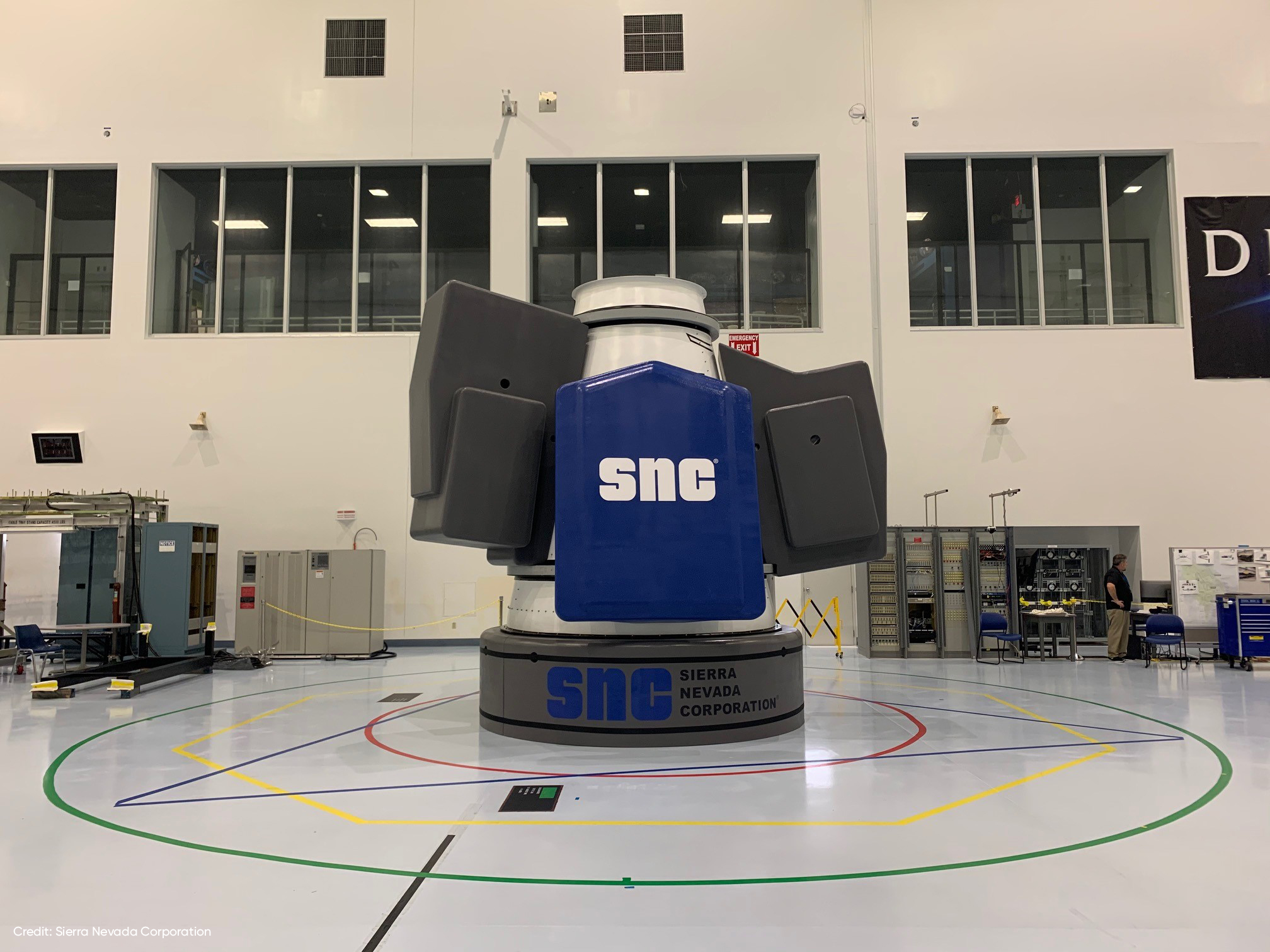
One of the companies that is now included in NASA’s lunar payload service provider list is Sierra Nevada Corporation (SNC). They’re currently developing and building their Dream Chaser spacecraft, which is reusable and lands like the Space Shuttle. At an event at Cape Canaveral in Florida, they unveiled what they call the ‘Shooting Star’ – an ejectable single use cargo container for the Dream Chaser that can really add to its versatility.

  1. Nanoracks will launch a test craft that can convert old spaceships into orbital habitats

This demonstration mission is just a start, but the tech that Nanoracks is launching aboard a future SpaceX launch will be able to cut metal in space, marking the first time a robotic piece of equipment has done that. The ultimate goal is to use this tech to take spent spacecraft upper stages and give them new life – as research platforms, satellites or even habitats in orbit.

  1. NASA’s JPL is using the Antarctic to test a rover for a trip to Enceladus

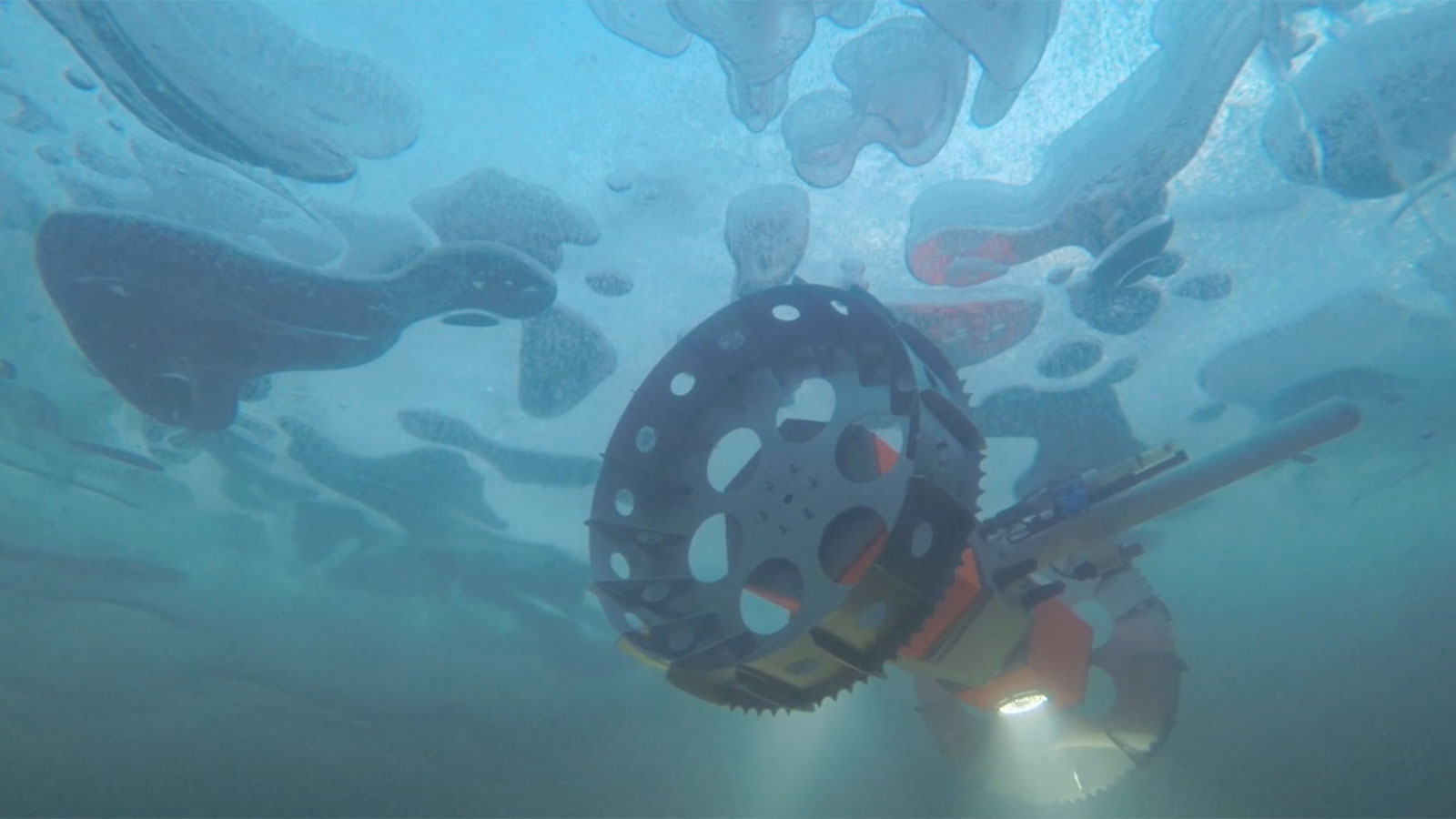
That’s one of Saturn’s moons, and it’s made up of icy oceans. Normally, that’s not an optimal place for a rover to get around, but the agency’s laboratory has been testing a design in the Earth’s coldest oceans to see how viable it will be, and now they’re going to use the Antarctic, which is where it’ll test it for months at a time.

  1. Tesla’s Cybertruck is made of Starship steel

Elon Musk revealed Tesla’s crazy, beautiful, ugly, strange Cybertruck pickup last week, and he noted that the stainless steel alloy that makes up its skin is the same material that SpaceX is developing and using on its new Starship spacecraft. Sometimes, being CEO of both a car company and a space company at the same time really pays off.

  1. Space is inspiring new kinds of startups

A lot of large companies outsource at least part of their innovation management and design, and with the space boom on, there’s a new opportunity for companies to emerge that specialize in helping those same large companies find out where they fit in this new frontier. Luna is one such co, putting the puzzle pieces together for health tech companies.

24 Nov 2019

India’s financial services firm Paytm raises $1B

Paytm said on Monday it has raised $1 billion in a new financing round as the Noida-headquartered firm, which once dominated the local mobile payments market, attempts to fight back giants Google, Walmart’s PhonePe, and soon-to-arrive Facebook.

The company said the new financing round was led by U.S. asset manager T Rowe Price. Existing investors Ant Financials (contributed $400 million), SoftBank Vision Fund (contributed $200 million), and Discovery Capital also participated in the round, which valued the company at about $16 billion — higher than some of the high-profile Asian startups such as Grab and Gojek.

Paytm founder and chief executive Vijay Shekhar Sharma said the firm will use the fresh capital to court merchants, and expand its financial offerings such as lending and insurance. The company has amassed 15 million merchants, he said.

The big buck comes as India becomes the newest payments battleground for major global giants Google, Walmart, and Facebook . According to Credit Suisse, the digital payments market in India will be worth $1 trillion in the next four years, up from about $200 billion currently.

More to follow…

24 Nov 2019

India’s financial services firm Paytm raises $1B

Paytm said on Monday it has raised $1 billion in a new financing round as the Noida-headquartered firm, which once dominated the local mobile payments market, attempts to fight back giants Google, Walmart’s PhonePe, and soon-to-arrive Facebook.

The company said the new financing round was led by U.S. asset manager T Rowe Price. Existing investors Ant Financials (contributed $400 million), SoftBank Vision Fund (contributed $200 million), and Discovery Capital also participated in the round, which valued the company at about $16 billion — higher than some of the high-profile Asian startups such as Grab and Gojek.

Paytm founder and chief executive Vijay Shekhar Sharma said the firm will use the fresh capital to court merchants, and expand its financial offerings such as lending and insurance. The company has amassed 15 million merchants, he said.

The big buck comes as India becomes the newest payments battleground for major global giants Google, Walmart, and Facebook . According to Credit Suisse, the digital payments market in India will be worth $1 trillion in the next four years, up from about $200 billion currently.

More to follow…