Year: 2019

20 Nov 2019

Vouch raises $45M led by YC Continuity for business insurance that targets startups

“Move fast and break things” is a term we usually associate with Facebook (at least, until 2014) and the general startup ethos of being disruptive. Now in true entrepreneurial fashion, the phrase is finding itself as the center of — what else — a startup idea, which today is announcing a sizeable Series B as it gains traction.

Vouch, which offers business insurance specifically targeting startups, is today announcing a Series B of $45 million, led by Y Combinator’s Continuity Fund. The company was part of YC cohort that presented this past August, and between then and now it appears to have also raised a Series A of $24 million, with this Series B actually also closing back in September (I’m guessing the delay in timing was to coincide the news with the expansion of its service to California). PitchBook data indicates that Vouch’s valuation has also ramped up rapidly: it’s currently at $210 million. (Previous investors in the company include Ribbit Capital, SVB Financial Group, Y Combinator, Index Ventures, and 500 Startups, with the total raised to date now at $70 million.)

The company — not to be confused with the tutoring network Vouch, nor the ‘social network for loans’ Vouch — will be using the money that it will use to continue expanding its product and to bring the service to more geographies.

In addition to now launching in its newest region of California, today, it’s also live in Oregon, Utah, Colorado, Illinois, Indiana, Ohio, Wisconsin and Michigan. Today’s move is a key one, considering Silicon Valley is at the heart of the tech world, and therefore startups, and therefore fertile ground for acquiring new customers.

(It seems that although Vouch itself is based in San Francisco, it delayed a California launch in part to test out the product in smaller markets before hitting the big time: California, it notes, accounts for 50% of the whole business insurance market in the US, and California startups alone spend $44 billion annually on it.)

When Vouch launched at YC, founder Sam Hodges (who had been one of the original co-founders of Funding Circle, the business lending platform that went public in London) described the platform’s mission as a way of mitigating risks because sometimes “bad things happen to good startups.”

The company’s insurance covers all the tricky things that can befall young businesses in what is a very volatile market. (Common wisdom says that most fail, some have put the figure as high as 90%.)

That includes general liability (which includes damage to rented premises, personal or advertising injury, and related areas), business liability, management liability, fiduciary liability, cyber and crime coverage, rented and non-owned auto insurance and more. (Health or workers’ compensation are not included.) The products start at $200/year, which Vouch says undercuts most of what is already on the market. Munich Re backs the policies.

“Vouch helps founders manage the risks associated with starting up a new company, so they can focus on creating and growing businesses that change the world. We believe that’s a purpose worth pursuing,” said Hodges in a statement. “As an entrepreneur, I’ve spent most of my career building companies at the intersection of technology and financial services. I know first-hand that along the journey of building and growing a business, teams will face numerous high-stakes challenges. Vouch is here to support entrepreneurs and mitigate those challenges from the beginning, leaving more room for growth.”

Y Combinator has always had a soft spot for startups that built services for startups, and this is no exception. It makes perfect sense as a follow-on investment for Continuity, which has also backed Brex, Gusto, Instacart, LendUp, and Stripe. In this sense, it becomes a strategic investor, not unlike Silicon Valley Bank (which tells startups that do business with it that Vouch is its preferred insurance provider).

“Y Combinator and Vouch share a common goal – giving founders the support they need to build successful, innovative companies,” said Anu Hariharan, Partner at Y Combinator Continuity, in a statement. “Vouch is built specifically for startups, so founders have the peace of mind that their business is covered. This platform is fundamental to the startup community, as it enables founders to focus on growing their companies — which is why we were bullish on leading the Series B.”
20 Nov 2019

Spotify’s free music service will now stream on Alexa devices, plus Bose and Sonos smart speakers

Spotify has worked with Amazon Echo since 2016, but only for premium subscribers. Today, that changes as Spotify says its free tier will now stream across Alexa-powered devices, as well as other smart speakers from Sonos and Bose. The Alexa support will be available for users in the U.S., Australia, and New Zealand. Support for Sonos and Bose is more broadly available to users around the world.

In the case of Alexa devices, like Amazon Echo speakers or the Fire TV, users will be able to ask Alexa to play Spotify’s playlist, like “Today’s Top Hits,” or their personalized playlist, “Discover Weekly,” among others. The service can also be set as the default, so you can use commands like “Play my Discover Weekly,” “Like this song,” or “Pause,” and more, without having to say “on Spotify.”

Meanwhile, on Sonos and Bose speakers, users can set up Spotify Connect from the Spotify app. This works with Bose smart speakers and soundbars, as well as all Sonos smart speakers, including the new indoor/outdoor speaker Sonos Move and the Symfonisk IKEA WiFi Speaker, integrated with the Sonos Home Sound System.

To use Spotify Connect, you’ll tap the “Devices” icon on the screen to select which speaker you want to use. This will also require the Bose and Sonos devices are updated to the latest firmware, the company says.

The expanded support for smart speakers comes only a day after Amazon directly challenged Spotify with a major move of its own. On Tuesday, Amazon announced its own music service would become free across devices, including the web, Fire TV, iOS, and Android. Before, the free, ad-supported music service was only available on Echo devices. While the services is a rival of sorts to other free services, like Spotify and Pandora, it has a more limited catalog of just 2 million tracks. That makes it better for those who only casually listen to music stations and curated playlists.

Spotify’s stock dropped almost 5% on Tuesday after Amazon’s announcement, however.

By now making Spotify’s free tier more accessible, it’s likely that many people will choose Spotify’s free streaming over Amazon’s free streaming, given the larger catalog of over 50 million songs. In addition, Spotify is best known for its personalization capabilities that help introduce users to new music based on their likes and listening history, which continues to be a major draw.

However, Amazon is only one of many challengers Spotify faces these days, with Apple Music, YouTube Music and regional players in big markets like India and China, also vying for users.

In addition, TikTok owner ByteDance is said to be preparing to move into music streaming, aiming for markets like India, Indonesia, and Brazil. That’s a huge threat not only because of the markets it’s targeting but because you can now draw a direct line between TikTlk top tracks and No. 1 tracks and hits on Spotify, which gives it a competitive advantage.


20 Nov 2019

WHILL brings its autonomous wheelchairs to North American airports

After trials in Amsterdam’s Schiphol airport, Tokyo’s Haneda airport, and Abu Dhabi airport earlier this year, WHILL, the developer of autonomous wheelchairs, is bringing its robotic mobility tech to North America.

At airports in Dallas and Winnipeg, travelers with mobility limitations booked a Whill through Scootaround and test out the company’s products.

Using sensing technologies and automatic brakes, Whill’s wheelchairs detect and avoid obstacles in busy airports, allowing customers to get to their gate faster.

Based in Yokohama, Japan, Whill has raised roughly $80 million for its technology to bring autonomy to personal mobility.

“When traveling, checking in, getting through security and to the gate on time is critical to avoid the hassle and frustration of missing a flight,” said Satoshi Sugie, the founder and chief executive of WHILL, in a statement. “Travelers with reduced mobility usually have to wait longer times for an employee to bring them a wheelchair and be pushed to their gate, reducing their flexibility while traveling. We are now providing an opportunity for travelers with reduced mobility to have a sense of independence as they move about the airport and get from point A to point B as smoothly as possible.”

The company is one of a growing number of startups and established technology companies tackling the massive market of assistive technologies.

The entire population of people with disabilities globally stands at 1 billion and there are 70 million potential customers for assistive technology products across Europe. If demand in human terms isn’t enough to sway would-be entrepreneurs, then perhaps a recent market report indicating that spending on assistive technologies for the elderly and people with disabilities is projected to reach over $26 billion by 2024 will do the trick.

“Accessibility is a priority for Winnipeg Richardson International Airport and travel is now easier for passengers with limited mobility thanks to our partnership with WHILL. We are excited to be one of the first airports in North America to trial WHILL’s autonomous personal mobility devices with our travelers.”

20 Nov 2019

Inhabitr raises $4 million to let you rent furniture

Inhabitr, a Chicago-based furniture rental platform, has today announced the close of a $4 million in Series A funding, led by Great North Labs.

Inhabitr launched in 2016 after the cofounders, who have gone through dozens of moves between the two of them, decided that purchasing, moving and maintaining furniture is one of the biggest pain points of the whole process.

Inhabitr tries to solve that by letting users rent furniture on the platform at a much more affordable cost than buying, never having to worry about the associated costs of moving that furniture should they relocate.

The company works directly with manufacturers to source products, and partners with local furniture stores and their employees to handle delivery and white glove installation.

Customers can choose from pre-packaged rooms to go, which have been curated by in-house designers, or build their own room by renting a la carte. Living room packages range from $70/month to $130/month, while individual pieces of furniture, like a sofa, are priced anywhere between $30/month to as high as $150/month for some high-end pieces. If at any time a user wants to change things up, Inhabitr charges a $99 swap fee to swap old furniture out with new.

The Chicago-based company already serves 10 cities in the U.S. and has put furniture in more than 2000 homes.

The hope is that Inhabitr can better serve the end customer by tying together these three existing frameworks — designers, furniture manufacturers, and retail stores.

Cofounder Ankur Agrawal believes that one of the biggest challenges for the company is scaling operations in a logistics-heavy industry, and perfecting the training playbook for the retail employees interfacing with the end customer.

“Another big challenge is capital,” said Agrawal. “Furniture as a category is an operations-heavy category and there is little understanding around the industry. Investors think of this as a non-sexy category and are looking for an obsolete business that software can come and disrupt. But the next feat of iteration will come from brick and mortar innovation.”

20 Nov 2019

Sharding, scalability, decentralization – You name it, we’ve got it on the EC stage in Berlin

Sharding and scalability. Transactions per second.  Crypto-ecosystems. The decentralized web. These are the voyages of the Starship Blockchain, on it’s 5-year mission to seek out… Ok, you get the drift! But as you can tell, there remain many, many issues to tease out of this burgeoning new tech world, one we will be unpacking at Techcrunch Disrupt Berlin this December.

There are still a lot of issues to deal with. The current version of Ethereum can only handle a dozen transactions per second. “Sharding” or spreading the load via partitioning should lead to a drastic increase in performance, but the question is how to do it? Ethereum 2.0 still remains a moving target. There is even a growing “Ethereum killer” community. And while all this goes on, high-minded organizations like the Web3 Foundation are trying to foster the development of a user-friendly crypto-ecosystem and decentralized web.

Who on earth would take all this on? TechCrunch Disrupt Berlin of course, and in particular our Extra Crunch stage.

Since we launched Extra Crunch, our premium content service for those readers who like to hold TechCrunch close and cuddle it at night, we’ve been running a premium EC stage at our TechCrunch Disrupt conferences, and this will be no less true in Berlin.

Given Berlin is a hotbed of blockchain startups and development, it would be utterly remiss of us not to cover this subject, but the Extra Crunch stage gives us some extra (oh yeah!) bandwidth to do deep-dives for attendees to get under this skin of this rapidly expanding aspect of the tech industry.

We’re excited to be joined by three amazing speakers to pore over the latest development in the blockchain world.

Justin Drake (Ethereum)
Justin studied mathematics at Cambridge University. He was a Bitcoin entrepreneur from 2014 to 2017 and is now an Ethereum 2.0 researcher.

Justin is going to cover off where Ethereum 2.0 is at right now as someone who has been working on sharding and scalability and supporting the Ethereum ecosystem to enable these new use cases.

With the current version of Ethereum only able to handle a dozen transactions per second, sharding will be crucial, but Ethereum 2.0 is a moving target and remains a large-scale experiment of distributed development.

If the community gets it right, Ethereum 2.0 could transform the Ethereum blockchain into a sort of “world computer” that can execute instructions across a network of servers all around the world. On the EC stage Justin will also be talking about building a blockchain startup on the Extra Crunch Stage with other blockchain experts. If anyone know, he knows how important it is to build a community of developers and researchers around your blockchain project.

Ash Eagan (Accomplice VC)
A World Economic Forum Global Shaper and advisor at ConsenSys’ Tachyon Accelerator, Ash Eagan has backed a number of headline companies in the space including Bison Trails, Coda, CoinList, Dapper Labs, Near, Simplex, and Torus. Before Accomplice, he co-launched ConsenSys’ venture arm and started his career at Converge VC in Boston.

Egan has previously highlighted the ongoing innovations within the “Ethereum killer” community and how it “expands the sandbox” but he also believes that for mass adoption of crypto on social networks to take off, users will need to be monetized via advertisements and referrals.

Ashley Tyson (Web3 Foundation)
Ashley Tyson is the Director of Partnerships and Strategic Initiatives at Web3 Foundation. She spends her time aligning diverse teams working on decentralized systems and supporting blockchain ecosystem initiatives like Ethereum Community Fund and ETHPrize.

Prior to Web3 Foundation, Ashley co-founded DEFCAD, a censorship-resistant search engine for 3D printable files. She deeply understands the need for a decentralized web, beginning her career in NYC at one of the first social media-focused agencies, where she helped multinational corporations build Web 2.0 strategies around consumer data acquisition for use in marketing initiatives.

Disrupt Berlin runs December 11 and December 12. Tickets are available here!

20 Nov 2019

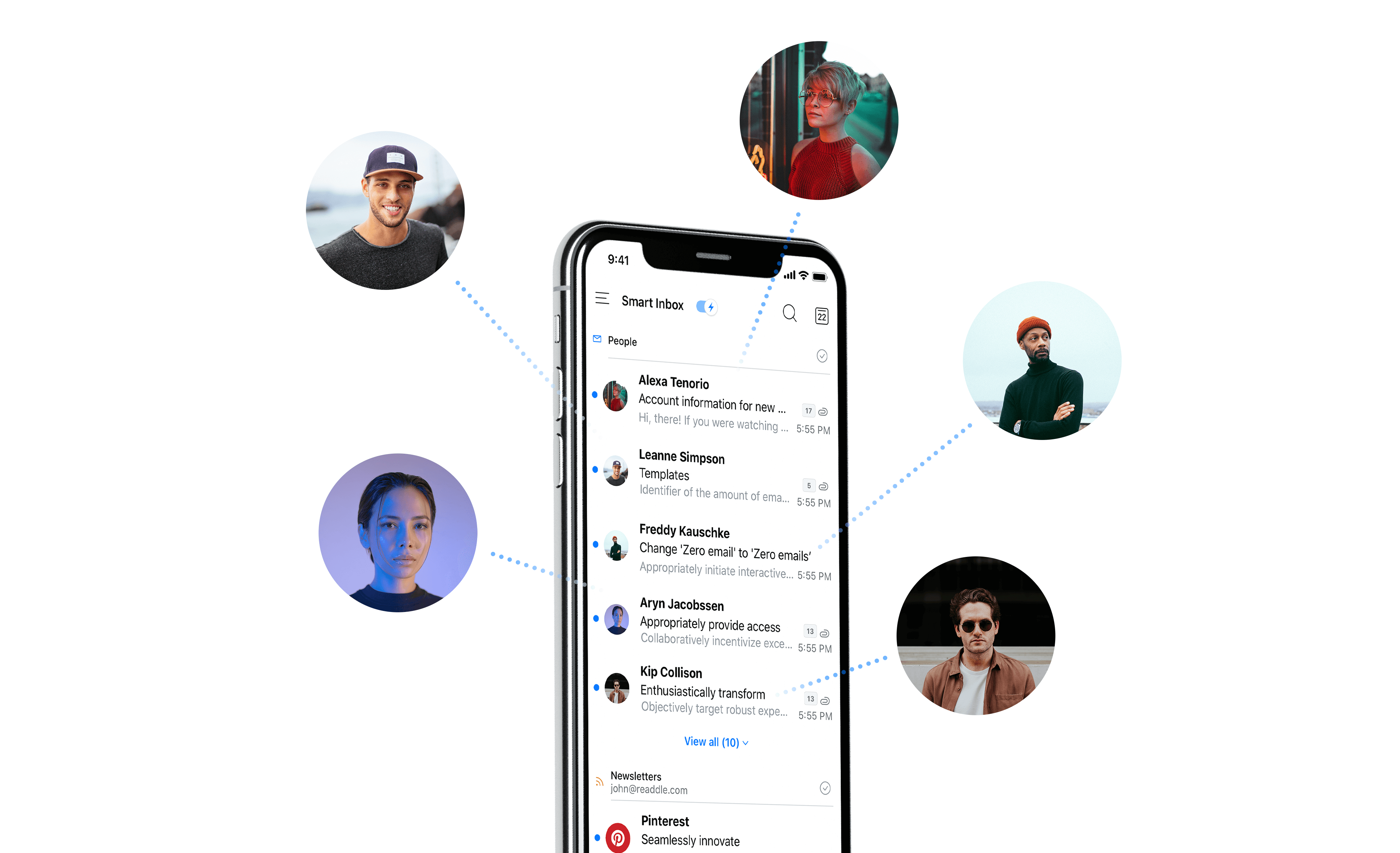
Email app Spark receives update with new design

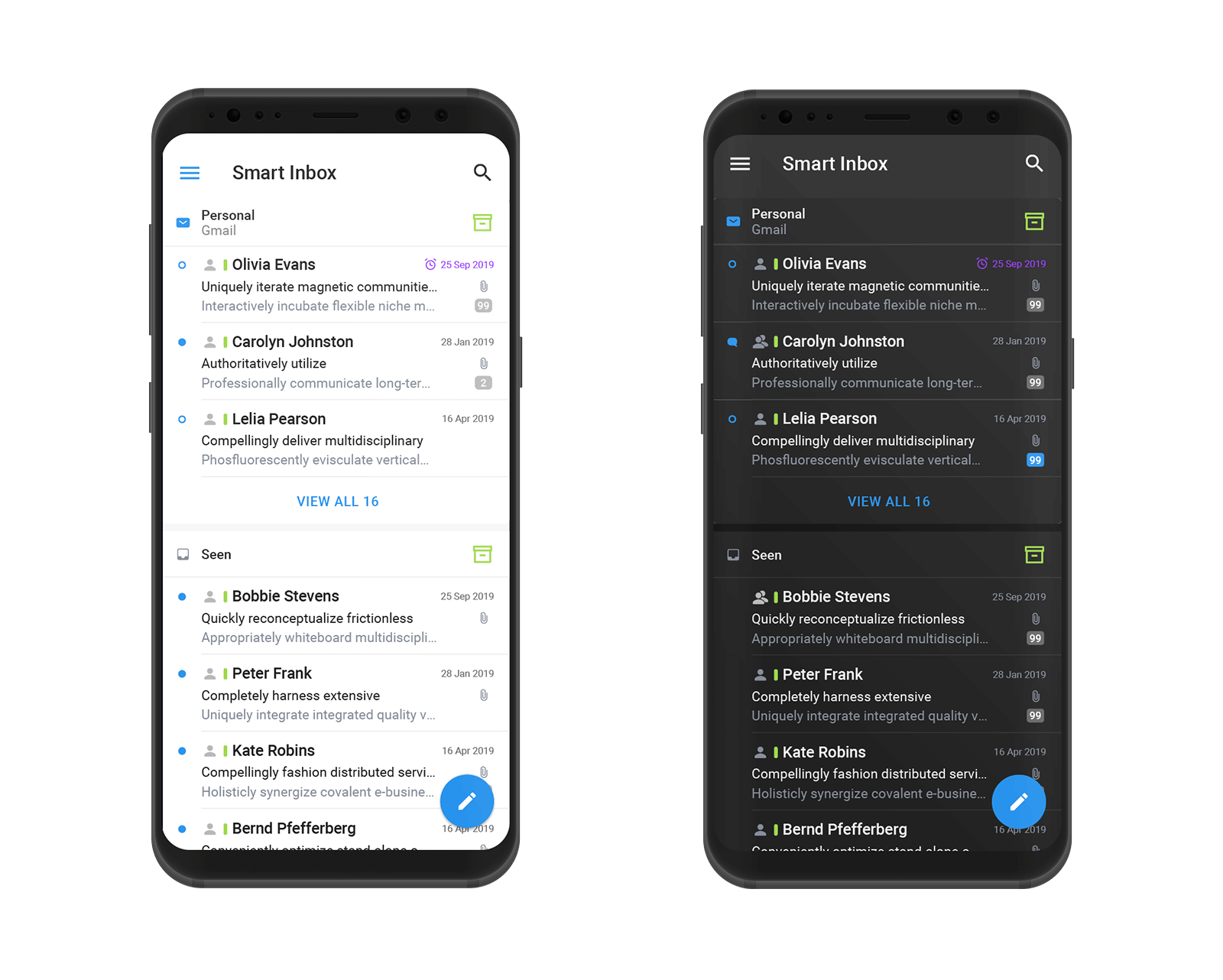
Spark, the popular email app from Readdle, has been redesigned on iOS and Android. The interface has always been a bit busy in the mobile app. That’s why the updated app now features a cleaner design and a handful of new features.

On the design front, Spark now uses simple headers to separate smart sections, such as newsletters, notifications and personal emails. It looks better than the rounded boxes with a colorful background.

There’s a lot of whitespace now, but the company has also taken advantage of this update to add dark mode. When you tap on a thread, the thread view has been updated as well.

When it comes to new features, the app tries to autopopulate your inbox with profile pictures. Just like Vignette, it pulls images from popular web services. For instance, if somebody who emails you has a Twitter account under the same email address, Spark can add the Twitter profile picture to your inbox.

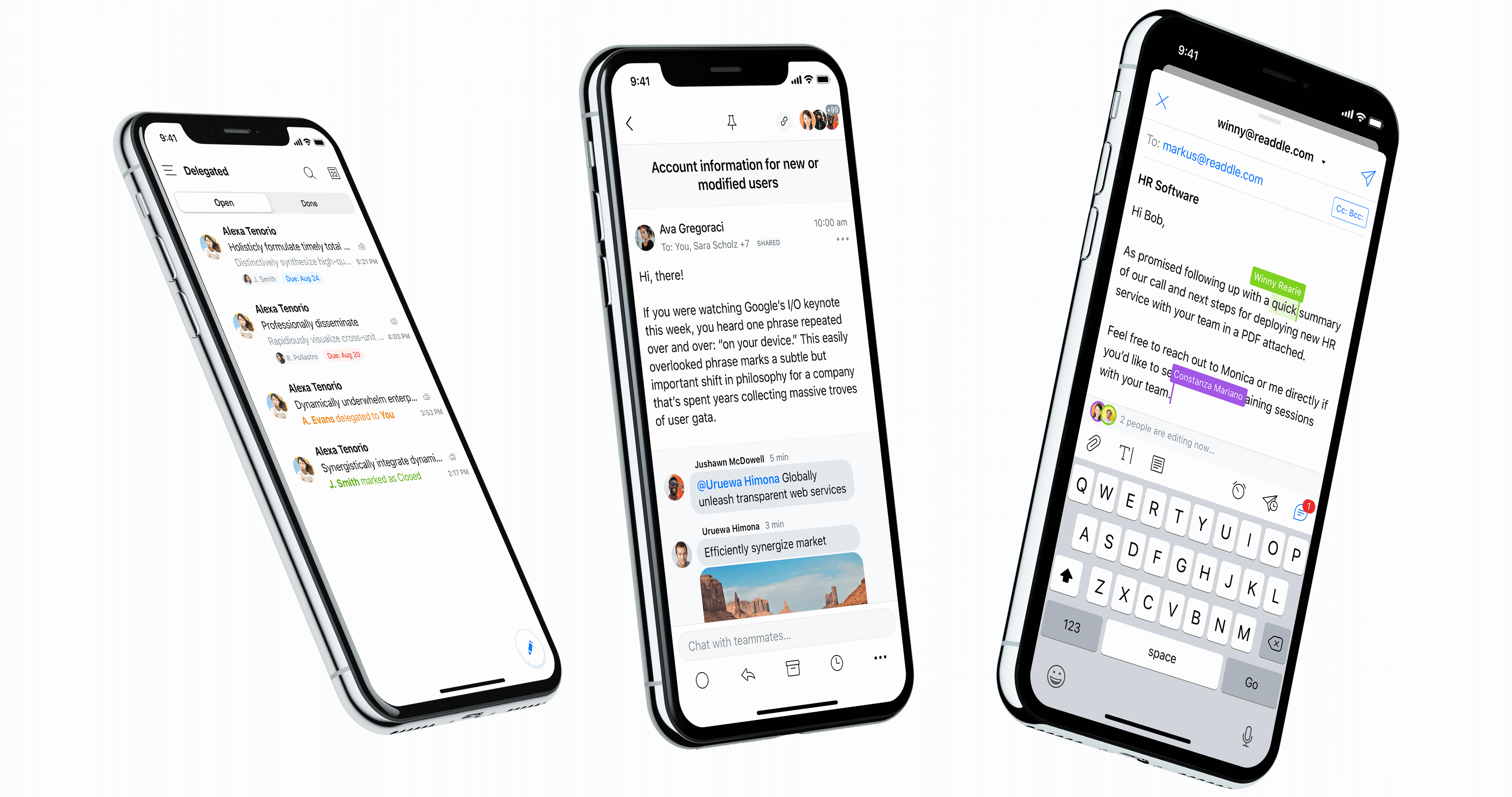
Everybody has their own way of dealing with their email inbox. That’s why Spark lets you choose the buttons that appear at the bottom of an email thread. For instance, if you use folders a lot, you can put a folder button. But if you want to replace that button with a snooze button, you can.

Spark is now a better citizen on iPadOS 13. You can open multiple instances of Spark. This way, you can work on a document with an email thread using Split View and you can open a second Spark window to check your inbox in a separate workspace. Spark on iPadOS also supports the floating keyboard and new iPadOS gestures.

20 Nov 2019

Tuesday Company acquires VoteWithMe as tech for politics looks to consolidate ahead of 2020

Tuesday Company, the organizational toolkit for political advocacy groups and candidates, has taken another step to consolidate its position in the growing market for tech-enabled political outreach with the acquisition of the voting mobilization service VoteWithMe.

Launched in the wake of the 2016 election by three former staffers from Hillary Clinton’s campaign for the presidency, Tuesday is one of the higher profile alumni from the progressive-focused technology accelerator, Higher Ground Labs.

Michael Luciani, Jordan Birnholtz, and Shola Farber, the co-founders of Tuesday Company, met working on mobilization and outreach for the Clinton campaign in 2016. Although Clinton lost, the work that the trio had done to encourage staffers and volunteers to send personalized outreach messages to their social network increased outreach in Michigan and other battleground states.

Now, coupled with VoteWithMe’s technology to encourage people to get to the polls on election day, the company believes it has a more complete platform to organize and mobilize for election day.

While Tuesday’s users were political campaigns, advocacy groups, and their professional staffers, VoteWithMe was a free-to-use app that went directly to voters to encourage them to get friends to voting booths. The company had over 250,000 downloads at the time of its acquisition.

“The opportunity to bring the B2B and B2C aspects together was really really really important,” says Farber, the Tuesday Co. chief operating officer.

“We did a really great job building for organizations and for staff and organizers because our team is so strongly rooted in the organizing practice… and, VoteWithMe, they did a great job of building that consumer experience and our goal is to blend the expertise there,” according to Birnholtz, the company’s chief product officer.

The size of the acquisition was not disclosed, but the all-cash transaction means that Tuesday Company now owns the VoteWithMe tech and the team developing the VoteWithMe product will continue to have a consulting relationship with Tuesday Company.

While national politics dominates the news, advocacy groups of all stripes are seeing the benefits in applying the same tools that well-funded political campaigns brought to bear on the electorate to promote particular issues.

Non-profits represent at least $13 billion of annual business, according to Farber, and Tuesday Company believes its services can provide value to all of them.

“The… political campaign world is really hard to build an innovative, sustainable business in, because it’s relatively small. Folks that don’t figure out how to become broadly relevant won’t survive,” says Birnholtz.

In the wake of the acquisition, investors can expect to see Tuesday Company out on the fundraising trail. The company is backed by Higher Ground Labs and individual investors like Chris Sacca and Reed Hoffman.

While Hoffman’s forays into the intersection of tech and politics have not always been without scandal, he has emerged as one of the most prolific backers of companies looking to apply technology to the political sphere.


20 Nov 2019

Brava, a smart oven maker with big names attached, just sold to an industrial equipment company

Brava had a lot of things working in its favor as startups go. It was founded in 2015 by serial executive John Pleasants, whose past stints have included as co-president of Disney Interactive Media Group, COO of Electronic Arts, and CEO of Ticketmaster.

His plans to create a suite of snazzy direct-to-consumer line of smart hardware and software products, beginning with the Brava oven, also attracted tens of millions of dollars from an impressive line-up of backers, including True Ventures, TPG Growth, and Lightspeed Venture Partners, among others. Indeed, though some sophisticated kitchen devices have come and gone (Juicero), some liked what Pleasants and his growing team in Redwood City, Ca., were trying to cook up, and one of these admirers, apparently, was the Middleby Corporation, a publicly traded commercial and residential cooking and industrial process equipment company in Illinois that just acquired Brava — though neither Brava nor Middleby is disclosing terms of the deal.

We were in touch via email yesterday with both Pleasants and the CEO of Middleby, Tim FitzGerald, to learn what they can share about the tie-up, as well as to ask what happens to Brava and its tens of employees now.

TC: This was a young company. Why turn around and sell it?

JP: The company itself is four years-old and we’ve had product available in market for one year. We’ve been venture funded to date and had the option to continue raising growth capital or merge with Middleby Corporation. Brava’s mission has always been to enable everyone to cook delicious, healthy home-cooked food with minimal time and effort, and we believe the fastest way to achieve this bold goal is through a strategic partnership with someone who can help make that happen.

TC: How did Brava and Middleby come together? Who brokered the first conversation? Was Brava talking with anyone else?

JP: We’ve been in talks with many people about financing, and a select group of strategics about a deeper partnership to achieve our objective. We had the assistance of City Capital in the process, and they made the introduction to Middleby in Chicago.

TC: How much is Middleby paying for the company? Also, is this an all-cash deal?

JP: While not disclosing the total amount, the consideration includes a mix of cash and stock

TC: So what’s next? Will Middleby retain the Brava name or will this be phased out over time?

JP: Brava as it’s known today will not only continue but see accelerated growth and expansion. We will continue to sell the product and support our customers under the Brava brand while further innovating new products and services for our customers.

TF: The Brava name will remain. The product and technology will enhance our existing residential and commercial kitchen appliance portfolio. In Middleby Residential, we manufacture and sell Viking Range and other well-known consumer brands.

TC:  How many people does Brava currently employ and how many if any are going to Middleby?

JP: Brava employs 38 people and all will be going to Middleby. I will remain as the CEO of Brava and will also work with other Middleby divisional leaders to leverage Brava’s light cooking platform and services for their existing brands. We’re excited by this because we currently have many ideas and plans for leveraging the Brava technology across new form factors, business segments (residential and commercial) and geographies. This all becomes more feasible with Middleby.

TC: We last talked before the Brava oven was out in the world. How many units did you wind up selling? 

JP: We’re closing in on 5,000 customers and expect to have a big holiday.

TC: What were some of the lessons learned with this experience?

JP: People love it. You can see this every day throughout our online communities. It’s not just about the quality of food and the ease in creating it . . . we hear comments all the time about how spouses who hardly ever cooked now do, how kids who never liked vegetables now ask for more . . .

In terms of what people want that doesn’t currently exist, [I’d say] more recipes and programs (we have thousands, but there are so many more we can do) and more flexibility; we can uniquely cook multiple ingredients simultaneously to perfection with our light-cooking technology and this enables lots of fun combinations [but] our customers would like even more flexibility in mixing and matching ingredients.

TC: Any business lessons?

JP: In terms of business lessons, it’s challenging to explain Brava’s full value proposition in a quick ad on social media. We have revolutionary technology that enables a new way of cooking that’s better, easier, faster — and that sounds almost too good to be true.

TC: Do you think the market for smart cooking appliance is big enough at this point? What do you think are the remaining hurdles and how do consumers get past them?

JP: The “smart cooking appliance” market is in its infancy. There are still very few pioneers in the space and household penetration is negligible. But this is all about to change. Once people know someone who can personally attest to the benefits, I fundamentally believe the adoption curve will bend exponentially.  People spend a lot of money on household appliances…once they can be “smart” and “chef powered” and deliver well against that promise, why would most people not want a “smart” one versus a “non-smart” one?

TF: We see this market growing significantly with the next generation [of home cooks] who currently rely on and demand a digital experience.

20 Nov 2019

Gravitational nabs $25M Series A to ease cloud deployment with Kubernetes

As we move into an increasingly multi-cloud world, there is a portability problem moving applications between clouds. Gravitational wants to fix that, and today it announced a $25 million Series A.

The round was led by Kleiner Perkins with help from S28 Capital and Y Combinator. Today’s investment brings the total raised to $31 million, according to the company.

Ev Kontsevoy, Gravitational co-founder and CEO, says his company is solving a couple of big problems around cloud portability. “There are just differences between all these different cloud providers because applications have dependencies. The application might depend on the cloud provider’s capabilities, and they use all this different middleware software that the cloud providers are bundling today with the infrastructure,” Kontsevoy explained. Those dependencies make it difficult to move an application to another cloud without additional coding.

He says that the other problem is related to on-going management of an application after you deploy it in the cloud, and that requires a large operations team. The problem with that is that there is a shortage of talent to fill these positions.

To solve these problems, Gravitational looked to Kubernetes . The company believes customers should build software using Kubernetes, open source software and standards, and instead of building in the cloud dependencies up front, make their programs completely vanilla.

“Start with your application and don’t worry about clouds at all, don’t even have a cloud account in the beginning. Make sure your application runs on top of Kubernetes, package all of your software dependencies into Kubernetes, use open source software and open standards as much as you possibly can,” he explained.

He says that Kubernetes gives you the ability to build software with very little administration, and then you can use Gravitational’s Gravity tool to package that solution into a single file, which you can then deploy on any cloud, private data center or even make available as download like you could with software back in the 1990s.

He sees organizations moving to container-driven software using Kubernetes, and as they do this, he believes they can break this dependency on the individual cloud providers using his company’s tools.

It’s certainly compelling if it works as described. Gravitational has 20 employees and around 100 paying customers. The company offers a couple of tools, Gravity and Gravitational Teleport as open source. It was a member of the Y Combinator 2015 cohort.

20 Nov 2019

Invasive scheme spotted that foxes tracker blockers

Online privacy is facing a new challenge: A first-party tracker that appears to be unblockable with standard privacy tools such as adblockers.

The tracker in question was spotted being deployed by French national newspaper, Liberation, which in October promised subscribers an entirely tracker-free experience.

That promise garnered it a bunch of attention from privacy experts who dug around and found a first-party tracker embedded on its site which uses a subdomain (that’s mostly random) in order to redirect to a third party — thereby making it difficult to block (i.e. without also blocking Liberation’s own domain).

“To participate in this rather invasive scheme, a website operator need to make a decision to delegate the domain name alias,” explains Dr Lukasz Olejnik, independent privacy researcher and advisor, and research associate Center for Technology and Global Affairs Oxford University.

“It’s a setting where the website the user visits delegates a domain name alias to a third-party script provider. So when the user visits example.com, the alias for the content might be Y.example.com, which in reality points to a site third-party.example.org, a third-party server.

“This setting can effectively bypass third-party trackers and adblockers, especially if the domain name part contains unpredictable strings. This is because the user is visiting a website where a tracker could work in context of the first party, the visited website.”

On Liberation’s site the tracker points to the domain of a French “marketing optimization” provider called Eulerian — which sells data-driven analytics to websites. Though Liberation claims its subscribers aren’t being tracked via this method for ad targeting purposes — but only so it can gather site analytics. (Non-subscribers will be tracked for ad targeting, however.)

The newspaper’s own fact check team have reported at length on the controversy here — covering both privacy and security implications of its use of the first-party tracker scheme, and noting that privacy researchers are working on methods to defeat the technique. 

Zooming out, while the unblockable (or at least tricky to block) tracking scheme does not appear to be being used very widely as yet, there’s a chance such a technique could be taken up more widely if sites look to replace third party tracking cookies with alternatives.

This is because web browsers have been taking an increasingly proactive approach to squeezing the operation range of tracking technologies. Mozilla recently switched on third-party cookie tracker blocking by default, for example. While, this summer, WebKit announced a new tracking prevention policy that put privacy on a par with security. Google has also announced changes to how its Chrome browser handles cookies.

“Exact prevalence is unknown but it is fair to say thousands of sites subscribe to this particular scheme from the provider now under discussion, among them some very popular sites,” says Olejnik. “The technical possibility of such as scheme is not entirely new, in fact I did see it in use in 2014. There may have been less motivation to use it until now, though.”

“Focusing on forward-outlook is sometimes useful, isn’t it?” he adds.

Asked about practical ways such tracking might be defeated, Olejnik suggests tracker blockers would need to devise a “custom mode of checks to detect these specific schemes” — as they work on “slightly different principles than other ways of including third-party content”.

Perhaps more effective at skewering such tricky schemes might be a recent ruling by Europe’s top court which clarified that user consent must be obtained prior to storing or accessing non-essential cookies, and cannot be implied or assumed.