Year: 2020

20 Nov 2020

Neatsy wants to reduce sneaker returns with 3D foot scans

U.S.-based startup Neatsy AI is using the iPhone’s depth-sensing FaceID selfie camera as a foot scanner to capture 3D models for predicting a comfortable sneaker fit.

Its app, currently soft launched for iOS but due to launch officially next month, asks the user a few basic questions about sneaker fit preference before walking through a set of steps to capture a 3D scan of their feet using the iPhone’s front-facing camera. The scan is used to offer personalized fit predictions for a selection of sneakers offered for sale in-app — displaying an individualized fit score (out of five) in green text next to each sneaker model.

Shopping for shoes online can lead to high return rates once buyers actually get to slip on their chosen pair, since shoe sizing isn’t standardized across different brands. That’s the problem Neatsy wants its AI to tackle by incorporating another more individual fit signal into the process.

The startup, which was founded in March 2019, has raised $400K in pre-seed funding from angel investors to get its iOS app to market. The app is currently available in the US, UK, Germany, France, Italy, Spain, Netherlands, Canada and Russia. 

Neatsy analyzes app users’ foot scans using a machine learning model it’s devised to predict a comfy fit across a range of major sneaker brands — currently including Puma, Nike, Jordan Air and Adidas — based on scanning the insoles of sneakers, per CEO and founder Artem Semyanov.

He says they’re also factoring in the material shoes are made of and will be honing the algorithm on an ongoing basis based on fit feedback from users. (The startup says it’s secured a US patent for its 3D scanning tech for shoe recommendations.)

The team tested the algorithm’s efficiency via some commercial pilots this summer — and say they were able to demonstrate a 2.7x reduction in sneaker return rates based on size, and a 1.9x decrease in returns overall, for a focus group with 140 respondents.

Handling returns is clearly a major cost for online retailers — Neatsy estimates that sneaker returns specifically rack up $30BN annually for ecommerce outlets, factoring in logistics costs and other factors like damaged boxes and missing sneakers.

“All in all, shoe ecommerce returns vary among products and shops between 30% and 50%. The most common reasons for this category are fit & size mismatch,” says Semyanov, who headed up the machine learning team at Prism Labs prior to founding Neatsy.

“According to Zappos, customers who purchase its most expensive footwear ultimately return ~50% of everything they buy. 70% online shoppers make returns each year. Statista estimates return deliveries will cost businesses $550 billion by 2020,” he tells us responding to questions via email.

“A 2019 survey from UPS found that, for 73% of shoppers, the overall returns experience impacts how likely they are to purchase from a given retailer again, and 68% say the experience impacts their overall perceptions of the retailer. That’s the drama here!

“Retailers are forced to accept steep costs of returns because otherwise, customers won’t buy. Vs us who want to treat the main reasons of returns rather than treating the symptoms.”

While ecommerce giants like Amazon address this issue by focusing on logistics to reducing friction in the delivery process, speeding up deliveries and returns so customers spend less time waiting to get the right stuff, scores of startups have been trying to tackle size and fit with a variety of digital (and/or less high tech) tools over the past five+ years — from 3D body models to ‘smart’ sizing suits or even brand- and garment-specific sizing tape (Nudea‘s fit tape for bras) — though no one has managed to come up with a single solution that works for everything and everyone. And a number of these startups have deadpooled or been acquired by ecommerce platforms without a whole lot to show for it.

While Neatsy is attempting to tackle what plenty of other founders have tried to do on the fit front, it is at least targeting a specific niche (sneakers) — a relatively narrow focus that may help it hone a useful tool.

It’s also able to lean on mainstream availability of the iPhone’s sensing hardware to get a leg up. (Whereas a custom shoe design startup that’s been around for longer, Solely Original, has offered custom fit by charging a premium to send out an individual fit kit.)

But even zeroing in on sneaker comfort, Neatsy’s foot scanning process does require the user to correctly navigate quite a number of steps (see the full flow in the below video). Plus you need to have a pair of single-block colored socks handy (stripy sock lovers are in trouble). So it’s not a two second process, though the scan only has to be done once.

At the time of writing we hadn’t been able to test Neatsy’s scanning process for ourselves as it requires an iPhones with a FaceID depth-sensing camera. On this writer’s 2nd-gen iPhone SE, the app allowed me to swipe through each step of the scan instruction flow but then hung at what should have been the commencement of scanning — displaying a green outline template of a left foot against a black screen.

This is a bug the team said they’ll be fixing so the scanner gets turned off entirely for iPhone models that don’t have the necessary hardware. (Its App Store listing states its compatible with iPhone SE (2nd generation), though doesn’t specify the foot scan feature isn’t.) 

While the current version of Neatsy’s app is a direct to consumer ecommerce play, targeting select sneaker models at app savvy Gen Z/Millennials, it’s clearly intended as a shopfront for retailers to check out the technology.

When as ask about this Semyanov confirms its longer term ambition is for its custom fit model to become a standard piece of the ecommerce puzzle.

“Neatsy app is our fastest way to show the world our vision of what the future online shop should be,” he tells TechCrunch. “It attracts users to shops and we get revenue share when users buy sneakers via us. The app serves as a new low-return sales channel for a retailer and as a way to see the economic effect on returns by themselves.

“Speaking long term we think that our future is B2B and all ecommerce shops would eventually have a fitting tech, we bet it will be ours. It will be the same as having a credit card payment integration in your online shop.”

20 Nov 2020

Reddit appoints second Black board member this year

Reddit has appointed Paula Price, who has served on the board of six public companies, including Accenture and Deutsche Bank, to its board of directors. Price’s appointment makes her one of two Black directors on the company’s board.

“Paula’s vast experience as a world-class financial leader and strategic advisor will be a tremendous asset to us in the years ahead,” Reddit CEO Steve Huffman said in a statement. “Best of all, she embodies the two qualities most important to us for this Board seat: expertise leading companies through periods of transformative growth and real passion for Reddit’s mission.”

Before Reddit co-founder Alexis Ohanian stepped down from the board and urged the company to appoint a Black director to take his place, Reddit had zero Black board members. Reddit took Ohanian’s advice and appointed Y Combinator Michael Seibel to the board.

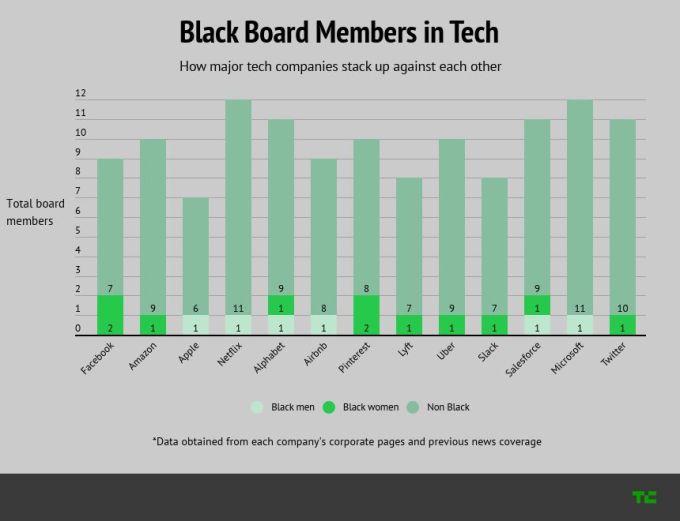
We’ve seen an increase in Black board members across the board at tech companies in the last couple of years. Most recently, Pinterest announced its first Black board member in August, followed by the addition of a second one in October.

Here’s a look at Black board member representation at major tech companies.

20 Nov 2020

Pfizer and BioNTech to submit request for emergency use approval of their COVID-19 vaccine today

Two of the companies behind one of the leading COVID-19 vaccine candidates will seek approval from the U.S. Food and Drug Administration for emergency use authorization (EUA) of their preventative treatment with an application to be delivered today. Pfizer and BioNTech, who revealed earlier this week that their vaccine was 95% effective based on Phase 3 clinical trial data, are submitting for the emergency authorization in the U.S., as well as in Australia, Canada, Europe, Japan and the U.K., and says that could pave the way for use of the vaccine to begin in “high-risk populations” by the end of next month.

The FDA’s EUA program allows therapeutics companies to seek early approval when mitigating circumstances are met, as is the case with the current global pandemic. EUA’s still require that supporting information and safety data are provided, but they are fast-tracked relative to the full, formal and more permanent approval process typically used for new drugs and treatments that come before they’re able to actually be administered broadly.

Pfizer and BioNTech’s vaccine candidate, which is an mRNA-based vaccine that essentially provides a recipient’s body with instructions on how to produce specific proteins to block the ability of SARS-CoV-19 (the virus that causes COVID-19) to attach to cells. The vaccine has recently been undergoing a Phase 3 clinical trial, that included 43,661 participants so far. The companies are submitting supporting information they hope will convince the FDA to grant the EUA, including data from 170 confirmed cases from among the participants, and safety information actively solicited from 8,000 participants, and supplementary data form another 38,000 who that was passively collected.

While production is ramping globally for this and other vaccines in late stage development, and EUA will potentially open up access to high-risk individuals including frontline healthcare workers, it’s worth pointing out that any wide vaccination programs likely aren’t set to begin until next year, and likely later in 2021.

20 Nov 2020

India approves Reliance’s $3.4 billion deal with Future Group, brings a new headache to Amazon

The Indian watchdog said on Friday it has approved the $3.4 billion deal between the nation’s two largest retail giants, Future Group and Reliance Retail, posing a new headache for American e-commerce group Amazon in the key overseas market.

The Competition Commission of India (CCI) said in a brief statement that it had approved the proposed acquisition of retail, wholesale, logistics, and warehousing businesses of Future Group, India’s second largest retail chain, by Reliance Retail, the largest.

Reliance Retail and Future Group announced their proposed deal, worth $3.4 billion, in late August. Amazon, which owns a stake in a Future Group’s subsidiary, has protested the deal, alleging the Indian firm of engaging in insider trading and violating contracts.

Late last month, a Singapore arbitration court issued an order to temporarily halt the deal between the two Indian retail giants, but it has been unclear ever since how much weight that order holds in India. Shortly after the court issued the order, Future Group and Reliance Retail said they were working to complete their deal “without any delay.”

Friday’s announcement is crucial. Amazon, which has invested over $6.5 billion in its India business, had requested the CCI and SEBI, the regulator of the securities and commodity market in India, to consider Singapore International Arbitration Centre’s order and blocking the deal.

Future Group is currently fighting with Amazon in a court in Delhi, where a lawyer of the Indian firm has used bizarre language to charge Amazon. The lawyer has likened Amazon’s effort to block Future Group’s deal to the East India Company, the British trading house whose arrival in India kicked off nearly 200 years of colonial rule.

Amazon did not immediately respond to a request for comment.

More to follow…

20 Nov 2020

Charge’s City is an e-bike for everyone

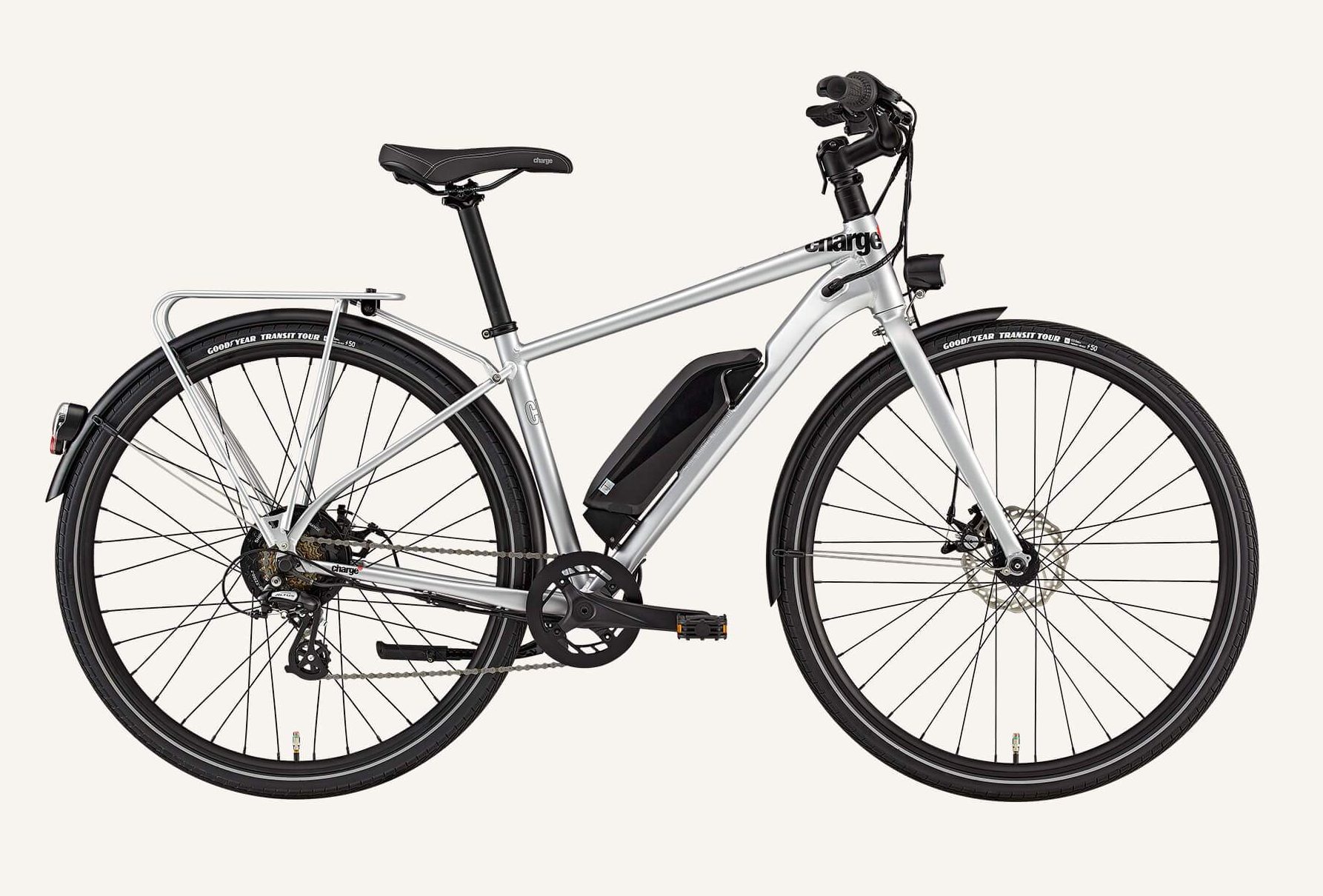
Charge Bikes founder Nick Larsen and VP of product Peter Vallance wanted to reduce the pain points of buying and owning an electric bike to attract everyday folks and cycling enthusiasts alike.

The company offers three models: the Comfort for weekend leisure rides, the City for commuters and the XC for off-road enthusiasts. I got to spend some time with the City and took it on a quick grocery to see what it could do.

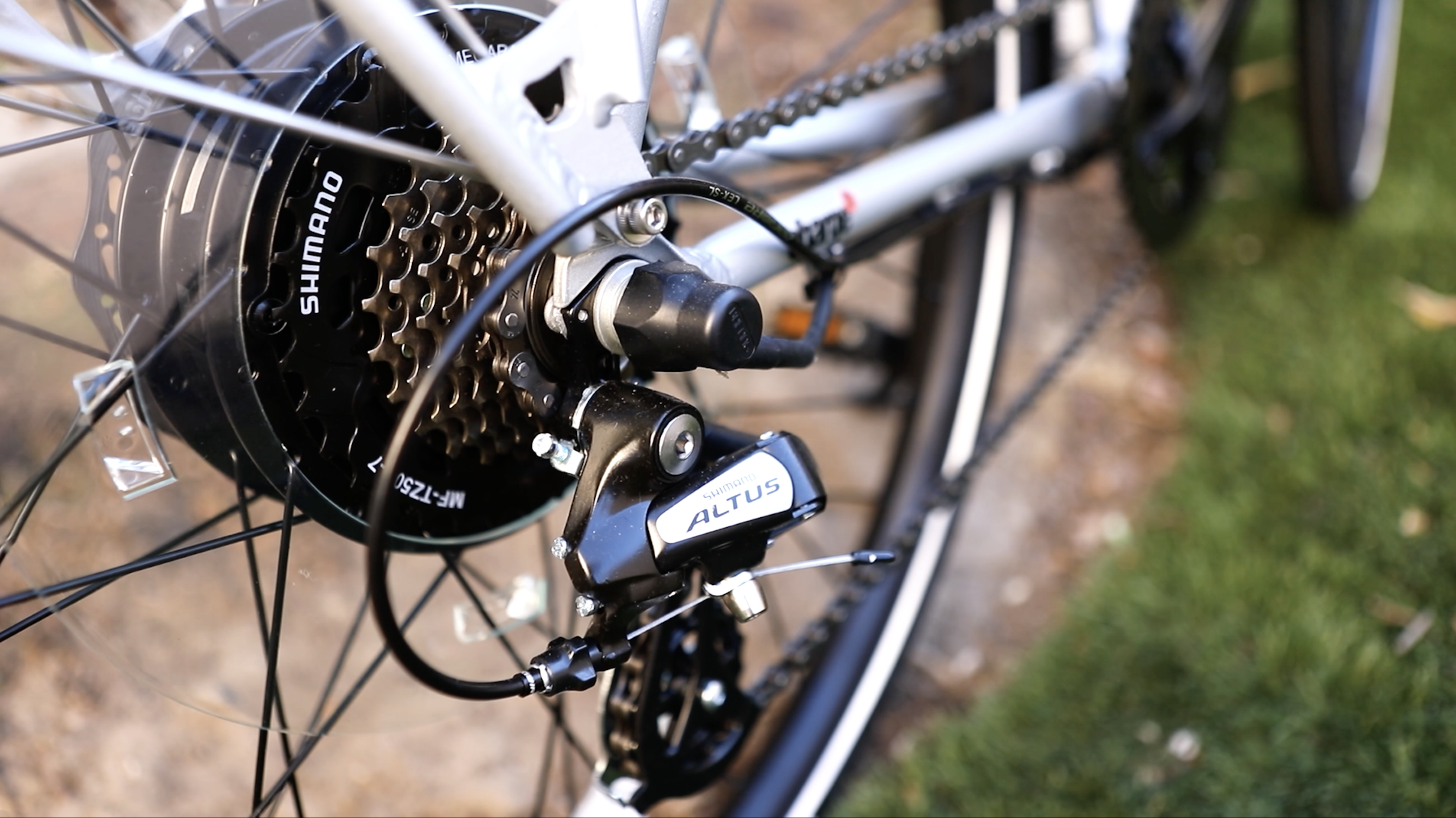
The bbike features a 250w geared hub motor with a max speed up to 20 MPH, pedal assist and throttle, front and rear lights, a locking removable battery that’s capable of 50 miles on a single charge, folding handlebar and pedals, puncture-resistant Goodyear tires, tire pressure sensors, an easy to read display with speed and power assist selector, disc brakes, Shimano Tourney 7 speed shifter, fenders, a rack and a handy dandy kickstand. All of that weighs in at just 45 pounds.

Charge Bikes

Source: Charge

Unboxing was simple, and I was happy the company skipped the styrofoam packing. I really like working with my hands and building things, but this was almost too easy. Just unfold the handlebar and pedals, attach the front wheel and adjust the seat post. Once you fill the tires with air and charge the battery, you’re ready to ride.

I started my ride on flat ground and mostly used the throttle at the highest setting — because, why not? The seat, grips, and riding position were comfortable, and I could see myself easily riding for longer.

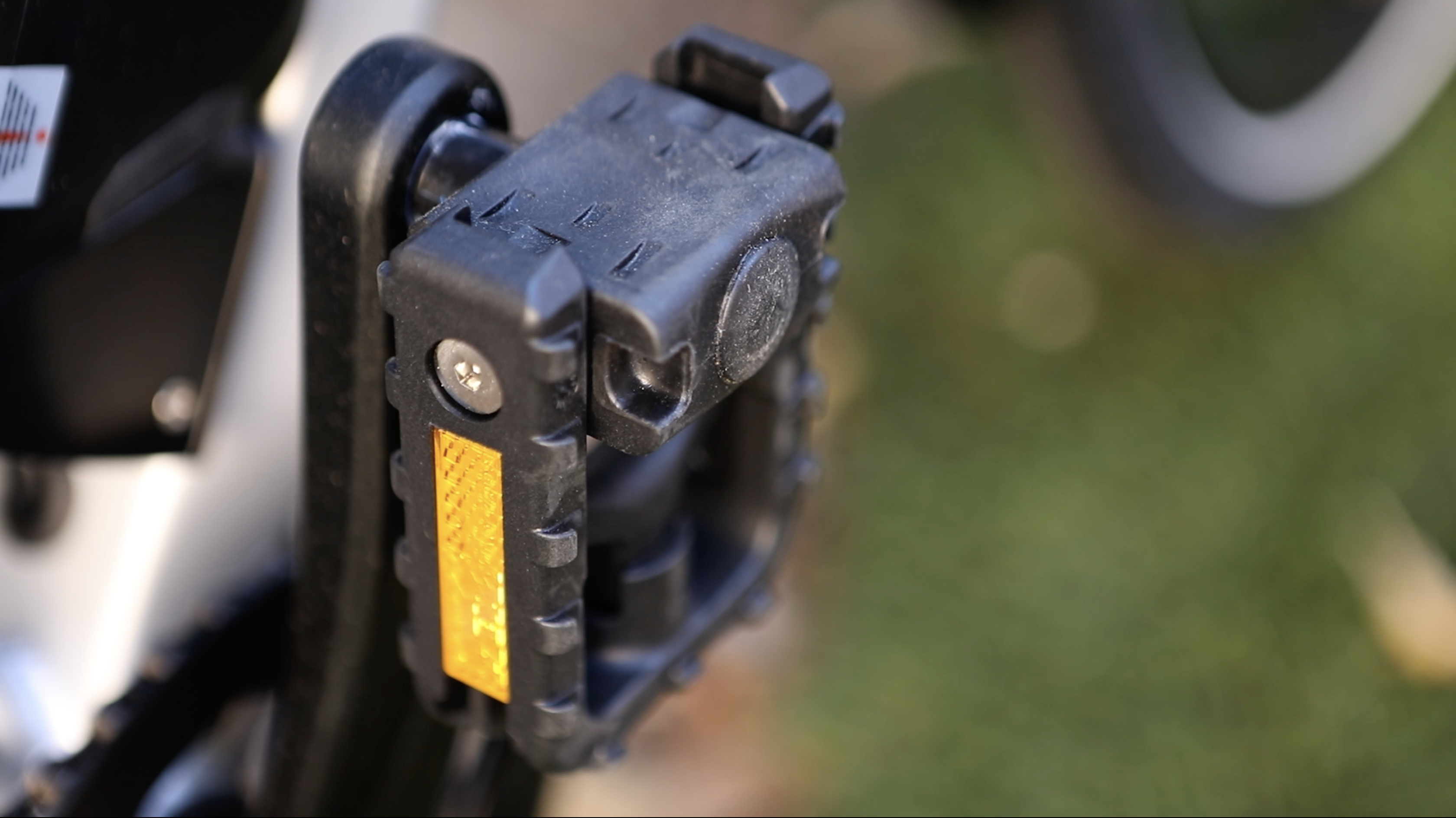
The foldable pedals felt strange. There was some flex and bowing, which made me think I might be losing some crank power going to the wheel. I was afraid I might break them. However, the foldable handlebar felt securely locked in and didn’t give me any worry.

Source: Charge

One of the company’s marketing messages — “Get there and back, no sweat” — didn’t ring entirely true, at least for me. While it’s plenty fast and assists great on flat land, it’s not the hill flattening bike that I hoped it would be. We’ve got a lot of foothills out here in Oakland and my route to the local grocery store had several varying inclines. Some of the steepest had me cranking hard to make five miles an hour at assist level five.

It’s definitely better to have the electric power than not. I certainly wouldn’t attack any of these hills on my regular bike. I normally drive to this grocery store, but having an e-bike gave me the option of leaving the car parked and I like that.

Some critical points about the bike but aren’t dealbreakers are the fenders. While a great feature, they’d bend out of place often rubbing against the tires. The foldable pedals are a nice idea, but I’d likely swap them out for standard ones with straps.

I ran into gear-shifting issues mid hill climb which is the worst time for it not to shift into an easier gear. This was happening with my thumb on the throttle full blast. I also had an issue with the charger not charging the battery 100% overnight. It happened a couple times and I’m not sure what the issue was. I unplugged everything and plugged it back up, and that seemed to do the trick.

Source: Charge

Overall, the City is a great utilitarian bike for daily riding for everyday folks. From purchasing the bike to storing it, they really have reduced the friction points of owning an e-bike. You can purchase the City bike on their site for $1,499.


20 Nov 2020

How four European cities are embracing micromobility to drive out cars

The coronavirus pandemic is acting as a catalyst for urban transformation across Europe as city authorities grapple with how to manage urban mobility without risking citizens’ health or inviting gridlock by letting cars flood in.

Micromobility and local commerce are being seen as both short and long-term solutions for urban revival in a number of cases. We’ve run down key policy developments in four major cities, Paris, Barcelona, London and Milan, which — at varying speeds — are pushing to rethink and reclaim streets for feet and two wheels.

Paris’ 15-minute city

Every year, around 2,500 people die prematurely because of air pollution in Paris. Like most European cities, the number one cause of pollution is motorized traffic.

Due to consistent policy changes over the past two decades, pollution has been slowly decreasing. It’s a long and difficult process and each step provides a new set of challenges.

The city has only had two different mayors for the past twenty years — Bertrand Delanoë and Anne Hidalgo. That consistency combined with long terms as mayor has led to some divisive changes and long-term thinking.

Paris has a long and conflictual relationship with cars. Nearly 20 years ago, bus lanes were highly controversial because it reduced space dedicated to cars. Today, nobody is asking for the removal of those lanes.

That’s why it’s a bit ironic that the same thing is happening again and again. For instance, Paris Mayor Anne Hidalgo banned cars from the right bank of the Seine in 2016. Many political opponents and car enthusiasts criticized the decision. Earlier this year, none of the candidate in the municipal election mentioned the right bank of the Seine — it became a non-issue.

But the city’s policies aren’t just focused on banning cars. Paris has become a mobility lab for European cities with many public and private initiatives. If they work in Paris, chances are those initiatives will be reproduced elsewhere.

There are two reasons why Paris is an interesting city for mobility experiments. First, the Paris area is the 29th metropolitan area in the world by population density. Georges-Eugène Haussmann initiated some radical urbanization changes in the second half of the 19th century leading to the city’s modern layout — mostly seven-story buildings circled by the ring road.

As the limits of the city haven’t changed in over 100 years, it is still relatively small compared to other major cities. For instance, San Francisco, which is a small city by American standards, is still larger than Paris when it comes to area.

Second, Paris attracts a lot of tourists (in a normal year). In 2019, 38 million tourists came to Paris. These tourists tend to do normal touristy things — they move around the city all day long.

Vélib’ as the epicenter of mobility changes
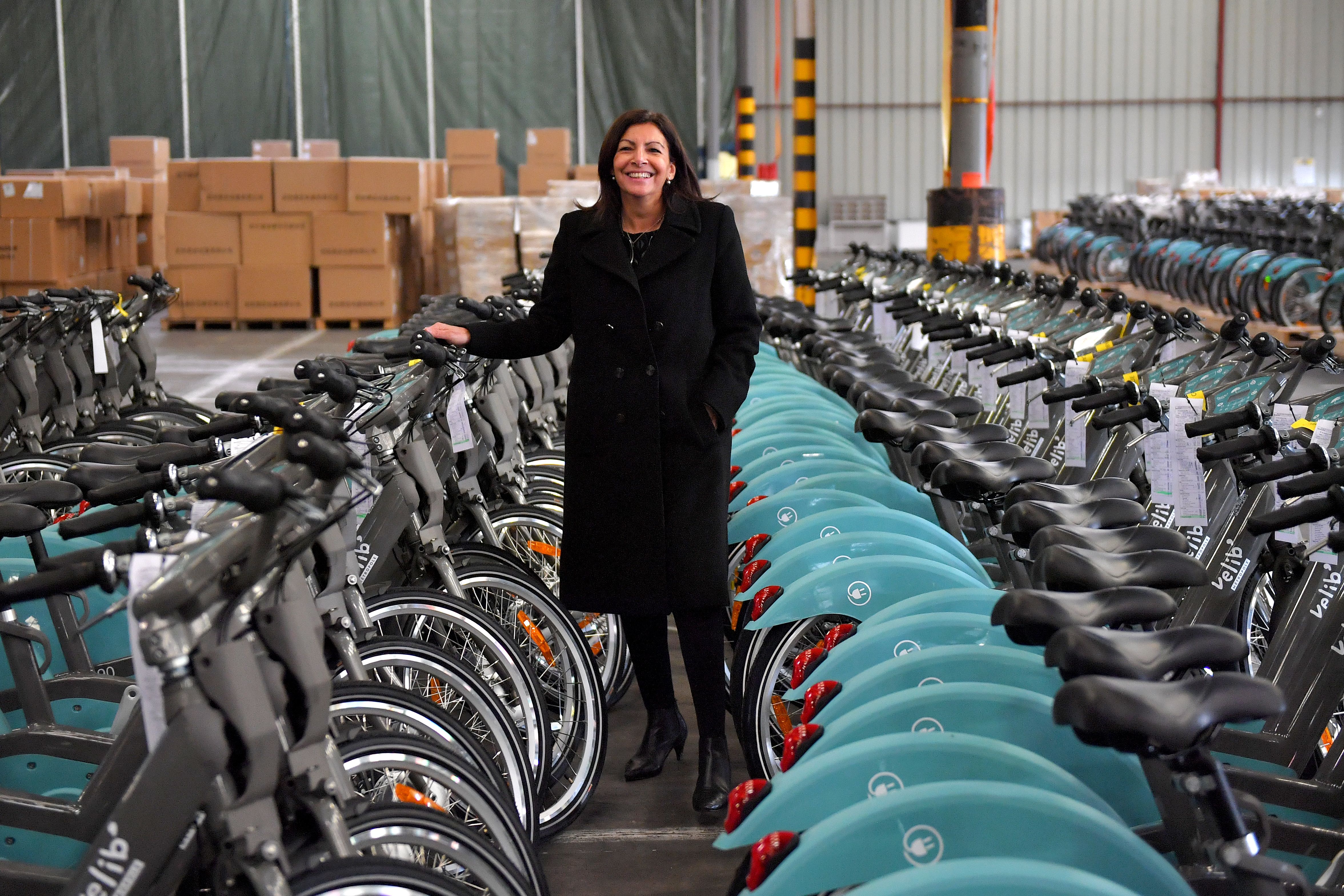
Paris Mayor Anne Hidalgo and Vélib' bikes

Paris Mayor Anne Hidalgo and a fleet of Vélib’ bikes. Image Credits: Loïc Venance / AFP / Getty Images

In addition to a dense public transportation network with subways, regional trains, buses and trams, other transportation methods have emerged. In 2005, the city of Lyon introduced Vélo’v, a publicly subsidized bike-sharing service based on a network of stations spread across the city.

Two years later, the city of Paris introduced a similar servie called Vélib’. It’s hard to overstate how big of an impact Vélib’ has had on transportation. Just a few years after its launch, Vélib’ had hundreds of thousands of subscribers generation over 100,000 rides per day.

Other cities in Europe and the U.S. have followed course and introduced their own bike-sharing service. But nobody has come close to reaching the success of Vélib’. Despite some growing pains, Vélib’ now has over 400,000 subscribers. On September 4th, 2020, the service handled 209,000 rides. There are around 15,000 bikes on the service, which means that each bike is used nearly 14 times per day.

The reason why Vélib’ is much more successful than Citi Bike in New York or Santander Cycles in London is that Vélib’ is much cheaper. A standard Vélib’ subscription with unlimited ride costs $3.70 per month (€3.10). In London, you pay nearly $10 per month (£90 per year). In New York, it costs $15 per month. Subscribing to Vélib’ is a no-brainer.

And this is all due to political will. Vélib’ is a subsidized service. But it’s hard to understand the financial impact of Vélib’ as there are fewer cars on the road, which means that it’s less expensive to maintain roads. Additionally, the impact on pollution and physical activity means that people tend to be healthier, which reduces the pressure on the public health system.

Bike-sharing services can’t work without public money as it fosters network density, which boosts usage. Once the network reaches a critical mass, it’s a never-ending virtuous circle of network expansion and new clients.

Micromobility’s key battleground
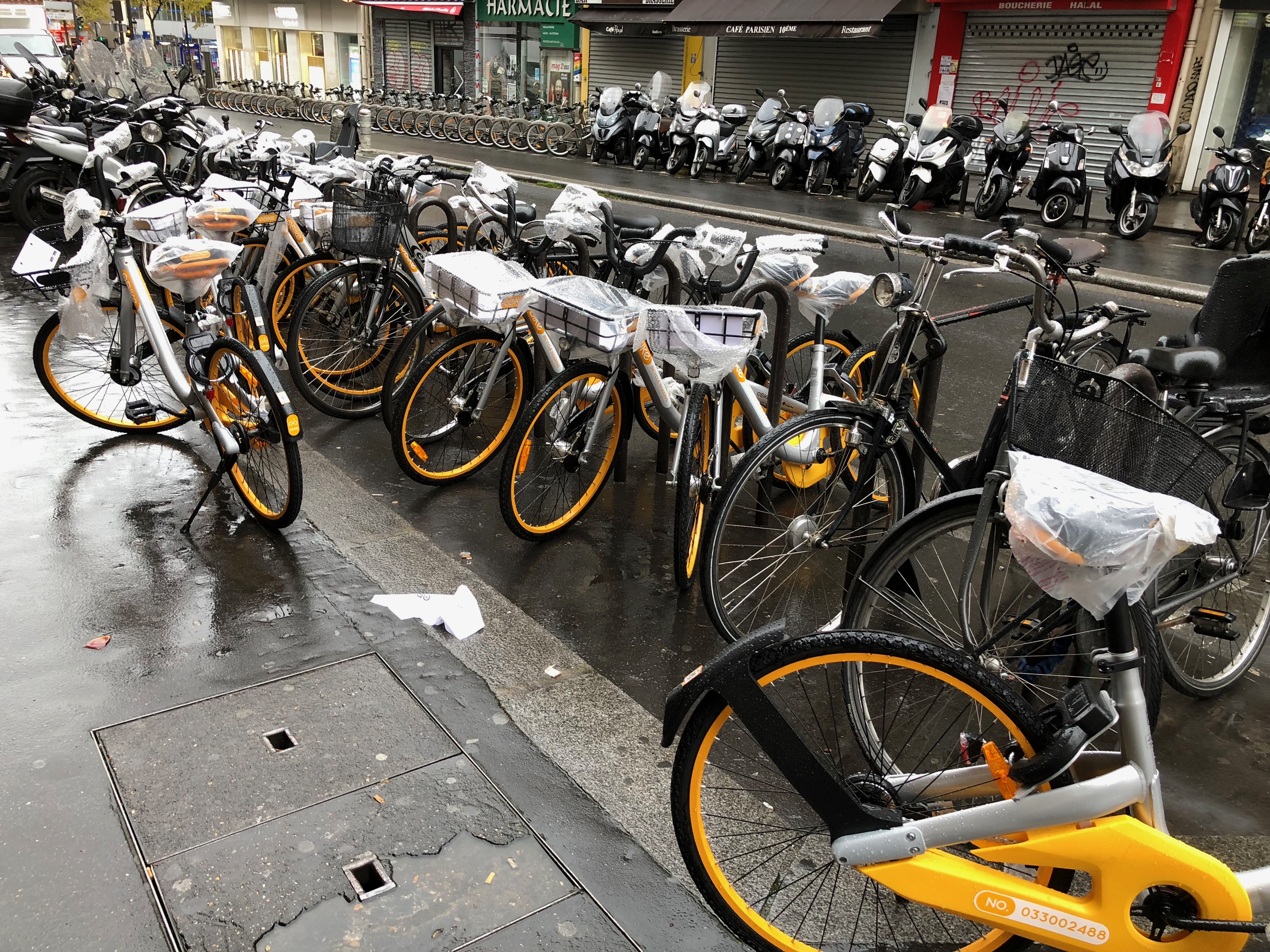
A dozen Bikes from Obike in Paris

Image Credits: Romain Dillet / TechCrunch

Many startups have tried to enter the lucrative market with their own take on bike-sharing without docks. Gobee.bike, Obike, Ofo, Mobike and more recently Bolt have all deployed thousands of bikes in the streets of Paris. They’ve all shut down since then. Jump, which is now a Lime subsidiary, is the only remaining contender.

But bikes are just one transportation method among what people call ‘soft mobility’ in France. A French startup called Cityscoot has also been thriving with tens of thousands of rides per day. The company operating free-floating electric moped scooter service.

And then, there are scooters. At some point, there were just too many scooter startups — Bird, Bolt, Bolt by Usain Bolt, Circ, Dott, Hive, Jump, Lime, Tier, Voi, Ufo and Wind. They all had funny-sounding names and there were even two different companies with the same name (Bolt). And I’m probably forgetting a couple of companies.
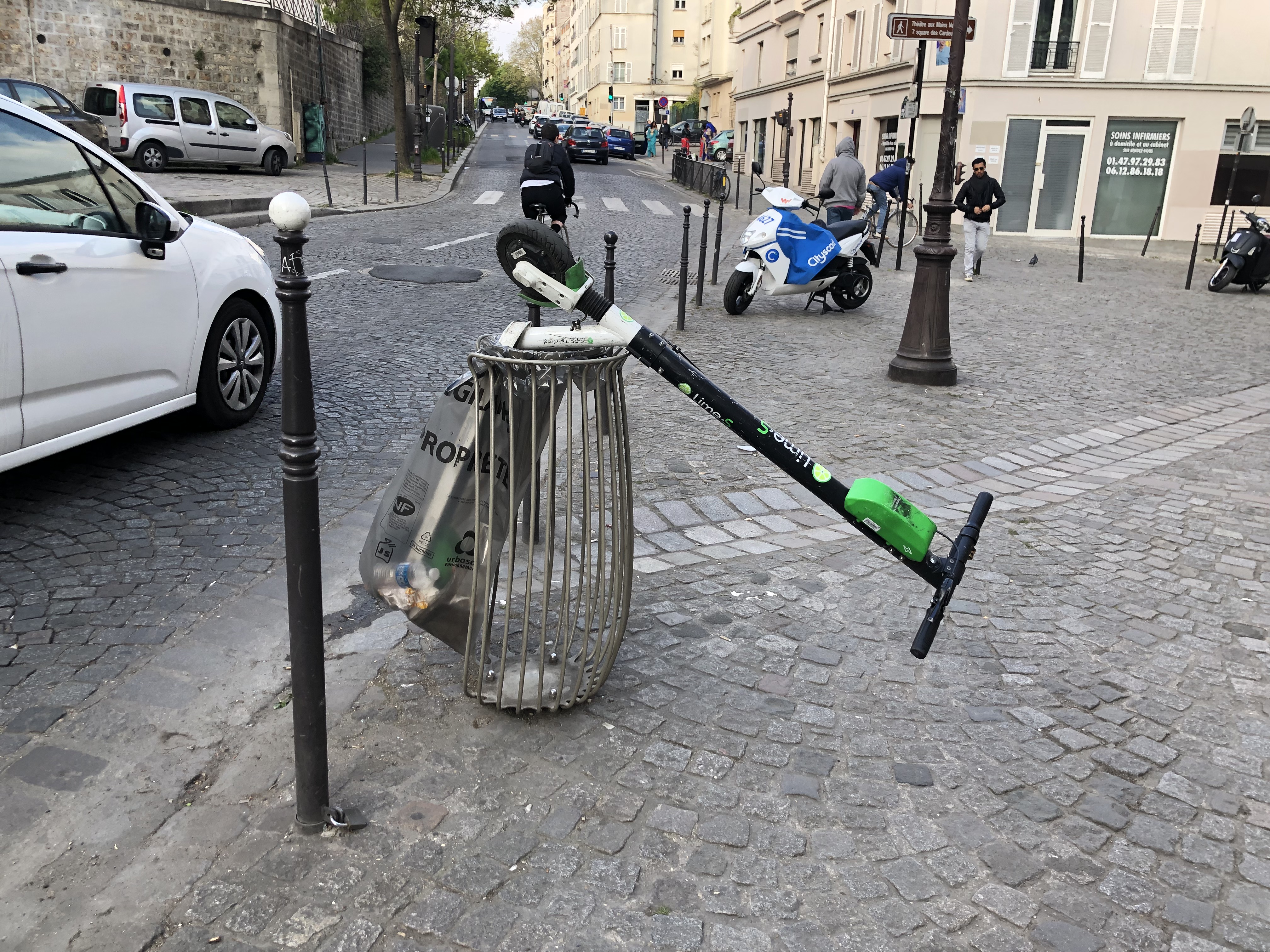
Image Credits: Romain Dillet / TechCrunch

This shows once again that Paris is an attractive city for micromobility startups. There are many tourists and you can go from A to B quite easily.

The city of Paris had to regulate the market because scooters were taking over urban space. There are now three permits to operate shared electric scooters in Paris — Dott, Lime and Tier. They each operate a fleet of 5,000 scooters and there are now dedicated parking spots.

The 15-minute city

Up next, Paris Mayor Anne Hidalgo has some ambitious plans to accelerate the pace of changes. During her reelection campaign earlier this year, she laid out a clear multiyear plan with a key concept: the 15-minute city.

“The 15-minute city represents the possibility of a decentralized city. At its heart is the concept of mixing urban social functions to create a vibrant vicinity,” Carlos Moreno, a professor at University of Paris 1, told Bloomberg.

Essentially, Moreno believes that there shouldn’t be residential neighbourhoods, business districts and commercial areas. Each neighbourhood should be a tiny town on its own with workplaces, stores, movie theaters, health centers, schools, bakeries, etc.

In addition to reducing carbon emissions, the 15-minute concept has the potential of revitalizing neighbourhoods altogether. By prioritizing social functions, roads immediately become an afterthought.

The 15-minute city is a concept that sums up a lot of things in three words. Suddenly, there’s a clear political agenda with a strong brand for the next decade of urban planning.

If I paraphrase neoliberal ideology, many policies trickle down from the 15-minute city. Car ownership is relatively low in Paris — more than 60% of households don’t have a car. Even more striking, people going to work use their car extremely rarely — in 9.5% of cases.

There are two consequences. First, cars are no longer the priority. In 2024, you won’t be able to drive a diesel car in Paris. In 2030, gas-powered cars will be banned.

Some major roads are now primarily focused on ‘soft mobility’. Due to the coronavirus outbreak, the city of Paris took advantage of the lockdown to accelerate their mobility agenda with new bike lanes and repurposed roads. It feels like they’re copying the neoliberal shock doctrine, as explained by Naomi Klein. And yet, in that case, it feels like a reverse shock doctrine as the administration is focusing on green initiatives.

For instance, the Rue de Rivoli used to be a major road that connects the Champs-Elysées to Bastille. Now, one-third of the road is dedicated to buses and two-thirds are reserved for bikes and e-scooters.
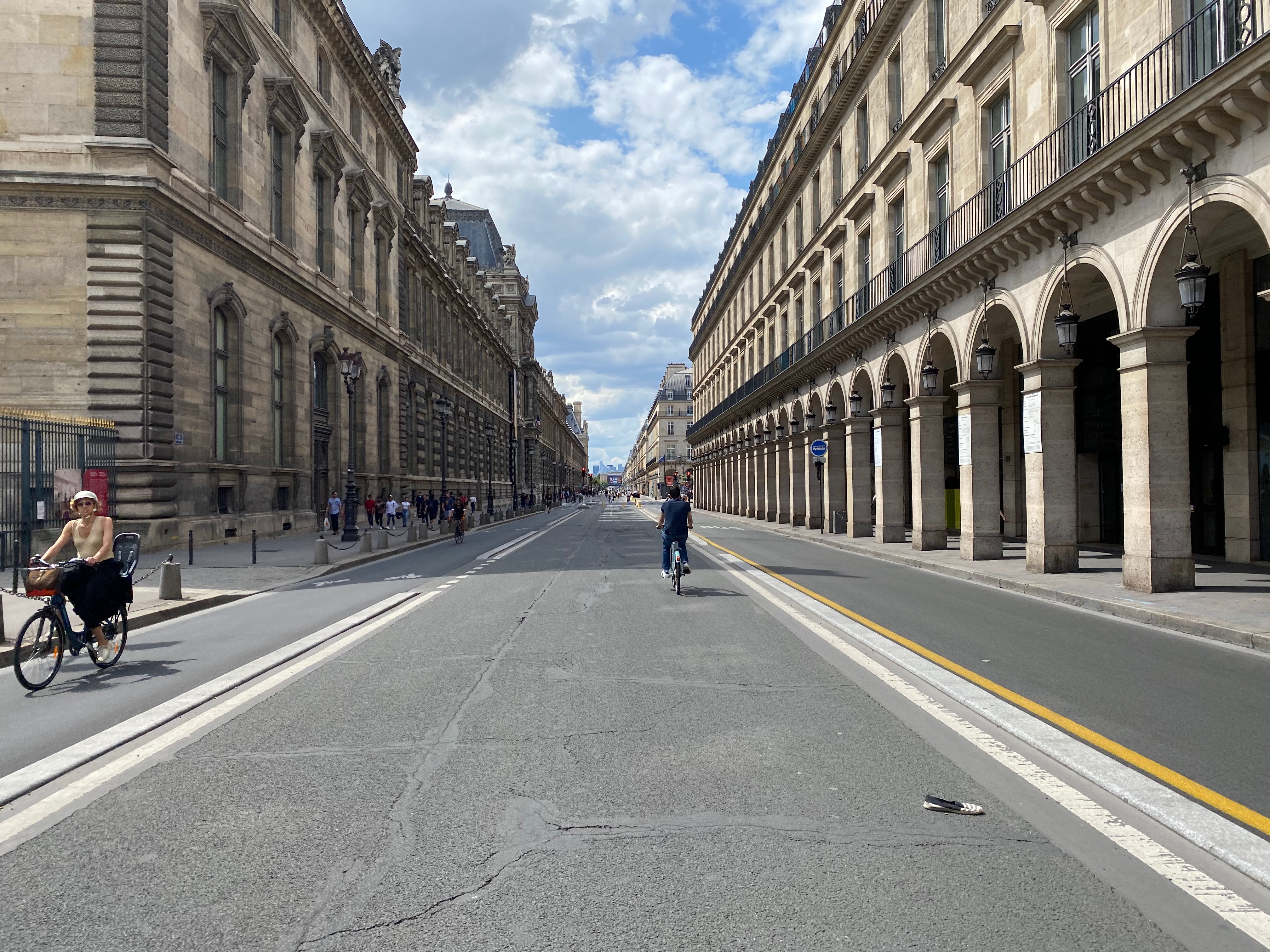
Rue de Rivoli. Image Credits: Romain Dillet / TechCrunch

Second, the City of Paris wants to reclaim space. Cars in Paris remain parked 95% of the time. That’s why Paris is going to remove 50% of parking spots. Instead, the city of Paris wants to turn some streets into gardens. There are bigger plans for new parks as well in front of the city hall and between the Eiffel Tower and Trocadéro.

After decades of incremental changes, everything is lining up for a drastic transition. In Paris, change happens progressively, then suddenly.
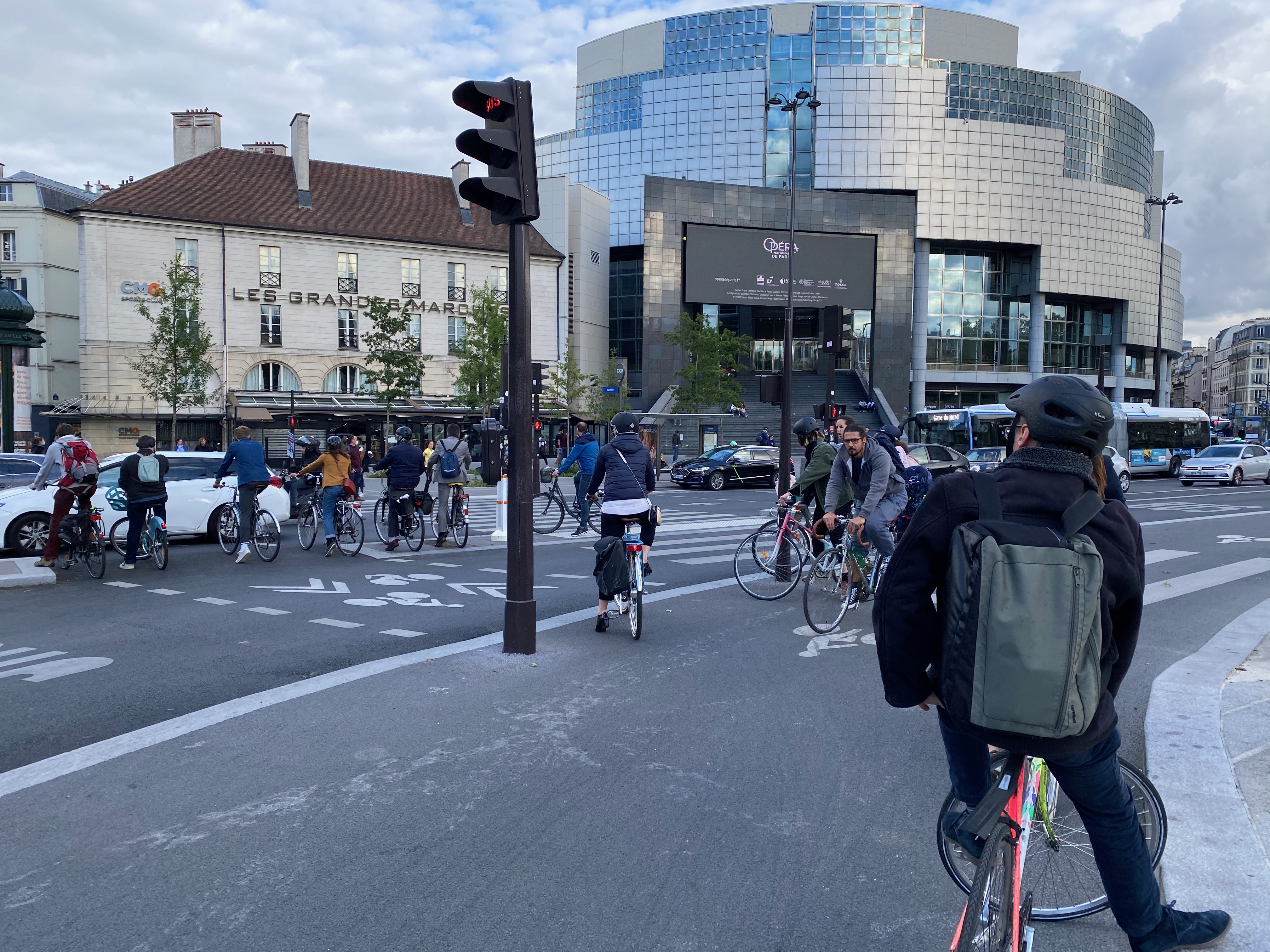
A bike traffic jam near Bastille, Paris

Image Credits: Romain Dillet / TechCrunch

Barcelona’s Superblocks

The Catalan capital — Spain’s second largest city — approved a new Urban Mobility Plan in 2013 with the aim of flipping street space in favor of pedestrians and away from prioritizing private vehicles. The city has the highest vehicle density in Europe and that’s a major problem.

City authorities report vehicle density at around 6,000 per square kilometer — highlighting the deleterious impact on air quality and public health. Per official stats, traffic pollution causes 3,500 premature deaths annually, 1,800 hospital admissions for cardiorespiratory problems, 5,100 cases of bronchitis in adults, 31,100 cases in children and 54,000 asthma attacks in children and adults.

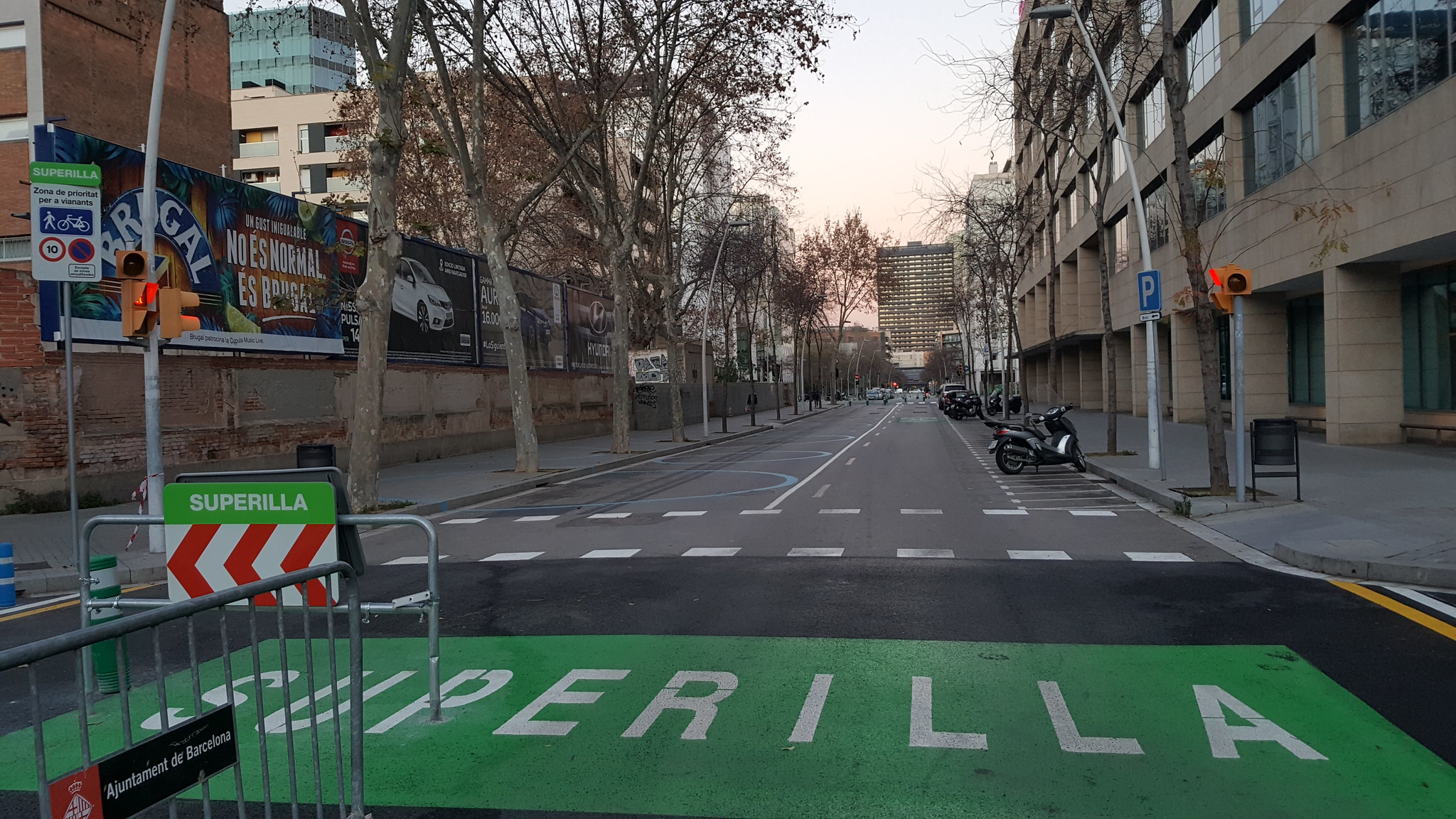
The city’s solution to this public health crisis is an ambitious pedestrianization plan focused, in recent years, on creating ‘superilles’ — also known as ‘super islands’ or ‘superblocks’ — which switch the function of a number of streets from carrying cars to putting neighbourhood life first.

One of Barcelona’s early superblocks in the Poblenou district. Image Credits: Toni Hermoso Pulido / Flickr under a CC BY-SA 2.0 license

A handful of superblocks have been established over the years. Some, such as one in the Gracia barrio, is already so well established it’s all but invisible to the eye unless you stop to ask yourself how come there are so many pedestrians out and about and the cars that pass have to creep along behind them? Or why the edge of the pavement blends seamlessly into the road with no change of level.

But Barcelona is now planning a major expansion of the policy, championed by mayor Ada Colau, that will see it transform the dense, central Eixample district — creating masses more green (and low speed) urban space over the next ten years. They’re dubbing this the Barcelona superblock, given its central location and the larger scale vs what’s come before.

The superblocks model is naturally suited to micromobility — and building out the city’s network of bike lanes is a key part of the urban mobility plan.

Barcelona has had a red-liveried docked bike rental scheme — called Bicing — since 2007. Recently upgraded to include e-bikes alongside mechanical rides, the scheme isn’t yet as heavily used as its equivalent in Paris (and isn’t open to tourists as the subscription requires a local ID to obtain) but it is very popular with residents.

Per official data, Bicing had more than 127,000 subscribers as of September 2020 who racked up around 1.3 million journeys in the month.

In recent years e-scooter ownership has mushroomed, with no specific legislation preventing private use on public roads, though rental companies have faced regulatory controls — not that that’s prevented plenty of scooter startups, from Bird to Bolt to Wind, from scooter-bombing the city seeking to workaround restrictions.
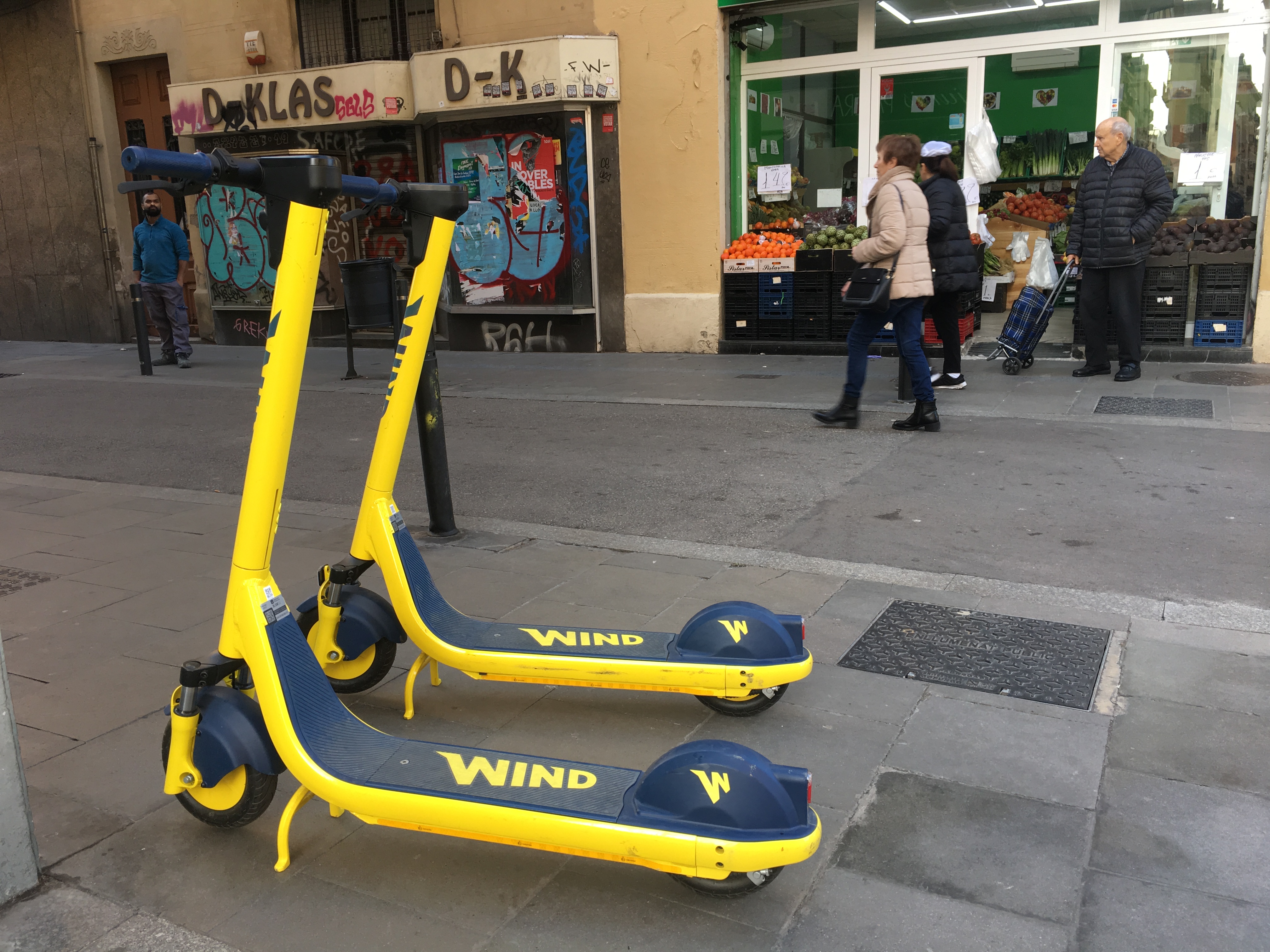
A pair of Wind e-scooters parked in a Barcelona street in the barrio of Gracia where pedestrians and bikes already have priority over cars. Image Credits: Natasha Lomas / TechCrunch

As well as boosting biking and micromobility, the superblocks plan also aims to boost local commerce as streets flip from being ‘for cars’ to greener and more pleasant spaces where people are encouraged to meet, gather and do business.

In other traffic control policy measures, Barcelona began applying restrictions to vehicles based on their emissions at the start of this year — banning older petrol and diesel cars from entering during peak times. (The policy will apply to delivery transportation from next year.) While residents who own polluting vehicles have been encouraged to give up their cars in exchange for a free three-year public transit card (nudging people toward the existing metro, train and bus network).

With the superblocks transformation, there’s a historical architectural challenge that Barcelona’s urban planners are aiming to overcome.

The grid structure of the central Eixample district — conceived in 1856 by Catalan civil engineer, Illdefons Cerdà — aimed to extend the growing city in a healthy way by allowing for green space within every housing block.

However, the plan was implemented with a lack of regulation that allowed infill by developers and speculators over time, fuelled by rising land values and housing prices. That gobbled up gaps in the blocks intended as open public spaces. The result is a far denser city than Cerdà had planned. And one with streets that — so long as they remain packed with petrol and diesel vehicles — are noisy, polluted and unpleasant places to hang around in.

The Barcelona superblock is thus an attempt to right a historical wrong in the implementation of the city’s urban planning. Or “to modernize the Barcelona of the late nineteenth century and achieve better conditions for public health,” as city authorities put it.

It’s also a cautionary story about the need for proper regulation to accompany urban planning to ensure it serves the public interest — to protect residents’ health, quality of life and local commerce — guarding against deleterious external forces powered by private economic interests.

Around a third of Eixample’s 61 streets will be flipped to make way for a “green axes” of pedestrianized carriageway by 2030, under the Barcelona superblock plan. It will also create 21 new public squares at diagonal intersections.

The transformation of the zone will be slow, with city authorities wanting to make sure they bring residents along with them. But they have data to champion the plan — drawing on the success of a handful of existing superblocks, such as one in the Poblenou district — and can point to examples such as a third less NO2 pollution at one of the flipped interchanges and a similar increase in street level commercial activity.

The detail of the new street model has not yet been determined — the city is holding a design competition to choose that next year — but it’s set key parameters such as the need for 80% of the street to be shaded by trees/vegetation in summer, and at least 20% of its surface to be permeable rather than paved.
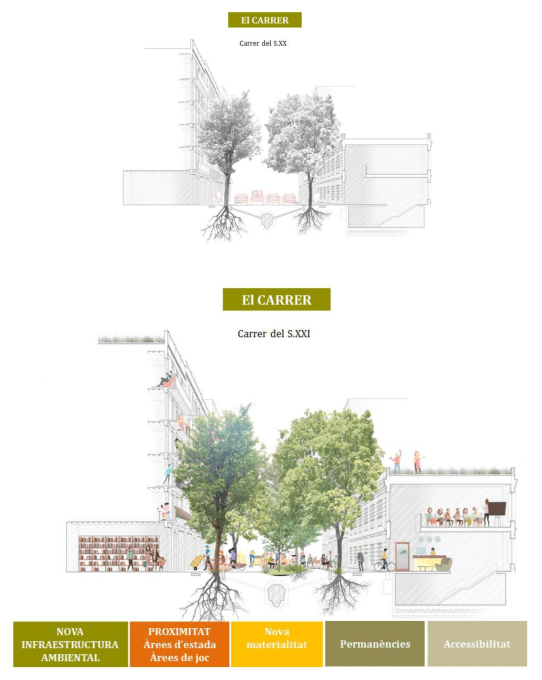
The city’s vision for the evolution of streets in the Barcelona superblock. Image Credits: Barcelona City Council

“It will be necessary to generate walking spaces, spaces that facilitate spontaneous children’s play and comfortable living spaces,” it writes in a press release [translated from Catalan]. “The design will have to allow for flexible spaces that can accommodate various occasional uses such as fairs, concerts and other acts. All with a feminist vision, prioritizing children and the elderly and promoting services and local trade.”

City authorities describe the aim as “a more sustainable model of public space, healthy and designed for people” — and one which “promotes social relations, which encourages local trade and focuses on the needs of children and seniors.”

They have also committed to maintain access to public transport throughout the superblocks.

Work on converting the first four streets is slated to begin in the first quarter of 2022: In Consell de Cent, Girona, Rocafort and Comte Borrell. City authorities have committed $44.8 million (€37.8 million) to these first transformations — though clearly a lot more public funding will be needed to deliver the full switch.

The coronavirus pandemic has acted as a small-scale opportunity for accelerating pedestrian-focused urban remodeling — enabling city authorities to expand Barcelona’s network of bike lanes during the relative quiet of lockdowns, and install some emergency pedestrian zones to expand outdoor space as an anti-COVID-19 measure.

Some street parking around the city has also been requisitioned and repurposed to make outdoor terrace space for cafés and bars during the pandemic.

But the need to reset an urban infrastructure that’s unhealthily monopolized by motorized traffic is an issue the city has been grappling with for decades — slowly chipping away at the problem with a variety of policies, such as those that allow for temporary road closures for local events and at weekends.

So for many Barcelona residents it’s not controversial to say that creating healthy, commercially active urban spaces means cars giving way to foot traffic. And the 2030 ‘Barcelona superblock’ looks like it will tip the balance for good.

That said, criticism of the project includes that it’s not radical enough — leaving a number of high-speed thoroughfares to keep on slicing right through the heart of the city. So Barcelona’s creep away from cars doesn’t yet look as radical as what’s being planned in Paris.
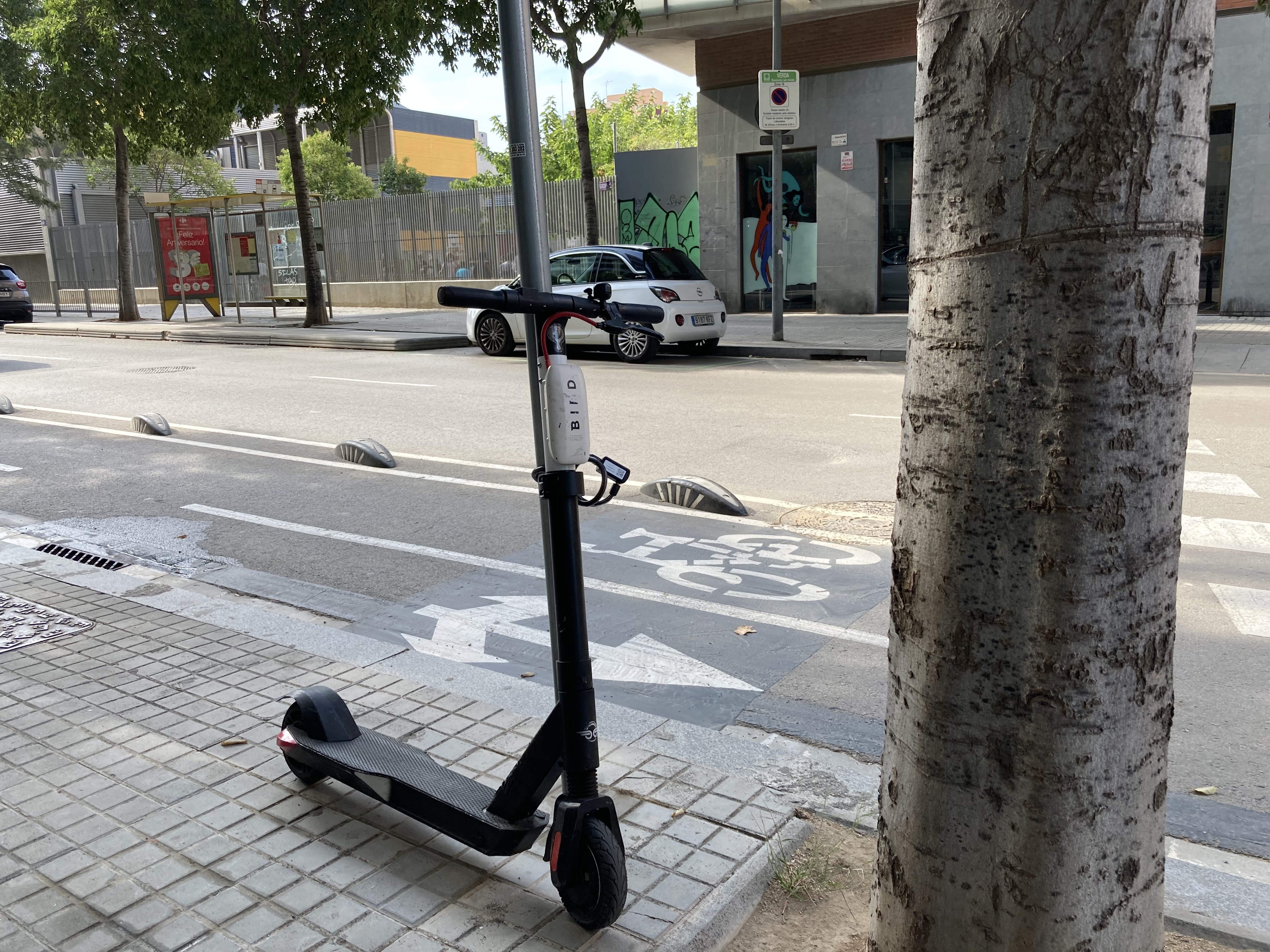
A Bird e-scooter parked next to a bike lane in Barcelona’s Poblenou district. Image Credits: Natasha Lomas / TechCrunch

London’s Low-Traffic Neighbourhoods

The UK capital has operated congestion charging in central zones of the city since 2003 — charging motorists to drive into the area in a bid to reduce road use during the busiest times. The policy made London a major European pioneer in applying controls on urban car use.

However, a lack of public and political consensus on the issue has restricted policy development for long periods — and even led to a rolling back, at the end of 2010, when then London mayor, Boris Johnson, scrapped a portion of the zone known as the western extension.

London’s huge population and sprawling size — with commercial zones tending to be clustered and concentrated away from large swathes of residential housing (which are often segregated by income) — means the issue of how to get around can be a divisive one, for people and businesses. So, it’s not an obvious candidate for going ‘car free’.

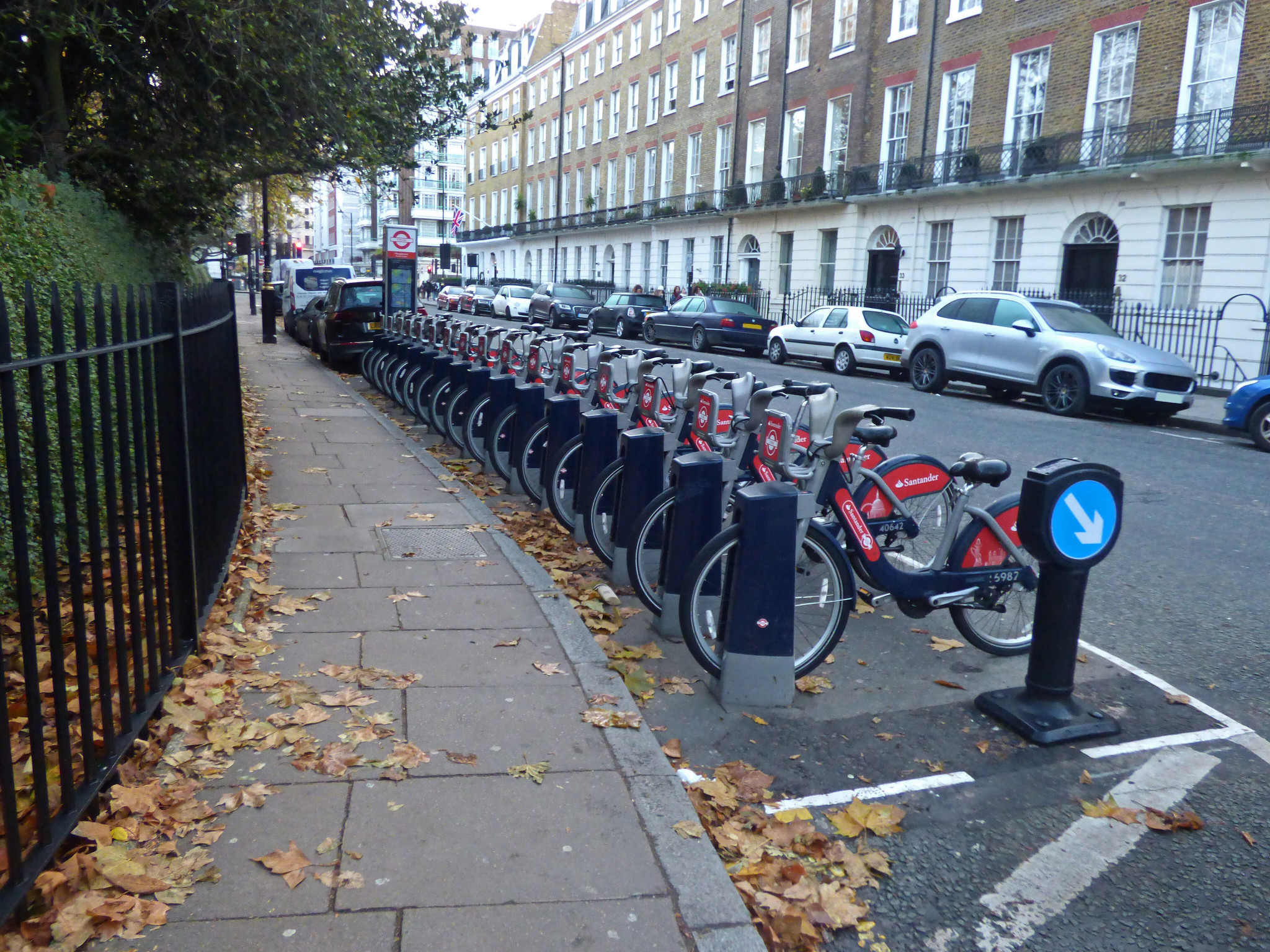
Yet, at the same time, London is extremely well served with public transport (buses, subways, trams and trains) — meaning plenty of journeys can be made without owning or using a private vehicle. There has also been investment in expanding the city’s network of cycle lanes in recent decades. And since 2010 a pay-as-you-go docked bike rental scheme has been in operation — racking up more than 10 million trips in total as of 2017.

Though, again, car-clogged streets and a Northern European climate can put limits on people’s willingness to brave the elements on two wheels.

London’s docked bike hire scheme. Image Credits: Elliott Brown / Flickr under a CC BY-SA 2.0 license

Existing UK regulations have also held back the uptake of modern alternatives like e-scooters — though there are now moves to open up streets to this type of micromobility, with the city’s transport regulator preparing a trial for scooter rental companies.

While a lack of decisive political action to curb car use has undoubtedly contributed to decades of terrible air quality in London — with drastic impacts on public health (one study in 2015 suggested deaths from long term exposed to pollution could be as high as 9,500 annually) — rising awareness of the health risks associated with urban traffic has led city authorities to push policies that aim to deter the most polluting vehicles from driving through the congestion zone by applying a surcharge, Which appears to have led to a decline in peak pollution levels.

London’s ‘ultra-low emission zone’ (Ulez) will also be expanded to cover a larger area of the city next year. So, there’s been a centralized and somewhat sustained push to make urban car use cleaner and less harmful, even though there’s been an inconsistent approach to discouraging car use itself.

But, in a more radical recent development, the shock of the coronavirus has fuelled grassroots campaigns at a borough/neighbourhood level to bar through-traffic in residential neighbourhoods.

This is done by implementing so-called low traffic neighbourhoods (LTNs) which use a variety of interventions to limit traffic — such as strategically placed planters or bollards and/or timed road use restrictions to block rat runs.

Residents in a number of London boroughs who are sick of living alongside the noise and pollution generated by traffic have seized on the opportunity of COVID-19-related mobility restrictions to restrict access to roads in their immediate vicinity to through traffic.

Per Bloomberg, there were 114 plans for LTNs in the works in London as of late July.

There’s push and pull here too, with LTNs generating opposition, including complaints that rat-running cars are simply being displaced to other streets.

There are also important socioeconomic critiques that they disproportionately benefit wealthier areas at the expense of more deprived neighbourhoods.

Such opposition may in part reflect the relative rapidness of implementation since the pandemic — something a more participatory process and well-rounded monitoring and consultation might be able to avoid.

But for those lucky to be living in LTNs the gains look hard to ignore. “Now, instead of speeding cars, the streets carry street chalk, murals, flowers, and signs with children’s illustrations asking people to step out of their car and explore the neighborhood,” Bloomberg reports on the changed character of street life in one LTN.
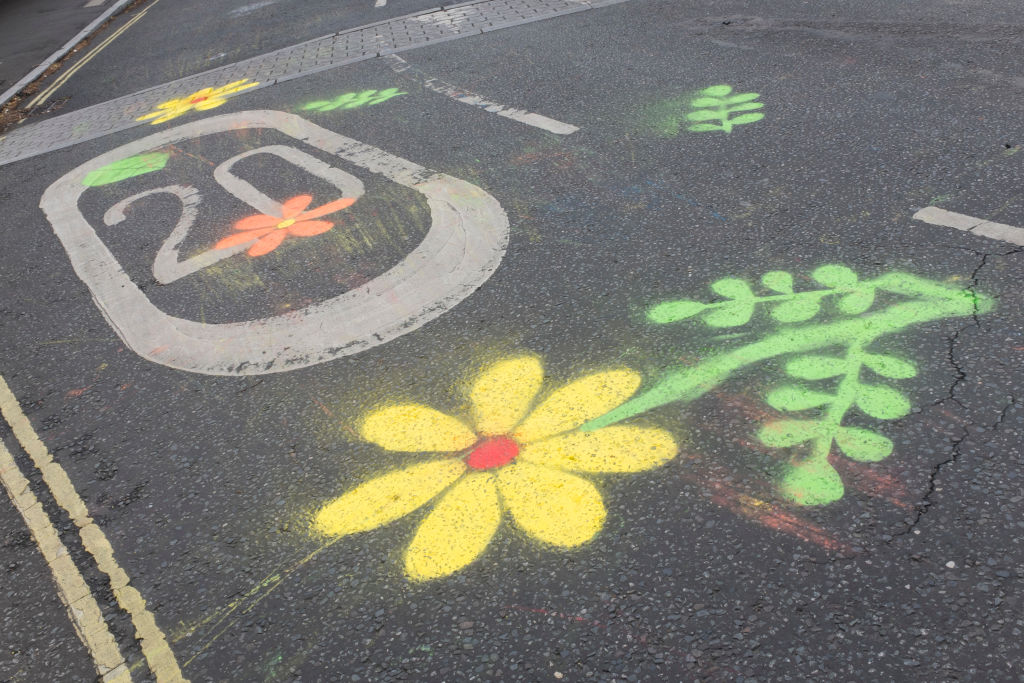
Image Credits: Richard Baker / In Pictures / Getty Images

In May, London’s mayor, Sadiq Khan — who has pledged to make London carbon neutral by 2030 if he’s reelected next year — announced a ‘Streetspace’ plan: Pushing a range of policies aimed at “rapidly transforming London’s streets to accommodate a possible 10x increase in cycling and 5x increase in walking.”

The plan also explicitly encourages scooting alongside walking and cycling as an urban mobility priority in London.

Part of the motivation for the policy push has been trying to steer Londoners away from a mass regressive switch away from London’s public transport — and into cars — as lockdown restrictions ease yet the risk of COVID-19 infection lingers.

Khan’s Streetspace plan also voices support for LTNs. But, ultimately, the power to restrict London traffic rests with local councils (or central government) — leaving the mayor to “urge” government/borough councils to get on board with measures aimed at persuading Londoners to switch to “cleaner, more sustainable forms of transport”.

The lack of a central London authority with a policy plan for LTNs may limit how far or fast these through-traffic-free neighbourhoods can spread in the UK capital.

Nonetheless it’s an interesting development that shows how much appetite there is among Londoners to reclaim residential streets for neighbourhood life.
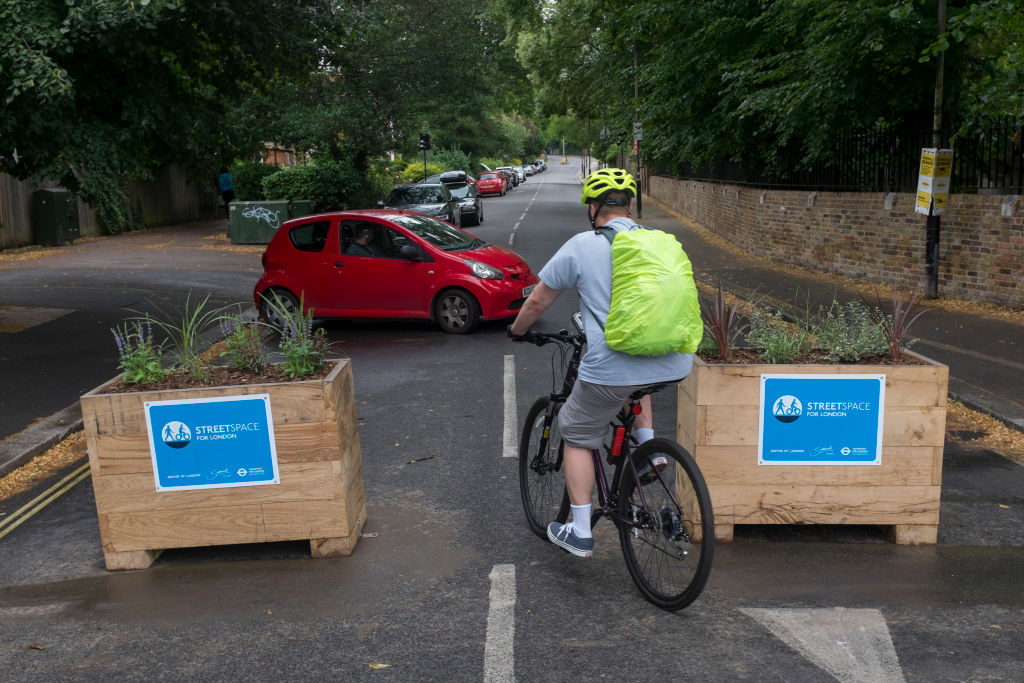
Image Credits: Photo by Richard Baker / In Pictures / Getty Images

Milan’s Open Streets

Italy’s industrial north was among the hardest hit regions in Europe during the first wave of the coronavirus pandemic. An extended lockdown was implemented — clearing cars off the streets of cities like Milan for months, as businesses got shuttered and residents were confined indoors — which in turn led to a noticeable improvement in air quality in a region infamous for pollution.

Since then, authorities in Milan have seized on the enforced break with a smog-filled ‘norm’ to push forward with an experimental citywide expansion of cycling lanes and pedestrianized zones — under a mobility plan called Strade Aperte (aka Open Streets) that’s aimed at adapting city infrastructure to find space for social distancing as urban life gets opened back up.

The Open Streets plan includes dropping the speed limit to 30kmph on a majority of Milan’s roads (replacing a 50kmph maximum), via signage and incorporating some structural elements for speed control; and adding 35km to its existing bike network before the end of the year.

The city launched its docked bike rental scheme, BikeMI, in 2008.
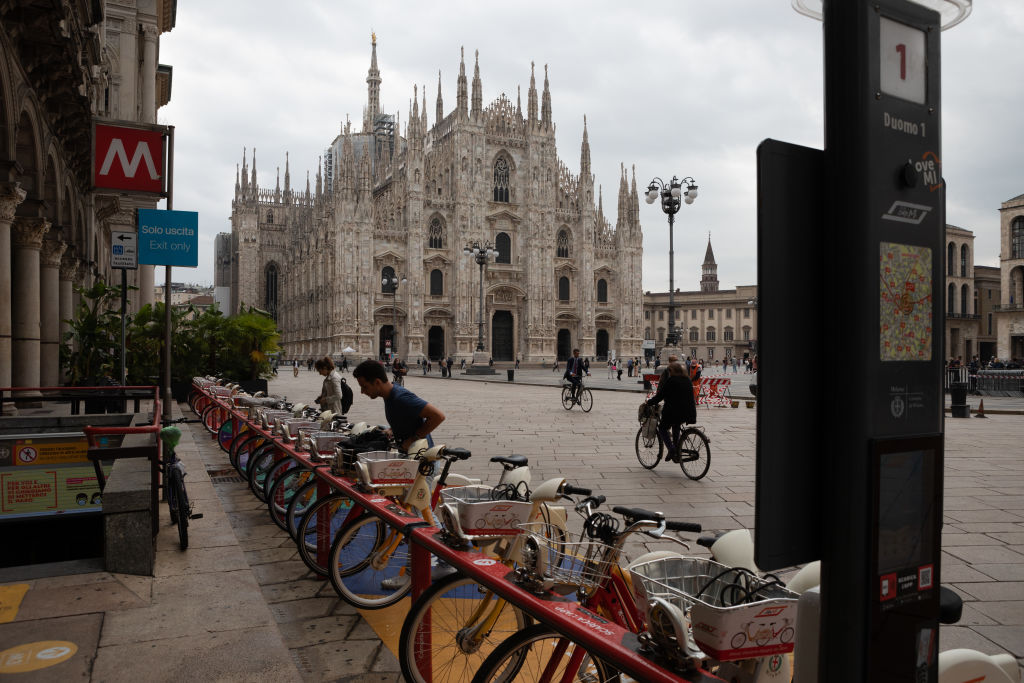
Image Credits: Emanuele Cremaschi / Getty Images

“As the Milan 2020 Adaptation Strategy foresees, the current health crisis can be an opportunity to decide to give more space to people and improve the environmental conditions in the city, increasing more sustainable, non-polluting, means of travel and redefining the use of streets and public spaces for commercial, recreational, cultural, and sport purposes, while respecting physical distance requirements,” city authorities write in a memo on the plan.

The overarching policy push is toward the same goal as Paris’ vision: Supporting what’s described as “the neighbourhood dimension” — aka making sure every citizen has access to almost all services within 15 minutes’ walk.

This is a strategic aim while residents are forced to live alongside the virus — and some of the measures are being couched as ‘temporary’.

But while the pandemic is acting as a catalyst/justification for rapid changes, city authorities were already looking for ways to repurpose urban infrastructure to deliver health benefits to citizens, environmental gains and boost local commerce by getting people out of cars and peddling/walking through the neighbourhood.

So, it’s hard to see where the impetus would come from to advocate a reversal back to noisier, more polluted, less playful streets.

In Milan, it’s the same story: The direction of urban travel is about rethinking streets as open public spaces for people and hyper-local micromobility, rather than letting cars colonize the commons and render its roads default highways elsewhere. Addio macchina.
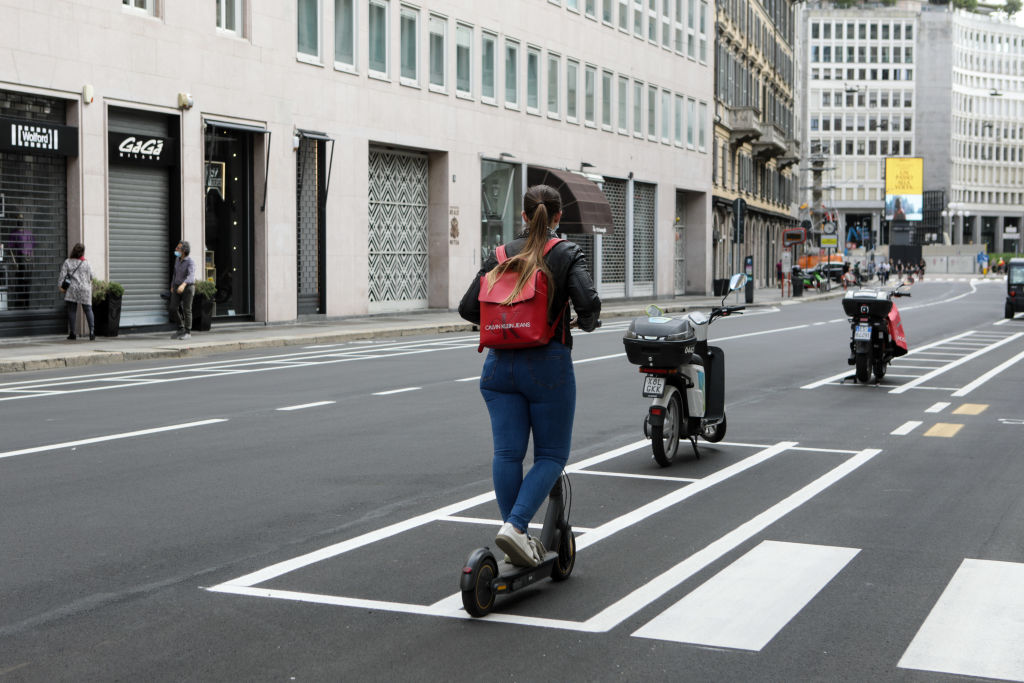
Image Credits: Mairo Cinquetti / NurPhoto / Getty Images


20 Nov 2020

How China’s Realme sold 50 million phones in just over 2 years

Starting a new phone brand in 2018 might seem too late in an already crowded market, but Sky Li was convinced that consumers between 18-25 years old were largely under-served — they needed something that was both affordable and cool.

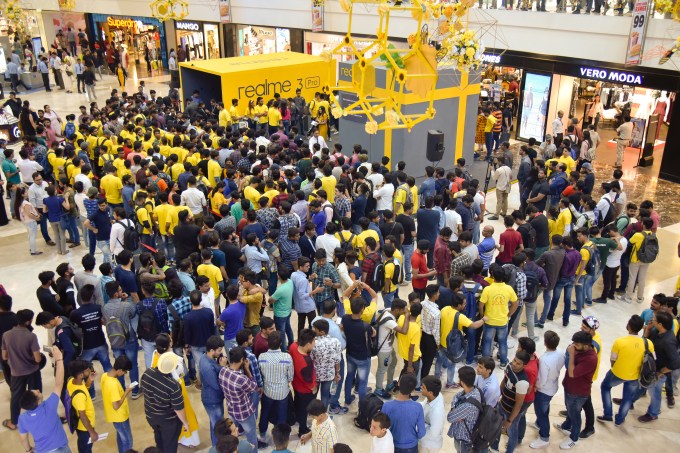
A few months after Li founded Realme in May that year, the smartphone company organized a product launch at a college campus in India, the world’s second-largest smartphone market. It brought its own production crew, built a makeshift stage and invited local rappers to grace the event.

“I was amazed. No one was sitting down and it felt like a carnival, a big disco party,” Chase Xu, Realme’s 31-year-old chief marketing officer, told me at the firm’s headquarters in Shenzhen.

“No foreign company had ever entered the campus. They didn’t think it was possible. Why would a university let you do a launch event there?” Xu, clad in a minimalist, chic black jacket from a domestic brand, recounted with enthusiasm and pride.

“Realme became widely known thanks to the event. People found it very interesting that it was mixing with students. It didn’t just launch a product. It was showing off a youthful, flamboyant attitude.”

Within nine quarters, Realme has shipped 50 million handsets around the world with India as its biggest market, even larger than China. The target this year is to double last year’s target to 50 million units, a goal that’s “nearly complete” according to Xu. It’s now the world’s 7th biggest smartphone brand, trailing only after those who have been around for much longer — Samsung, Huawei, Xiaomi, Apple, Oppo and Vivo, according to a Q3 report from research firm Canalys.

Realme didn’t accomplish all that from scratch. It’s yet another smartphone brand rooted in BBK Group, the mystic electronics empire that owns and supports some of the world’s largest phone makers Vivo, Oppo, OnePlus, and now Realme.

Oppo family

In 2018, former Oppo vice president and head of overseas business Sky Li announced he was resigning from Oppo to start Realme as an independent brand, similar to how OnePlus started in 2013. Today, Realme, OnePlus and Oppo all belong to the same holding group. That entity, together with Vivo, sits under BBK, which started out in 1998 selling electronic dictionaries in south China and has been diversifying its portfolio ever since.

While Realme and OnePlus operate independently, they get access to Oppo’s supply chain, a model that has allowed them to have lighter assets and consequently fewer costs.

Realme’s pop-up store in India / Photo: Realme

“Realme has an advantage because we share a supply chain with Oppo. We are able to get very good resources from the supply end, stay ahead globally and obtain what we should have,” said Xu.

For instance, the nascent phone maker was among the first to get Qualcomm’s new Snapdragon 865 chips and put four cameras into a handset. Priority isn’t always guaranteed, however, because “there is definitely competition between us and our peers to fight to be the first,” Xu admitted. “Of course, it also depends on the progress of each team’s research and development.”

The light-asset strategy also means Realme is able to offer competitive technologies at relatively low prices. In India, its 8GB RAM, 128GB phone cost less than 1,000 yuan ($152) and its notch screen one was under 1,500 yuan ($228).

Realme isn’t concerned about increasing margin in the “growth stage,” Xu said, and the firm has “been profitable from the outset.” On the other hand, the phone maker is also introducing a slew of IoT gadgets like smart TVs and earphones, categories with higher markups.

The smartphone-plus-IoT strategy is certainly not unique, as its siblings in the BBK family, as well as Xiaomi and Huawei, have the same vision: smartphones and smart devices from the same brand will form a nicely interconnected ecosystem, driving sales and data collection for each other.

Another way to cut costs, according to Xu, is to avoid extravagant outdoor advertising. The company prefers more subtle, word-of-mouth promotion like working with influencers, throwing campus music festivals and fostering an online fan community. And the strategy seems to be clicking with the young generation who like to interact with the brand they like and even be part of its creative process.

The most enthusiastic users would sometimes message Xu with pencil sketching of what they envisioned Realme’s next products should look like. “They have very interesting and excellent ideas. This is a great generation,” the executive said.

Chinese brands go global

A Realme event during Diwali / Photo: Realme

Realme’s India chief executive Madhav Sheth is equally adored by the country’s young consumers. A former distribution partner of Realme, he made an impression on Realme founder Li, who “understands the Indian market very well despite not speaking fluent English,” according to Xu.

“Sheth is very charismatic and good at public speaking. He knows how to excite people,” Xu spoke highly of Sheth, who is an avid Twitter user and has garnered some 280,000 followers since he joined in the spring of 2018.

The Indian boss’s job is getting trickier as India becomes warier of Chinese influence. In June, the Indian government banned TikTok and dozens of other Chinese apps over potential national security risks, not long after it added more scrutiny on Chinese investments. Anti-China sentiment has also soared as border tensions heightened recently.

Against all odds, Realme is seeing robust growth in India. In Q3, it grew 4% from the previous quarter and currently ranks fourth in India with a 10% market share, according to research firm Counterpoint.

“During the start of the quarter, we witnessed some anti-China consumer sentiments impacting sales of brands originating from China. However, these sentiments have subsided as consumers are weighing in different parameters during the purchase as well,” the researcher wrote in the report.

“Of course the India-China conflict is not something we want to see. It’s a problem of international relationships. Realme doesn’t take part in politics,” Xu assured. “There will always be extremist users. What we can do is to expand our fan base, give them what they want, and leave the extremists alone.”

Next year, Realme is looking to ramp up expansion in Europe, Russia and its home market China. None will be a small feat as they are much-coveted markets for all major phone makers.

Realme’s onion-inspired model designed by prominent Japanese designer Naoto Fukasawa

Part of Realme’s effort to associate itself with what Gen-Z around the world considers “cool” is to work with prominent designers. Xu’s eyes lit up, raising his hand in the air as if he was holding a ball. He was mirroring Naoto Fukasawa, the renowned Japanese industrial designer who came up with the onion-inspired color and pattern of the Realme X model.

“The afternoon sunlight slanted through the large windows. [Fukasawa] gave me a playful look, took an onion from beneath the table, and told me that was his inspiration,” Xu recalled. “He slowly turned the onion in the sun. I was dumbfounded. The veins, the pink, gold color, the texture. It was so beautiful. You wouldn’t think it was an onion. You’d think it was craftwork.”

20 Nov 2020

Astanor Ventures launches $325M Impact Fund aimed at FoodTech and AgTech startups

We can all, by now, ascribe to the idea that something has changed in the last few months. Like it or not, business is not as it was. If we were true to ourselves, we would admit that our lives will never be the name again. But parallel to this visceral feeling, is the quite clear and objective truth that the planet that sustains our existence is in trouble. So, surely, is it not beholden upon us to step up? Is this both a moral and a commercial opportunity?

Today Astanor Ventures is launching a $325m ‘Global Impact fund’ concentrating on food and agriculture technology. These are two of the most pressing areas in the climate debate,  The aim is to deploy funds across Europe and North America.

Astanor‘s fund is a multi-stage tech investor that unites both knowledge and experience of scaling new technology companies with food, cross-sector expertise and agriculture.

Speaking to TechCrunch, Eric Archambeau, co-founder and partner of Astanor Ventures said: “There is now an urgent need for an impact investor like Astanor which is using tech and capital to bring about a revolution in food and farming.”

Archambeau told TechCrunch that the fund will rigorously apply the ideas behind the UN’s seventeen SDGs to ints investments.

“There is a new generation coming on board at LPs and family offices today and new funds understand the imperative this generation now raises. It’s time to stop up and be counted for the future,” said Archambeau.

Within its network, Astanor counts entrepreneurs, impact investors, farmers, chefs, policymakers, food scientists and high-profile sector experts, such as Kathleen Merrigan, Professor in the School of Sustainability and Executive Director of the Swette Center for Sustainable Food Systems at Arizona State University (an Astanor Venture Partner).

The background opportunities to shift the economy are, by now, obvious. Multiple studies show there are booming greenhouse gas emissions and some 70% of the world’s freshwater resources are consumed by agriculture. The earth’s soil is degrading (fertile soil is being lost at rate of 24bn tonnes a year. Food waste is a huge issue and some 40% of food goes to waste); most fruit or vegetable has 15% less nutrients than it did in 1950.


Eric Archambeau, Astanor Ventures

Eric Archambeau, Astanor Ventures

Since its founding in 2017, Astanor has invested in more than 20 European and US startups that are working to accelerate regenerative agriculture, innovate food production techniques and farming, as well as promote food culture and the enjoyment of food.

Portfolio companies include French insect farming pioneer Ϋnsect, in which Astanor is the lead investor; Infarm, the Berlin -based on-demand vertical farming company; La Ruche Qui dit Oui, a French farm to table supplier; and Notpla, a UK-based company seeking to eliminate plastics by creating a highly functional packaging material from seaweed. California food waste reduction company Apee created plant-based protection for fresh fruit and vegetables, allowing produce to stay fresh twice as long as without it.

20 Nov 2020

Rocket Lab makes its first booster recovery after successful launch

New Zealand-born launch provider Rocket Lab took a step towards making its launch vehicles reusable today with the safe splashdown and recovery of an Electron booster after it successfully took its payload to orbit. The image above is the view from the booster up into the parachute that brought it safely down.

Reusing the first stage of launch vehicles — that is to say, the booster that takes the payload from the ground to the edge of space, where a second stage takes over — has the potential to vastly reduce the cost of getting to orbit. For decades these precision-engineered machines, which cost millions to produce, have been abandoned after use and allowed to break up on reentry.

SpaceX first demonstrated recovery of its Falcon 9 rockets in 2015, landing one on a drone ship after several failed attempts with other launches. A used first stage was first re-launched in 2017.

Rocket Lab CEO Peter Beck announced last year that the company would be attempting its own method of recovering a used booster. Instead of the complex propulsive controlled landing of the Falcon 9, the booster would descend safely under a parachute, and be intercepted and captured by a helicopter before splashdown.

Image Credits: Rocket Lab

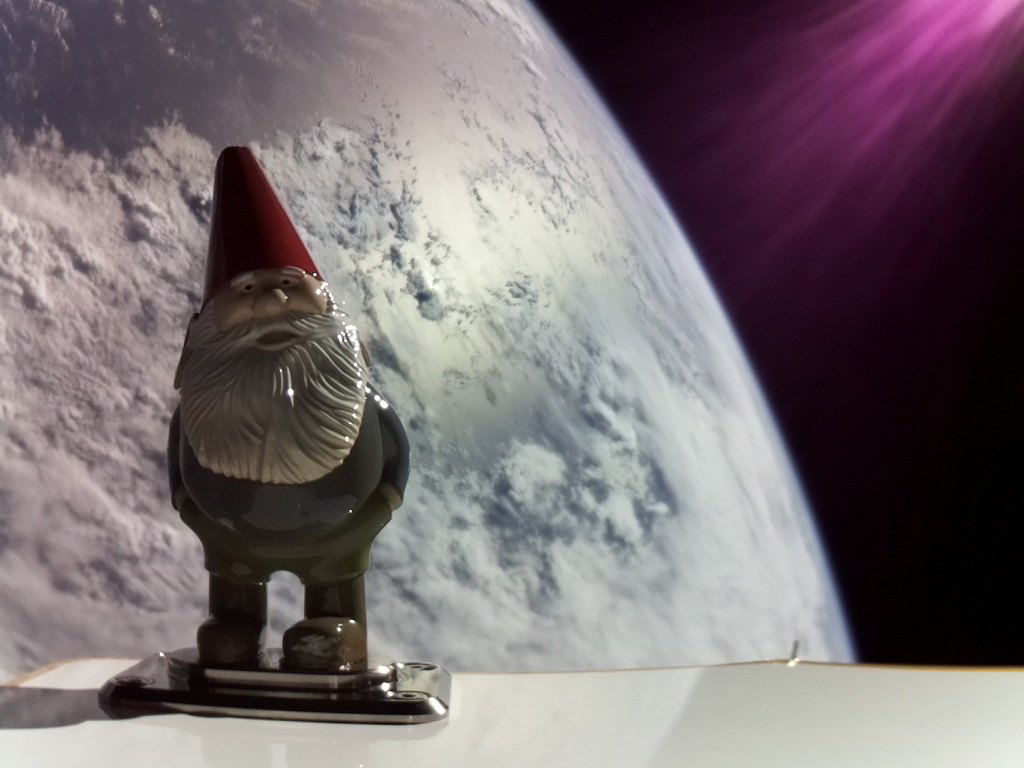
Today’s mission, however, skipped the helicopter step as perhaps being a bit ambitious for a first try. After delivering some 30 satellites and a 3D-printed gnome to the edge of the atmosphere, the Electron’s booster returned to Earth and was tracked to where it splashed down about two hours later.

According to a press release from Rocket Lab sent after the launch, the descent and recovery went exactly as planned:

Approximately two and a half minutes after lift-off, at an altitude of around 80 km, Electron’s first and second stages separated per standard mission procedure. Once the engines shut down on Electron’s first stage, a reaction control system re-oriented the stage 180-degrees to place it on an ideal angle for re-entry, enabling it to survive the incredible heat and pressure known as “The Wall” during its descent back to Earth. A drogue parachute was deployed to increase drag and to stabilize the first stage as it descended, before a large main parachute was deployed in the final kilometres of descent. The stage splashed down as planned. Rocket Lab’s recovery team will transport the stage back to Rocket Lab’s production complex, where engineers will inspect the stage to gather data that will inform future recovery missions.

“What the team achieved today in recovering Electron’s first stage is no mean feat. It took a monumental effort from many teams across Rocket Lab, and it’s exciting to see that work pay off in a major step towards making Electron a reusable rocket,” said Beck.

We’ll update this post with further developments. You can watch a replay of the launch below.

20 Nov 2020

Rocket Lab makes its first booster recovery after successful launch

New Zealand-born launch provider Rocket Lab took a step towards making its launch vehicles reusable today with the safe splashdown and recovery of an Electron booster after it successfully took its payload to orbit. The image above is the view from the booster up into the parachute that brought it safely down.

Reusing the first stage of launch vehicles — that is to say, the booster that takes the payload from the ground to the edge of space, where a second stage takes over — has the potential to vastly reduce the cost of getting to orbit. For decades these precision-engineered machines, which cost millions to produce, have been abandoned after use and allowed to break up on reentry.

SpaceX first demonstrated recovery of its Falcon 9 rockets in 2015, landing one on a drone ship after several failed attempts with other launches. A used first stage was first re-launched in 2017.

Rocket Lab CEO Peter Beck announced last year that the company would be attempting its own method of recovering a used booster. Instead of the complex propulsive controlled landing of the Falcon 9, the booster would descend safely under a parachute, and be intercepted and captured by a helicopter before splashdown.

Image Credits: Rocket Lab

Today’s mission, however, skipped the helicopter step as perhaps being a bit ambitious for a first try. After delivering some 30 satellites and a 3D-printed gnome to the edge of the atmosphere, the Electron’s booster returned to Earth and was tracked to where it splashed down about two hours later.

According to a press release from Rocket Lab sent after the launch, the descent and recovery went exactly as planned:

Approximately two and a half minutes after lift-off, at an altitude of around 80 km, Electron’s first and second stages separated per standard mission procedure. Once the engines shut down on Electron’s first stage, a reaction control system re-oriented the stage 180-degrees to place it on an ideal angle for re-entry, enabling it to survive the incredible heat and pressure known as “The Wall” during its descent back to Earth. A drogue parachute was deployed to increase drag and to stabilize the first stage as it descended, before a large main parachute was deployed in the final kilometres of descent. The stage splashed down as planned. Rocket Lab’s recovery team will transport the stage back to Rocket Lab’s production complex, where engineers will inspect the stage to gather data that will inform future recovery missions.

“What the team achieved today in recovering Electron’s first stage is no mean feat. It took a monumental effort from many teams across Rocket Lab, and it’s exciting to see that work pay off in a major step towards making Electron a reusable rocket,” said Beck.

We’ll update this post with further developments. You can watch a replay of the launch below.