
Year: 2020

02 Nov 2020

Raspberry Pi Foundation announces the cute little Raspberry Pi 400

This is the Atari 400 Raspberry Pi 400. The Raspberry Pi Foundation is launching a new product today — and it’s a brand new device. As you can see on the photo, the Raspberry Pi 400 is a computer integrated in a compact keyboard that costs $70.

And it is the easiest way to get started with a Raspberry Pi. If you’re not familiar with the Raspberry Pi, it’s a single-board computer with a lot of connectors that is the size of a deck of cards.

You can give it to a kid so that they can play around with a terminal, you can use it for your weekend projects as the computing brain or you can give it to your grandparents to replace their slow Windows XP computer that they use to receive emails.

Last year, when the Raspberry Pi Foundation introduced the Raspberry Pi 4, the foundation also used this opportunity to release a cute mouse and a keyboard. Of course, you could use these accessories with a Raspberry Pi. And your basic setup would look something like this:
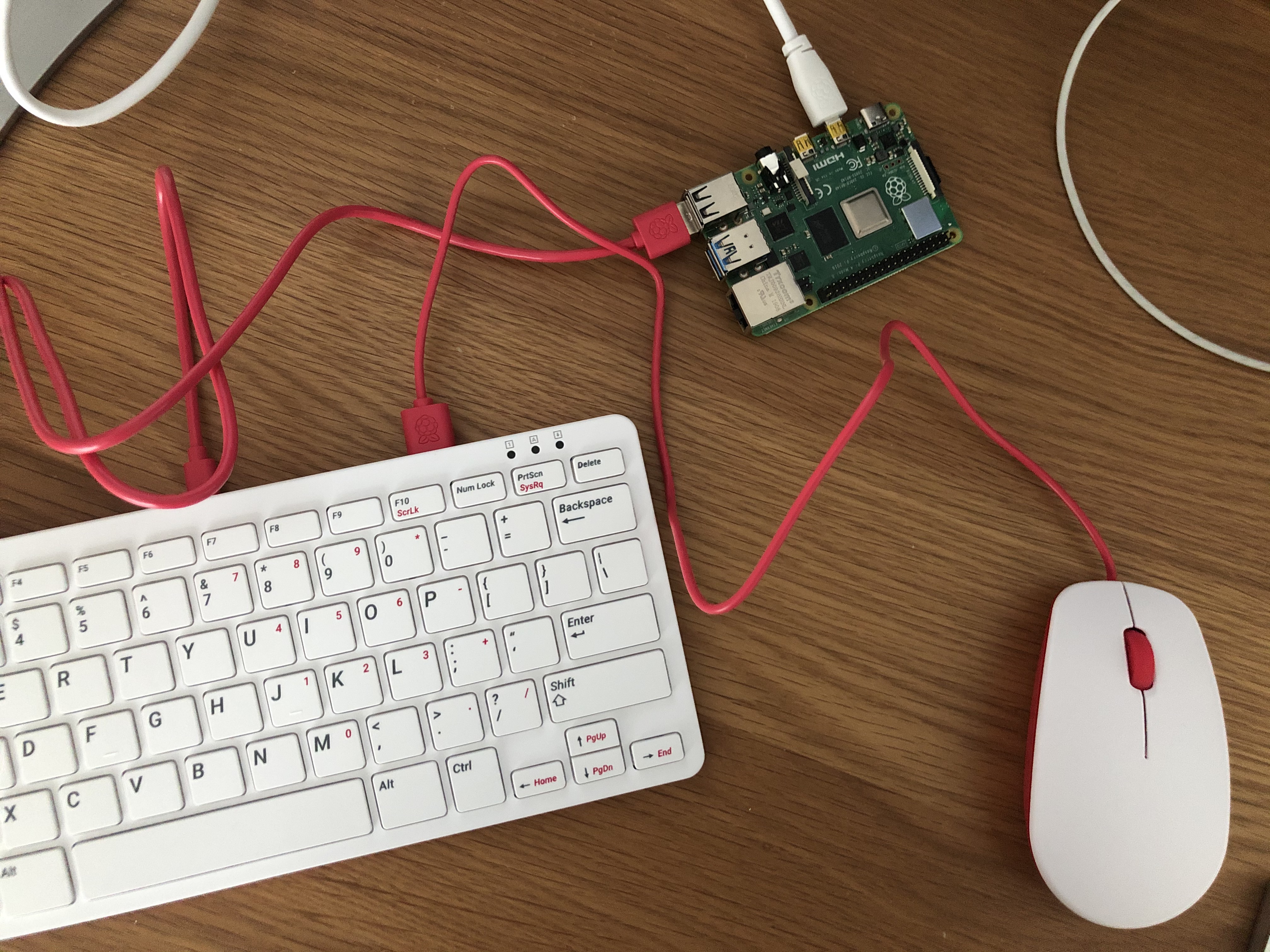
Image Credits: Romain Dillet / TechCrunch

Those are great goodies for Raspberry Pi fans. And yet, there are many, many keyboard and mouse manufacturers out there. Building their own mouse and keyboard didn’t really make sense.

It turns out that the Raspberry Pi Foundation had another idea in mind. The Raspberry Pi 400 is essentially the exact same keyboard — but with an integrated Raspberry Pi. Their next project has been sitting there right in front of us for the past year.
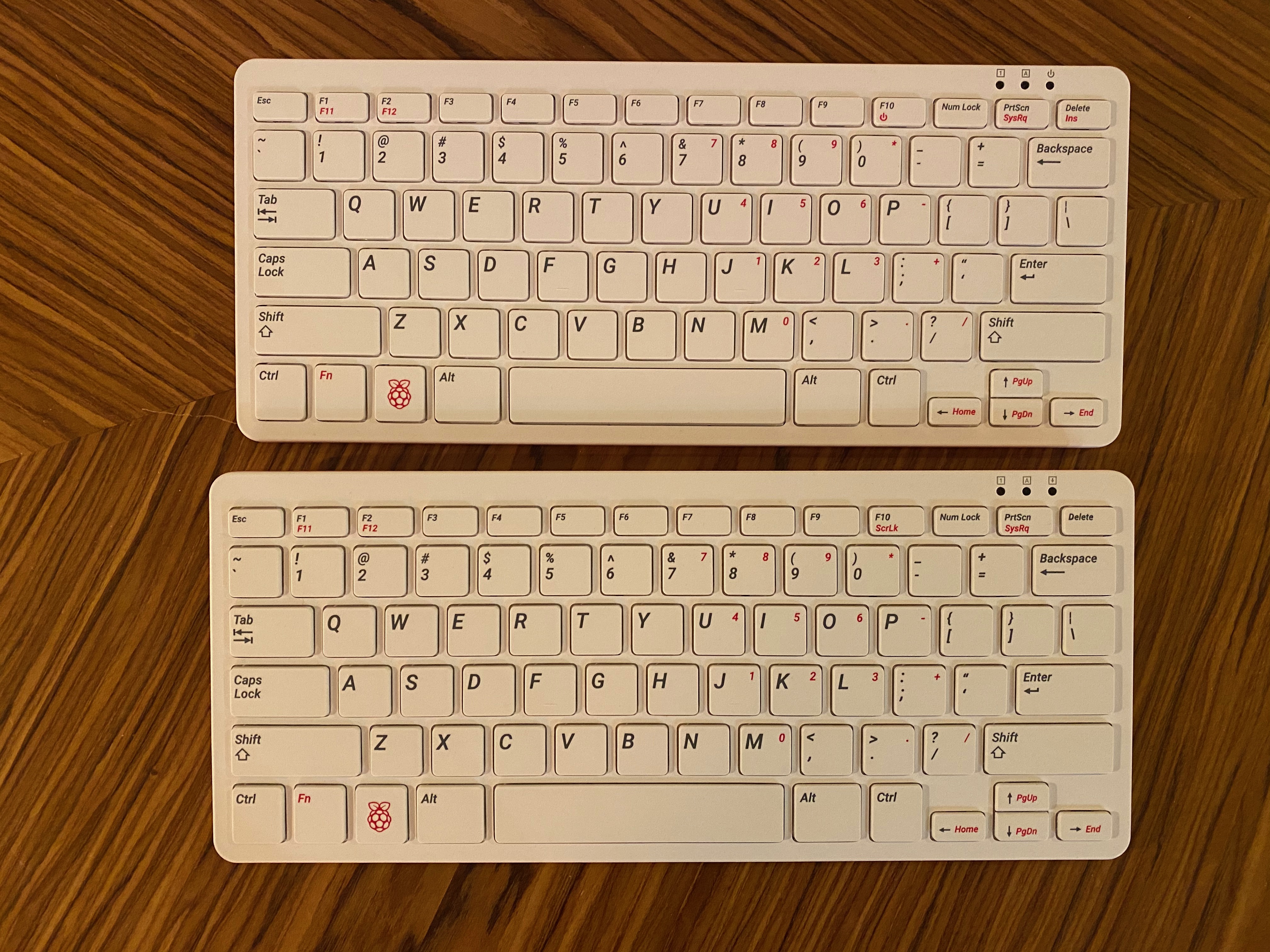
Raspberry Pi 400 (top) and Raspberry Pi keyboard (bottom). Image Credits: Romain Dillet / TechCrunch

The Raspberry Pi Foundation has already sent me a Raspberry Pi 400 to try it out. While many of my colleagues are excited about the PlayStation 5 and the Xbox Series X, I was also really excited about receiving this new device.

Because, yes, the Raspberry Pi 400 (or, as TechCrunch’s Brian Heater called it, the PiStation) looks really cute. You plug a couple of cables and you’re ready to go. As far as I can see, it’s a fanless device so it doesn’t make any sound when it’s on.
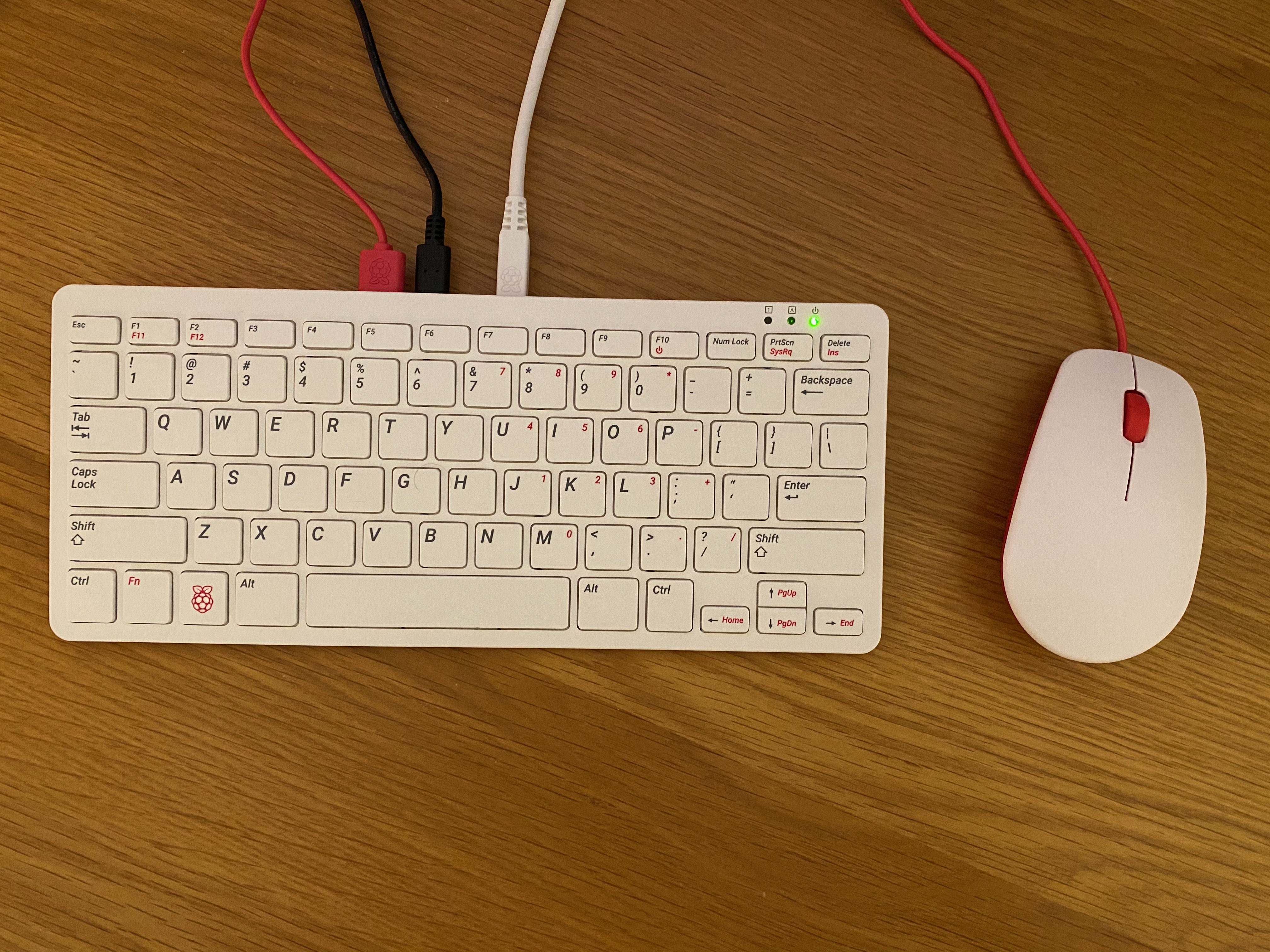
Image Credits: Romain Dillet / TechCrunch

Putting a computer inside a keyboard is nothing new. You could even say that personal computers started this way. Back in the 1980s, you could plug your computer-in-a-keyboard to your TV and get started right away.

At some point, computers became more complicated. You had to buy a computer tower, a display, a mouse, a keyboard, etc. Laptops reversed this trend by packing everything you need in one device. But laptops aren’t perfect either.

The Raspberry Pi 400 is a great device for kids. In many ways, it’s much more powerful than a Chromebook. You can learn a lot more about computers and you feel less restricted in what you can do.

I could see it in schools, at home in the play room or on a shelf waiting to be plugged to a display. This is a great way to get started playing around with computers.
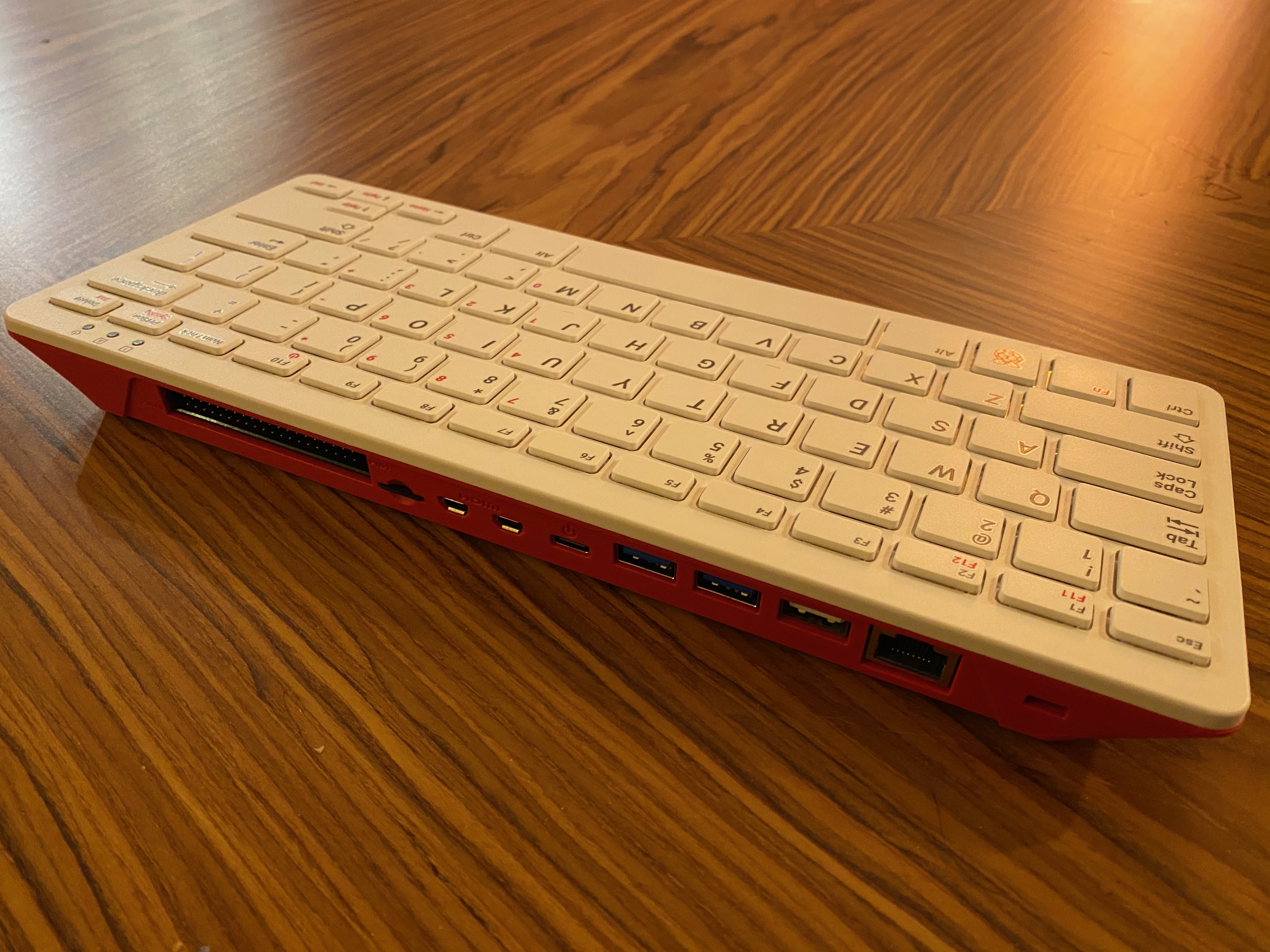
Image Credits: Romain Dillet / TechCrunch

It gets more interesting when you think about older kids. Many people have said that closed schools have been particularly challenging this year, especially because you don’t necessarily have enough computers for everyone in your home.

If your kid is old enough to get a smartphone, that doesn’t mean they have a comfortable setup for remote classes. The Raspberry Pi 400 is a cheap device that could fill that gap. Moreover, the Raspberry Pi 400 could be a good way to separate school from leisure activities (and social networks).

Now let’s talk about specifications. The Raspberry Pi 400 is pretty similar to a Raspberry Pi 4, but not exactly. It has an ARM-based system on a chip (64-bit quad-core ARM Core-A72 at 1.8GHz for those who are curious). It comes with 4GB of RAM, Wi-Fi, Bluetooth 5.1, Bluetooth Low Energy and Gigabit Ethernet.

When it comes to ports, you get two micro-HDMI ports, which means that you can plug two 4K displays in case you really need a lot of screen real estate. There are two USB 3.0 ports, one USB 2.0 port and a USB-C port for the power brick.

Like other Raspberry Pi devices, it uses microSD cards for the operating system and to store your data. You can use Raspberry Pi Desktop, a Debian-based Linux operating system, or a third-party operating system, such as Ubuntu.

There are different models with UK, US, French, Italian, German and Spanish keyboard layouts. In addition to the $70 device, you can buy the Raspberry Pi 400 kit with a mouse, a power supply, a micro-HDMI to HDMI cable, a pre-formatted microSD card and the official beginner’s guide for $100. It should be available in the coming days.
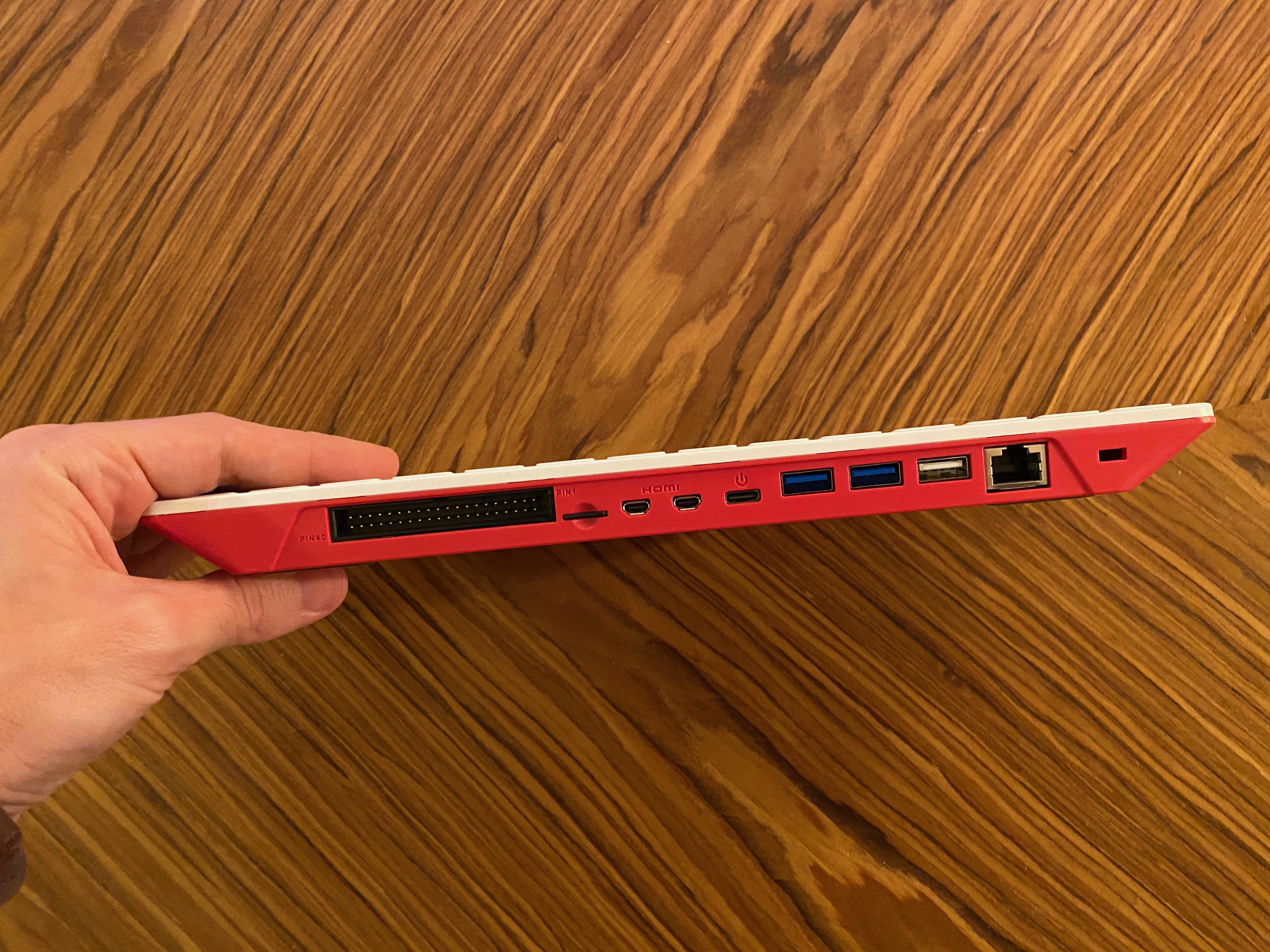
Image Credits: Romain Dillet / TechCrunch

02 Nov 2020

Warren gets $1.4 million to help local cloud infrastructure providers compete against the giants

Started as a side project by its founders, Warren is now helping regional cloud infrastructure service providers compete against Amazon, Microsoft, IBM, Google and other tech giants. Based in Tallinn, Estonia, Warren’s self-service distributed cloud platform is gaining traction in Southeast Asia, one of the world’s fastest-growing cloud service markets, and Europe. It recently closed a $1.4 million seed round led by Passion Capital, with plans to expand in South America, where it recently launched in Brazil.

Warren’s seed funding also included participation from Lemonade Stand and angel investors like former Nokia vice president Paul Melin and Marek Kiisa, co-founder of funds Superangel and NordicNinja.

The leading global cloud providers are aggressively expanding their international businesses by growing their marketing teams and data centers around the world (for example, over the past few months, Microsoft has launched a new data center region in Austria, expanded in Brazil and announced it will build a new region in Taiwan as it competes against Amazon Web Services).

But demand for customized service and control over data still prompt many companies, especially smaller ones, to pick local cloud infrastructure providers instead, Warren co-founder and chief executive officer Tarmo Tael told TechCrunch.

“Local providers pay more attention to personal sales and support, in local language, to all clients in general, and more importantly, take the time to focus on SME clients to provide flexibility and address their custom needs,” he said. “Whereas global providers give a personal touch maybe only to a few big clients in the enterprise sectors.” Many local providers also offer lower prices and give a large amount of bandwidth for free, attracting SMEs.

He added that “the data sovereignty aspect that plays an important role in choosing their cloud platform for many of the clients.”

In 2015, Tael and co-founder Henry Vaaderpass began working on the project that eventually became Warren while running a development agency for e-commerce sites. From the beginning, the two wanted to develop a product of their own and tested several ideas out, but weren’t really excited by any of them, he said. At the same time, the agency’s e-commerce clients were running into challenges as their businesses grew.

Tael and Vaaderpass’s clients tended to pick local cloud infrastructure providers because of lower costs and more personalized support. But setting up new e-commerce projects with scalable infrastructure was costly because many local cloud infrastructure providers use different platforms.

“So we started looking for tools to use for managing our e-commerce projects better and more efficiently,” Tael said. “As we didn’t find what we were looking for, we saw this as an opportunity to build our own.”

After creating their first prototype, Tael and Vaaderpass realized that it could be used by other development teams, and decided to seek angel funding from investors, like Kiisa, who have experience working with cloud data centers or infrastructure providers.

Southeast Asia, one of the world’s fastest-growing cloud markets, is an important part of Warren’s business. Warren will continue to expand in Southeast Asia, while focusing on other developing regions with large domestic markets, like South America (starting with Brazil). Tael said the startup is also in discussion with potential partners in other markets, including Russia, Turkey and China.

Warren’s current clients include Estonian cloud provider Pilw.io and Indonesian cloud provider IdCloudHost. Tael said working with Warren means its customers spend less time dealing with technical issues related to infrastructure software, so their teams, including developers, can instead focus on supporting clients and managing other services they sell.

The company’s goal is to give local cloud infrastructure providers the ability to meet increasing demand, and eventually expand internationally, with tools to handle more installations and end users. These include features like automated maintenance and DevOps processes that streamline feature testing and handling different platforms.

Ultimately, Warren wants to connect providers in a network that end users can access through a single API and user interface. It also envisions the network as a community where Warren’s clients can share resources and, eventually, have a marketplace for their apps and services.

In terms of competition, Tael said local cloud infrastructure providers often turn to OpenStack, Virtuozzo, Stratoscale or Mirantis. The advantage these companies currently have over Warren is a wider network, but Warren is busy building out its own. The company will be able to connect several locations to one provider by the first quarter of 2021. After that, Tael said, it will “gradually connect providers to each other, upgrading our user management and billing services to handle all that complexity.”

02 Nov 2020

Tencent claims record 100M daily users on mobile game Honor of Kings

At its five-year anniversary gala graced by celebrities, esports stars and orchestras, Tencent’s mobile game Honor of Kings said it has crossed 100 million daily active users. The title has not only broken user records but generated other unprecedented accomplishments along the way.

For one, it consistently ranks among the top-grossing mobile games worldwide, jostling with PUBG Mobile made by another Tencent studio Lightspeed & Quantum — gaming has long been the cash cow for Tencent, better known for its WeChat messenger. The brain behind Honor of Kings is TiMi Studios, which ramped up hiring in the U.S. this year to further global expansion.

The game is credited for popularizing the multiplayer online battle arena (MOBA) category in China using clever designs like short sessions, friendly controls, esports integration, and social networking leverage, as games analyst Daniel Ahmad pointed out. The title has an unusually high female player base — around 50% — for a genre dominated by males.

Though not always seen as an original creator, Tencent pioneers monetization models for mobile games and can be Western studios’ sought-after partner. To name one, it helped develop the mobile version of Activision’s Call of Duty, which surpassed 250 million downloads in June.

Controversy has also arisen amid Honor of Kings’ fervor. A state newspaper chastised it for hooking young users and misrepresenting historical events. Tencent has since tightened age verification checks for players, now standard practice in China’s gaming industry.

TiMi unveiled its milestone at a time when Riot Games is testing a mobile version of League of Legends, widely seen as the desktop blockbuster that had inspired Honor of Kings in the first place. The overseas edition of Honor of Kings, called Arena of Valor, has had limited success outside Asia. It now comes the time for Riot, fully acquired by Tencent in 2015, to test its own interpretation, Wild Rift.

As part of the announcement, TiMi also revealed that it’s capitalizing on Honor of Kings for IP derivative works, including two new games in unspecified new genres, an anime, and a TV series.

02 Nov 2020

Tencent claims record 100M daily users on mobile game Honor of Kings

At its five-year anniversary gala graced by celebrities, esports stars and orchestras, Tencent’s mobile game Honor of Kings said it has crossed 100 million daily active users. The title has not only broken user records but generated other unprecedented accomplishments along the way.

For one, it consistently ranks among the top-grossing mobile games worldwide, jostling with PUBG Mobile made by another Tencent studio Lightspeed & Quantum — gaming has long been the cash cow for Tencent, better known for its WeChat messenger. The brain behind Honor of Kings is TiMi Studios, which ramped up hiring in the U.S. this year to further global expansion.

The game is credited for popularizing the multiplayer online battle arena (MOBA) category in China using clever designs like short sessions, friendly controls, esports integration, and social networking leverage, as games analyst Daniel Ahmad pointed out. The title has an unusually high female player base — around 50% — for a genre dominated by males.

Though not always seen as an original creator, Tencent pioneers monetization models for mobile games and can be Western studios’ sought-after partner. To name one, it helped develop the mobile version of Activision’s Call of Duty, which surpassed 250 million downloads in June.

Controversy has also arisen amid Honor of Kings’ fervor. A state newspaper chastised it for hooking young users and misrepresenting historical events. Tencent has since tightened age verification checks for players, now standard practice in China’s gaming industry.

TiMi unveiled its milestone at a time when Riot Games is testing a mobile version of League of Legends, widely seen as the desktop blockbuster that had inspired Honor of Kings in the first place. The overseas edition of Honor of Kings, called Arena of Valor, has had limited success outside Asia. It now comes the time for Riot, fully acquired by Tencent in 2015, to test its own interpretation, Wild Rift.

As part of the announcement, TiMi also revealed that it’s capitalizing on Honor of Kings for IP derivative works, including two new games in unspecified new genres, an anime, and a TV series.

02 Nov 2020

Tencent claims record 100M daily users on mobile game Honor of Kings

At its five-year anniversary gala graced by celebrities, esports stars and orchestras, Tencent’s mobile game Honor of Kings said it has crossed 100 million daily active users. The title has not only broken user records but generated other unprecedented accomplishments along the way.

For one, it consistently ranks among the top-grossing mobile games worldwide, jostling with PUBG Mobile made by another Tencent studio Lightspeed & Quantum — gaming has long been the cash cow for Tencent, better known for its WeChat messenger. The brain behind Honor of Kings is TiMi Studios, which ramped up hiring in the U.S. this year to further global expansion.

The game is credited for popularizing the multiplayer online battle arena (MOBA) category in China using clever designs like short sessions, friendly controls, esports integration, and social networking leverage, as games analyst Daniel Ahmad pointed out. The title has an unusually high female player base — around 50% — for a genre dominated by males.

Though not always seen as an original creator, Tencent pioneers monetization models for mobile games and can be Western studios’ sought-after partner. To name one, it helped develop the mobile version of Activision’s Call of Duty, which surpassed 250 million downloads in June.

Controversy has also arisen amid Honor of Kings’ fervor. A state newspaper chastised it for hooking young users and misrepresenting historical events. Tencent has since tightened age verification checks for players, now standard practice in China’s gaming industry.

TiMi unveiled its milestone at a time when Riot Games is testing a mobile version of League of Legends, widely seen as the desktop blockbuster that had inspired Honor of Kings in the first place. The overseas edition of Honor of Kings, called Arena of Valor, has had limited success outside Asia. It now comes the time for Riot, fully acquired by Tencent in 2015, to test its own interpretation, Wild Rift.

As part of the announcement, TiMi also revealed that it’s capitalizing on Honor of Kings for IP derivative works, including two new games in unspecified new genres, an anime, and a TV series.

02 Nov 2020

Tencent claims record 100M daily users on mobile game Honor of Kings

At its five-year anniversary gala graced by celebrities, esports stars and orchestras, Tencent’s mobile game Honor of Kings said it has crossed 100 million daily active users. The title has not only broken user records but generated other unprecedented accomplishments along the way.

For one, it consistently ranks among the top-grossing mobile games worldwide, jostling with PUBG Mobile made by another Tencent studio Lightspeed & Quantum — gaming has long been the cash cow for Tencent, better known for its WeChat messenger. The brain behind Honor of Kings is TiMi Studios, which ramped up hiring in the U.S. this year to further global expansion.

The game is credited for popularizing the multiplayer online battle arena (MOBA) category in China using clever designs like short sessions, friendly controls, esports integration, and social networking leverage, as games analyst Daniel Ahmad pointed out. The title has an unusually high female player base — around 50% — for a genre dominated by males.

Though not always seen as an original creator, Tencent pioneers monetization models for mobile games and can be Western studios’ sought-after partner. To name one, it helped develop the mobile version of Activision’s Call of Duty, which surpassed 250 million downloads in June.

Controversy has also arisen amid Honor of Kings’ fervor. A state newspaper chastised it for hooking young users and misrepresenting historical events. Tencent has since tightened age verification checks for players, now standard practice in China’s gaming industry.

TiMi unveiled its milestone at a time when Riot Games is testing a mobile version of League of Legends, widely seen as the desktop blockbuster that had inspired Honor of Kings in the first place. The overseas edition of Honor of Kings, called Arena of Valor, has had limited success outside Asia. It now comes the time for Riot, fully acquired by Tencent in 2015, to test its own interpretation, Wild Rift.

As part of the announcement, TiMi also revealed that it’s capitalizing on Honor of Kings for IP derivative works, including two new games in unspecified new genres, an anime, and a TV series.

02 Nov 2020

Startup brands like the shoe company Thousand Fell are bringing circular economics to the fashion industry

Thousand Fell, the environmentally conscious, direct-to-consumer shoe retailer which launched last November, has revealed the details of the recycling program that’s a core component of its pitch to consumers.

The company, which has now sold enough shoes to start seeing its early buyers begin recycling them after ten months of ownership, expects to recycle roughly 3,000 pairs per quarter by 2021, with the capacity to scale up to 6,000 pairs of shoes.,

The recycling feature, through partnerships with United Parcel Service and TerraCycle, offers customers the option to avoid simply throwing out the shoes for $20 in cash that the company pays out upon receipt of the old shoes.

With the initiative, Thousand Fell joins a growing number of companies in consumer retail that are experimenting with various strategies to incorporate reuse into the life-cycle of their products. Nike operates a reuse a shoe program at some of its stores, which will collect used athletic shoes from any brand for recycling. And several companies are offering denim recycling drop-off locations to take old jeans and convert the material into other products.

What’s more, Thousand Fell’s recycling partner, TerraCycle, has developed a milkman model for reusing packaging to replace consumer packaged goods like dry goods, beverages, desserts and home and beauty products under its Loop brand (and in partnership with Kroger and Walgreens).

Across retail, zero waste packaging and delivery options (and companies emphasizing a more sustainable, circular approach to consumption) are attracting increased interest from investors across the board, with everyone from delivery companies to novel packaging materials attracting investor interest.


“Thousand Fell owns the material feeds and covers the cost of recycling, as well as the resale or reintegratoin of recycled material back into new shoes and the issuance of the $20 recycling cash that is sent back to the consumer once they recycle,” wrote Thousand Fell co-founder Stuart Ahlum, in an email.

Clothing and textiles account for 17% of all landfill waste and shoes are particularly wasteful. Shoes account for 10% of retail production capacity but about 25% of textile waste, according to Ahlum.

The company sells its environmentally friendly shoes for under $100, a price point that makes them more accessible to price-conscious consumers, according to Ahlum.

Through the program UPS will run shipping for the Thousand Fell sneaker recycling program and making its network of shipping locations — including within Staples stores — available for drop-off of Thousand Fell’s shoes.

With TerraCycle, Thousand Fell will ensure that the old sneakers will be sustainably recycled and diverted from landfills. UPS’ Ware2Go business is also providing fulfillment and warehousing services for Thousand Fell, the companies said in a statement earlier this week.

Meanwhile, TerraCycle and Thousand Fell are developing a closed loop process where old sneakers will be reintegrated into the supply chain to make new sneakers.

Through Thousand Fell, shoe buyers can track their purchase history and the carbon footprint of their sneakers at the company’s website — and register their sneakers once they’ve received them. The registration allows customers to initiate the recycling process at a drop off location or directly shipping their shoes back to TerraCycle.

“This enterprise partnership between UPS, TerraCycle, and Thousand Fell is the reverse logistics engine that powers the circular economy. It solves the critical problem of collecting worn products back from customers — at scale and at cost,” Ahlum wrote in an email.

02 Nov 2020

Startup brands like the shoe company Thousand Fell are bringing circular economics to the fashion industry

Thousand Fell, the environmentally conscious, direct-to-consumer shoe retailer which launched last November, has revealed the details of the recycling program that’s a core component of its pitch to consumers.

The company, which has now sold enough shoes to start seeing its early buyers begin recycling them after ten months of ownership, expects to recycle roughly 3,000 pairs per quarter by 2021, with the capacity to scale up to 6,000 pairs of shoes.,

The recycling feature, through partnerships with United Parcel Service and TerraCycle, offers customers the option to avoid simply throwing out the shoes for $20 in cash that the company pays out upon receipt of the old shoes.

With the initiative, Thousand Fell joins a growing number of companies in consumer retail that are experimenting with various strategies to incorporate reuse into the life-cycle of their products. Nike operates a reuse a shoe program at some of its stores, which will collect used athletic shoes from any brand for recycling. And several companies are offering denim recycling drop-off locations to take old jeans and convert the material into other products.

What’s more, Thousand Fell’s recycling partner, TerraCycle, has developed a milkman model for reusing packaging to replace consumer packaged goods like dry goods, beverages, desserts and home and beauty products under its Loop brand (and in partnership with Kroger and Walgreens).

Across retail, zero waste packaging and delivery options (and companies emphasizing a more sustainable, circular approach to consumption) are attracting increased interest from investors across the board, with everyone from delivery companies to novel packaging materials attracting investor interest.


“Thousand Fell owns the material feeds and covers the cost of recycling, as well as the resale or reintegratoin of recycled material back into new shoes and the issuance of the $20 recycling cash that is sent back to the consumer once they recycle,” wrote Thousand Fell co-founder Stuart Ahlum, in an email.

Clothing and textiles account for 17% of all landfill waste and shoes are particularly wasteful. Shoes account for 10% of retail production capacity but about 25% of textile waste, according to Ahlum.

The company sells its environmentally friendly shoes for under $100, a price point that makes them more accessible to price-conscious consumers, according to Ahlum.

Through the program UPS will run shipping for the Thousand Fell sneaker recycling program and making its network of shipping locations — including within Staples stores — available for drop-off of Thousand Fell’s shoes.

With TerraCycle, Thousand Fell will ensure that the old sneakers will be sustainably recycled and diverted from landfills. UPS’ Ware2Go business is also providing fulfillment and warehousing services for Thousand Fell, the companies said in a statement earlier this week.

Meanwhile, TerraCycle and Thousand Fell are developing a closed loop process where old sneakers will be reintegrated into the supply chain to make new sneakers.

Through Thousand Fell, shoe buyers can track their purchase history and the carbon footprint of their sneakers at the company’s website — and register their sneakers once they’ve received them. The registration allows customers to initiate the recycling process at a drop off location or directly shipping their shoes back to TerraCycle.

“This enterprise partnership between UPS, TerraCycle, and Thousand Fell is the reverse logistics engine that powers the circular economy. It solves the critical problem of collecting worn products back from customers — at scale and at cost,” Ahlum wrote in an email.

02 Nov 2020

Startup brands like the shoe company Thousand Fell are bringing circular economics to the fashion industry

Thousand Fell, the environmentally conscious, direct-to-consumer shoe retailer which launched last November, has revealed the details of the recycling program that’s a core component of its pitch to consumers.

The company, which has now sold enough shoes to start seeing its early buyers begin recycling them after ten months of ownership, expects to recycle roughly 3,000 pairs per quarter by 2021, with the capacity to scale up to 6,000 pairs of shoes.,

The recycling feature, through partnerships with United Parcel Service and TerraCycle, offers customers the option to avoid simply throwing out the shoes for $20 in cash that the company pays out upon receipt of the old shoes.

With the initiative, Thousand Fell joins a growing number of companies in consumer retail that are experimenting with various strategies to incorporate reuse into the life-cycle of their products. Nike operates a reuse a shoe program at some of its stores, which will collect used athletic shoes from any brand for recycling. And several companies are offering denim recycling drop-off locations to take old jeans and convert the material into other products.

What’s more, Thousand Fell’s recycling partner, TerraCycle, has developed a milkman model for reusing packaging to replace consumer packaged goods like dry goods, beverages, desserts and home and beauty products under its Loop brand (and in partnership with Kroger and Walgreens).

Across retail, zero waste packaging and delivery options (and companies emphasizing a more sustainable, circular approach to consumption) are attracting increased interest from investors across the board, with everyone from delivery companies to novel packaging materials attracting investor interest.


“Thousand Fell owns the material feeds and covers the cost of recycling, as well as the resale or reintegratoin of recycled material back into new shoes and the issuance of the $20 recycling cash that is sent back to the consumer once they recycle,” wrote Thousand Fell co-founder Stuart Ahlum, in an email.

Clothing and textiles account for 17% of all landfill waste and shoes are particularly wasteful. Shoes account for 10% of retail production capacity but about 25% of textile waste, according to Ahlum.

The company sells its environmentally friendly shoes for under $100, a price point that makes them more accessible to price-conscious consumers, according to Ahlum.

Through the program UPS will run shipping for the Thousand Fell sneaker recycling program and making its network of shipping locations — including within Staples stores — available for drop-off of Thousand Fell’s shoes.

With TerraCycle, Thousand Fell will ensure that the old sneakers will be sustainably recycled and diverted from landfills. UPS’ Ware2Go business is also providing fulfillment and warehousing services for Thousand Fell, the companies said in a statement earlier this week.

Meanwhile, TerraCycle and Thousand Fell are developing a closed loop process where old sneakers will be reintegrated into the supply chain to make new sneakers.

Through Thousand Fell, shoe buyers can track their purchase history and the carbon footprint of their sneakers at the company’s website — and register their sneakers once they’ve received them. The registration allows customers to initiate the recycling process at a drop off location or directly shipping their shoes back to TerraCycle.

“This enterprise partnership between UPS, TerraCycle, and Thousand Fell is the reverse logistics engine that powers the circular economy. It solves the critical problem of collecting worn products back from customers — at scale and at cost,” Ahlum wrote in an email.

02 Nov 2020

Startup brands like the shoe company Thousand Fell are bringing circular economics to the fashion industry

Thousand Fell, the environmentally conscious, direct-to-consumer shoe retailer which launched last November, has revealed the details of the recycling program that’s a core component of its pitch to consumers.

The company, which has now sold enough shoes to start seeing its early buyers begin recycling them after ten months of ownership, expects to recycle roughly 3,000 pairs per quarter by 2021, with the capacity to scale up to 6,000 pairs of shoes.,

The recycling feature, through partnerships with United Parcel Service and TerraCycle, offers customers the option to avoid simply throwing out the shoes for $20 in cash that the company pays out upon receipt of the old shoes.

With the initiative, Thousand Fell joins a growing number of companies in consumer retail that are experimenting with various strategies to incorporate reuse into the life-cycle of their products. Nike operates a reuse a shoe program at some of its stores, which will collect used athletic shoes from any brand for recycling. And several companies are offering denim recycling drop-off locations to take old jeans and convert the material into other products.

What’s more, Thousand Fell’s recycling partner, TerraCycle, has developed a milkman model for reusing packaging to replace consumer packaged goods like dry goods, beverages, desserts and home and beauty products under its Loop brand (and in partnership with Kroger and Walgreens).

Across retail, zero waste packaging and delivery options (and companies emphasizing a more sustainable, circular approach to consumption) are attracting increased interest from investors across the board, with everyone from delivery companies to novel packaging materials attracting investor interest.


“Thousand Fell owns the material feeds and covers the cost of recycling, as well as the resale or reintegratoin of recycled material back into new shoes and the issuance of the $20 recycling cash that is sent back to the consumer once they recycle,” wrote Thousand Fell co-founder Stuart Ahlum, in an email.

Clothing and textiles account for 17% of all landfill waste and shoes are particularly wasteful. Shoes account for 10% of retail production capacity but about 25% of textile waste, according to Ahlum.

The company sells its environmentally friendly shoes for under $100, a price point that makes them more accessible to price-conscious consumers, according to Ahlum.

Through the program UPS will run shipping for the Thousand Fell sneaker recycling program and making its network of shipping locations — including within Staples stores — available for drop-off of Thousand Fell’s shoes.

With TerraCycle, Thousand Fell will ensure that the old sneakers will be sustainably recycled and diverted from landfills. UPS’ Ware2Go business is also providing fulfillment and warehousing services for Thousand Fell, the companies said in a statement earlier this week.

Meanwhile, TerraCycle and Thousand Fell are developing a closed loop process where old sneakers will be reintegrated into the supply chain to make new sneakers.

Through Thousand Fell, shoe buyers can track their purchase history and the carbon footprint of their sneakers at the company’s website — and register their sneakers once they’ve received them. The registration allows customers to initiate the recycling process at a drop off location or directly shipping their shoes back to TerraCycle.

“This enterprise partnership between UPS, TerraCycle, and Thousand Fell is the reverse logistics engine that powers the circular economy. It solves the critical problem of collecting worn products back from customers — at scale and at cost,” Ahlum wrote in an email.